
A cluttered workspace is more than just an eyesore; it is a silent productivity killer. When your desk is buried under a mountain of loose papers, tangled cables, and miscellaneous stationery, your brain struggles to focus on the task at hand. Transforming your office into a streamlined, efficient hub doesn’t require a complete renovation. Often, the most significant impact comes from small, intentional organizational shifts. Whether you are working from a dedicated home office or a corporate cubicle, these 26 office organization ideas will help you reclaim your space and your sanity.
1. Floating Shelves
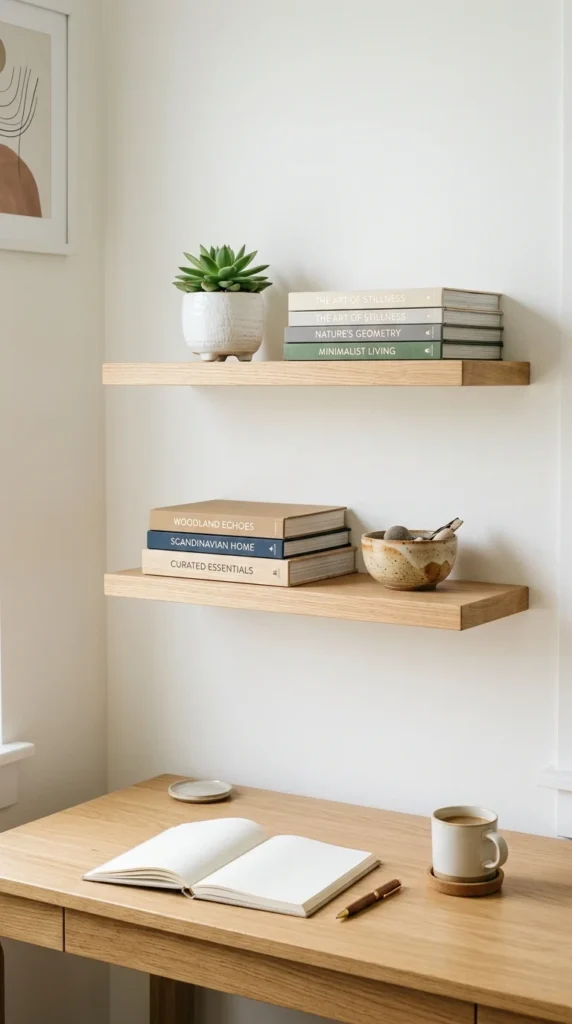
Floating shelves are the ultimate solution for small offices where floor space is at a premium. By moving your books, decorative items, and rarely used supplies to the walls, you clear up valuable real estate on your desktop. They create a clean, airy look and allow you to display items that inspire you without cluttering your immediate work area.
2. Cable Management
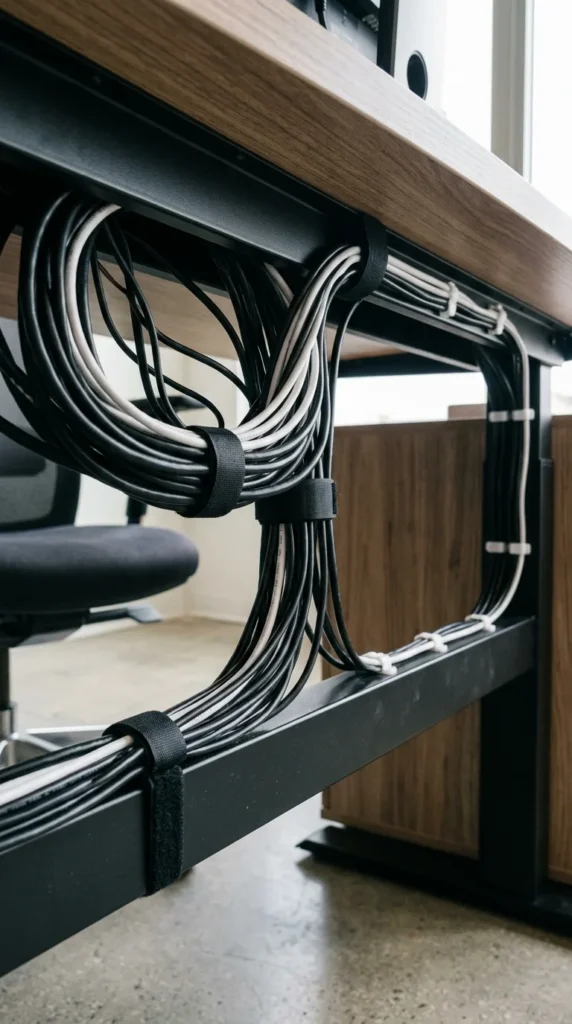
Nothing ruins the aesthetic of a sleek workspace faster than a “cable nest.” Use cable sleeves, clips, or specialized boxes to hide the tangle of power cords and USB cables. Keeping your wires organized not only looks better but also prevents dust buildup and makes it easier to swap out devices when needed.
3. Drawer Dividers
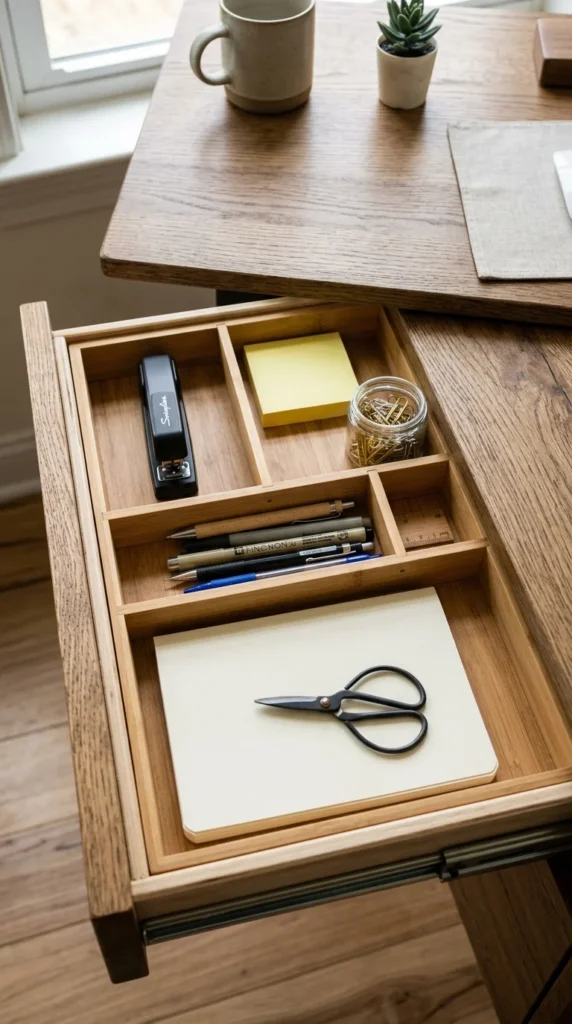
Drawers often become “junk drawers” where small items go to be forgotten. Acrylic or bamboo drawer dividers allow you to assign a specific home for everything from paperclips to spare batteries. When every item has a designated spot, you spend less time rummaging and more time producing.
4. Monitor Risers
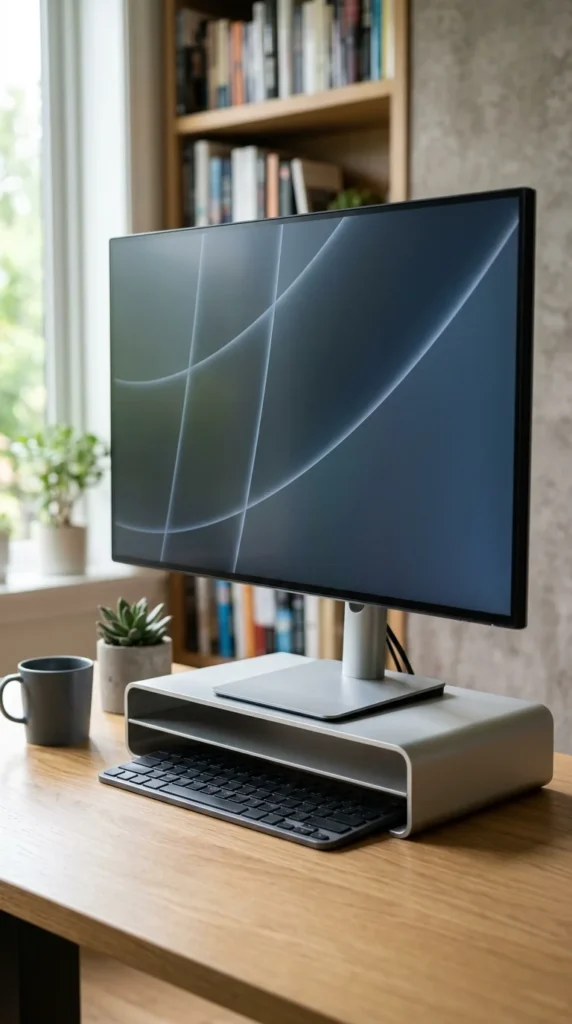
A monitor riser serves two purposes: it improves your ergonomics by bringing the screen to eye level and provides additional storage space underneath. You can slide your keyboard, mouse, or a notebook under the riser when they aren’t in use, instantly creating a clear surface for non-computer tasks.
5. Pegboard Walls
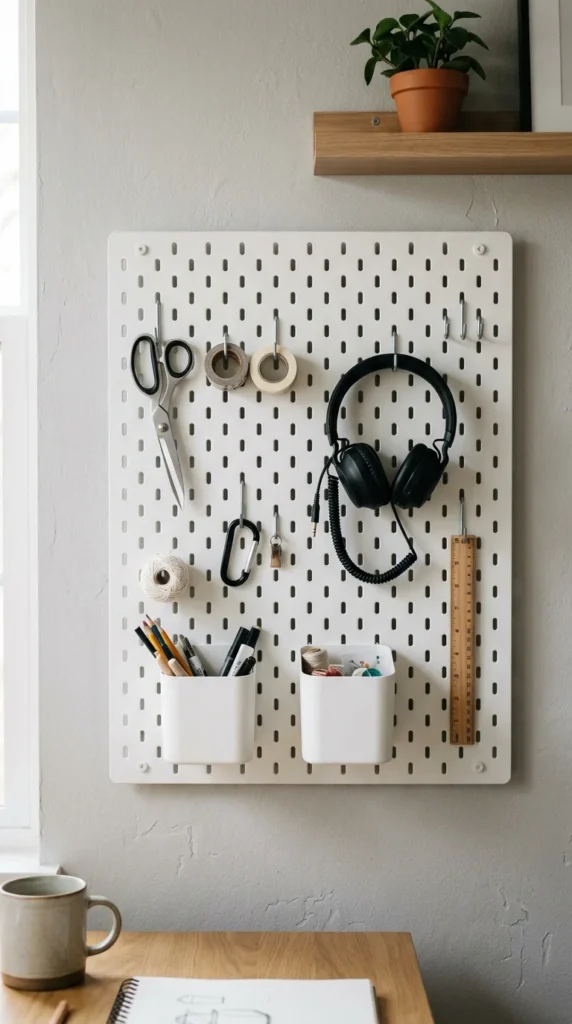
Pegboards are a favorite among DIYers and office enthusiasts for a reason. They offer total flexibility. You can reposition hooks, shelves, and bins as your needs change. It turns your wall into a functional “tool shed” for office supplies, keeping everything within arm’s reach but off the desk.
6. Rolling Carts
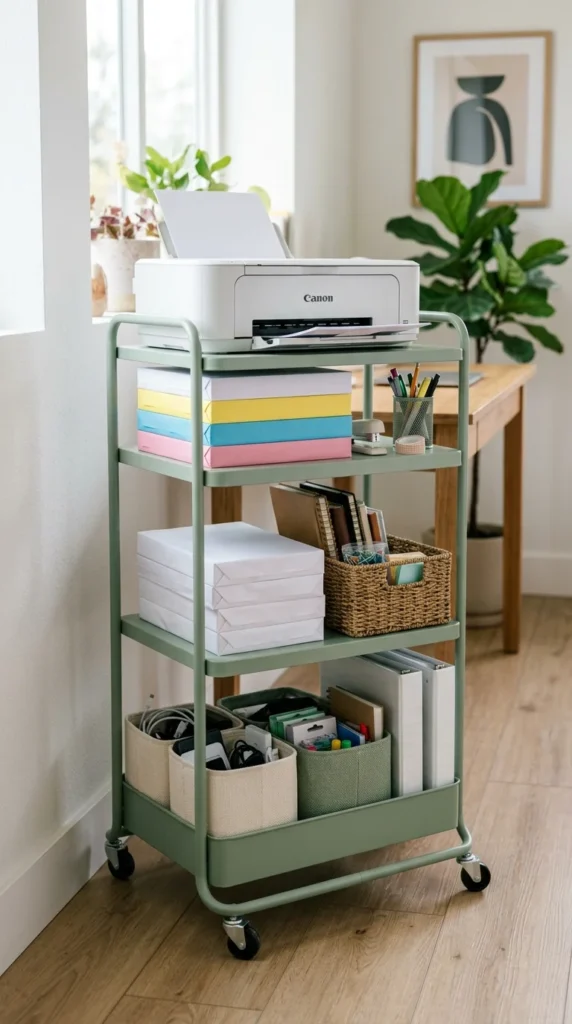
If you have a multifunctional space, a rolling cart is a lifesaver. You can store your printer, heavy reference books, or crafting supplies on it and wheel it out of the way when it’s not needed. It’s an “office on wheels” that provides extra storage without a permanent footprint.
7. Desktop Organizers
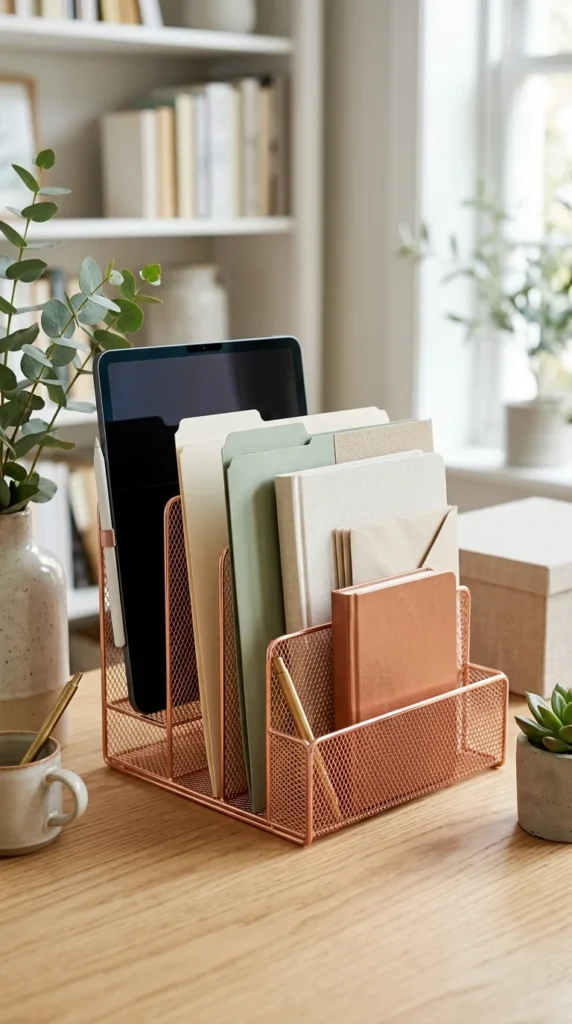
A compact desktop organizer keeps your “active” documents upright and visible. Instead of stacking papers in a pile where the bottom ones are forgotten, vertical slots allow you to see exactly what requires your immediate attention.
8. Labeling Systems
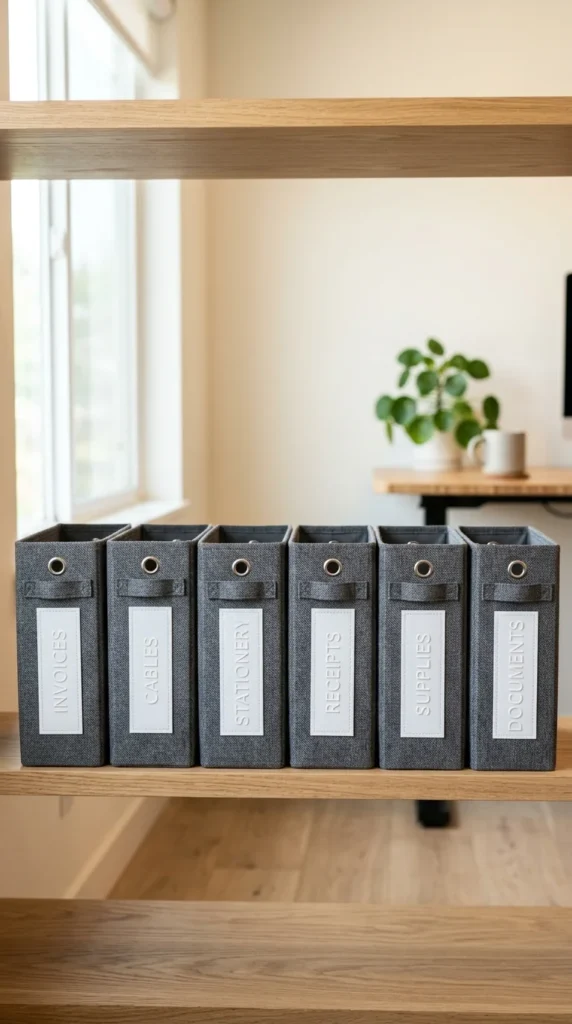
Labeling is the secret sauce of long-term organization. When boxes and bins are labeled, you (and anyone else in the office) know exactly where things belong. It removes the guesswork from cleaning up and ensures that your organizational system actually sticks.
9. Vertical Folders
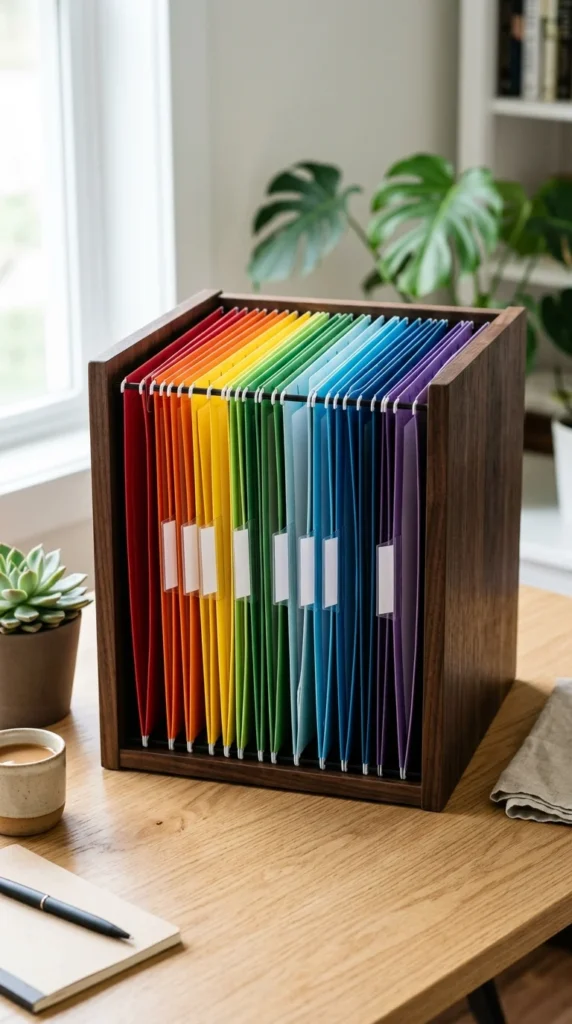
Horizontal stacks are the enemy of productivity. Vertical filing allows you to flip through documents like a library. Whether you use a traditional filing cabinet or a desktop file holder, keeping your paperwork vertical makes it accessible and prevents the “out of sight, out of mind” trap.
10. Cord Identifiers
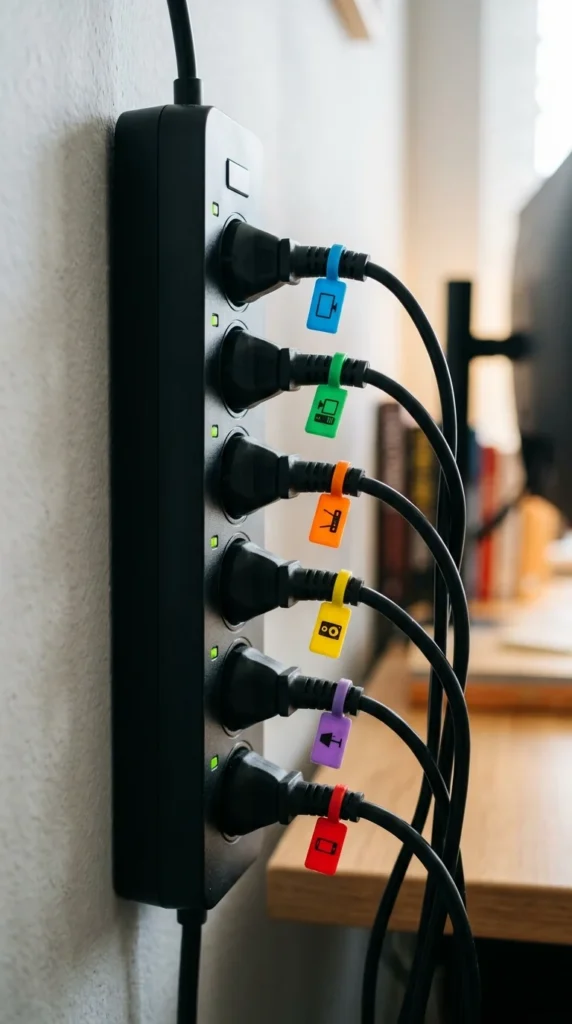
We’ve all experienced the frustration of unplugging the wrong device. Small plastic tags or even bread ties can be used to label each cord at the power source. This simple step saves time and prevents accidental shutdowns during important meetings.
11. Under-Desk Trays
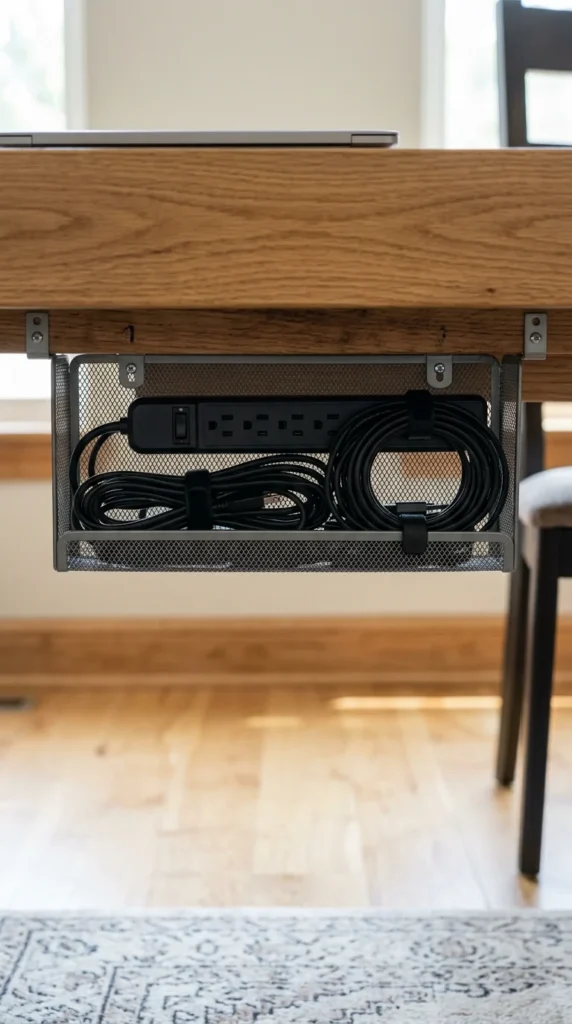
For those who want a truly “wireless” look, under-desk trays are essential. They mount to the bottom of your desk and act as a hidden shelf for power strips and bulky adapters. This keeps the floor clear for your feet and maintains a minimalist silhouette.
12. Magnetic Strips
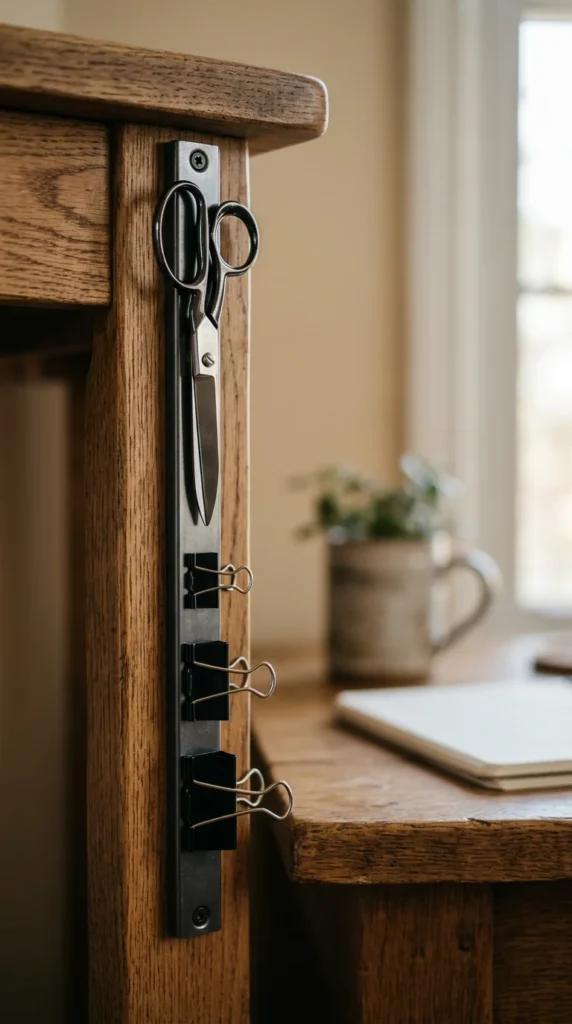
Magnetic strips aren’t just for kitchens. Mounting one on the side of your desk or on a nearby wall provides a perfect spot for metal tools like scissors, letter openers, and even certain types of pens. It’s an unconventional way to use vertical space that feels modern and industrial.
13. Corner Units
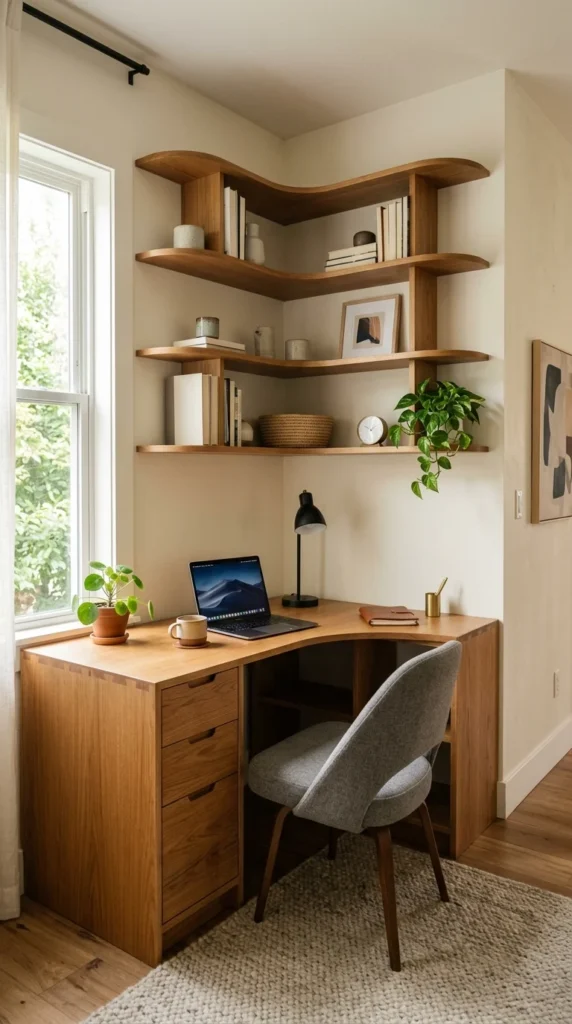
Corners are often wasted space. A dedicated corner desk or a corner shelving unit utilizes every square inch of your room. These units are perfect for creating a “command center” where you can pivot between different tasks without leaving your chair.
14. Tech Pouches
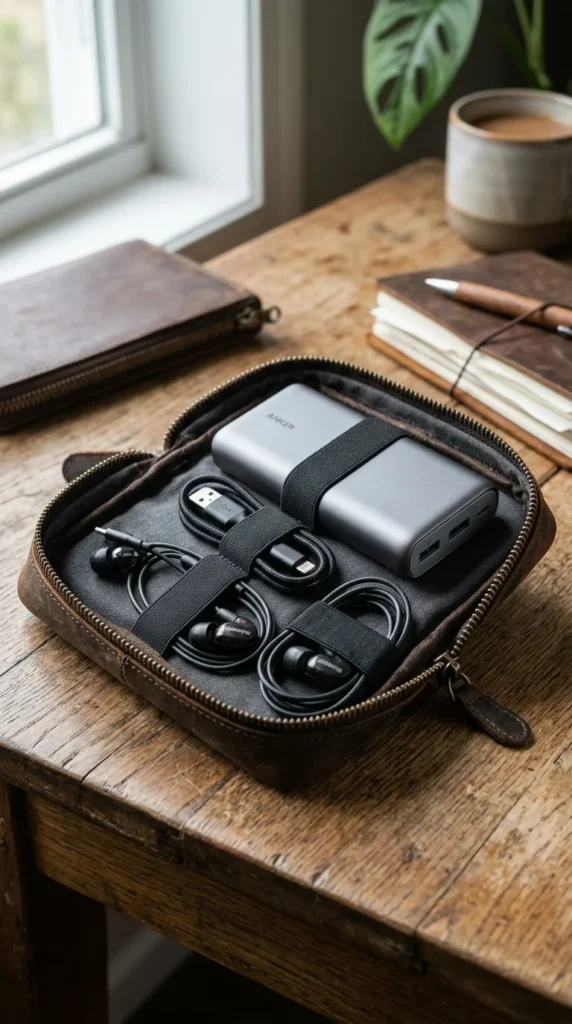
If you frequently move between a home office and a coffee shop or a co-working space, tech pouches are mandatory. Instead of tossing cables into your bag, keep them secured in a pouch. When you’re at your desk, the pouch keeps your “on-the-go” tech from cluttering your drawers.
15. Paper Trays
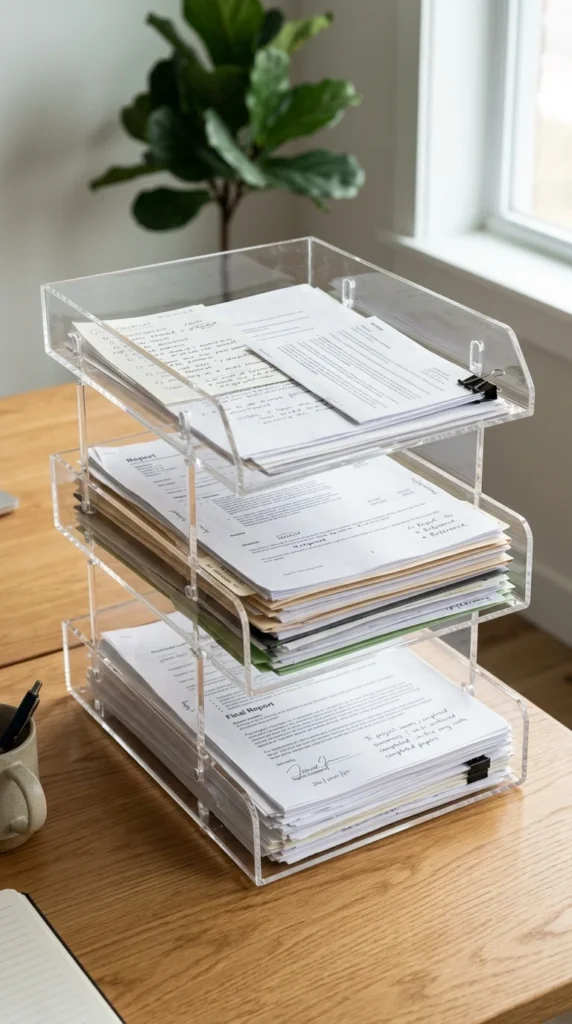
Even in a digital world, paper persists. A tiered paper tray system helps you manage the workflow of physical documents. Assigning each tray a stage in your process—such as “Inbox,” “Action Required,” and “Archive”—prevents papers from becoming an unmanageable heap.
16. Wall Calendars
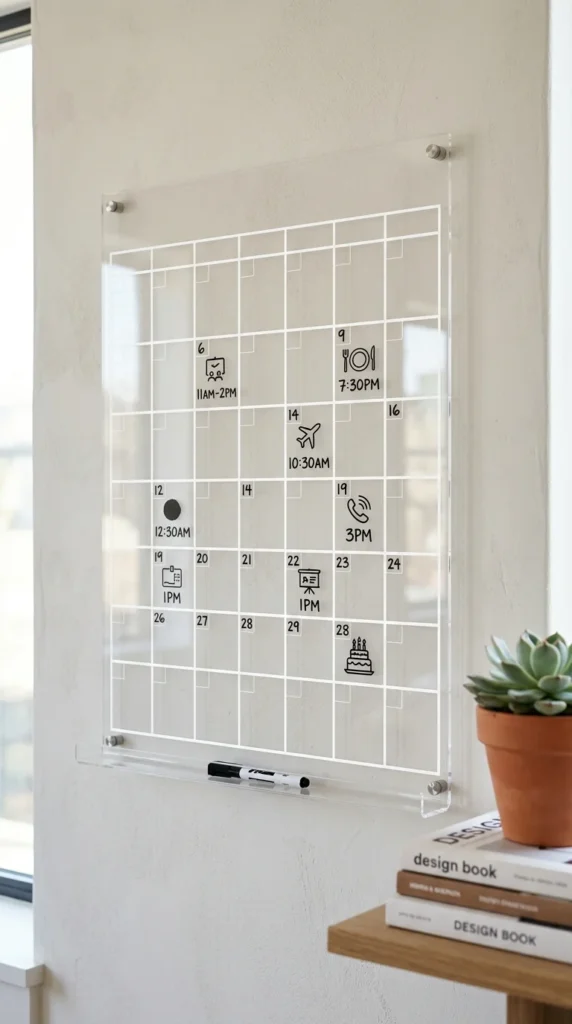
A large-scale wall calendar provides a bird’s-eye view of your month. It’s harder to ignore than a digital notification and helps you visualize deadlines and upcoming projects at a glance. Acrylic versions are particularly popular for their sleek, modern appearance.
17. Command Centers
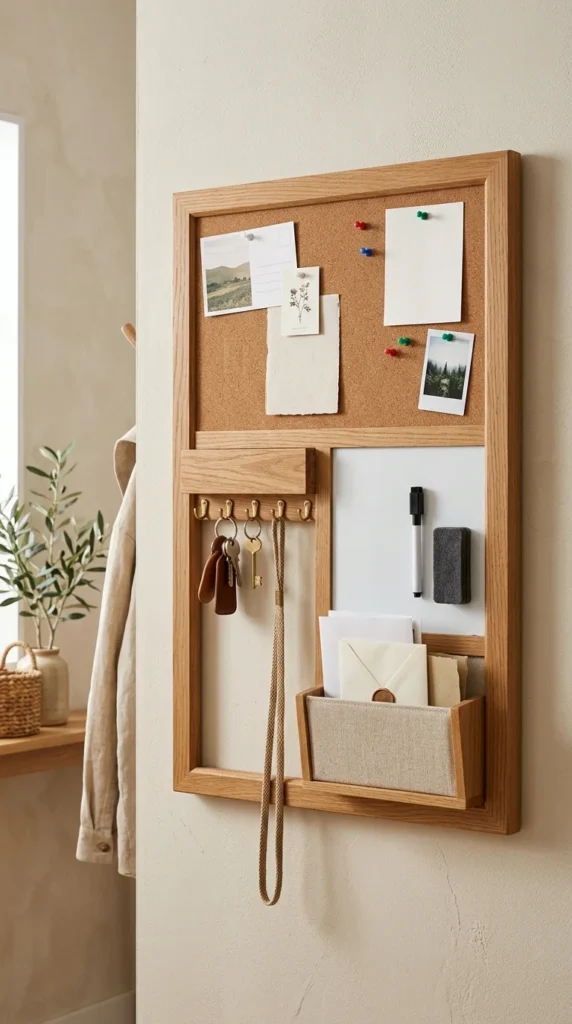
A command center acts as the “brain” of your office. It’s where you pin important memos, jot down quick ideas on a whiteboard, and keep track of keys or outgoing mail. Having one central location for miscellaneous information prevents it from scattering across your desk.
18. Laptop Stands
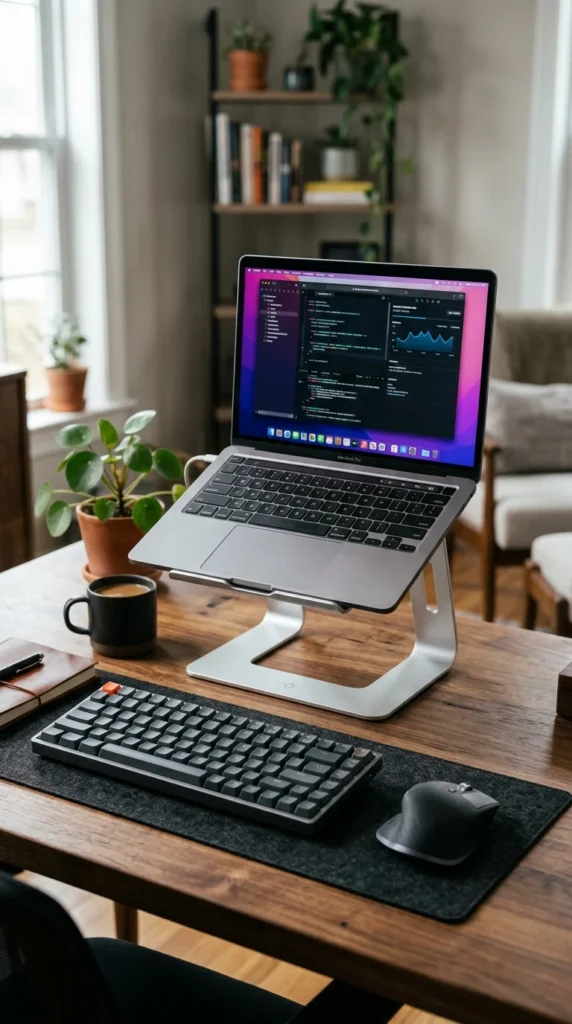
Using a laptop directly on a desk is poor for your posture and consumes significant desk space. A laptop stand lifts the device, allowing you to use the area beneath it for storage while encouraging a healthier sitting position. It also helps with heat dissipation, keeping your computer running smoothly.
19. Cord Clips
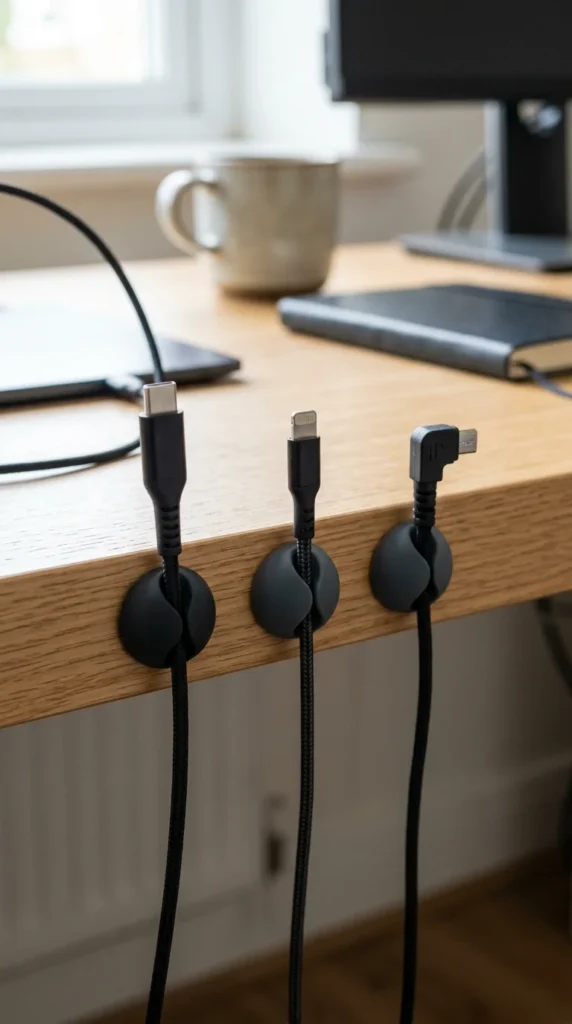
Few things are as annoying as a charging cable sliding off the desk the moment you unplug it. Adhesive cord clips keep your most-used connectors exactly where you need them, ready to be plugged in at a moment’s notice.
20. Hidden Charging
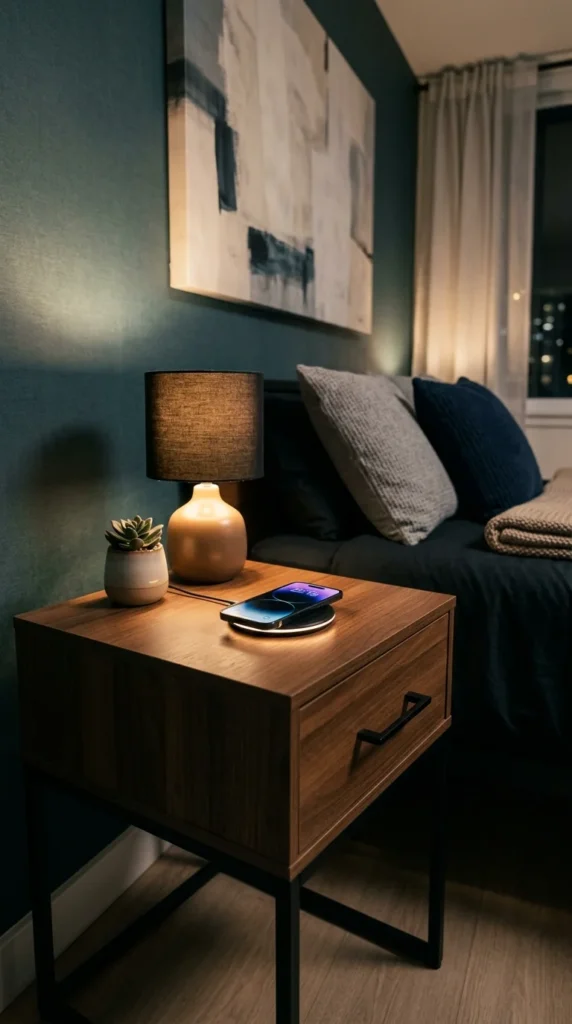
Integrated technology is the future of office organization. Desks with built-in wireless charging pads or drawers with internal power outlets allow you to charge your devices out of sight. This eliminates the visual clutter of multiple chargers and keeps your workspace looking pristine.
21. Uniform Jars

Visual harmony goes a long way in making a space feel organized. Instead of keeping supplies in their original, mismatched packaging, transfer them to uniform glass or ceramic jars. The consistency in container shape and style creates a curated, high-end look.
22. Modular Cubes
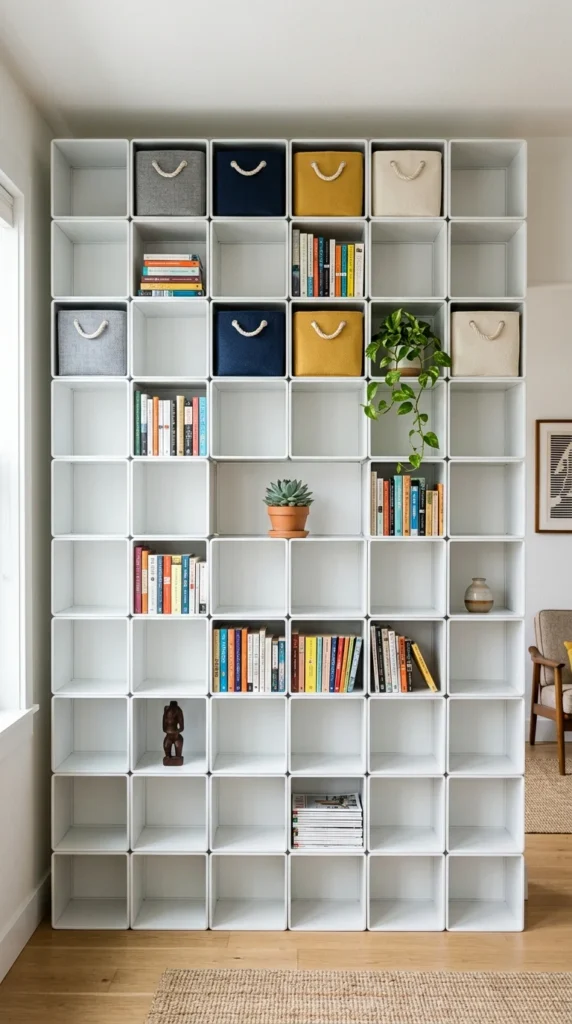
Modular cube storage is incredibly versatile. You can stack them vertically, spread them horizontally, or even use them as a desk base. They allow you to customize your storage to fit the exact dimensions of your room and the specific items you need to store.
23. Filing Cabinets
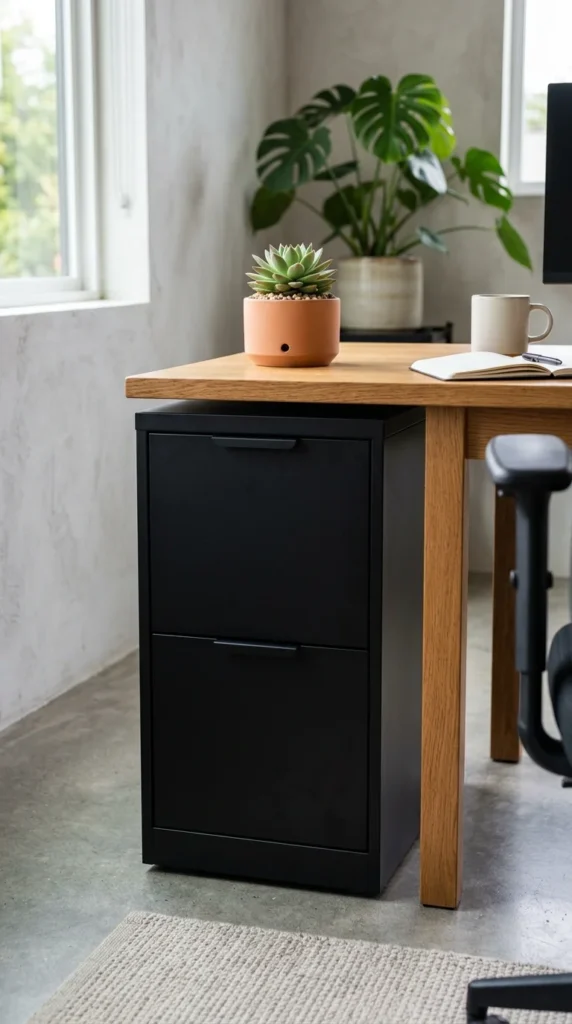
While they may seem old-fashioned, a high-quality filing cabinet is still the best way to secure sensitive documents. Modern designs are slim and can easily double as a printer stand or a side table, blending seamlessly into a contemporary office aesthetic.
24. Keyboard Trays
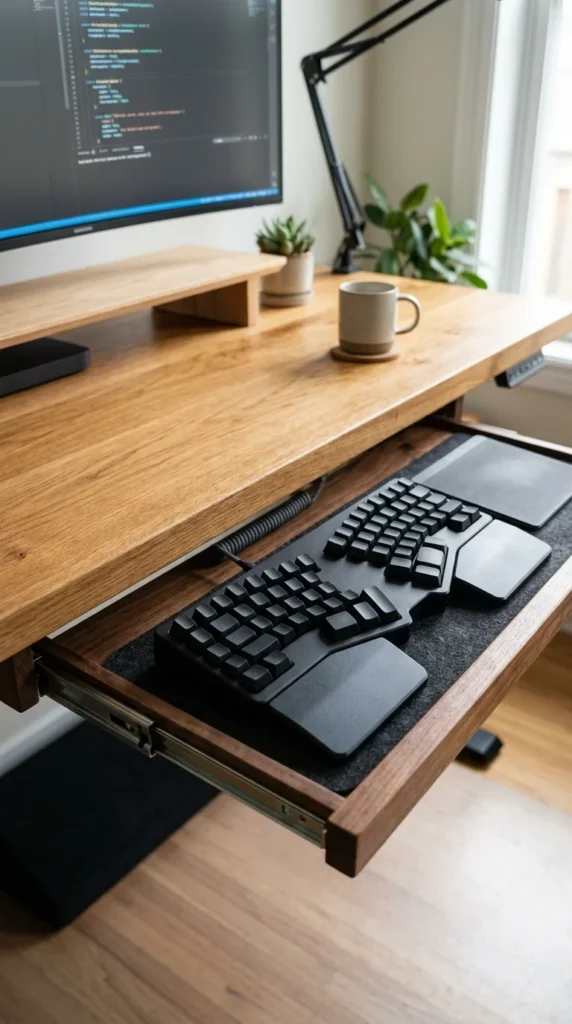
A keyboard tray clears a massive amount of space from your desktop. It also allows for better ergonomic positioning, as it can be set at a height that keeps your wrists neutral. When you’re done for the day, sliding the tray back under the desk signifies the end of the workday.
25. Lighting Solutions
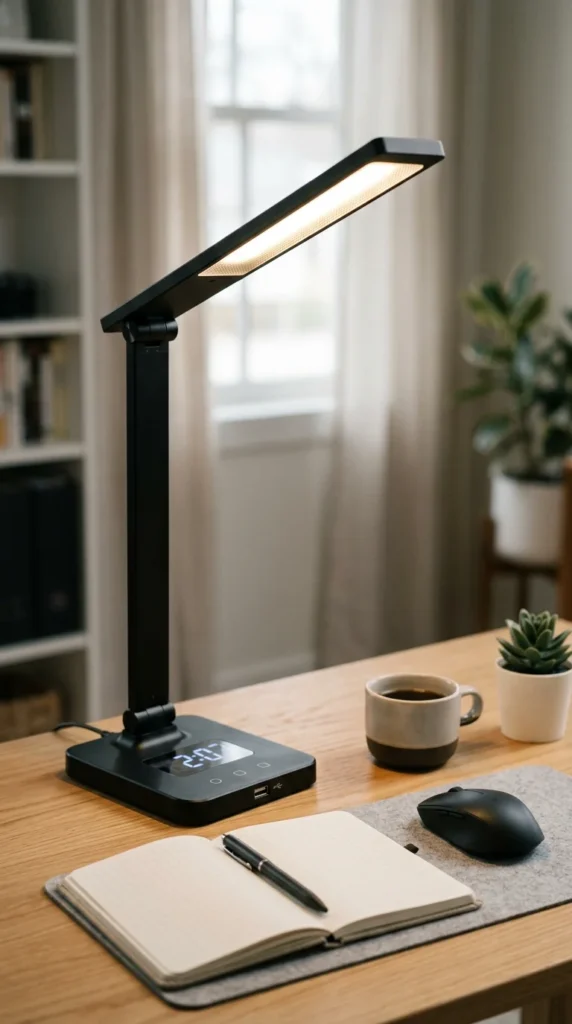
Good lighting is an organizational tool in itself. A well-lit desk reduces eye strain and makes the space feel more open. Choosing a lamp with a small footprint or one that clamps to the side of the desk ensures that your lighting doesn’t compete for space with your work.
26. Personal Touches
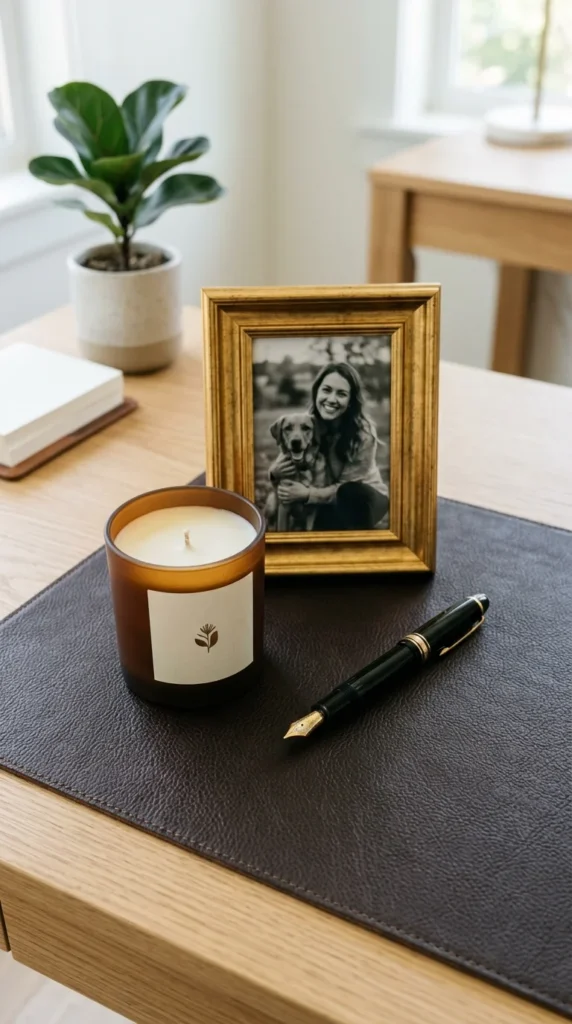
Organization shouldn’t mean sterilization. Adding a few intentional personal items—like a favorite photo, a scented candle, or a piece of art—makes the space more inviting. When you enjoy being in your office, you are more likely to put in the effort to keep it organized. The key is to choose a few high-quality items rather than many small, distracting ones.