
Working from home is a dream until your “office” is a corner of the kitchen table and your “filing cabinet” is a stack of papers dangerously close to a coffee mug. In the world of modern interior design, space is the ultimate luxury. However, you don’t need a sprawling executive suite to be productive. The secret lies in intelligent storage solutions that maximize every square inch.
Whether you’re working from a literal closet or a tiny studio apartment, these 18 compact office ideas will help you conquer clutter and create a workspace that feels expansive, no matter the footprint.
1. Floating Desks
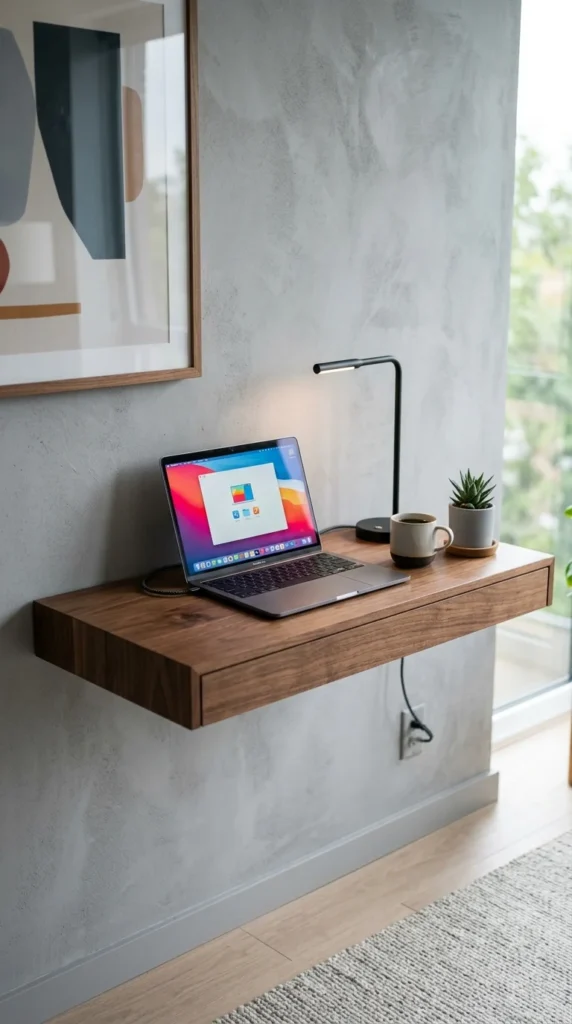
When floor space is at a premium, the best thing you can do is get off the floor. A floating desk is a game-changer for narrow hallways or small bedrooms. By mounting the desk surface directly to the wall, you eliminate the visual clutter of furniture legs. This creates an airy, open feel and leaves the space beneath the desk free for a small trash bin or a rolling footrest. It’s the ultimate “now you see it, now you don’t” solution for minimalist lovers.
2. Vertical Shelving
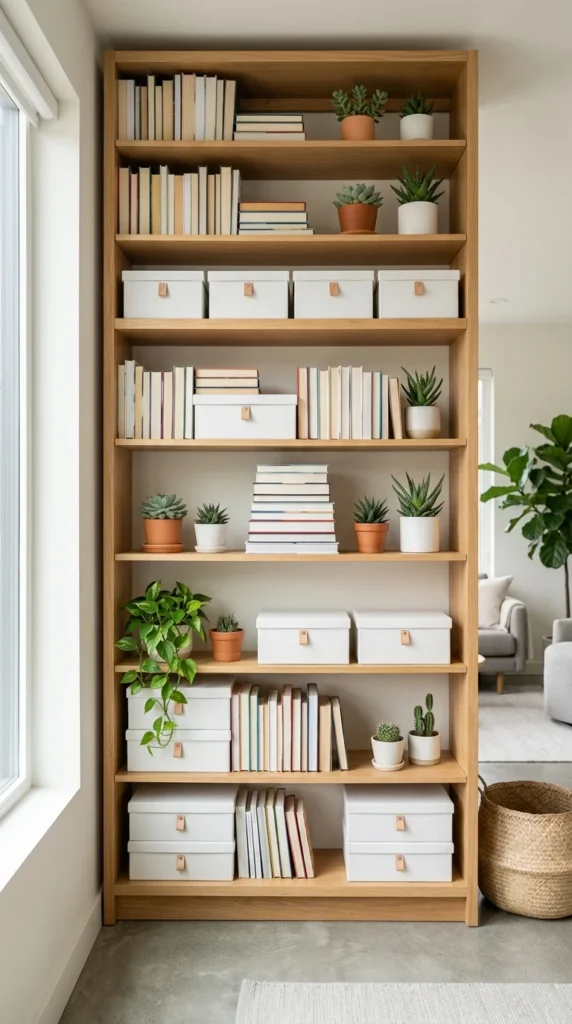
We often forget that while our floor space is limited, our walls go all the way to the ceiling. Vertical shelving turns unused wall real estate into a storage powerhouse. By installing shelves that reach high above your head, you can store items you don’t use daily—like tax records or reference books—at the very top, while keeping daily essentials within arm’s reach. It draws the eye upward, making the room feel taller and more organized.
3. Rolling Carts
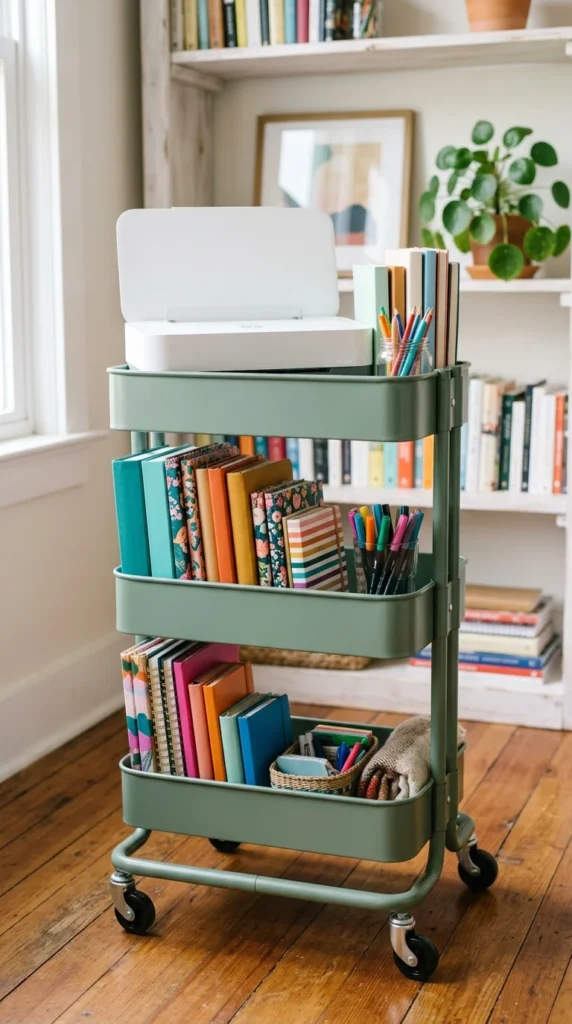
The beauty of a rolling cart lies in its mobility. If your “office” changes locations throughout the day—from the dining room to the bedroom—a utility cart serves as a portable command center. You can tuck it into a closet when you’re done for the day or wheel it right next to your chair for easy access to supplies. It’s a versatile piece that provides three levels of storage without taking up more than a square foot of floor space.
4. Pegboard Walls
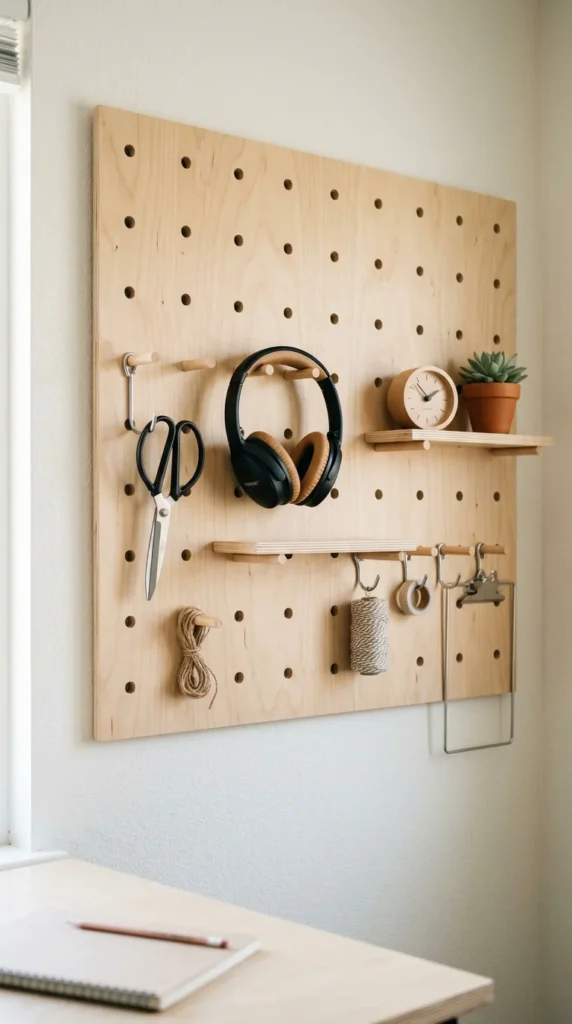
Borrowed from the world of workshops and garages, pegboards are the ultimate customizable storage solution. They allow you to move hooks, shelves, and bins around as your needs change. By hanging your supplies—like staplers, tape, and cables—on the wall, you keep your desk surface completely clear for actual work. Plus, it doubles as a piece of functional wall art that reflects your personal style.
5. Hidden Nooks
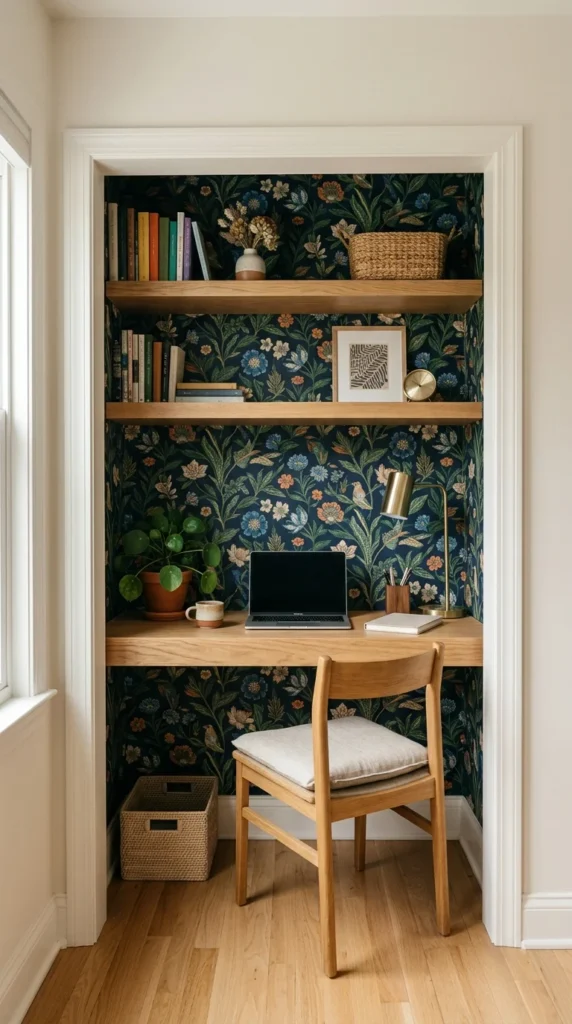
Commonly known as a “cloffice” (closet-office), converting a small nook or closet into a workspace is a brilliant way to save space. By removing the doors or replacing them with curtains, you can fit a full-sized desk and shelving into a space that was previously just for storage. The best part? At the end of the day, you can literally “close the door” on your work, helping to maintain a healthy work-life balance in a small home.
6. Corner Units
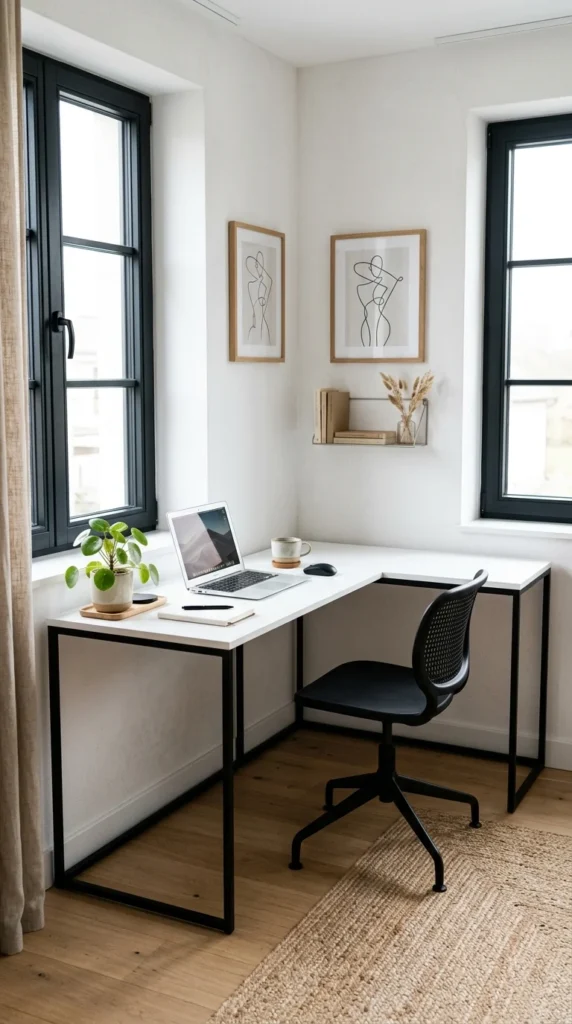
Corners are often the most underutilized areas in any room. A dedicated corner desk fits snugly into these awkward angles, providing a surprisingly large amount of surface area without protruding into the main walkway of the room. It creates a “cockpit” feel where everything is within a 90-degree turn of your chair, making it an ergonomic and space-saving powerhouse.
7. Monitor Risers
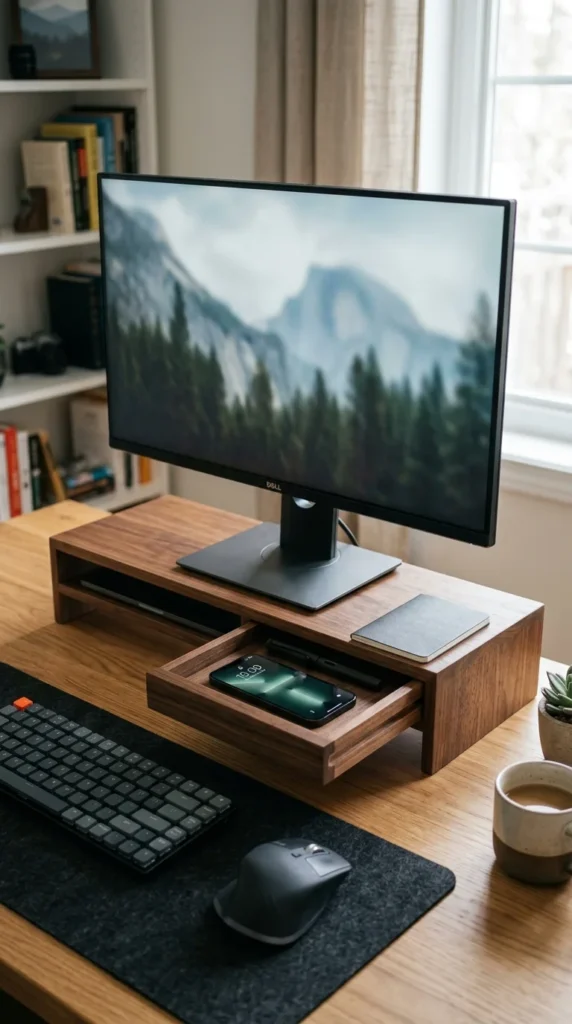
A monitor riser does more than just save your neck from strain; it creates a new “floor” on your desk. By lifting your screen, you unlock several inches of storage space directly underneath it. This is the perfect spot for your keyboard when you’re not using it, or for storing a laptop, a notebook, or a hub of USB ports. It’s a small addition that yields significant organizational benefits.
8. File Ottomans
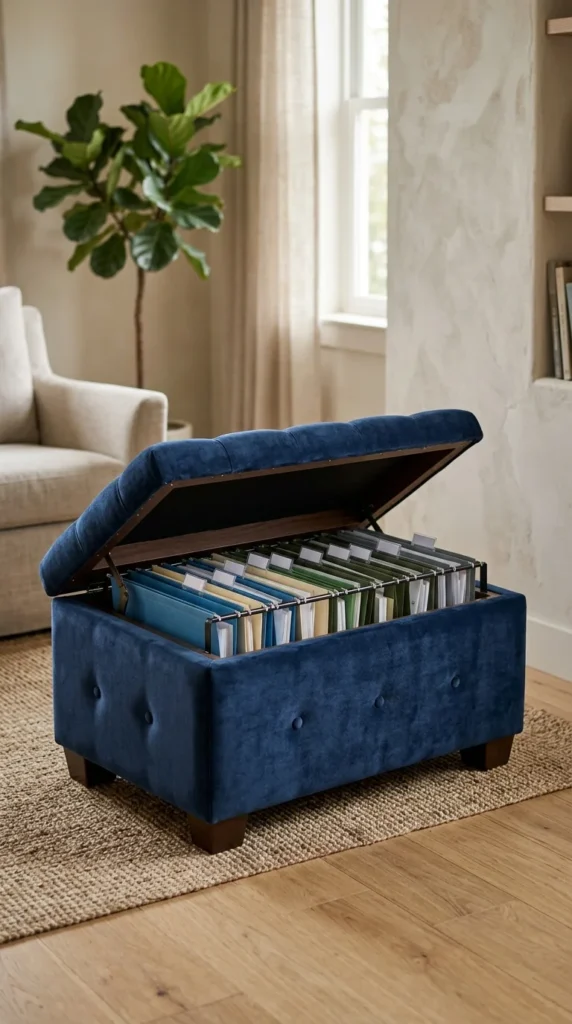
In a small office, furniture needs to work twice as hard. A file ottoman serves as a comfortable seat for a guest or a place to put your feet up, but it secretly hides a filing system inside. This is perfect for those who need to keep paper records but don’t want a cold, industrial metal filing cabinet ruining the aesthetic of their living room or bedroom.
9. Door Organizers
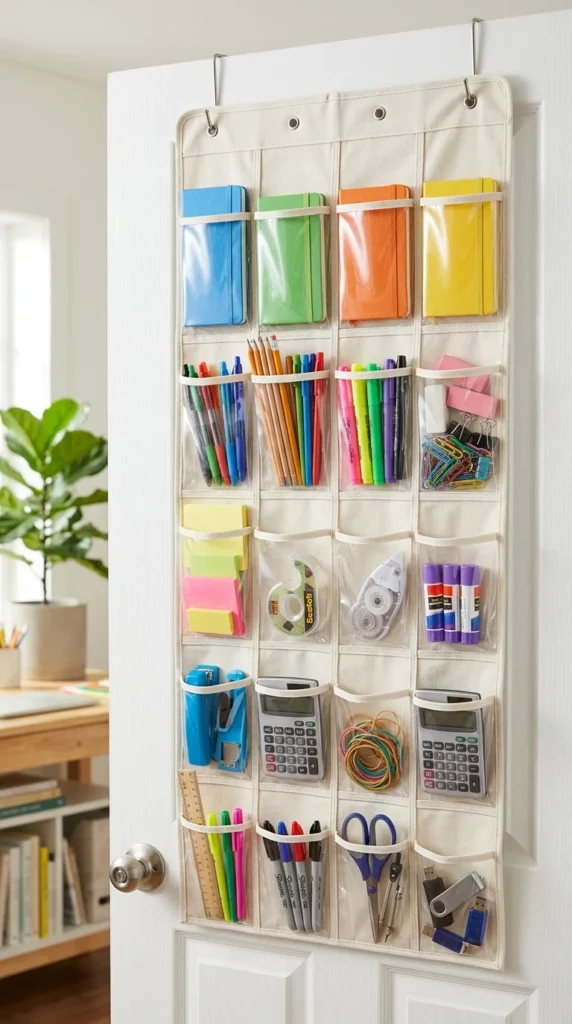
The back of a door is often forgotten territory. An over-the-door organizer with clear pockets allows you to see all your supplies at a glance. This is ideal for smaller items that usually get lost in deep drawers, such as charging cables, extra batteries, or stationery. It’s a zero-footprint solution that keeps your essentials organized and off your desk.
10. Under-Desk Drawers
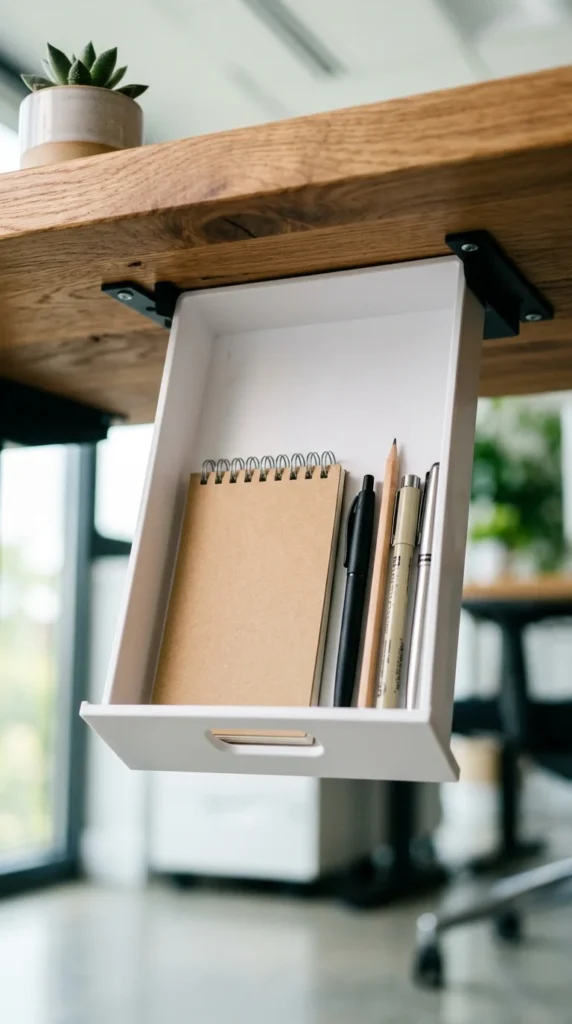
If you have a simple table-style desk without built-in storage, you can easily add your own. Adhesive or screw-mounted under-desk drawers provide a “stealth” storage option. They are perfect for hiding away the small items that cause visual clutter—like paperclips, post-its, and thumb drives—while keeping them literally at your fingertips.
11. Ladder Desks
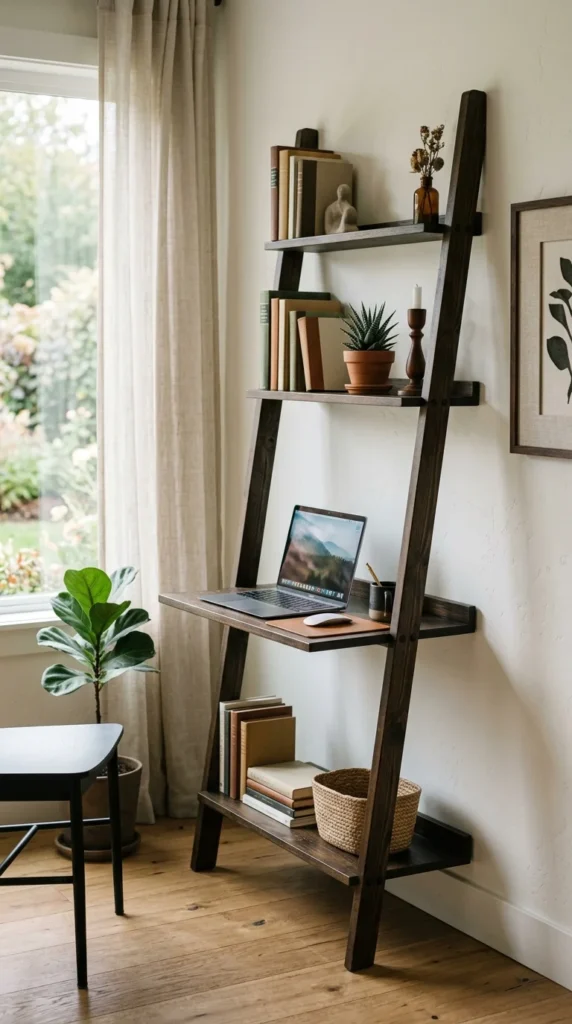
Ladder desks are the darlings of small-space living. Because they lean against the wall at an angle, they have a very small footprint at the base while providing multiple tiers of storage as they go up. They feel much lighter and less bulky than a traditional desk and hutch combo, making them ideal for studios or shared living spaces where you don’t want the furniture to overwhelm the room.
12. Cable Management
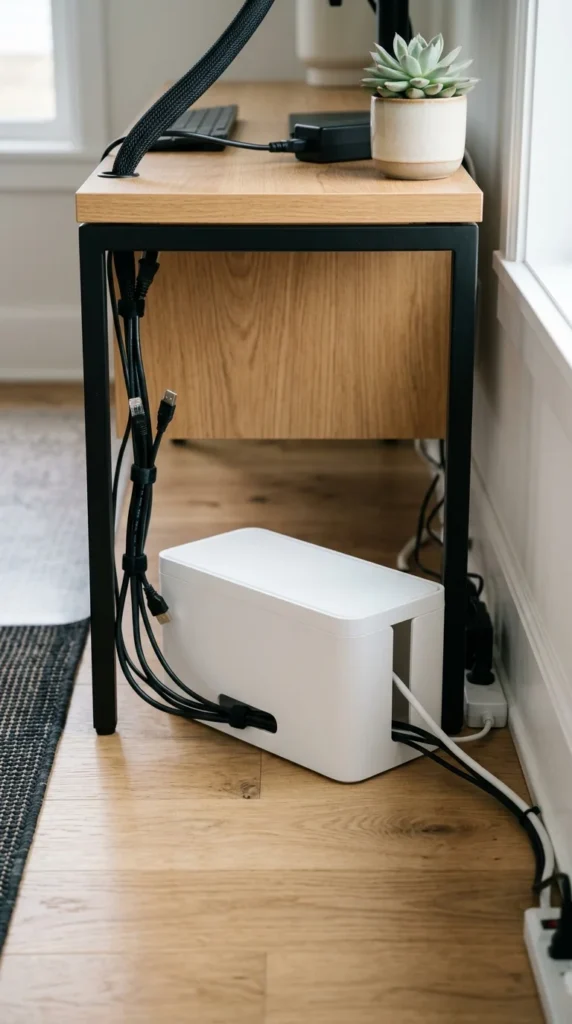
Visual clutter can make a small space feel even smaller. A “spaghetti” of wires under your desk is a primary culprit. Cable management boxes and clips allow you to hide power strips and excess cord lengths. By streamlining your electronics, you create a cleaner, more serene environment that allows you to focus on your work rather than the mess.
13. Modular Cubes
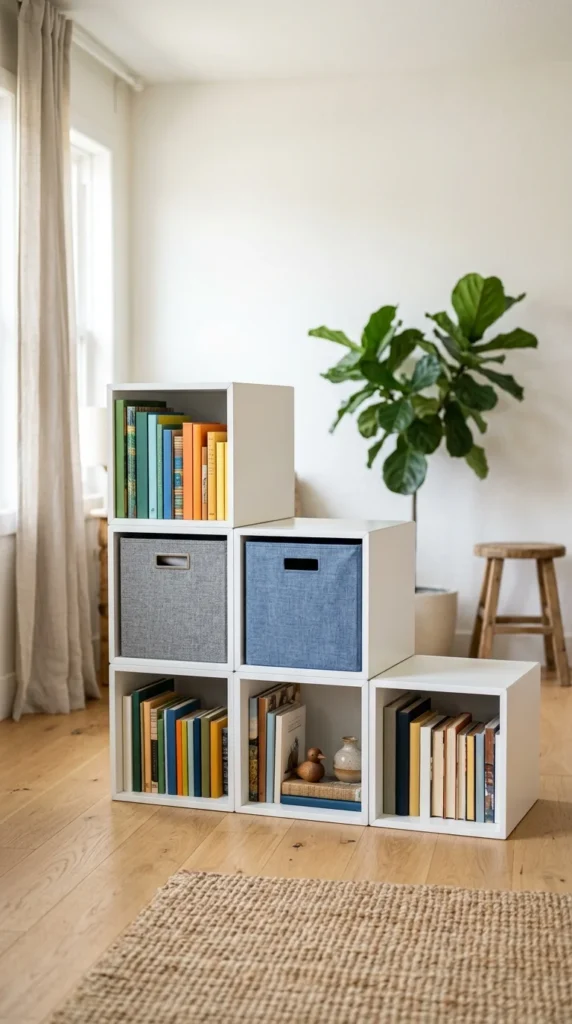
Modular cubes are the ultimate “build-your-own” storage solution. You can stack them vertically to save floor space or arrange them horizontally to create a low-profile credenza. Because they are individual units, you can add more as your storage needs grow. Using bins inside the cubes allows you to hide away “ugly” supplies, keeping the overall look clean and uniform.
14. Murphy Desks
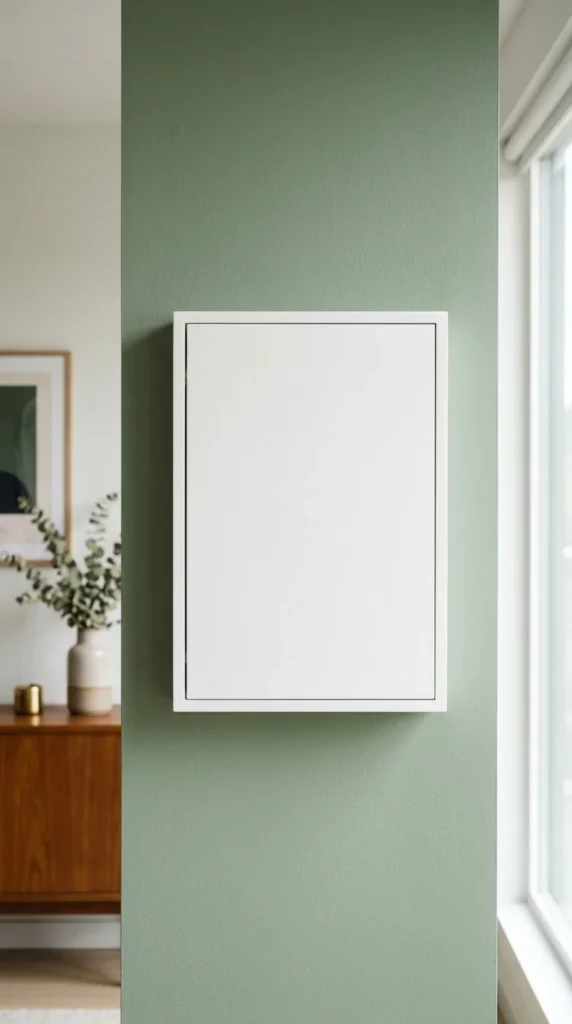
For the truly space-challenged, the Murphy desk (or fold-down desk) is the ultimate solution. When you’re working, it folds down to provide a sturdy surface and reveals hidden cubbies for your supplies. When the workday is over, it folds back up flat against the wall, completely disappearing. It’s the perfect way to turn a bedroom or living area back into a relaxation space in seconds.
15. Window Sill Extensions
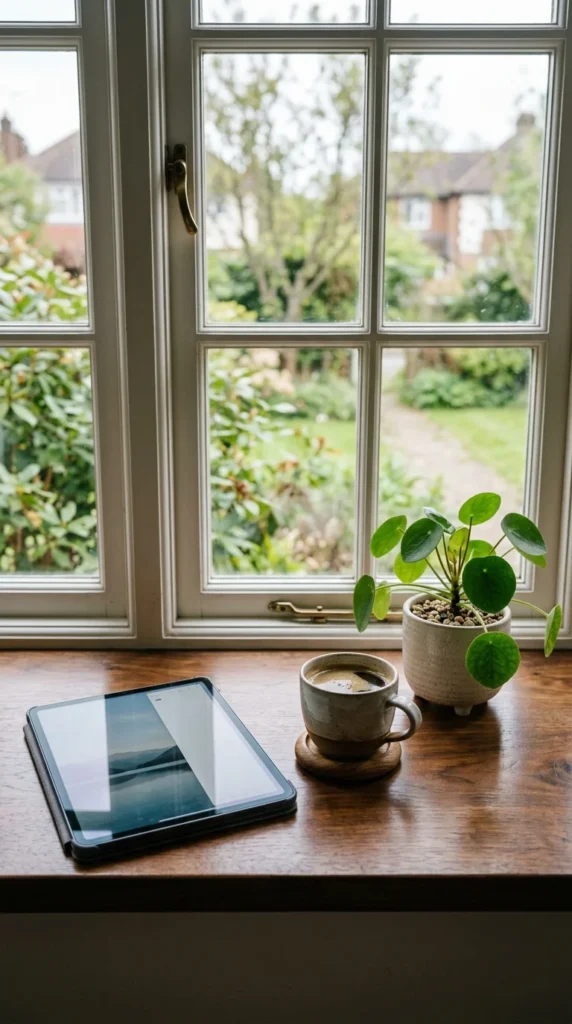
If your desk is placed in front of a window, don’t let that ledge go to waste. A wide window sill can act as an extra shelf for your coffee, a plant, or your speakers. If your sill is too narrow, you can install a “sill extender” or a small floating shelf at the same height to create a seamless, expanded workspace that takes advantage of natural light.
16. Magnetic Boards
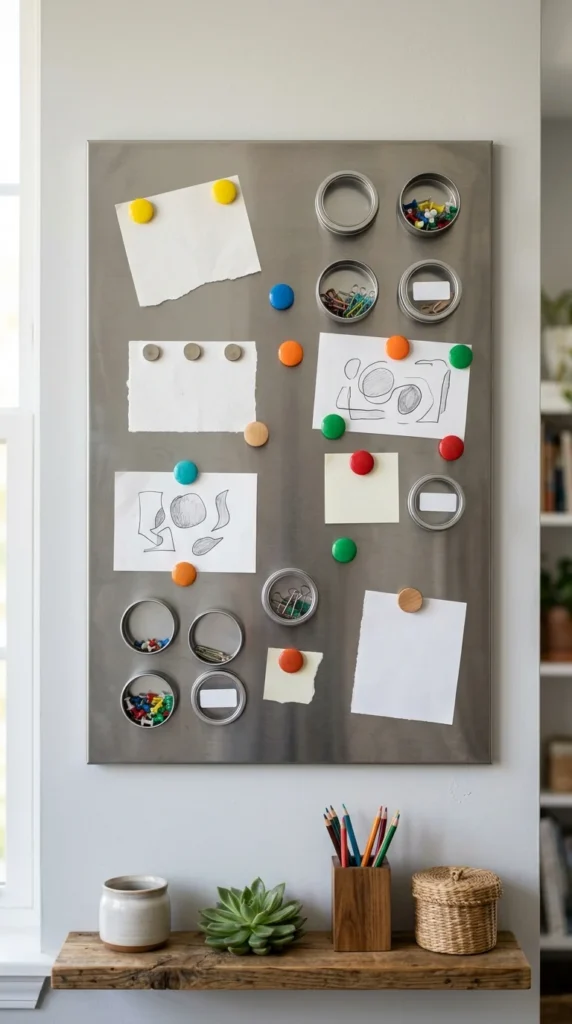
Magnetic boards offer a sleek alternative to bulky corkboards. Use magnetic tins to store small items like pushpins or binder clips, and use magnets to keep your to-do lists and calendars at eye level. It’s a great way to use vertical space for “active” storage—items you need to see and access frequently throughout the day.
17. Acrylic Accessories
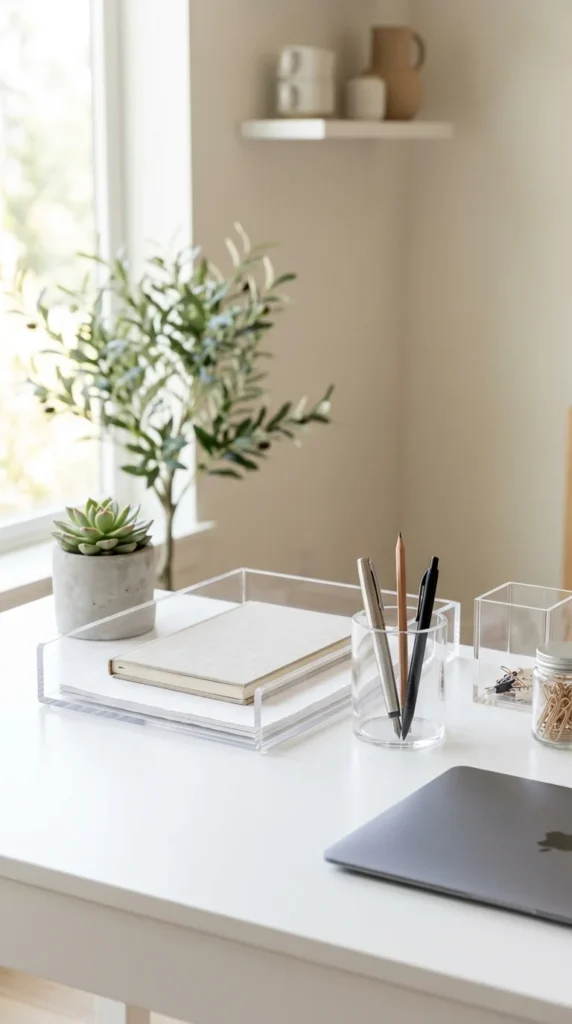
In a compact office, the goal is to reduce visual weight. Solid wood or dark metal organizers can make a small desk feel crowded. Acrylic or clear plastic accessories, however, are nearly invisible. They provide the organization you need without breaking up the visual flow of the space, making your desk feel larger and more open than it actually is.
18. Tiered Trays
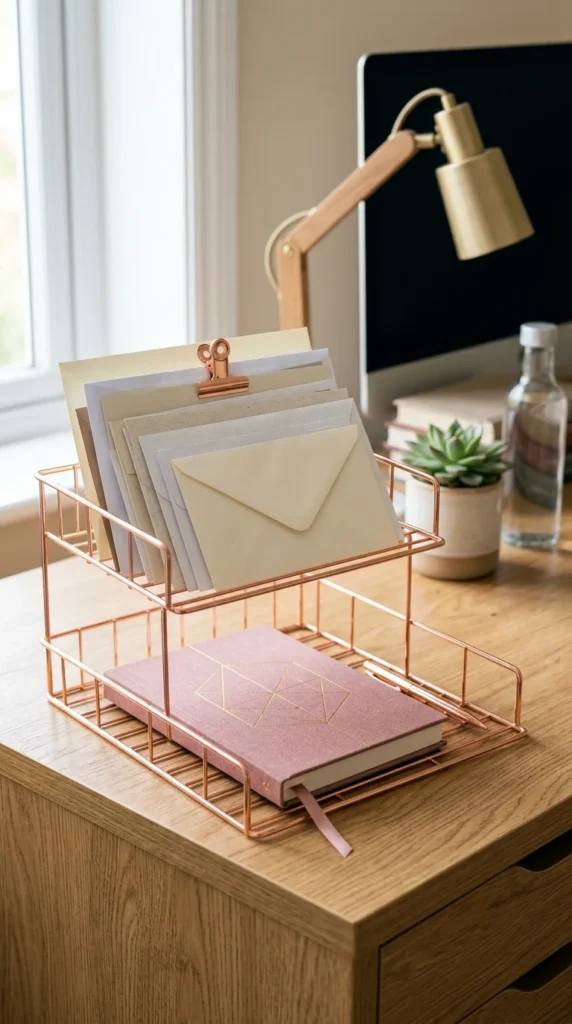
If you have a lot of paperwork but very little surface area, think vertically on your desktop. A tiered tray (similar to those used for serving cupcakes) is a stylish way to stack your current projects. Instead of spreading papers out across the desk, you stack them upward. It’s a simple trick that keeps your “in-box” and “out-box” organized while taking up half the space.