
Working from your bedroom is sometimes the only realistic option, and it worries people for a good reason. A desk full of work can make a bedroom feel like an office that happens to contain a bed, and a bedroom that never quite switches off can make sleep harder to find. The good news is that the two uses can share one room peacefully. The secret is separation: clear zones, calm storage, and a daily routine that closes work away both physically and mentally.
This guide shows how to build a home office in a bedroom without ruining your sleep space. The layout principles are the same ones that make any compact workspace work, and if your bedroom has a free corner, the step-by-step approach in our guide to a small home office in a corner is a good place to start planning.
Quick Answer
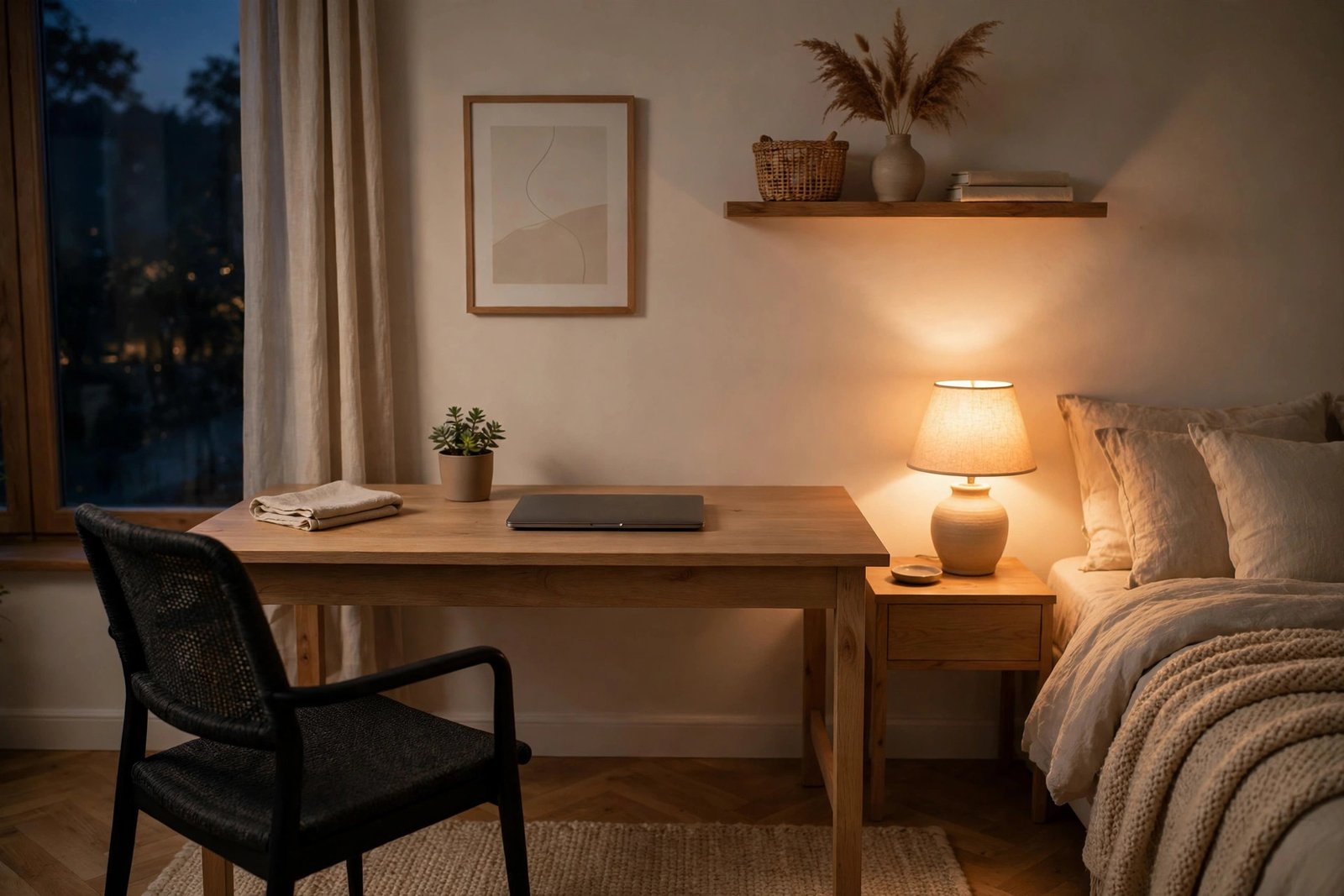
To keep a bedroom office from harming your sleep space, place the desk as far from the bed as the room allows, face away from the bed while you work, and choose furniture that looks like bedroom furniture rather than office furniture. Hide work items in closed storage at the end of the day, keep screens and chargers calm at night, and build a short shutdown routine so the room returns to being a bedroom every evening.
- Desk near the window and door; bed in the quietest, darkest part of the room.
- Closed storage, not open shelves of work, within sight of the bed.
- Soft, warm evening light for the room; task light only at the desk.
- A five-minute shutdown ritual that clears the desk completely.
Zone the Room: Work End and Sleep End
Start by dividing the room into two zones, even if the line between them is imaginary. The work zone belongs near the window and the door: daylight helps you stay alert, and being near the door means work visitors, deliveries, and cables never have to cross the sleep zone. The sleep zone should stay in the part of the room that is darkest and quietest, usually the corner furthest from the door.
Face your chair away from the bed. Looking at an unmade bed all day is distracting, and looking at your desk from the bed all evening is worse. If the room is small and the desk must face the bed, a low bookcase, a curtain, or even a tall plant between the two zones can create just enough visual break.
If the bedroom genuinely has no workable zone, do not force it. Our guide on where to put a home office when you have no spare room covers landing desks, closet offices, and living-room options that many people overlook.
Choose Furniture That Belongs in a Bedroom
The fastest way to protect a bedroom’s calm feeling is to avoid furniture that shouts “office”. A simple wooden desk or a dressing-table style desk blends with bedroom furniture far better than a large corporate workstation. A compact desk with drawers is ideal, because the drawers swallow your notebook, pens, and charger at the end of the day.
Chairs need the same care. A supportive chair matters for your back, but a bulky gaming-style chair will dominate a small bedroom. Look for a smaller upholstered chair with decent lower-back support, or improve a simple chair with a cushion. If the chair must be a proper office chair, choosing a soft colour rather than black softens its presence surprisingly well.
Plan the desk surface itself using the same discipline as any small workspace: screen, laptop, notebook, lamp, and nothing else permanent. Our guide to a small desk setup that still fits a monitor, laptop and notebook shows the layout in detail and explains how to keep it clear.

Hide the Work at the End of the Day
Closed storage is the difference between a bedroom with a desk and a bedroom that feels like an office. Open shelves of files, a visible printer, and stacks of paper keep your brain half at work all evening. Drawers, a lidded box, a cabinet, or a wardrobe shelf take the same items out of sight in under a minute.
Build the shutdown into a small ritual. At the end of the working day: close the laptop, put papers and notebook in the drawer, coil the charging cable, turn off the desk lamp, and push in the chair. Five minutes, the same order every day. The ritual tells your mind that work is finished, and it gives you a bedroom back for the evening.
Cheap and simple ways to hide a desk setup
- A fabric cover or large scarf draped over the monitor and desk at night.
- A rolling cart for work items that slides into a wardrobe or under the desk.
- A folding desk that closes against the wall when the day ends.
- A room divider or curtain rail across the work corner.
Light and Screens After Work
During the day, the desk wants bright, focused light. In the evening, the bedroom wants the opposite. Keep the two separate: a desk lamp for work tasks, and soft, warm lamps for the room in the evening. Avoid working under bright overhead light late in the day, because it keeps the whole room in daytime mode.
Try to give yourself a screen-free wind-down before bed. At minimum, close work apps and messages when your day ends, and charge your phone away from the pillow if notifications tempt you to check them. Many people find that simply keeping the laptop shut and in its drawer removes most of the urge to “just check one thing”.
Sound, Calls, and Sharing the Room
If you share the bedroom, agree the rules early. Headphones for calls, a rough schedule for meetings, and a signal for “I am recording / on a call, please do not walk behind me” prevent most friction. A small rug and soft furnishings also absorb sound, which helps both calls and sleep.
If your partner keeps different hours, the desk-near-the-door layout helps: you can slip in and out for early starts without crossing the sleep zone or switching on main lights. A low, warm desk lamp lets you begin quietly while the room stays restful.
Keep the Air Fresh and the Room a Bedroom First
Electronics and a seated human warm a small room quickly. Open a window for a few minutes morning and evening, and keep the desk area dusted; fresh air is a simple, free upgrade for both focus and sleep. Avoid turning the bedroom into storage for the whole home office: archive boxes, spare monitors, and packaging belong anywhere else you can find.
Finally, protect the room’s identity. The bed should stay the most comfortable, inviting thing in it. Fresh bedding, a clear bedside surface, and no work items on the bed itself all sound obvious, yet they are the first habits to slip when work moves in. Guard them, and the room keeps doing its real job at night.
Mistakes to Avoid
- Working from the bed. It blurs the two zones in both directions: work feels sleepy and sleep feels like work.
- Open shelves of work files beside the bed. Visible work is a constant low-level reminder; choose closed storage instead.
- A desk facing the bed all day. You spend work hours looking at your rest space and rest hours looking at your desk.
- Bright, cool overhead light in the evening. It keeps the room in work mode when you are trying to wind down.
- Leaving the laptop open “just in case”. One late message can pull your whole evening back into work.
- Cramming office storage into every bedroom corner. The room stops feeling like a bedroom long before it runs out of space.
Frequently Asked Questions
Is it bad to have a desk in the bedroom at all?
Not necessarily. Many people work from a bedroom calmly for years. The problems come from blurred boundaries, not from the desk itself. Clear zones, closed storage, and a shutdown ritual solve most of the issues people blame on the room.
Where exactly should the desk go in a bedroom?
Near the window and the door, as far from the bed as the room allows, with your chair facing away from the bed or toward a wall. That position gives you daylight for work, an easy exit for calls, and the least visual contact between the two zones.
How do I stop thinking about work at night?
Make the end of work visible: shut the laptop, clear the desk into drawers, turn off the task light, and leave the room for a short break if you can. A repeated routine trains your brain to switch off far better than willpower alone.
What if my bedroom is too small for a desk and chair?
Consider a wall-mounted folding desk, a narrow console desk, or a desk inside a wardrobe you can close. If none of those fit, another room’s corner or landing may serve you better than a desk squeezed against the bed.
Conclusion
A bedroom office works when the room has two clear identities and a daily moment where one hands over to the other. Zone the space, choose quiet furniture, hide work in closed storage, soften the evening light, and repeat a small shutdown ritual. Do that, and your bedroom can give you focused days and restful nights in the same few square metres.

1 thought on “Home Office in a Bedroom Without Ruining Your Sleep Space”