
In an age of constant digital noise and physical clutter, the environment in which we work has never been more important. A cluttered desk is often the symptom—and the cause—of a cluttered mind. When your peripheral vision is filled with loose papers, tangled cables, and unnecessary knick-knacks, your brain is forced to spend precious cognitive energy processing that visual information.
Minimalism in the workspace isn’t just about aesthetics; it is a functional strategy to reclaim your focus. By stripping away the non-essential, you create a “zen zone” that invites deep work and creative flow. Here are 17 minimalist desk setup ideas designed to streamline your workflow and turn your office into a sanctuary of productivity.
1. Floating Desk
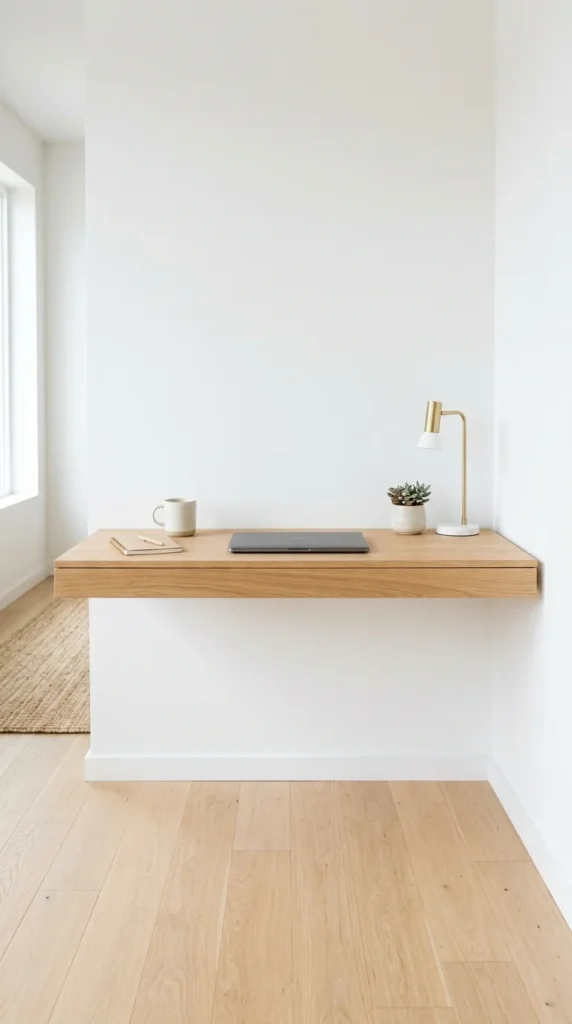
The floating desk is the ultimate statement in minimalism. By removing the legs of the furniture, you eliminate visual weight and make even the smallest room feel expansive. This setup encourages you to keep only what is absolutely necessary on the surface because there are no drawers to hide junk. It forces a “clean as you go” mentality that keeps your workspace pristine.
2. Monitor Arm
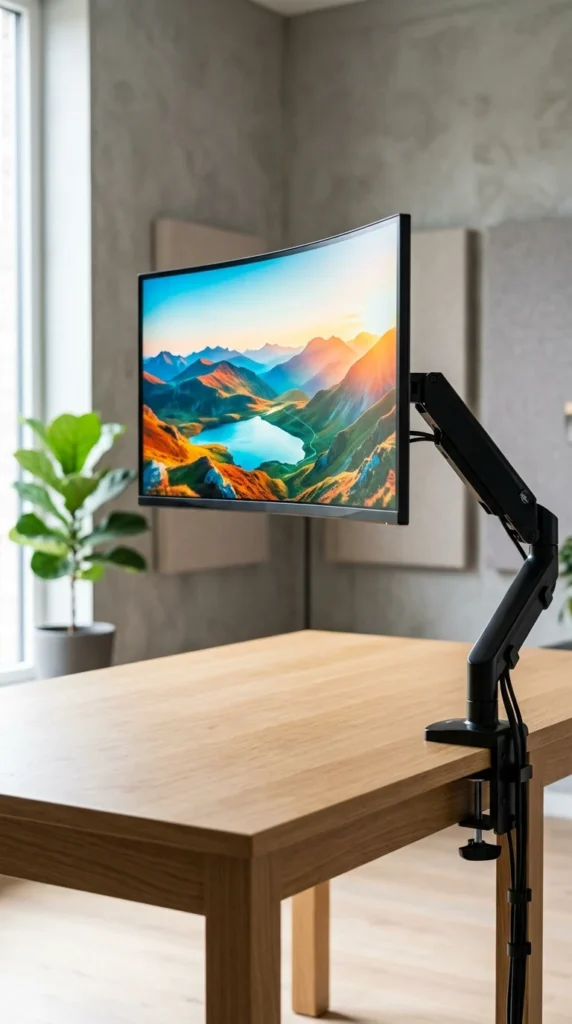
Nothing kills a minimalist vibe faster than a bulky, plastic monitor stand taking up the center of your desk. A monitor arm allows you to “float” your screen at the perfect ergonomic height. This opens up significant real estate directly under the monitor, which can be left empty for a clean look or used to tuck away a slim keyboard when you need space for analog tasks.
3. Integrated Cable Management
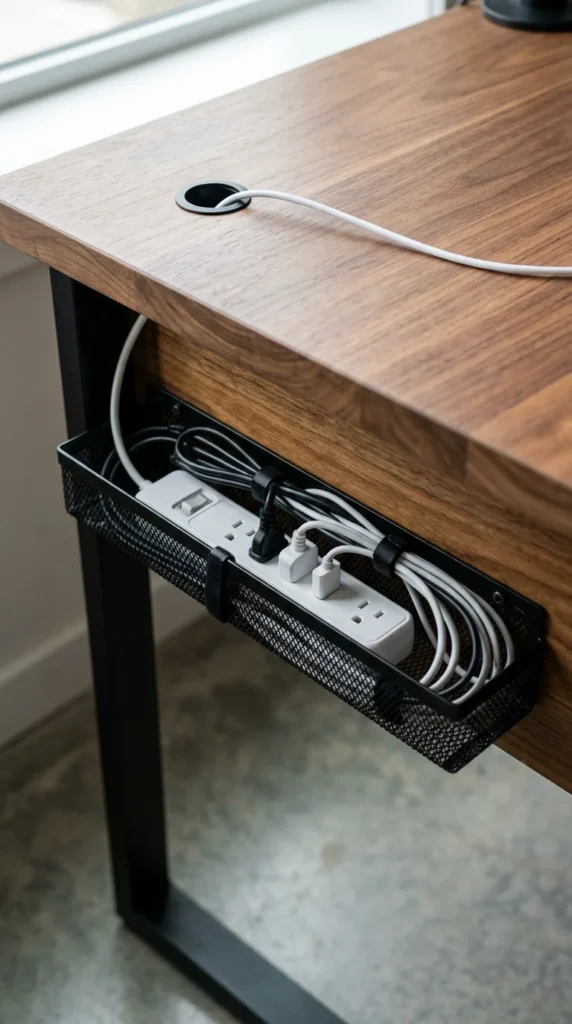
The secret to a professional-looking minimalist setup is the total disappearance of cables. Use under-desk cable management trays, “J” channels, or simple adhesive clips to route every wire along the legs or the underside of the desk. When the “spaghetti” of wires is gone, the mental friction associated with a messy space vanishes instantly.
4. Monochrome Palette
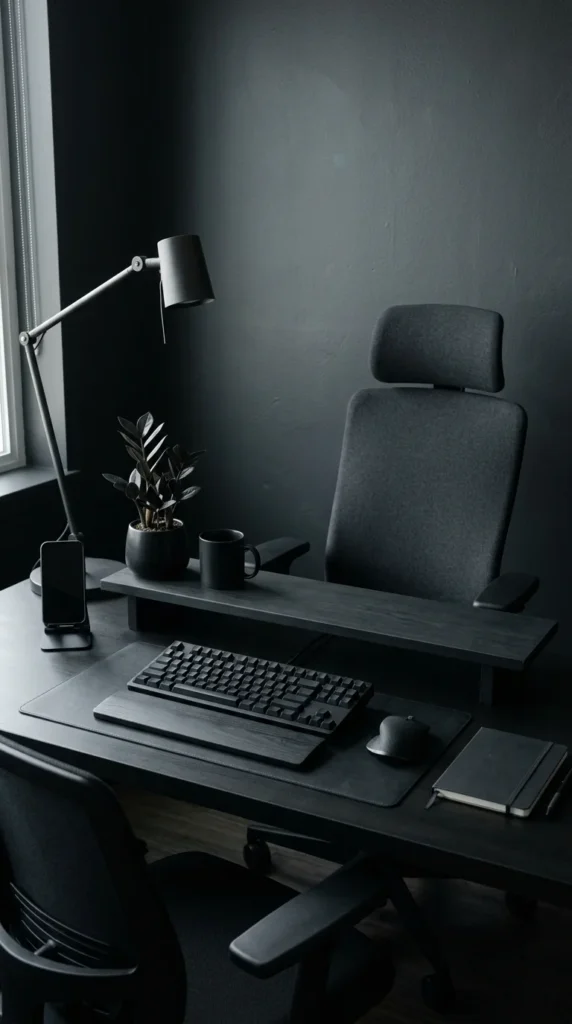
A unified color scheme reduces visual noise. Whether you choose “All-White,” “Stealth Black,” or “Soft Grey,” keeping your peripherals and furniture within the same color family creates a cohesive environment. This lack of color contrast allows your eyes to rest, preventing the fatigue that comes from a chaotic, multi-colored environment.
5. Single Plant
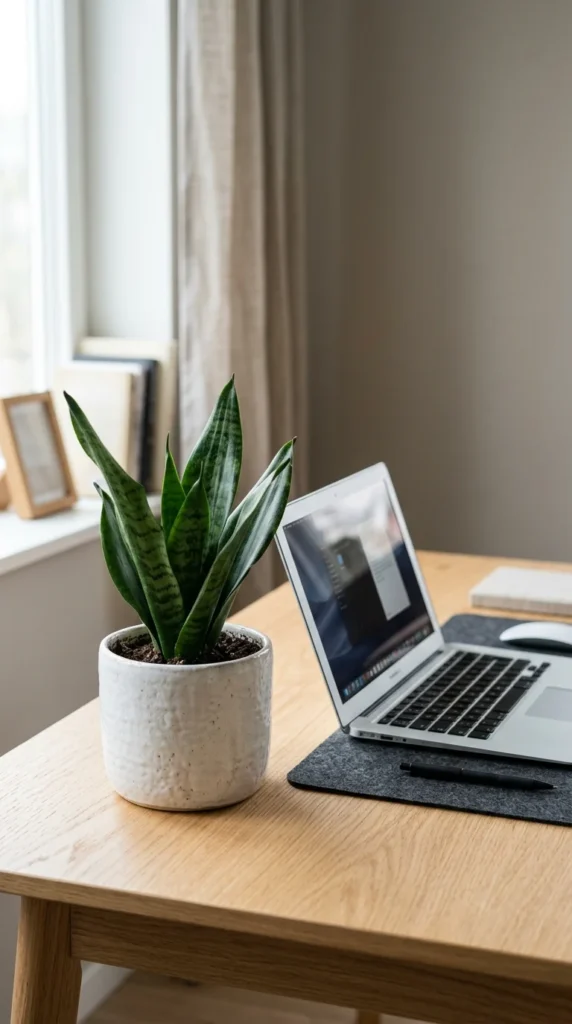
Biophilic design—incorporating nature into your workspace—is proven to reduce stress and increase productivity. However, in a minimalist setup, you don’t want a jungle. A single, well-placed plant like a Snake Plant, Pothos, or a small succulent provides a breath of life and a focal point for the eyes to rest on during breaks without cluttering the surface.
6. Pegboard Organization
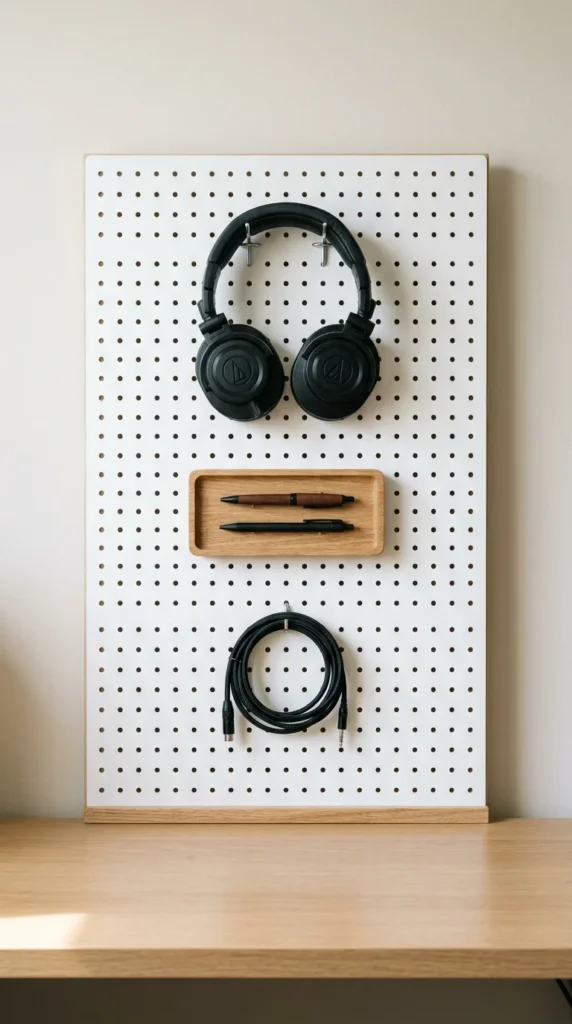
If you need tools within reach but want a clear desk, vertical storage is the answer. A pegboard allows you to move your essentials—like headphones, scissors, or charging cables—off the desk surface and onto the wall. This turns your tools into a functional art piece while keeping your primary work area 100% clear for your computer and mouse.
7. Felt Desk Mat
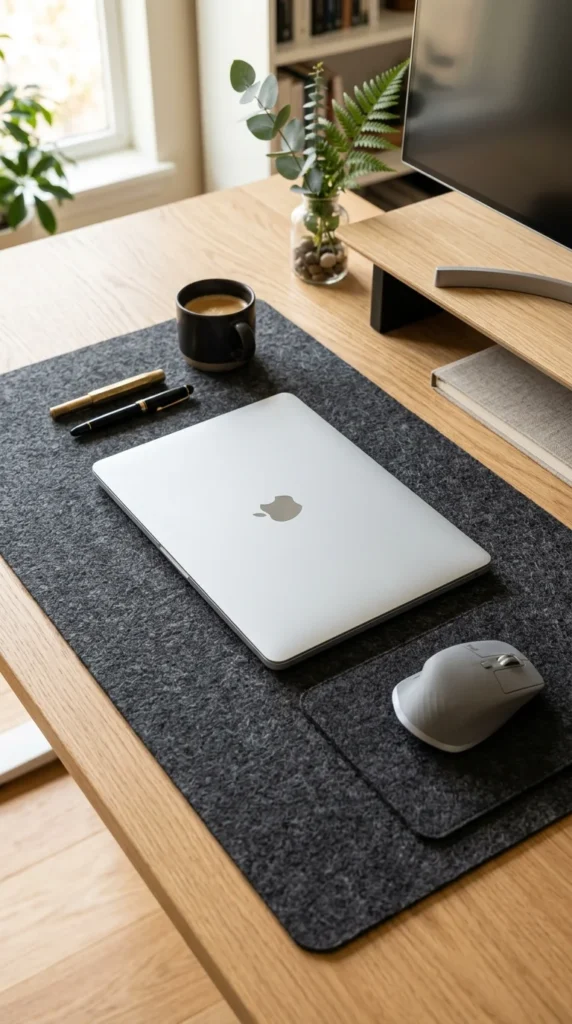
A desk mat acts as a “landing zone” for your most important tools. It visually defines your workspace and provides a soft, tactile surface that makes working more comfortable. Felt or leather mats add a layer of sophistication and help dampen the sound of your keyboard, creating a quieter, more focused atmosphere.
8. Wireless Peripherals
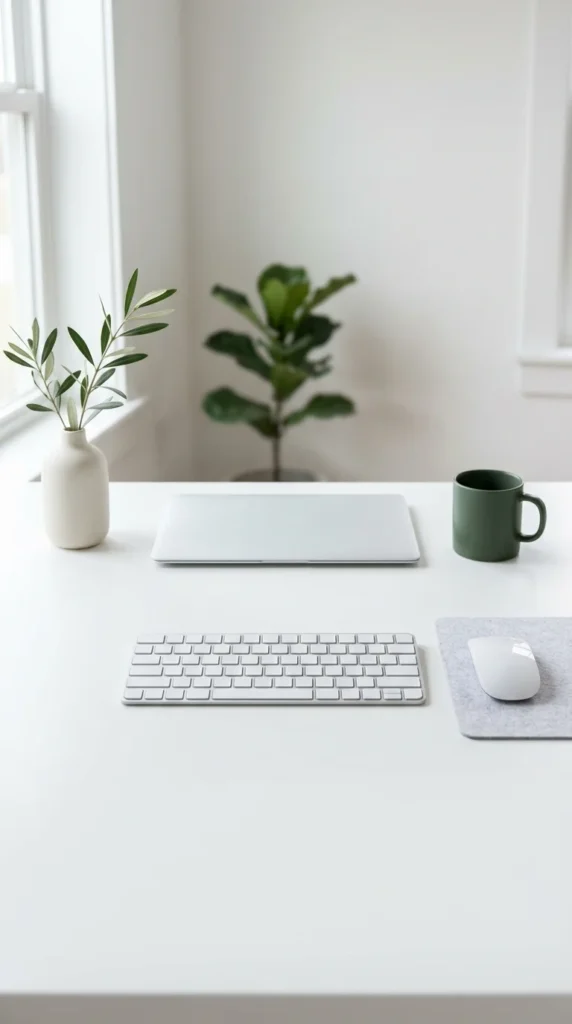
In the pursuit of minimalism, wires are the enemy. Switching to a high-quality wireless keyboard and mouse eliminates two of the most prominent cables on your desk. Modern Bluetooth and 2.4GHz technology offer near-zero latency, meaning you don’t have to sacrifice performance for the sake of a clean, cord-free aesthetic.
9. Natural Light Focus
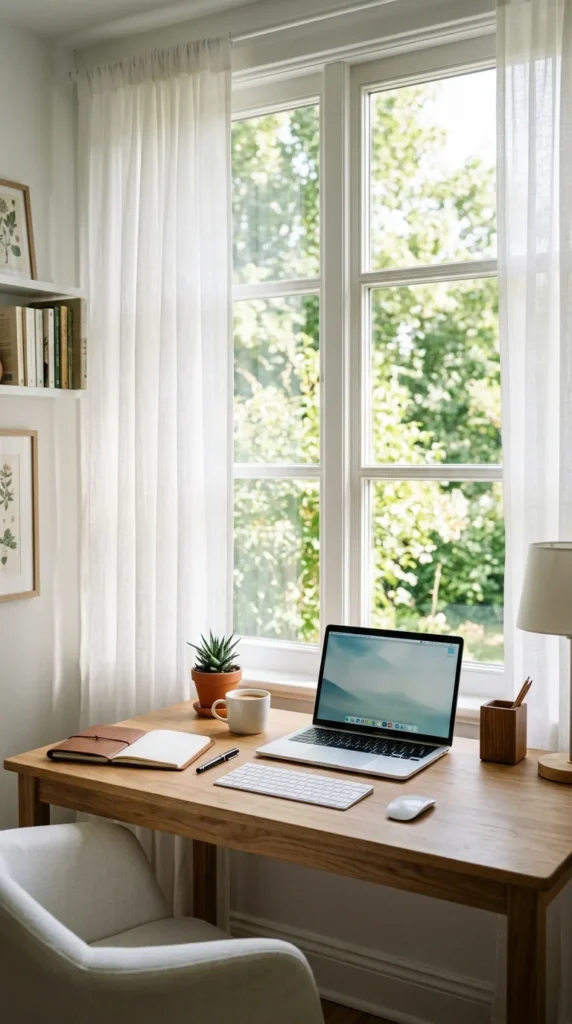
Positioning your desk to face a window or to be bathed in natural light can drastically improve your mood and circadian rhythm. A minimalist setup thrives in natural light because it emphasizes the clean lines and open spaces of the design. When your environment feels bright and airy, your capacity for sustained focus naturally increases.
10. Under-Desk Drawer
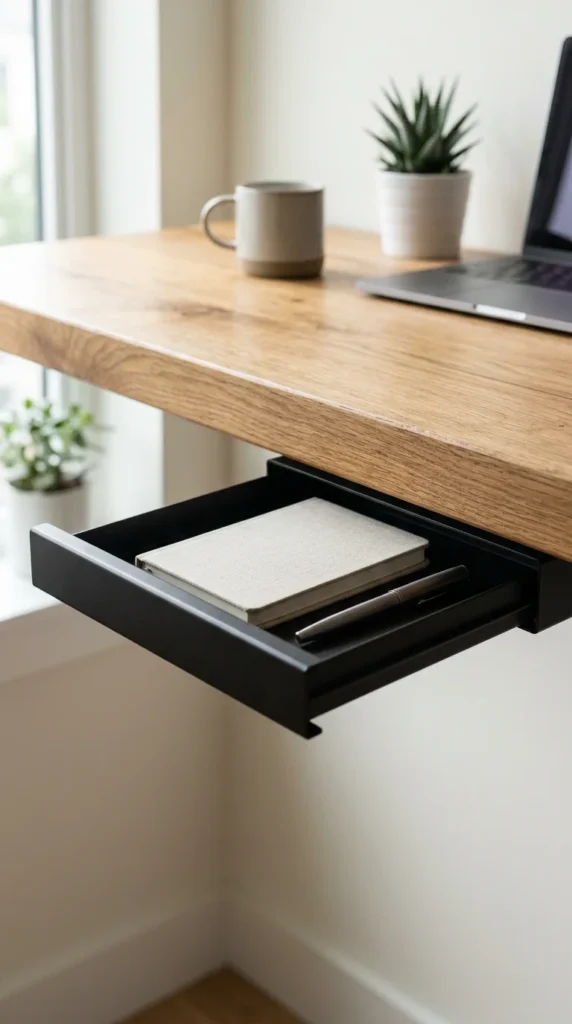
If you absolutely must keep physical items like pens, sticky notes, or a passport nearby, use a hidden under-desk drawer. This allows you to maintain a “zero-item” desk surface while keeping your essentials just inches away. It’s the perfect solution for the “out of sight, out of mind” philosophy of productivity.
11. Minimalist Task Lamp
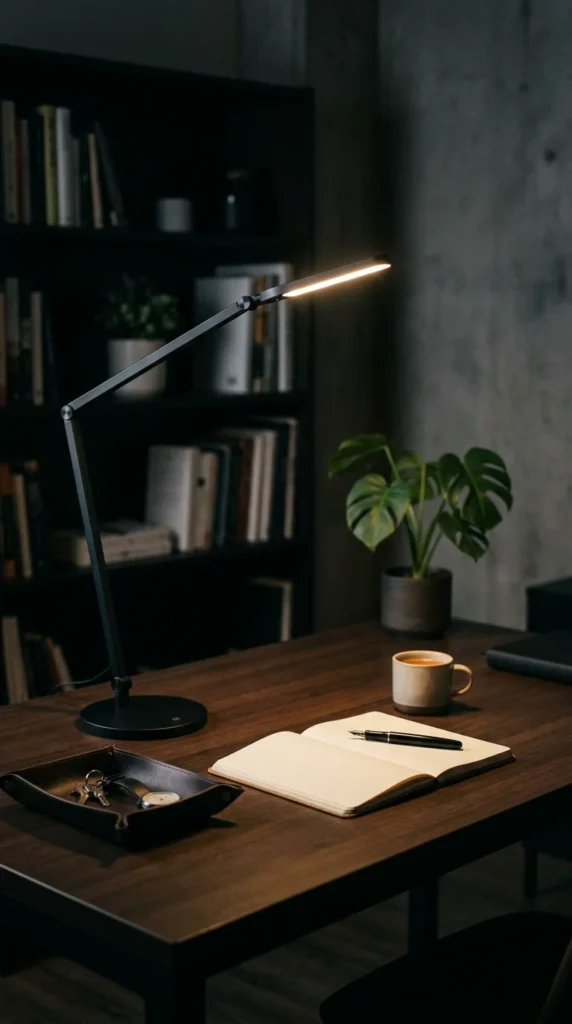
Lighting is a tool, not just a decoration. A slim, architectural LED lamp provides focused light for tasks without taking up significant physical or visual space. Choose a lamp with adjustable color temperatures so you can shift from “Focus Mode” (cool blue light) to “Relax Mode” (warm yellow light) as evening approaches.
12. Sit-Stand Functionality
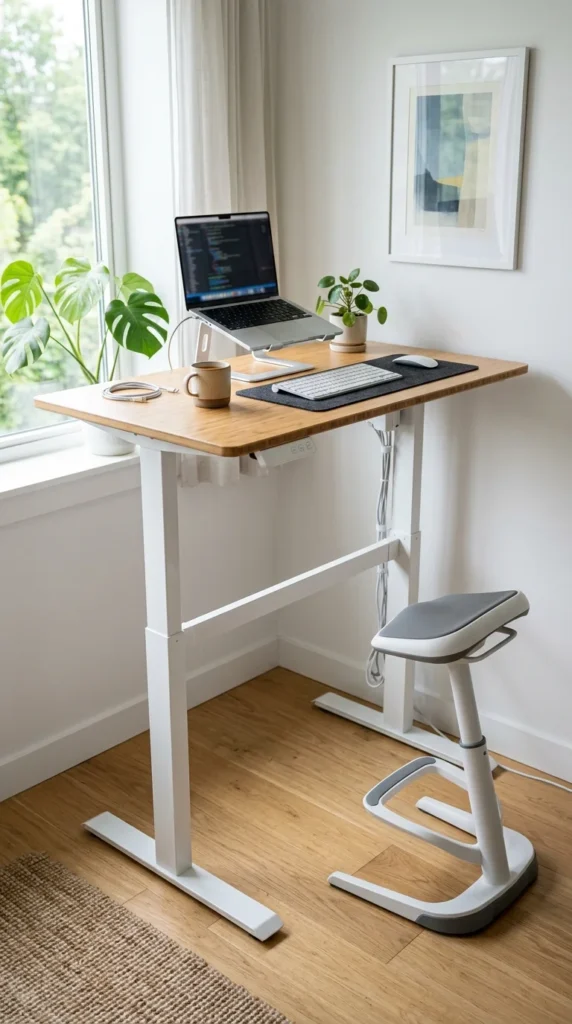
A minimalist desk can also be a healthy one. Electric sit-stand desks allow you to change your posture throughout the day, which keeps blood flowing and prevents the “brain fog” associated with sitting for eight hours. Look for models with a simple two-button controller to maintain the clean, low-profile look of the frame.
13. Laptop Stand
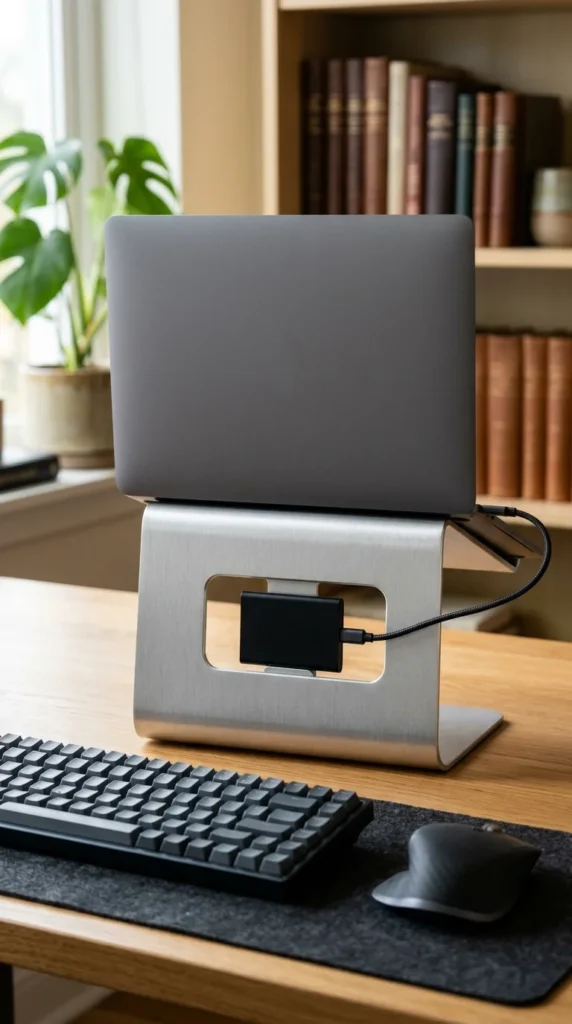
If you work exclusively from a laptop, a minimalist stand is essential for ergonomics. Elevating the screen to eye level prevents “tech neck” and allows you to use a dedicated keyboard. Many minimalist stands are designed to allow the laptop to be “docked” vertically, saving an immense amount of space when you are using an external monitor.
14. Acoustic Panels
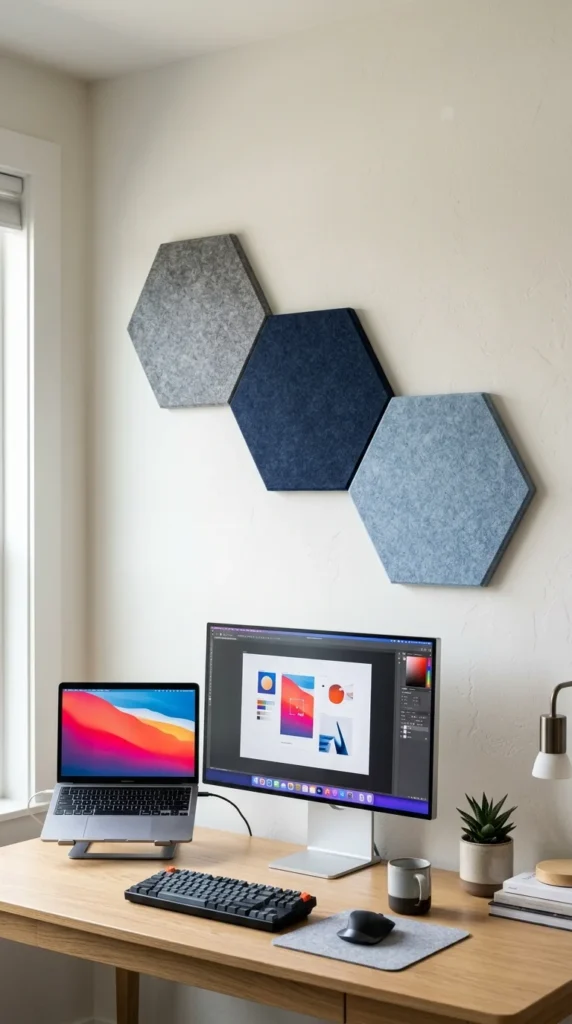
Minimalism often involves hard surfaces (wood, metal, glass), which can lead to echo and sound fatigue. Adding a few minimalist acoustic panels not only serves as a decorative backdrop but also absorbs ambient noise. This creates a “quiet bubble” that is essential for deep concentration and clear video calls.
15. Symmetry and Balance
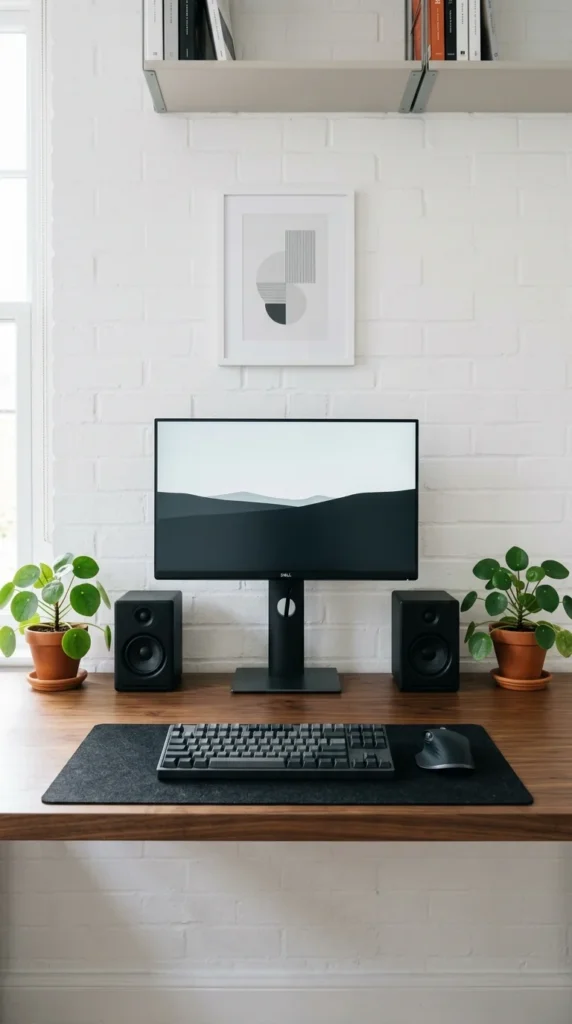
The human brain finds symmetry inherently calming. By arranging your desk items in a balanced way—centered monitor, flanked by speakers or small accessories—you create a sense of order. This visual harmony signals to your brain that “everything is in its place,” reducing the background anxiety that can stem from a lopsided or disorganized environment.
16. Analog Corner

Sometimes the best way to focus is to step away from the screen. Even the most high-tech minimalist setup can benefit from an “analog zone.” Keeping a single notebook and a high-quality pen on one side of your desk encourages you to sketch ideas, brainstorm, or plan your day without the distractions of notifications and tabs.
17. Hidden Tech Hub
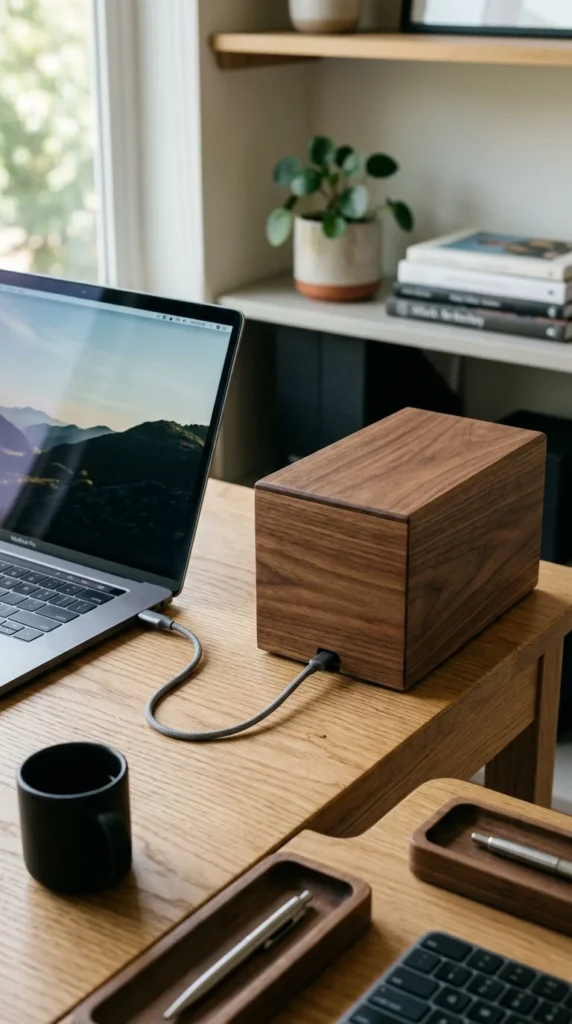
If you use multiple peripherals—webcams, microphones, external drives—the cables can quickly become a nightmare. A “hidden hub” approach involves mounting your USB hubs and docks to the underside of the desk or placing them in a stylish cable management box. This way, you get all the functionality of a powerhouse workstation with the visual simplicity of a basic writing desk.