
In the modern era of remote work and digital nomadism, the home office has evolved from a luxury to a necessity. However, as our work lives blend with our domestic spaces, clutter often follows. A disorganized workspace isn’t just an eyesore; it’s a productivity killer. When every square inch counts, finding creative ways to stow away stationery, hide cables, and organize documents becomes an art form.
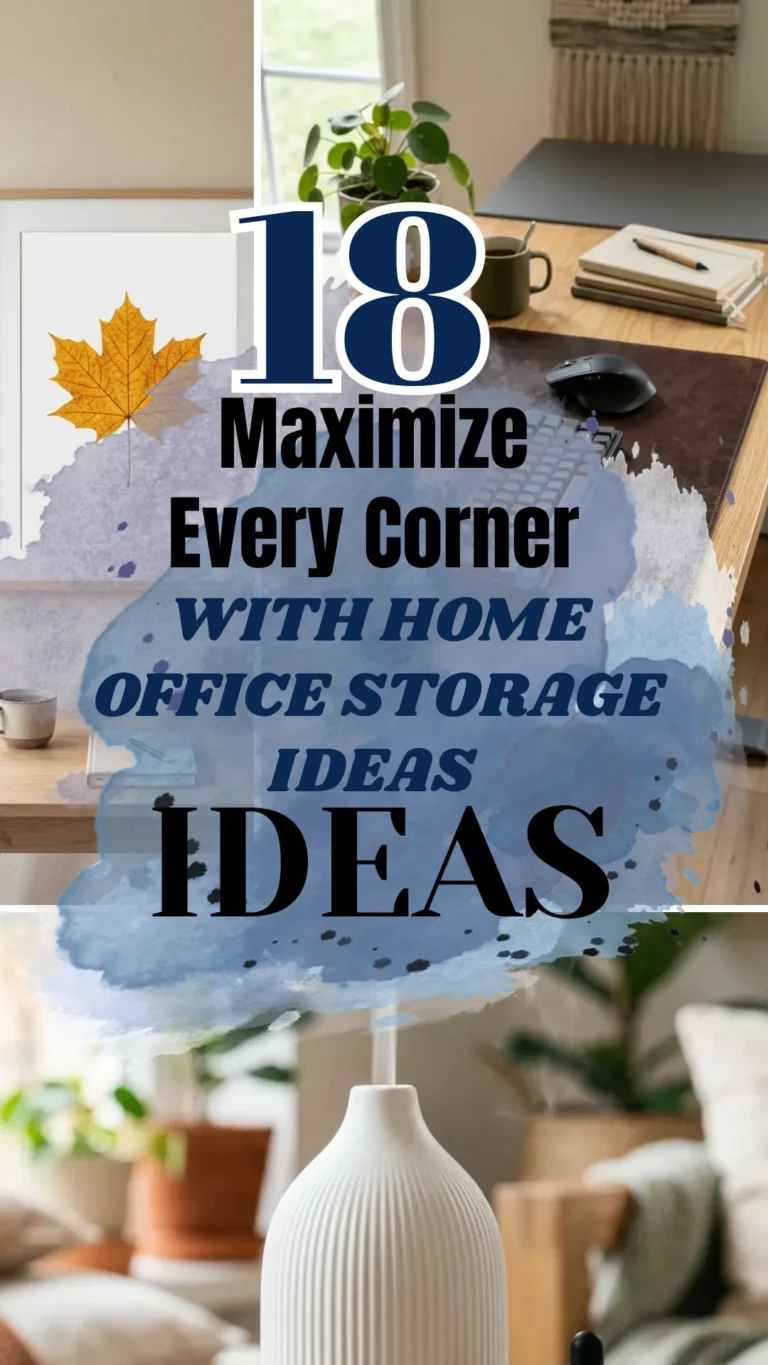
To help you reclaim your focus and beautify your workspace, we’ve curated 18 ingenious home office storage ideas. These solutions range from floor-to-ceiling transformations to clever hidden nooks, ensuring that no matter how small your room is, it can feel like a spacious executive suite.
1. Floating Shelves
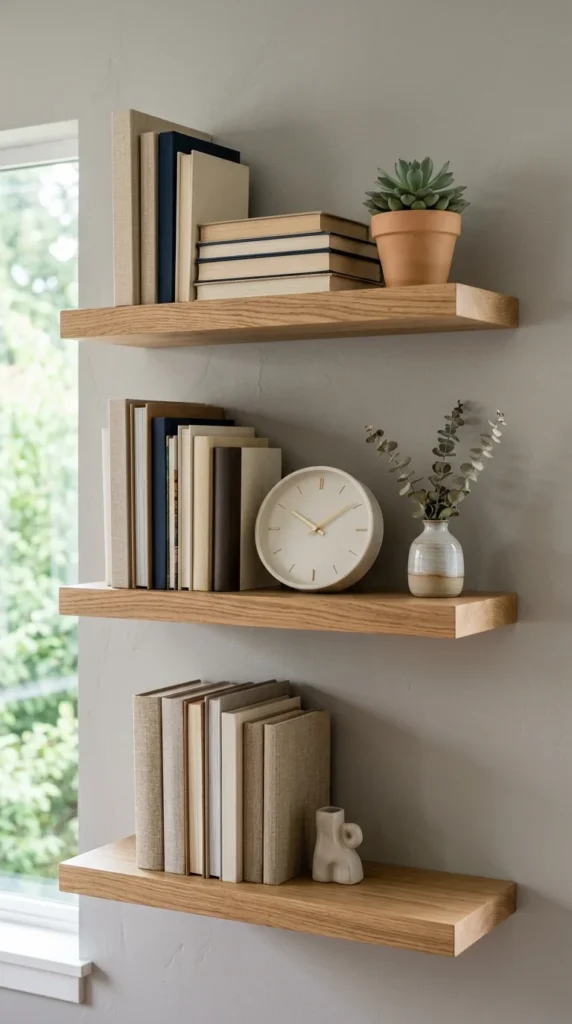
Floating shelves are the ultimate “space hack” for home offices. By utilizing vertical wall space, you free up the footprint of your desk. Unlike heavy bookcases, floating shelves maintain an airy, open feel. They are perfect for displaying items you need quick access to, such as reference books or a daily planner, while also providing a platform for decorative elements that inspire your creativity.
2. Pegboard Walls
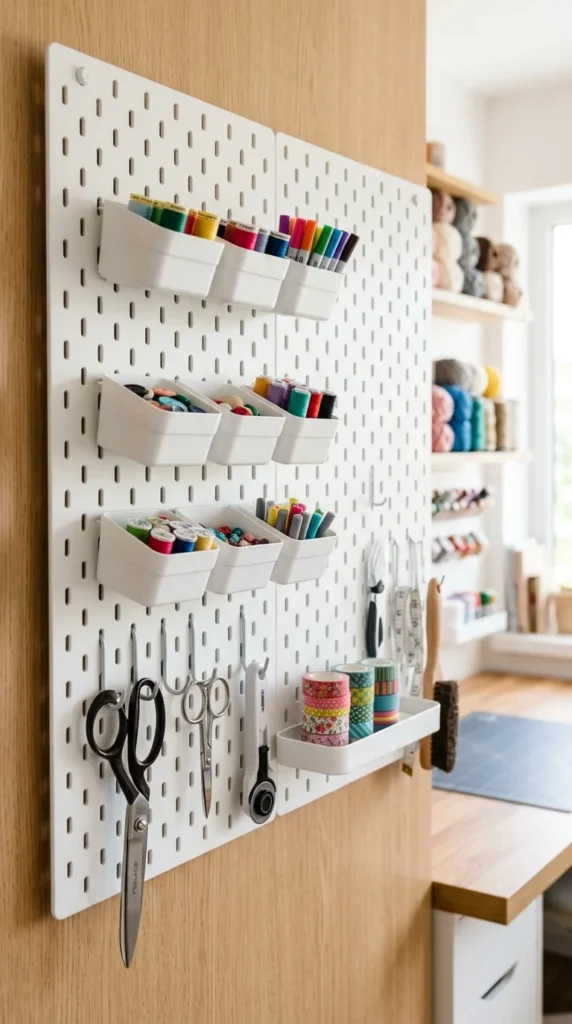
The pegboard is no longer just for the garage. In a home office, a well-placed pegboard acts as a customizable command center. You can rearrange hooks, bins, and shelves as your needs change. It’s particularly effective for “makers” or those who use a lot of physical tools like scissors, rulers, and various cables. Everything stays visible and within arm’s reach, preventing the dreaded “junk drawer” syndrome.
3. Rolling Carts
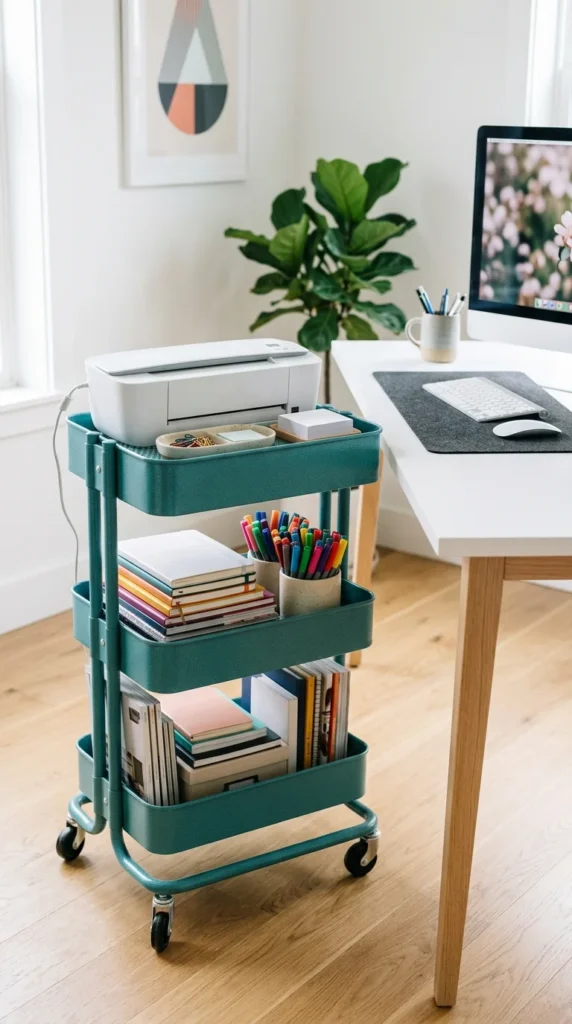
Flexibility is key in a multi-functional home. A rolling utility cart provides mobile storage that can be tucked under a desk or moved to another room if you decide to work from the kitchen table for a day. Use each tier for a specific category: the top for high-use items like your printer or laptop charger, the middle for files, and the bottom for bulkier supplies like reams of paper.
4. Vertical Cubbies
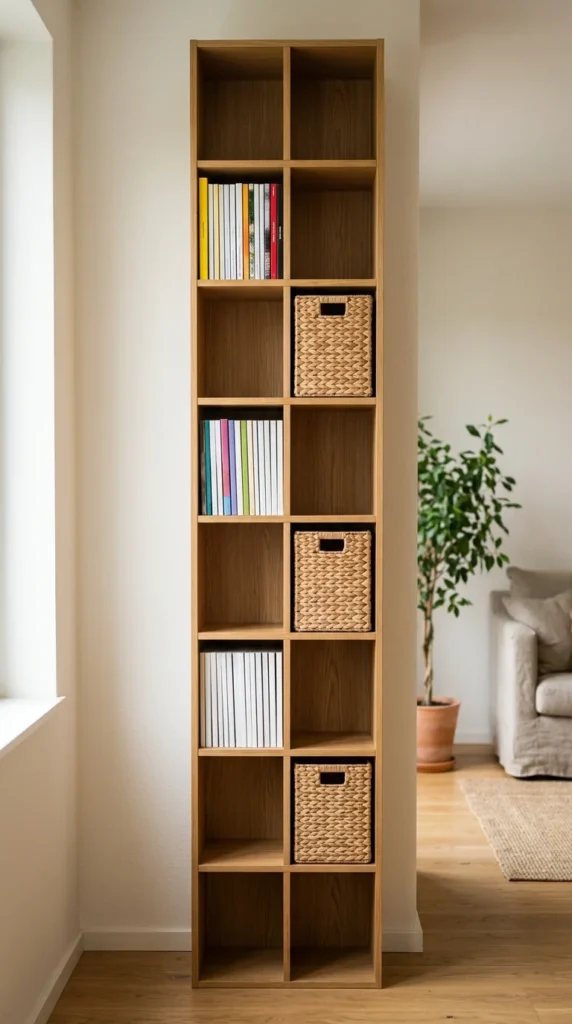
Vertical cubbies maximize the “z-axis” of your room. By choosing a tall, narrow unit, you take advantage of height rather than width. To keep the look cohesive and hide visual clutter, use matching bins or baskets inside the cubbies. This allows you to store loose items like charging cables, extra staplers, and miscellaneous stationery without making the room look messy.
5. Built-in Nooks
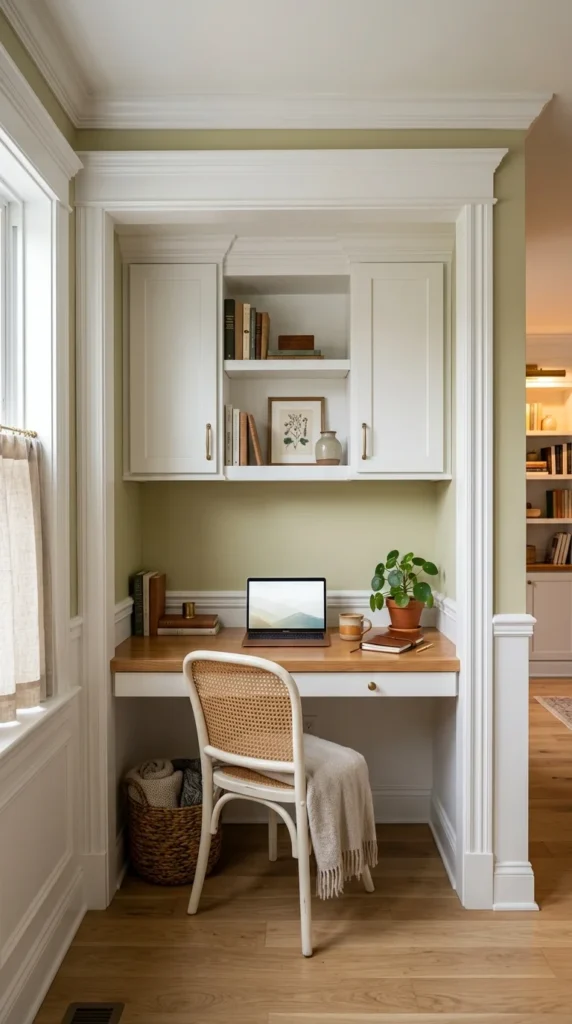
If your home has an architectural oddity like a recessed wall or a space under the stairs, turn it into a built-in office nook. Custom-fitted shelving and desks make use of every available centimeter. Because these areas are often “tucked away,” they provide a sense of privacy and focus, even in an open-concept home.
6. Under-Desk Drawers
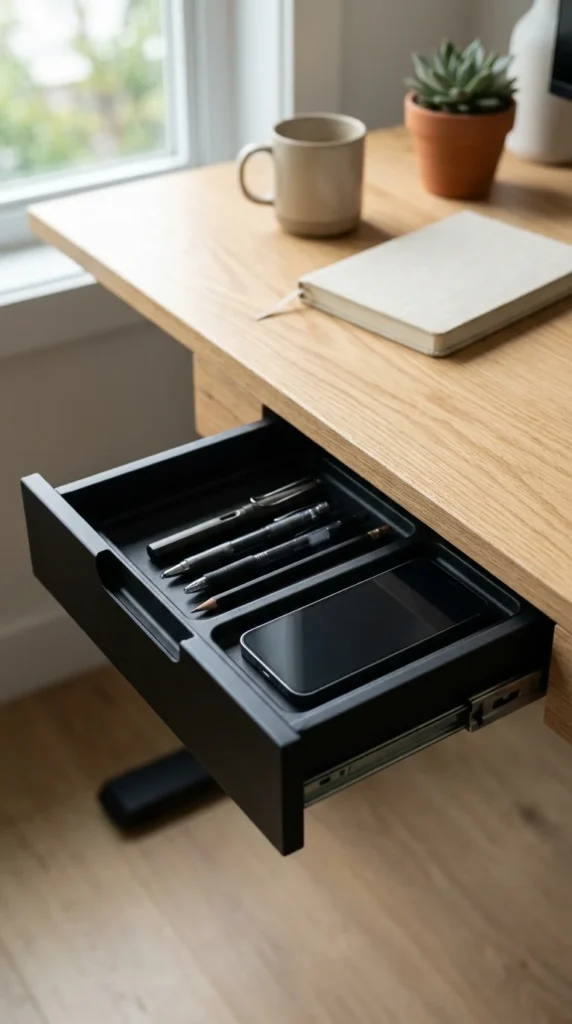
Not all desks come with built-in storage. If you have a simple trestle or standing desk, you can add “aftermarket” under-desk drawers. These slim, slide-out compartments are perfect for hiding away the small items that usually clutter a desktop, such as USB drives, post-it notes, and pens, keeping your primary work surface clean and clear.
7. Corner Units
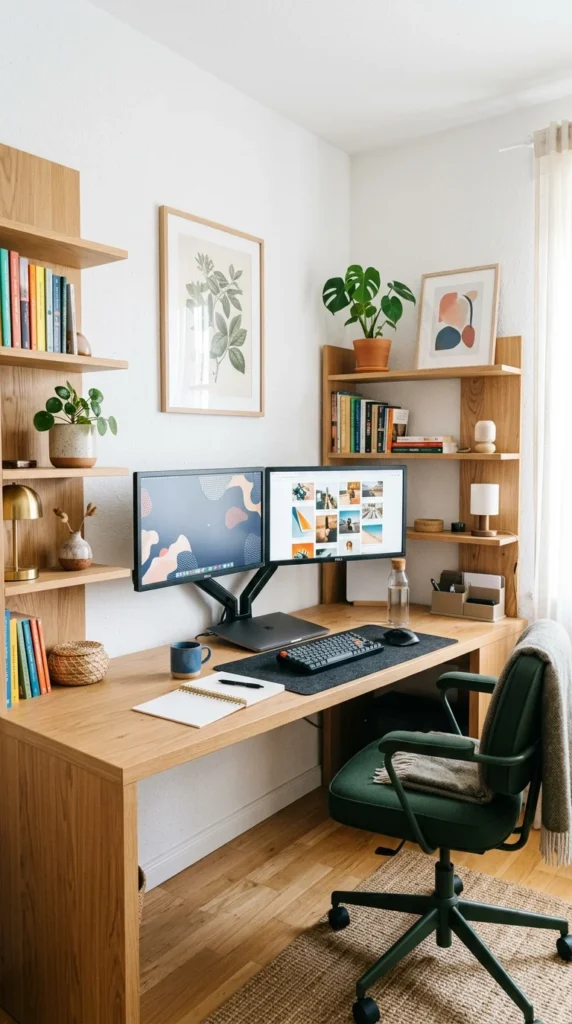
Corners are often the most underutilized areas in a room. An L-shaped desk or a dedicated corner shelving unit allows you to spread out your equipment without intruding into the center of the room. This layout creates a “cockpit” feel, where everything you need is just a swivel of the chair away.
8. Decorative Boxes
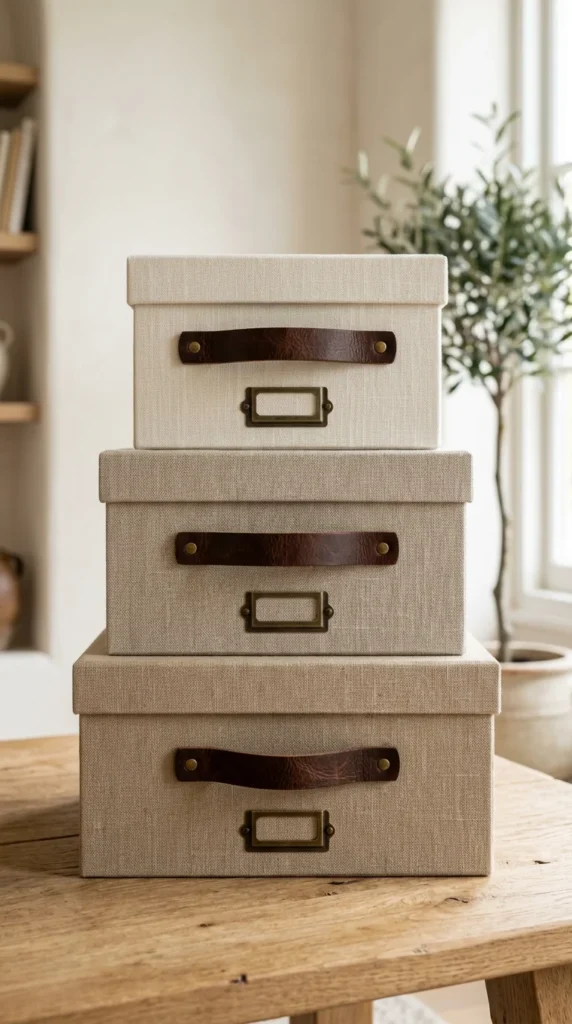
Sometimes the best storage is the kind that looks like decor. High-quality decorative boxes allow you to store unsightly paperwork, tax records, or old tech gadgets right on your shelves. By choosing boxes that match your room’s color palette, you turn storage into a design feature. Labeling the front of each box ensures you never spend twenty minutes looking for a specific receipt.
9. Ladder Desks
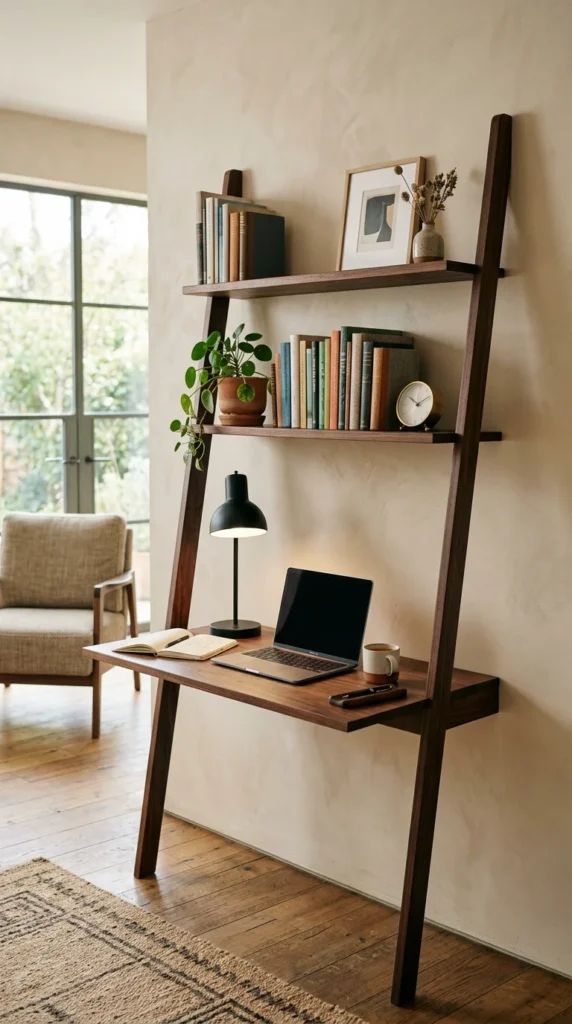
For the truly space-constrained, a ladder desk is a godsend. These units lean against the wall and offer a footprint that is significantly smaller than a traditional desk. The graduated shelves above the desk surface provide built-in storage for your library or decorative items, making the most of the vertical space above your laptop.
10. Magnetic Strips
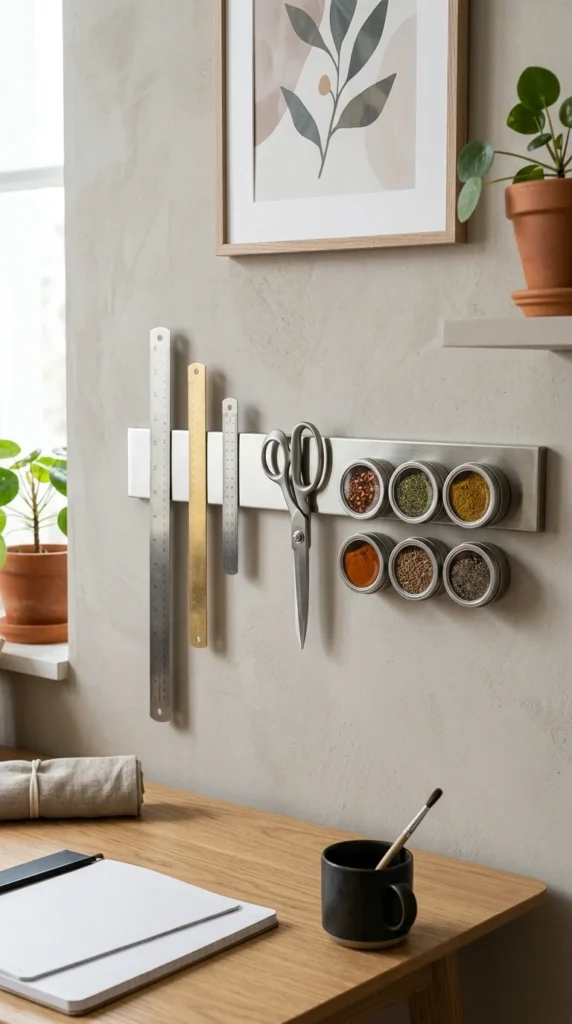
Borrowing a trick from the kitchen, magnetic strips are excellent for organizing metal office supplies. They are perfect for holding onto scissors, paperclips (in small metal tins), or even keys. This keeps your tools off the desk but keeps them visible, which is particularly helpful for those who find “out of sight, out of mind” leads to lost items.
11. Cable Organizers
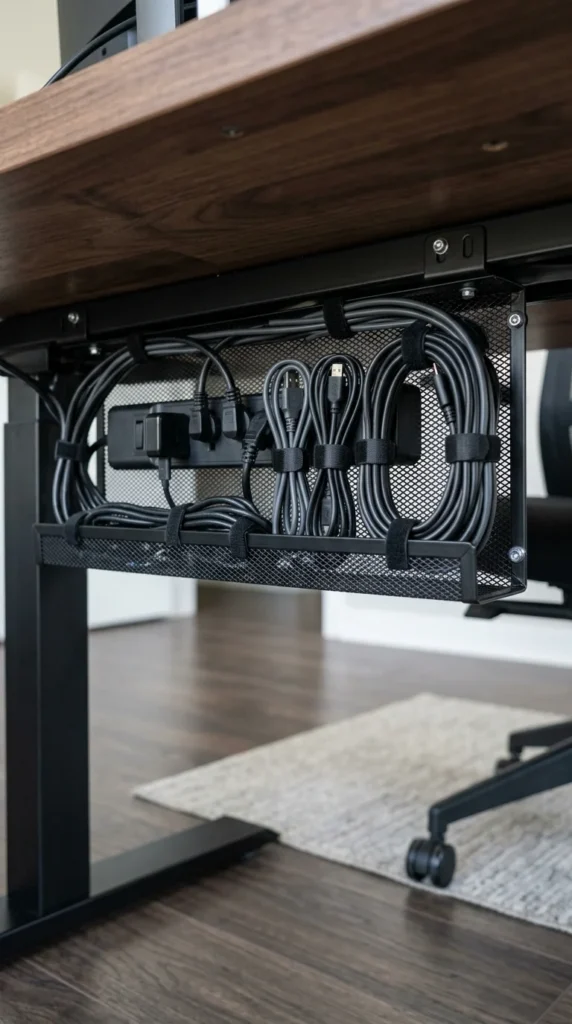
Nothing ruins the aesthetic of a beautiful home office like a “spaghetti” of wires hanging from the desk. Cable management boxes, clips, and trays are essential storage tools. By routing your power strips and charging cables through an under-desk tray, you keep the floor clear and the visual noise to a minimum. It also makes cleaning much easier.
12. Closet Conversions
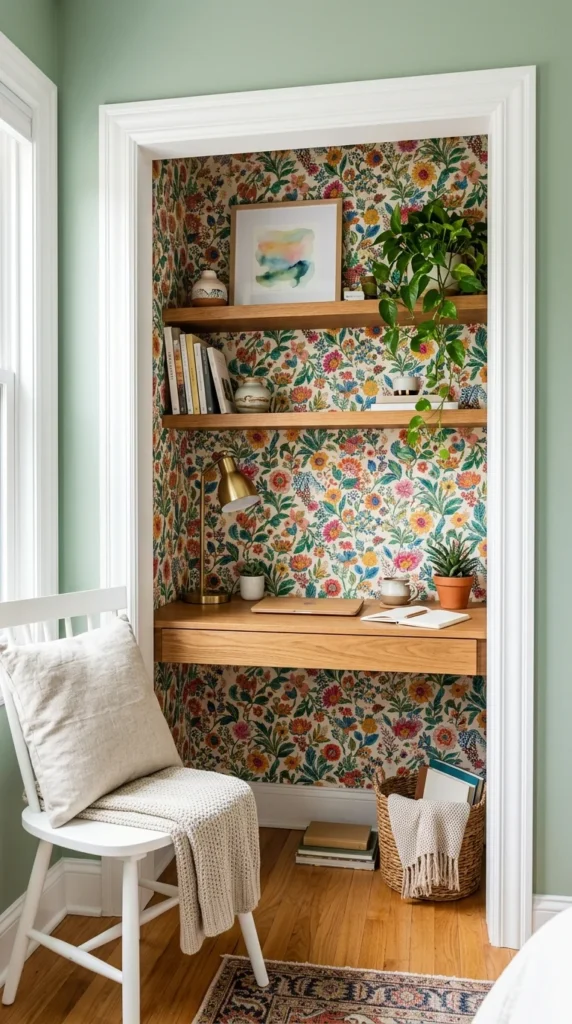
The “cloffice” (closet-office) is a brilliant way to hide your work at the end of the day. By removing the doors or simply keeping them open during work hours, a standard reach-in closet can become a fully functional workspace. You can install a desk at waist height and utilize the upper shelf for deep storage, effectively creating a separate room within a room.
13. Credenza Storage
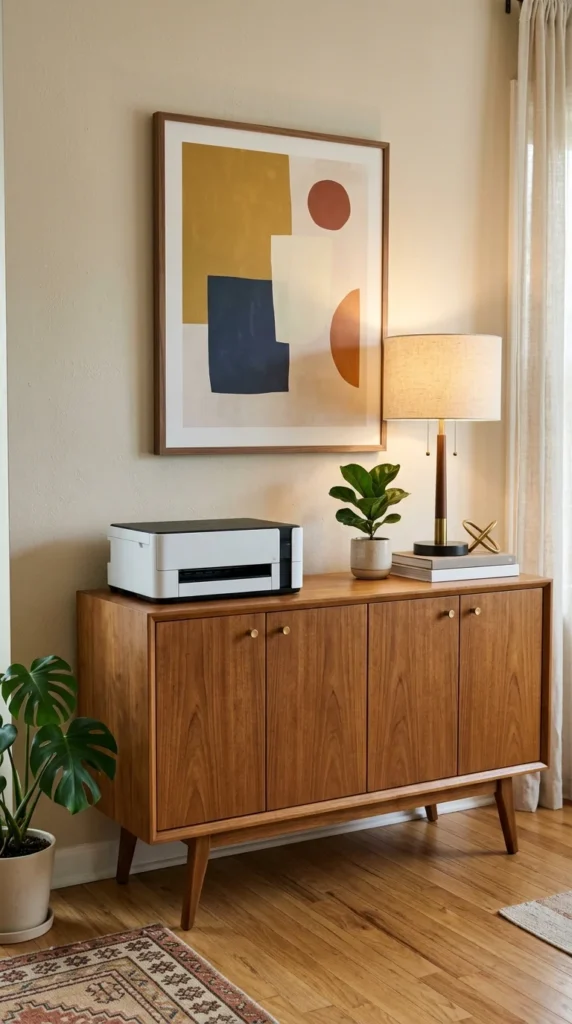
If you have the floor space, a credenza is a sophisticated storage choice. Unlike a traditional filing cabinet, a credenza offers a wide, flat top that can serve as a secondary work surface or a spot for your printer. Inside, the deep cabinets can hide bulky items like scanners, ring binders, or even a small shredder.
14. Monitor Risers
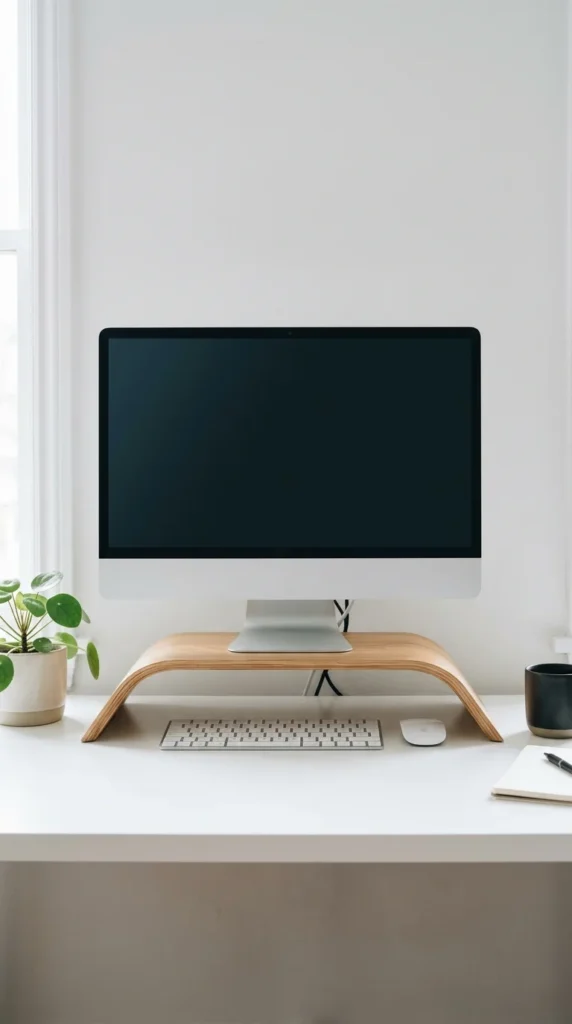
Ergonomics meets organization with the monitor riser. By lifting your screen to eye level, you reduce neck strain, but you also create a valuable new storage “slot” on your desk. The space underneath the riser is the perfect home for your keyboard when not in use, or for a flat notebook and a few pens.
15. Hanging Organizers
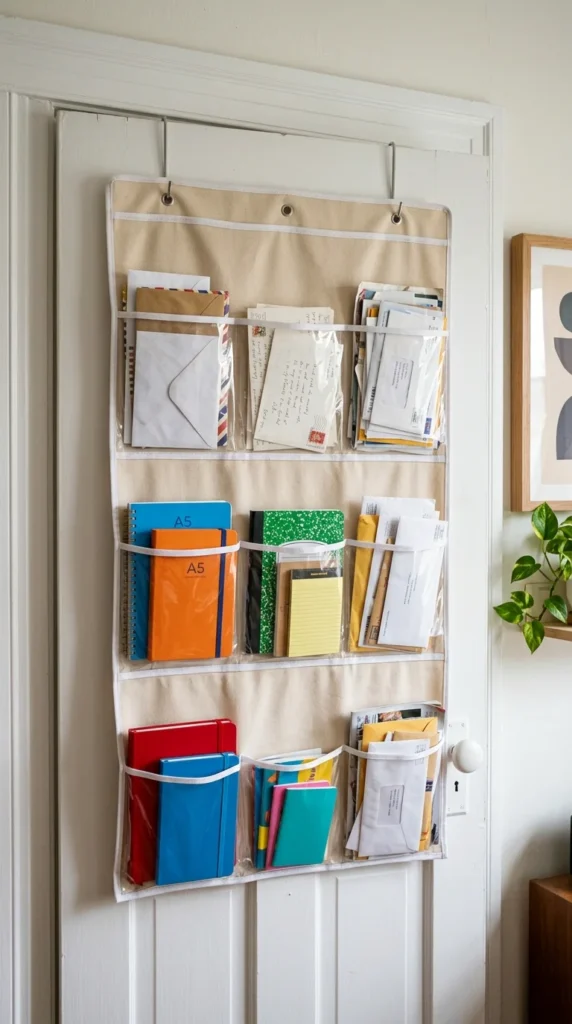
If you don’t have wall space for shelves, look to your doors. Fabric or plastic hanging organizers can hold a surprising amount of gear. They are particularly useful for sorting incoming mail, holding stationery supplies, or even storing your “work from home” headset and chargers.
16. Ottoman Storage

In a small apartment, furniture often has to do double duty. A storage ottoman provides a comfortable place to rest your feet during long calls, but the hollow center is an excellent hiding spot for items you don’t need every day, such as extra cables, backstock paper, or reference manuals.
17. Wall-Mounted Files
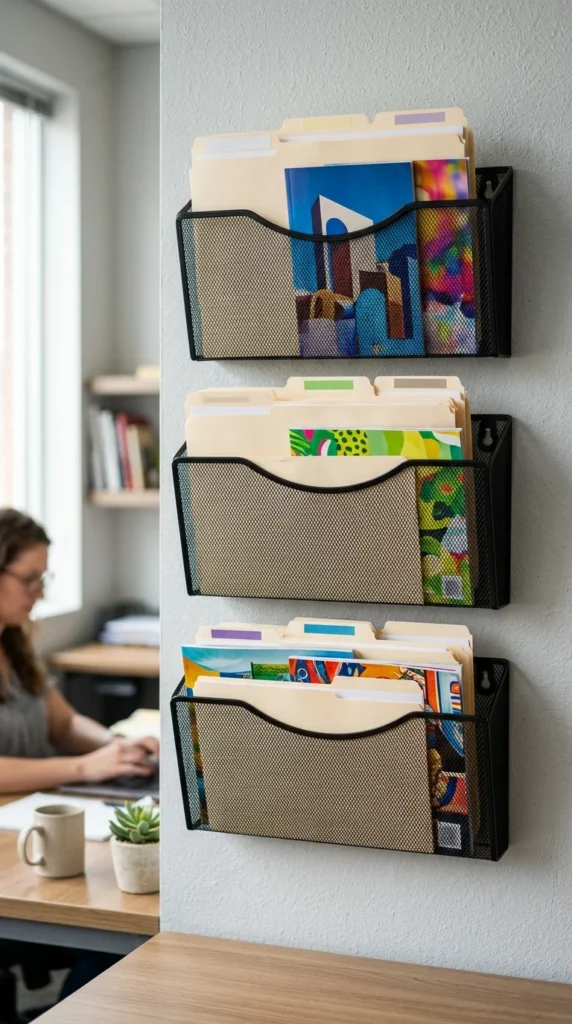
Clear your desk of “paper piles” by moving them to the wall. Wall-mounted file holders allow you to sort your “To-Do,” “To-File,” and “To-Read” documents vertically. This keeps your current projects front-and-center without them physically occupying your workspace.
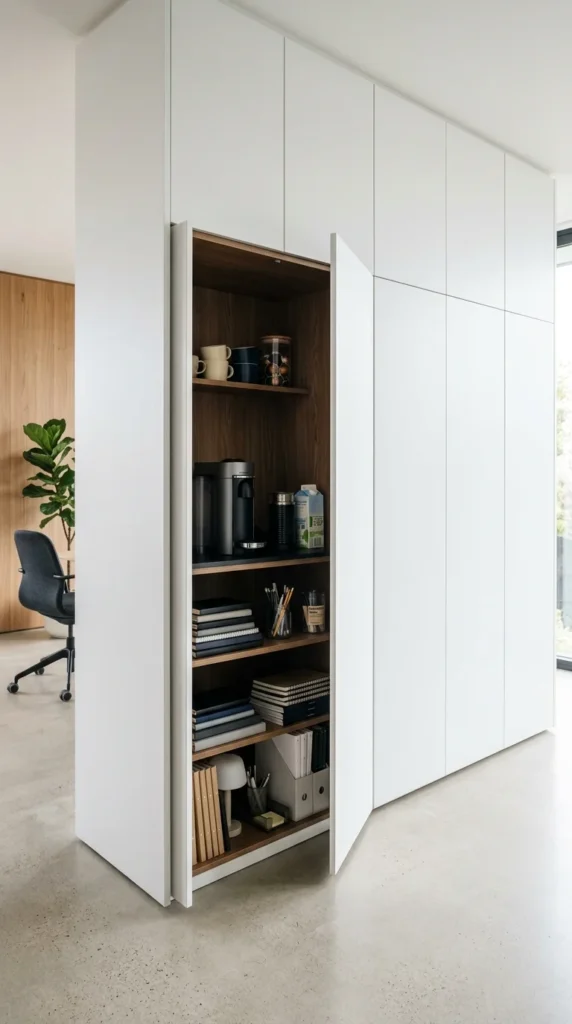
18. Hidden Cabinets
For the ultimate minimalist, hidden cabinets that blend into the architecture of the room are the gold standard. These “touch-to-open” cabinets can house everything from your computer tower to a hidden espresso bar. When closed, the room looks like a clean, serene living space, allowing you to completely disconnect from work once the clock strikes five.