The traditional boundary between work and wellness is dissolving. As more professionals transition to permanent remote or hybrid schedules, the need for a space that fosters both cognitive performance and physical health has never been greater. Creating a “Gym-Office” is not just about cramming a treadmill next to a printer; it is about designing a cohesive ecosystem where productivity fuels movement, and movement sharpens the mind.
Integrating these two worlds allows you to capitalize on “micro-workouts” during conference calls or clear mental blocks with a quick set of lunges. Whether you are working with a sprawling basement or a tight corner in a studio apartment, these 19 ideas will help you master the art of the hybrid workspace.
1. Walking Pads
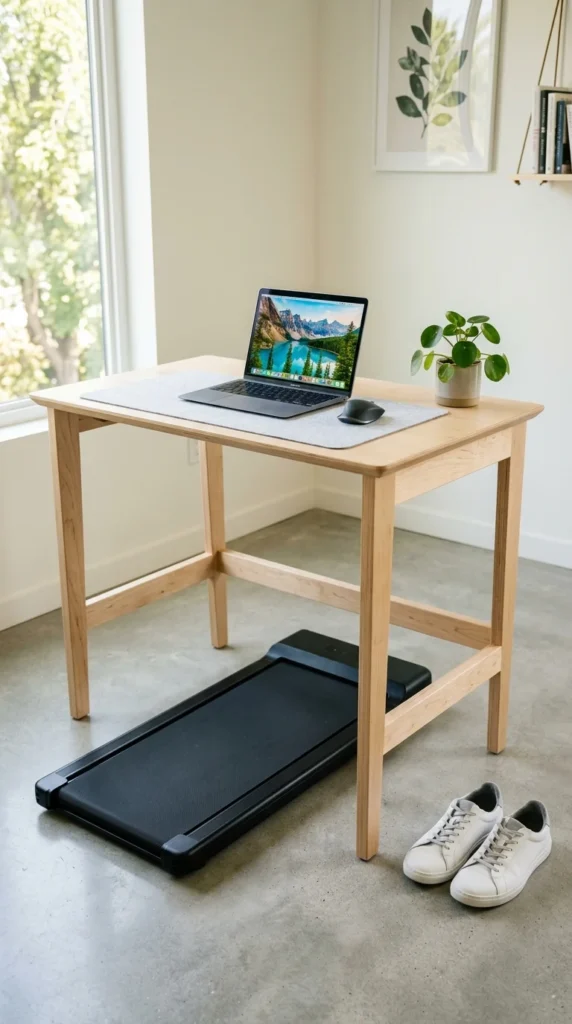
The walking pad is the undisputed king of the home gym-office combo. Unlike traditional bulky treadmills, these slim devices are designed to slide under a standing desk. They operate at lower speeds, allowing you to clock in miles while answering emails or attending virtual meetings. The gentle movement keeps your blood flowing, which prevents the afternoon energy slump and keeps your metabolism humming throughout the nine-to-five.
2. Wall-Mounted Racks
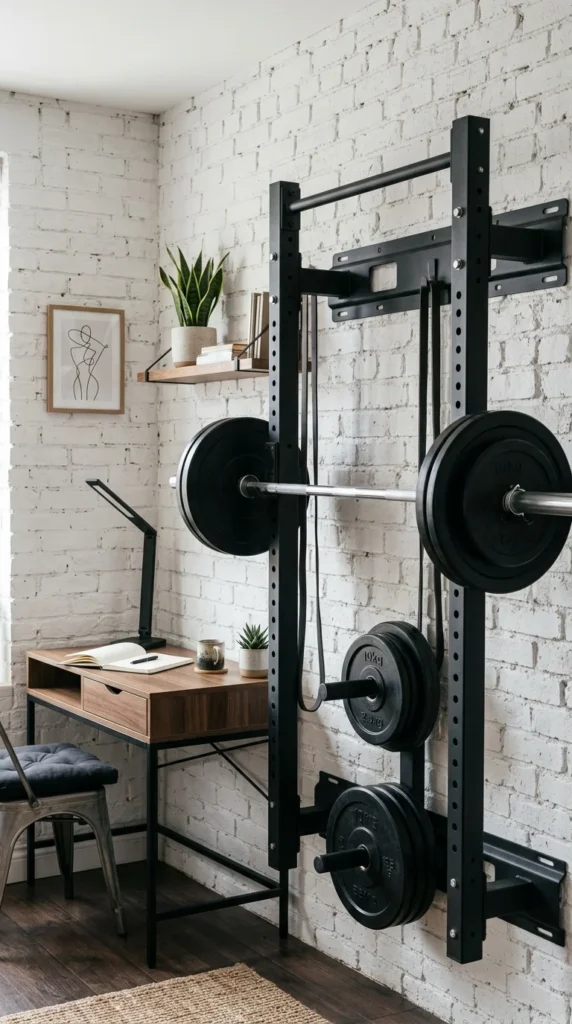
When floor space is at a premium, look to your walls. Wall-mounted racks or “folding power racks” can be tucked against the wall when not in use, leaving plenty of room for your office chair to glide. This setup is perfect for the serious lifter who needs a squat rack but also needs to host professional video calls. When the rack is folded, it looks like a piece of industrial wall art, maintaining a professional aesthetic.
3. Murphy Gyms
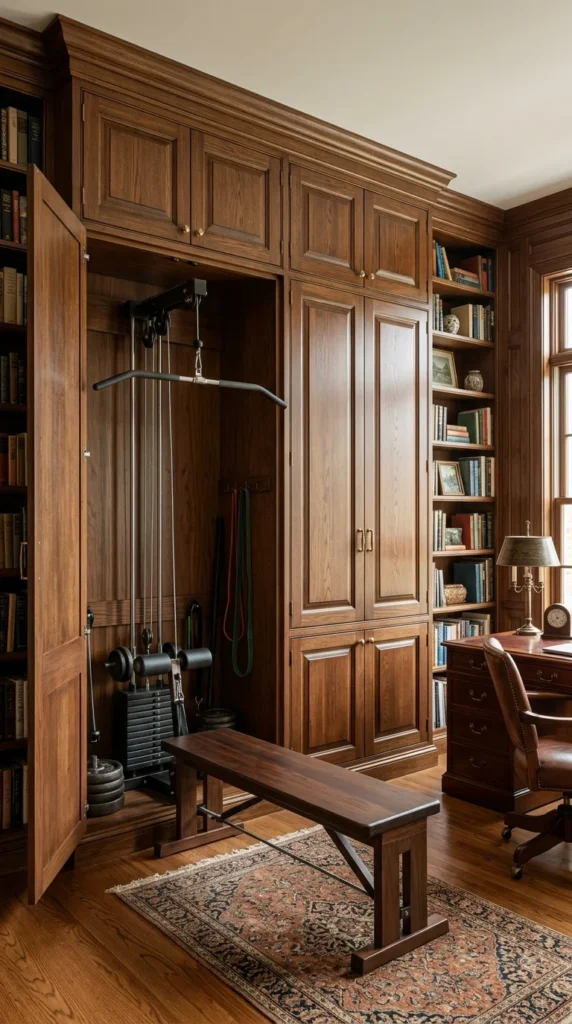
Inspired by the classic Murphy bed, the Murphy gym is the ultimate “now you see it, now you don’t” solution. These units house entire cable machines, benches, and weight storage inside a cabinet that looks like high-end cabinetry. It allows you to transform your professional sanctuary into a high-performance training center in under thirty seconds.
4. Stability Balls
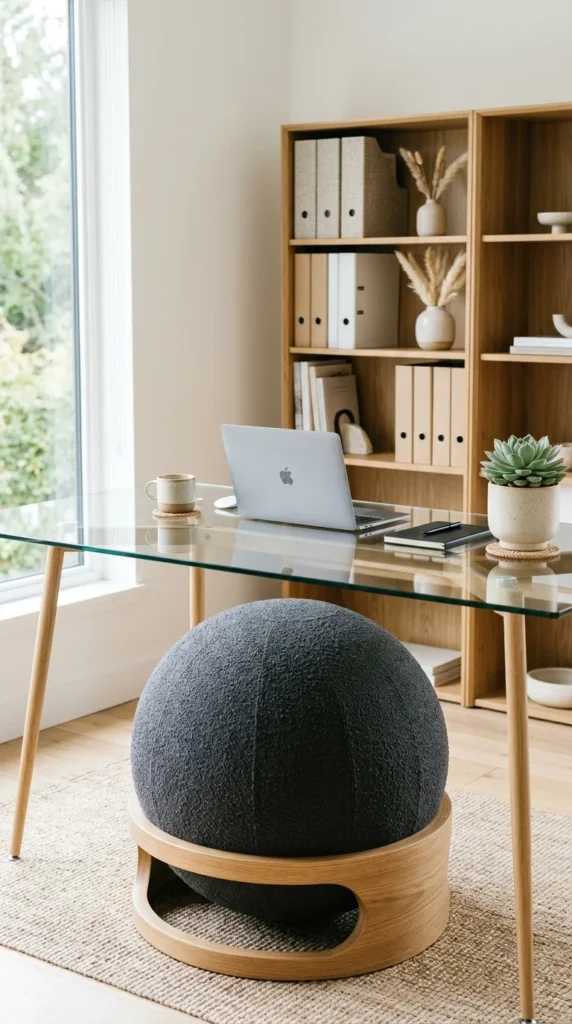
Replacing your ergonomic chair with a stability ball—even for just two hours a day—forces your core muscles to engage. This “active sitting” improves posture and strengthens the stabilizer muscles in your back and abdomen. For an office setting, choose a ball with a high-quality fabric cover (like felt or canvas) to make it look like a piece of designer furniture rather than gym equipment.
5. Resistance Stations
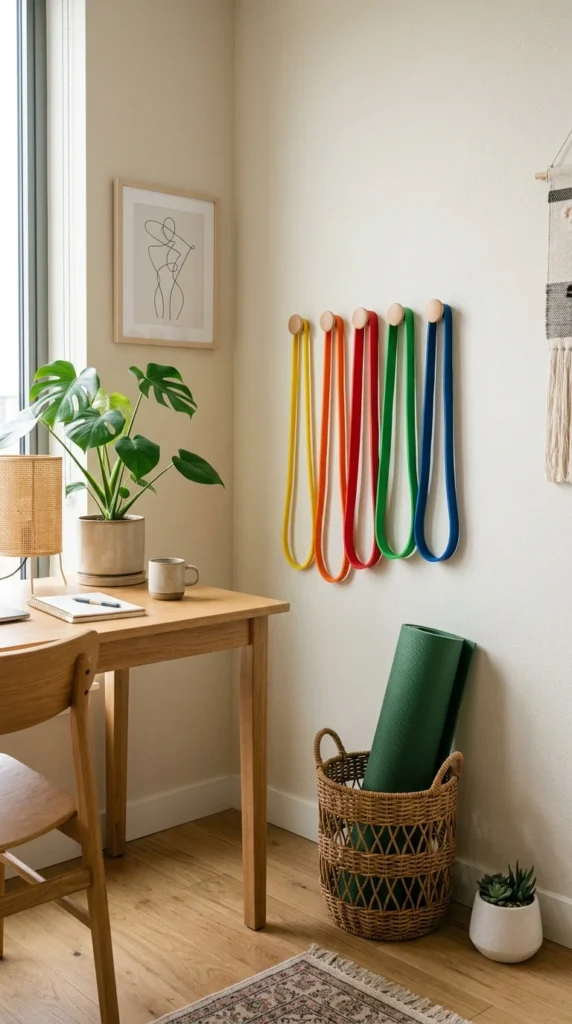
Resistance bands are the most space-efficient tools in the fitness world. By installing a few anchor points at different heights on a wall near your desk, you can perform full-body strength routines without ever leaving your workspace. They are silent, making them ideal for a quick set of chest presses or rows between meetings without disturbing anyone else in the house.
6. Peloton Nooks
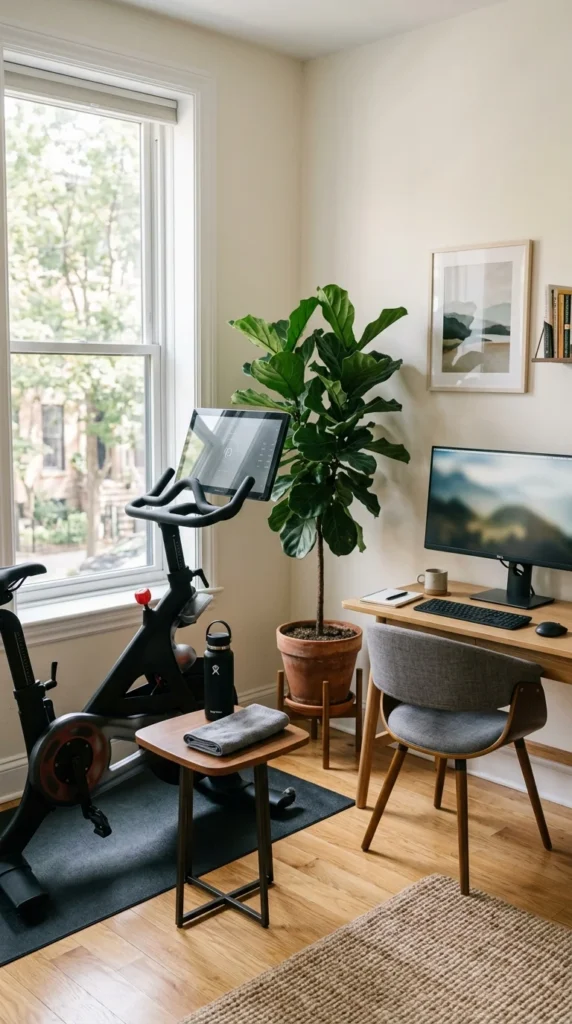
The rise of connected fitness has made it easier to blend aesthetics with activity. A high-end stationary bike like a Peloton has a sleek, modern silhouette that fits well in a contemporary office. By placing the bike in a designated “nook”—perhaps separated by a decorative screen or a large potted plant—you create a mental boundary between your “work zone” and your “sweat zone.”
7. Dumbbell Credenzas
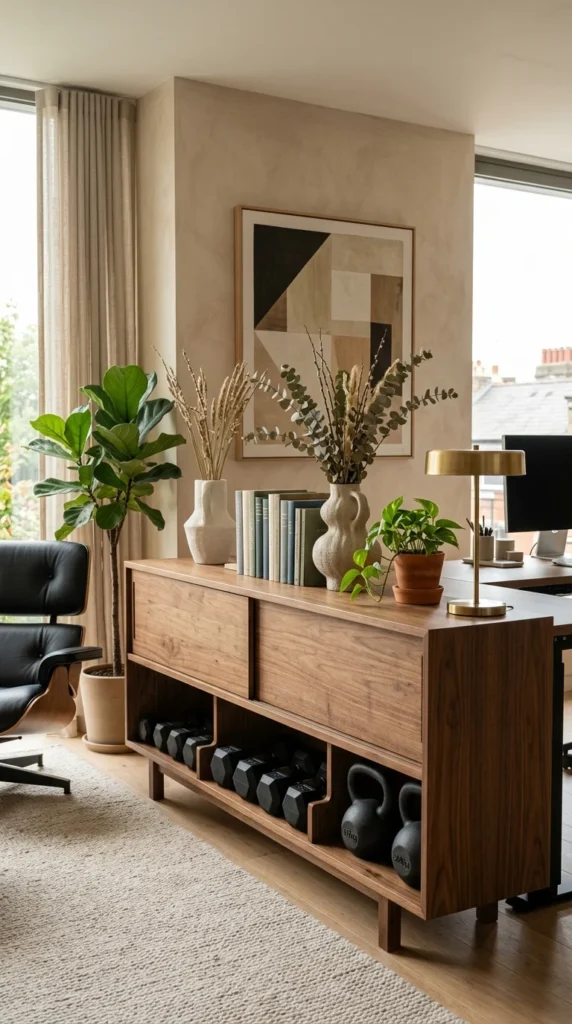
Storage is the biggest challenge in a dual-purpose room. A dumbbell credenza or a reinforced bookshelf allows you to store heavy weights in plain sight without making the room look like a commercial gym. High-quality wood finishes can mask the rugged nature of the weights, keeping the office atmosphere sophisticated and calm.
8. Yoga Corners
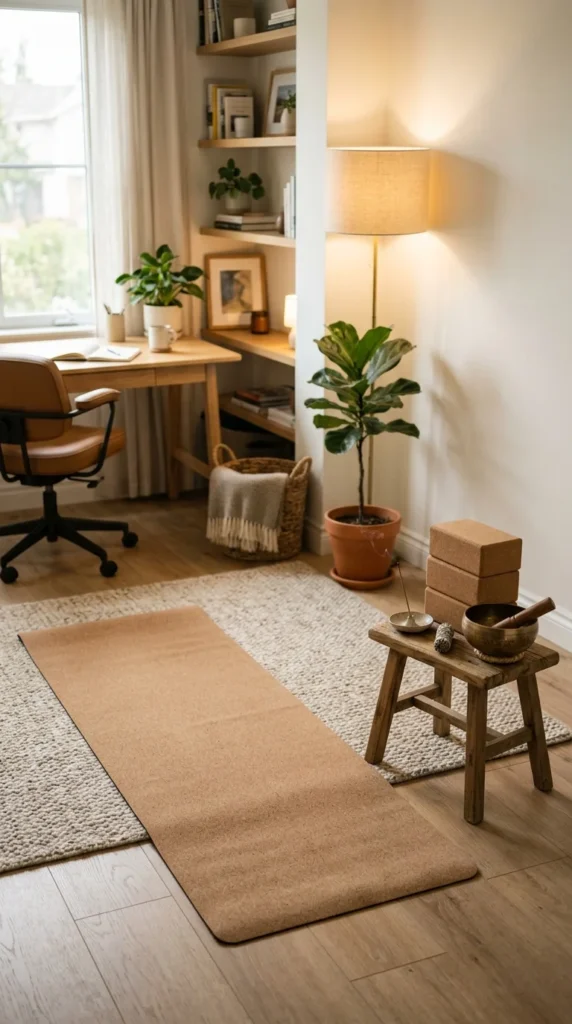
Not every workout needs to be high-intensity. A dedicated yoga and stretching corner is a vital addition to any home office. It provides a space for “meditation breaks” or “decompressing” after a stressful call. Use natural materials like cork mats and wooden blocks to maintain a zen-like environment that encourages focus and deep breathing.
9. Pull-Up Doorways
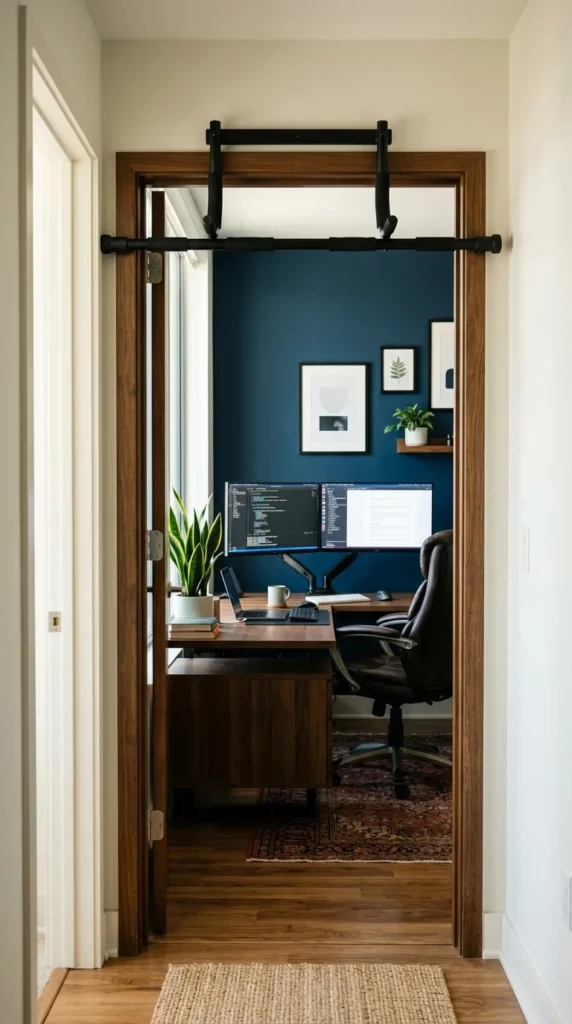
The doorway pull-up bar is a classic for a reason. It utilizes “dead space” that would otherwise go unused. For the busy professional, the “one-set-per-exit” rule—where you do a set of pull-ups every time you leave the room—is a highly effective way to build upper body strength throughout the day without dedicated gym time.
10. Modular Flooring
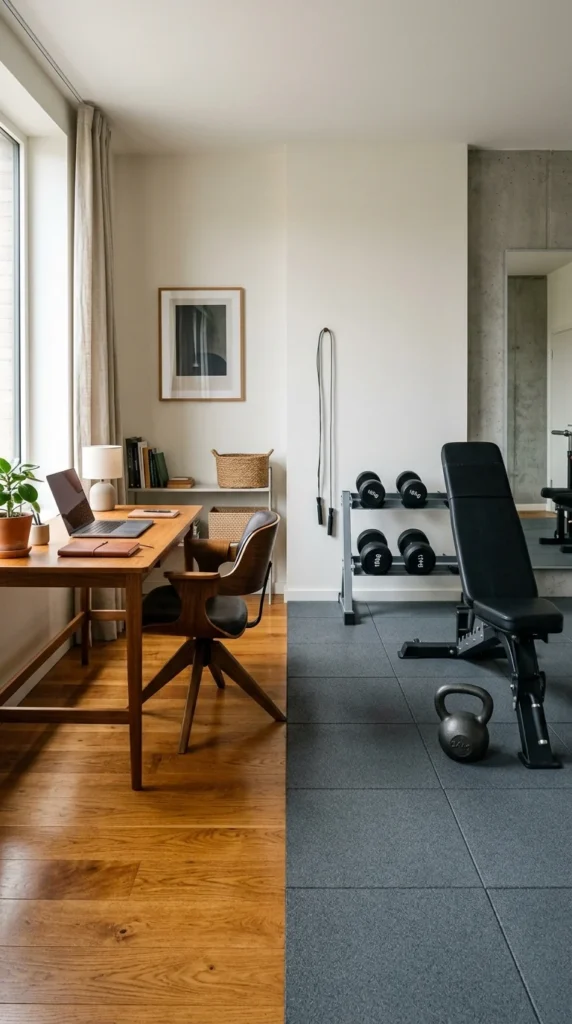
To truly define the two areas, use modular flooring. Interlocking rubber tiles can be placed in the “gym half” of the room to protect the floor from dropped weights and provide better traction. Choosing a color that complements your office rug or hardwood helps the transition feel like a design choice rather than a compromise.
11. Standing Converters
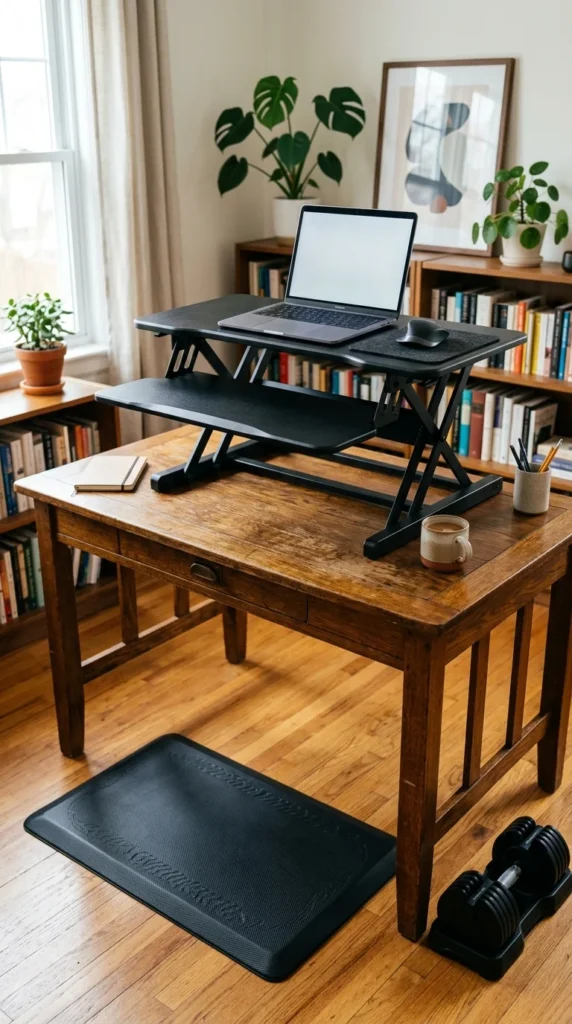
If you aren’t ready to commit to a full standing desk, a converter allows you to toggle between sitting and standing. This versatility is key for a gym-office. Standing burns more calories than sitting and keeps your muscles active. Pairing a converter with an anti-fatigue mat ensures you can stay on your feet longer while staying productive.
12. Kettlebell Corners
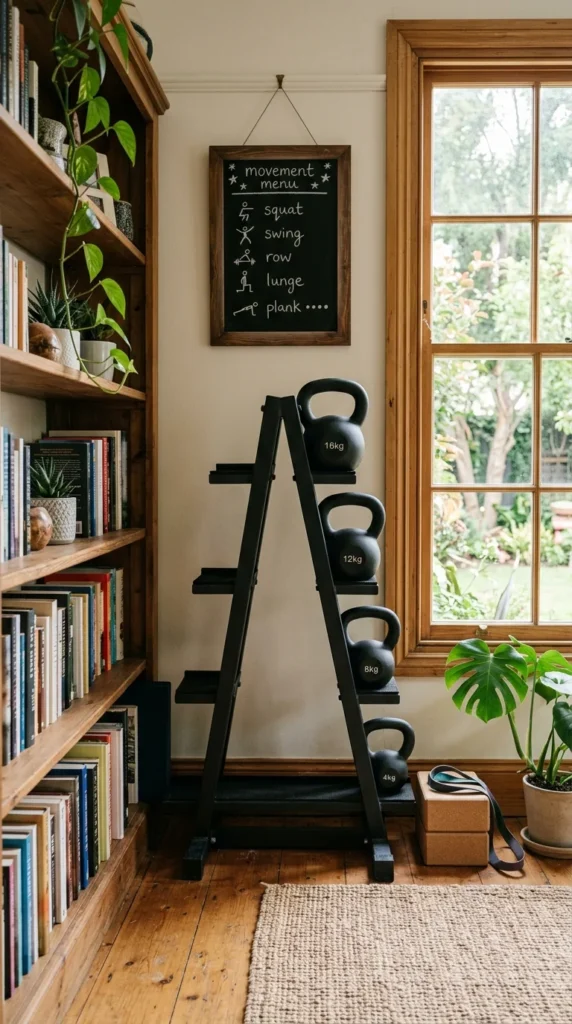
Kettlebells are incredibly versatile and take up very little square footage. A small “kettlebell corner” with three or four different weights can provide a full-body workout. Their rugged, cast-iron look often fits well with industrial or rustic office designs.
13. Bench Seating
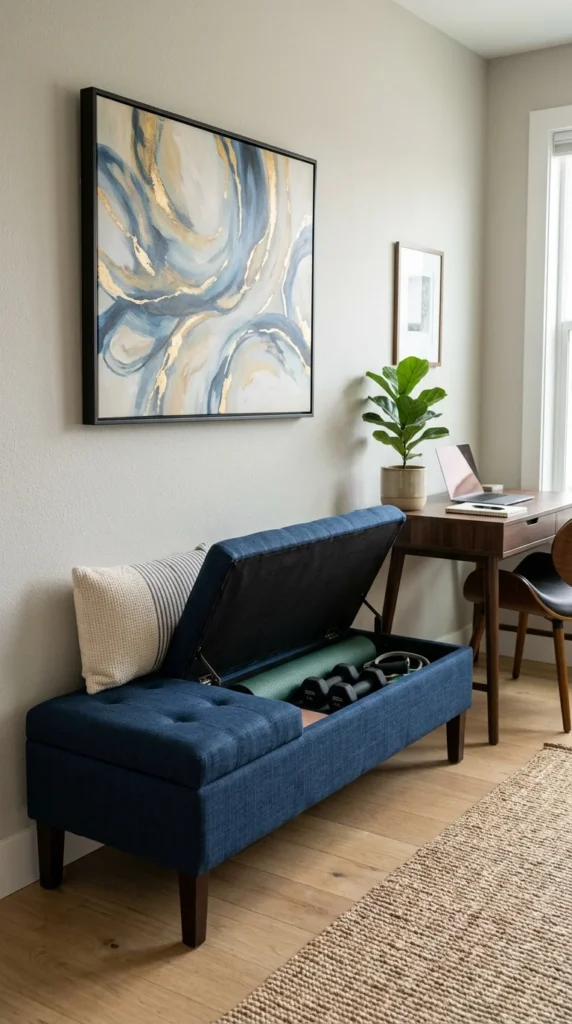
Why have a chair and a weight bench when one piece can do both? Some modern weight benches are designed with high-end upholstery and sleek lines, allowing them to double as guest seating or a place to take a break. This dual-purpose furniture is essential for small apartments where every inch counts.
14. Mirrored Walls
Generating Image…
Mirrors are a staple in gyms for checking form, but they are also a secret weapon in interior design for making small offices feel cavernous. A mirrored wall (or a large floor-to-ceiling mirror) reflects light and opens up the space, preventing the room from feeling cluttered despite having double the equipment.
15. Industrial Aesthetics
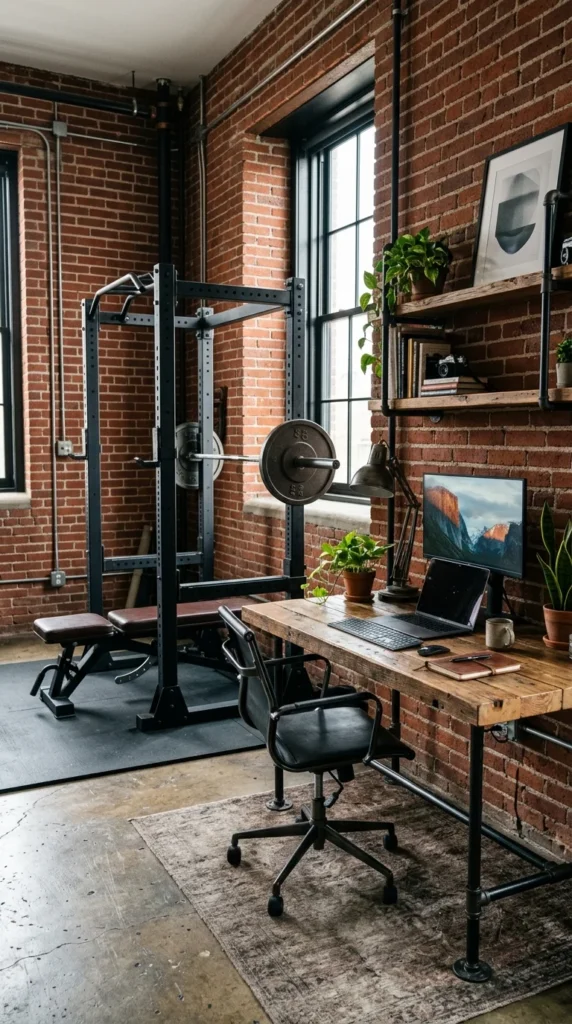
If your fitness equipment is heavy and metallic, lean into the industrial design style. Exposed brick, metal shelving, and raw wood furniture create a cohesive look where a squat rack feels like it belongs. This style embraces the “raw” nature of a gym and turns it into a professional, masculine, or edgy office vibe.
16. Acoustic Paneling
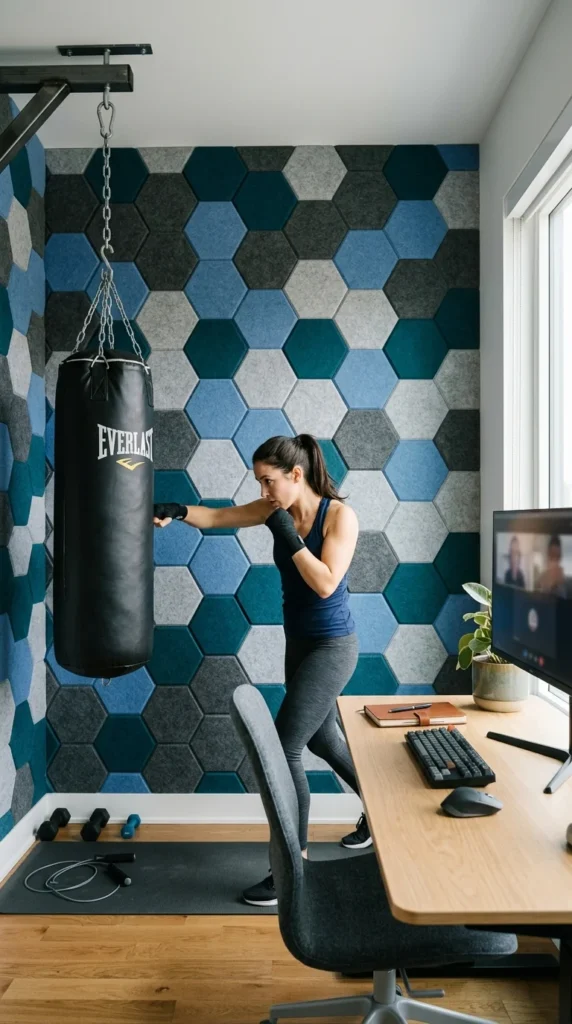
One of the biggest issues with a gym-office is noise. Dropping weights or the hum of a treadmill can be distracting. Decorative acoustic panels serve two purposes: they dampen sound for your Zoom calls and they add a modern, textural element to your walls. They turn a functional necessity into a design feature.
17. Greenery Integration
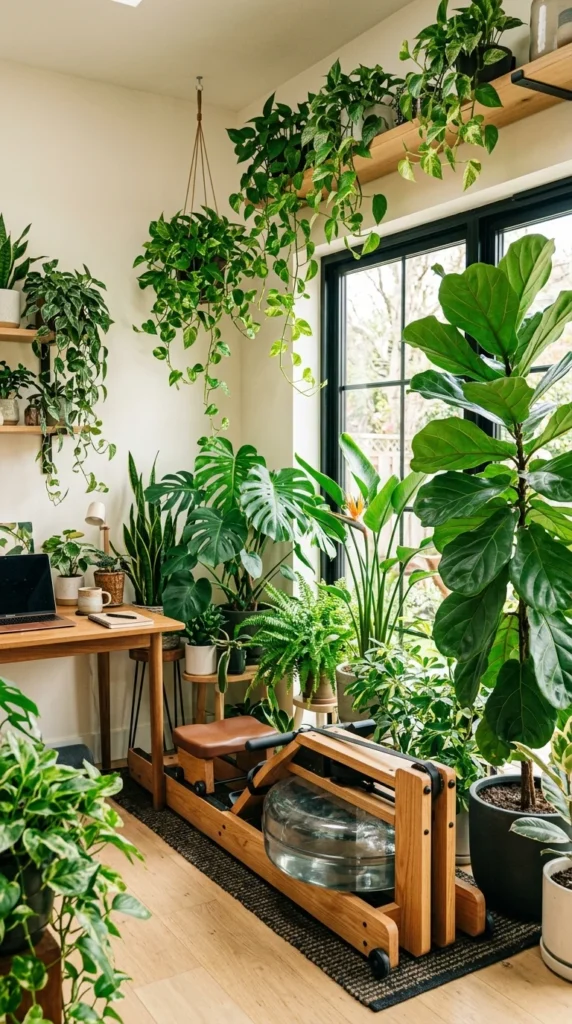
Plants improve air quality and reduce stress, both of which are vital for a productive office and a healthy gym. By surrounding your fitness equipment with greenery, you create a “biophilic” environment. A wooden rowing machine tucked amongst large leafy ferns can make your morning cardio feel like a trip to the lake rather than a chore in a spare room.
18. Smart Lighting
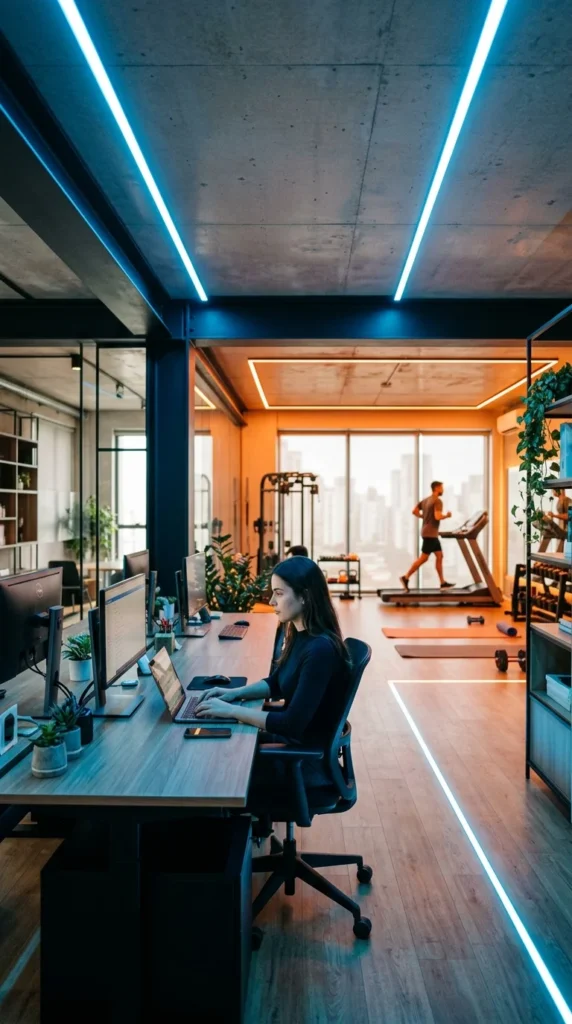
Lighting dictates mood. With smart bulbs, you can program “Work Mode”—bright, cool white light to keep you alert—and “Gym Mode”—vibrant colors or dimmed, warm tones to get you in the zone for a workout. Using light to psychologically separate the two functions of the room is a powerful way to transition your brain from “employee” to “athlete.”
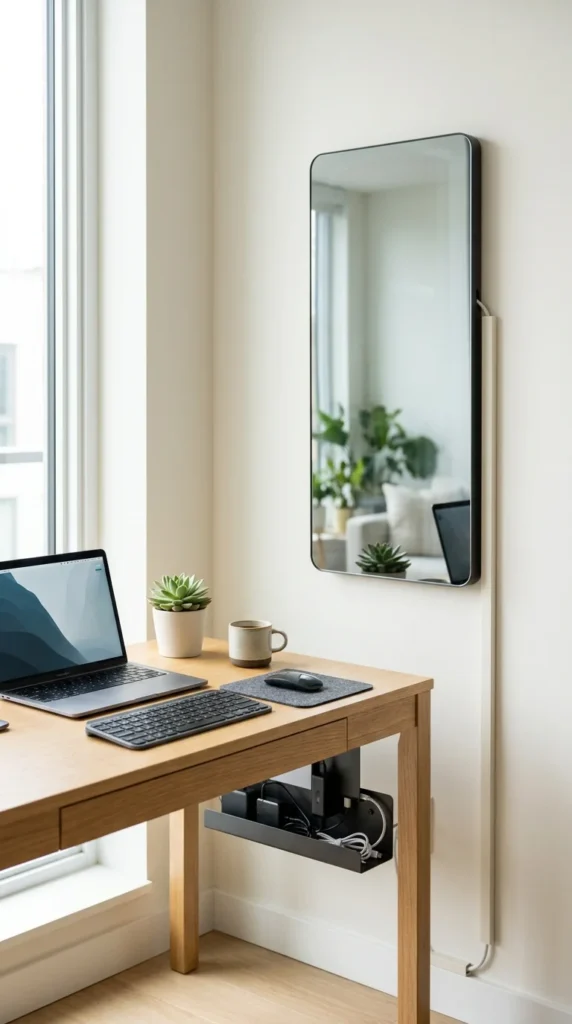
19. Hidden Cable Management
Nothing kills the professional vibe of an office or the focus of a workout like a “spaghetti” mess of wires. Whether it’s the power cord for your treadmill or the HDMI cable for your monitor, invest in high-quality cable management. Keeping floor surfaces clear of wires makes the room safer for movement and visually calmer for deep work.