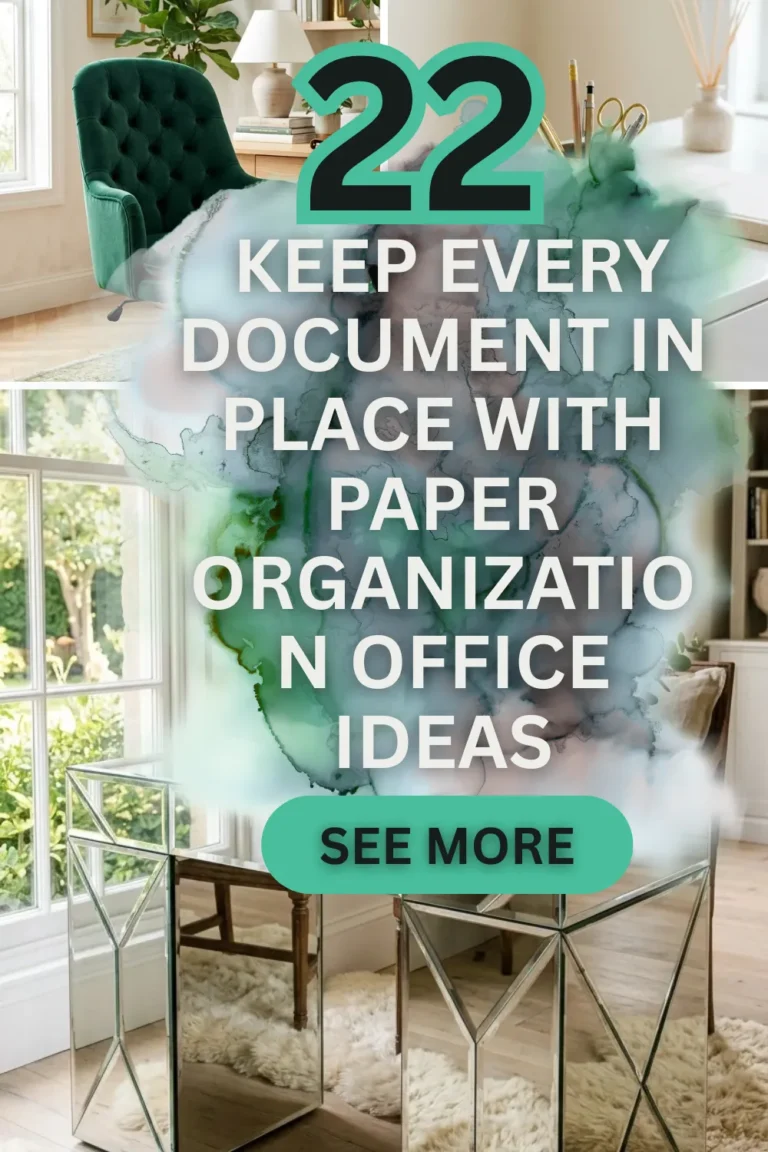

The modern office, despite our digital advancements, is often still a battlefield of loose sheets, receipts, invoices, and “to-read” piles. This paper clutter doesn’t just take up physical space; it creates mental friction, making it harder to focus and easier to lose track of critical deadlines. Transforming your workspace from a chaotic paper trail into a streamlined command center requires a blend of strategy and the right tools.
To reclaim your productivity, you need a system that categorizes documents by their utility and urgency. Whether you are dealing with a small home office or a sprawling corporate suite, these 22 paper organization ideas will help you keep every document exactly where it belongs.
1. Vertical Sorters
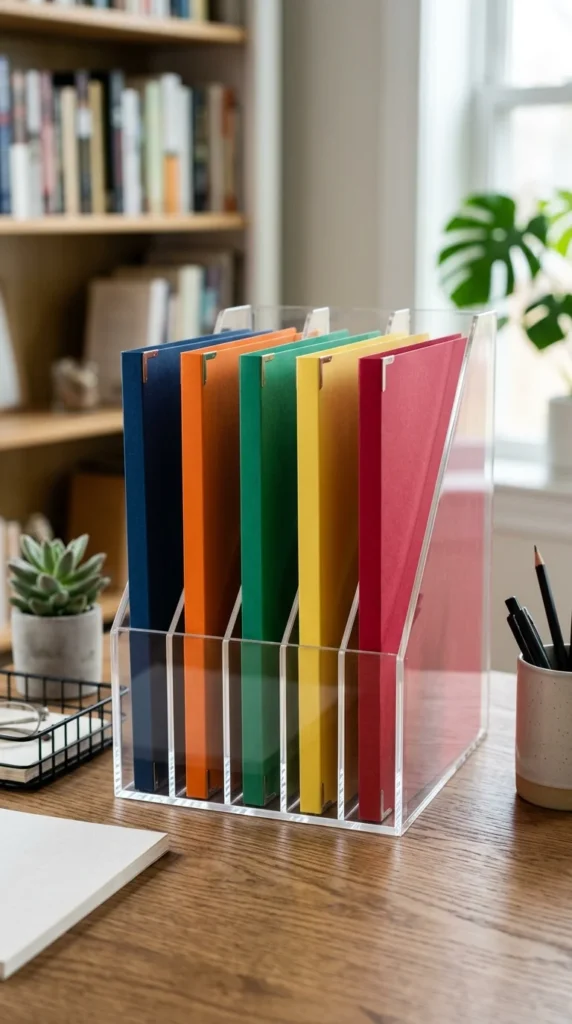
Vertical sorters are the antidote to the “horizontal pile.” When papers are stacked on top of each other, the bottom items are forgotten and difficult to retrieve. Vertical sorters keep documents upright and visible. This setup is ideal for active projects or documents you need to grab multiple times a day. By using a clear or wire-frame sorter, you maintain a sense of openness on your desk while ensuring that your most important files are never buried.
2. Tiered Trays

Tiered trays utilize vertical space without sacrificing a large footprint on your desk. The classic “In, Out, and Pending” system works perfectly here. Use the top tray for incoming mail and new tasks, the middle for documents currently in progress, and the bottom for items awaiting filing or signature. This hierarchy creates a natural workflow that guides your eyes and hands throughout the workday.
3. Color-Coded Folders
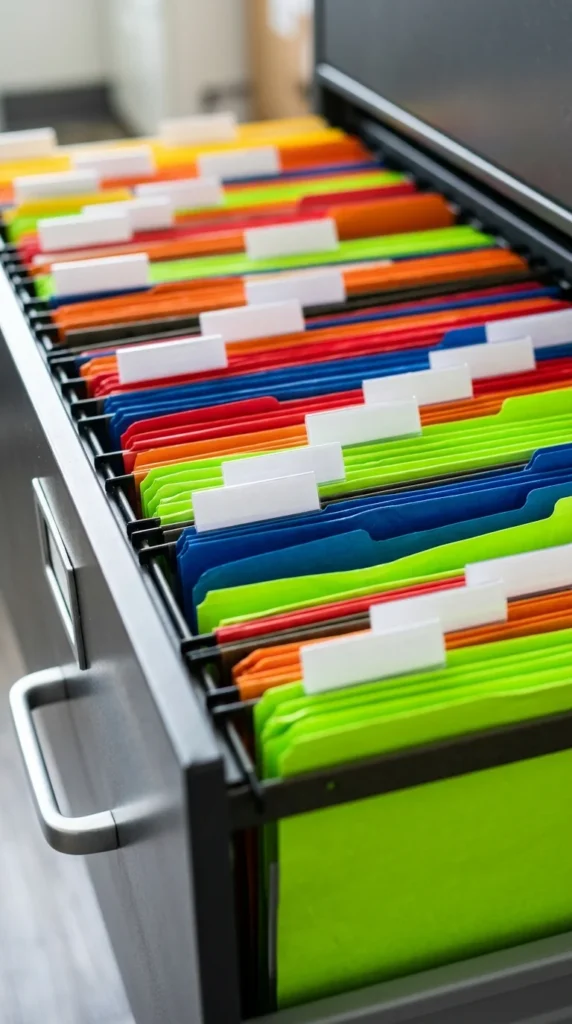
Color coding is a psychological hack for faster document retrieval. The human brain processes color much faster than text. Assigning specific colors to different categories—such as green for financial documents, red for urgent projects, and blue for personal records—allows you to scan a drawer and find what you need in seconds. Ensure you remain consistent with your palette to avoid confusion over time.
4. Wall Pockets
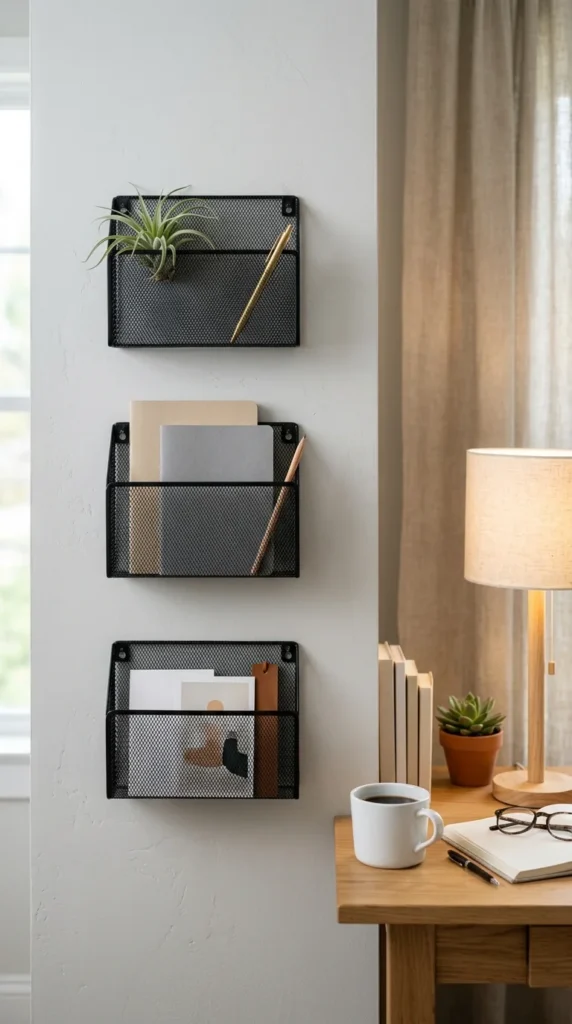
When desk space is at a premium, look to the walls. Wall pockets are excellent for clearing the “landing zone” of your desk. They are particularly effective for mail sorting or for holding reference materials that you don’t need every second but want within arm’s reach. Mounting them at eye level ensures that “out of sight, out of mind” doesn’t lead to missed bills or forgotten appointments.
5. Magazine Files
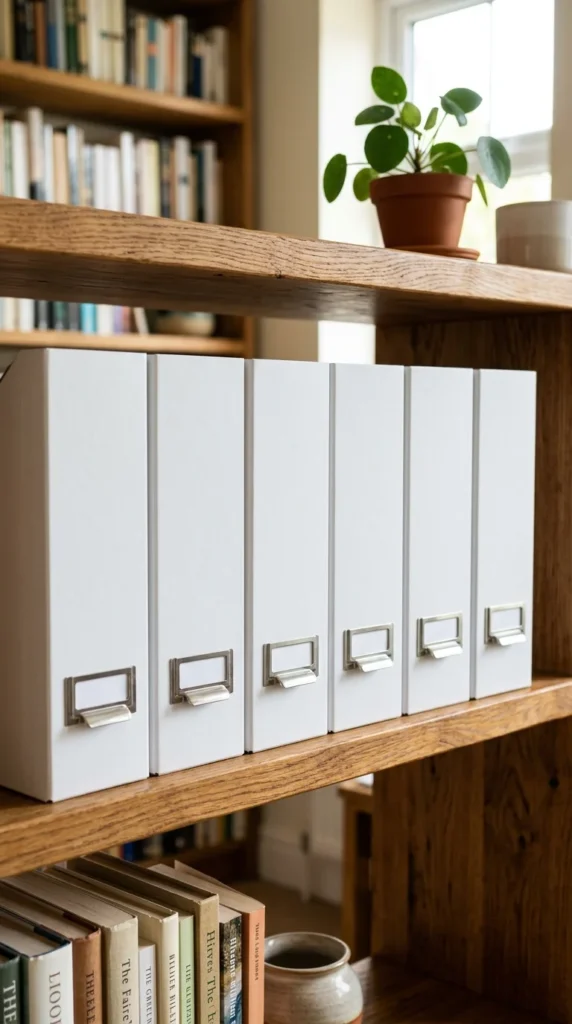
Magazine files aren’t just for National Geographic. They are perfect for grouping thin manuals, catalogs, or even groups of slim folders that tend to flop over on a regular shelf. Because they have a high front or back, they hide the visual clutter of mismatched paper edges, giving your office a much cleaner, more uniform aesthetic.
6. Rolling Carts
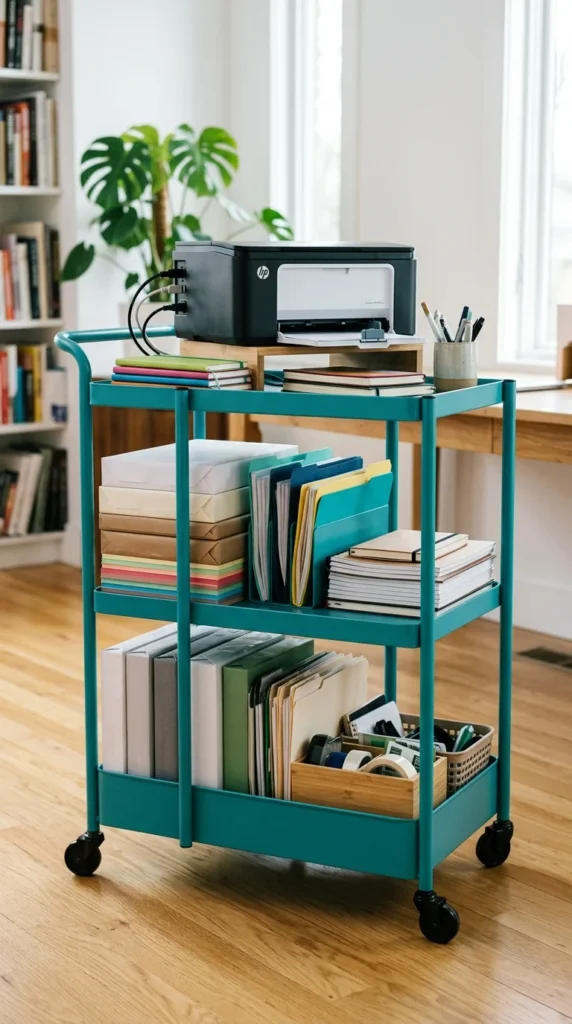
A rolling cart provides “mobile organization.” If you find yourself moving between a desk, a kitchen table, or a shared workspace, a cart allows your filing system to follow you. Use the different levels for different stages of your work—one for raw supplies (blank paper, envelopes), one for active files, and one for archived items ready to be put away.
7. Binder Systems
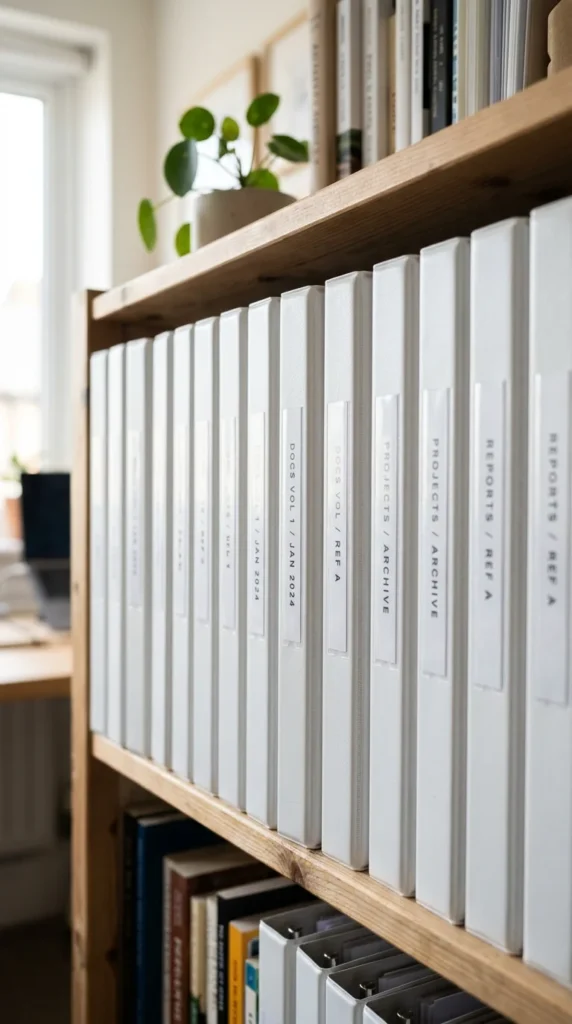
For documents that need to be kept long-term but referenced frequently—like tax records, appliance warranties, or project archives—binders are superior to folders. They keep papers secure so they won’t fall out, and you can use tab dividers to create sub-categories within a single unit. Use heavy-duty D-ring binders to ensure the pages turn smoothly even when the binder is full.
8. Clipboards
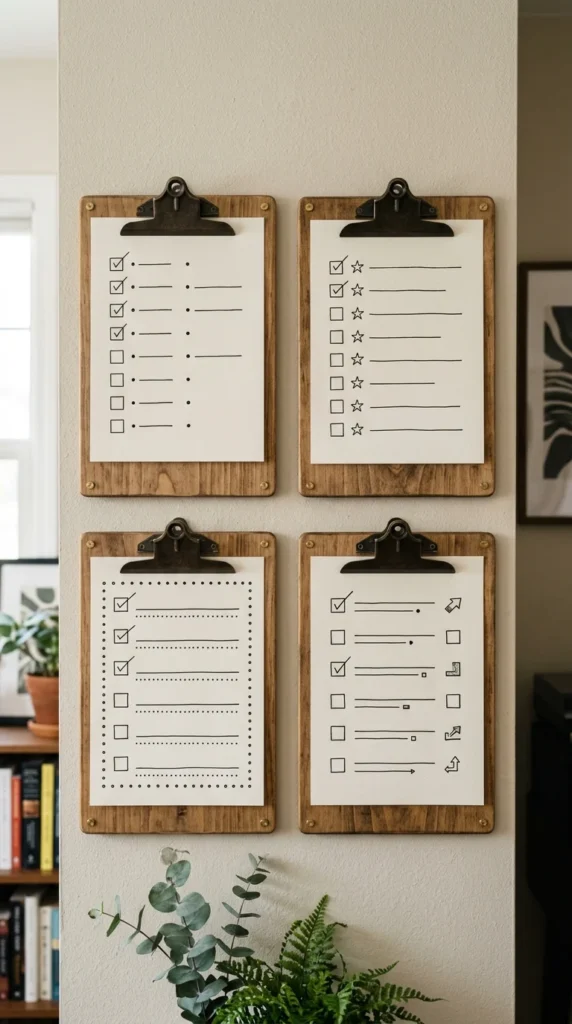
Clipboards serve as both a writing surface and a display tool. For “active” lists like daily schedules, habit trackers, or project checklists, a clipboard keeps the paper rigid and mobile. Some professionals choose to hang clipboards on the wall as a “command center,” allowing them to see their most important goals without digging through a pile.
9. Desktop Cubbies
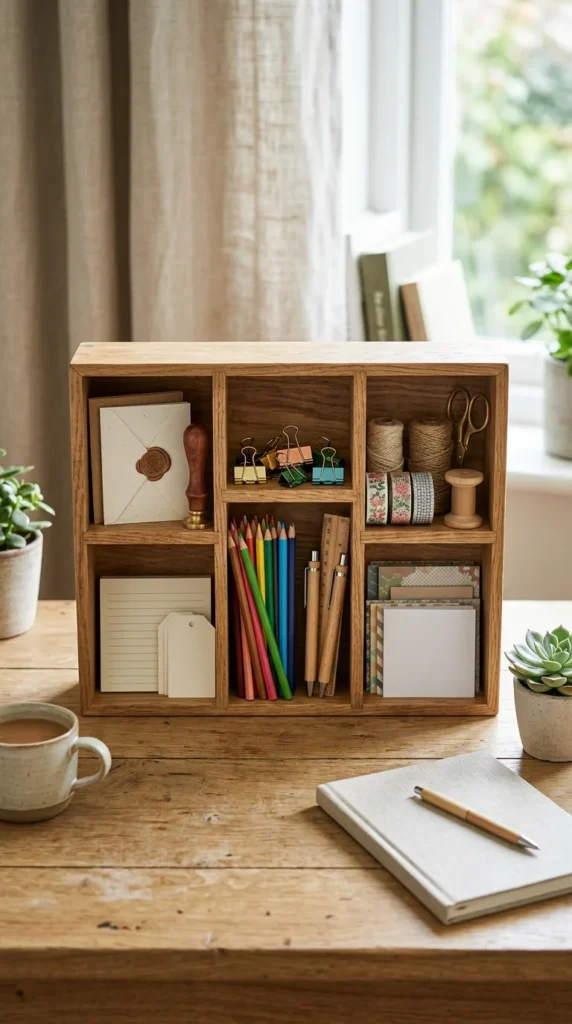
Desktop cubbies provide a “home” for the miscellaneous items that don’t quite fit into a standard file folder. They are great for small notebooks, envelopes, and stationary. The structured nature of cubbies prevents items from migrating across the desk, keeping your workspace segmented and orderly.
10. Accordion Files
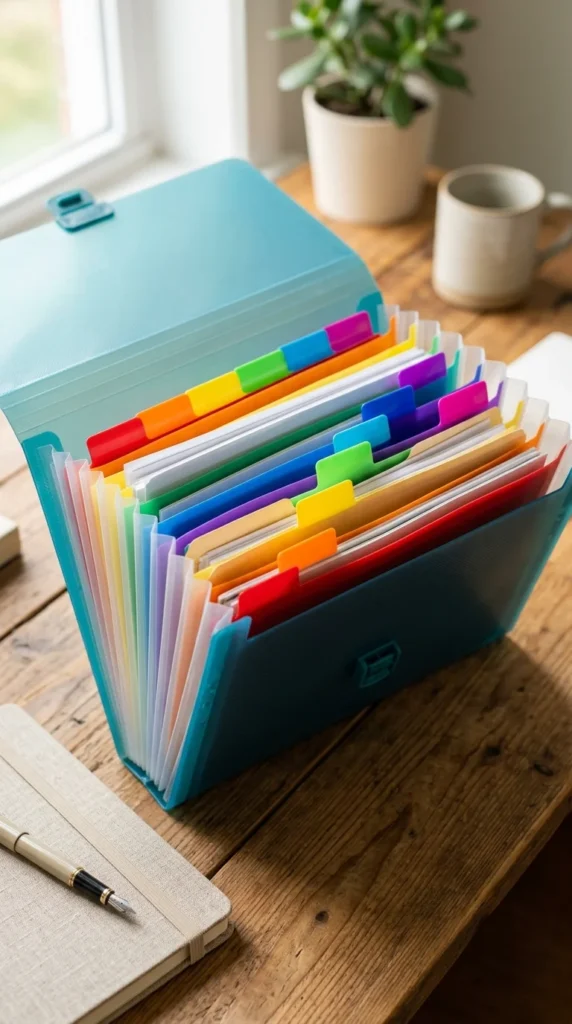
If you need a filing system that is portable and compact, the accordion file is the gold standard. It is particularly useful for seasonal organization, such as gathering all your receipts and documents for tax season. The built-in dividers and lid ensure that everything stays contained even if the file is tossed into a bag or moved frequently.
11. Action Trays
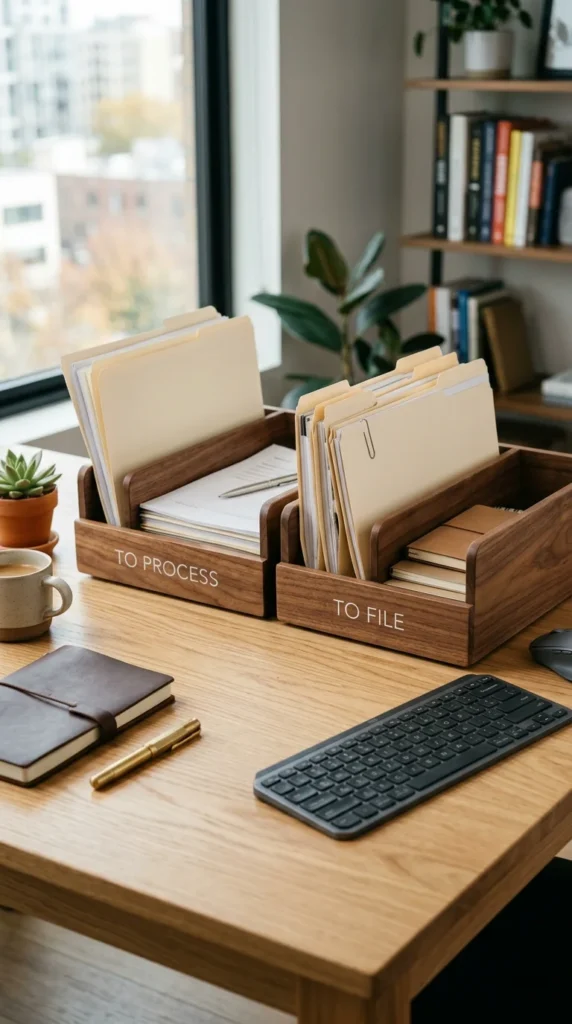
Action trays focus on the verbs associated with your paper. Instead of categorizing by topic (e.g., “Insurance”), you categorize by the next step required. Common labels include “To Sign,” “To Mail,” “To Scan,” and “To Read.” This system prevents the “I’ll deal with this later” pile from forming because every piece of paper has a designated action associated with its location.
12. Label Makers
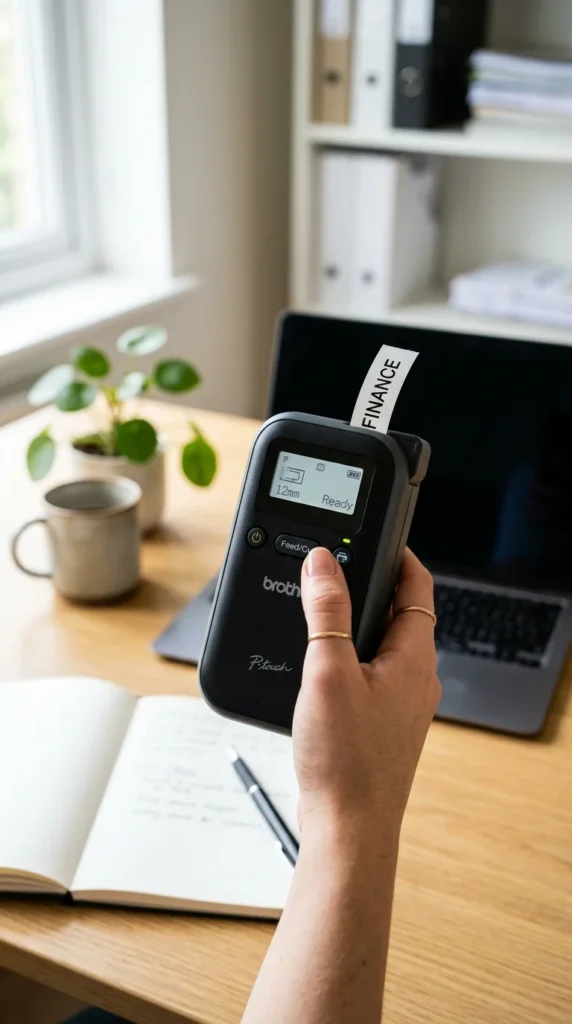
The secret to a sustainable organization system is clear labeling. Handwritten labels can become messy and illegible over time. A professional label maker ensures that every folder, bin, and drawer is clearly marked. When a location is explicitly labeled, you (and others in your household or office) are much more likely to put items back where they belong.
13. Under-Desk Drawers
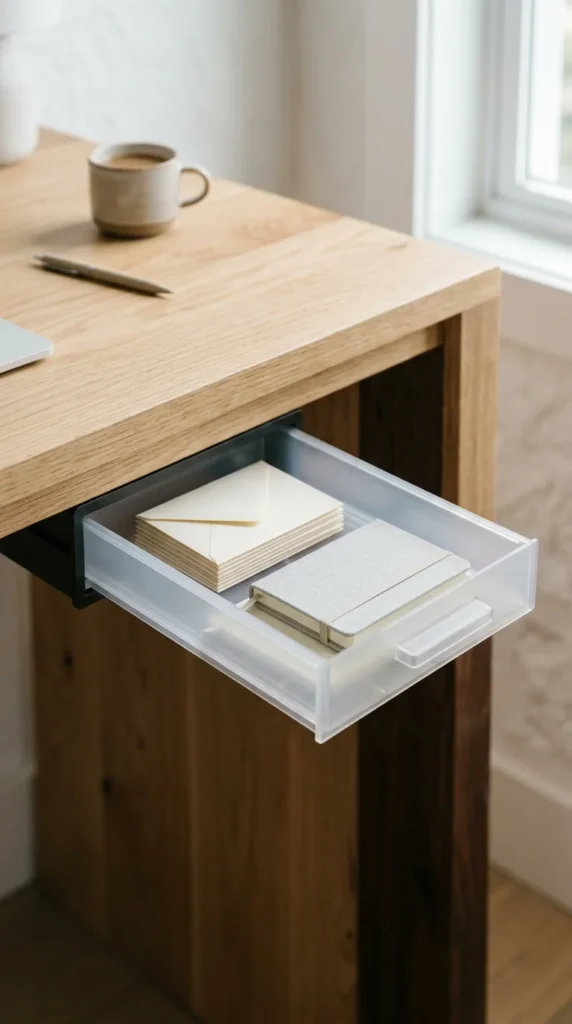
If your desk didn’t come with built-in storage, add-on under-desk drawers are a lifesaver. These are perfect for keeping “sensitive” or private papers out of immediate sight while keeping them close to your person. They help maintain the “clean desk” aesthetic by hiding the necessary but distracting papers that usually clutter the surface.
14. Pegboards
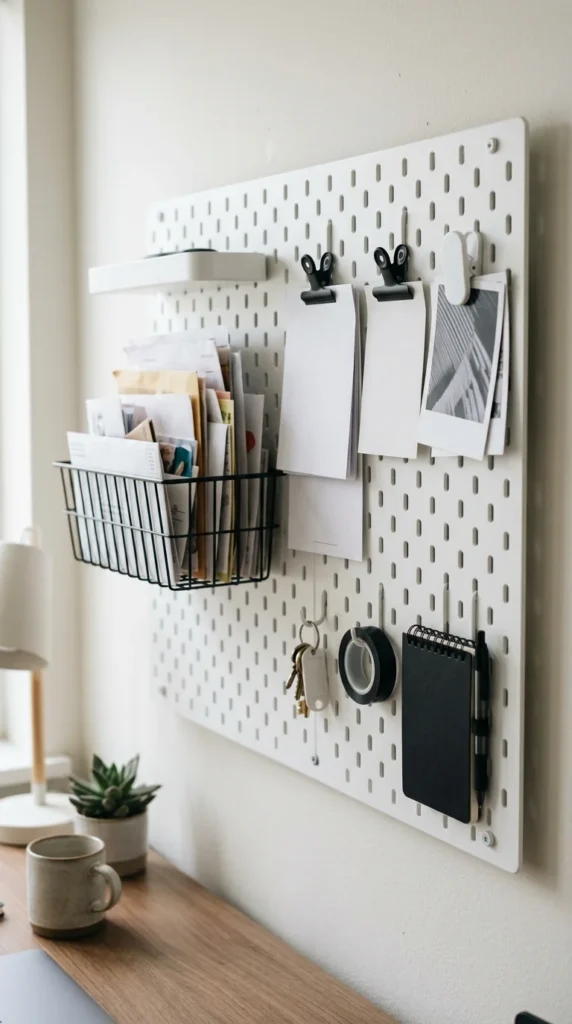
Pegboards offer ultimate flexibility. You can move hooks, baskets, and clips around as your needs change. For paper organization, use pegboard baskets for incoming mail and binder clips to hang important reminders or inspirational quotes. It turns your wall into a functional, modular piece of art.
15. Mobile File Cabinets
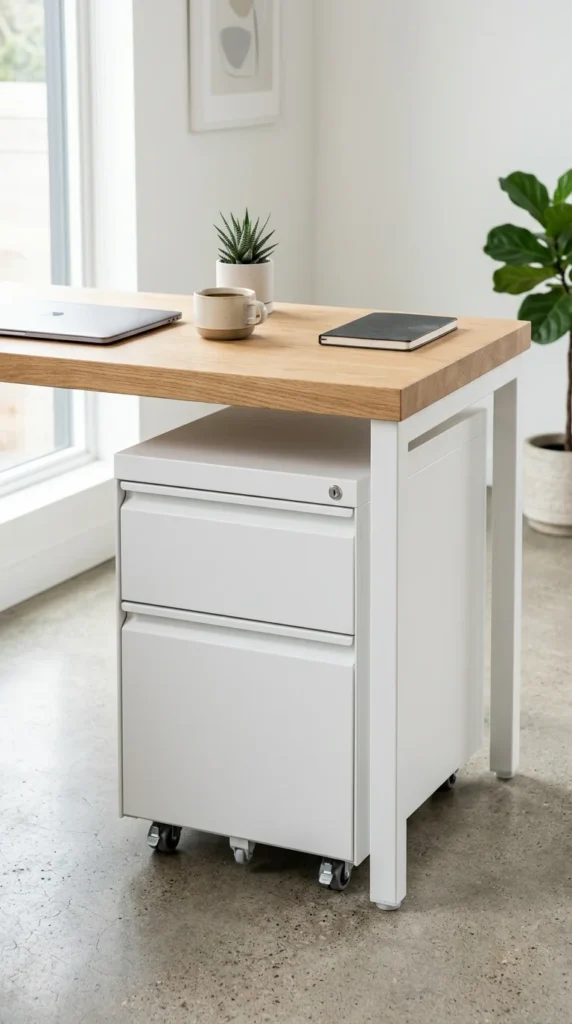
For high-volume storage, a mobile file cabinet is essential. Unlike old-fashioned heavy lateral files, modern mobile units fit under most desks and can be pulled out when you need to do a “filing deep dive.” Opt for a model with a lock if you are storing sensitive personal information or legal documents.
16. Hanging Wall Files
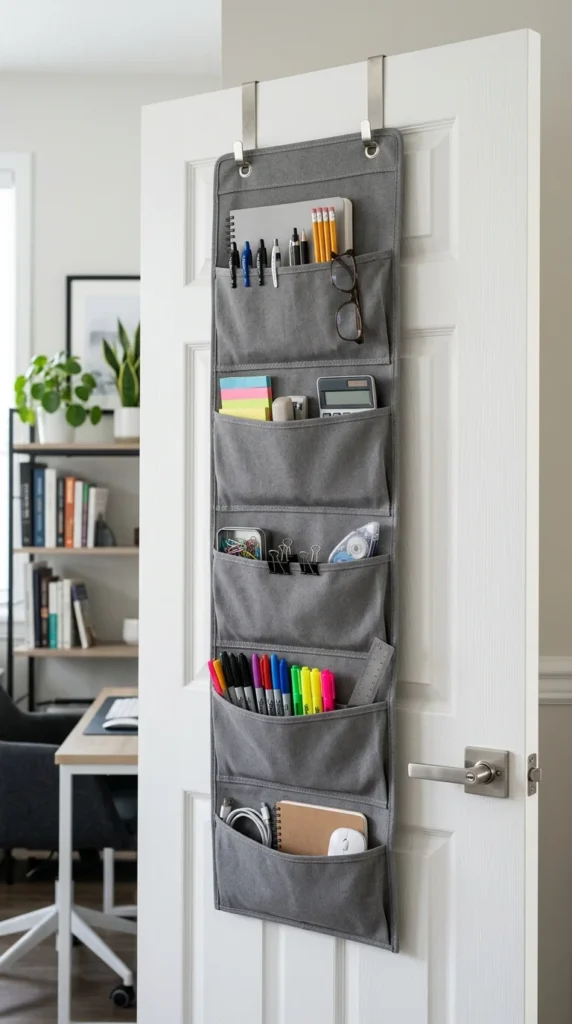
Hanging wall files take the vertical sorter concept and expand it. These are often made of fabric or heavy-duty plastic and can be hung over doors or on walls. They are excellent for “cascading” files, where you can see the top edge of every folder. This is a great way to manage school papers for kids or different client folders in a home office.
17. Decorative Boxes
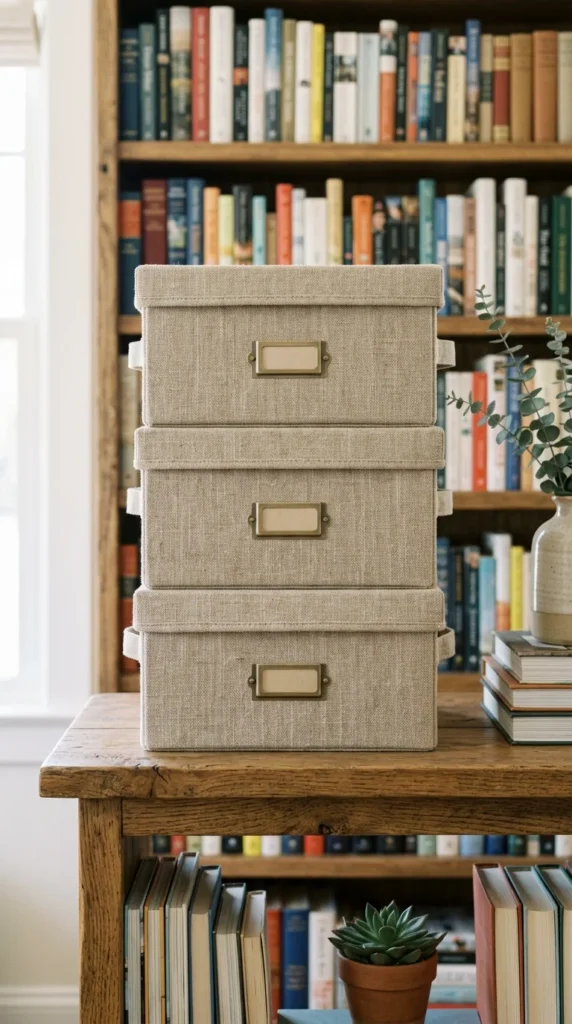
Not every piece of paper needs to be visible. Long-term archives, like old tax returns or sentimental letters, can be stored in decorative boxes. These boxes protect the paper from dust and light while contributing to the room’s decor. They turn a stack of “old stuff” into a neat, intentional part of your office design.
18. Lazy Susans
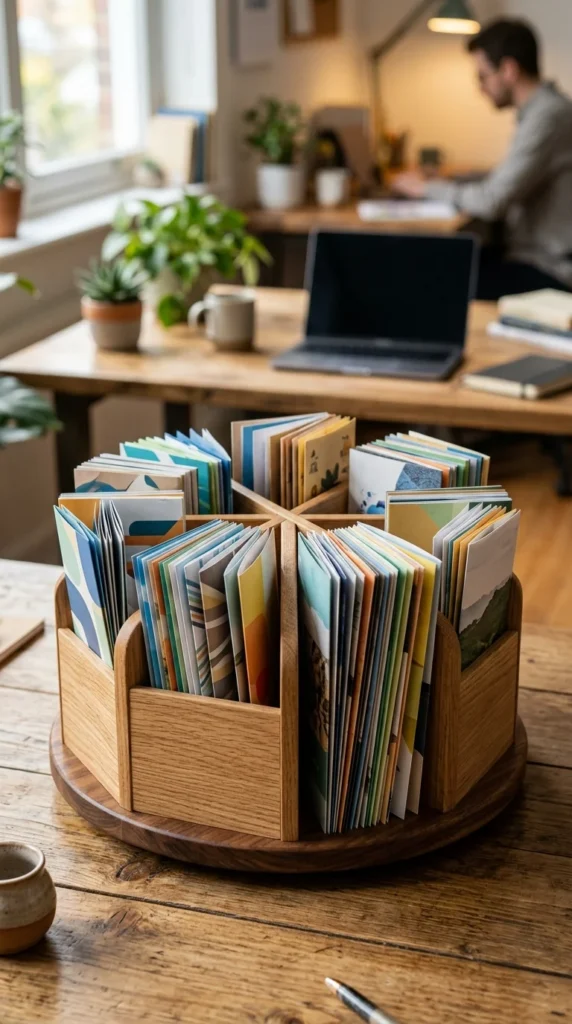
A Lazy Susan isn’t just for the kitchen. In an office setting, a rotating organizer with dividers is perfect for holding brochures, reference guides, or different types of stationery. With a quick spin, you can access multiple categories of paper without having to reach over or move other items.
19. Desktop Carousels

Similar to the Lazy Susan but designed specifically for the desktop, a carousel often combines paper storage with office supply storage. Use the outer slots for envelopes and small documents, and the inner slots for pens and scissors. This keeps your most-used tools and papers in one centralized, rotating hub.
20. Corkboard Strips
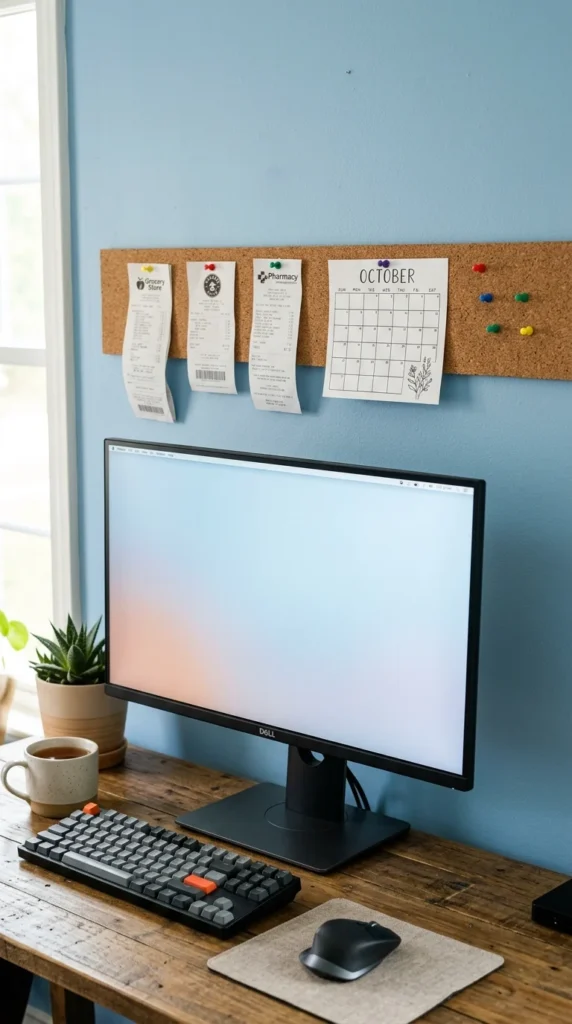
If a full-sized corkboard feels too imposing, corkboard strips offer a minimalist alternative. They are perfect for “temporary” paper—items like a receipt you need to return tomorrow, a concert ticket, or a sticky note with a phone number. It keeps the paper off the desk surface but right in your line of sight.
21. Hidden Storage

For items that are highly sensitive or rarely used, hidden storage (like “book boxes” or “hidden-compartment furniture”) is a clever solution. It allows you to keep important papers on a shelf in plain sight without anyone knowing what they are. This is ideal for passports, birth certificates, or emergency cash.
22. Shredder Stations
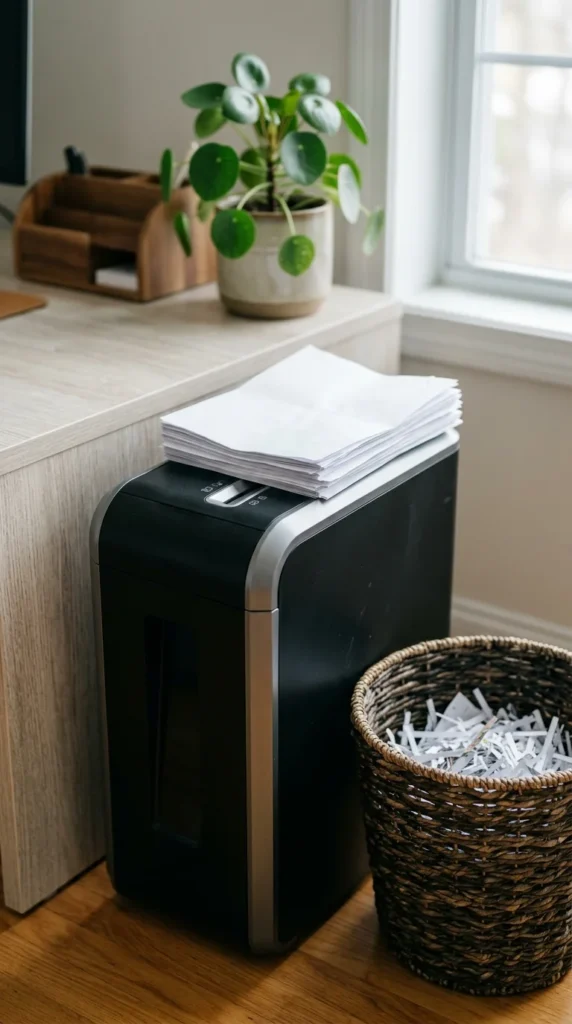
The final step in any organization system is disposal. A dedicated shredder station encourages you to get rid of sensitive documents immediately rather than letting them pile up. By placing a small basket for “to-be-shredded” items right next to the machine, you ensure that the clutter is processed and eliminated regularly, keeping your filing system lean and relevant.