
Natural light is the ultimate productivity hack. It boosts your mood, regulates your circadian rhythm, and makes even the smallest home office feel like a spacious sanctuary. When you design your workspace around the sun, you aren’t just decorating; you are investing in your mental clarity and physical health. Whether you have a tiny attic window or a massive sliding glass door, here are 19 ways to harness the power of natural light in your home office.
1. Desk Placement
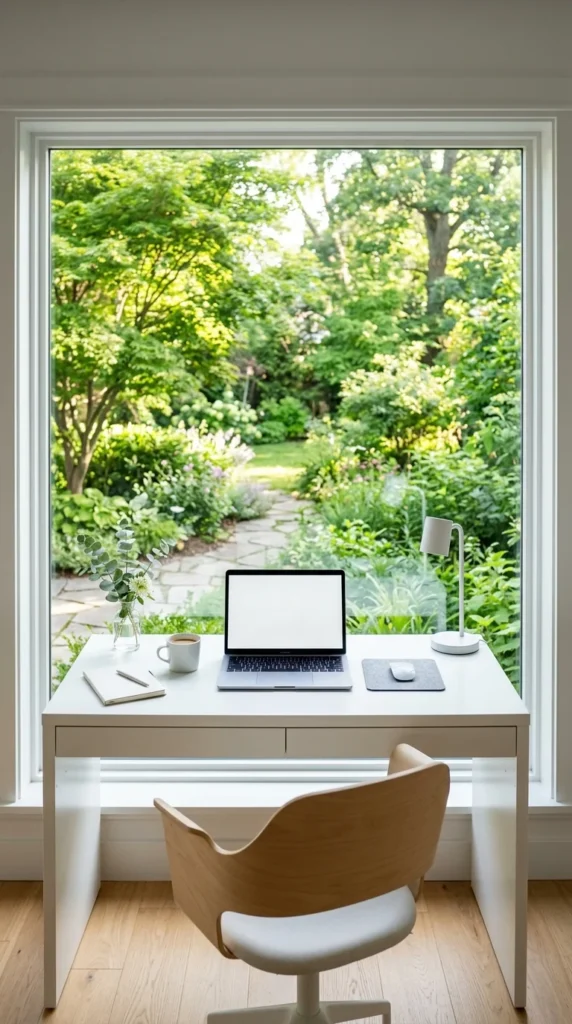
Placing your desk directly in front of a window is the most common way to maximize light. This setup provides a “front-row seat” to the outside world, offering a visual break for your eyes when you look away from the screen. This distance-focusing helps prevent digital eye strain. To make this work, ensure your window has a view that inspires you rather than distracts you.
2. Mirror Reflection
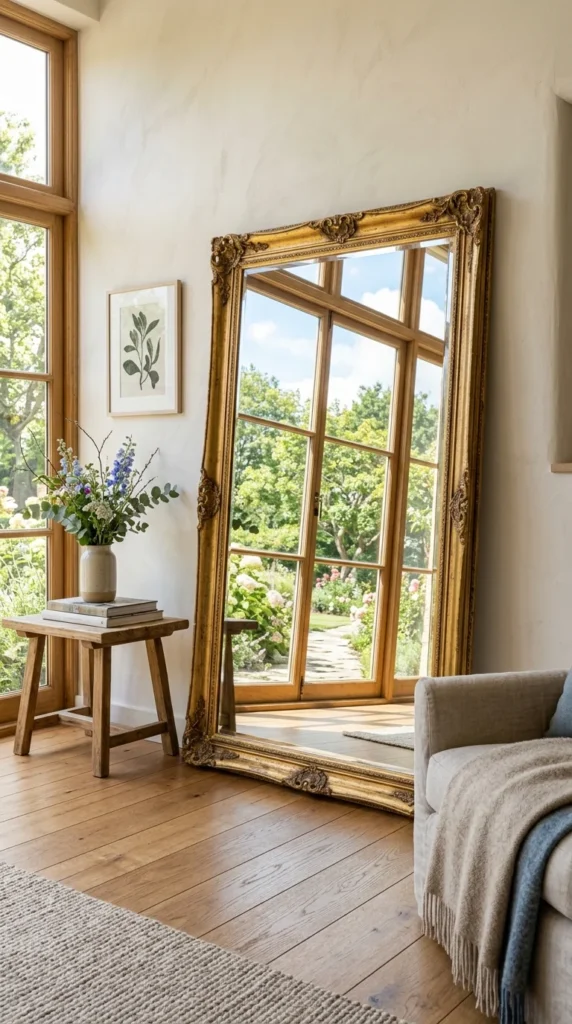
If your office only has one small window, mirrors are your best friend. By placing a large mirror on the wall opposite or adjacent to the window, you effectively “bounce” the sunlight into the darker corners of the room. This trick not only makes the space feel twice as bright but also creates the illusion of a much larger office.
3. Sheer Fabrics

Direct sunlight can sometimes be too intense, causing harsh shadows and heat buildup. Sheer curtains are the perfect solution. They act as a giant softbox, diffusing the sunlight so it spreads evenly throughout the room. This creates a soft, flattering light that is perfect for video calls and reduces the glare on your computer monitor.
4. Glass Partitions
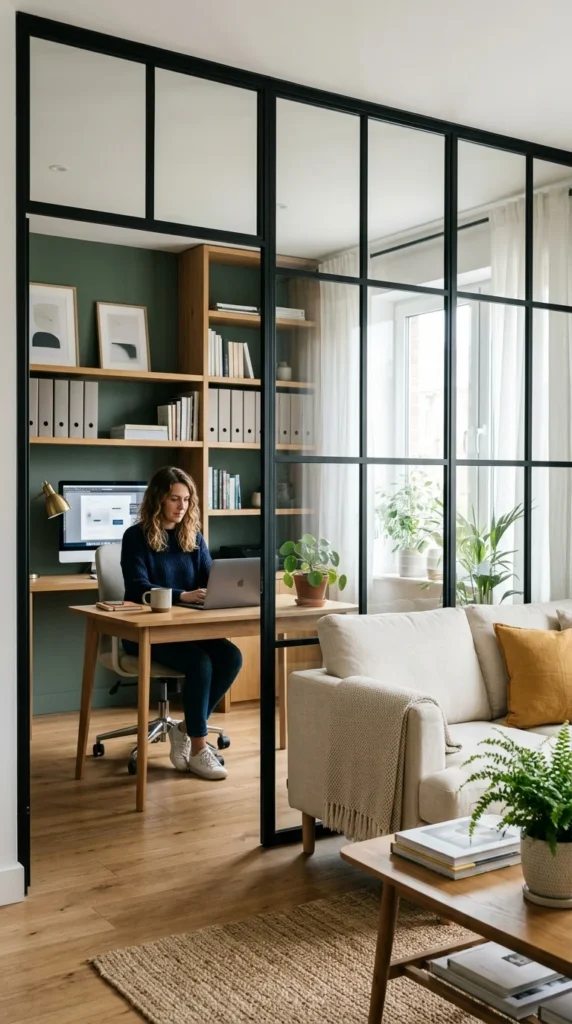
If your office is tucked away in a corner without its own window, consider using glass partitions instead of solid walls. This “room-within-a-room” concept allows light from the rest of the house to penetrate your workspace. It maintains a sense of openness while providing the acoustic privacy you need to focus on your tasks.
5. Light Palettes
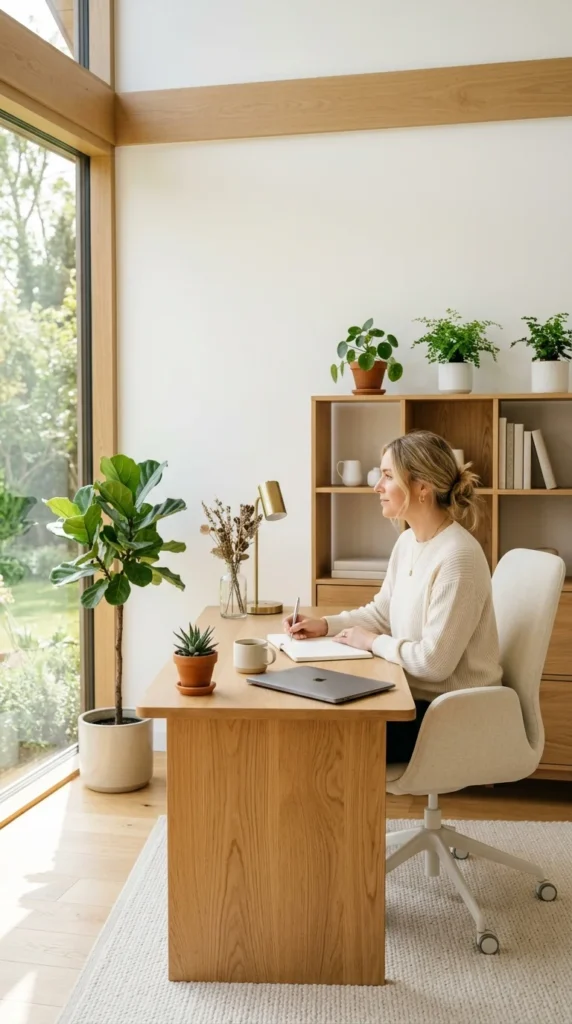
The colors you choose for your walls and furniture significantly impact how light behaves in your office. Light, neutral tones like soft whites, pale greys, and light woods have high Light Reflectance Values (LRV). These surfaces reflect light rather than absorbing it, ensuring that every bit of sunshine that enters the room is utilized to its full potential.
6. Corner Desks
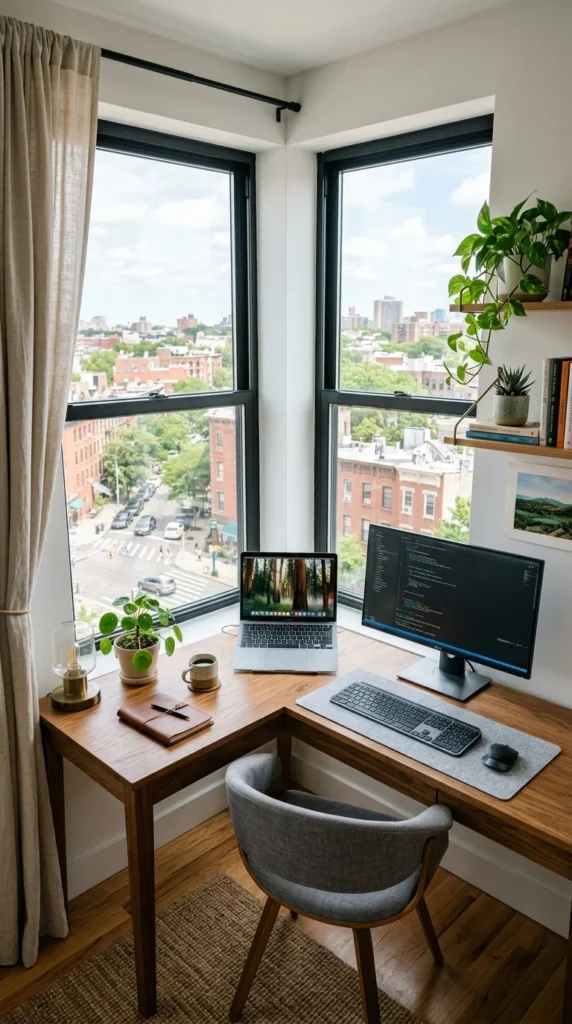
Corner windows are a gift for any home office. By using an L-shaped desk, you can maximize your surface area while keeping yourself surrounded by light from two different angles. This reduces shadows on your paperwork and provides a wrap-around view that can keep you feeling connected to the outdoors throughout the day.
7. Minimalist Frames
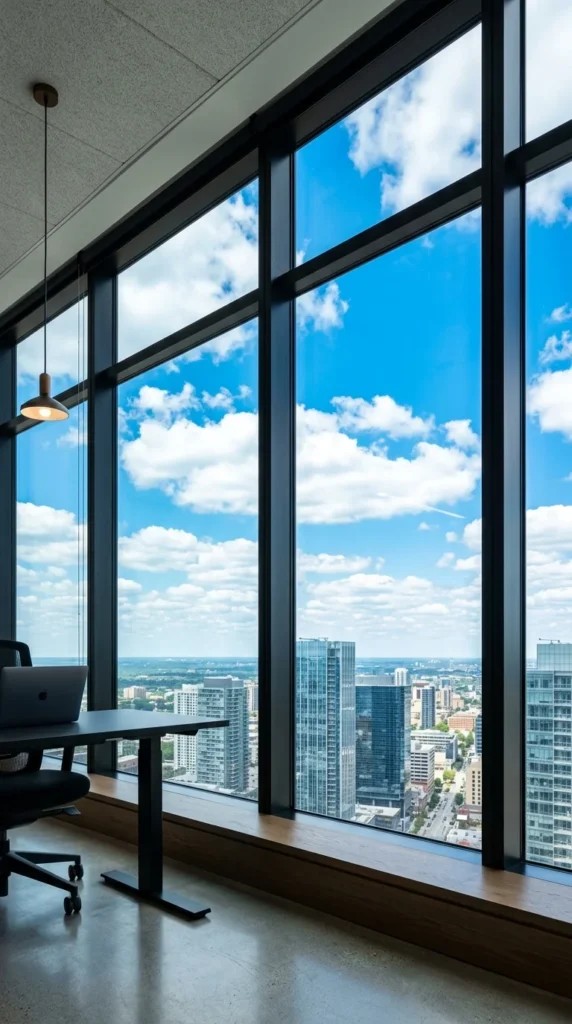
Thick, heavy window frames can block a surprising amount of sunlight. If you are renovating or building a home office, opt for minimalist, thin-profile frames. Large panes of glass with minimal obstructions allow more light to enter and provide a cleaner, more contemporary aesthetic that fits perfectly with modern home office designs.
8. Attic Skylights
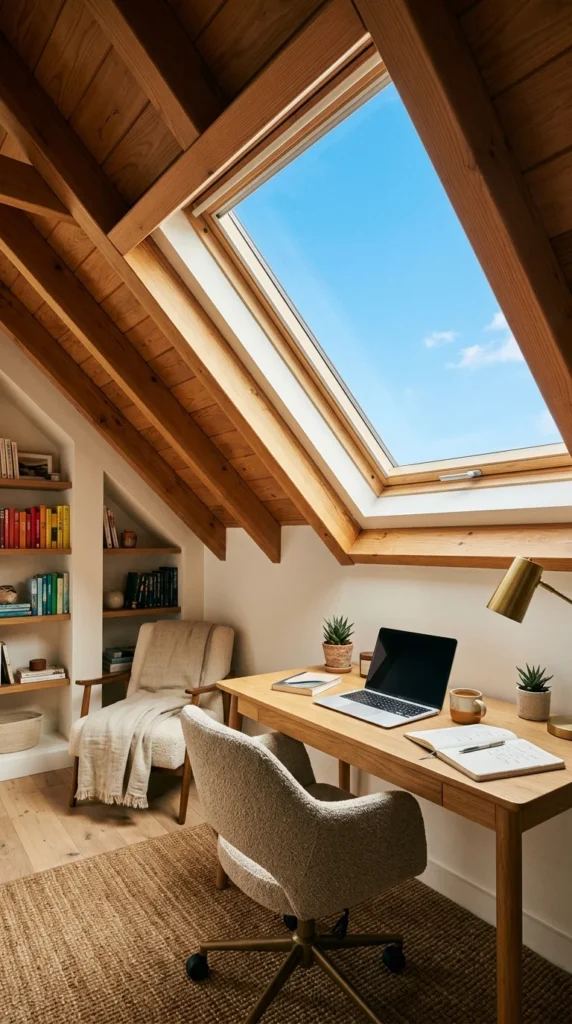
Attic spaces often have slanted ceilings that make traditional windows difficult. Skylights are the answer. Because they face upward toward the sky, they can bring in up to three times more light than a standard vertical window of the same size. Working under a skylight provides a unique connection to the weather and the movement of the clouds.
9. Greenery Integration
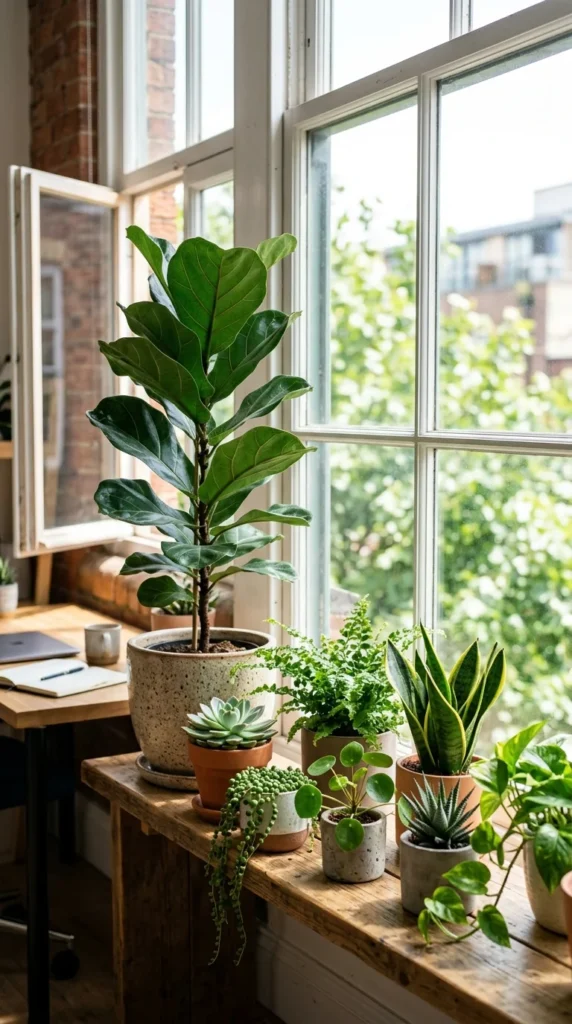
Plants and natural light go hand-in-hand. Use your window sill as a mini-garden. Not only do plants thrive in the sun, but they also help purify the air and provide a “biophilic” element to your workspace. Seeing green leaves against the sunlight has been proven to reduce stress levels and increase creativity.
10. Floating Shelves
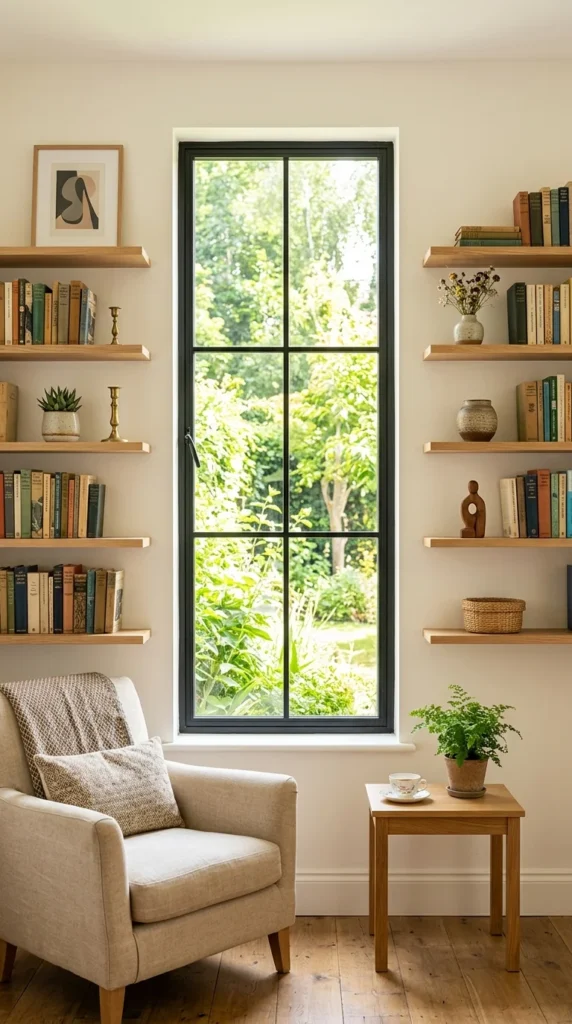
Bulky bookcases can often cast long shadows and make a room feel cramped. Instead, use floating shelves. By mounting them around your window or on adjacent walls, you keep the floor space clear and allow light to travel through the room unobstructed. They provide storage without the visual weight of traditional furniture.
11. Screen Orientation
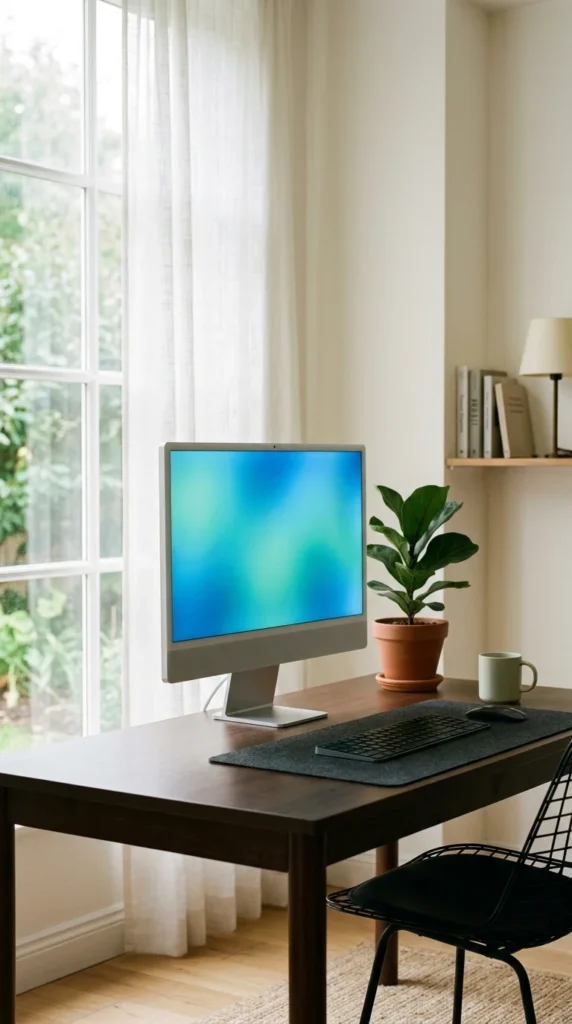
To make the most of your window, you must manage glare. Placing your monitor perpendicular to the window (at a 90-degree angle) is the gold standard. This prevents the light from shining directly onto your screen (causing reflections) and keeps you from looking directly into the sun (causing eye strain).
12. Frosted Privacy
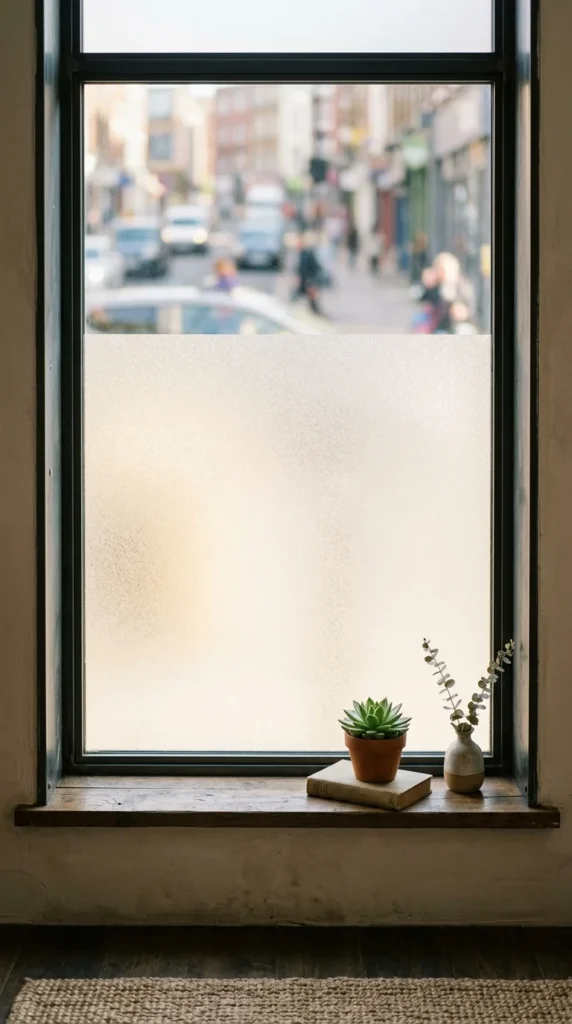
If your office window faces a busy street or a neighbor’s house, you might feel the need to close the blinds for privacy, which kills the light. Instead, use frosted glass or privacy film on the lower half of the window. This allows the sun to pour in from the top while keeping your workspace private and distraction-free.
13. High Ceilings
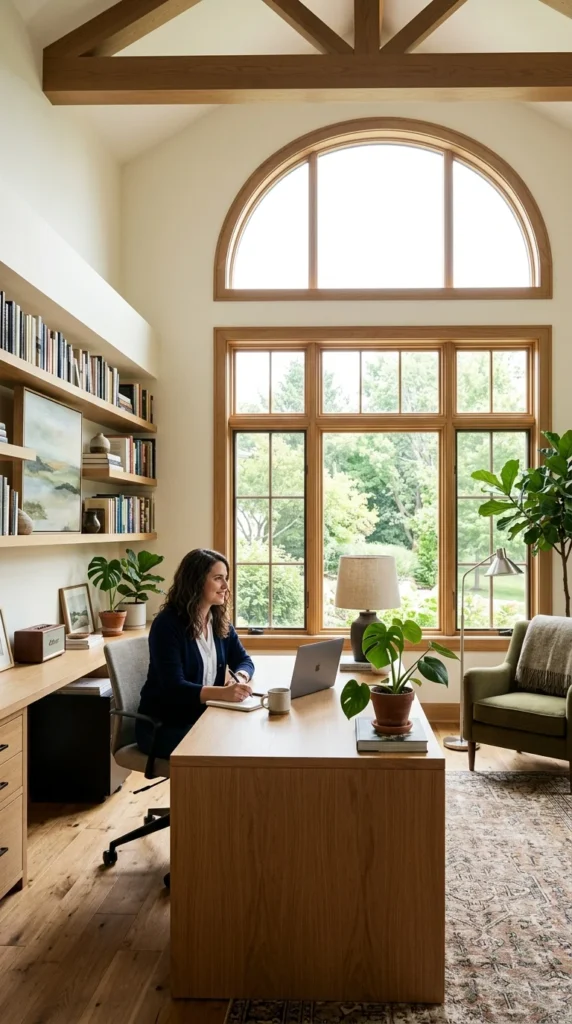
If your space allows, take advantage of verticality. Transom windows (small windows located above doors or larger windows) are excellent for bringing light deeper into a room. Because the light enters from a higher point, it travels further across the ceiling, illuminating the entire office more effectively than a standard-height window.
14. Reflective Surfaces
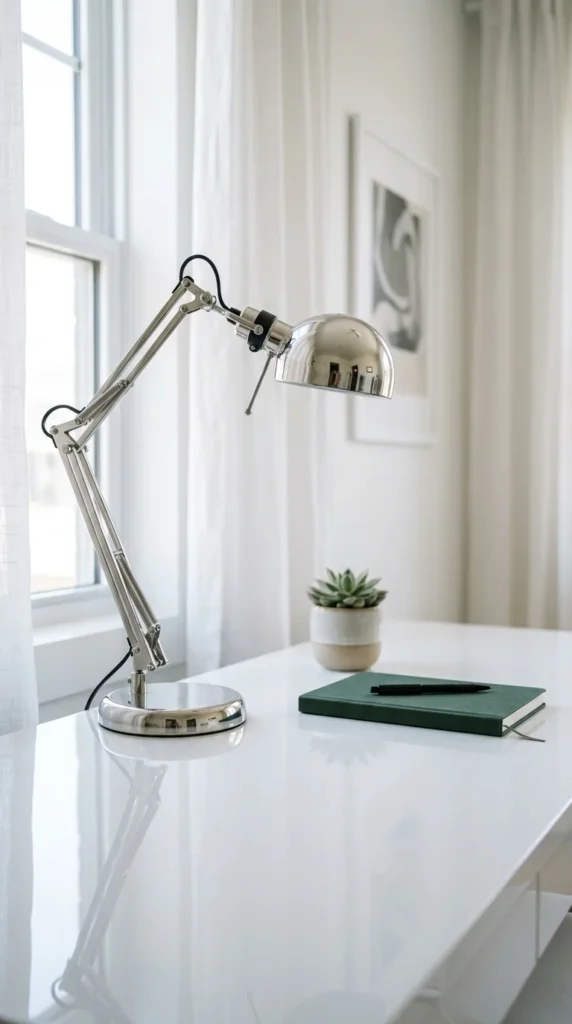
Beyond mirrors, consider other reflective surfaces. A high-gloss desk, metallic accents (like brass or chrome lamps), and even polished hardwood floors can help bounce light around. These subtle reflections add a sense of luxury and brightness to the room, making it feel more energetic and alive.
15. Bay Window Nooks
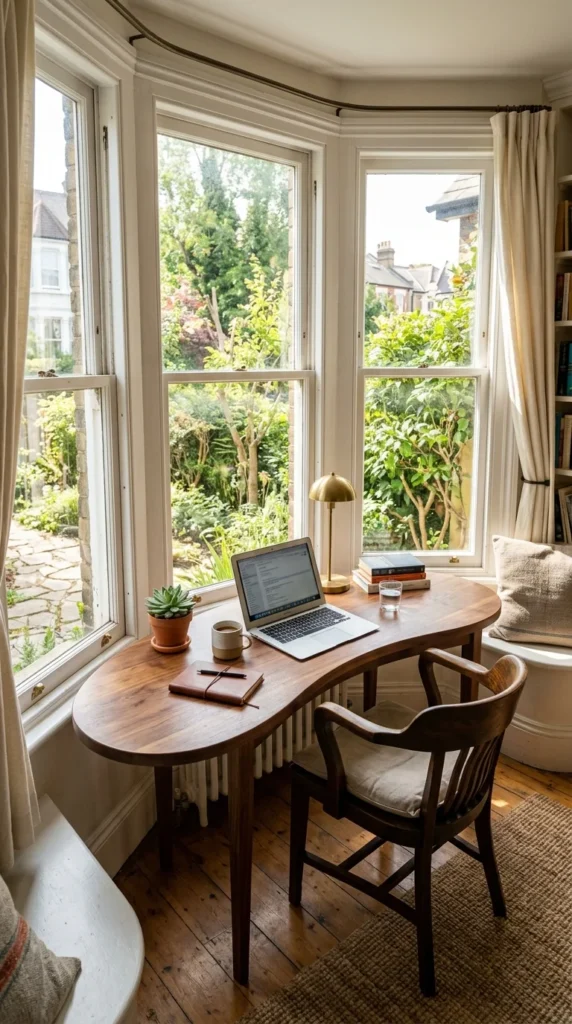
Bay windows offer a unique architectural opportunity. Instead of filling a bay window with a bench, turn it into a dedicated desk nook. The three-sided light source provides multi-directional illumination, which is ideal for detailed work like drawing, crafting, or reading physical documents.
16. Indoor-Outdoor Flow
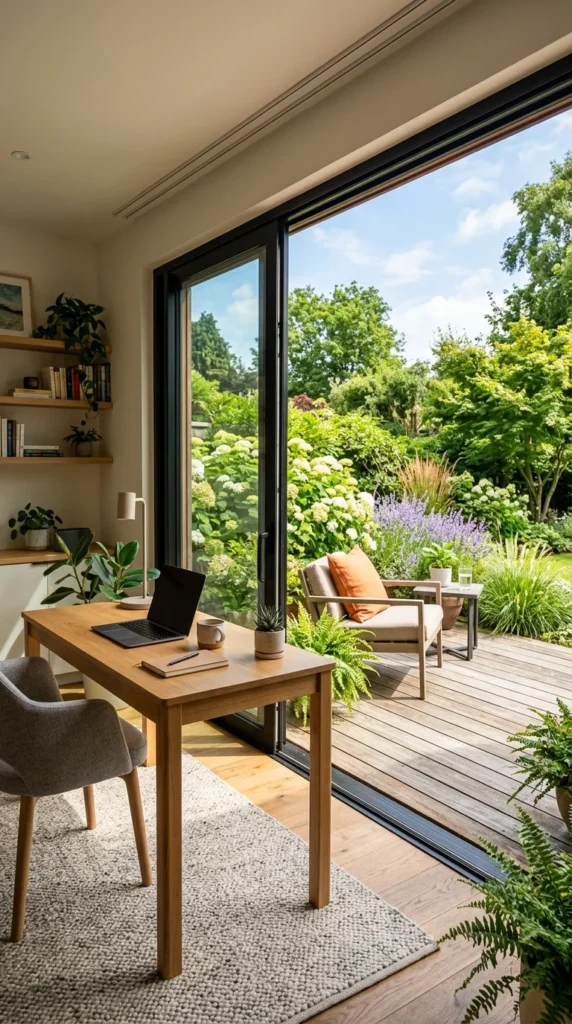
If your office is on the ground floor, consider replacing a standard window with a sliding glass door. This not only maximizes the glass area for light but also allows you to physically step outside for a “micro-break.” Fresh air and sunlight are a powerful combination for resetting your brain during a long workday.
17. Clutter-Free Sills

It is tempting to use a window sill as extra storage, but every object you place there blocks a portion of the incoming light. Keep your window sills as clear as possible. A minimalist approach ensures that the path for sunlight is completely unobstructed, allowing the maximum amount of “lumen power” to enter your workspace.
18. Adjustable Blinds
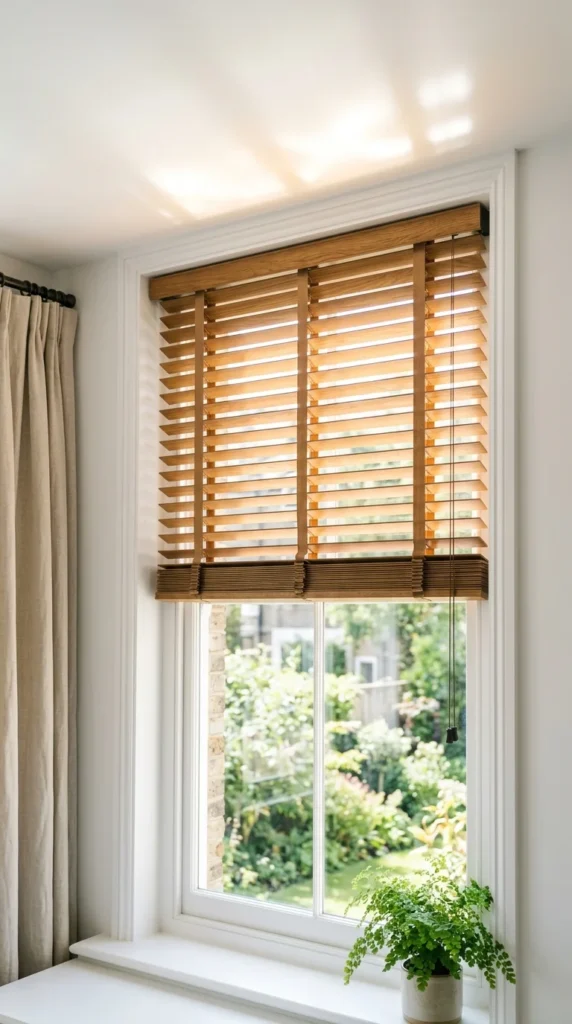
Total control over light is key. Adjustable blinds, such as Venetians or top-down/bottom-up shades, allow you to direct the light where you need it most. By tilting slats upward, you can reflect light off the ceiling to brighten the whole room without having the sun shine directly into your eyes.
19. Symmetrical Windows
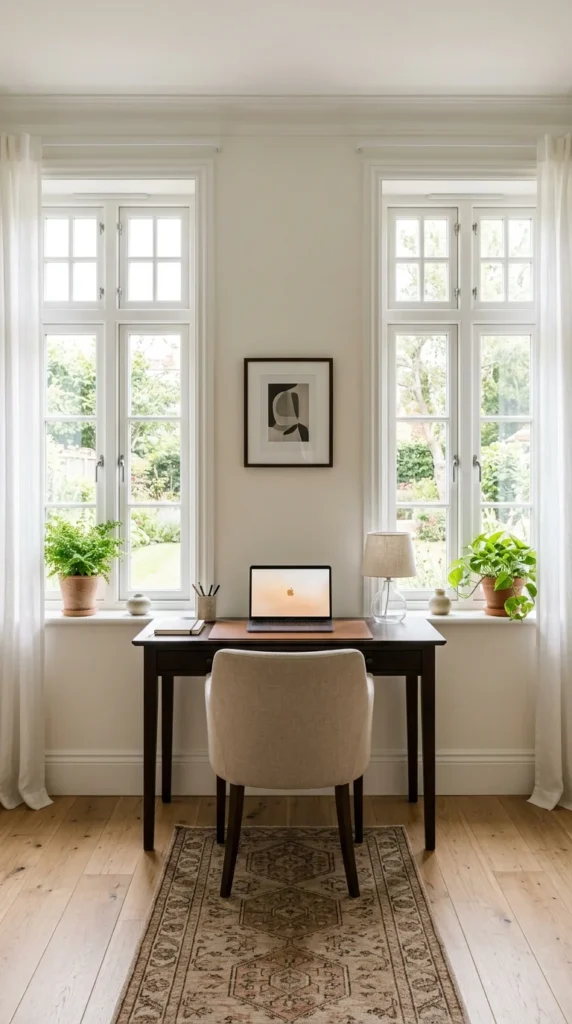
If you are lucky enough to have two windows on one wall, center your desk between them. This creates a symmetrical aesthetic that is incredibly pleasing to the eye. Functionally, it provides balanced light from both the left and right, eliminating heavy shadows on your workspace and creating an even, professional lighting environment for your daily tasks.