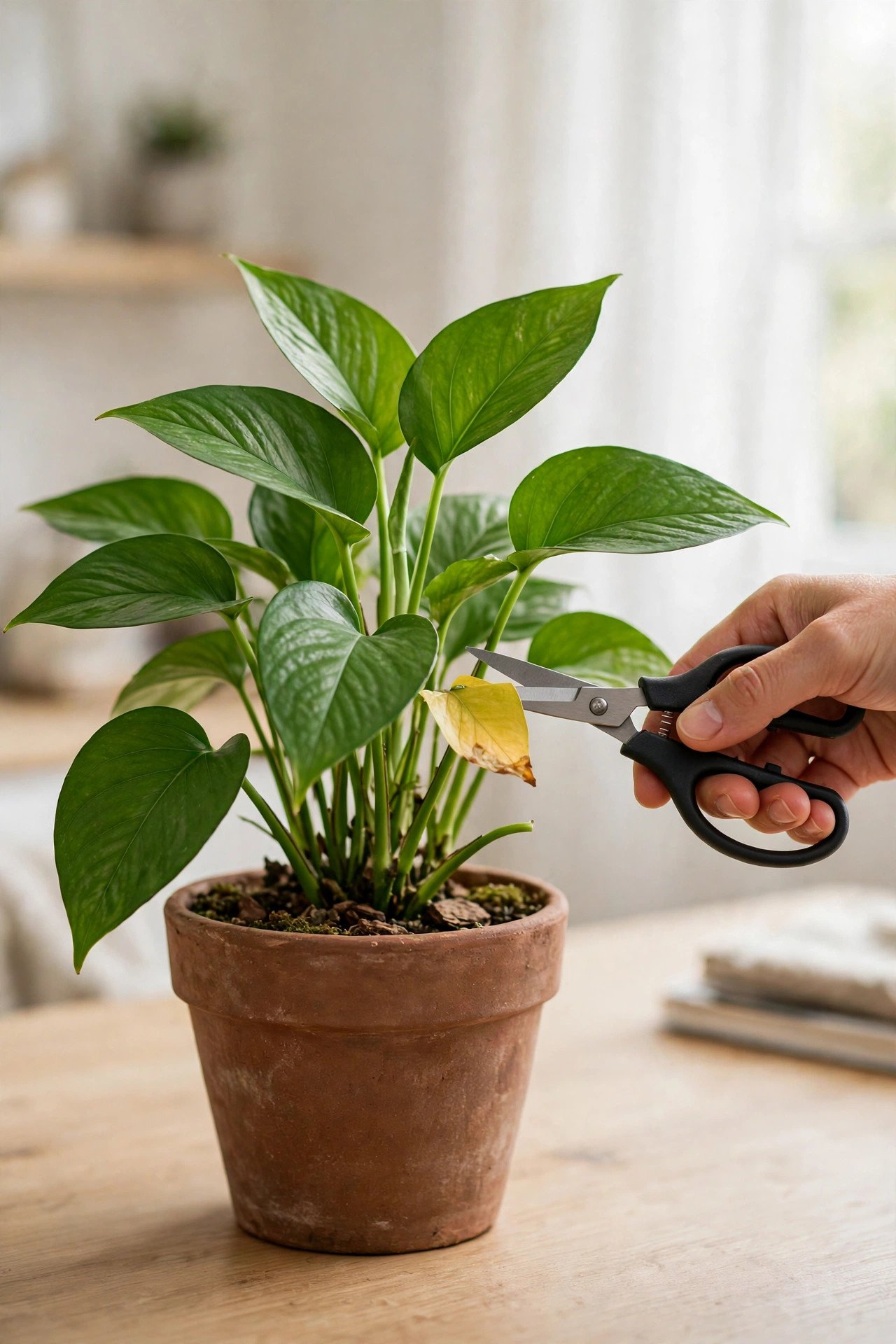
A yellow leaf on a desk plant can mean almost nothing, or it can be the first sign that the plant is struggling. The leaf itself is not the diagnosis. The pattern is. Which leaves are turning, where they sit on the plant, whether the yellow is pale or deep, and how fast it is spreading tells you far more than the colour alone.
This guide teaches you to read that pattern before you change anything. It will not re-teach watering schedules or rescue routines — other guides here cover those — but it will help you work out what your plant is most likely reacting to, so your fix is the right one.
Quick Answer
When office plant leaves turning yellow worries you, look at the pattern first. One or two older leaves at the base yellowing slowly is usually normal ageing. Many leaves yellowing at once often points to watering or a sudden change. Pale yellow all over suggests the plant needs more light or food. Yellow with brown crispy edges usually means dry air, dry soil, or salts building up in the pot. Change one thing at a time, then watch the new growth — healthy new leaves mean you found the cause.
Read the Pattern Before You Change Anything
Most people react to a yellow leaf by watering the plant, moving it, or feeding it, sometimes all three in the same week. That makes the real cause impossible to find, because the plant is now reacting to several changes at once.
Instead, spend two minutes looking properly. Check four things: which leaves are yellow (old or new), where they are (base, middle, tips, one side), what the yellow looks like (pale, deep, patchy, edged with brown), and how fast it appeared (one leaf this month, or half the plant this week). Those four answers narrow the cause down quickly.
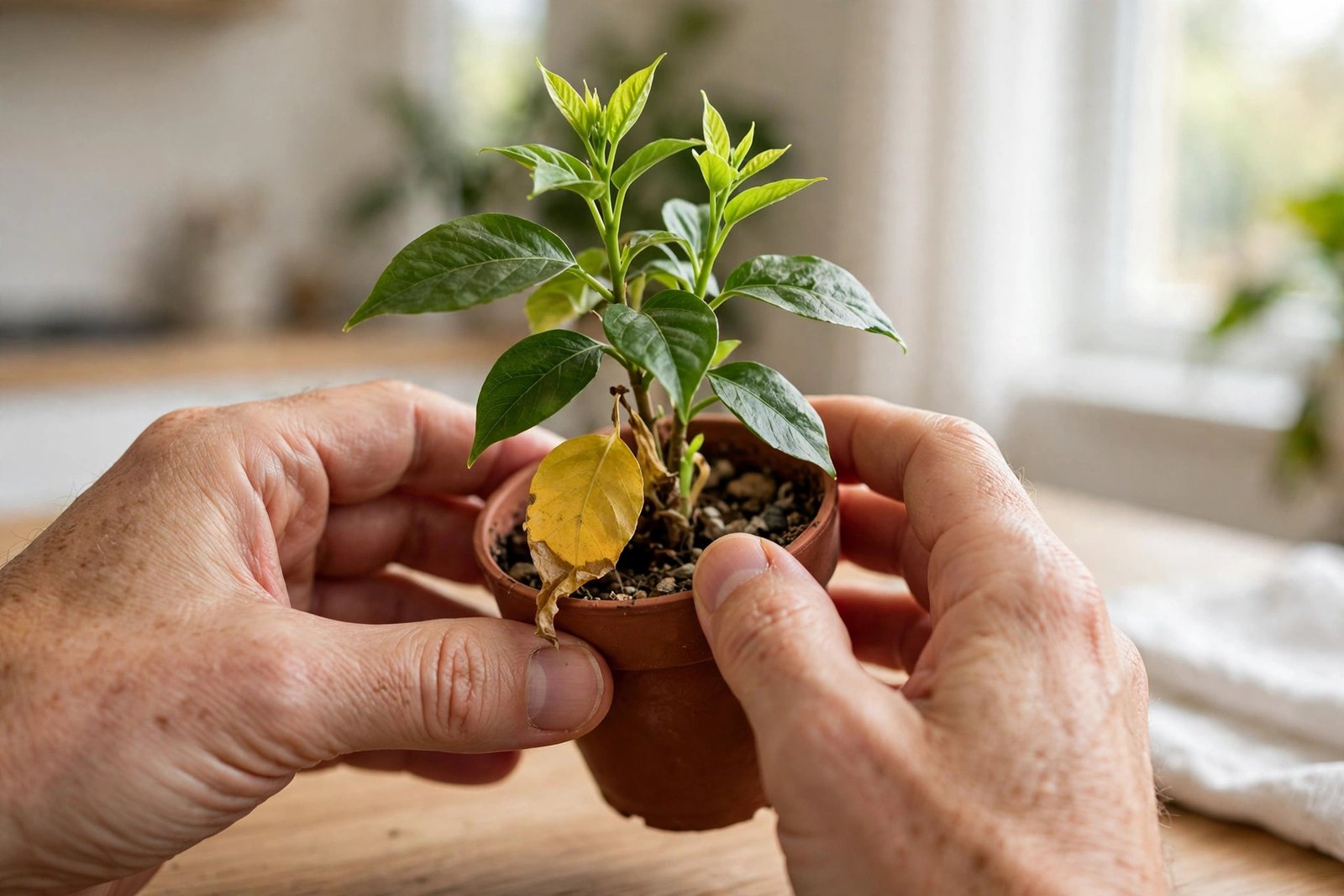
Lower Leaves Yellow, One at a Time
This is the pattern that worries people most and matters least. Plants regularly retire their oldest leaves. As new growth comes from the top or the centre, the lowest, oldest leaves get less light and less energy, turn yellow slowly, and drop. One leaf every few weeks, on an otherwise healthy plant that is still producing new growth, is normal housekeeping, not a problem.
The test is the rest of the plant. If the top looks fresh, new leaves are opening, and only the bottom leaf or two is fading, simply remove the yellow leaf cleanly and carry on. No change in care is needed. Worry only if the pace speeds up or the yellowing starts climbing into younger leaves.
Many Leaves Yellow at Once
When several leaves yellow within a short time, the plant is reacting to something that changed, or to something affecting the whole root system. The most common whole-plant cause is watering that has drifted away from what the plant wants — usually too much, sometimes too little. Roots sitting in wet soil cannot work properly, and the plant sheds leaves it cannot support.
Sudden changes can do the same: a move to a new spot, a cold draught from a window or air conditioner, or a repotting into a much bigger pot. Think back over the last two or three weeks. If the yellowing started soon after a change, that change is your prime suspect. For the detailed checks on watering habits and other whole-plant causes, see our guide on how often to water office plants and the signs you are overwatering, and our breakdown of why an office plant keeps dying and the common causes behind it. This article stays with the pattern; those guides cover the fixes in full.
Yellow With Brown, Crispy Edges
Yellow leaves edged or tipped with dry brown usually tell a drier story. The leaf is losing water faster than the roots can replace it, and the edges — furthest from the veins — dry out first. Common reasons are soil that stays dry for long stretches, very dry indoor air from heating, or a build-up of salts from tap water and fertiliser collecting in the pot over time.
Check the soil first: if it feels dry well below the surface and the pot feels light, the plant is simply thirsty more often than you are watering. If the soil is moist but the edges still crisp, look at the air around the desk and whether a white crust has formed on the soil surface, which hints at salt build-up. Brown edges do not heal, so judge your fix by the new leaves, not the damaged ones.
Pale Yellow All Over
A plant that fades to a washed-out, pale yellow-green all over — rather than a few leaves turning deep yellow — is usually short of light, food, or both. In weak light the plant makes less chlorophyll, the green pigment, so the whole plant looks pale and growth turns thin and stretched. A plant that has been in the same small pot for a long time can show the same pale look when it has used up the food in its soil.
Look at where the plant sits. A desk far from a window, especially in winter, gives many plants less light than they need to stay deep green. Moving the plant gradually closer to the light, or choosing a spot where it gets bright indirect light for most of the day, is the usual answer. Paleness that creeps on over a season, in a plant not fed or repotted for a year or more, points more towards food and fresh soil.
Yellow Spots, Patches and One-Sided Yellowing
Patchy yellowing is more local. Yellow spots between the veins, yellowing on one side of the plant only, or a few leaves affected while their neighbours stay green usually mean a local cause: one side pressed against a cold window, a leaf scorched by direct sun through glass, water sitting in the crown of the plant, or a small pest problem on a few leaves.
Turn the plant around and compare the sides. If the yellow side faces a window, a radiator, or a draught, you have likely found it. Check the undersides of spotted leaves too; tiny pests often start there. Local problems need local fixes — rotate the plant weekly, move it a short distance from the glass or heat source, and remove badly affected leaves so you can see clearly whether it spreads.

How Fast It Happens Matters
Speed separates emergencies from background noise. Yellowing that appears across the plant within days of a change — a move, a cold snap, a missed week of watering followed by a flood — is a reaction, and the plant will often settle once conditions are steady again. Yellowing that creeps over months, one leaf at a time, on a plant in a dim corner usually means the spot itself is slowly failing the plant.
A useful habit is to take a phone photo when you first notice yellowing, then compare a week later. Memory exaggerates decline and misses slow decline; the photo tells you honestly whether to act or simply watch.
What to Do Once You Have Read the Pattern
Work in this order. First, remove fully yellow leaves; they will not turn green again, and removing them lets you see new changes clearly. Second, pick the single most likely cause from the pattern and change only that — the spot, the watering rhythm, or the pot — not everything at once. Third, give it two to three weeks and judge by the new growth. New leaves opening a healthy green means the cause is fixed, even if older leaves still show damage.
If the plant settles, it makes a good candidate for a permanent home in a grouped display; our guide to building a green office corner that stays tidy shows how to place plants where their light needs are actually met. If yellowing spreads to new growth despite one careful change, work through the fuller cause-by-cause checks in the dying-plant guide linked above.
Mistakes to Avoid
- Watering every yellow plant. Yellowing from overwatering gets worse with more water. Check the soil before you reach for the watering can.
- Changing everything at once. Moving, feeding, and repotting in the same week hides the real cause and puts the plant under more strain.
- Panicking over one old leaf. A single lower leaf yellowing slowly is normal ageing on most desk plants.
- Feeding a struggling plant straight away. Fertiliser is for healthy, growing plants. A plant reacting to light or water problems needs the cause fixed first.
- Judging by damaged leaves. Yellow and brown damage does not reverse. Judge your fix by new growth over the next few weeks.
- Moving a plant into strong sun suddenly. A pale plant needs light increased gradually, or its leaves can scorch and yellow in patches.
Frequently Asked Questions
Should I cut off yellow leaves?
Yes, once a leaf is fully yellow it will not recover, and removing it helps the plant put energy into healthy growth and lets you spot new changes. Cut it cleanly at the base of its stem. Leaves that are only partly yellow can stay a little longer while you work out the cause.
Can yellow leaves turn green again?
No. Once a leaf has lost its green colour in an area, that area stays yellow. What can improve is the plant itself: once the cause is fixed, new leaves grow in healthy and green, and the plant gradually replaces the damaged ones.
How long should I wait to see if my fix worked?
Give it two to three weeks of steady care. Look for yellowing to stop spreading and for new leaves to open a normal green. If things keep getting worse in that time, re-check the pattern — the first cause you picked may not be the main one.
Is yellowing always a sign of overwatering?
No. Overwatering is common in offices, but yellowing also comes from underwatering, weak light, cold draughts, old age in lower leaves, dry air, and a plant that has outgrown its pot or its soil. The pattern — which leaves, where, and how fast — is what separates these causes.
Conclusion
Yellow leaves are information, not an emergency. Read the pattern first: which leaves, where, what the yellow looks like, and how fast it is moving. One old leaf is housekeeping; a whole plant changing at once is a reaction; pale all over points to light or food; crispy edges point to dryness. Change one thing, watch the new growth, and let the plant confirm whether you read it right.