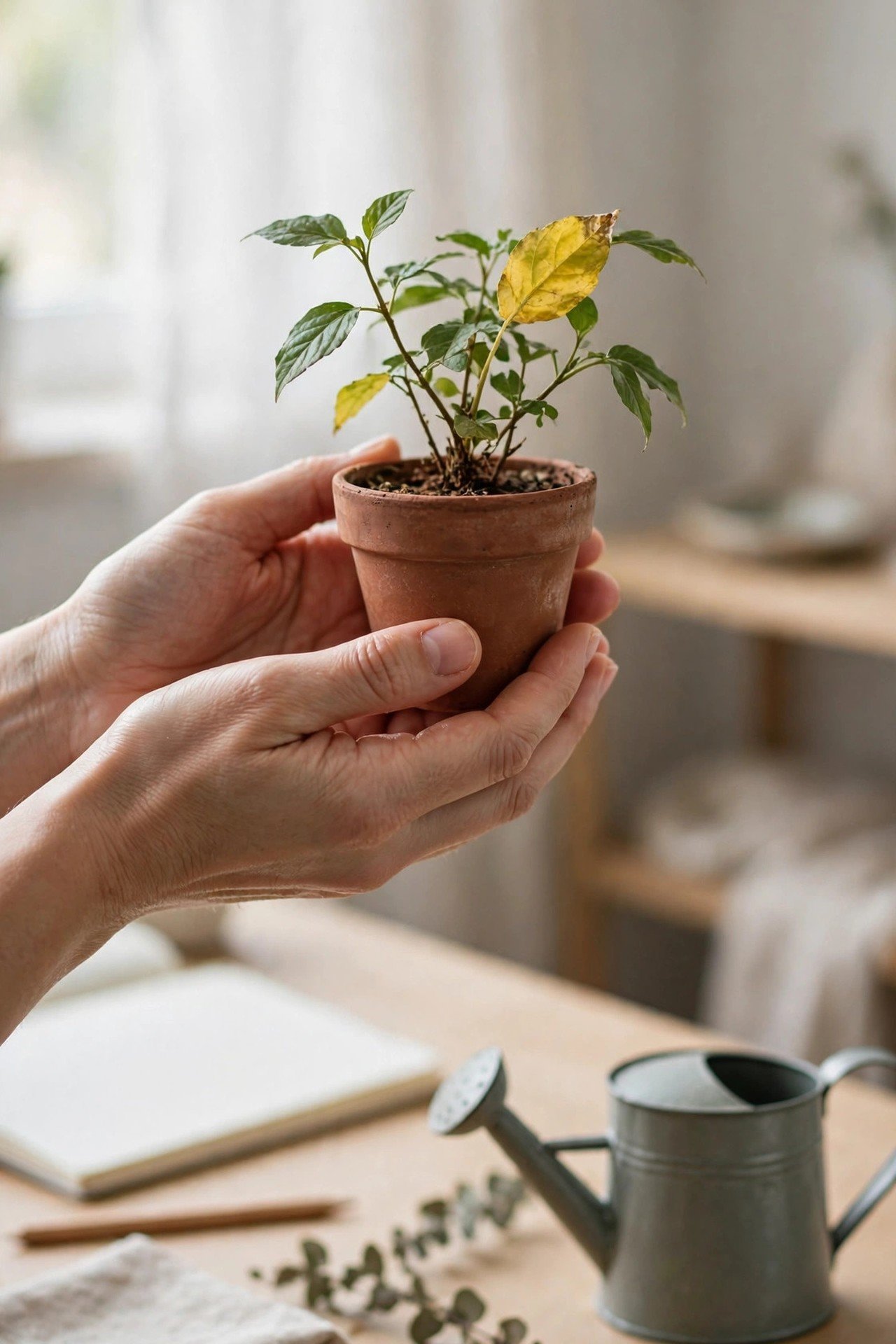
Few things are more frustrating than buying a cheerful green plant for your desk, watching it look fine for a few weeks, and then seeing it slowly yellow, droop and give up. It happens to almost everyone who keeps office plants, and it rarely means you are bad with plants. Most office plants die from a handful of ordinary, fixable causes, and the most common one is the opposite of what people expect.
This guide works through the main reasons an office plant keeps dying, how to tell them apart, and what to change. In many cases a struggling plant can still be saved once you find the real cause, so it is worth checking before you throw it away and start again.
Quick Answer
The most common reason an office plant keeps dying is overwatering, followed by too little light, a pot with no drainage, and long dry spells between waterings. Check the soil first: if it is constantly wet, water less and let it dry. If the plant sits far from any window, light is the likely problem. Fix one cause at a time, wait two or three weeks, and watch for new growth as the sign of recovery.
- Soggy soil and yellowing lower leaves usually mean too much water.
- Long, stretched stems and pale leaves usually mean too little light.
- A pot without a drainage hole traps water where you cannot see it.
- Most plants prefer a thorough soak, then a real dry period, not little sips.
Cause 1: Overwatering, the Most Common Killer
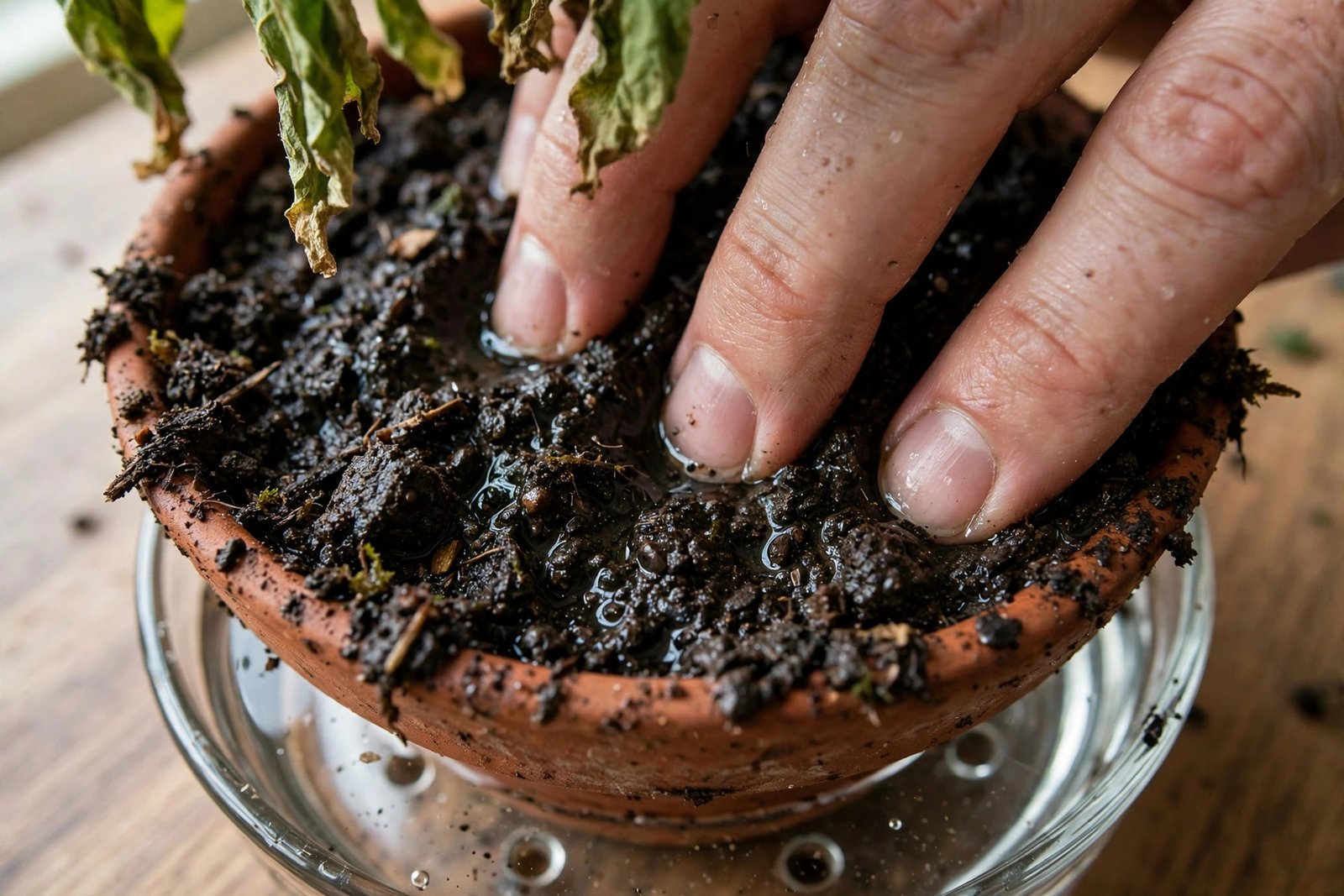
More office plants die from kindness than from neglect. When soil stays wet all the time, the roots sit in water, run out of air and begin to rot. The plant then wilts even though the soil is wet, which tricks many people into watering again and making things worse. Typical signs are yellowing leaves starting from the bottom, a soft or mushy stem base, tiny flies around the soil, and a sour smell from the pot.
The fix starts with stopping. Let the soil dry out properly before you water again, and empty any water that collects in the saucer or outer pot. If the base of the stem already feels soft and black, trim away the rotten parts, shake off the wet soil and repot what is healthy into fresh, dry soil. Our full guide on how often to water office plants explains a simple checking routine that prevents this problem in the future.
Cause 2: Long Dry Spells and Forgotten Watering
The opposite problem is just as common in a busy office. A plant gets watered when someone remembers, which might be every few days one month and not for three weeks the next. Signs of thirst are dry, crispy leaf edges, leaves that curl inward, soil that has pulled away from the sides of the pot, and a pot that feels surprisingly light when you lift it.
Most common desk plants recover well from a dry spell if you act when you notice it. Water slowly and thoroughly until it runs from the drainage hole, let the pot drain fully, and repeat once if the soil was so dry it barely absorbed the first drink. Then set a simple weekly soil check, on the same day each week, so the plant is looked at regularly even if it does not need water every time.
Cause 3: Too Little Light
A plant in a dim corner rarely dies overnight. Instead it weakens over months: stems stretch toward the window, new leaves come in smaller and paler, and growth slows to almost nothing. In that weakened state it becomes easy prey for every other problem on this list, especially overwatering, because a plant using little light also uses little water.
If your desk is far from a window, the answer is usually a different plant rather than more effort. Choose from the best low-light plants for a desk, such as pothos, snake plant or ZZ plant, which are built for dim spots. And if the whole room is gloomy, our guide to why a home office feels dark even with the lights on may help you brighten the space itself.
Cause 4: The Wrong Pot or No Drainage
Many decorative pots have no drainage hole. They look tidy on a desk, but every watering leaves hidden water sitting at the bottom, slowly rotting the roots. The plant can look fine for weeks while the damage builds underneath. The same problem happens when a plant is moved into a much larger pot: the extra soil stays wet far longer than the small root ball can use.
The simple rule is to keep the plant in a pot with a drainage hole, place that pot inside the decorative one if you like the look, and lift it out to water at a sink. Size up only one pot size at a time, and only when roots are circling the bottom or pushing out of the drainage hole.
Cause 5: Dry Air, Radiators and Air Conditioning
Desks often sit near radiators, heaters or air-conditioning vents, and plants dislike all three. Warm, dry air pulls moisture from the leaves faster than the roots can replace it, and the leaf edges turn brown and crispy even when the soil is fine. Direct blasts of hot or cold air make it worse.
Move the plant out of the direct airflow, even by half a metre, and group plants together if you have several, since they slightly raise the humidity around each other. Brown crispy edges on an otherwise healthy plant, in a room that feels dry to you too, are the usual clue.
Cause 6: Old Soil and a Root-Bound Plant
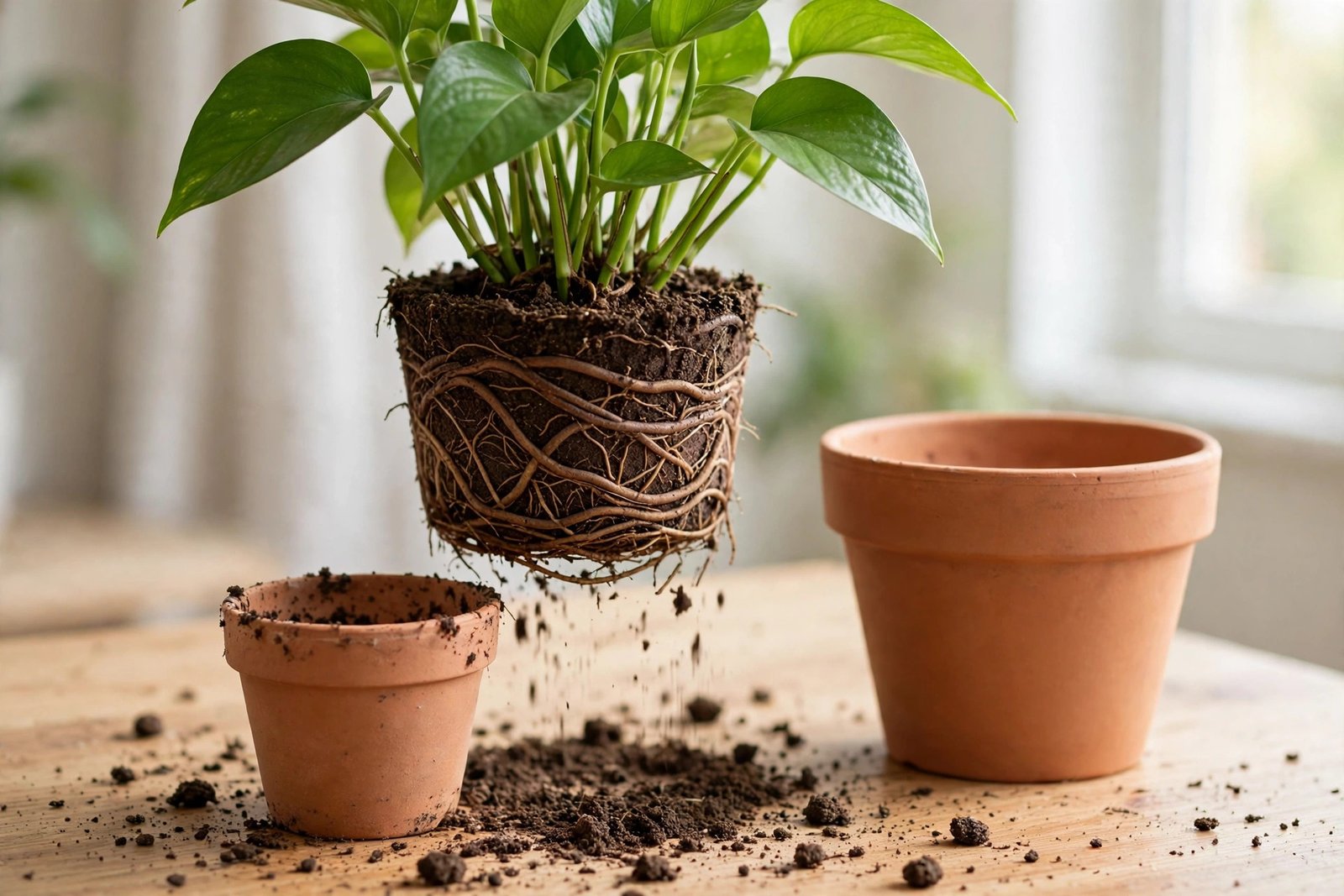
A plant that has lived in the same pot for years may simply have run out of room and food. Roots circle tightly at the bottom, water runs straight through without soaking in, and the plant looks tired no matter what you do. Gently slide the plant out of its pot: if you see mostly roots and very little soil, it is time to repot into a slightly larger pot with fresh soil. Spring is the kindest time, but a suffering plant can be repotted whenever it needs it.
A Simple Rescue Checklist
- Feel the soil two centimetres down. Wet, dry or soggy tells you more than the leaves do.
- Check the pot: is there a drainage hole, and is water sitting in the bottom?
- Look at the light honestly. How far is the nearest window, and how bright is the spot at midday?
- Trim away dead and fully yellow leaves so the plant stops spending energy on them.
- Fix the one cause that matches best, then wait two to three weeks before changing anything else.
- Watch for new growth. A new leaf is the clearest sign the plant is recovering.
Mistakes to Avoid
- Watering a wilting plant without checking the soil. Wilting can mean thirst, but it can also mean rotted roots in wet soil.
- Changing everything at once. New pot, new spot and new routine together makes it impossible to know what helped.
- Feeding a sick plant. Fertiliser is for healthy, growing plants. It stresses a struggling one further.
- Keeping a plant in a pot with no drainage. It hides the single most common cause of death from view.
- Assuming the plant is dead too early. Many plants regrow from the base once the cause is fixed. Check for firm stems and any green at the crown before giving up.
Frequently Asked Questions
How do I know if my plant is dead or just struggling?
Scratch a stem gently with a fingernail. Green underneath means the plant is alive. Firm stems and any green growth at the base are good signs. If every stem is soft, black and mushy all the way down, the plant is unlikely to recover and it is kinder to start again.
My plant’s leaves are yellow. What does that mean?
Yellow leaves have several causes, so read them with the soil. Yellow lower leaves with wet soil point to overwatering. Yellow leaves with bone-dry soil and crispy edges point to thirst. Pale, washed-out leaves with stretched stems point to low light. The soil check usually separates them.
Can I save a plant with root rot?
Sometimes. Take the plant out of its pot, shake off the soil, and cut away any black, soft roots with clean scissors. Repot the healthy part into fresh, barely moist soil, water lightly, and wait. If the main stem base is already soft and black, cuttings from a healthy stem may be your best option with plants like pothos.
How long should I wait to see if a rescue worked?
Give it two to four weeks. Plants respond slowly, especially in low light. Look for the decline stopping first, leaves perking up, then new growth. If the plant keeps worsening after a month with the cause fixed, reassess or replace it with a species better suited to the spot.
Conclusion
When an office plant keeps dying, the cause is almost always ordinary: too much water, too little light, a pot that traps water, or a forgotten routine. Check the soil, check the pot, check the light, fix the one that matches, and give the plant time to answer. Most desk plants are tougher than they look, and the next one you buy will do far better once you know which of these causes to avoid.