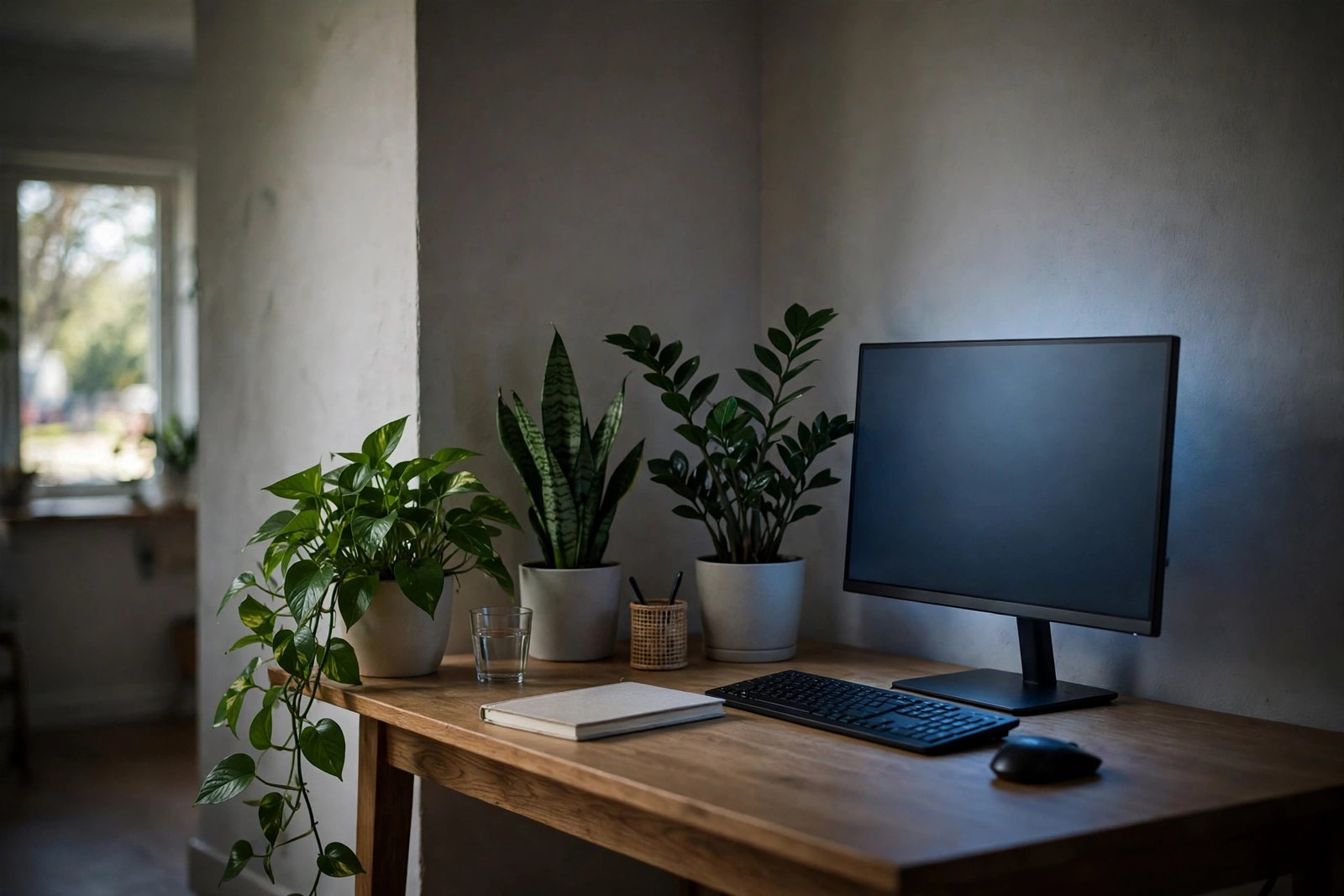
Not every desk gets good light. Many home offices sit in a spare corner, a hallway nook or a room where the only window is on the far wall, metres away from where you actually work. If you have tried keeping a plant in a spot like that, you may have watched it slowly stretch, fade or drop its leaves. The problem is usually not your care. It is the match between the plant you chose and the light it really receives.
The good news is that some plants genuinely cope with dim corners far better than others. This guide explains what low light means at desk level, lists the best low-light plants for a desk far from a window, and shows you how to help them settle in so they keep looking good month after month.
Quick Answer
The best low-light plants for a desk far from a window are pothos, snake plant, ZZ plant, heartleaf philodendron and cast iron plant. All of them tolerate weak daylight for long periods, grow slowly enough to stay tidy, and forgive the occasional missed watering. Place them where they still get some indirect daylight, rotate them now and then, and expect slow, steady growth rather than fast change.
- Pothos and philodendron trail or climb, so they suit a shelf edge or a tall pot.
- Snake plant and ZZ plant are upright and compact, ideal beside a monitor.
- No plant lives well in total darkness, so a little indirect light is still essential.
- Slow growth in low light is normal and is not a sign of failure.
What Low Light Really Means at a Desk
Low light does not mean a dark room. It usually means your desk is more than about two metres from a window, the window faces away from the sun for most of the day, or buildings and trees block much of the daylight. In a spot like that, you can read and work comfortably without a lamp at midday, but a sun-loving plant will struggle.
A simple test helps: hold your hand above the desk at noon. If it casts a soft, faint shadow, the light is low but workable for the plants in this guide. If you can barely see a shadow at all, the spot is close to no light, and even the toughest plant will only decline slowly there. In that case, moving the plant a little closer to the window, or swapping it with a plant in a brighter spot every few weeks, makes a real difference.

The Best Low-Light Plants for a Desk
Pothos
Pothos is often the first plant people recommend for a dim desk, and for good reason. Its heart-shaped leaves keep their colour in modest light, and the stems trail gracefully from a shelf or hang from a pot on a stand. It is forgiving if you forget a watering, and a stem that grows too long can simply be trimmed back. In very low light the leaves may grow smaller and the gaps between them longer, which is the plant’s way of asking for a slightly brighter spot.
Snake Plant
The snake plant grows upright, sword-like leaves that take up very little desk space. It stores water in its thick leaves, so it tolerates both low light and irregular watering better than most plants. Because it grows slowly and stays narrow, it fits neatly in the gap beside a monitor or at the back corner of a desk where little else fits.
ZZ Plant
The ZZ plant has glossy, oval leaflets on upright stems and a naturally tidy shape. It grows from thick underground stems that store water, which makes it one of the most forgiving desk plants you can buy. It is happy in low light, needs water only when the soil has dried out fully, and keeps its structured look with almost no attention.
Heartleaf Philodendron
Heartleaf philodendron looks similar to pothos, with soft heart-shaped leaves on trailing stems. It handles low light well and grows a little faster, so it is a good choice if you want a plant that visibly changes over the season. Let it trail from a shelf, or train it up a small support to keep your desk surface clear.
Cast Iron Plant
The cast iron plant earned its name by surviving neglect that would finish most houseplants. Its broad, dark green leaves tolerate deep shade, dry spells and temperature changes around a desk. It grows slowly and stays compact for a long time, which suits a fixed desk layout that you do not want to keep rearranging.
Peace Lily and Chinese Evergreen
If you want something with a softer look, a peace lily or a Chinese evergreen (aglaonema) can also manage low light. Peace lilies droop clearly when thirsty and recover quickly after watering, which makes them easy to read. Chinese evergreens bring patterned leaves in green, silver and sometimes pink tones. Note that peace lilies flower far less in low light, so choose them for their leaves first.
An Honest Limit: Low Light Is Not No Light
Every plant in this guide still needs some daylight. A desk in a windowless room, lit only by ceiling lights during work hours, is a hard place for any living plant. If your whole workspace feels gloomy, it is worth fixing the room as well as the plant choice; our guide to why a home office feels dark even with the lights on walks through the common causes and simple fixes.
A practical compromise for a very dark desk is rotation. Keep two tolerant plants and swap their positions every few weeks, so each takes a turn in the brighter spot. Plants recover and recharge in better light, and your desk always has something green on it.

How to Help a Plant Cope in a Dim Spot
- Rotate the pot weekly. Plants lean toward the light. A quarter turn each week keeps the shape even.
- Wipe the leaves. Dust blocks what little light the leaves receive. A quick wipe with a damp cloth every few weeks helps more than people expect.
- Water less than you think. Soil dries slowly in low light because the plant drinks slowly. Always check the soil before watering.
- Keep the pot modest. A very large pot holds more wet soil than a slow-growing plant can use, which invites root problems.
- Be patient with growth. A plant that adds a few leaves a season in low light is doing exactly what it should.
If a plant still fades despite these steps, do not blame yourself too quickly. Work through the checks in our guide to why an office plant keeps dying, which covers water, pots and placement in order, before you replace it.
Choosing the Right Size and Pot
On a desk, shape matters as much as species. Upright plants like the snake plant and ZZ plant use vertical space and leave your work surface free. Trailing plants belong on a shelf or stand, not in the middle of the desk where stems tangle with cables and notebooks. Before you buy, check our suggestions for small desk plants that do not take over your workspace if space is tight.
Whatever you choose, use a pot with a drainage hole and a saucer or outer pot to catch excess water. Desk surfaces and standing water do not mix, and a plant that sits in a puddle will decline even if everything else is right.
Mistakes to Avoid
- Buying a sun-loving plant for a dark desk. Most succulents, cacti and herbs need bright light and will stretch and fade in a dim corner.
- Expecting fast growth. Low light means slow growth. Constantly moving or feeding the plant will not speed it up.
- Watering on a fixed schedule. In low light the soil stays moist longer, so a weekly routine often means permanent wet soil.
- Putting the plant in a truly dark corner. A spot with no daylight at all is beyond even the toughest plant on this list.
- Giving up after one failure. Often the species was wrong for the spot, not your care. Match the plant to the light first.
Frequently Asked Questions
Can any plant survive on a desk with no window in the room?
Not long term. Plants need daylight to live, and a windowless room offers too little. The most realistic options are rotating tolerant plants between the desk and a brighter room, or choosing a good-quality artificial plant for the desk and keeping real plants where the light is better.
Which low-light plant is hardest to kill?
The cast iron plant and the ZZ plant are the most forgiving for most people. Both tolerate low light and missed waterings, and both grow slowly enough that they rarely need attention. The snake plant is a close third and takes up the least desk space.
Will a desk lamp help my plant?
A regular desk lamp helps a little if it is on for many hours close to the plant, but it is far weaker than daylight. Think of it as a small supplement, not a replacement. Moving the plant nearer to the window, even by a metre, usually does more.
Why is my pothos growing long bare stems with small leaves?
That stretched growth is a classic sign the plant wants more light. Move it closer to the window if you can, or rotate it with a plant in a brighter spot. You can trim the long stems back to encourage fuller growth from the base.
Conclusion
A desk far from a window is not a reason to give up on plants. Choose a species that is built for low light, such as pothos, snake plant, ZZ plant or cast iron plant, give it what indirect daylight the room offers, and water carefully. Matched to the spot, these plants will sit quietly on your desk and stay healthy for years with very little fuss.

2 thoughts on “Best Low-Light Plants for a Desk Far From a Window”