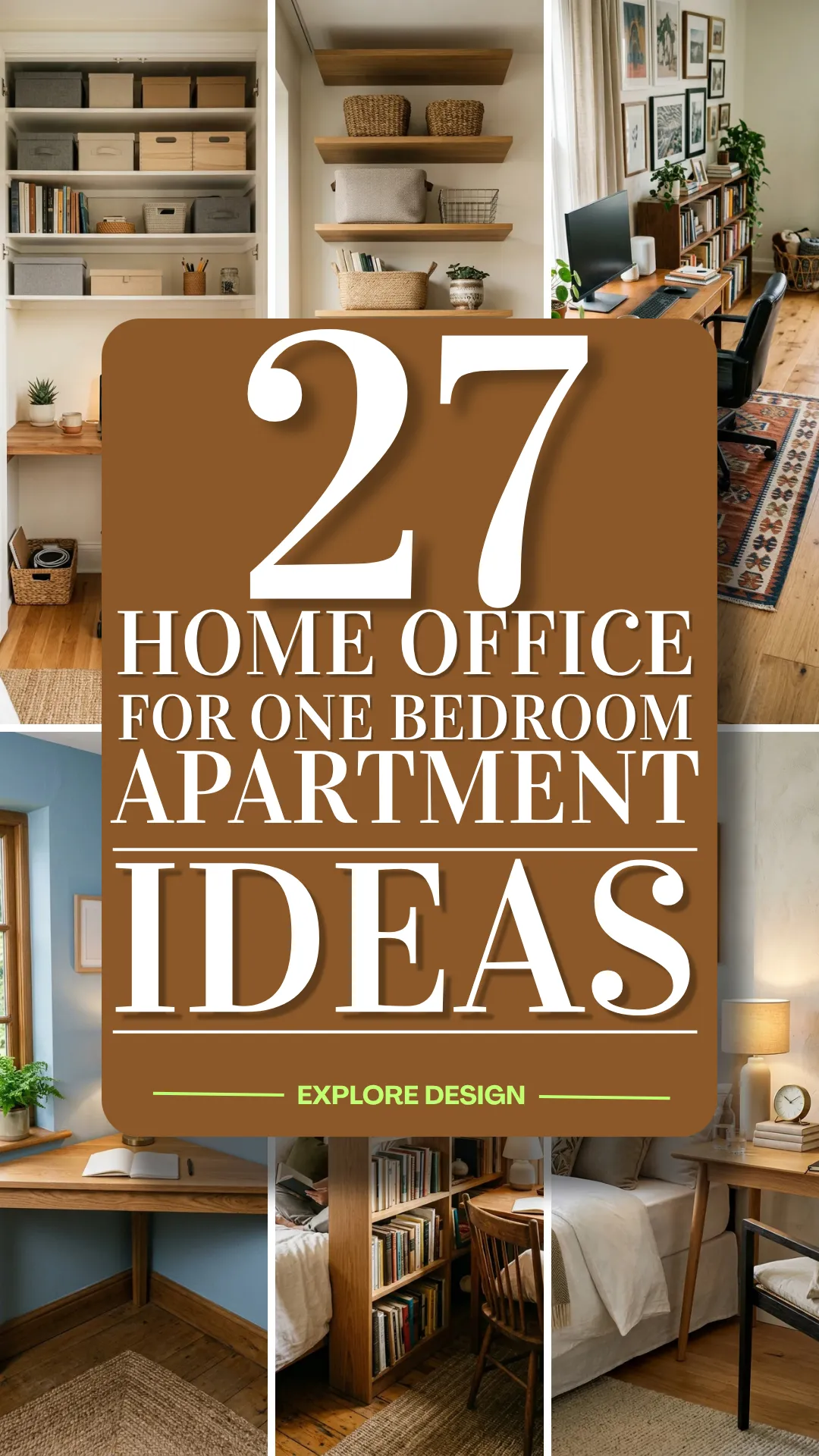
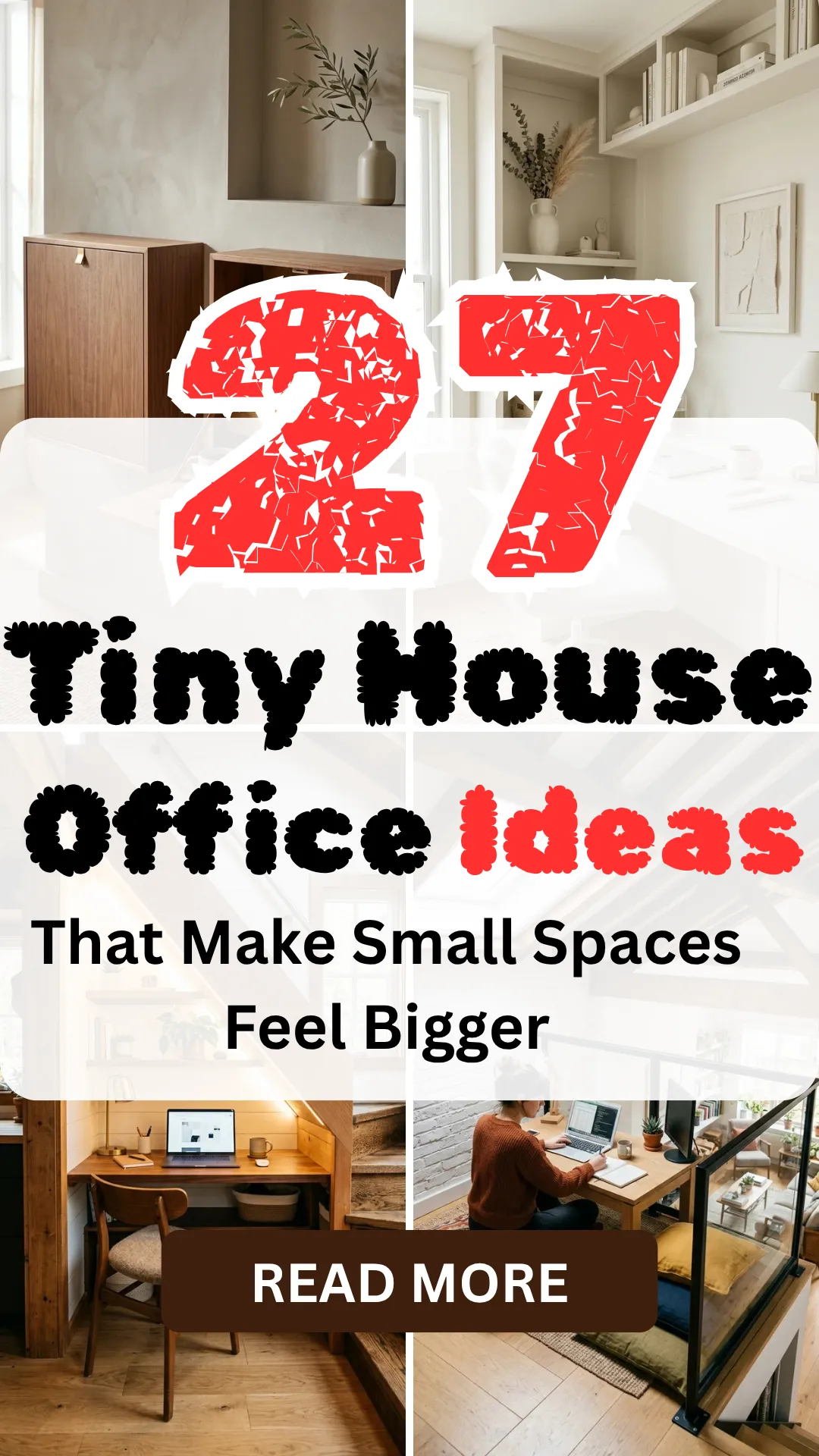
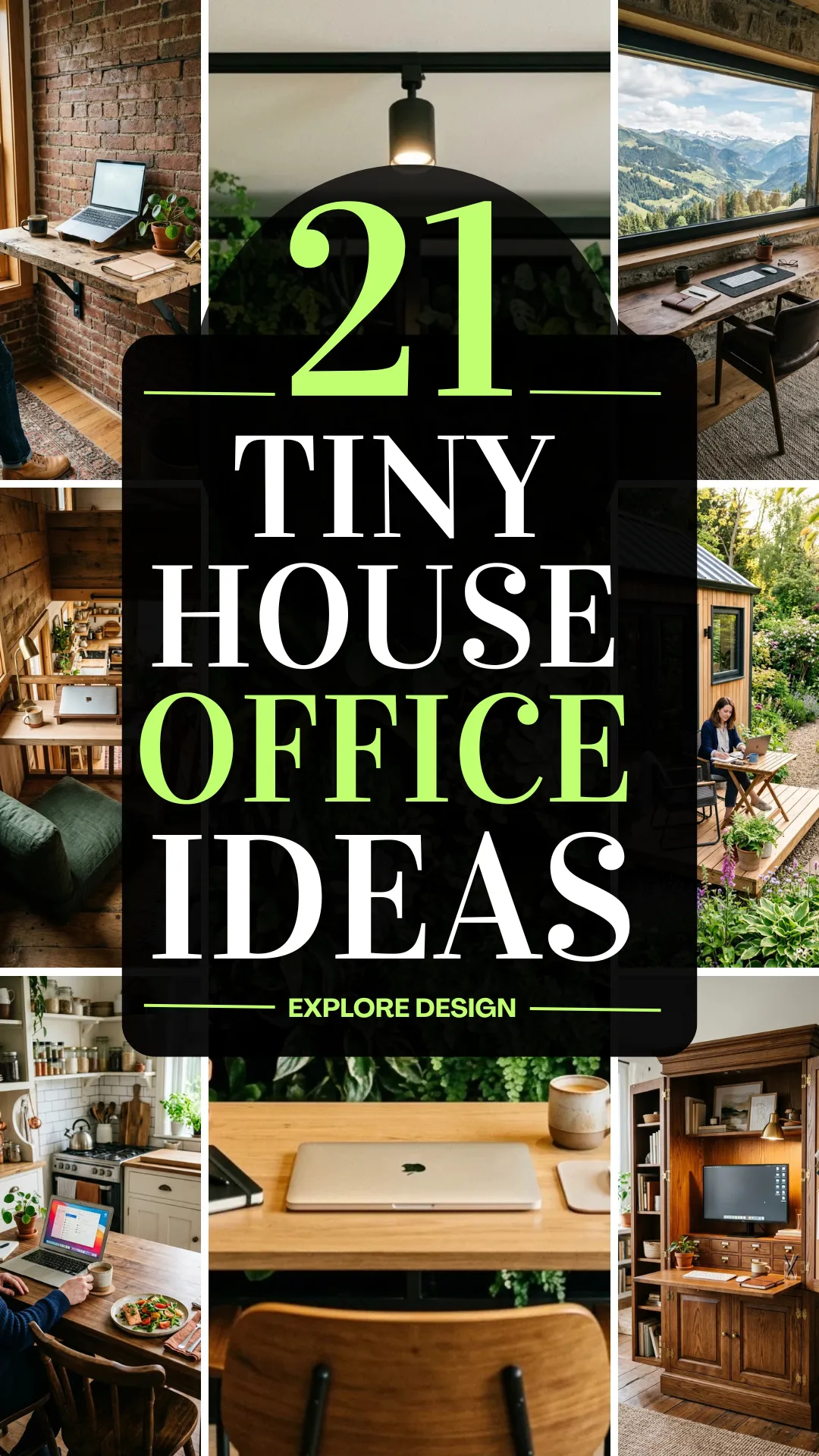
The rise of remote work has transformed our living spaces into multi-functional hubs. However, not everyone has the luxury of a spare room to dedicate to a sprawling executive suite. When every square foot counts, creativity becomes your greatest asset. Designing a small home office is about more than just finding a place for your laptop; it is about ergonomics, inspiration, and maximizing “dead zones” in your home. Whether you are living in a tiny studio or just trying to carve out a workspace in a crowded living room, these 27 ideas will help you work smarter, not harder.
1. Floating Desks
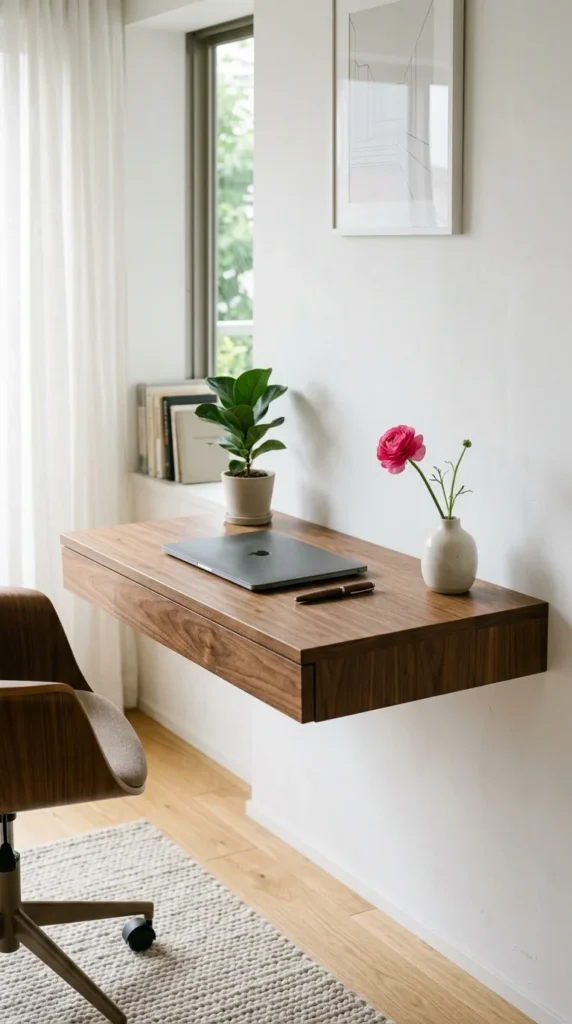
Floating desks are the ultimate space-savers because they eliminate the visual and physical clutter of desk legs. By mounting the work surface directly to the wall, you keep the floor area clear, which makes the room feel larger. This “airy” look is perfect for hallways or narrow bedrooms. You can even install them at standing height to create a healthy, low-profile standing desk.
2. Closet Office
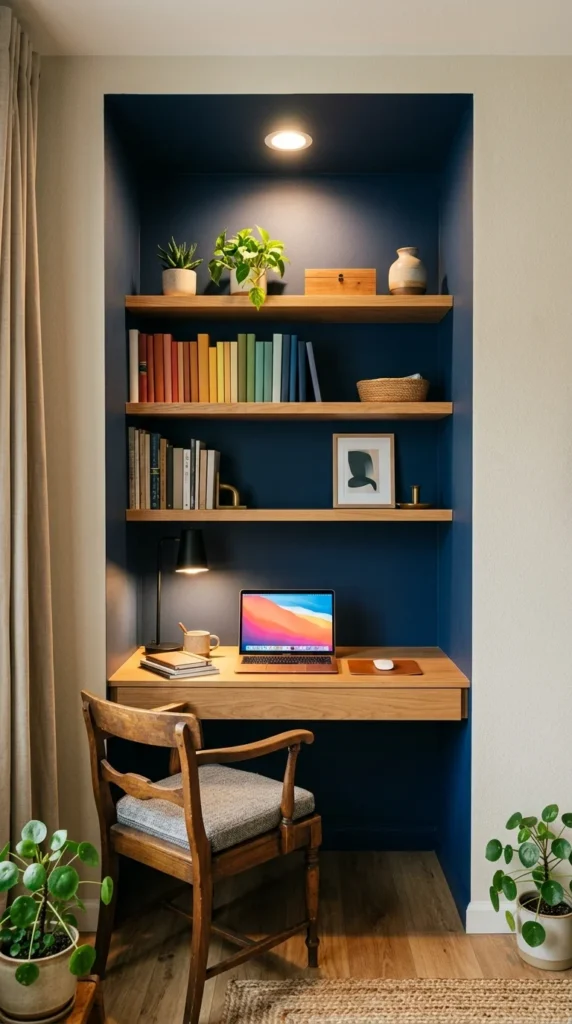
Often referred to as a “cloffice,” converting a spare closet is a brilliant way to hide your workspace. By removing the doors or keeping them to close at the end of the day, you create a physical boundary between “work” and “home.” Add some wallpaper to the back of the closet and install floating shelves above the desk surface for a complete, tucked-away command center.
3. Ladder Shelving
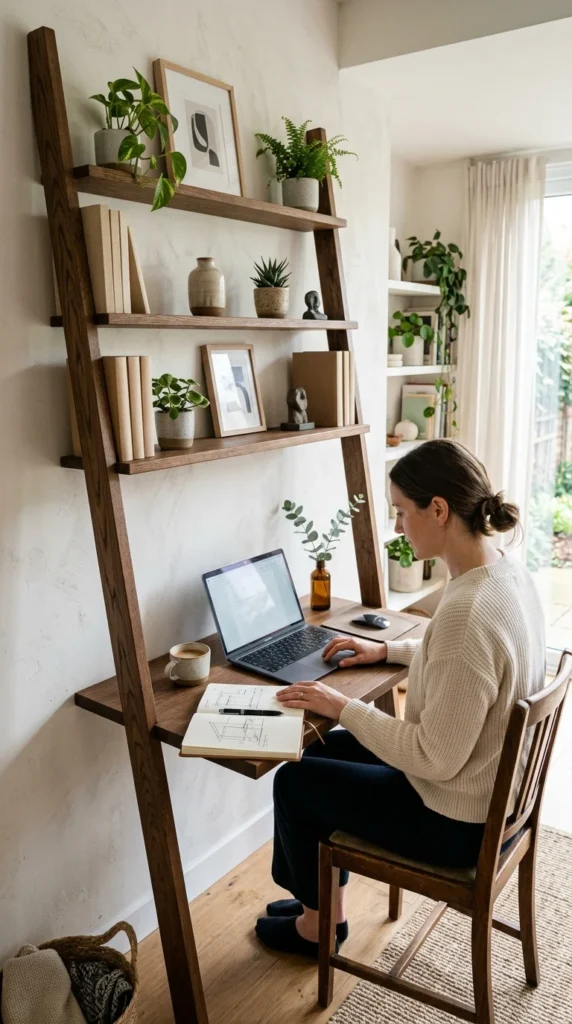
Ladder desks utilize vertical space without requiring a permanent installation. The leaning design is chic and contemporary, fitting perfectly into Scandinavian or bohemian decor styles. The upper shelves provide ample room for books, plants, and office supplies, keeping the primary workspace free of clutter.
4. Window Sills
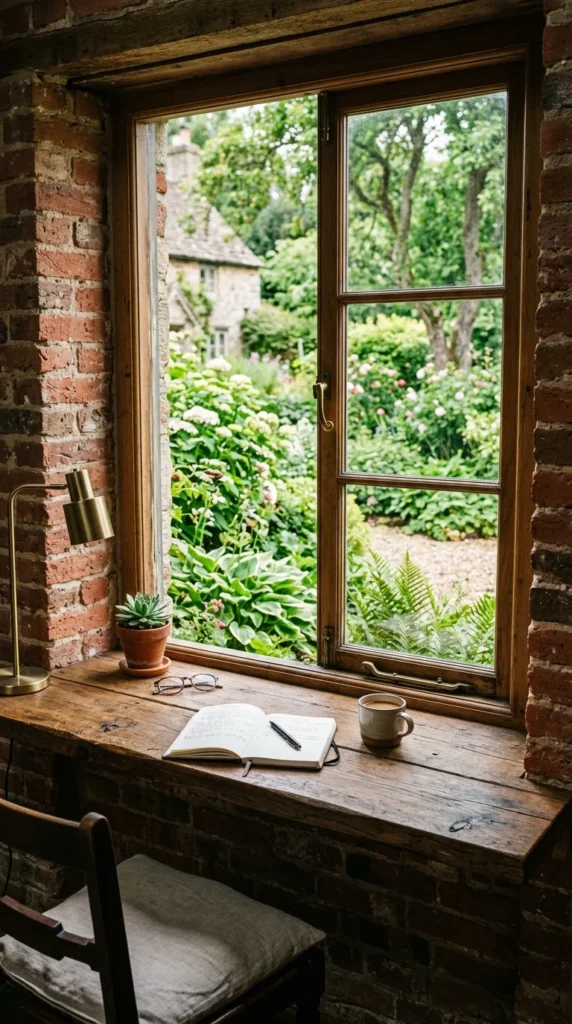
If you have deep window sills, you are sitting on a goldmine of productivity. Extending a window sill slightly or simply using its existing depth can create a serene workspace bathed in natural light. Looking out at the world while you work can reduce eye strain and provide much-needed mental breaks.
5. Corner Desks
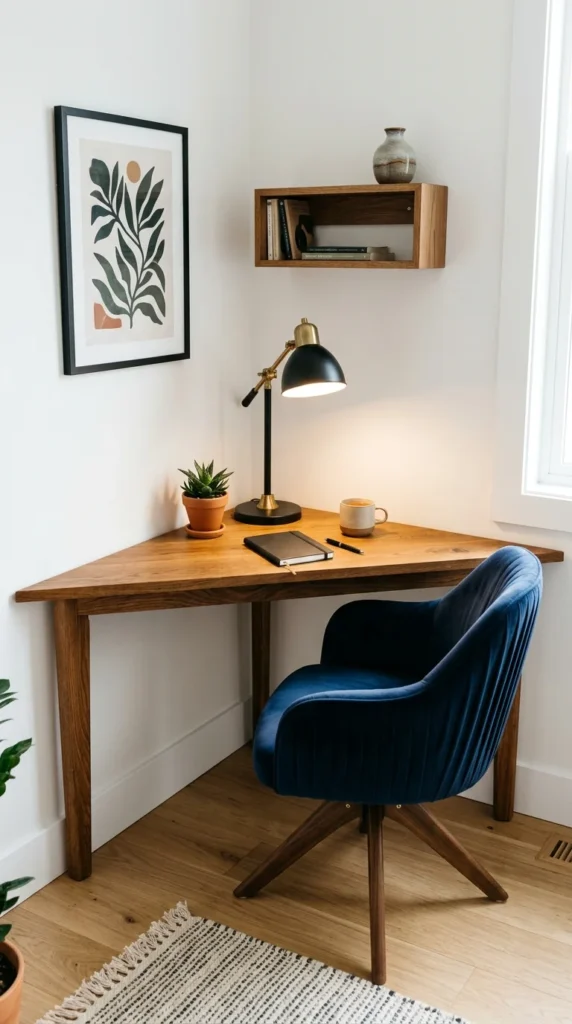
Corners are frequently underutilized in interior design. A triangular or L-shaped corner desk allows you to claim a “dead zone” and turn it into a high-functioning office. It provides a surprisingly large amount of surface area while keeping the center of the room open for movement.
6. Behind the Sofa
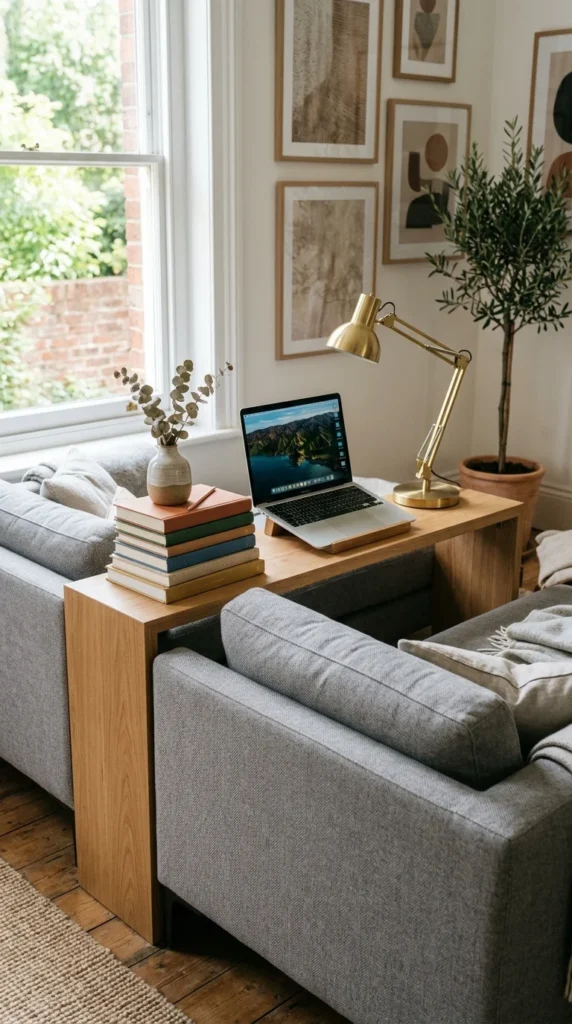
If your living room is your only option, try placing a slim console desk directly behind your sofa. This creates a natural divider between the lounging area and the work area without the need for walls. It’s an excellent way to maintain an open-concept feel while still defining different zones for different tasks.
7. Folding Furniture
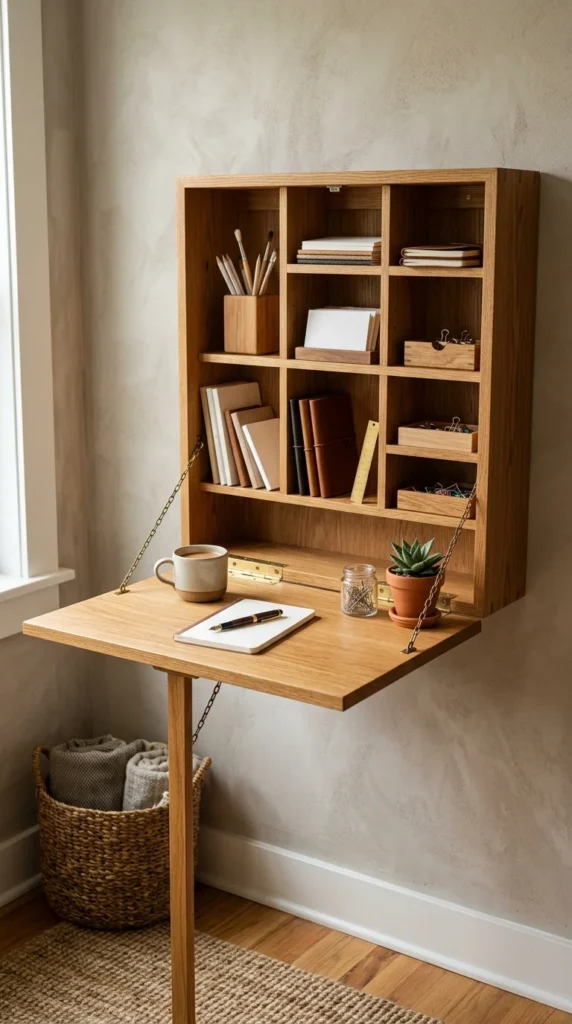
For those who live in truly tiny spaces, furniture that disappears when not in use is a lifesaver. Folding desks or “murphy desks” can be tucked against the wall like a piece of art or a mirror. When it’s time to work, you simply flip the surface down, and you have an instant office.
8. Vertical Pegboards
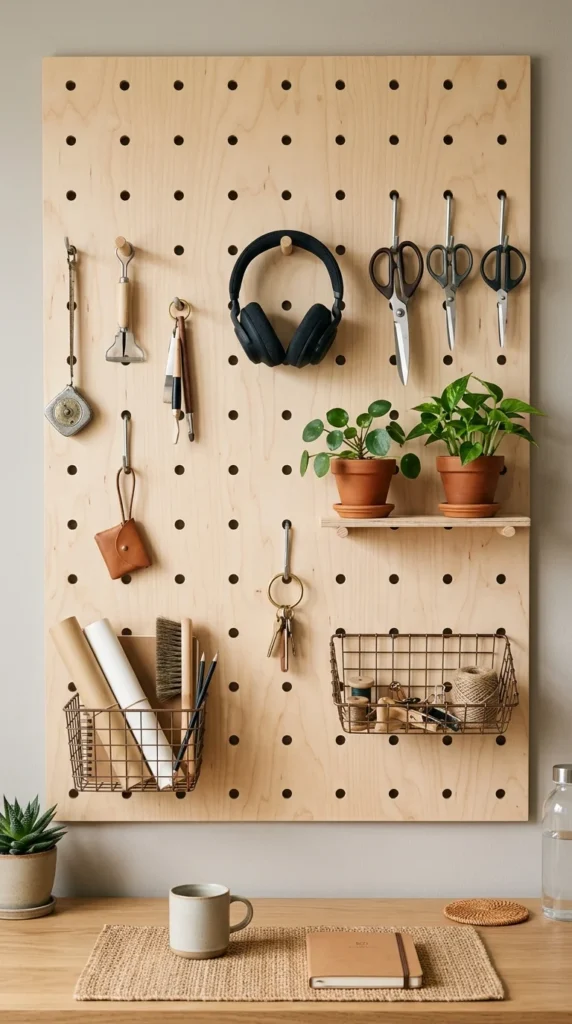
When you run out of floor space, look up. Pegboards are incredibly versatile and allow you to customize your storage. By hanging your supplies—from pens to tablets—you keep your desk surface completely clear for your computer and mouse, maximizing the actual “work” part of your workspace.
9. Under-Stair Nook
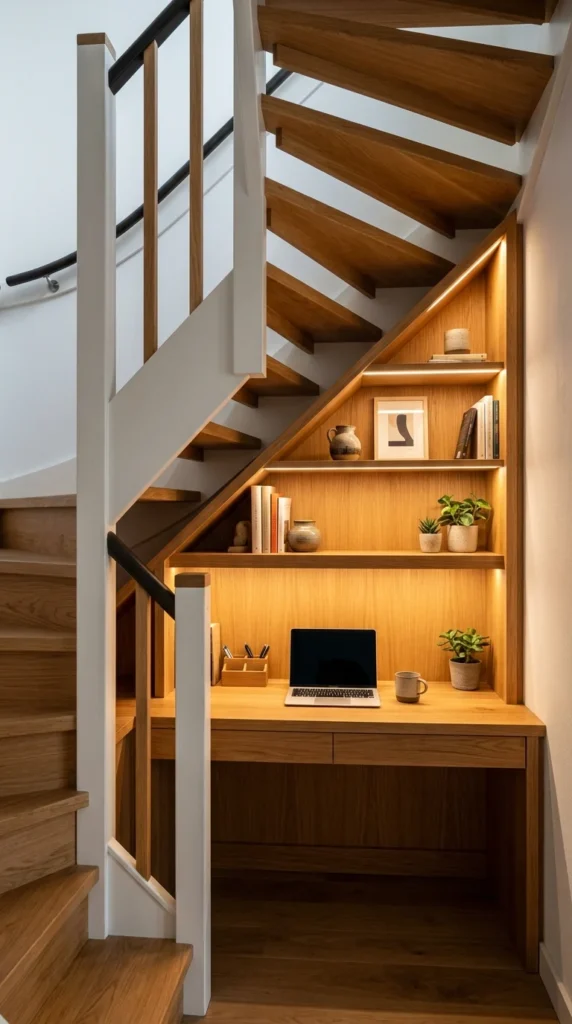
The space under the stairs is often neglected or used for messy storage. By installing a custom desk and some shelving, you can turn this awkward architectural feature into a cozy, semi-private office nook. It’s a great way to use “bonus space” that would otherwise go to waste.
10. Murphy Desks
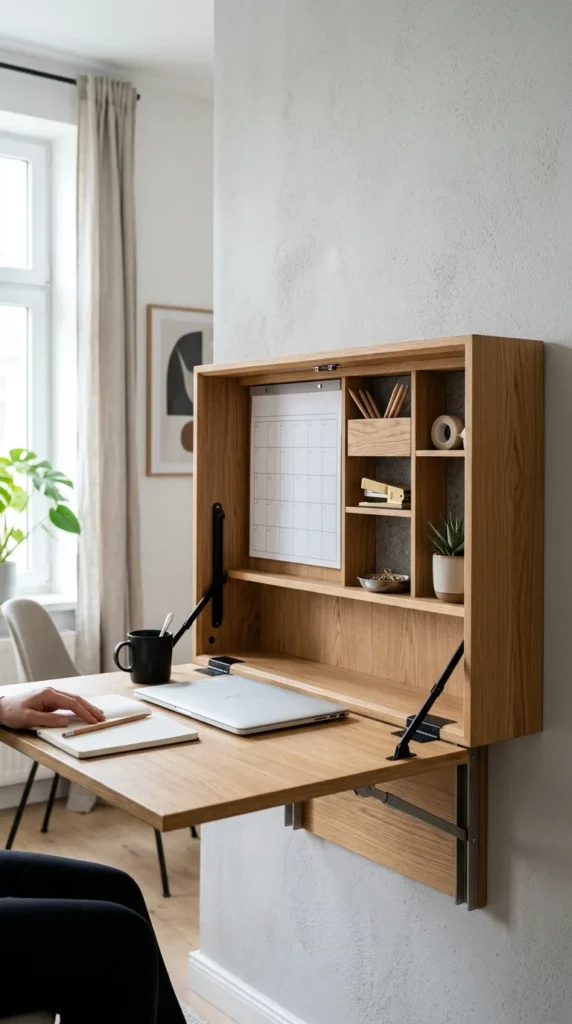
Similar to folding furniture, the Murphy desk is specifically designed to blend into the wall. Some models even include integrated lighting and power strips. When the workday is over, closing the desk acts as a powerful psychological signal that it is time to relax, preventing “work creep” into your personal time.
11. Room Dividers
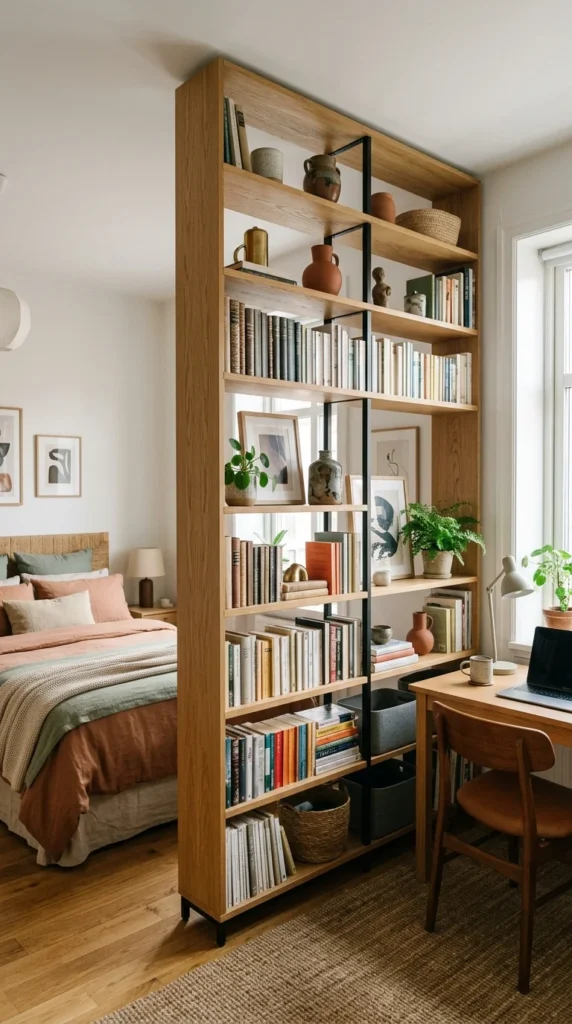
If you are working in a bedroom or studio, use a double-sided bookshelf as a room divider. This creates a physical barrier that helps with focus. You can store office supplies on the “work” side and decorative items or books on the “home” side, maintaining a beautiful aesthetic from every angle.
12. Kitchen Command Center
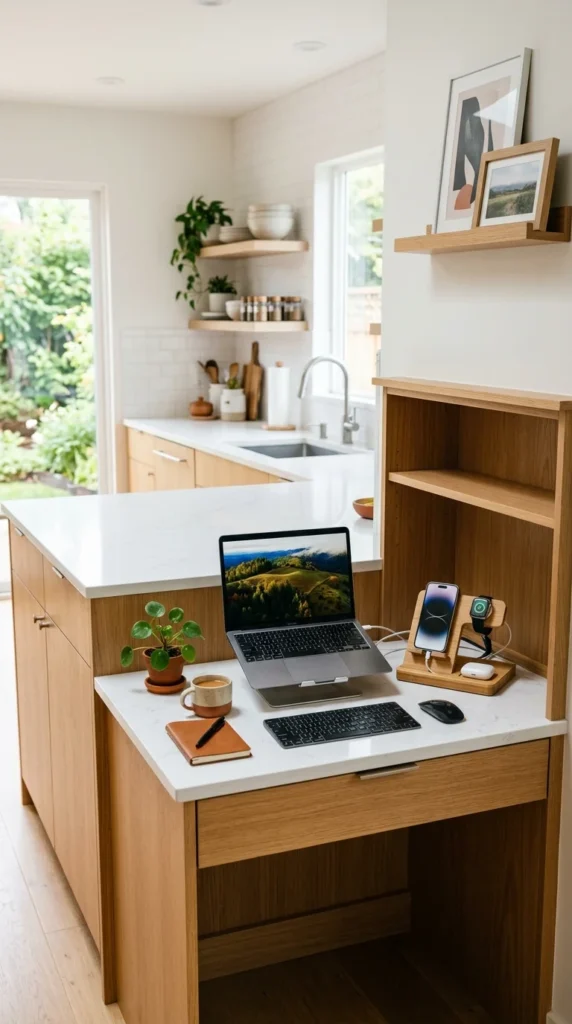
Kitchens are the heart of the home, and often the place where we have the most durable surfaces. Integrating a small “command center” at the end of a kitchen island or in a quiet corner of the cabinetry allows you to supervise cooking or kids’ homework while getting your own tasks done.
13. Bedroom Vanity Hybrid
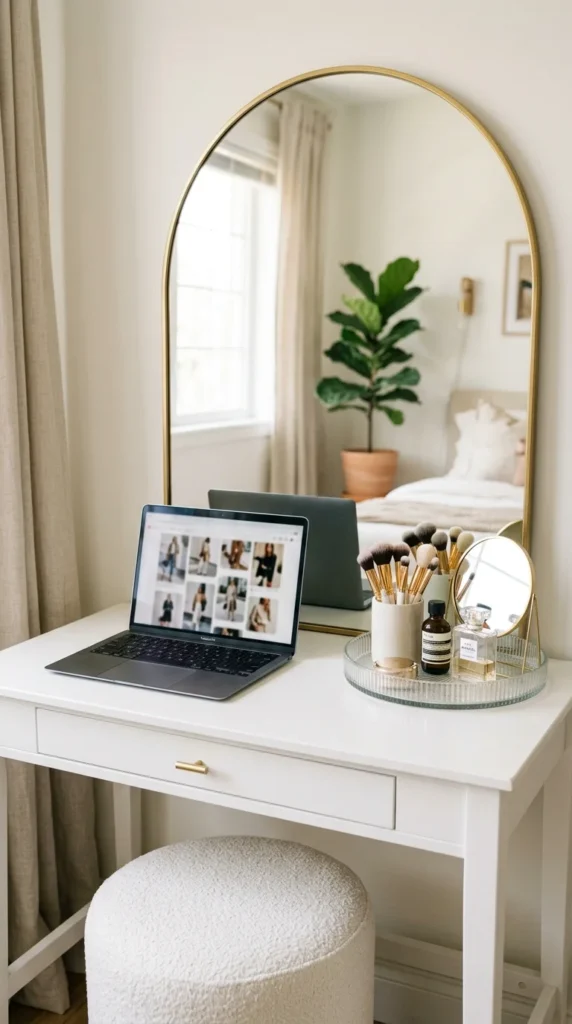
If you only have room for one piece of furniture, choose a desk that can double as a vanity. A beautiful table with a drawer can hold your laptop during the day and your skincare or makeup at night. Choose a comfortable chair that fits the decor of the bedroom to keep the look cohesive.
14. Rolling Carts
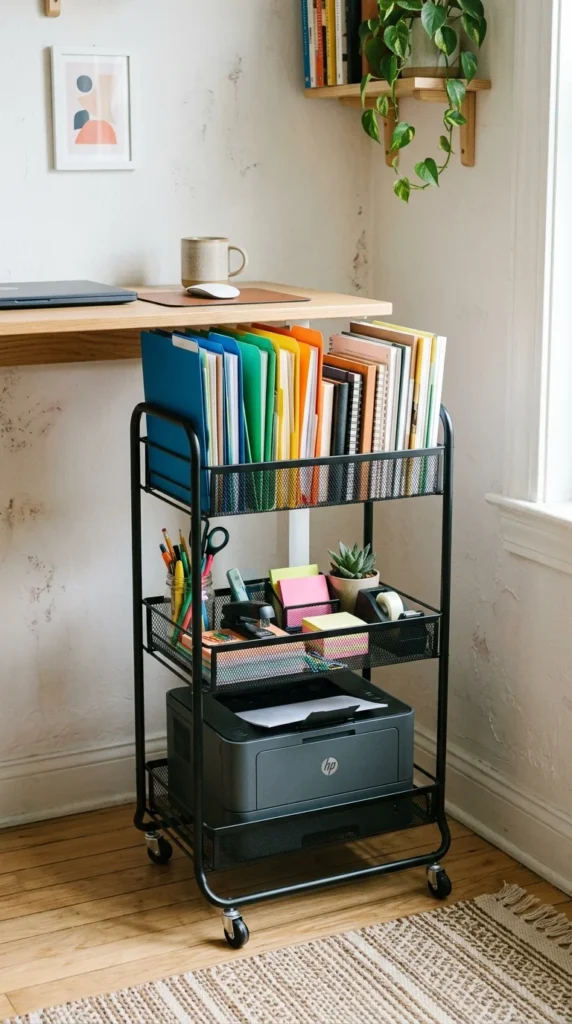
When you have a very small desk, you don’t want it cluttered with a printer or heavy files. A rolling utility cart provides mobile storage that can be tucked under the desk when you’re working and rolled into a closet or corner when you’re finished. It keeps everything you need within arm’s reach.