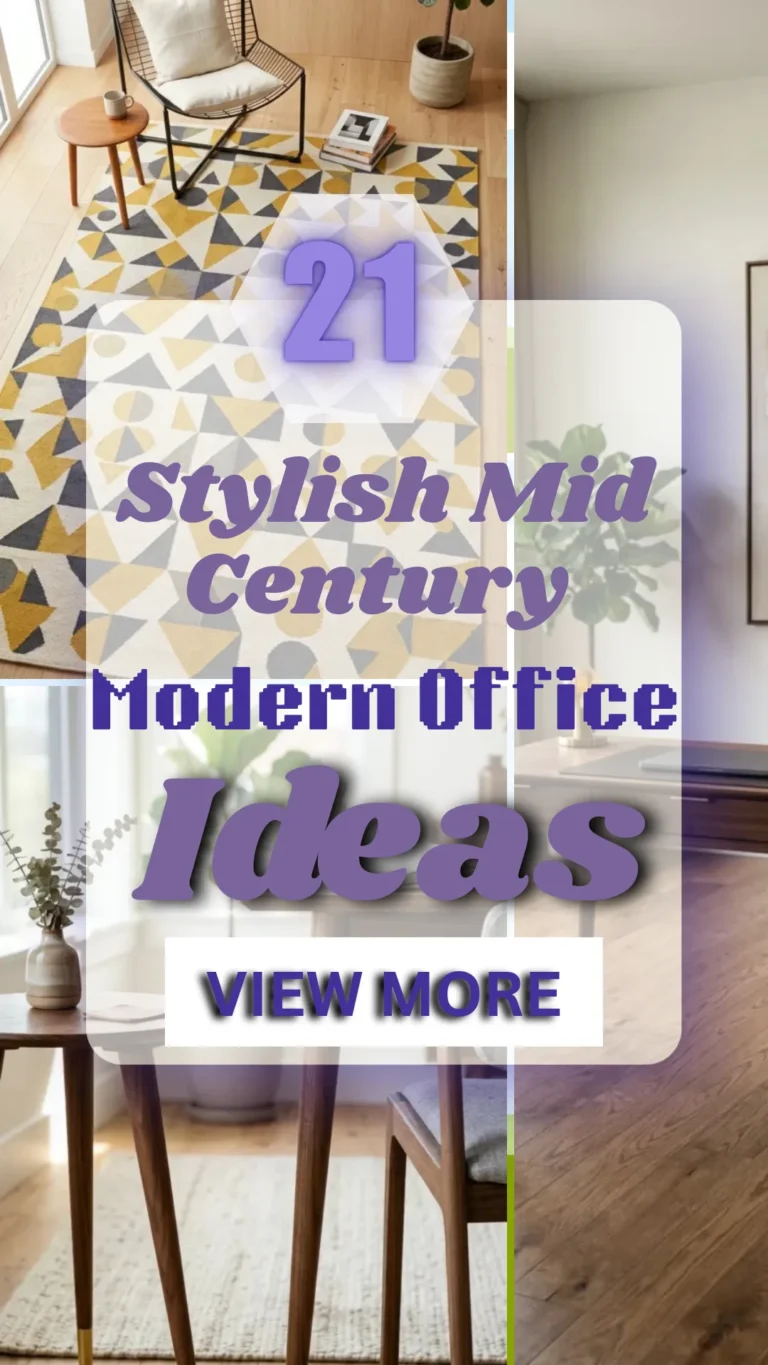

Mid-Century Modern (MCM) design is more than just a passing trend; it is a timeless aesthetic that seamlessly blends functionality with sophisticated artistry. Originating from the mid-1940s through the late 1960s, this style focuses on clean lines, organic shapes, and a seamless integration of indoor and outdoor elements. In a home office, MCM principles create an environment that feels both professional and incredibly comfortable. If you are looking to revamp your workspace with a look that is both nostalgic and forward-thinking, these 21 ideas will provide the ultimate inspiration.
1. Walnut Desks
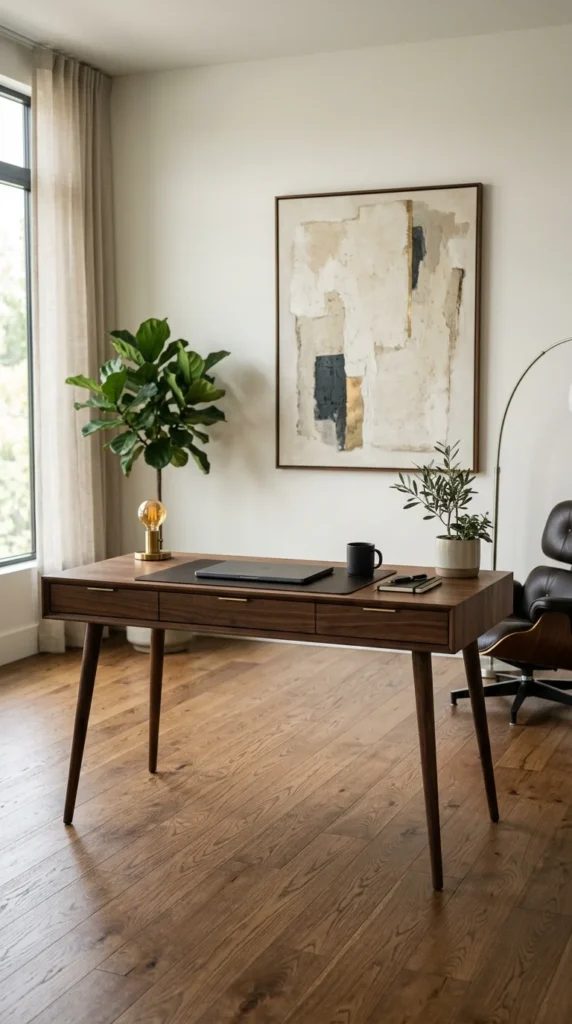
The centerpiece of any Mid-Century Modern office is the desk. Walnut was the preferred wood of the era due to its rich, deep tones and beautiful grain patterns. To capture this look, opt for a desk that features “compass” or tapered legs, which create a sense of lightness and elegance. Avoid bulky furniture; the goal is to have a piece that feels sculptural. A floating-top desk, where the desktop appears to hover slightly above the drawers, is a classic MCM design choice that adds instant architectural interest to your room.
2. Sputnik Lighting
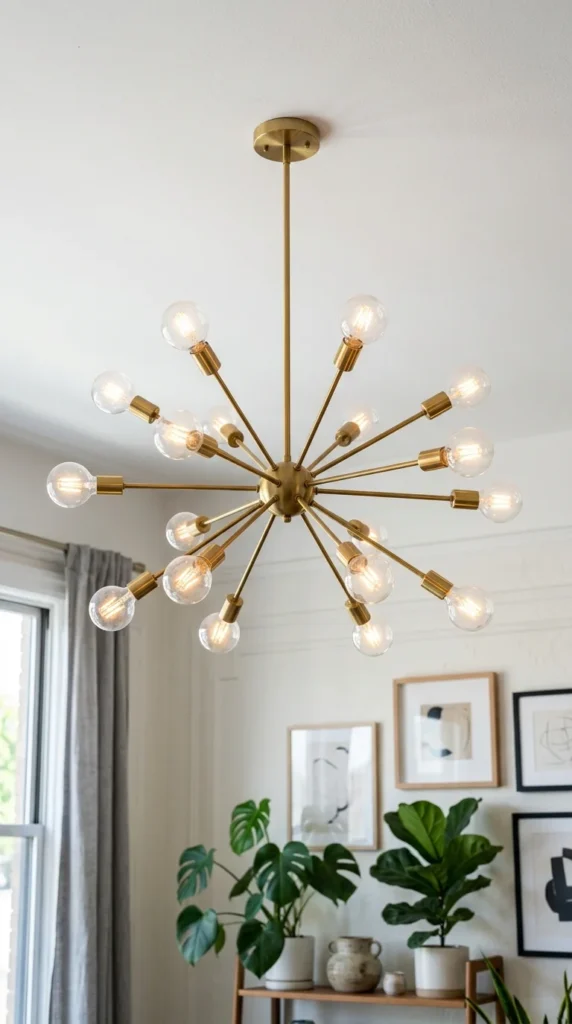
Named after the first satellite to orbit the Earth, the Sputnik chandelier is the quintessential lighting choice for this era. Characterized by its exploding-star shape and multiple arms, it serves as a bold statement piece. In an office, a Sputnik fixture provides excellent ambient lighting while acting as a work of art. If a large chandelier feels too overwhelming, look for a semi-flush mount version or a desk lamp that utilizes similar atomic-age silhouettes to keep the theme consistent.
3. Eames Seating
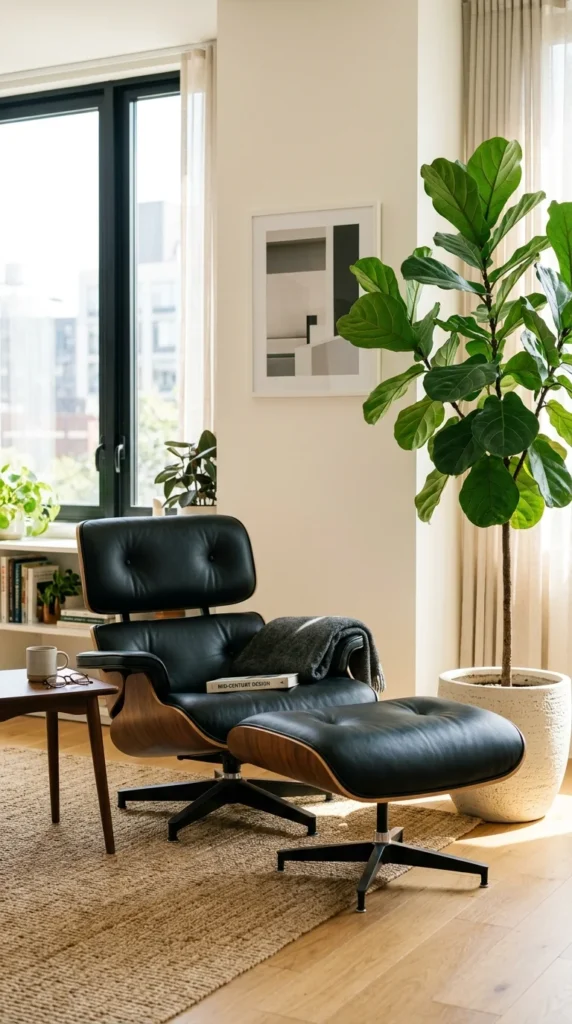
Charles and Ray Eames revolutionized furniture design, and their office chairs remain the gold standard for style and ergonomics. The Eames Aluminum Group or the Eames Soft Pad chair offers a slim profile that doesn’t compromise on comfort. The combination of chrome frames and high-quality leather upholstery fits perfectly into the professional yet relaxed MCM vibe. These chairs are investments that not only elevate the look of your office but also provide the support needed for long hours of productivity.
4. Geometric Rugs
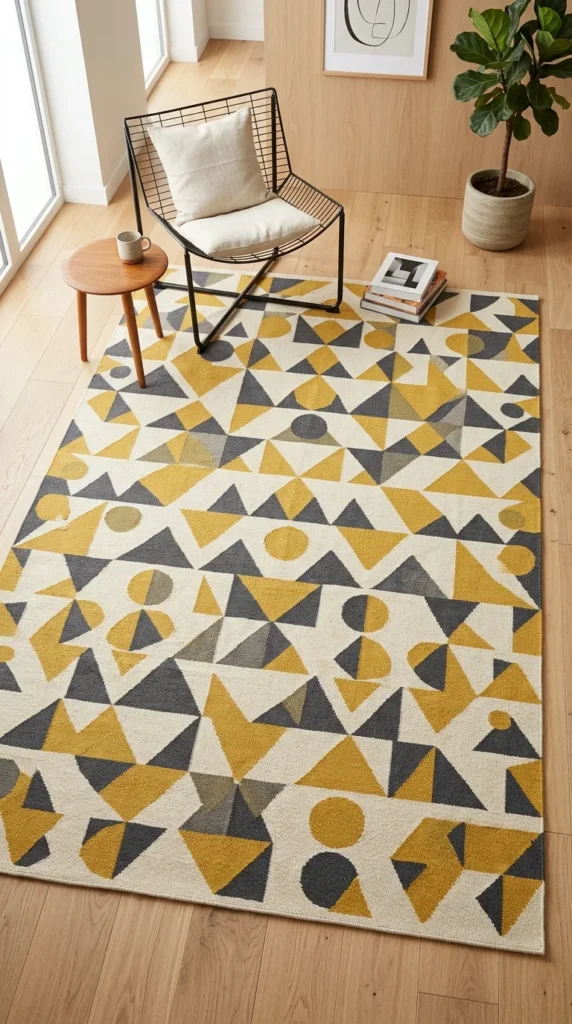
Mid-Century Modern design often uses textiles to introduce color and pattern. A geometric rug is the perfect way to ground your office space. Look for patterns featuring asymmetrical shapes, boomerangs, or clean linear grids. The color palette should ideally reflect the era—think “Mad Men” vibes with mustard yellows, avocado greens, and warm oranges. A rug with a slightly low pile is historically accurate and makes it easier to roll an office chair across.
5. Floating Shelves
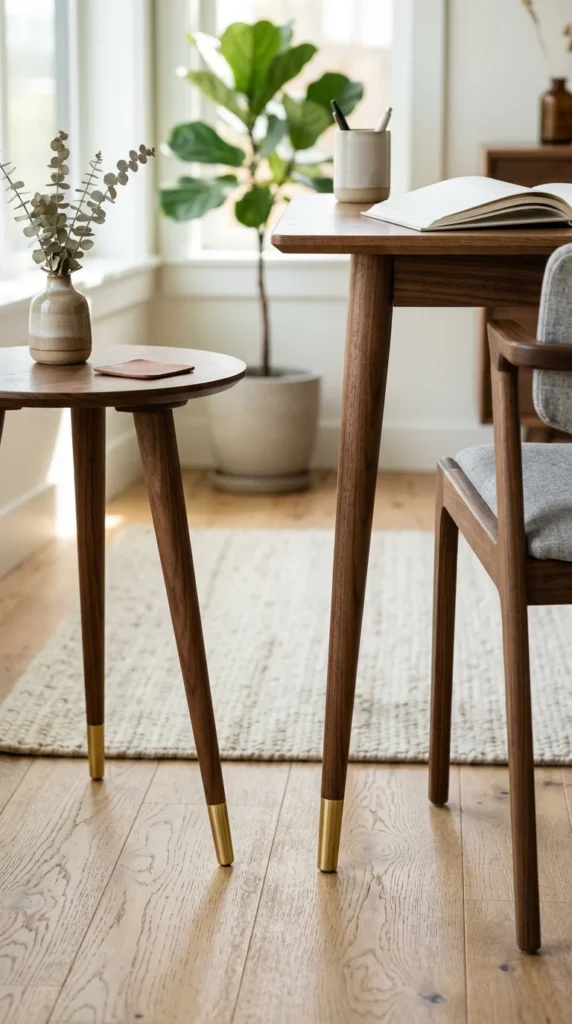
To maintain the clean, uncluttered look essential to MCM design, floating shelves are a must. They provide storage without the visual weight of a traditional bookcase. Use them to display curated items like vintage clocks, small sculptures, or a collection of design books. By keeping the floor clear, your office will feel larger and more organized. Ensure the wood of the shelves matches your desk for a cohesive, built-in appearance.
6. Mustard Accents
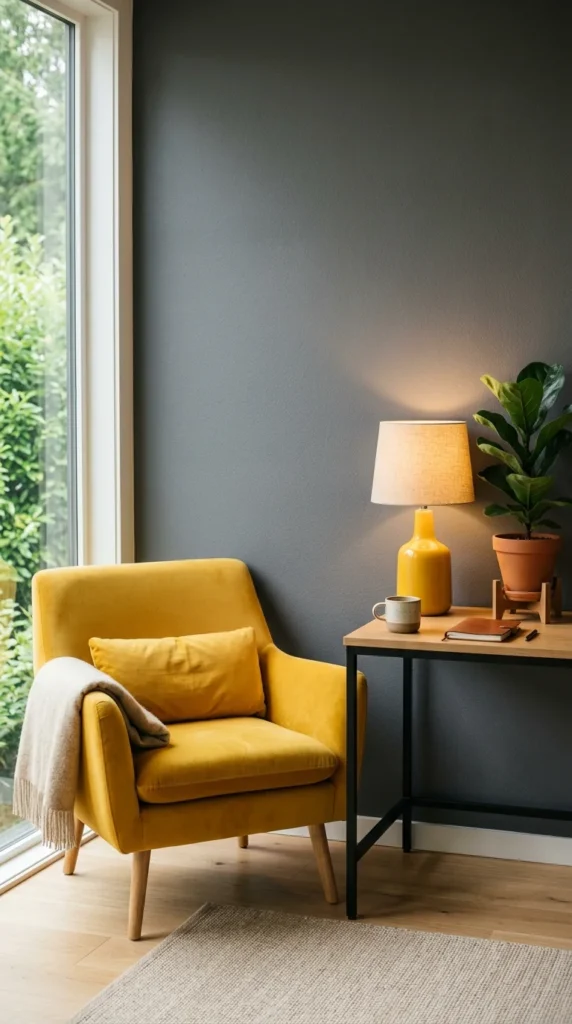
Mustard yellow is perhaps the most iconic color of the Mid-Century era. It is warm, energizing, and pairs beautifully with dark wood furniture. You don’t need to paint the whole room; instead, incorporate this hue through accent pieces. A mustard-colored lounge chair, a set of yellow file folders, or even a piece of abstract art featuring this shade can brighten the room and provide a focal point that keeps the space from feeling too monochromatic.
7. Indoor Greenery
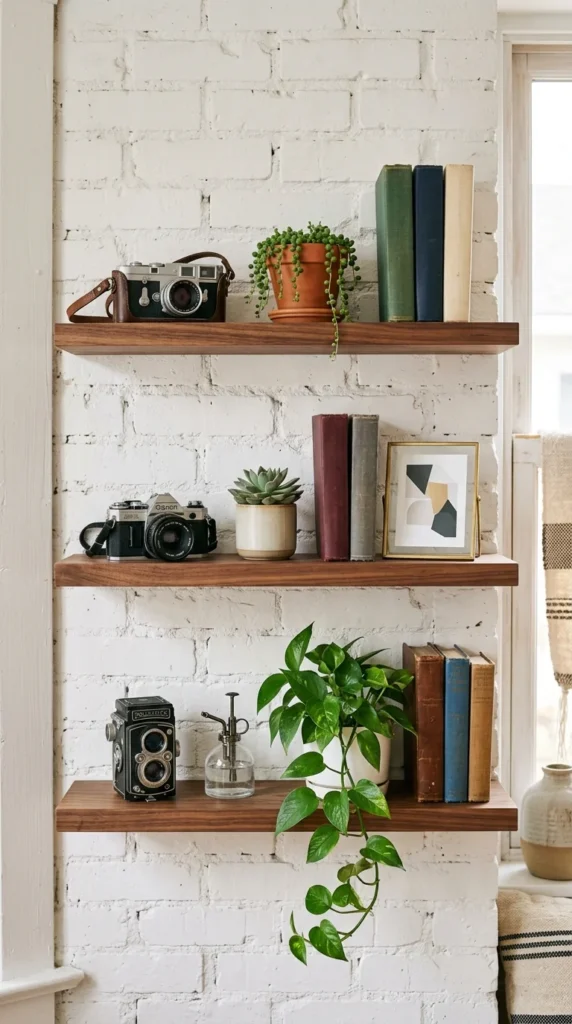
Bringing nature indoors was a core tenet of Mid-Century architecture. In an office setting, plants provide a necessary breath of life and a pop of organic color. The Snake Plant (Sansevieria), Monstera Deliciosa, and Fiddle Leaf Fig are all period-appropriate choices that were popular in the 1950s and 60s. Place them in “bullet” planters or ceramic pots on raised wooden stands to reinforce the MCM aesthetic while improving the air quality of your workspace.
8. Sunburst Clocks
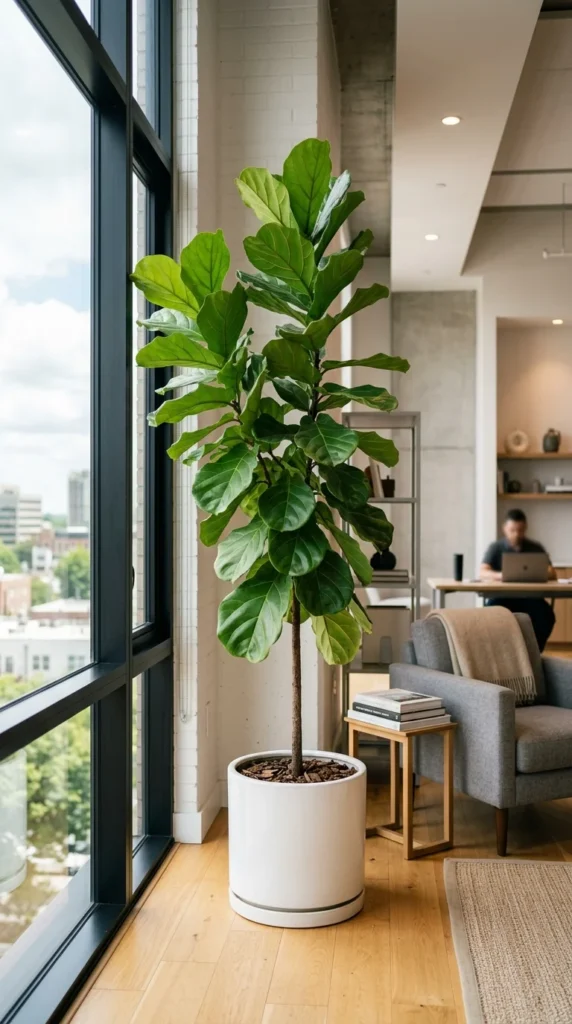
The sunburst clock, often associated with designer George Nelson, is a classic piece of Mid-Century wall decor. These clocks are functional sculptures that break up the straight lines of office furniture. Whether made of wood, brass, or chrome, a sunburst clock adds a sense of whimsy and optimism to the room. It’s a subtle nod to the “Atomic Age” and serves as a fantastic conversation starter during video calls.
9. Bar Carts
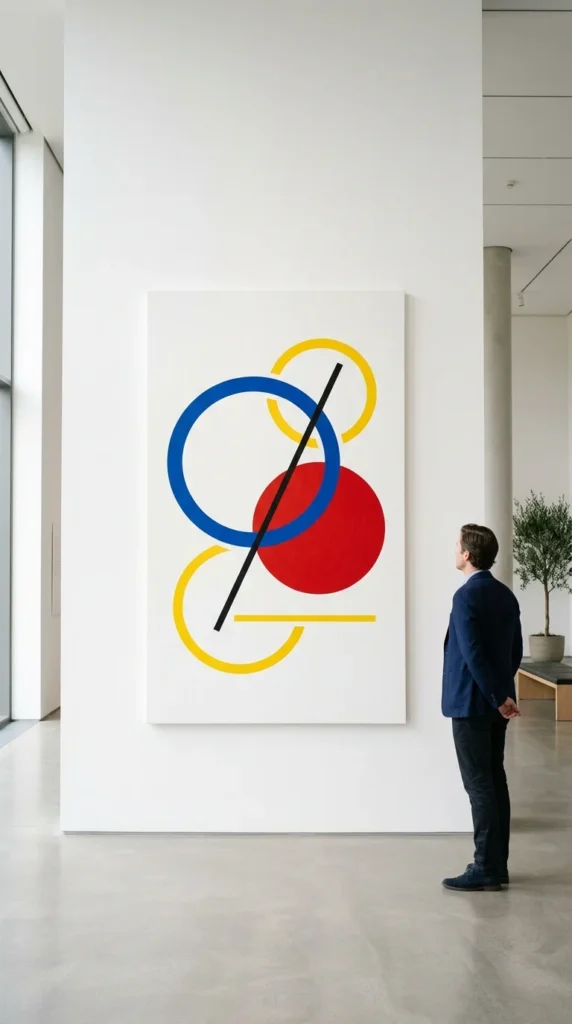
In the Mid-Century era, the office was a place for both work and hospitality. While you might not be serving martinis at noon, a vintage-style bar cart can be repurposed as a stylish storage solution. Use it as a coffee station, a place for your printer, or to store extra office supplies in decorative boxes. The mobility of a bar cart allows you to move your “essentials” around as needed, and the brass or chrome frames add a touch of glamour to the workspace.
10. Cork Walls
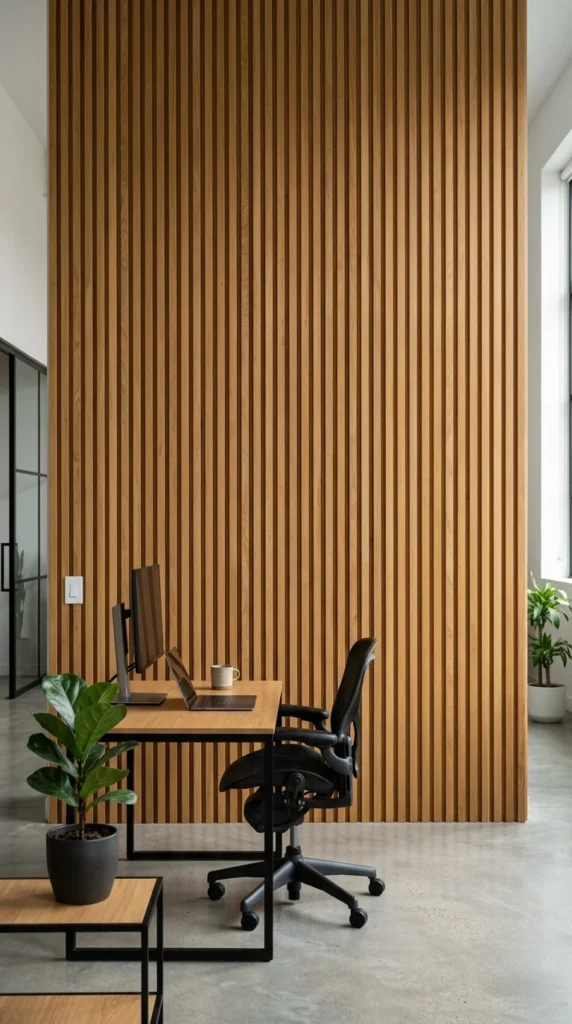
Functionality met style in the MCM era through the use of natural materials like cork. A floor-to-ceiling cork wall creates a massive mood board for brainstorming while providing acoustic benefits by dampening sound. To keep it looking modern and stylish, avoid the thin, cheap cork boards found in school classrooms. Instead, use thick cork tiles or framed cork panels with a deep wood border that matches your other furniture.
11. Tapered Storage
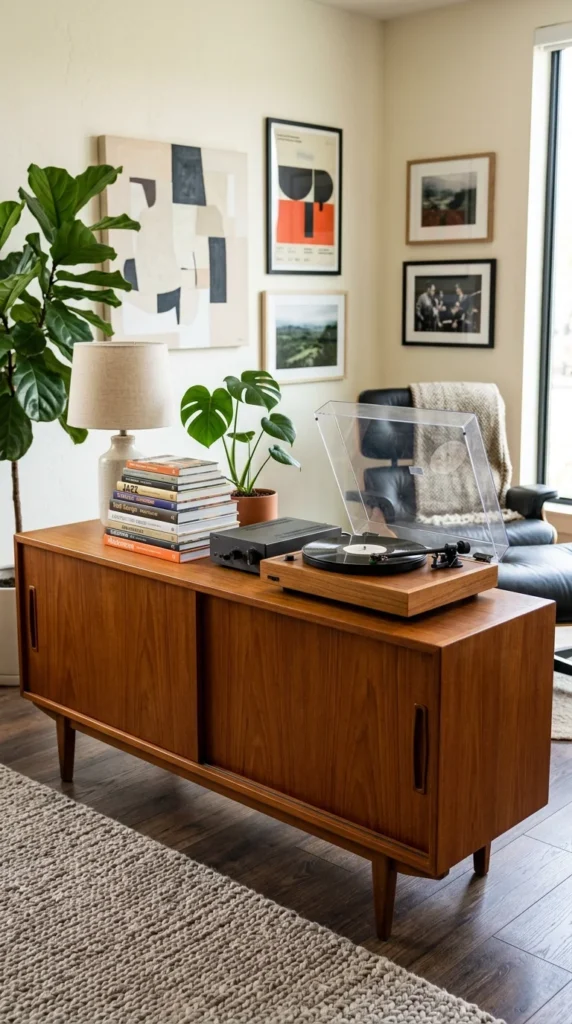
Every office needs storage, but MCM storage is never boring. Look for credenzas, filing cabinets, or sideboards that sit on tapered legs. This “lifts” the furniture off the ground, creating an airy feel. Sliding doors were a common feature of the time, allowing for easy access in tight spaces without the swing-out radius of traditional cabinet doors. A teak credenza behind your desk can hide away messy paperwork while providing a surface for a lamp or a decorative tray.
12. Gallery Walls
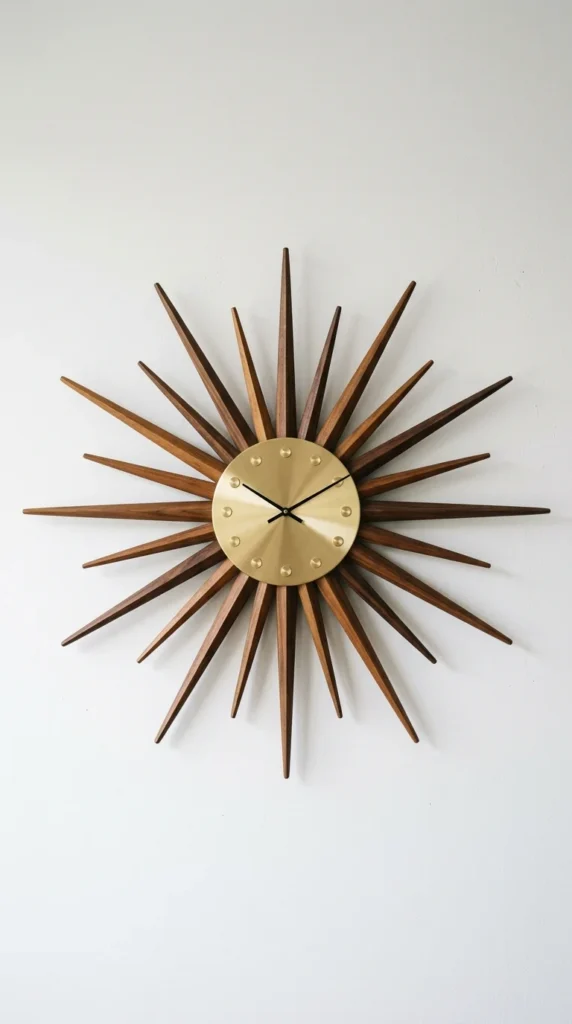
Art in the Mid-Century period shifted toward abstraction and bold color blocking. A gallery wall in your office allows you to express your personality. Mix and match abstract prints, architectural sketches, and perhaps a vintage advertisement from the 1950s. The key to an MCM gallery wall is balance; use frames with clean, simple profiles and ensure there is plenty of “white space” between the pieces so the wall doesn’t feel cluttered.
13. Velvet Textures
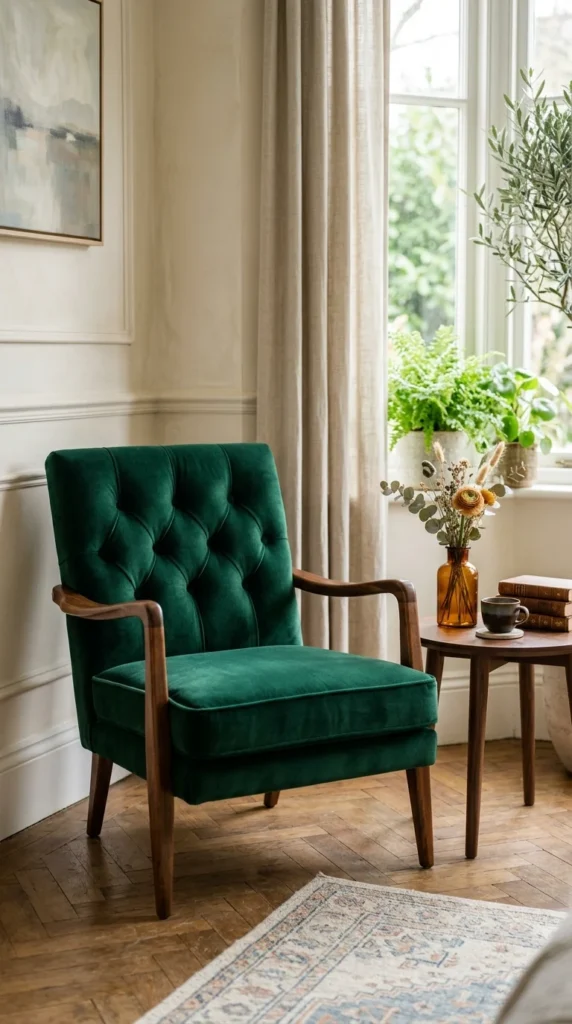
While wood and metal are the “bones” of MCM design, velvet provides the soul. A velvet-upholstered chair adds a layer of luxury and softness to the room. Colors like navy, forest green, or terracotta velvet were highly popular and help to absorb sound in a room with many hard surfaces. The contrast between the soft fabric and the hard wood of a desk creates a sophisticated, multi-dimensional look that feels expensive and curated.
14. Brass Hardware
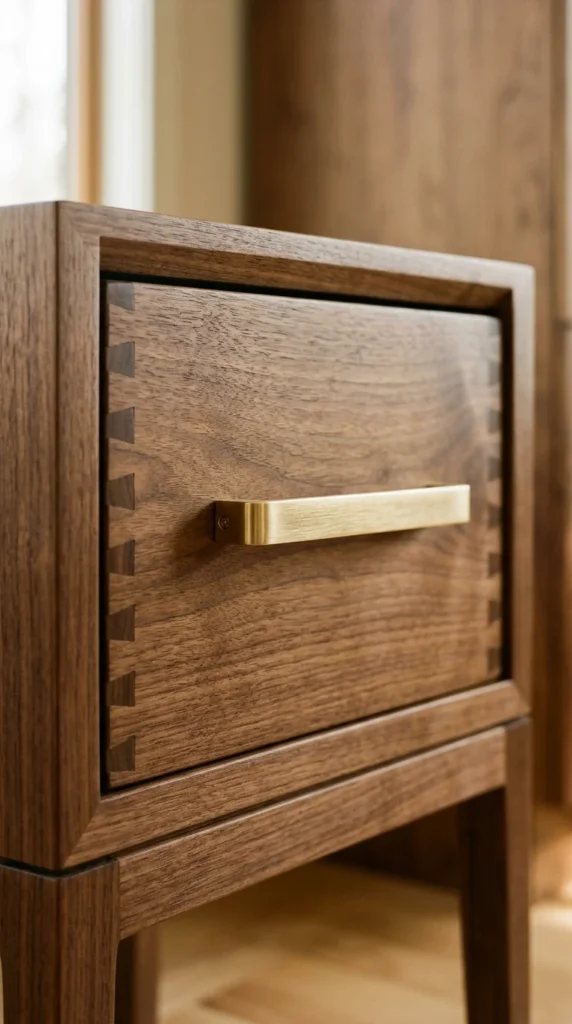
Details matter. Replacing standard office hardware with brass or gold-toned pulls can instantly “elevate” a basic desk or cabinet into the MCM realm. Look for “finger pulls” or slim, horizontal bars that emphasize the linear nature of the furniture. Brass naturally patinas over time, adding a sense of history and character to your office that newer, polished chrome simply cannot match.
15. Credenza Setup
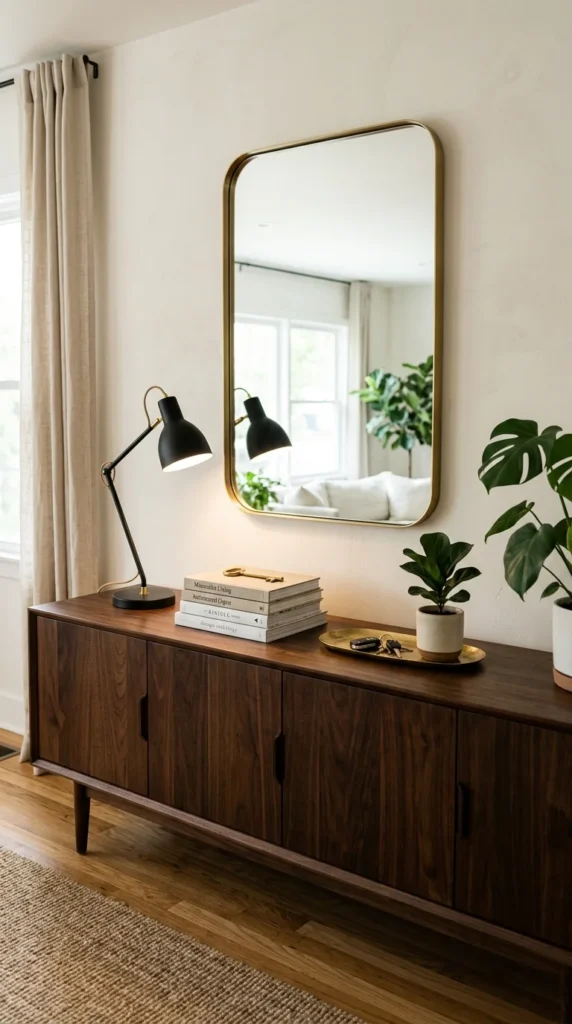
If you have the space, a credenza is the ultimate MCM office addition. It provides a secondary surface for “heavy” items like printers or scanners, keeping your main desk clear for focused work. A credenza also offers a perfect opportunity for styling. You can place a tall, sculptural lamp on one end and a low bowl on the other to create visual balance. This setup mimics the executive offices of the mid-20th century, exuding an air of authority and organized calm.
16. Record Player Nook
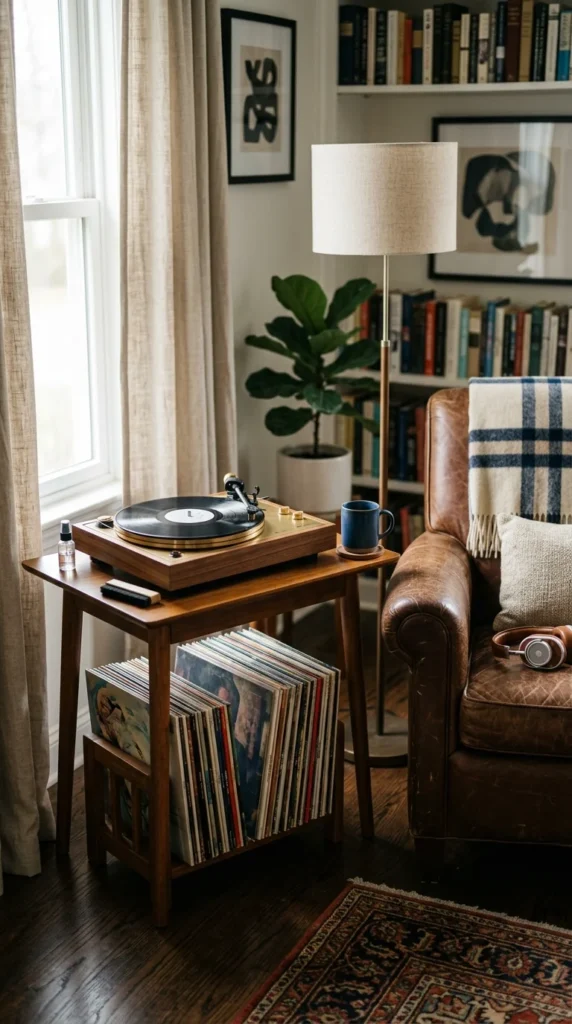
Productivity isn’t just about grinding; it’s about the environment. Many MCM enthusiasts incorporate a dedicated music corner in their office. A vintage record player on a small wooden stand provides a tactile, analog way to enjoy music while you work. This addition encourages you to take breaks and appreciate the slower pace of the era, making your home office feel like a personal sanctuary rather than just a place of employment.
17. Minimalist Desk Lamps
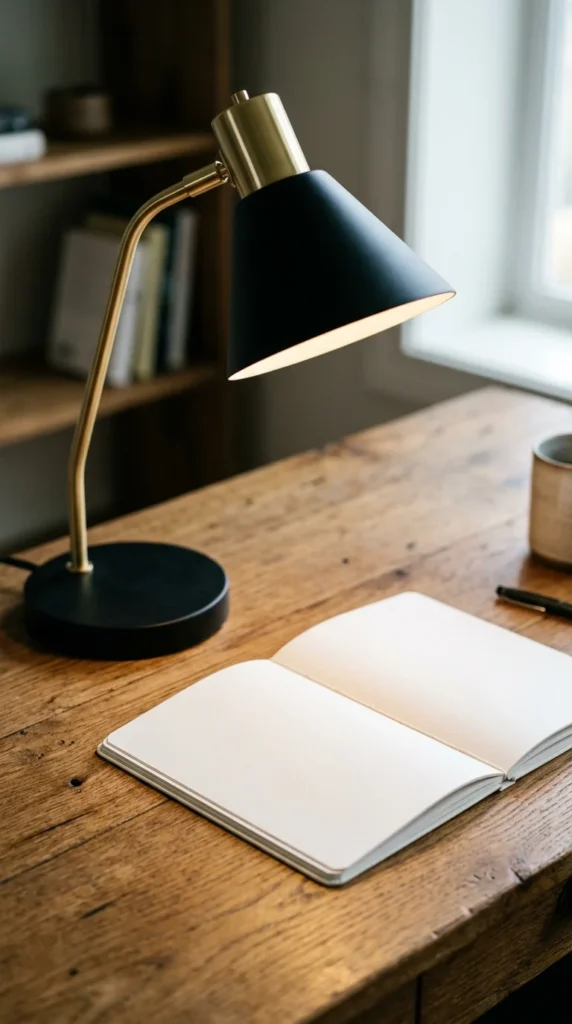
Lighting should be both functional and sculptural. Look for desk lamps with conical or hemispherical shades, often referred to as “task lamps.” Designs influenced by Greta Grossman or Louis Poulsen are ideal. These lamps typically feature adjustable necks and clean, geometric bases. A matte black finish provides a sharp contrast against a warm wood desk, while a brass or chrome finish adds a touch of mid-century sparkle.
18. Walnut Wall Paneling
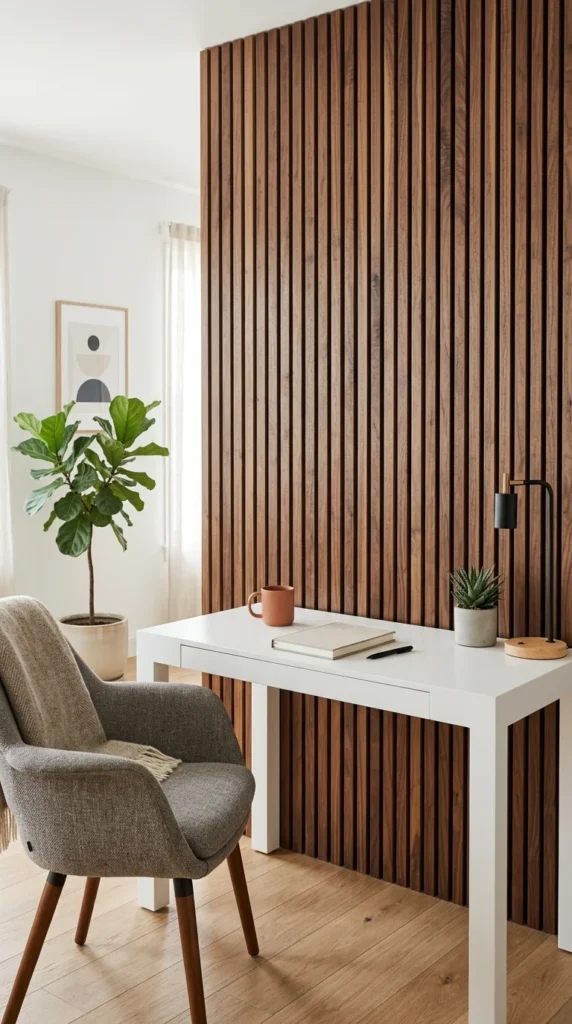
While the 1970s gave wall paneling a bad name, the 1950s used it with incredible sophistication. A feature wall of vertical wood slats or high-quality walnut veneer panels can transform a generic room into an architectural masterpiece. It adds warmth and texture, making the office feel cozy and enclosed. If full paneling is too much, consider a “slat wall” behind your desk to add visual interest and a sense of rhythm to the space.
19. Statement Mirrors
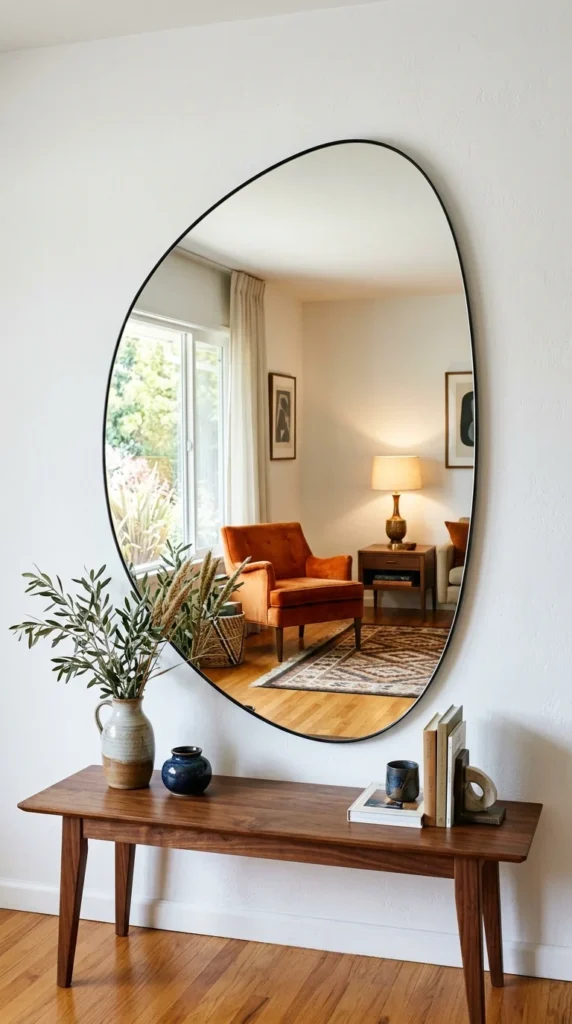
Mirrors are great for making small offices feel larger, but in an MCM office, the shape of the mirror is what counts. Move away from standard squares and rectangles and look for “pebble” or “amoeba” shapes. These organic, irregular curves were a hallmark of the era’s fascination with biological forms. A large statement mirror with a thin brass or black frame can act as a secondary “window” in the room, reflecting light and adding a soft, curved element to a room full of straight lines.
20. Two-Tone Palette
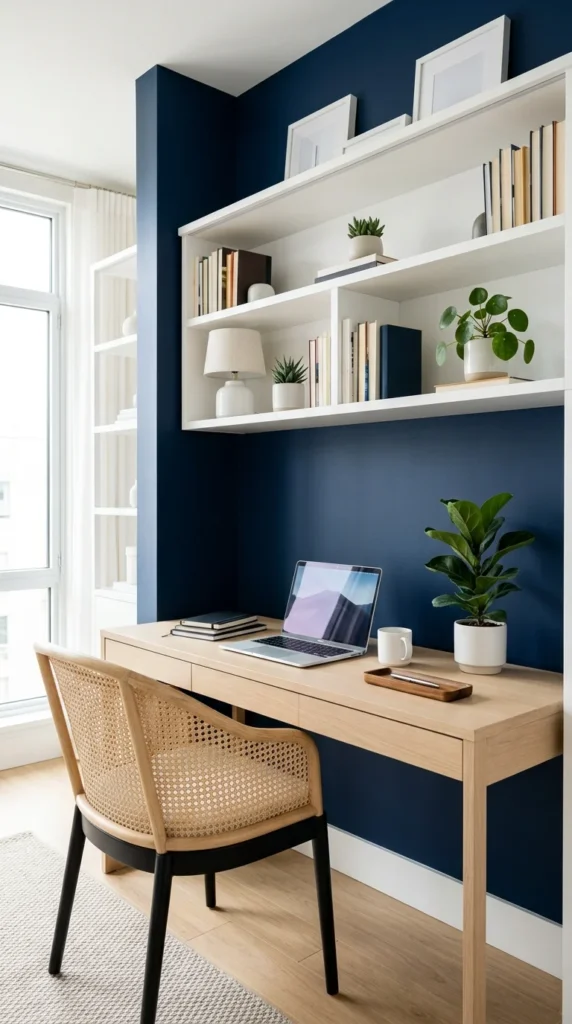
Mid-Century Modern design often utilized high-contrast color palettes. A popular choice is pairing a deep, moody wall color—like charcoal or navy—with bright white trim and warm wood furniture. This “two-tone” approach makes the furniture stand out as pieces of art. Alternatively, you can find two-tone furniture, such as a desk with white-fronted drawers and a walnut frame, which was a common design trick used to make large pieces of furniture look smaller and more playful.
21. Natural Light Focus
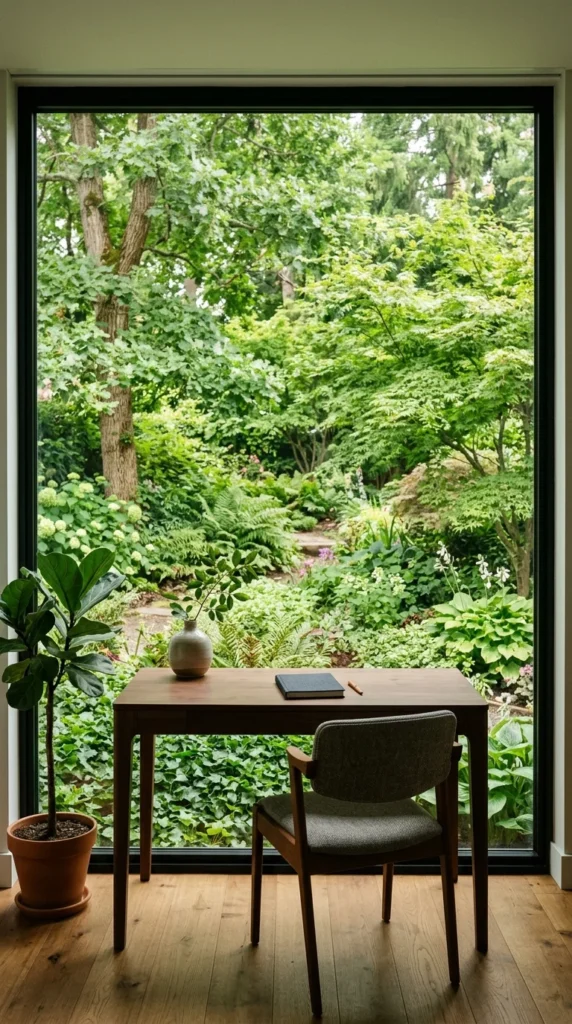
The connection between the indoors and the outdoors is perhaps the most important element of any Mid-Century Modern space. If possible, position your desk to face a window. Use minimal window treatments, like sheer linen curtains or simple wooden slats, to let in as much natural light as possible. This not only highlights the beauty of your furniture’s wood grain but also boosts your mood and productivity by keeping you connected to the outside world throughout the day.