Creating a space that serves both as a professional office and a creative sewing sanctuary is a modern interior design challenge that pays off in immense productivity and inspiration. Whether you are a professional tailor working from home or a hobbyist who needs a place to manage emails and embroidery, the key is finding a balance between utility and aesthetic charm. Here are 25 transformative ideas to help you blend these two worlds into one harmonious workspace.
1. Pegboard Walls
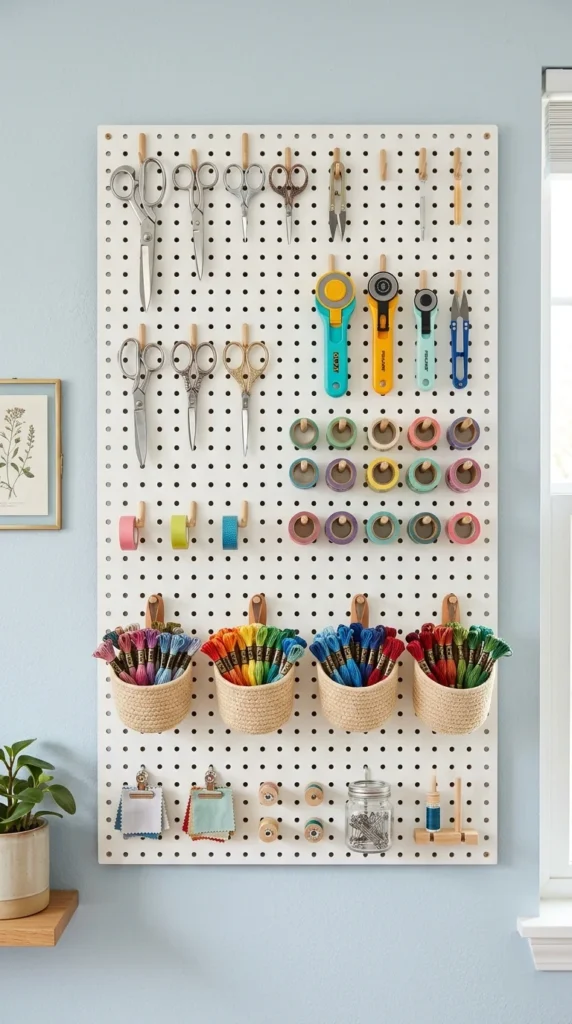
Pegboards are the ultimate solution for vertical storage. They allow you to keep your most-used tools—like fabric shears, measuring tapes, and rulers—within arm’s reach without cluttering your desk surface. By using a modular system, you can move hooks and shelves as your tool collection grows, keeping your office area tidy and your sewing area functional.
2. Drop-Leaf Tables
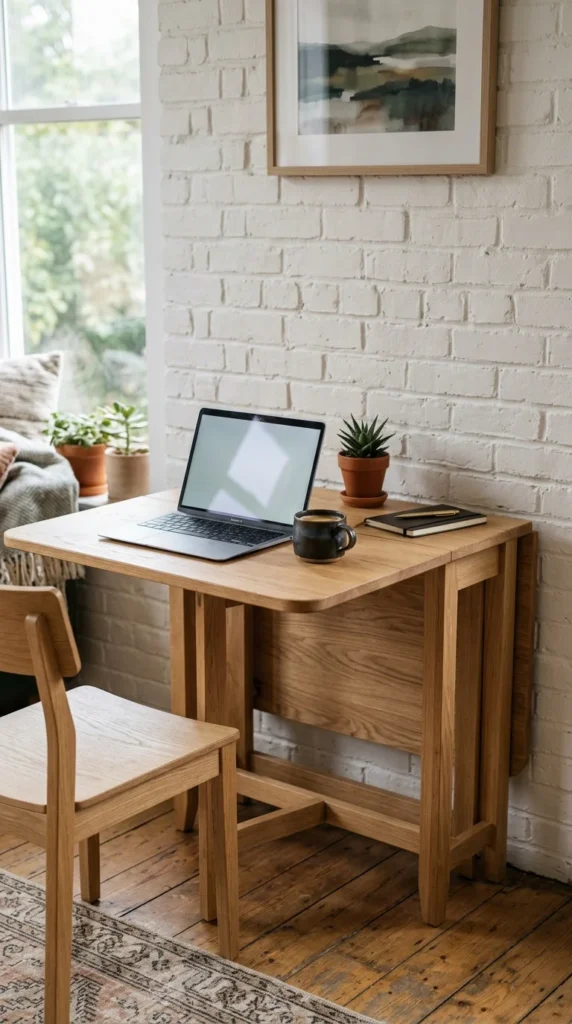
Space is often at a premium in a dual-purpose room. A drop-leaf table provides a compact desk for administrative tasks but can be expanded instantly into a large cutting table when it’s time to lay out patterns and fabric. This flexibility ensures your room never feels cramped.
3. Rolling Carts
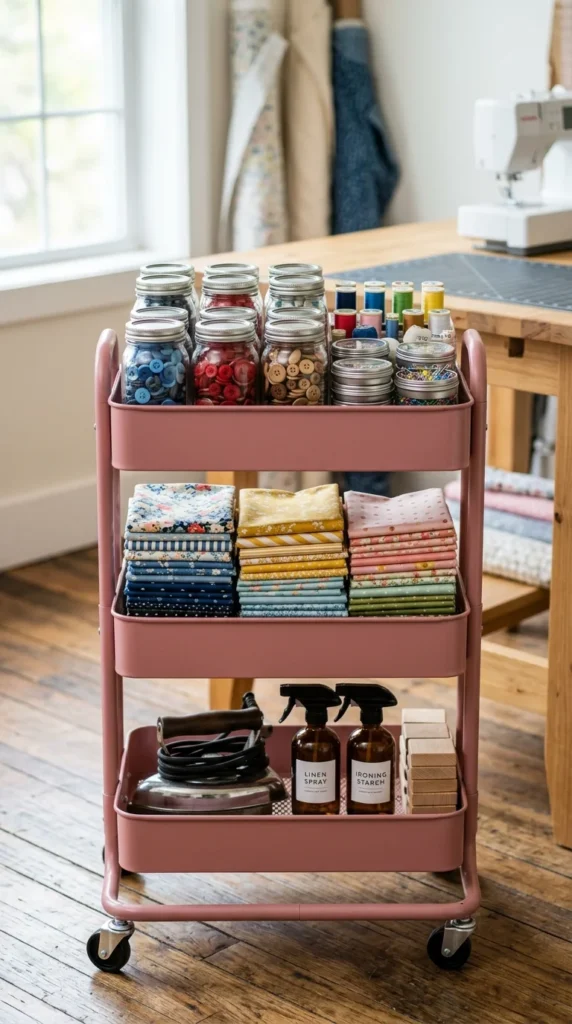
Mobility is vital in a sewing room office. A tiered rolling cart allows you to move your supplies from the “sewing zone” to the “desk zone” effortlessly. It serves as a portable side table for your notions, keeping your main workspace clear for your computer or sewing machine.
4. Task Lighting
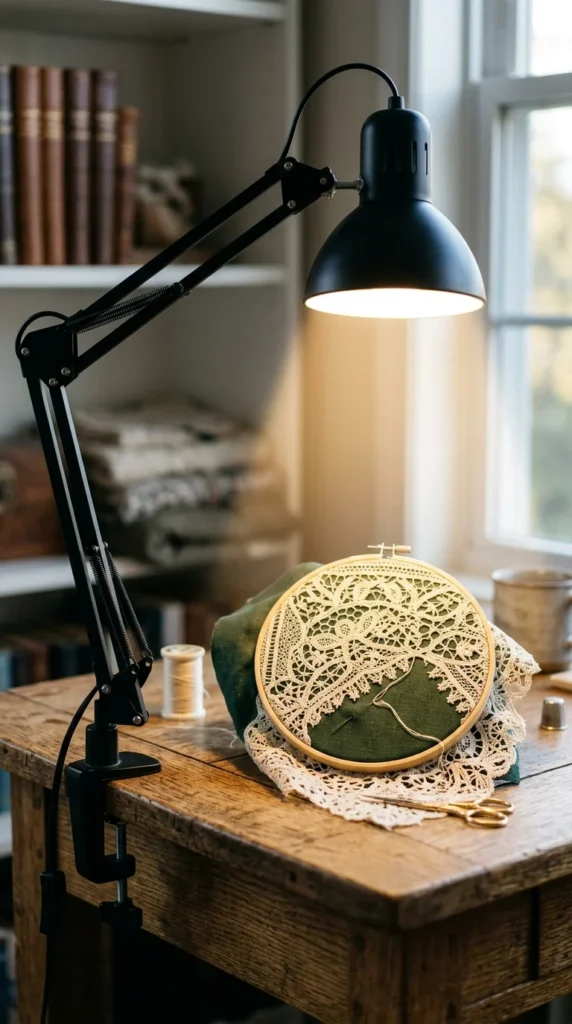
Precision requires excellent lighting. Invest in high-quality task lamps with adjustable arms. Position one over your sewing machine to prevent eye strain during late-night projects and another near your computer monitor to provide balanced light for video calls and focused typing.
5. Vertical Shelving
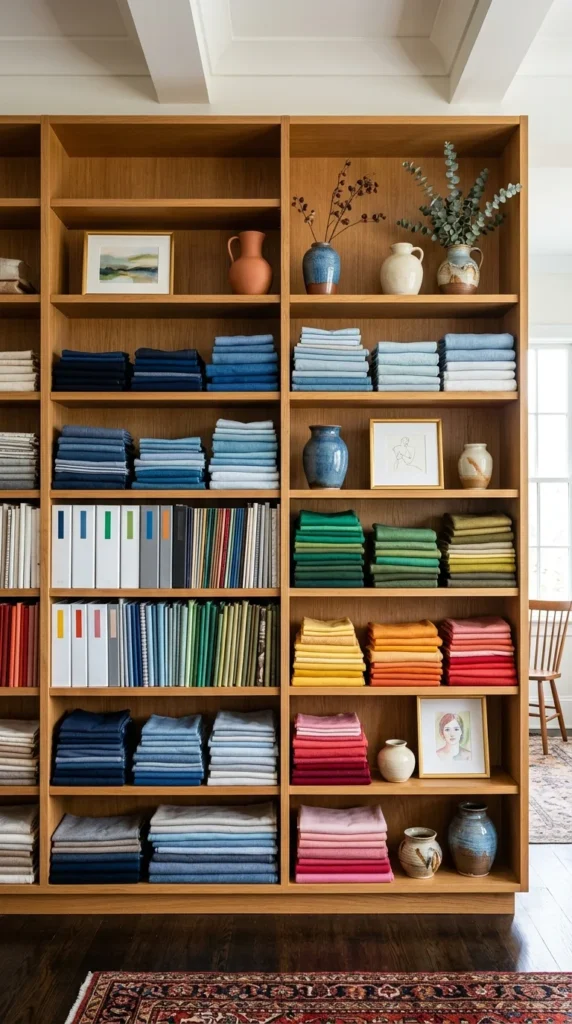
When floor space is limited, look up. Tall shelving units can house everything from heavy sewing manuals to office archives. Mixing functional items like fabric bolts with decorative elements like books and plants helps the room feel like a cohesive living space rather than just a storage unit.
6. Ergonomic Chairs
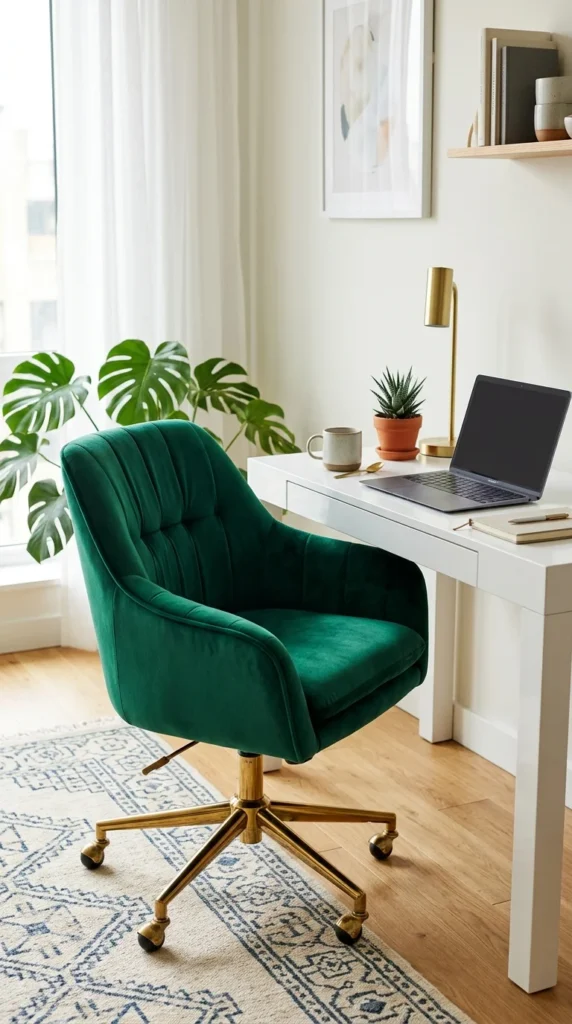
Since you’ll be spending hours sitting—whether you’re drafting an email or stitching a hem—an ergonomic chair is non-negotiable. Look for a model that offers lumbar support and height adjustment, ensuring you remain comfortable as you transition between computer work and machine sewing.
7. Fabric Organizers
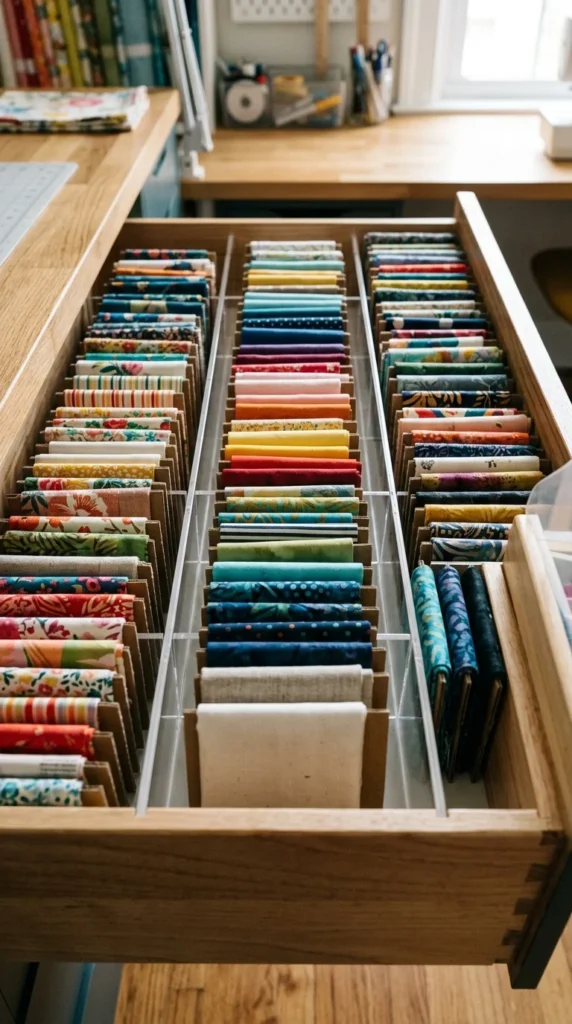
Avoid the “fabric mountain” by using uniform organizers. Wrapping your fabric around cardboard slats or using specialized hangers keeps your stash visible and wrinkle-free. This visual organization reduces stress and makes it easier to choose palettes for your next project.
8. Mood Boards
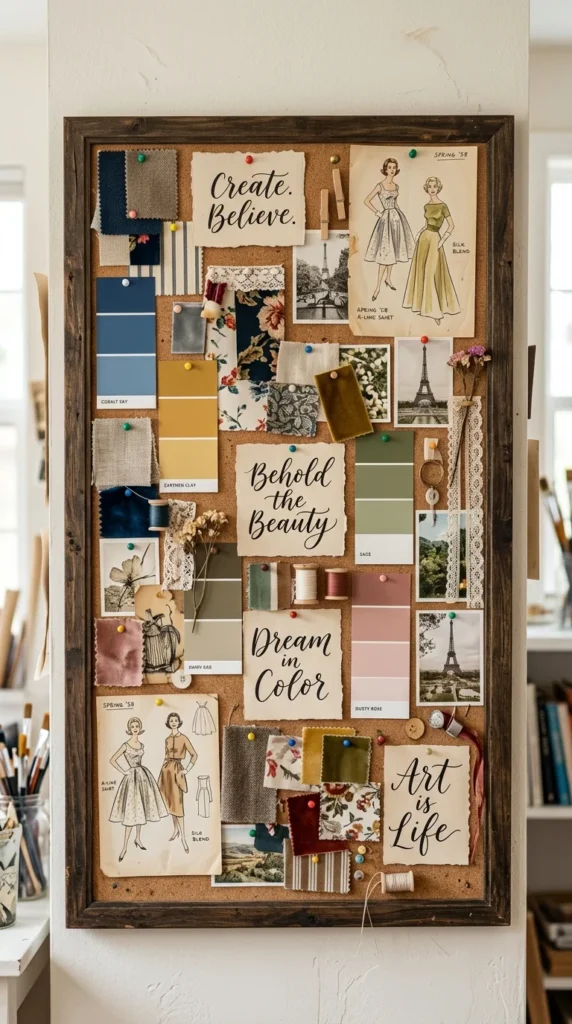
A mood board serves as the creative heartbeat of your room. It’s a place to pin inspiration for your next garment alongside your quarterly business goals. This blend of professional and creative milestones keeps you motivated and provides a beautiful focal point for the room.
9. Natural Light
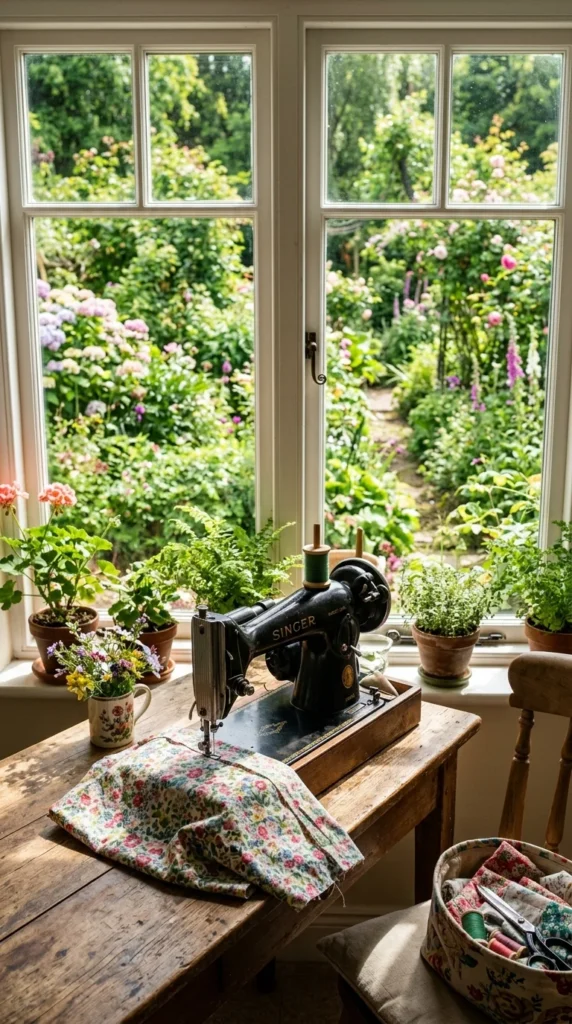
Whenever possible, position your primary workspace near a window. Natural light is best for color matching fabrics and reduces the “office blues.” If your room lacks windows, consider daylight-spectrum LED bulbs to mimic the energizing effect of the sun.
10. Clear Bins
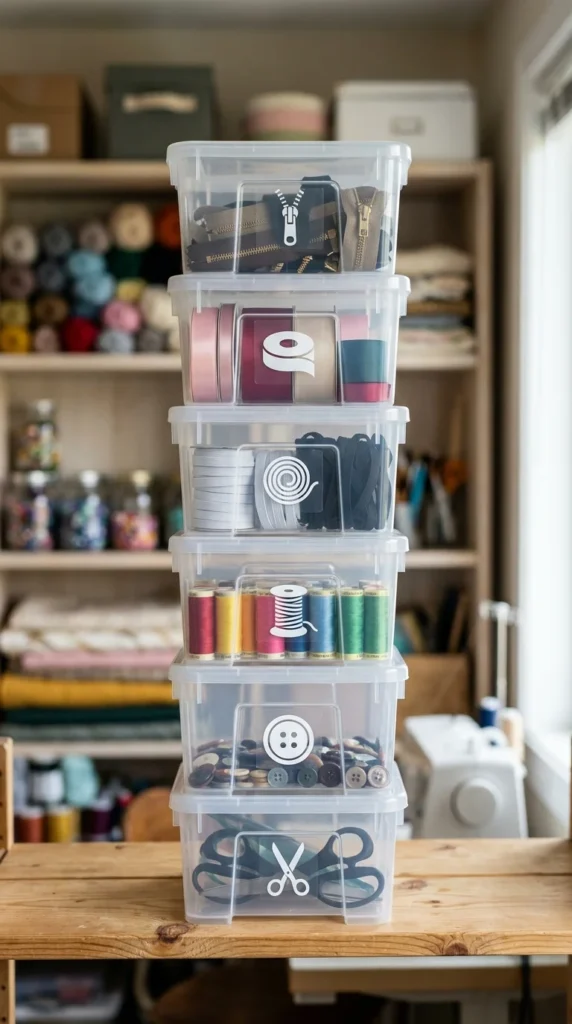
Visibility is the enemy of clutter. Using clear bins allows you to see exactly where your bobbins, safety pins, and office supplies are hidden. This prevents “double buying” and saves you the frustration of digging through opaque boxes in the middle of a project.
11. Floating Desks
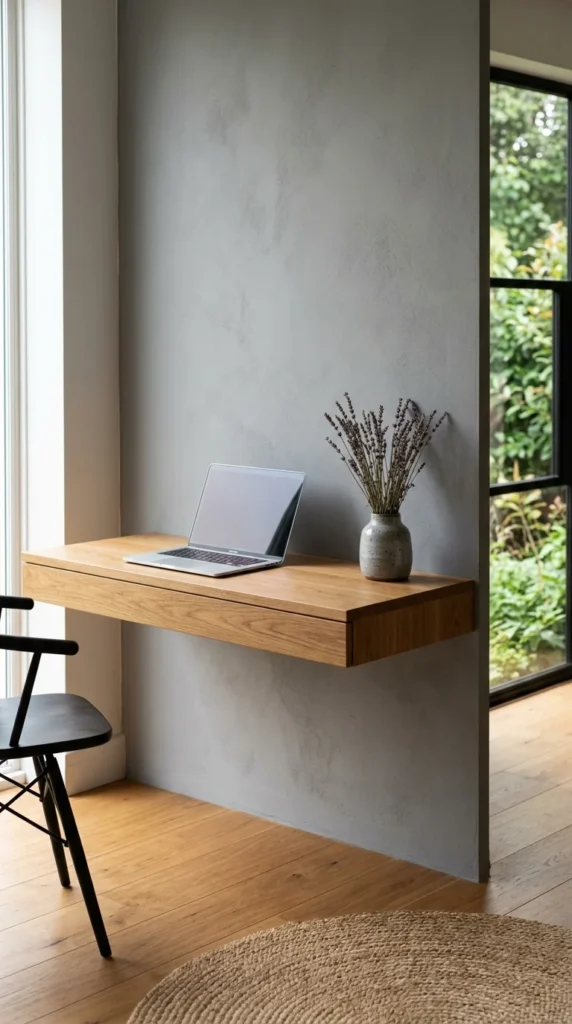
Floating desks create an airy, modern feel. By eliminating desk legs, you open up the floor for larger items like a dress form or a rolling storage unit. This is an excellent solution for small “cloffice” (closet-office) setups.
12. Accent Rugs
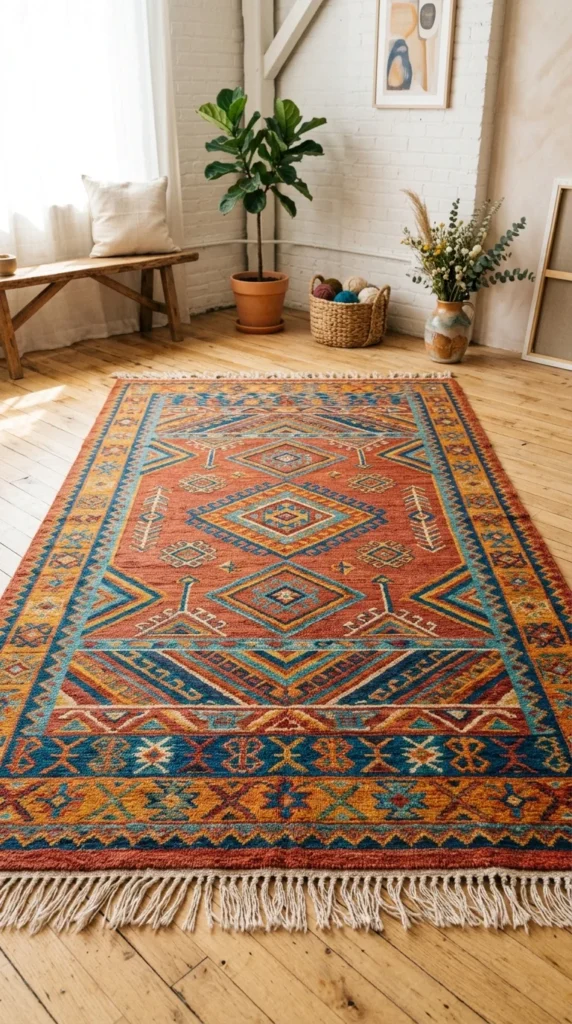
Rugs define zones within a room. A plush rug under your office desk can signify the “work zone,” while a flat-weave, easy-to-clean rug in the sewing area allows your chair to glide easily and makes it simple to vacuum up stray threads and pins.
13. Thread Racks
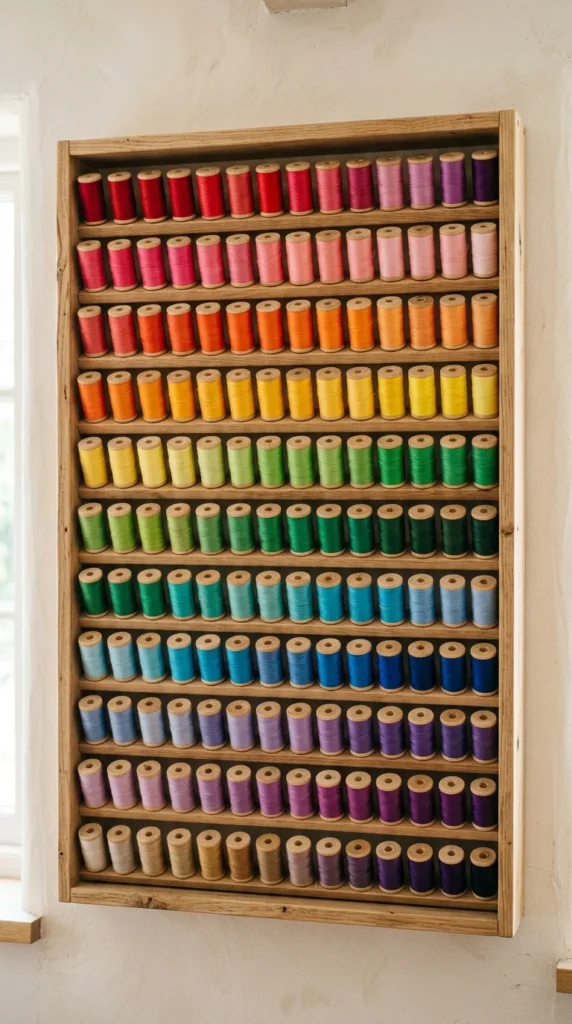
Thread racks are both functional and decorative. Instead of hiding your spools in a drawer, display them on the wall. The rainbow of colors acts as functional art, adding a splash of personality to your office while making it easy to find the perfect match for your fabric.
14. Dual Desks
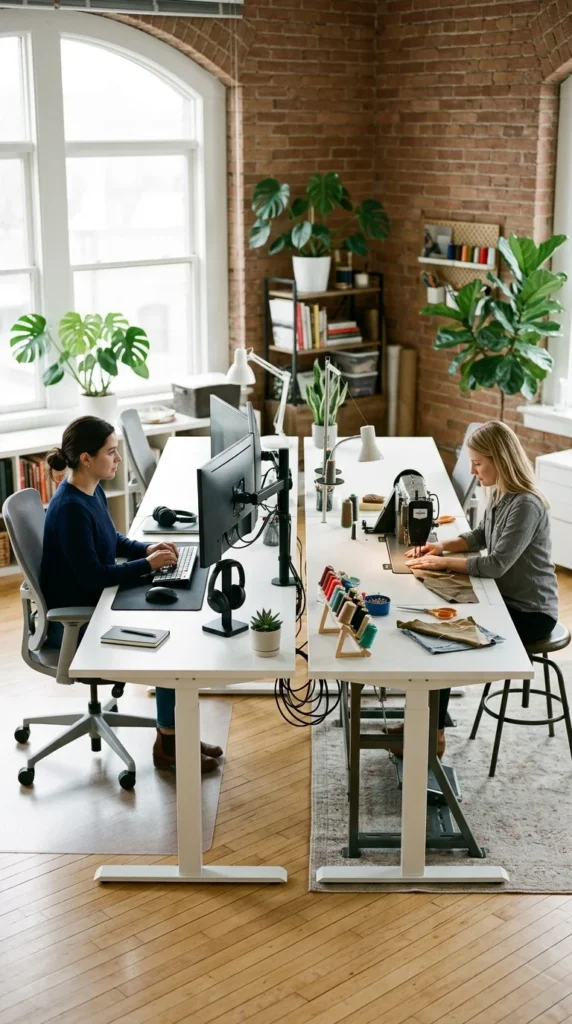
If you have the space, a back-to-back desk configuration creates a distinct boundary between “work” and “play.” This physical separation helps your brain switch modes, allowing you to leave office stress behind when you turn around to start sewing.
15. Hidden Storage
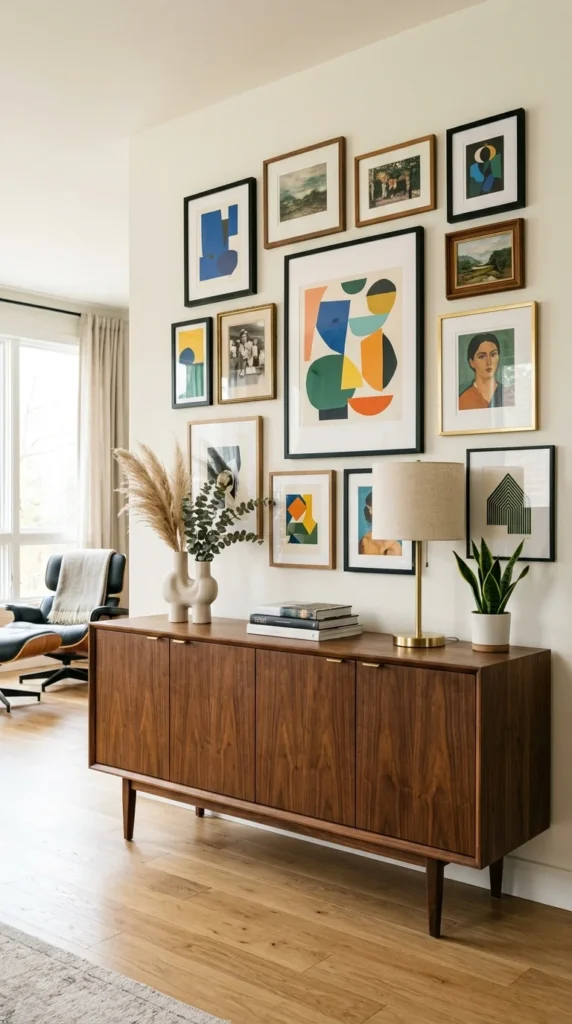
Not everything needs to be on display. Use stylish cabinets or sideboards to hide bulky items like your serger, printer, or overflowing scrap bins. This keeps the room looking professional for client meetings or video calls while keeping your tools nearby.
16. Bold Colors
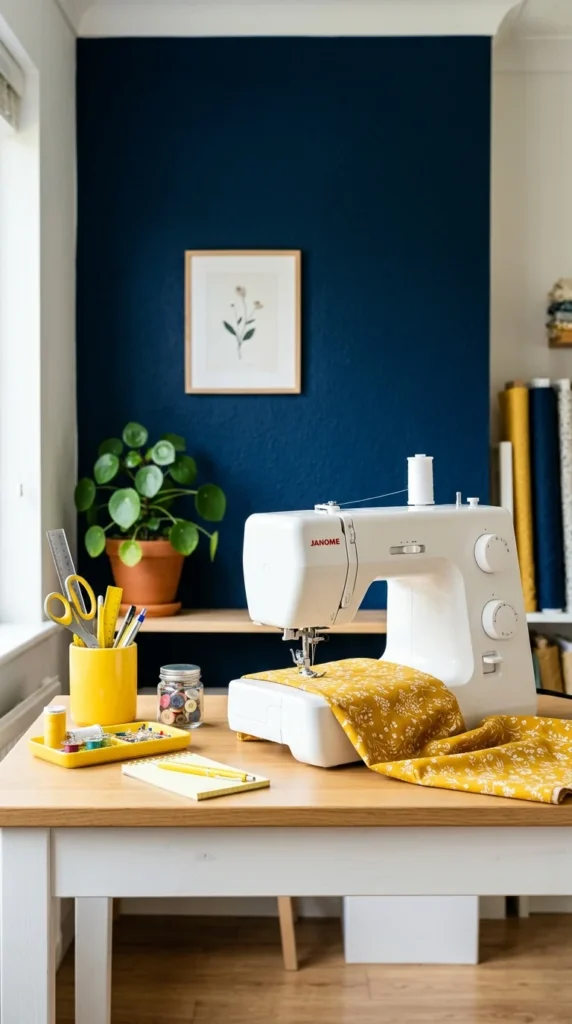
Don’t be afraid of color! A bold accent wall can energize your creativity. Choose colors that inspire you—whether it’s a calming sage green for focused office work or a vibrant coral to spark sewing innovation.
17. Wall Art
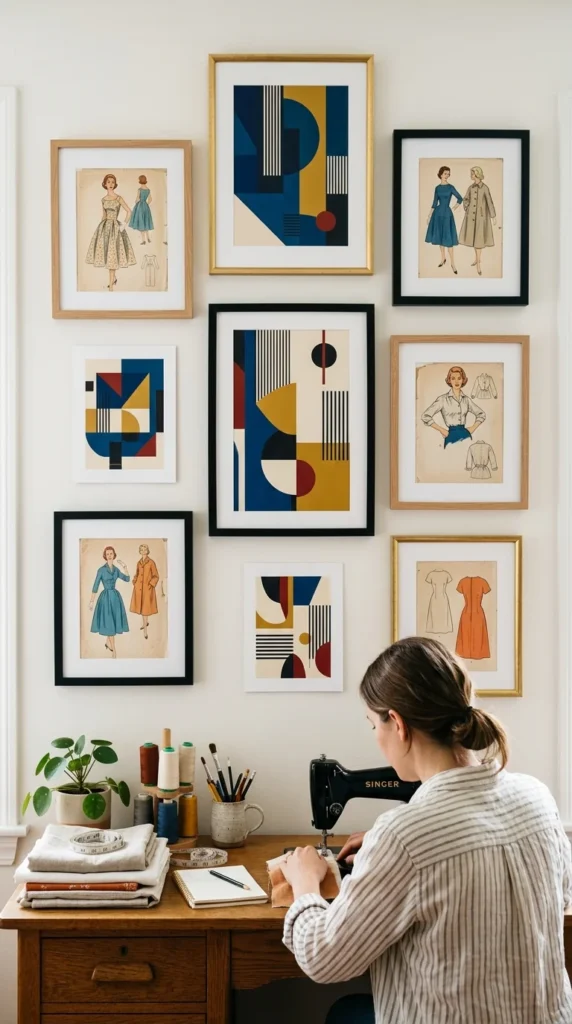
Decorate your walls with items that celebrate your craft. Framed vintage patterns, sketches of your designs, or even a beautiful piece of textile art can bridge the gap between a sterile office and a cozy craft room.
18. Magnetic Strips
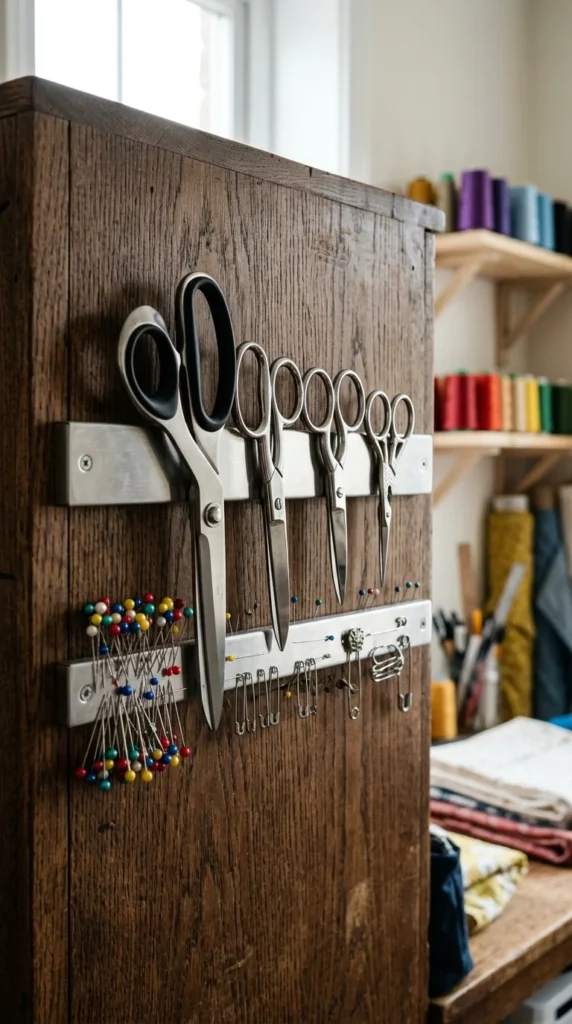
Magnetic strips aren’t just for kitchens. They are perfect for holding metal bobbins, scissors, and pins. Placing one near your sewing machine ensures that your most vital tools are always within reach and never lost under a pile of fabric.
19. Cubby Shelves
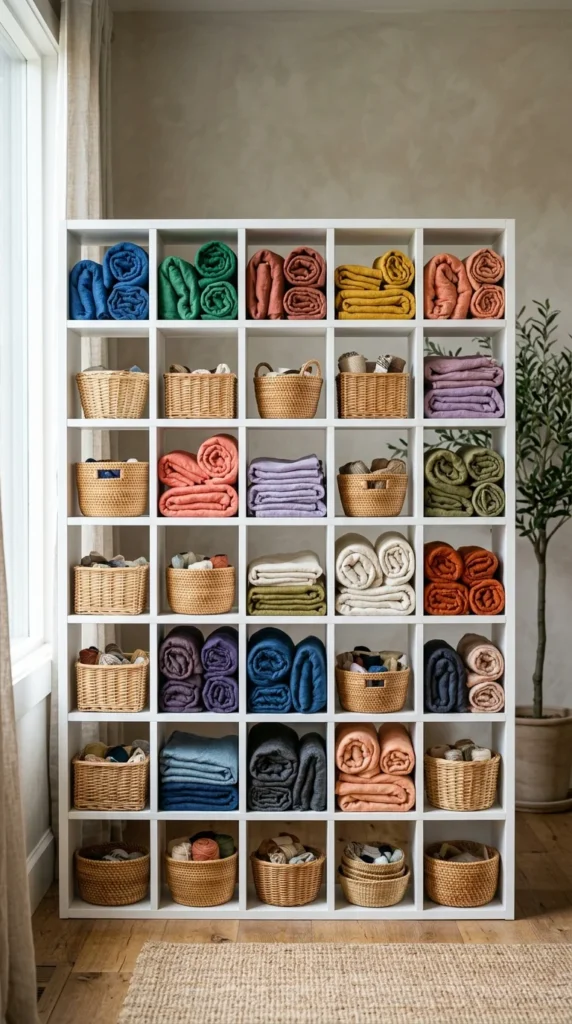
Cubby systems (like the famous IKEA Kallax) are a staple for a reason. They offer a symmetrical, clean look that fits perfectly in an office setting, while the square dimensions are ideal for storing folded fabric or oversized pattern envelopes.
20. Indoor Plants
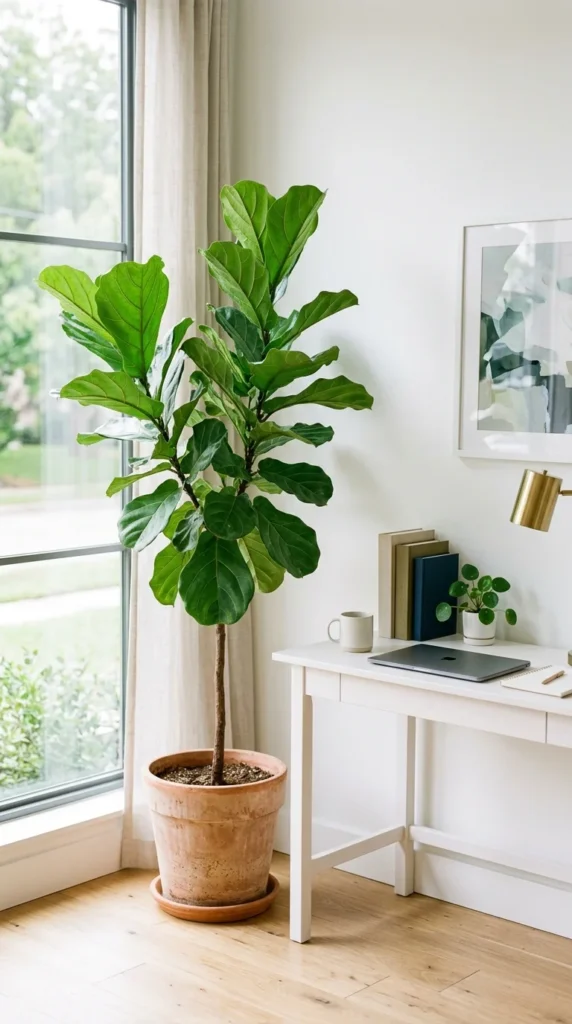
Plants bring life to a workspace. They improve air quality and provide a necessary “nature break” for your eyes when you’ve been staring at a screen or a seam for too long. Low-maintenance options like pothos or snake plants thrive in most indoor environments.
21. Glass Jars
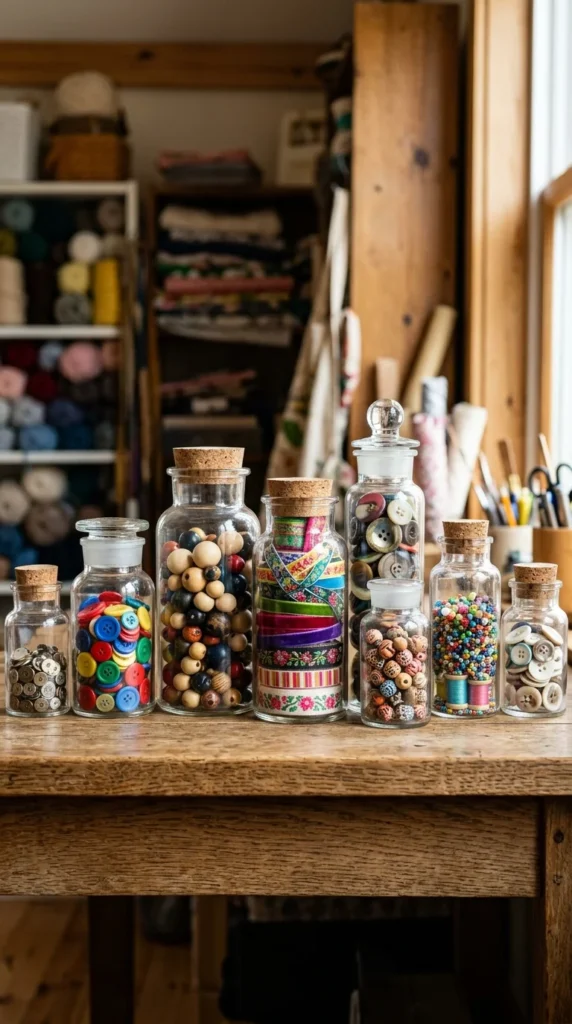
Repurpose glass jars to hold small notions. Not only does this keep your buttons and beads organized, but the jars themselves add a vintage, artisanal feel to your shelving. It’s a sustainable and beautiful way to manage the “small stuff.”
22. Pattern Files
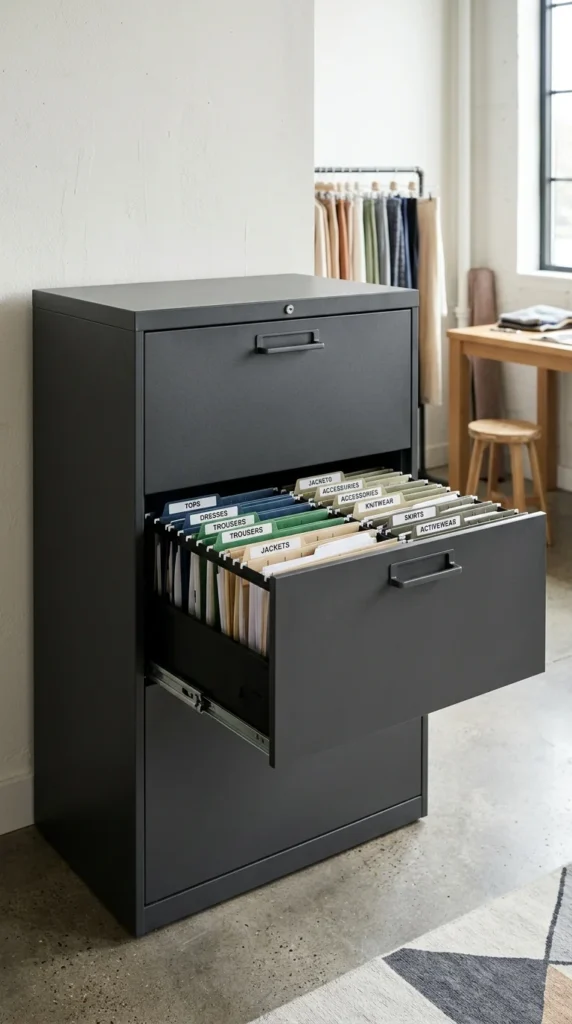
Treat your sewing patterns with the same respect as your tax returns. Using a filing cabinet keeps patterns flat, organized, and easy to find. This professional touch prevents the paper clutter that often plagues sewing rooms.
23. Cutting Mats
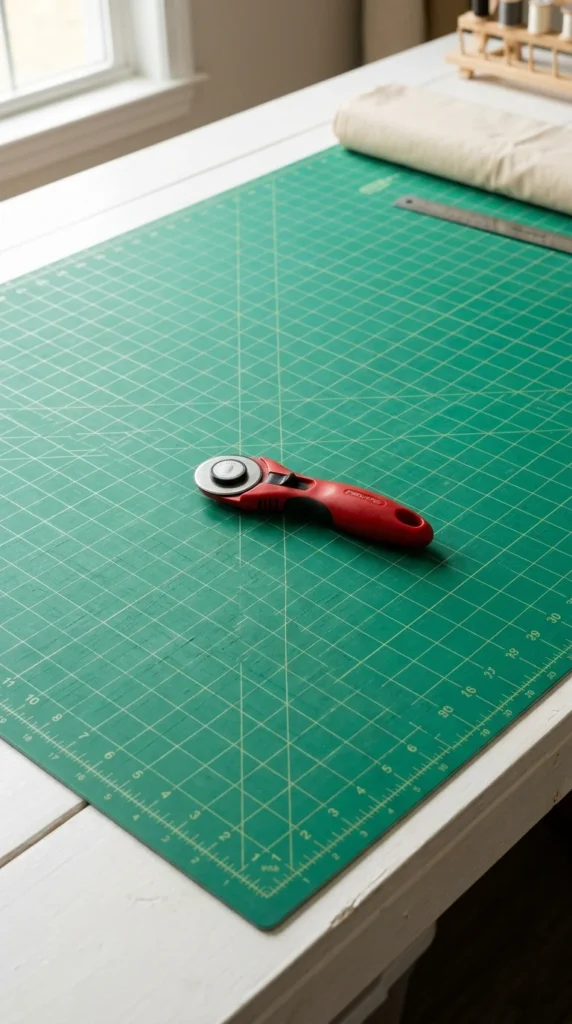
A large, self-healing cutting mat is a game-changer. It protects your desk surface from blades and pins while providing a grid for accurate measurements. When you’re not sewing, the flat surface is perfect for spreading out large office documents or blueprints.
24. Sewing Cabinets
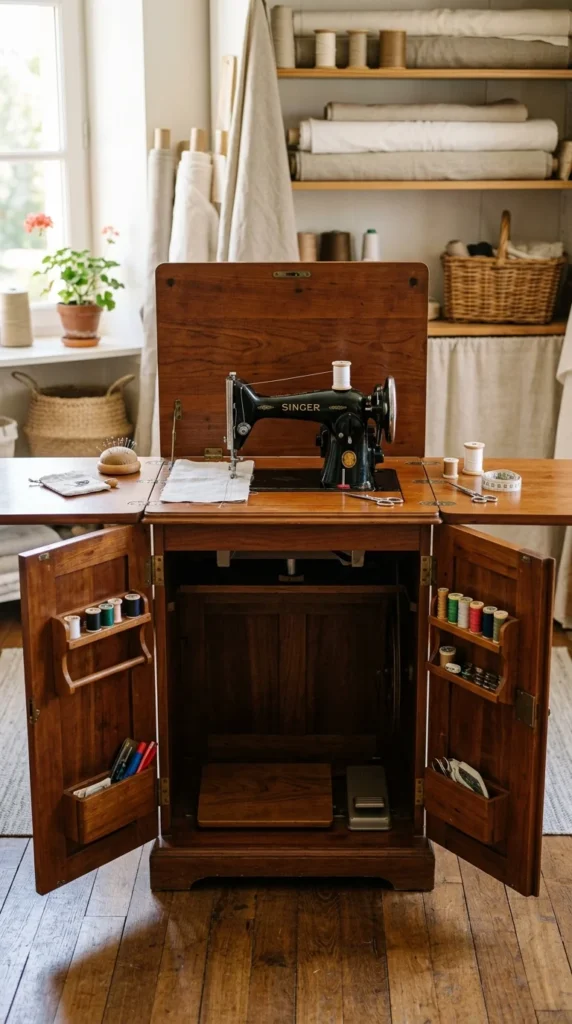
For those who prefer a traditional look, a dedicated sewing cabinet can be a beautiful piece of furniture. Many modern versions are designed to look like high-end office furniture, hiding the machine entirely when it’s not in use to maintain a professional office vibe.
25. Digital Tech
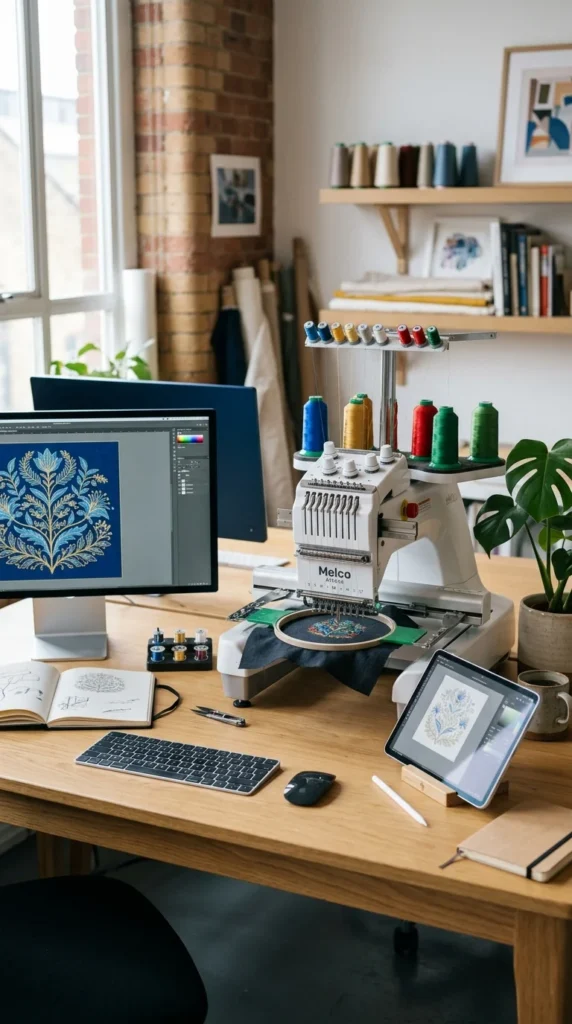
Embrace the intersection of tech and craft. A dual-purpose room should accommodate a large monitor for pattern drafting software or watching tutorials. Integrating your digital tools—like a tablet for sketchbooks or a high-speed printer for PDF patterns—ensures your office and sewing room work in perfect digital sync.