
The modern workforce has shifted, and with it, our homes have become our headquarters. However, not everyone has a sprawling spare room to dedicate to a mahogany-clad executive suite. For many, the “office” is a sliver of the living room, a repurposed closet, or a quiet corner of the bedroom. But a lack of square footage doesn’t mean a lack of style or efficiency. In fact, a tiny home office can be more focused, organized, and inspiring than a traditional one.
Creating a productive workspace in a small area requires a blend of clever engineering, aesthetic curation, and a touch of minimalism. It’s about maximizing every vertical inch and ensuring that every piece of furniture serves a dual purpose. Whether you are a freelance creative, a remote executive, or a student, these eighteen ideas will help you transform the smallest of spaces into a powerhouse of productivity.
1. Cloffice
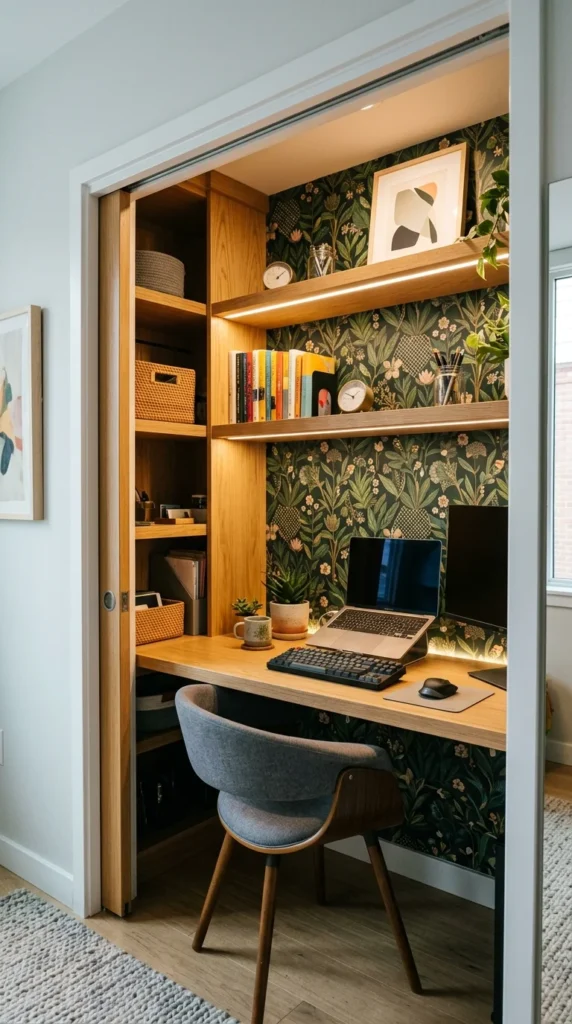
The “cloffice”—a closet-turned-office—is the ultimate space-saving hack. By removing the doors or replacing them with curtains, you can tuck a full desk and shelving unit into a space that was previously just for storage. This setup is particularly effective because it allows you to “close the office” at the end of the day, helping maintain a healthy work-life balance in a small home. Use the upper shelves for binders and stationery, and consider a colorful wallpaper on the back wall to give the tiny nook its own distinct personality.
2. Floating Desk
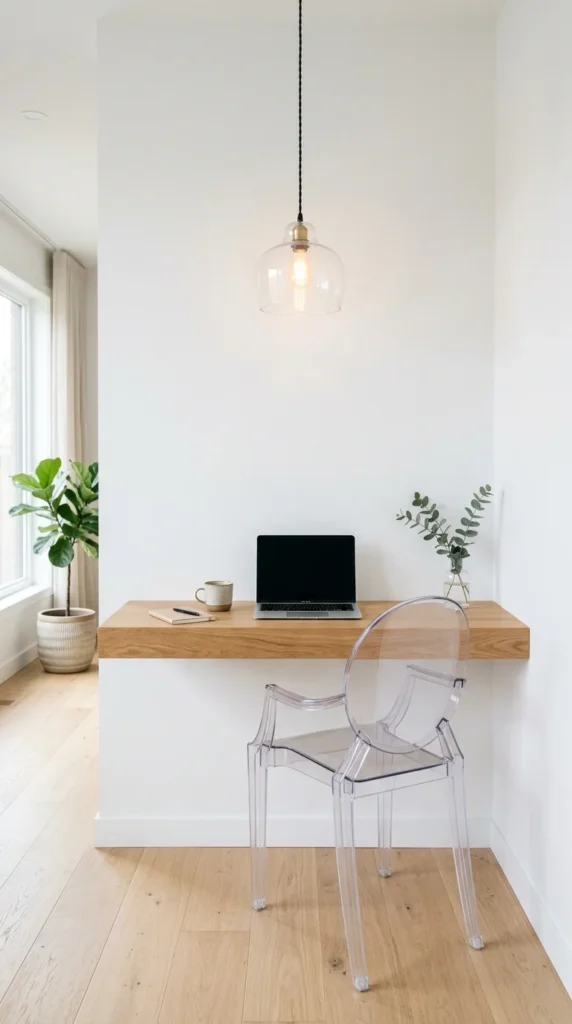
When floor space is at a premium, look to the walls. A floating desk eliminates the need for bulky legs, making the room feel larger and less cluttered. Because the floor remains visible beneath the desk, the visual flow of the room is uninterrupted. This is a perfect solution for hallways or narrow bedrooms. You can even find models that fold up against the wall when not in use, completely reclaiming the space for other activities.
3. Corner Nook
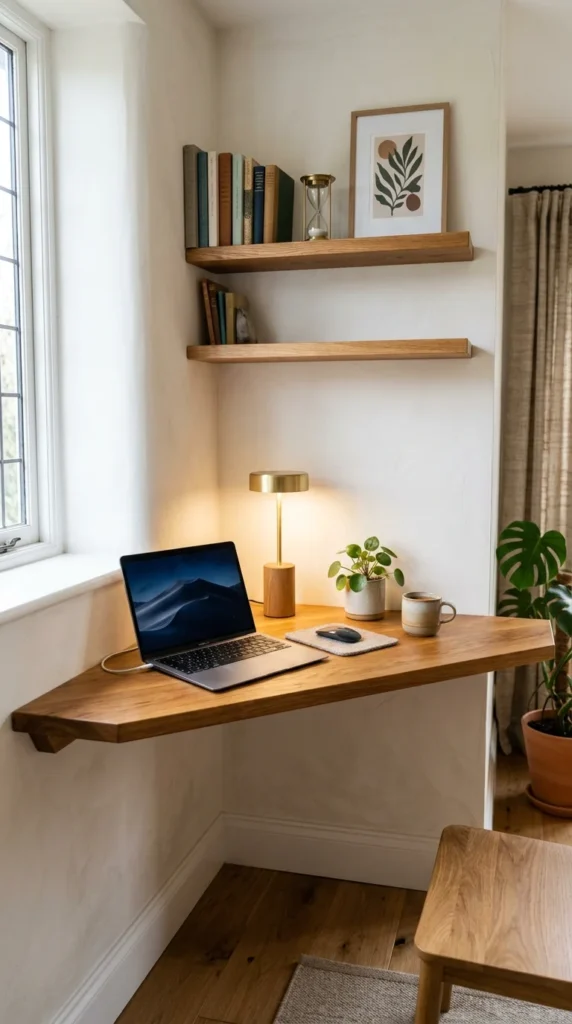
Often, corners are the most underutilized areas in a home. A custom-built or store-bought corner desk utilizes this “dead space” perfectly. By facing the corner, you create a natural cubicle effect that helps minimize peripheral distractions. To keep it from feeling cramped, use light-colored furniture and add a small mirror on one of the walls to bounce light back into the workspace.
4. Ladder Desk
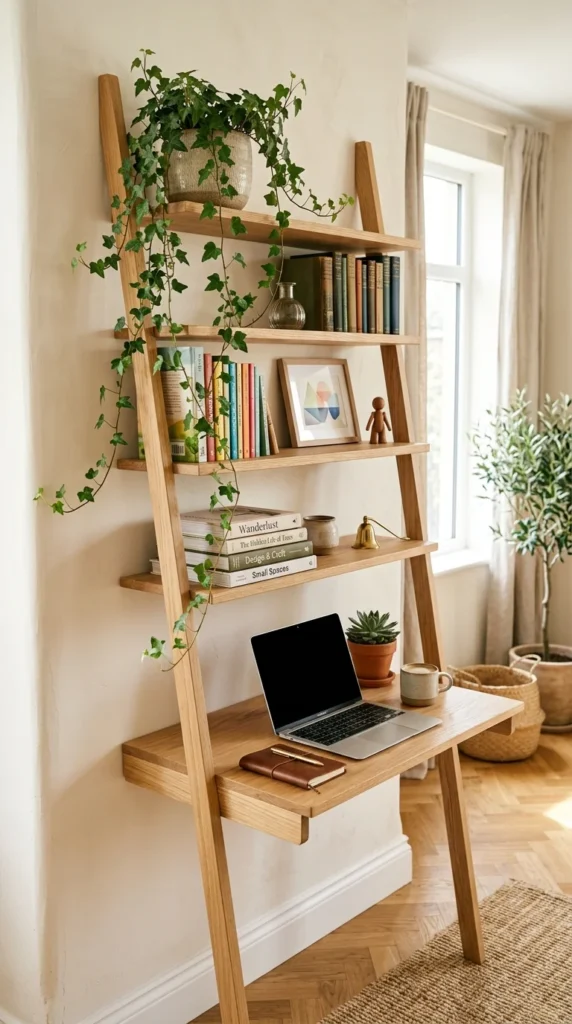
Ladder desks are the darlings of the small-space world. They offer a vertical footprint, providing a desk surface at waist height and several tiers of shelving above for storage or decor. Their lean profile is aesthetically pleasing and fits comfortably in living rooms without looking like traditional “office” furniture. It’s a stylish way to blend your work needs with your home’s existing decor.
5. Under-Stairs Hub
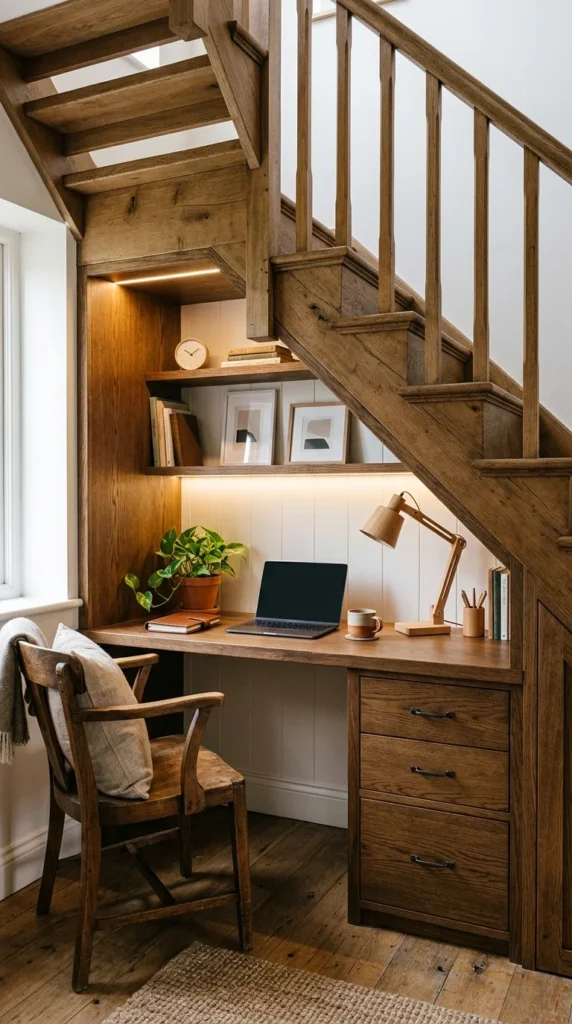
The space under the stairs is often relegated to a dark storage cupboard, but it’s actually a prime location for a cozy office. With a bit of custom cabinetry and some smart lighting, this awkward architectural feature becomes a private, focused workstation. Since these areas can sometimes lack natural light, prioritize high-quality task lighting and perhaps a light-colored desktop to brighten the area.
6. Window Sill
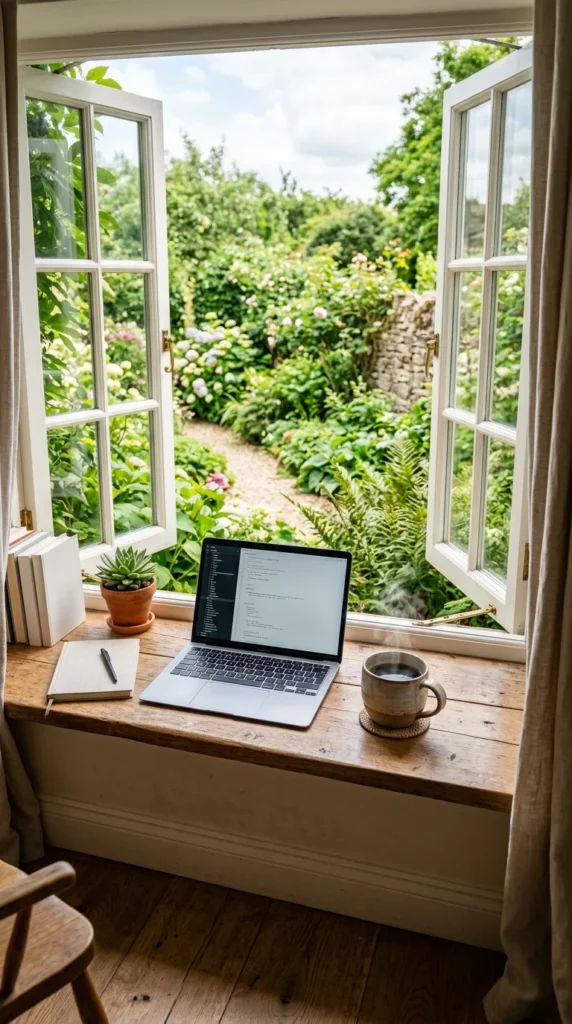
If you have a deep window sill or a bay window, you have a ready-made desk with the best view in the house. Working by a window provides a constant source of natural light, which is proven to boost mood and productivity. If your sills aren’t deep enough, you can install a slim console table right against the window to mimic the effect. Just be mindful of screen glare—sheer curtains or a monitor hood can help during peak sun hours.
7. Behind-Sofa Setup
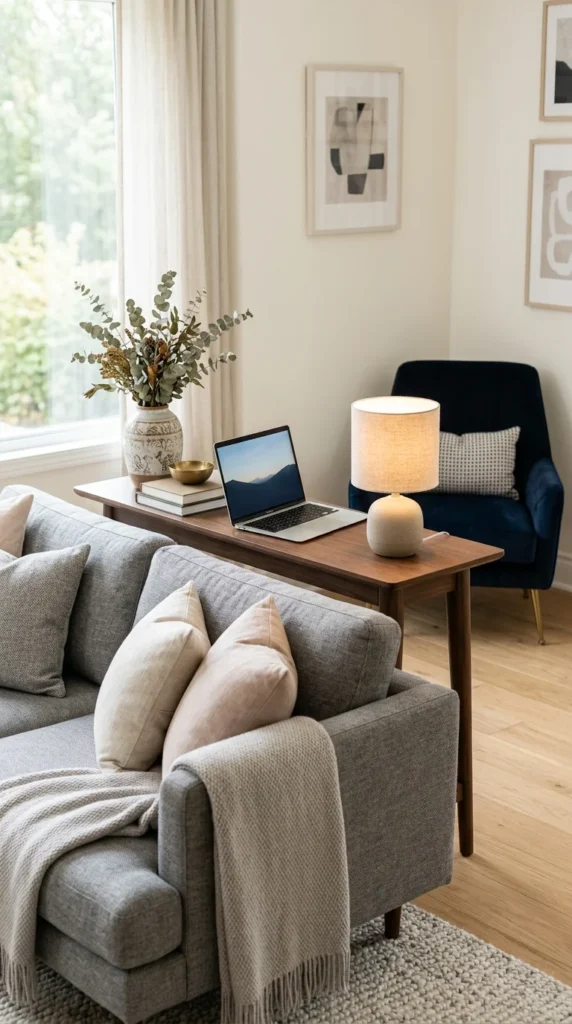
The area behind a sofa is frequently wasted space. By placing a slim, long desk or a console table there, you can create a functional workspace that defines the “office zone” without needing a separate room. This layout allows you to remain part of the household environment while still having a dedicated surface for your computer. It’s an excellent choice for open-concept living areas.
8. Alcove Shelving
Many older homes feature architectural alcoves on either side of a fireplace. These are perfect for “built-in” offices. By installing sturdy shelves from floor to ceiling, you can designate one shelf at the appropriate height for a desk and use the others for an extensive library or filing system. This keeps everything integrated and flush with the wall, maintaining a clean, streamlined look.
9. Mobile Cart
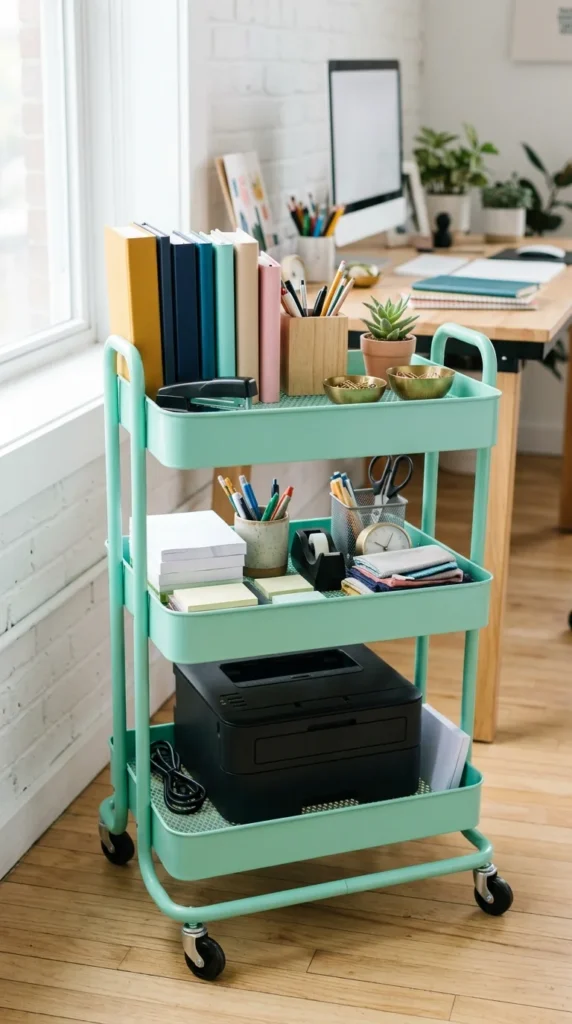
If you don’t have a permanent spot to work, make your office mobile. A rolling utility cart can house your printer, paper, stationery, and tech accessories. You can wheel it to the kitchen table during the day and tuck it away in a pantry or closet at night. This “pop-up” office approach ensures that work supplies don’t take over your living space permanently.
10. Pegboard Wall
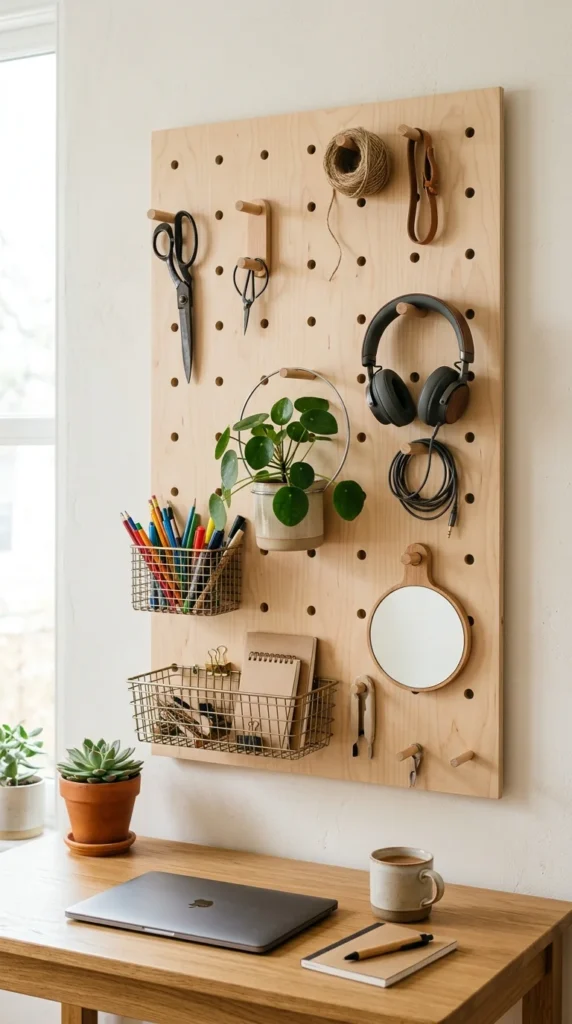
When you have a tiny desk, you cannot afford to have it cluttered with pens, cables, and notebooks. A pegboard is a vertical organization powerhouse. It allows you to move all your “desktop” items onto the wall, freeing up every inch of your actual workspace for your computer and mouse. Plus, pegboards are highly customizable and can be rearranged as your needs change.
11. Multi-Functional Nightstand
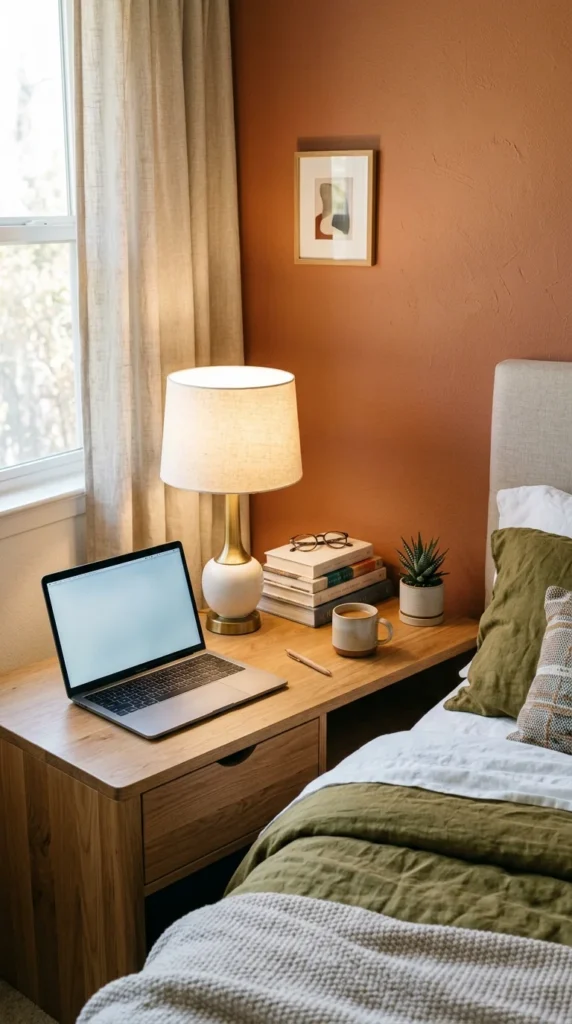
In a studio apartment or a small bedroom, furniture has to pull double duty. A wide nightstand or a small vanity can easily serve as a desk. To make this work, choose a chair that is comfortable enough for work but looks like a decorative bedroom accent. Use a small tray to organize bedside essentials so they can be easily moved when it’s time to start the workday.
12. Ghost Furniture
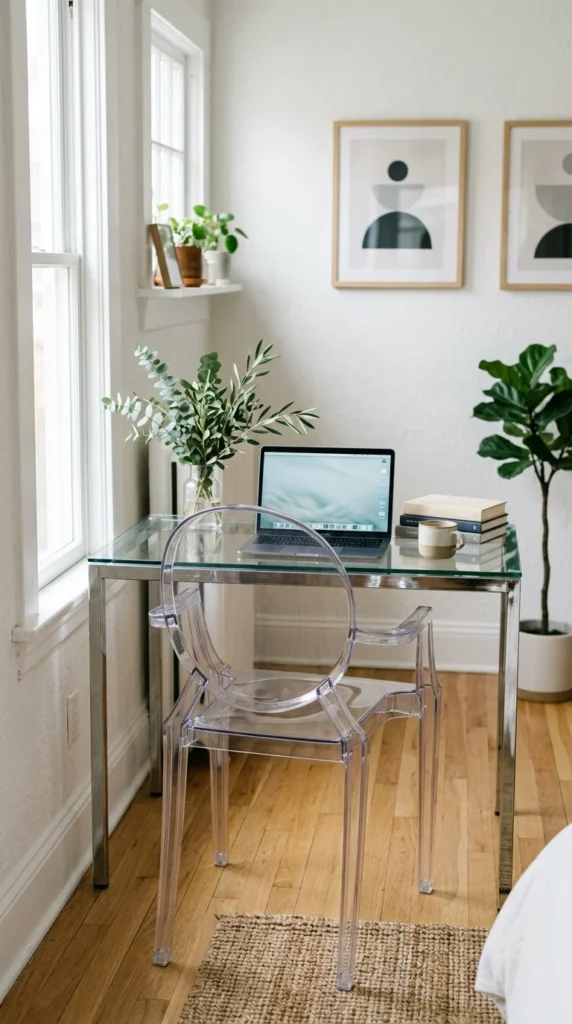
Visual clutter can make a small room feel suffocating. Using “ghost” furniture—items made of clear acrylic or glass—creates the illusion of more space. Because you can see right through the desk and chair, they don’t “block” the room visually. This allows you to have a full-sized workspace that doesn’t dominate the aesthetic of your living area.
13. Room Divider
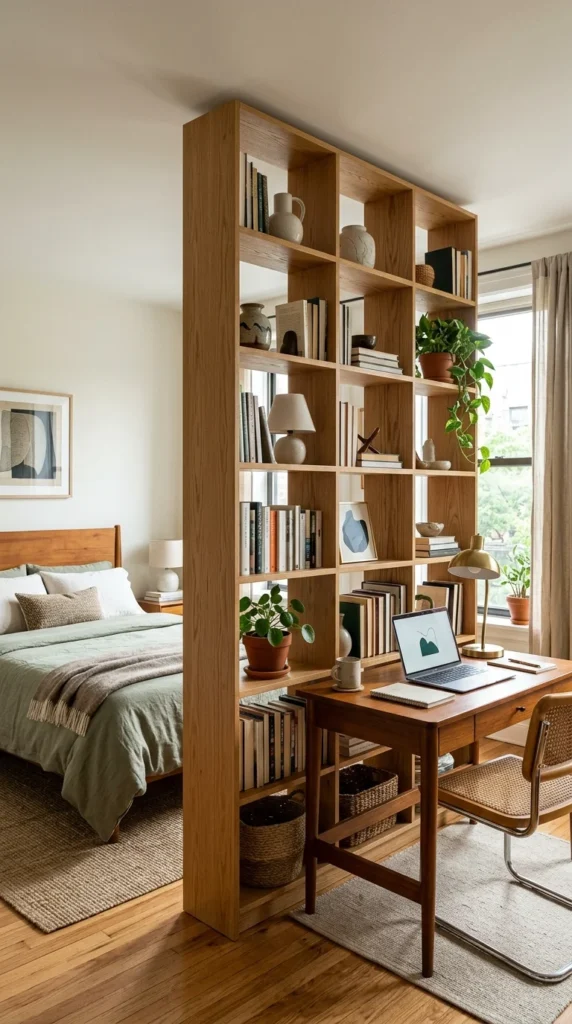
If you need to create a sense of separation in a multipurpose room, use a tall, open bookcase as a room divider. Place your desk on one side and your bed or sofa on the other. This provides a physical and psychological boundary between “work” and “rest.” Because the shelves are open, light can still pass through, preventing the space from feeling like a series of dark cubby holes.
14. Fold-Down Desk
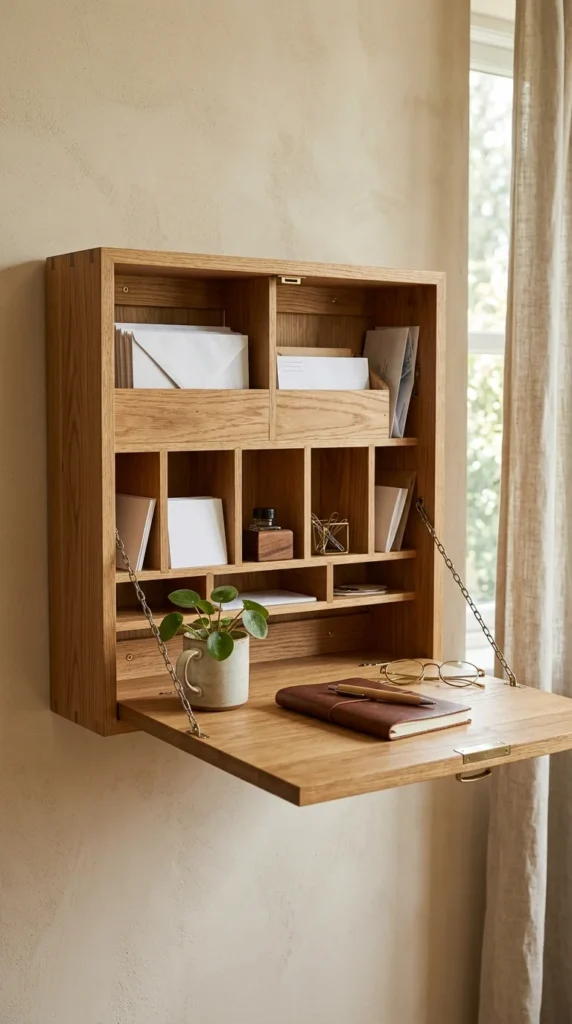
The fold-down desk (or “murphy desk”) is the ultimate “now you see it, now you don’t” solution. When closed, it looks like a simple cabinet or even a piece of wall art. When opened, it provides a sturdy surface for a laptop and often includes small internal compartments for organization. This is ideal for those who want their home to feel 100% like a home the second the workday ends.
15. Monochrome Palette
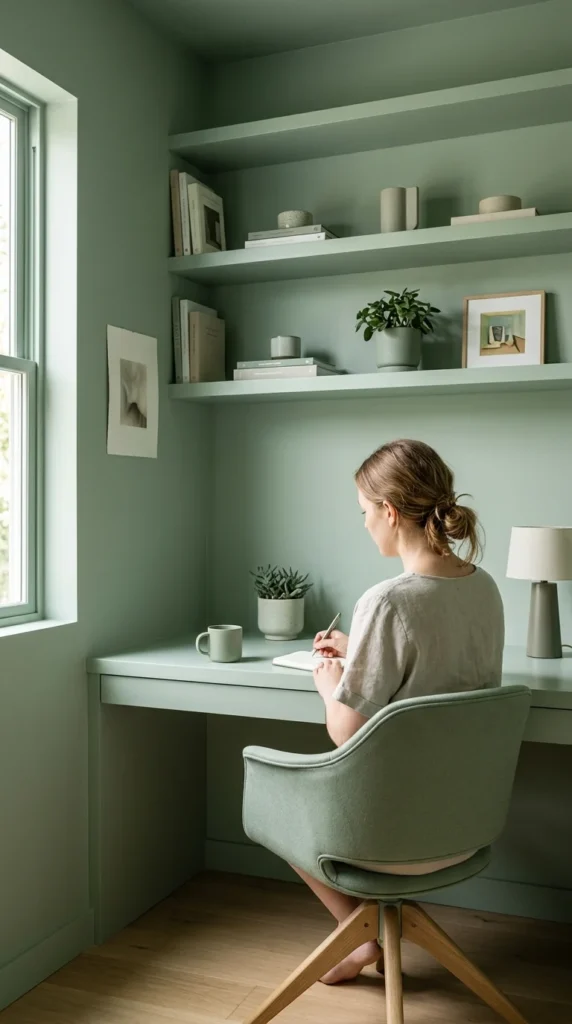
Using a monochrome color palette can make a tiny office feel much larger and more intentional. When the desk, chair, and shelves match the wall color, the furniture “disappears” into the architecture. This reduces visual noise, creating a calm, cohesive environment that encourages deep focus and minimizes the feeling of being cramped.
16. Vertical Greenery
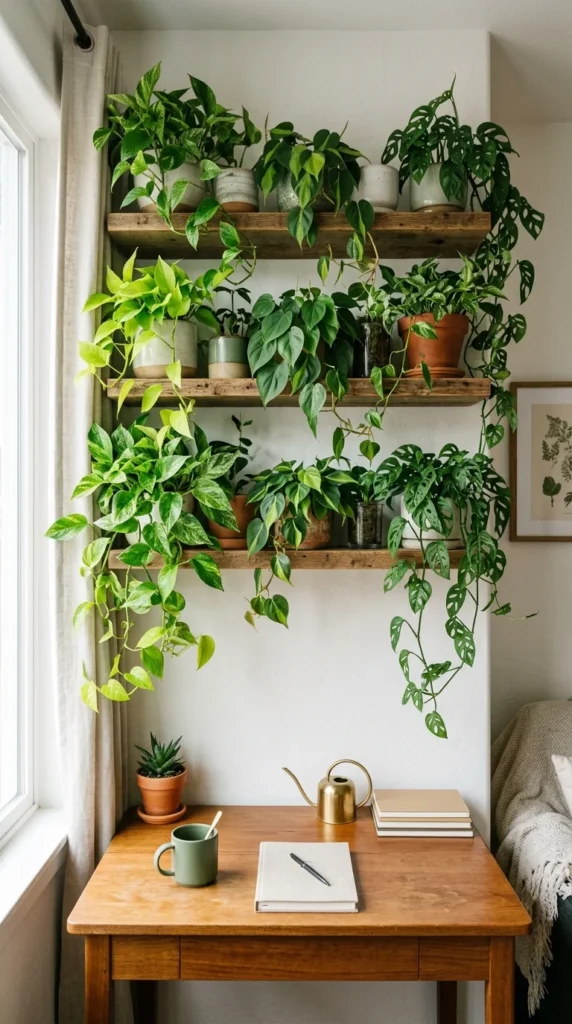
Bringing nature indoors is essential for productivity and mental well-being, but potted plants can take up valuable desk space. Instead, use vertical greenery. Hang plants from the ceiling or place trailing vines on high shelves. This adds a “living wall” feel to your tiny office, purifying the air and adding a lush, cozy vibe without interfering with your mouse pad.
17. Mirrored Accents
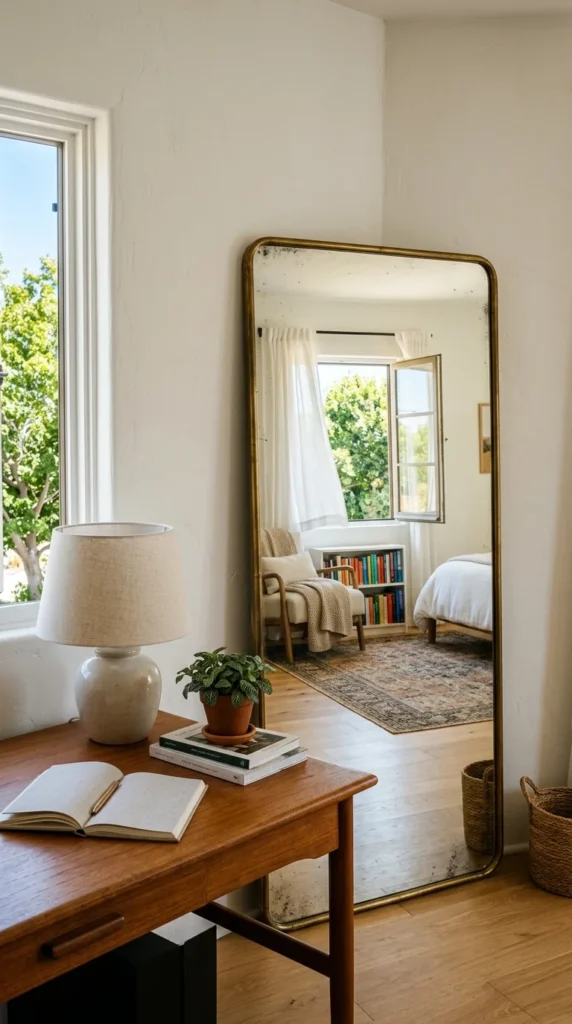
Mirrors are an age-old trick for making small spaces feel twice as large. Placing a mirror behind your desk or on an adjacent wall reflects light and gives the illusion of depth. It prevents you from feeling like you are staring at a wall all day. A stylish framed mirror also adds a touch of elegance, making the office feel like a curated part of your home’s design.
18. Rug Zoning
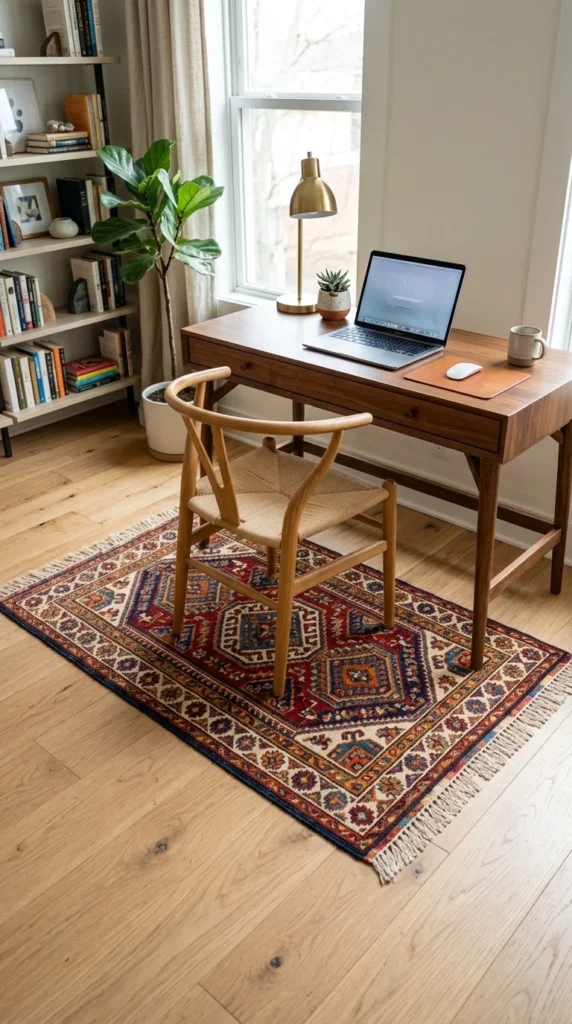
In a shared space, a rug is a powerful tool for “zoning.” By placing a small, distinct rug under your desk and chair, you are visually claiming that territory as an office. This mental boundary helps you stay in “work mode” while you are on the rug and leave work behind once you step off it. It also adds a layer of texture and warmth, making your tiny workspace feel incredibly cozy.