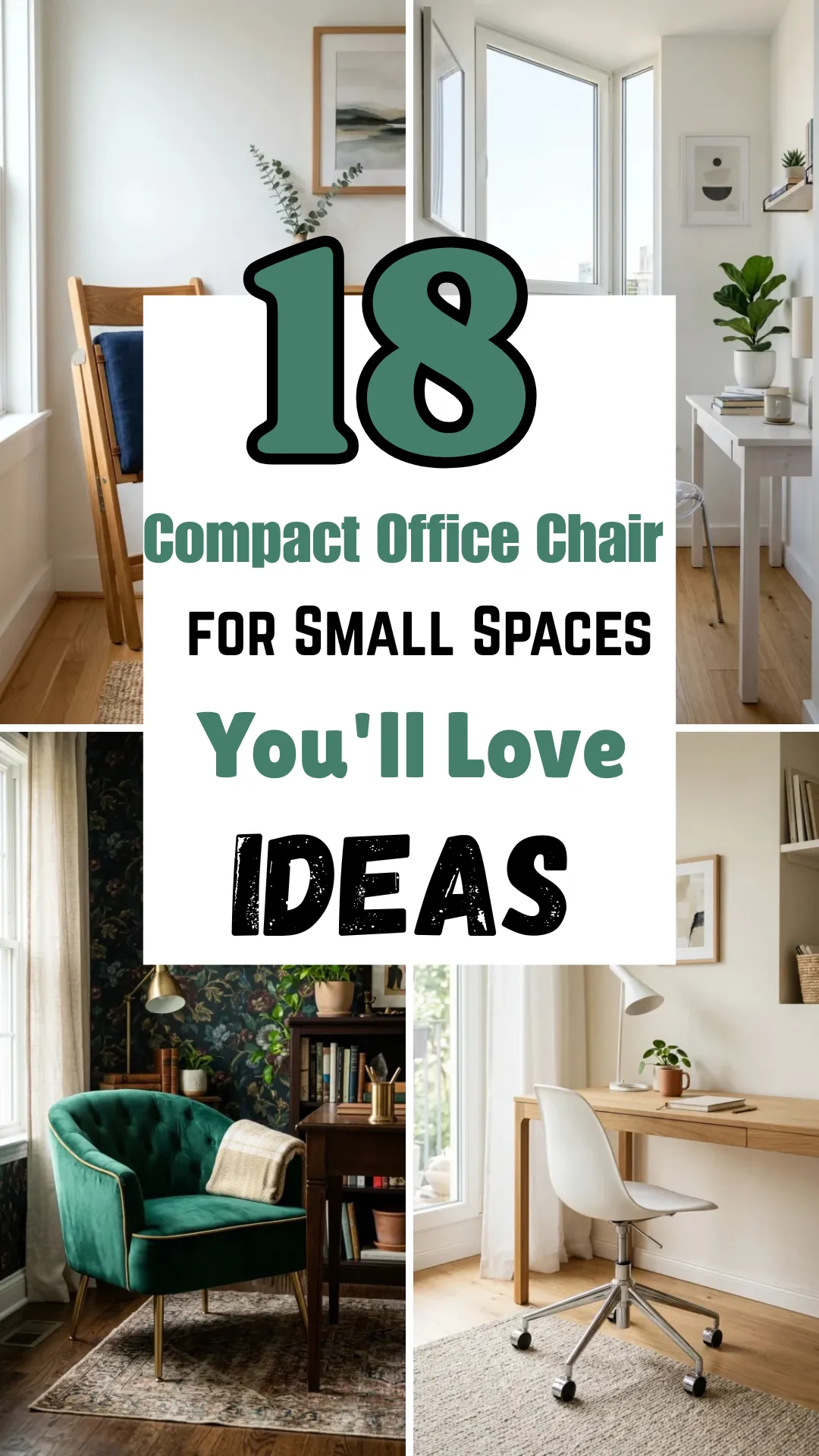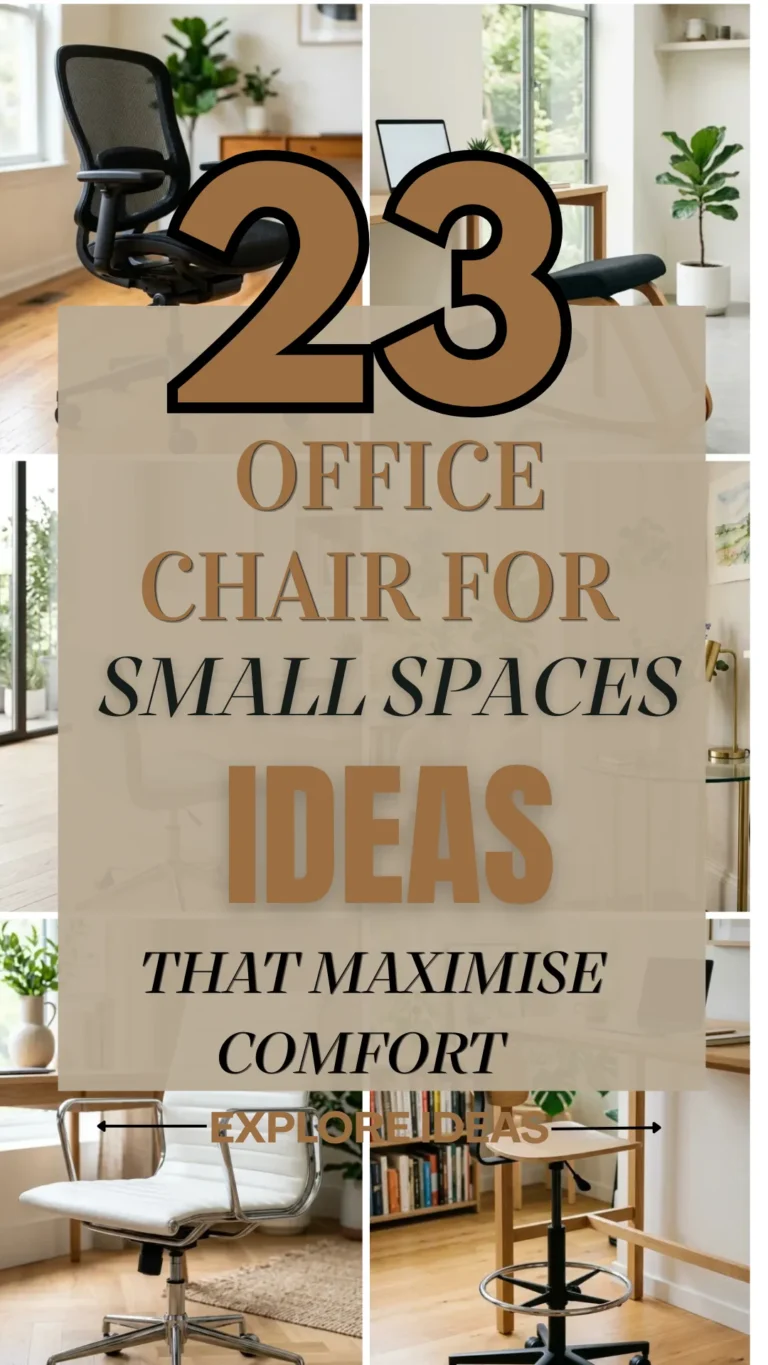

Working from a small apartment or a converted closet nook doesn’t mean you have to sacrifice your back health or your room’s aesthetic. The traditional, hulking executive chair might be the gold standard for corporate boardrooms, but in a compact home office, it quickly becomes an obstacle. The key to a successful small-space workstation is finding a chair that offers a “small footprint” with “big support.”
From armless designs that slide completely under your desk to transparent materials that vanish into the room, here are 23 innovative office chair ideas designed to maximize your comfort without the unnecessary bulk.
1. Armless Swivel
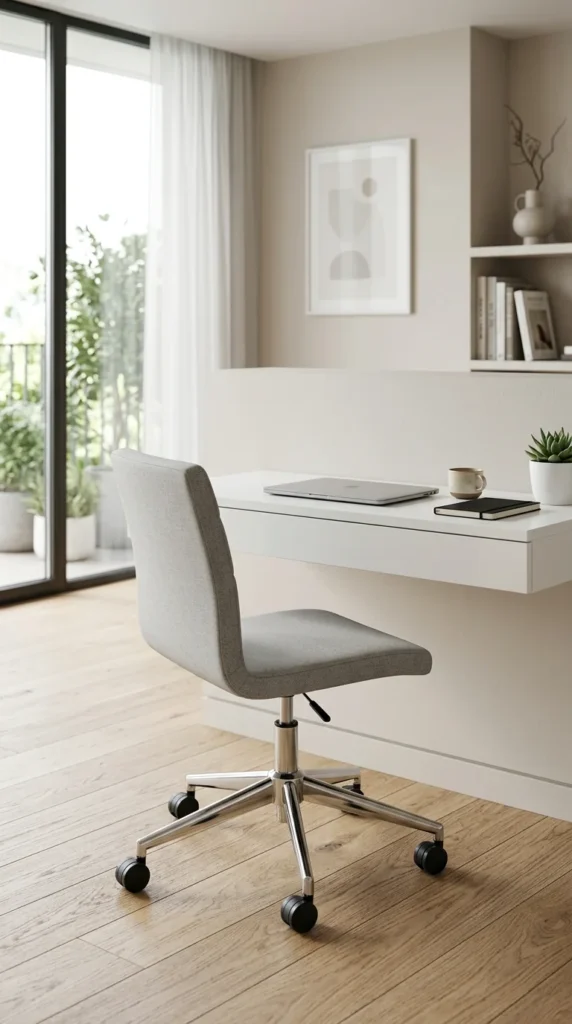
The armless swivel chair is the ultimate space-saver. By removing the armrests, the chair’s width is significantly reduced, allowing it to tuck entirely under the desk when not in use. This clears the walkway and makes the room feel much larger. Despite the lack of arms, many modern designs offer contoured backrests that provide excellent lumbar support for full-day productivity.
2. Flip-Up Arms

If you love the support of armrests but hate how they prevent your chair from sliding under the desk, flip-up arms are the perfect compromise. These chairs feature a hinge mechanism that allows you to lift the arms out of the way when you’re finished working. It’s a hybrid solution that offers ergonomic luxury during the day and compact storage at night.
3. Ghost Chair
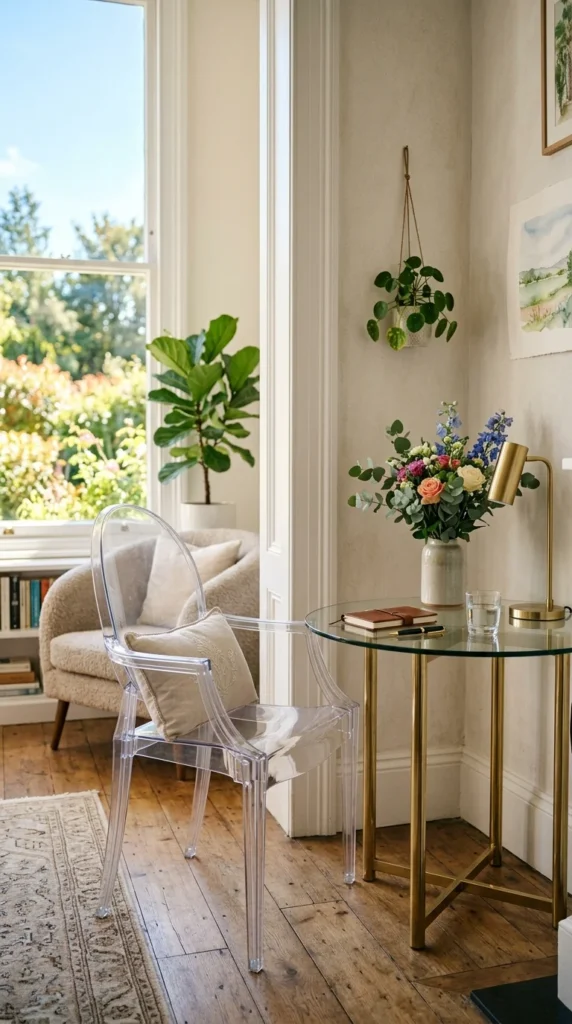
Visual clutter can make a small room feel suffocating. The “Ghost Chair”—or any transparent acrylic chair—is a designer favorite for small offices. Because you can see straight through it, the chair occupies zero “visual space.” While they look delicate, high-quality polycarbonate versions are incredibly durable and can be paired with a small sheepskin rug or a lumbar cushion for added comfort.
4. Kneeling Chair
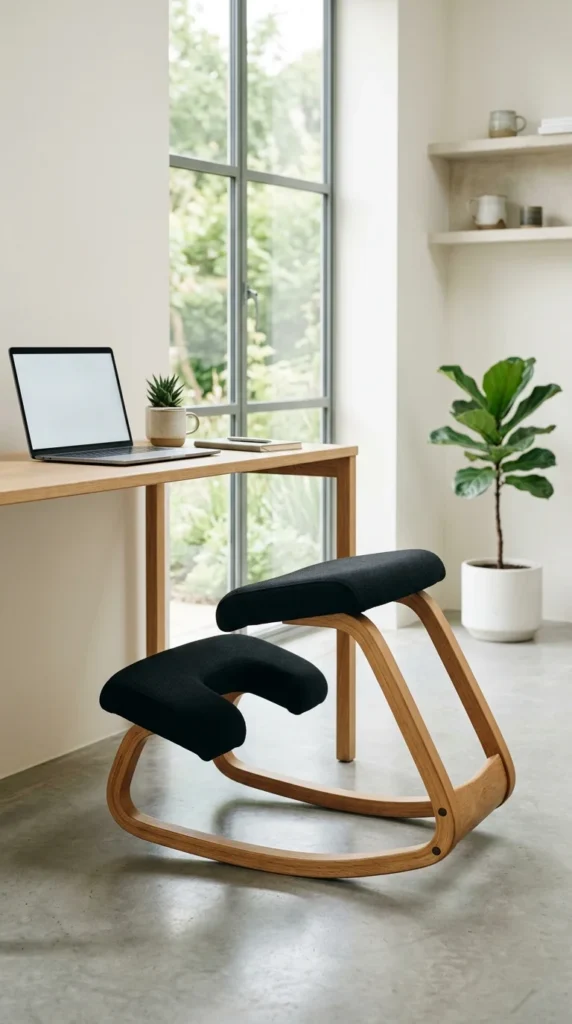
Kneeling chairs are revolutionary for small spaces because they lack the traditional high backrest that dominates a room’s vertical space. They encourage an upright posture by tilting the pelvis forward, which distributes weight more evenly. Their low profile means they can often be stowed under the desk or even in a closet when the workday ends.
5. Ribbed Leather

Inspired by classic mid-century modern designs, the ribbed leather task chair offers a high-end look without the bulk of traditional padding. The “ribs” provide a flexible, suspension-like support that contours to your back. Because the frame is usually made of thin steel or aluminum, the overall profile remains incredibly slender.
6. Mesh Mid-Back
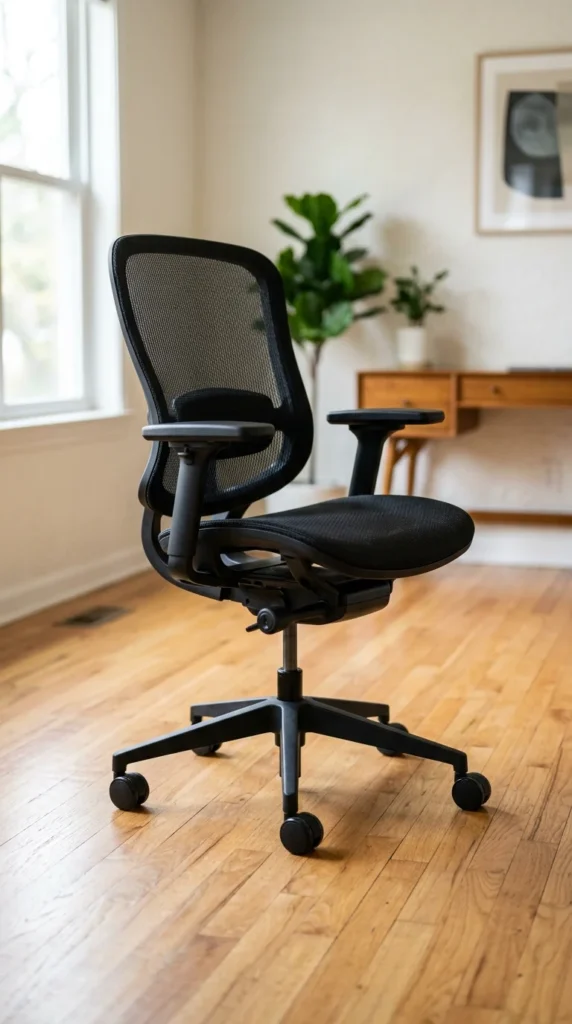
Mesh is the gold-colored material for small spaces. Not only is it breathable—preventing you from overheating in a tight corner—but its semi-transparent nature makes the chair look lighter than solid fabric. A mid-back version provides essential thoracic support without the height of an executive chair that might block a window or a view.
7. Velvet Petite
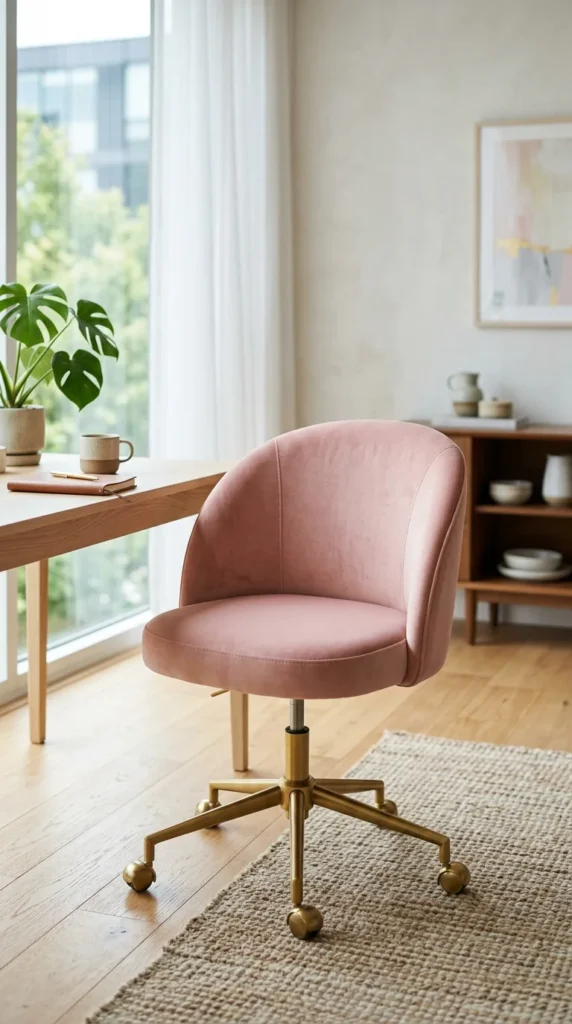
For those who want their home office to feel like part of their living space, a petite velvet chair is ideal. These chairs often look like stylish accent pieces rather than “office equipment.” By choosing a model with a smaller seat pan and a rounded back, you get a cozy, upholstered feel that fits into the tightest corners.
8. Drafting Stool
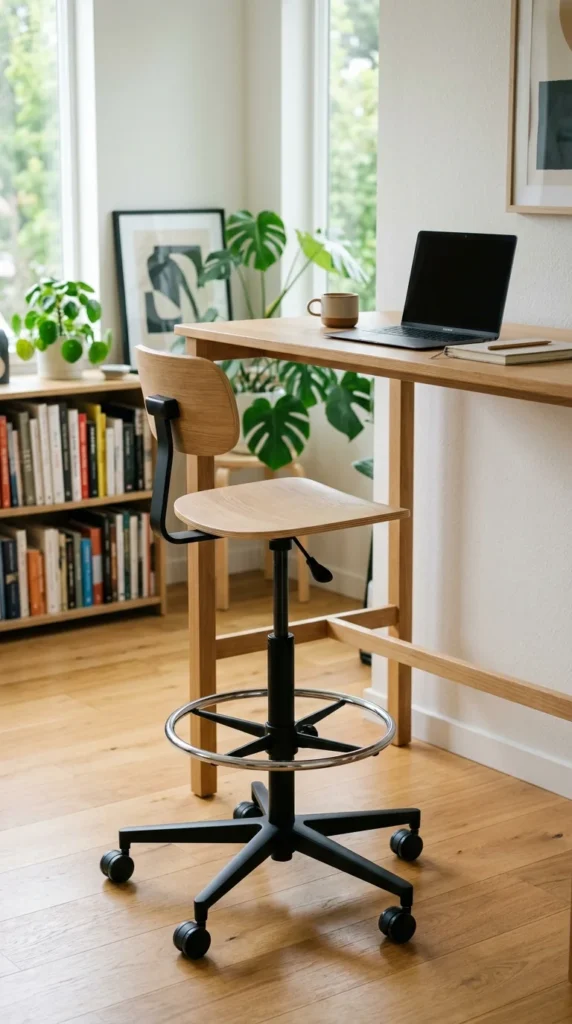
If you use a standing desk or a high counter, a drafting stool is your best friend. These stools have a much smaller base diameter than standard office chairs. Many models are designed with a “perch” style seat that takes up minimal room while allowing you to quickly transition between sitting and standing.
9. Scandi-Style Wood

Scandinavian design is synonymous with efficiency. A bentwood office chair uses a single piece of molded plywood to create a seat and backrest. This construction is inherently thin and lightweight. It brings a warm, natural texture to your room without the heavy “plastic” look of traditional ergonomic furniture.
10. Saddle Stool
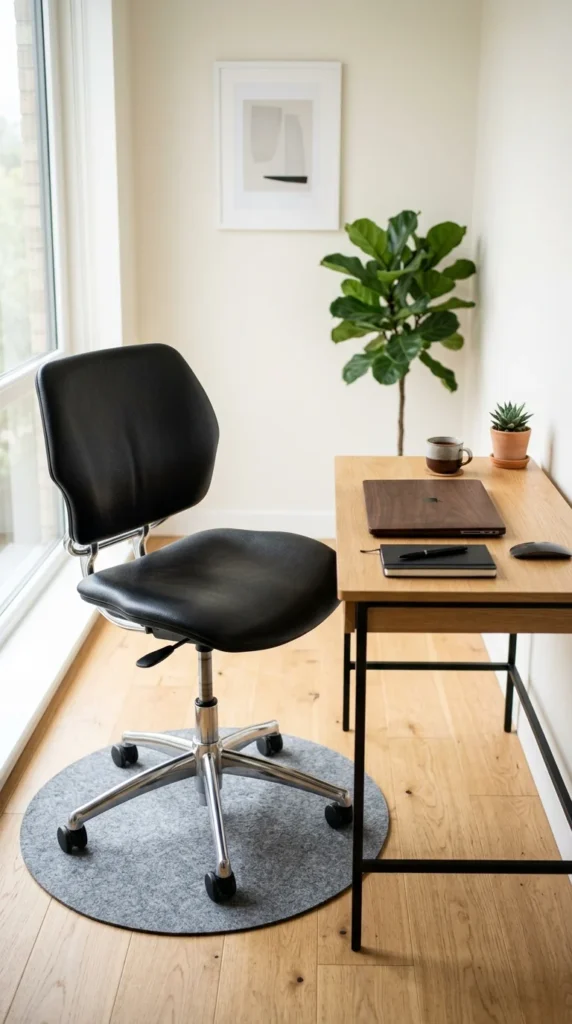
Saddle stools are designed to keep your spine in its natural curve by forcing a wide leg stance. Because they have no back or arms, they can be tucked completely out of sight. They are perfect for “active sitting,” keeping your core engaged while occupying the smallest possible footprint of any office seating option.
11. Low-Back Task
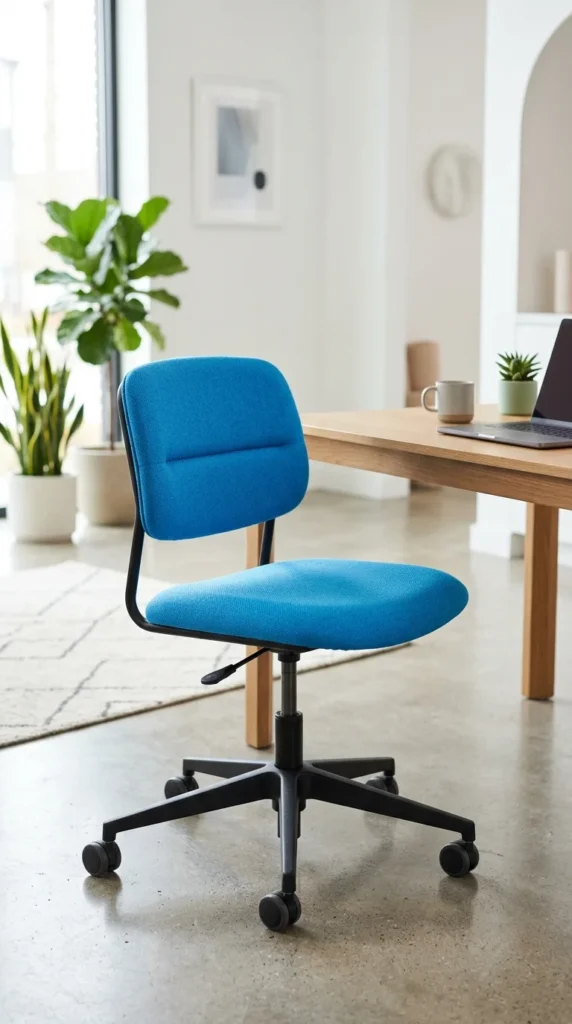
A low-back chair is specifically designed for mobility and tasks that require you to move around. In a small space, the low height prevents the chair from becoming the focal point of the room. It keeps the “sightlines” open, making the ceiling feel higher and the walls further apart.
12. Nesting Chair
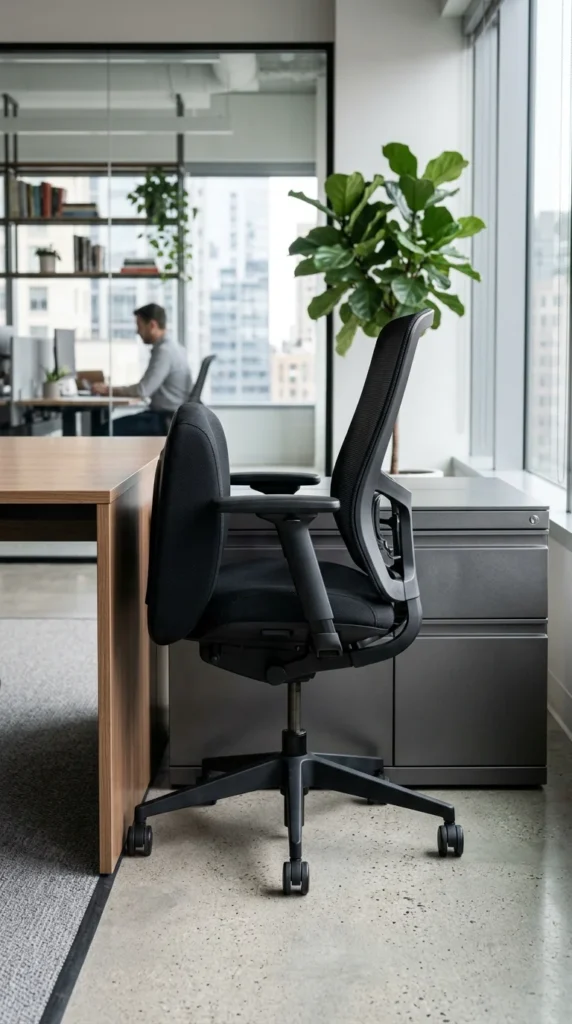
Nesting chairs are often used in classrooms or training rooms, but they are genius for home offices that double as guest rooms. The seat flips up, allowing the chair to be pushed into a very narrow space or against a wall. This is a life-saver for multi-purpose rooms where floor space is at a premium.
13. Woven Rattan
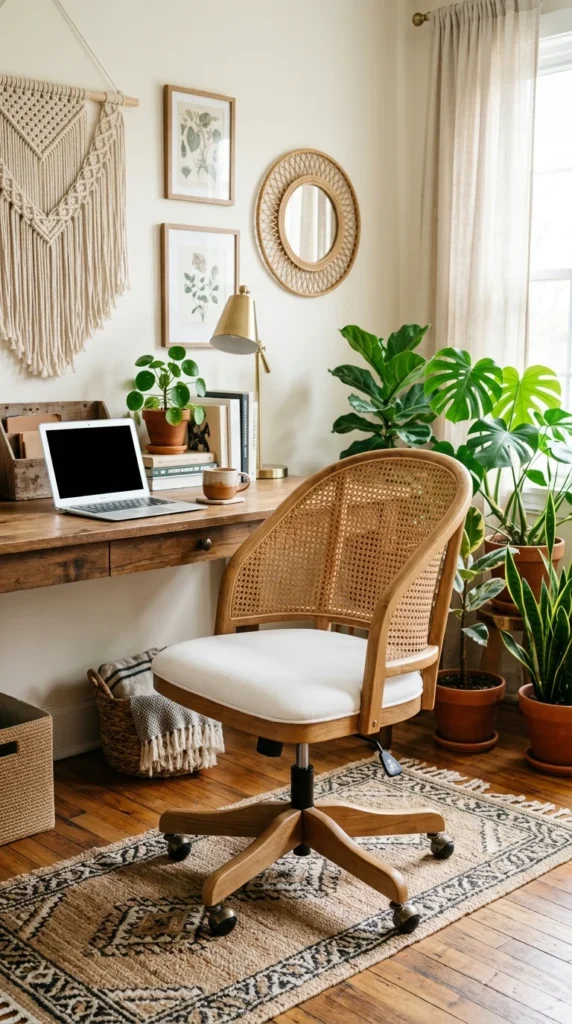
Rattan and cane furniture are naturally “airy.” A woven office chair provides a sturdy backrest while allowing light and air to pass through the weave. This prevents the “heavy” look of solid furniture and adds a trendy, organic touch to your workspace that blends seamlessly with residential decor.
14. Ball Chair
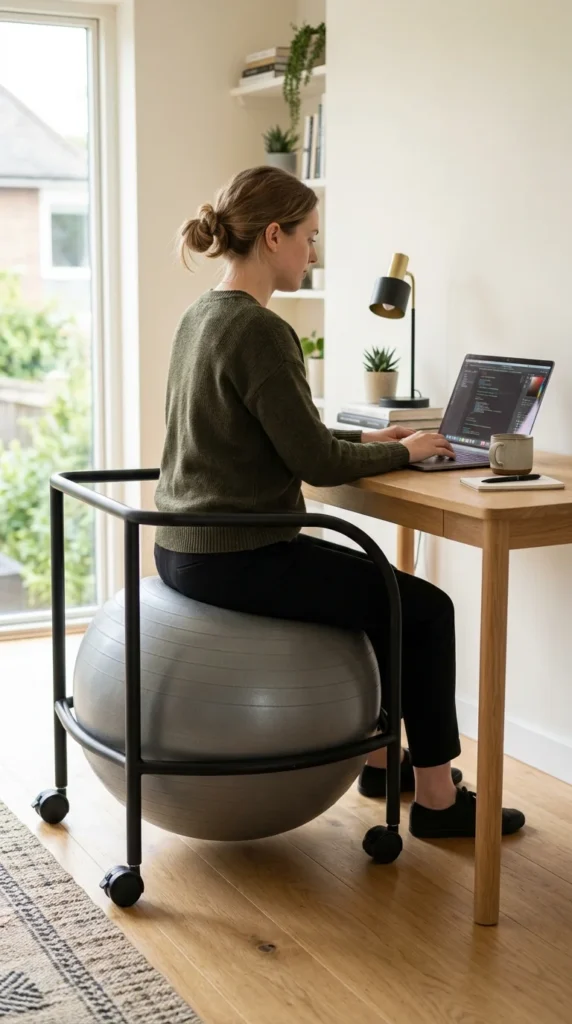
Stability ball chairs are excellent for those who want to work on their core strength. While a loose ball can roll around, a ball chair with a compact base keeps it contained. The spherical shape is softer on the eyes than the sharp angles of a standard chair, and the lack of a backrest means it can hide under a desk easily.
15. Industrial Stool
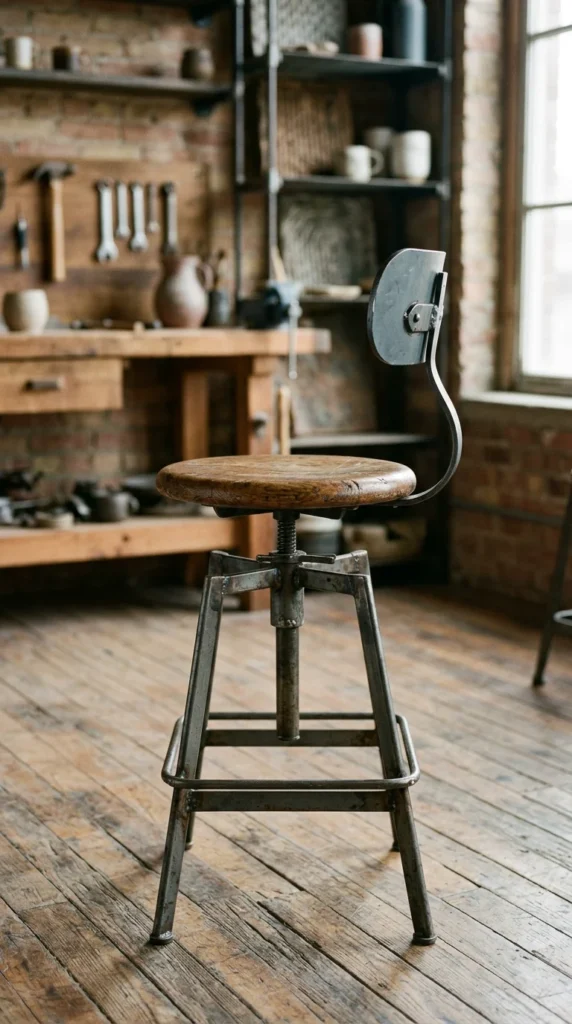
For a “loft” or “urban” aesthetic, the industrial stool is a winner. These are built for durability and usually feature a very narrow, tripod-style base. The mix of wood and metal adds character without taking up more than a couple of square feet.
16. Slipper Chair Swivel
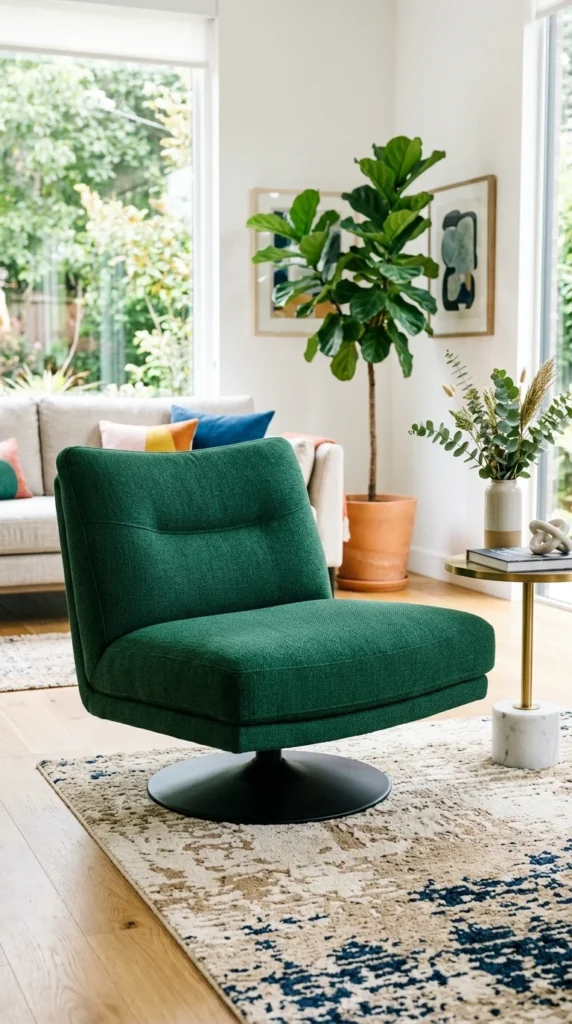
A slipper chair is characterized by its armless design and low-to-the-ground profile. When adapted with a swivel base, it becomes a cozy, stylish office chair. Because it looks like lounge furniture, it’s perfect for studio apartments where your “office” is also your “living room.”
17. Foldable Ergonomic
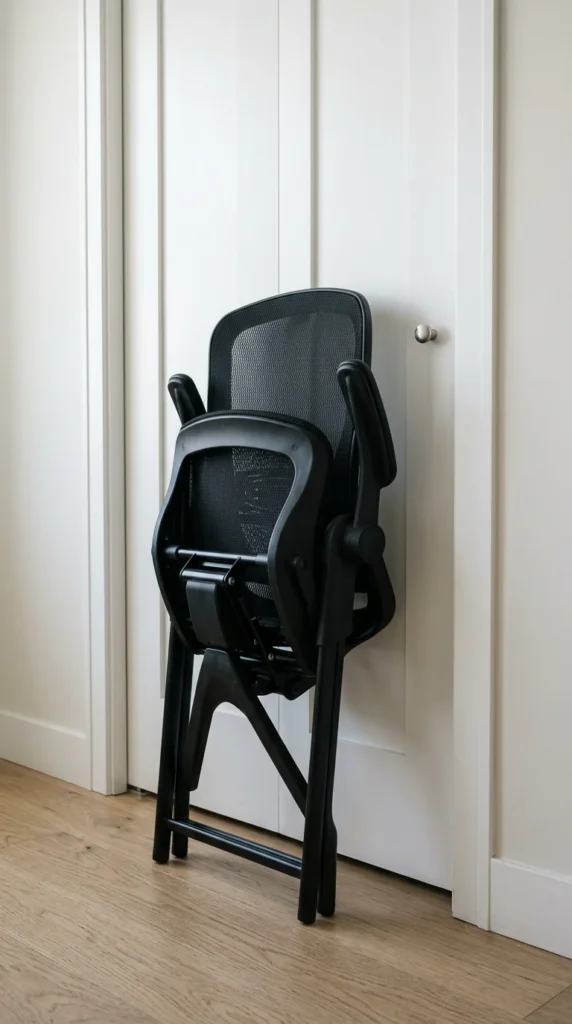
Yes, they do exist! Some high-end manufacturers have created “collapsible” ergonomic chairs. These feature a folding backrest and sometimes even folding legs. When your workday ends, you can literally fold your chair and slide it under your bed, reclaiming your entire floor for the evening.
18. Petite Suede Executive
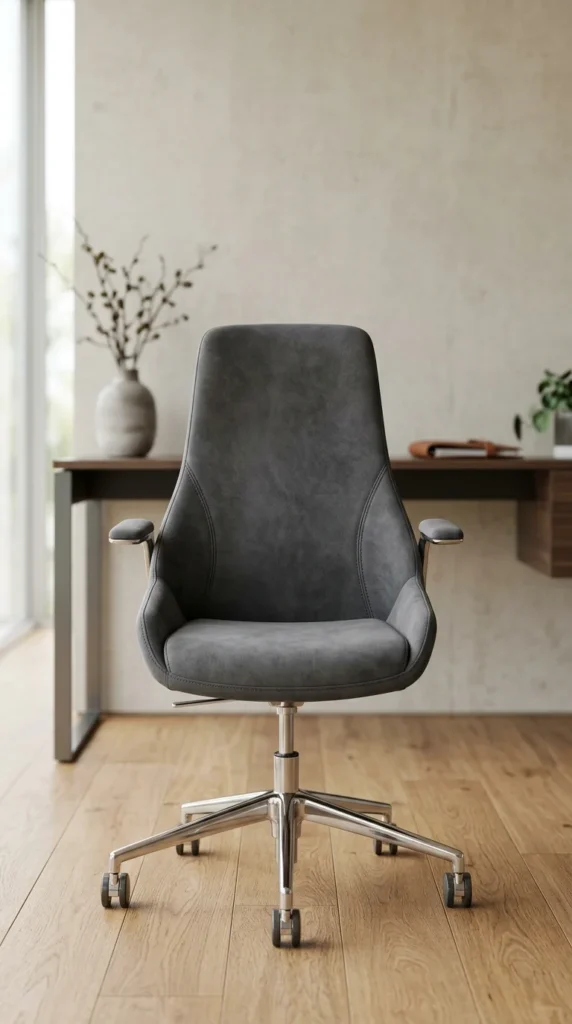
If you love the “sink-in” feeling of a plush chair, look for “petite” or “small-scale” executive models. These maintain the high-quality padding and luxurious fabric but are scaled down by 15-20% in overall dimensions to fit smaller frames and smaller rooms.
19. Task Stool with Foot Ring
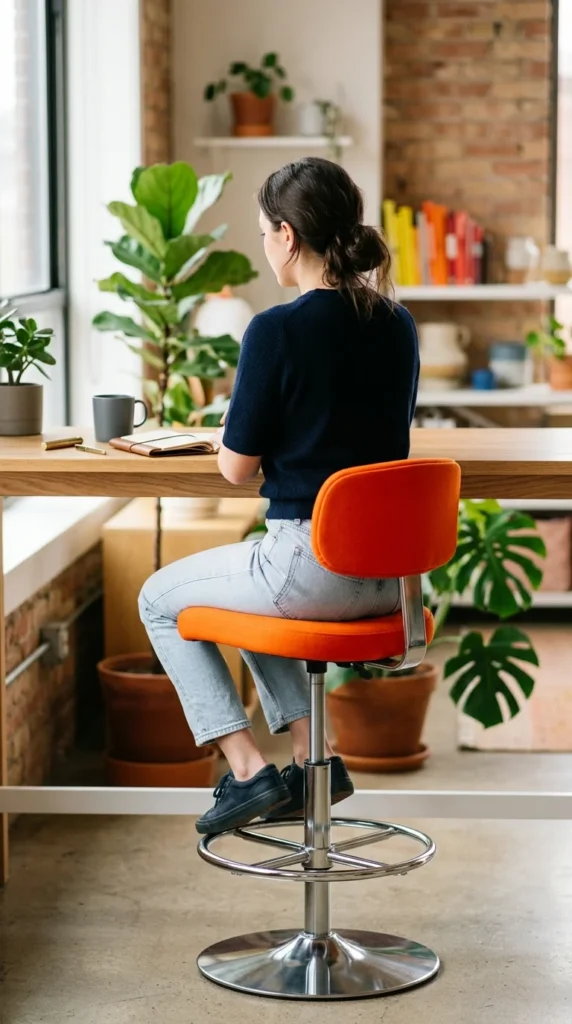
When floor space is narrow, going vertical is the answer. A task stool with a foot ring allows you to sit comfortably at higher surfaces. The foot ring provides a place for your feet so they aren’t dangling, which is crucial for circulation during long hours of work.
20. Wingback Petite
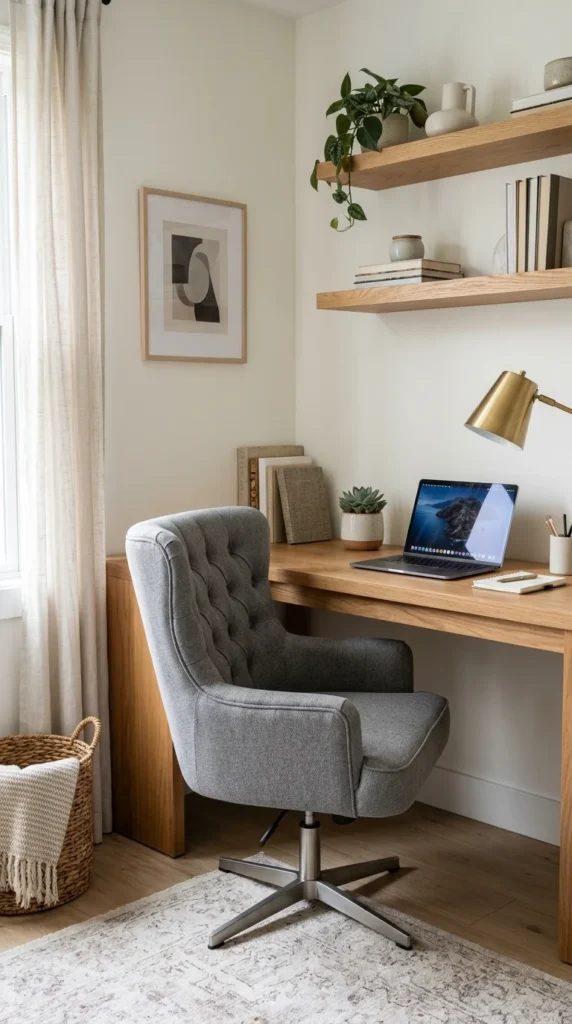
The wingback design offers a sense of privacy and “enclosure,” which can help you focus in a busy household. By choosing a petite version, you get that focused “nook” feeling without the chair dominating the entire corner of the room.
21. Caster-Free Pedestal
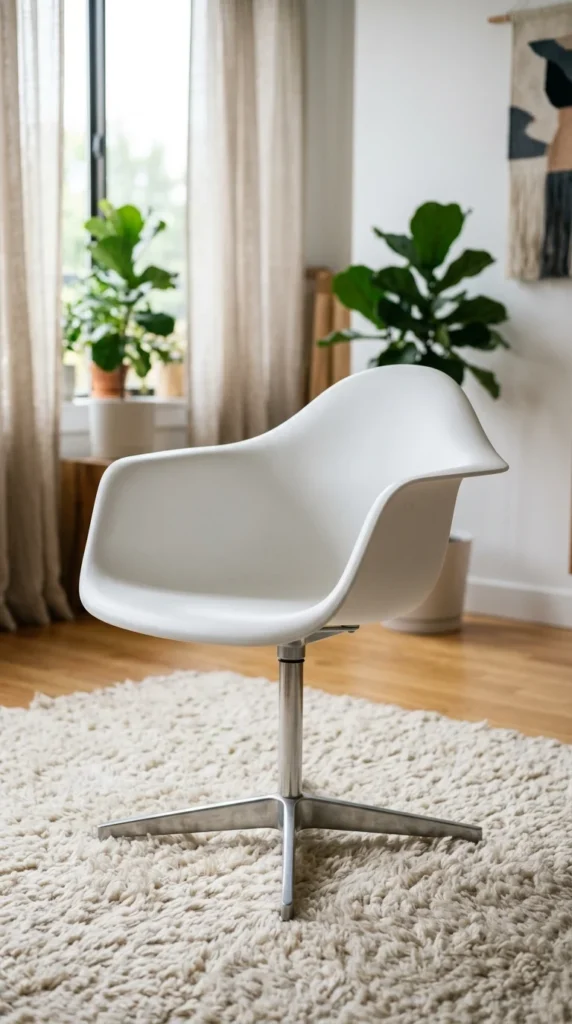
Sometimes, the “bulk” isn’t the seat, but the wide, sprawling legs with wheels. A pedestal base has a much smaller footprint on the floor. If you don’t need to roll around your office, a fixed pedestal chair provides a cleaner, more stationary look that saves several inches of floor space.
22. Upholstered Dining Hybrid
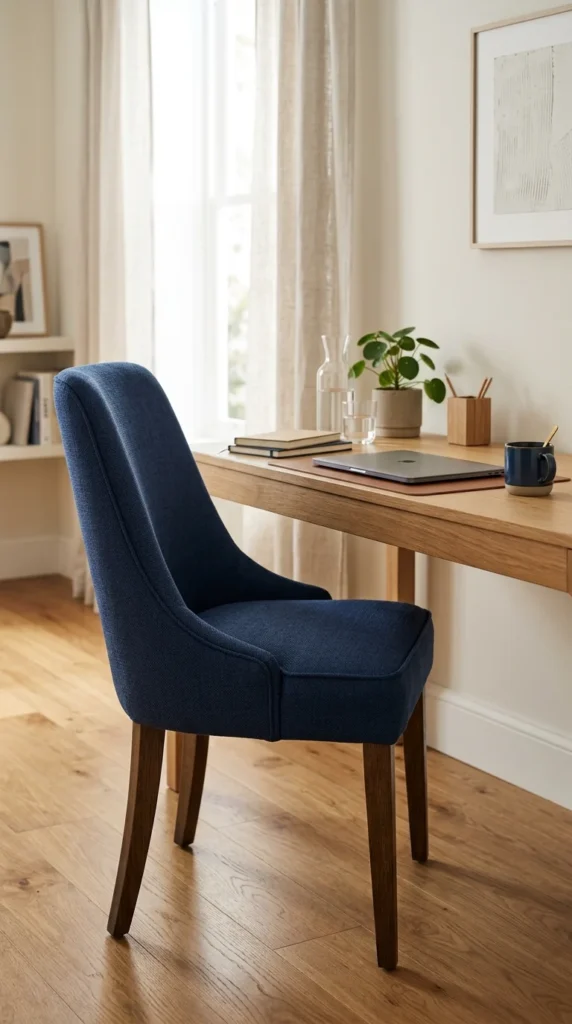
Many high-end dining chairs are now designed with the same ergonomic curves as office chairs. If your “office” is actually the dining table, using a high-quality upholstered dining chair ensures your home stays looking like a home, while still providing the back support needed for a 9-to-5.
23. Balance Stool
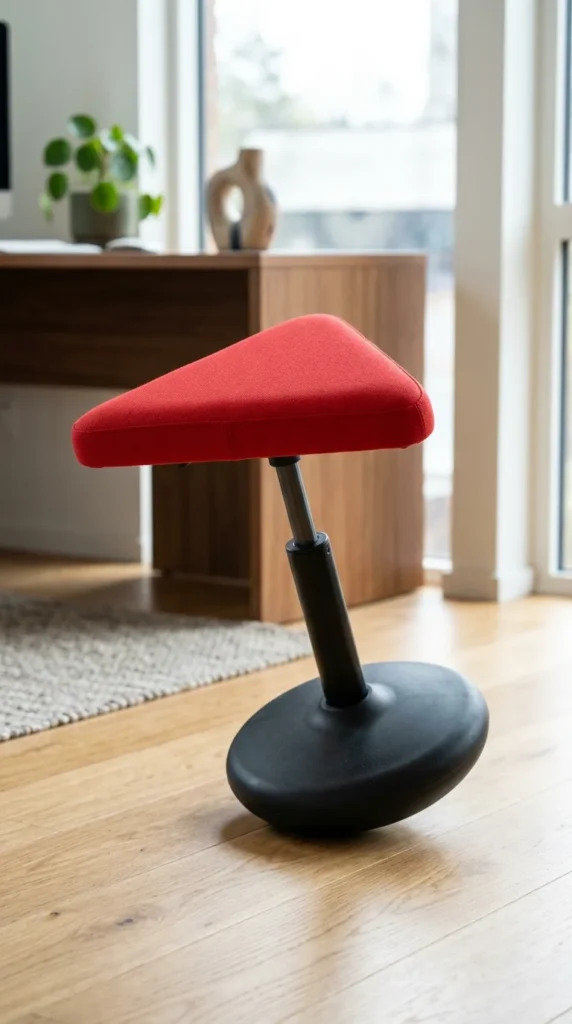
Balance stools (often called “wobble stools”) are the ultimate minimalist seating. They have no back, no arms, and a tiny footprint. They encourage “micro-movements” which keep your muscles active and your mind engaged. When you’re done, they can be tucked under the desk like a small wastebasket.
Finding the Right Fit for Your Space
When selecting your small-space office chair, always measure three things: the height of your desk (to ensure the chair or its arms can slide under), the width of the leg opening of your desk, and the “swing” area (how much room you have to push the chair back to stand up). By choosing one of these 23 ideas, you ensure that your home office remains a place of productivity and comfort, rather than a cramped obstacle course.