
The modern home office is a hub of productivity, but it is often also a chaotic web of charging cables, peripheral wires, and power cords. Nothing kills a creative flow faster than a tangled mess of spaghetti-like wires cluttering your workspace or the frustration of a phone charger sliding behind the desk for the tenth time today.
Cable management isn’t just about aesthetics; it’s about functionality and mental clarity. By utilizing clever cord clips, you can reclaim your desk surface, extend the lifespan of your electronics, and create an environment that fosters focus. Here are 15 clever cord clip ideas to transform your workstation from a cluttered disaster into a streamlined sanctuary.
1. Adhesive Organizers
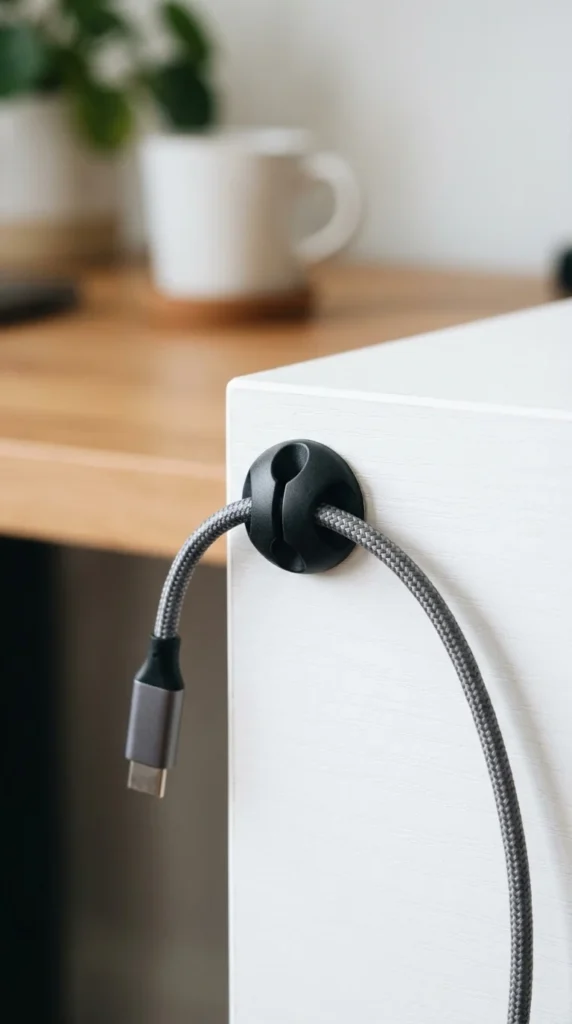
Adhesive cable organizers are the bread and butter of desk management. These small, unobtrusive clips usually feature a peel-and-stick backing that allows you to place them exactly where you need them. They are perfect for the edge of your desk to keep your most-used chargers—like your laptop power cord or phone cable—within arm’s reach. Because they come in various sizes, you can find options that hold a single thin wire or multiple thick cords. The key to success with these is cleaning the surface with alcohol before sticking to ensure a permanent bond.
2. Magnetic Holders
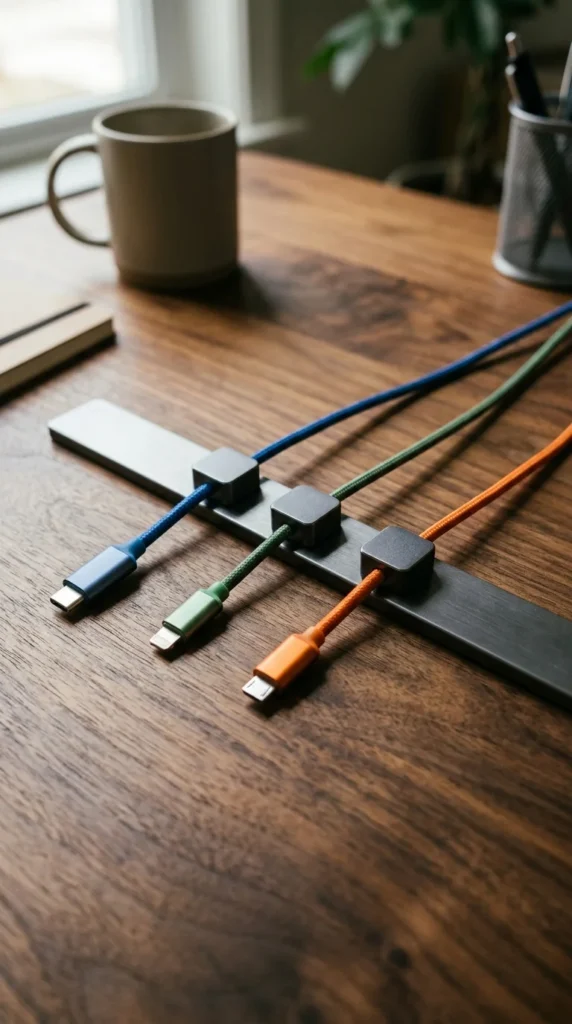
If you want a premium feel and ultimate flexibility, magnetic cable holders are the way to go. These systems typically consist of a magnetic base (which sticks to your desk) and small magnetic collars that you wrap around your cables. When you’re done charging, you simply drop the cable near the base, and it snaps into place. This prevents cables from falling to the floor and allows for a “one-handed” operation that feels incredibly satisfying in a high-end office setup.
3. Under-Desk Clips
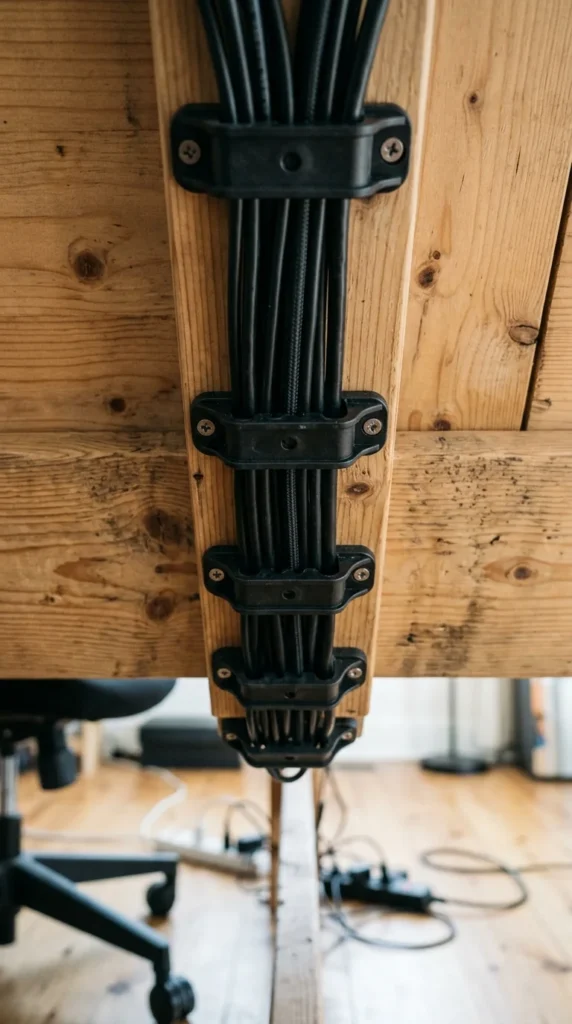
The secret to a truly clean desk is hiding the cables you don’t need to see. Under-desk clips are designed to mount to the underside of your workstation, routing power strips and monitor cables away from your feet and out of sight. Unlike the clips on top of your desk, these are usually larger and sturdier, often featuring a locking mechanism or a “J-hook” design to support the weight of heavy power bricks and thick HDMI cables.
4. Wooden Blocks

For those who prioritize interior design, plastic clips can sometimes feel a bit “cheap.” Wooden cord blocks offer a sustainable and sophisticated alternative. These are often weighted with a heavy metal core so they don’t slide around, and they feature precision-milled slots to hold your cables. They look more like a piece of desk decor than a utility item, making them perfect for executive offices or “clutter-core” aesthetics that favor natural materials.
5. Weighted Bases
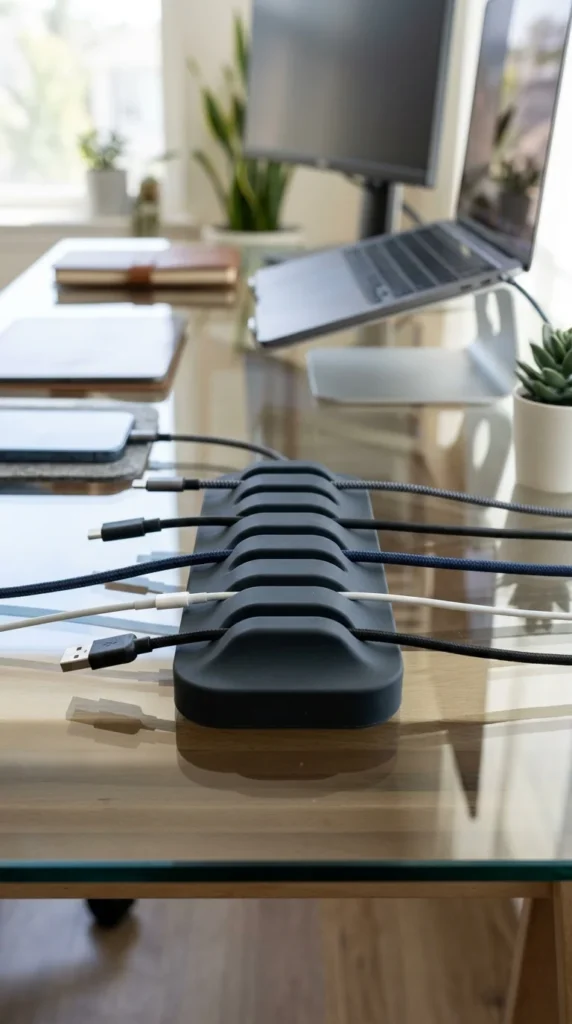
If you have a glass or high-end standing desk and don’t want to use sticky adhesives, weighted cable bases are the perfect solution. These are heavy anchors that sit on your desk surface, using gravity and a non-slip bottom to stay put. They usually have multiple slots of varying widths, allowing you to organize everything from a thin lightning cable to a thick power cord for your monitor. They are easily movable, allowing you to reconfigure your desk layout whenever you like.
6. Silicone Multi-Slots
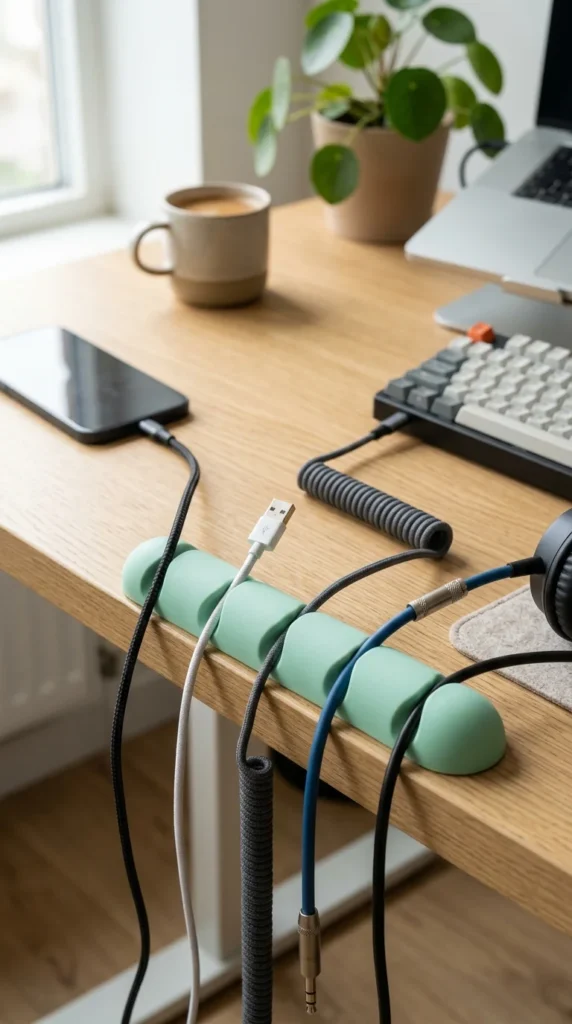
Silicone multi-slot clips are highly versatile because of their flexibility. The soft material won’t scratch your desk or damage your cables. These clips usually feature a long strip with several “teeth” that grip the wires. Because silicone is naturally grippy, these clips are excellent for keeping cables from sliding back and forth even when they aren’t fully snapped in. They come in a rainbow of colors, allowing you to either match your desk or add a pop of personality to your workspace.
7. Leather Wraps

Leather cord clips and wraps bring a touch of old-world craftsmanship to the digital age. These are typically small strips of leather with a metal snap or button. While they are often used for travel, many desk setups incorporate leather loops that can be screwed or stuck to the desk. They are exceptionally durable and actually look better as they age and develop a patina. If you use a leather desk mat, matching leather cord clips create a cohesive and professional look.
8. Spring Clips
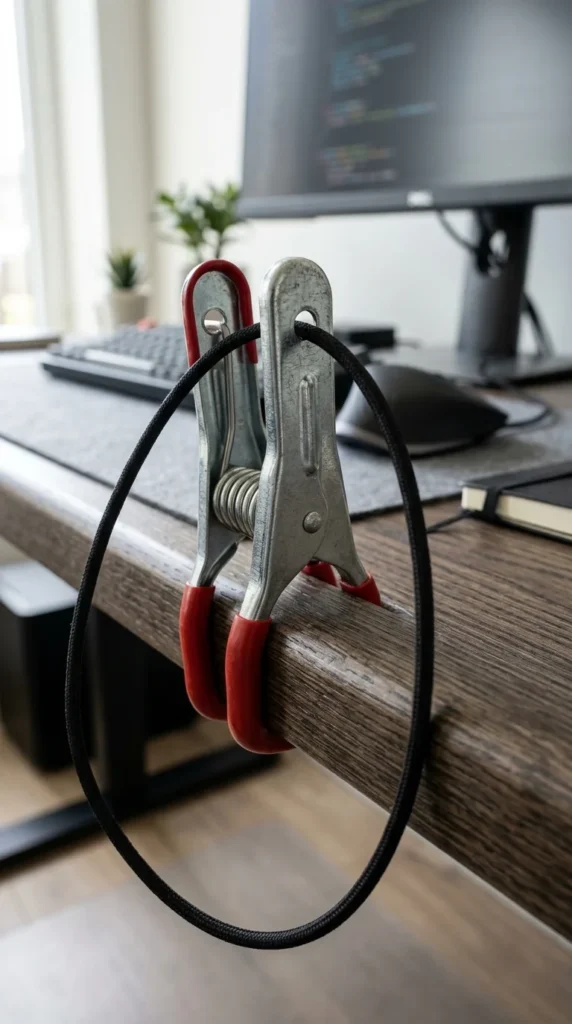
Often borrowed from the world of photography or workshop organization, spring clips are the heavy hitters of cable management. These are ideal for temporary setups or for securing very thick cables that would pop out of standard plastic clips. Some versions are designed specifically for desks, featuring a “clamp” style that attaches to the edge of the table without any glue or screws, making them a favorite for students or those in rented office spaces.
9. Rotating Clips
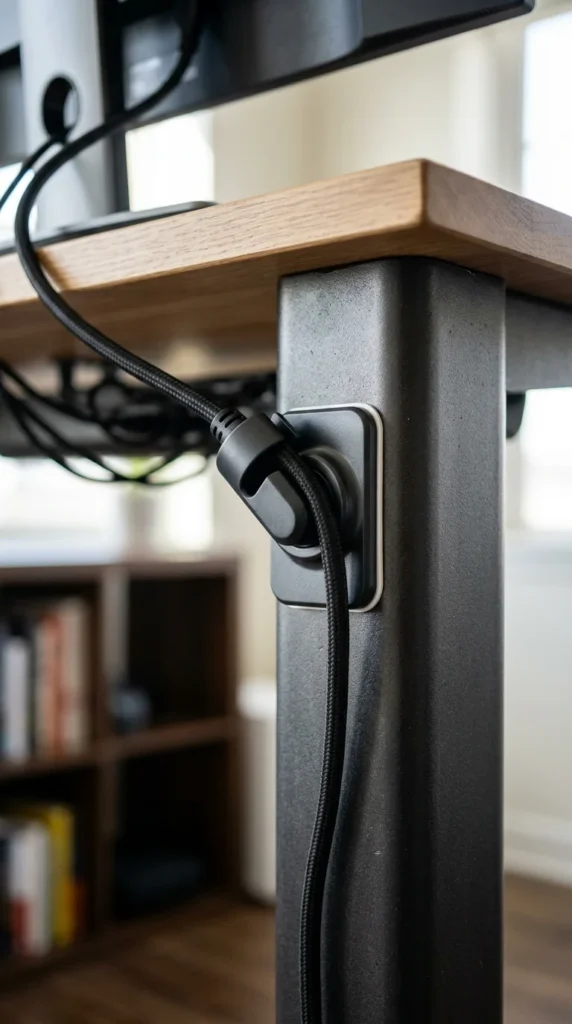
Standard clips only hold cables in one direction, but our desks are rarely that simple. Rotating cable clips feature a 360-degree swivel base, allowing you to route cables around corners, down desk legs, or at odd angles without putting stress on the wire’s internal copper. This is particularly useful for sit-stand desks, where the angle of the cables changes as the desk moves up and down.
10. Heavy-Duty Clamps
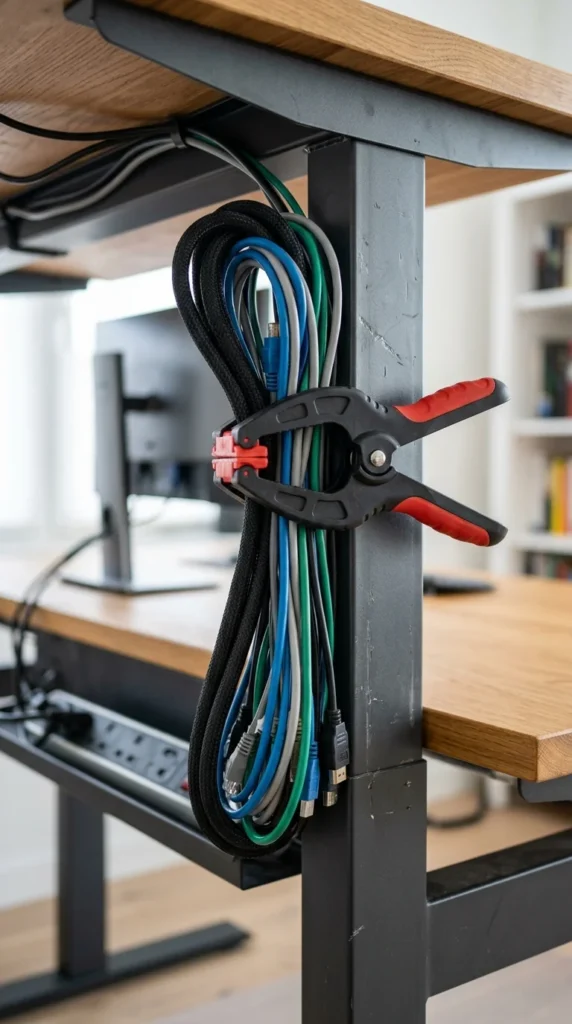
When you have a “command center” with multiple monitors, speakers, and external drives, standard clips won’t cut it. Heavy-duty clamps are designed to hold “bundles” of cables. They often feature a ratcheting mechanism that allows you to tighten the clamp around the wires, ensuring they don’t budge. These are best utilized on the frame of the desk or the back of a monitor arm to keep the heavy lifting out of sight.
11. Decorative Animals
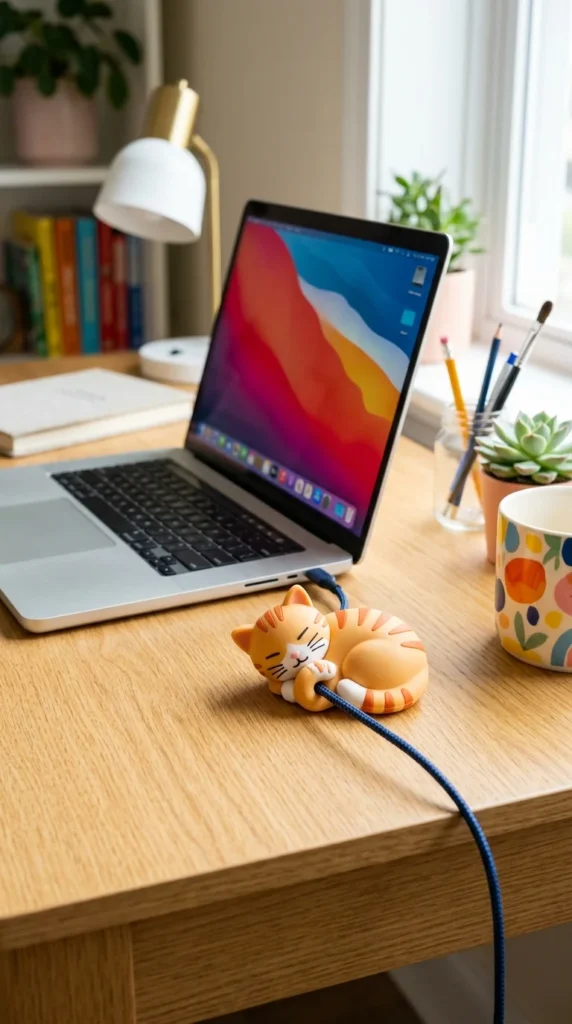
Cable management doesn’t have to be boring. Decorative clips, often shaped like animals, food, or geometric art, add a whimsical touch to your home office. These function exactly like silicone clips but serve as a conversation piece. They are particularly popular for “cozy” gaming setups or creative studios where the environment is meant to inspire joy and playfulness.
12. Minimalist Clear Clips

If your goal is for the cable management to be completely invisible, clear acrylic clips are your best friend. These are made from transparent plastic that disappears against almost any background. When used on white or light-colored desks, they provide a very “tech-forward” and clean look. They are perfect for routing cables along the wall or the side of a white desk where you want the focus to remain on your hardware, not the organization tools.
13. Integrated Sleeves
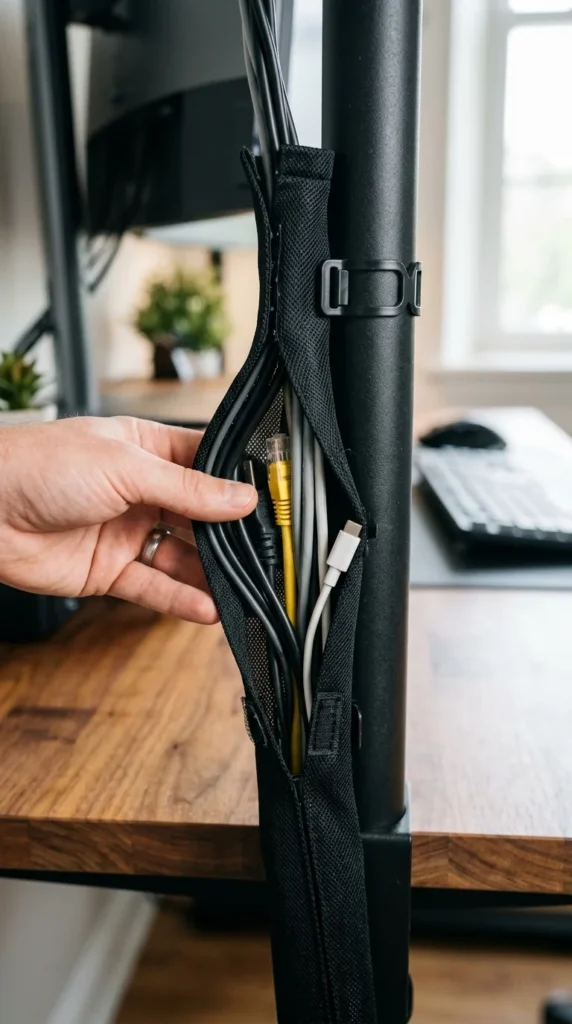
Some advanced cord clips are integrated into cable sleeves. These systems allow you to group all your wires into one “trunk” and then use integrated clips to anchor that trunk to the desk. This is the ultimate solution for the dreaded “cable forest” under the desk. By consolidating five or six wires into one neat sleeve and clipping it to a desk leg, you create a streamlined look that is also much easier to clean around.
14. Vertical Surface Clips
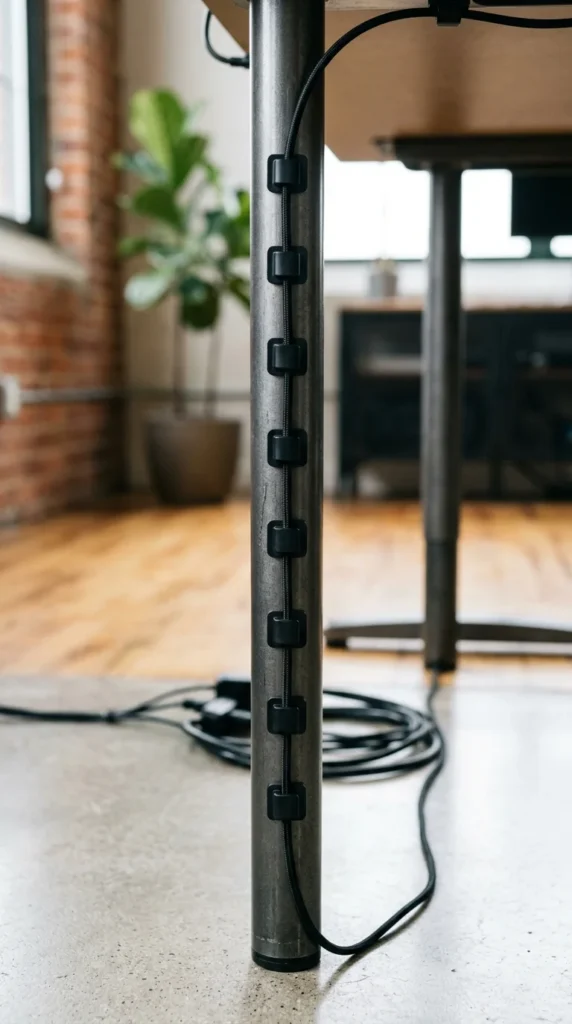
Most people think of cord clips for the horizontal surface of the desk, but vertical management is just as important. Vertical surface clips are designed with extra-strong adhesive or magnets to hold the weight of a cable as it hangs toward the floor. By clipping your cables to the legs of your desk, you prevent them from dangling in the “leg zone,” where they can be kicked or caught on your office chair wheels.
15. Portable Travel Clips
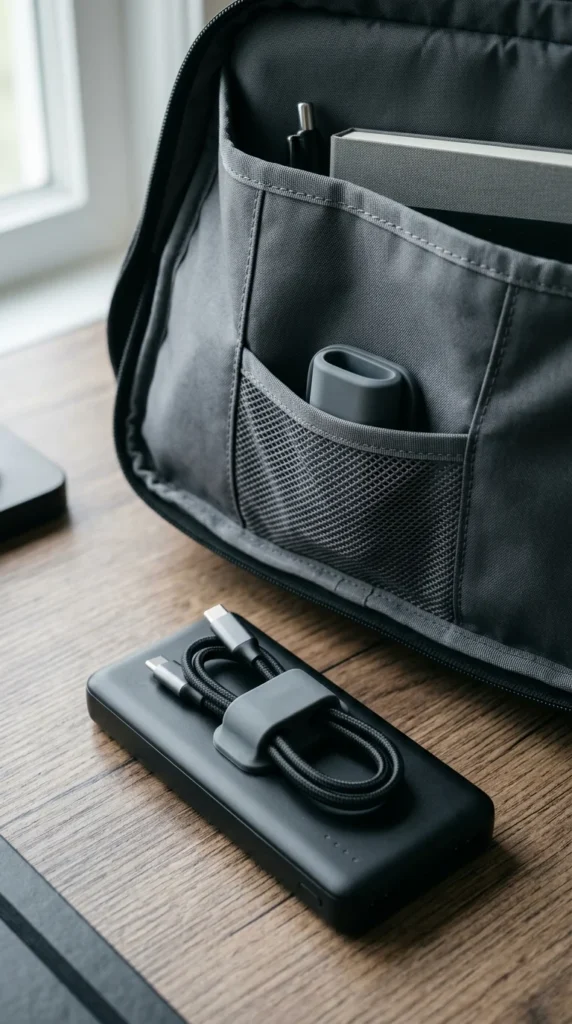
For the hybrid worker who moves between a home office, a coffee shop, and a corporate headquarters, portable clips are essential. These are often “re-stickable” or use a suction/friction method to stay in place. They allow you to set up a temporary, organized workstation anywhere. Some even double as phone stands, providing multi-functional utility for the minimalist traveler.