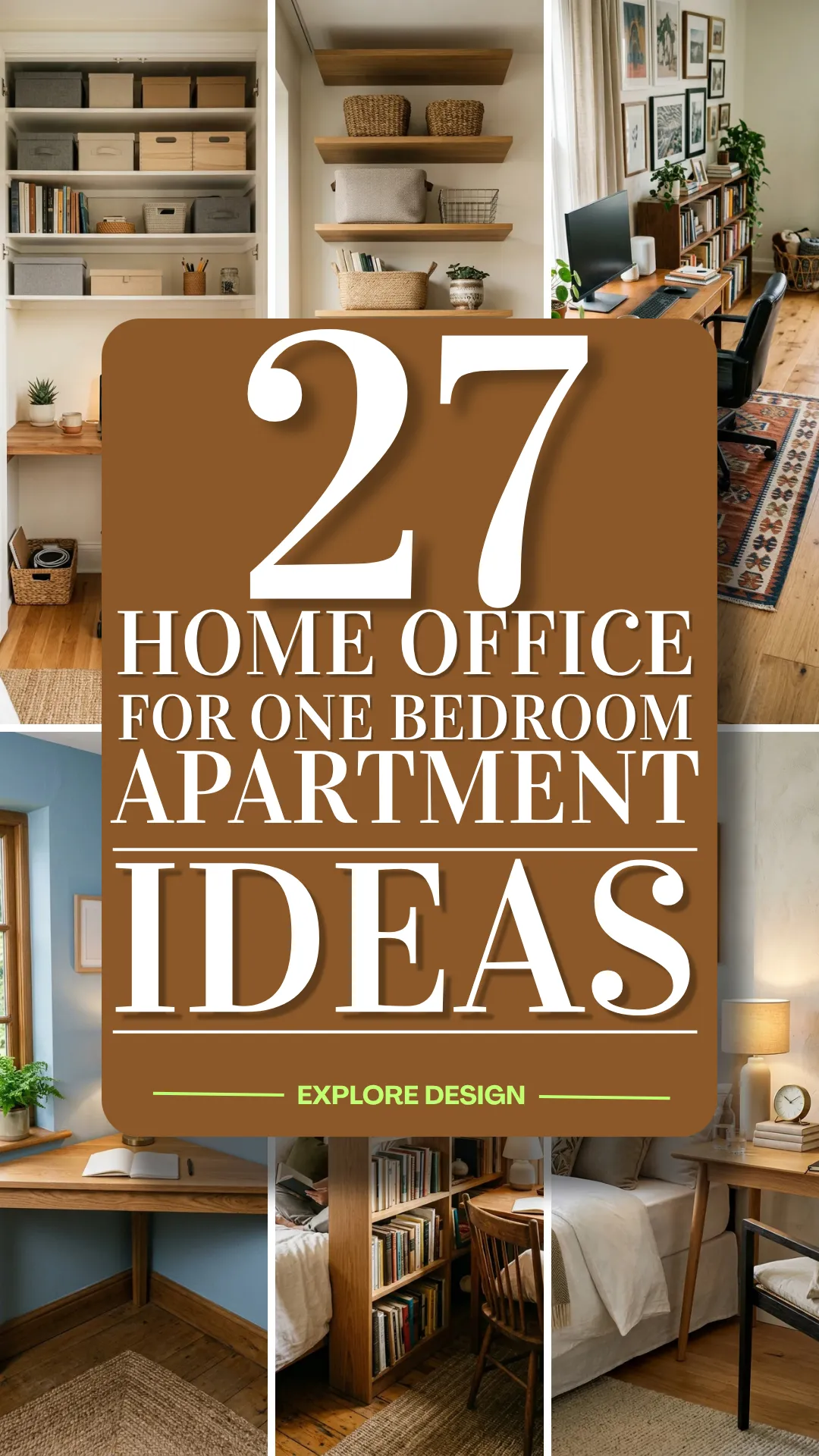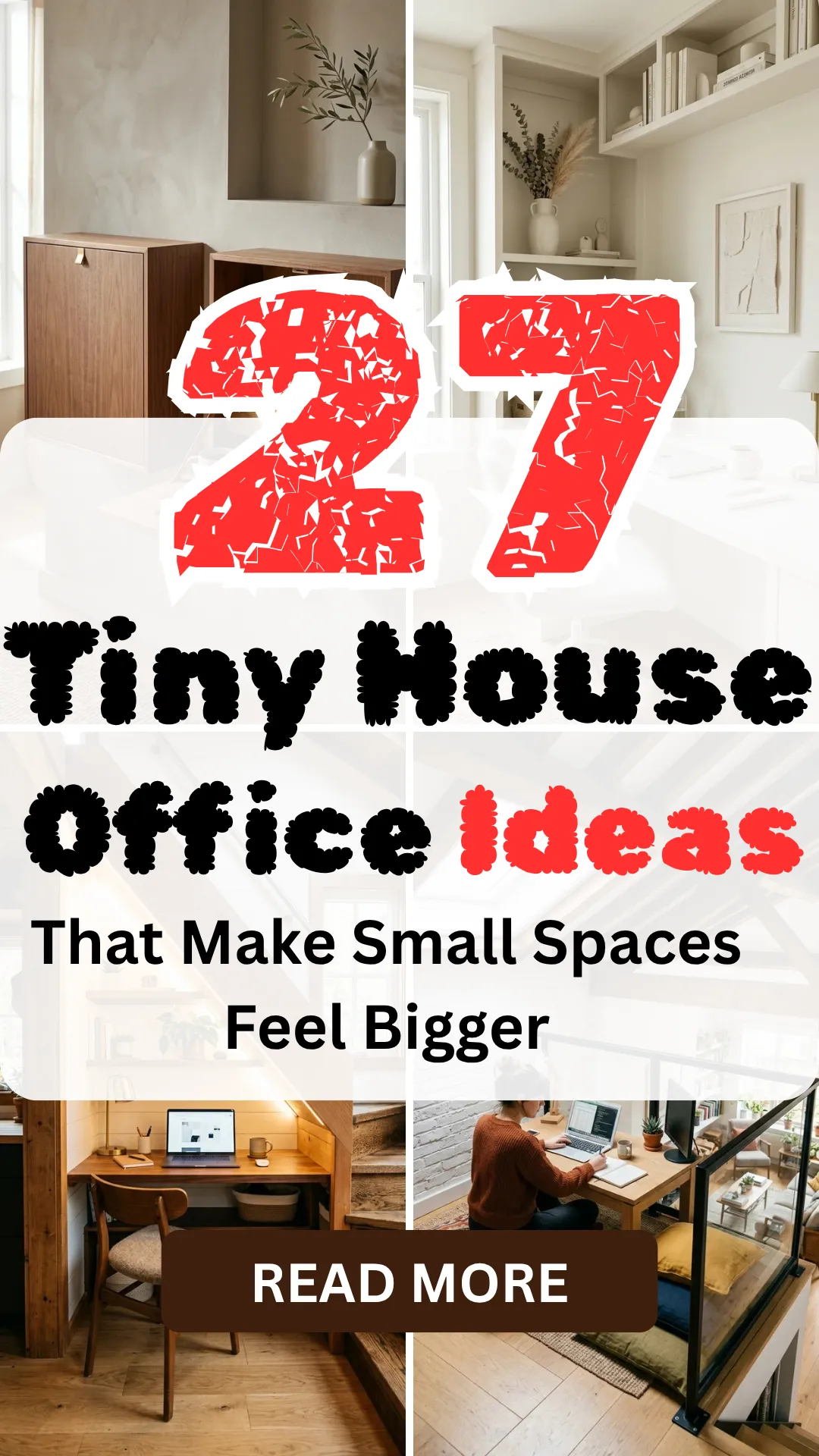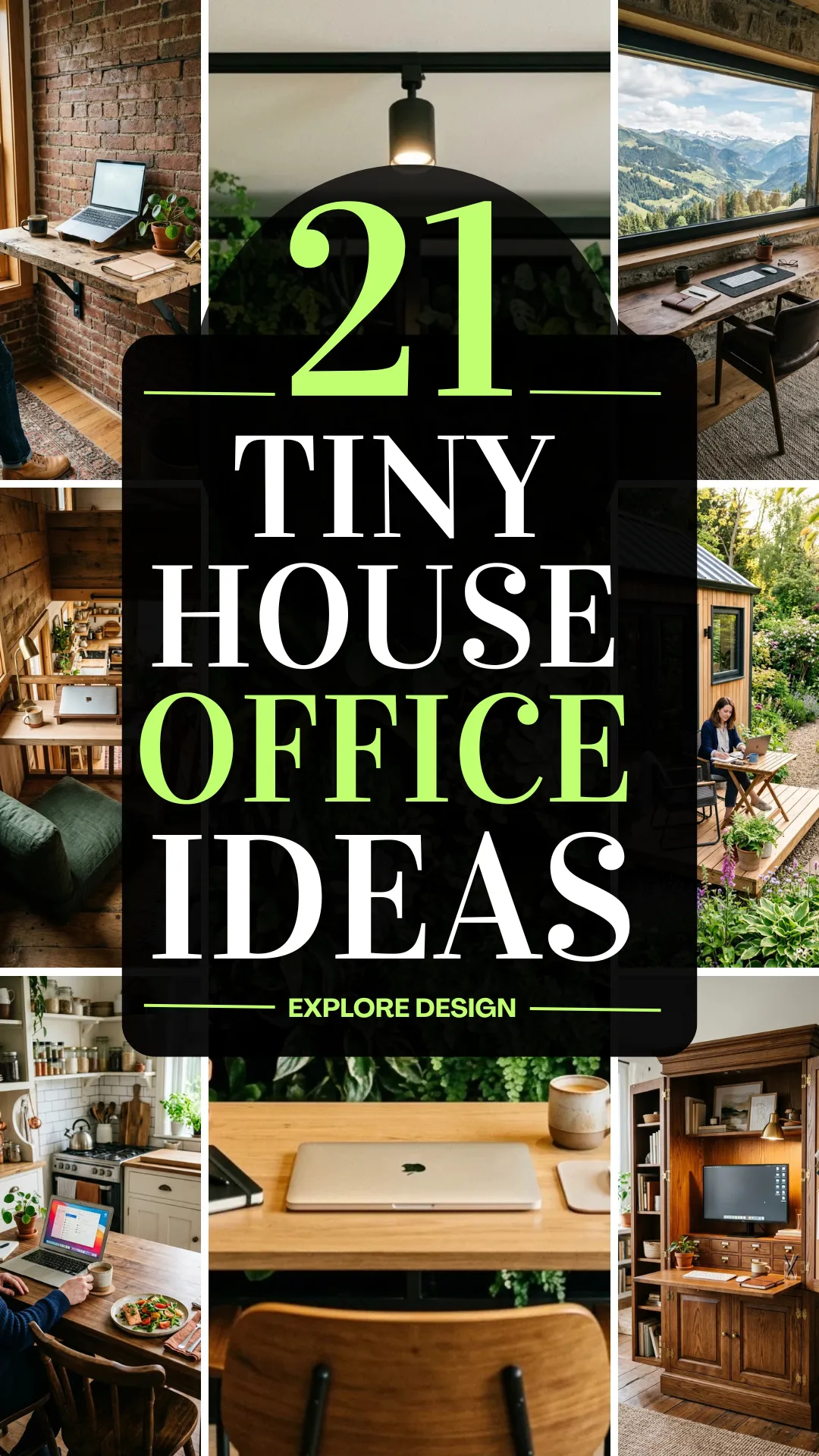

The modern professional landscape has shifted dramatically, turning the dream of working from home into a daily reality for millions. However, not everyone has a spare room to dedicate to a sprawling executive suite. The challenge today isn’t just about working; it’s about finding the space to do it. This is where the “office nook” comes into play—a masterclass in spatial efficiency that proves you don’t need a lot of square footage to be highly productive.
Whether you live in a tiny city apartment or a suburban house where every room is already claimed, these 15 creative home office nook ideas will help you reclaim unused corners and transform them into inspiring workspaces.
1. Closet Conversion
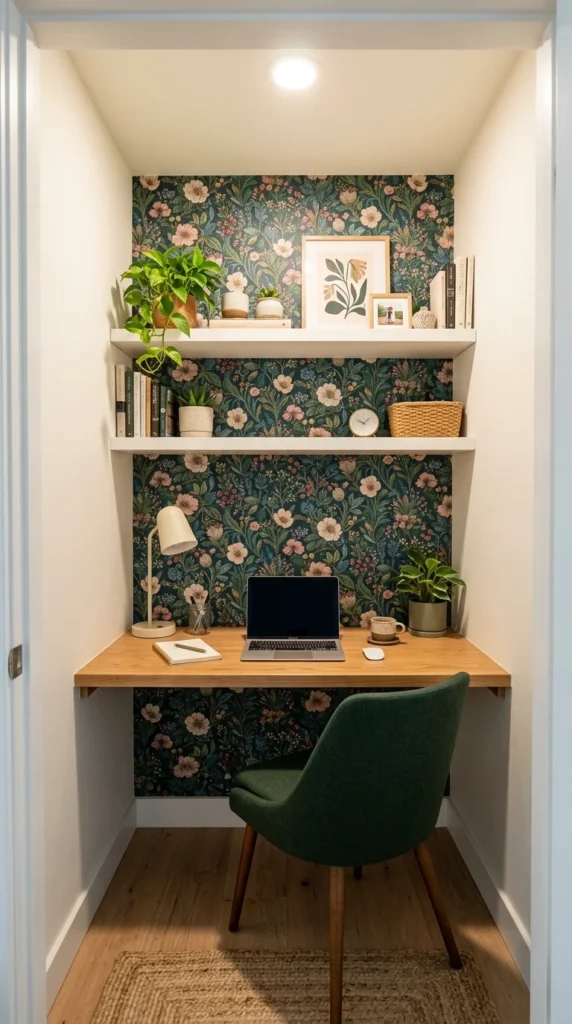
Affectionately known as the “Cloffice,” converting a standard reach-in or walk-in closet is the ultimate space-saving hack. By removing the hanging rods and sliding doors, you create a recessed architectural feature that can be customized with a desktop and shelving. The best part? If you keep the doors, you can simply close them at the end of the day, effectively “leaving” work and hiding your computer and papers from view.
2. Under-Stairs Space
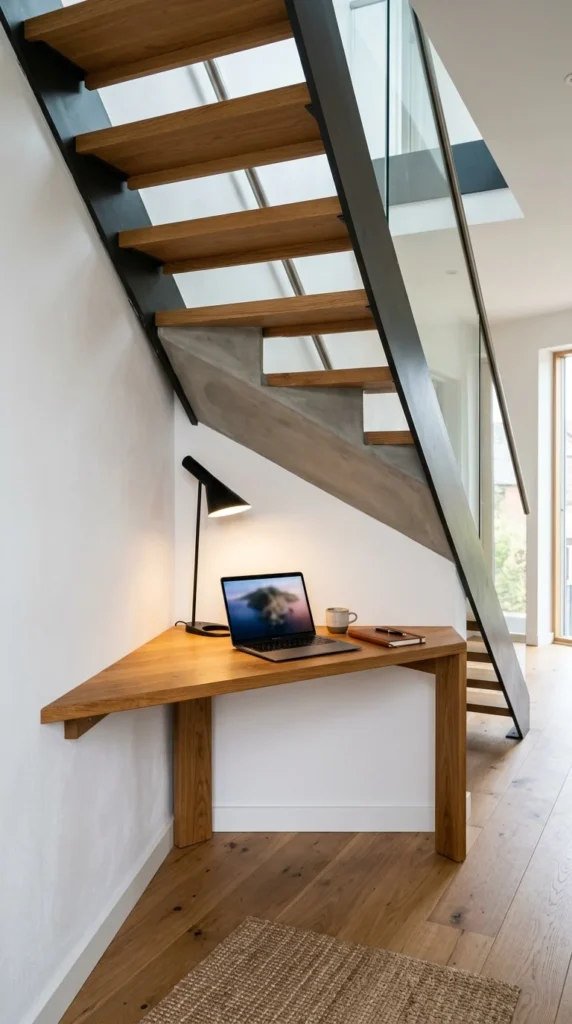
The “Harry Potter” space under the stairs is often neglected or used as a cluttered storage dump. However, its unique geometry makes it perfect for a cozy workstation. By installing a custom-fit desk that follows the slope of the stairs, you turn dead space into a focal point. Use vertical wall organizers to maximize the height at the tallest end of the nook.
3. Window Nook
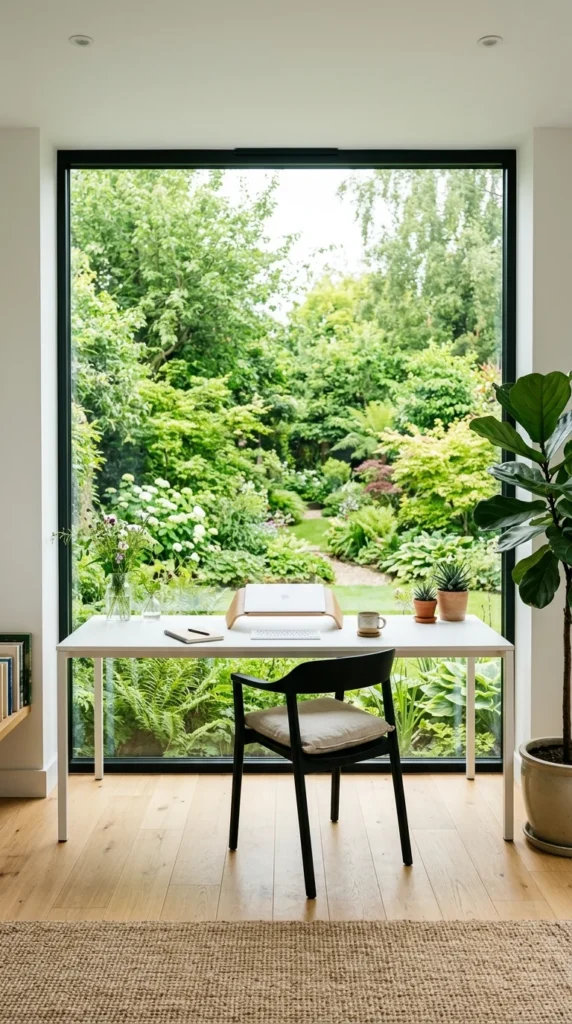
Positioning your desk directly in front of a window provides the best light source possible: Vitamin D. Natural light is proven to boost mood and productivity. A window nook can be as simple as a slender console table placed against the glass or a built-in “bridge” desk that connects two flanking bookshelves. It offers a “view with a room,” keeping you connected to the outside world while you focus.
4. Hallway Command
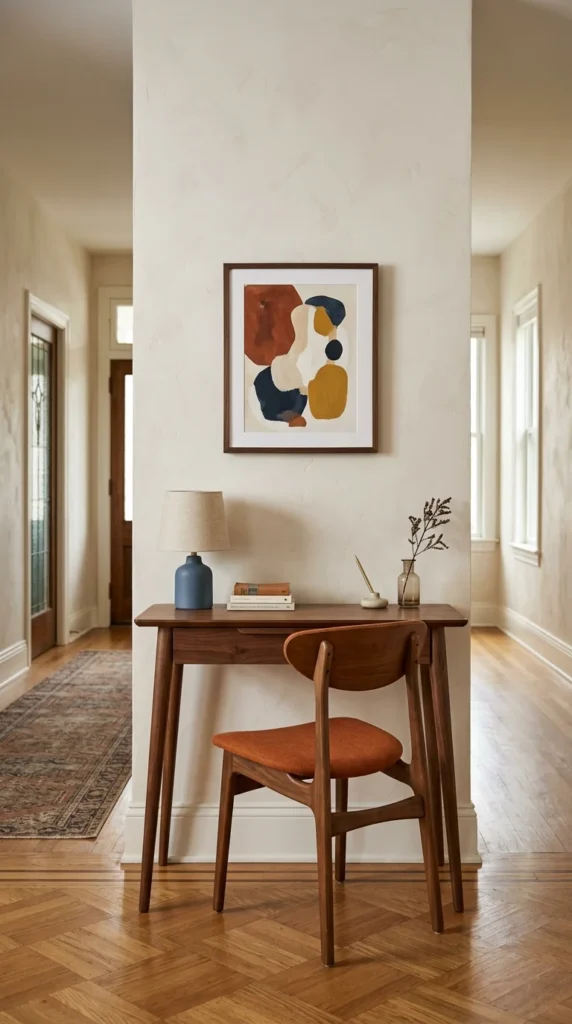
Wide hallways are often wasted transitions. If your corridor has at least 36 to 48 inches of width, you can easily install a shallow “command center.” Choose a desk with a depth of no more than 18 inches to ensure the walkway remains clear. This setup works perfectly for those who use laptops and don’t require heavy equipment.
5. Floating Desk
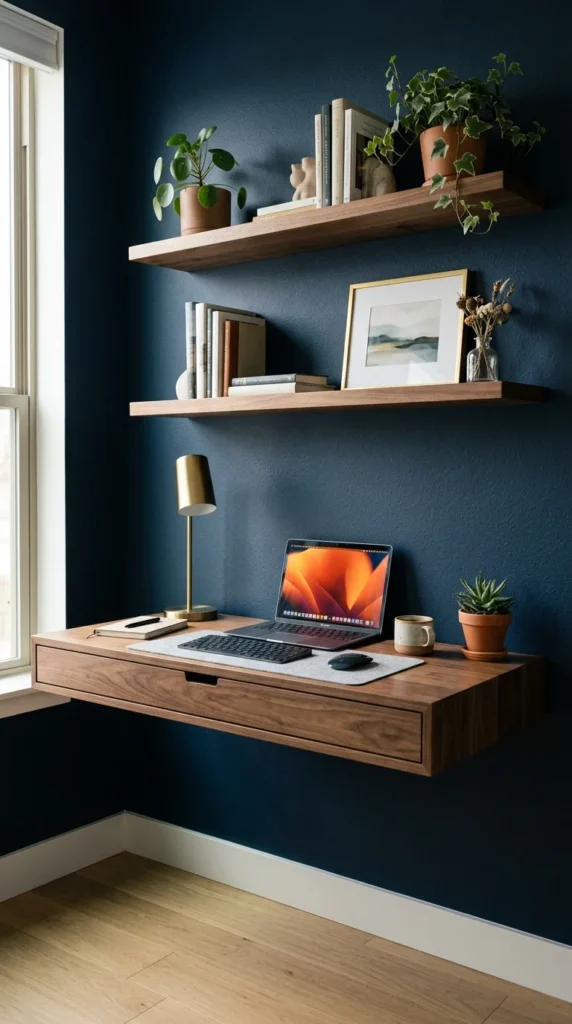
To make a small room feel larger, you want to keep as much floor space visible as possible. A floating desk—mounted directly to the wall studs—eliminates the “visual noise” of table legs. This creates a minimalist, airy feel that is perfect for bedroom corners or living room alcoves. It also makes vacuuming much easier!
6. Kitchen Corner
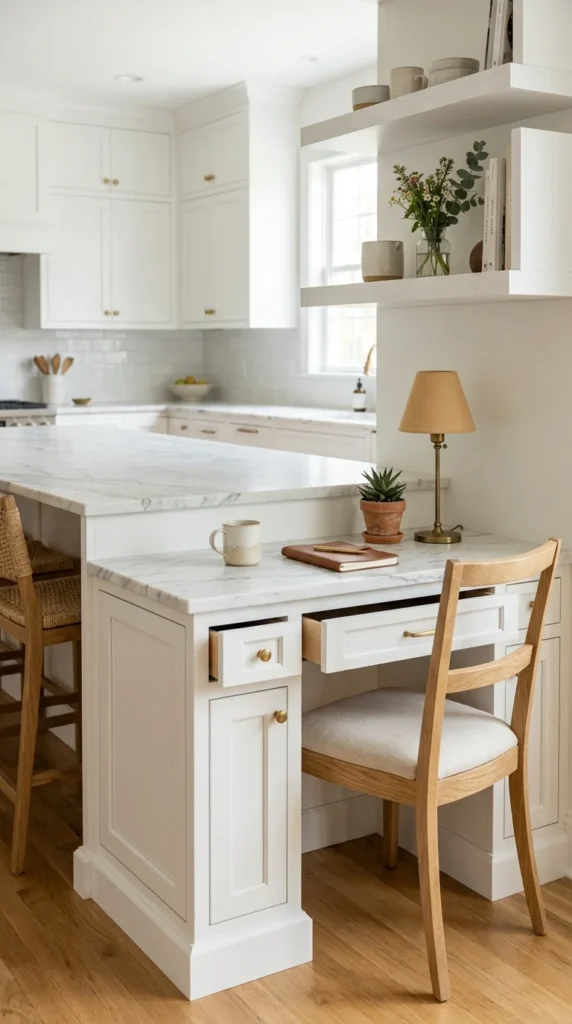
The kitchen is the heart of the home, making it a convenient spot for a “drop zone” or a light-duty office. By extending the kitchen cabinetry or countertop into a lower seated height at the end of a run, you create a seamless transition from meal prep to email checking. It’s ideal for parents who need to keep an eye on dinner while finishing up a project.
7. Attic Eaves
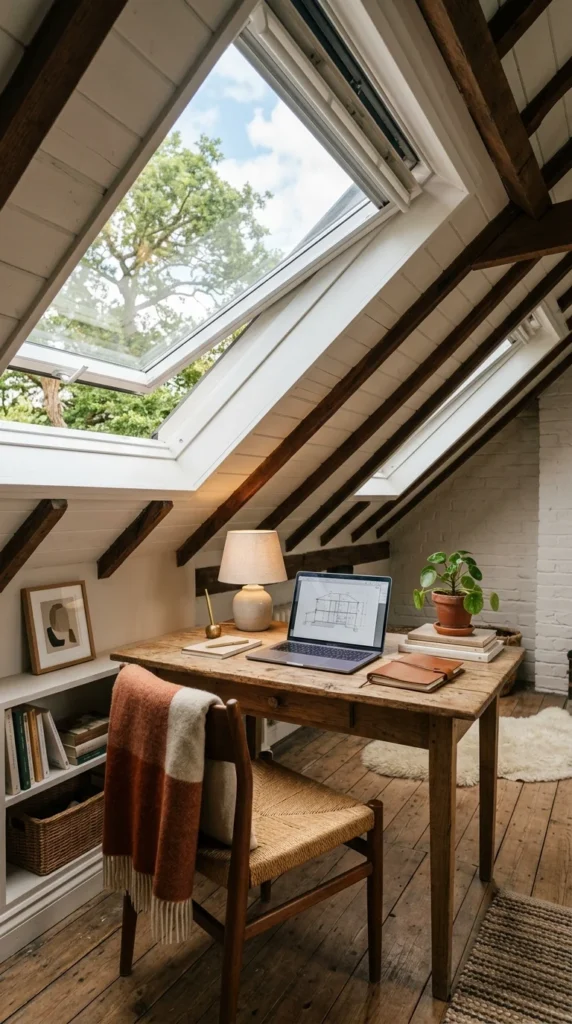
Attics often have awkward, low-ceiling areas known as eaves that aren’t suitable for walking. However, since you sit while working, these areas are prime real estate for a desk. Tucking your workspace into the eaves creates a “cockpit” feel that is incredibly private and quiet, away from the hustle and bustle of the lower floors.
8. Bedroom Alcove
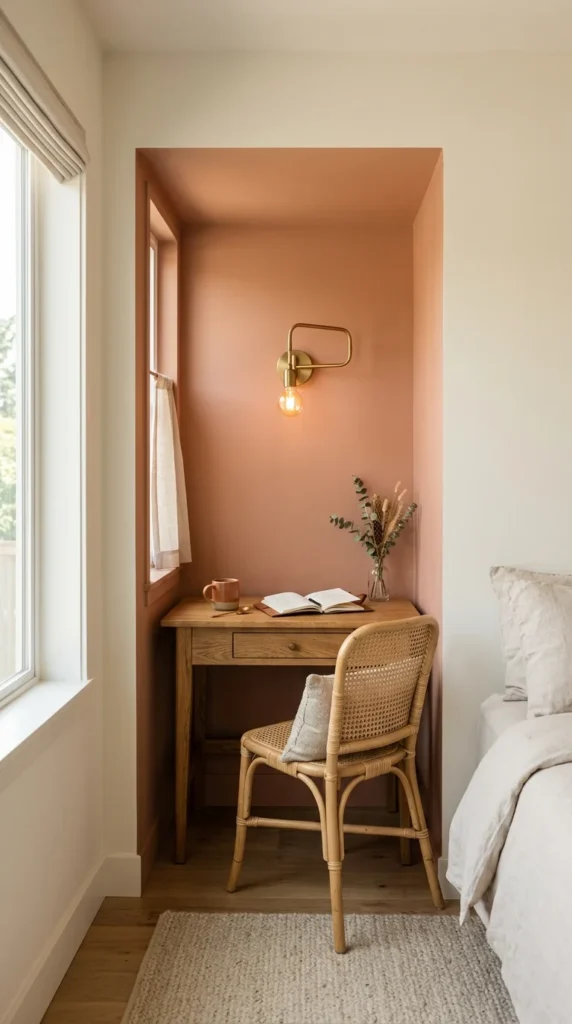
If your bedroom has an architectural quirk like an alcove or a space between a wardrobe and the wall, don’t let it go to waste. You can define the “work zone” in a bedroom by painting the alcove a different color or using a bold wallpaper. This visual separation helps keep the “rest” and “work” areas of the room distinct, which is vital for mental health.
9. Room Divider
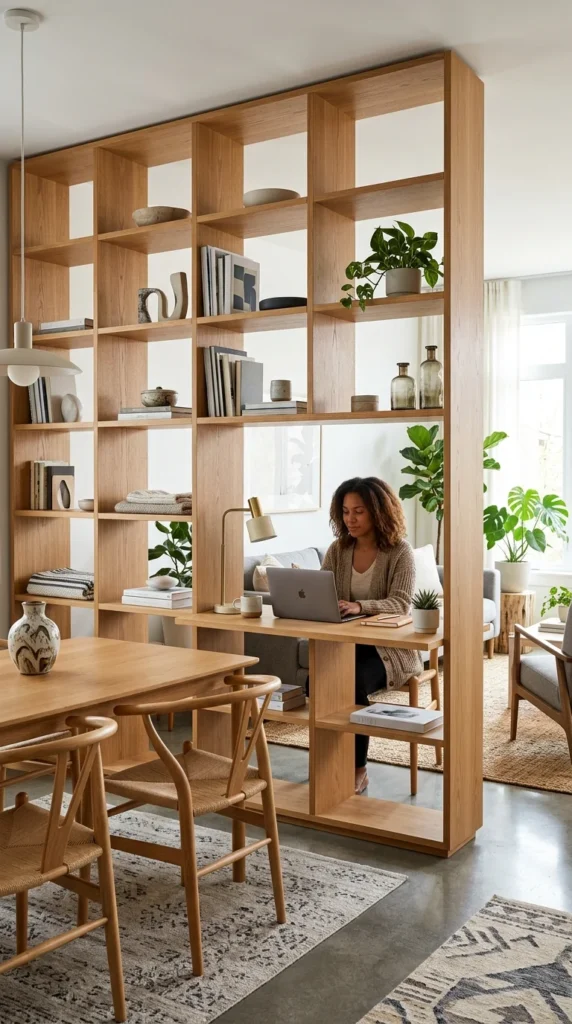
Sometimes you have to create a nook where one doesn’t exist. Using a double-sided open bookshelf as a room divider allows you to carve out a dedicated office area in a large open-plan room. Use the lower shelves for a pull-out desk surface or a fixed desk, while the upper shelves provide storage and act as a privacy screen.
10. Landing Area
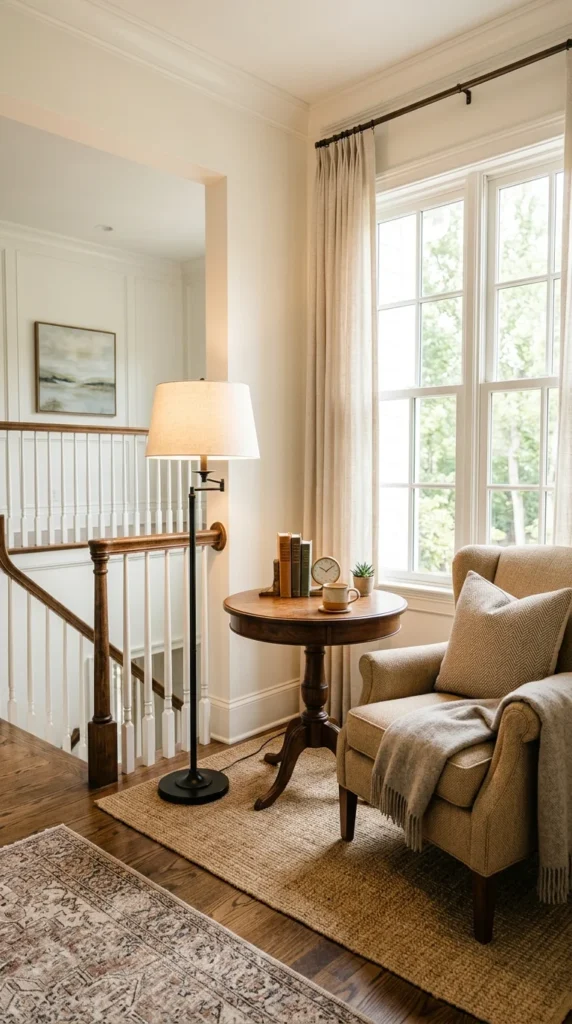
The landing at the top of the stairs is frequently treated as a “no-man’s land.” If yours is large enough to fit a small armchair, it’s large enough for a desk. Because landings are usually separated from the main living areas, they offer a surprising amount of peace and quiet for deep work sessions.
11. Entryway Console
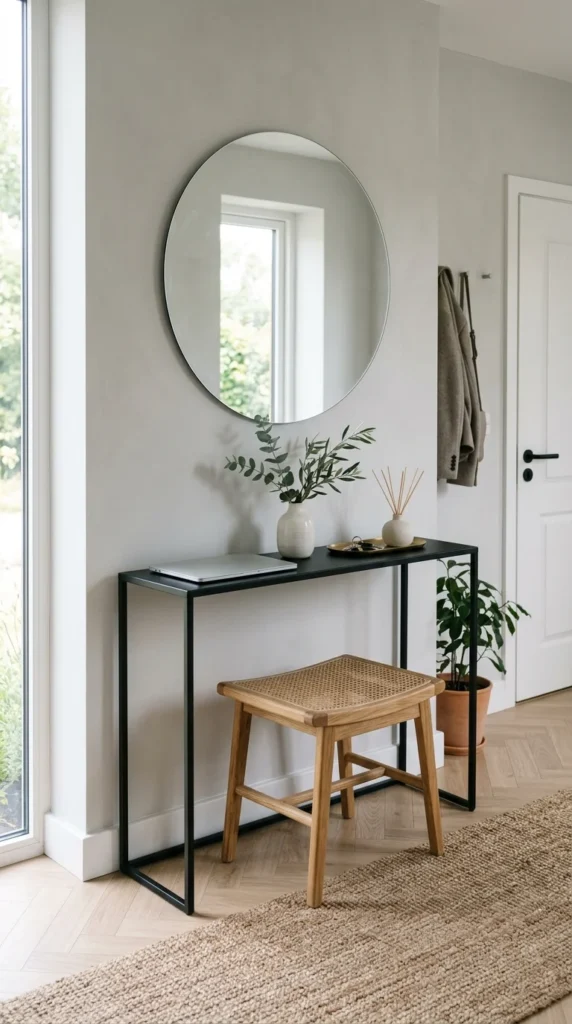
For those who only need a workspace for an hour or two a day, an entryway console can pull double duty. During the day, it’s your laptop station; in the evening, it’s the place where you drop your keys and mail. Choose a stool that can be tucked completely under the table to keep the entryway clear for traffic.
12. Corner Shelf

Don’t have room for a full desk? A corner shelf might be the answer. By mounting a sturdy, triangular shelf into a corner at elbow height, you create a minimalist standing desk. It occupies virtually zero floor space and forces you to stay organized by limiting the amount of surface area available for clutter.
13. Fold-Down Desk
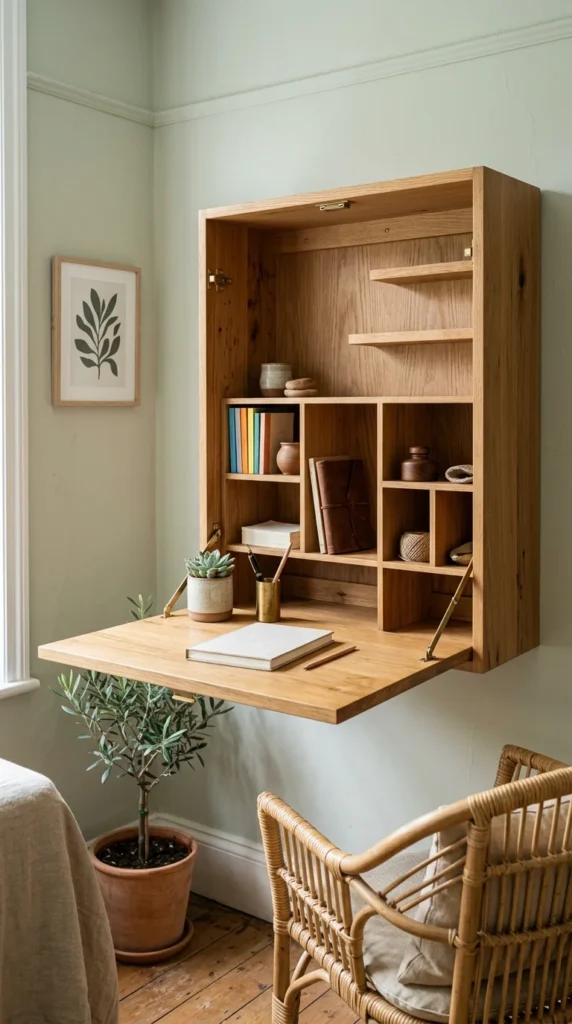
The fold-down or “Murphy” desk is the ultimate “now you see it, now you don’t” solution. When closed, it looks like a simple cabinet or a piece of wall art. When opened, it provides a stable work surface and often reveals built-in organizers for pens, notebooks, and chargers. It’s the perfect choice for multi-functional rooms.
14. Double-Duty Vanity
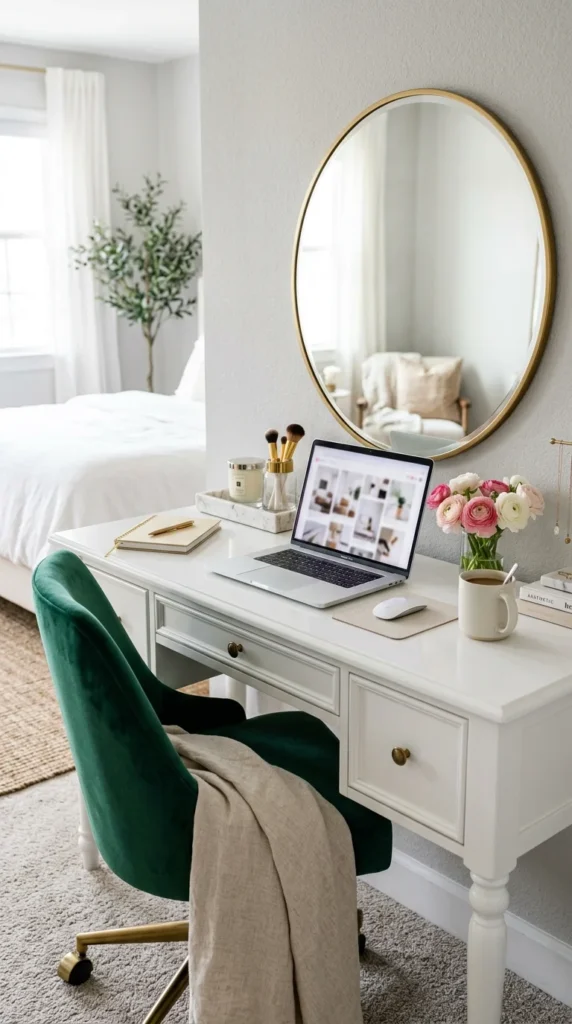
If you already have a vanity or dressing table in your bedroom, consider upgrading it to a double-duty station. By choosing a slightly larger surface and ensuring you have an ergonomic chair that fits the aesthetic, you can use the space for your morning routine and your 9-to-5. This maximizes furniture utility in small apartments.
15. Living Room Niche
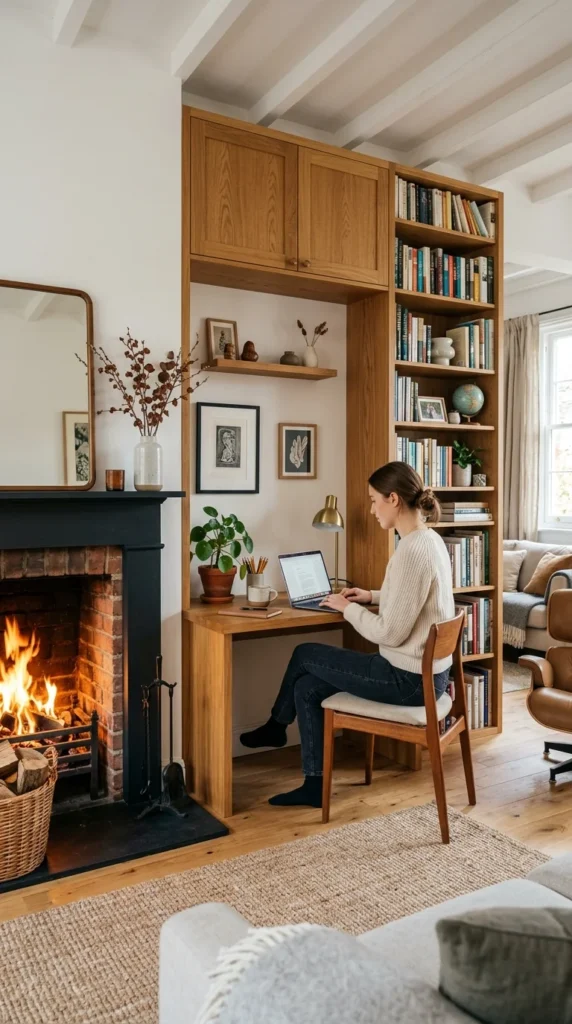
Most living rooms have a “dead” corner—perhaps next to the fireplace or beside a large media console. By integrating a small desk that matches the material or color of your existing furniture, the office nook feels like a deliberate part of the interior design rather than an afterthought. Use a decorative chair that complements your sofa to help the workspace blend in seamlessly.