In an age of constant digital noise and cluttered environments, the philosophy of “less is more” has never been more relevant—especially in our workspaces. A minimalist office isn’t just about aesthetics; it is a strategic tool designed to reduce cognitive load and enhance deep focus. When your environment is stripped of distractions, your brain is free to direct all its energy toward the task at hand.
Creating a focus-friendly workspace requires a delicate balance between functionality and simplicity. It is about choosing every item with intention, ensuring that each piece serves a purpose or provides a specific psychological benefit. Below are 15 minimalist setup ideas to help you reclaim your focus and skyrocket your productivity.
1. Standing Desk
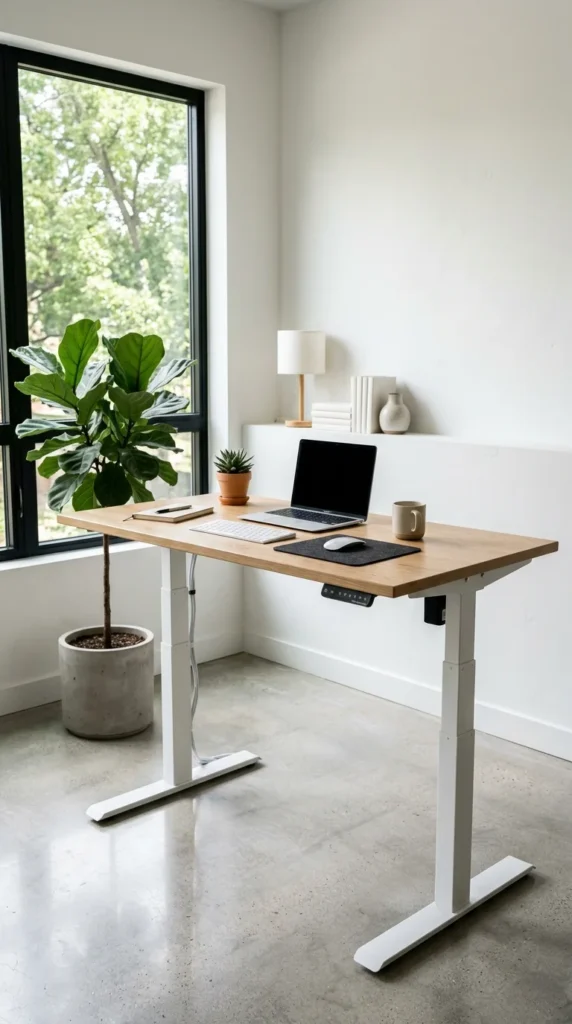
The foundation of any high-productivity setup is the desk itself. A minimalist, height-adjustable standing desk allows you to transition between sitting and standing throughout the day. This movement prevents physical lethargy and keeps the mind sharp. By choosing a desk with a slim profile and no unnecessary drawers or shelving, you force yourself to keep only the essentials on your work surface. The physical act of “rising” to work can also serve as a powerful psychological cue that it is time to perform.
2. Natural Light
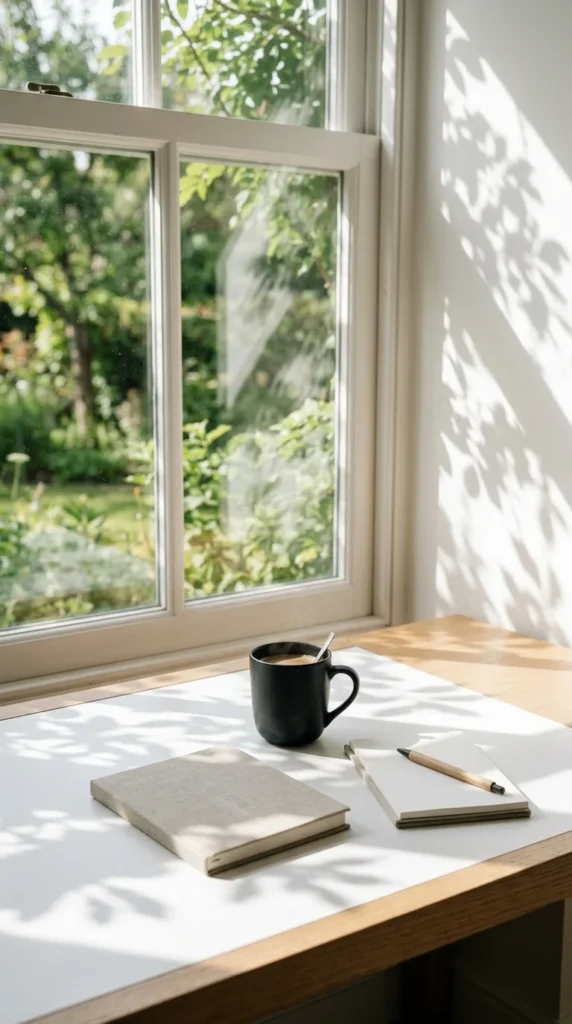
Lighting is one of the most underrated factors in cognitive performance. Position your desk near a window to maximize exposure to natural light. Research shows that natural light improves mood, reduces eye strain, and regulates your circadian rhythm, which helps you stay alert during work hours and sleep better at night. To keep it minimalist, avoid heavy drapes; instead, use sheer rollers or nothing at all to keep the connection with the outside world seamless and airy.
3. Cable Management
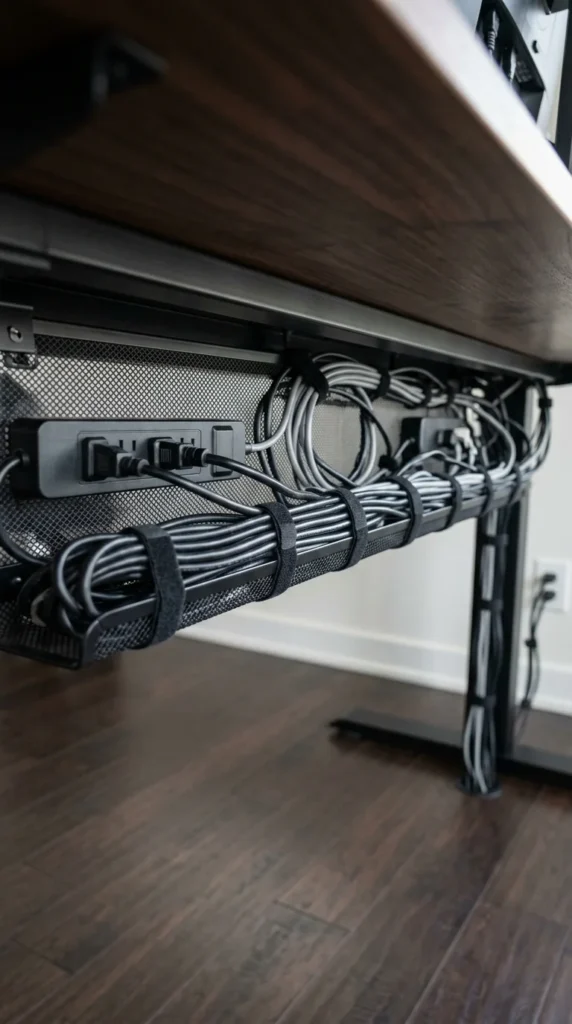
Visual clutter is mental clutter. Nothing ruins a minimalist aesthetic faster than a “nest” of tangled black cables. Use under-desk cable trays, adhesive clips, and cable sleeves to hide every wire from view. A truly focus-friendly setup should look wireless, even if it isn’t. When the floor and desk surface are clear of cord chaos, the brain can settle into a calmer state, free from the subtle stress that “unfinished” or “messy” visuals create.
4. Ergonomic Chair
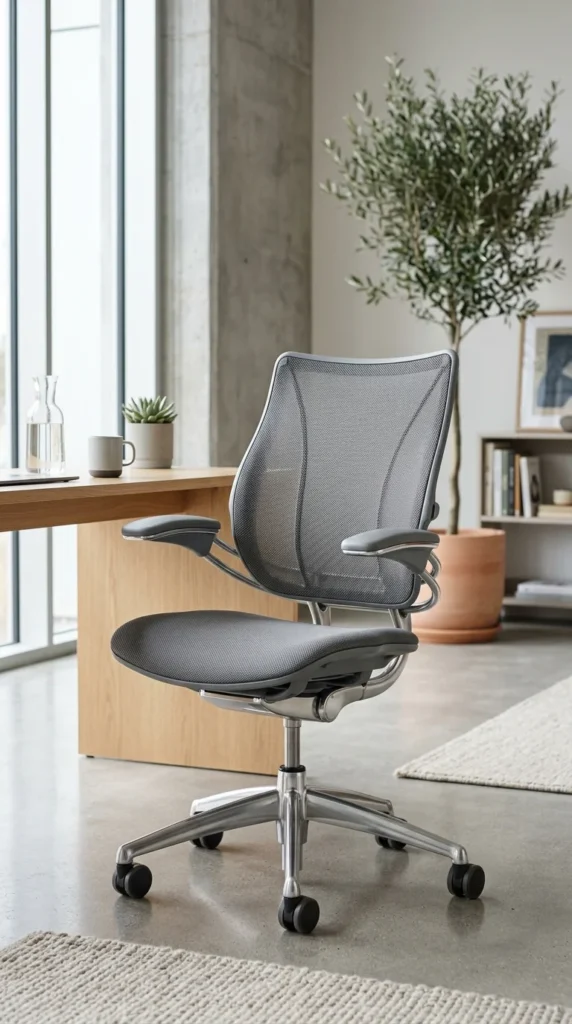
Minimalism doesn’t mean sacrificing comfort. A high-quality ergonomic chair is an investment in your long-term focus. When you aren’t distracted by lower back pain or poor posture, you can stay in the “flow state” for much longer. Look for a design that is visually light—mesh materials and slim frames allow the chair to blend into the room rather than dominating it like a heavy leather executive chair would.
5. Dual Monitor
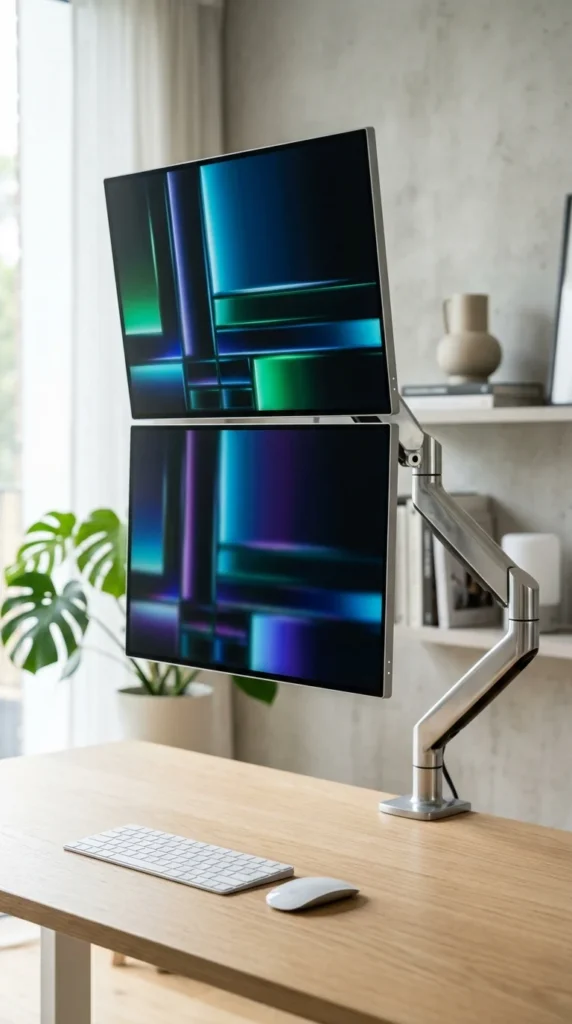
If your work requires multiple windows, a dual-monitor setup on a floating gas-spring arm is essential. By mounting the monitors, you clear up valuable desk “real estate.” This setup allows for better ergonomics (keeping the screens at eye level) and provides a dedicated space for your primary task and your reference materials. The “floating” look contributes to a sense of weightlessness and order in the room.
6. Minimalist Art
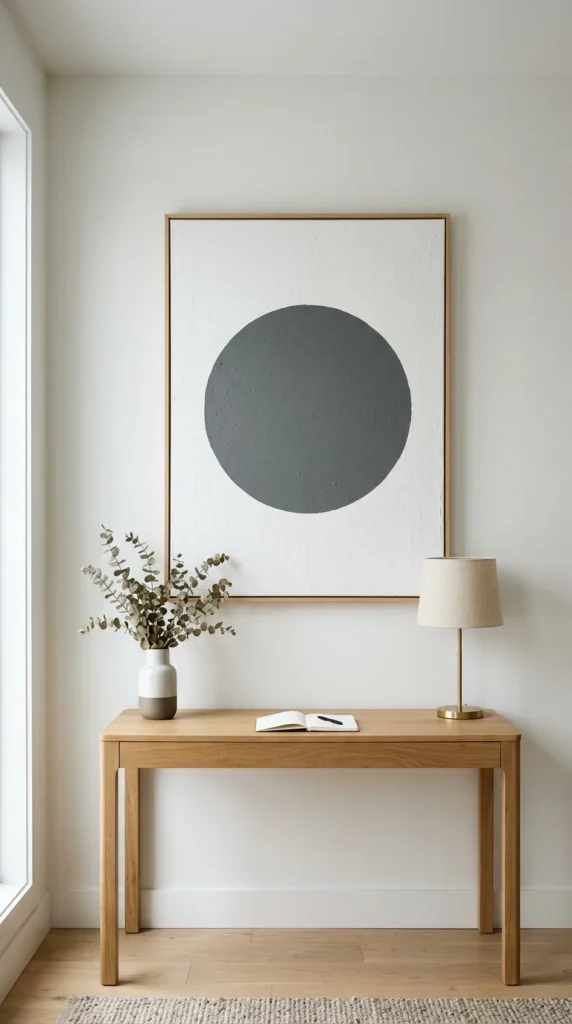
While minimalist offices favor empty walls, a single piece of intentional art can provide a “visual anchor.” Choose something with a neutral palette or simple geometric shapes. Abstract art serves as a place for your eyes to rest when you look away from the screen to think. Avoid busy patterns or vibrant, clashing colors that might overstimulate your senses during a deep work session.
7. Indoor Plants
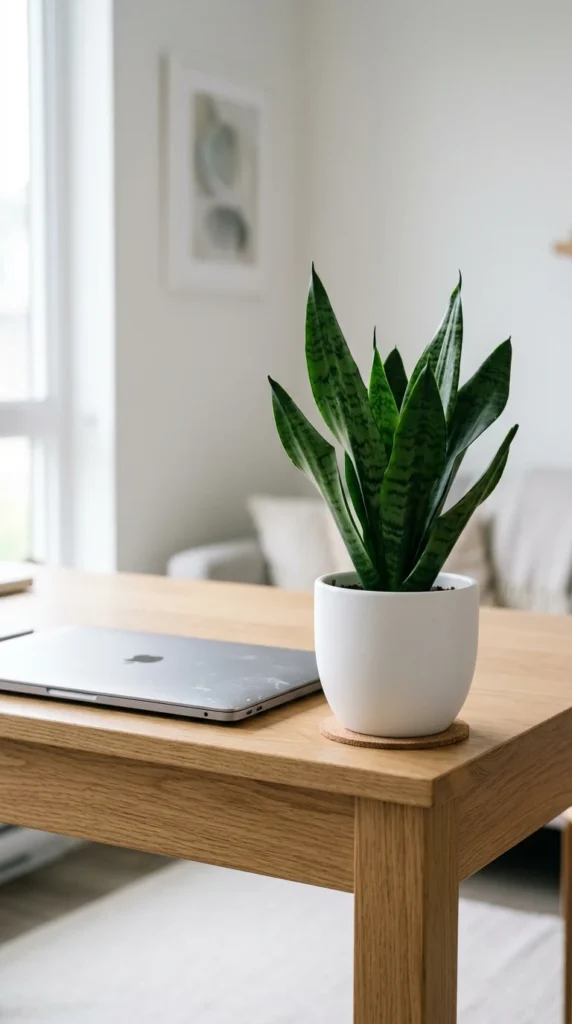
Biophilic design—incorporating nature into the workspace—is proven to reduce stress and increase productivity by up to 15%. A single, hardy plant like a Snake Plant, Pothos, or ZZ Plant adds a touch of life and color without requiring much maintenance. The presence of greenery softens the “hard” edges of technology and provides a calming, organic element to your minimalist environment.
8. Hidden Storage
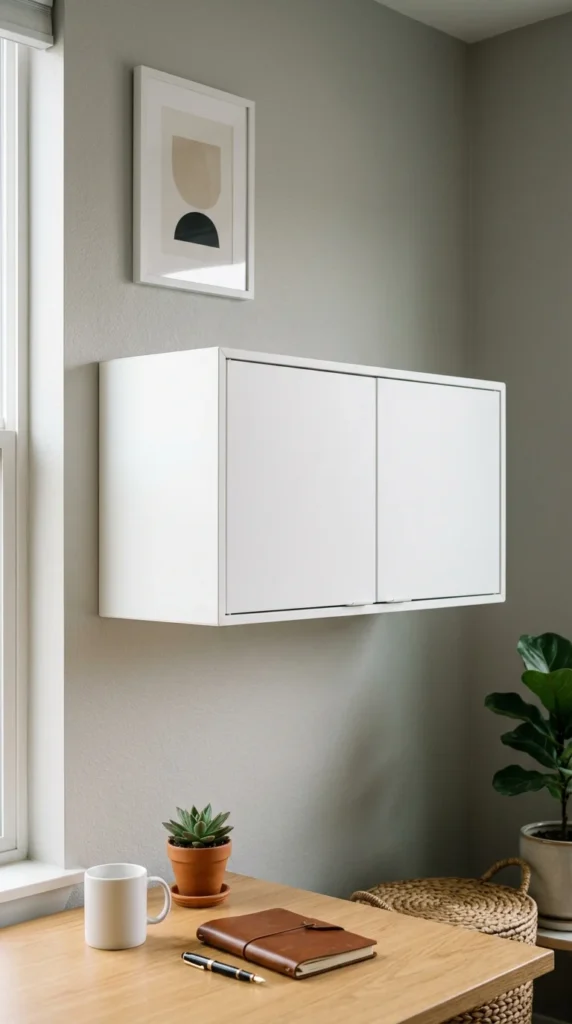
In a minimalist setup, if you don’t use it every hour, it shouldn’t be on your desk. Utilize hidden storage solutions like floating cabinets or desks with integrated slim drawers. By stowing away staplers, pens, and external hard drives, you maintain a “tabula rasa” (blank slate) on your desktop. This ensures that every time you sit down to work, you are starting with a fresh, uncluttered mind.
9. Task Lighting
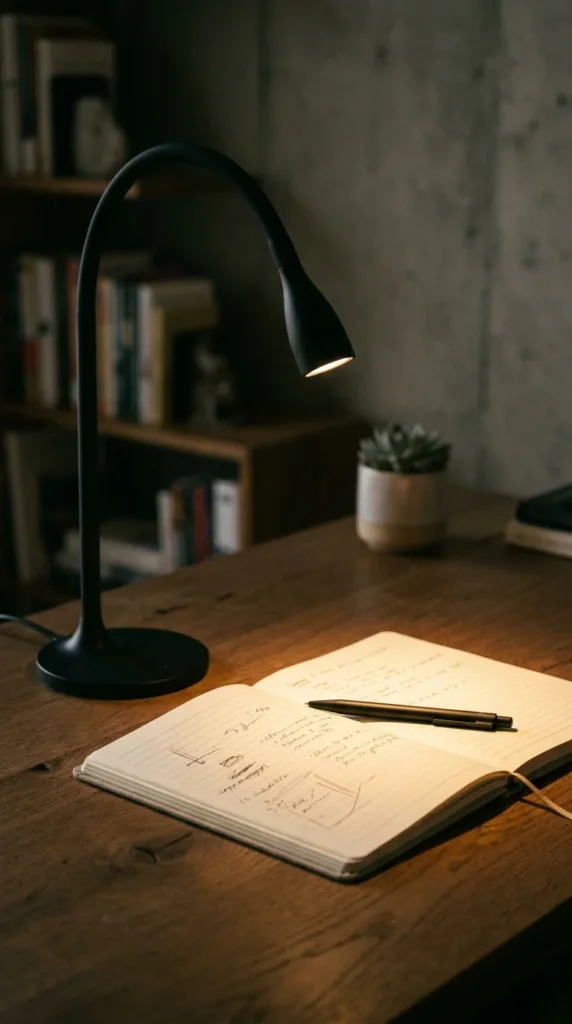
As the sun sets, your lighting needs change. A minimalist task lamp with adjustable color temperatures allows you to transition from high-energy “cool” light to focus-friendly “warm” light in the evening. A lamp with a thin, architectural design adds a functional focal point to the desk without taking up significant space. It directs your focus literally onto the document or keyboard in front of you.
10. Acoustic Panels
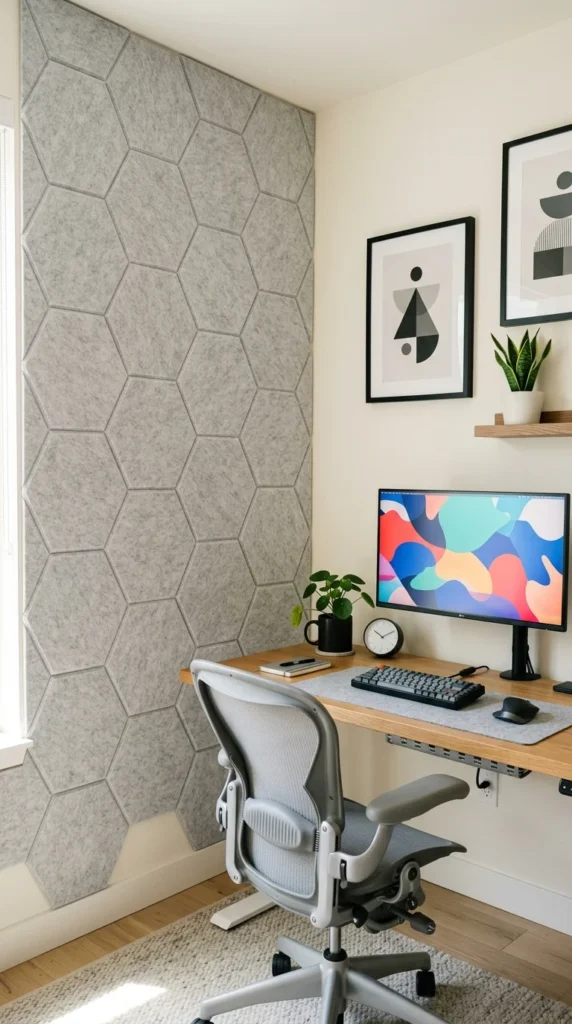
Focus is as much about what you hear as what you see. In a minimalist room with hard surfaces, sound can bounce around and become distracting. Adding felt acoustic panels not only serves as a modern design element but also dampens ambient noise and echoes. This creates a “quiet zone” that is psychologically conducive to intense concentration and clear-headedness.
11. Digital Detox
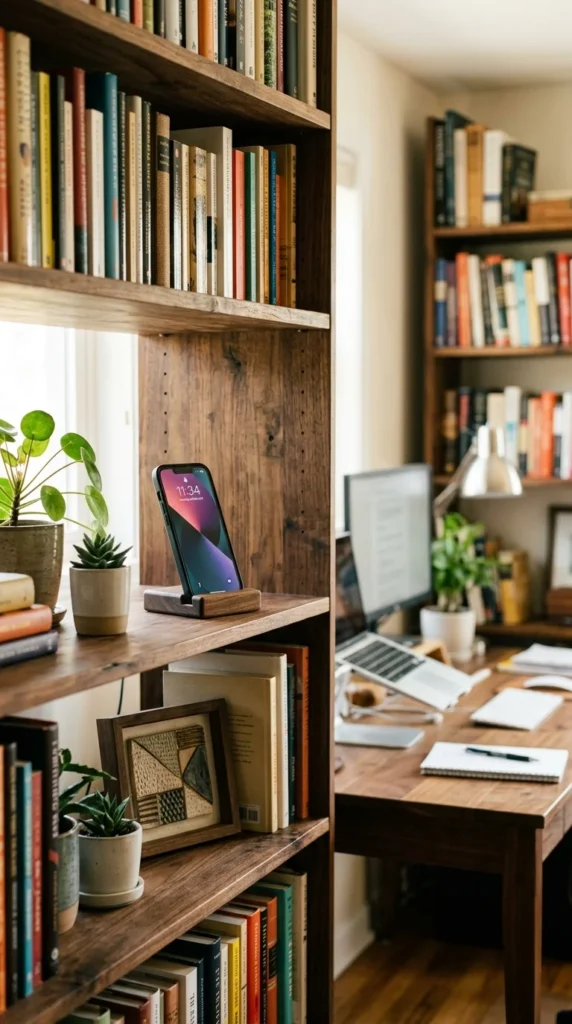
A minimalist office should have a designated “no-phone zone.” Create a charging station that is physically away from your desk. By removing the primary source of digital distraction from your line of sight and arm’s reach, you eliminate the temptation to “just check” notifications. This simple physical boundary is one of the most effective ways to protect your focus during work hours.
12. Neutral Palettes
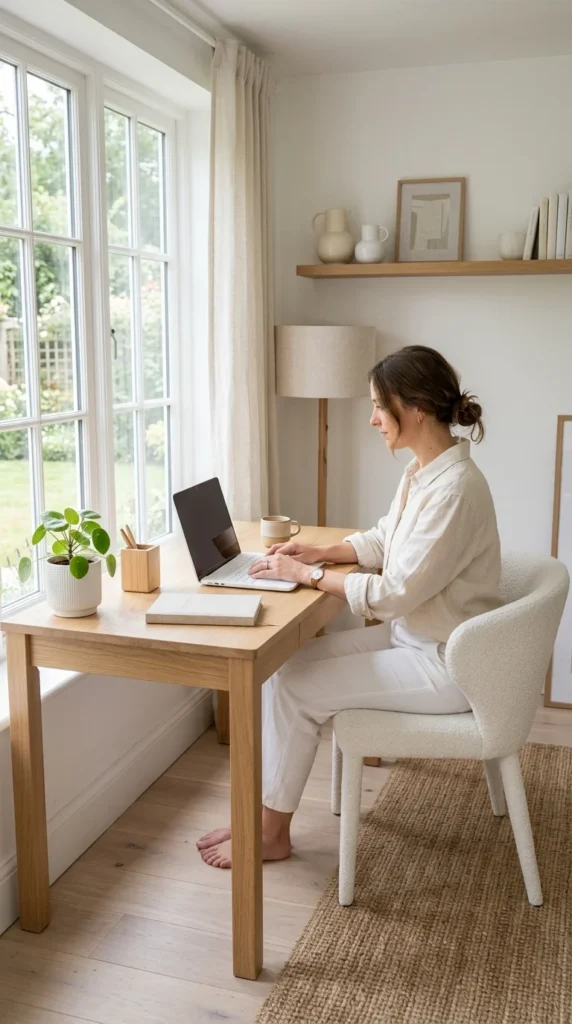
Color psychology plays a massive role in productivity. A minimalist setup usually thrives on a neutral palette of whites, greys, beiges, and natural wood tones. These colors are non-aggressive and don’t compete for your attention. A cohesive color scheme creates a sense of harmony and “visual silence,” allowing your brain to prioritize the colorful data on your screen rather than the environment around it.
13. Desk Mat
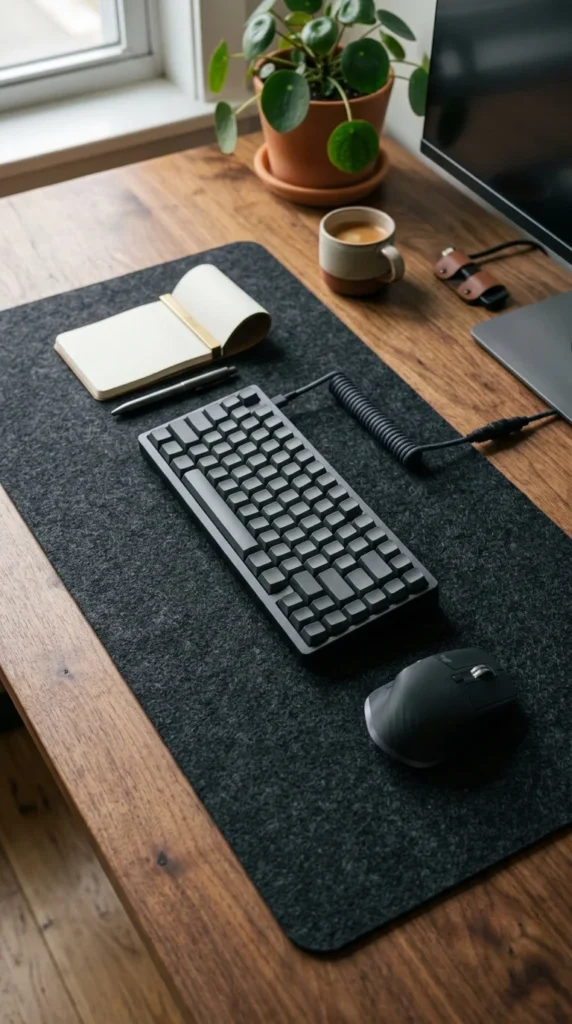
A desk mat is a minimalist’s secret weapon for “zoning.” It creates a tactile and visual boundary for your peripheral devices. Whether made of leather or felt, a mat provides a soft surface for your wrists and helps define the “work area” against the rest of the desk surface. It also prevents the clattering sound of a mouse or keyboard, contributing to a quieter, more focused atmosphere.
14. Vertical Space
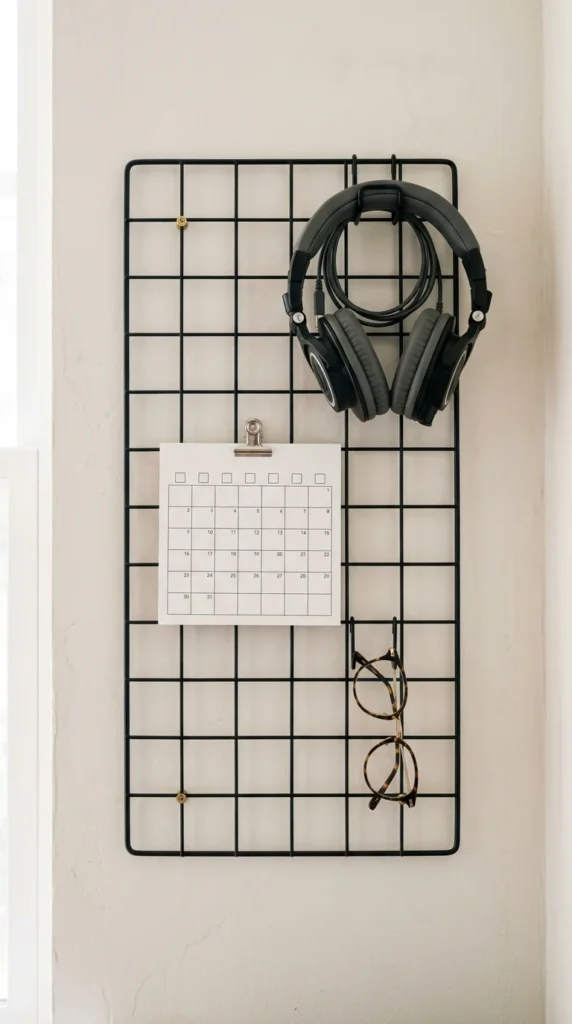
When you run out of desk space, look up. Using vertical organizers like pegboards or wall grids allows you to keep essential items within reach without cluttering the horizontal surface where you work. The key to keeping this minimalist is to avoid overfilling the wall. Select three or four items you use daily and give them a permanent home on the wall to keep your desk clear for action.
15. Scent Diffuser
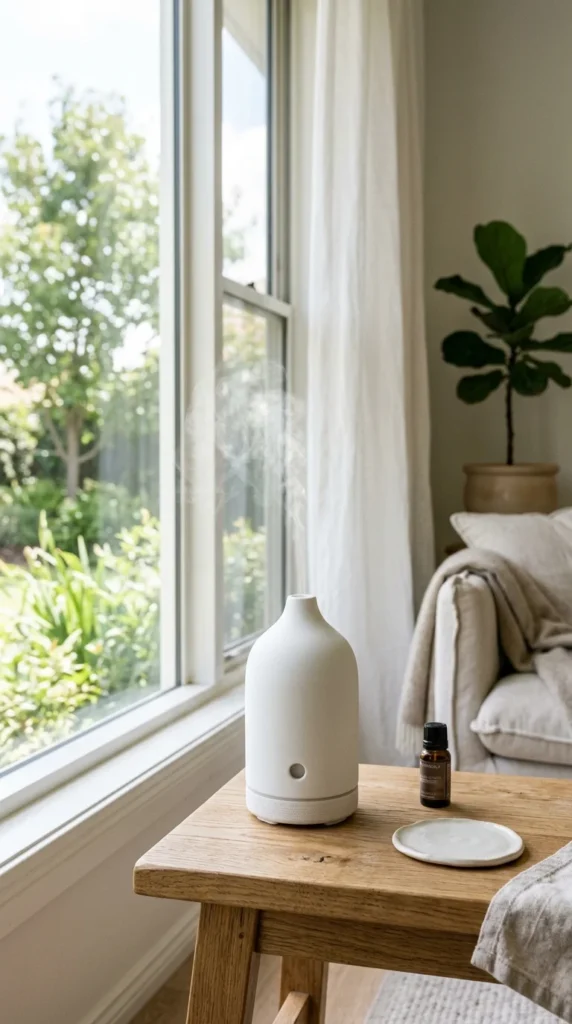
Your sense of smell is directly linked to the brain’s limbic system, which controls emotion and memory. Using a minimalist oil diffuser with scents like peppermint (for alertness), lemon (for clarity), or rosemary (for memory) can create a sensory trigger for work. When you smell that specific scent, your brain knows it is time to focus. A simple, sculptural diffuser adds to the aesthetic without adding clutter.