In an era where the lines between professional and personal life often blur, the home office has become a sanctuary of productivity. However, a cluttered space often leads to a cluttered mind. Minimalism isn’t just about having less; it’s about making room for more focus, more creativity, and more peace. By stripping away the non-essential, you create a workspace that breathes and inspires. Here are 15 minimalist home office ideas to help you design a space that maximizes your potential while minimizing distractions.
1. Monochromatic Palette
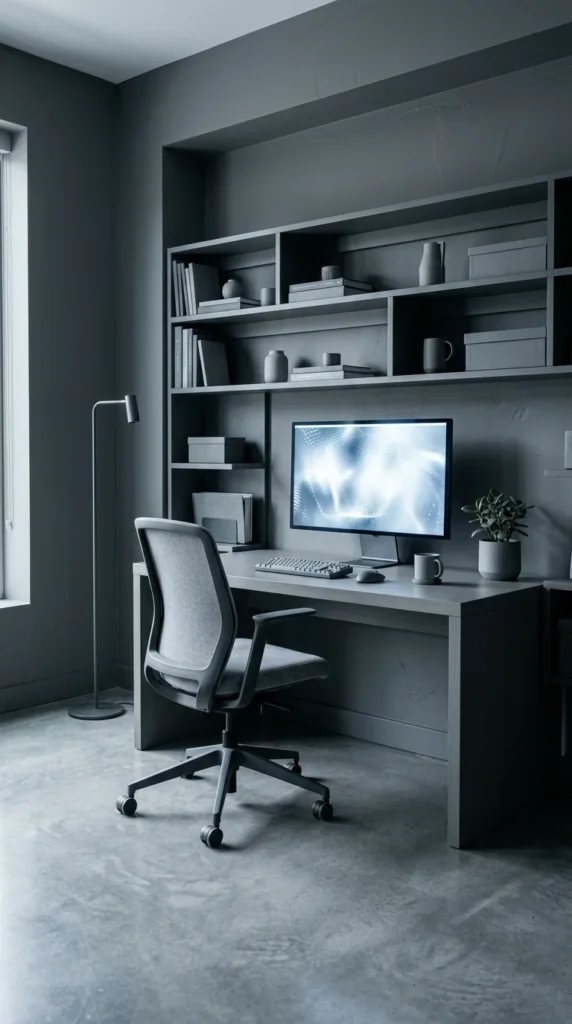
The simplest way to achieve a minimalist look is through a monochromatic color scheme. By sticking to one primary color—usually white, grey, or black—you eliminate visual noise. This doesn’t mean the room has to feel flat; you can use different shades and tones of the same color to create depth. A white-on-white office feels expansive and ethereal, while an all-black office provides a moody, “deep-focus” environment that feels incredibly sophisticated and private.
2. Floating Desks
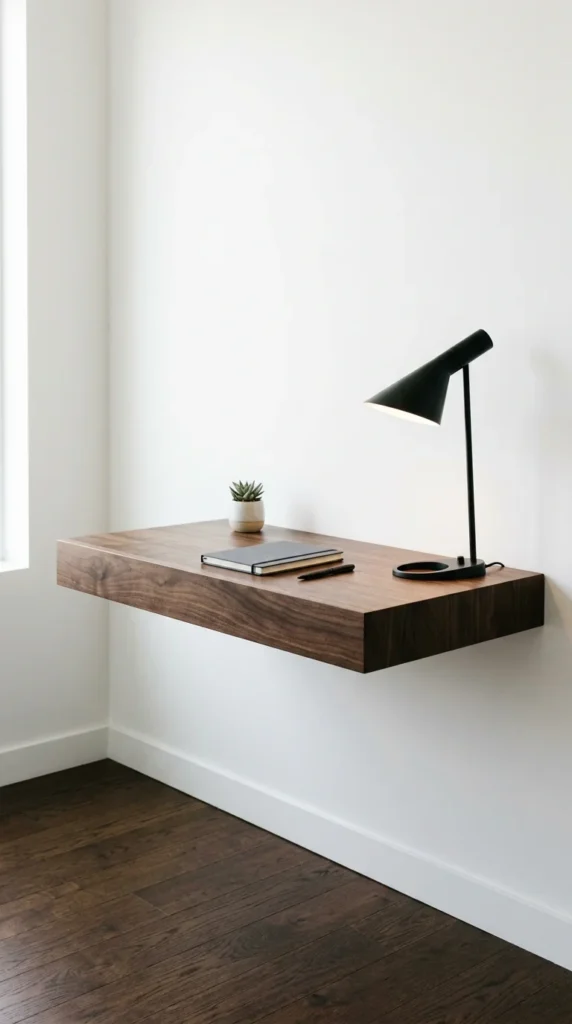
For small spaces, a floating desk is a game-changer. By removing the legs of the desk, you free up floor space, which immediately makes the room feel larger and more open. This design choice forces you to be intentional about what you keep on your desk, as these units typically have less surface area and weight capacity. It’s a literal representation of “light and airy” design.
3. Natural Light
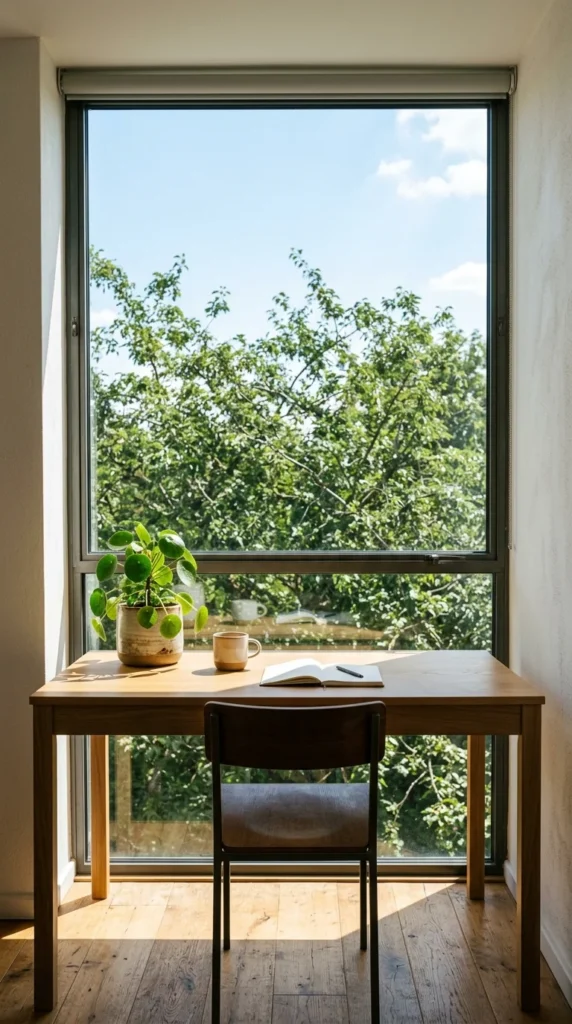
Minimalism and natural light go hand-in-hand. Position your desk as close to a window as possible to harness the power of the sun. Not only does natural light make a space feel larger and more inviting, but it also boosts mood and regulates your circadian rhythm. Avoid heavy curtains; instead, opt for sheer linen drapes or simple roller blinds that allow the light to filter through while maintaining privacy.
4. Hidden Storage
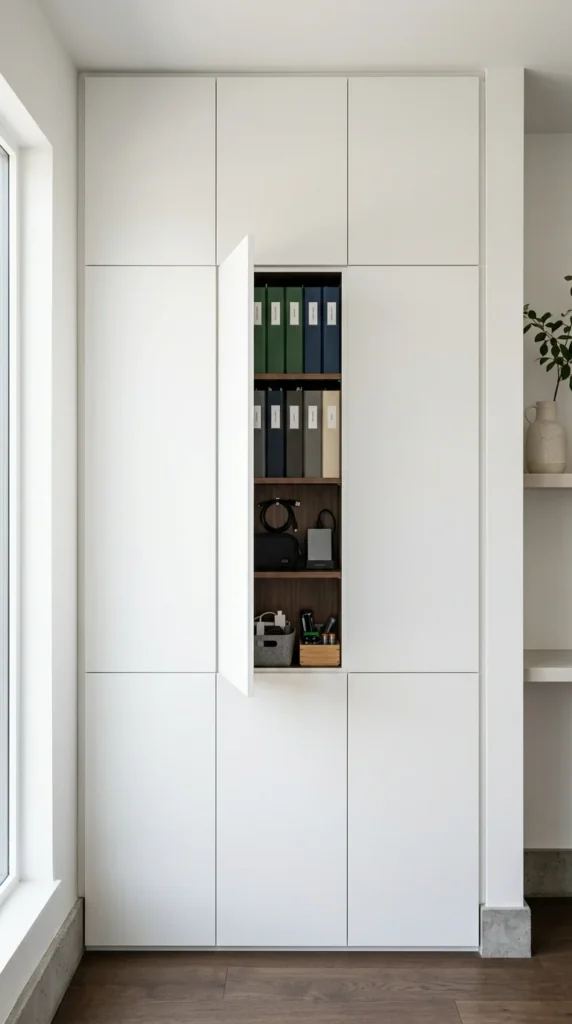
The enemy of minimalism is clutter—cables, papers, and office supplies. Hidden storage solutions, such as handle-less cabinets or built-in drawers that blend into the wall, allow you to tuck away everything you aren’t currently using. If the eye doesn’t see it, the mind doesn’t process it as a distraction. The goal is to have “zero-surface” clutter, where only your current task is visible.
5. Indoor Greenery
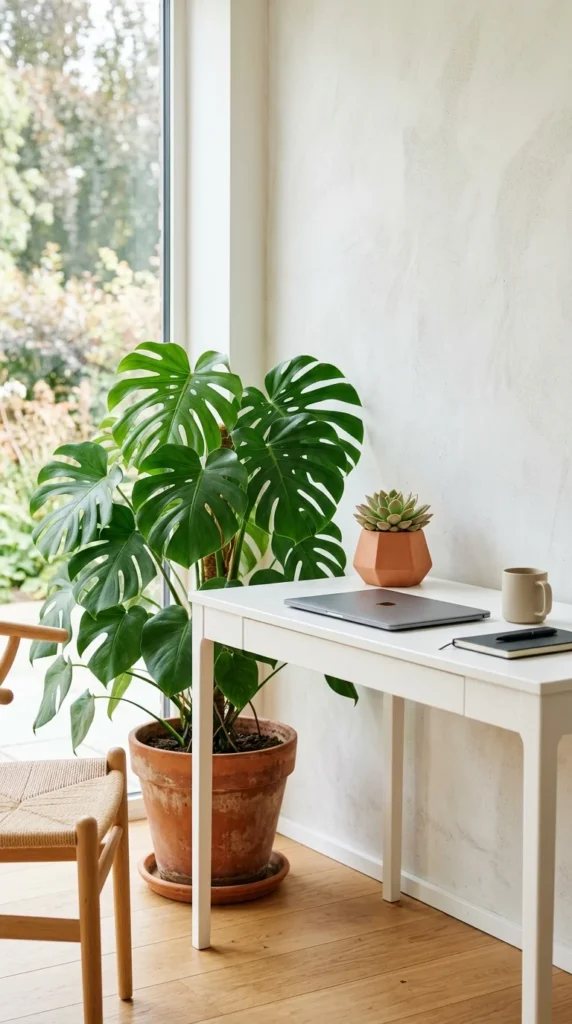
While minimalism often leans toward the clinical, adding a touch of nature can warm up the space without adding clutter. A single, large architectural plant like a Fiddle Leaf Fig or a Monstera provides a focal point and improves air quality. If you prefer the desk surface, a small succulent or a vase with a single eucalyptus branch adds life and a pop of organic color to a sterile environment.
6. Ergonomic Essentials
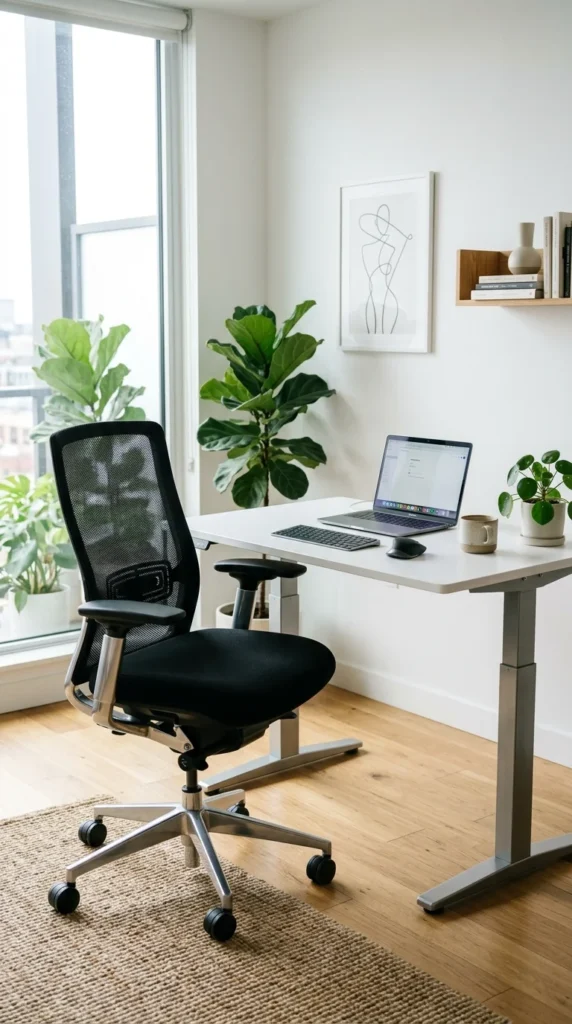
Minimalism is also about functionality. Investing in one or two high-quality, ergonomic pieces is better than having a room full of cheap furniture. An iconic ergonomic chair not only supports your physical health during long work hours but also serves as a sculptural piece of art. Choose furniture with clean lines and neutral materials that prioritize your body’s alignment.
7. Cable Management
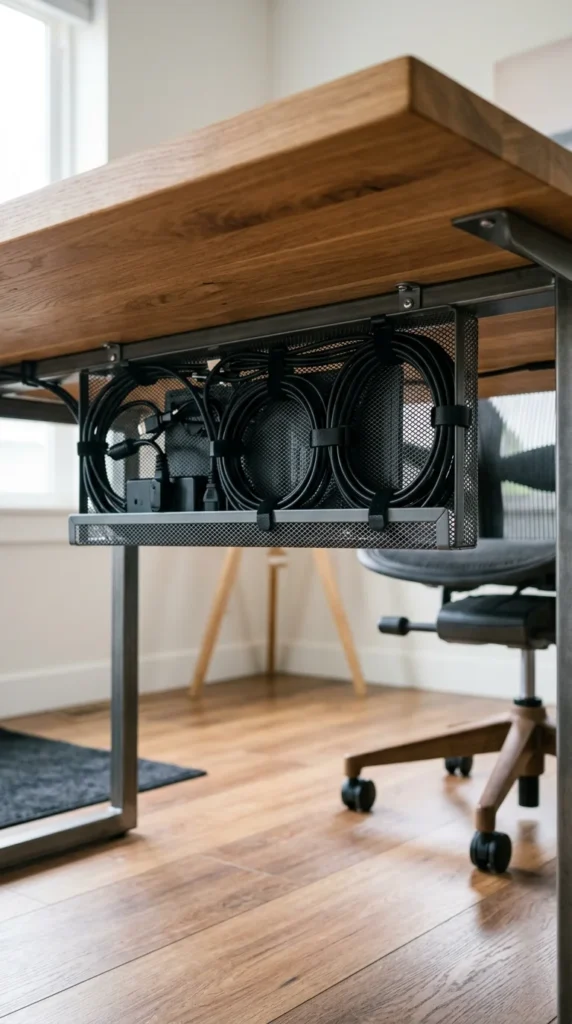
Nothing ruins a minimalist aesthetic faster than a “spaghetti” of tangled wires. Use cable trays, clips, and cord hiders to keep your tech organized. Wireless peripherals, such as a Bluetooth mouse and keyboard, can further reduce the visual noise. Ideally, the only visible wire should be the main power cord leading to the outlet, and even that can be cleverly disguised.
8. Vertical Shelving
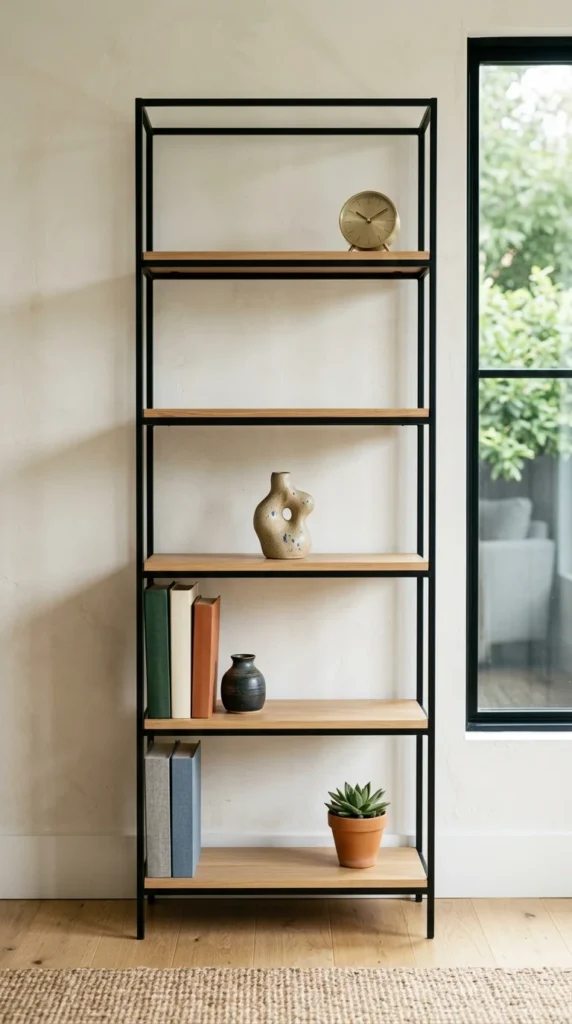
If you need to display items or store books, look upward. Vertical shelving utilizes the height of the room rather than the floor space. The key to keeping this minimalist is “negative space.” Don’t pack the shelves full; leave gaps between items to allow the wall behind them to show through. This prevents the shelves from feeling heavy or overwhelming.
9. Industrial Accents
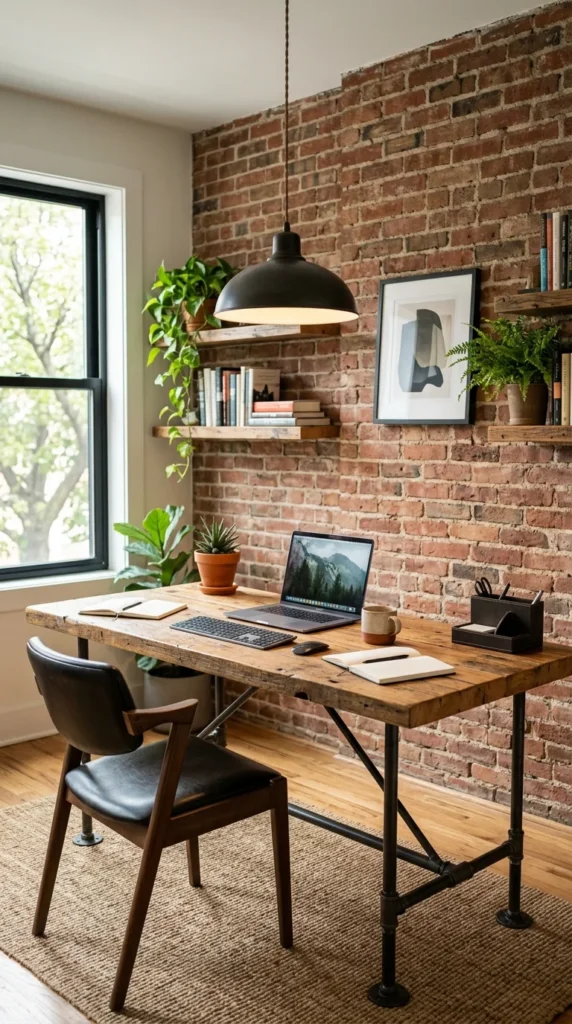
For those who find white-box minimalism too cold, industrial minimalism offers a more textured alternative. Think raw materials like concrete, steel, and reclaimed wood. By keeping the furniture designs simple and the color palette muted, you can achieve a “lofty” feel that is both rugged and clean.
10. Glass Surfaces
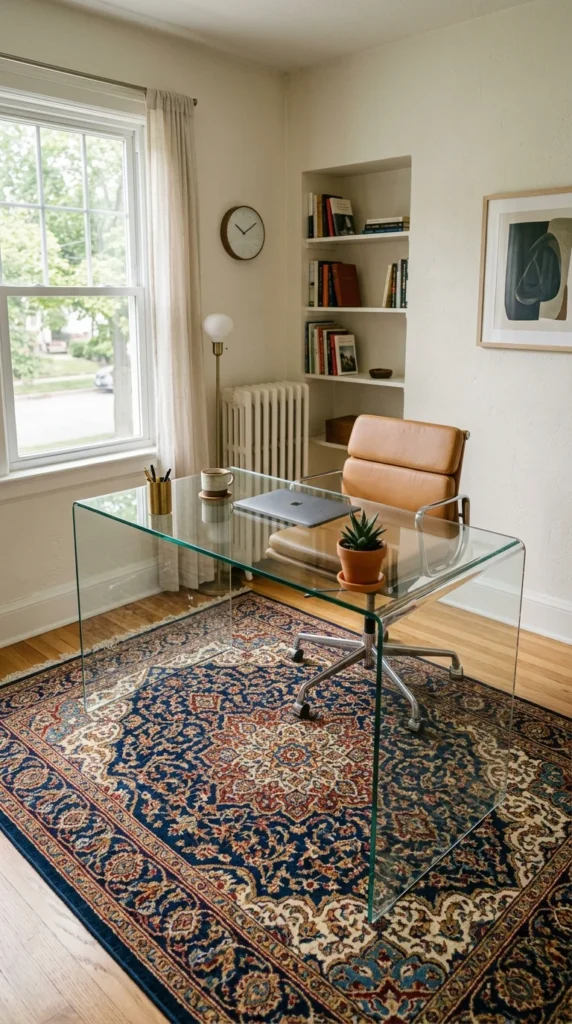
Glass is a minimalist’s best friend, especially in tight quarters. A glass desk or glass shelving “disappears” into the room, maintaining the functionality of a workspace without the visual weight of solid wood or metal. It reflects light and creates a sense of sophistication and modernity.
11. Neutral Textures
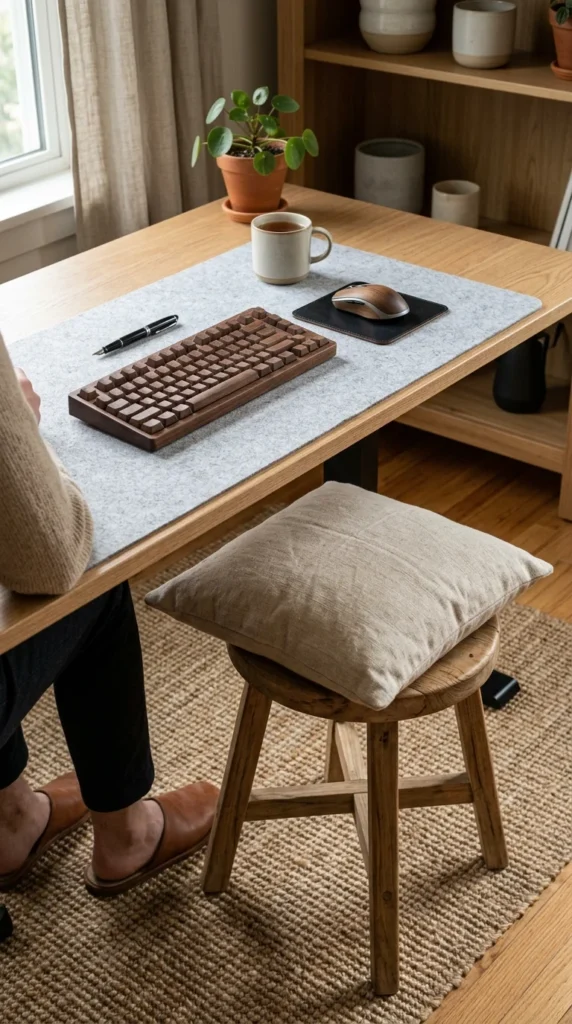
Minimalism doesn’t have to feel “flat.” You can add warmth and interest through textures rather than colors. A felt desk mat, a wool throw over your chair, or a jute rug adds a tactile element that makes the office feel cozy and curated. Stick to a palette of beige, cream, and tan to keep the vibe serene.
12. Corner Nooks
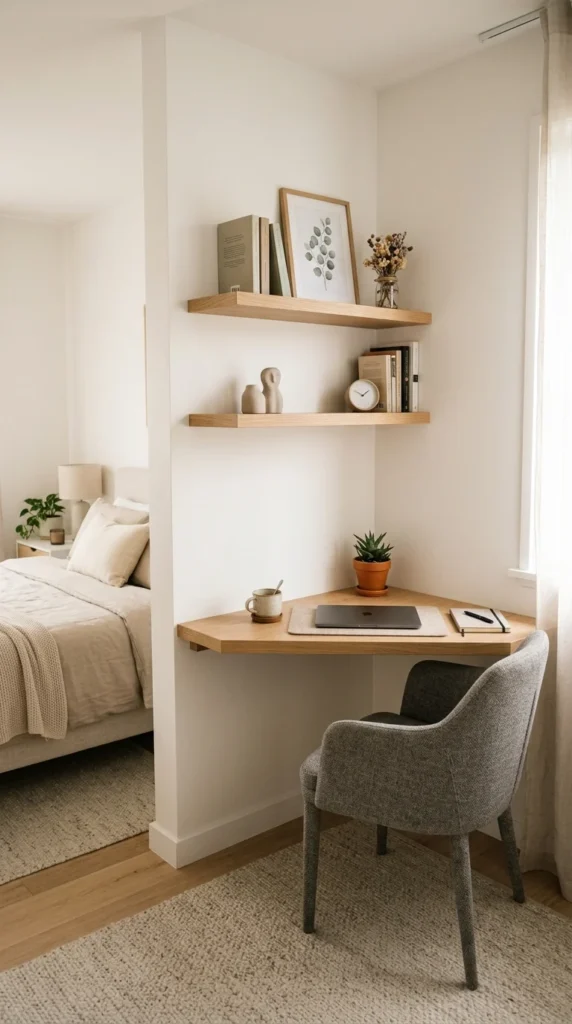
You don’t need a whole room to have a minimalist office. A neglected corner can be transformed into a highly efficient “cloffice” (closet-office) or a simple nook. By using a compact desk and keeping the walls around it clear of decoration, you create a dedicated “work zone” that feels separate from the rest of your home.
13. Scandinavian Influence
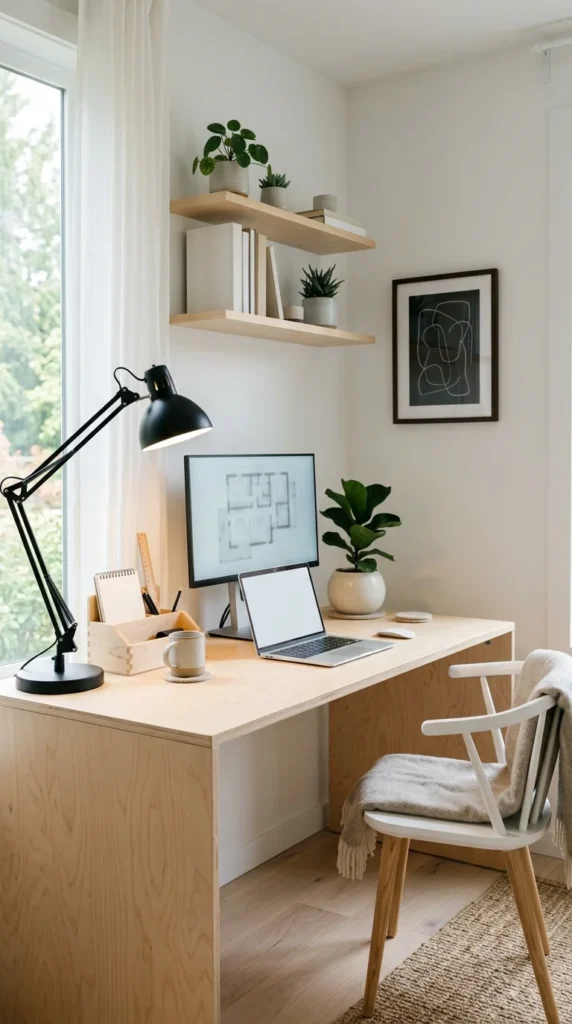
Scandinavian design is the gold standard for functional minimalism. It emphasizes light-colored woods, clean lines, and “hygge” (comfort). To achieve this look, focus on quality craftsmanship and furniture that serves a clear purpose. Scandi offices often feel timeless because they avoid trends in favor of simplicity and utility.
14. Artistic Focal Points
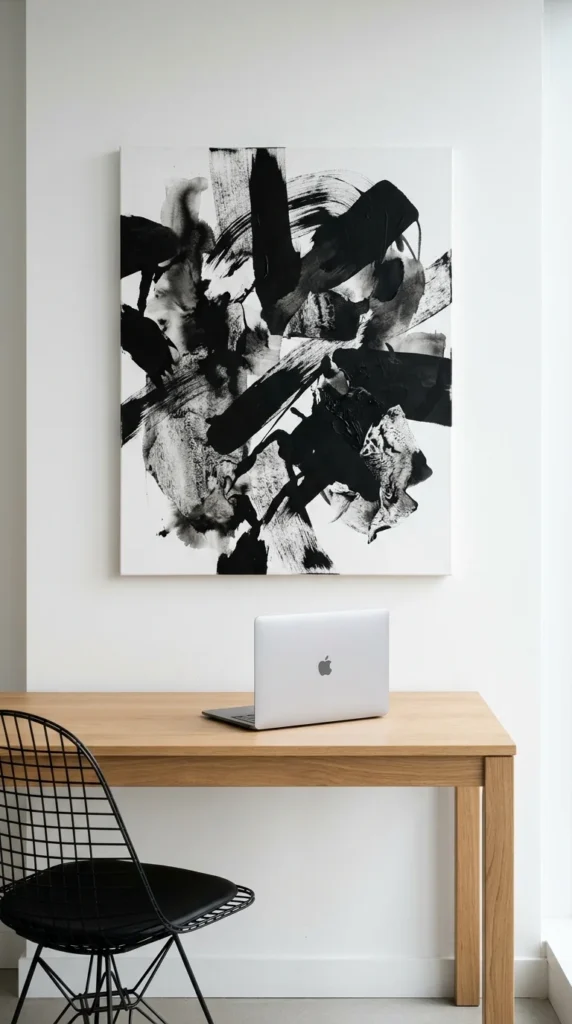
In a minimalist room, one large piece of art can speak louder than ten small ones. Instead of a gallery wall, choose one oversized painting or photograph that resonates with you. This provides a “visual rest” for your eyes when you look away from the screen and adds a personal touch to the room without creating clutter.
15. Smart Lighting
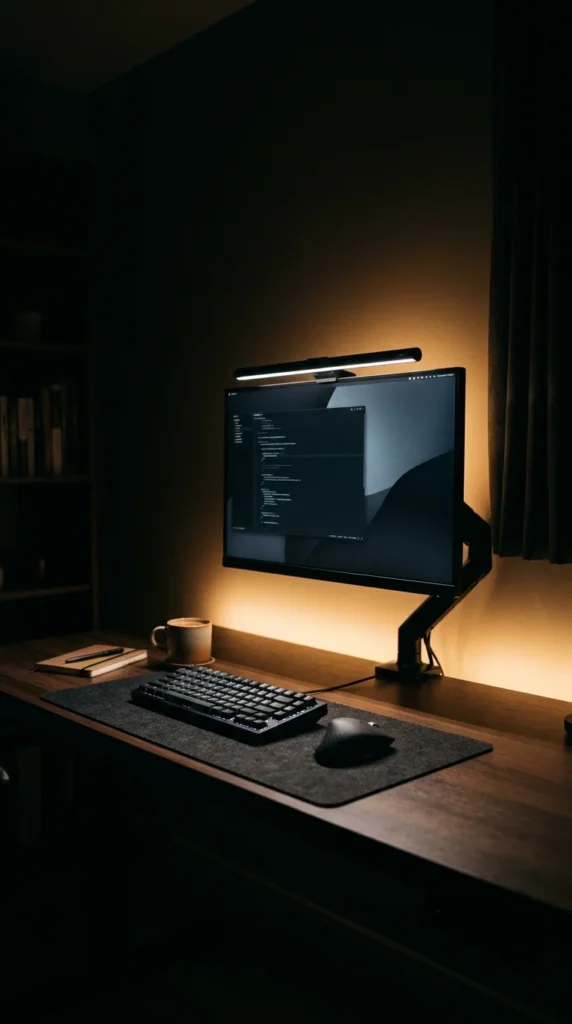
Minimalist lighting is all about precision. A slim LED desk lamp with an adjustable arm allows you to direct light exactly where you need it. Consider smart bulbs that can change color temperature—cool blue light for focus during the morning and warm amber light for winding down in the evening. Keeping the light fixtures sleek and understated ensures they don’t distract from the overall design.