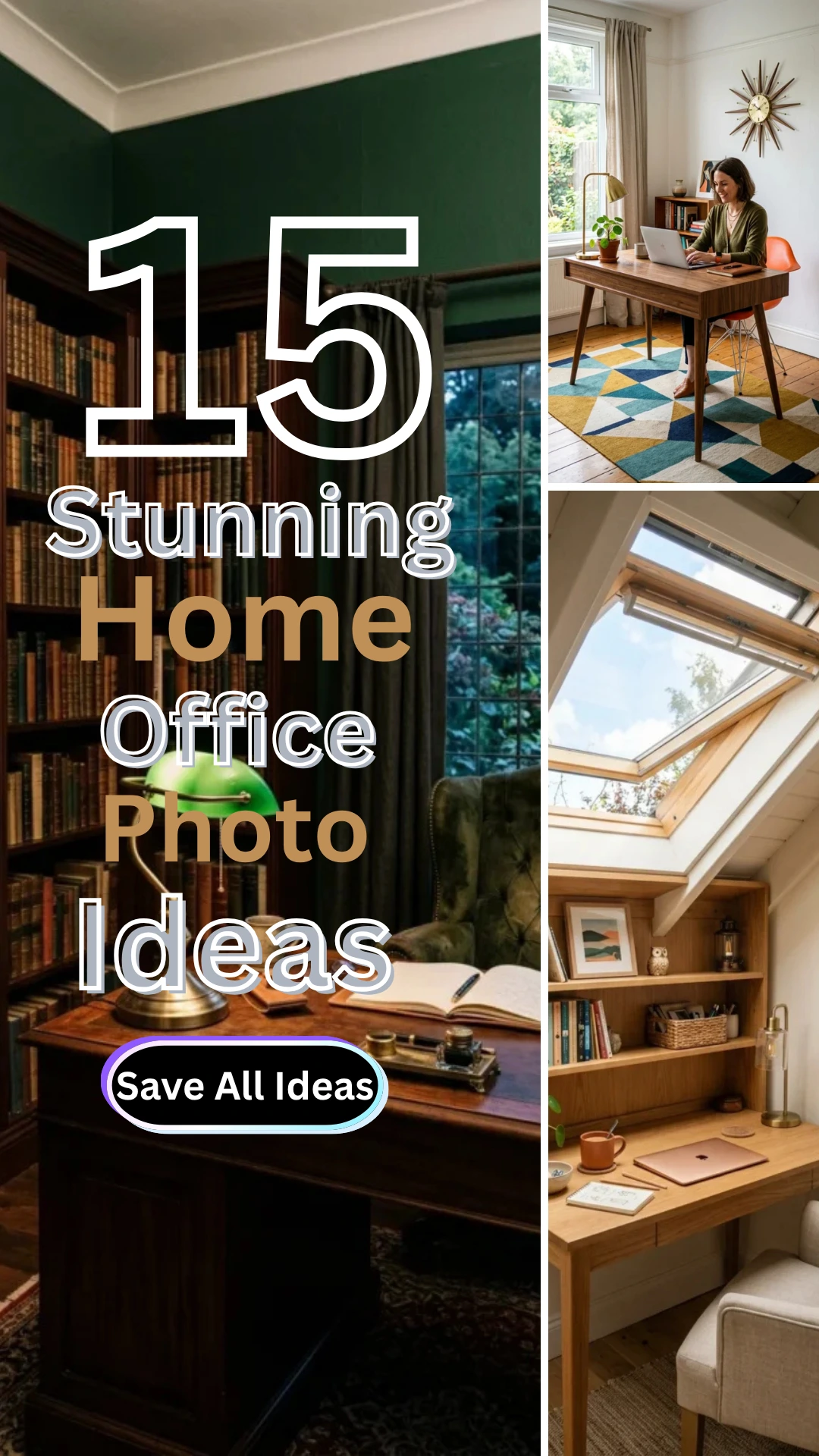
Your workspace is more than just a place where you check off tasks; it is a reflection of your personality, a sanctuary for your focus, and a launchpad for your creativity. In an era where the home office has become a central part of our daily lives, the way we curate our desks can significantly impact our mental clarity and productivity. From the sleek lines of minimalism to the cozy embrace of “cluttercore,” finding the right aesthetic is about balancing form and function.
Whether you are a professional programmer, a digital artist, or a student, your setup should inspire you to do your best work. Here are 15 inspiring desk setup ideas to help you transform your workspace into a place you never want to leave.
1. Minimalist Zen
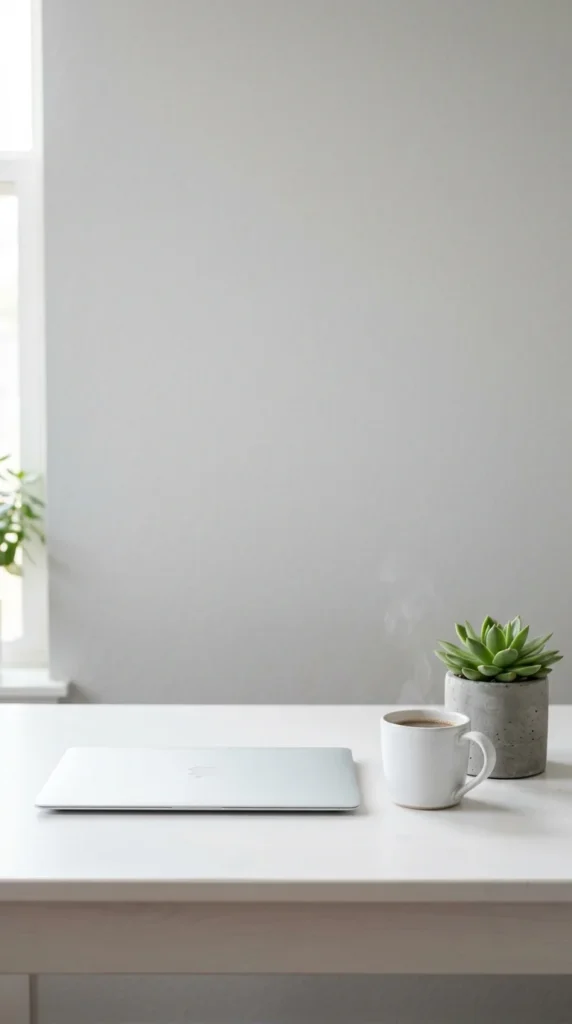
The Minimalist Zen setup is built on the philosophy that “less is more.” By stripping away unnecessary distractions, you create a visual environment that promotes calm and deep focus. This setup usually features a monochrome color palette—whites, grays, and blacks—and emphasizes hidden cable management.
- Key Components: A floating desk or a simple white tabletop, a wireless keyboard and mouse, and a single monitor or laptop.
- Why it works: It reduces cognitive load, allowing your brain to focus entirely on the screen rather than the clutter surrounding it.
2. Biophilic Haven
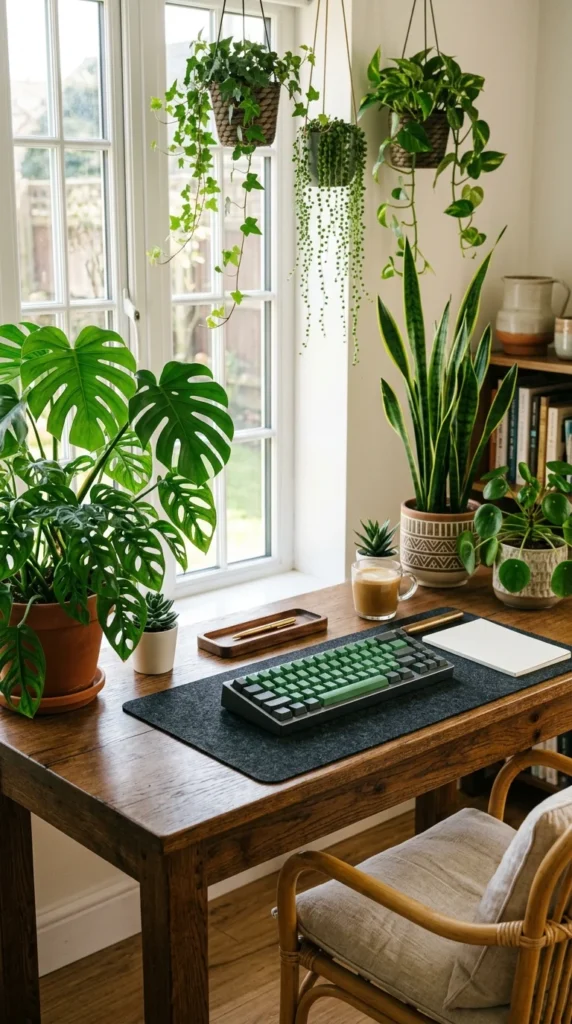
Bringing the outdoors in is one of the most effective ways to boost mood and air quality. The Biophilic Haven focuses on organic textures, natural wood, and an abundance of greenery. This setup feels alive and breathes a sense of freshness into your workday.
- Key Components: Real or high-quality faux plants, a solid wood desk, and natural fiber desk mats like felt or cork.
- Why it works: Studies show that proximity to nature can reduce stress levels and increase creative output.
3. Dark Academia

For those who love the aesthetic of old libraries and classic literature, Dark Academia offers a moody, sophisticated vibe. This setup prioritizes history and tradition, utilizing deep wood tones, antique accessories, and warm, localized lighting.
- Key Components: A classic banker’s lamp, leather desk pads, stacks of vintage books, and perhaps a globe or a magnifying glass.
- Why it works: It creates a cozy, studious atmosphere that makes you feel like a scholar working on a grand discovery.
4. RGB Gamer
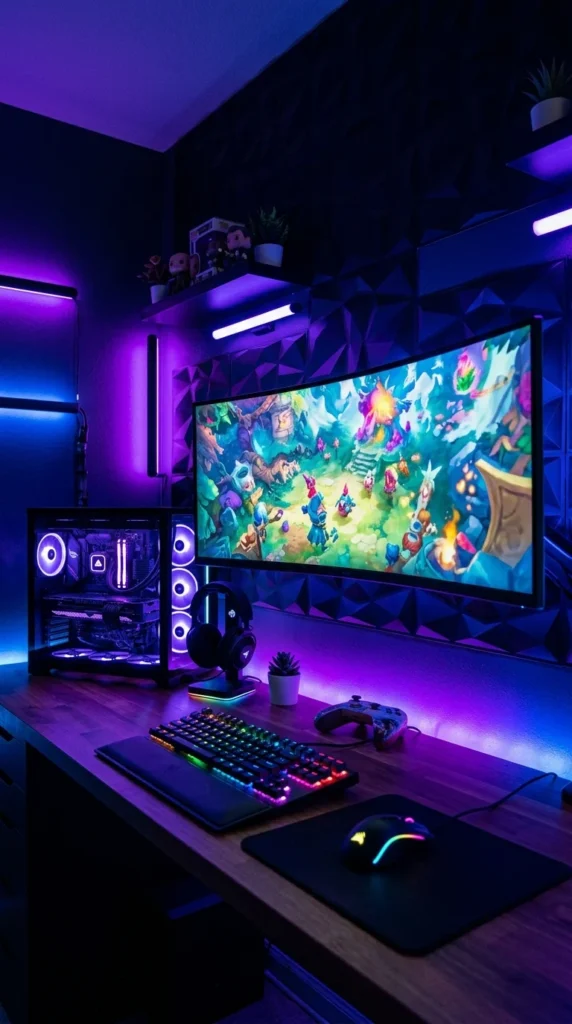
Gaming setups are all about performance and immersion. The RGB (Red, Green, Blue) setup uses customizable lighting to create a high-energy environment. It’s not just for playing; many find the vibrant colors stimulating for creative work like video editing or graphic design.
- Key Components: An ultra-wide monitor, an ergonomic gaming chair, customized LED light strips, and a high-performance PC with a transparent side panel.
- Why it works: The lighting can be synced to your tasks, creating a personalized “vibe” that transitions from work to play.
5. Industrial Loft
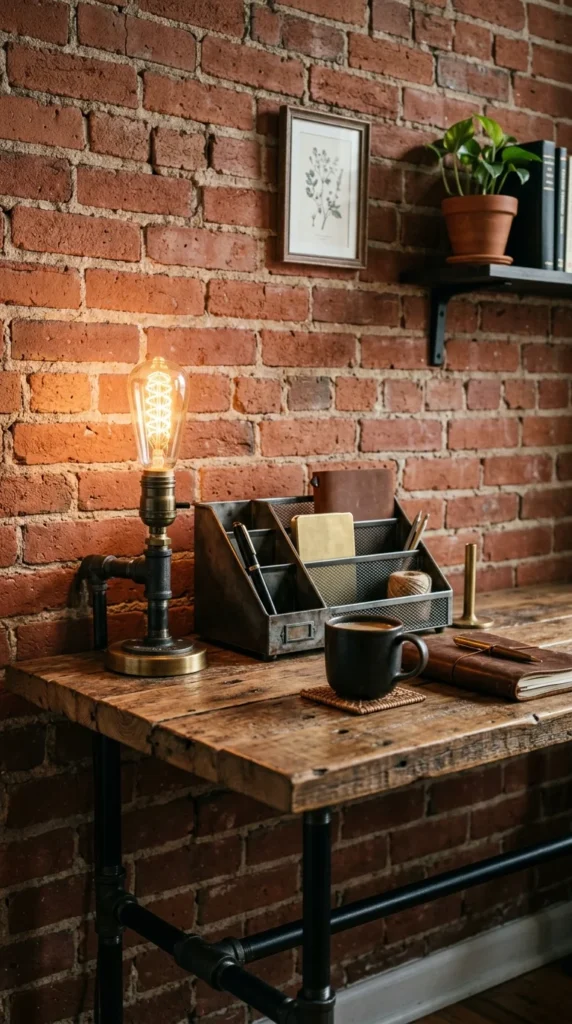
The Industrial Loft style is rugged, raw, and functional. It draws inspiration from old factories and urban lofts, emphasizing materials like weathered wood, iron, and concrete. It is a no-nonsense setup that feels sturdy and grounded.
- Key Components: A pipe-leg desk, metal mesh organizers, a brick or concrete accent wall, and matte black accessories.
- Why it works: The durable materials suggest a “get to work” attitude, perfect for those who enjoy a masculine or vintage urban aesthetic.
6. Pastel Paradise
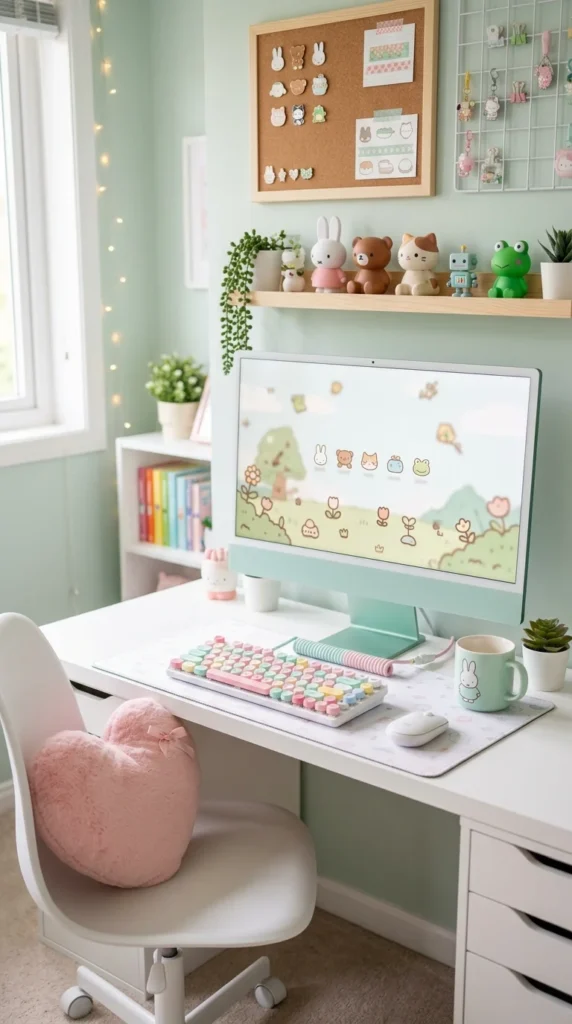
The Pastel Paradise setup is whimsical, bright, and cheerful. Often associated with “kawaii” culture, this style uses soft hues to create a space that feels joyful and inviting. It is perfect for creators who want their workspace to reflect a playful personality.
- Key Components: Pastel-colored peripherals, desk mats with cute illustrations, and tiered rolling carts for storage.
- Why it works: Bright, soft colors can improve mood and make the workspace feel less like a chore and more like a hobby space.
7. Dual-Monitor Pro
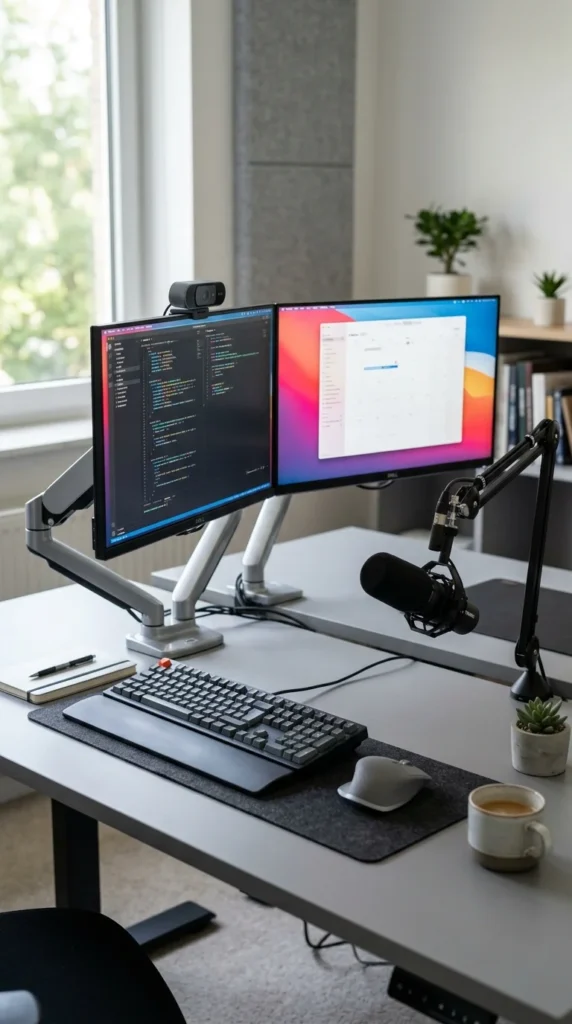
Efficiency is the name of the game for the Dual-Monitor Pro. This setup is designed for power users—coders, stock traders, or researchers—who need multiple windows open simultaneously. It prioritizes screen real estate and ergonomic health.
- Key Components: Monitor arms to clear desk space, a wide desk (at least 60 inches), and an ergonomic vertical mouse to prevent wrist strain.
- Why it works: It maximizes multitasking capabilities and reduces the time spent switching between tabs and programs.
8. Mid-Century Modern
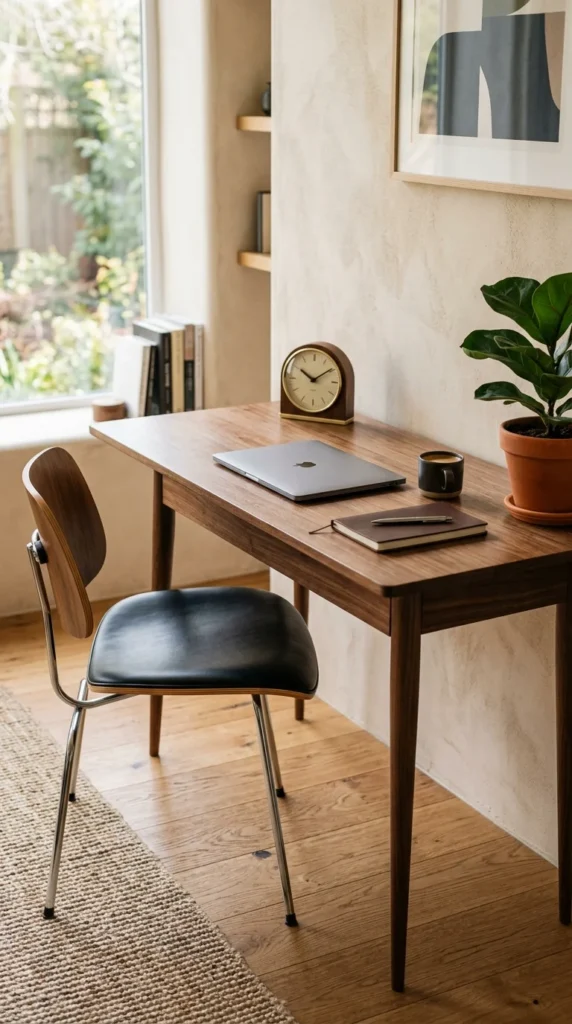
Mid-century modern design is timeless. It focuses on clean lines, organic curves, and a mix of natural and synthetic materials. This setup looks like something out of an upscale 1960s office, blending retro charm with modern technology.
- Key Components: A walnut or teak desk, a classic Eames-style chair, and simple, geometric desk accessories.
- Why it works: It offers a sophisticated, professional look that fits seamlessly into a living room or bedroom without looking “tech-heavy.”
9. Nordic Scandi
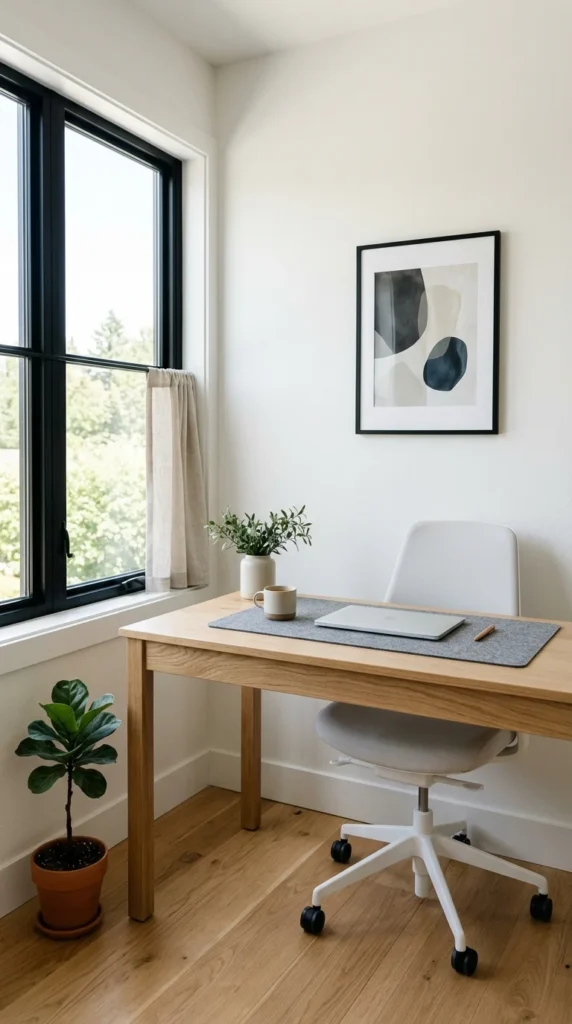
candinavian design, or “Scandi,” is similar to minimalism but with a focus on warmth and functionality (Hygge). It utilizes light woods, soft textiles, and a neutral palette to create a bright and airy workspace that feels comfortable and clean.
- Key Components: Light-colored wood (like ash or oak), functional storage solutions, and cozy elements like a sheepskin rug over the chair.
- Why it works: The bright, neutral tones make small spaces feel larger and more organized.
10. The Creative Studio
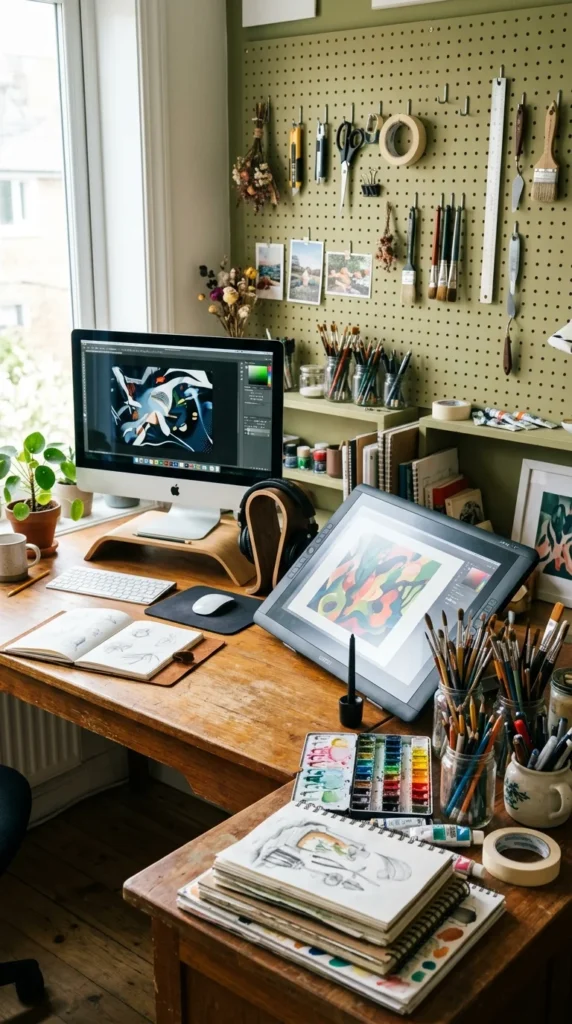
Artists and designers need a setup that accommodates both digital and analog work. The Creative Studio setup often features a larger desk surface and specialized storage for physical art supplies, ensuring that inspiration is always within reach.
- Key Components: An L-shaped desk, a pegboard for tool organization, a high-color-accuracy monitor, and plenty of task lighting.
- Why it works: Having a dedicated “messy zone” for physical creation separate from the “digital zone” helps compartmentalize different phases of the creative process.
11. Cozy Nook
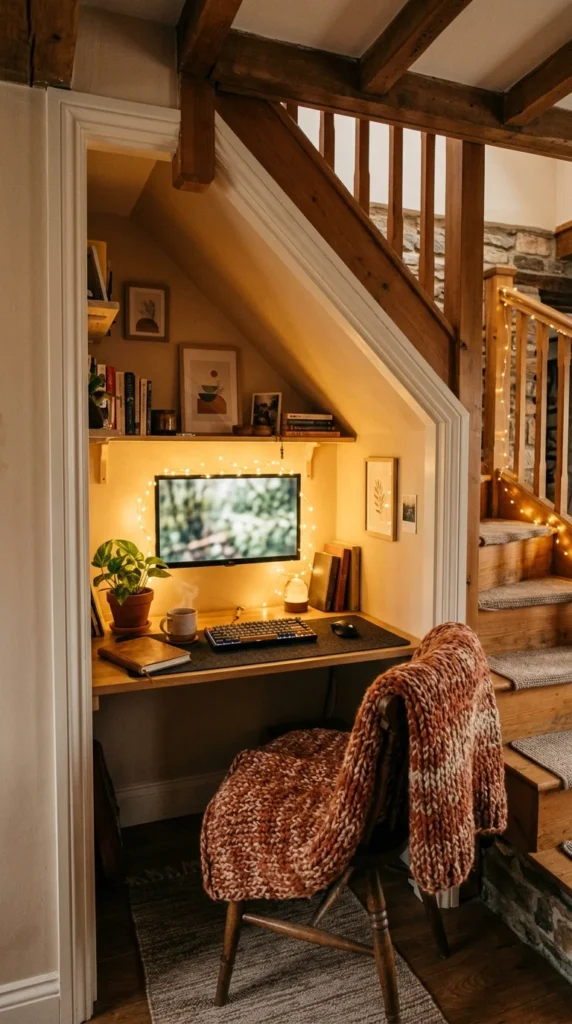
Not everyone has a whole room for an office. The Cozy Nook setup proves that even the smallest corner can be a productive haven. This “cloffice” (closet-office) style focuses on maximizing vertical space and using lighting to make a small area feel inviting rather than cramped.
- Key Components: Wall-mounted shelves, warm string lights, a small-profile desk, and mirrors to create the illusion of more space.
- Why it works: The enclosed nature of a nook can actually help focus the mind by blocking out the rest of the home’s distractions.
12. Futuristic Lab
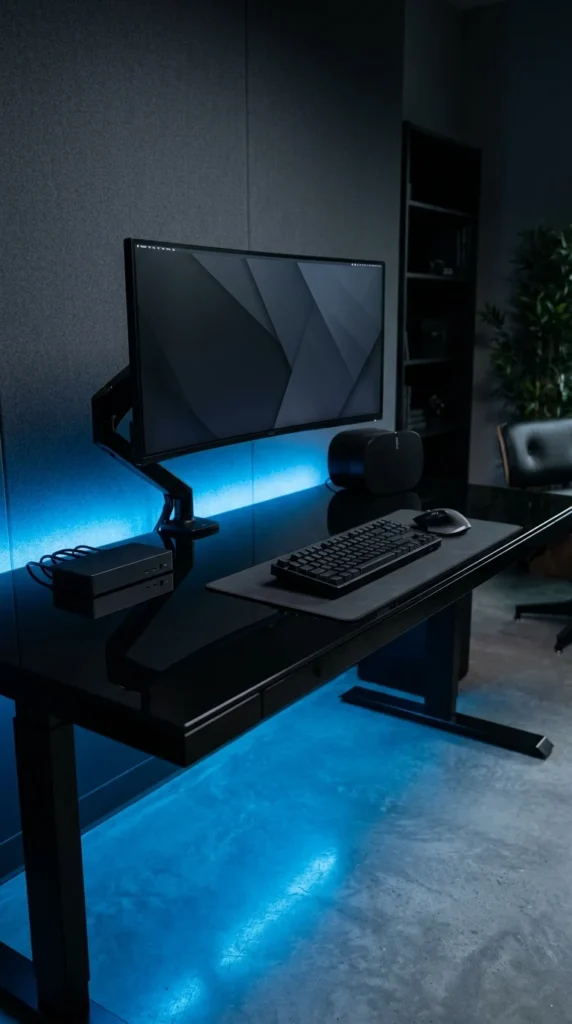
The Futuristic Lab setup looks like it belongs on a spaceship. It prioritizes the latest technology, hidden wires, and “smart” integration. Everything is sleek, metallic, and highly automated, creating an environment that feels ahead of its time.
- Key Components: Smart lighting controlled by voice, a wireless charging pad built into the desk, and a futuristic, high-back ergonomic chair.
- Why it works: It creates a high-performance atmosphere that encourages forward-thinking and innovation.
13. Vertical Pegboard
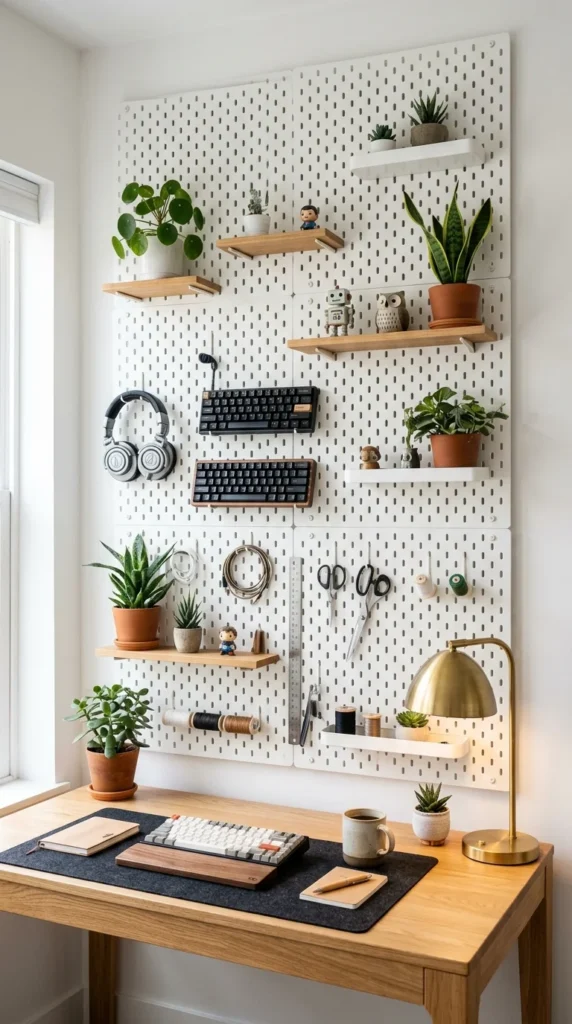
f your desk surface is always cluttered, the Vertical Pegboard setup is the solution. By moving your accessories and tools onto the wall, you free up the entire desk for your actual work. This is both a functional storage solution and a visual centerpiece.
- Key Components: A large pegboard (like the IKEA SKÅDIS), hooks, clips, and small hanging bins.
- Why it works: It turns your tools into a gallery, making them easy to find while keeping your workspace clear and manageable.
14. Wanderlust Office
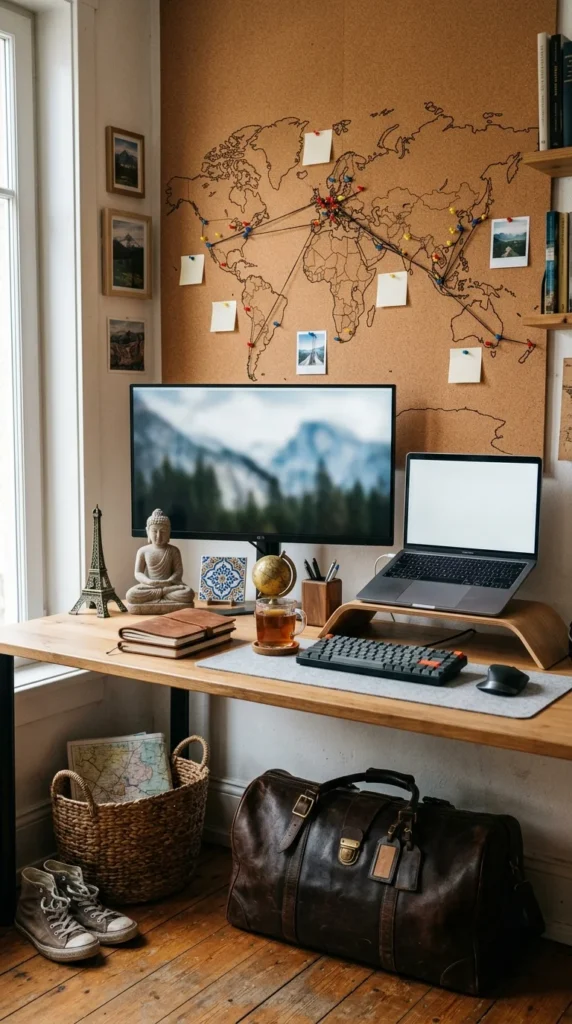
For those who work to travel, the Wanderlust Office serves as a constant reminder of the world outside. This setup is filled with maps, globes, and mementos from past adventures, creating an inspiring environment for those who feel the itch to explore.
- Key Components: A world map (cork or scratch-off), travel-related books, a compass-themed desk mat, and warm, earthy tones.
- Why it works: It keeps your long-term goals and passions in sight, providing motivation during long work hours.
15. The Productivity Hub
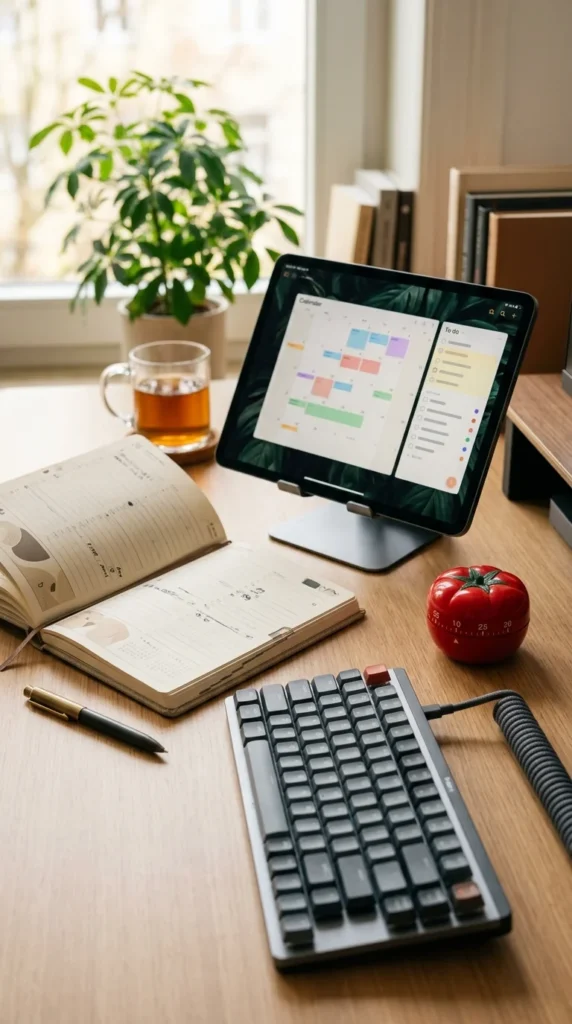
The Productivity Hub is designed for the high-achiever who loves systems and data. It often includes “analog” elements like physical planners or whiteboards alongside digital tools. This setup is optimized for time-tracking, goal-setting, and focused “deep work” sessions.
- Key Components: A desktop whiteboard for quick notes, a dedicated tablet for calendars, a physical timer, and an organized filing system.
- Why it works: By having your goals and schedules physically visible, you are less likely to get distracted by digital notifications and more likely to stay on track.