
The traditional office landscape has shifted forever, turning our homes into the primary hubs of productivity. But a home office shouldn’t just be a place where you answer emails; it should be a sanctuary of inspiration, a reflection of your personality, and a powerhouse of efficiency. Whether you are working with a sprawling dedicated room or a tiny corner of your bedroom, your environment directly impacts your focus and mood.
If you are tired of staring at a blank wall or a cluttered desk, it is time for a transformation. From the soothing influence of nature to the high-energy impact of bold patterns, these 17 decor ideas will help you craft a workspace that is as stylish as it is functional.
1. Biophilic Greenery
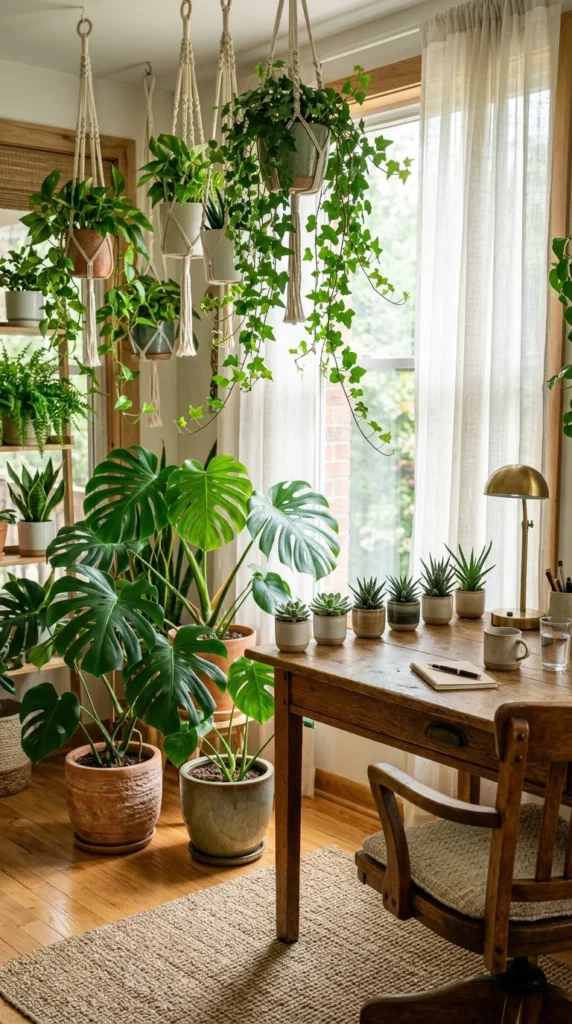
Bringing the outdoors in is one of the most effective ways to boost productivity and reduce stress. Biophilic design focuses on our innate connection to nature. Incorporating various plant species—from tall, architectural snake plants to cascading pothos—not only purifies the air but also adds a vibrant, living texture to your room. Use different heights and leaf shapes to create visual interest. If you lack floor space, wall-mounted planters or a simple shelf dedicated to greenery can turn a sterile corner into a lush oasis.
2. Statement Wallpaper
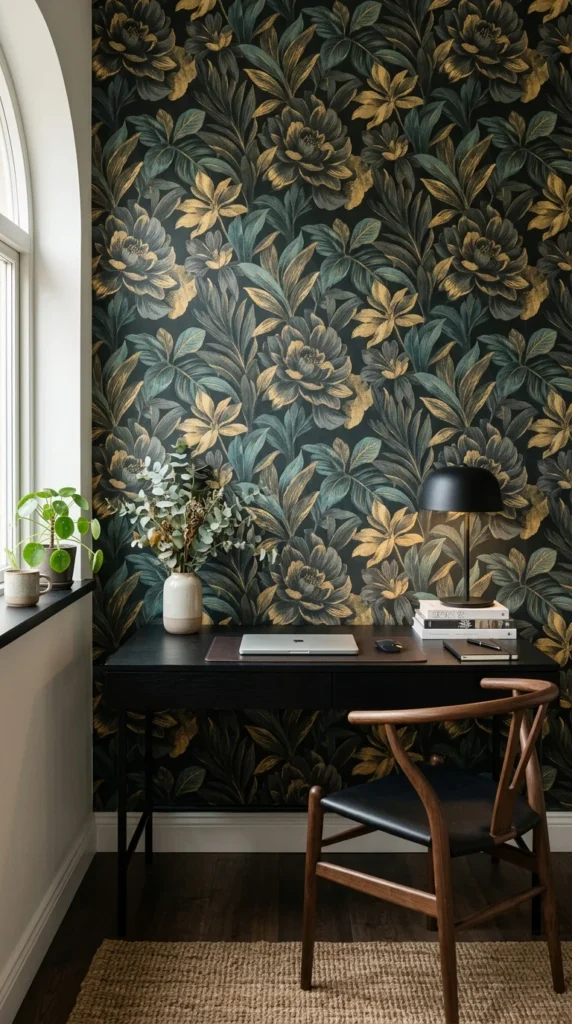
Wallpaper is back in a big way, and the home office is the perfect place to experiment with bold patterns. A statement wall behind your monitor provides a stunning backdrop for video calls and defines the boundaries of your “work zone.” Whether you prefer moody florals, geometric art deco lines, or subtle textured grasscloth, wallpaper adds a layer of sophistication that paint alone often cannot achieve. It transforms the room from a utility space into a curated design experience.
3. Ergonomic Luxury
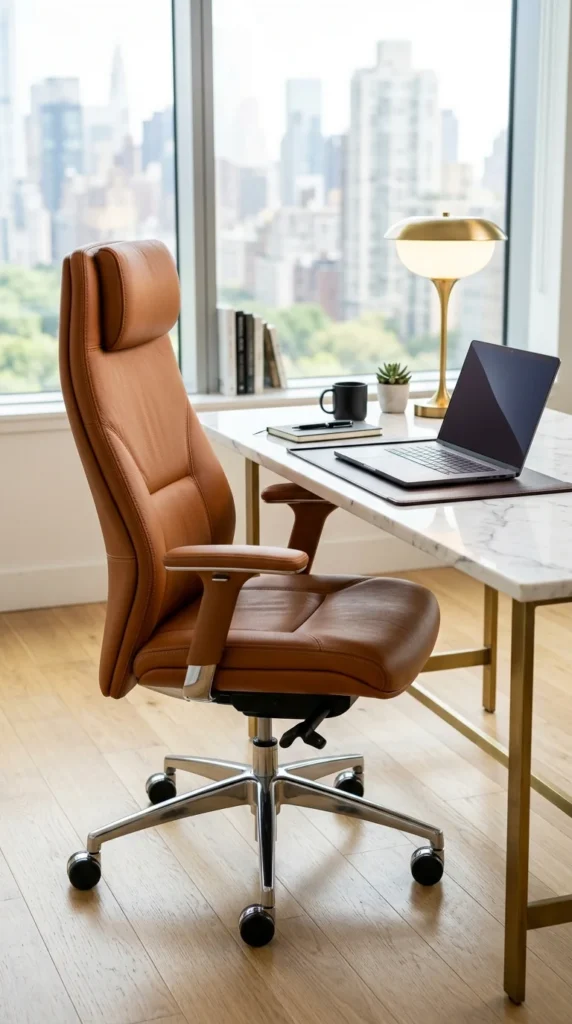
Your health is your greatest asset, and ergonomics should never be sacrificed for style. Fortunately, modern design has bridged the gap. Invest in a chair that offers lumbar support and adjustable heights but is upholstered in luxurious materials like top-grain leather, velvet, or high-quality performance fabrics. A beautiful chair serves as the focal point of the room, proving that “office furniture” doesn’t have to look industrial or boring.
4. Floating Desks
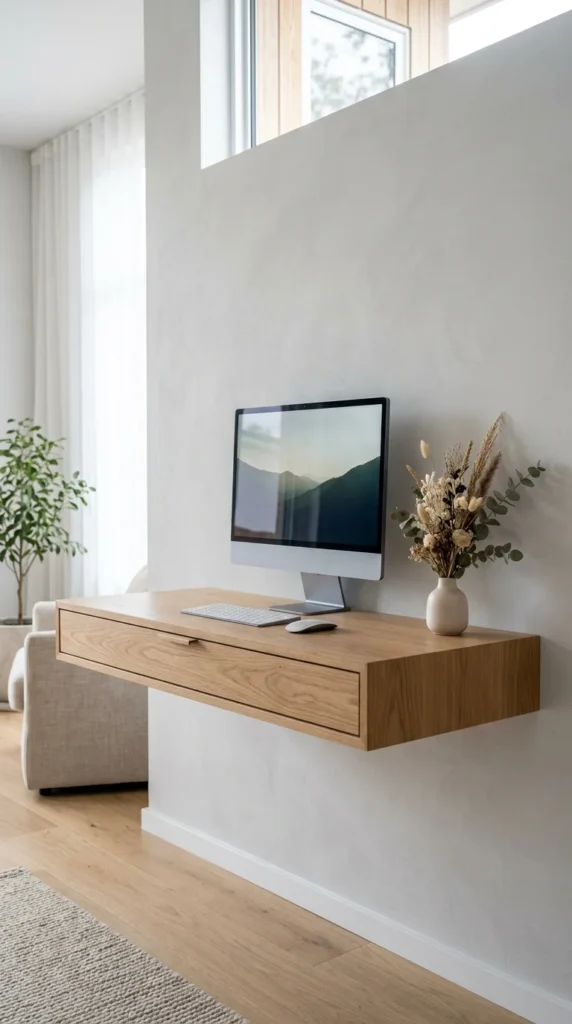
For those working with limited square footage, the floating desk is a game-changer. By mounting the desk directly to the wall, you free up valuable floor space, making the room feel larger and more airy. This minimalist approach encourages a clutter-free lifestyle, as there is less surface area for “stuff” to accumulate. Pair it with a slim stool or a chair that can tuck completely underneath to maximize the footprint of your room.
5. Gallery Walls
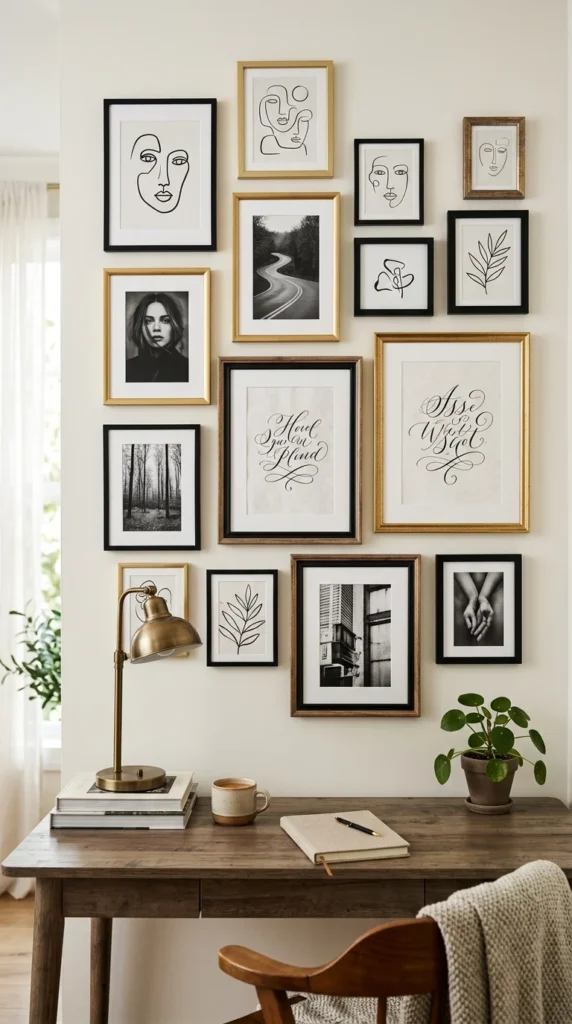
A gallery wall is the ultimate way to personalize your workspace. Surround yourself with things that spark joy: travel photos, architectural sketches, or even your own doodles. The key to a professional-looking gallery wall is consistency in framing or a shared color palette. This visual stimulation can act as a “brain break” during long work sessions, allowing your eyes to wander and find inspiration in the art that surrounds you.
6. Mood Lighting
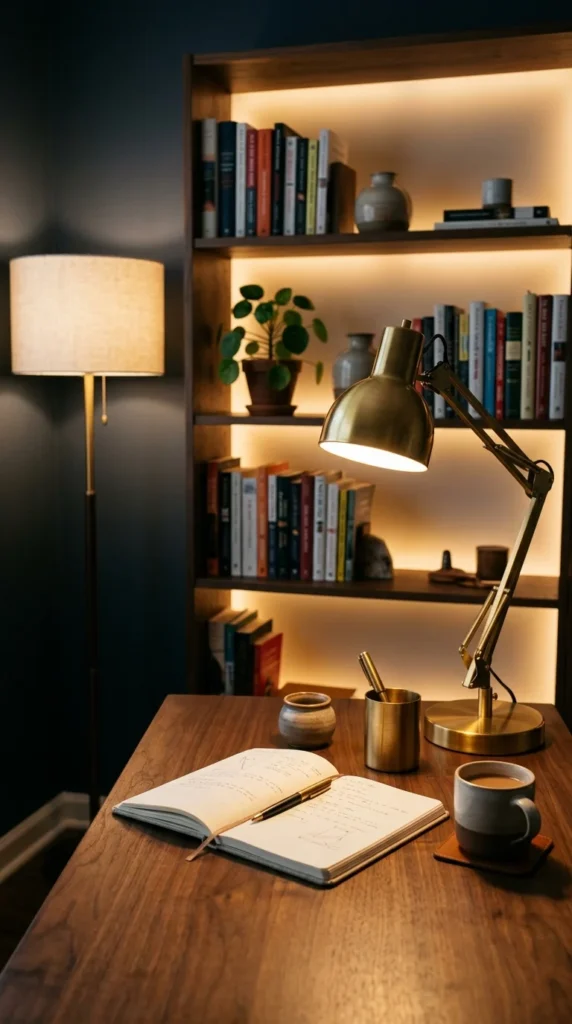
Lighting is the most overlooked element of office design. Relying solely on harsh overhead lights can lead to eye strain and fatigue. Instead, layer your lighting. Combine natural light with a focused task lamp for reading, and add ambient lighting like floor lamps or LED strips behind monitors to reduce glare. Using warm-toned bulbs can make the office feel inviting rather than clinical, helping you transition from “work mode” to “focus mode” with ease.
7. Textured Rugs
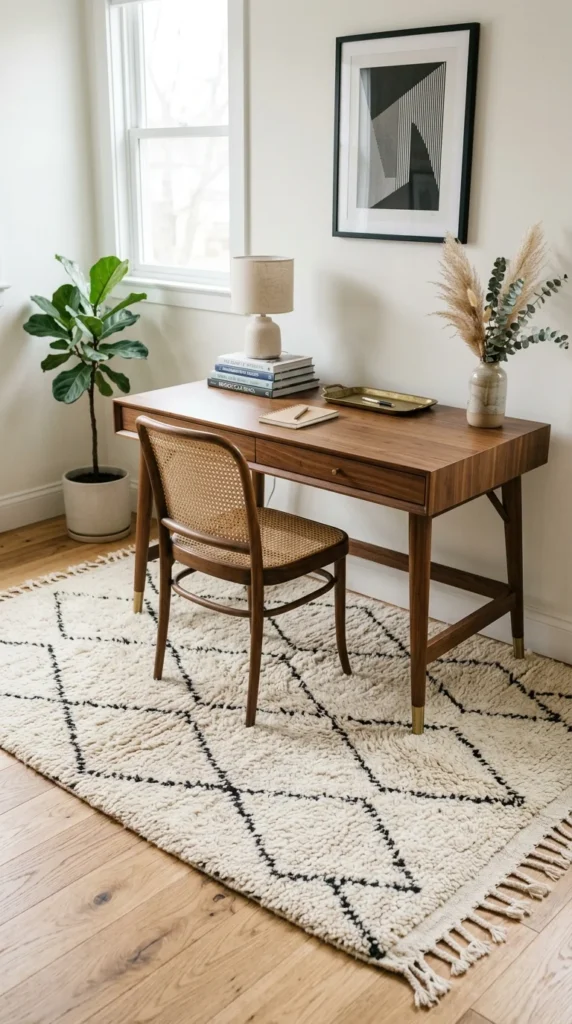
A rug does more than just protect your floors; it anchors the entire room. In a home office, a rug provides acoustic benefits by dampening sound—essential for clear video calls. Choose a texture that complements your style: a high-pile shag for ultimate comfort, or a flat-weave jute rug for a more organic, grounded feel. A rug also allows you to introduce color and pattern into the lower third of the room, creating a balanced visual weight.
8. Metallic Accents
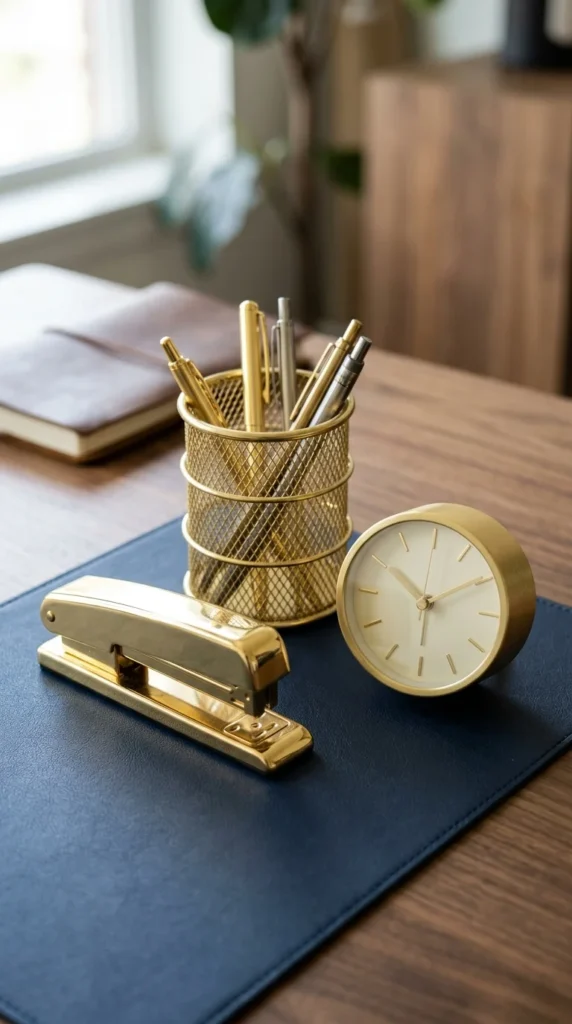
Infuse a touch of glamour into your daily grind with metallic accents. Gold, brass, copper, and brushed nickel can elevate the simplest desk setup. From the hardware on your drawers to the stapler on your desk, these small details add a sense of luxury and cohesion. Metallics reflect light beautifully, adding a subtle shimmer that makes the space feel more polished and high-end.
9. Open Shelving
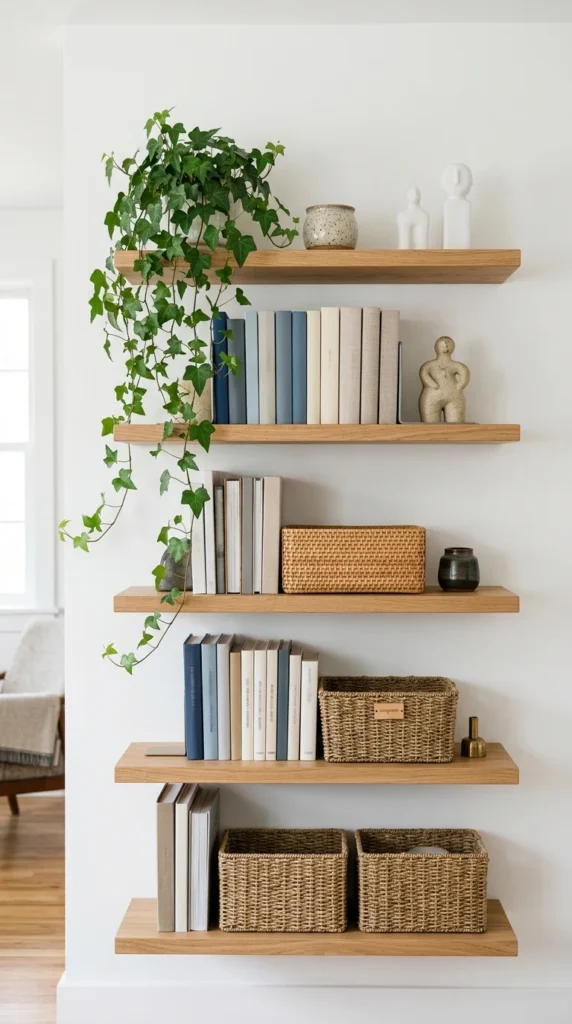
Open shelving is the perfect marriage of storage and display. Instead of hiding your resources in a bulky cabinet, showcase your favorite books, awards, and decorative objects. This keeps your essential tools within arm’s reach while allowing you to “style” your office. The trick is to leave some empty space on the shelves to avoid a cluttered look, using baskets or bins to hide smaller, less attractive items like cables and batteries.
10. Velvet Textures
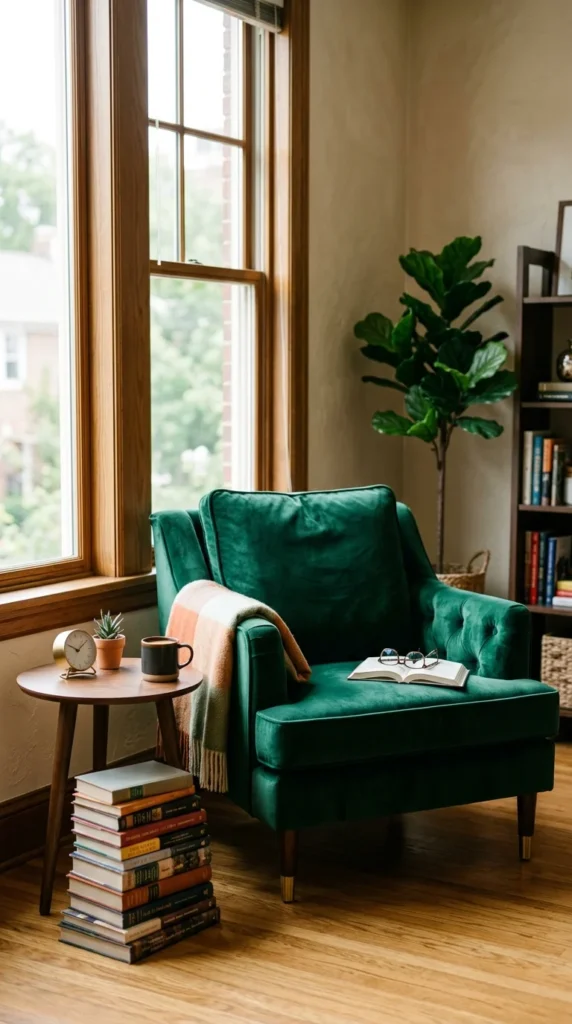
Texture plays a massive role in how a room feels. Velvet brings a sense of warmth, depth, and sophistication to an office. Whether it is your primary desk chair or a cozy reading nook in the corner, velvet invites you to stay a while. Deep jewel tones like navy, forest green, or burgundy in velvet fabric can make the office feel like a private library or an executive suite.
11. Monochromatic Themes
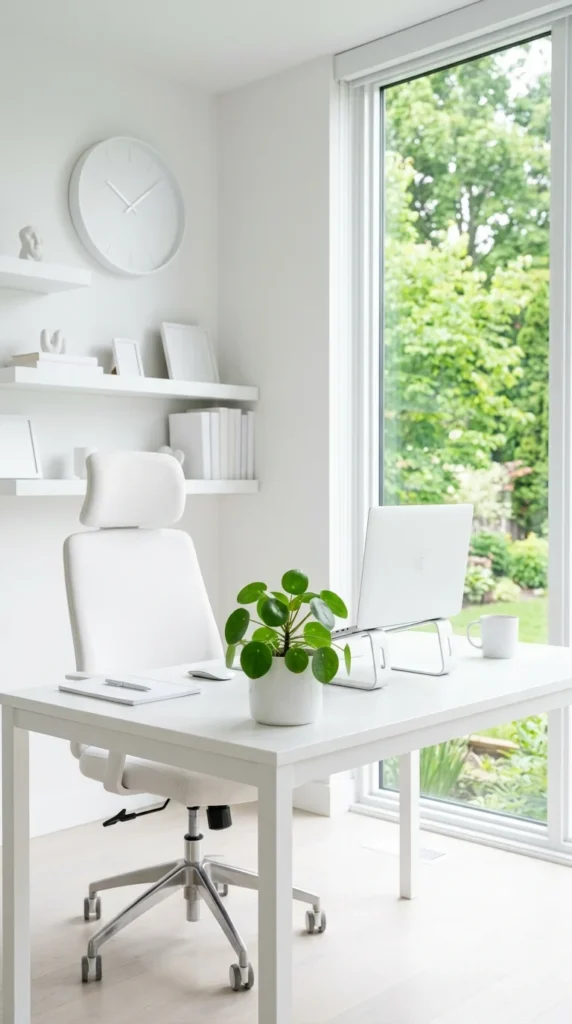
If you find color distracting, a monochromatic theme might be your best bet for focus. Choosing one color—like charcoal gray, soft white, or even a muted sage—and using it in various shades and textures creates a cohesive and calming environment. This “tonal” approach is incredibly modern and sophisticated, reducing visual noise and allowing your brain to focus entirely on the task at hand.
12. Corner Nooks
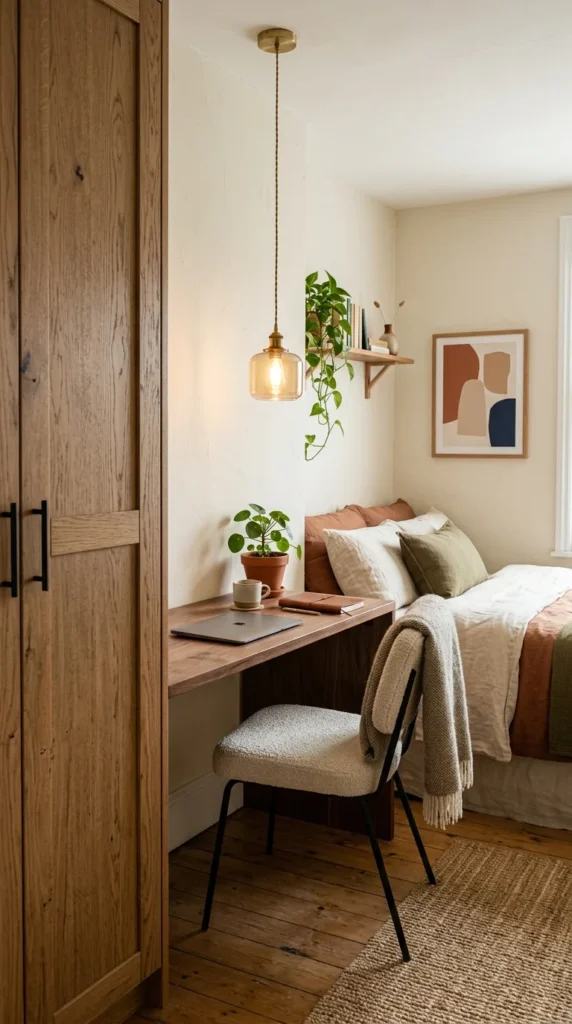
You don’t need a whole room to have a stunning office. A well-designed corner nook can be just as effective. Use a small-scale desk and vertical storage to make the most of the space. To make the nook feel like its own “room,” you can paint the corner a different color or use a small rug to define the boundary. It’s about being intentional with every square inch.
13. Smart Organization
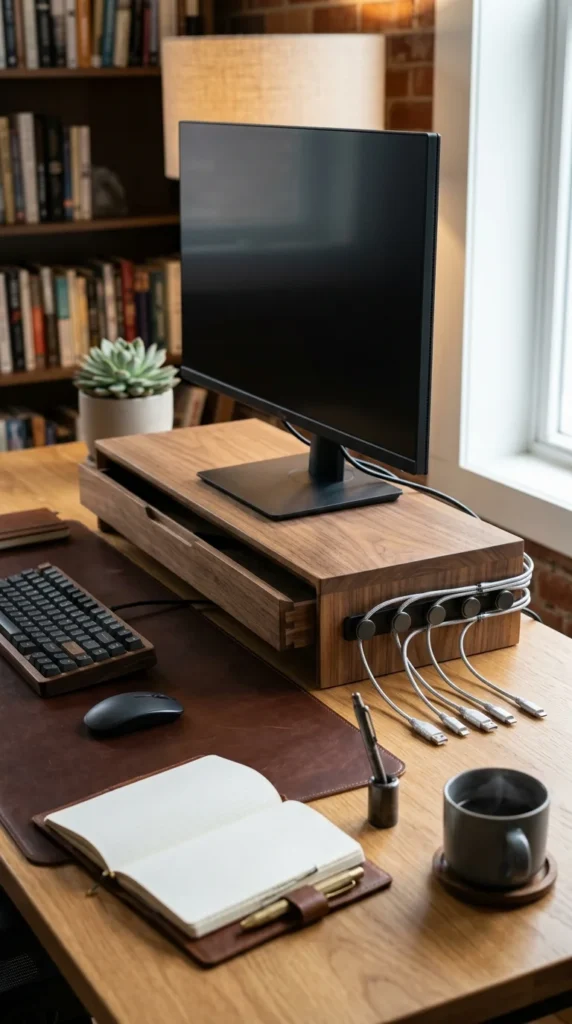
Clutter is the enemy of productivity. Smart organization isn’t just about putting things away; it’s about creating a system that works for you. Use monitor risers to create extra storage underneath, cable management trays to hide the “spaghetti” of wires, and modular drawer organizers to keep pens and paperclips in their place. A clean desk leads to a clear mind.
14. Large Windows
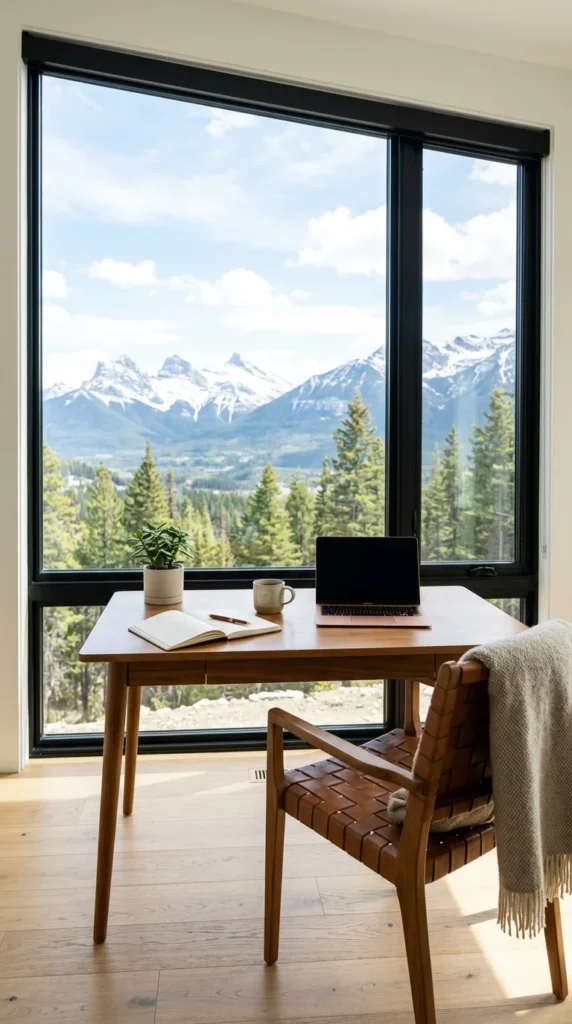
If your home allows for it, position your desk to face a window. Natural light is a powerful mood booster and helps regulate your circadian rhythm. Facing the outdoors provides a long-distance view for your eyes to rest on periodically, which helps prevent digital eye strain. If privacy is an issue, use sheer cafe curtains or frosted glass film to let the light in while keeping the world out.
15. Vintage Desks
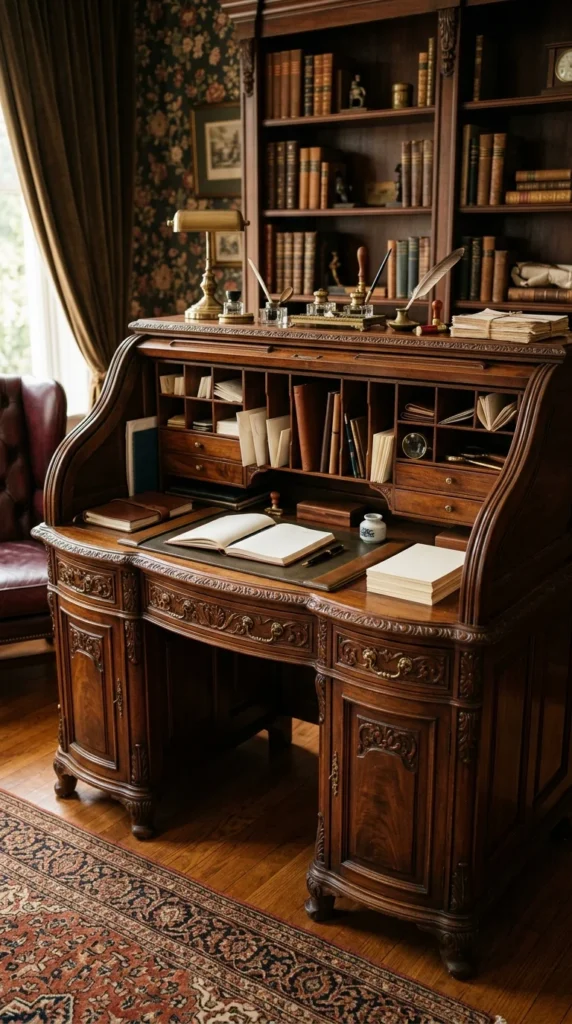
In a world of flat-pack furniture, a vintage desk brings soul and history to your home office. An antique writing desk or a mid-century modern teak table serves as a conversation piece and adds character that modern furniture often lacks. Pairing a vintage desk with a contemporary chair creates a “transitional” look that feels both timeless and trendy.
16. Bold Color Blocking
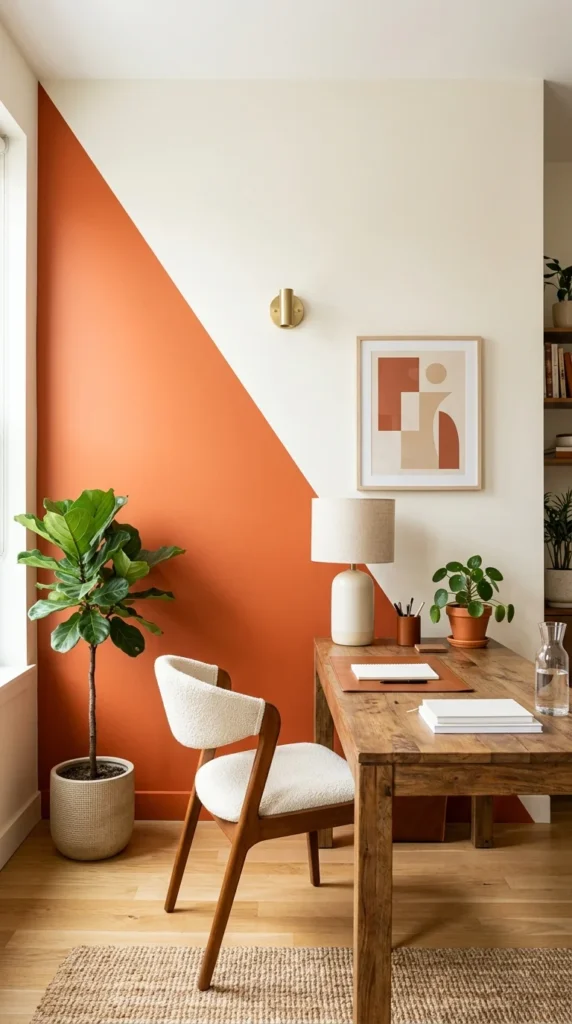
For the creative professional, color blocking can provide a much-needed energy boost. Using two or three high-contrast colors on the walls can define the space and stimulate the mind. You can use paint to create a “faux” headboard for your desk or to highlight an architectural feature. It’s a low-cost, high-impact way to make a dramatic statement.
17. Personal Sanctuary
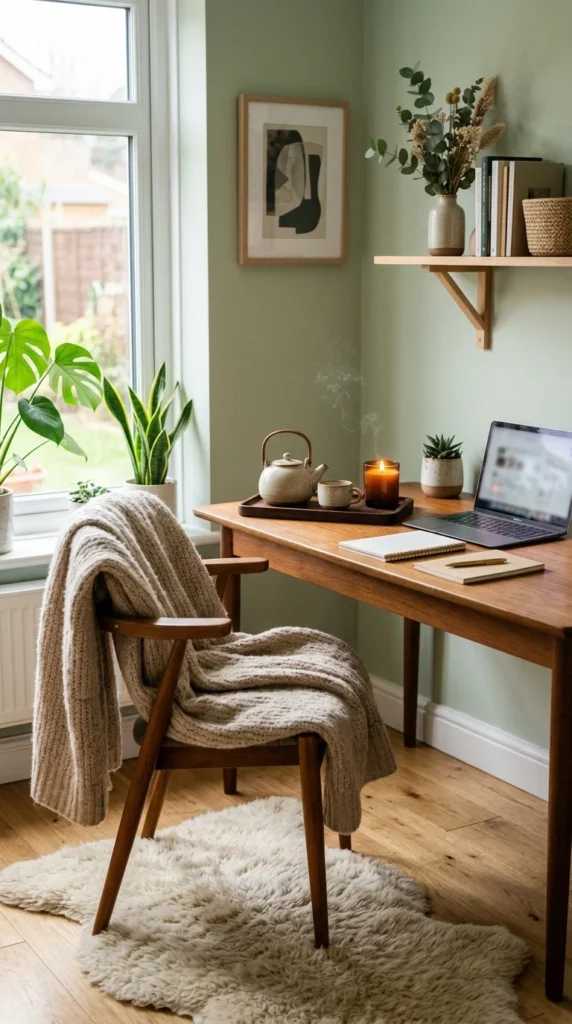
Ultimately, your home office is part of your home. Adding “soft” elements like a plush throw, a high-quality scented candle, or a dedicated tea station makes the space feel less like a corporate cubicle and more like a personal retreat. When you feel comfortable and cared for in your environment, you are more likely to do your best work. Turn your office into a place you actually want to be, rather than a place you have to be.