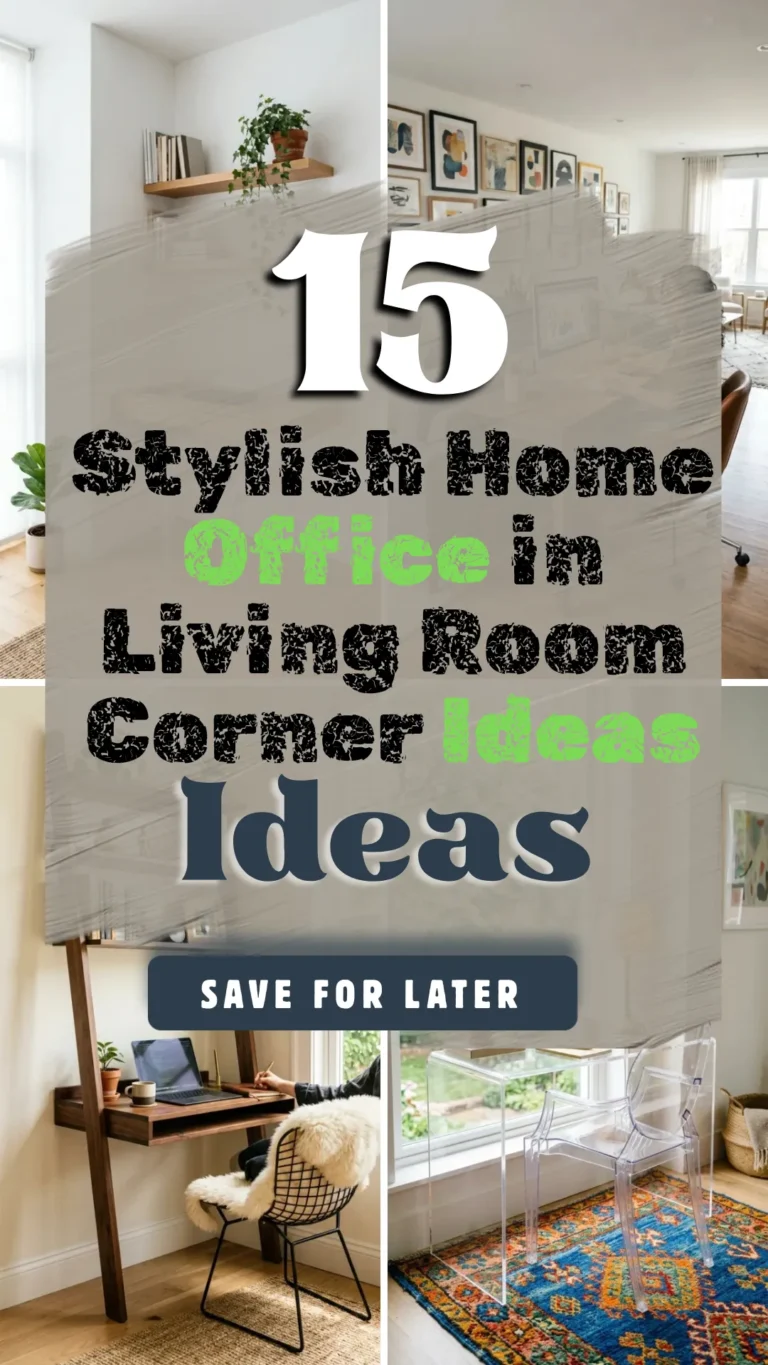

The modern era has transformed the way we view our living spaces. No longer just a place for relaxation and entertainment, the living room has become a multi-functional hub where work and life intersect. Finding the balance between a productive workspace and a cozy home environment can be challenging, especially when square footage is at a premium. However, a corner home office offers the perfect solution, allowing you to carve out a professional sanctuary without sacrificing the aesthetic of your primary living area.
Whether you are working with a tiny apartment or a spacious open-concept home, these fifteen ideas will inspire you to create a stylish, functional, and seamless home office in your living room corner.
1. Floating Desk
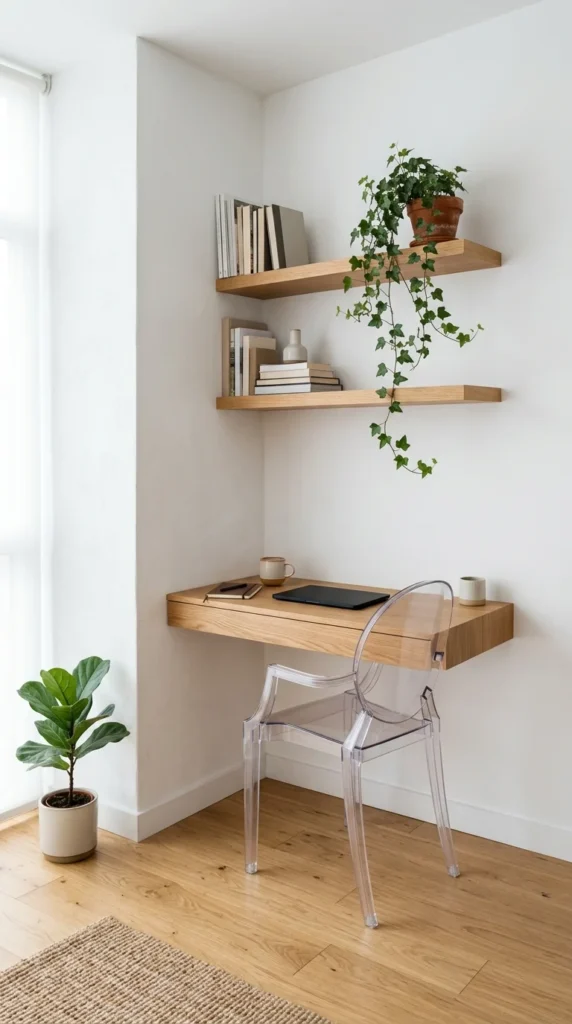
The floating desk is the ultimate space-saver for small living rooms. By mounting the desktop directly to the wall, you eliminate the need for bulky legs, creating a sense of openness and “airiness.” This setup is particularly effective in tight corners where every inch of floor space counts.
- Design Tip: Match the wood grain of the floating desk to other furniture in the room, such as your coffee table or media console, to create a cohesive look.
- Storage: Pair it with floating shelves above the desk to keep your workspace clear while providing a place for decor and essentials.
2. Behind Sofa
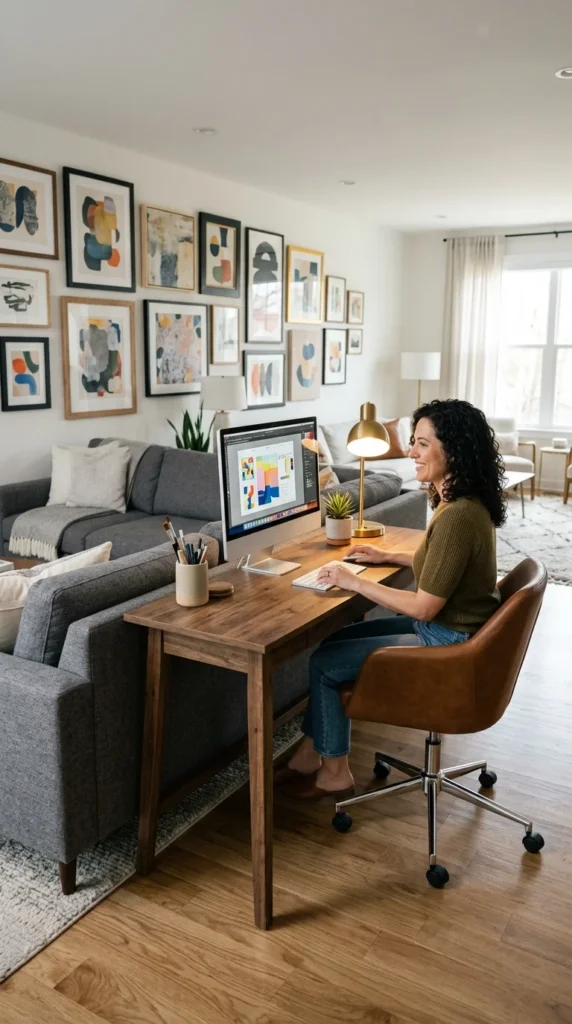
If your living room features a “floating” sofa (one that isn’t pushed against a wall), the space directly behind it is prime real estate for an office. A long, slender desk can act as a sofa table during the evening and a functional workstation during the day.
- Zoning: This layout naturally divides the room into “work” and “relax” zones without the need for physical partitions.
- Multi-use: Choose a desk that is the same height as the back of your sofa for a streamlined, integrated appearance.
3. Ladder Desk
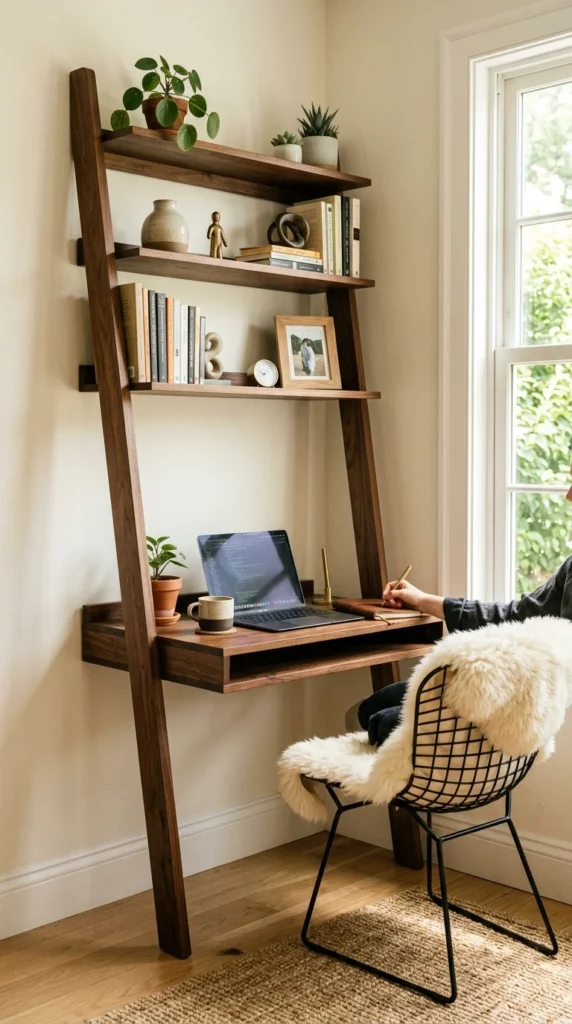
Ladder desks are beloved for their verticality. They draw the eye upward, making the most of high ceilings while occupying a very small footprint on the floor. This style is perfect for those who want their home office to look more like a piece of decorative furniture than a corporate cubicle.
- Styling: Use the upper shelves for “living room” items like framed photos or candles, and the lower shelf strictly for work to blend the two functions.
- Compactness: Because they lean against the wall, they are incredibly easy to move if you decide to rearrange your living room layout.
4. Acrylic Furniture
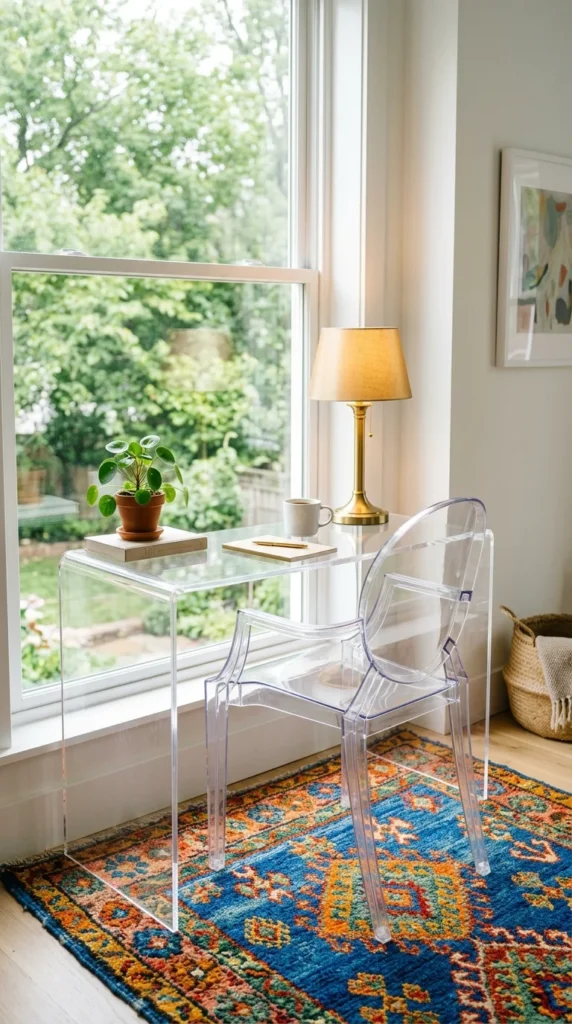
When you want your home office to disappear, go for acrylic. Often called “ghost” furniture, transparent desks and chairs provide a full-sized workspace without adding any visual weight to the room. This is a brilliant trick for small or cluttered living rooms.
- Modern Aesthetic: Acrylic looks incredibly chic and modern, pairing well with almost any color palette.
- Visual Flow: Because you can see the floor and walls through the furniture, the corner feels just as large as it did before the office was added.
5. Built-in Niche
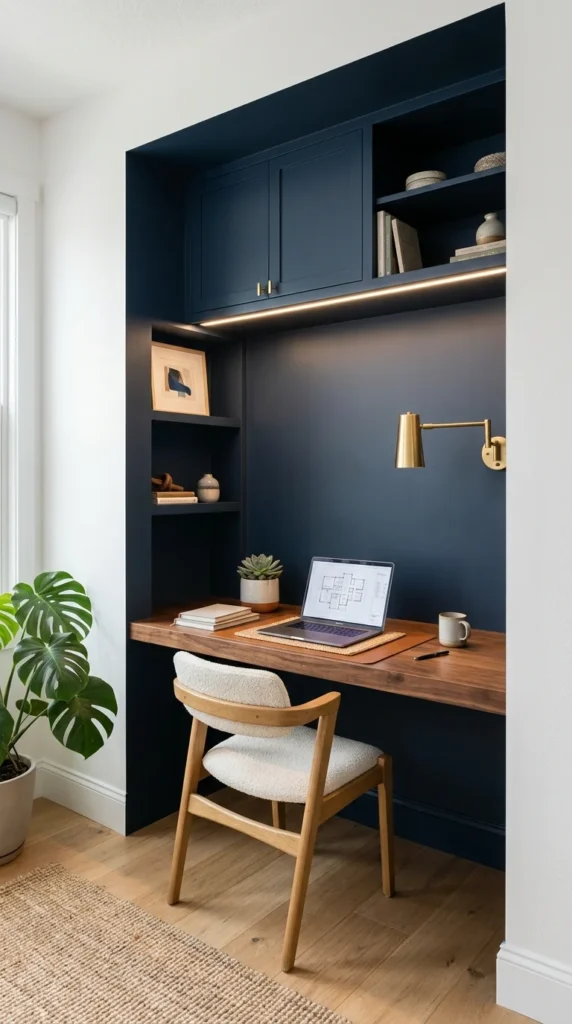
If your living room has an awkward architectural nook or an unused closet, turn it into a built-in office. Customizing a desk to fit perfectly into a recess creates a high-end, intentional look that feels like a natural part of the home’s architecture.
- Color Blocking: Paint the interior of the niche a different color than the rest of the room to define the office space.
- Maximized Efficiency: Built-ins allow you to utilize every millimeter of space, from floor to ceiling.
6. L-Shaped Corner
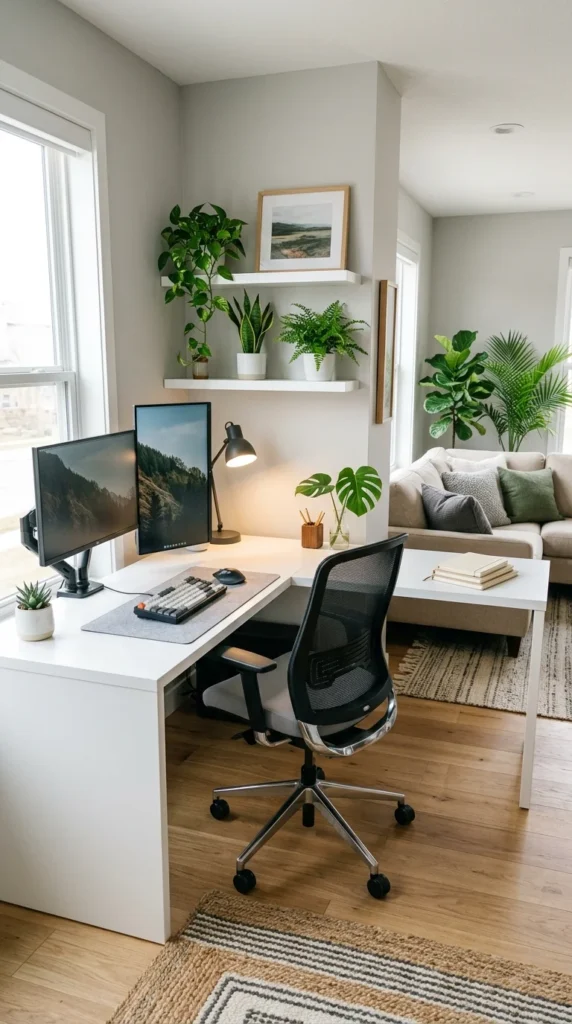
For those who need a lot of surface area for multiple monitors or spreading out documents, the L-shaped desk is king. By tucking it into a corner, you utilize the “dead space” that often goes unused in a room’s layout.
- Ergonomics: An L-shape allows you to pivot easily between different tasks without having to get up.
- Organization: You can designate one side for computer work and the other for analog tasks like writing or reading.
7. Secretary Desk
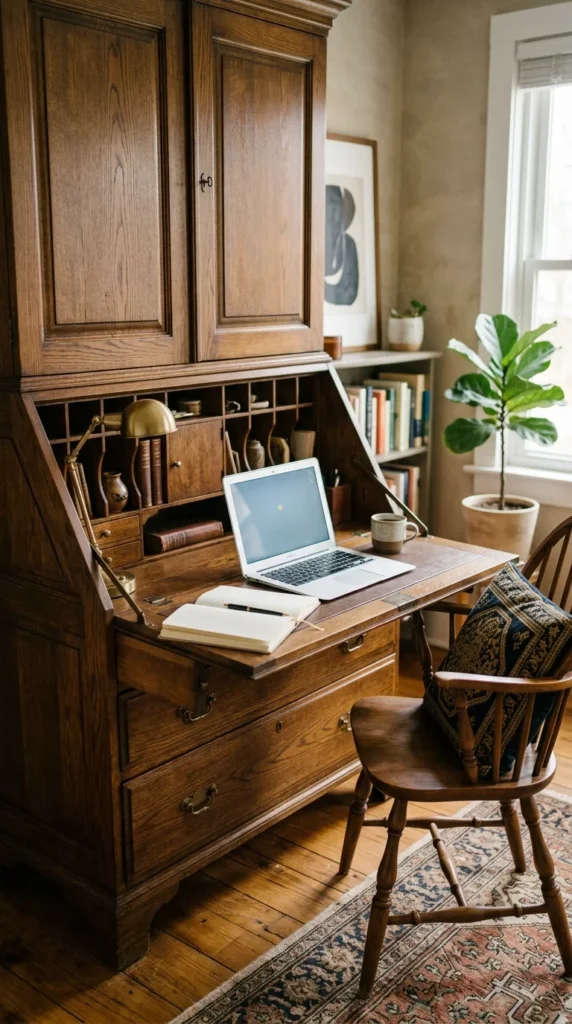
The secretary desk is the ultimate “hideaway” office. It features a hinged desktop that can be closed when the workday is over, effectively hiding your computer, cords, and clutter from view. This is perfect for those who want to “clock out” mentally and physically.
- Vintage Charm: Many secretary desks feature beautiful wood grains and antique hardware, adding a touch of history to your living room.
- Tidiness: Closing the desk instantly tidies up the room, which is ideal if you frequently host guests.
8. Room Divider
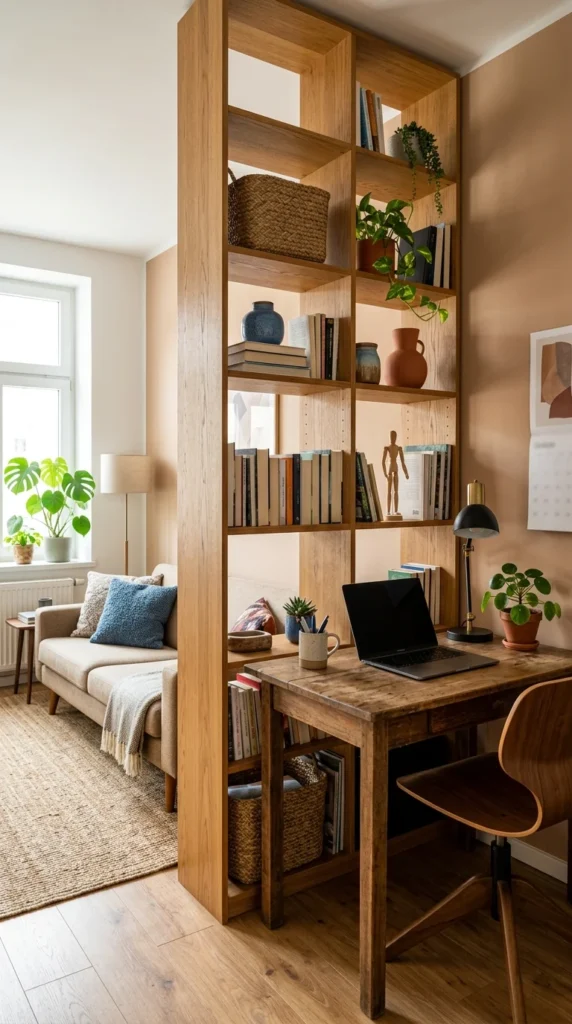
If you find it hard to focus while looking at the TV or the rest of the house, use a room divider to create a sense of privacy. An open-backed bookshelf is a great choice because it defines the boundary without blocking light or making the corner feel claustrophobic.
- Dual-Sided Storage: Use the shelves to store office supplies on the “work” side and decorative items on the “living” side.
- Greenery: Fill some of the shelves with plants to create a “living wall” that adds texture and fresh air to your workspace.
9. Window View
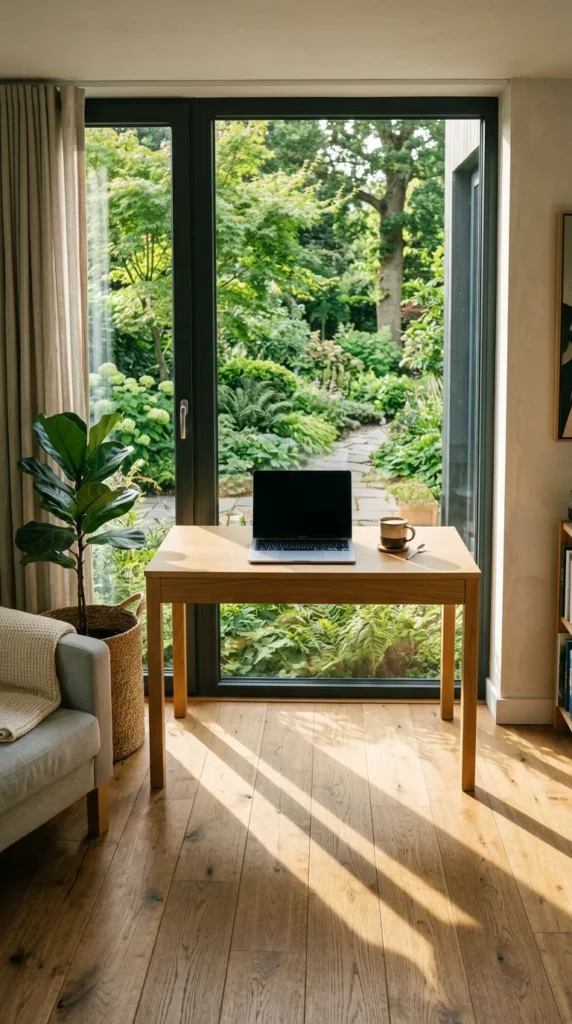
Placing your desk in a corner with a window provides the best accessory of all: natural light. A view of the outdoors can boost your mood and productivity, making the workday feel less confining.
- Lighting: Position the desk so the window is to your side or front to avoid glare on your computer screen.
- Inspiration: Looking at nature or a cityscape can provide much-needed visual breaks during intense working hours.
10. Color Zoning
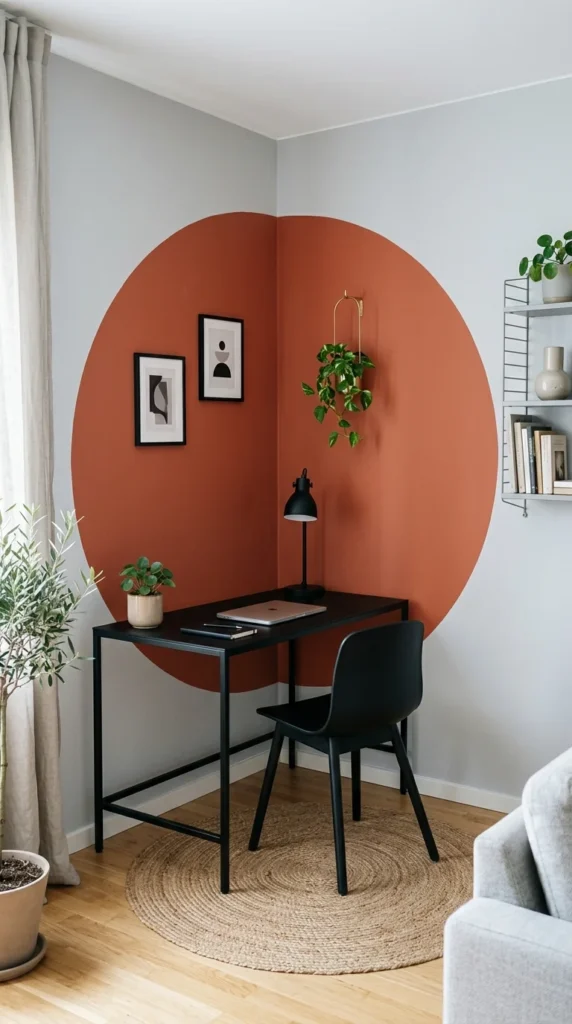
You don’t need walls to create a room. “Zoning” with paint is a trendy and affordable way to separate your office from the rest of the living room. By painting a large circle, square, or even just the two corner walls a different color, you create a visual boundary.
- Bold Contrast: Choose a color that complements your existing decor but is distinct enough to stand out.
- Psychology: Using a specific color for your workspace can help your brain associate that hue with productivity.
11. Rug Defined
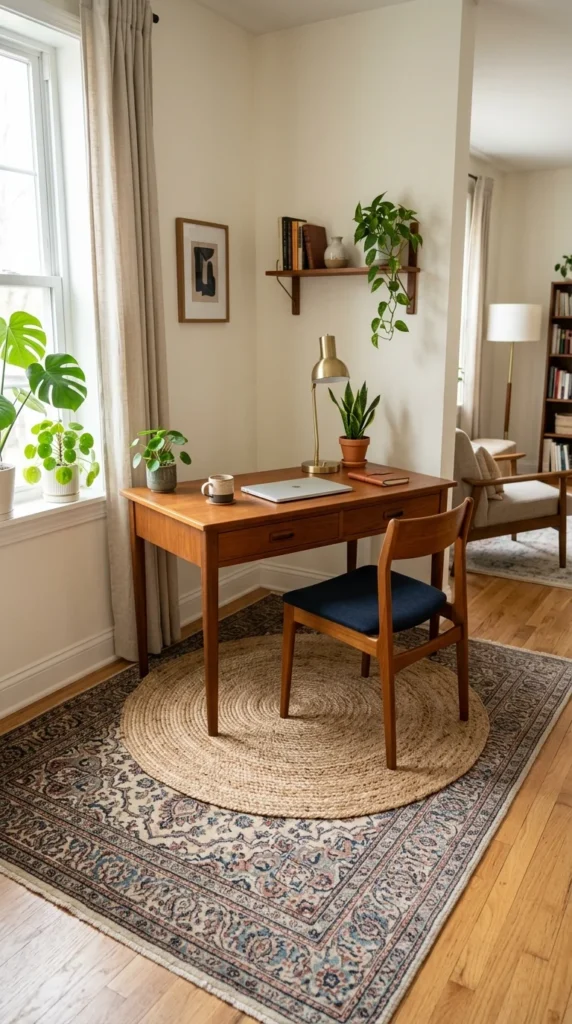
A rug is a powerful tool for defining a space. By placing a small area rug under your desk and chair, you “ground” the office furniture, signaling that this corner has a different purpose than the surrounding seating area.
- Texture: Choose a rug with a different texture than your main carpet—such as a flat-weave or jute—to further distinguish the zone.
- Protection: Rugs also protect your hardwood or laminate floors from the constant movement of a desk chair.
12. Minimalist Scandi
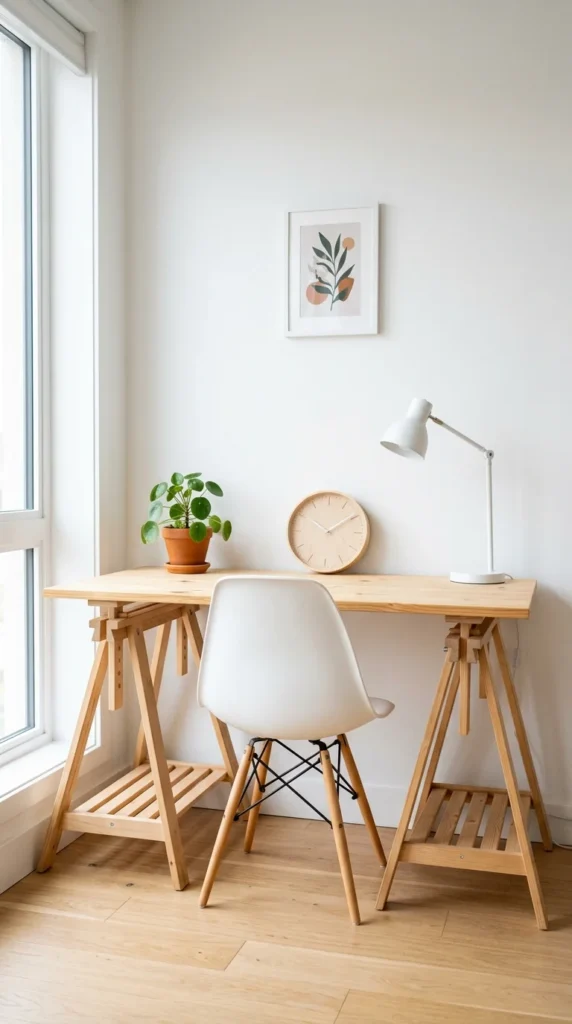
Scandinavian design is built on the principles of simplicity, functionality, and light. A Scandi-style corner office uses a palette of whites, grays, and light woods to create a calm environment that doesn’t overwhelm the living room.
- Uncluttered: The key to this look is “less is more.” Keep only the essentials on your desk to maintain a serene atmosphere.
- Natural Elements: Incorporate a single houseplant or a sheepskin throw to add warmth (or “hygge”) to the minimalist setup.
13. Antique Elegance

If your living room has a more traditional or formal aesthetic, a modern plastic desk will look out of place. Instead, opt for a beautiful antique desk. An old writing table or a Victorian bureau can be a stunning focal point that happens to be a functional workspace.
- Statement Piece: An antique desk acts as a piece of art, adding character and history to the room.
- Comfort: Pair it with a classic upholstered chair that matches your sofa to ensure the “office” doesn’t feel too corporate.
14. Greenery Hub
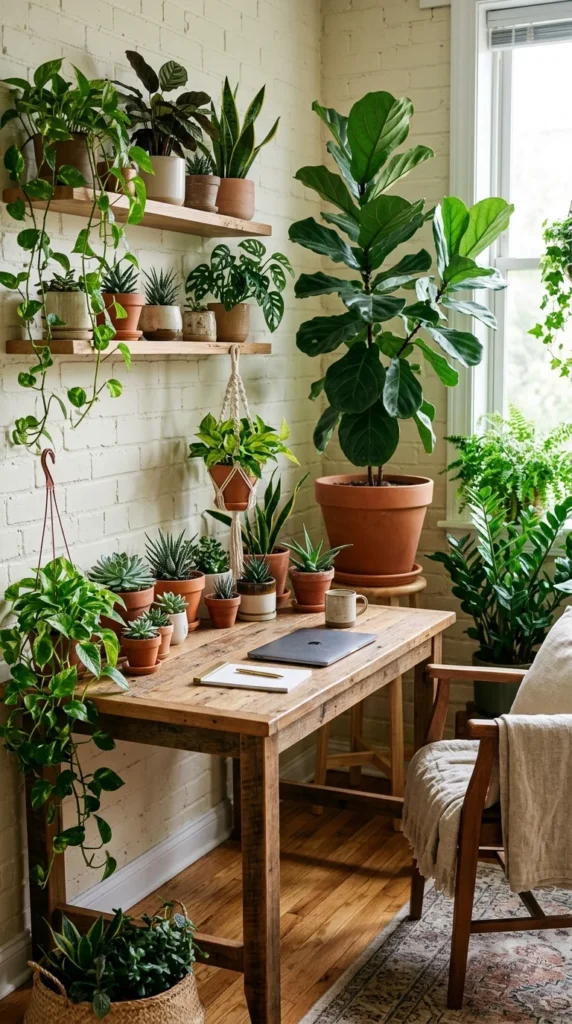
Plants are known to reduce stress and improve air quality, making them the perfect companions for a home office. Transform your living room corner into a “jungle” workspace by surrounding your desk with various species and heights of greenery.
- Biophilic Design: Using plants to bridge the gap between indoors and outdoors creates a refreshing workspace that feels integrated into the home.
- Visual Screen: Taller plants can act as a natural screen, providing a sense of enclosure and privacy while you work.
15. The Cloffice
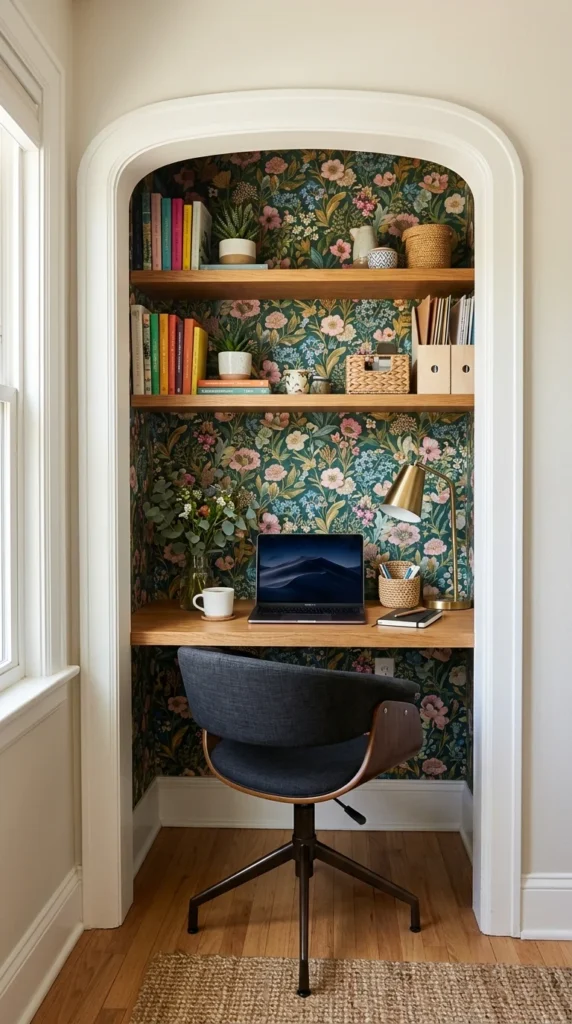
The “Cloffice” (closet-office) is a genius way to save space. By removing the doors of a standard reach-in closet in your living room, you can install a desk and shelving inside. This keeps the office tucked away and out of the main flow of the room.
- Wallpaper: Since the space is small, you can afford to use a bold or expensive wallpaper on the back wall of the closet for a “jewel box” effect.
- Hidden Storage: Use the upper shelves of the closet for bins and baskets to hide away unsightly office supplies like printers and routers.