
In the modern era of remote work, your home office is no longer just a temporary workstation; it is the command center of your professional life. The environment you curate directly impacts your cognitive load, your stress levels, and ultimately, your output. A well-designed space does more than just look good on a video call—it serves as a psychological trigger that tells your brain it is time to perform.
Creating a space that fosters deep focus requires a blend of ergonomics, aesthetics, and personal psychology. Whether you are working from a dedicated room or a small corner of your apartment, these 17 creative ideas will help you transform your workspace into a sanctuary of productivity.
1. Natural Light
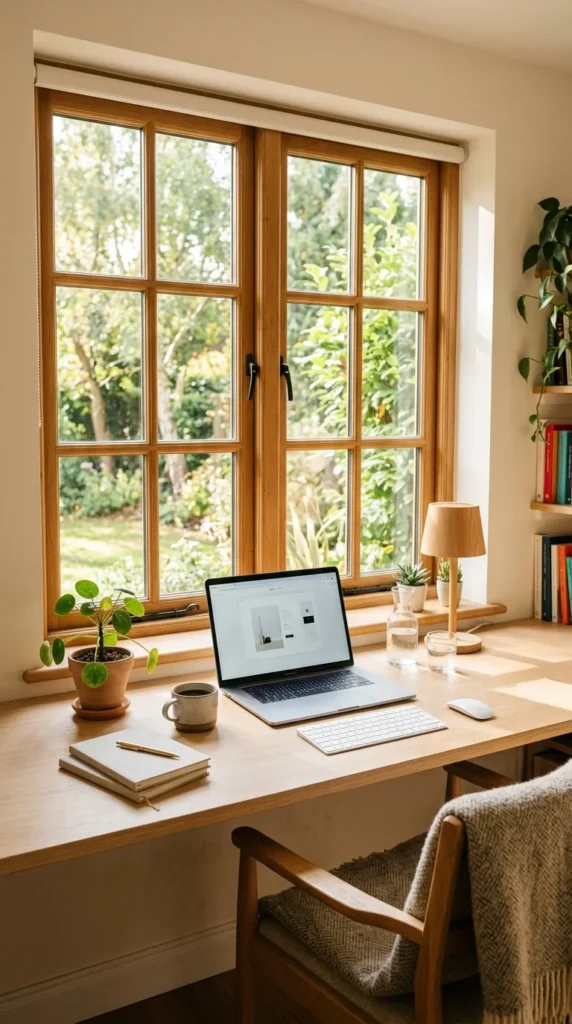
The most effective productivity tool is completely free: sunlight. Natural light regulates your circadian rhythm, which governs your sleep-wake cycle and mood. Positioning your desk near a window can reduce eye strain and fatigue compared to harsh fluorescent lighting. To avoid glare on your monitor, try placing your desk perpendicular to the window rather than directly in front of it. The connection to the outside world also prevents the “cubicle fever” that often leads to mid-afternoon slumps.
2. Minimalist Desk
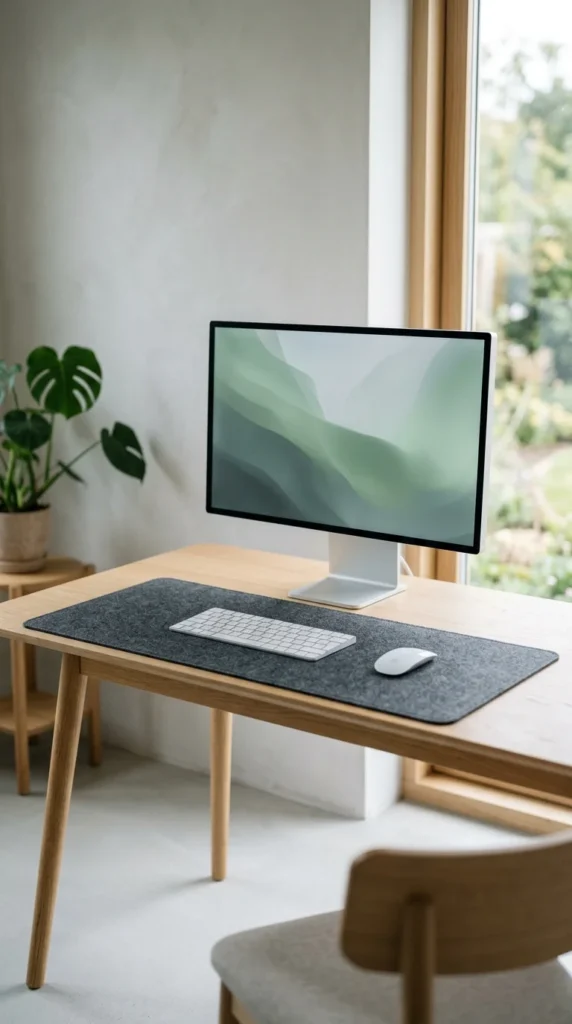
Clutter is a silent productivity killer. Every stray paper or unused gadget on your desk competes for your brain’s attention. A minimalist setup focuses on the essentials. By choosing a desk with a clean profile and keeping the surface clear of anything not related to the task at hand, you create a “blank canvas” for your thoughts. This visual clarity translates into mental clarity, allowing you to dive into deep work without distraction.
3. Ergonomic Chair
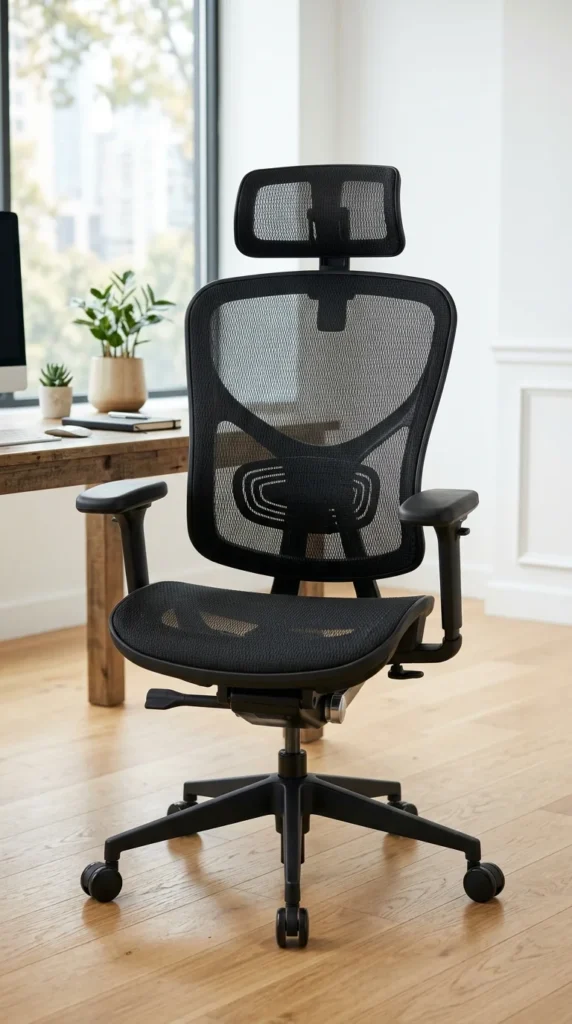
You cannot focus if you are in pain. An ergonomic chair is the single most important investment in your home office. Look for a model that offers adjustable lumbar support, seat height, and armrests. The goal is to maintain the natural “S” curve of your spine while keeping your feet flat on the floor. When your body is properly supported, your brain can dedicate its energy to your work rather than managing physical discomfort.
4. Biophilic Elements
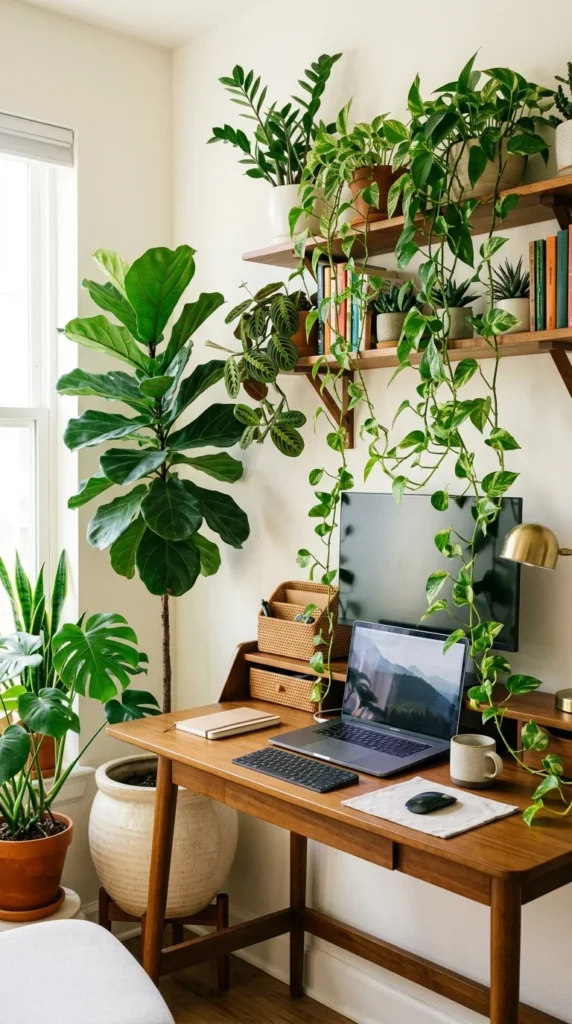
Biophilic design—incorporating nature into the indoors—has been scientifically proven to reduce stress and increase productivity by up to 15%. Adding greenery like snake plants, monstera, or succulents to your office purifies the air and provides a calming visual break. The color green is also associated with creativity and stability, making it the perfect companion for high-pressure work days.
5. Standing Desk
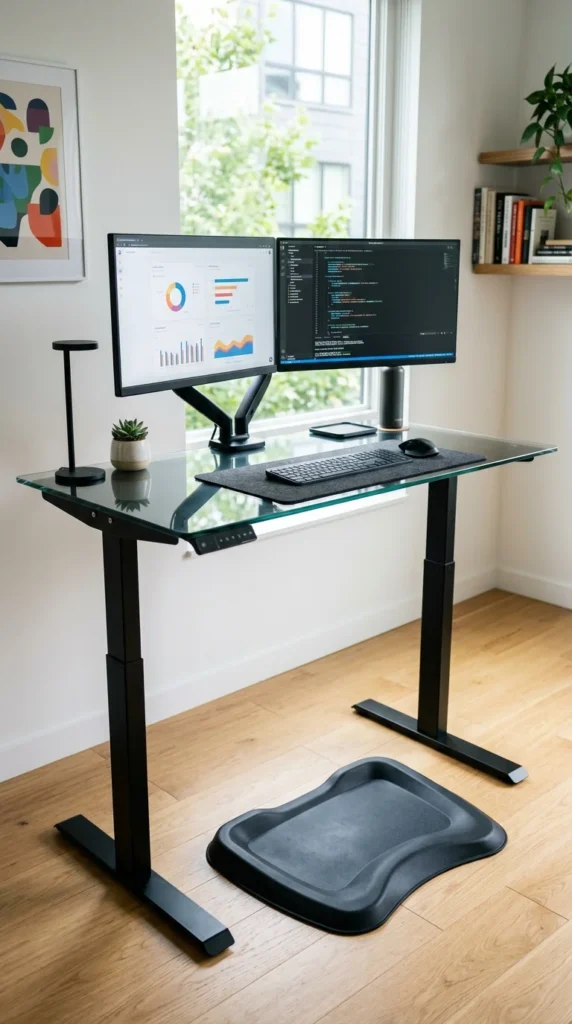
Sedentary behavior is the enemy of energy. An electric standing desk allows you to transition between sitting and standing throughout the day, which boosts blood flow and keeps your metabolism active. Switching positions every hour can prevent the “brain fog” that occurs when you stay in one posture for too long. If a full standing desk isn’t in the budget, a desktop converter can provide the same benefits.
6. Ambient Lighting
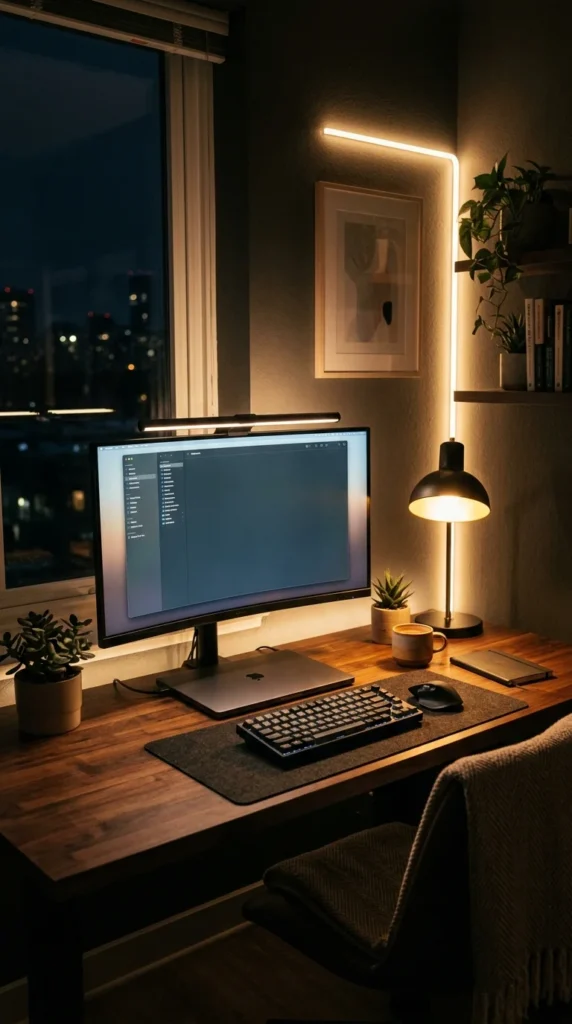
When the sun goes down, your lighting needs to shift. Layered lighting is key to maintaining focus without straining your eyes. A dedicated task lamp with an adjustable neck allows you to direct light exactly where you need it for reading or writing. Meanwhile, a monitor light bar can illuminate your workspace without creating screen glare. Warm, dimmable ambient light in the background helps signal to your brain that it’s time for “deep focus” mode rather than “frantic morning” mode.
7. Soundproofing
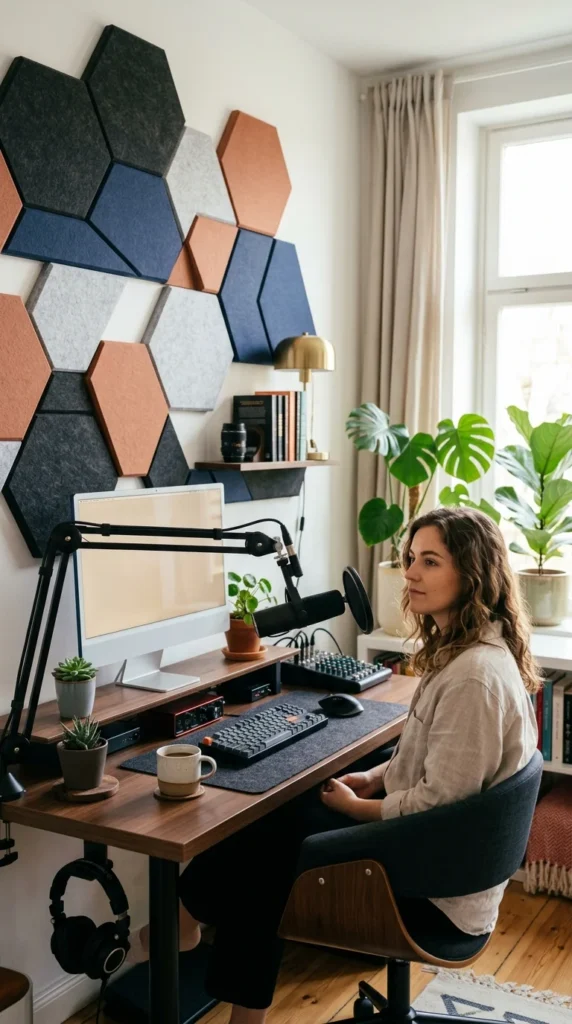
Auditory distractions—like a neighbor’s lawnmower or a humming refrigerator—can break a state of flow in seconds. Soundproofing doesn’t have to mean ugly foam squares; modern acoustic panels come in beautiful colors and shapes that double as wall art. If physical soundproofing isn’t an option, a pair of high-quality noise-canceling headphones is a non-negotiable tool for the modern home worker.
8. Vertical Storage
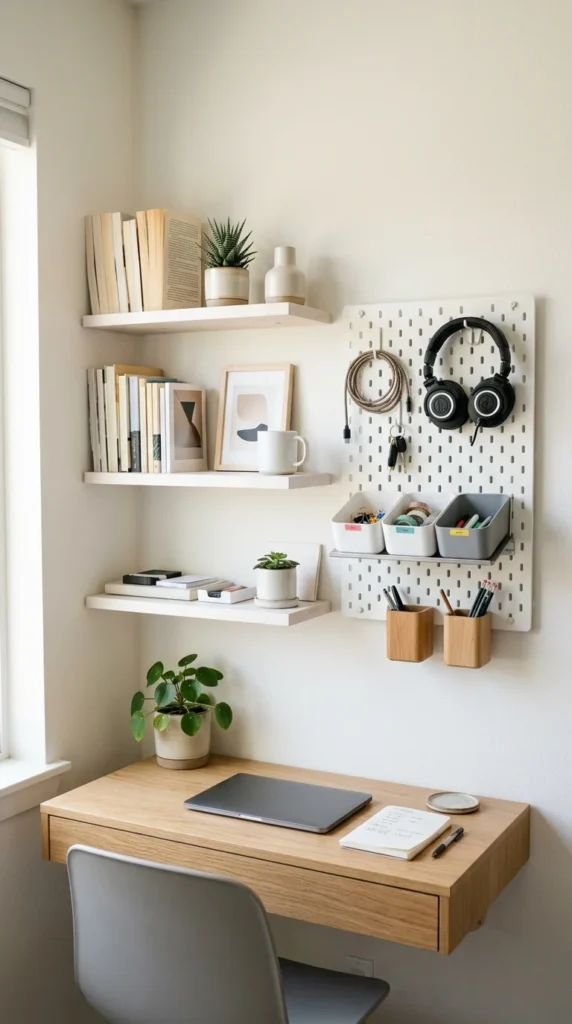
If you are working in a small space, look up. Vertical storage keeps your desk surface clear while keeping your essentials within arm’s reach. Pegboards are incredibly versatile, allowing you to move hooks and shelves as your needs change. Utilizing wall space for books, files, and tech accessories prevents your office from feeling cramped and cluttered.
9. Dual Monitors
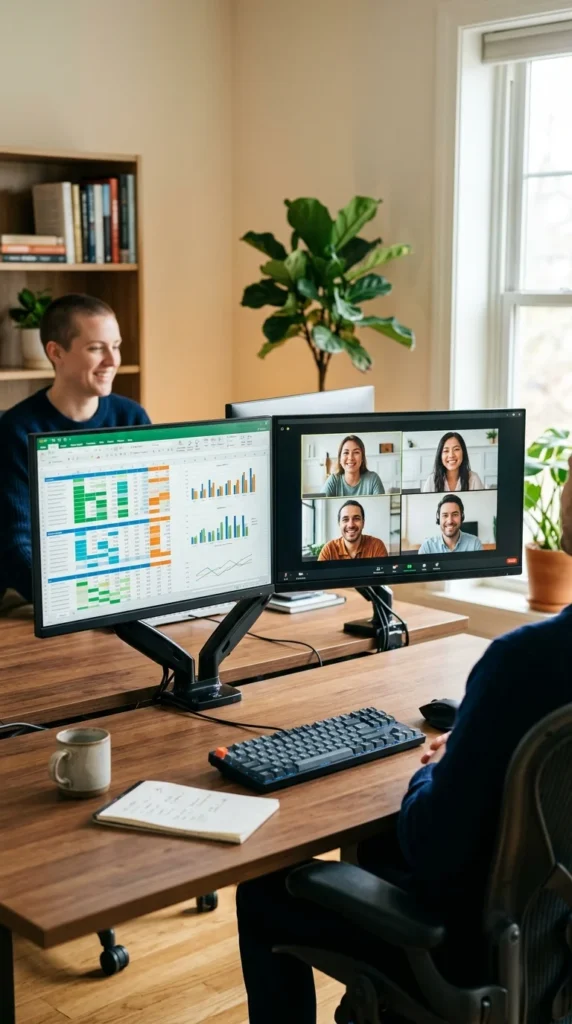
Screen real estate is a major productivity multiplier. Having two monitors allows you to reference data on one screen while producing content on the other, eliminating the “Alt-Tab” fatigue of constantly switching windows. To keep your neck healthy, ensure both monitors are at eye level and angled slightly inward to create a seamless field of vision.
10. Color Psychology
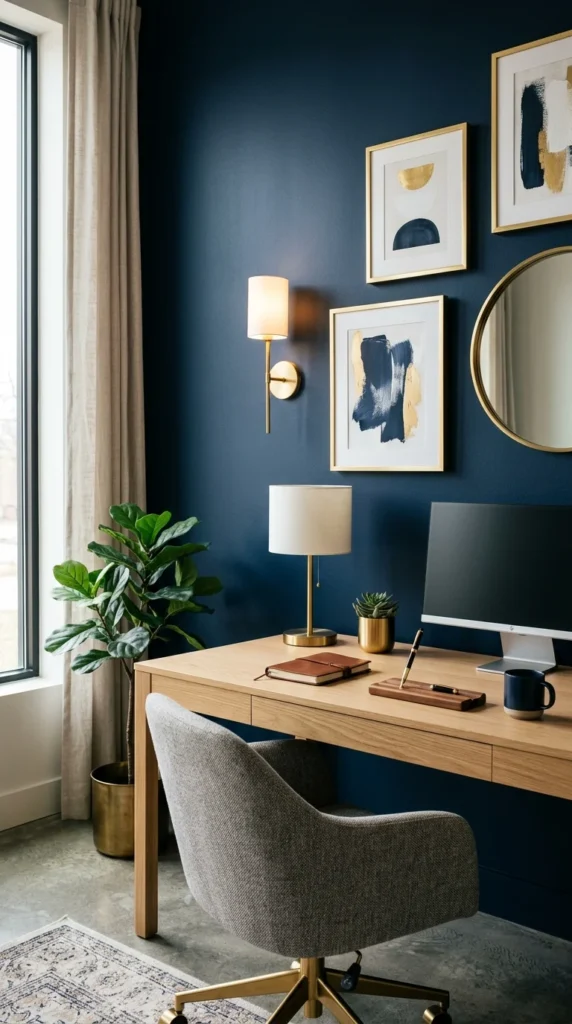
The color of your walls can dictate your mood. Blue is widely regarded as the best color for productivity and focus, as it has a calming effect on the mind. Green is excellent for long-term concentration and reducing eye strain. If you prefer a more energetic vibe, yellow can stimulate creativity. Avoid stark, clinical white, which can feel cold, or bright red, which can increase feelings of anxiety and stress.
11. Cable Management
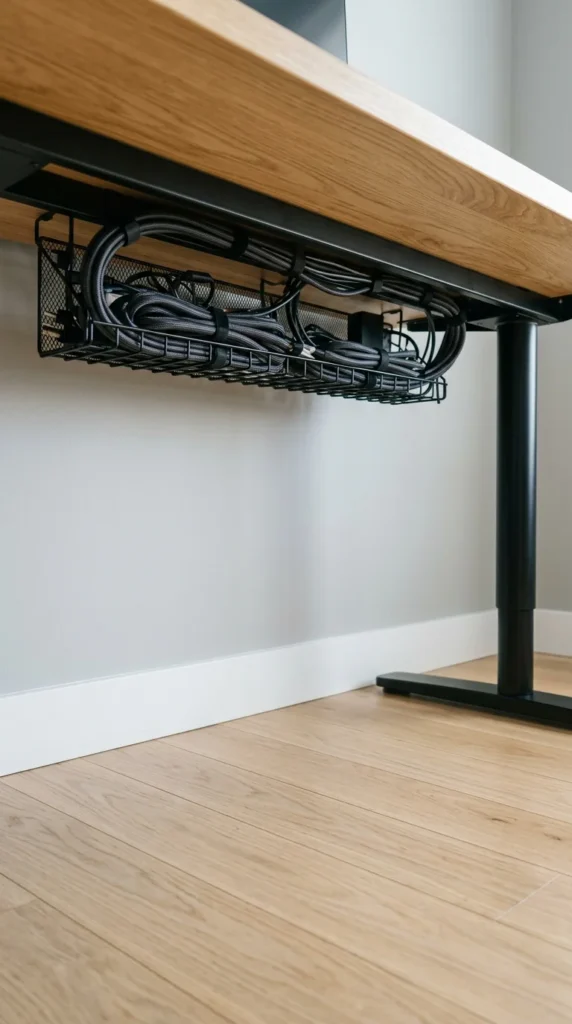
Nothing ruins a beautiful office setup faster than a “spaghetti” mess of cables. Use cable trays, sleeves, and clips to hide power strips and wires. Not only does this look better, but it also removes a significant visual distraction. A clean underside of the desk makes the entire room feel more organized and professional.
12. Scented Ambience
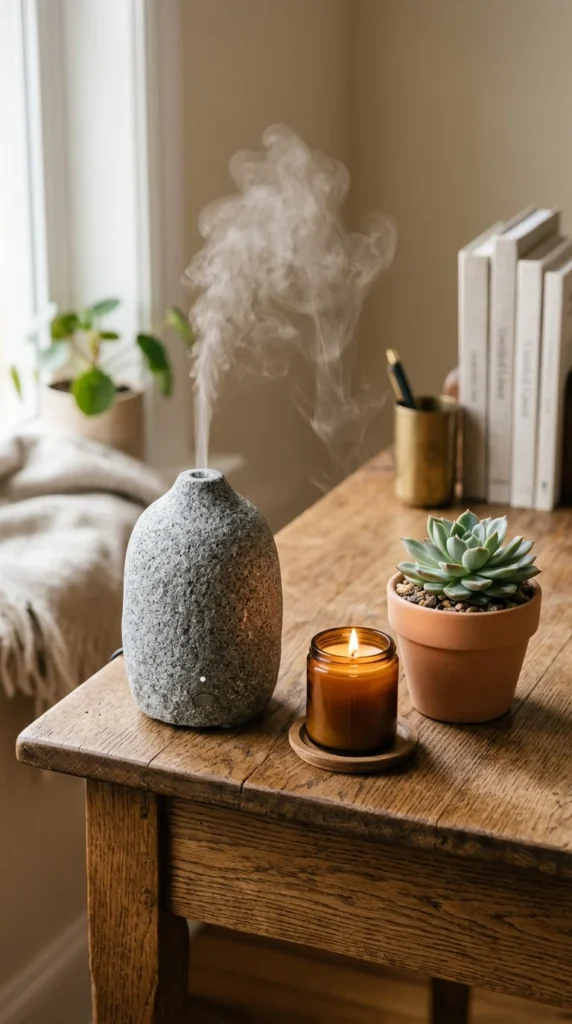
Your sense of smell is powerful. Aromatherapy can be used to “anchor” your brain into work mode. Peppermint and lemon scents are known for increasing alertness and cognitive performance, while rosemary can help with memory retention. Using a specific scent only when you are working helps your brain associate that aroma with productivity, making it easier to enter a state of flow.
13. Personal Touches
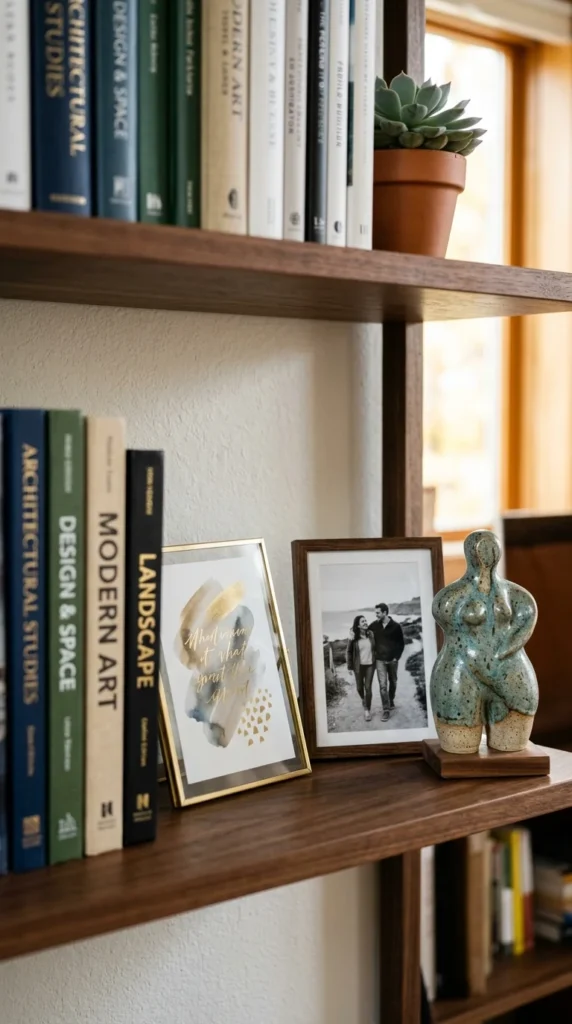
While minimalism is great for focus, a workspace should not be soul-less. Including a few personal items—a piece of art you love, a photo of a loved one, or a souvenir from a favorite trip—can boost your mood and keep you motivated during difficult tasks. The key is moderation; choose two or three items that bring you joy without cluttering the space.
14. Cozy Corner
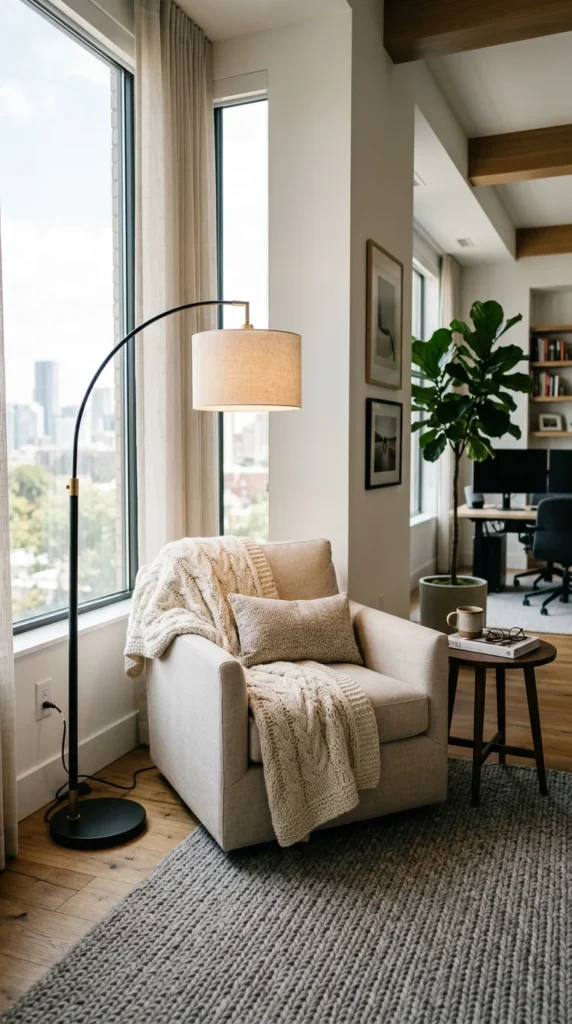
Productivity isn’t just about the time spent at your desk; it’s also about how you recharge. Creating a “secondary” zone in your office for reading or brainstorming can be incredibly beneficial. Stepping away from the computer to a cozy chair allows you to think more broadly and prevents the physical stiffness that comes from sitting at a desk all day.
15. Smart Tech
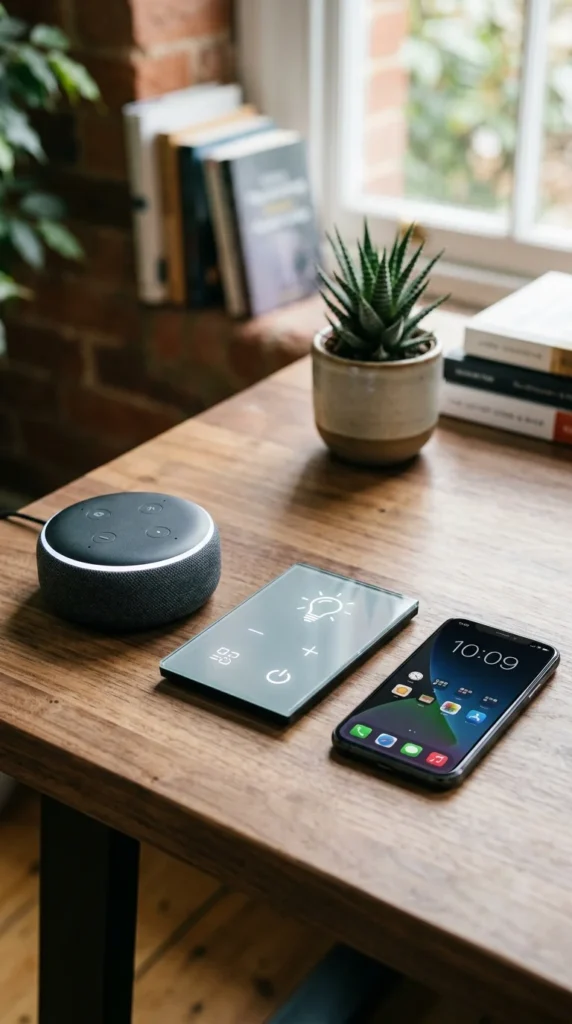
Automating your environment can save precious mental energy. Smart plugs can turn your lights and coffee machine on at the start of your workday. Smart speakers allow you to set timers or add tasks to your to-do list hands-free, ensuring you don’t lose your train of thought while typing. Even a smart thermostat can keep your room at the optimal “productivity temperature” (roughly 71°F or 22°C).
16. Vision Boards
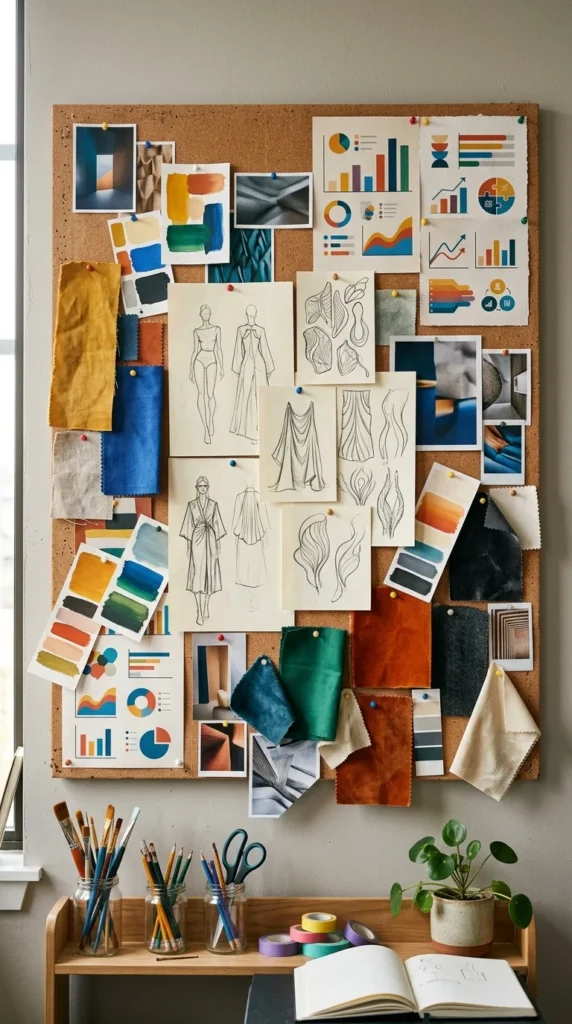
Keeping your “why” in sight is a powerful motivator. A vision board or a physical kanban board helps you visualize your progress and long-term goals. Instead of hiding your tasks in a digital app, having them physically present in your line of sight provides a constant, gentle reminder of what you are working toward.
17. Hidden Office
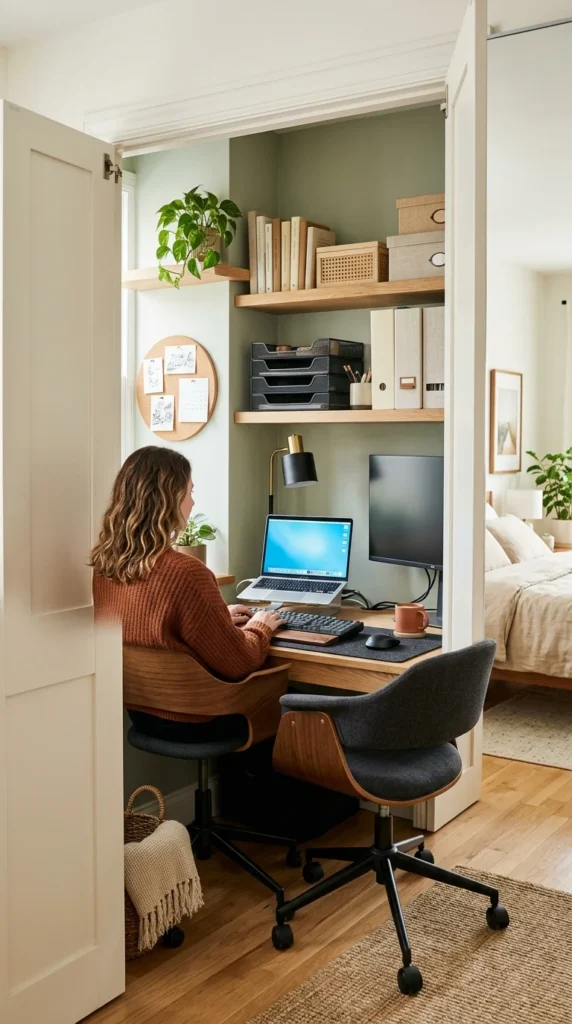
For those living in smaller homes, a “cloffice” (closet office) or a fold-down desk is a brilliant solution. This setup allows for a clear psychological boundary: when the doors are open, you are at work; when they are closed, work is “put away” for the day. This physical separation is crucial for maintaining a healthy work-life balance when your home and office are the same place.