
The modern home has become more than just a place to rest; it is now a hub for productivity, creativity, and connection. As remote work becomes a permanent fixture for many, the challenge of finding space for a home office has led to the rise of the “cloffice” and the multi-functional dining room. You don’t need a spare bedroom to create a professional sanctuary. With a bit of ingenuity, your dining area can transform into a high-functioning workspace during the day and a cozy gathering spot by night.
Here are 17 brilliant ways to reinvent your space by integrating an office into your dining room.
1. Statement Table
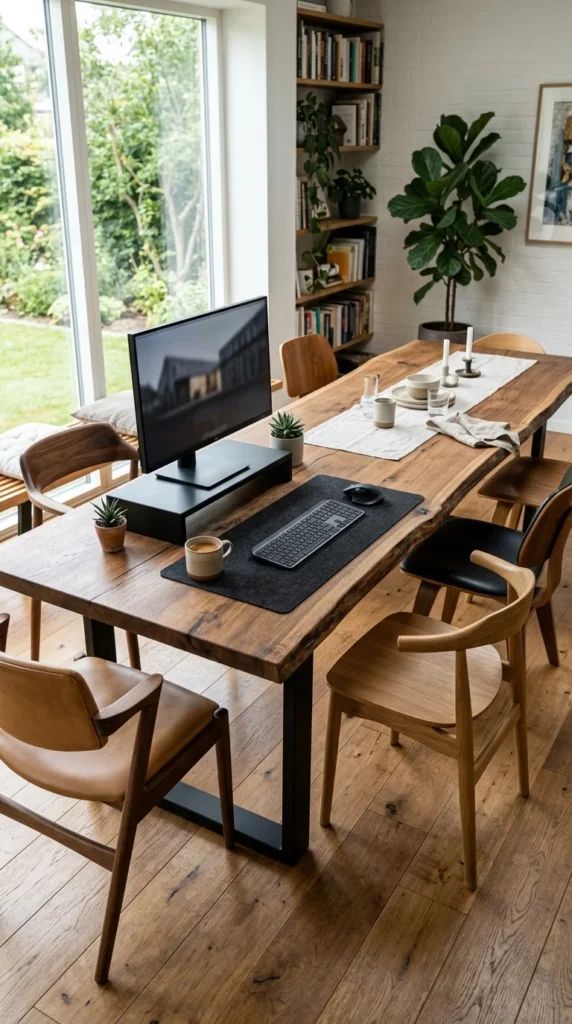
If you have a large dining table, why fight against it? Instead of adding a second desk, make the dining table the star of your work-from-home setup. A sturdy, expansive surface allows you to spread out documents, blueprints, or multiple monitors without feeling cramped. To make this work, use a high-quality leather desk mat to define your workspace and protect the wood finish. When the workday ends, simply slide your laptop into a nearby basket or drawer, and the table returns to its original purpose.
2. Corner Nook
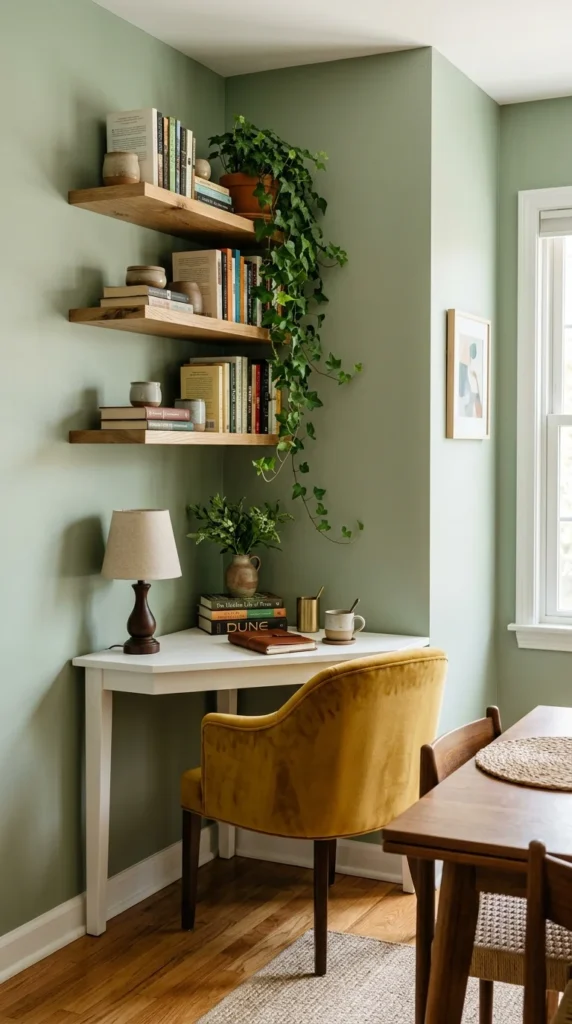
Often, the corners of a dining room go unused. By installing a compact corner desk or a small floating shelf, you can create a dedicated workstation that doesn’t interfere with the room’s flow. This “nook” approach keeps your work life physically separate from the dining area, helping you maintain a mental boundary between “office hours” and “dinner time.”
3. Credenza Conversion
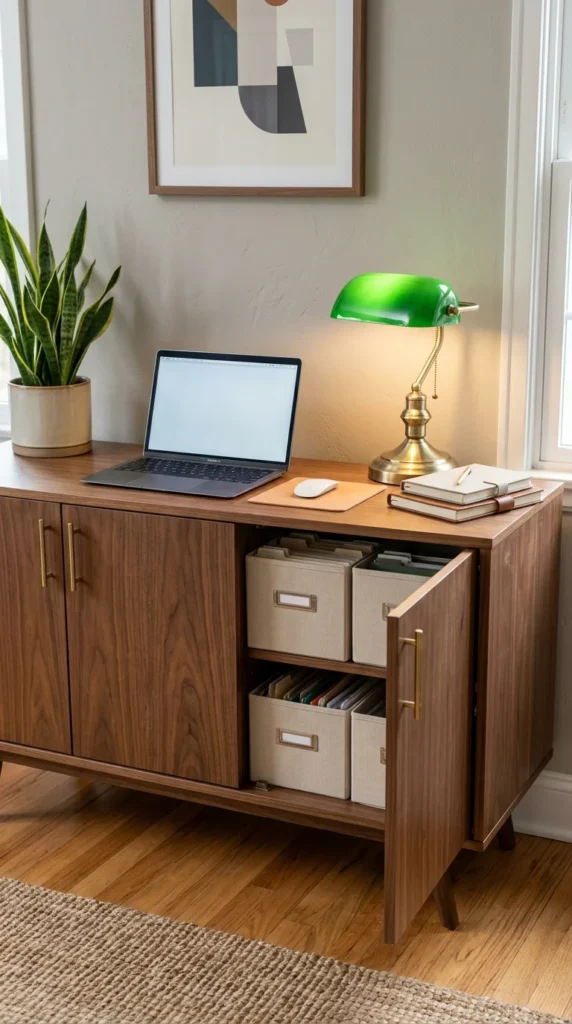
A credenza or sideboard is a staple in many dining rooms for storing fine china and linens. However, these pieces are the perfect height for a “perch” desk. If you prefer standing while you work or only need a surface for quick tasks, a credenza can easily double as a stylish desk. Use the cabinets below to hide away printers, cords, and office supplies, keeping the dining room clutter-free.
4. Floating Shelves
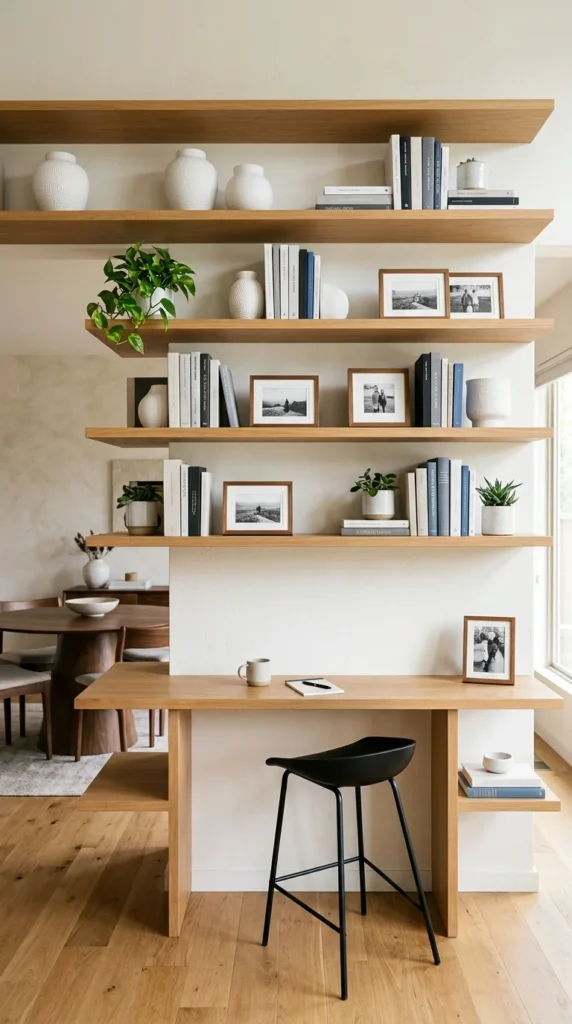
Vertical space is often overlooked. A wall-mounted floating desk takes up zero floor space, making it ideal for smaller dining rooms. By surrounding the desk with matching floating shelves, you create a cohesive “library” look that adds sophisticated character to the room even when you aren’t working.
5. Room Dividers
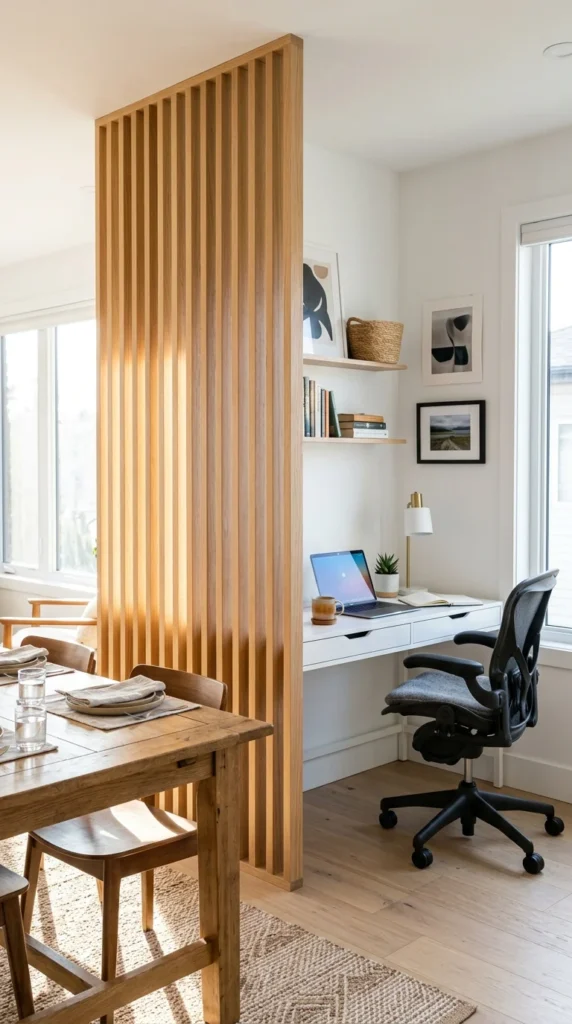
If your dining room is large enough, a physical partition can help create a distinct office zone. Use a folding screen, a tall bookshelf with open backs, or even a hanging textile to wall off your workspace. This visual “wall” signals to others in the house that you are in deep-focus mode and helps you “leave the office” at the end of the day by simply walking around the divider.
6. Built-in Cabinetry
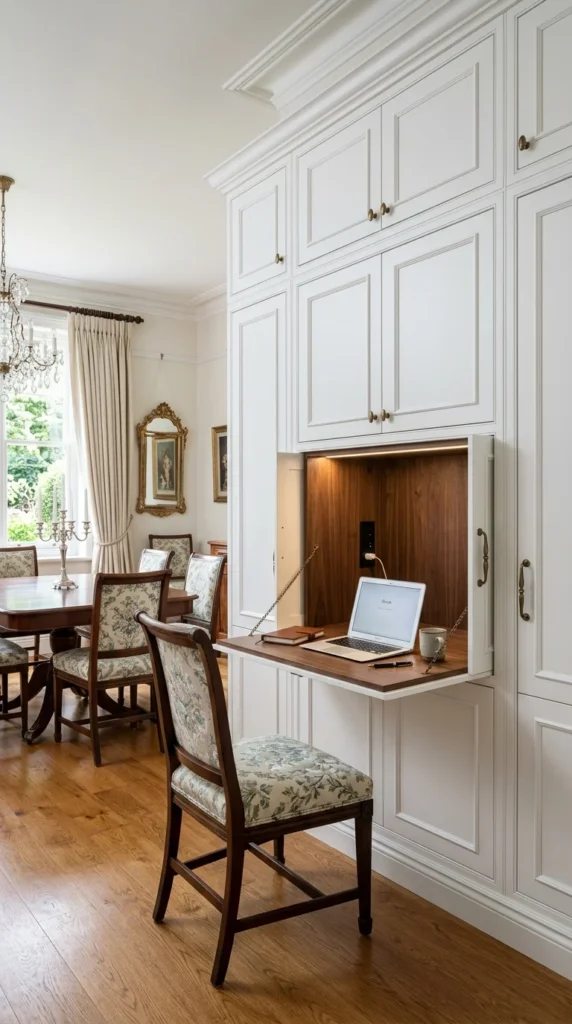
For the ultimate seamless look, custom built-ins are the way to go. You can design a “secretary desk” style cabinet that blends perfectly with your dining room storage. When the doors are closed, it looks like a standard pantry or china cabinet. When opened, it reveals a fully equipped office with task lighting and cord management.
7. Rug Zoning
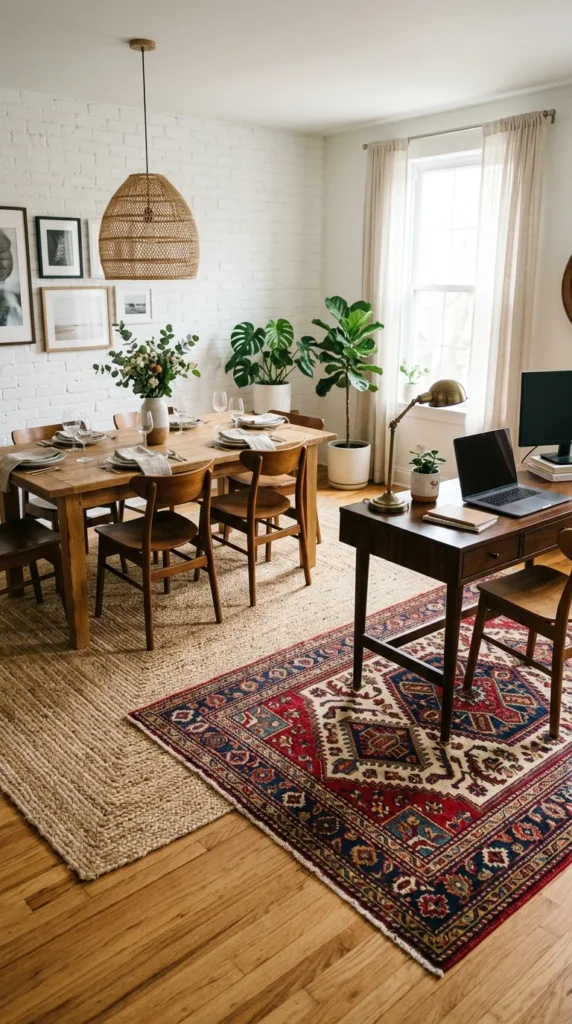
Design is often about visual cues. By placing a separate area rug under your desk area, you create a “room within a room.” This technique uses color and texture to define the office boundary without the need for physical walls. Choose a rug that complements the dining room’s color palette but offers a different texture to highlight the change in function.
8. Window Views
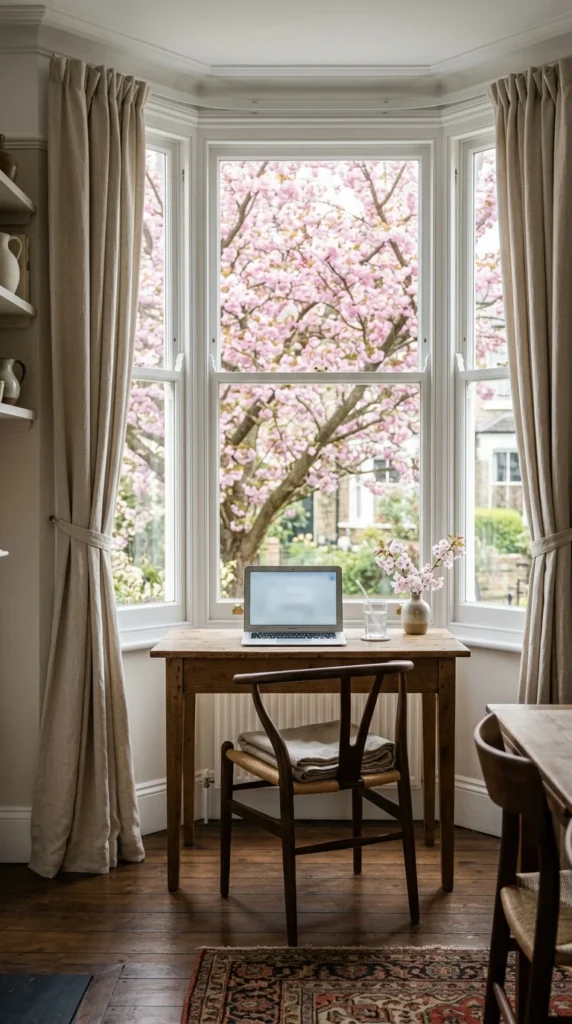
Natural light is a major booster for productivity and mood. If your dining room has a beautiful window, position your desk to face it. Not only does this provide the best lighting for video calls, but it also gives you a “mental break” as you gaze outside during long tasks. Ensure you have adjustable blinds or curtains to manage glare during peak sun hours.
9. Lighting Shifts
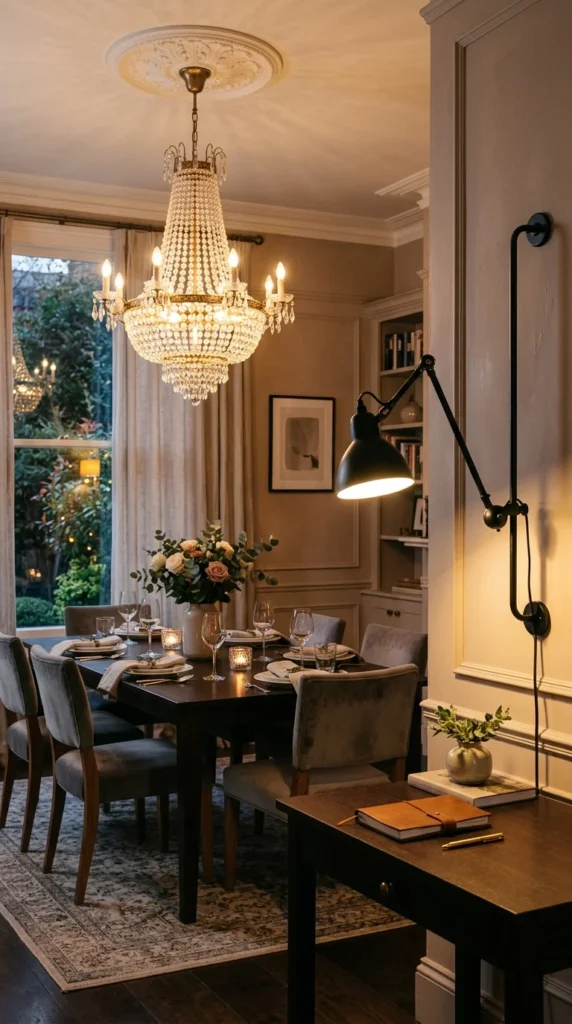
Lighting is the key to transitioning a space. While a dining room usually benefits from soft, ambient light for meals, an office needs focused task lighting. Incorporate a stylish desk lamp or a wall-mounted sconce over your workspace. Using smart bulbs that allow you to change from “cool white” for work to “warm amber” for dinner can further help shift the room’s energy.
10. Hidden Desks
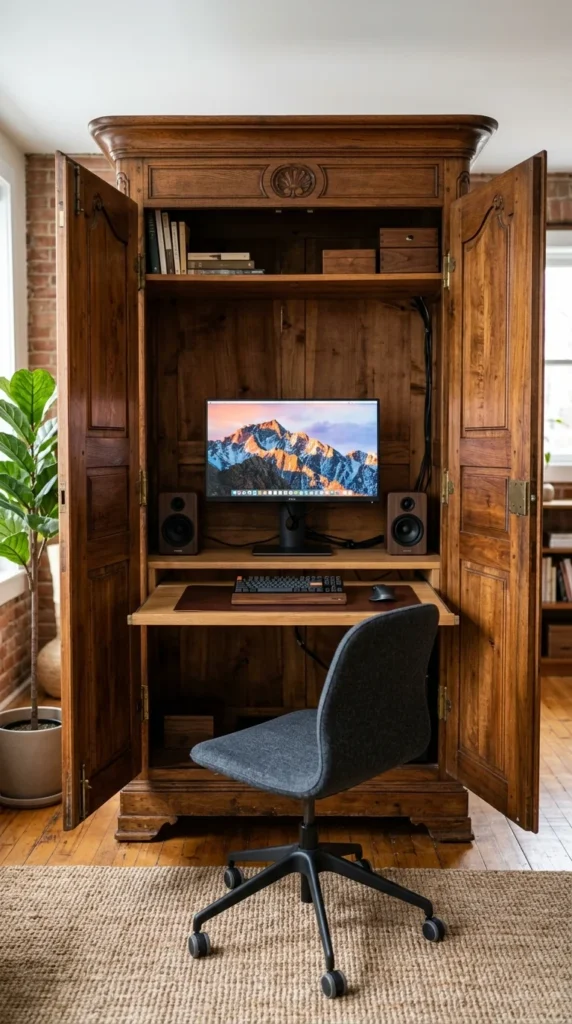
If you hate the look of technology in your formal dining area, the “cloffice” (closet-office) or an armoire desk is the perfect solution. You can house your entire digital life inside a beautiful piece of furniture. When five o’clock hits, you literally shut the door on your work, keeping your home life and work life beautifully separate.
11. Color Blocking
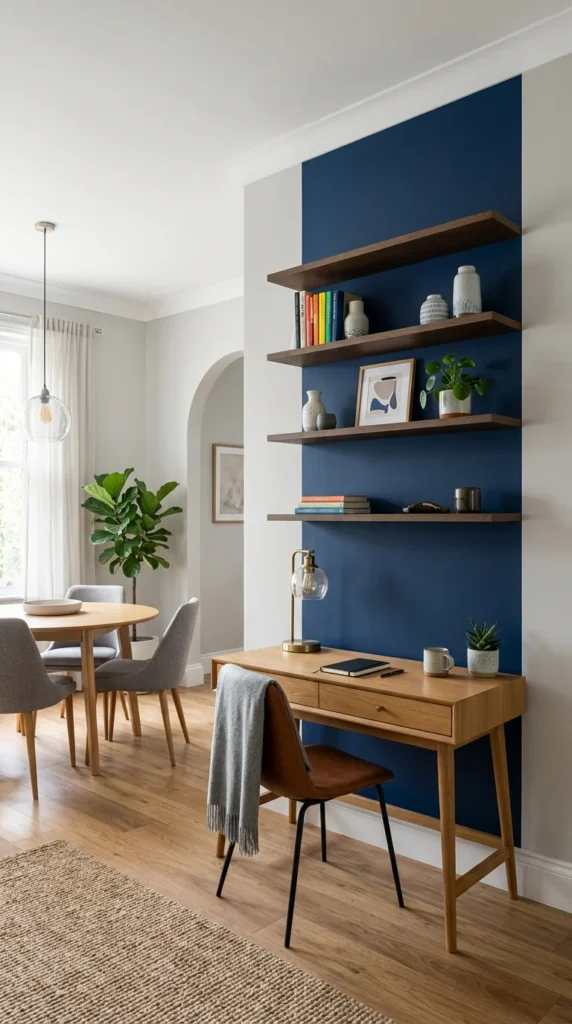
Use paint to create an “architectural” division. By painting a single strip of wall or a corner in a contrasting color, you create a dedicated backdrop for your office. This bold design choice makes the workspace look intentional rather than like an afterthought, and it serves as a great, professional-looking background for virtual meetings.
12. Mirror Magic
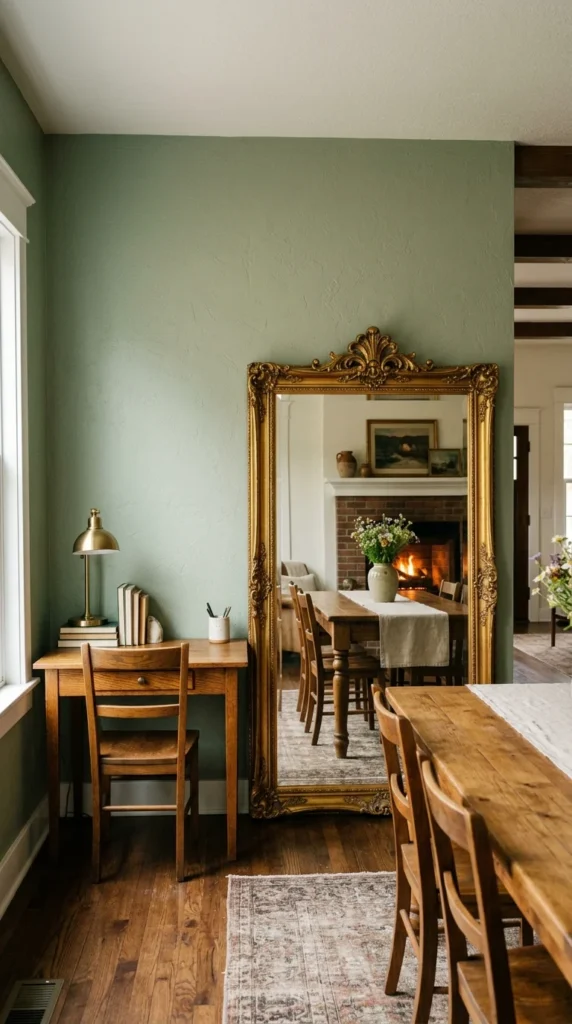
Small dining rooms can feel cramped once you add a desk. To combat this, place a large mirror behind or near your workspace. Mirrors bounce light around the room and create the illusion of more space. It also allows you to keep an eye on the rest of the room without constantly turning around, which can make the space feel more open and less isolating.
13. Statement Seating
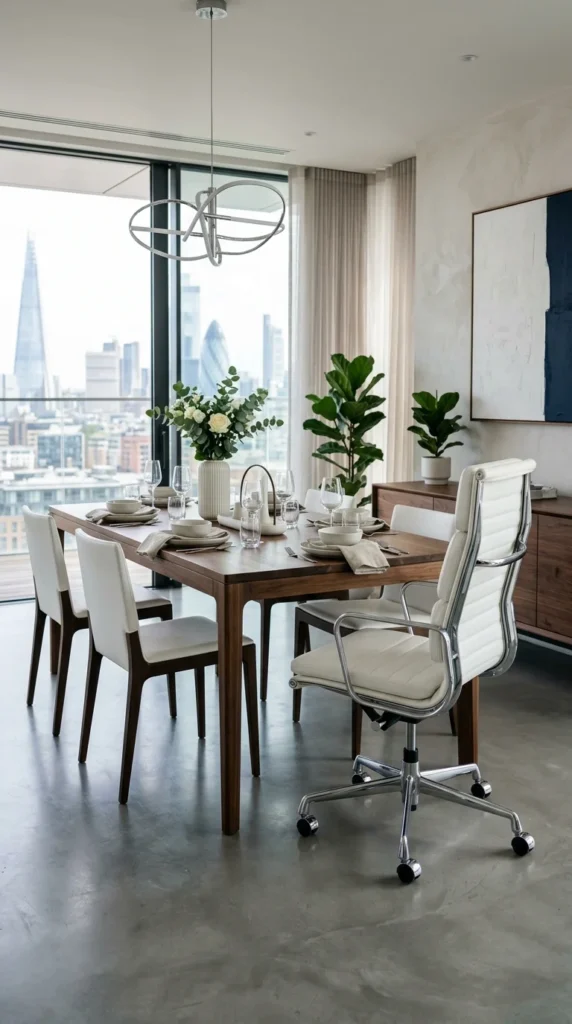
The biggest struggle of working in a dining room is the chair. Standard dining chairs aren’t built for eight hours of sitting. To solve this, invest in a “cross-over” chair—an ergonomic office chair that features high-end fabric or a silhouette that matches your dining set. This way, you don’t sacrifice your back health or your room’s aesthetic.
14. Mobile Stations
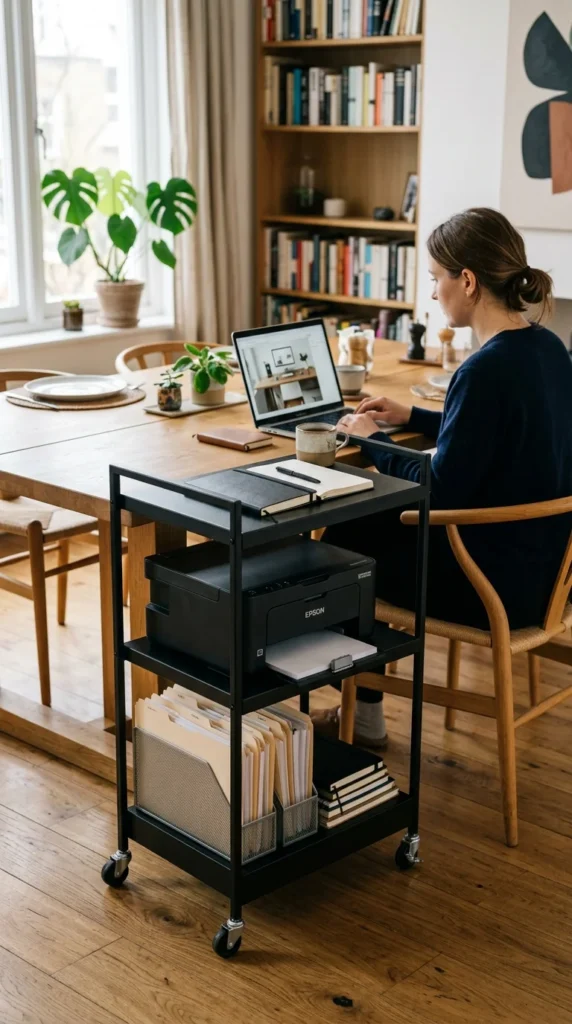
If you don’t have the space for a permanent desk, a mobile workstation is a lifesaver. Use a rolling bar cart or a dedicated office trolley to hold your supplies. During the day, roll it up to the dining table. When dinner is served, roll it into a pantry or a corner out of sight. It’s the ultimate “on-demand” office.
15. Greenery Borders
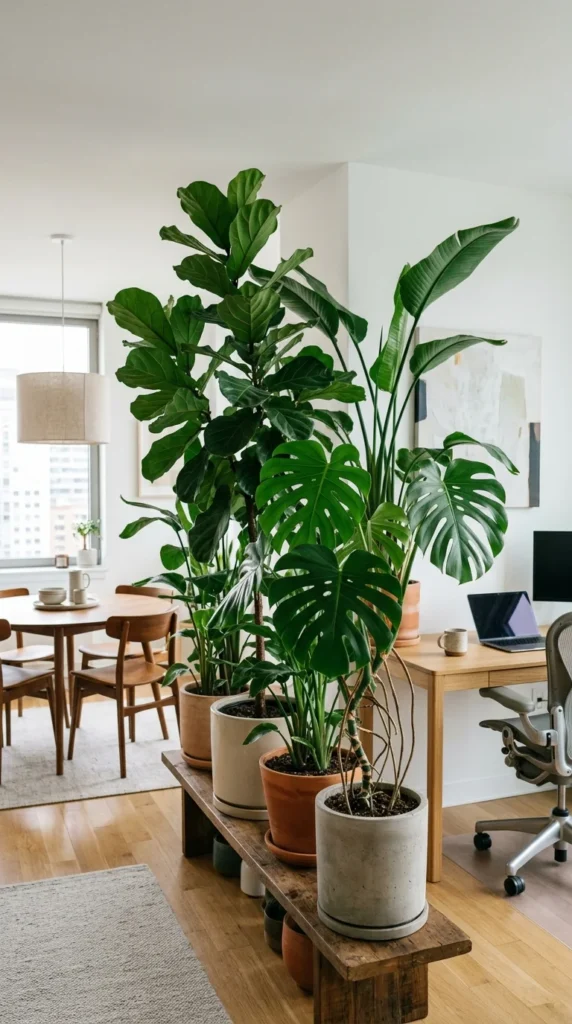
Plants are excellent natural air purifiers and stress reducers. Use a collection of large floor plants to create a “living wall” between your dining table and your desk. This soft border provides a sense of enclosure and privacy while adding a vibrant, organic element to the room’s decor.
16. Wall-Mounted Organizers
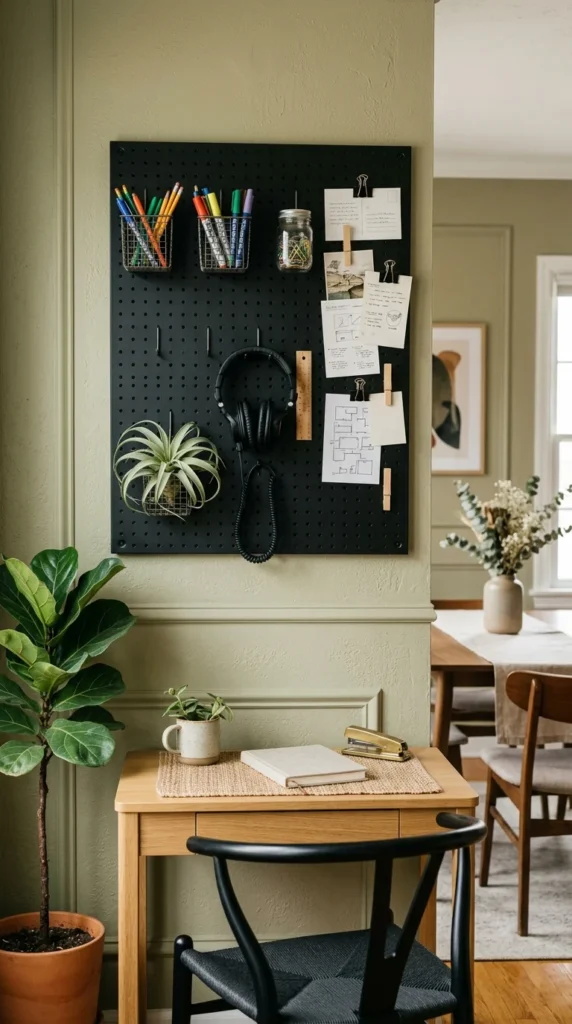
To keep the dining table clear of office “drift,” utilize your walls for organization. A pegboard, a grid system, or a series of stylish wall pockets can hold all your stationery and tech accessories. By keeping everything off the horizontal surfaces, the room maintains its clean, “ready-for-guests” appearance at all times.
17. Backdrop Aesthetics
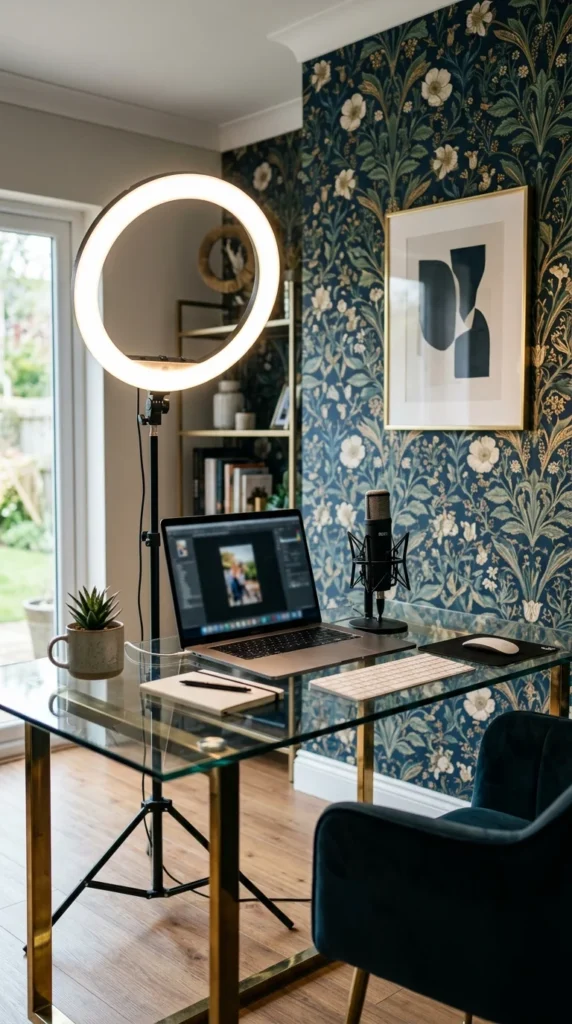
In the age of video calls, your “background” is part of your professional identity. When setting up your dining room office, consider what the camera sees. Choose a wall with beautiful wallpaper, a curated gallery of art, or a well-styled bookshelf. Not only does this make your workspace feel more high-end, but it also ensures you are always “camera-ready” without having to scramble to clean the room before a meeting.