
In the modern world, the home office has become more than just a place to check emails; it is the sanctuary of our professional lives, the engine room of our creativity, and the space where we manifest our career goals. However, many people find themselves struggling with “stagnant energy” or a lack of focus when working from home. This is where Feng Shui—the ancient Chinese art of placement—comes into play. By arranging your environment to enhance the flow of Qi (life force energy), you can transform a stressful workspace into a powerhouse of productivity and peace.
Feng Shui isn’t about superstition; it is about the psychological and energetic impact of our surroundings. When your office is in harmony, your mind follows suit. Here are 17 simple, actionable Feng Shui ideas to help you create a balanced and harmonious home office.
1. Command Position
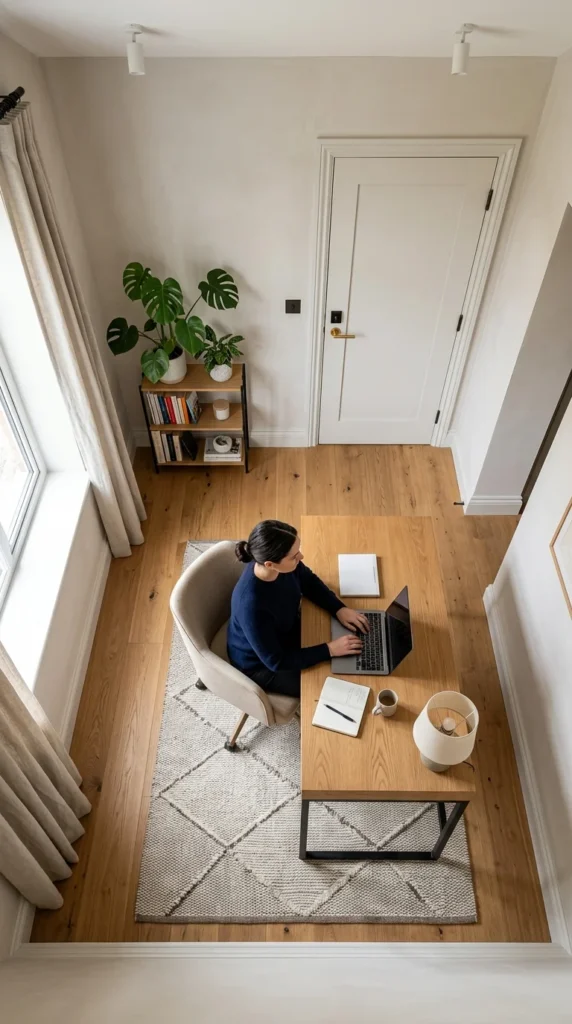
The single most important principle in Feng Shui for any workspace is the “Command Position.” To be in command, your desk should be placed so that you can see the door to the room while sitting at it, but you should not be directly in line with the door. This layout provides a psychological sense of security and preparedness. It ensures that you aren’t “surprised” by life or business opportunities, allowing you to see what is coming your way. If your back is to the door, you may subconsciously feel vulnerable, which leads to increased stress and decreased focus.
2. Solid Backing
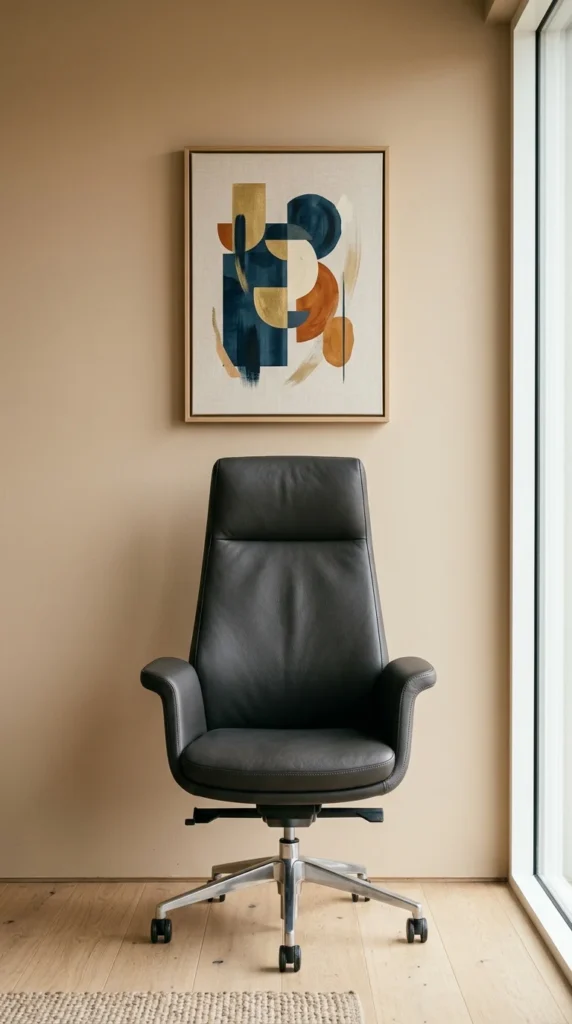
In Feng Shui, having a solid wall behind you while you work represents “mountain energy”—a source of support and stability. Avoid placing your desk in the middle of the room with your back to a window or an open space. If you lack support behind you, you may feel restless or unsupported in your career. If you must have a window behind you, use heavy curtains or a tall, solid-backed chair to compensate and provide that missing sense of grounding.
3. Clutter Clearance
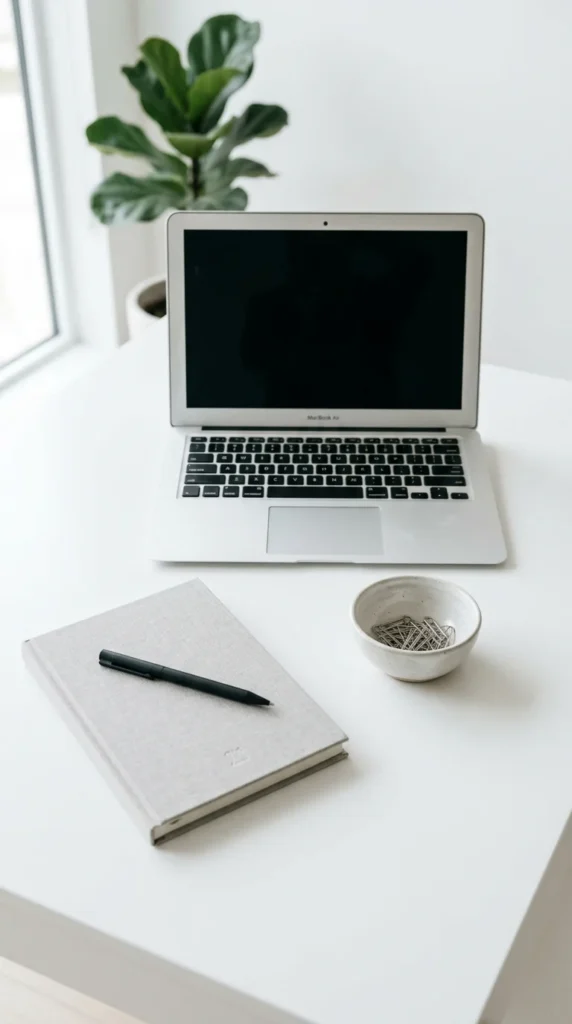
Clutter is the ultimate enemy of Qi. In Feng Shui, physical mess translates to mental “noise” and stagnant energy. To keep the energy flowing, make it a habit to clear your desk at the end of every workday. This signals to your brain that work is over and prevents you from feeling overwhelmed when you sit down the next morning. Focus on hidden clutter too—overstuffed drawers and messy cabinets represent “stuck” projects and delayed decisions.
4. Natural Light
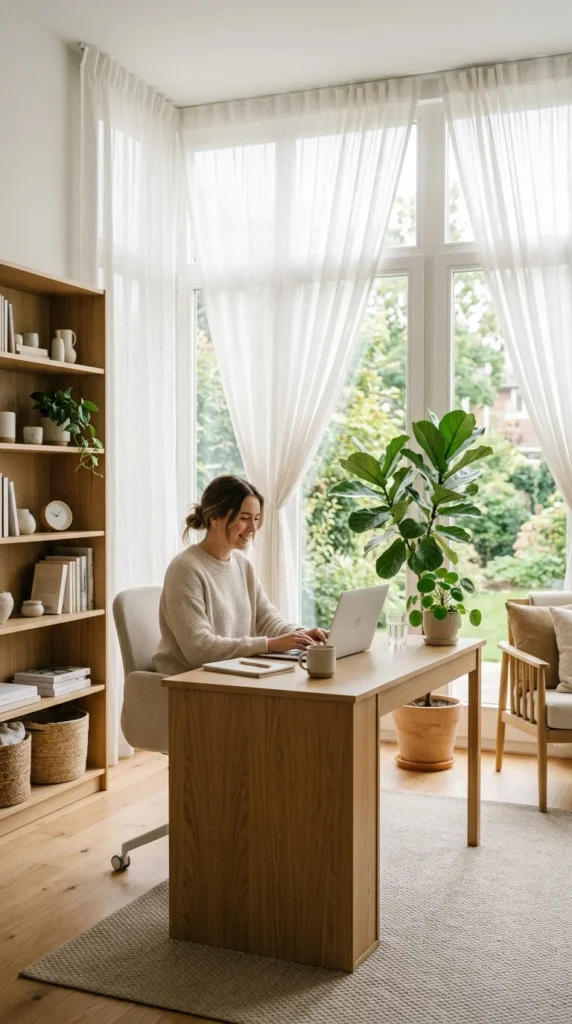
Lighting is a direct representation of the “Fire” element and “Yang” energy in Feng Shui. Natural light is the best source of vibrant energy, as it boosts serotonin and keeps you alert. If your office lacks windows, invest in full-spectrum light bulbs that mimic daylight. Avoid harsh, flickering fluorescent lights, which can cause headaches and drain your personal energy. Position your desk so that sunlight hits it from the side to avoid glare and “piercing” energy.
5. Plant Life
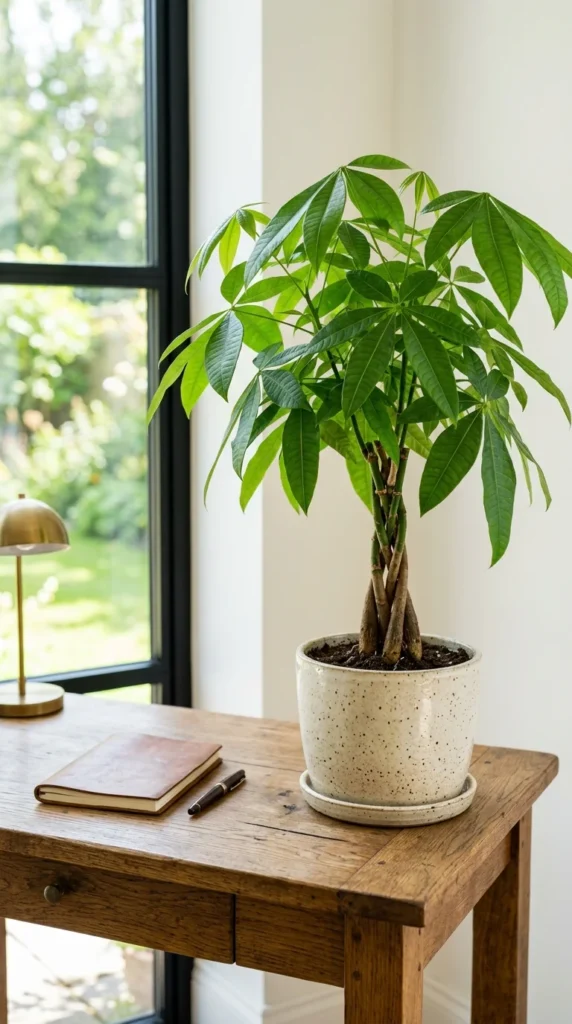
Plants represent the “Wood” element, which symbolizes growth, vitality, and new beginnings. They also act as natural air purifiers, removing toxins and refreshing the Qi of a room. For a home office, choose plants with rounded leaves rather than sharp, spiky ones like cacti. A “Money Tree” (Pachira aquatica) or a “Jade Plant” are traditional choices for attracting prosperity, while a “Snake Plant” is excellent for protection and air quality.
6. Color Balance
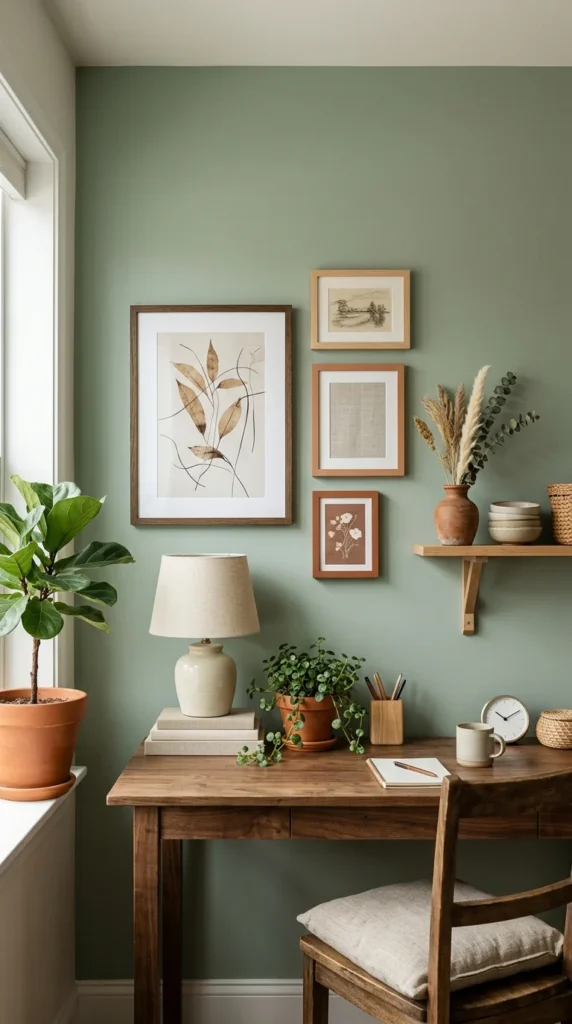
Colors carry specific energetic frequencies. To create balance, choose colors based on what you need most in your work.
- Green/Blue (Wood): Promotes growth and new ideas.
- Yellow/Beige (Earth): Provides grounding and stability.
- White/Grey (Metal): Enhances focus, clarity, and precision.
- Red/Orange (Fire): Boosts passion and high energy (use sparingly as accents). Avoid overly dark colors like black or deep navy for the entire room, as they can represent “Water” and lead to feelings of being overwhelmed or “drowning” in work.
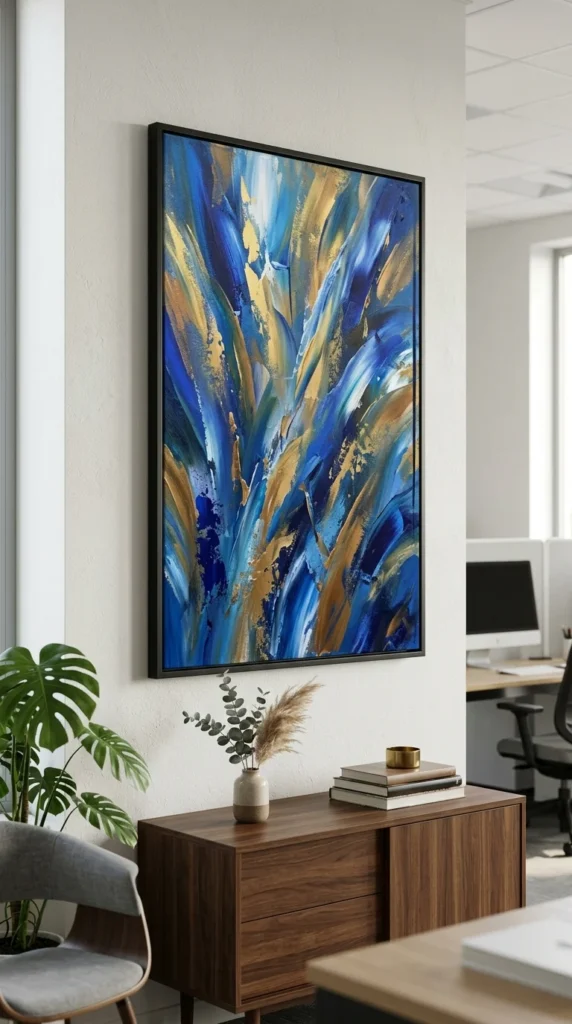
7. Inspiration Art

The images you look at every day have a profound impact on your subconscious. In Feng Shui, your office art should represent your goals and aspirations. If you want to expand your business, choose a landscape with a wide horizon. If you need stability, choose images of mountains. Avoid “sad” or chaotic art, as well as images of water that appear to be flowing out of the room, as this can symbolize money and opportunities leaving your life.
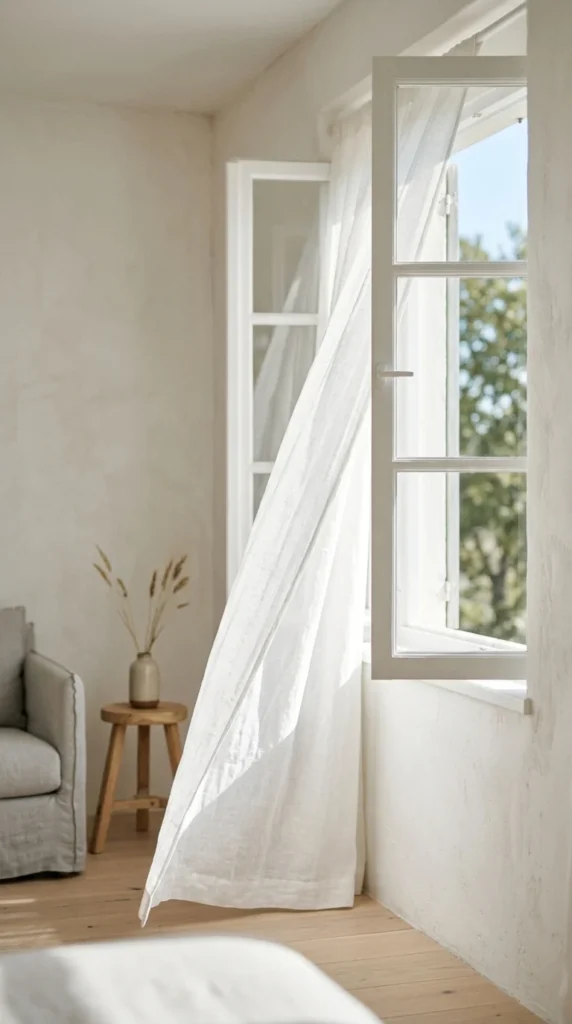
8. Air Quality

Stagnant air leads to stagnant thinking. Feng Shui emphasizes the flow of breath as much as the flow of energy. Open windows daily to let fresh Qi circulate. If that isn’t possible, use an air purifier or an essential oil diffuser. Scents like peppermint, lemon, and rosemary are “Yang” scents that stimulate the mind and keep you focused during long afternoons.
9. Defined Boundaries
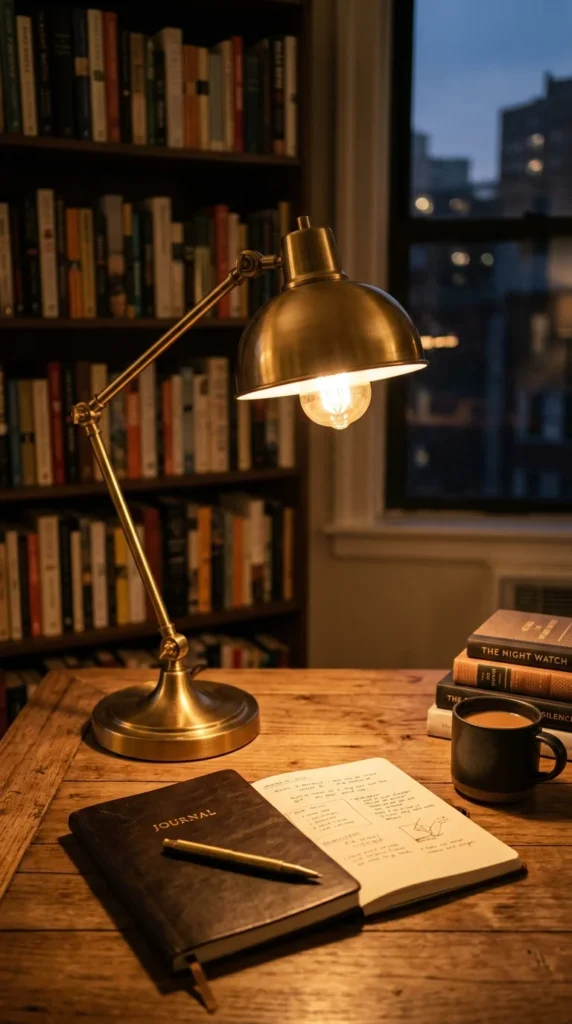
If your office is tucked into a corner of your bedroom or living room, it is vital to create a “visual boundary.” Feng Shui suggests that the energy of work and the energy of rest should never mix. Use a room divider, a rug, or even a different wall color to define the “office zone.” This prevents “work-thought” from invading your sleep and “home-thought” from distracting you during business hours.
10. Desk Materials

The material of your desk influences the “vibe” of your work. A solid wood desk is the most balanced choice, providing a mix of stability (Earth) and growth (Wood). A glass desk, while modern, is considered “unstable” in Feng Shui because energy (and tasks) can “fall through” the clear surface. If you have a glass desk, place a large desk mat or green plants on it to ground the energy. Metal desks are great for tasks requiring extreme focus and analytical thinking.
11. Cord Management
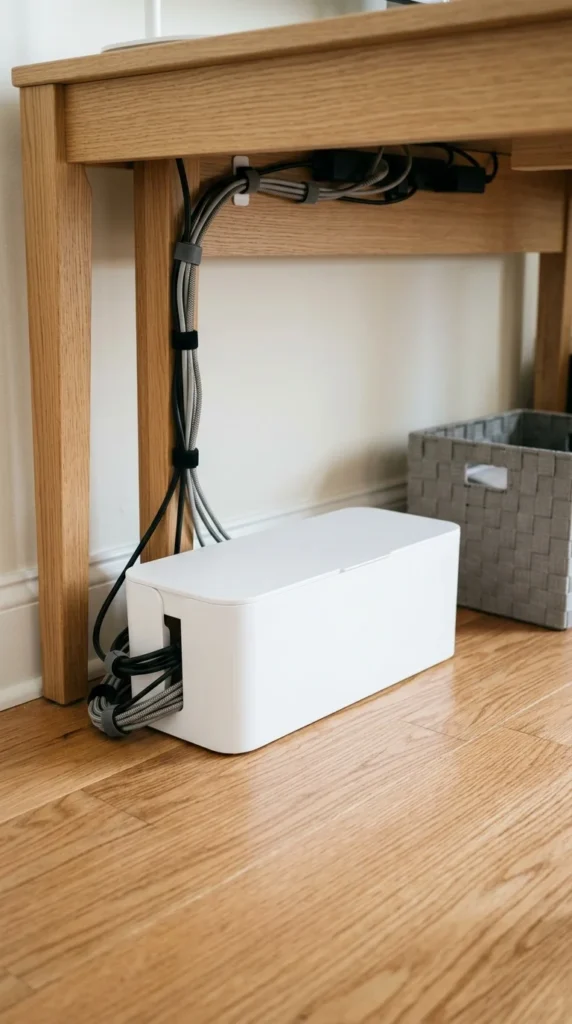
Cables and wires are often referred to as “electronic clutter” or “energy drains.” In Feng Shui, tangled cords resemble “snakes” or “entanglements” that can lead to confusion and chaos in your professional relationships. Use cable sleeves, clips, or boxes to hide your cords. Keeping them organized and out of sight allows the Qi to flow smoothly around your desk without getting snagged.
12. Crystal Power
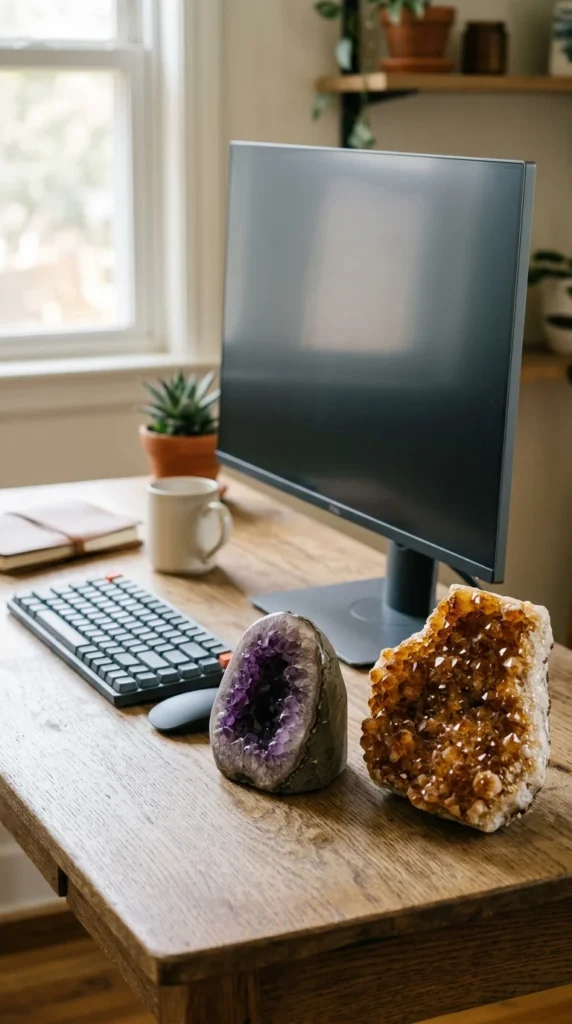
Crystals are powerful tools for shifting the energy of a space. To enhance your home office, consider placing specific stones on your desk:
- Citrine: Known as the “Merchant’s Stone,” place it in the far left corner of your desk to attract wealth.
- Amethyst: Place it nearby to promote calm and reduce stress.
- Clear Quartz: Use it to amplify your intentions and provide mental clarity.
- Black Tourmaline: Place it near your computer to help absorb electromagnetic “smog.”
13. Water Features
Water is the symbol of wealth and flow in Feng Shui. A small tabletop fountain can be a wonderful addition to an office, provided the water is kept clean and flowing. The sound of moving water can also mask distracting household noises. Ensure the water flows toward the center of the room or toward you, symbolizing money flowing into your life, rather than away toward the door.
14. Ergonomic Seating

Your chair represents your “seat of power.” A flimsy or uncomfortable chair suggests that you don’t value your own support or authority. In Feng Shui, a chair with a high back is preferred because it provides “symbolic support” for your spine and your career. Make sure the chair is in good repair; a squeaky or broken chair can create “discordant energy” that interrupts your flow.
15. The Five Elements
A truly harmonious room balances the five elements: Wood, Fire, Earth, Metal, and Water. If your office feels “cold,” it might have too much Metal or Water; add “Fire” with a candle or “Wood” with a plant. If it feels “stifling,” it might have too much Earth; add “Metal” with a clock or “Water” with a glass of water or a mirror. Achieving a balance of these elements creates a space that feels “complete” and energized.
16. Layered Lighting
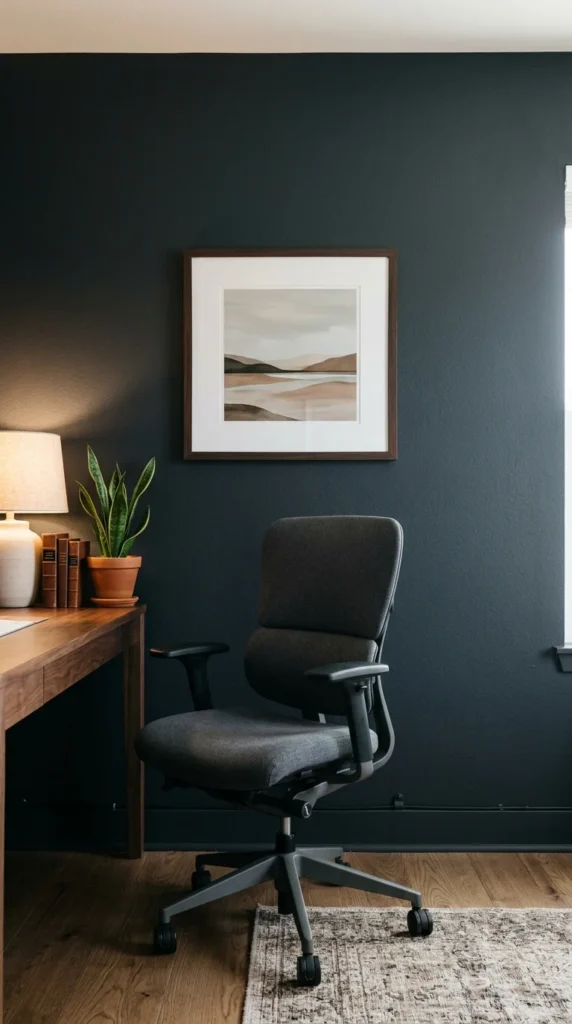
Relying solely on one overhead light creates “flat” and uninspiring energy. Feng Shui encourages layered lighting to create depth and movement. Use a dedicated task lamp for your desk to “shine a light” on your projects. Use a floor lamp in a dark corner to prevent energy from becoming stagnant there. During the evening, use warm-toned bulbs to transition from the “Yang” energy of high productivity to the “Yin” energy of winding down.
17. Personal Touches
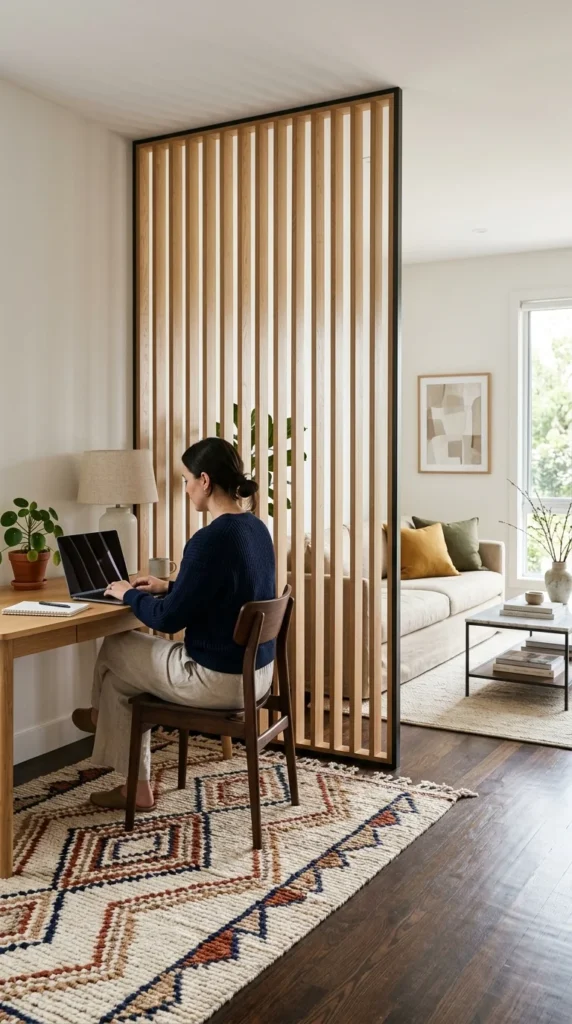
While minimalism is great for focus, a cold and sterile office lacks “heart.” Include a few items that have deep personal meaning to you. This grounds your identity in your work. Whether it’s a photo of a loved one, a souvenir from a successful trip, or a “lucky” object, these items act as “anchors” for your personal energy. Just ensure they are curated and intentional, rather than random items that contribute to clutter.