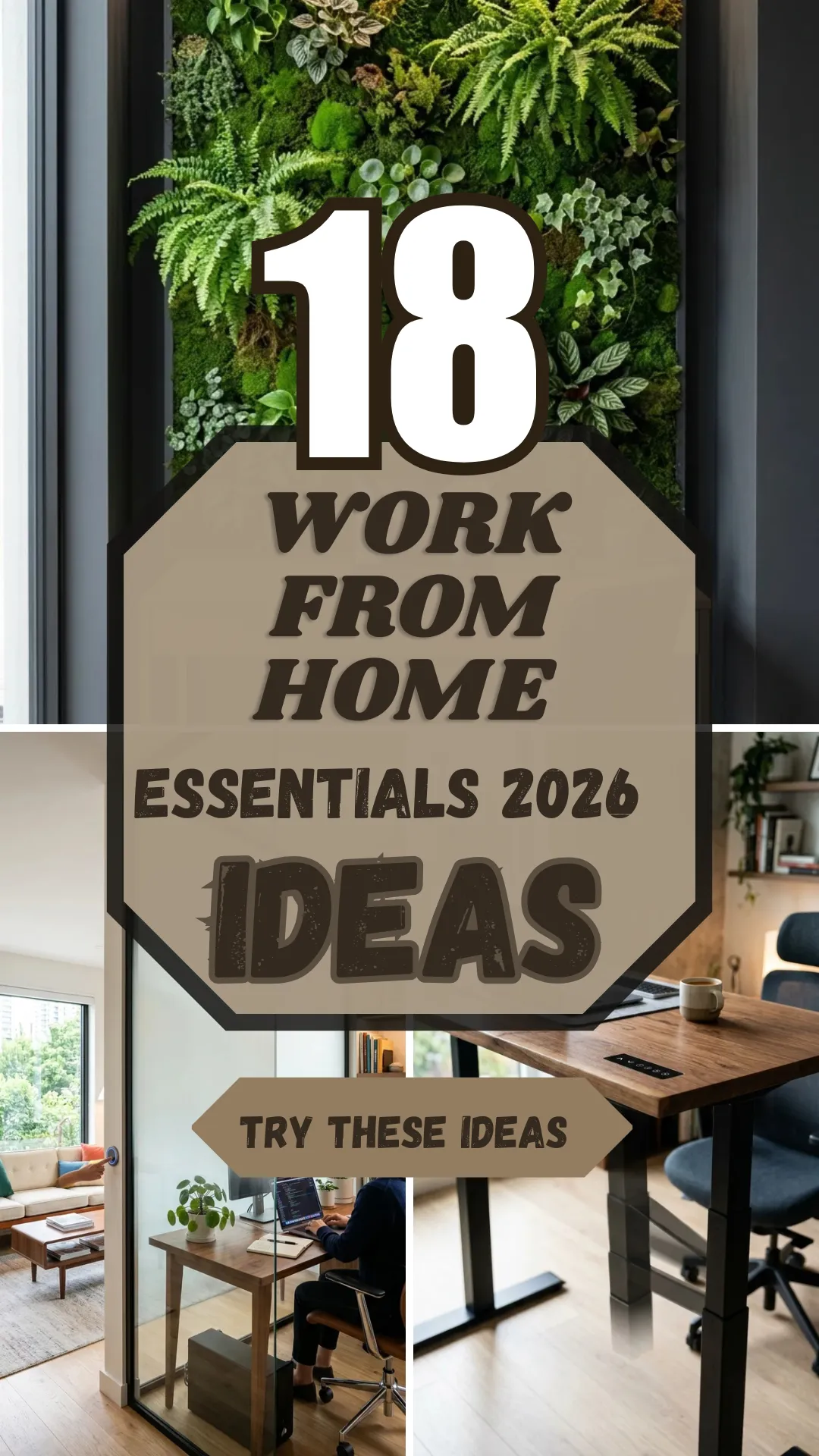
As we look toward 2026, the home office is no longer just a “spare room” or a “corner in the bedroom.” It has evolved into a high-performance sanctuary that balances peak productivity with deep personal wellness. The following trends represent the convergence of cutting-edge technology, sustainable materials, and a renewed focus on psychological comfort. Whether you are a remote executive or a creative freelancer, these 18 trends will redefine how you work from home.
1. Biophilic Walls
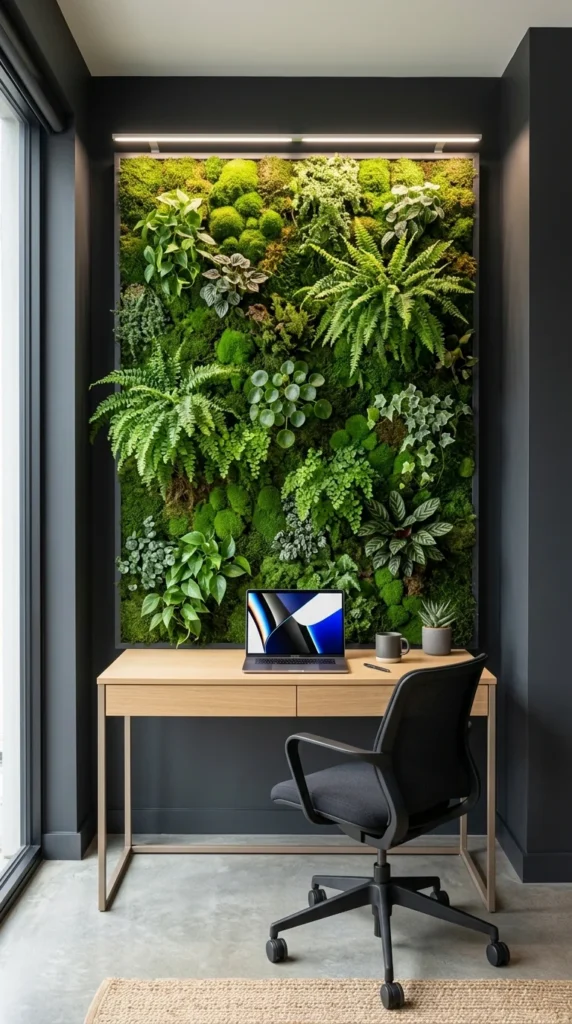
The integration of nature into the workspace is reaching new heights in 2026. Biophilic walls—living, breathing vertical gardens—are becoming a staple. These aren’t just for aesthetics; they act as natural air purifiers and sound insulators. By surrounding yourself with real greenery, you lower cortisol levels and increase cognitive function. The 2026 iteration includes automated self-watering systems and integrated UV lighting that mimics the sun’s natural cycle, keeping the plants healthy even in windowless basements.
2. Kinetic Desks
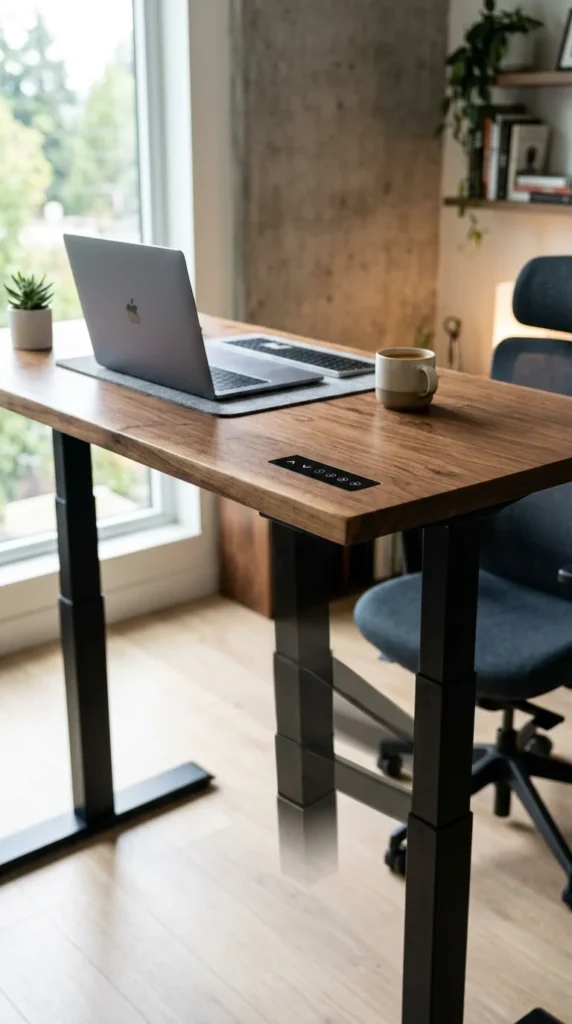
The era of the static desk is over. Kinetic furniture in 2026 focuses on “micro-movements.” These desks are equipped with AI sensors that detect when you have been sitting too long and gently nudge the desk upward by a few millimeters or suggest a standing interval. Some advanced models even feature “treadmill-integrated” platforms that are whisper-quiet, allowing for low-impact movement during video calls without the bulky look of traditional gym equipment.
3. Smart Glass
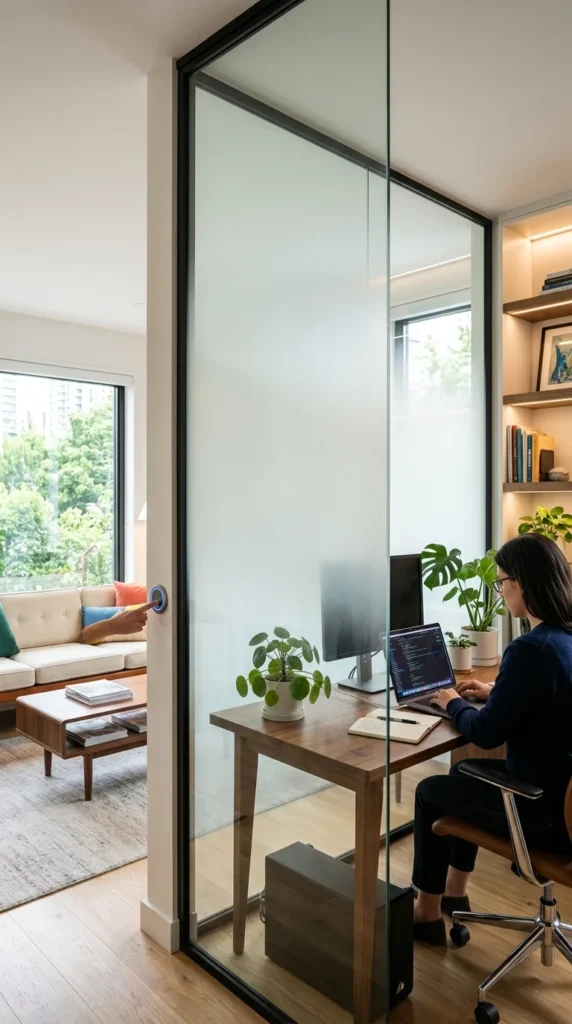
Privacy on demand is a luxury that 2026 home offices prioritize. Smart glass (or electrochromic glass) partitions allow you to switch from a transparent, open-concept feel to a fully private, frosted environment instantly. This is perfect for parents who need to keep an eye on the household but require total visual isolation during intense focus sessions or confidential meetings.
4. Monochromatic Serenity
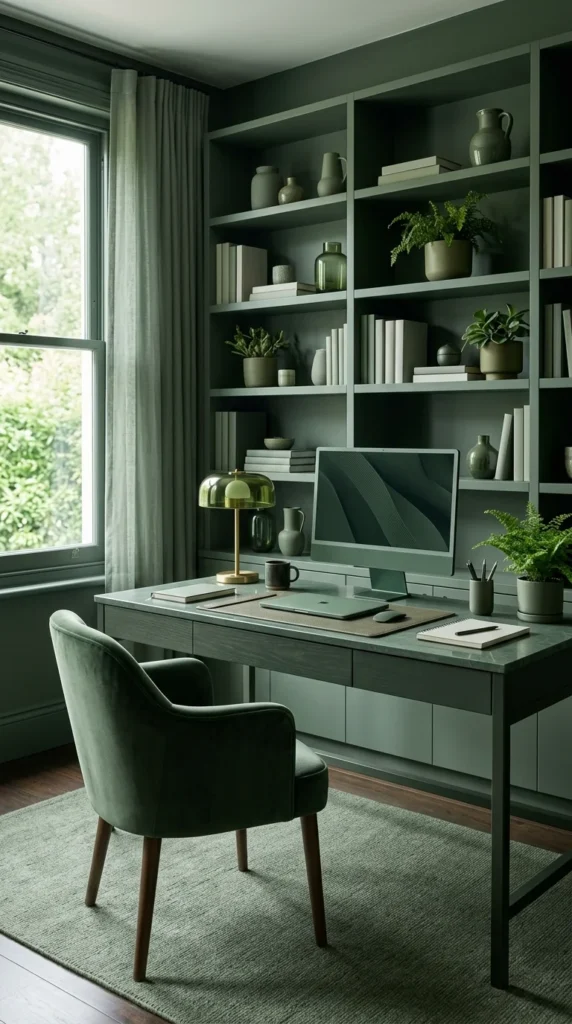
Color drenching is the dominant aesthetic trend for 2026. By using a single color family for everything from the walls to the furniture, you eliminate visual “noise.” This monochromatic approach creates a cocoon-like effect that reduces distractions. Expect to see “grounding” colors like terracotta, deep forest green, and midnight blue dominating these spaces, providing a sense of stability in a fast-paced digital world.
5. Circadian Lighting
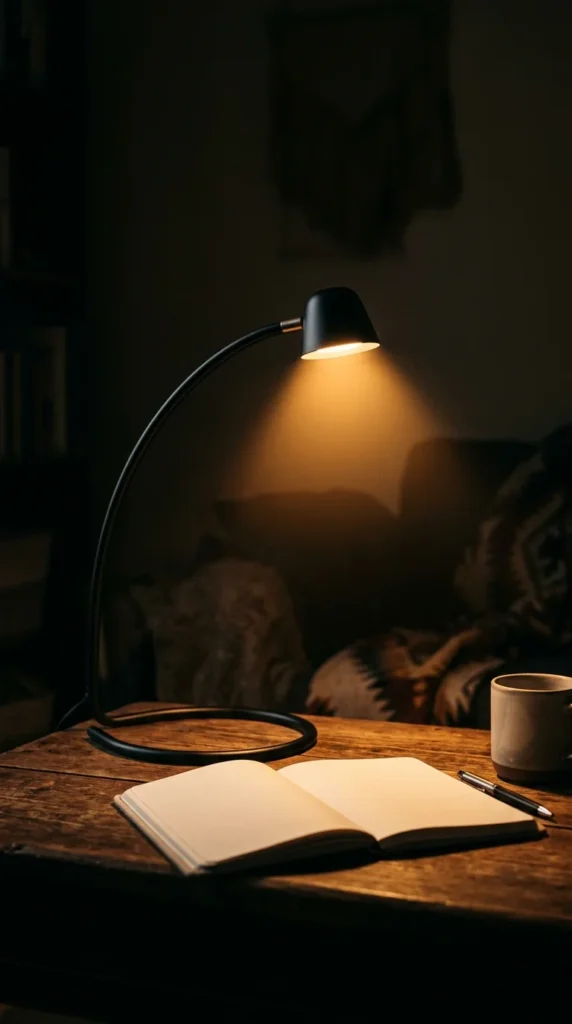
Lighting in 2026 is no longer about just “being bright.” Circadian lighting systems are programmed to sync with your body’s internal clock. In the morning, the lights emit a blue-toned, high-intensity glow to boost alertness and suppress melatonin. As the afternoon fades, the light shifts to a warm, amber hue, signaling to your brain that it’s time to wind down. This tech-driven wellness feature significantly improves sleep quality and reduces the dreaded “screen fatigue.”
6. Acoustic Sculptures

Traditional soundproofing can be ugly. In 2026, sound management is treated as fine art. Acoustic sculptures—made from recycled felt, cork, or mycelium—are used to dampen echoes and block out household noise. These pieces serve as a focal point in the room, proving that a quiet environment can also be a beautiful one. They are particularly effective for podcasters and those who spend the majority of their day in virtual meetings.
7. Mycelium Furniture
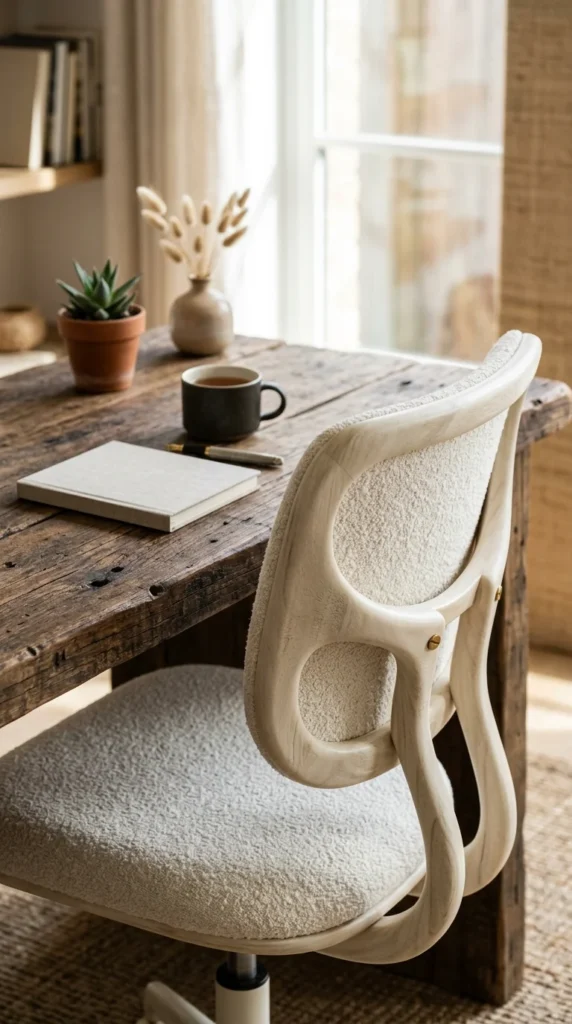
Sustainability moves beyond “recycled plastic” into bio-fabricated materials. Mycelium (the root structure of mushrooms) is being grown into furniture frames and acoustic panels. It is carbon-negative, incredibly strong, and entirely biodegradable. A mycelium chair or desk provides a unique, organic texture that connects the worker to the earth, making the home office a beacon of eco-conscious design.
8. Ergonomic Orbs
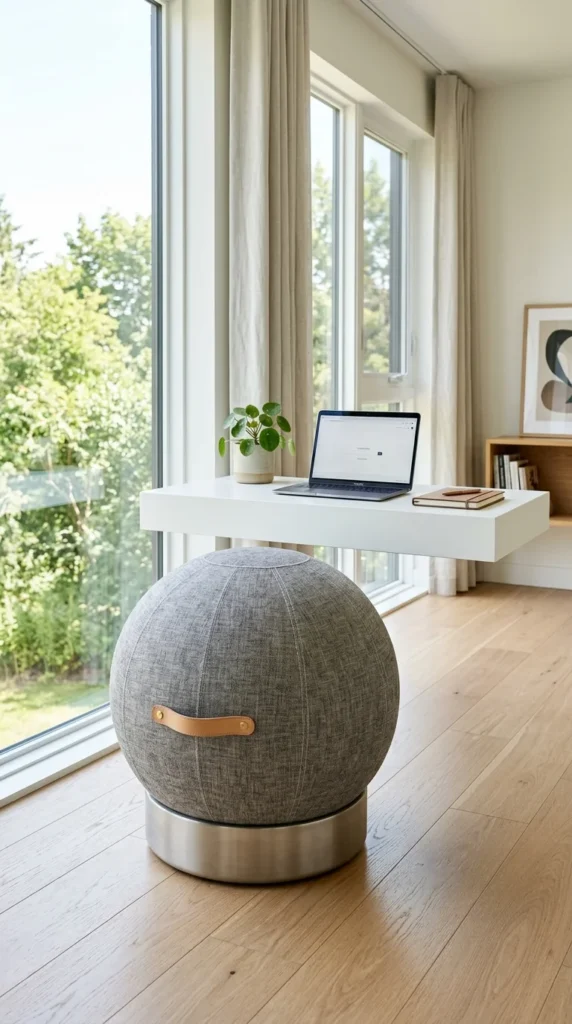
Traditional office chairs are being challenged by “active seating.” The ergonomic orb—a refined version of the stability ball—is designed with high-end fabrics like wool and leather. These orbs force the user to engage their core and maintain better posture. For 2026, these are integrated with weighted bases to prevent rolling and are aesthetically styled to look like high-end lounge furniture rather than gym gear.
9. The Meta-Station
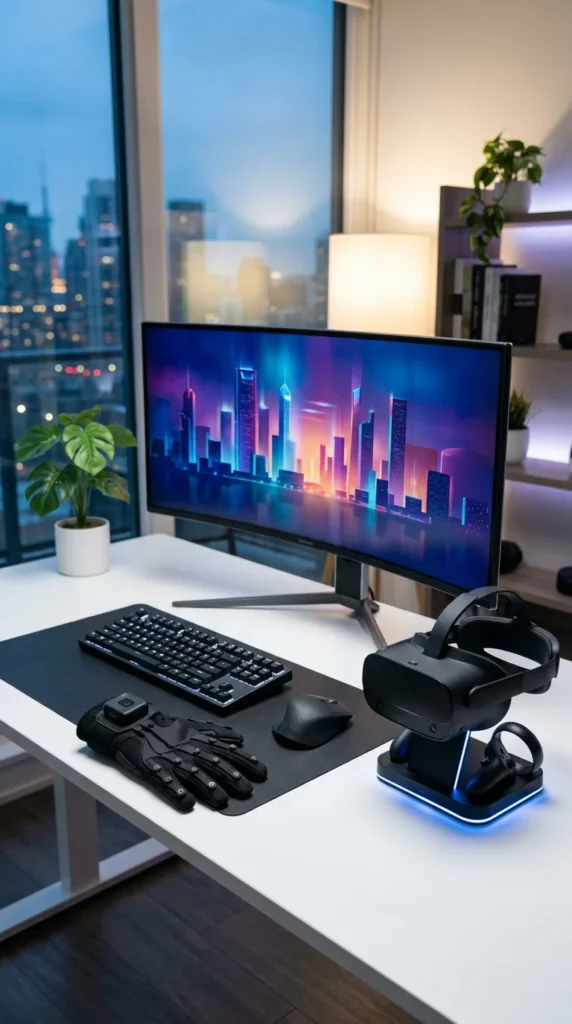
As the “Industrial Metaverse” expands, the home office must accommodate spatial computing. The Meta-Station is a dedicated area within the office designed for VR and AR work. It includes clear floor space for movement, integrated sensors in the ceiling, and charging docks for wearable tech. This is the 2026 version of the multi-monitor setup, where your “screens” are projected into the air around you.
10. Hidden Nooks
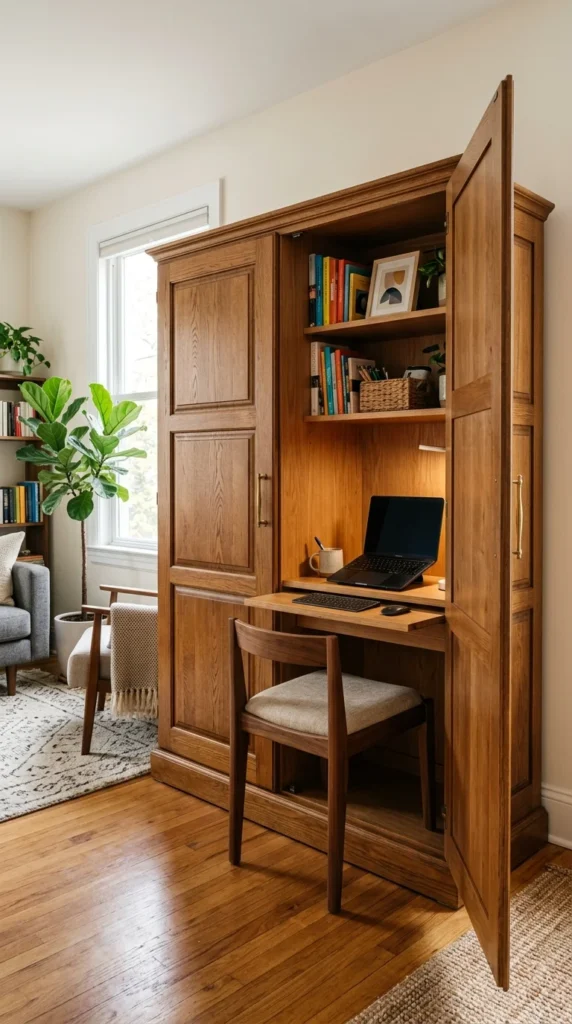
As homes become more multi-functional, the “Clozice” (closet-office) or hidden nook is evolving. These are built-in workstations that can be completely concealed behind pocket doors or decorative screens when the workday ends. This trend is vital for mental health, as it allows for a physical “closing” of the workday, preventing the office from bleeding into the living space.
11. Tactile Textures
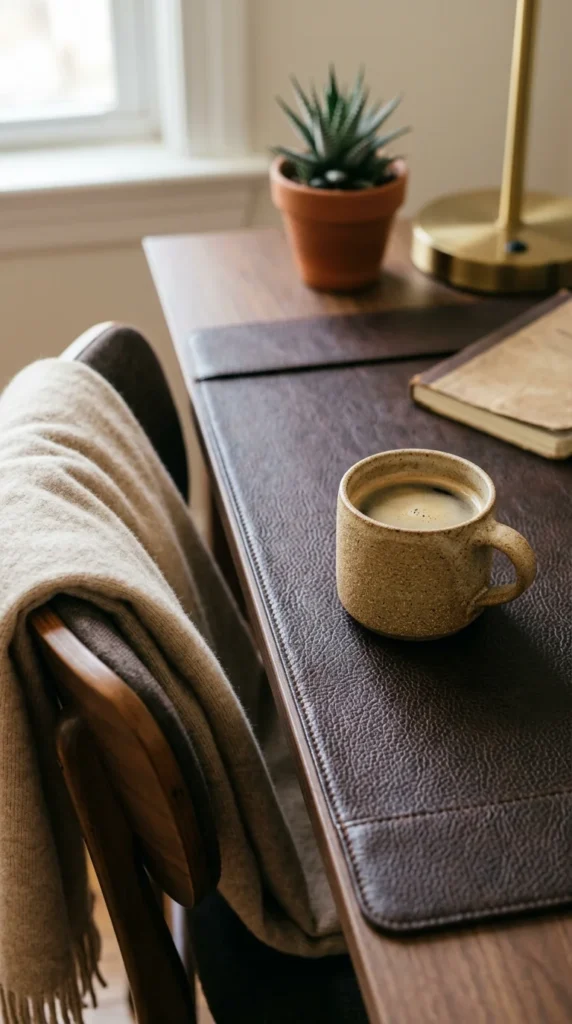
Digital exhaustion has led to a craving for the physical. 2026 offices prioritize “sensory touchpoints.” Think desks with raw wood grain, leather-wrapped desk pads, and cold stone accents. These tactile surfaces provide “micro-breaks” for the senses, helping to ground the user when they’ve spent hours staring at a two-dimensional screen.
12. Circular Desks
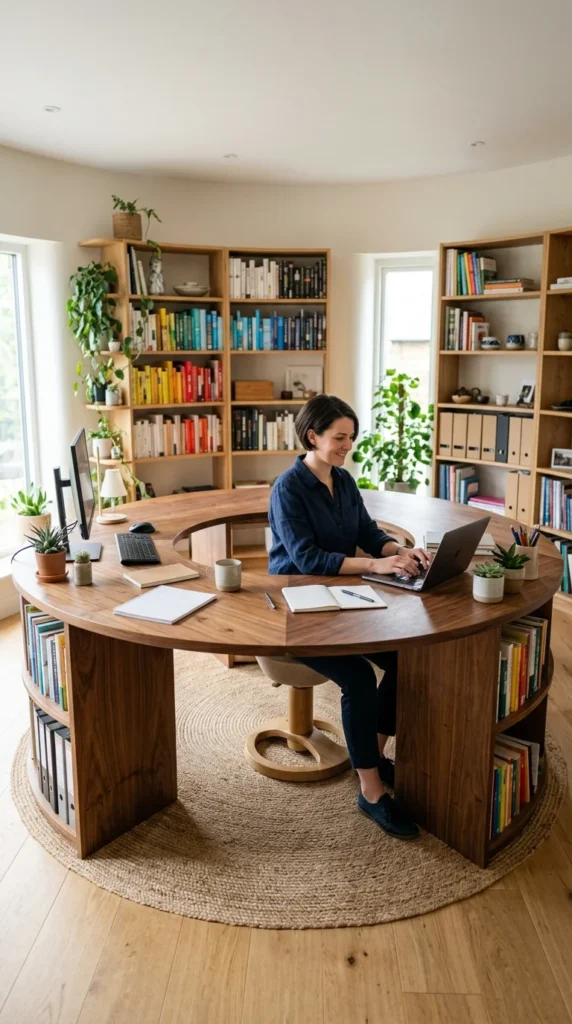
The traditional rectangular desk is being replaced by curved and circular shapes. A circular desk wraps around the body, putting everything within arm’s reach and eliminating “dead zones” in the corners. Psychologically, curves are more soothing than sharp angles, creating a more fluid and less rigid work environment.
13. Invisible Tech
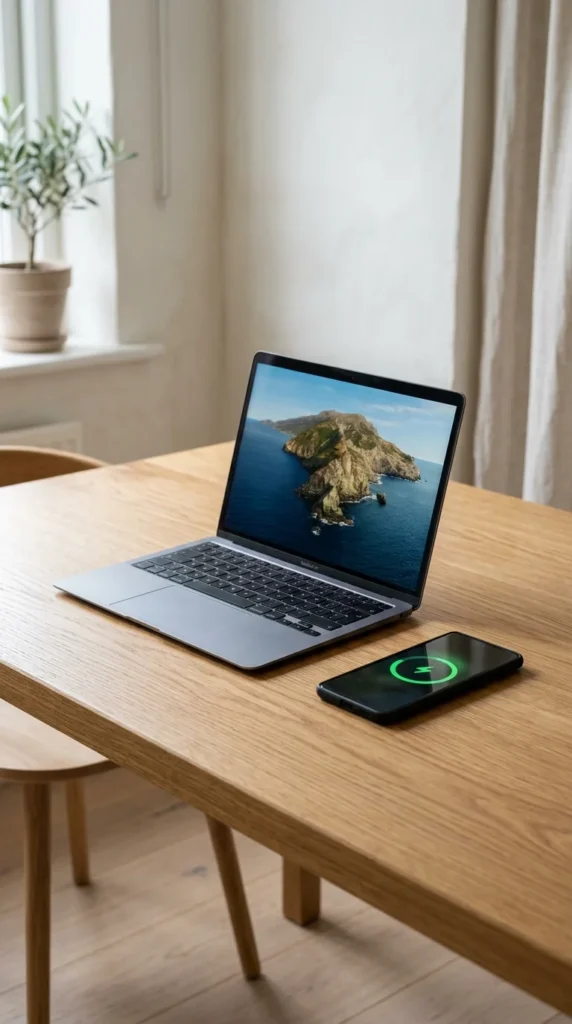
In 2026, the best technology is the kind you can’t see. Wireless charging is embedded directly into the desktop material, speakers are hidden within the walls or furniture, and CPUs are integrated into the desk frame itself. This “invisible” approach eliminates cable clutter, which is proven to reduce anxiety and improve focus.
14. Wellness Pods
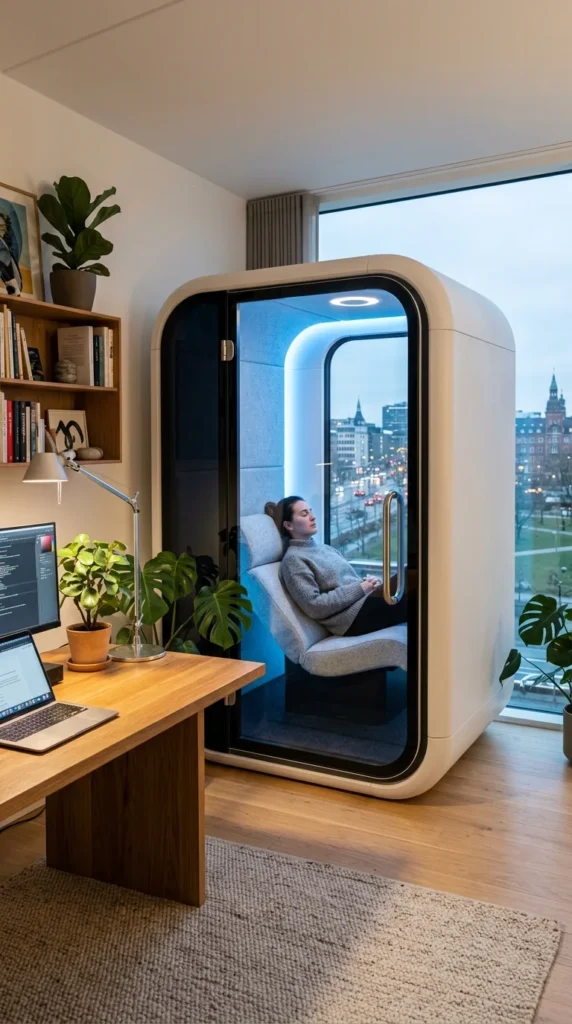
For those with high-stress jobs, the wellness pod is the ultimate 2026 addition. These are small, semi-enclosed structures designed for “reset breaks.” They feature soundproofing, guided meditation screens, and even aromatherapy dispensers. Five minutes in a wellness pod can act as a cognitive “reboot,” making it easier to switch between deep work and creative brainstorming.
15. Earthy Pastels
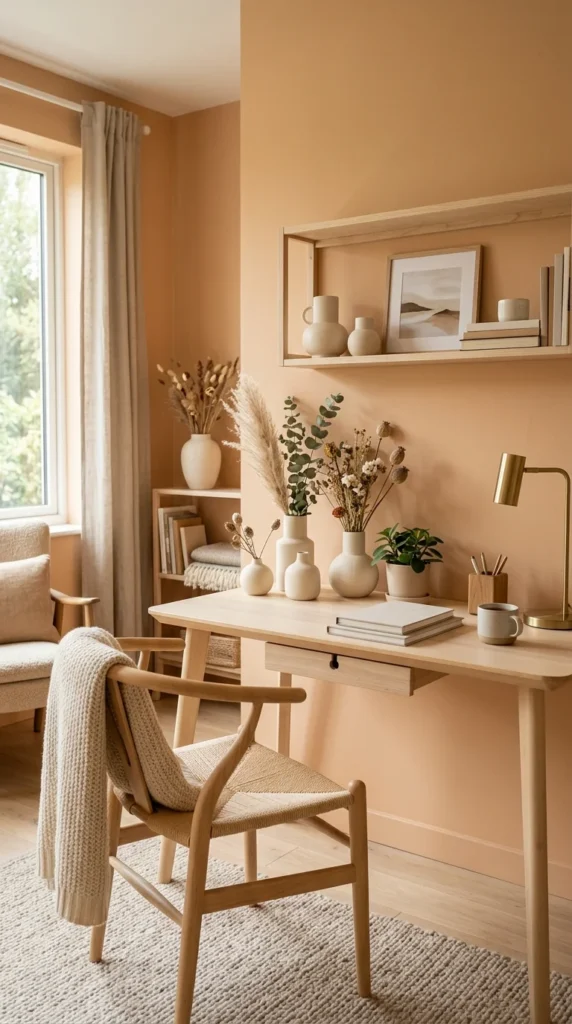
Moving away from the sterile whites and greys of the past decade, 2026 embraces “earthy pastels.” Muted apricots, dusty terracotta, and soft sage green provide a warm, optimistic backdrop. These colors are designed to be “retinal-friendly,” meaning they don’t reflect harsh light, making them perfect for those who work long hours under artificial lighting.
16. Multi-Functional Dividers
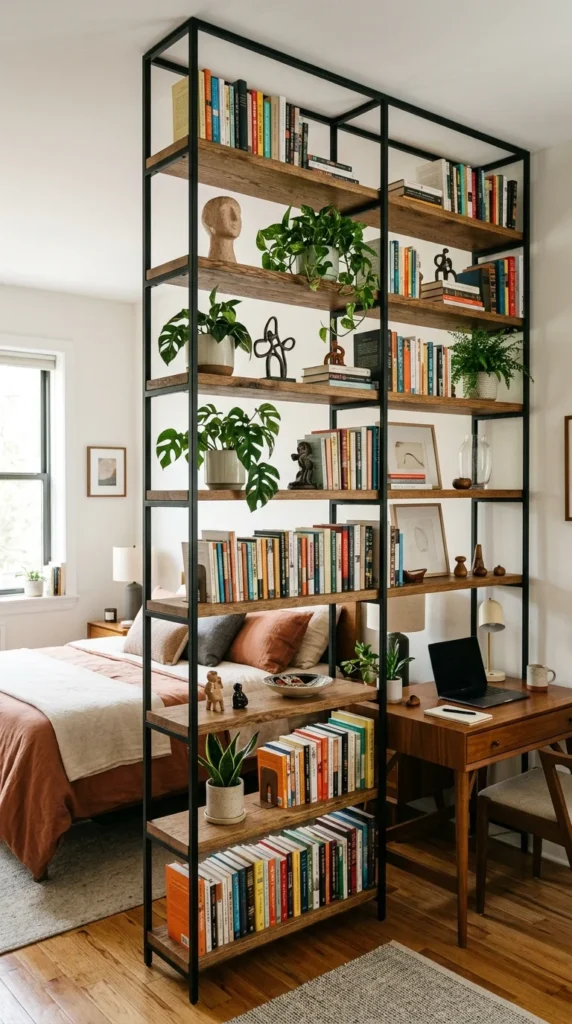
In 2026, we don’t just build walls; we build “functioning boundaries.” Multi-functional room dividers serve as bookshelves, plant displays, and whiteboards simultaneously. They allow for the zoning of a room without making it feel small, maintaining an airy feel while clearly defining where “home life” ends and “work life” begins.
17. Vintage Futurism
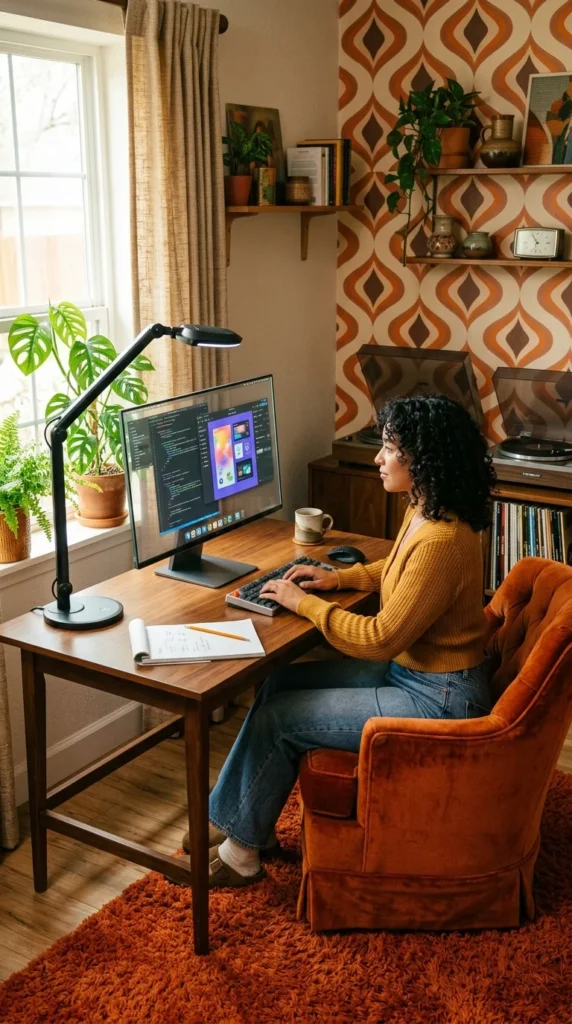
This trend combines the soul of the past with the power of the future. Vintage futurism uses 1970s and 80s design silhouettes—think chunky shapes and bold colors—but equips them with 2026 technology. It’s a nostalgic take on work that feels more human and less corporate, making the home office feel like a curated gallery rather than a cubicle.
18. Personalized Scent-Scaping
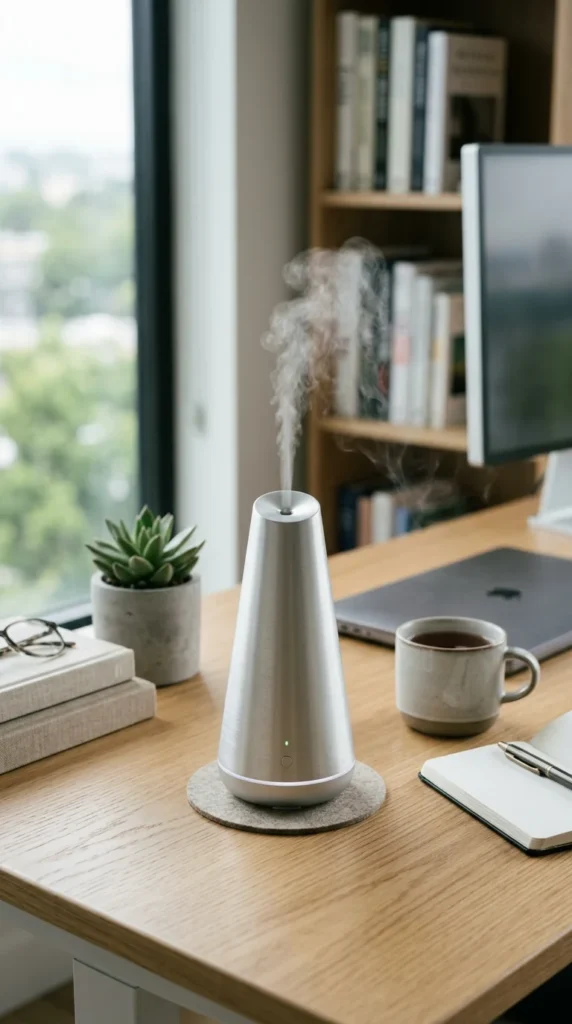
The final trend for 2026 is olfactory. Scent-scaping involves using smart diffusers that release specific scents at certain times of the day. Peppermint or citrus is released in the morning to spark energy, while sandalwood or lavender is used in the late afternoon to transition out of work mode. By associating specific smells with productivity, you can “hack” your brain to enter a flow state more quickly.