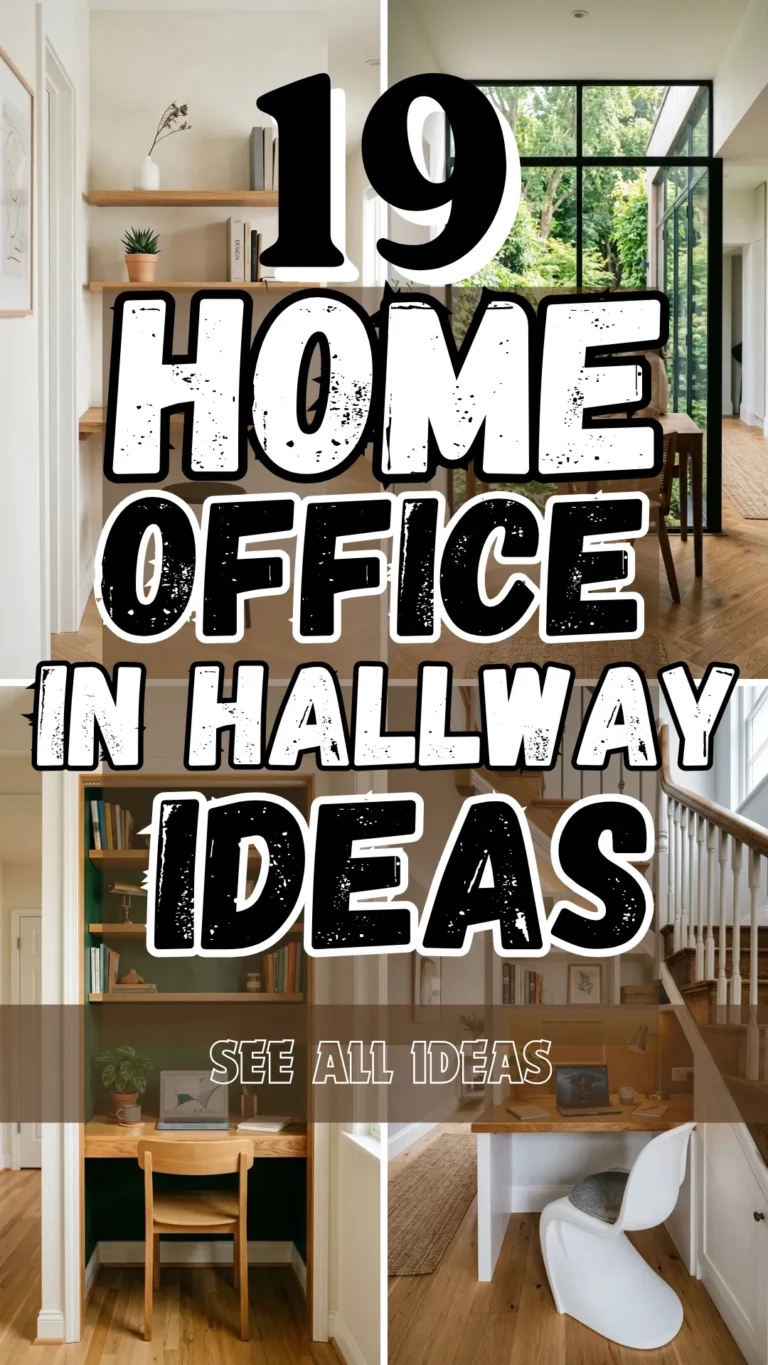

In the modern era of remote work, the luxury of a dedicated spare room for an office is a dream many of us are still chasing. However, the secret to a productive workspace might be hiding right under your nose—or rather, right outside your bedroom door. Hallways are often dismissed as mere transition zones, high-traffic corridors that serve no purpose other than connecting Point A to Point B. But with a bit of ingenuity, these “dead spaces” can be transformed into high-functioning, stylish command centers.
Whether you have a wide landing or a narrow passage, these 19 home office in hallway ideas will show you how to maximize every square inch without sacrificing style or flow.
1. Floating Desk
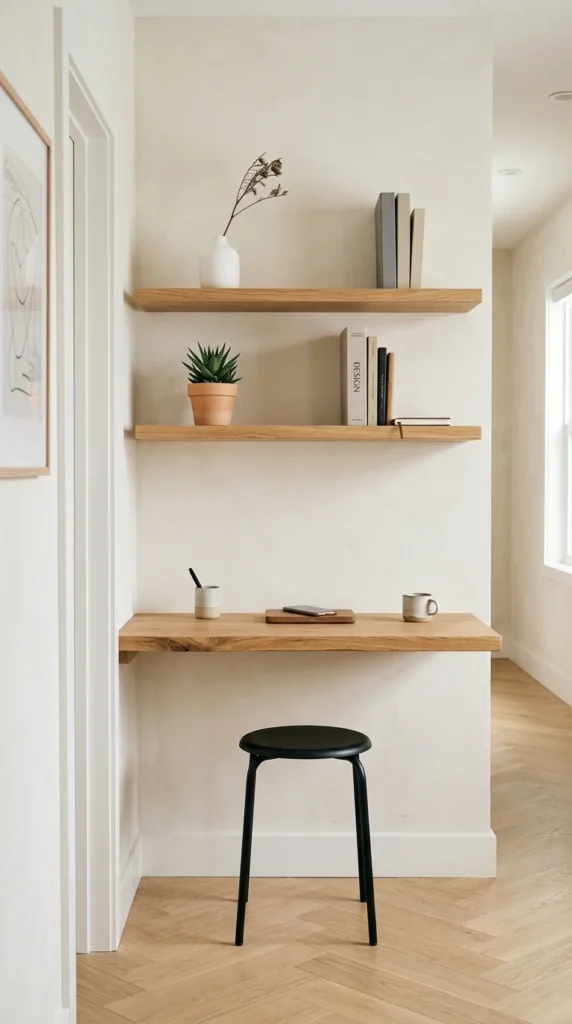
The floating desk is the undisputed king of small-space design. By removing the legs, you create a sense of visual continuity across the floor, making a narrow hallway feel much larger than it actually is. It provides a clean, minimalist look that doesn’t obstruct the flow of traffic. To maximize this setup, choose a wood tone that matches your flooring or wall trim to ensure the desk feels like a natural architectural extension of the home rather than an afterthought.
2. Closet Conversion
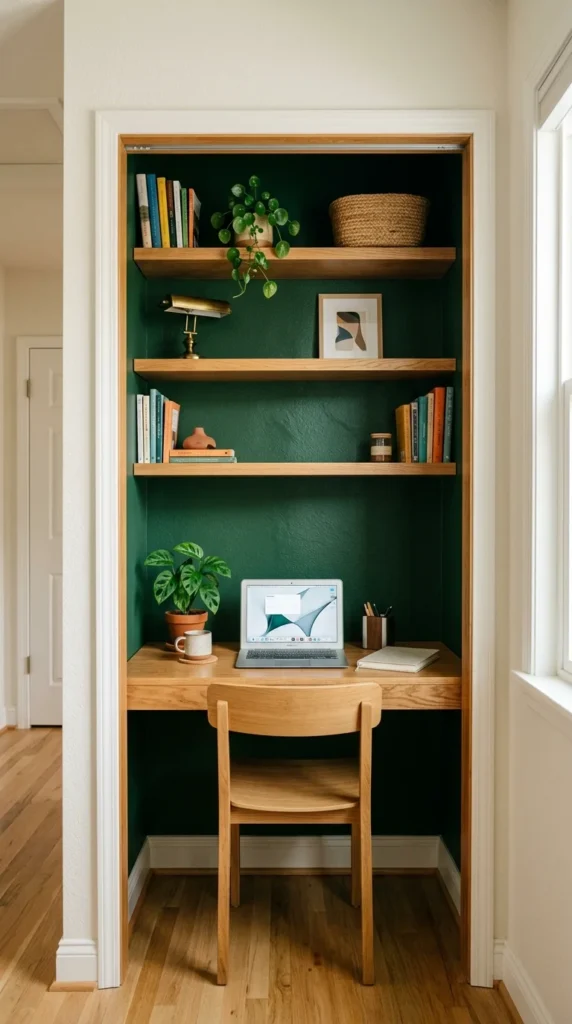
The “cloffice” (closet-office) is a brilliant way to hide your work at the end of the day. By removing the doors of a hallway linen or coat closet—or keeping them to shut away the mess—you create a dedicated “room” within a corridor. You can add wallpaper to the back of the closet to define the zone and install LED strip lighting under the shelves to ensure the nook is well-lit for those late-night sessions.
3. Under-Stair Nooks
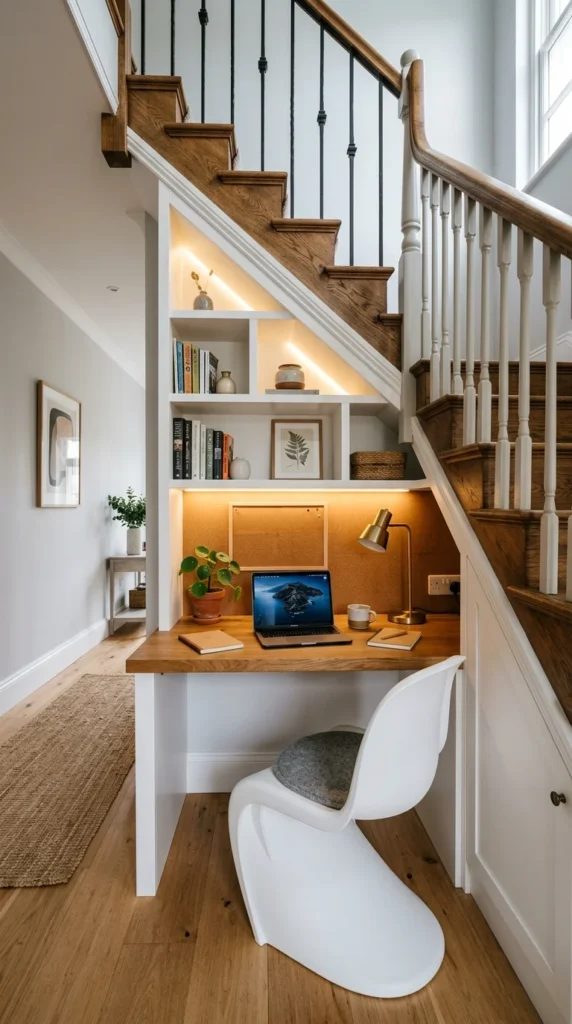
If your hallway runs alongside a staircase, you are sitting on a goldmine of potential. The angled space beneath the stairs is often wasted, but it’s the perfect depth for a standard desk. This setup creates a cozy, “tucked away” feeling that helps with focus. Custom-built cabinetry can follow the slant of the stairs, providing both a desk and extra storage for office supplies or household items.
4. Narrow Consoles
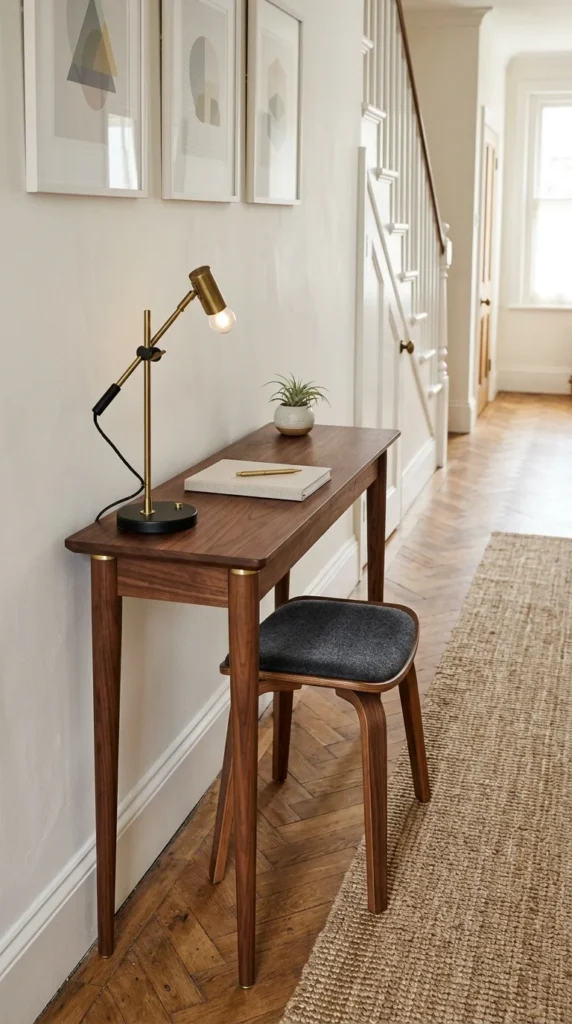
When your hallway is exceptionally narrow, a standard desk is out of the question. Enter the console table. Designed specifically for corridors, these tables have a shallow depth. While they might not fit a large desktop computer, they are perfect for laptop users. Pair it with a stool that can be tucked completely under the table to ensure the walkway remains clear when you aren’t working.
5. Vertical Shelving
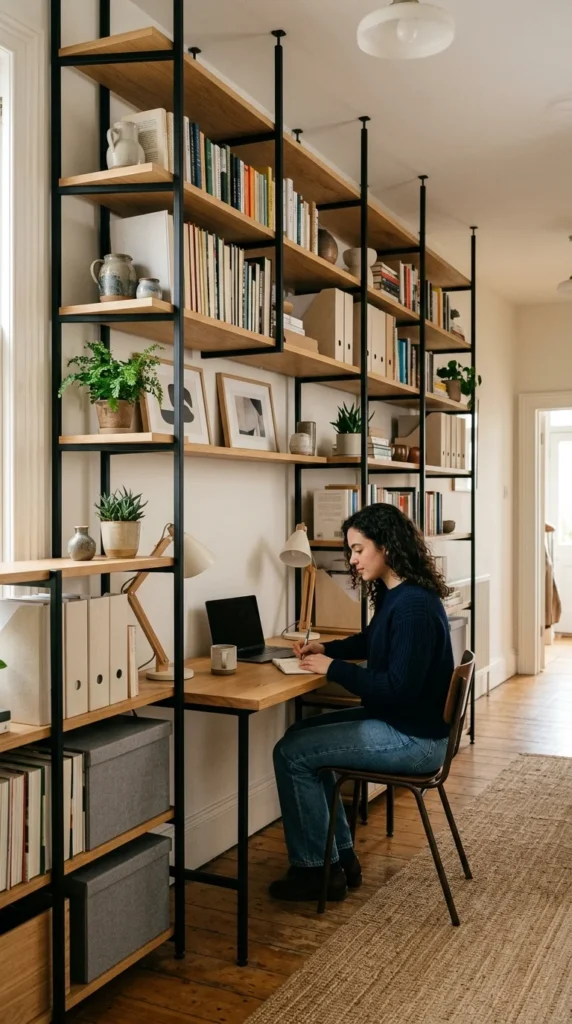
When you can’t go wide, go up. A vertical shelving system that incorporates a desk surface allows you to store all your professional needs without expanding the footprint of the office. Modular systems are particularly effective because they allow you to adjust the height of the desk and shelves as your needs change. This turns your hallway into a functional library and workspace combo.
6. Fold-Down Desks
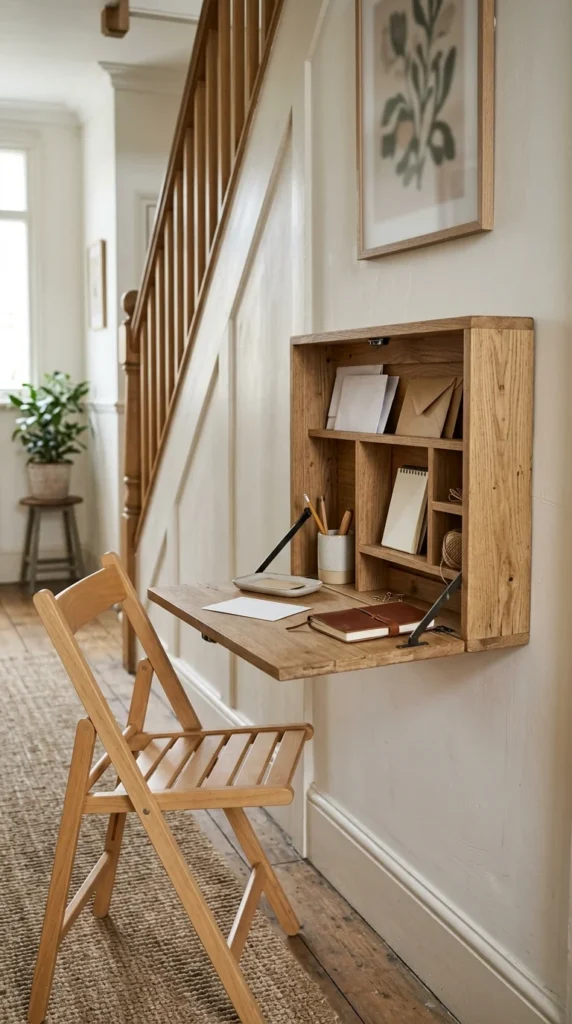
For high-traffic hallways where a permanent desk would be a tripping hazard, a fold-down or “Murphy” desk is the ultimate solution. These units look like a simple wall cabinet when closed but flip down to provide a sturdy work surface. It’s an excellent way to maintain a “work-life balance”—when the desk is folded up, the workday is officially over.
7. End-of-Hallway Zones
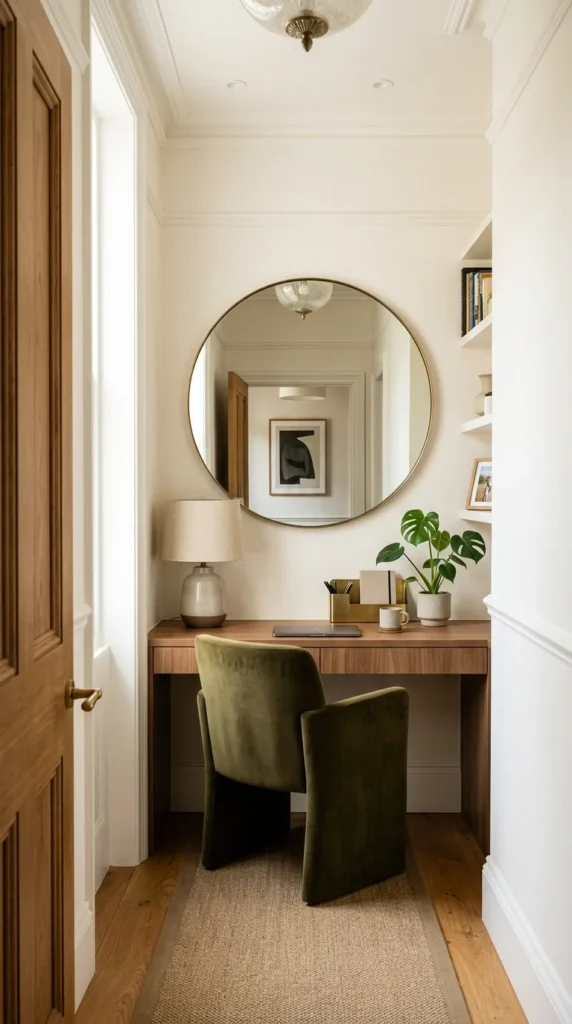
The end of a hallway is often a “dead zone” that holds nothing but a lonely piece of art or a plant. By installing a wall-to-wall desk at the very end of the corridor, you create a destination. This setup feels more like a private office because it’s tucked away from the main movement of the house. It’s the perfect spot for a “command center” for the home.
8. Recessed Archways
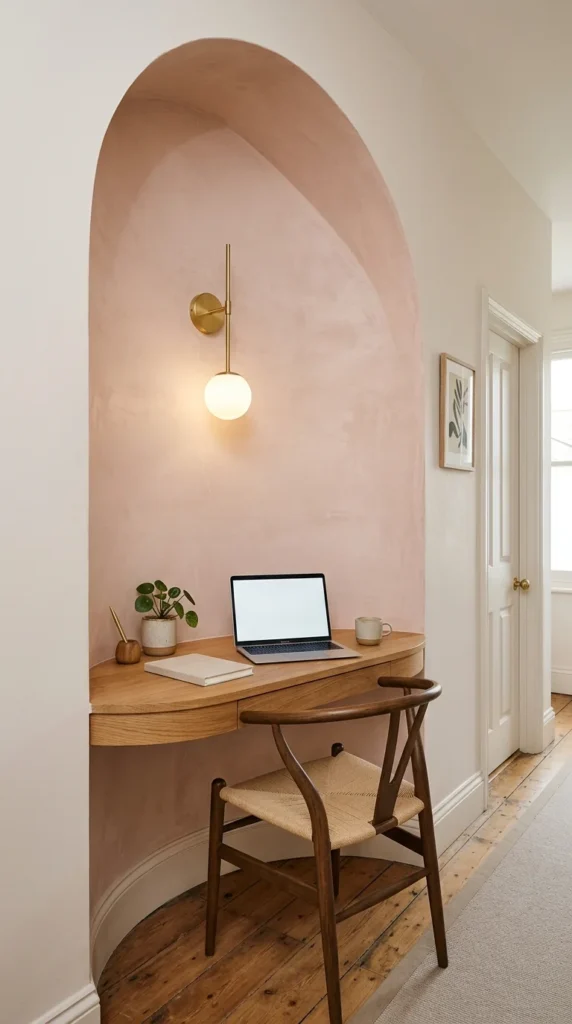
If your home features architectural alcoves or recessed arches, use them. These built-in niches provide a natural frame for a desk. Instead of fighting the architecture, embrace it by custom-fitting a desktop into the curve. This creates a high-end, designer look that feels intentional and integrated into the home’s original blueprint.
9. Window Views
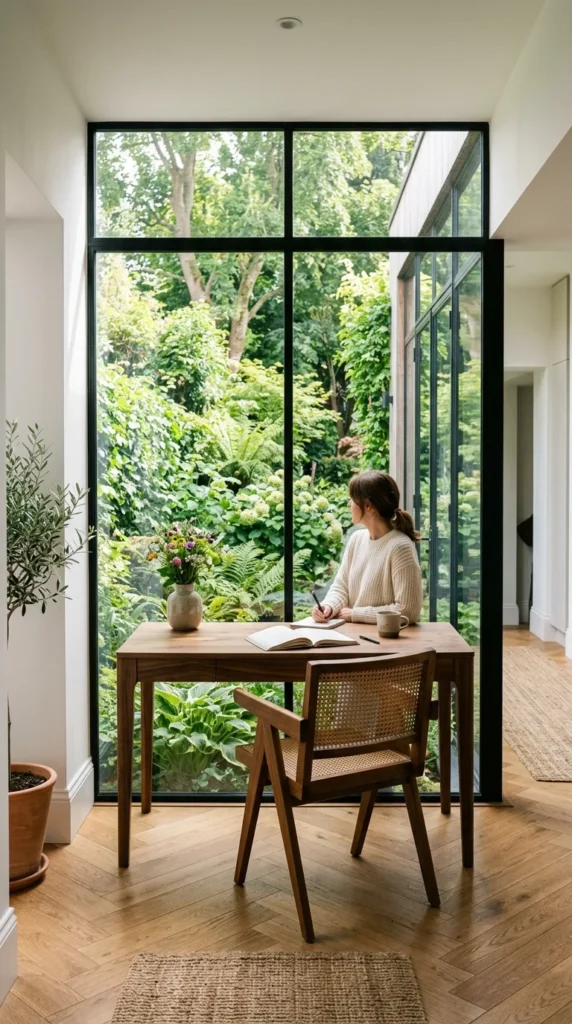
If you’re lucky enough to have a window in your hallway, place your desk right in front of it. Natural light is a proven booster for mood and productivity. A “view” also helps prevent the feeling of being cramped in a narrow space. Keep the window treatments simple—like a roller shade or café curtains—to maximize the light while maintaining privacy.
10. Bold Zoning
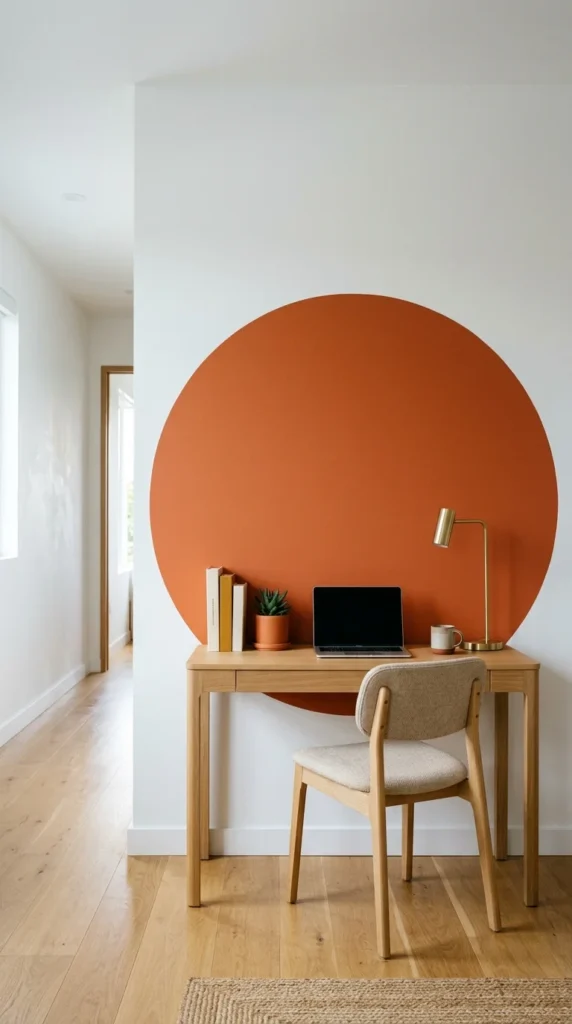
ince hallways are usually neutral, you can use color to “zone” your office. Painting the wall behind your desk a different color or using a bold, patterned wallpaper creates a visual boundary. This tells the brain that this specific patch of the hallway is for work, helping you mentally switch into professional mode despite being in a transitional area.
11. Ladder Desks
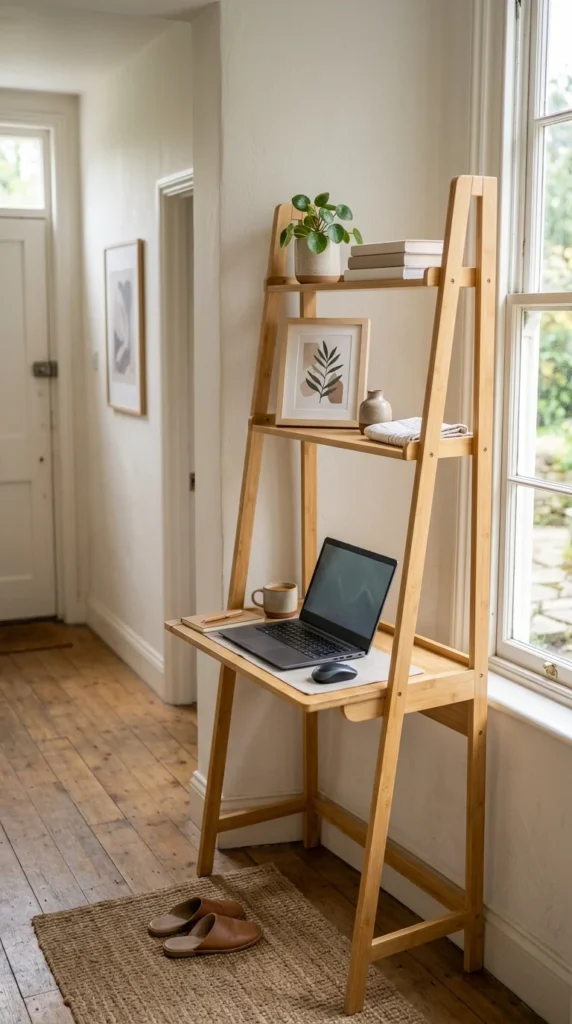
Ladder desks are excellent for hallways because they have a small footprint and a light, airy aesthetic. They lean against the wall, taking up very little physical and visual space. Because they are often freestanding, they are a great option for renters who cannot mount heavy floating desks to the walls.
12. Minimalist Monochromes
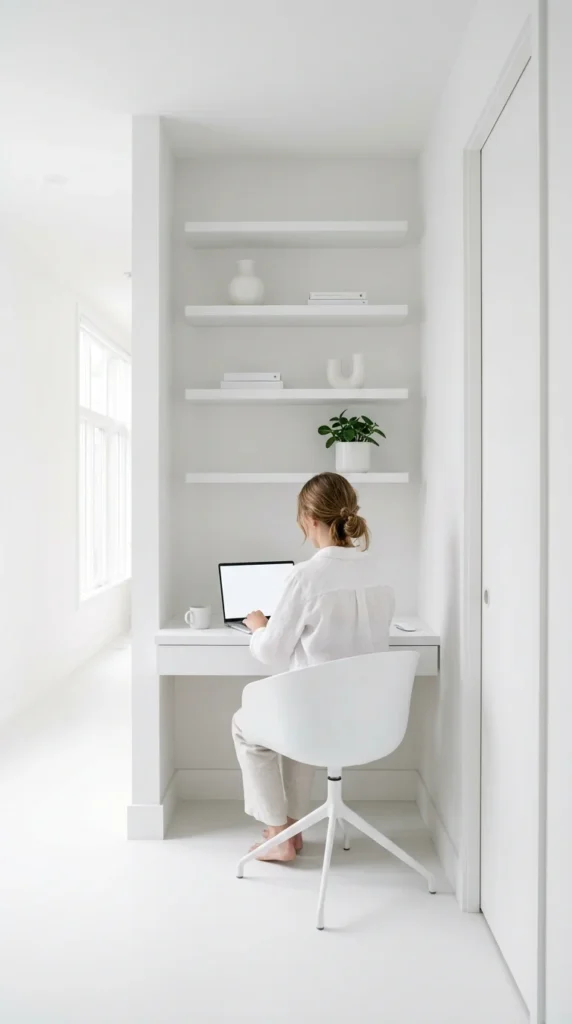
In a small hallway, visual clutter is the enemy. By choosing a desk, chair, and shelving that match the wall color exactly, you make the office “disappear.” A monochromatic white or light gray palette keeps the space feeling open and airy, preventing the furniture from making the corridor feel claustrophobic.
13. Statement Seating
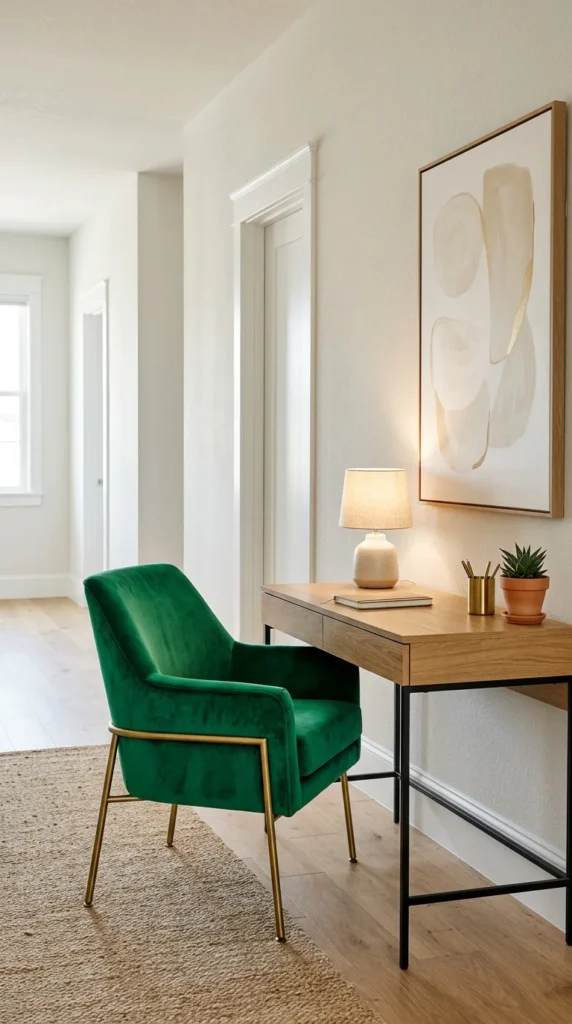
When your desk has to be small and functional, let your chair do the talking. A statement chair adds personality to the hallway and makes the workspace feel like a deliberate design choice. Look for a chair that is comfortable enough for hours of work but stylish enough to look like a piece of accent furniture when the desk isn’t in use.
14. Corner Utilization
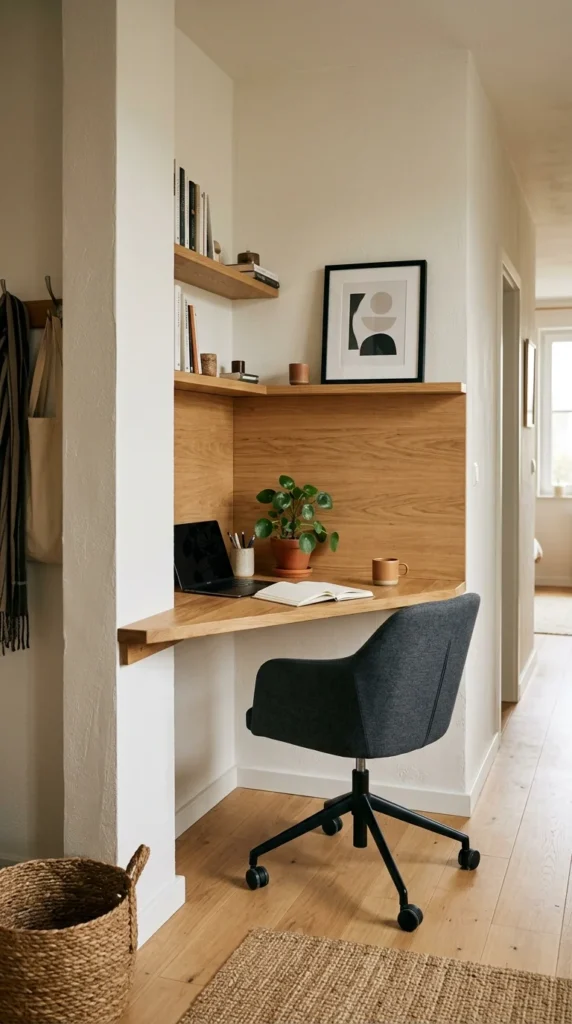
If your hallway has a turn or an L-junction, use that corner. Corner desks provide more surface area than straight desks without taking up more “walking” room. This setup allows you to have a “computer side” and a “writing side,” which can be very helpful for organizing different types of tasks.
15. Mirrored Backsplashes
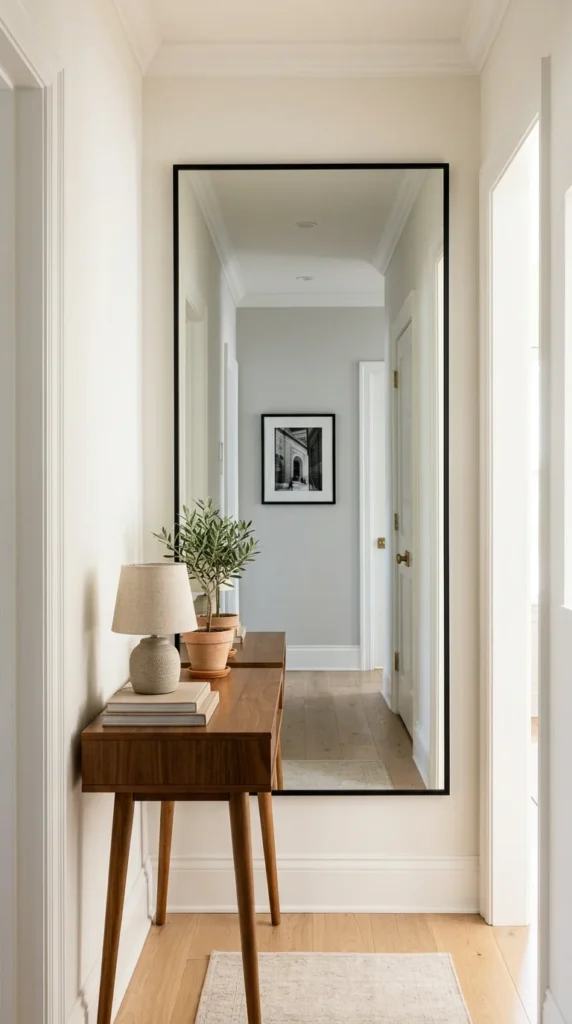
Mirrors are a classic trick for making small spaces feel larger. Placing a mirror behind your hallway desk not only reflects light but also opens up the view behind you. This prevents that “boxed-in” feeling that can occur when working in a narrow corridor. It also allows you to see who is coming up behind you—a practical plus in a busy household!
16. Rug Definition
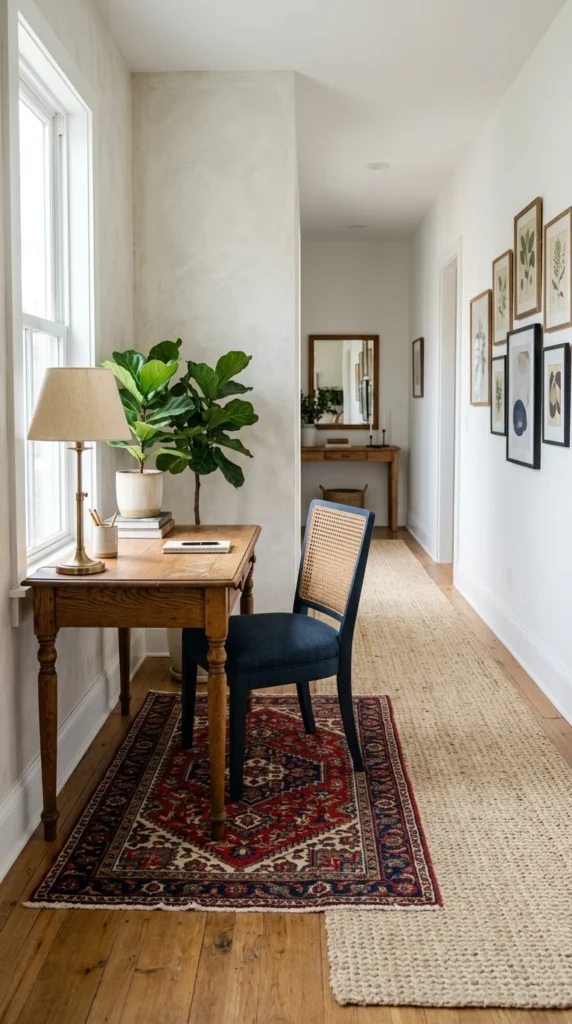
o further define your hallway office, use a rug. A small area rug or a specific runner placed under the desk and chair anchors the furniture. It provides a tactile shift that separates the “walkway” from the “workway.” It also helps with acoustics, muffling the sound of footsteps passing by while you’re on a call.
17. Integrated Tech
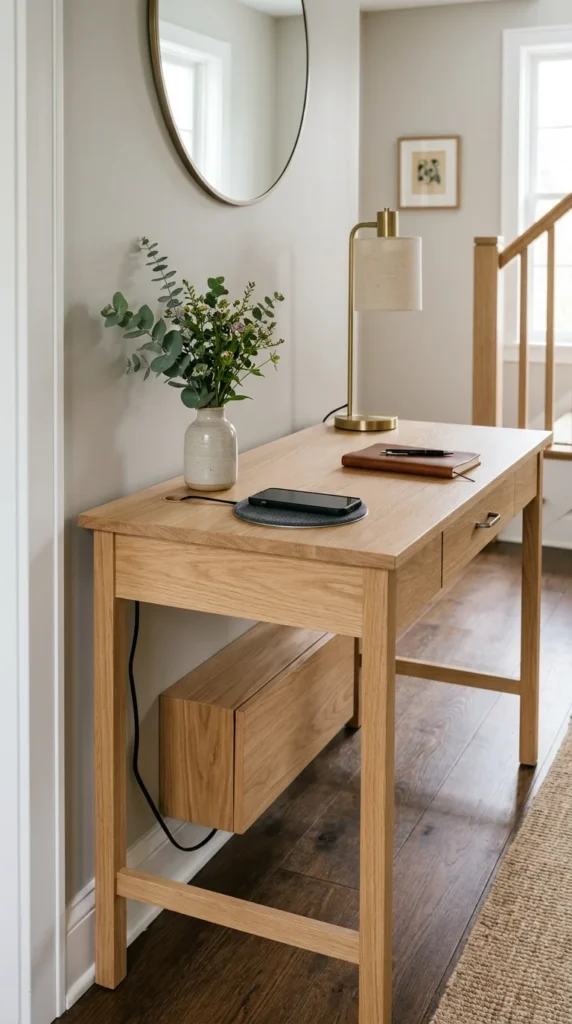
In a hallway, cables are a major eyesore and a potential trip hazard. Invest in a desk with built-in cable management or use cord covers that match your wall color. Keeping your tech “hidden” ensures that the hallway remains a polished part of your home décor rather than a messy tech station.
18. Gallery Wall Surrounds
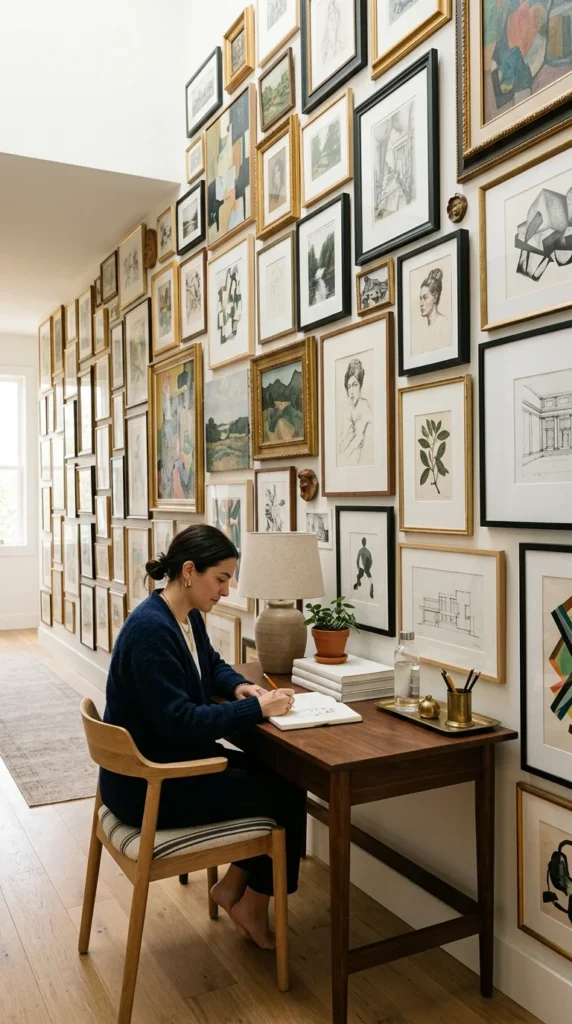
Make your office part of the art. By surrounding your desk with a gallery wall, you blend the workspace into the rest of the home’s aesthetic. This is particularly effective in hallways, which are traditional spots for displaying family photos or art. It makes the desk feel like just another curated element of your home.
19. Double Workstations
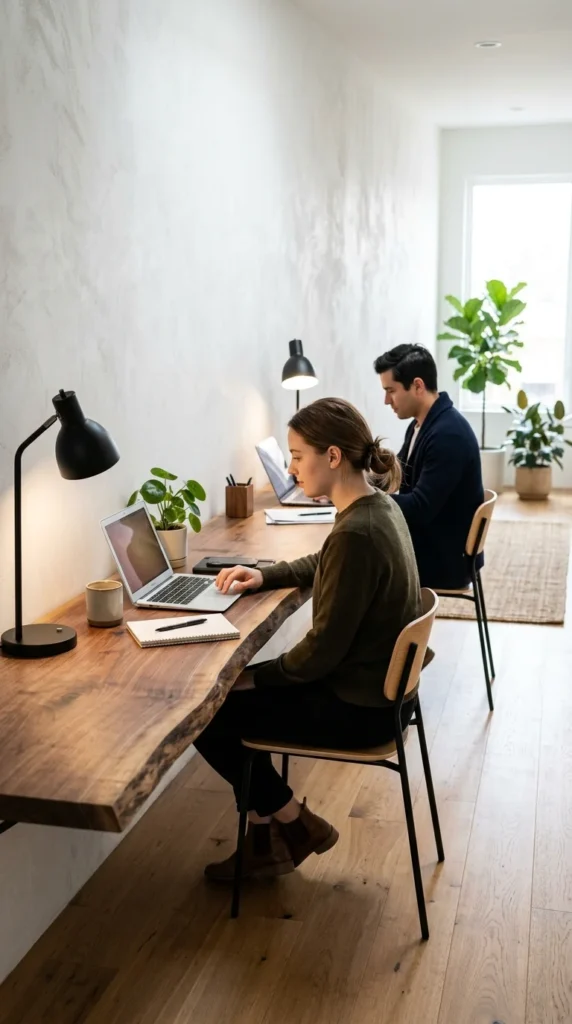
f you have a particularly long hallway, don’t stop at one desk. A long, continuous counter can provide space for two people to work side-by-side. This is an ideal solution for couples who both work from home or for a “homework station” where kids can study while parents keep an eye on them from the nearby kitchen or living room.