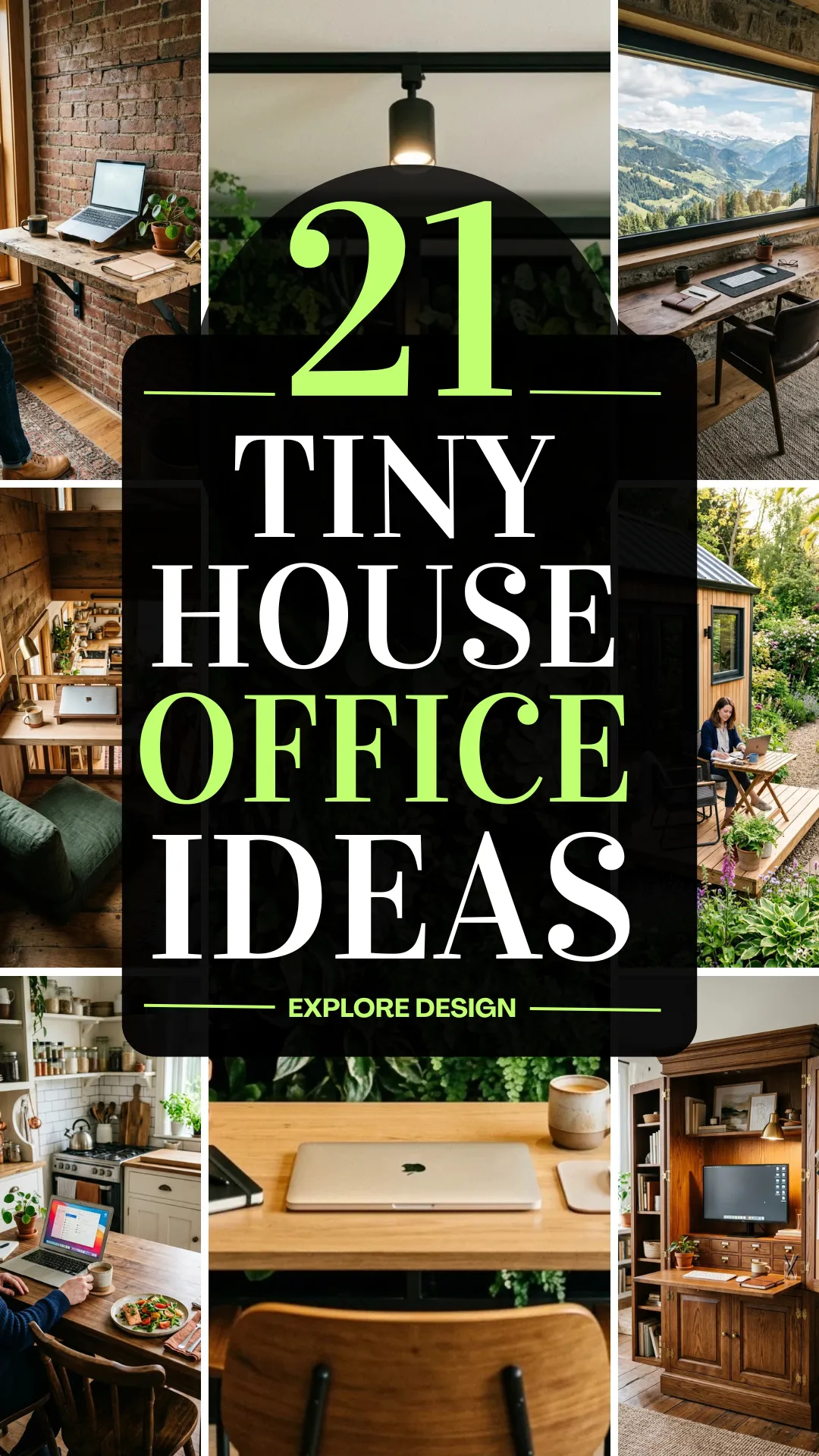
In the age of remote work, the luxury of a dedicated “extra room” for an office is a rarity for many apartment dwellers. However, a lack of square footage doesn’t mean you have to sacrifice productivity or style. Creating a functional workspace in a small apartment is about thinking vertically, embracing multi-functional furniture, and utilizing overlooked corners.
Whether you’re living in a studio or a compact one-bedroom, these 21 smart home office ideas will help you carve out a professional sanctuary that blends seamlessly with your home decor.
1. Floating Desk
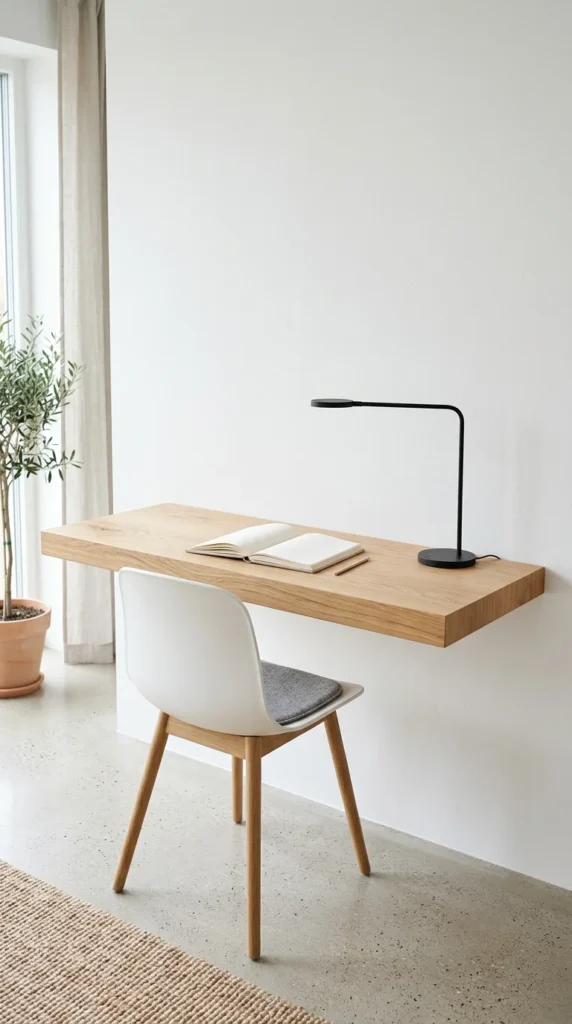
The floating desk is the holy grail of small-space design. By eliminating the legs of a traditional desk, you reclaim valuable floor space, which makes the room feel much larger and less cluttered. These wall-mounted surfaces can be installed at any height, allowing you to customize your workspace to your ergonomic needs. To keep the look cohesive, choose a material that matches your wall color or existing furniture. This “invisible” footprint is perfect for narrow hallways or the small gap between a bed and a wall.
2. Cloffice
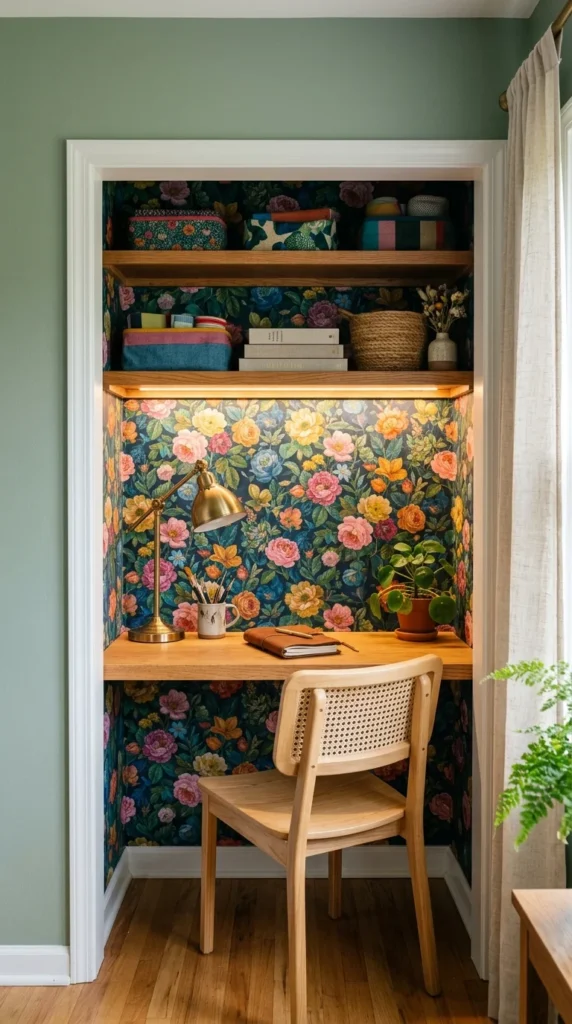
The “cloffice”—a closet-turned-office—is a genius way to hide your workspace when the workday is done. By removing the closet doors (or keeping them to “close” the office at night), you create a recessed nook that doesn’t bleed into your living area. You can personalize the interior with bold paint or wallpaper to define the zone. It’s an ideal solution for those who want a clear mental boundary between work and relaxation.
3. Ladder Desk
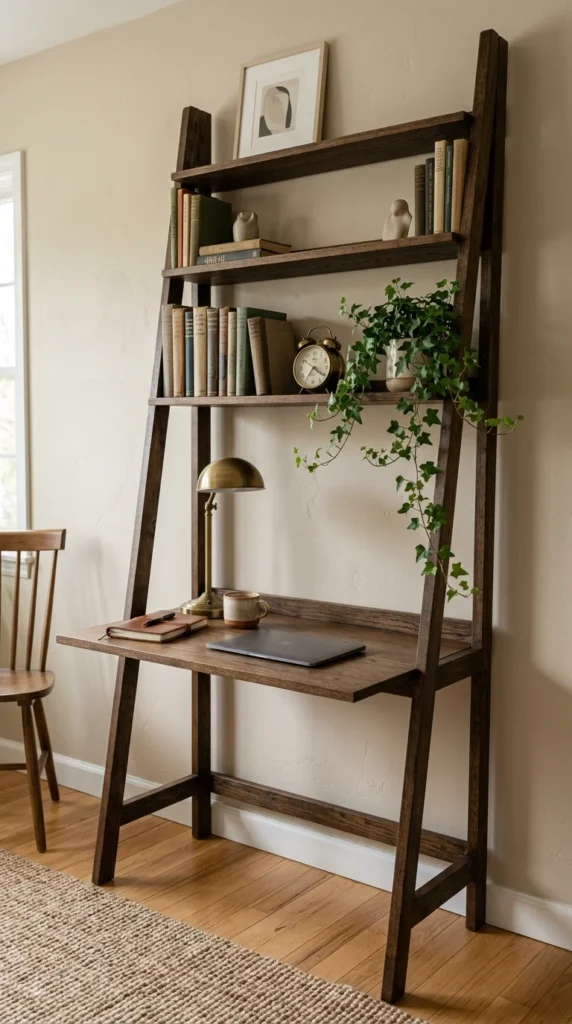
Ladder desks utilize vertical space without requiring permanent wall installation, making them perfect for renters. These units lean against the wall and offer multiple tiers of storage above the work surface. Because they have a narrow profile, they fit perfectly into tight spots while providing ample room for books, decor, and office supplies. The open design ensures that the piece doesn’t feel heavy or bulky in a small room.
4. Corner Desk
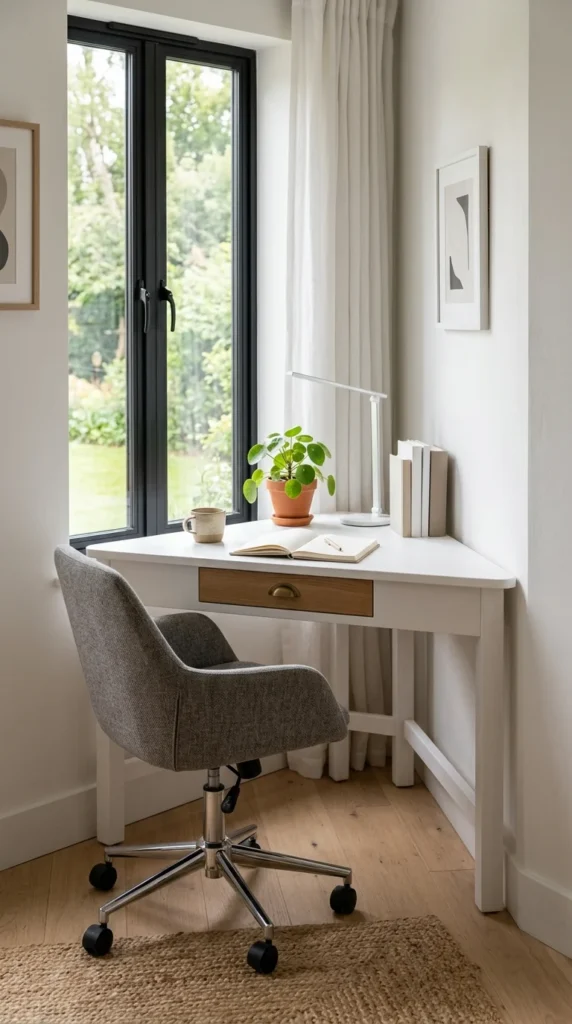
Corners are often the most underutilized areas in an apartment. A dedicated corner desk maximizes every inch of your floor plan. By tucking your workstation into a corner, you create a natural “cubicle” feel that helps focus your attention away from household distractions. Opt for a triangular design to ensure the desk fits snugly against both walls, leaving the center of the room open for movement.
5. Wall-Mounted Foldable
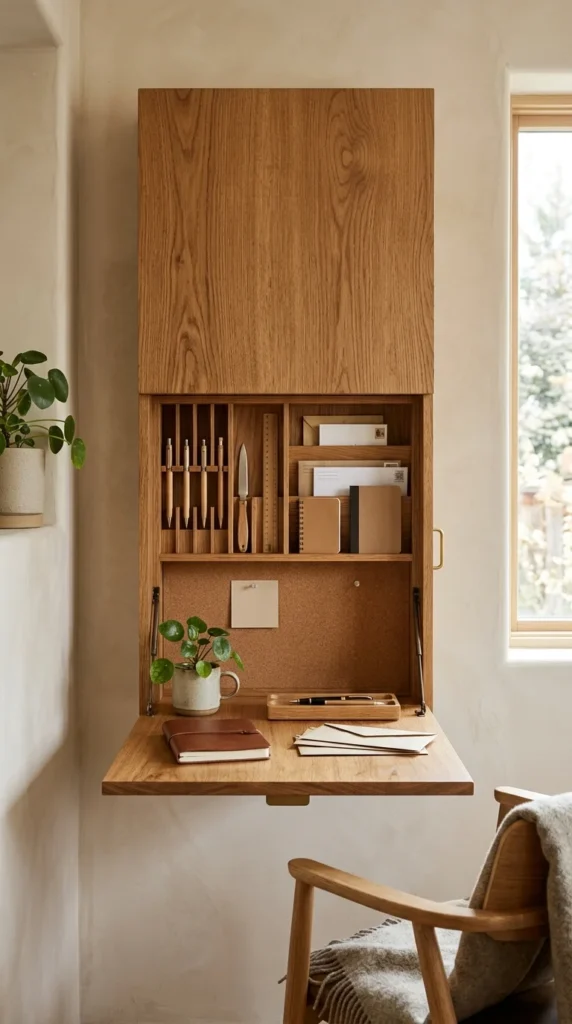
For those who truly have zero floor space to spare, a fold-down or “murphy” desk is the ultimate solution. These units look like a simple cabinet or mirror when closed but transform into a sturdy work surface with a quick pull. They are excellent for occasional remote work or for those who prefer to “clear the desk” entirely once the clock hits five.
6. Window Nook
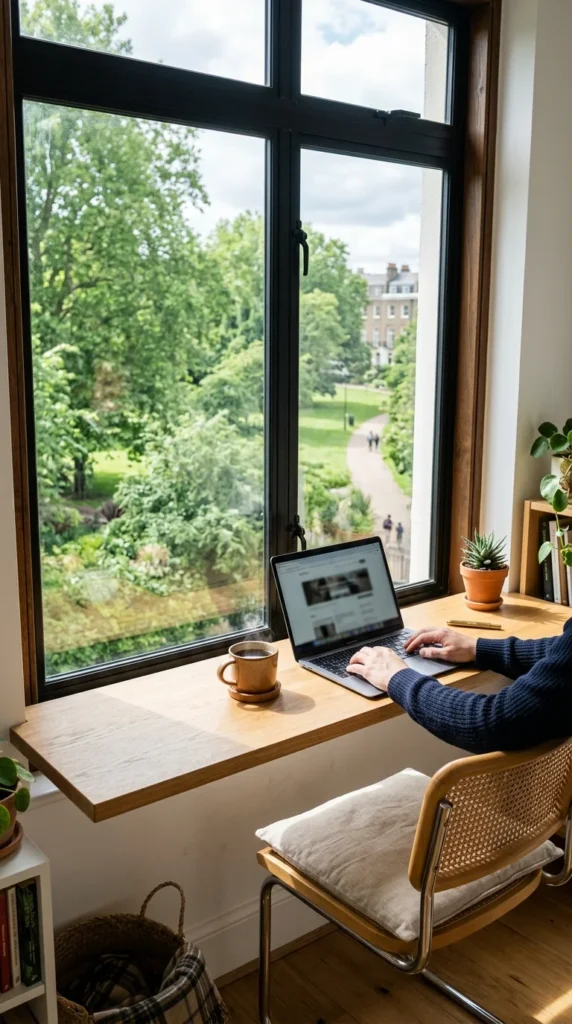
If you have a window with a view, why not turn it into your office? Installing a slim desk directly in front of or even attached to the windowsill provides the best natural light possible. Natural light is known to boost mood and productivity, and having a view of the outside world can prevent the “boxed-in” feeling often associated with small apartments.
7. Pegboard Organization
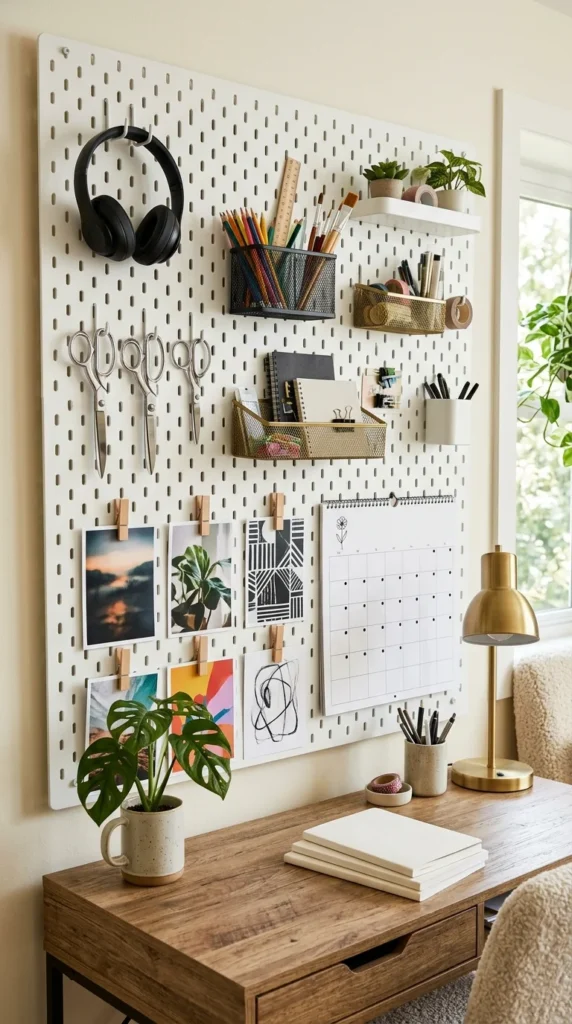
When you lack drawer space, go vertical. A pegboard is a highly customizable way to keep your tools within reach without cluttering your desktop. You can rearrange the hooks, shelves, and bins as your needs change. It also doubles as a piece of functional wall art, allowing you to display aesthetic office supplies and personal mementos.
8. Rolling Cart
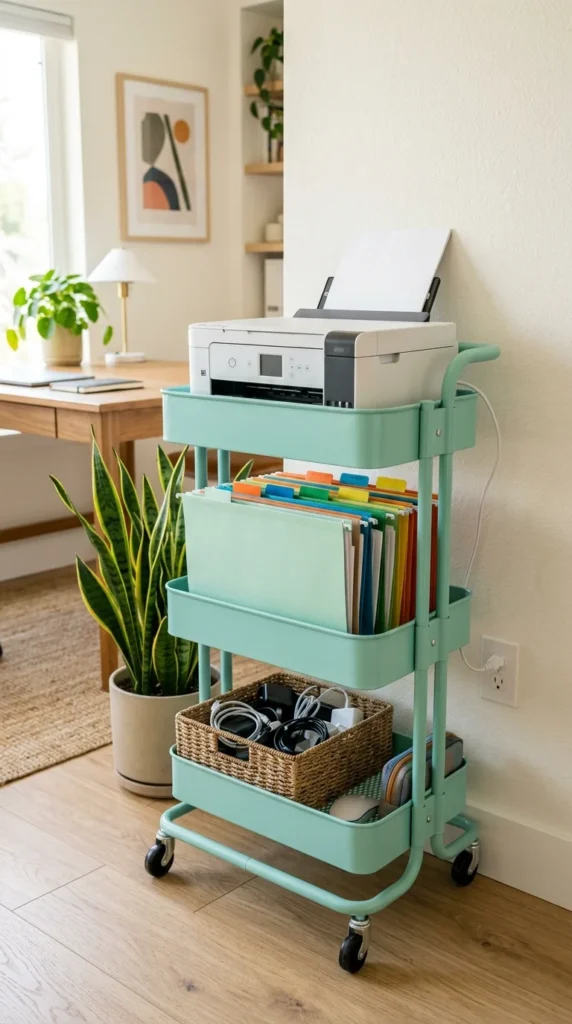
A rolling utility cart is the perfect “mobile office” for studio dwellers. If you prefer to work from the kitchen table one day and the sofa the next, the cart keeps all your essentials—like your charger, notebooks, and printer—in one place. When you’re finished, simply roll the cart into a corner or a closet to keep it out of sight.
9. Sofa Console
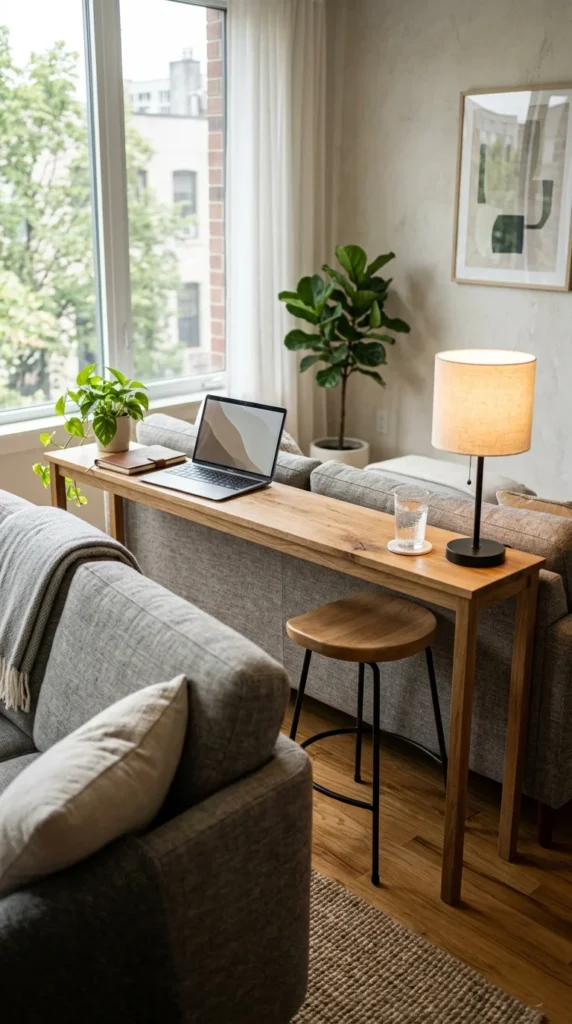
The space behind your sofa is often wasted. A slim console table can serve as a “behind-the-couch” desk. This setup is particularly effective in open-concept apartments, as it uses the back of the sofa as a divider, clearly separating the living zone from the work zone without the need for walls.
10. Acrylic Furniture
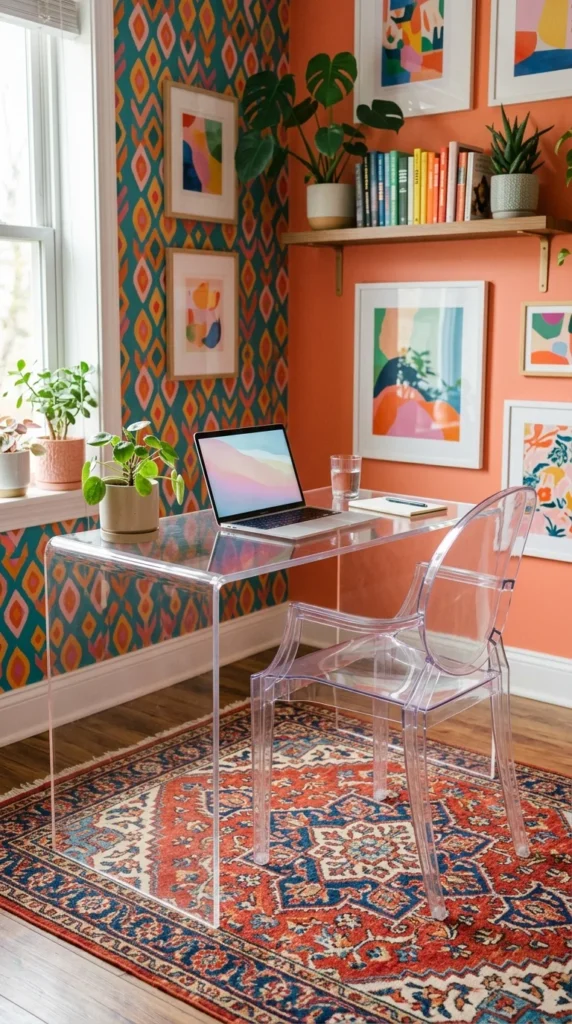
Acrylic or “ghost” furniture is a designer secret for small spaces. Because these pieces are transparent, they take up zero visual weight. You get the full functionality of a desk and chair without the room feeling crowded. It’s a chic, modern look that fits effortlessly into any decor style.
11. Under-Loft Space
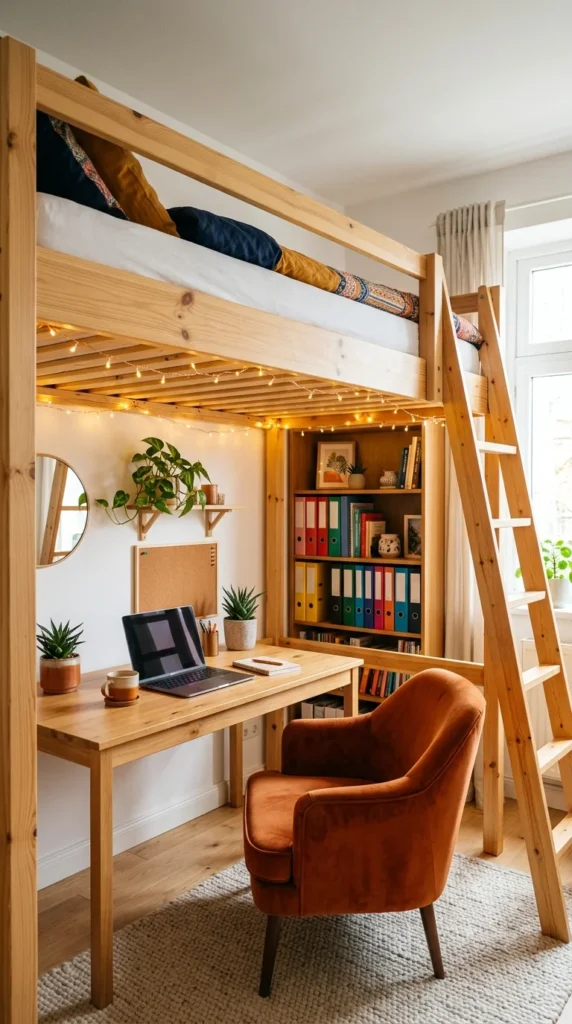
In apartments with high ceilings, lofting your bed is a game-changer. By moving your sleeping area upward, you free up the entire footprint beneath for a spacious office. This is the most efficient way to separate your “sleep” and “work” environments in a studio apartment.
12. Mirrored Accents
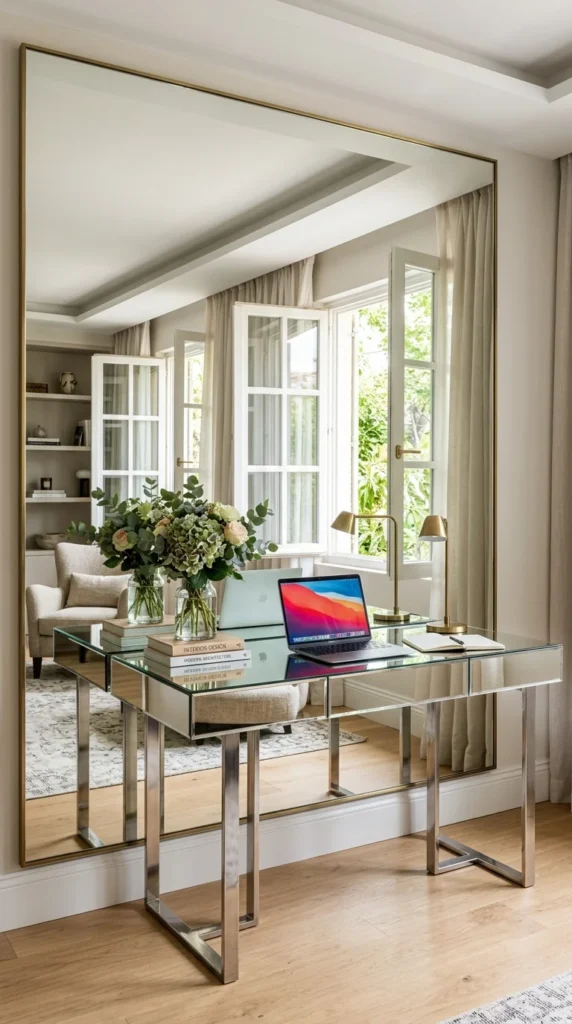
Mirrors are the oldest trick in the book for making small spaces feel larger. A mirrored desk or a large mirror placed behind your workstation reflects light and depth, tricking the eye into thinking the room is much bigger than it actually is. It also adds a touch of glamour to your professional setup.
13. Cable Concealers
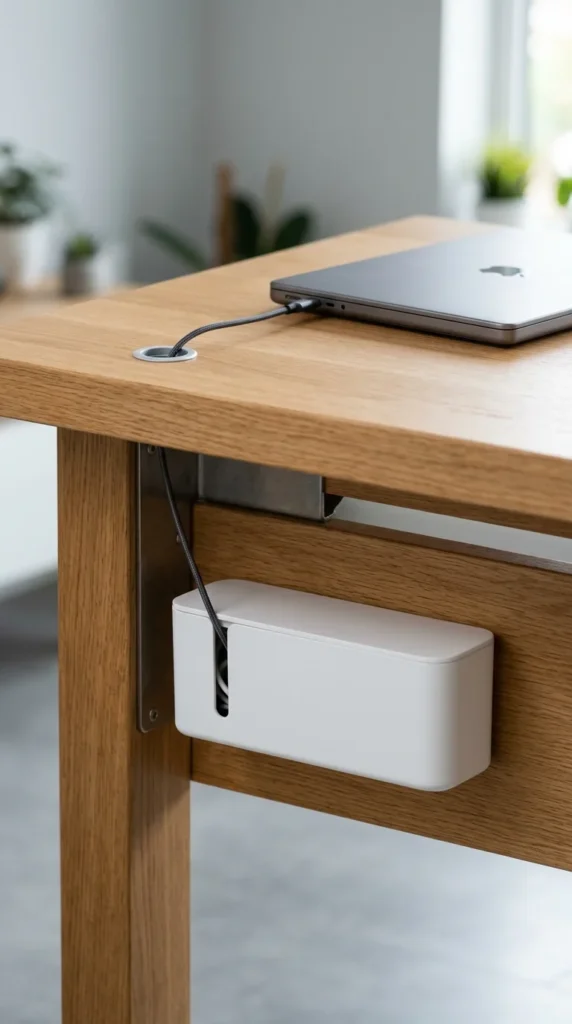
Visual clutter makes a small space feel even smaller. Exposed, tangled cables are the biggest culprit. Using cable management boxes, adhesive clips, and “sleeves” to hide your wires creates a clean, streamlined look that promotes a calm working environment.
14. Room Dividers
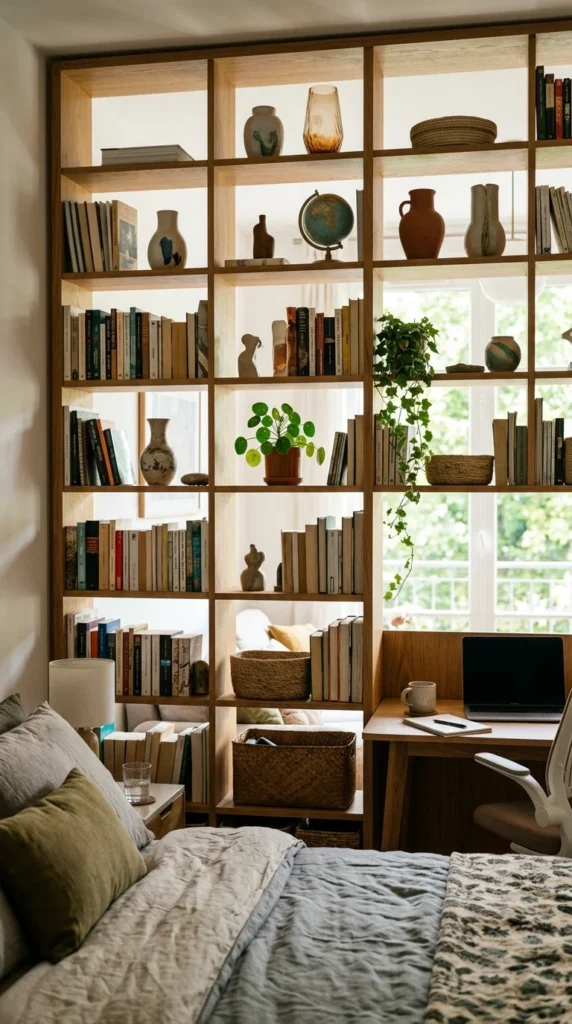
If you need to create a physical barrier between your office and your bedroom, use a functional room divider. An open-shelf bookcase is ideal because it provides storage and separation without blocking light. It gives you a sense of privacy and helps you “leave the office” at the end of the day.
15. Slim Monitors
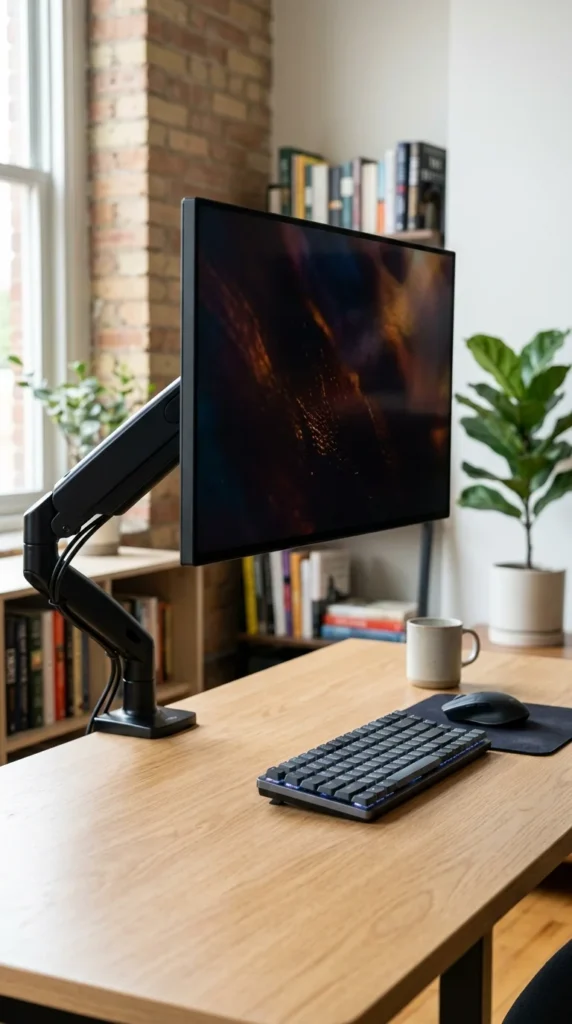
Huge, bulky desktop computers are a relic of the past. For a small apartment, opt for a slim, high-definition monitor or a laptop with a vertical stand. Mounting your monitor on a gas-spring arm allows you to push it out of the way or tilt it when not in use, freeing up the actual desk surface for other tasks.
16. Foldable Seating
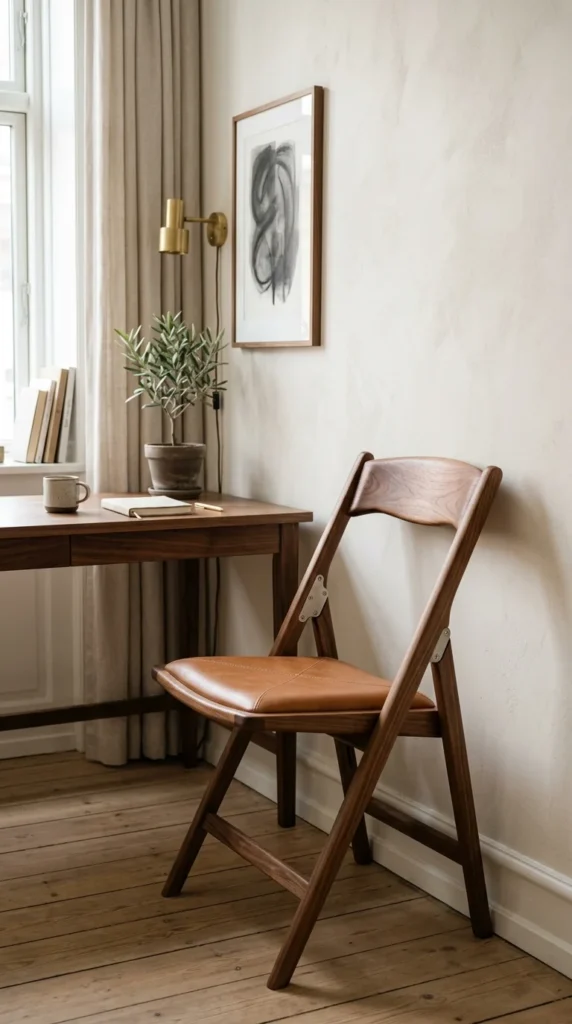
You don’t always need a giant, ergonomic rolling chair. If you only work a few hours a day, a high-quality, aesthetic folding chair can be tucked away when the workday is over. This prevents your “office” from dominating the room’s aesthetic 24/7.
17. Bedside Workstation
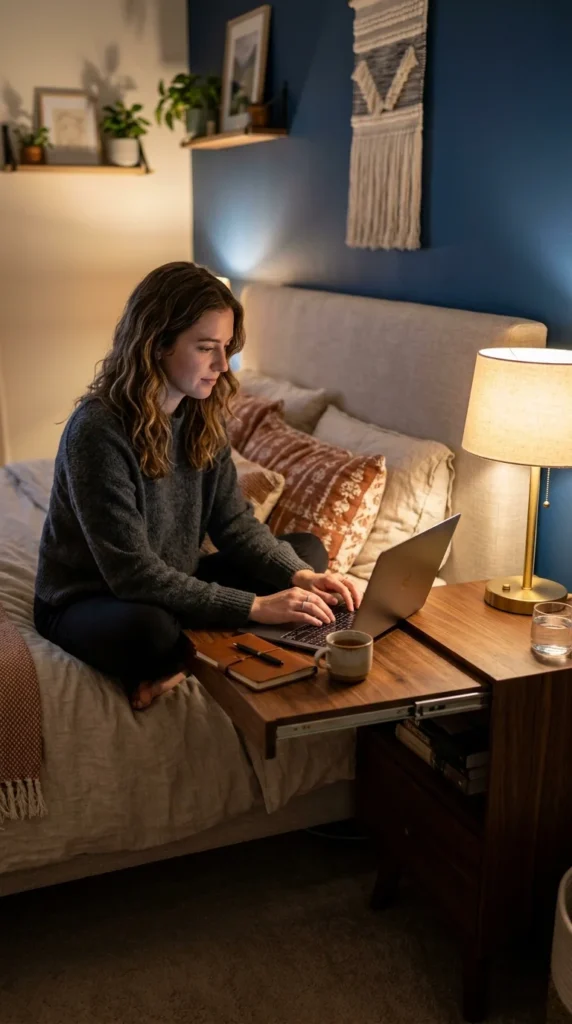
In the tightest of bedrooms, your nightstand can do double duty. Look for bedside tables with pull-out surfaces or heights that match a standard desk. This eliminates the need for two separate pieces of furniture, keeping your bedroom footprint minimal.
18. Vertical Shelving
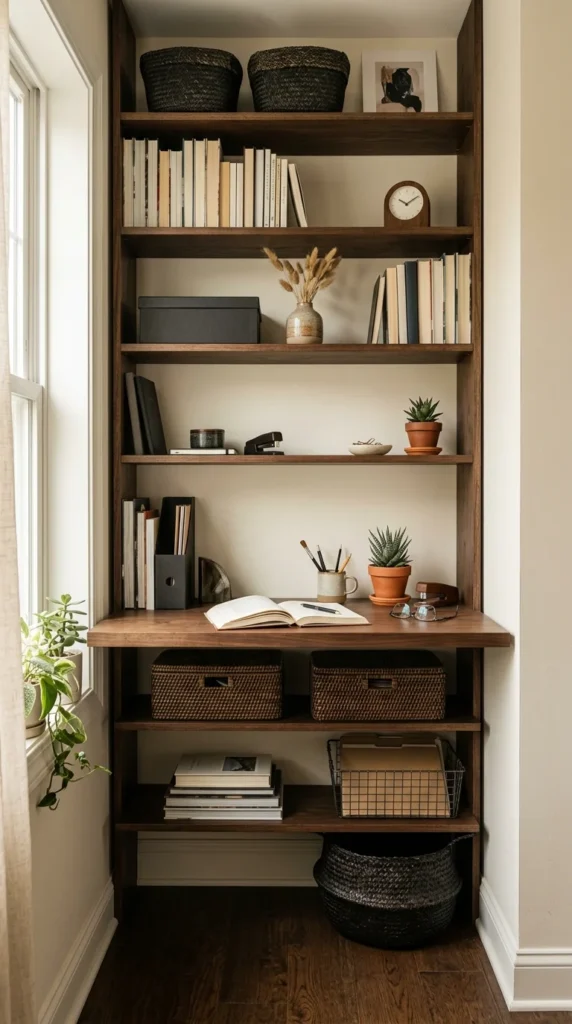
When floor space is at a premium, go all the way to the ceiling. Floor-to-ceiling shelving units with an integrated desk shelf provide an incredible amount of storage. By using the highest shelves for items you rarely need, you keep your immediate workspace clear and organized.
19. Hidden Lighting
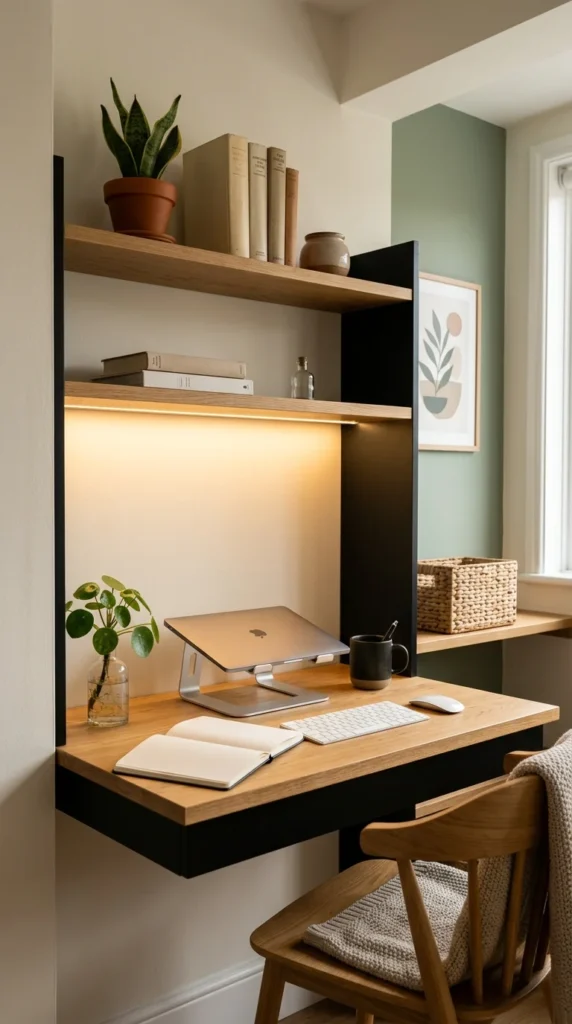
Bulky desk lamps take up precious real estate. Instead, use adhesive LED strips or “puck” lights under your shelves. This provides excellent task lighting for your work without taking up a single inch of your desk surface. It also creates a sophisticated, modern ambiance.
20. Indoor Greenery
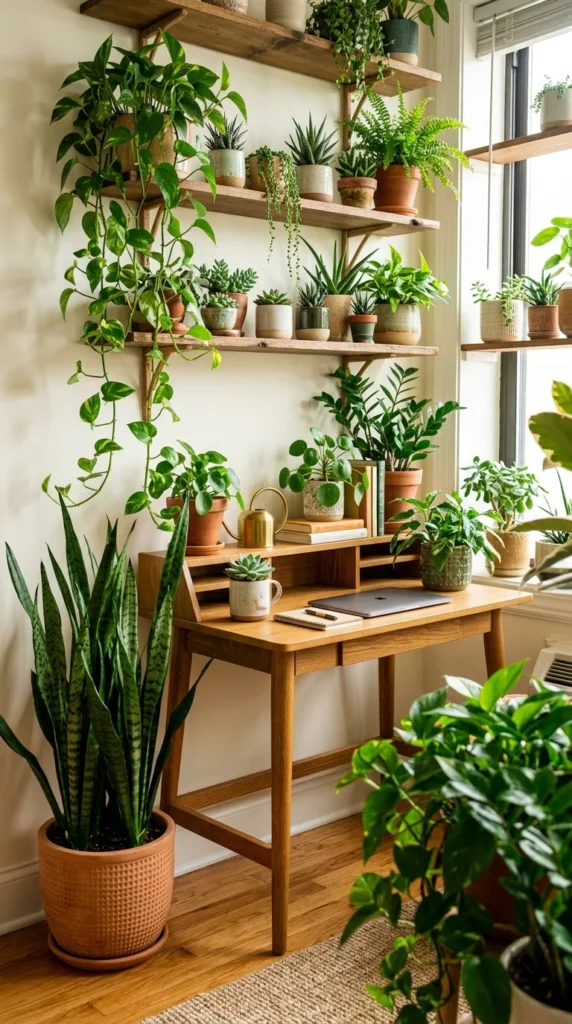
Small apartments can sometimes feel sterile. Adding greenery to your home office not only improves air quality but also reduces stress. Use hanging planters or “wall pockets” to add life to your workspace without sacrificing desk space. A “living wall” above your desk can be a beautiful, low-profile way to bring nature indoors.
21. Monochromatic Palettes
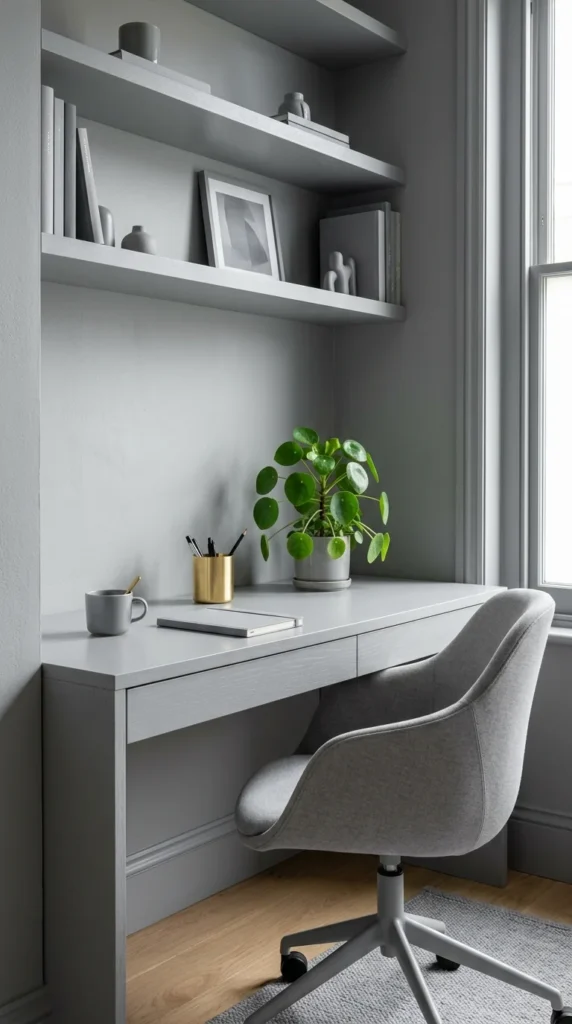
Using a monochromatic color scheme—where your desk and chair match the color of your walls—helps the furniture “blend in” to the room. This reduces visual noise and makes the workspace feel like a natural extension of the apartment rather than an intrusive addition. Stick to light neutrals like white, cream, or light grey to keep the area feeling open and airy.