
The modern workspace is more than just a place to answer emails; it is a sanctuary for focus, creativity, and mental clarity. This is precisely why the Japandi aesthetic has become the gold standard for home office design. A hybrid of Japanese minimalism and Scandinavian functionality, Japandi creates a space that feels both warm and disciplined. By combining the “hygge” comfort of the North with the “wabi-sabi” appreciation for imperfection from the East, you can transform your work environment into a balanced retreat.
Here are 23 Japandi home office ideas to help you cultivate a workspace that is as productive as it is peaceful.
1. Natural Wood
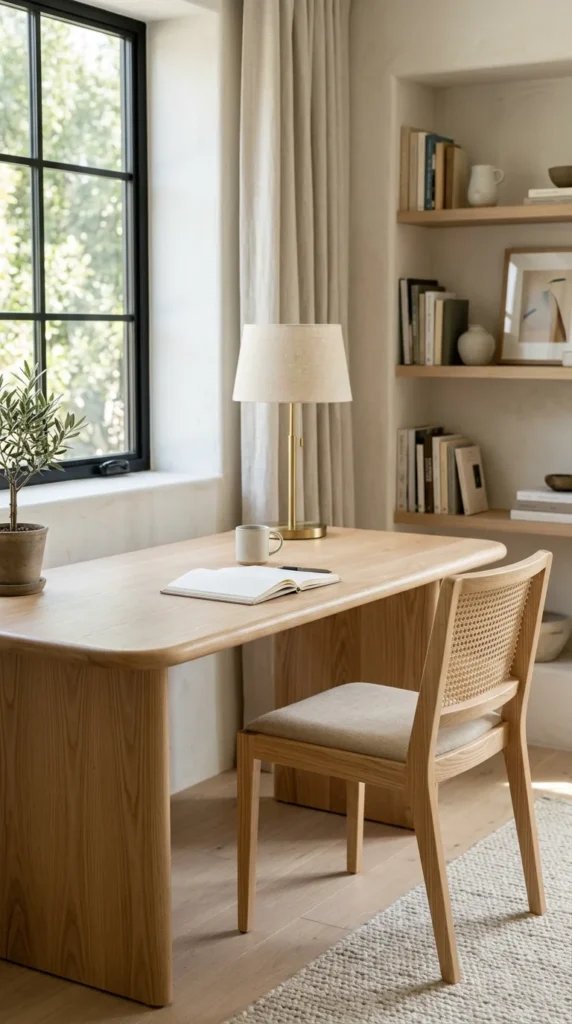
In the world of Japandi design, natural wood is the primary protagonist. Unlike the cold, clinical feel of modern industrial offices, Japandi relies on the warmth of timber like oak, ash, and walnut. To achieve this look, opt for a desk with a clear finish that allows the natural grain to show through. This connection to nature reduces stress and brings an organic soul to your workspace.
2. Neutral Tones
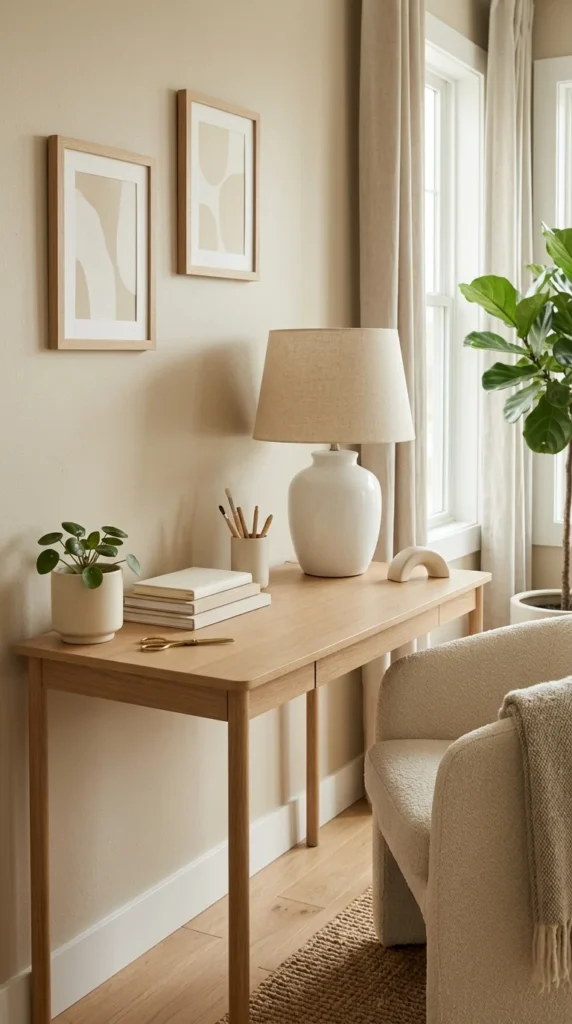
The color palette of a Japandi office should be quiet and meditative. Think of a spectrum ranging from crisp whites and soft creams to muted beiges and “greige” (a mix of grey and beige). These colors reflect light beautifully, making even a small corner feel expansive and airy. Avoid jarring, bright colors that distract the eye; instead, lean into tones that mimic the earth and sky.
3. Indoor Plants
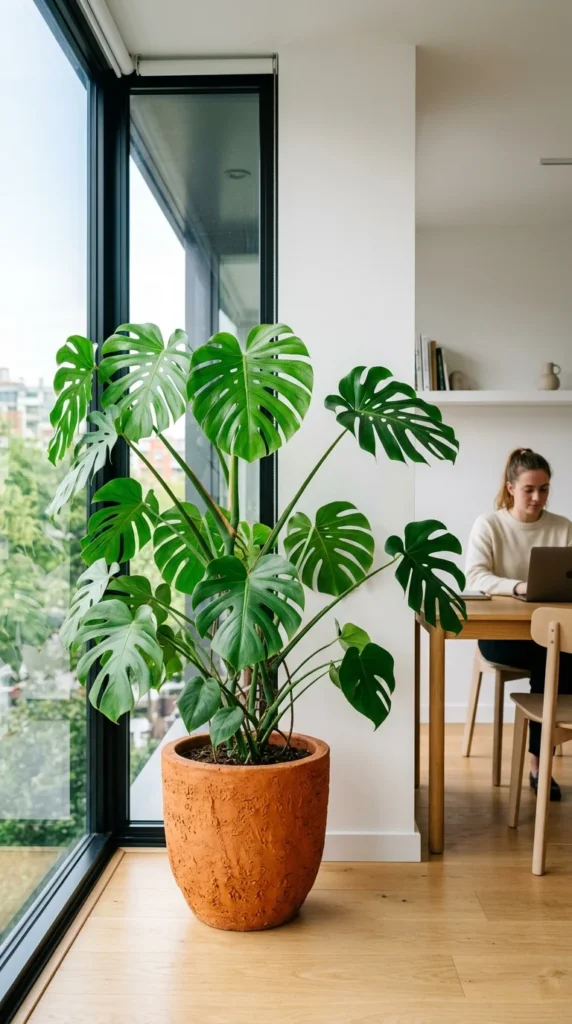
Bringing the outdoors in is a core pillar of Japandi philosophy. However, rather than a cluttered “jungle” look, choose one or two statement plants. A tall Fiddle Leaf Fig or a delicate Bonsai tree adds a sculptural element to the room. The vibrant green provides a necessary pop of color against a neutral backdrop while improving air quality and boosting your mood during long work hours.
4. Slat Walls
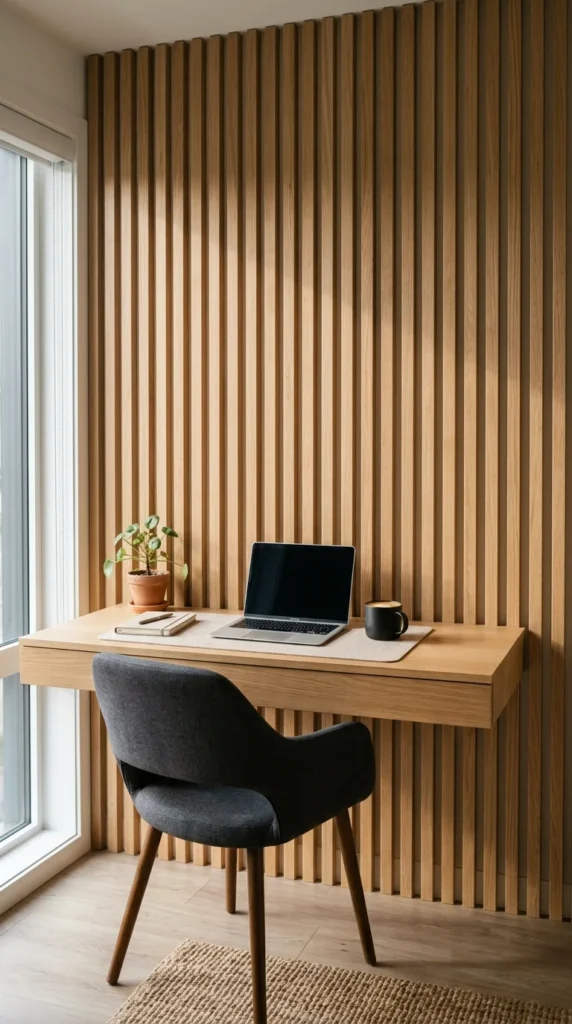
Wooden slats are a signature architectural element of Japanese design. Adding a slat wall—often called a “tambour” wall—behind your desk provides incredible visual texture without the need for busy wallpaper or art. It creates a sense of rhythm and order, effectively zoning your office area within a larger room.
5. Woven Textures
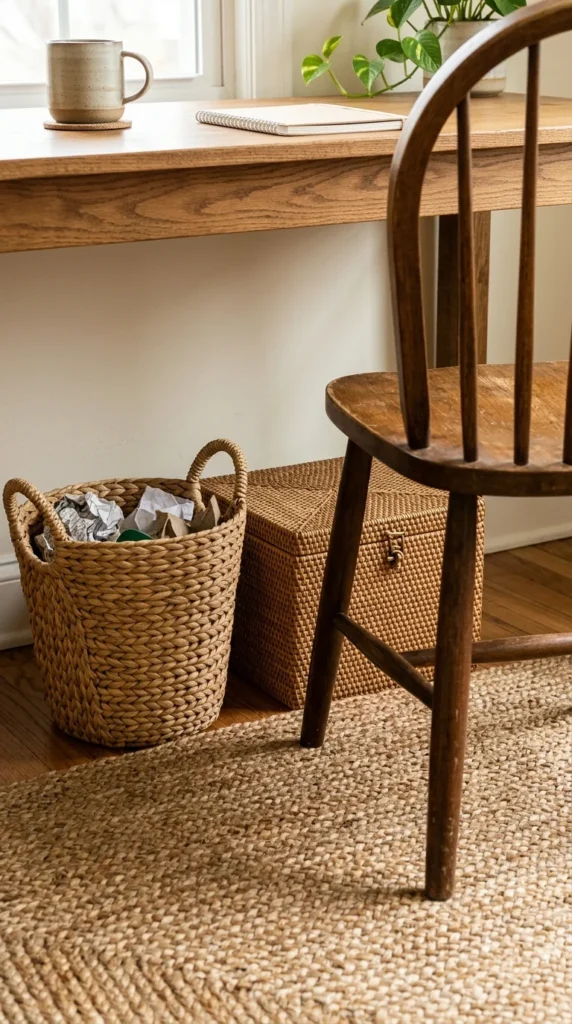
To prevent a minimalist office from feeling “flat,” you must introduce tactile variety. Woven materials like rattan, seagrass, and jute bring a rustic, Scandinavian warmth to the space. Use a woven rug to ground the room or incorporate rattan baskets on shelves to hide messy office supplies.
6. Minimalist Desk
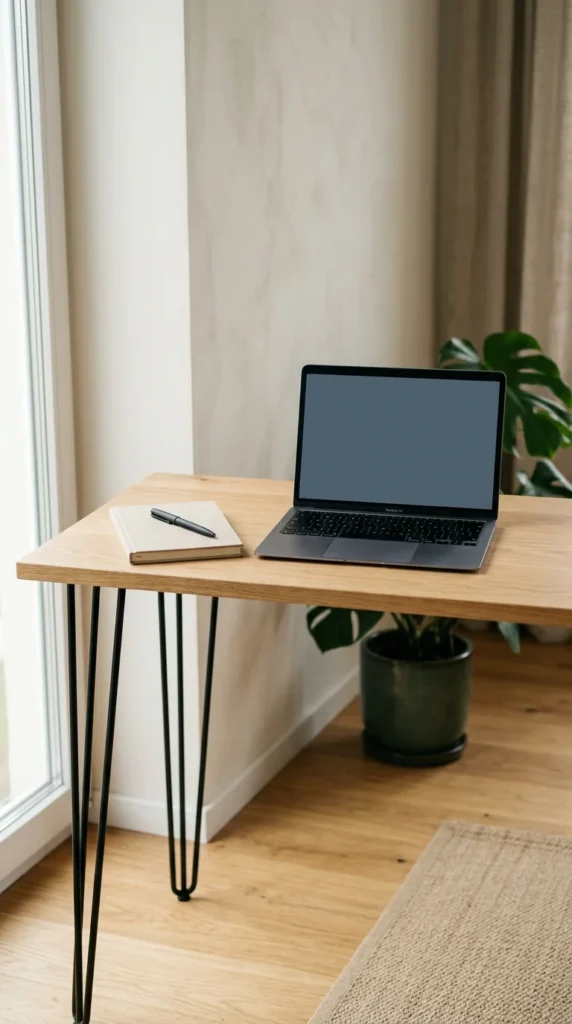
The Japandi desk is a masterclass in “less is more.” Look for furniture with clean lines, tapered legs, and no unnecessary ornamentation. A floating desk is a fantastic option for small spaces, as it keeps the floor clear and maintains a sense of “ma” (the Japanese concept of negative space).
7. Hidden Storage
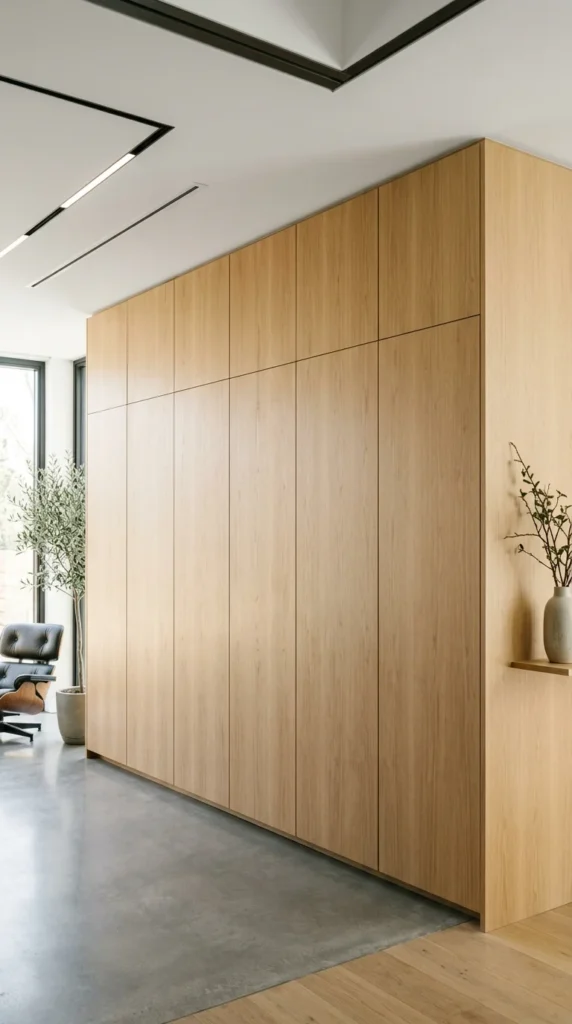
Clutter is the enemy of the Japandi mind. To keep your workspace serene, you need a place for everything. Built-in, handle-less cabinets or sleek sideboards allow you to tuck away printers, cables, and folders. When the visual “noise” of office equipment is hidden, your brain can focus entirely on the task at hand.
8. Paper Lanterns
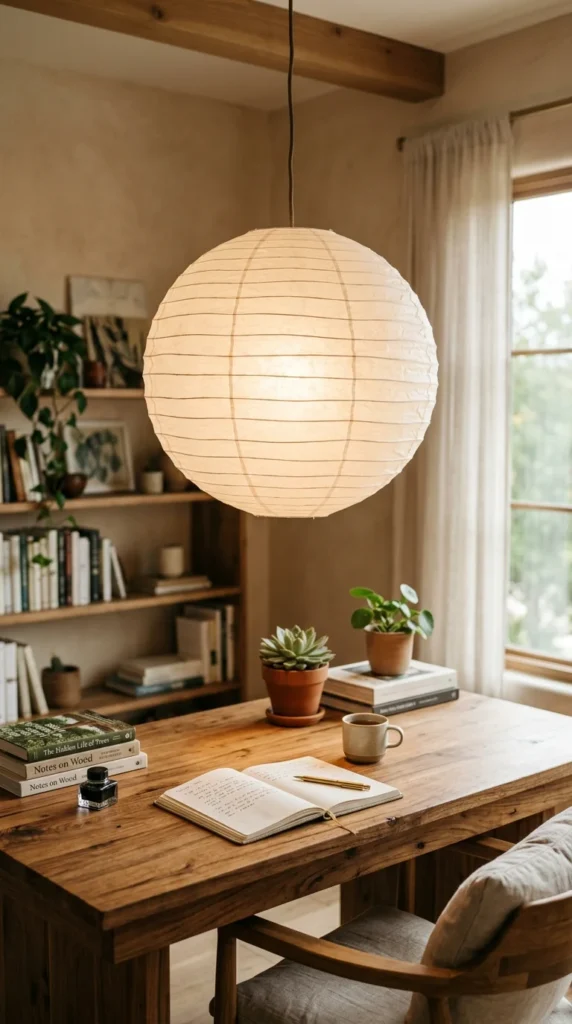
Lighting should be functional but never harsh. Traditional Japanese washi paper lanterns or Scandi-inspired pleated shades are perfect for a home office. They diffuse the light, creating a soft glow that eliminates harsh shadows on your computer screen and reduces eye strain.
9. Shoji Screens
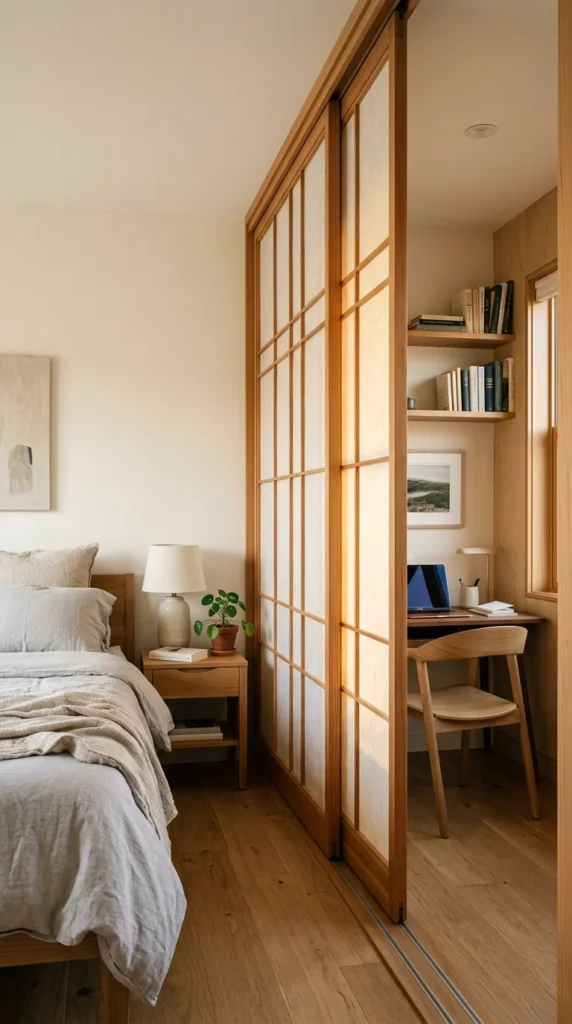
If your home office is part of a multipurpose room, Shoji screens are a classic way to create privacy. These translucent sliding panels allow light to pass through while physically blocking out the distractions of the rest of the house. They add a touch of authentic Japanese craftsmanship to the aesthetic.
10. Earthy Ceramics
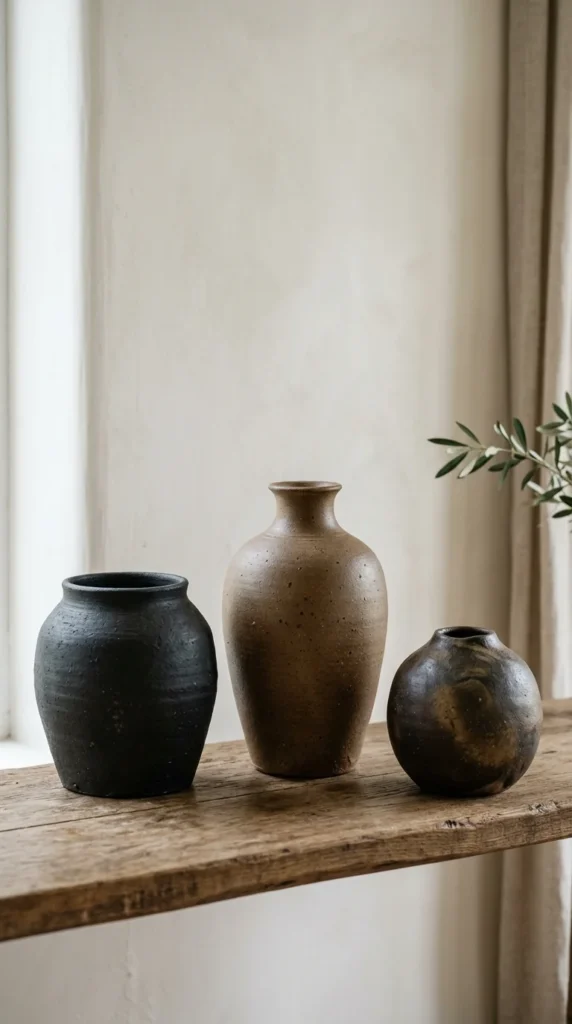
ecor in a Japandi office should be intentional and limited. A few pieces of handmade pottery or ceramic vases provide an artisanal touch. Look for pieces that celebrate “wabi-sabi”—the beauty of imperfection—such as a slightly asymmetrical bowl for holding paperclips or a matte-finished mug for your tea.
11. Functional Lighting
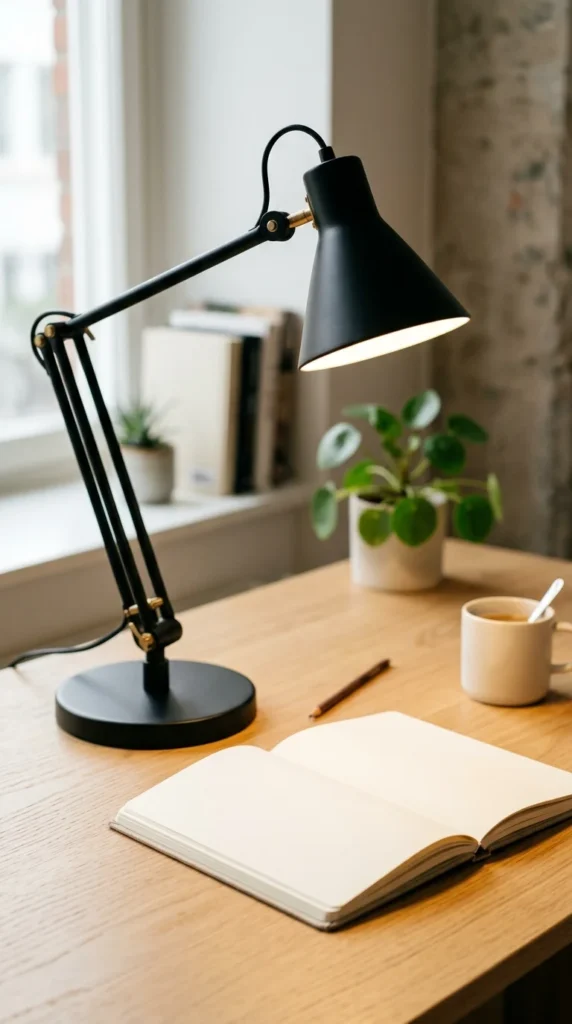
While ambient lighting is for mood, task lighting is for work. A slim, matte black or brass desk lamp provides a modern Scandinavian contrast to the softer Japanese elements. Choose a design that is sculptural and thin so it doesn’t take up too much visual real estate on your desk.
12. Wool Rugs
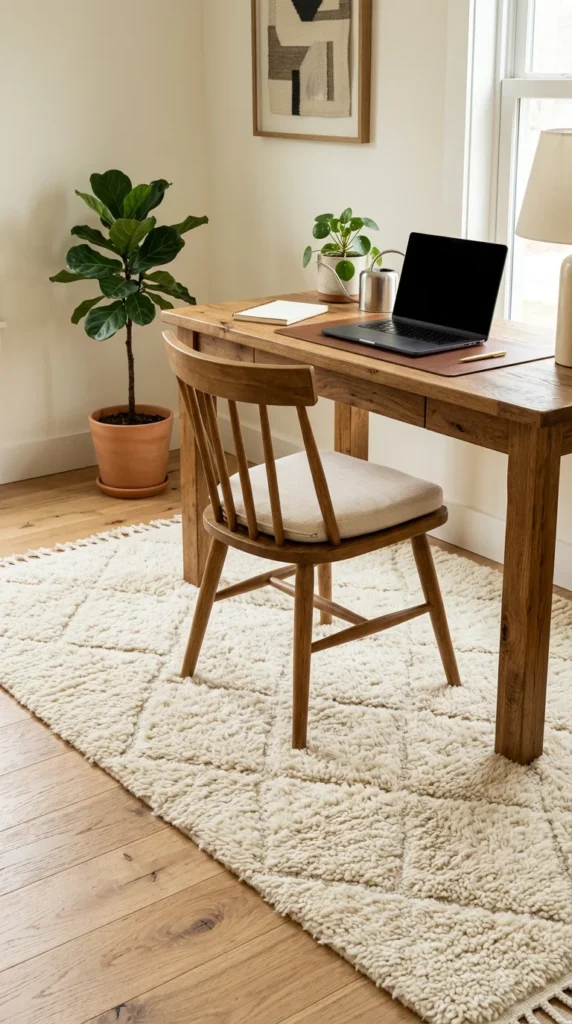
Comfort is key to productivity. A soft wool rug adds “hygge” to the room, making the space feel cozy and inviting. Opt for a low-profile rug in a natural fiber to maintain the organic theme while providing a soft surface for your feet during those long Zoom calls.
13. Open Shelving
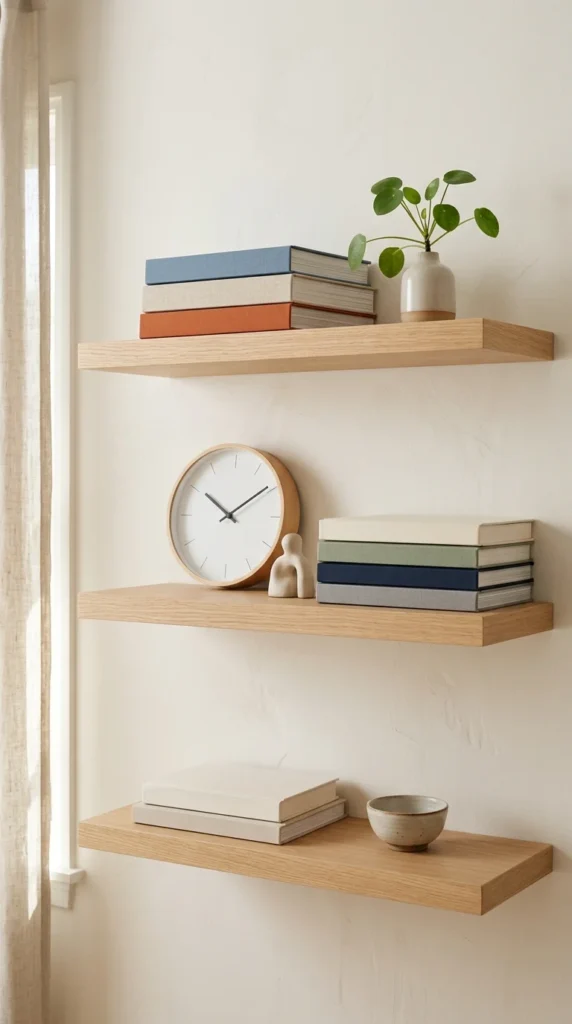
Open shelving in a Japandi office is not for storage, but for “curation.” Use these shelves to display items that inspire you. The key is to leave plenty of space between objects. This prevents the room from feeling cramped and allows each item—be it a book or a piece of art—to “breathe.”
14. Stone Accents
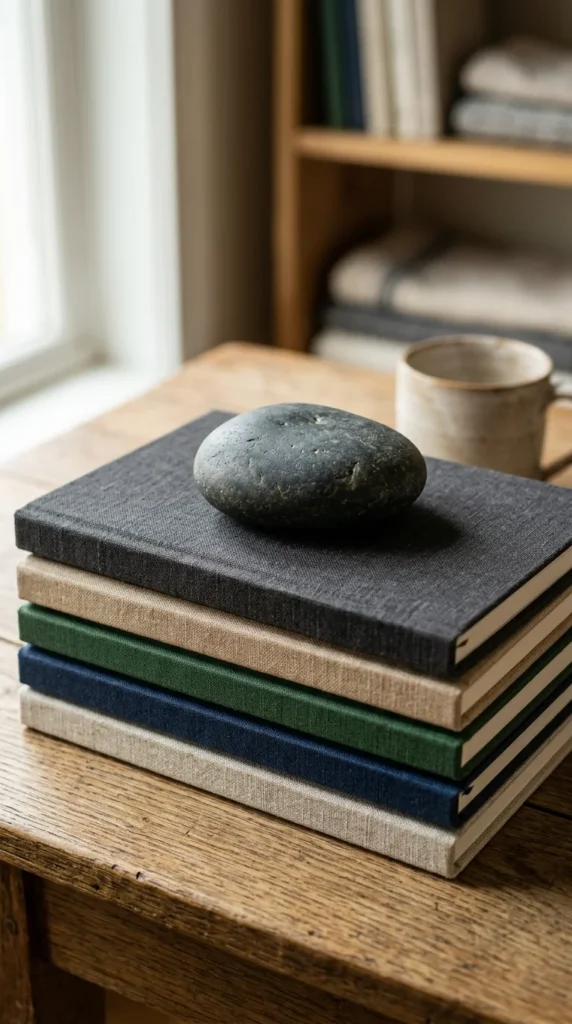
Incorporate elements of the earth by using stone accents. A marble tray for your pens or a simple river stone used as a paperweight adds a sense of weight and permanence to the desk. This blend of hard stone and soft wood is a hallmark of the Japandi style.
15. Ergonomic Comfort
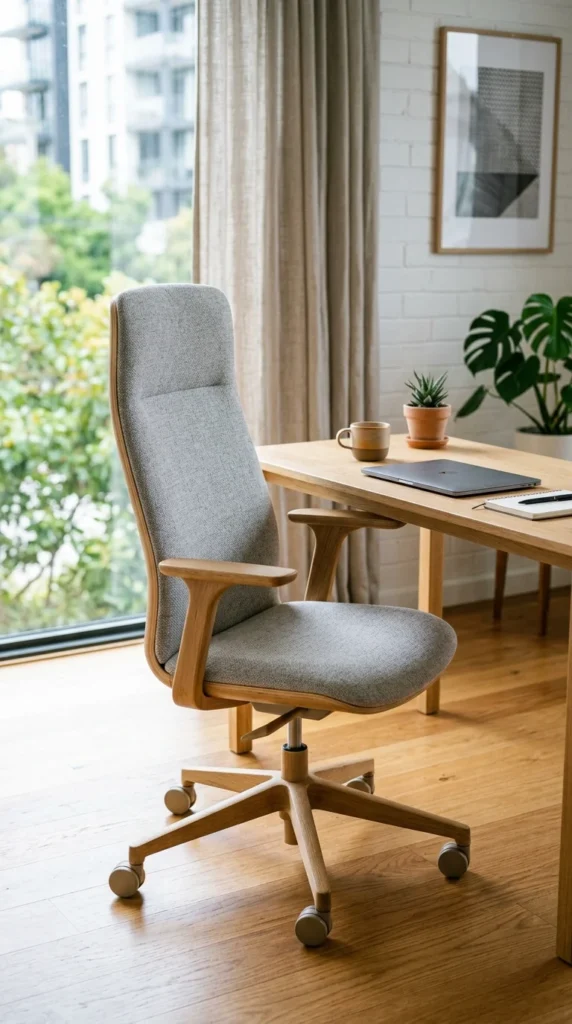
You don’t have to sacrifice your back for style. Many modern ergonomic chairs now come in Japandi-friendly finishes, featuring light-colored woods and neutral fabrics. Look for a chair that offers lumbar support but maintains a slim, non-bulky silhouette to fit the minimalist theme.
16. Soft Curtains
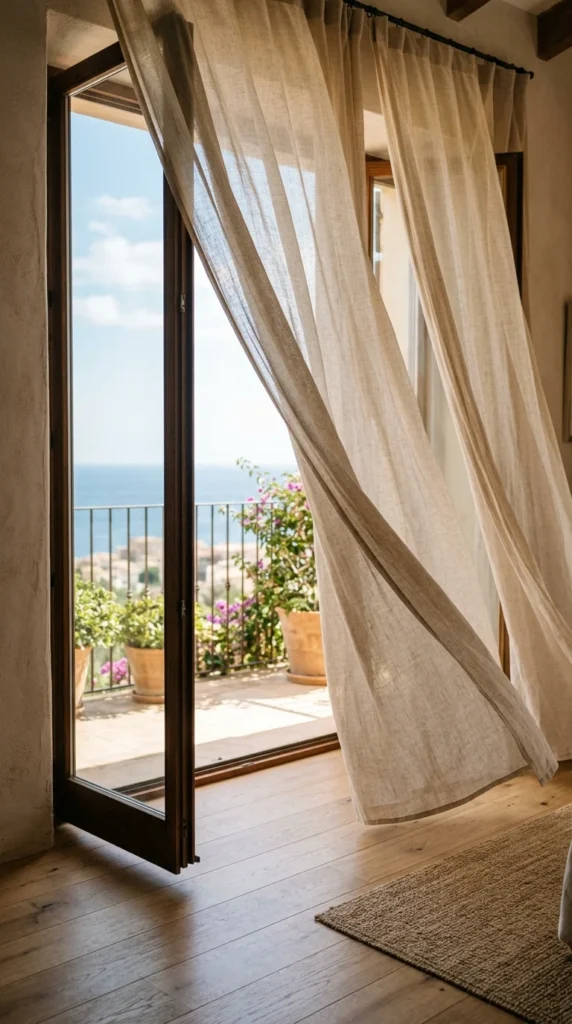
Hard blinds can feel too corporate. Soften the lines of your office with sheer linen or cotton curtains. They allow natural light to filter through, creating a “dreamy” atmosphere while still providing enough privacy and glare protection for your computer.
17. Contrast Accents
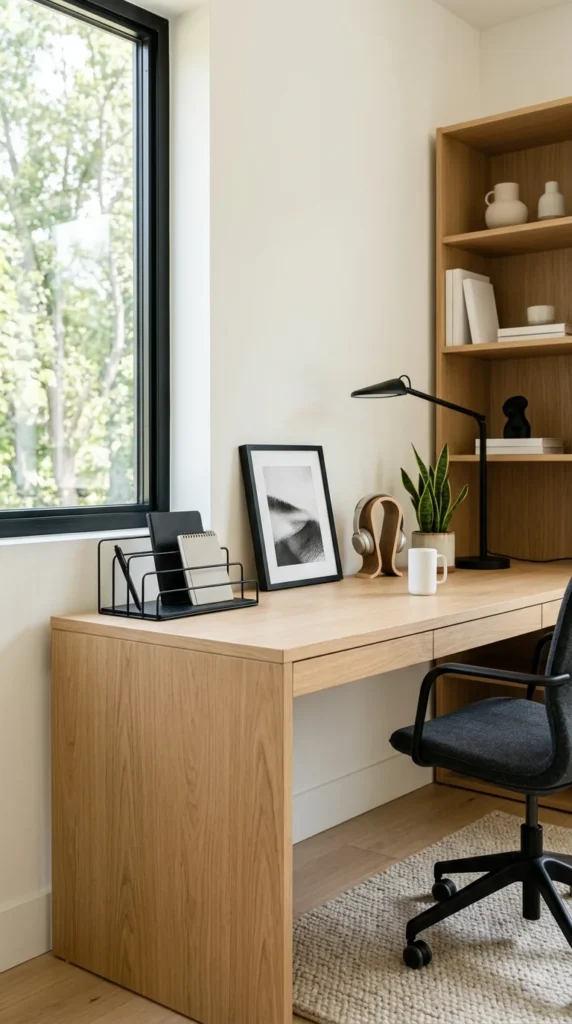
While the base of Japandi is neutral, black accents are used to provide definition and groundedness. A black desk lamp, black picture frames, or black metal chair legs act like ink strokes on a canvas, giving the room a sophisticated, modern edge without overpowering the calm.
18. Zen Nook
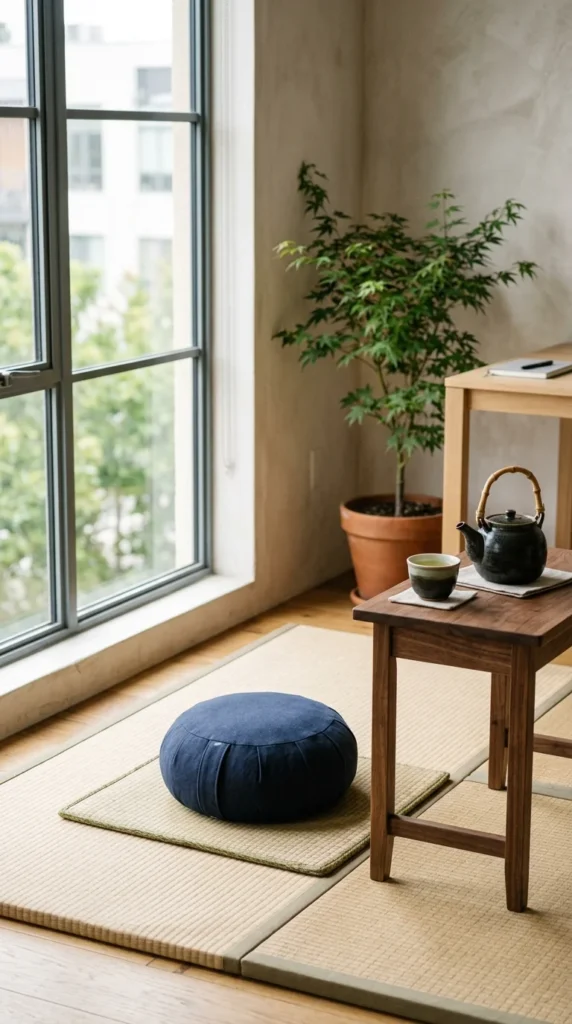
If space allows, create a dedicated area for breaks. A small corner with a floor cushion (zafu) or a comfortable armchair allows you to step away from the screen for five minutes of meditation or a cup of tea. This honors the Japanese emphasis on mindfulness and balance in daily life.
19. Cork Boards
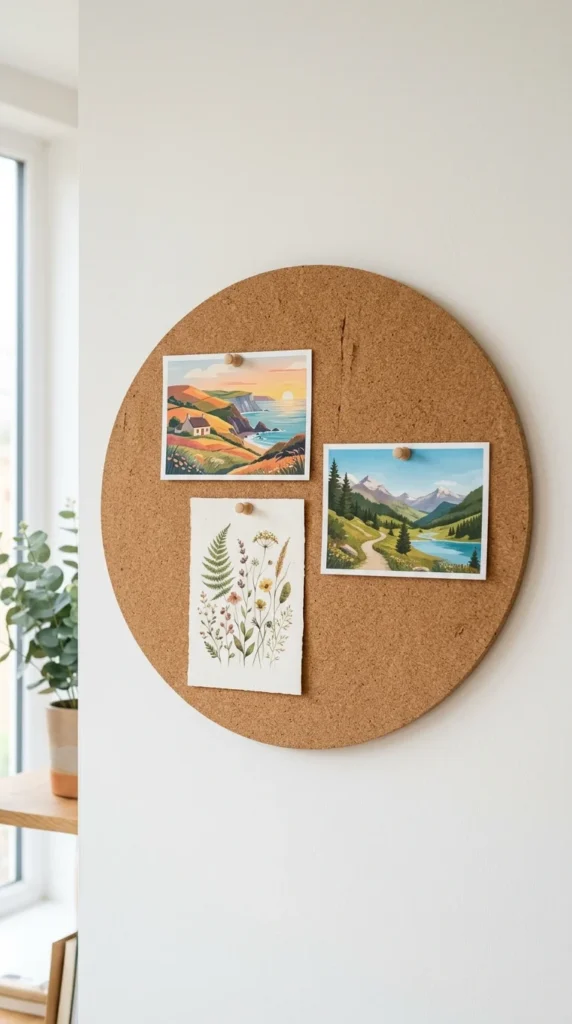
For those who need to see their ideas, a cork board can be both functional and stylish. Instead of a standard office-style board, look for frameless cork hexagons or circles. They provide a tactile, organic surface to pin inspiration photos or important reminders without disrupting the aesthetic.
20. Floating Desks
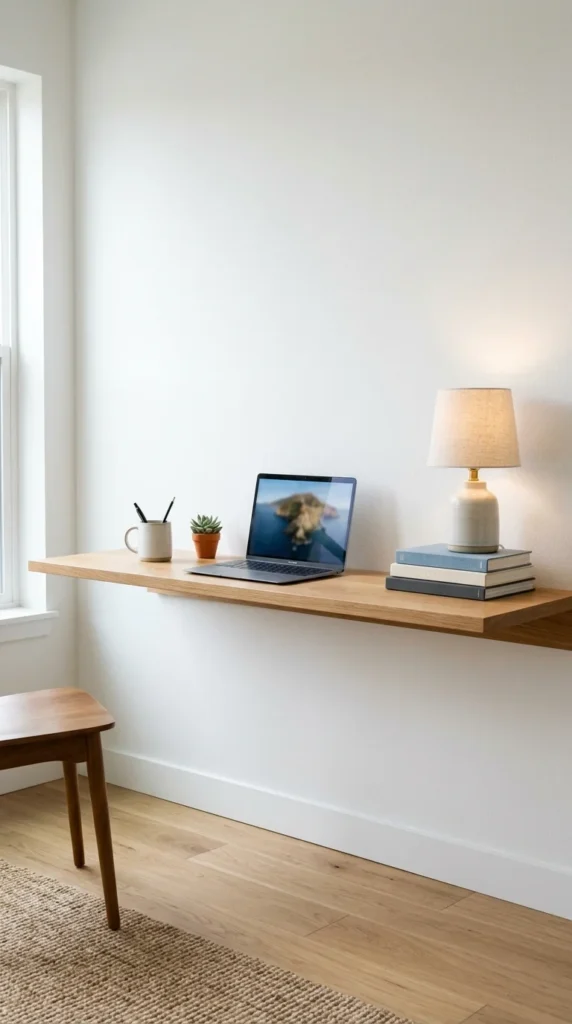
To maximize floor space and create a truly “weightless” feel, consider a floating desk. This is particularly effective in small apartments or “cloffice” (closet office) setups. By removing the legs of the desk, you create a seamless line that keeps the room looking tidy and uncluttered.
21. Round Mirrors
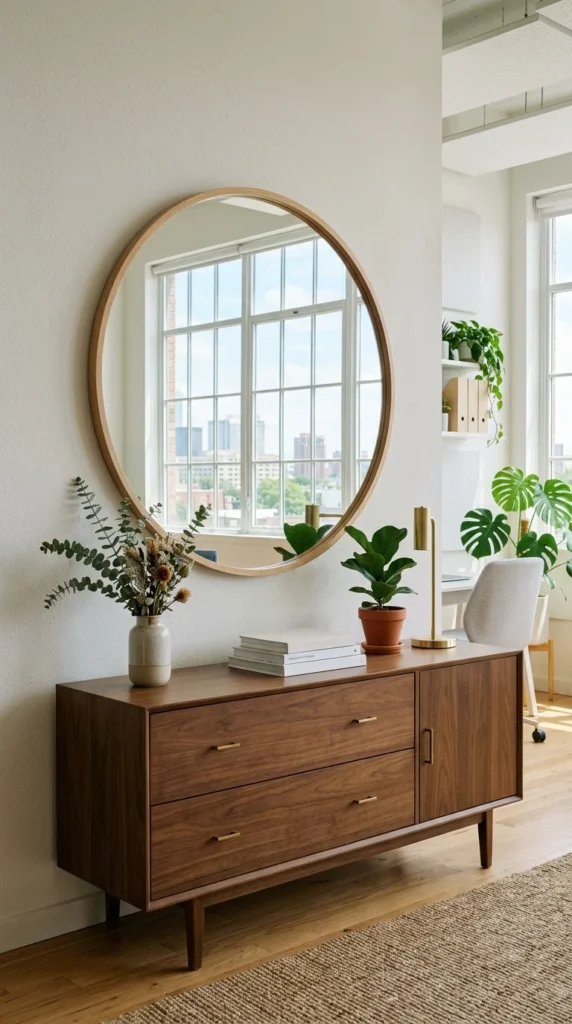
Mirrors are a classic trick for making small spaces feel larger, but in Japandi design, the shape matters. A round mirror softens the straight lines of the desk and shelving, reflecting light and adding a sense of harmony. It also symbolizes the “enso” (circle) in Zen, representing enlightenment and strength.
22. Tactile Stationery
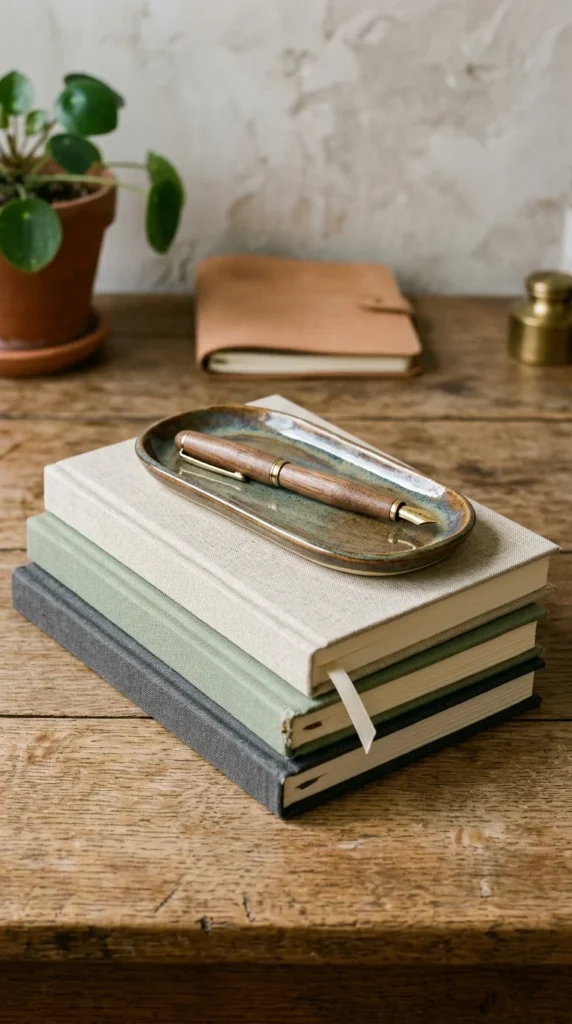
The Japandi experience is highly sensory. Even your office supplies should be a joy to touch. Choose linen-bound notebooks, wooden pens, and high-quality paper. These small details make the act of working feel like a ritual rather than a chore.
23. Artful Simplicity
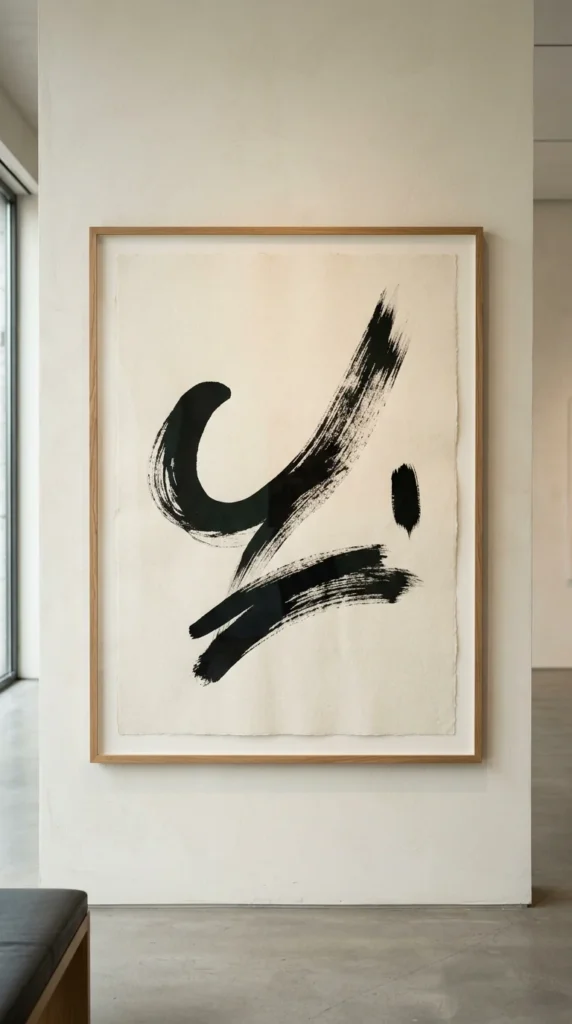
When it comes to wall art, less is definitely more. A single, large-scale piece of abstract art or a botanical print in a simple wooden frame is all you need. Focus on art that features a lot of negative space, which helps keep the mind quiet and prevents the walls from feeling “busy.”