The boundary between professional life and domestic bliss has become increasingly blurred. For many, the living room has had to pull double duty as a corporate headquarters, leading to a cluttered aesthetic that makes it hard to “clock out” mentally. The solution isn’t necessarily a separate room, but rather the art of the “stealth office.” By integrating your workspace into your living area with clever design, you can enjoy a productive day and a relaxing evening without a computer monitor staring you down during movie night. Here are 25 ingenious ways to hide your workspace in plain sight.
1. Armoire Desk
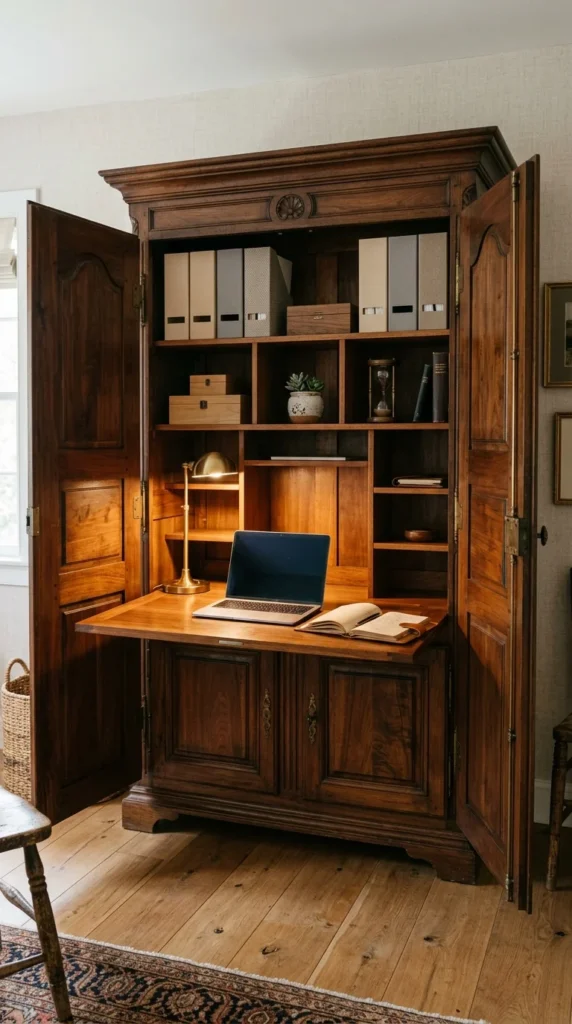
The armoire is the gold standard of hidden offices. This tall, freestanding cabinet offers ample vertical storage and a deep surface for your computer. The beauty of the armoire lies in its “shut-and-forget” capability. Once the workday ends, you simply close the doors, and your office transforms back into a beautiful piece of statement furniture.
2. Closet Conversion
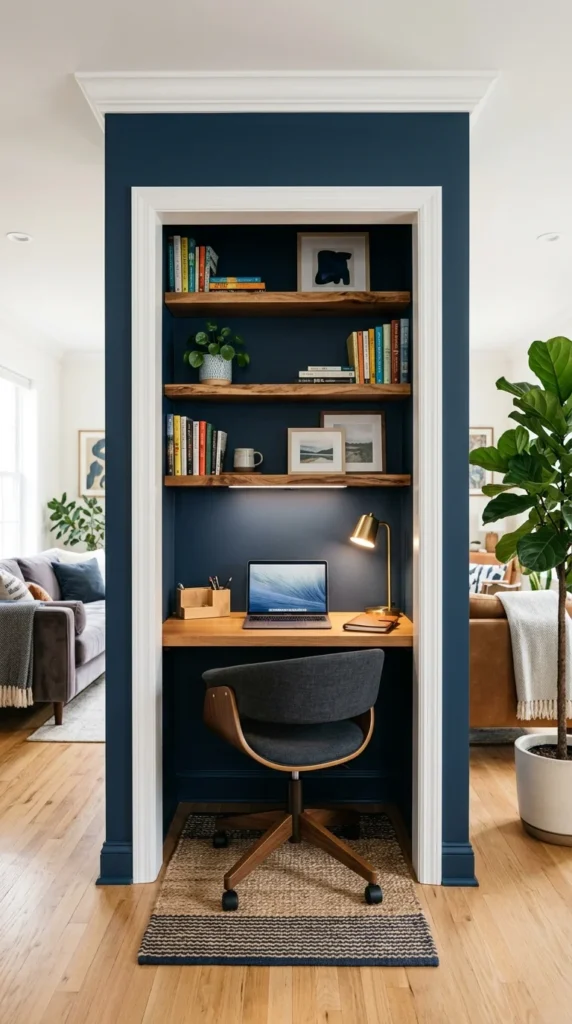
Often referred to as a “cloffice,” converting an underutilized closet is a space-saving miracle. By removing the hanging rods and installing a desktop and shelving, you create a recessed workstation that doesn’t encroach on the living room’s floor plan. You can leave it open as a decorative nook or use bi-fold doors to hide it completely.
3. Murphy Desk
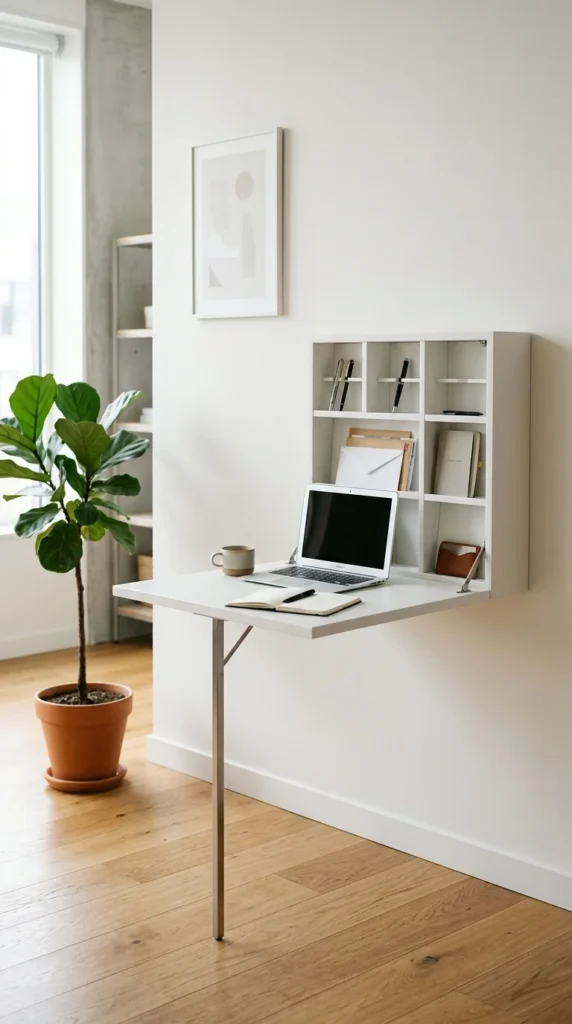
Taking inspiration from the Murphy bed, a fold-down desk is perfect for tight quarters. When closed, it appears as a slim decorative cabinet or even a piece of wall art. When lowered, it provides a sturdy surface for a laptop. This is ideal for those who use a tablet or laptop rather than a bulky desktop setup.
4. Secretary Desk
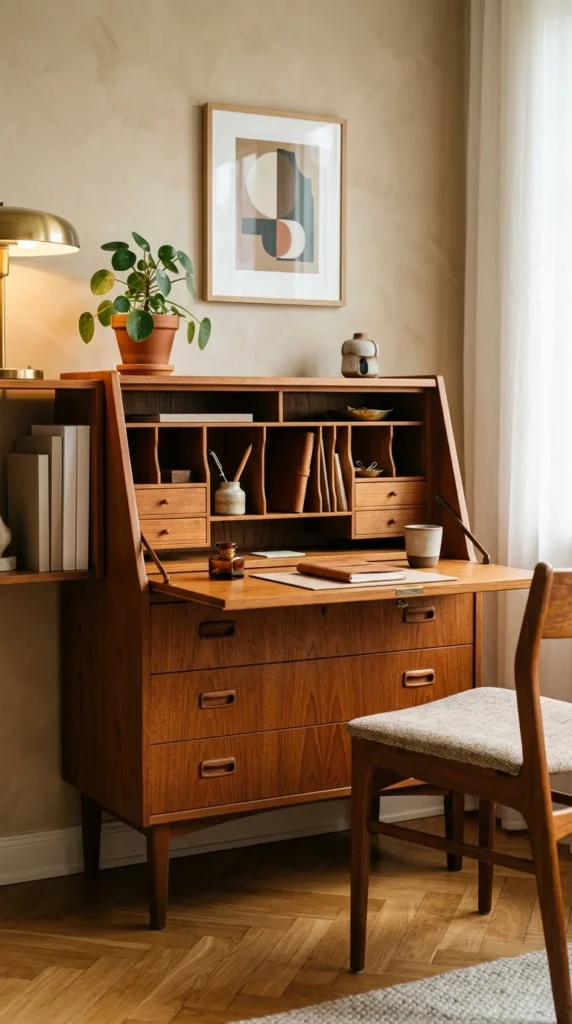
The secretary desk is a timeless classic. Its slanted top hides the “mess” of papers and peripherals perfectly. Because these desks often feature beautiful wood grains and elegant legs, they blend seamlessly with traditional or mid-century modern living room decor.
5. Behind Sofa
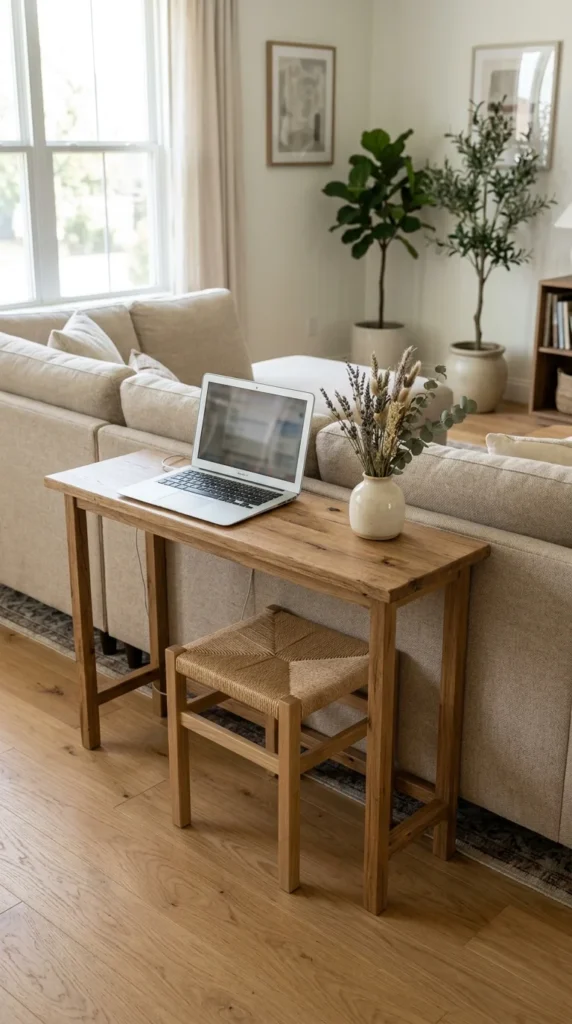
If you have an open-concept living room, the space behind your sofa is prime real estate. A long console table can function as a desk during the day and a decorative surface for lamps and books in the evening. Using a stool that slides completely underneath ensures the “office” doesn’t disrupt the flow of the room.
6. Under Stairs
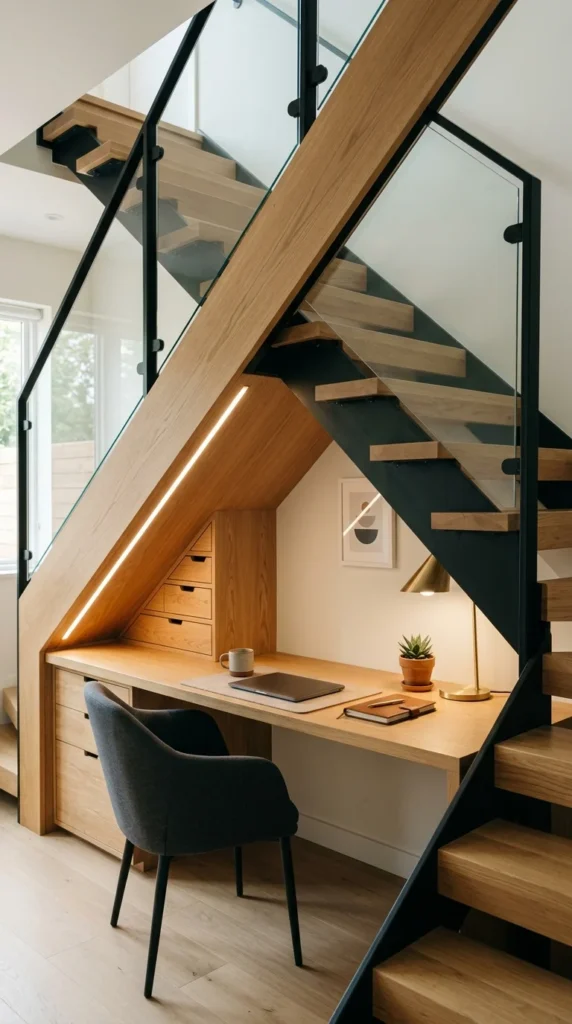
The architectural gap under a staircase is often wasted space. Turning it into a workspace creates a cozy, “built-in” feel. Since it is tucked away from the main seating area, it feels like a distinct zone without requiring an extra room.
7. Room Divider
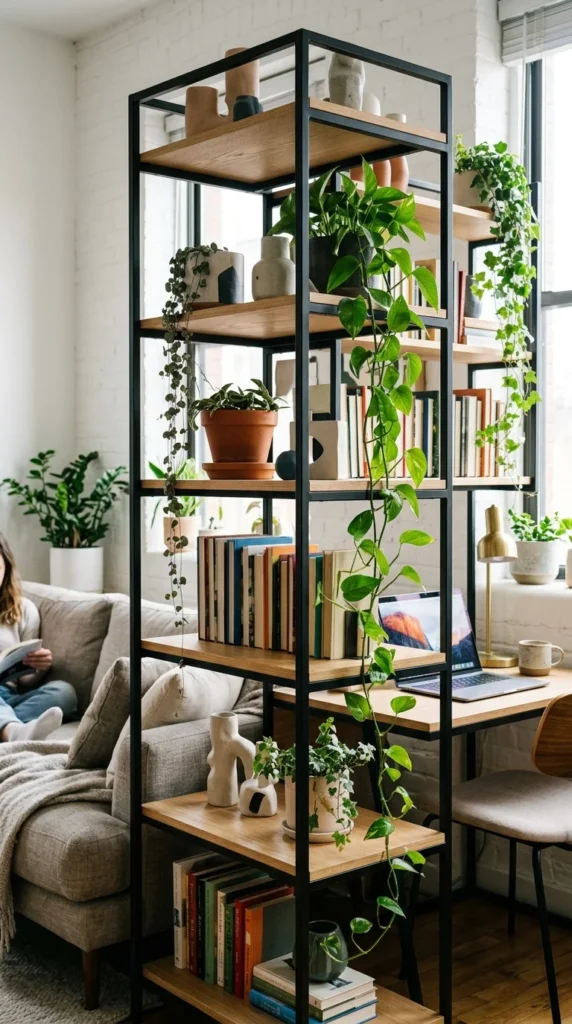
Using a large, open bookshelf as a room divider allows you to carve out a dedicated office zone without blocking light. By strategically placing books and decor on the shelves, you can create a visual screen that hides your monitor and cables from the rest of the living room.
8. Curtain Shroud
Using a large, open bookshelf as a room divider allows you to carve out a dedicated office zone without blocking light. By strategically placing books and decor on the shelves, you can create a visual screen that hides your monitor and cables from the rest of the living room.
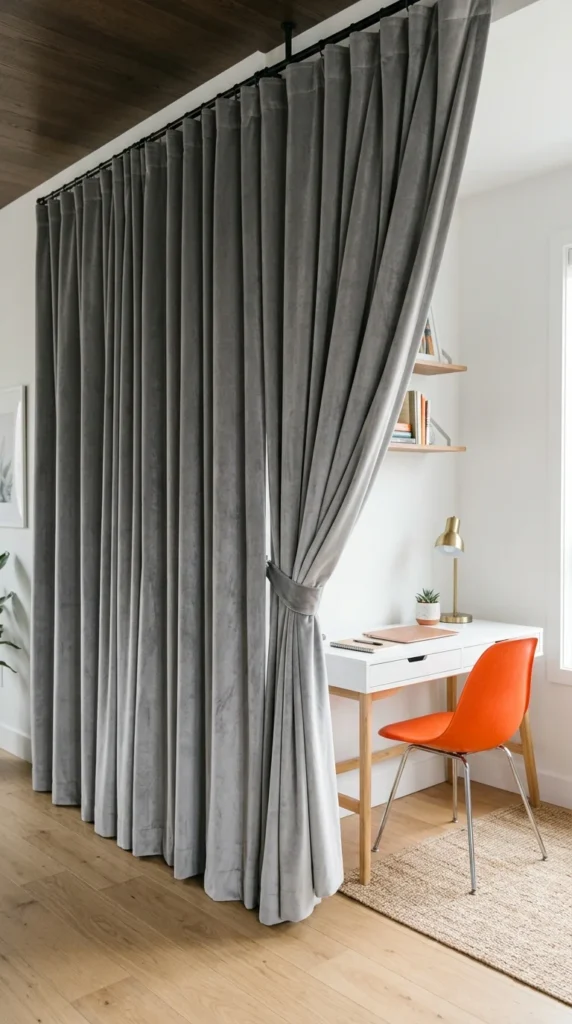
8. Curtain Shroud

Curtains aren’t just for windows. Installing a ceiling track with heavy, floor-to-ceiling drapes allows you to “wall off” a corner or an entire side of the room. It adds a soft, textural element to the decor and provides a total visual blackout of your workspace when the day is done.
9. Sliding Barn Doors
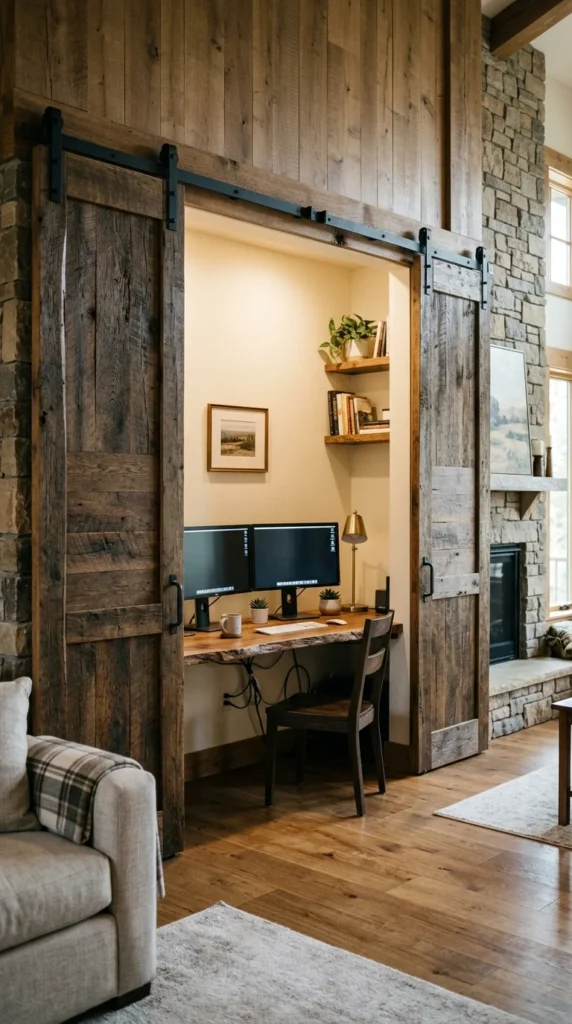
For a farmhouse or industrial look, sliding barn doors are a fantastic way to hide a large workspace. They act as functional art when closed and can cover a wide area, making them perfect for those who need a dual-monitor setup or a long desk for two people.
10. Custom Built-ins
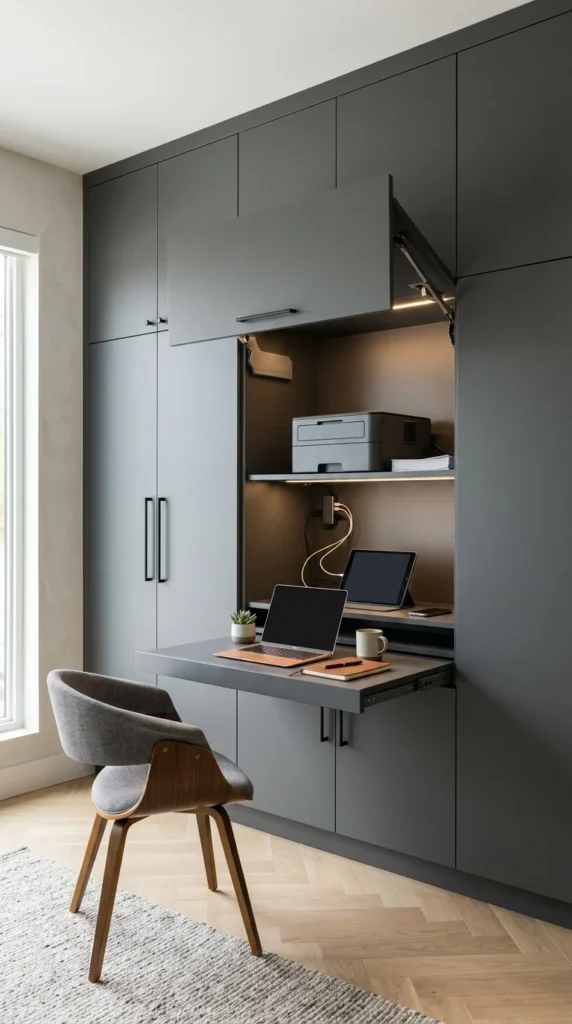
Custom cabinetry allows for the most seamless integration possible. You can design a “pocket door” system where the doors slide back into the unit, revealing a fully functional desk. When finished, the doors slide out and close flush, making the office indistinguishable from the rest of the storage.
11. Corner Hutch
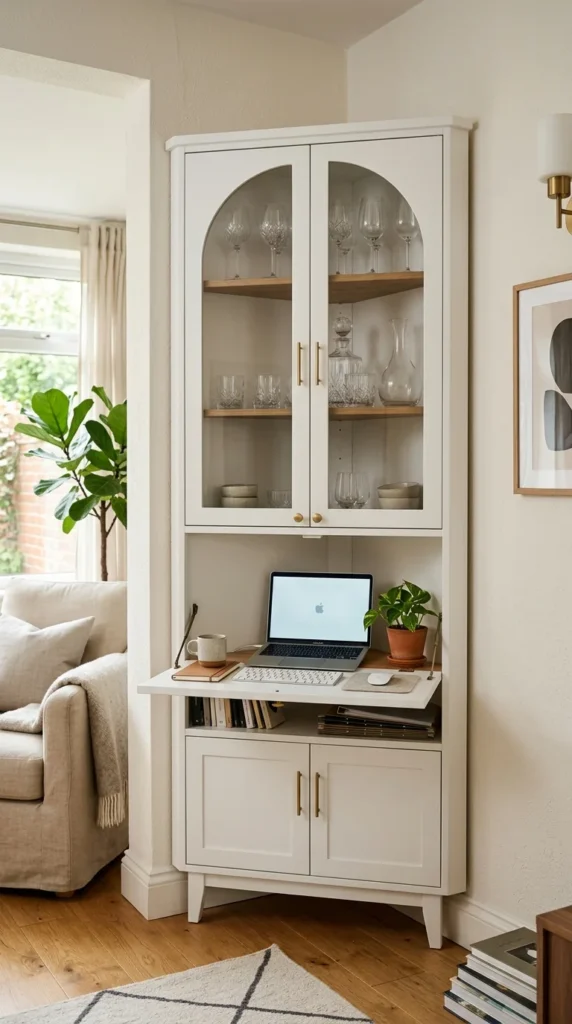
Corner units are excellent for maximizing square footage in small apartments. A corner hutch utilizes the often-neglected 90-degree angle of a room, providing a compact yet functional work area that stays out of the main traffic path.
12. Floating Shelf
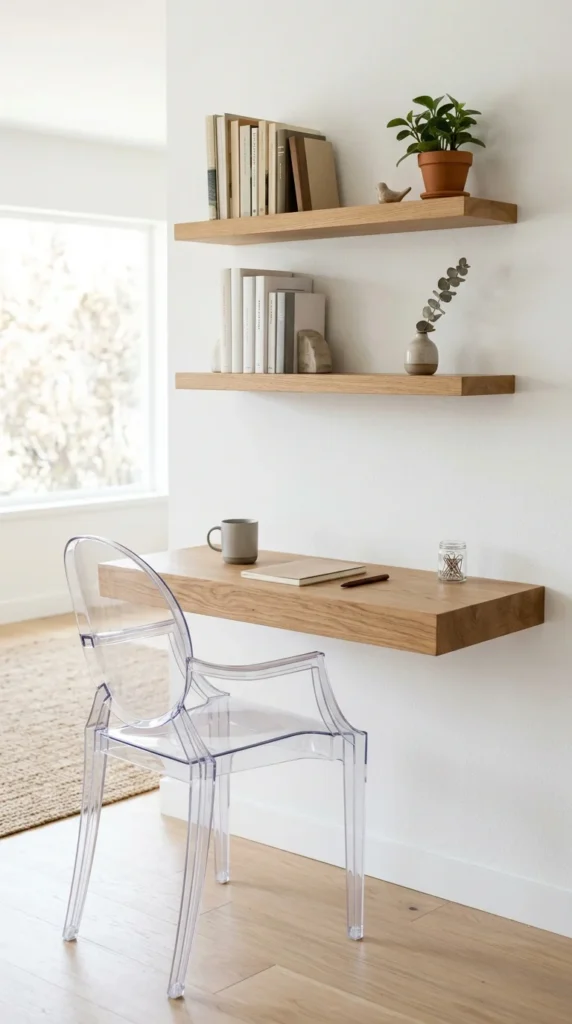
A thick floating shelf can serve as a surprisingly sturdy desk. Because it lacks legs, it keeps the floor clear, which makes the living room feel larger. Pair it with a transparent chair to make the workspace practically disappear into the wall.
13. Vintage Trunk
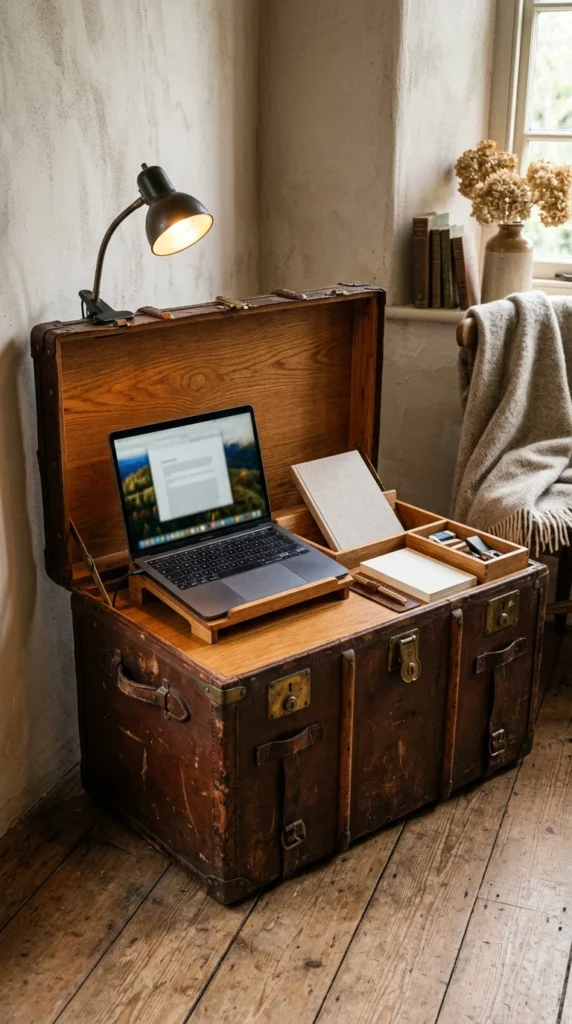
For those who only need a temporary or occasional workspace, a vintage trunk or “steamer” chest can be repurposed. It adds a sense of history and character to the room, and the lid provides a natural “do not disturb” sign when it’s closed.
14. Folding Screen
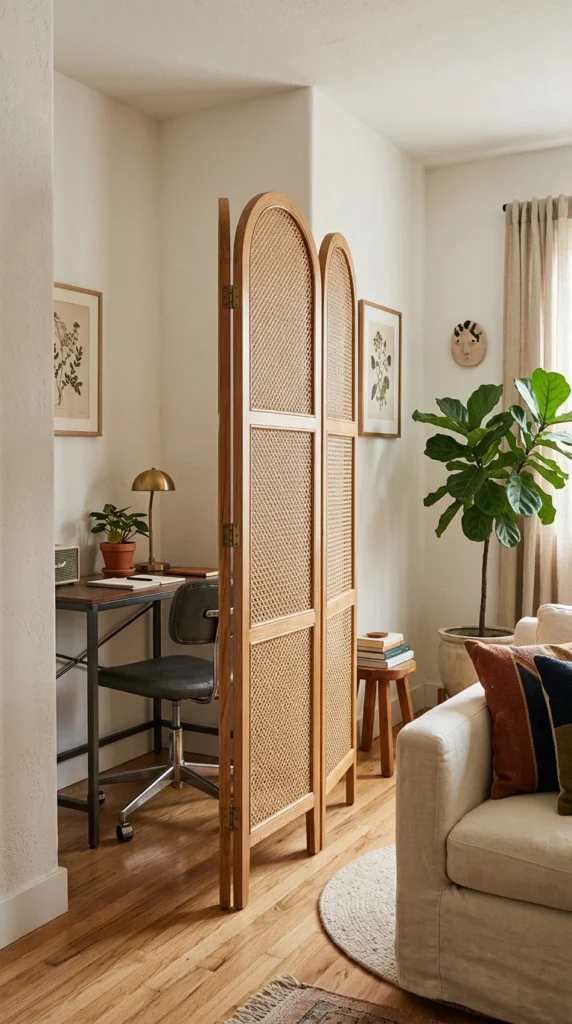
The room divider or “paravent” is a classic interior design tool. A beautiful folding screen can be moved around as needed to hide a desk. Choose a design that complements your upholstery to make it feel like an intentional part of the room’s layout.
15. Alcove Nook
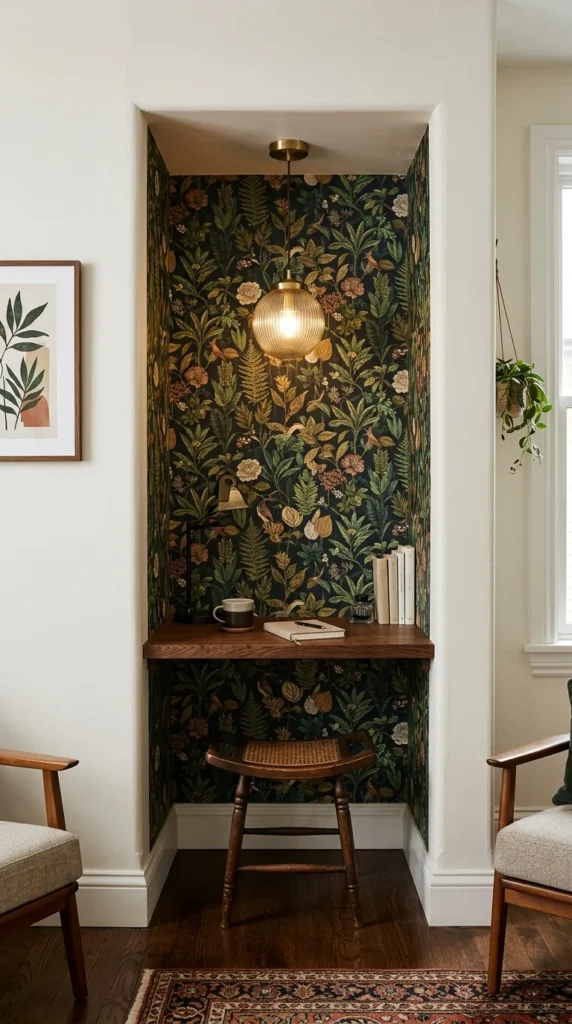
If your home has architectural quirks like a shallow alcove or a recessed wall, use it. By painting the interior of the alcove a different color or adding wallpaper, you define the space as a “nook,” making it feel like a cozy, intentional design feature rather than a desk shoved into a room.
16. Color Block
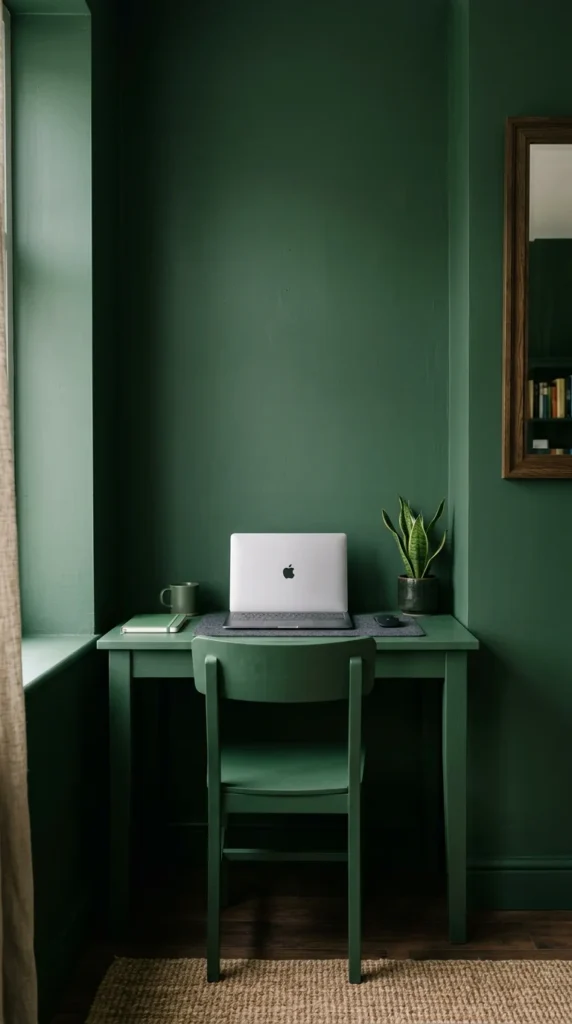
“Color drenching” or color blocking is a clever trick to hide furniture. By painting your desk and shelves the same color as the wall behind them, you minimize visual noise. The workspace recedes into the background, allowing the eye to focus on the sofa or fireplace instead.
17. Mirror Backing
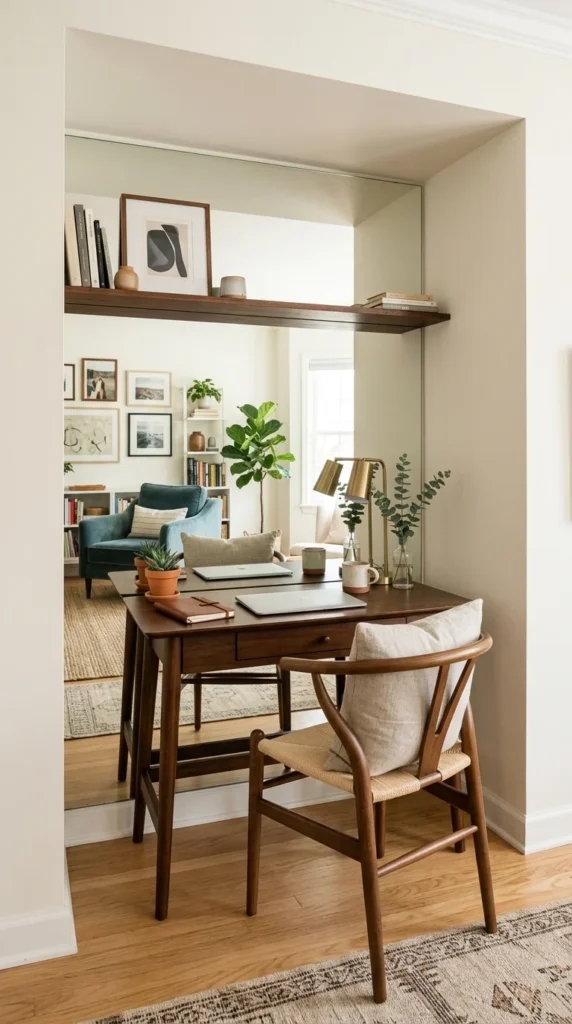
Using mirrors behind a workspace is a double-win. It makes a small living room feel more expansive and helps the office area “vanish” by reflecting the more comfortable parts of the room. It also bounces light, keeping your workspace bright without needing heavy lamps.
18. Bespoke Sideboard
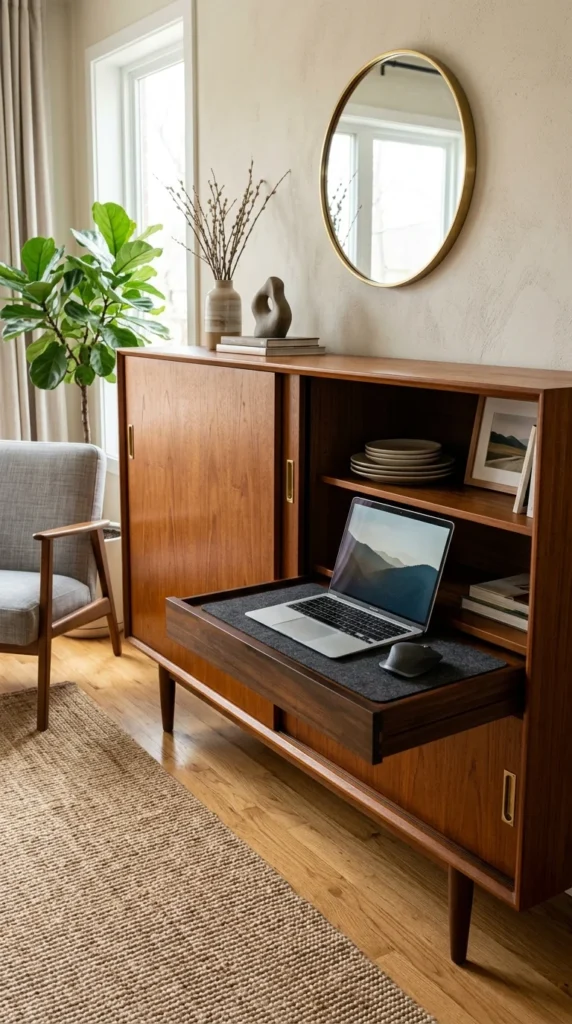
A sideboard or buffet is a staple of living room storage. Choosing a piece with a pull-out tray or a flip-down door allows you to hide your tech inside a piece of furniture that is traditionally associated with dining or decor, maintaining a formal atmosphere.
19. Ladder Unit
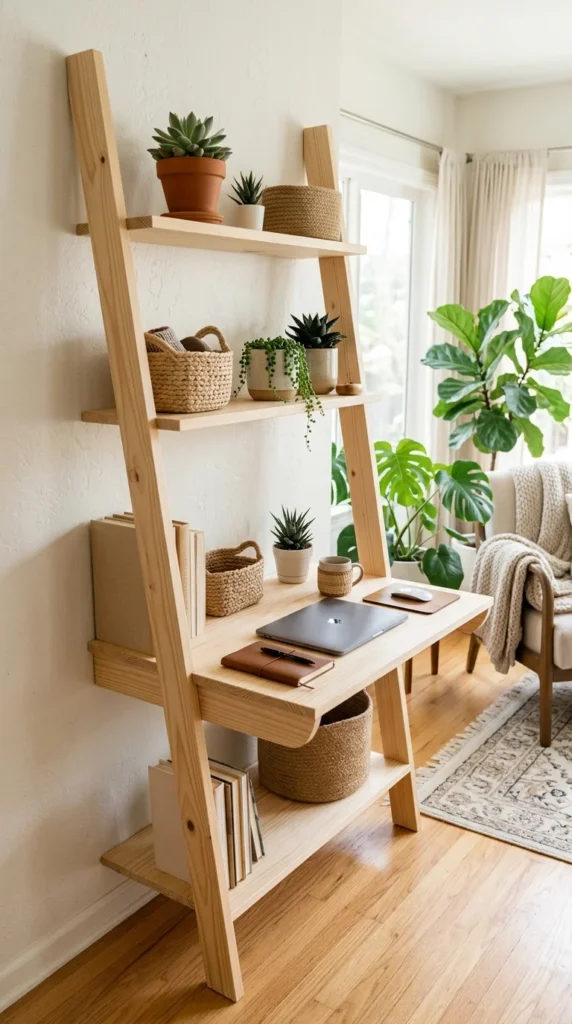
Ladder desks are sleek and take up very little visual volume. They lean against the wall and use vertical space for storage. Because they look like standard decorative shelving, they don’t scream “office,” making them a subtle choice for a shared space.
20. Glass Enclosure
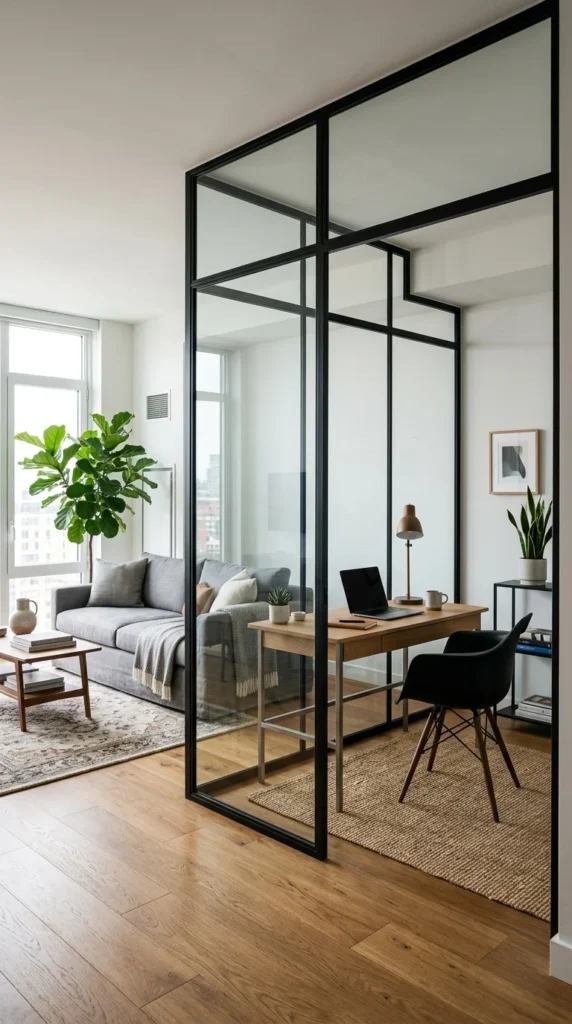
If you have the space, a “jewel box” glass partition offers the best of both worlds. It provides a physical barrier for noise and focus while remaining visually transparent. It feels modern and high-end, turning the office into a display piece rather than something to be hidden.
21. Library Wall
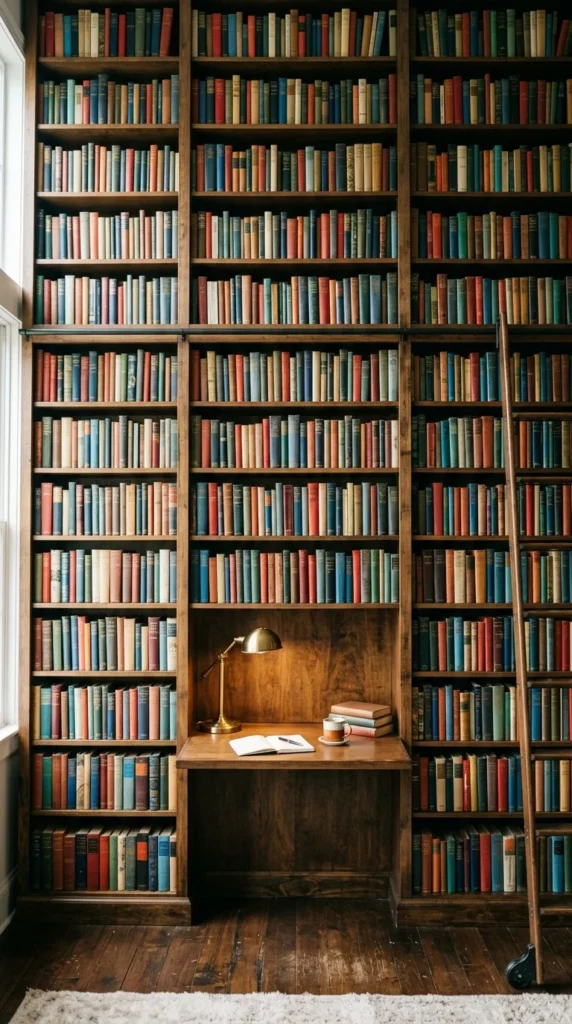
There is no better camouflage for a desk than a wall of books. By integrating a desk surface directly into a large bookcase, the computer and office supplies become just another part of the “library” look. It’s an intellectual and cozy way to blend work into the home.
22. Pull-out Tray
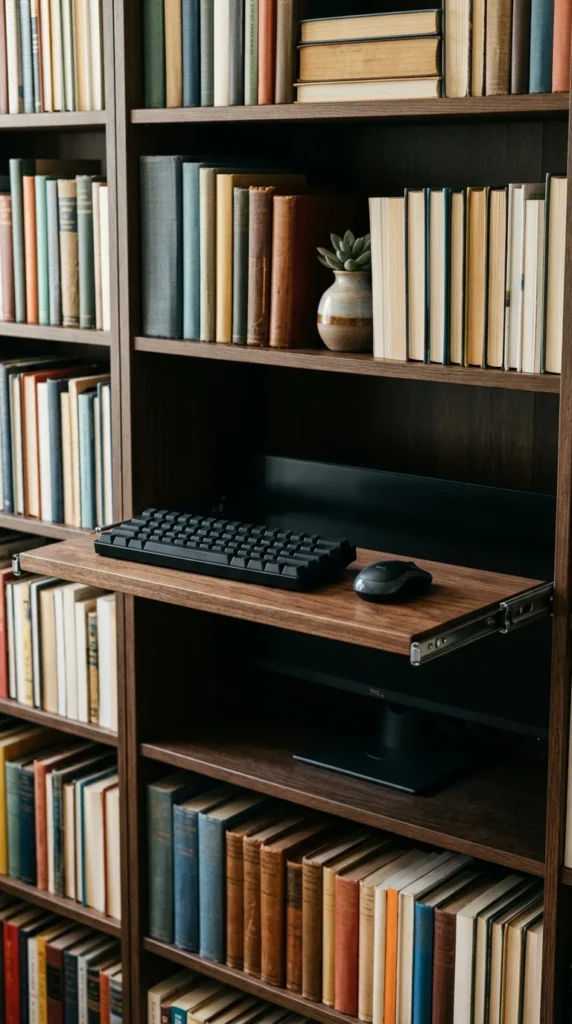
For the ultimate minimalist, a pull-out tray hidden inside a standard bookshelf or cabinet is a game changer. You can keep your keyboard and mouse tucked away when not in use, leaving only the monitor visible—which can often be disguised as a digital photo frame or artwork.
23. Wallpaper Backdrop

Integrating a desk into a window seat or a long “low-boy” storage unit creates a clean, horizontal line across the room. This prevents the office from feeling like a separate, “cluttery” zone and instead makes it part of the room’s perimeter seating.
24. Wardrobe Conversion
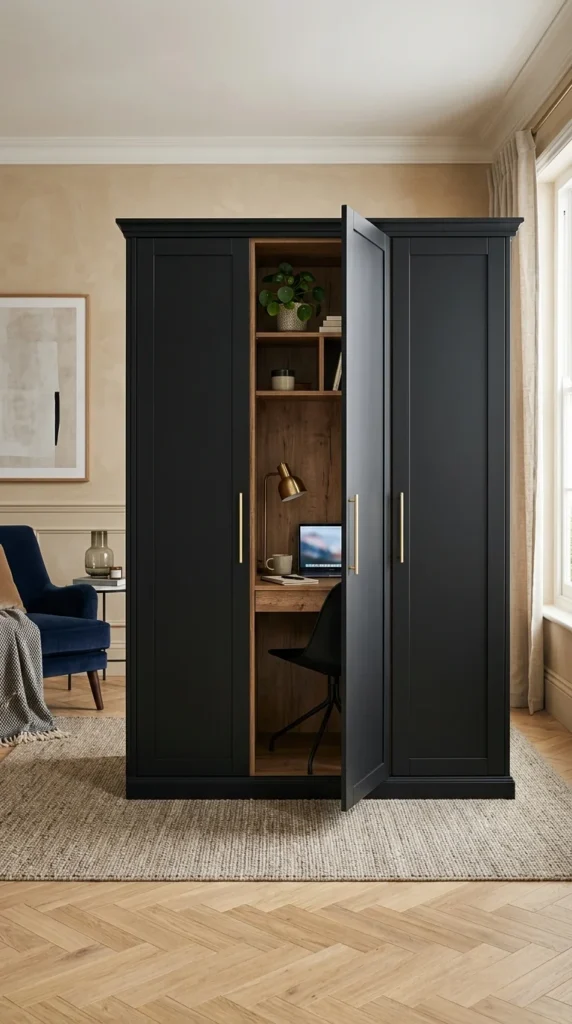
Similar to an armoire but larger, a wardrobe conversion allows for a much bigger workspace. You can fit dual monitors and a printer inside a standard wardrobe, then close the doors to hide the “command center” entirely.
25. Repurposed Wardrobe
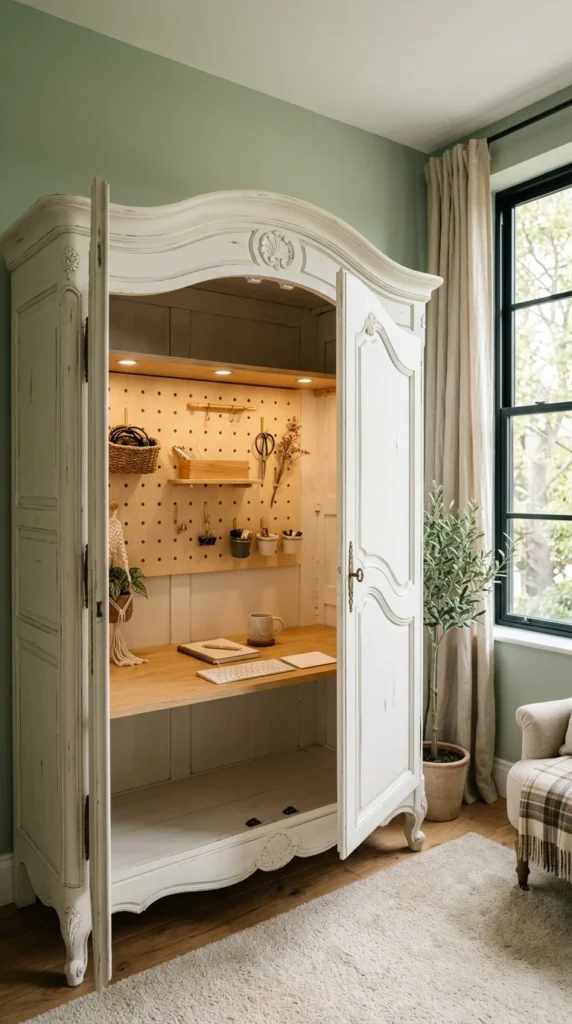
A repurposed wardrobe offers a more “shabby chic” or traditional look than a modern armoire. Because they are designed to hold bulky clothes, they are deep enough to accommodate large monitors and even a comfortable office chair that can be tucked inside before the doors are locked for the evening.