
Working from home or pursuing a creative hobby doesn’t require a sprawling executive suite. In fact, some of the most productive and inspiring workspaces are those born out of necessity in small corners, narrow hallways, or even closets. Maximizing a compact desk setup is all about clever ergonomics, vertical thinking, and a “less is more” philosophy. Here are 25 transformative ideas to turn your tiny workspace into a powerhouse of productivity.
1. Floating Desk
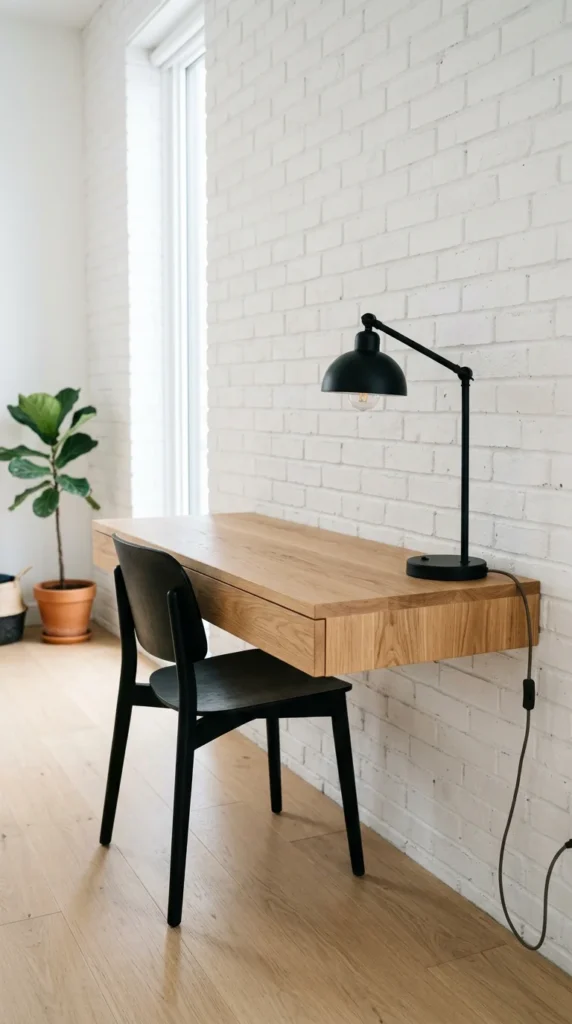
A floating desk is the ultimate space-saver because it eliminates the visual “noise” of desk legs. By mounting the work surface directly to the wall, you open up the floor space beneath, which makes a small room feel significantly larger. This gap also provides the perfect spot to tuck away a small trash bin or a footrest when not in use.
2. Pegboard Storage
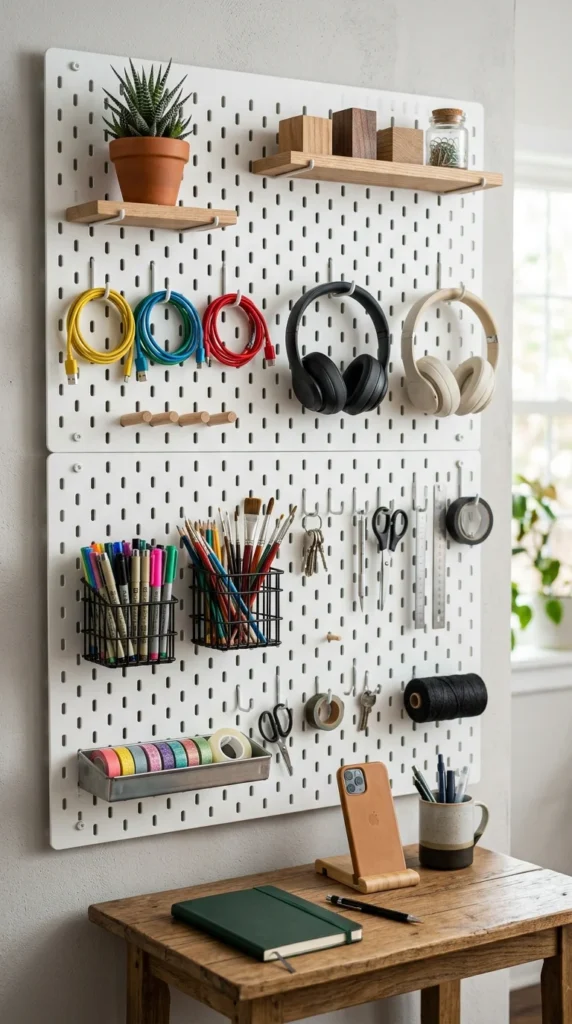
When you run out of horizontal space, look up. A pegboard is a modular miracle for compact setups. It allows you to move your stationary, tech accessories, and even decorative items off the desk surface and onto the wall. The best part is that you can reconfigure the hooks and shelves as your needs change, keeping your essentials within arm’s reach without cluttering your workspace.
3. Monitor Arms
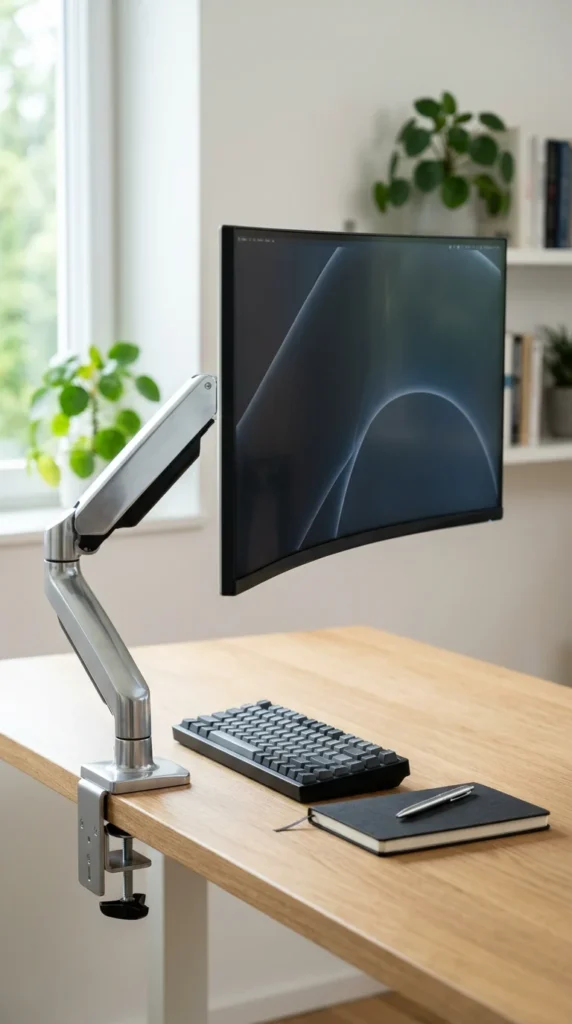
Nothing eats up desk real estate faster than a bulky monitor stand. A gas-spring or mechanical monitor arm allows you to suspend your screen above the desk. Not only does this reclaim several square inches of space, but it also improves ergonomics by allowing you to adjust the height, tilt, and swivel of your screen to the perfect eye level.
4. Corner Desks
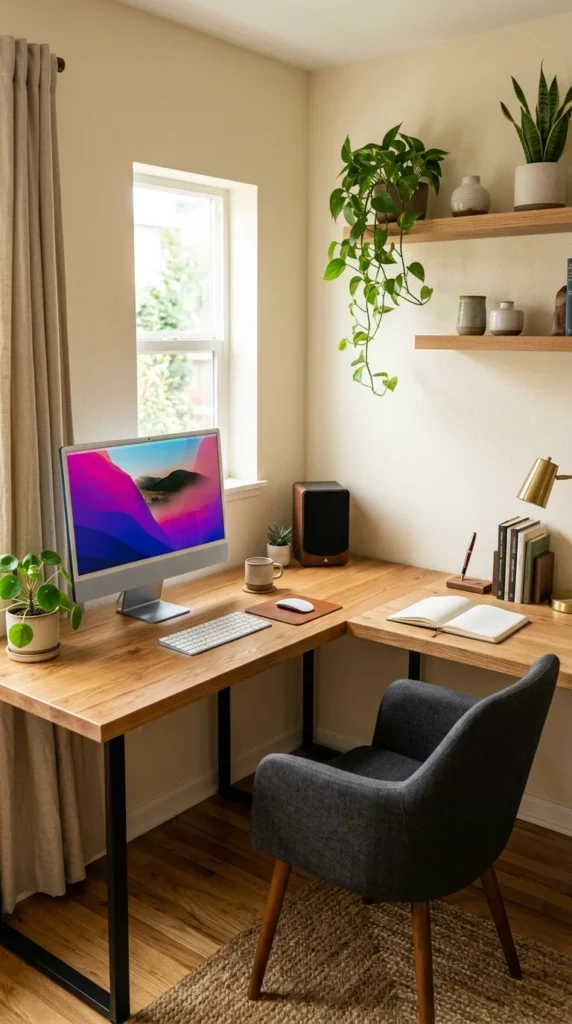
Corners are often the most underutilized areas in a home. A dedicated corner desk or a small L-shaped surface can turn a neglected nook into a functional workstation. These setups provide more “reach” than a standard rectangular desk while keeping the footprint compact enough to fit into a bedroom or living room corner.
5. Laptop Stands
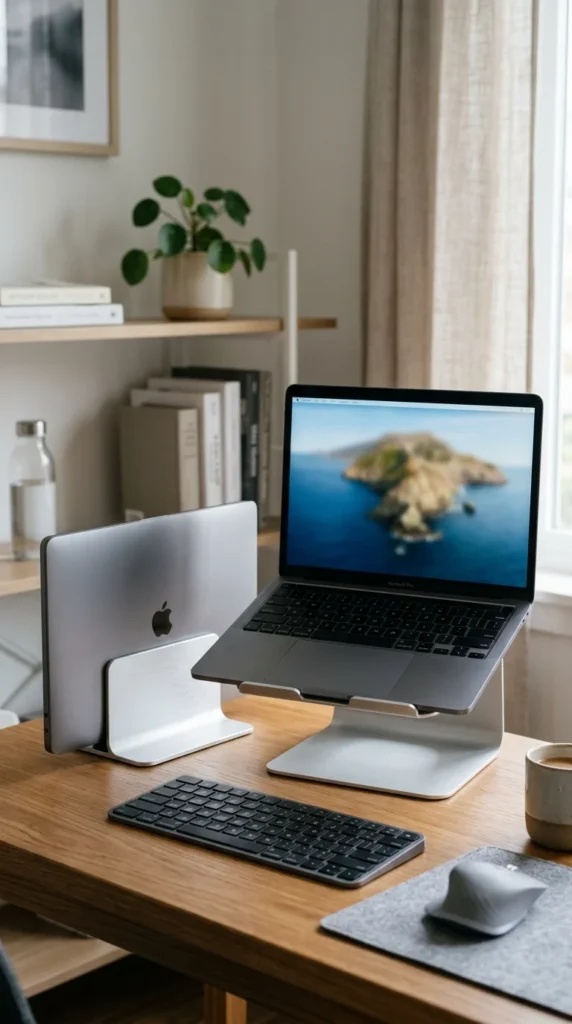
If you use a laptop as your primary computer, a stand is non-negotiable for a compact setup. A vertical stand allows you to store your laptop upright when you’re using an external monitor, saving massive amounts of space. Alternatively, an inclined stand raises the screen to eye level, allowing you to tuck your keyboard underneath the laptop when you need to clear space for paperwork.
6. Under-Desk Trays
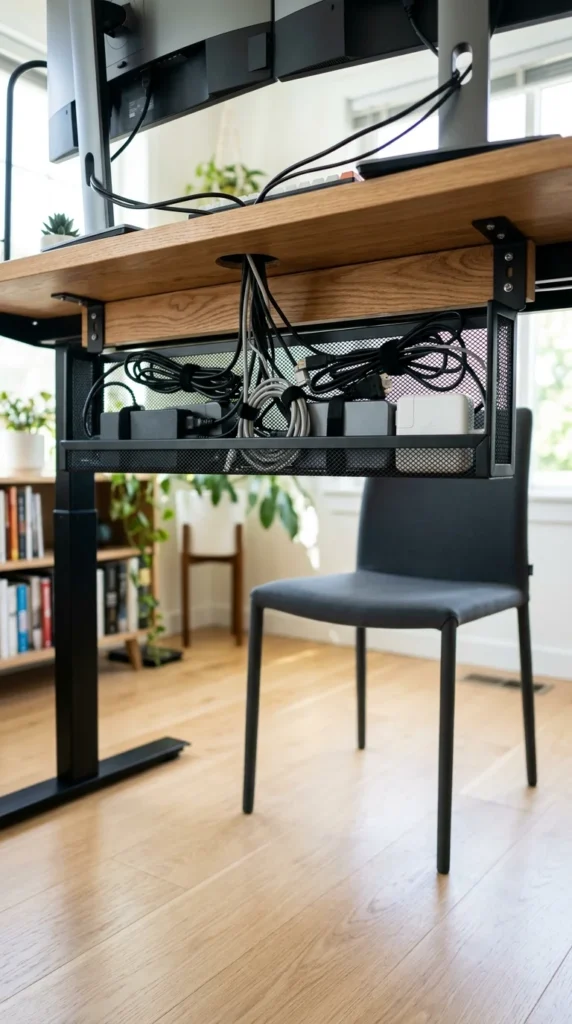
In a small space, “cable spaghetti” can make a room look chaotic and cramped. Under-desk cable management trays or baskets hide your power strips and excess cords from view. By keeping the mess off the floor and out of sight, you create a cleaner aesthetic that makes your compact setup feel more professional and less overwhelming.
7. Rolling Carts
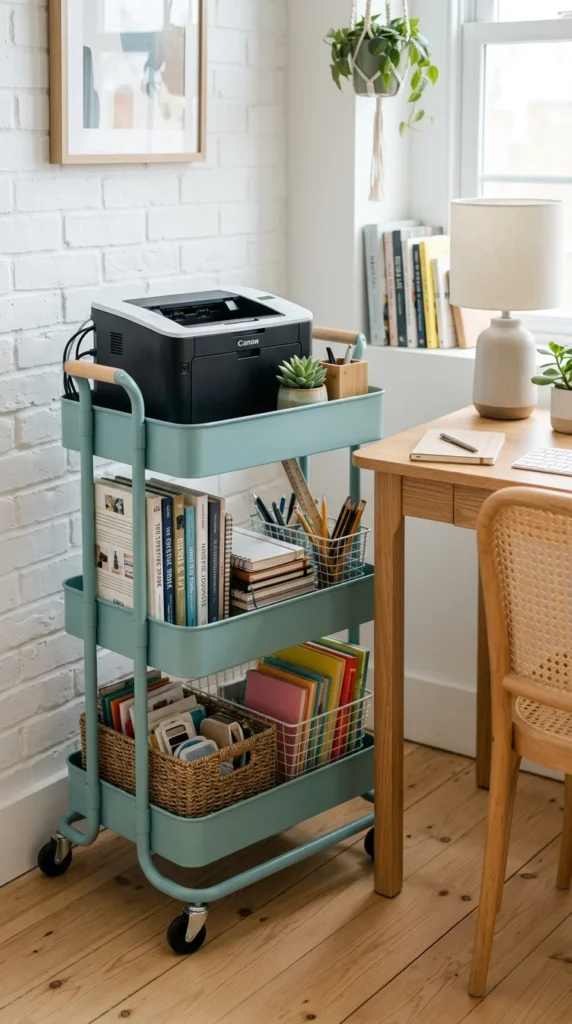
If your desk is too small to hold your printer, files, or extra supplies, bring in a rolling utility cart. These mobile storage units can be tucked under the desk or moved to a corner when not in use. They provide multiple levels of storage and keep your primary work surface dedicated solely to the task at hand.
8. Keyboard Trays
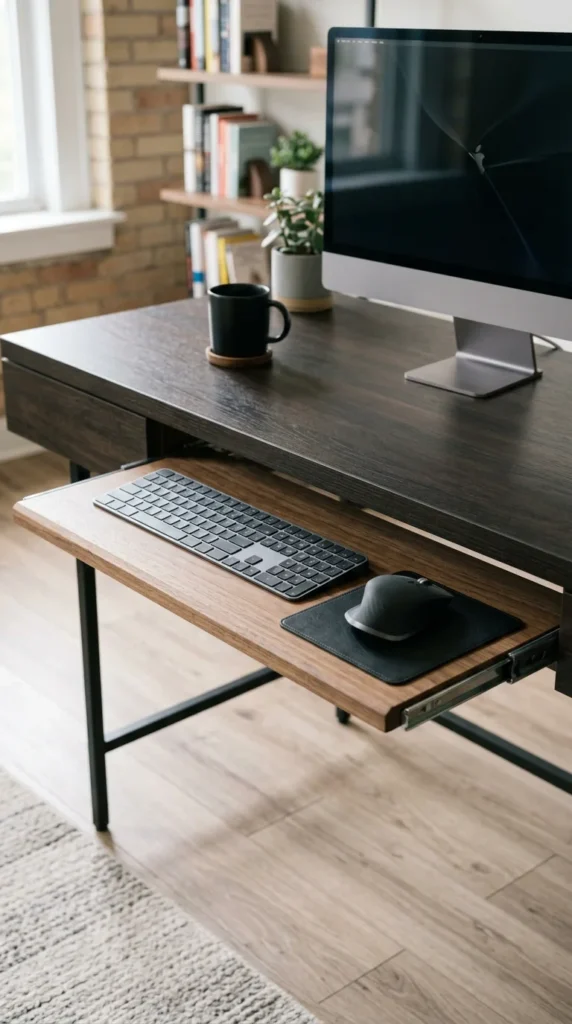
A pull-out keyboard tray is an old-school solution that still reigns supreme for compact setups. By moving the keyboard and mouse to a lower tier, you free up the entire main surface for other tasks. It also helps with ergonomics, allowing your shoulders to remain relaxed while you type at a slightly lower height.
9. Desk Clamps
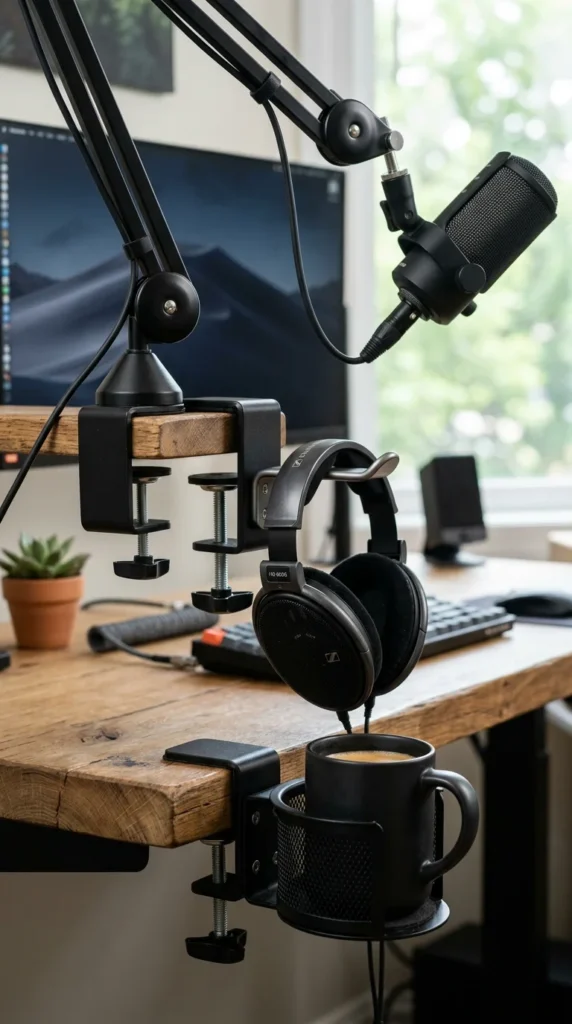
Why let a lamp base or a headphone stand take up space? Use the edges of your desk. Modern desk accessories come with heavy-duty clamps that attach to the perimeter. You can find clamped cup holders, headphone hangers, and even power strips that “bite” onto the desk, leaving the center of your workspace wide open.
10. Minimalist Peripherals
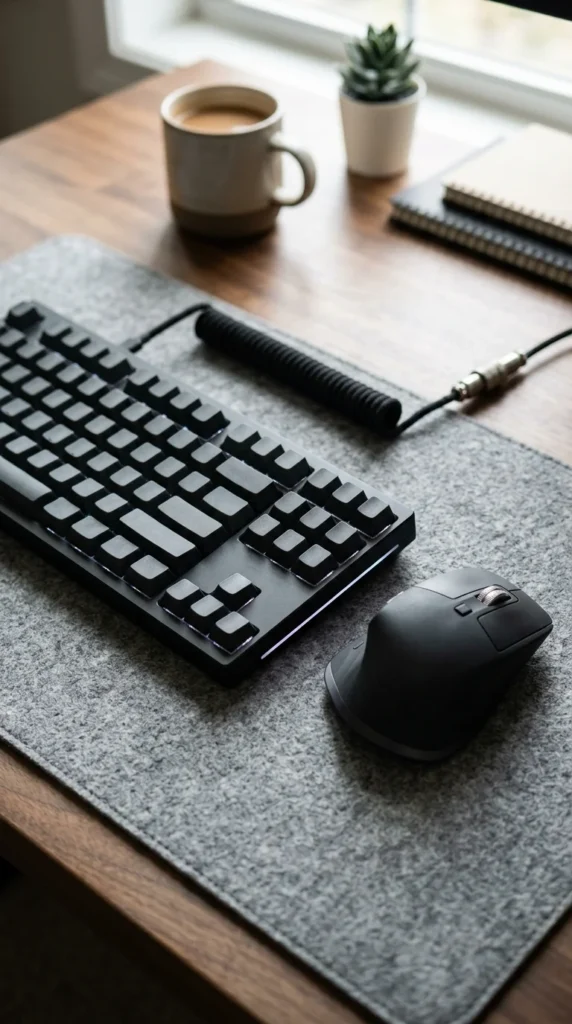
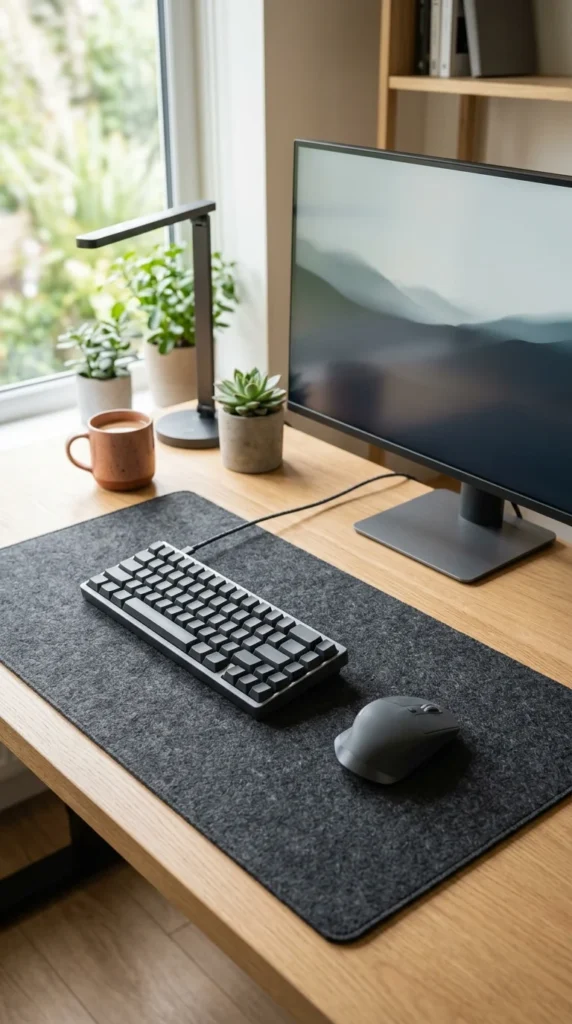
In a compact setup, every inch counts. Switching from a full-sized keyboard to a “Tenkeyless” (TKL) or a 60% keyboard can save significant space for mouse movement. Pair it with a slim, wireless mouse to eliminate cord clutter and give your desk a sleek, modern look that doesn’t feel crowded.
11. Vertical Organizers
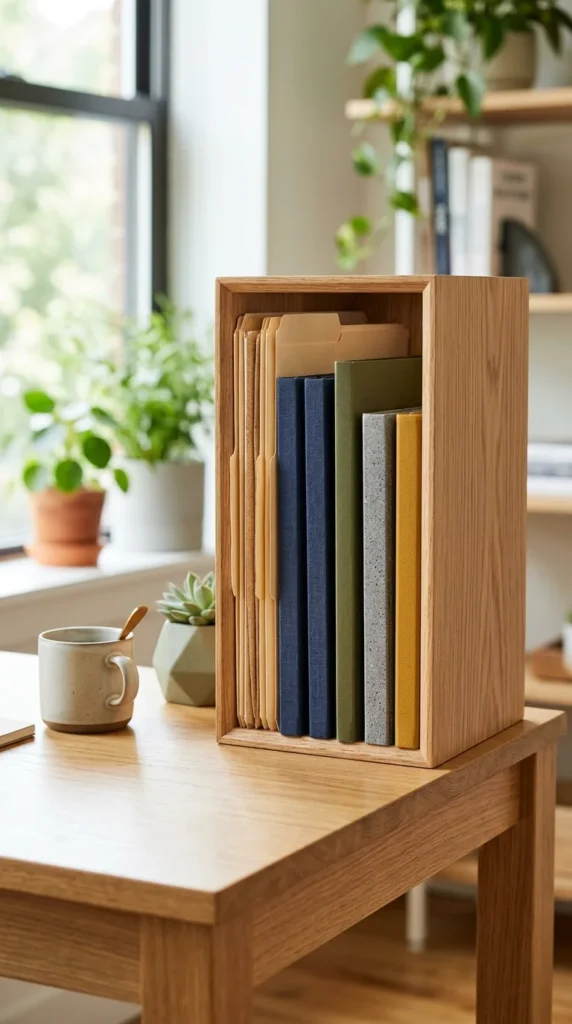
Stacking papers horizontally is a recipe for a messy desk. Vertical file organizers allow you to store documents, tablets, and notebooks upright. This takes up a fraction of the footprint and makes it much easier to find exactly what you need without digging through a pile.
12. Drawer Dividers
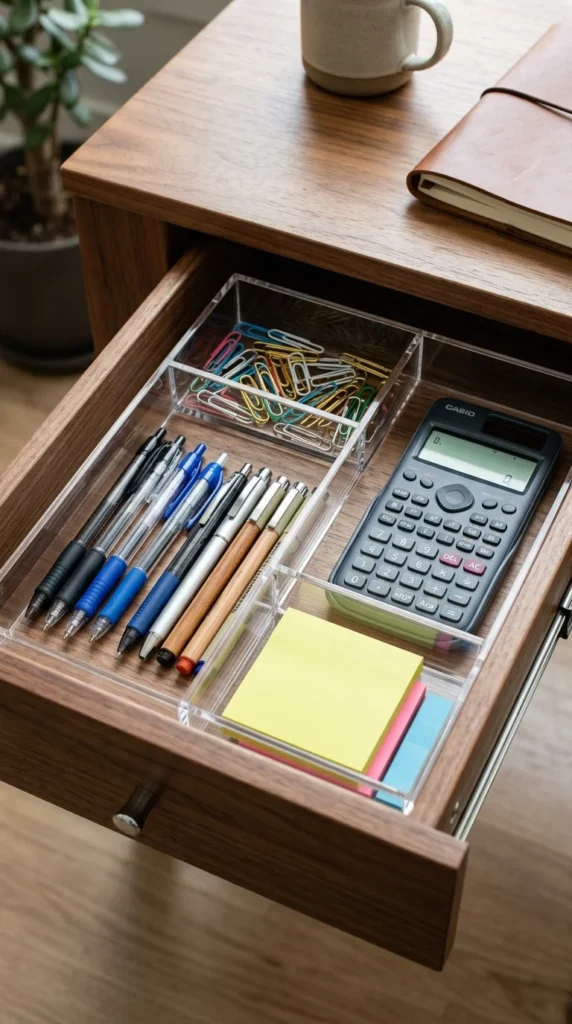
If your compact desk has a drawer, don’t let it become a “junk drawer.” Using dividers ensures that every small item has a designated home. When everything is organized internally, you’re less likely to leave items sitting out on the desk surface, helping maintain that clean, minimalist look.
13. Mirror Placement
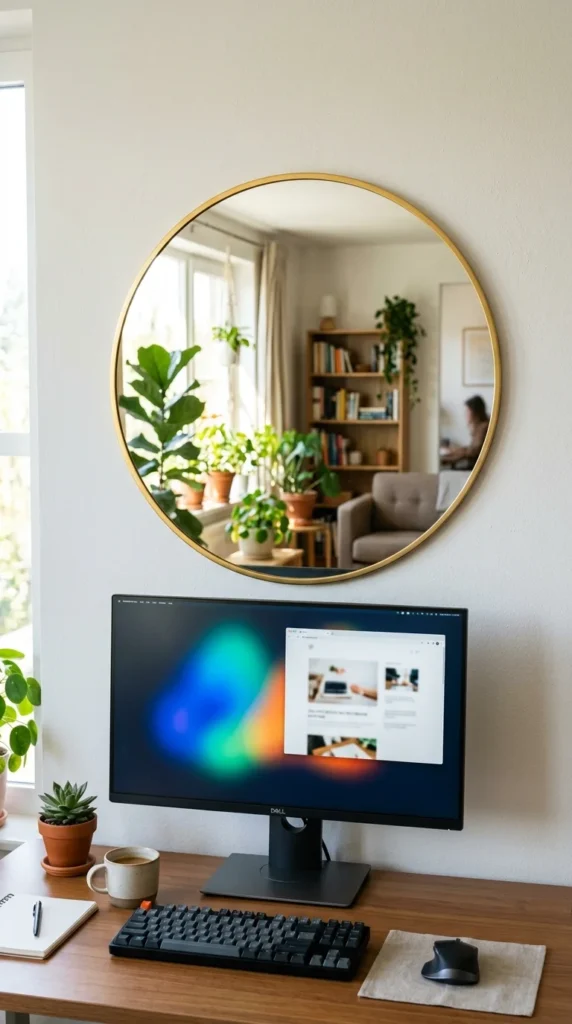
It might sound unusual, but placing a mirror in front of your desk or on a nearby wall can make a cramped workspace feel twice as large. The reflection adds depth to the room and bounces light around, preventing the “boxed-in” feeling that often comes with working in a small corner or against a wall.
14. Foldable Desks
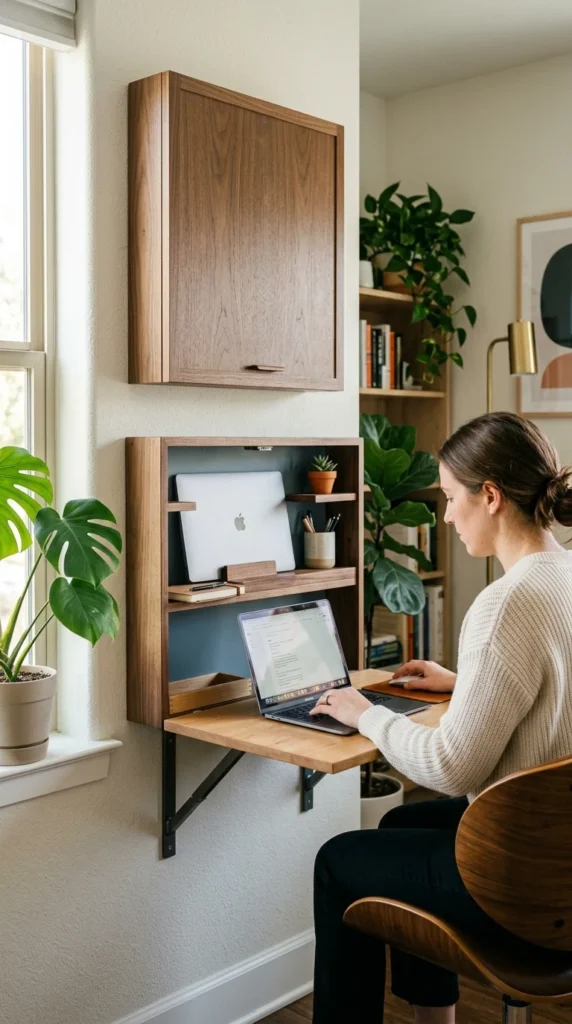
For those living in studio apartments or multi-purpose rooms, a foldable desk (or “murphy desk”) is a game-changer. These units can be folded up against the wall or tucked away like a suitcase when the workday is over. It’s the perfect way to physically and mentally “close” your office at the end of the day.
15. Transparent Furniture
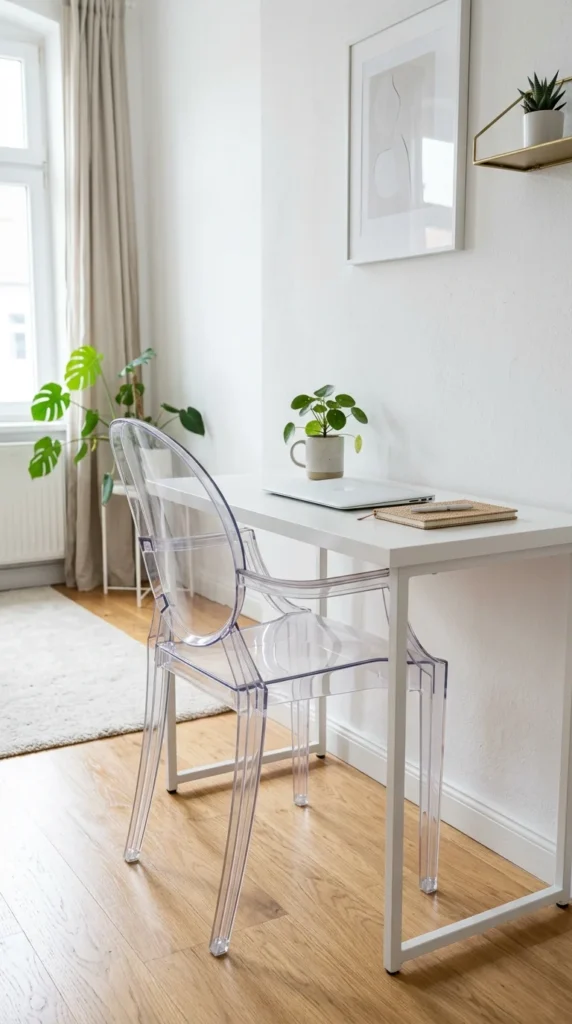
Visual weight is a real thing in interior design. Bulkier, dark-colored furniture makes a space feel small. Transparent furniture, like an acrylic “ghost chair” or a glass-top desk, allows light to pass through. This reduces the visual clutter in the room, making your compact setup feel light and airy.
16. Shelf-Desks
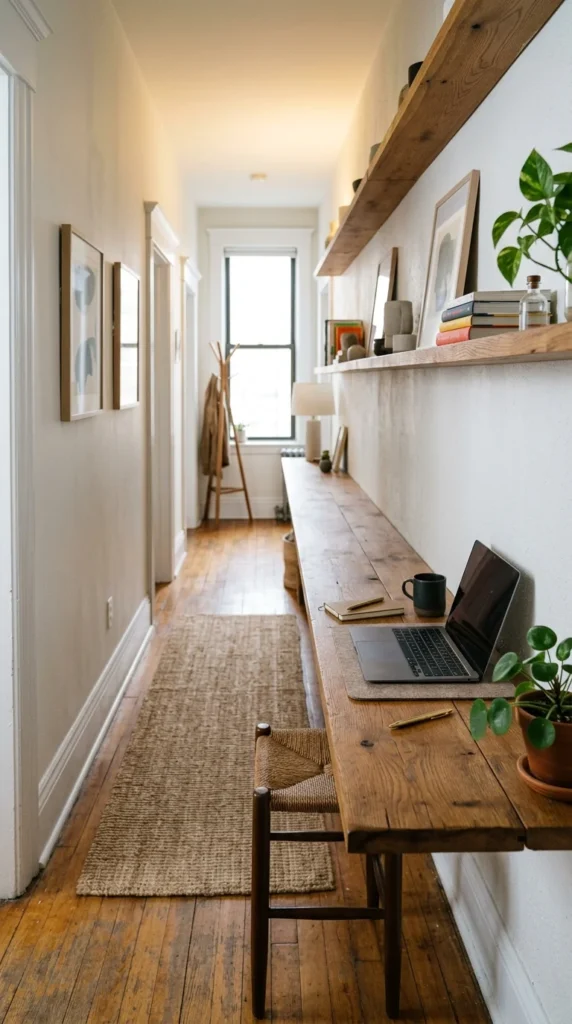
Sometimes the best desk isn’t a desk at all—it’s a shelf. A deep, sturdy wall shelf can serve as a perfect ledge for a laptop and a notebook. This is particularly effective in narrow hallways or behind sofas where a traditional desk would block the path.
17. Monitor Light Bars
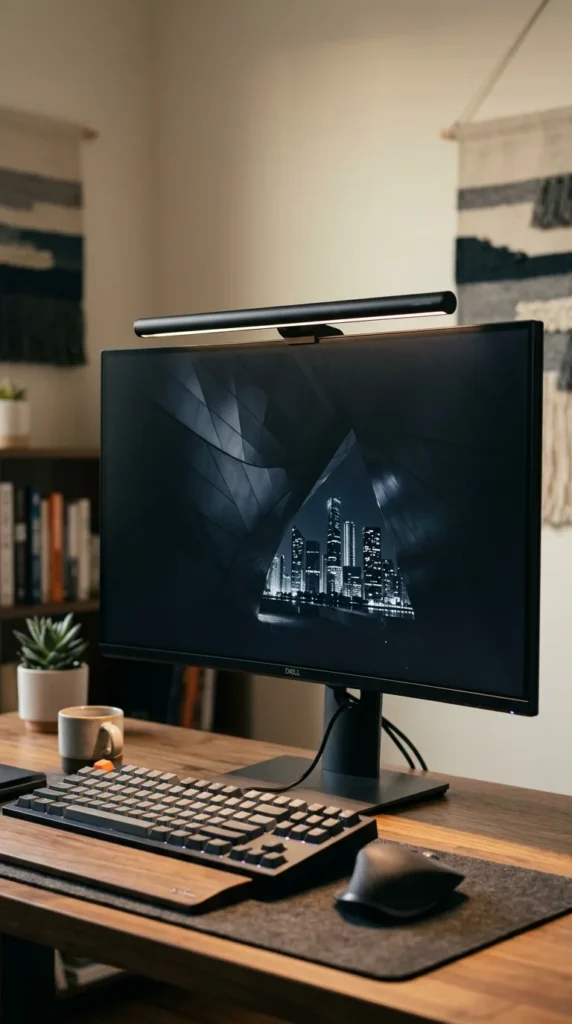
Lamps can be bulky. A monitor light bar sits on top of your screen and illuminates your workspace directly from above. This eliminates the need for a traditional desk lamp, saving you a valuable corner of your desk while providing excellent, focused lighting for late-night work sessions.
18. Adhesive Cable Clips
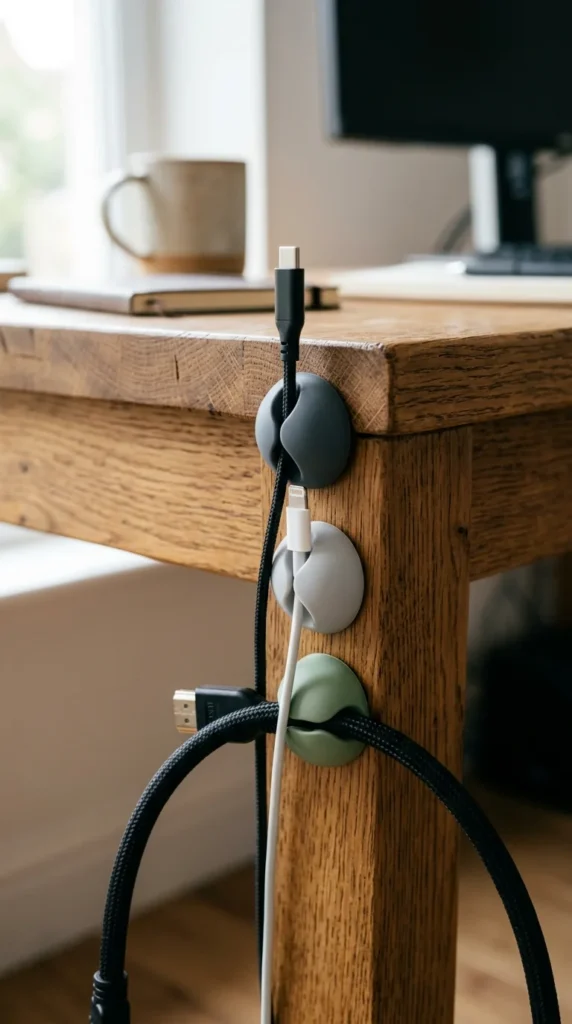
Keep your charging cables from sliding off the back of the desk with simple adhesive clips. By securing your most-used cables to the edge of the desk, you keep them organized and accessible without needing a bulky docking station or cable box on your surface.
19. Magnetic Strips
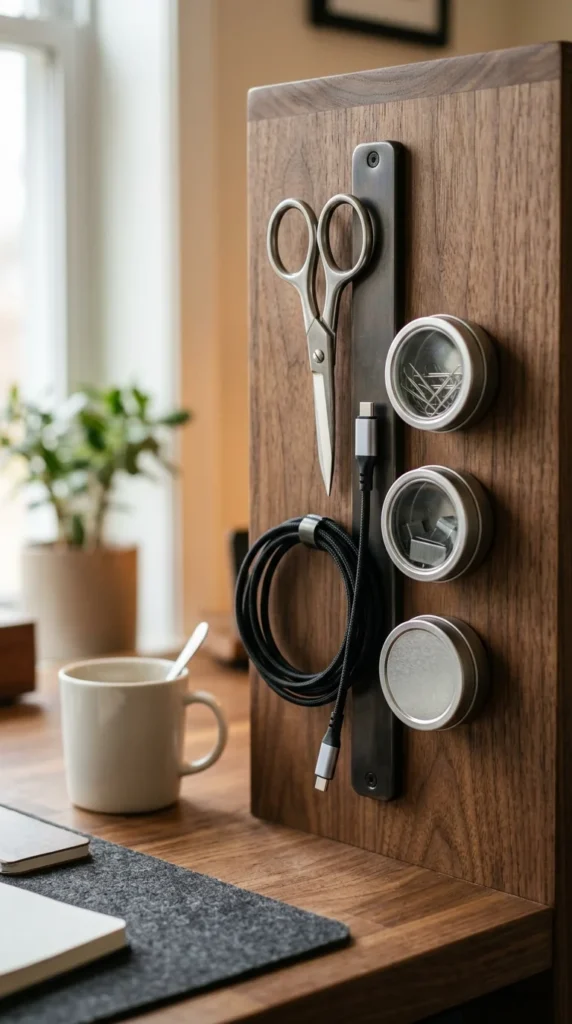
Borrow a tip from the kitchen: use magnetic strips. A magnetic strip mounted to the side of your desk or on the wall can hold metal tools, scissors, or even magnetic cable holders. It’s a sleek way to utilize “dead space” on the sides of your furniture.
20. The “Cloffice”
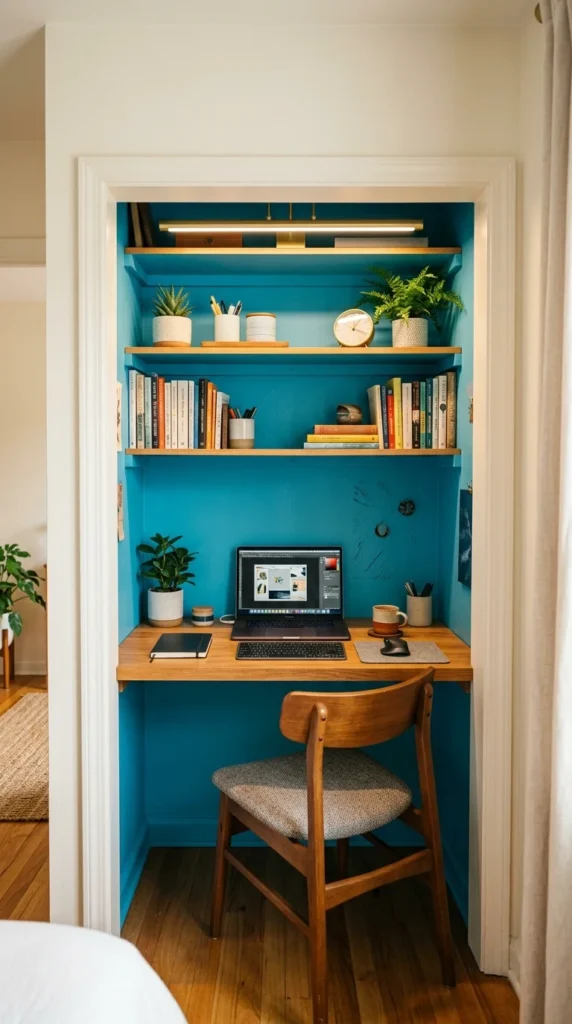
The “cloffice” (closet office) is the gold standard of compact setups. By removing the doors and installing a desk surface and shelving inside a standard reach-in closet, you create a dedicated architectural nook for work. When you’re done, you can often pull a curtain across or simply enjoy the fact that your office is recessed into the wall.
21. Natural Element Integration
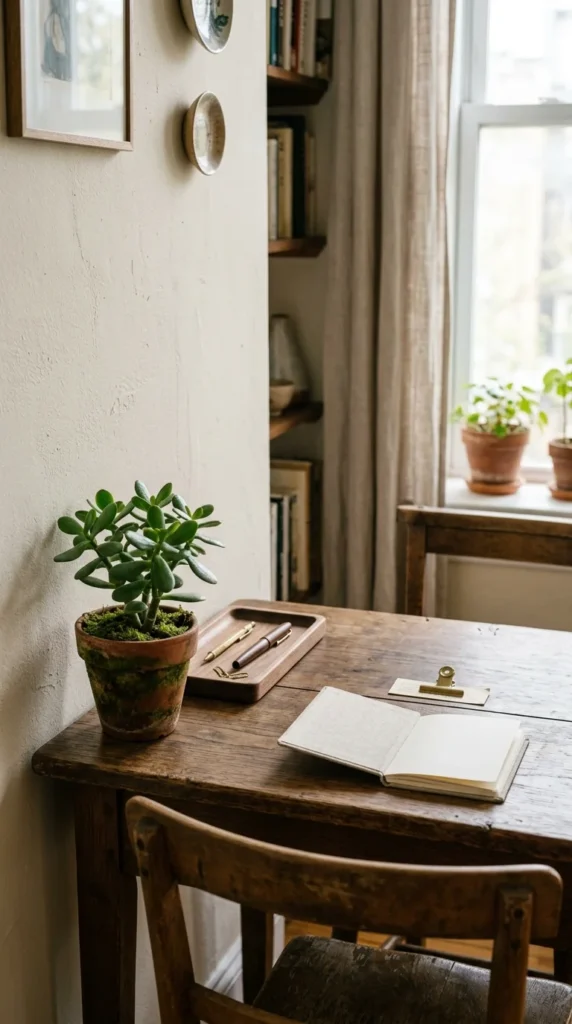
In a small space, things can feel sterile or industrial very quickly. Adding a single small plant or a natural wood accessory can “soften” the setup. Biophilic design—incorporating nature—has been shown to reduce stress and increase focus, which is vital when working in a confined area.
22. Under-Shelf Baskets

If you have a shelf above your desk, you can double its storage capacity with “under-shelf” baskets. These slide onto the existing shelf and provide a secondary hanging storage area. It’s perfect for items you use frequently but don’t want taking up space on your main desk.
23. Felt Desk Mats
If you need drawer space but don’t have room for a full-sized cabinet, look for “slim” or “mobile” pedestals. These are often only 10-12 inches wide and can slide into the small gap between your desk and the wall, providing storage for documents and supplies.
24. Ambient Backlighting
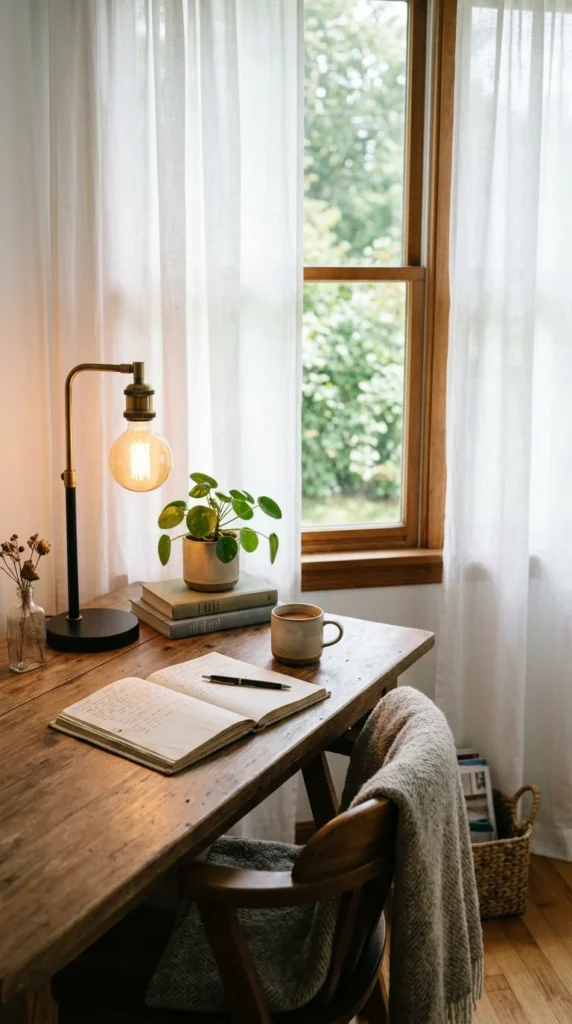
Layered lighting makes a small space feel curated. Combine natural light from a window with a small task lamp and perhaps some warm string lights. This creates “zones” of light that define your workspace and make it a more pleasant place to spend eight hours a day.
25. Personalized Gallery
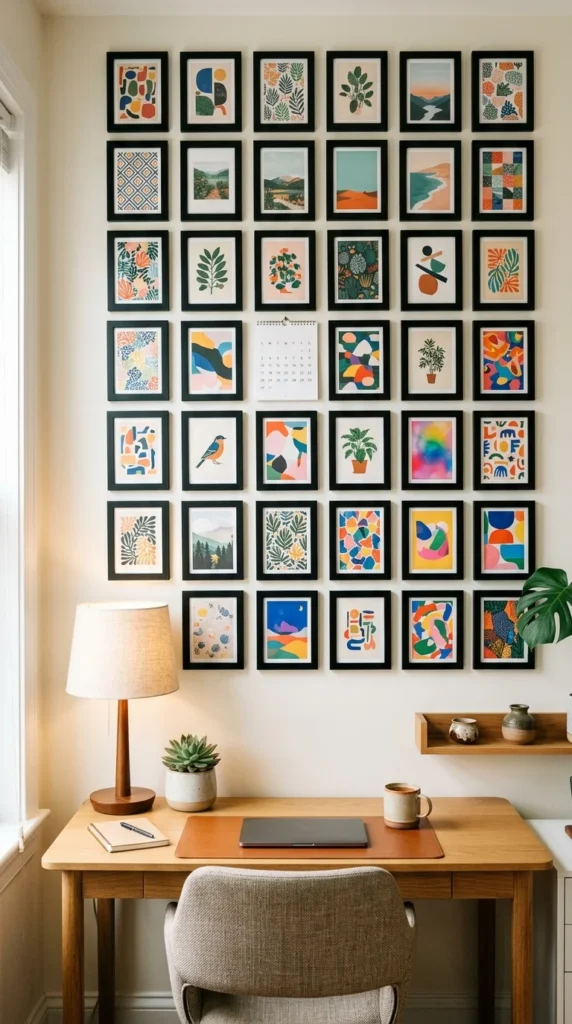
Just because a space is small doesn’t mean it should be clinical. Creating a “gallery wall” above your compact desk makes the area feel like a destination. Use small frames and a cohesive color palette to keep it from feeling overwhelming. Personalizing your space makes you more likely to enjoy the time you spend there.