
The rise of remote work has transformed our living spaces into multi-functional hubs, but not everyone has a spare room to dedicate to a sprawling executive suite. For many, the “office” is a carved-out niche in a bedroom, a hallway, or even a transformed closet. However, a small footprint doesn’t have to mean a cramped workflow. With clever design choices and a focus on verticality, light, and multi-purpose furniture, you can turn a tiny square footage into a powerhouse of productivity.
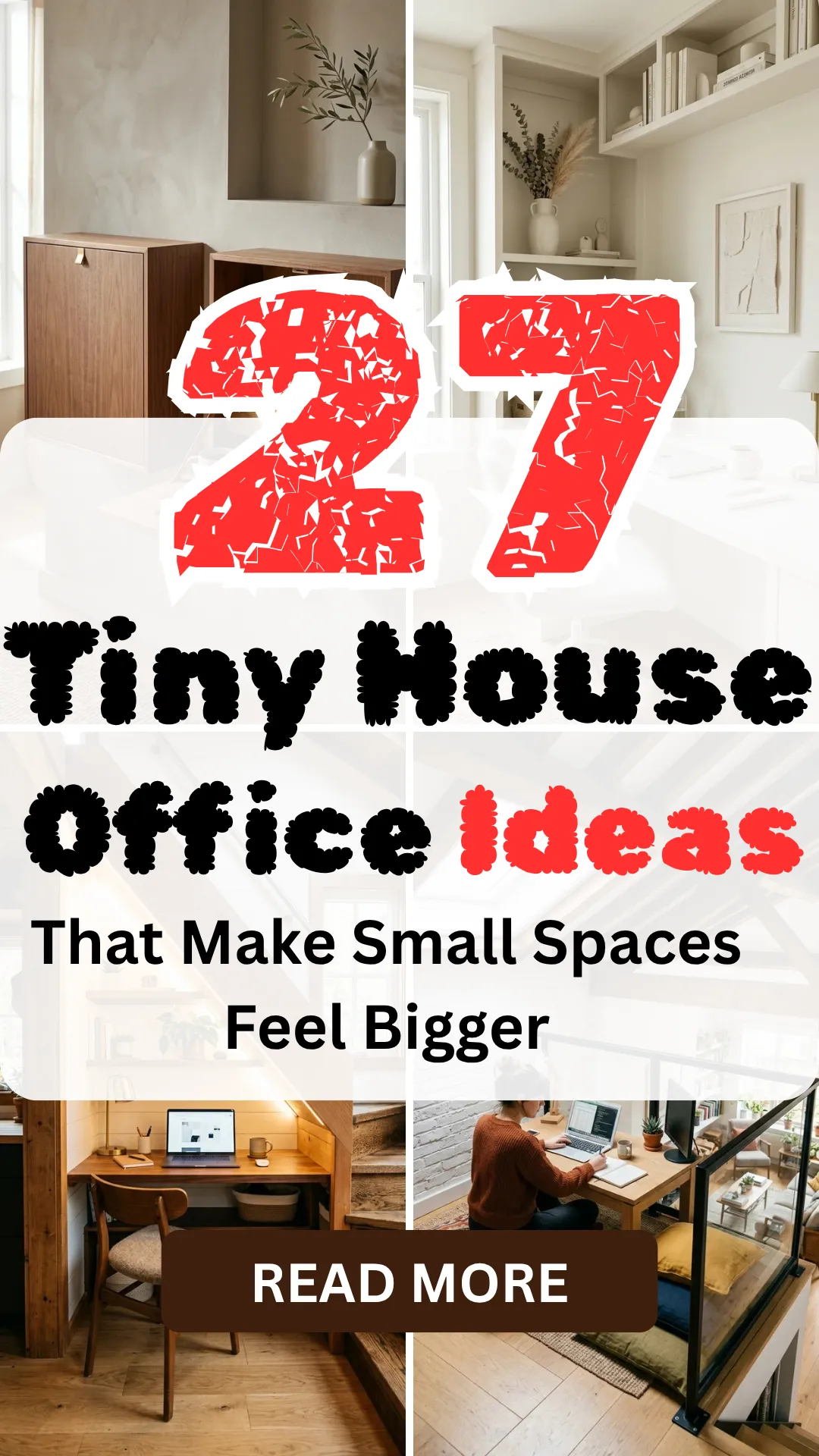
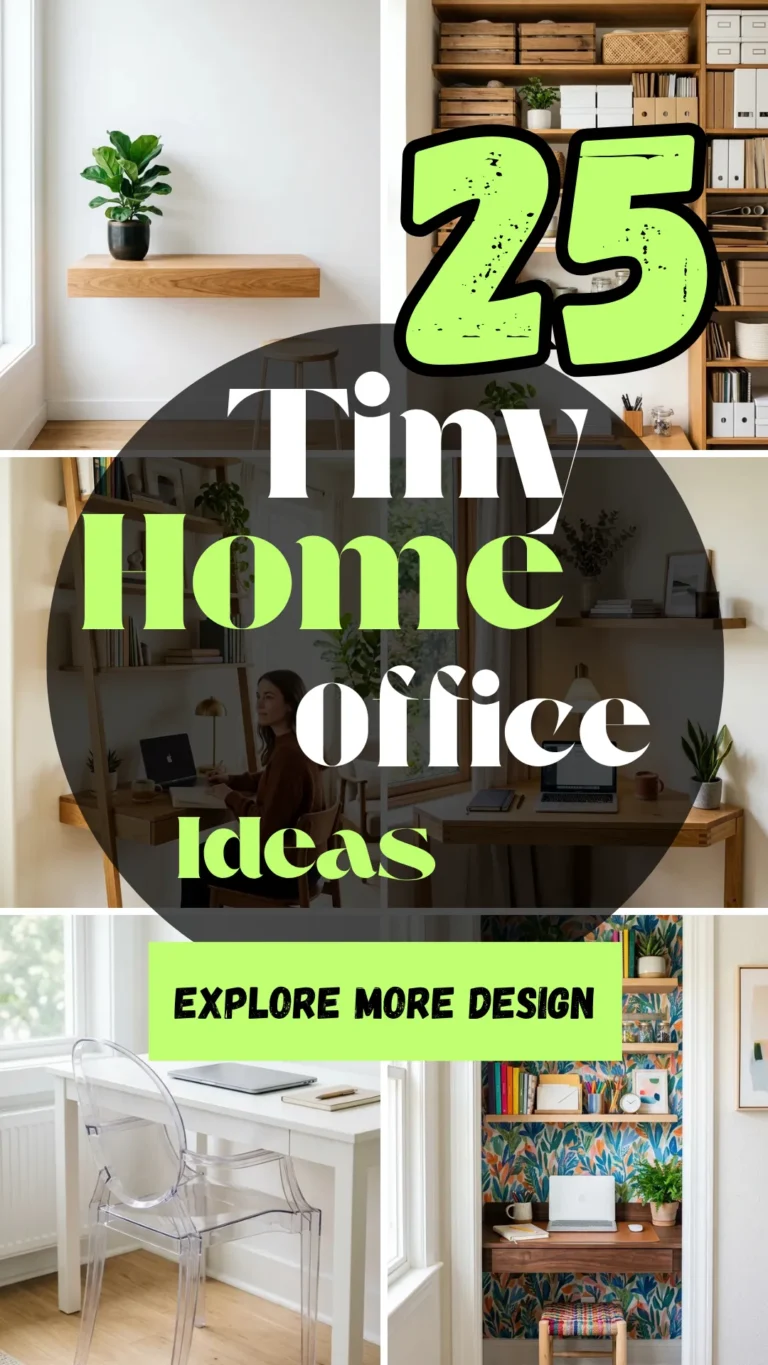
Here are 25 tiny home office ideas designed to maximize every inch and make your workspace feel significantly larger than it actually is.
1. Floating Desks
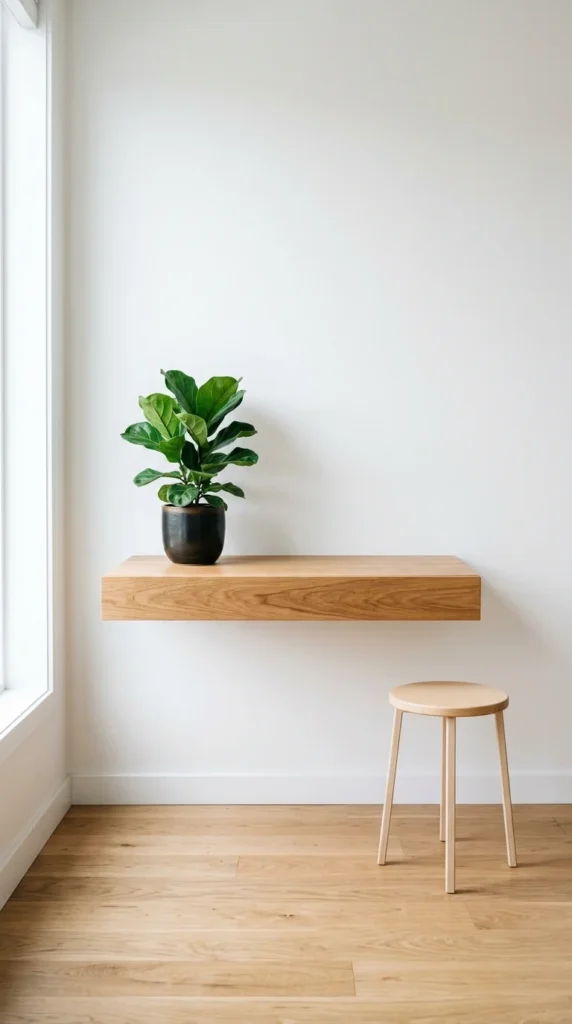
Floating desks are the ultimate space-savers. By removing the legs, you open up the floor area beneath the desk, which creates a visual sense of continuity. This trick makes the room feel less cluttered and allows you to tuck a small trash bin or a storage basket underneath without feeling cramped.
2. Corner Units
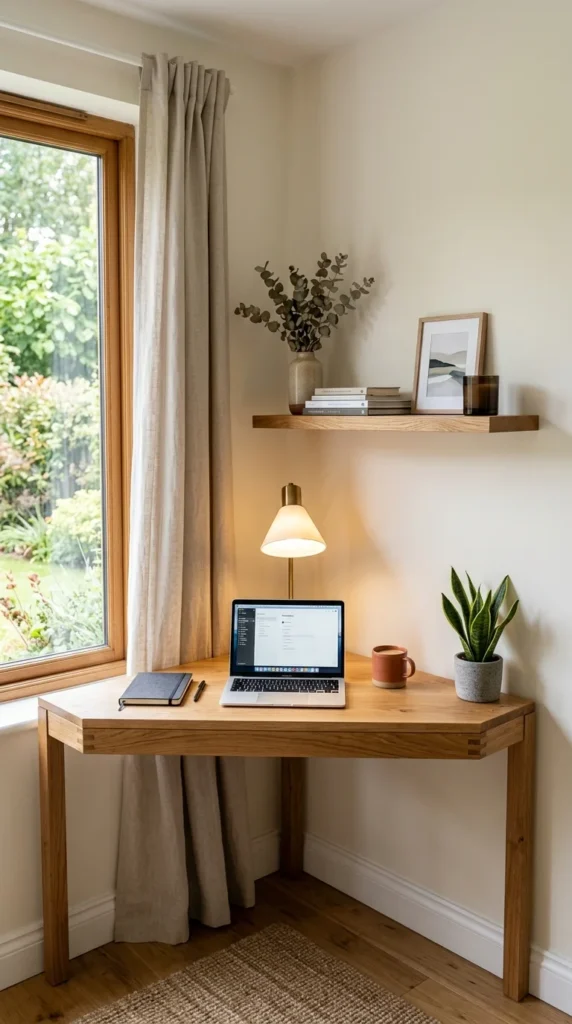
Corners are often wasted space in interior design. A dedicated corner desk utilizes this dead zone, providing a surprisingly large amount of surface area without protruding into the main walking paths of the room. It creates a cozy, “wrapped” feeling that helps with deep focus.
3. Ladder Shelves
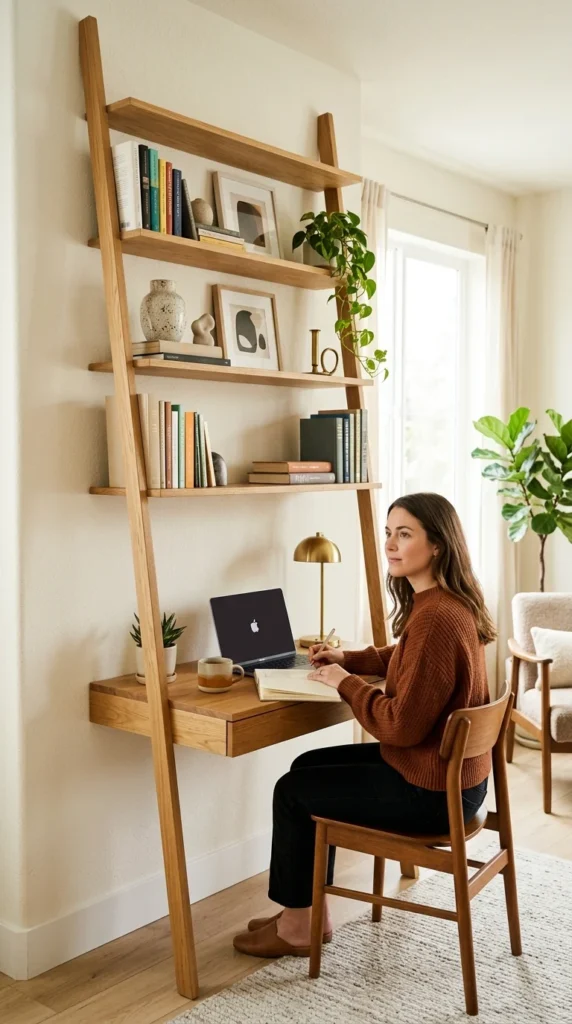
Ladder desks combine storage and workspace into a single vertical footprint. Because they lean against the wall and taper toward the top, they draw the eye upward, emphasizing the height of the room rather than the narrowness of the floor.
4. Closet Offices
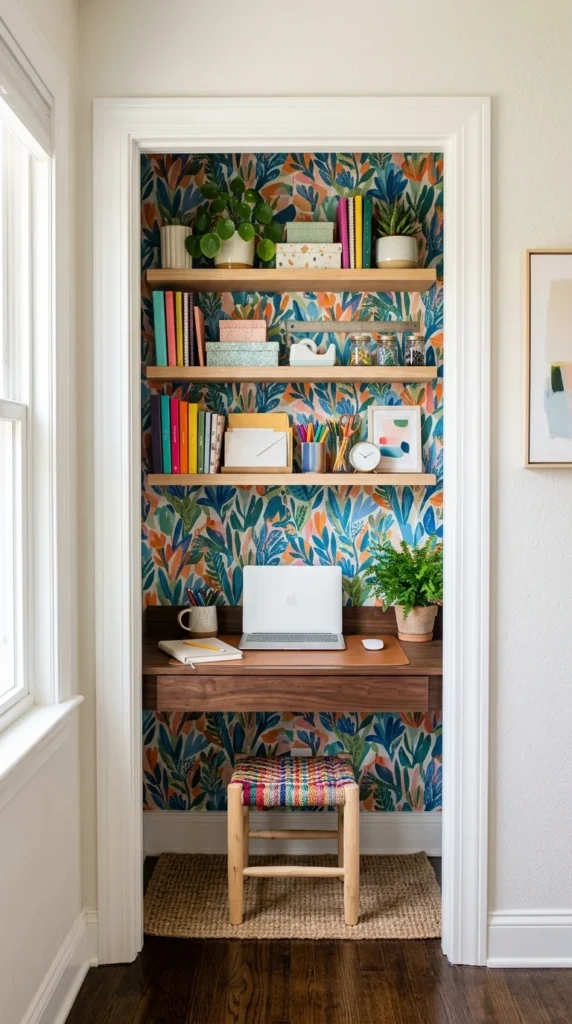
The “cloffice” is a modern classic for small-space living. By removing closet doors and installing a desktop and shelving, you can hide your office away or integrate it seamlessly into the room. When the workday is over, some choose to use a curtain or bifold doors to literally “close” the office and maintain work-life balance.
5. Mirrored Accents
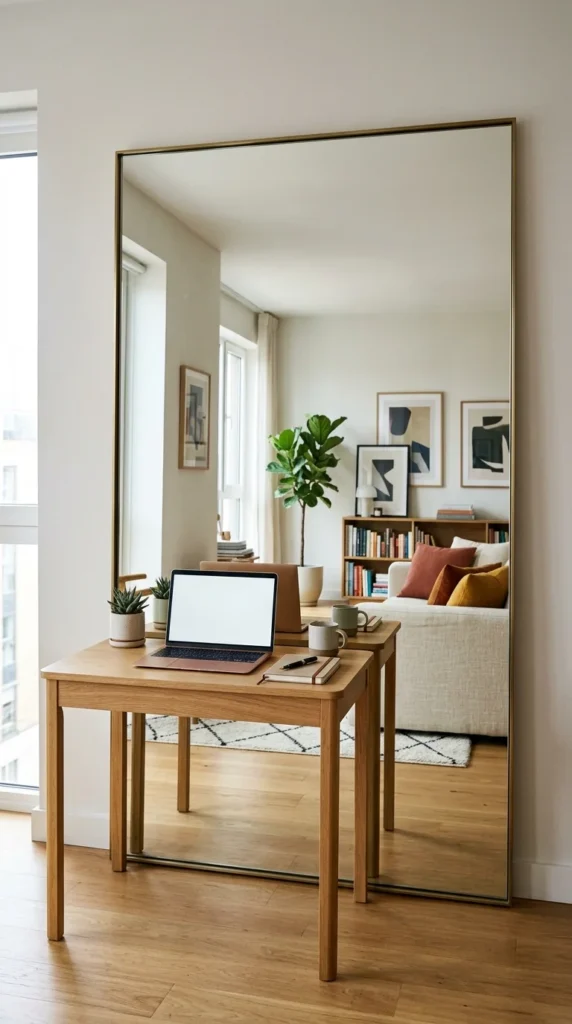
Mirrors are a designer’s favorite tool for expanding small rooms. Placing a mirror behind your desk or using a desk with a mirrored finish bounces light around the room. This effectively doubles the visual depth of the space and prevents that “boxed-in” feeling.
6. Acrylic Furniture
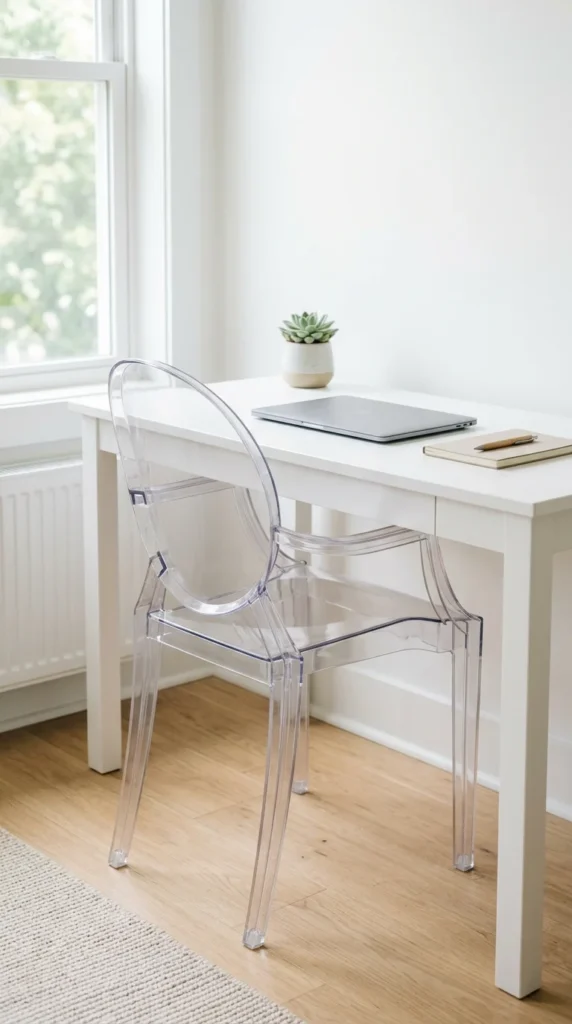
Transparent furniture, often made of acrylic or Lucite, is perfect for tiny offices because it has zero “visual weight.” An acrylic chair provides all the support of a traditional seat but doesn’t block the line of sight, making the room look entirely unobstructed.
7. Vertical Storage
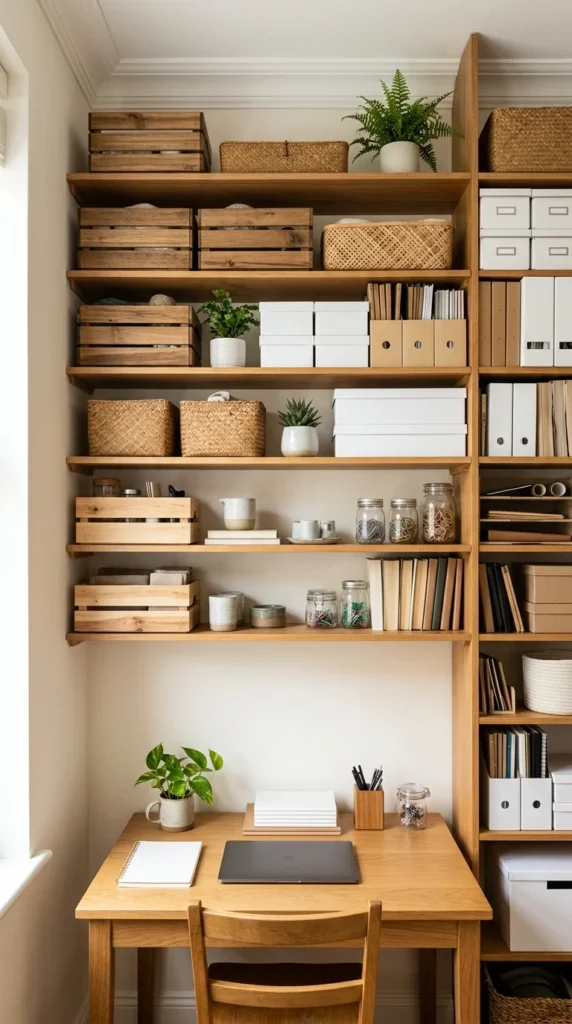
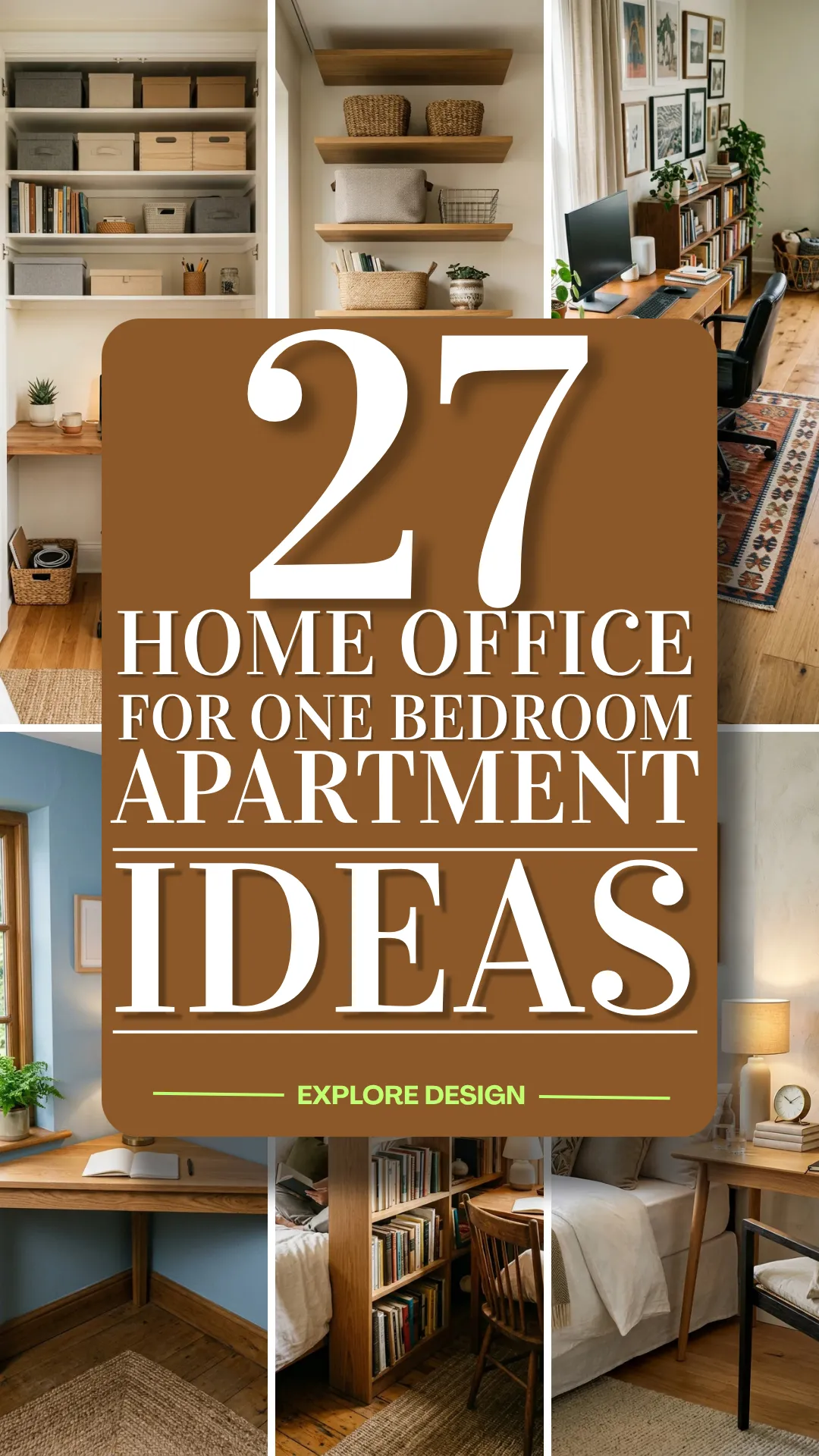
When you can’t go out, go up. Utilizing the full height of your walls for storage keeps the desktop clear of clutter. Use the highest shelves for items you rarely need and the lower shelves for daily essentials. This keeps your immediate workspace feeling airy and open.
8. Under-Stair Nooks
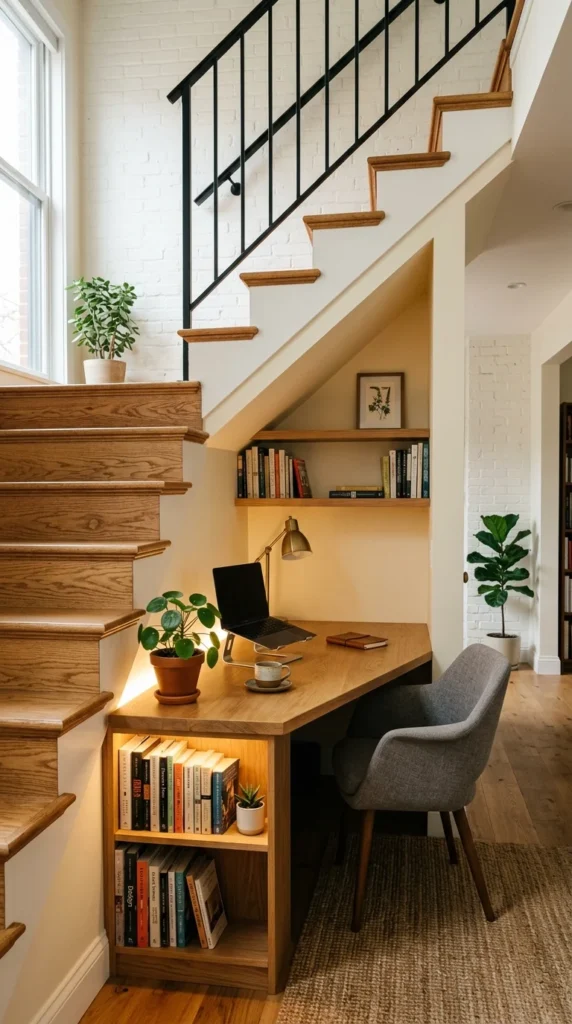
The area under the stairs is frequently neglected. Transforming this architectural quirk into a workstation is a brilliant way to find “hidden” square footage. It creates a natural boundary for your office that doesn’t interfere with the flow of the rest of the house.
9. Fold-Down Desks
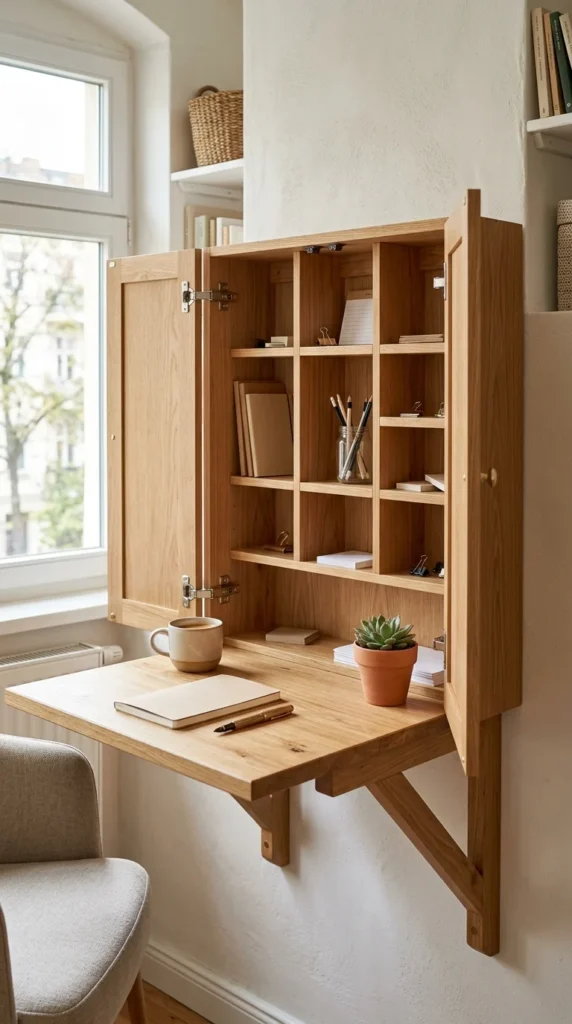
Ideal for guest rooms or studio apartments, fold-down (or “murphy”) desks disappear when not in use. This allows the room to serve its primary purpose most of the time, while still offering a functional workspace during the 9-to-5.
10. Monochromatic Palettes
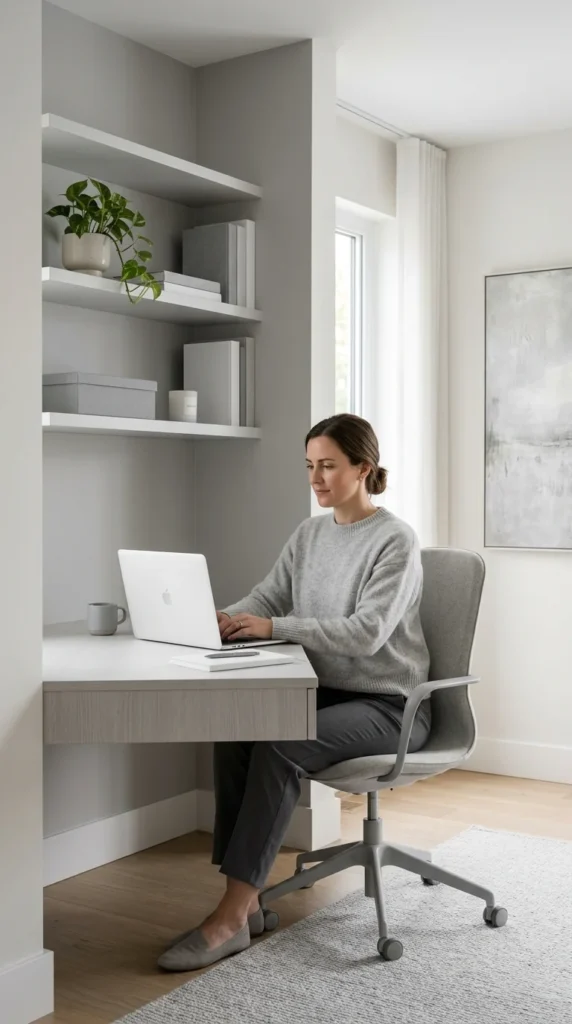
Using a single color family for your walls, desk, and shelving minimizes visual “noise.” When everything blends together, the boundaries of the room become less distinct, which helps a tiny area feel more expansive and serene.
11. Mobile Carts
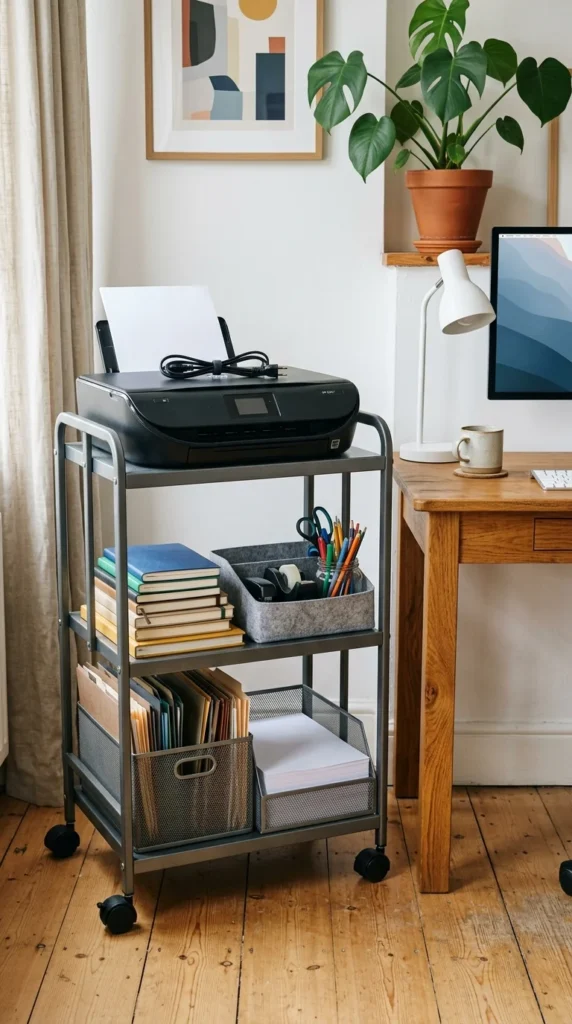
If you don’t have room for a large desk with drawers, a mobile rolling cart is your best friend. It provides three levels of storage and can be moved around as needed. You can even wheel it into a closet at the end of the day to reclaim your living space.
12. Pegboard Organizers
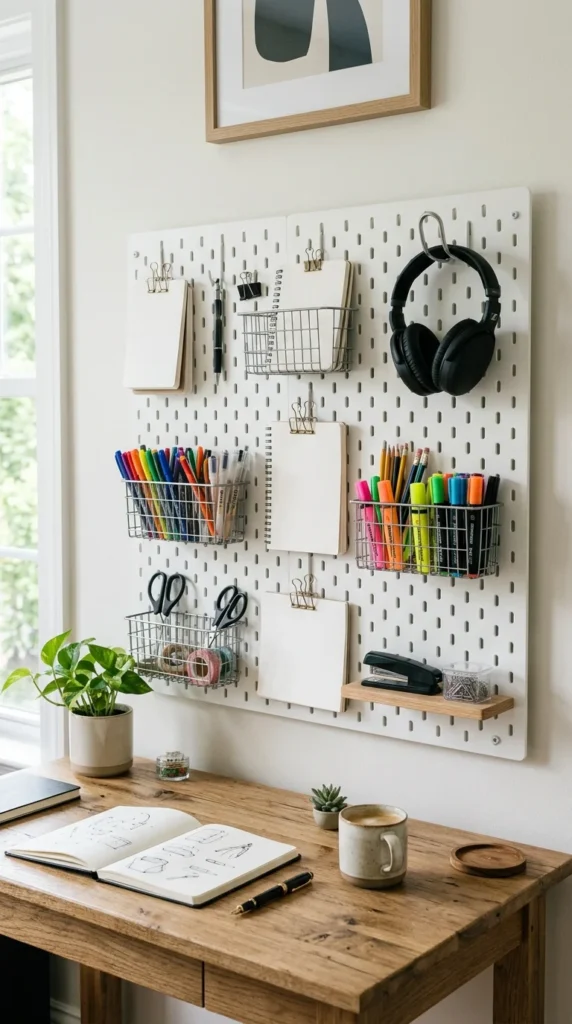
Pegboards are incredibly versatile. They allow you to customize your storage layout as your needs change. By hanging your supplies—scissors, tape, headphones, and even small plants—you free up precious desktop real estate for your computer and mouse.
13. Window Placement
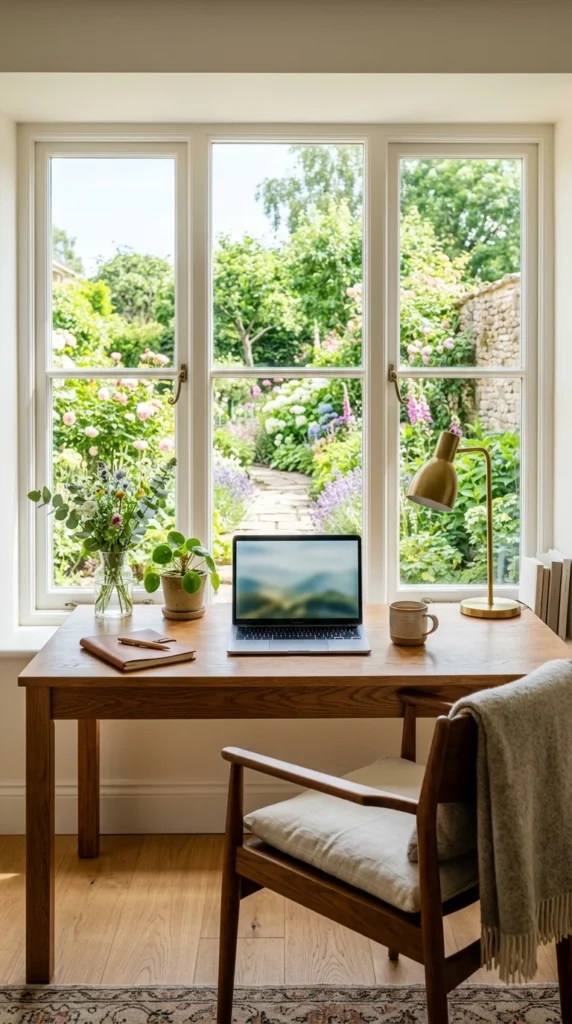
f possible, place your desk in front of or next to a window. The view of the outdoors provides a “visual escape,” making the walls feel like they’ve vanished. Natural light also boosts mood and productivity, reducing the strain of working in a confined area.
14. Narrow Consoles
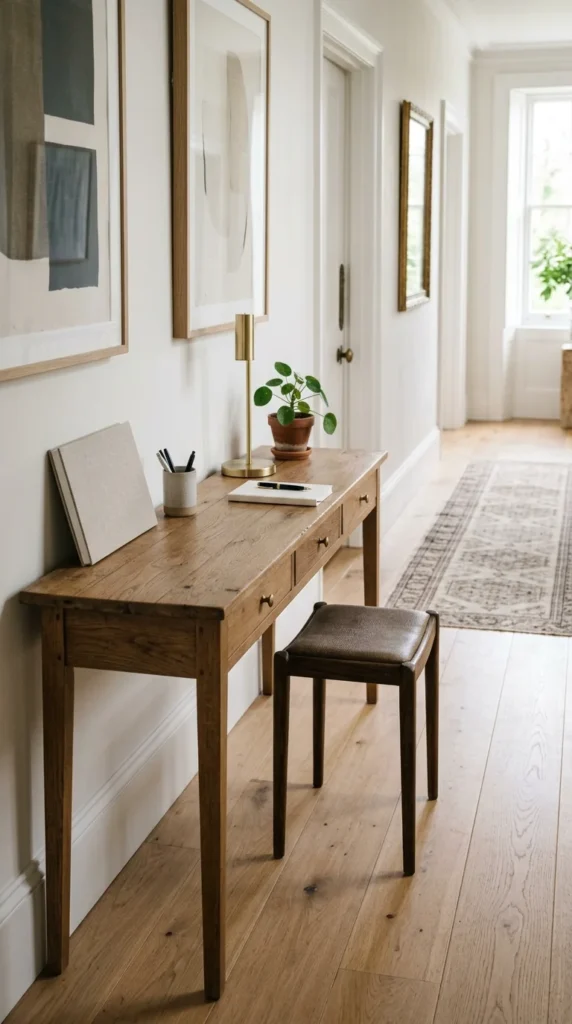
Sometimes a traditional desk is too deep for a small room. A narrow console table can serve as an excellent laptop station. It’s wide enough for a computer and a cup of coffee but shallow enough to fit into a hallway or behind a sofa without blocking traffic.
15. Statement Lighting
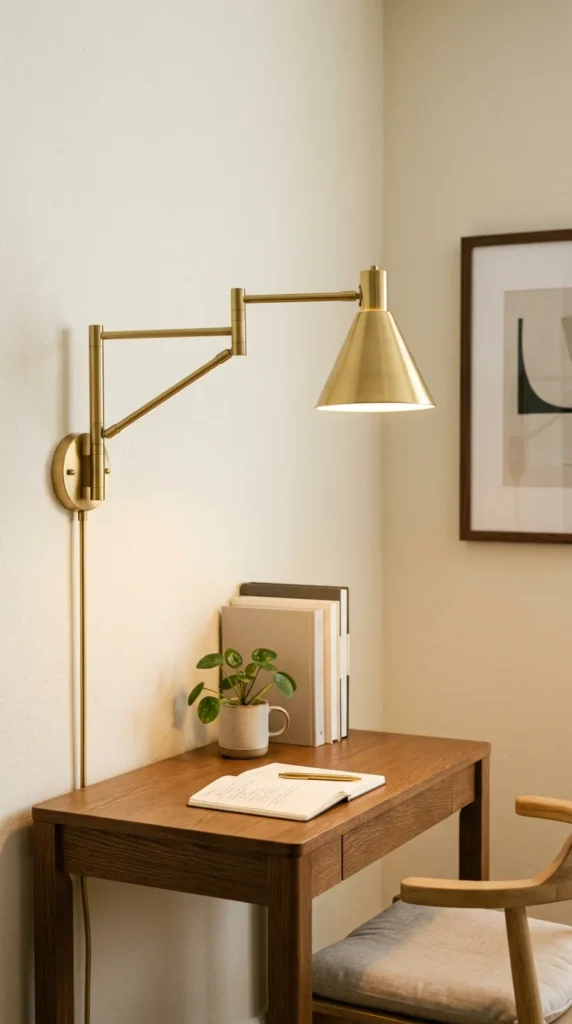
Avoid bulky table lamps that take up corner space on your desk. Instead, opt for wall-mounted sconces or swing-arm lamps. They provide excellent task lighting and add a touch of professional style while keeping your surface area completely open.
16. Rug Zoning
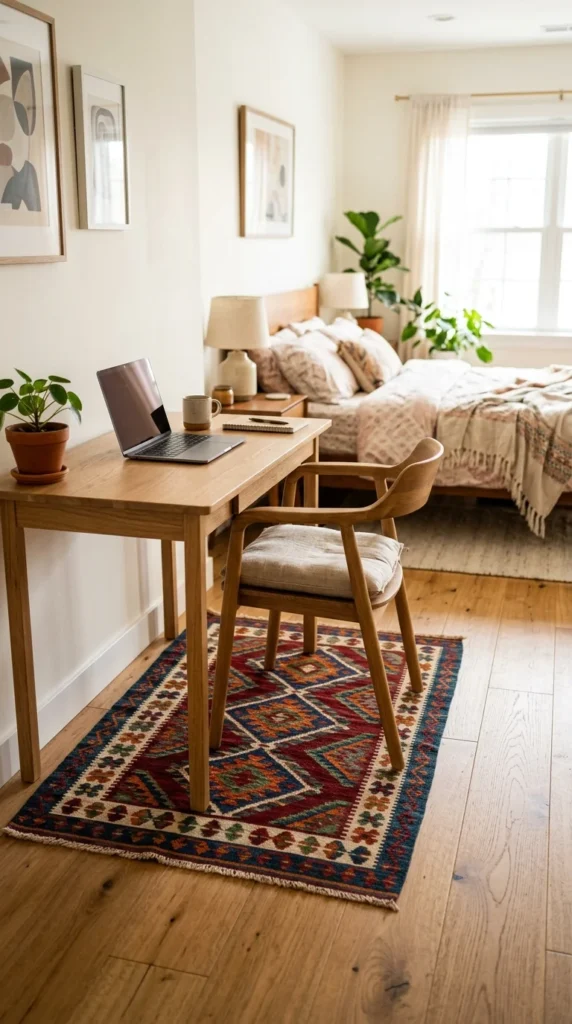
Even in a tiny room, you can create the illusion of a separate “office” by using a small area rug. The rug acts as a visual boundary, signaling that this specific zone is for work, which helps psychologically separate your professional life from your home life.
17. Hidden Cable Management
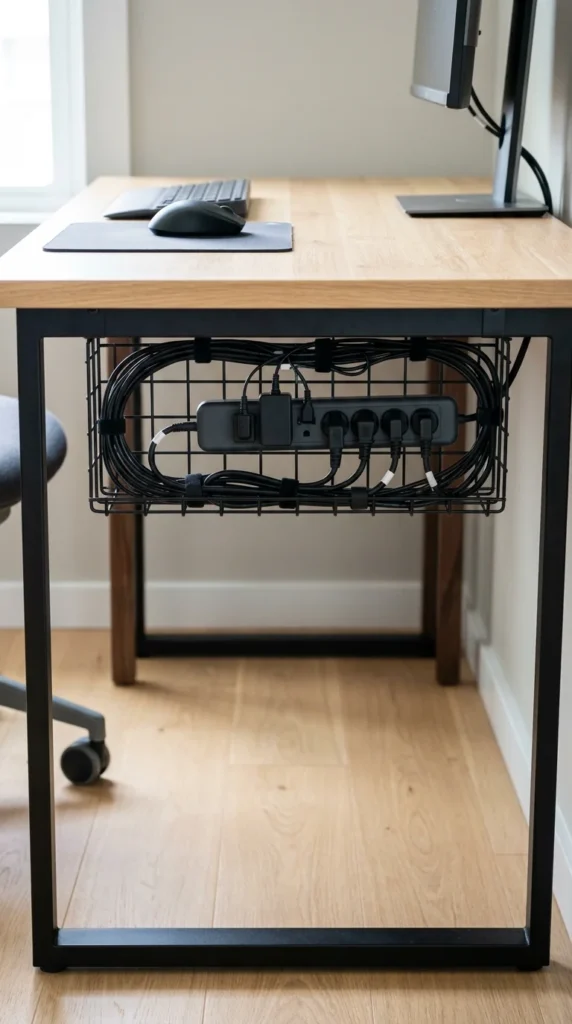
Nothing makes a small space feel more cluttered than a “spaghetti” mess of wires. Use cable sleeves, under-desk trays, or even decorative boxes to hide your cords. A clean, wire-free environment looks significantly more organized and spacious.
18. Multi-Functional Furniture
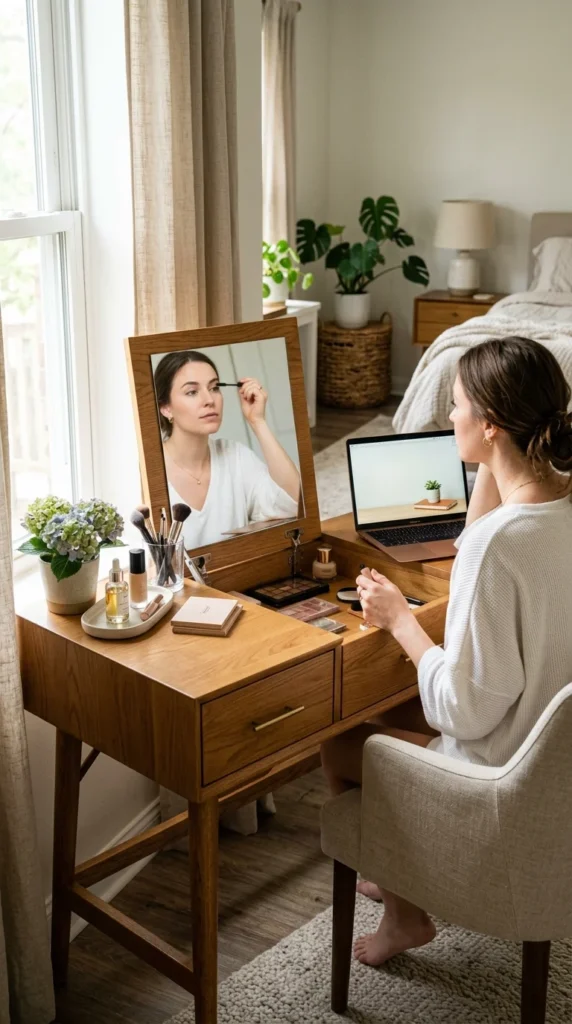
In a small home, every piece of furniture must earn its keep. A desk that doubles as a vanity or a nightstand is a great way to save space. Look for pieces with drawers to hide away work items when the “office” transitions back into a living area.
19. Floating Shelves
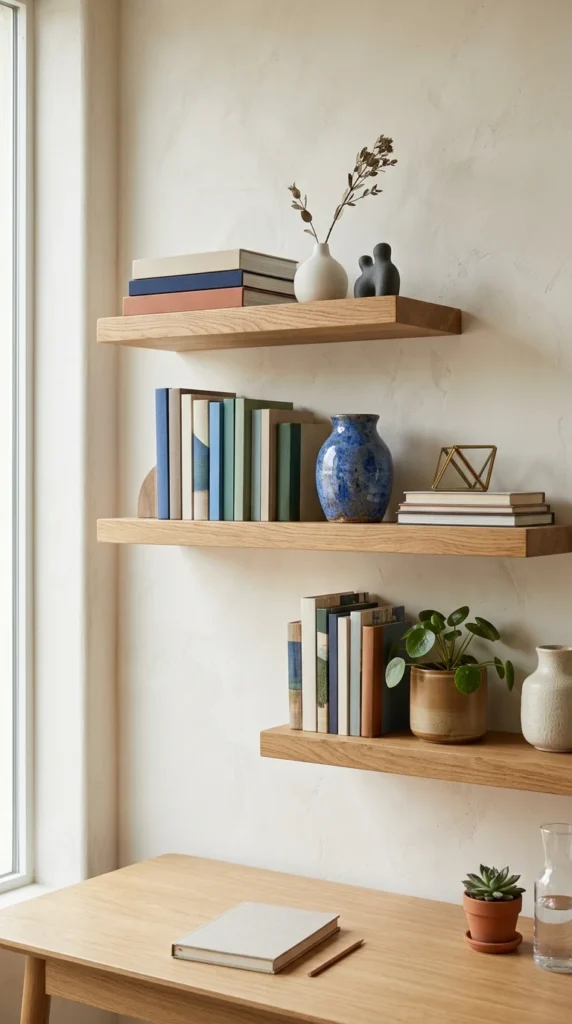
Unlike heavy bookcases, floating shelves feel light and airy. By staggering them at different heights, you create a dynamic visual display that draws the eye upward and provides storage without the bulk of a heavy furniture piece.
20. Glass Desk Surfaces
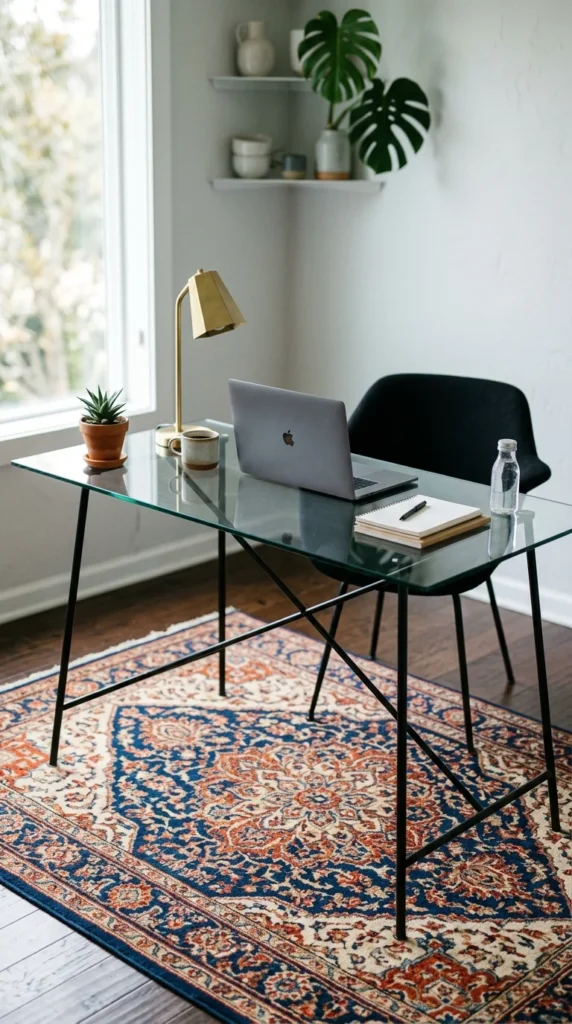
Similar to acrylic chairs, a glass-top desk is “visually invisible.” It provides a solid working surface but allows the eye to travel through it to the floor and walls beyond. This prevents the desk from looking like a giant block in the middle of a small room.
21. Greenery and Plants
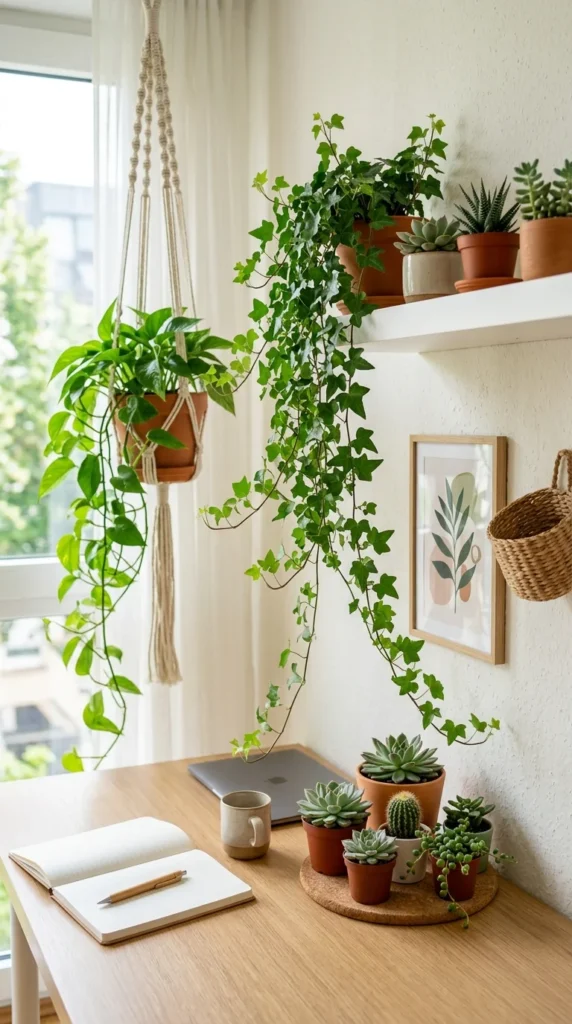
Adding a few plants can breathe life into a small corner. Tall, thin plants like a Sansevieria (Snake Plant) add vertical interest without taking up much width, while trailing plants like Pothos can be placed on high shelves to draw the eye up.
22. Integrated Built-ins
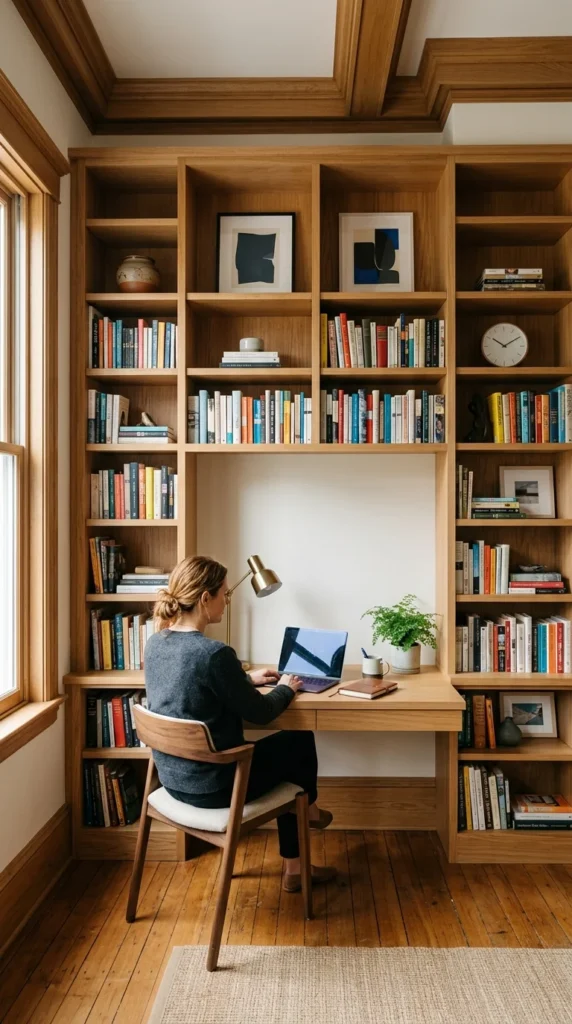
If you own your home, custom built-ins are the gold standard for small spaces. They can be designed to fit the exact dimensions of your wall, ensuring that not a single inch is wasted. Integrating the desk into a wall of bookshelves creates a cohesive, high-end look.
23. Room Dividers
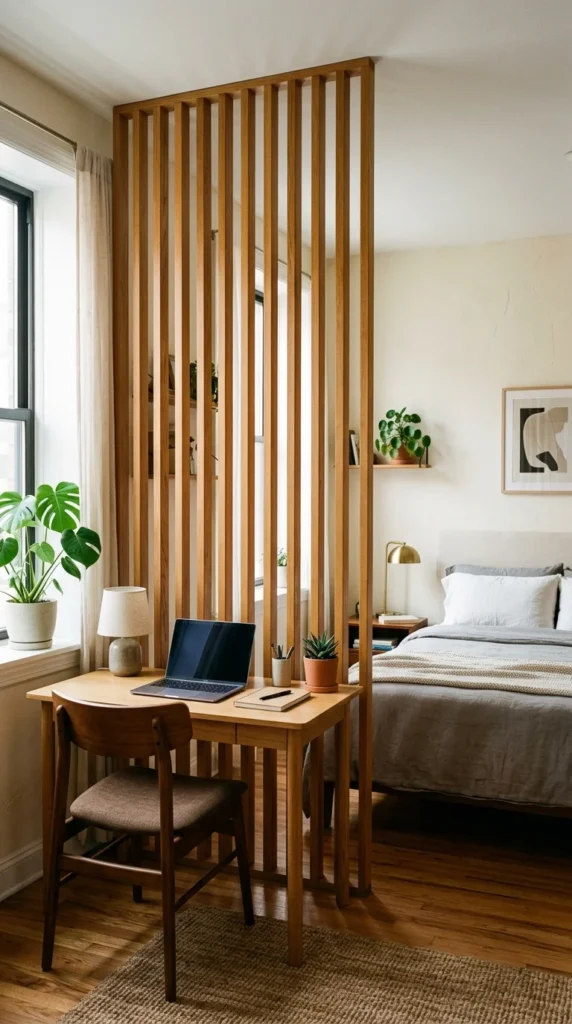
If your office is in your bedroom or living room, a room divider—like a folding screen or a slat wall—can create a sense of privacy. This physical barrier helps define the workspace and prevents you from staring at your bed or TV while you’re trying to concentrate.
24. Minimalist Aesthetics
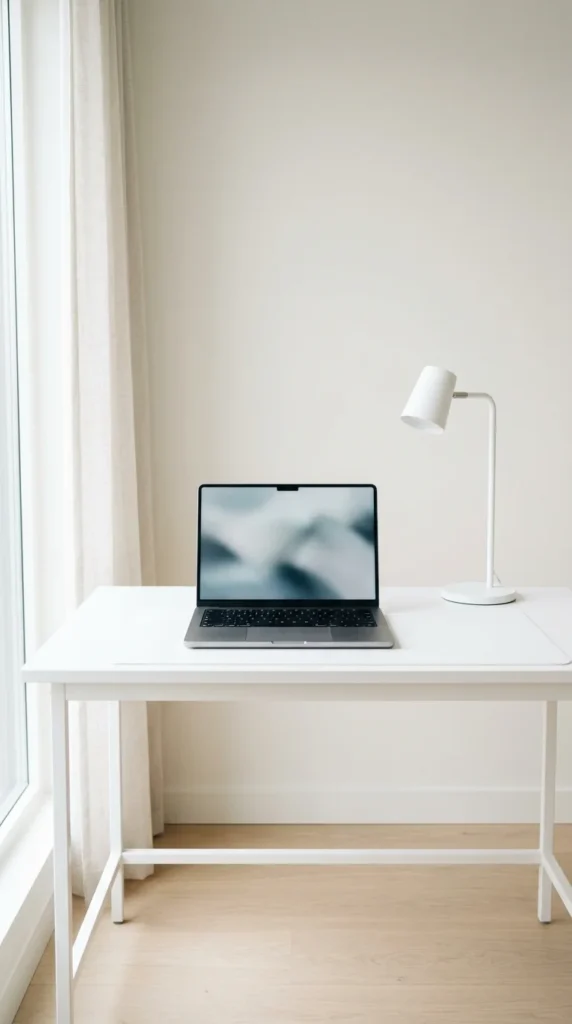
In a small office, less is always more. Adopting a minimalist design philosophy helps keep the space functional and calm. By limiting your decor to a few high-quality items, you prevent the area from feeling overwhelmed by “stuff.”
25. Optimized Vertical Lighting
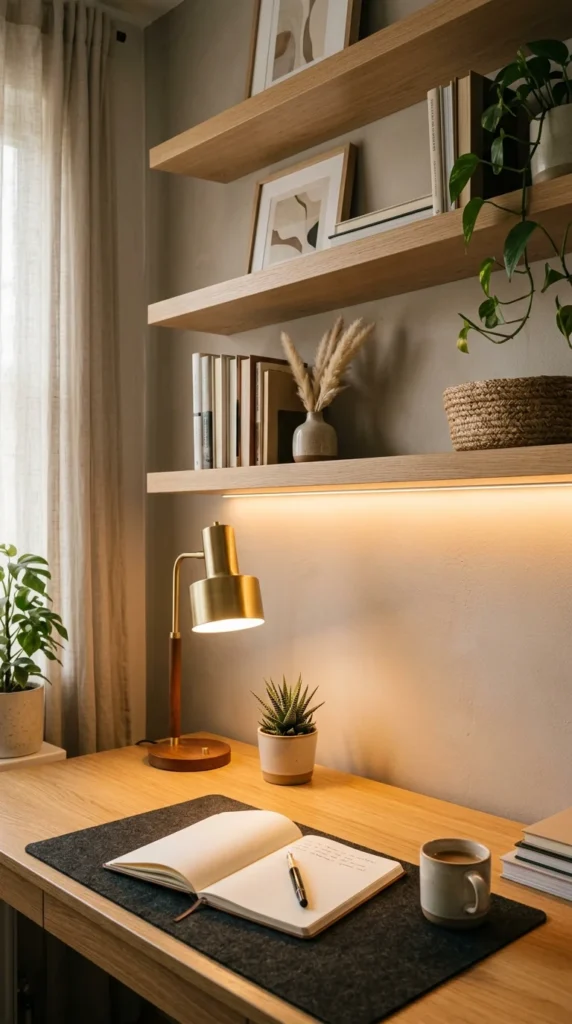
Lighting the “perimeter” of your small office can make it feel much larger. By adding LED strips under shelves or behind the desk, you eliminate dark shadows that can make a space feel enclosed. This layered lighting adds depth and a professional atmosphere to even the tiniest nook.