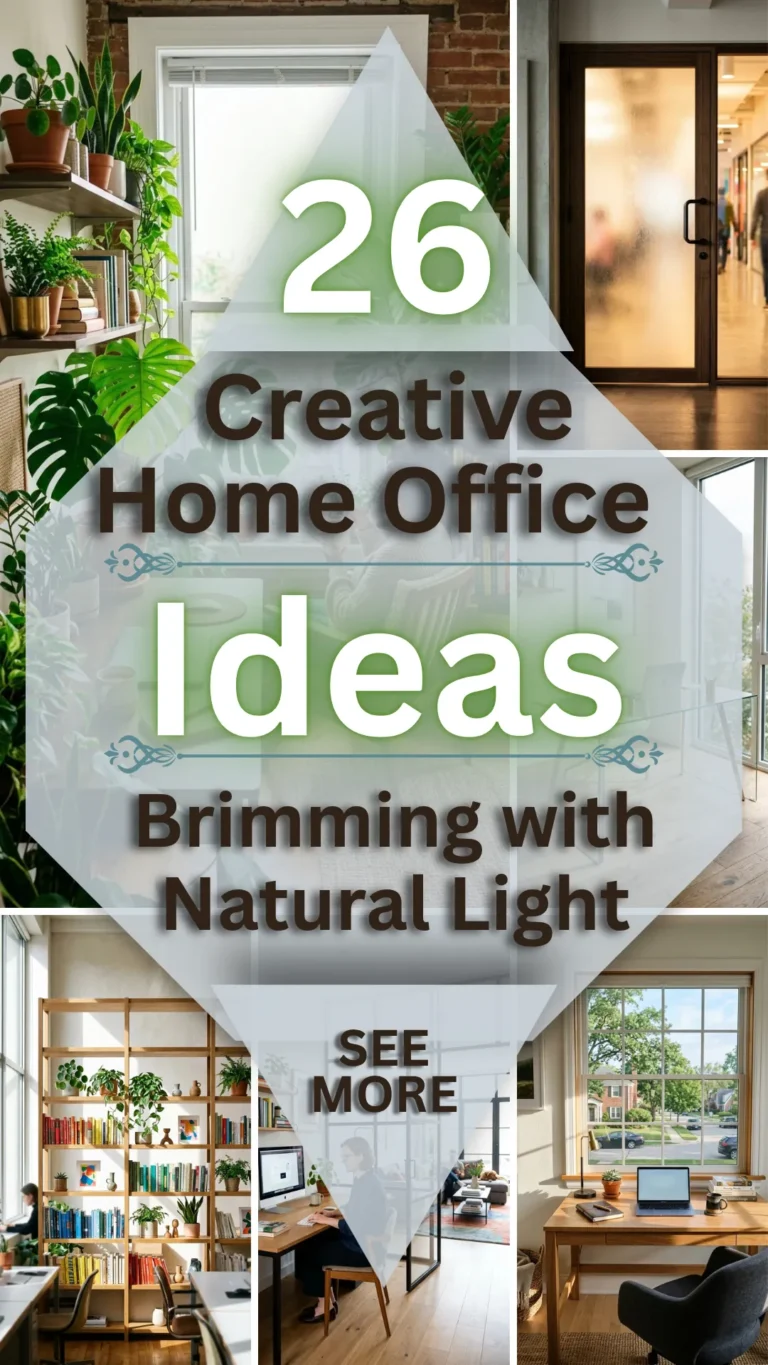

The environment in which we work profoundly impacts our cognitive function, mood, and overall productivity. Among all the design elements one can incorporate into a home office, natural light stands out as the most transformative. Studies consistently show that exposure to daylight reduces eye strain, headaches, and blurred vision, while simultaneously boosting Vitamin D levels and regulating circadian rhythms.
If you are looking to revitalize your workspace, transitioning from a dim, artificial environment to a sun-drenched sanctuary is the ultimate upgrade. Here are 26 inspired designs and strategies to harness the power of the sun for a brighter, more efficient home office.
1. Window Desk
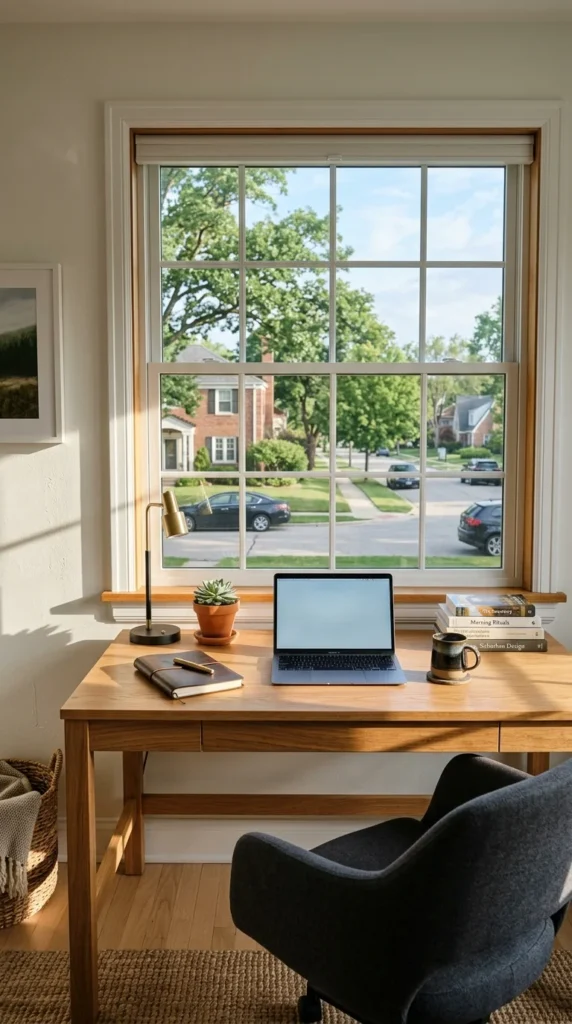
Positioning your primary workspace directly in front of a window is the most effective way to capture direct light. This “front-lit” setup ensures that your tasks are illuminated naturally during the day, reducing the need for overhead lights. It also provides a visual break for your eyes; by looking at a distant object outside, you can prevent the digital eye strain associated with staring at screens for long periods.
2. Skylight Magic
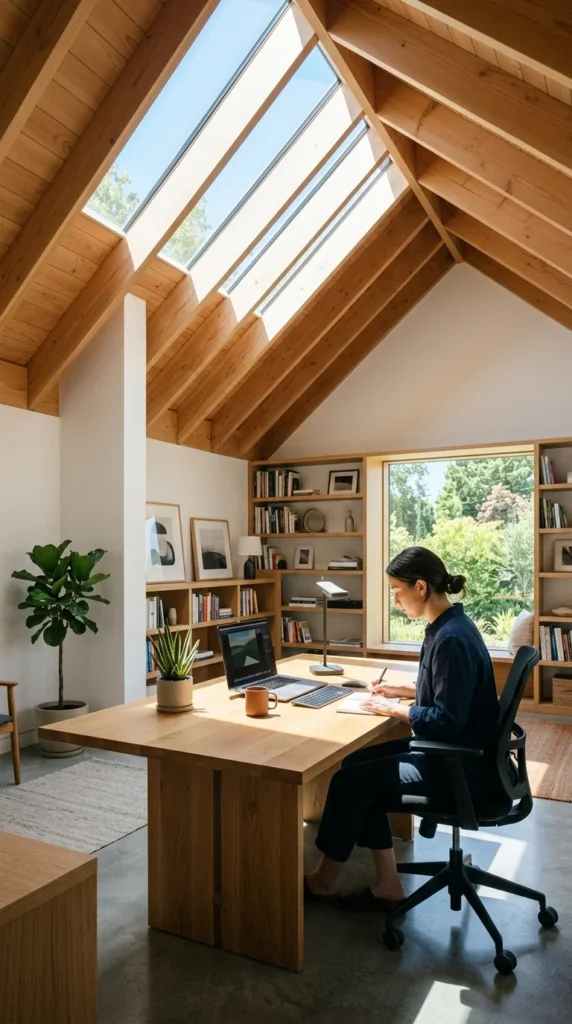
When wall space is limited by shelving or equipment, look to the sky. Installing a skylight can bring in up to three times more light than a standard vertical window. This design choice is particularly effective for attic offices or middle-of-the-house rooms that lack exterior walls. It creates a dynamic atmosphere where you can watch the clouds pass or enjoy the shifting hues of the sky from dawn to dusk.
3. Glass Partitions
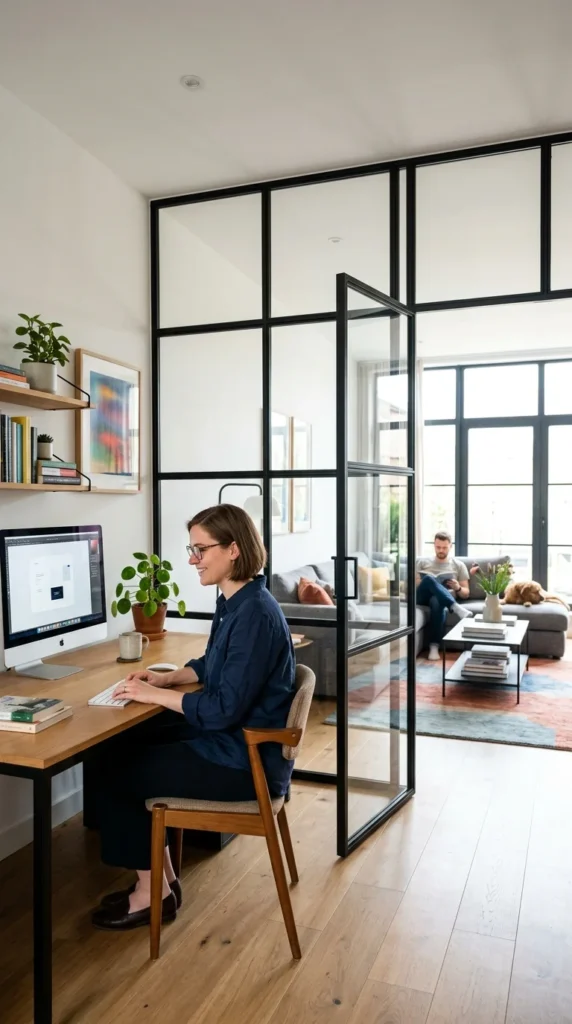
If your office is tucked away in a corner of a larger room, avoid solid drywall. Glass partitions or “Crittall-style” windows allow light to travel through the entire floor plan. This maintains an open, airy feel while providing the necessary acoustic privacy required for focus and video calls.
4. Mirror Reflection
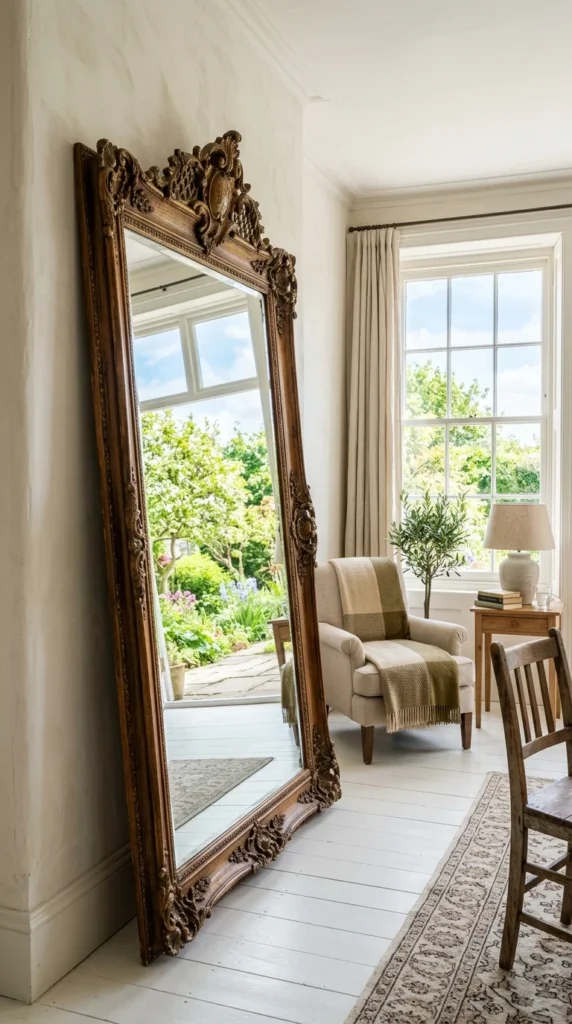
Mirrors are a classic interior design trick for a reason. By placing a large mirror on the wall opposite your main light source, you effectively “bounce” the sunlight into the darker corners of the room. This not only makes the space feel twice as bright but also creates an illusion of more square footage.
5. Minimalist Blinds
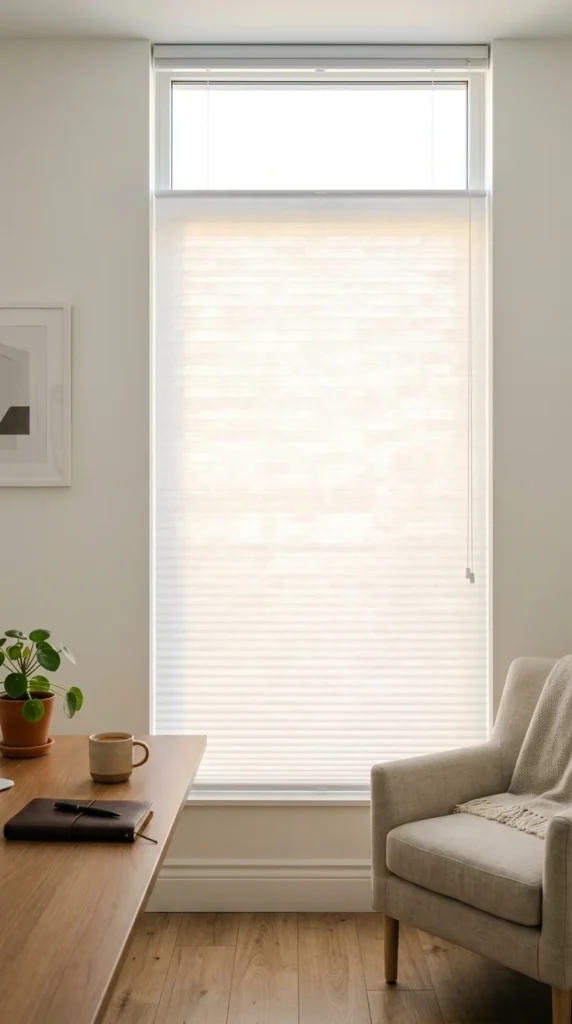
Heavy drapes can stifle a room and block precious light even when they are open. Opt for minimalist window treatments like solar shades, sheer linens, or cellular blinds. These options allow you to control glare on your computer screen while still permitting a significant amount of diffused light to permeate the space.
6. White Walls
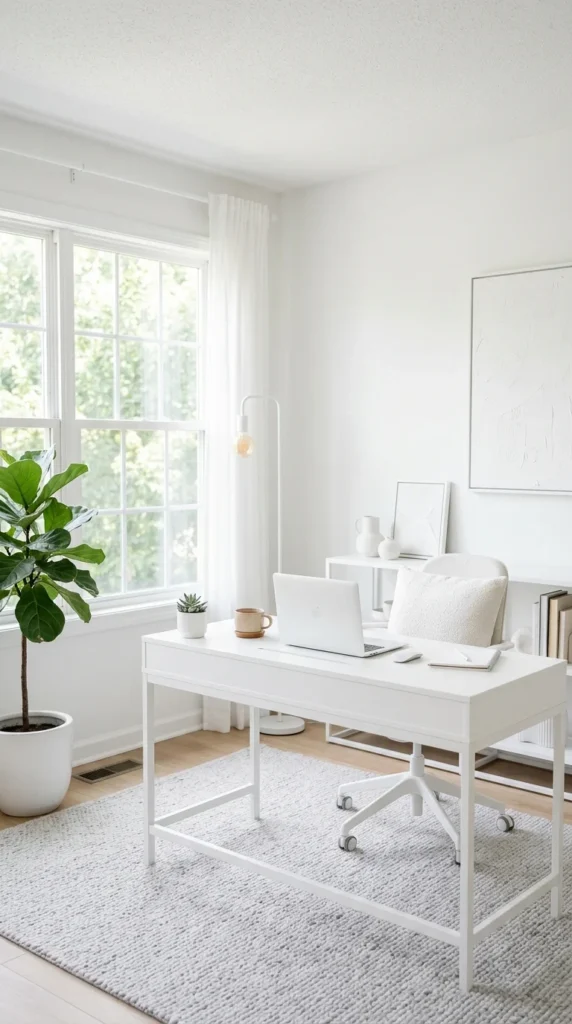
Color science plays a massive role in light retention. White and off-white paints have the highest Light Reflectance Value (LRV). By painting your walls, ceiling, and even your floors in light tones, you ensure that every photon of light that enters the room is reflected rather than absorbed.
7. Corner Windows
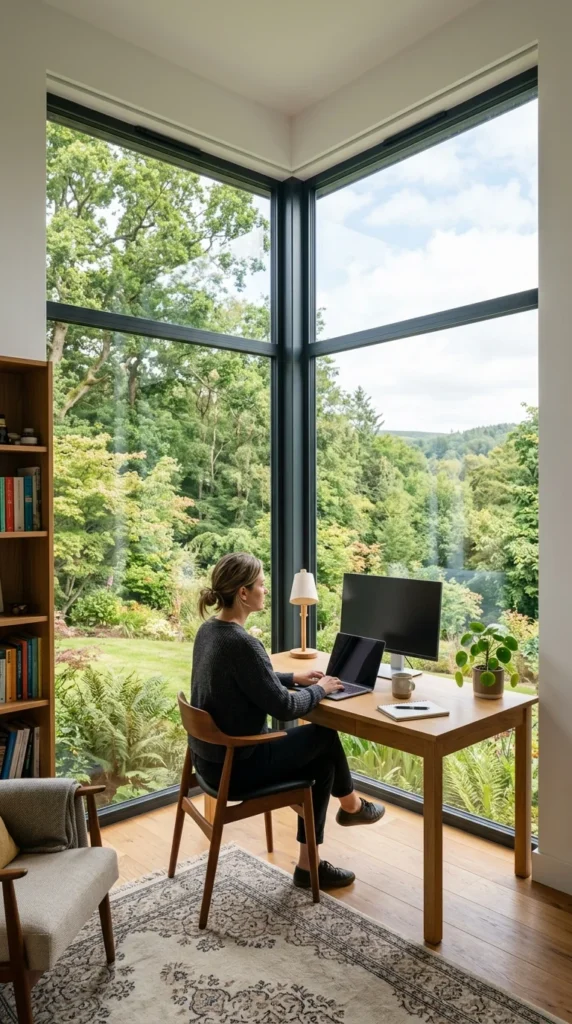
Wrap-around or corner windows provide a panoramic view and capture light from two different directions. This setup ensures that as the sun moves across the sky, your office remains consistently illuminated for a longer portion of the day, minimizing the “dead zones” that occur in rooms with a single exposure.
8. French Doors
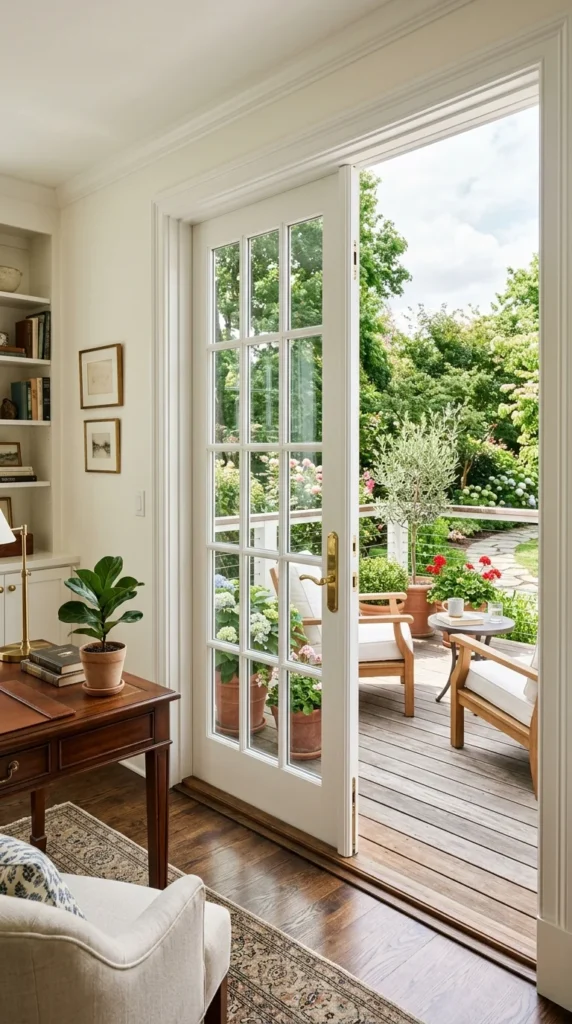
Replacing a standard solid door with glass-paned French doors can revolutionize a dark hallway or office. Even when the doors are closed to keep out noise, they draw in light from adjacent rooms or the outdoors, making the transition between spaces feel seamless and bright.
9. Reflective Surfaces
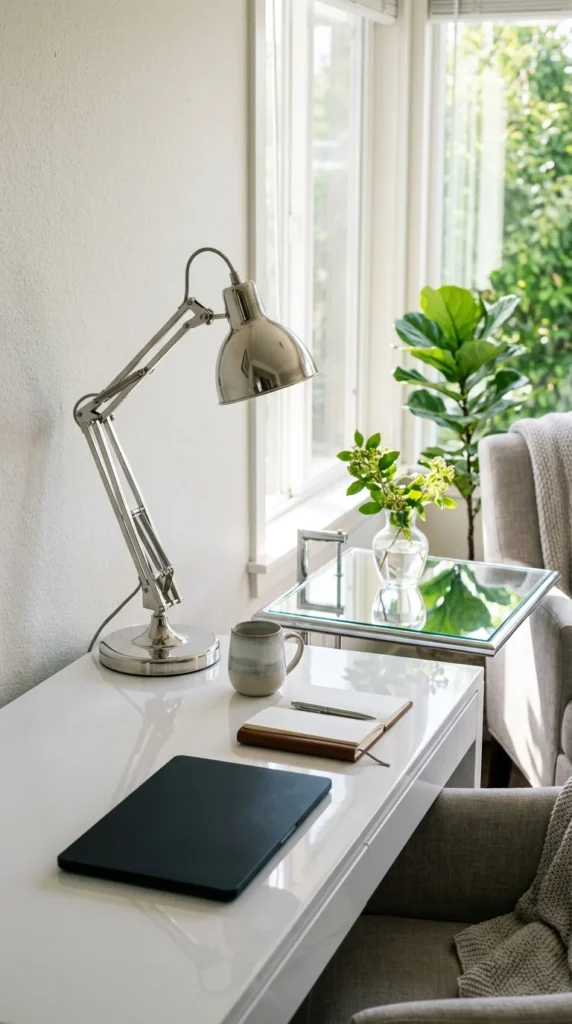
Beyond mirrors, consider the finish of your furniture. High-gloss lacquered desks, polished metal accents, and glass tabletops all serve as reflective surfaces. These materials help distribute light across the room, creating a sparkling, high-energy environment.
10. Open Shelving
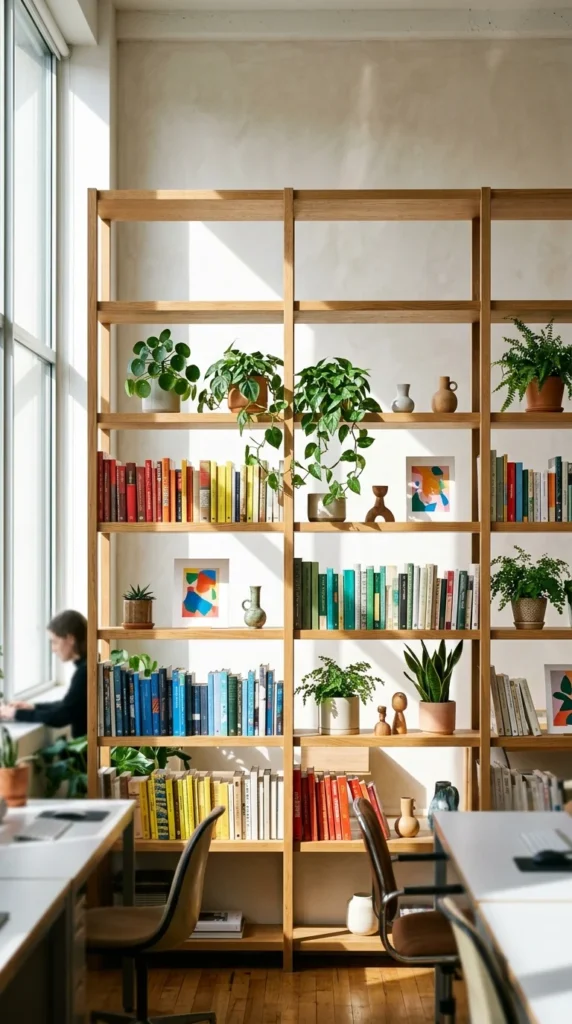
Bulky, closed-in bookcases can cast long shadows and make a room feel claustrophobic. Switch to open shelving units. This allows light to circulate around your decorative items and books, keeping the “visual weight” of the room light and the actual lighting levels high.
11. Transom Windows
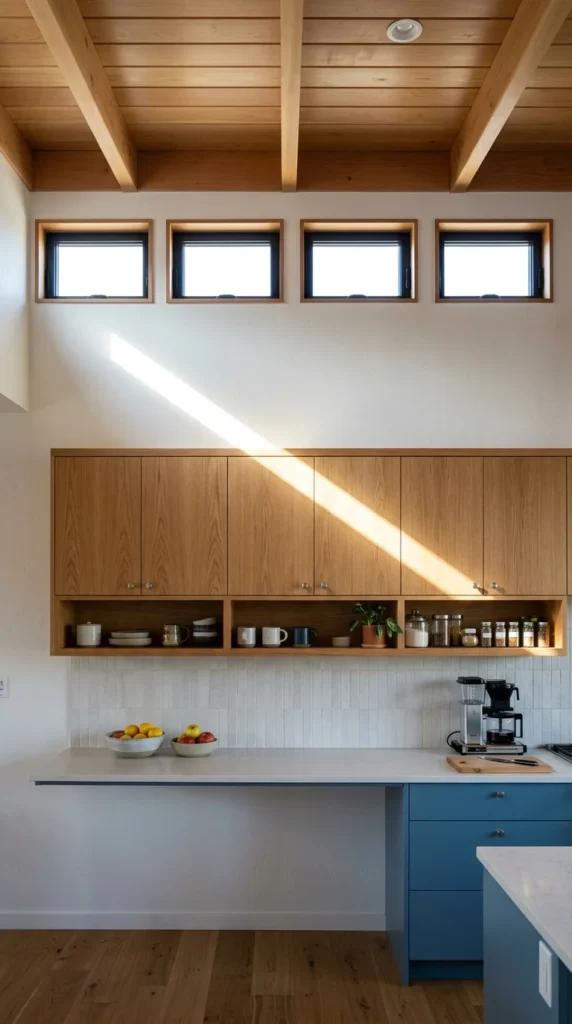
Transom windows—small windows placed above door frames or standard windows—are excellent for privacy. They allow you to capture high-angle sunlight while keeping your workspace shielded from the view of neighbors or passersby.
12. Sliding Glass
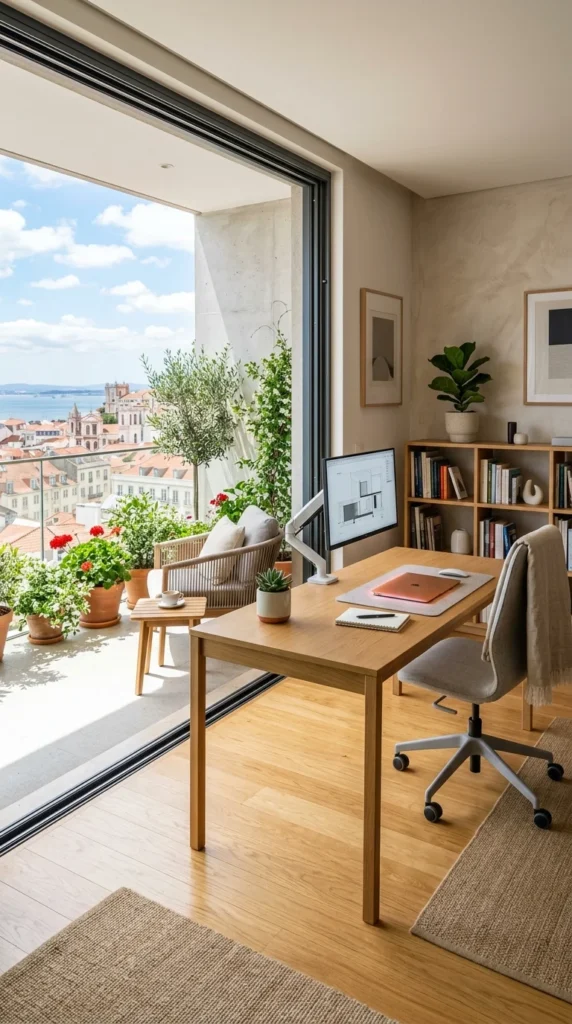
If your office borders a balcony or garden, a sliding glass door is a game-changer. It effectively turns one entire wall into a light source. During the warmer months, you can slide it open to invite in fresh air, further enhancing the “outdoor-in” feel of a natural light design.
13. Solarium Office
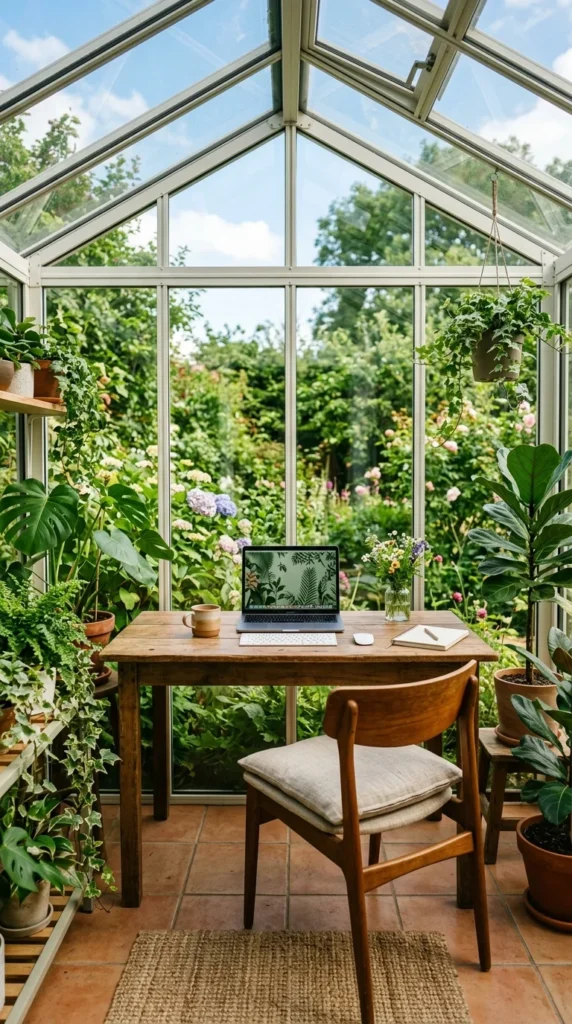
For the ultimate light-seeker, converting a solarium or sunroom into an office is the pinnacle of design. Surrounded by glass on three sides (and sometimes the roof), you are essentially working outdoors while remaining protected from the elements. This setup is ideal for those who thrive on high-intensity light.
14. Light Wood
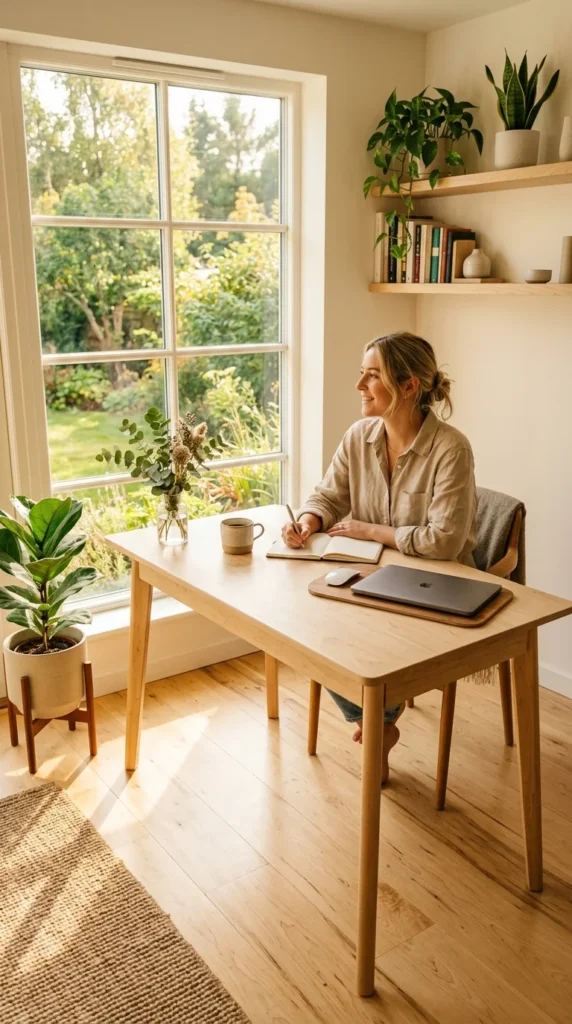
Dark mahogany or walnut can absorb light and make a room feel heavy. Instead, choose light-toned woods like ash, maple, or birch for your flooring and furniture. These woods have a natural luminosity that complements sunlight, creating a warm and inviting glow.
15. Sheer Curtains
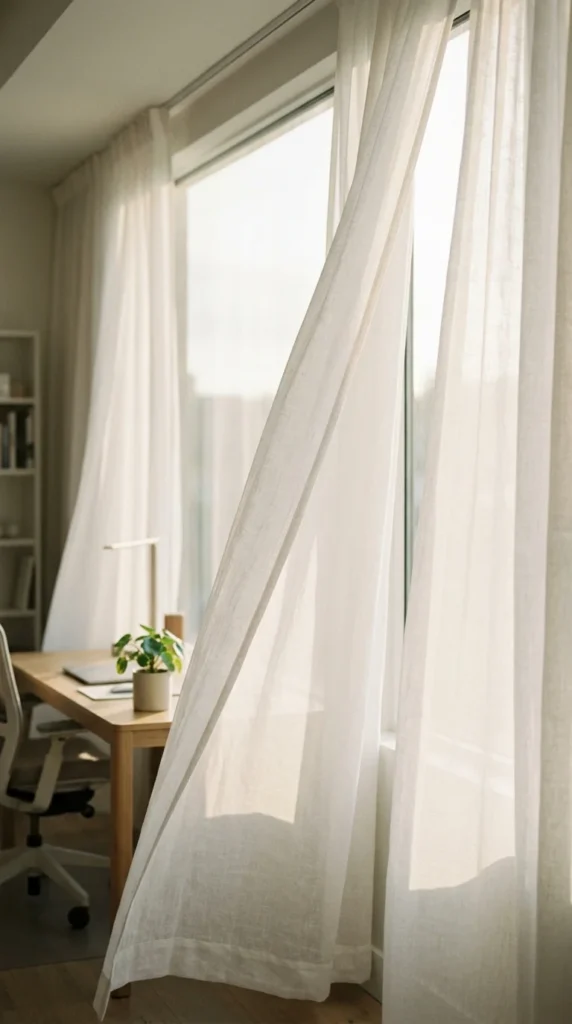
If direct sunlight is too intense or causes heat buildup, sheer curtains are the perfect solution. They act as a giant softbox for your room, scattering the light evenly and eliminating harsh shadows, which is particularly beneficial for those who spend a lot of time on video calls.
16. Glass Desk
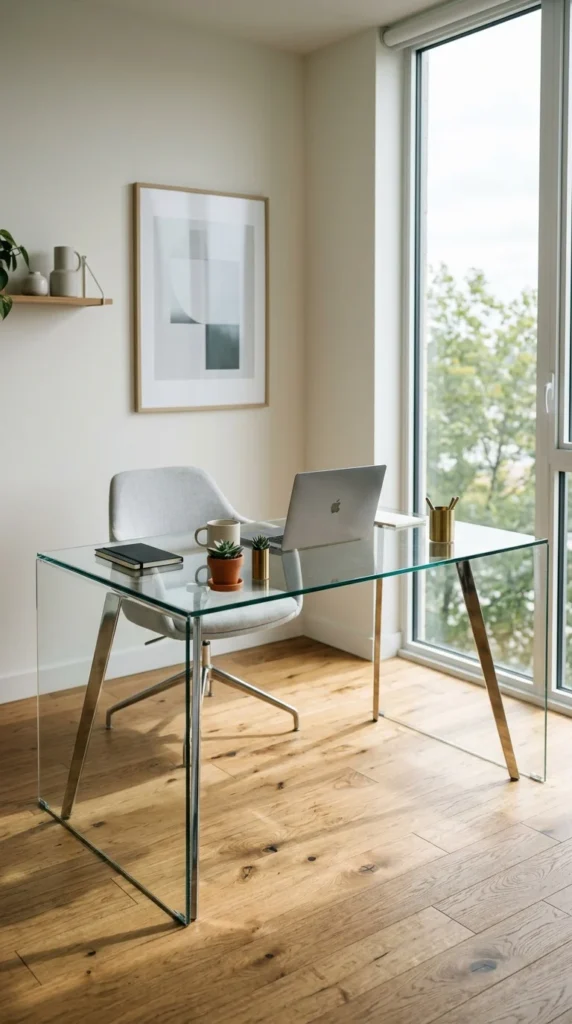
A glass desk is a fantastic choice for small, sunlit offices. Because the surface is transparent, it doesn’t block the light hitting the floor or the walls behind it. This reduces visual clutter and keeps the space feeling open and airy.
17. Attic Nook
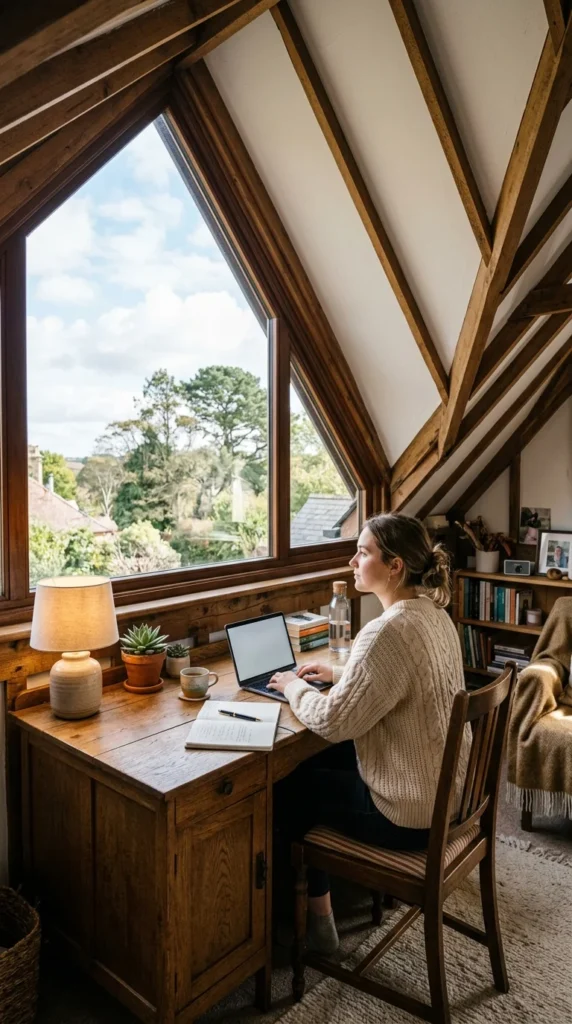
The highest point of the house often gets the most unobstructed light. An attic nook with a well-placed window can become a secluded, sun-drenched sanctuary. The unique angles of attic ceilings can be used to bounce light in interesting ways, creating a dynamic work environment.
18. Outdoor View
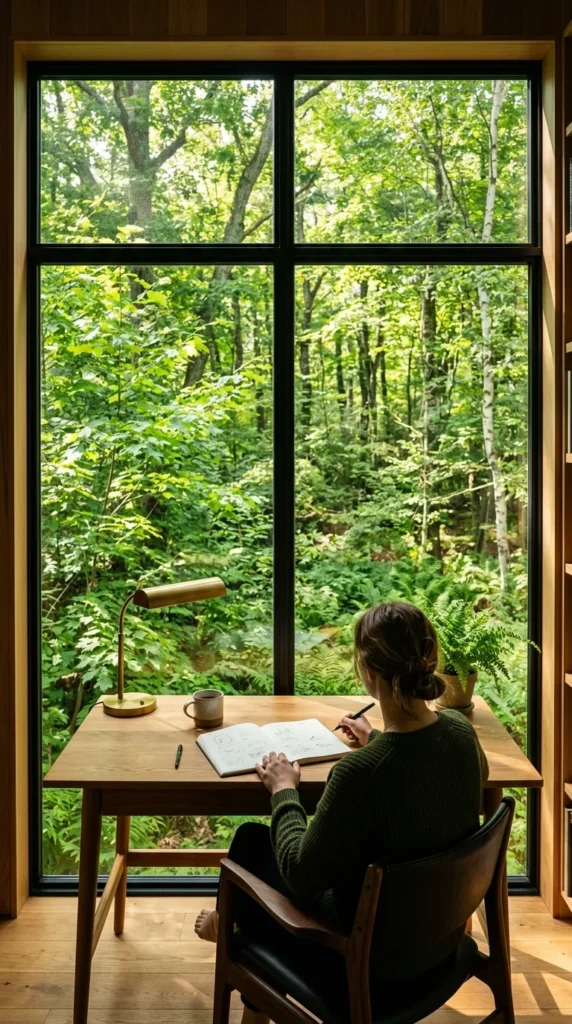
When designing for light, consider what that light is illuminating. An office with a view of nature doesn’t just benefit from the brightness; it benefits from the “soft fascination” of nature, which has been shown to restore focus and reduce stress. Ensure your window is clear of obstructions like overgrown bushes.
19. Clerestory Windows
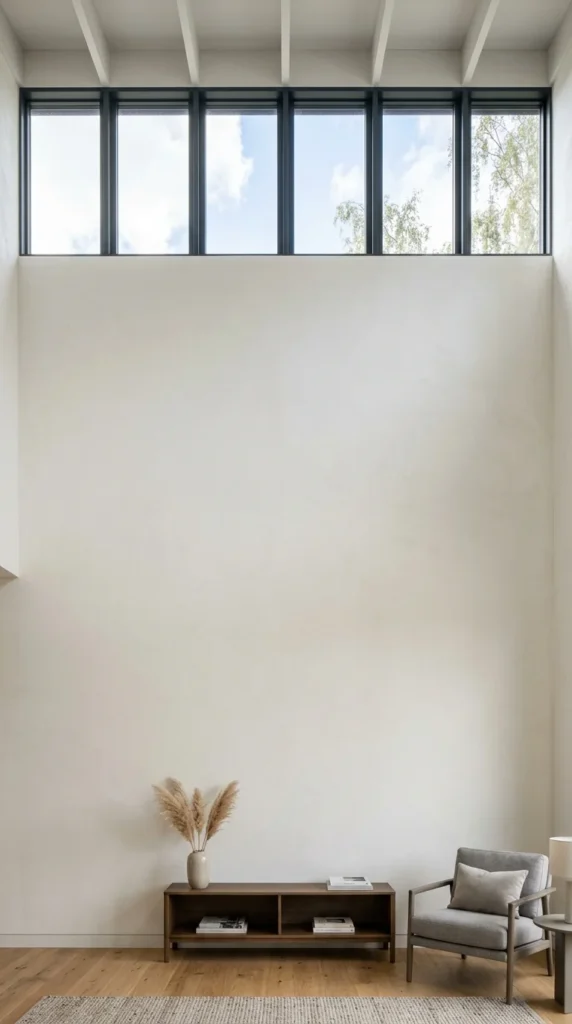
Clerestory windows are perfect for maintaining wall space for art or monitors while still bringing in significant daylight. Because they are placed high up, they often catch the light that lower windows might miss due to fences or neighboring houses.
20. Neutral Tones
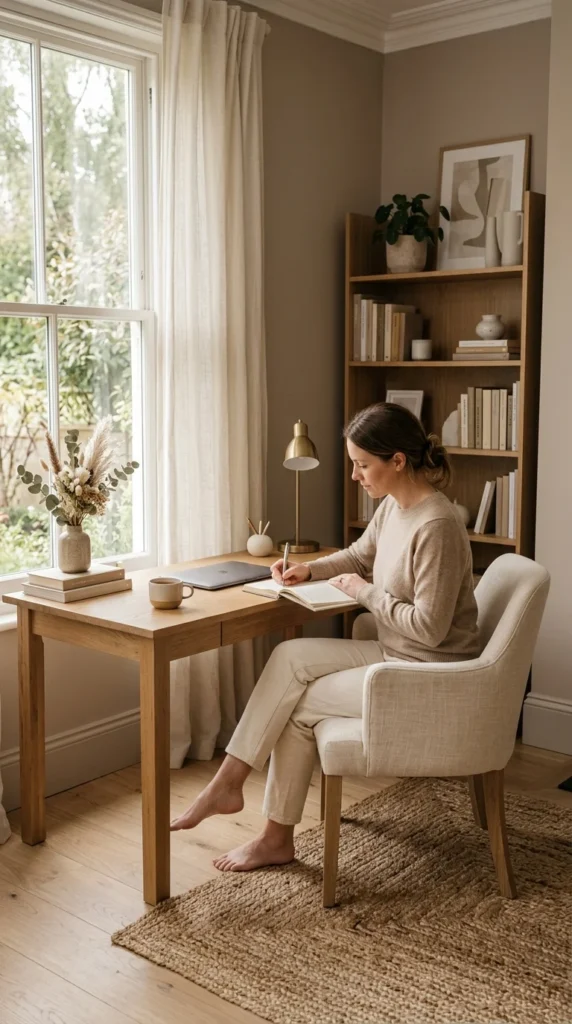
A palette of neutrals—beiges, creams, and soft grays—works in harmony with natural light. Unlike bold colors that can change dramatically under different lighting conditions, neutrals remain consistent and help to create a calm, focused atmosphere that feels inherently bright.
21. Low Furniture
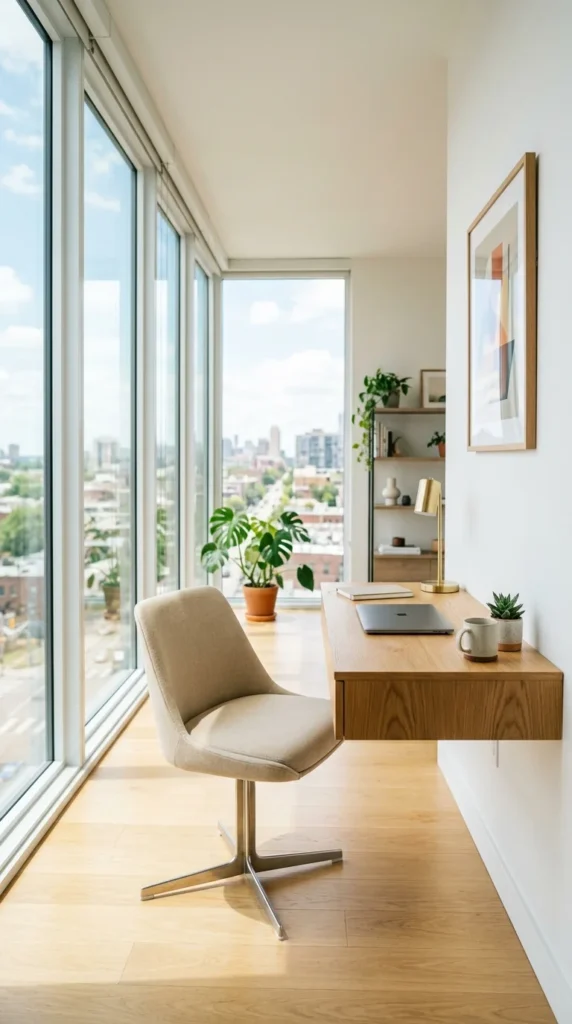
To maximize the flow of light across a room, keep your furniture low to the ground. Avoid tall hutches or high-backed chairs that create “shadow pockets.” Low-profile furniture allows the sun to reach further into the interior of the room.
22. Bay Window
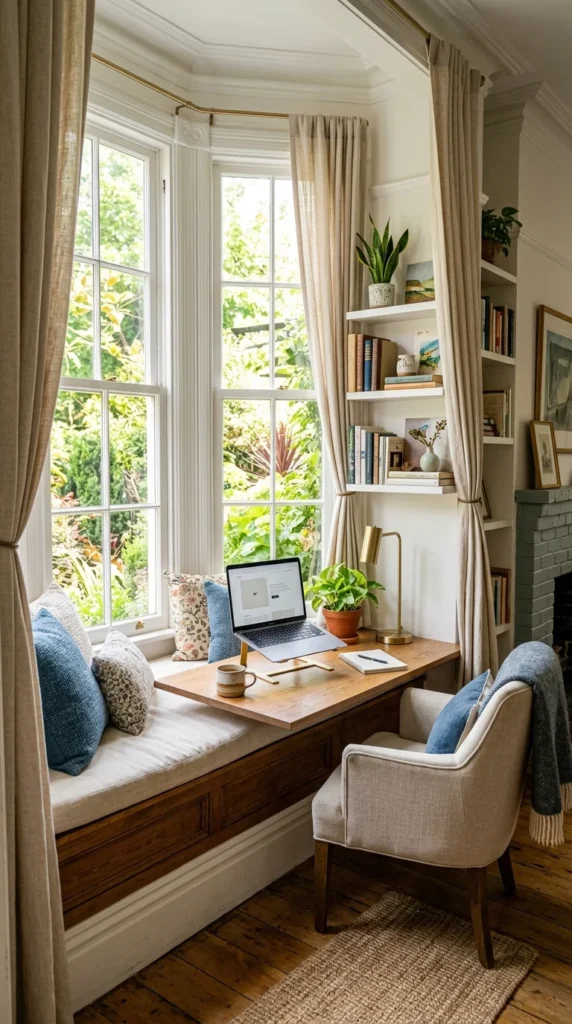
A bay window creates a “niche” of light. By building a desk into the arc of a bay window, you surround yourself with three different angles of light. This is an excellent way to reclaim underutilized architectural features and turn them into a functional, bright workspace.
23. Frosted Glass
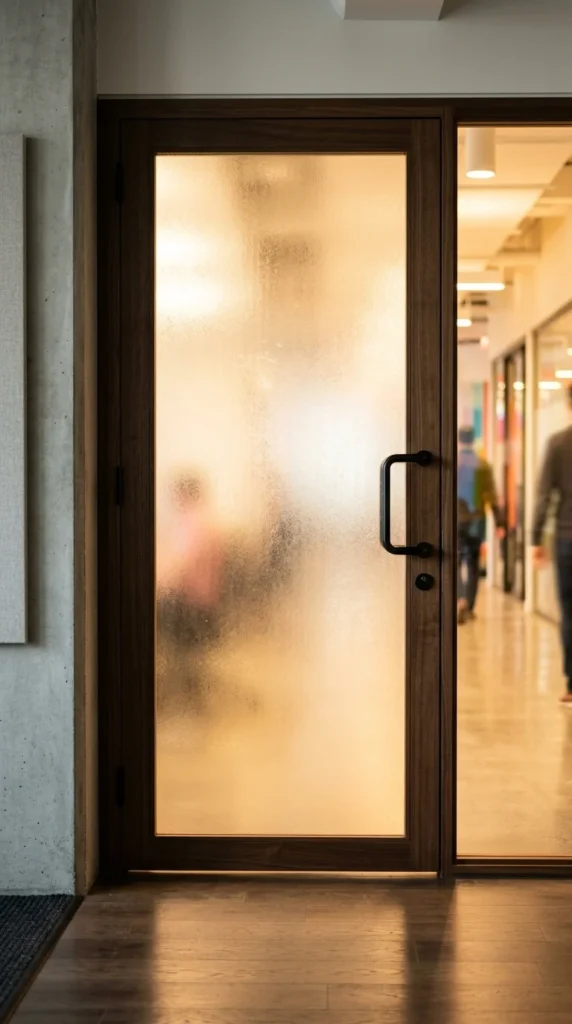
If your office faces a busy street or a public area where you need privacy, frosted glass is the answer. It obscures the view entirely while still allowing about 80% of the light to pass through, resulting in a soft, glowing wall of light.
24. Ceiling Paints
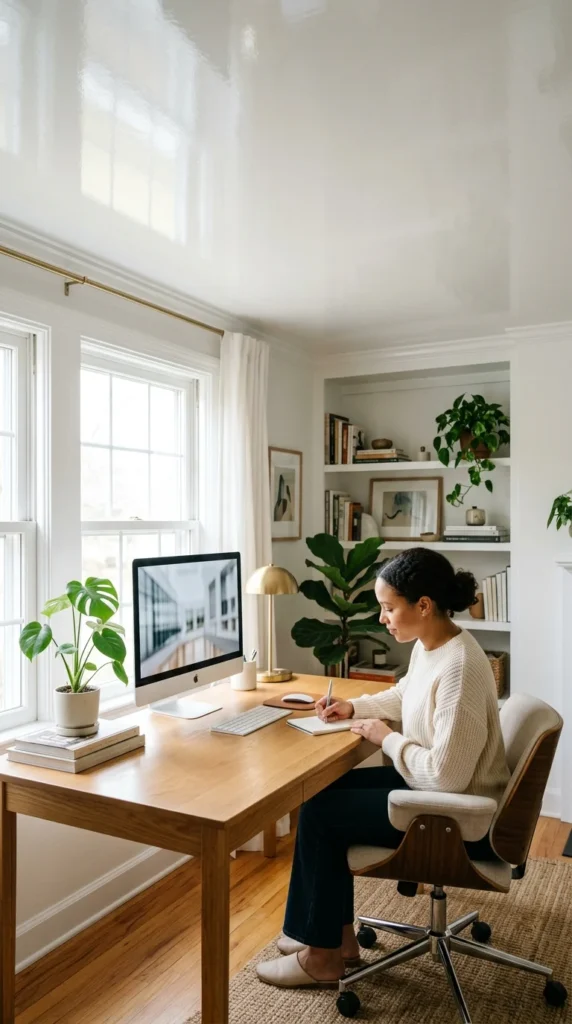
Often neglected, the “fifth wall” (the ceiling) is a massive surface for light reflection. Using a semi-gloss or high-gloss paint on the ceiling can help bounce light from the windows back down onto your desk, significantly increasing the overall brightness of the room.
25. Biophilic Integration
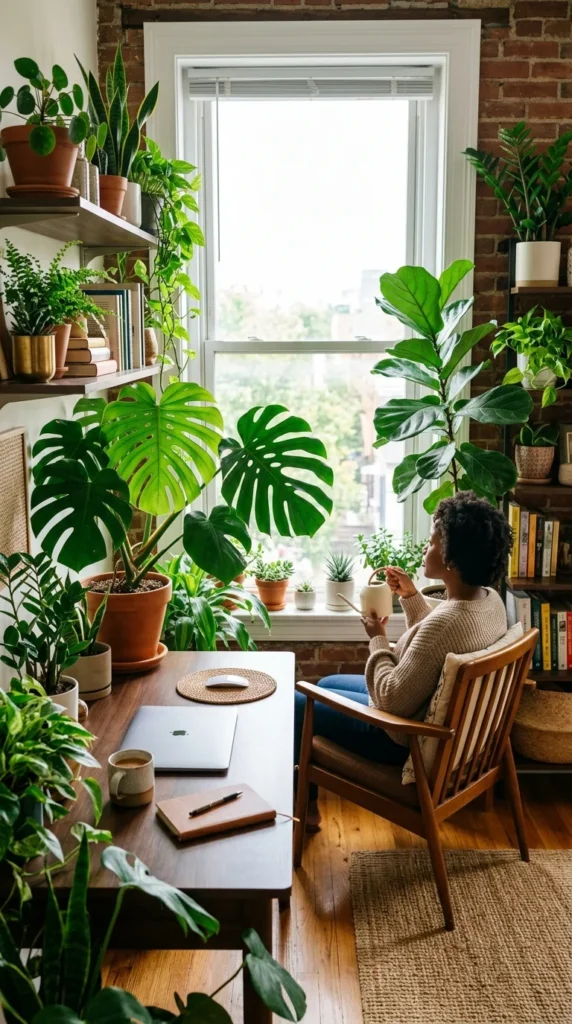
Natural light and plants go hand-in-hand. By placing greenery in your sunlit office, you create a living, breathing space. The plants thrive in the light, and their leaves help to break up the light, creating a natural, dappled effect that is incredibly soothing during a long workday.
26. Smart Layout
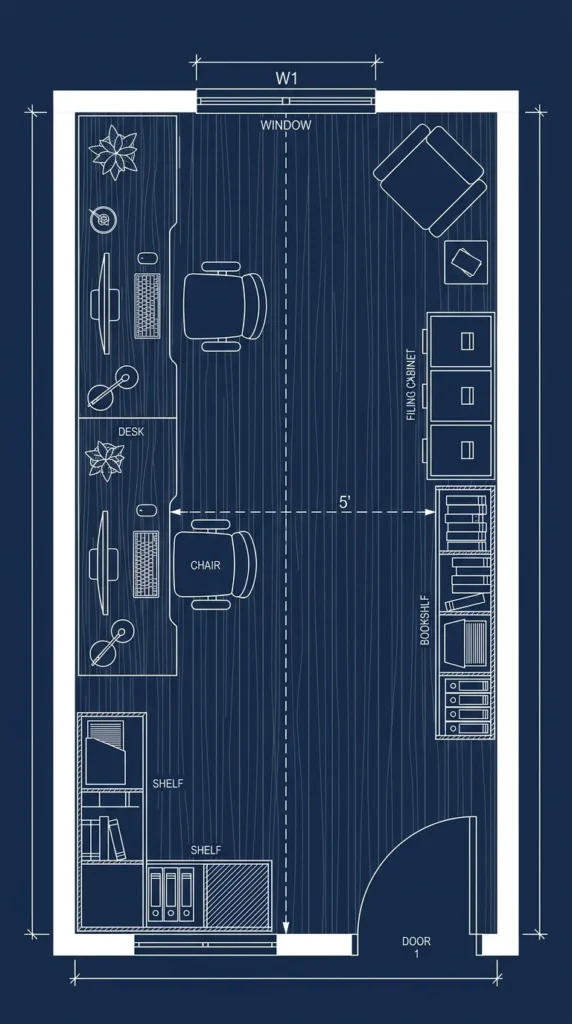
The most important aspect of a bright office is the layout. Ensure that the “path of light” from your windows to the rest of the room is unobstructed. Keep walkways clear and avoid placing large objects directly in the line of the sun’s trajectory throughout the day. A smart, intentional layout ensures that every inch of your office benefits from the sun’s glow.