In the modern era of flexible work, the traditional boundaries between professional life and home comfort have blurred. For many, the luxury of a dedicated spare room for an office is unavailable, leading to the rise of the “living room office.” However, creating a workspace in a communal relaxation area shouldn’t mean sacrificing your home’s aesthetic. By blending style with function, you can create a productive hub that enhances rather than detracts from your living space. Here are 20 creative ideas to help you integrate a workspace into your living room seamlessly.
1. Corner Desk
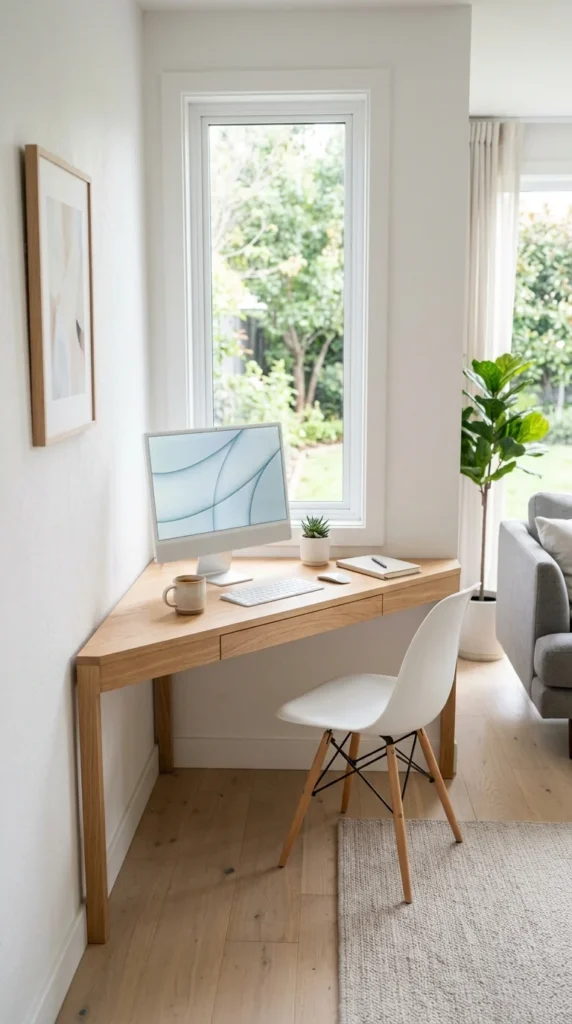
Utilizing a corner is one of the most efficient ways to incorporate an office without disrupting the flow of the room. A corner desk maximizes “dead space” that is often left empty. To keep it stylish, choose a desk that matches the wood grain of your coffee table or TV stand. This creates a cohesive look that makes the desk feel like an intentional part of the furniture layout rather than an afterthought.
2. Floating Shelves
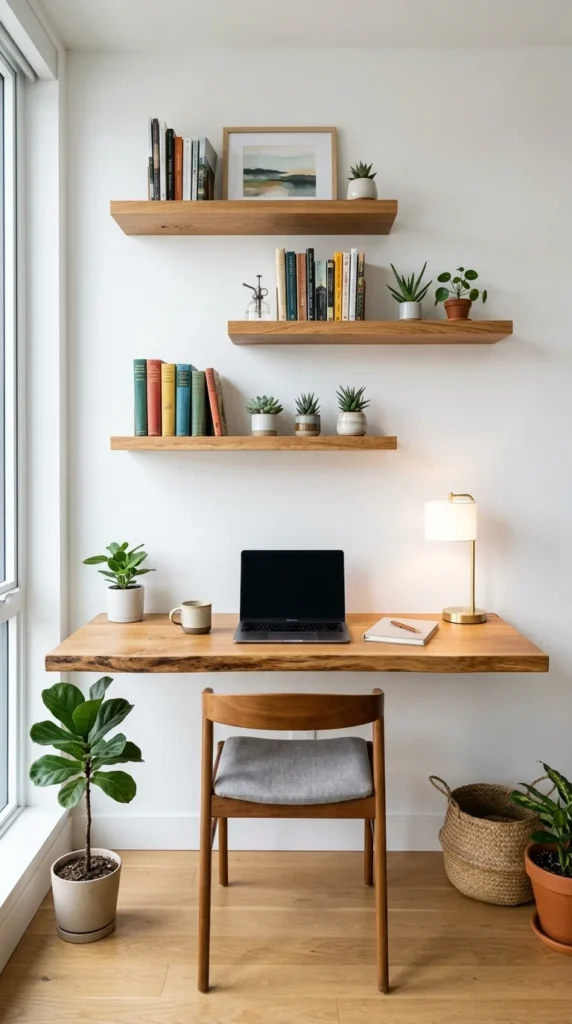
Floating shelves provide a sleek, airy feel that is perfect for smaller living rooms. By using a deeper shelf at waist height as your desk and narrower shelves above for storage, you maintain floor space, which keeps the room feeling open. This vertical approach allows you to display decorative items alongside your office supplies, further blending the two zones.
3. Room Divider
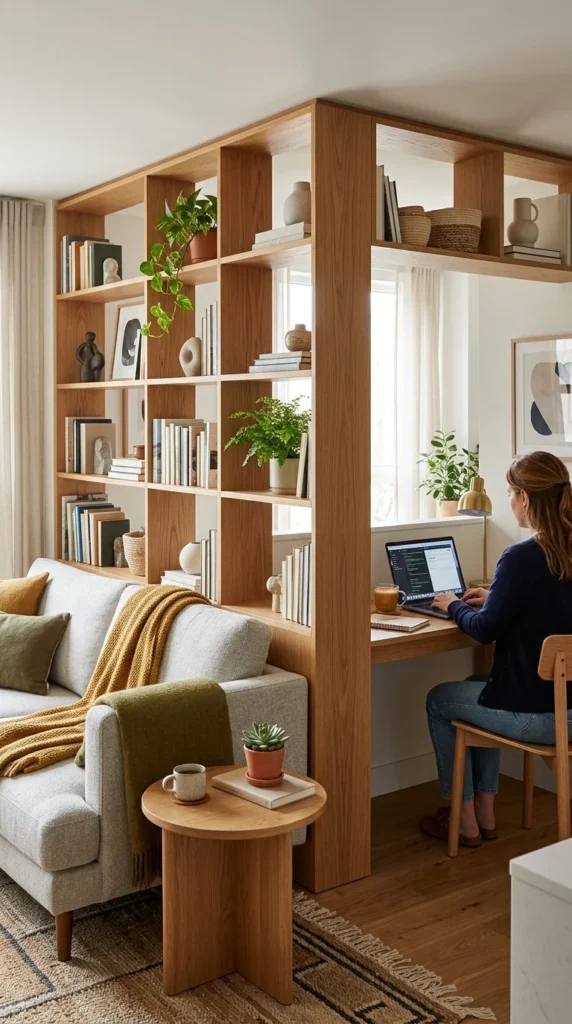
If you prefer a sense of separation between “work mode” and “relax mode,” an open-backed bookshelf is an excellent solution. It acts as a room divider that provides privacy without blocking light. You can fill the shelves with a mix of books, binders, and decorative objects like vases or sculptures to ensure it looks like a piece of living room furniture from both sides.
4. Behind Sofa
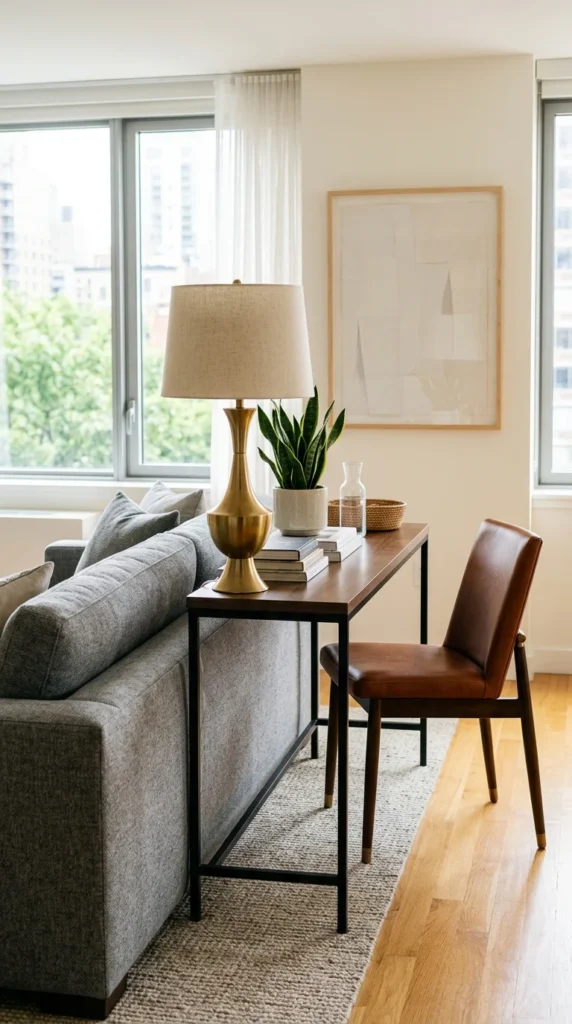
Placing a desk behind your sofa is a classic interior design trick. It utilizes the space behind the seating arrangement which is often underused. A long, narrow console desk works best here. When you aren’t working, the desk functions as a sofa table where you can display lamps, photos, or candles, making the office equipment virtually invisible to anyone sitting on the couch.
5. Closet Office
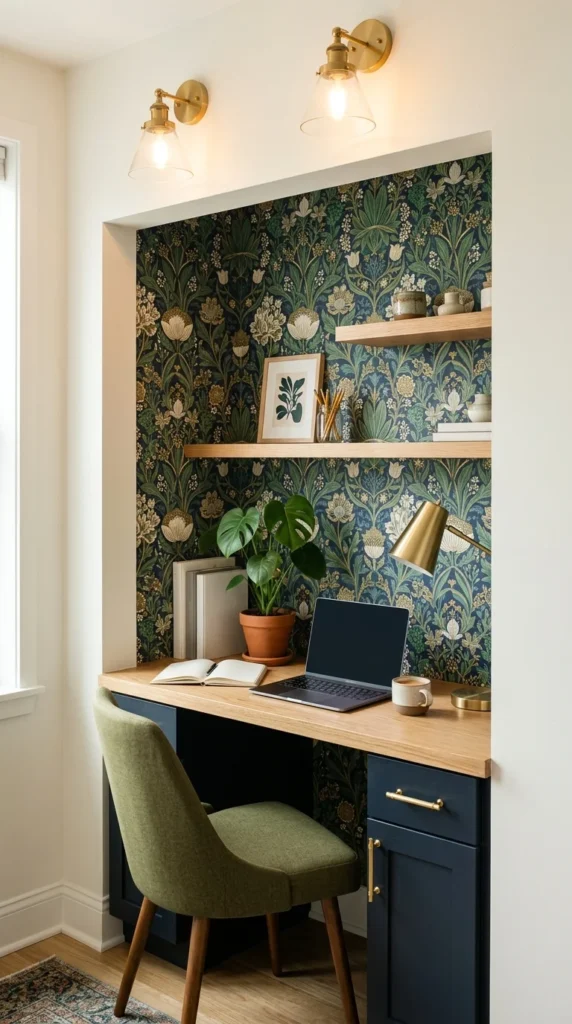
The “cloffice” (closet office) is a genius way to hide your workspace entirely. By removing the doors or keeping them as folding panels, you can tuck a desk and shelving inside a reach-in closet. This is particularly effective in living rooms where you want the ability to literally “close the door” on work at the end of the day. Using a bold wallpaper inside the closet can turn it into a stylish design feature.
6. Minimalist Nook
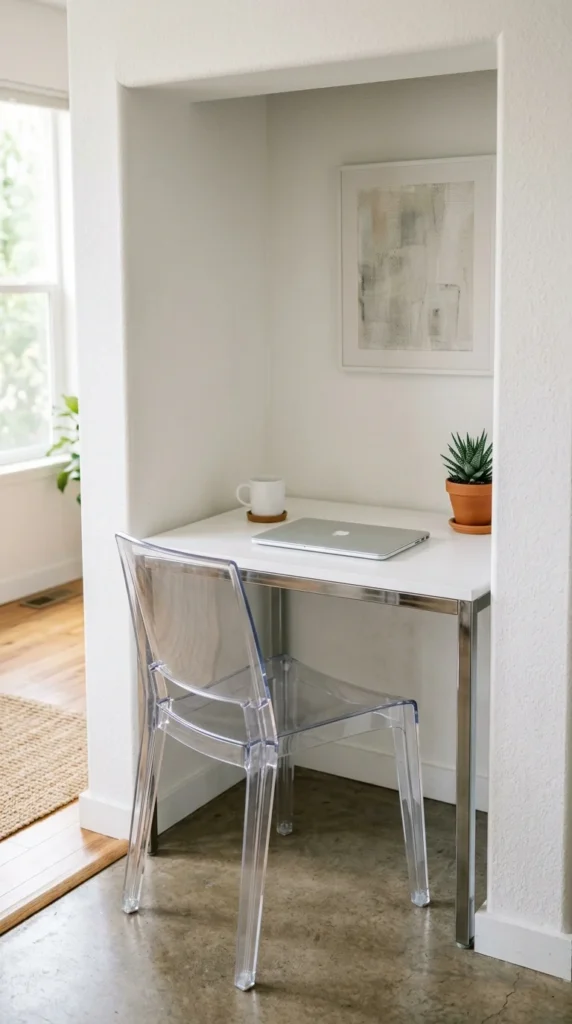
In a minimalist living room, less is always more. Find a small alcove or an empty stretch of wall and install a simple, clean-lined desk. An acrylic or “ghost” chair is a fantastic choice here because it takes up zero visual space, allowing the architecture of the room to remain the focal point. Keep cords hidden using cable management boxes to maintain the pristine look.
7. Ladder Desk
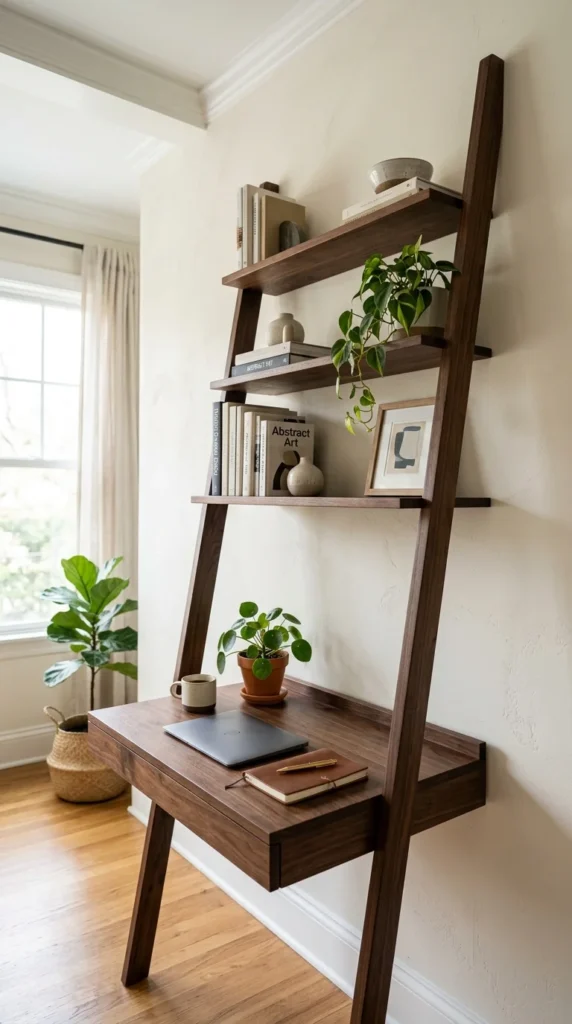
Ladder desks are perfect for those who enjoy a casual, bohemian, or industrial aesthetic. Because they lean against the wall, they have a smaller footprint than traditional desks. The upper shelves provide ample space for living room decor—like trailing ivy or framed art—which helps the desk blend into the “homey” vibe of the space.
8. Gallery Wall
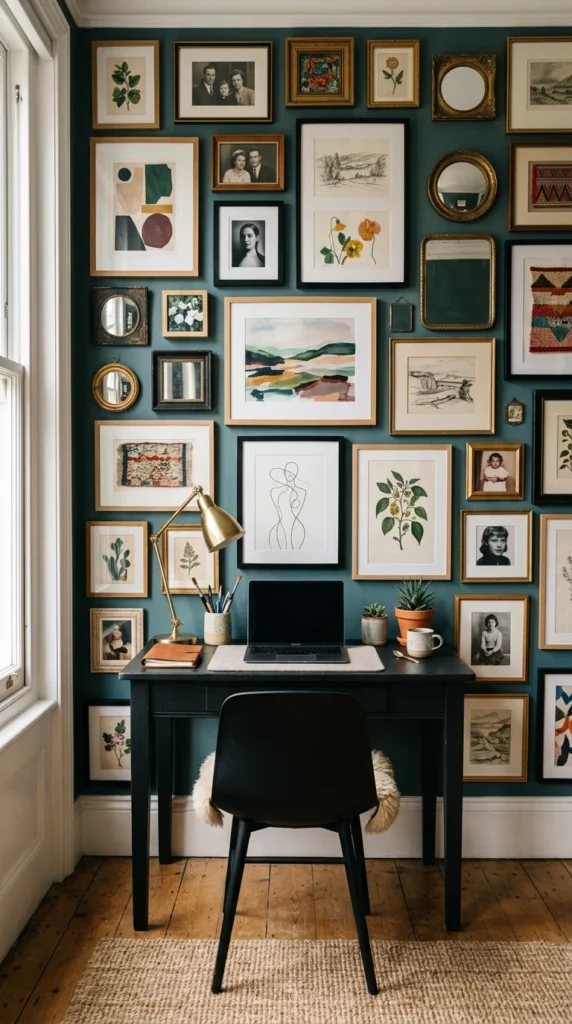
One of the best ways to camouflage an office is to make it part of a gallery wall. By surrounding your computer monitor with framed art, the screen becomes just another rectangular element in the composition. Choose a desk chair that resembles a dining chair or an accent chair to further integrate the setup into your living room’s decor.
9. Window View
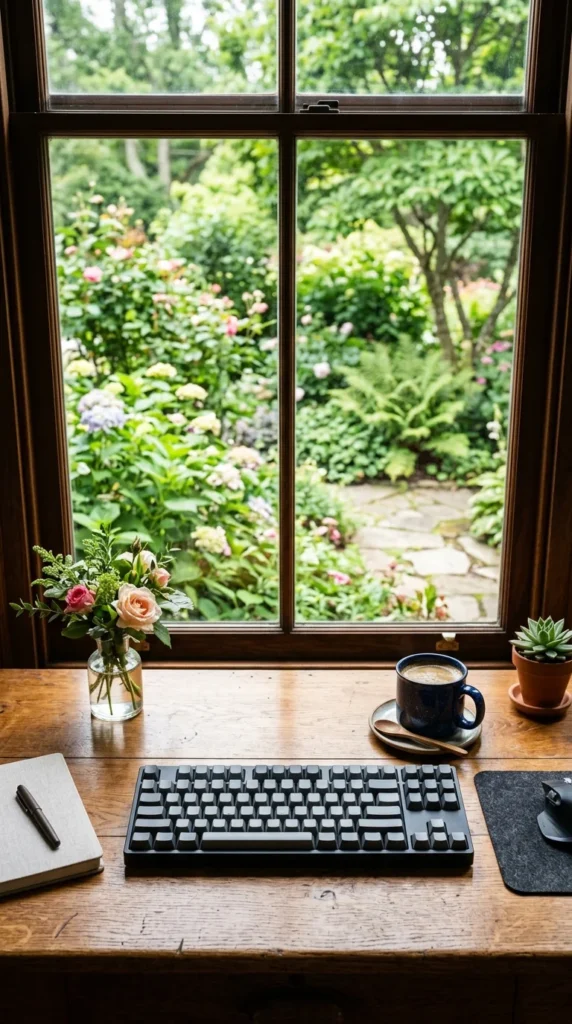
If you have a window with a view, placing your desk in front of it can boost productivity and mood. To keep the style cohesive, choose a desk that doesn’t block the light—perhaps one with thin legs or a glass top. Use sheer curtains to soften the light during the day, which adds a layer of texture and warmth to both the office and the living area.
10. Hidden Desk
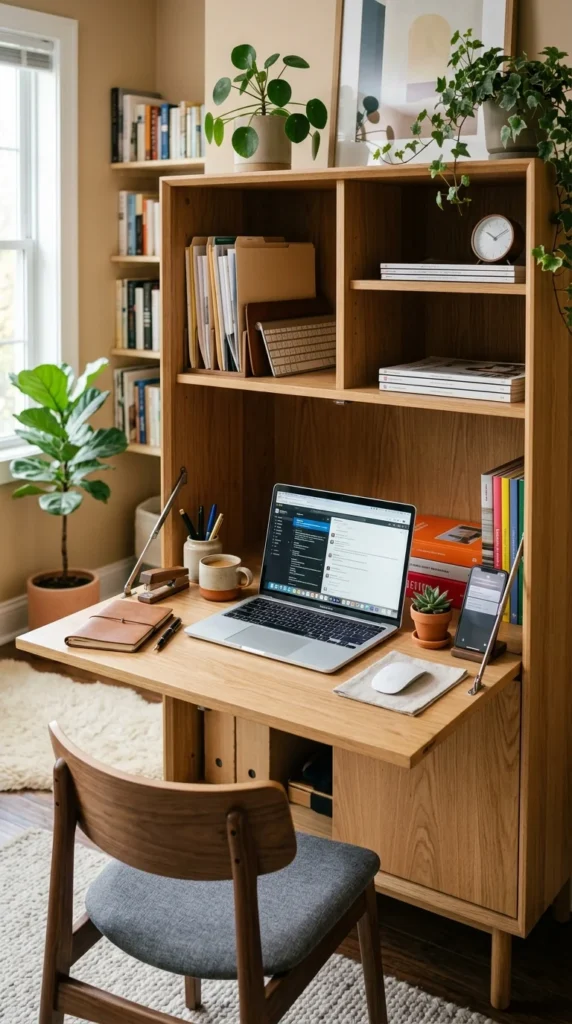
For those who want their office to disappear completely when not in use, a secretary desk or a “fold-down” cabinet is the ultimate solution. These pieces of furniture look like traditional armoires or sideboards. When the workday begins, you flip the lid down to create a desktop. When the day ends, you fold it back up, hiding your laptop and papers from sight.
11. Mid-Century Modern
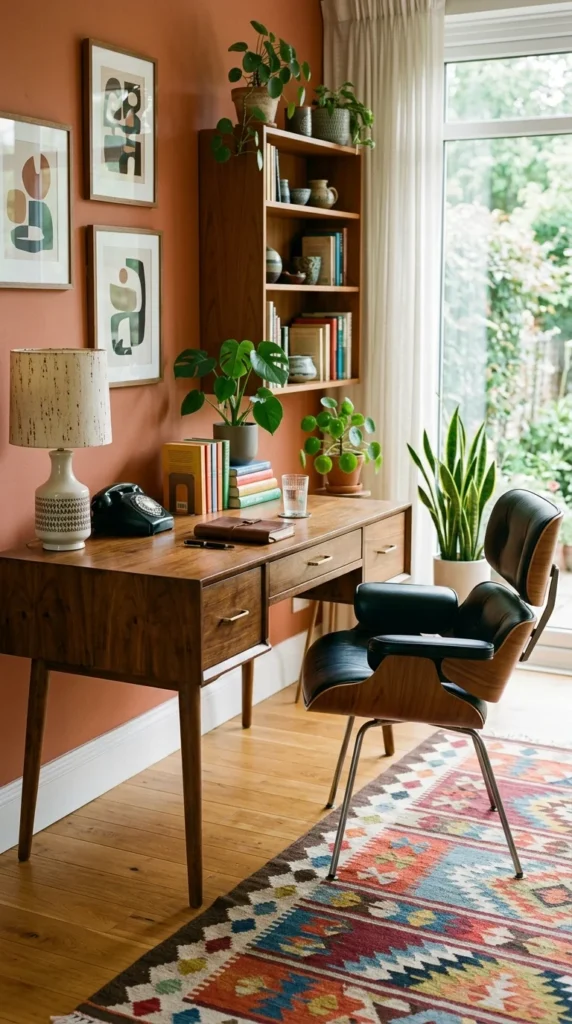
Mid-century modern furniture is known for its “leggy” appearance, which creates a sense of space and light. A walnut desk with tapered legs fits beautifully into almost any living room design. Because this style is so iconic in home furniture, the desk won’t look like “office equipment” but rather like a prized vintage find.
12. Monochromatic Palette
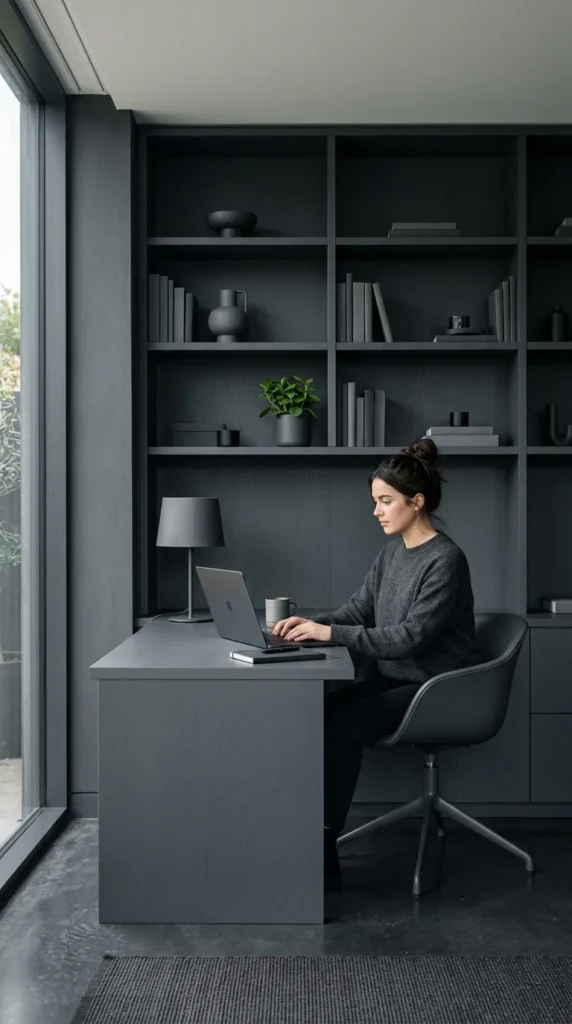
To make an office “disappear” into a wall, try a monochromatic color scheme. Paint your desk and the wall behind it the exact same color. Whether it’s a soft off-white or a dramatic navy, matching the colors reduces visual clutter. This technique allows the furniture to recede into the background, making the living room feel larger and more unified.
13. Statement Chair
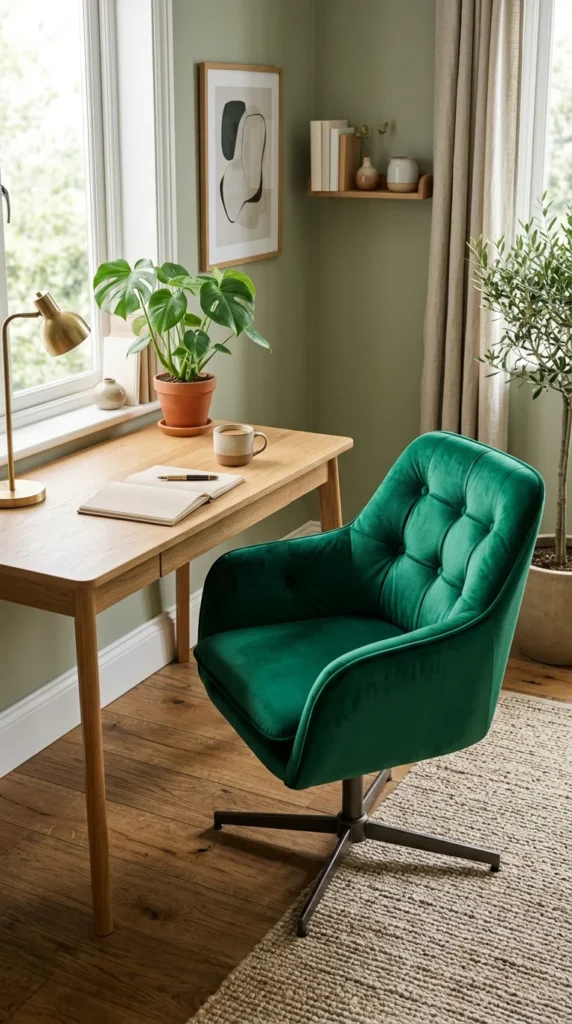
Who says an office chair has to look like it belongs in a corporate cubicle? Swap the plastic wheels for a stylish swivel chair upholstered in velvet or leather. A statement chair bridges the gap between office functionality and living room comfort. It provides the support you need for work while looking like a high-end piece of lounge furniture.
14. Rug Definition
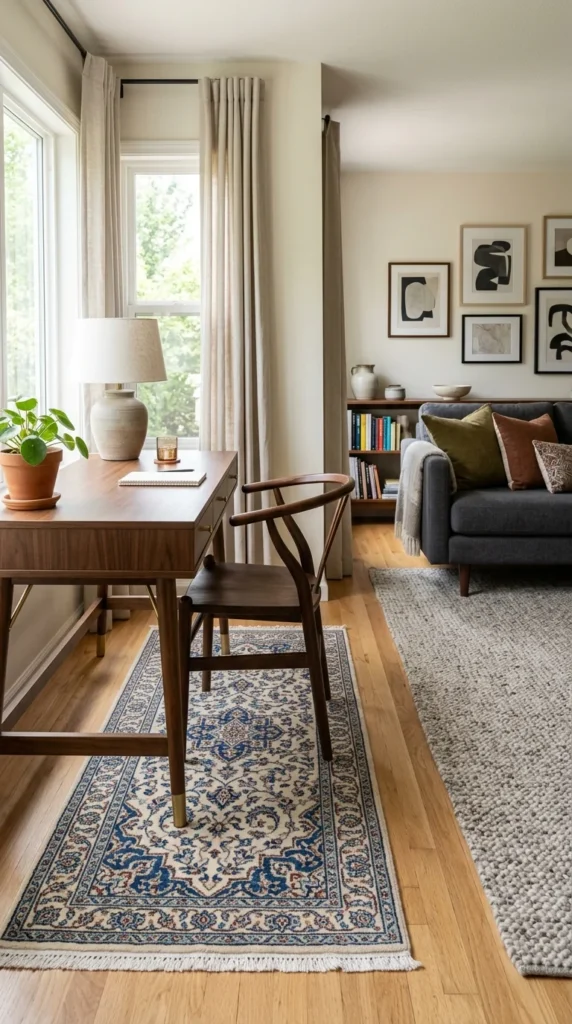
Using a rug is a powerful way to define the “office zone” without building walls. A small area rug placed under the desk and chair creates a visual boundary. Choose a rug that complements the colors of your main living room rug but features a different pattern or texture to give the office its own distinct personality.
15. Natural Light
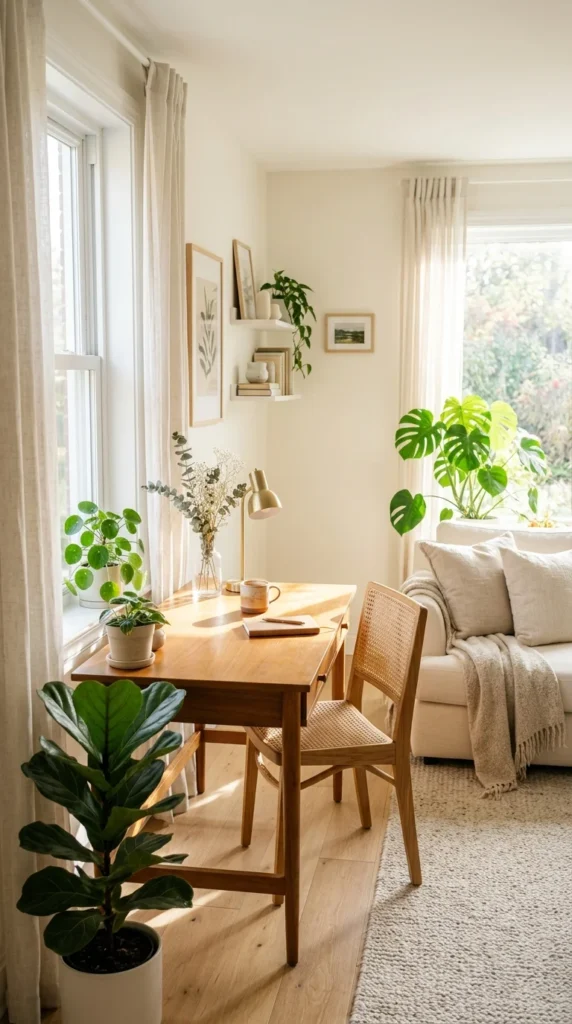
Maximizing natural light is essential for both your wellbeing and the room’s aesthetics. Position your desk perpendicular to a window to avoid glare on your screen while still benefiting from the brightness. Light-colored furniture, such as a white or light oak desk, will reflect the light and make the entire living room feel more expansive and inviting.
16. Industrial Style
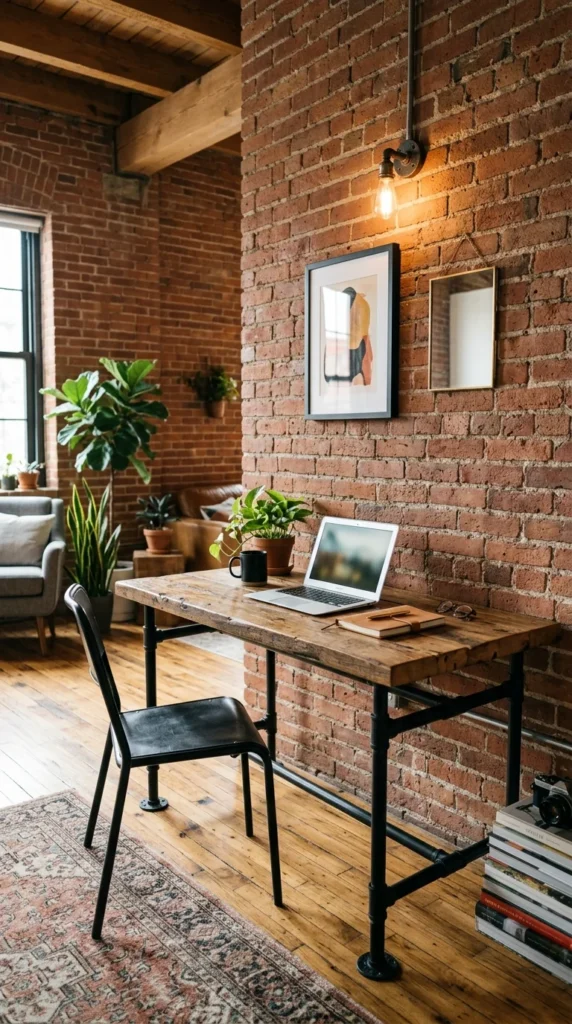
The industrial look—characterized by raw wood, metal accents, and exposed hardware—is naturally suited for home offices. An industrial desk can double as a library table or a display area for heavy coffee table books. This style adds a rugged, architectural element to the living room that feels both professional and trendy.
17. Built-in Cabinetry
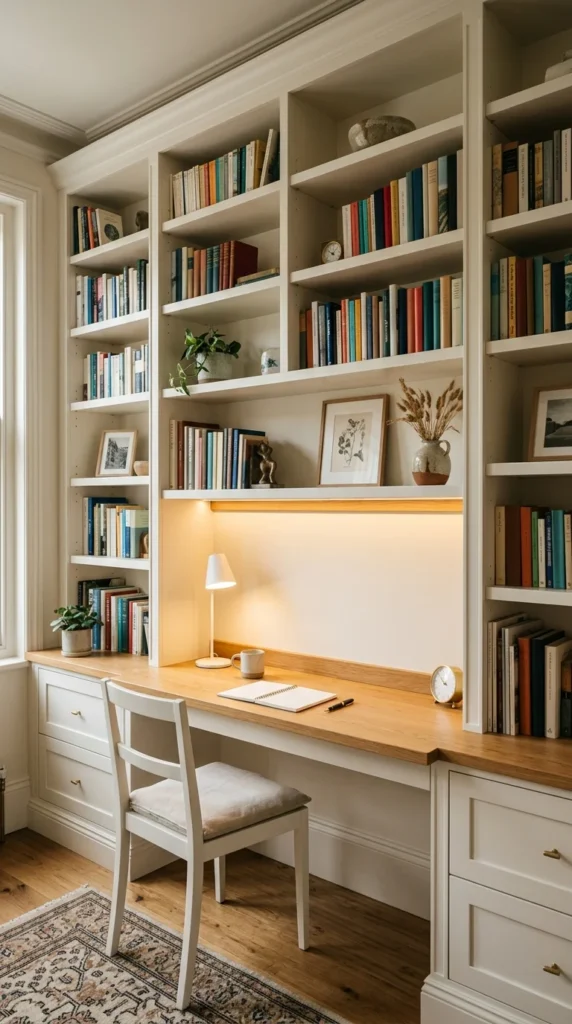
If you are looking for a permanent solution, built-in cabinetry is the gold standard. By designing a desk that is part of your living room’s media center or shelving unit, you create a seamless, high-end look. This allows you to hide wires behind the walls and ensures that every inch of space is utilized perfectly.
18. Scandi-Style
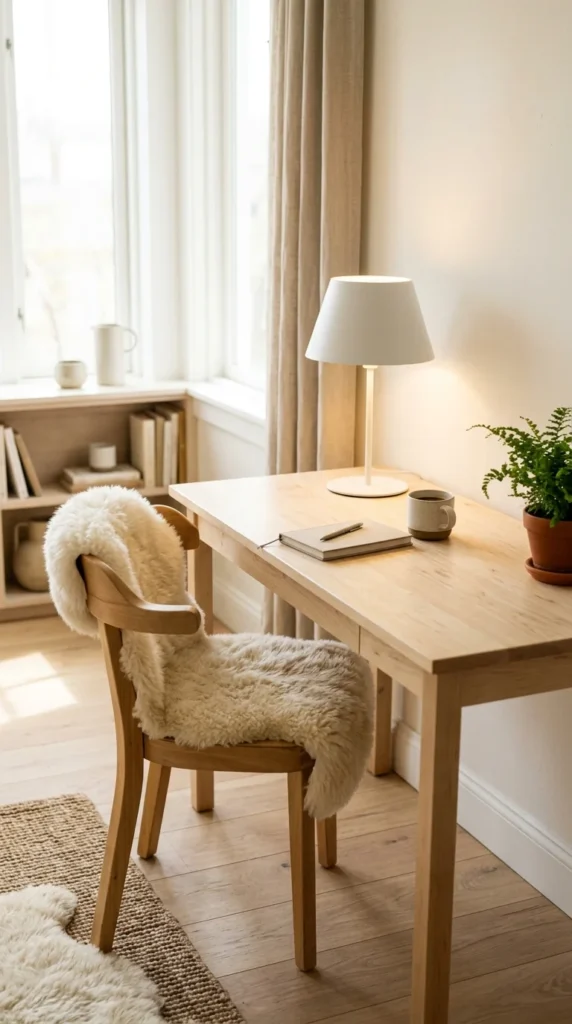
Scandinavian design focuses on simplicity, functionality, and “hygge” (coziness). A Scandi-style office uses light woods, neutral tones, and organic textures. To keep it from feeling too cold, add a sheepskin throw to your chair and a few ceramic pots. This aesthetic is incredibly calming, making it ideal for a room meant for both work and relaxation.
19. Dual Workstation
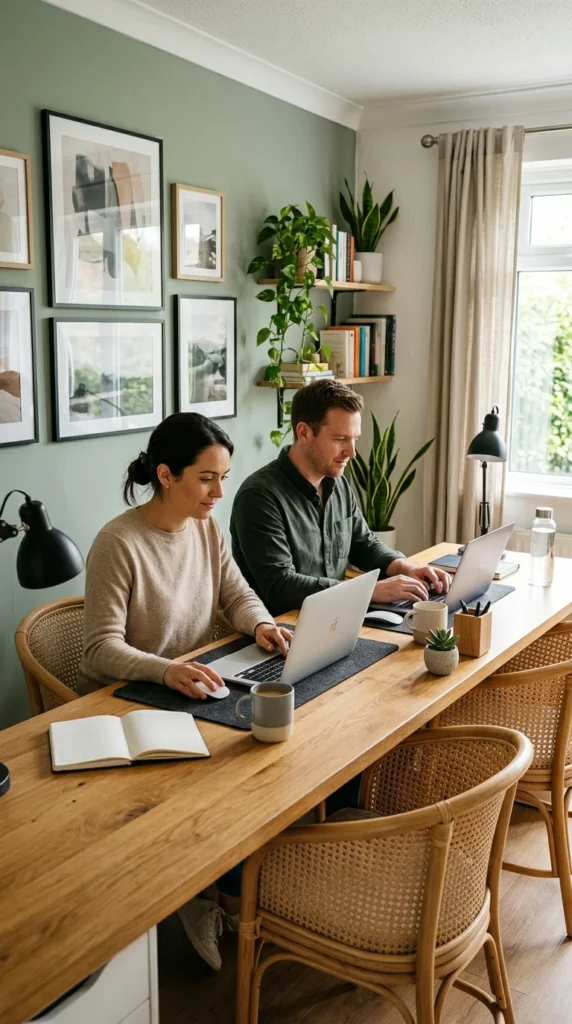
For households where two people work from home, a dual workstation can be integrated along one long wall of the living room. By using a single, long desktop rather than two separate desks, you maintain a streamlined look. Use matching chairs and identical task lamps to keep the symmetry, which helps the large setup feel organized and intentional.
20. Indoor Jungle
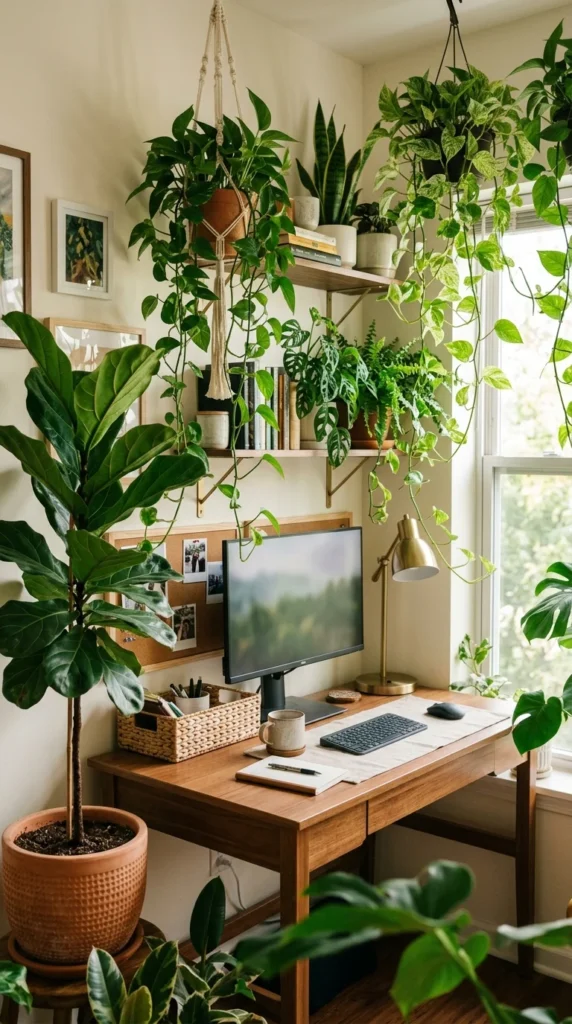
Plants are the ultimate tool for blending styles. Surrounding your desk with greenery softens the hard lines of computers and printers. Use a mix of floor plants and smaller potted plants on the desk to create a “living screen.” Not only does this look beautiful in a living room, but plants also improve air quality and reduce stress during a busy workday.