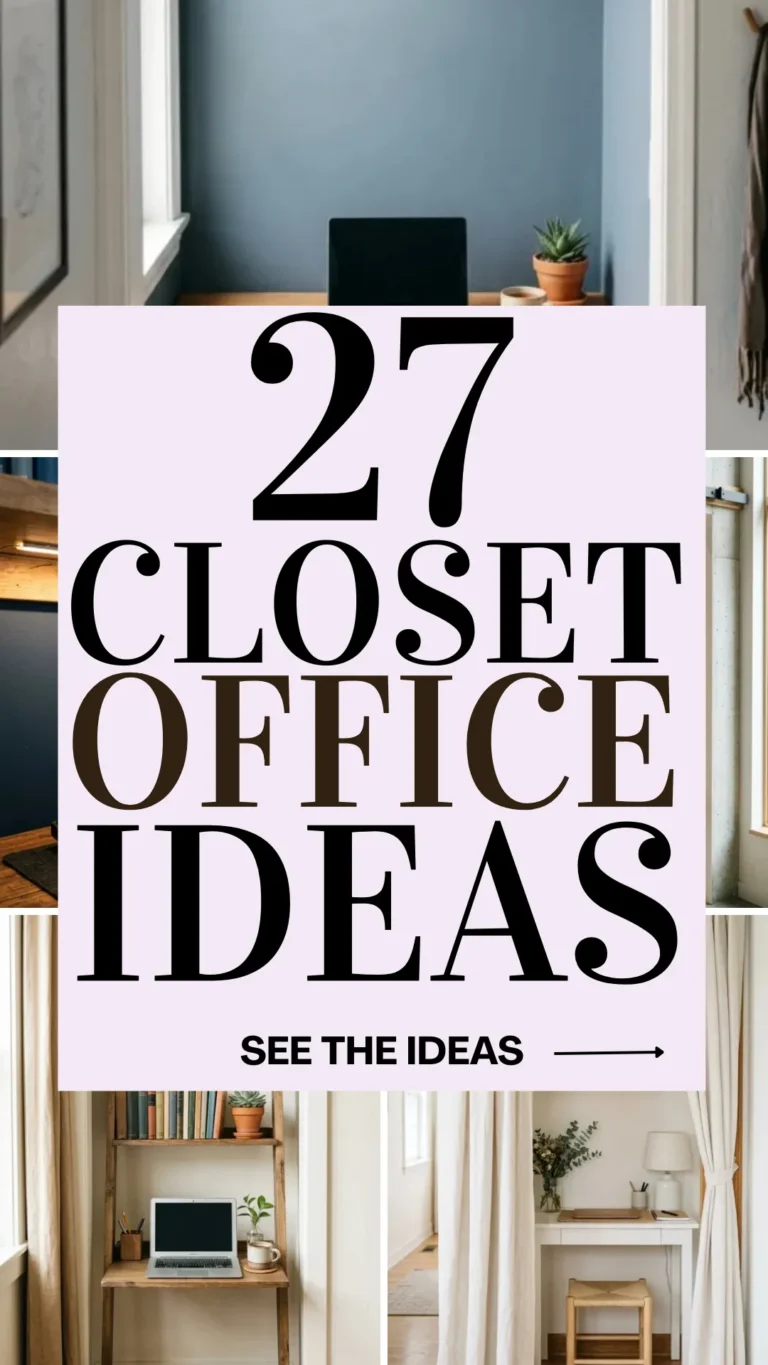

organized environment that disappears behind closed doors when the workday ends. Whether you have a tiny hallway nook or a spare bedroom closet, these 27 ideas will help you maximize every square inch of your vertical and horizontal space.
1. Bi-Fold Doors
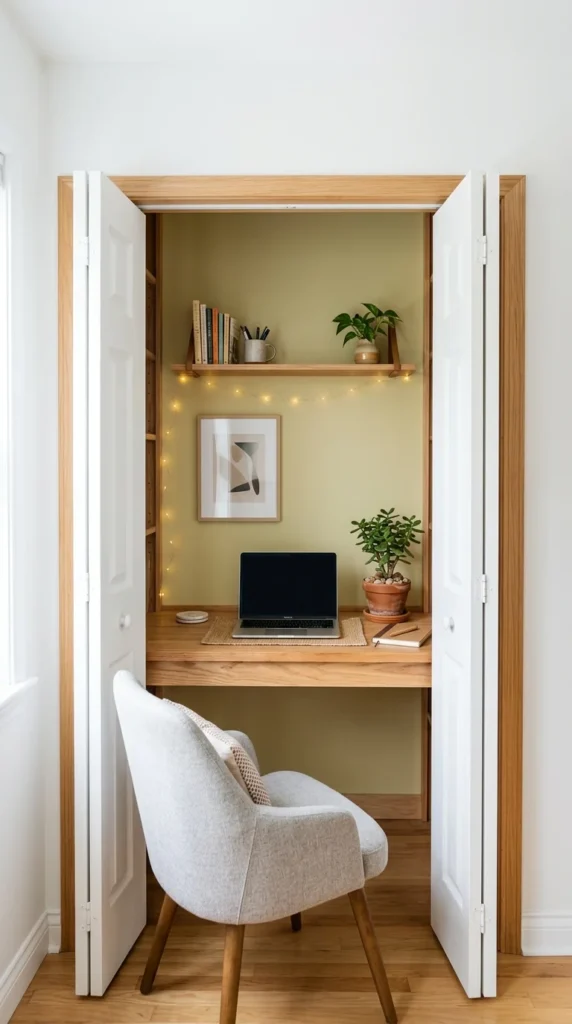
Bi-fold doors are the unsung heroes of small-space design. Unlike traditional swinging doors, they fold inward on themselves, requiring much less floor clearance. This allows you to place your desk right up against the opening without blocking walkways. When you’re done working, simply slide them shut to hide your computer and paperwork from view, instantly restoring the room’s aesthetic.
2. Floating Desk
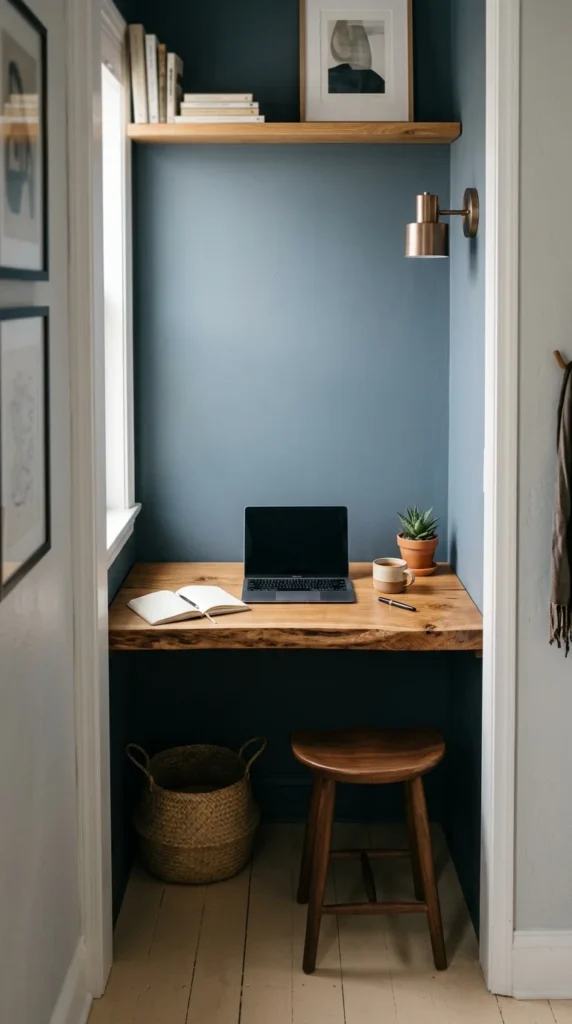
Eliminating desk legs is one of the most effective ways to make a closet office feel larger. A floating desk, securely mounted to the wall studs, provides a clean, streamlined look. This design choice opens up the floor space below for a trash bin, a rolling file cabinet, or simply extra legroom, preventing the cramped feeling often associated with small enclosures.
3. Pegboard Walls
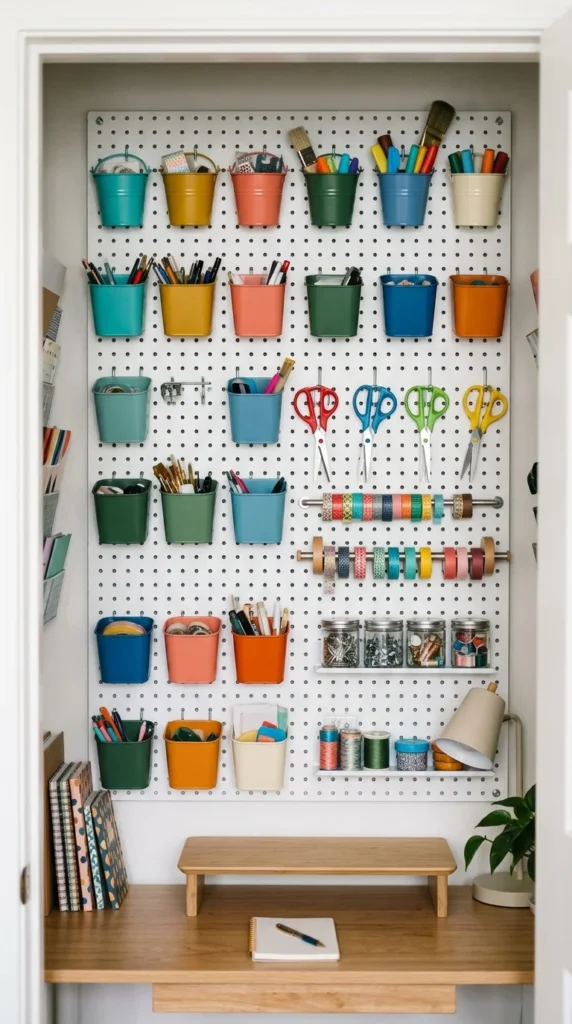
When horizontal space is limited, look to your walls. A floor-to-ceiling pegboard turns the back of your closet into a customizable storage hub. You can rearrange hooks, baskets, and shelves as your needs change. It’s perfect for keeping office supplies, headphones, and even small decor items off your desk surface, leaving you more room to actually work.
4. Bold Wallpaper
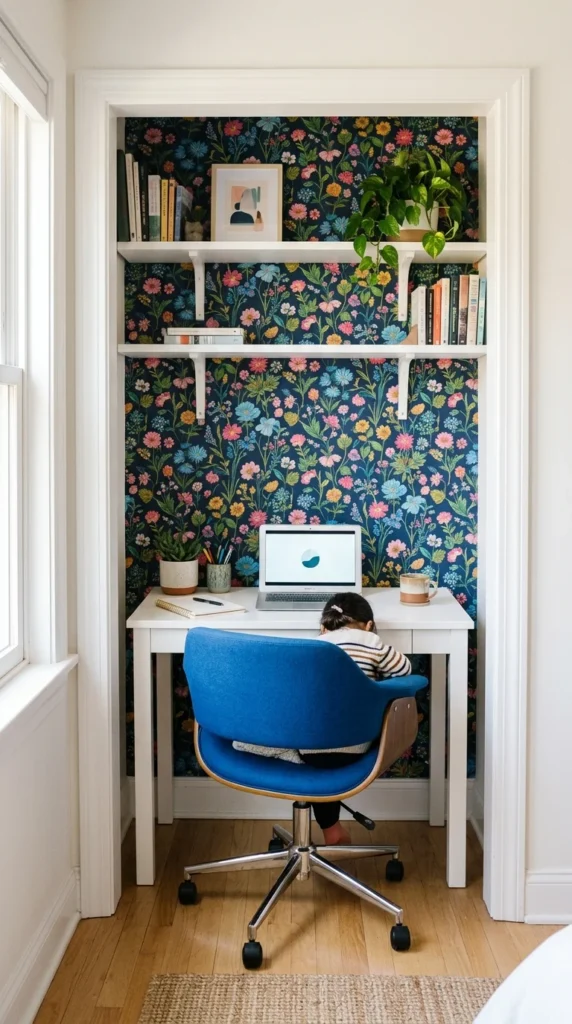
Just because a workspace is small doesn’t mean it should be boring. Adding a high-contrast or patterned wallpaper to the back wall of your closet office creates a “jewel box” effect. This delineates the office from the rest of the room and provides a burst of inspiration every time you open the doors. Peel-and-stick options are ideal for renters or those who like to change their style frequently.
5. Sliding Barn Doors
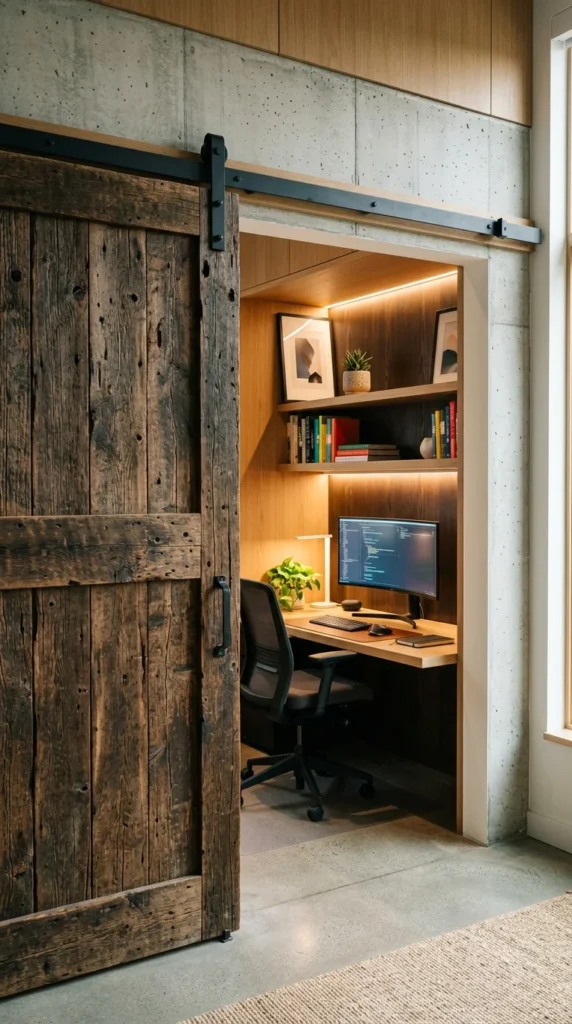
If you have the wall space adjacent to your closet, a sliding barn door is a fantastic functional upgrade. It eliminates the “door swing” entirely, which is crucial in narrow hallways or bedrooms. Beyond the space-saving benefits, the door itself acts as a massive piece of wall art, adding texture and character to your room while keeping your workspace tucked away.
6. Under-Cabinet Lighting

Closets are notoriously dark. To avoid eye strain and create a professional atmosphere, install under-cabinet LED strips or puck lights beneath your floating shelves. This provides direct task lighting for your desk surface without taking up valuable real estate with a bulky desk lamp. Many modern versions are battery-operated or rechargeable, meaning you don’t even need an outlet nearby.
7. Textile Curtains
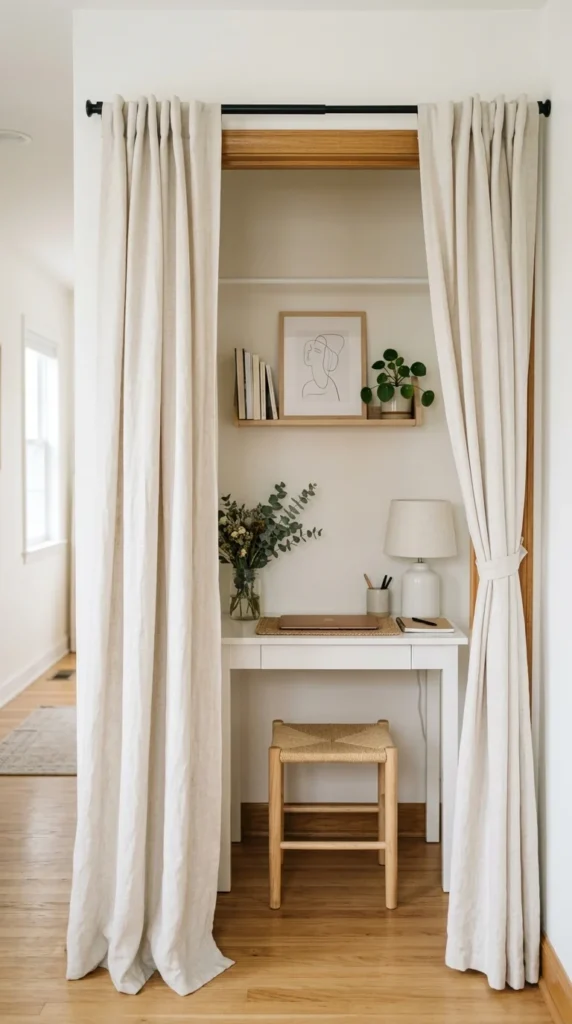
For a softer, more bohemian look, replace heavy wooden doors with floor-to-ceiling curtains. This is an affordable way to hide your office and adds a layer of texture to the room. Curtains also help with sound dampening—a major plus if you’re taking video calls in a room with hardwood floors.
8. Minimalist White

An all-white color palette is a classic trick for making small spaces feel airy and expansive. By painting the interior of the closet, the desk, and the shelving the same shade of bright white, the boundaries of the space seem to recede. This creates a calm, focused environment that doesn’t feel claustrophobic, even in the smallest of reach-in closets.
9. Ladder Shelves
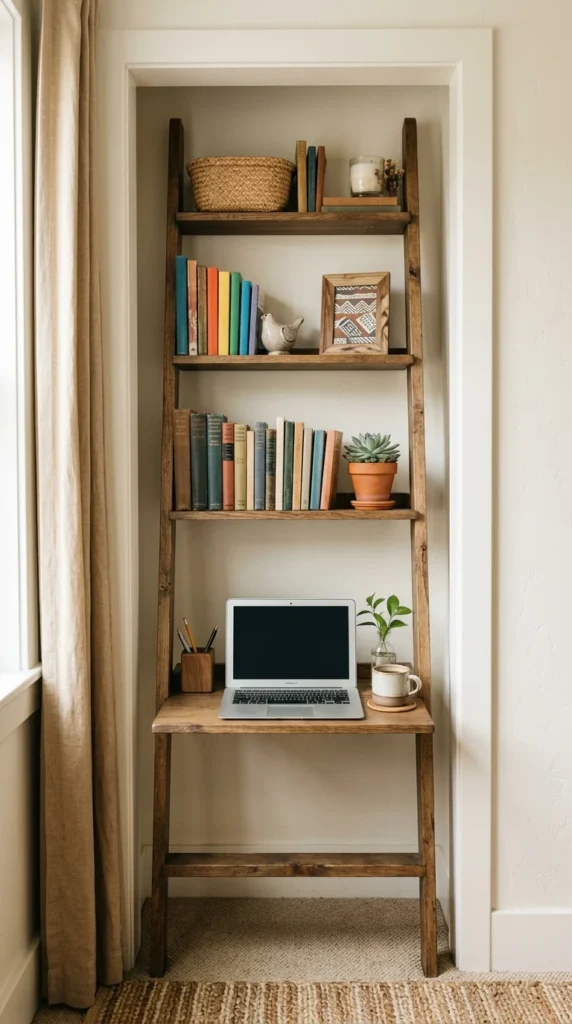
If you aren’t ready to commit to permanent wall-mounted installations, a ladder desk is a perfect alternative. These units lean against the back wall and provide multiple tiers of storage above the workspace. They utilize the height of the closet perfectly and can be easily moved or repurposed if you decide to change your room layout later.
10. Full-Wall Cork
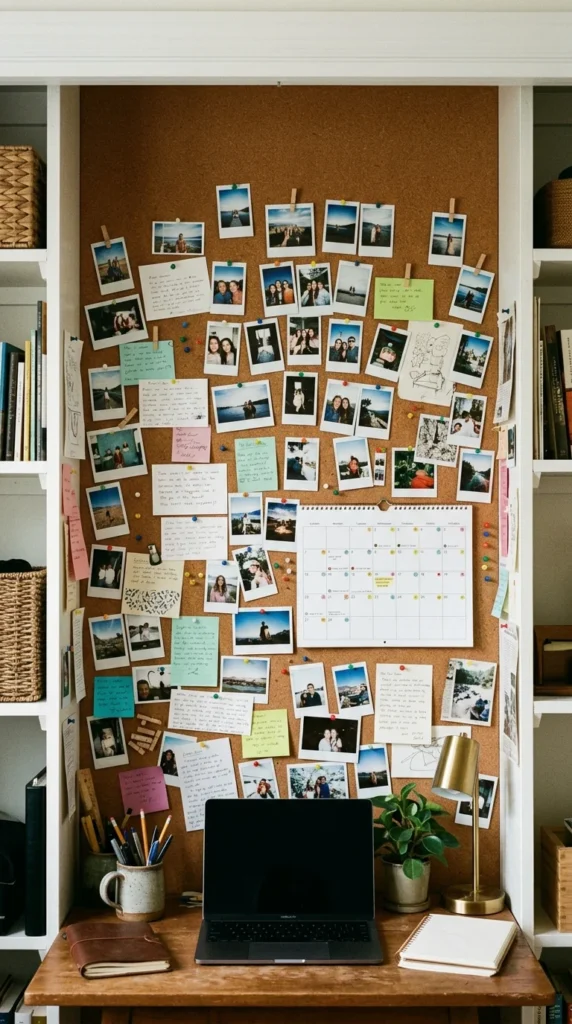
Transform the entire back wall of your cloffice into a giant mood board. Covering the wall in cork tiles allows you to pin up calendars, to-do lists, and inspirational photos without damaging the drywall. It’s a functional and tactile way to personalize your space while keeping your desk clear of paper clutter.
11. Acrylic Furniture

Visual clutter can make a small space feel overwhelmed. Acrylic or “ghost” chairs are perfect for closet offices because they are transparent. They provide the seating you need without taking up “visual weight,” allowing the eye to travel through them to the back of the closet. This simple switch can make your entire room feel much more open.
12. Industrial Pipes
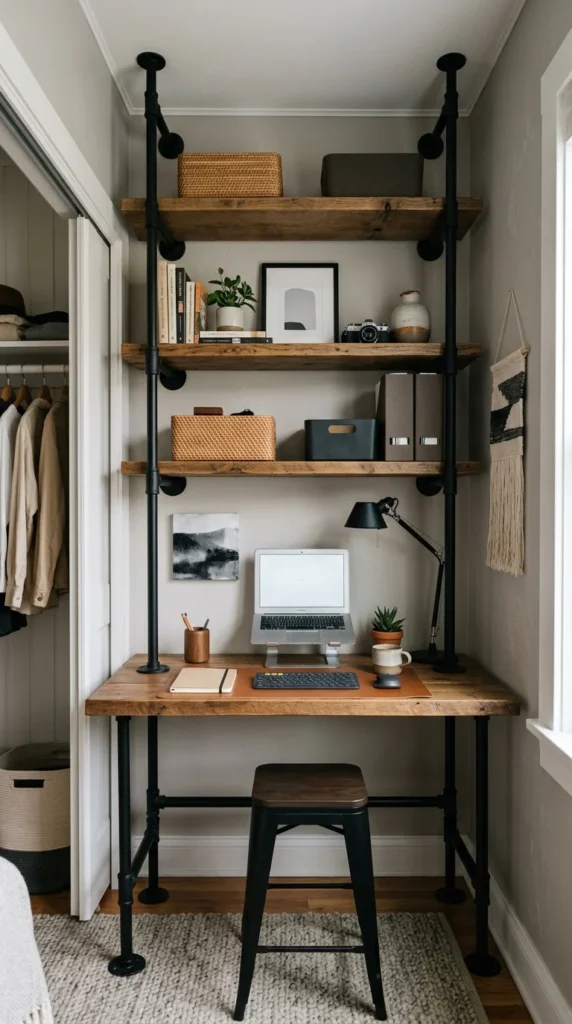
For a DIY look with a lot of character, use industrial pipes and reclaimed wood for your desk and shelving. This aesthetic works particularly well in closets because the hardware is sturdy and can be customized to fit the exact dimensions of your space. The dark metal contrasts beautifully against light-colored walls, giving your office a professional, custom-built feel.
13. Built-In Nook
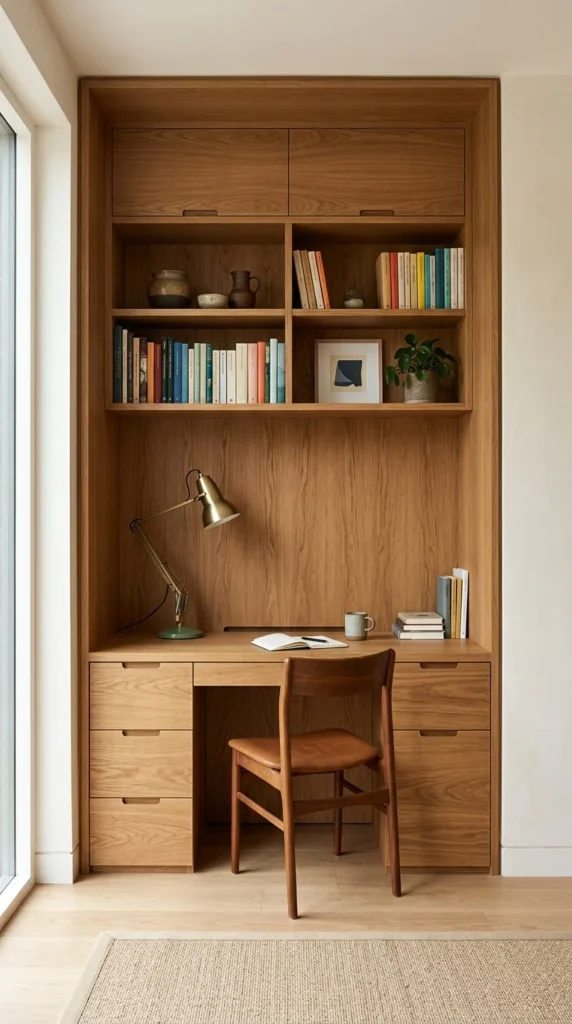
If you have a shallow closet or a recessed wall, consider a full built-in. By matching the wood grain or paint color of the desk to the surrounding trim, you create a seamless look that feels like part of the home’s architecture. Built-ins maximize every millimeter of space, providing specialized compartments for printers, scanners, and files.
14. Over-Door Racks
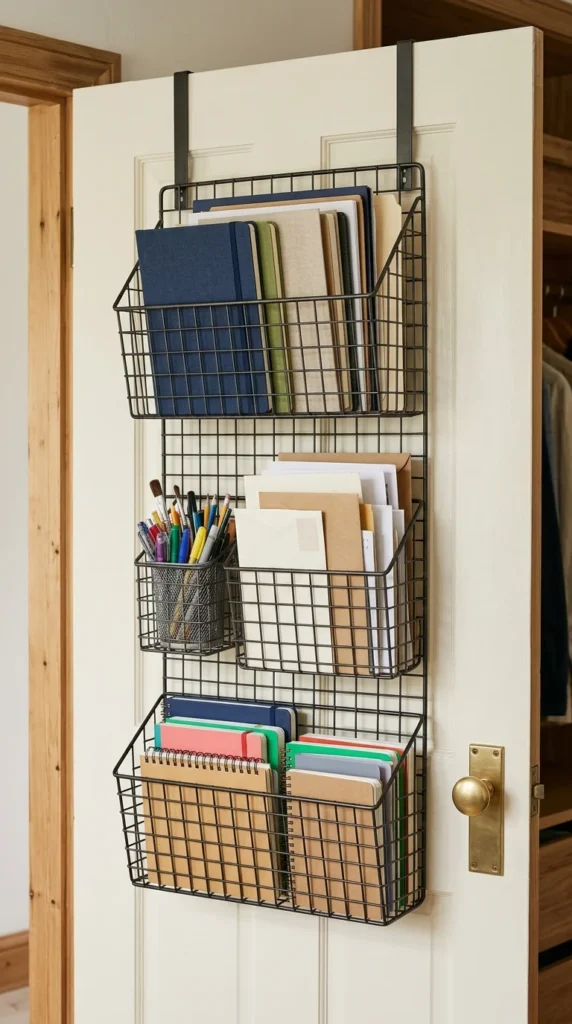
The back of the closet door is often wasted space. Install an over-the-door organizer with baskets or pockets to house the items you use most frequently. This keeps your pens, staplers, and notebooks within arm’s reach but off the desk. It’s an essential hack for the ultra-small “cloffice” where every inch of the desk surface is needed for a monitor.
15. Wraparound Surface
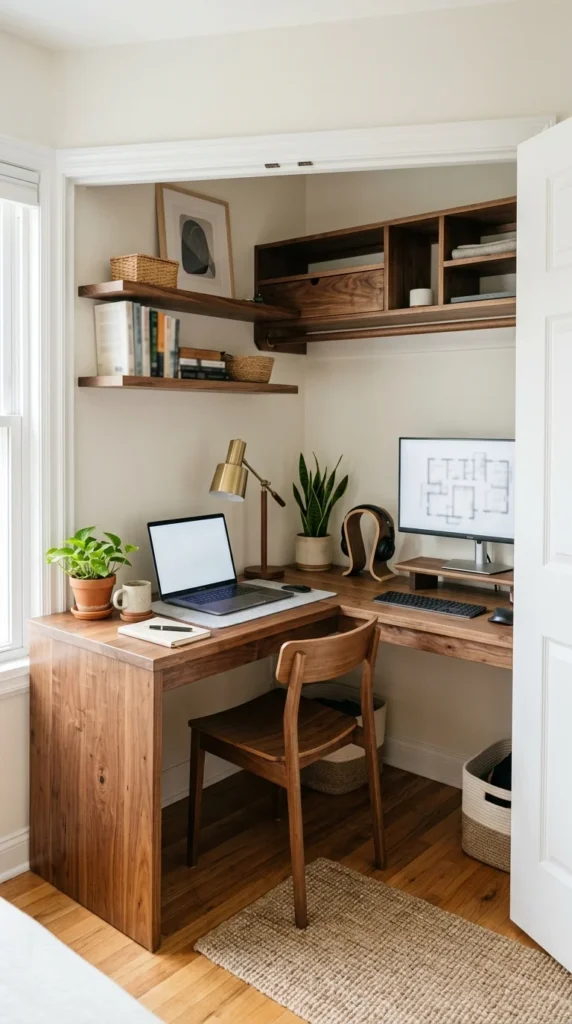
If your closet is wider than it is deep, a wraparound desk can significantly increase your usable surface area. By extending the desk into the corners, you create different zones—perhaps one for your computer and another for “offline” tasks like writing or crafting. This layout makes a small closet feel like a much more substantial executive office.
16. Mirrored Accents
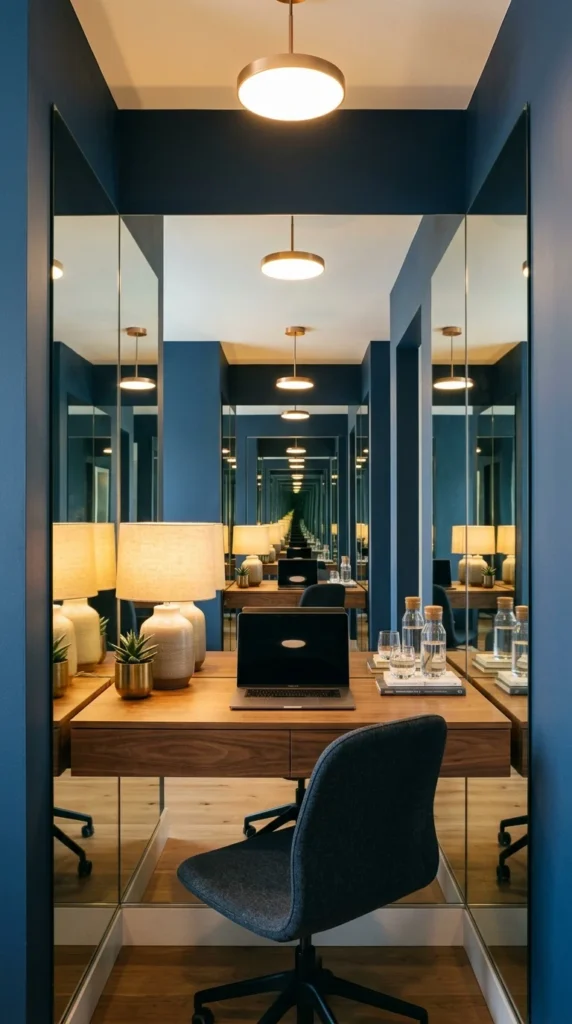
Mirrors are a classic design tool for doubling the perceived size of a room. In a closet office, placing mirrors on the side walls reflects light and makes the narrow space feel twice as wide. It also allows you to keep an eye on the rest of the room behind you, which can help reduce the “tucked away” feeling of working in a closet.
17. Pops of Color

Using a single, vibrant accent color can bring energy to a small workspace. Whether it’s painting the shelves a bright teal or choosing a neon-colored chair, these pops of color define the space as a place of creativity and action. It turns a utility space into a design feature that you’ll actually enjoy looking at.
18. Rolling Storage
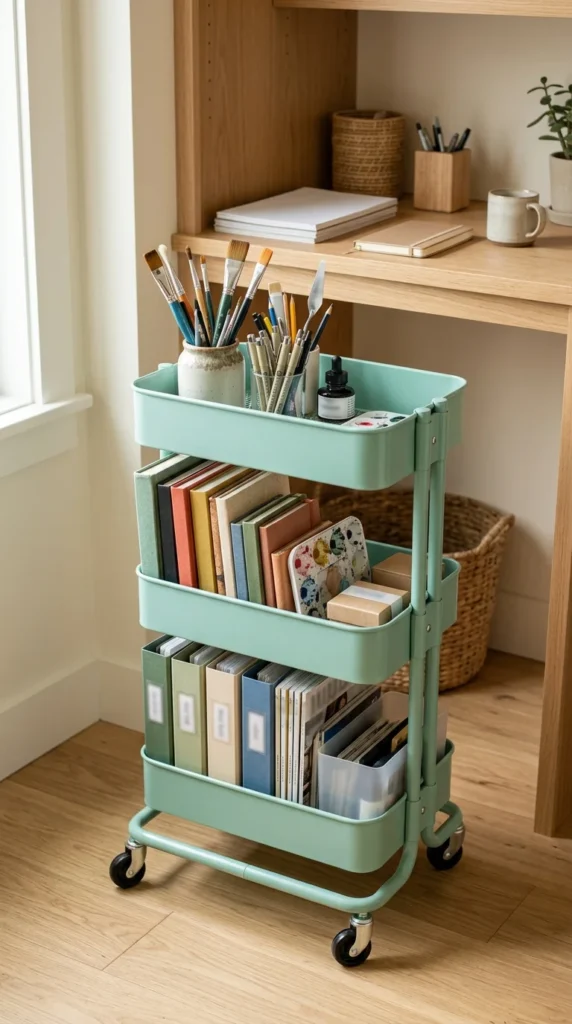
Flexibility is key in a small home. A rolling utility cart can hold your printer, heavy files, or craft supplies. During the workday, it can sit right next to you; at night, it tucks neatly under the desk so the closet doors can close. This “mobile annex” is perfect for keeping the main desk surface clear for high-priority tasks.
19. Indoor Greenery
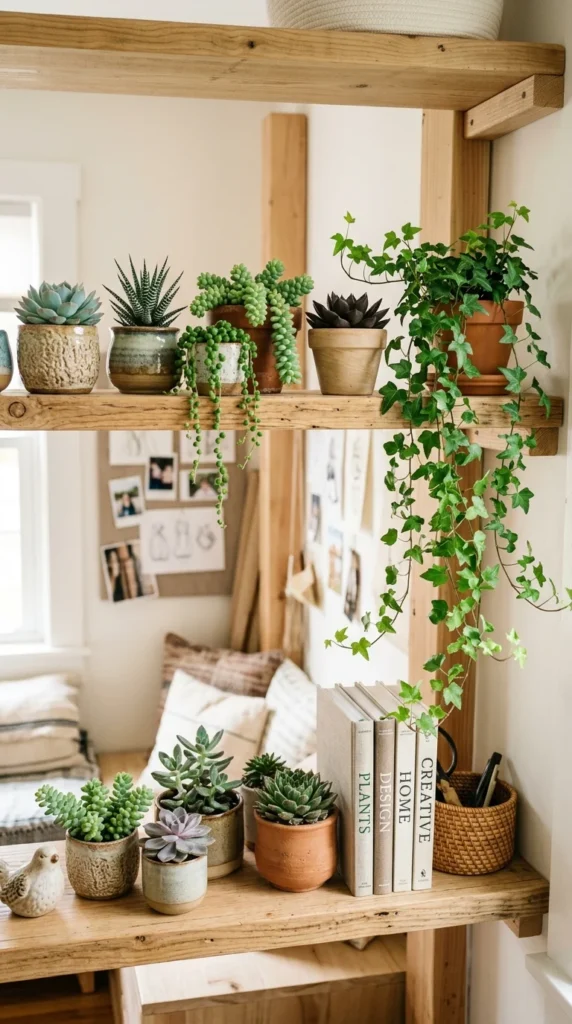
Bringing nature indoors can improve productivity and reduce stress. Even in a windowless closet, you can thrive with low-light plants like pothos, snake plants, or ZZ plants. If your closet is particularly dark, high-quality artificial plants can provide the same visual “refresh” without the need for sunlight, making the space feel more like a living room and less like a storage unit.
20. Cable Management
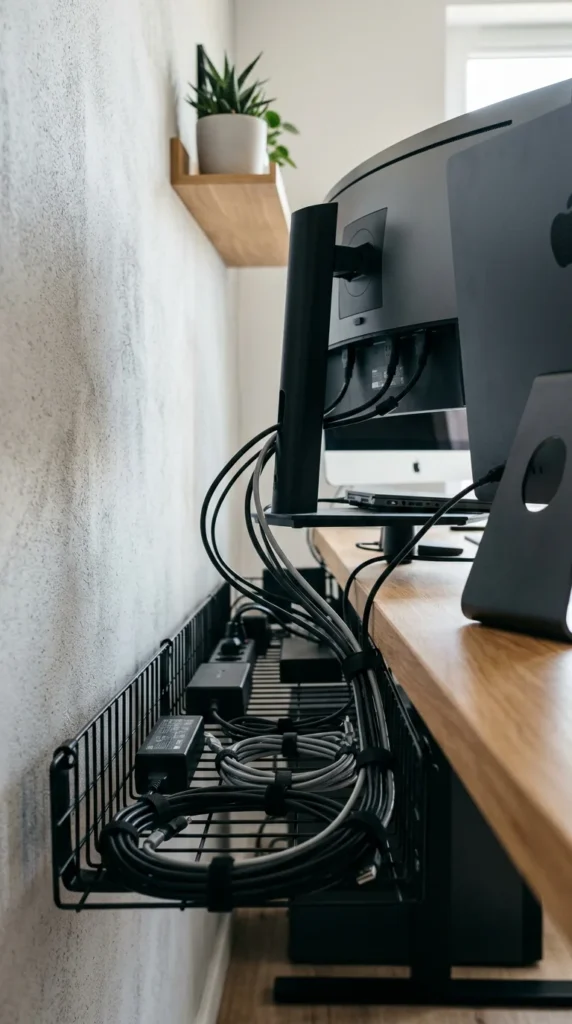
In a small closet, a tangle of wires can quickly make the space feel chaotic. Use cable trays, clips, and zip ties to route all power cords along the underside of the desk or down the corners of the closet. A clean, cord-free look is essential for maintaining a sense of order in a compact environment.
21. Area Rugs
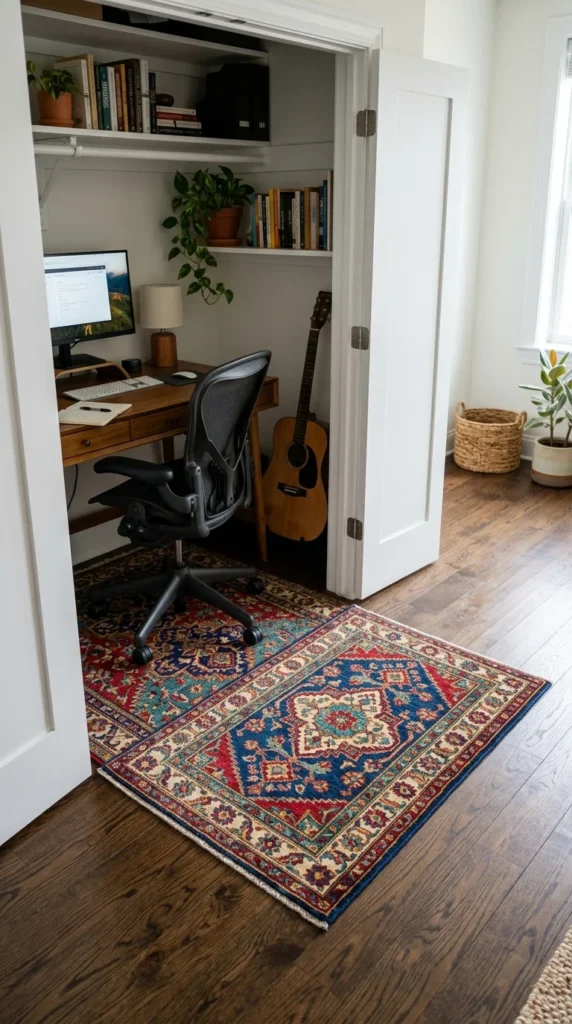
A small area rug does more than just protect your floors; it helps define the office as its own separate “room.” Choose a rug with a bit of texture or a bold pattern to add warmth to the space. It also provides an extra layer of comfort for your feet and helps with the overall acoustics of the closet.
22. High Shelving
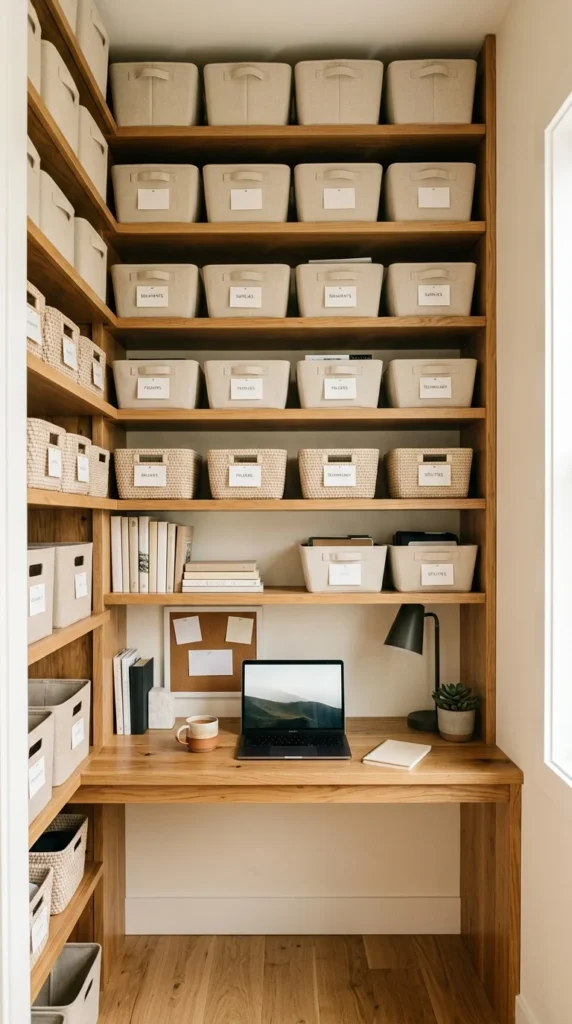
Most closets have significant vertical space that goes unused. Install shelves all the way to the ceiling to store items you don’t need every day, such as tax records, extra printer paper, or reference books. Using uniform bins or baskets on these high shelves keeps the look cohesive and prevents the space from feeling cluttered.
23. Vintage Desk
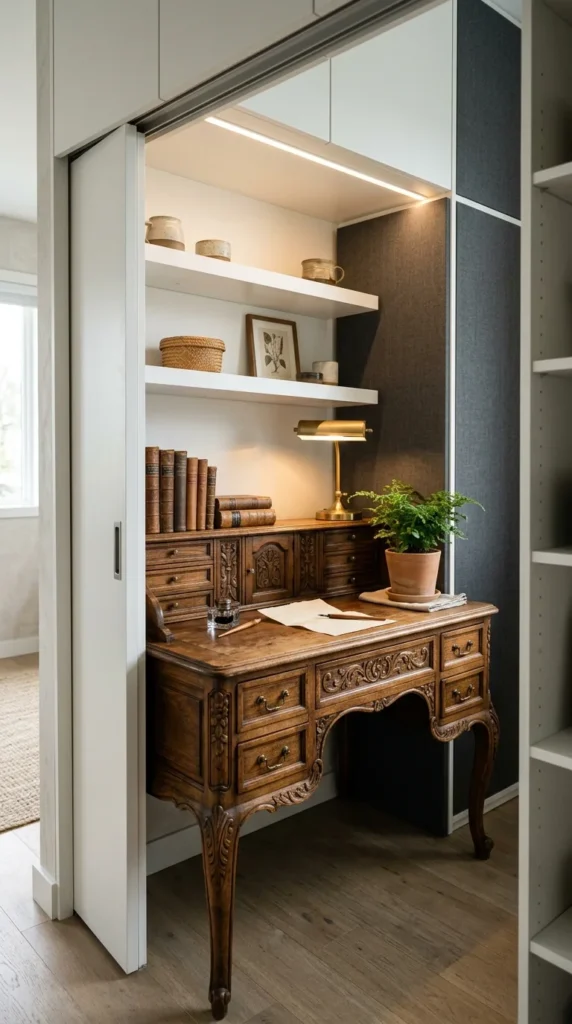
Not every closet office needs to be a DIY project with plywood. If your closet is large enough, sliding a beautiful vintage writing desk or a small antique secretaire into the space can add instant sophistication. The contrast between a modern closet and a piece of furniture with history creates a unique and personalized aesthetic.
24. Sconce Lighting
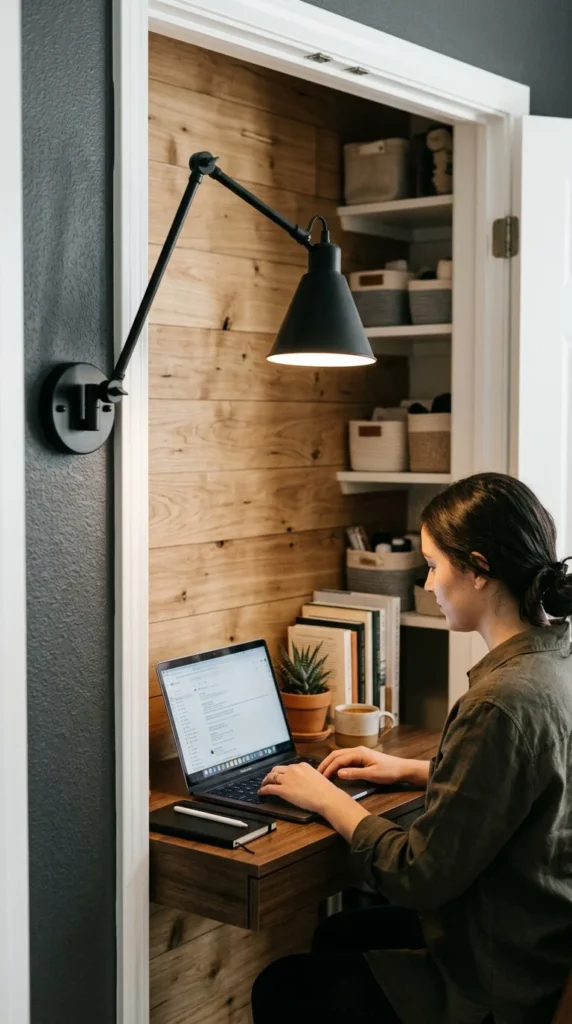
Wall-mounted sconces are the ultimate space-saving lighting solution. A swing-arm sconce allows you to direct light exactly where you need it—whether you’re typing on a laptop or reading a physical document—and it leaves your entire desk surface free for your equipment. Plus, it adds an upscale, “designed” look to the closet.
25. Monochromatic Palette
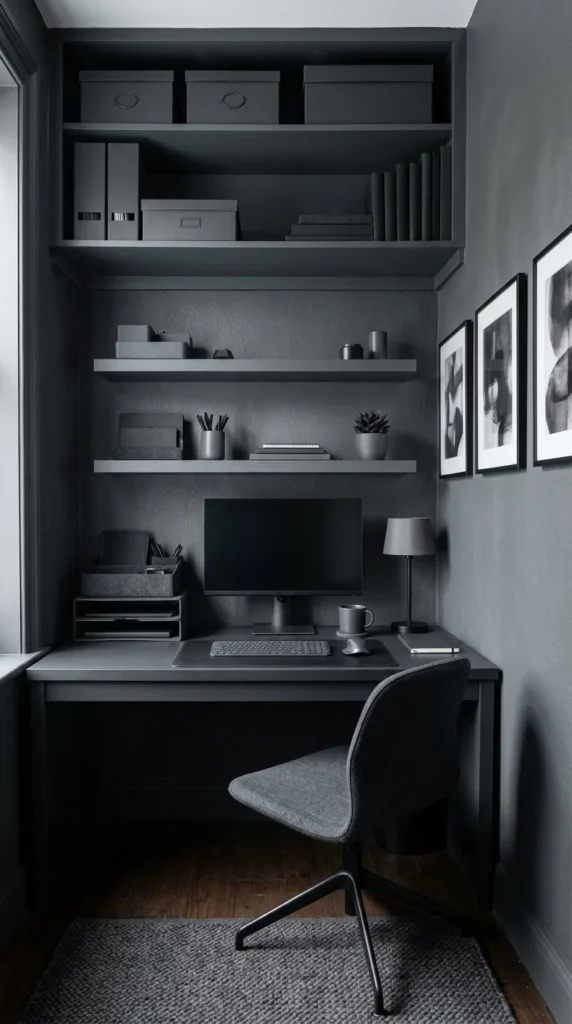
A monochromatic color scheme—using different shades of the same color—creates a sophisticated and harmonious look. For example, a navy blue closet with light blue shelves and a dark blue chair feels intentional and high-end. This strategy minimizes visual “noise,” which helps you stay focused on your work.
26. Chalkboard Backing
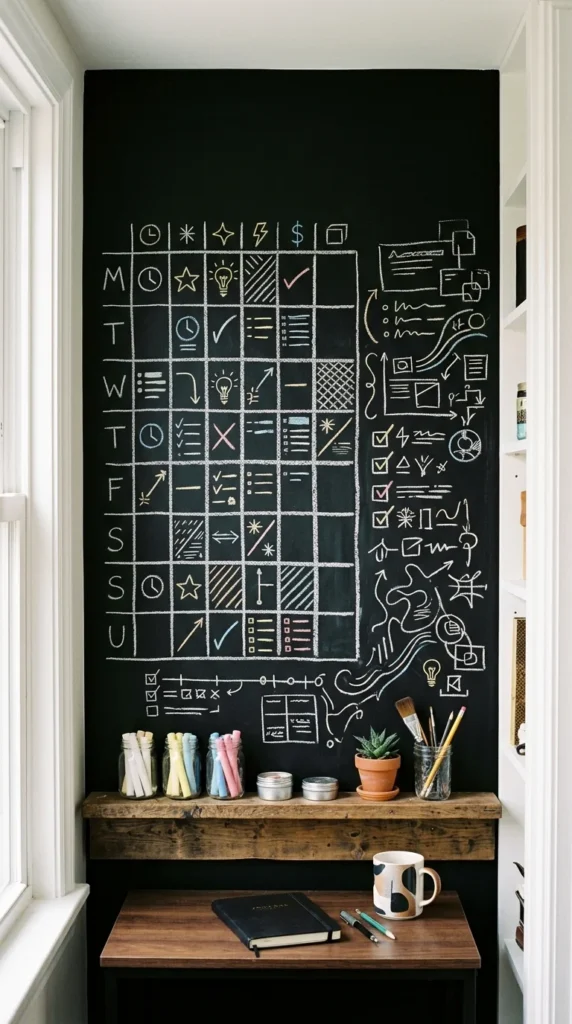
Painting the back of your closet with chalkboard paint turns the entire wall into a giant notepad. It’s perfect for brainstorming, keeping track of deadlines, or just doodling during long phone calls. When you’re ready for a fresh start, simply wipe it clean. It adds a matte, dark texture that makes any colorful desk accessories pop.
27. Fold-Down Desk
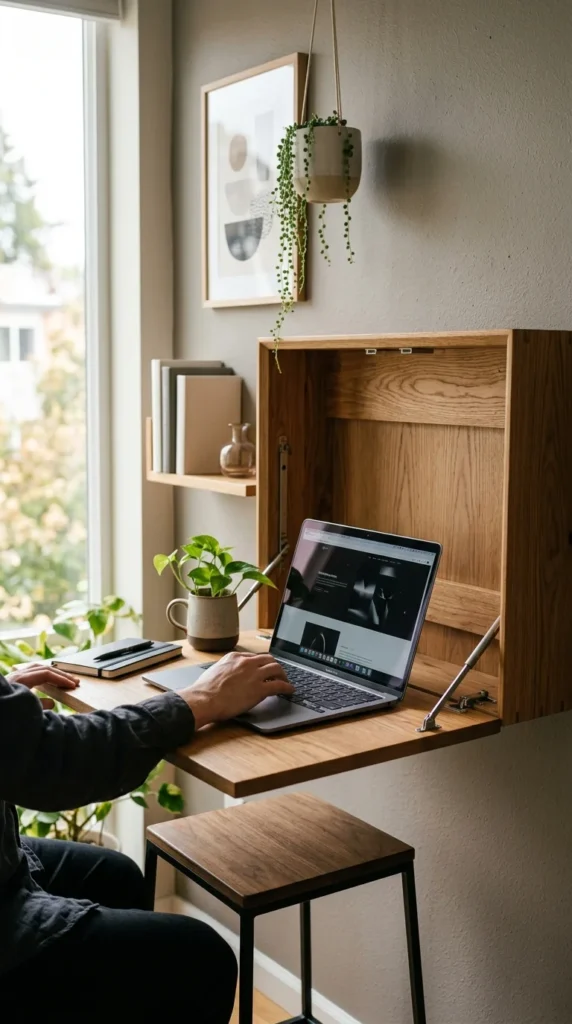
For the absolute smallest spaces, a fold-down (or “murphy”) desk is the ultimate solution. These units take up almost zero floor space when closed and provide a sturdy work surface when opened. Many models also include small interior shelves for pens and stationery that stay hidden when the desk is folded back up against the wall.