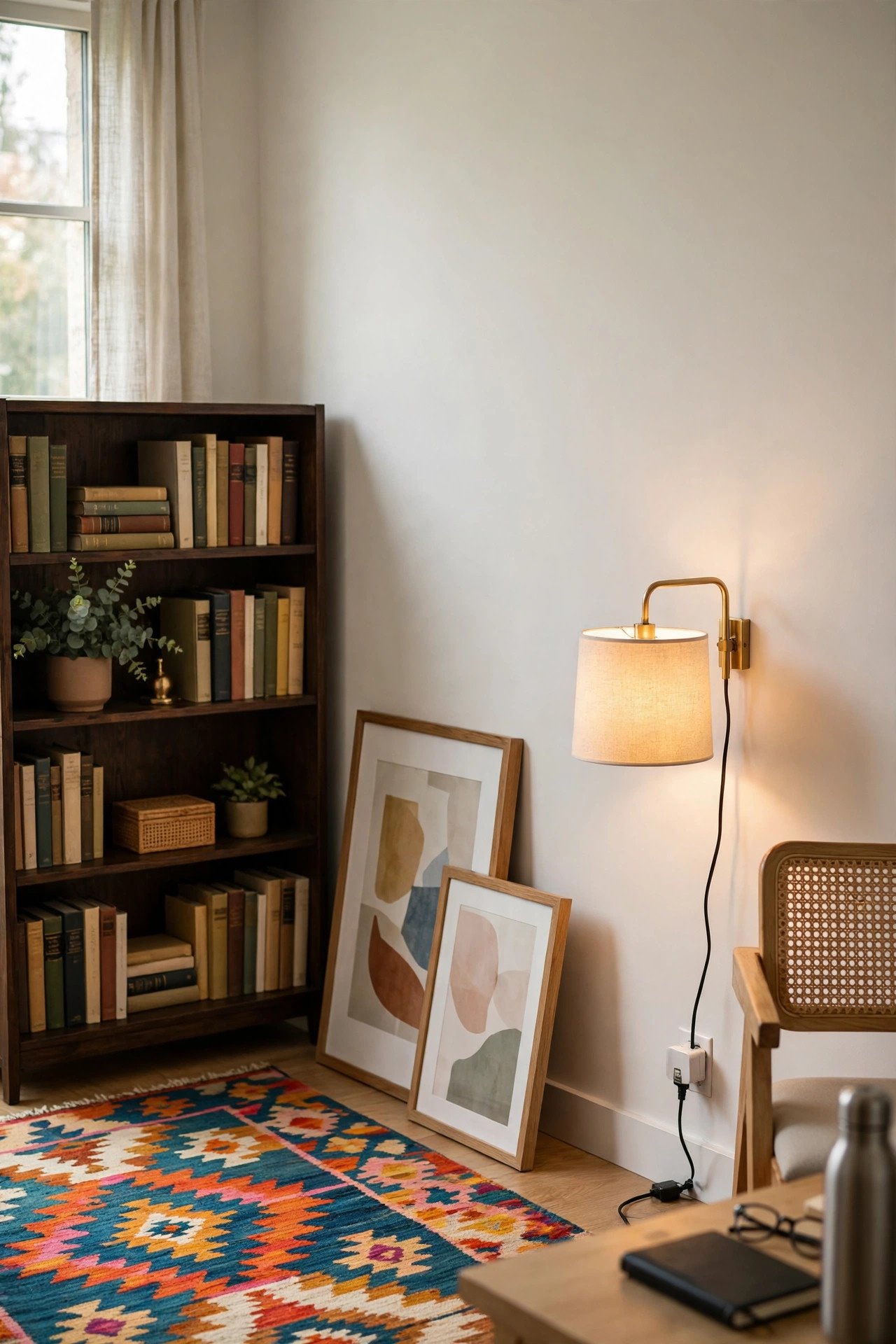
Renting gives you a workable room but not a free hand. The walls must stay unmarked, the floor unscratched, and everything you add has to come away cleanly when you move out and want your deposit back. That can make a rental office feel temporary and bare, as if decorating is not allowed at all.
It is allowed. You just have to decorate with methods that grip, lean, stand and plug in instead of methods that drill, nail and glue. This guide covers how to decorate a rental office without damaging walls, from hanging art safely to using textiles and furniture as your decoration, so the room feels personal now and leaves no trace later.
Quick Answer
To decorate a rental office without damaging walls, use removable adhesive strips and hooks rated for your frame’s weight, lean large art on the desk or shelves, hang curtains on tension rods, and let rugs, furniture and plug-in lamps do the decorating. Take photos of the walls before you start, keep all packaging for the removable fittings, and do a slow, careful removal at move-out to protect your deposit.
- Removable strips and hooks replace nails for almost everything light.
- Big items lean; small items hang; textiles cover large plain areas.
- Furniture and storage can carry colour so the walls do not have to.
- Photograph every wall first so you can prove its starting condition.
First, Know Exactly What Your Lease Allows
Before buying anything, read the decoration clause in your lease. Many leases ban nails and screws but say nothing about removable adhesive products. Some landlords allow small picture hooks if you fill the holes before leaving. Others are flexible if you simply ask. A short message asking permission for one specific thing, such as two small hooks in the office room, often gets a yes, and having that yes in writing protects you later.
Walk around the room with your phone and photograph every wall, corner and skirting board before you hang a single thing. Note any marks that are already there. These photos take five minutes and are the strongest evidence that damage was not yours. Store them somewhere you will still have at move-out.
Hang Art and Boards Without Nails
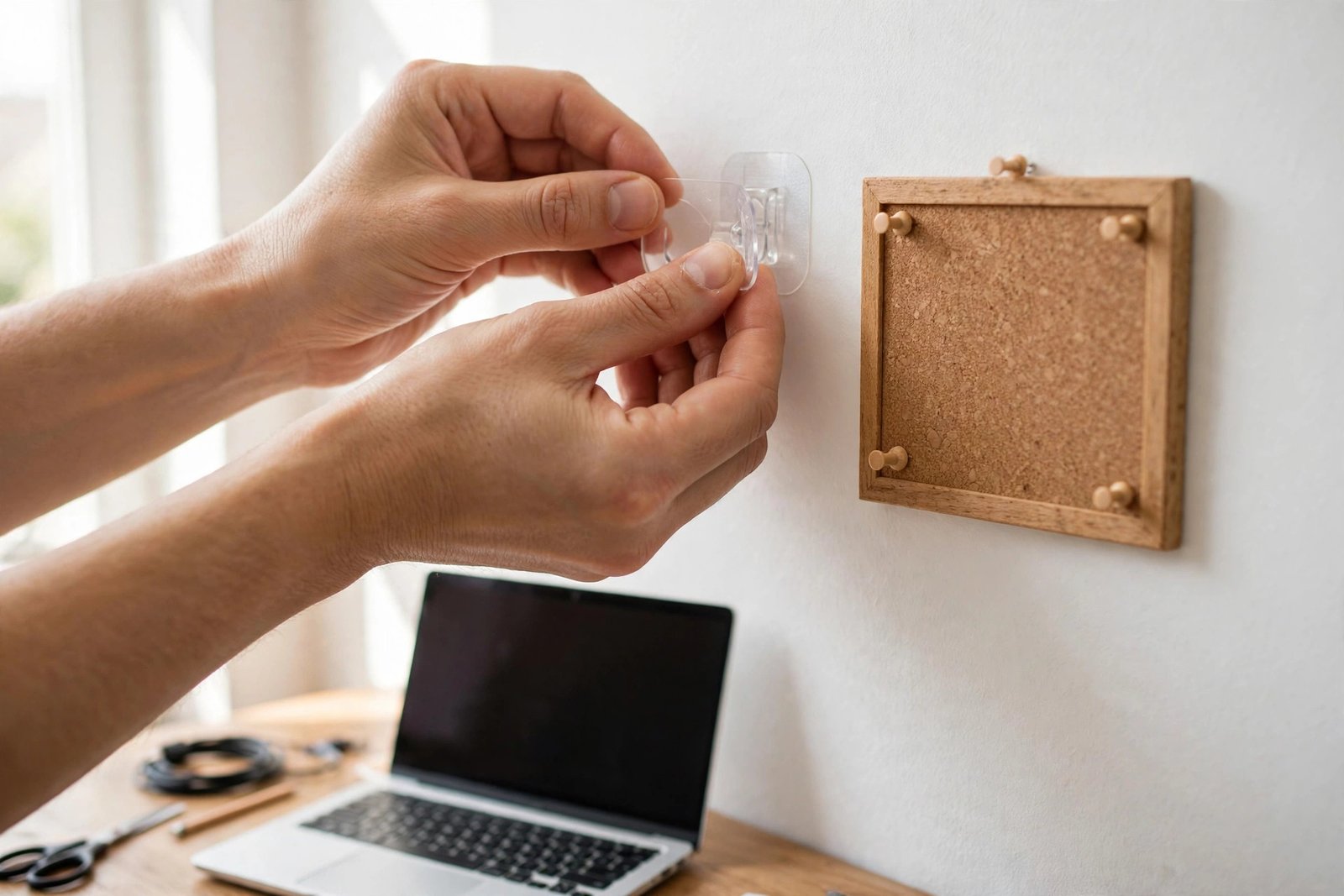
Removable adhesive strips are the renter’s main tool. They come in sizes rated by weight, and the rating matters: weigh or estimate your frame honestly and choose strips rated above it, using two pairs for anything wider than a sheet of paper. Press them on exactly as the packet directs, and wait the full setting time before hanging. Most failures happen because the frame went up too early or the strips were too small.
Removable hooks work the same way for lighter items: cork boards, small shelves for plants, headphone hooks and cable tidies. Spread the load. Two hooks sharing a board are far safer than one hook at its limit.
For anything large or heavy, skip the wall entirely and lean it. A big framed print leaning on the desk against the wall, or on top of a bookshelf, looks deliberate and modern, and it suits a small office where the desk already sits against the wall. If your desk faces a blank wall and feels flat, these leaning and layering ideas pair well with the fixes in our guide for a desk that faces a wall and feels dull.
Let Textiles Cover the Big Plain Surfaces
Walls feel bare because they are large, flat and one colour. Textiles cover area faster than pictures do. A rug changes the biggest surface in the room, the floor, and needs no permission at all. Choose one large enough for the desk and chair zone so the office reads as a room within the room.
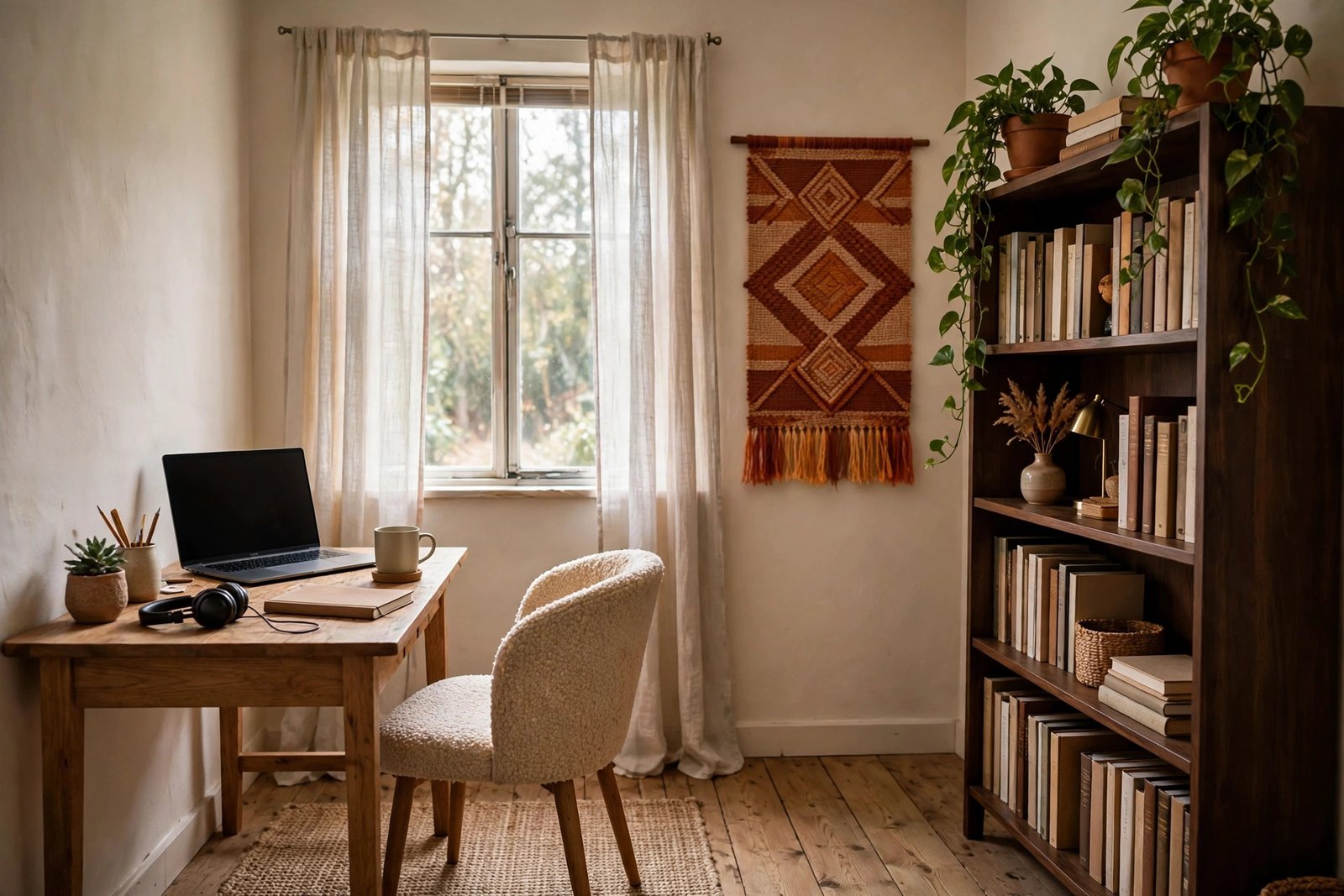
Curtains are the second big win. If the window has a frame or recess, a spring tension rod fits inside it with no screws and holds light curtains easily. If there are existing blinds you cannot change, a curtain in front of them still softens the window and adds colour. A fabric wall hanging or a large lightweight tapestry on two removable hooks gives you a whole panel of colour and pattern for very little weight, and it makes the room feel warmer at the same time. If warmth is the main goal, our guide to fixing a small office that looks cold and bare shows how to combine these layers without clutter.
Use Furniture and Storage as Decoration
In a rental, your furniture is your decor budget. A bookshelf in a warm wood tone, storage boxes in one accent colour, or a chair cushion in a strong colour all decorate the room while doing a job. Because they are yours and freestanding, there is nothing to repair later.
A tall shelf also gives you display space that renters usually lack. The top of a bookshelf can hold a plant or a leaning frame at eye level when standing, which breaks up the wall line without touching the wall. Keep the colour story simple: one wood tone, one accent colour and one neutral repeated across boxes, cushion and rug will look designed rather than random. That stripped-back approach is the same idea behind minimalist office ideas that work in any small room.
Lighting That Plugs In, Not Wires In
You cannot usually change ceiling fittings or add wall lights in a rental, but you can replace almost any light with a plug. A floor lamp beside the desk, a desk lamp with a warm bulb, or a plug-in wall lamp that hangs from a removable hook and runs its cord down to the socket all add layered, warm light with zero wiring.
Run the cord neatly down the wall edge or behind furniture and secure it with removable cord clips. Loose cords are the one thing that can mark paint if they rub, and they make the room look unfinished, so five minutes of tidying pays off twice.
Personal Touches That Leave No Trace
Photos and small personal items belong on shelves, the desk and a cork board, not taped to the wall. Tape and sticky putty are the quiet deposit-killers: tape pulls paint, and putty can leave grease marks on light walls. A cork board or fabric pin board on removable hooks gives you the same display with none of the risk. Washi tape is gentler than normal tape and is fine for very light paper on most paints, but test it in a hidden corner first and never use it on fresh or chalky paint.
Plants need no fixing at all and make a rental feel lived in faster than anything else. Put them on the desk, shelf or a small stool rather than hanging them, unless the hook is properly rated for the pot’s weight when watered.
Move-Out: Undoing It All Cleanly
Removal is where damage usually happens, so slow down. Pull removable strips straight down along the wall, slowly, the way the packet shows, never outwards. Warm putty marks with a hairdryer on low for a few seconds if a hook resists. Keep a small tube of filler and a sample of the wall paint if your lease expects tiny fixes, and wipe walls down before the final inspection. Your start-of-tenancy photos settle any disagreement about what was already there.
Mistakes to Avoid
- Using strips rated below the frame’s weight. The frame falls at 3 a.m., and falling frames chip paint and floors.
- Taping posters directly to the wall. Tape and sticky putty are the most common causes of pulled paint and grease marks.
- Drilling first and asking later. One unapproved hole can cost more goodwill than the shelf was worth.
- Hanging heavy items on one hook. Spread the load across two fixings, or lean the item instead.
- Skipping the before photos. Without them, every old mark in the room can be blamed on you.
Frequently Asked Questions
Are removable adhesive strips really safe for paint?
On sound, fully cured paint, yes, when they are the right size for the weight and removed slowly, straight down the wall. They can lift weak, flaking or very fresh paint, so test one strip in a hidden spot first and never use them on wallpaper unless the packet says it is safe.
How can I hang a heavy mirror or large frame in a rental?
Lean it. Place it on the desk, a shelf or a low cabinet against the wall, with a small removable hook or a strip of museum putty behind the top edge only to stop it sliding. Leaning looks stylish and carries any weight safely.
Can I put up shelves in a rented office?
Usually not fixed shelves. Use a freestanding bookshelf instead, or small ledges hung from two properly rated removable hooks for light items only. If you truly need a fixed shelf, ask the landlord in writing first; many agree if you fill the holes when you leave.
What if my lease bans all wall fixings, even removable ones?
Then decorate everything that is not a wall: a large rug, curtains on a tension rod inside the window frame, a tall bookshelf, leaning art, colourful storage and good lamps. A room decorated this way can look complete without a single fixing.
Conclusion
A rental office only feels undecorated if you limit yourself to nails and paint. Removable strips and hooks, leaning art, textiles on the floor and window, colourful freestanding storage and plug-in lamps can fill a room with colour and personality while the walls stay exactly as you found them. Photograph first, fix lightly, and remove slowly, and you will get a room that feels like yours and a deposit that comes back in full.