
For many people working from home, the desk ends up pushed against a wall. It is often the only spot that fits, especially in a small flat or a shared room. The arrangement is practical — but day after day of staring at a blank wall a metre from your face can make even good work feel dull, boxed-in, and hard to start.
You do not need a window view or a bigger room to fix this. The wall in front of you is actually free space: it can hold calm visual interest, extra storage, soft light, and a sense of depth that makes the desk feel like a place with a purpose. This guide covers the fixes that work best, all of them renter-friendly and gentle on your concentration.
Quick Answer
When your desk faces a wall, the dullness comes from having nothing for your eyes to rest on and no sense of space in front of you. Fix it by giving the wall one calm focal point at eye level, adding soft side light and a plant for life and depth, and using the vertical space for tidy storage. Keep colours muted and the area uncluttered, and the wall becomes a backdrop that supports focus instead of draining it.
- Add one main piece of wall decor at eye level, not a crowd of small items.
- Use shelves or a pegboard above the desk to lift storage off the surface.
- Bring in warm side light and at least one plant for a sense of depth.
- Choose renter-friendly fixings: adhesive strips, leaning frames, and desk-standing shelves.
Why a Blank Wall Feels So Draining
When you work, your eyes naturally look up and away from the screen for a moment between tasks. At a wall-facing desk, that glance lands on a flat, empty surface very close to your face. There is nothing to rest on, no distance for your eyes to enjoy, and the closeness of the wall quietly reminds you how small the space is.
A blank wall also gives the desk no identity. It looks like a table pushed into a corner rather than a workplace you chose, and that feeling matters more than people expect. A workspace that looks intentional is easier to sit down at, easier to leave tidy, and easier to switch off from at the end of the day. Arranging the desk surface itself properly is part of this, and our guide to a small desk setup covers how to fit everything you need on a compact desk without crowding it.
Give the Wall One Calm Focal Point
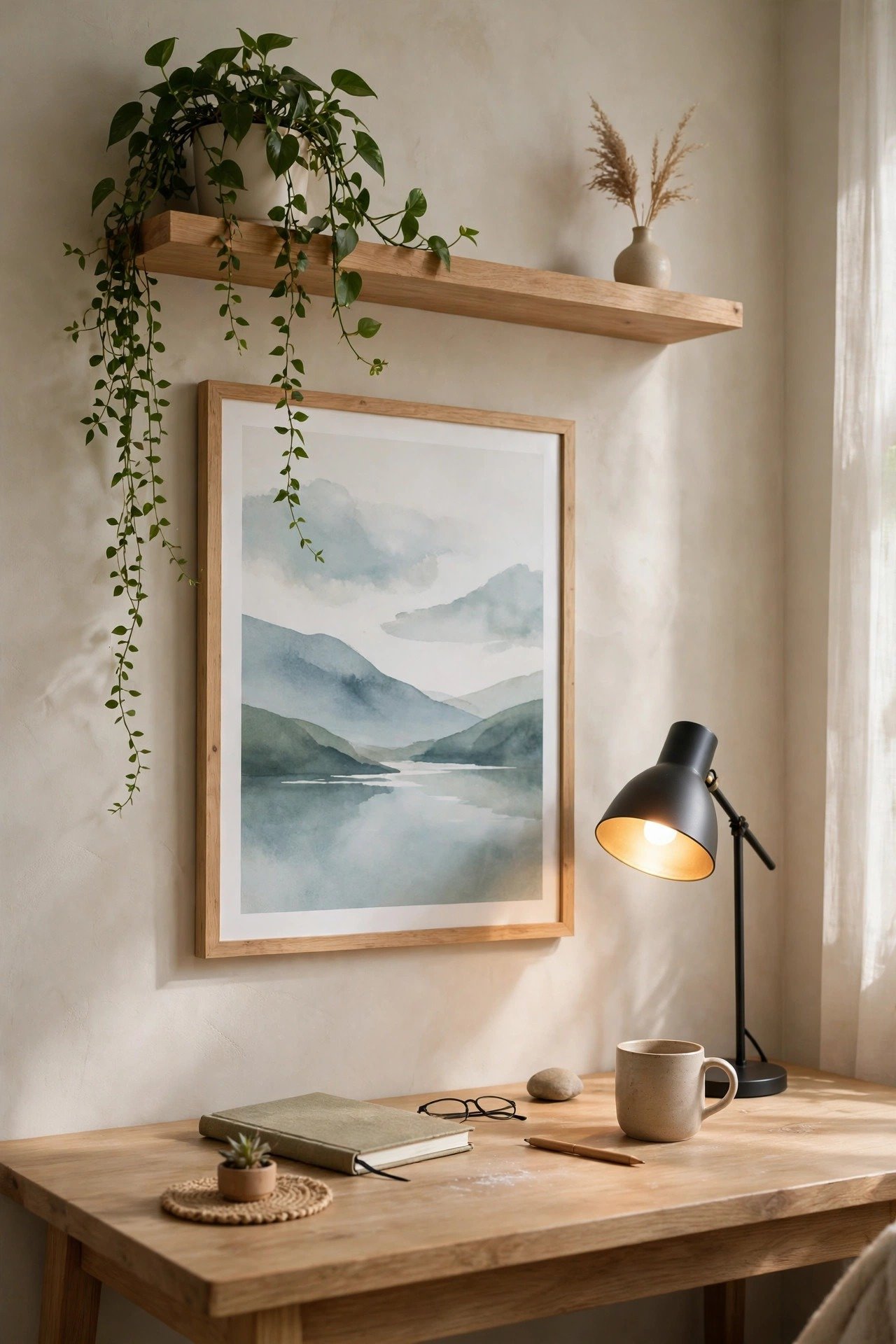
The single most effective change is one piece of decor at eye level, roughly where your gaze lands when you look up from the screen. A framed print, a simple line drawing, a calm landscape photograph, or a woven wall hanging all work. Choose something with soft colours and a simple subject — the goal is a resting place for the eyes, not entertainment.
Sit in your working position and mark the height with a pencil dot where your eyes naturally settle, slightly above screen level. Hang the piece so its centre sits near that mark. One well-placed piece beats five small ones scattered around, which create visual noise and make the wall feel busy rather than restful.
If you rent, you have plenty of options that leave no trace: picture-hanging adhesive strips rated for the frame’s weight, frames leaning on a shelf, or a large print clipped to a board and propped on the desk. Washi tape can outline a simple “frame” around unframed prints and peels away cleanly.
Use the Vertical Space for Storage
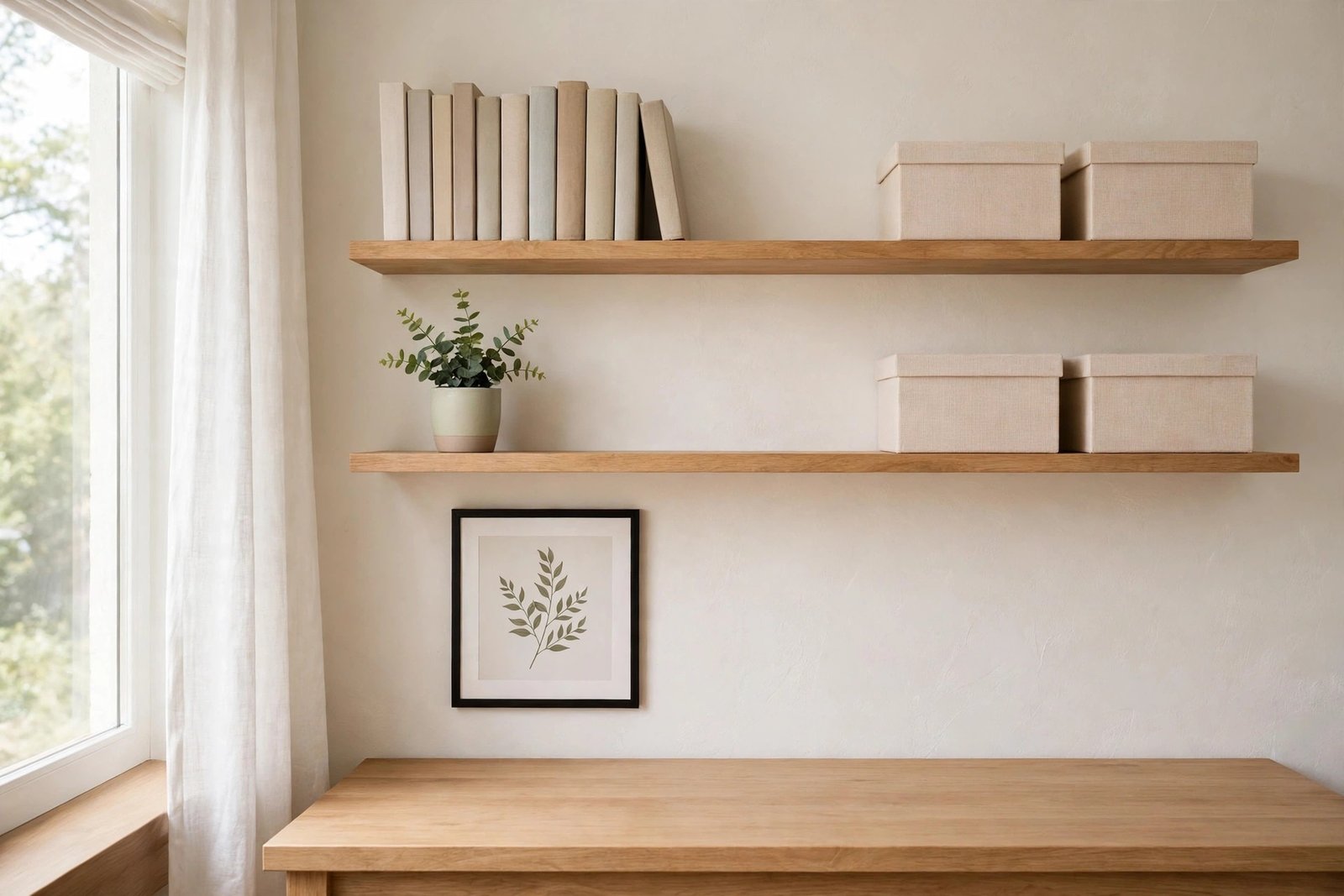
A wall-facing desk usually has a small surface, and clutter on that surface sits directly in your line of sight all day. Moving storage upward is the answer. One or two shelves above the desk hold books, boxes, and the things you reach for weekly, while keeping the desk itself clear for work.
Renter-friendly ways to add that storage include a sturdy shelf unit that stands on the desk like a small bookcase, a pegboard that leans or hangs from adhesive hooks, and over-desk organisers with pockets. If your landlord allows a couple of small screw holes, a floating shelf is tidy and strong — but ask first, and keep it to one or two shelves so the wall does not become a warehouse.
The important part is the system behind it: everything on the wall should have a fixed home, or the shelves slowly turn into a second messy desk. Our guide to a storage system that stays tidy walks through setting up homes for desk items so they stay put.
Add Light and Something Living
A wall-facing desk often sits in the room’s dimmest spot, and flat light makes flat feelings. A small lamp to one side of the desk, shining softly across the wall, creates gentle shadows and depth that overhead light never gives. Warm light in the evening makes the corner feel cosy rather than stark.
A plant does similar work. A trailing plant on the shelf, letting a few stems fall beside your screen, or a small upright plant at the back corner of the desk adds colour, movement, and a sense that the space is alive. Choose a plant that suits the light you actually have; a plant that struggles in a dark corner will add guilt, not calm. If real plants are impractical, a good-quality artificial plant still gives the visual softness without the care.
Small touches that add depth
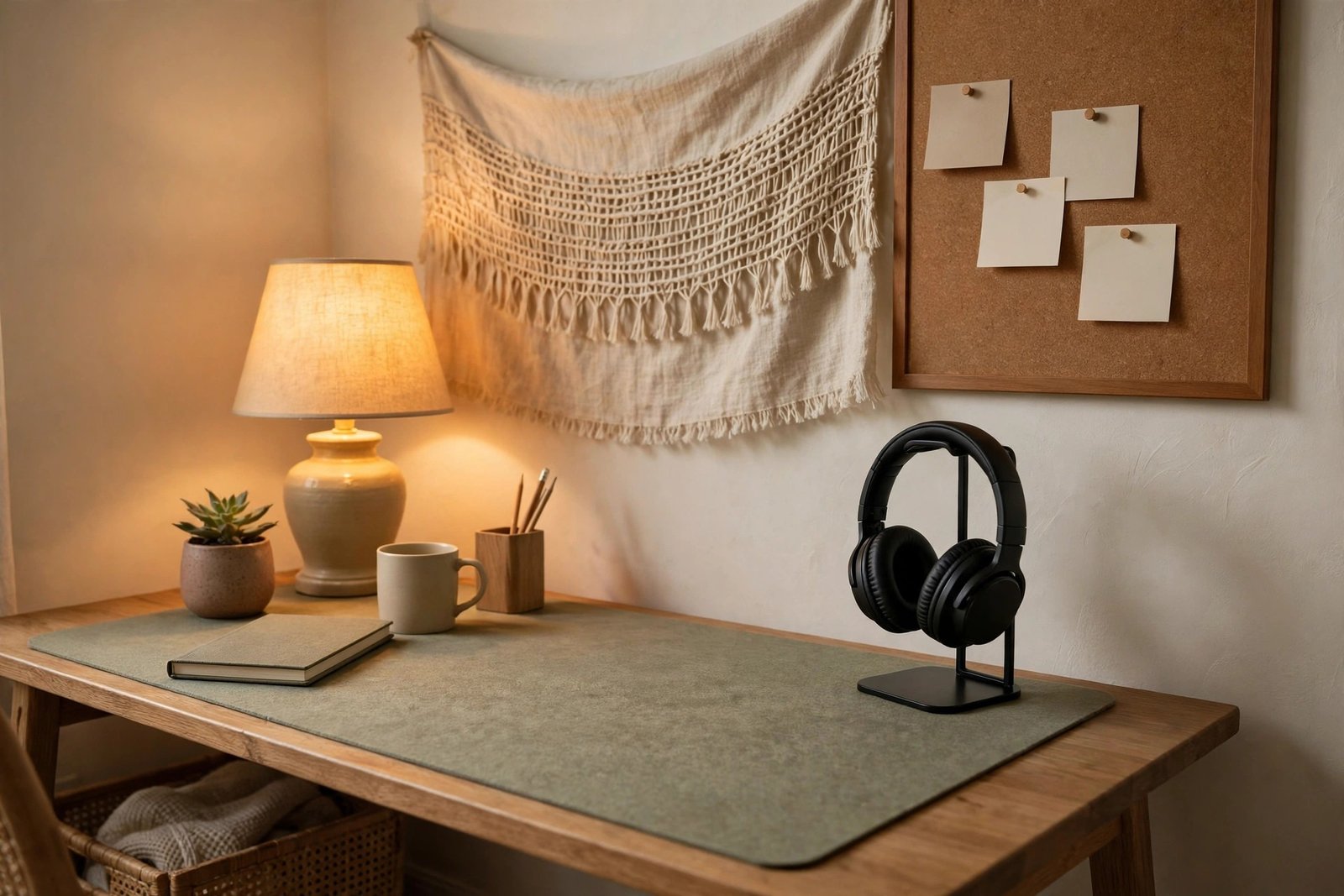
- A cork board or fabric board for a few pinned notes you genuinely need to see.
- A desk mat in a warm, muted colour to define the work area against the wall.
- A small clock or calendar with a clean design, if you like functional decor.
- Headphones on a stand or hook, kept as part of the tidy picture rather than dropped on the desk.
Colour on the Wall Without Painting
If the wall colour itself is part of the problem — a cold grey, a yellowed white, or a shade you simply dislike — you can still change what your eyes meet. A large piece of fabric hung from a removable strip, a big art print, or peel-and-stick wallpaper on the section of wall behind the desk all transform the view and come away without damage when you move out.
Keep the tone calm and in the same family as the rest of the room. Colours that shout for attention will fight your work for focus all day; our guide to office colours that distract you explains which tones to avoid and what to choose instead.
Mistakes to Avoid
- Covering the wall with many small decorations. A busy gallery of tiny frames creates visual noise exactly where your eyes rest, and focus suffers.
- Hanging decor too high. Pictures placed near the ceiling do nothing for the person sitting at the desk. Place the main piece at seated eye level.
- Turning shelves into open storage for everything. Without fixed homes for items, the wall becomes clutter at eye level instead of a clear desk.
- Adding motivational clutter you stop seeing. Notes and quotes you no longer read are just mess with words on. Keep only what is current and useful.
- Using fixings your rental agreement forbids. Adhesive strips, leaning frames, and desk-standing shelves achieve the same look without risking your deposit.
Frequently Asked Questions
What is the best thing to put on the wall in front of my desk?
One calm, fairly large piece at eye level works best: a landscape print, a simple framed drawing, or a woven hanging in muted colours. It gives your eyes a resting point without demanding attention, which is exactly what a working wall should do.
How do I decorate a rented office wall without losing my deposit?
Use picture-hanging adhesive strips, lean frames on shelves, choose desk-standing shelf units, and try peel-and-stick wallpaper or fabric on the wall section behind the desk. All of these come away cleanly and leave the wall as you found it.
Will wall decor distract me while I work?
Not if you keep it simple. Distraction comes from clutter, bright clashing colours, and items that demand reading or attention. One or two calm pieces in soft tones act as a backdrop; your eyes rest on them briefly between tasks and then return to work more easily.
My wall is covered by shelves already and still feels dull. What is missing?
Usually light and life. Add a small side lamp to create gentle depth on the wall, and one plant with soft foliage. Storage solves tidiness, but warmth and greenery are what change how the space feels.
Conclusion
A desk that faces a wall does not have to feel like a punishment corner. Give the wall one calm focal point at eye level, lift storage upward with a tidy system, add soft side light and a plant, and use colour gently and reversibly. The wall stops being a blank barrier and becomes the backdrop of a small workplace that feels chosen, calm, and easy to focus in.
3 thoughts on “Desk Faces a Wall and Feels Dull: Decor Fixes That Help Focus”