
A small office can be perfectly tidy and still feel unwelcoming. Bare white walls, a plain desk, hard floors and cool white light make the room look more like a waiting room than a place you want to sit in for eight hours. The usual fix is to buy decor, but in a small space every new object takes up room you do not have, and the office quickly tips from cold to cluttered.
The good news is that warmth does not come from the number of things in a room. It comes from colour temperature, texture and a few soft surfaces that absorb the hard, empty feeling. This guide shows how to make a small office feel warm and finished while keeping the surfaces clear and the space easy to work in.
Quick Answer
If your small office looks cold and bare, warm it up in this order: switch to warm white light bulbs, add one soft textile such as a rug or curtain, bring in a warm material like wood, and finish with a single plant. Each change replaces or upgrades something already in the room instead of adding a new object, so the office feels warmer without gaining clutter.
- Warm light changes the feel of the whole room for the cost of a bulb.
- Texture, not decoration, is what makes a room feel warm.
- Swap plain items for warmer versions instead of adding more items.
- One plant and one piece of wall art is usually enough.
Why Small Offices Feel Cold in the First Place
Cold-looking offices tend to share the same ingredients. The walls are white or pale grey, the floor is bare wood, tile or laminate, the furniture is black, white or metal, and the ceiling light is a cool white bulb that makes everything look slightly blue. Every surface is hard and smooth, so light bounces around and the room feels flat and echoing.
Small rooms show this more than big ones. In a large office, a sofa, bookshelves and curtains soften the edges without anyone planning it. In a small office there is only a desk, a chair and a wall, so nothing absorbs the hardness. Once you see the problem as too many hard, cool surfaces, the fixes become obvious: soften a few surfaces and warm up the colour of the light, rather than filling the room with objects.
Start With the Light: It Changes Everything
The fastest warmth upgrade is your light bulb. Cool white and daylight bulbs, often labelled 5000K and above, are useful in workshops but make a home office feel clinical. Warm white bulbs, around 2700K to 3000K, give the same room a softer, late-afternoon feel, and they make white walls look cream instead of grey.
If your main light is a harsh ceiling fitting, use a desk lamp or a small floor lamp in the corner as your main evening light instead. Light that comes from lower down, at desk height or below, feels warmer than light from overhead because it creates gentle shadows instead of flattening the room. None of this adds a single object to your desk, but the room will photograph and feel completely different.
Wall colour works with the light. If you can paint, a warm off-white, soft beige or muted clay tone removes the cold feeling at the source. If you are choosing colours, it helps to know which shades work against focus, and our guide to office colours that distract you explains what to change first and what to leave alone.
Add Texture, Not Objects
Texture is the difference between a room that looks finished and a room that looks empty. A flat-weave rug under the desk, a cushion on the chair, or a curtain panel beside the window each add a soft surface that catches light differently and absorbs sound. The room instantly feels calmer and warmer, and none of these items sit on your desk or take working space.
Choose one or two textiles, not five. A rug is the highest-value addition because it covers the largest hard surface in the room and defines the work zone. Pick a size that fits under the desk and chair with room for the chair to roll, and a low pile so the chair wheels still move. A cushion in a warm colour, such as rust, mustard or deep green, can then pick up a colour from the rug so the two feel like a set.
Curtains help even on a small window. A single panel in a natural fabric softens the hard rectangle of the frame and filters bright light. If the window is behind your desk and rarely opened, a simple curtain on a tension rod takes minutes to fit.
Bring In One Warm Material
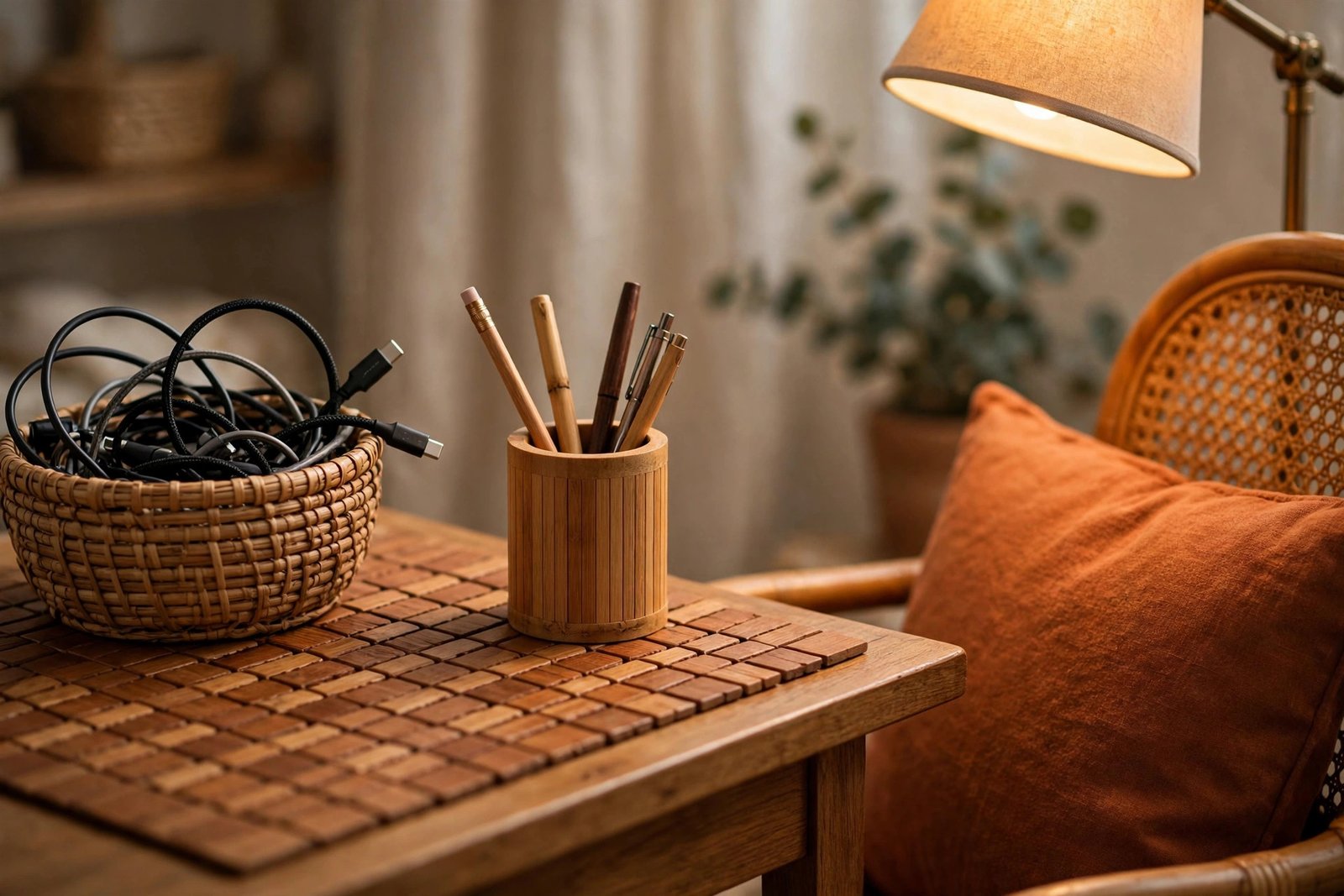
Materials have temperatures too. Glass, chrome and white laminate read as cold. Wood, cork, bamboo, woven baskets and unglazed pottery read as warm. You do not need wooden furniture to get the effect. A wooden desk mat or monitor stand, a cork board, a woven basket for cables, or a bamboo pen pot each move the balance.
The swap rule keeps this clutter-free: when something warm comes in, the plain version goes out. Replace the plastic pen pot with the bamboo one instead of keeping both. Upgrade the desk surface with a large wood-effect mat that also protects it, rather than layering objects on top. By the end, the desk holds the same number of items, but almost every visible material is warm.
One Plant Does More Than Five Ornaments
A single healthy plant adds colour, soft shapes and a sense of life that no ornament matches, and it does it in one pot. For a small desk, choose a compact plant that stays in its pot size, or put a trailing plant on a shelf where the leaves soften the wall line. Our list of small desk plants that do not take over your workspace covers varieties that stay tidy in tight spaces.
Keep it to one or two plants. Three or more small pots start to read as a collection that needs dusting and watering space, and the calm effect is lost. One plant, well placed, looks deliberate. Five small ones look like storage.
Warm the Walls With One Strong Piece
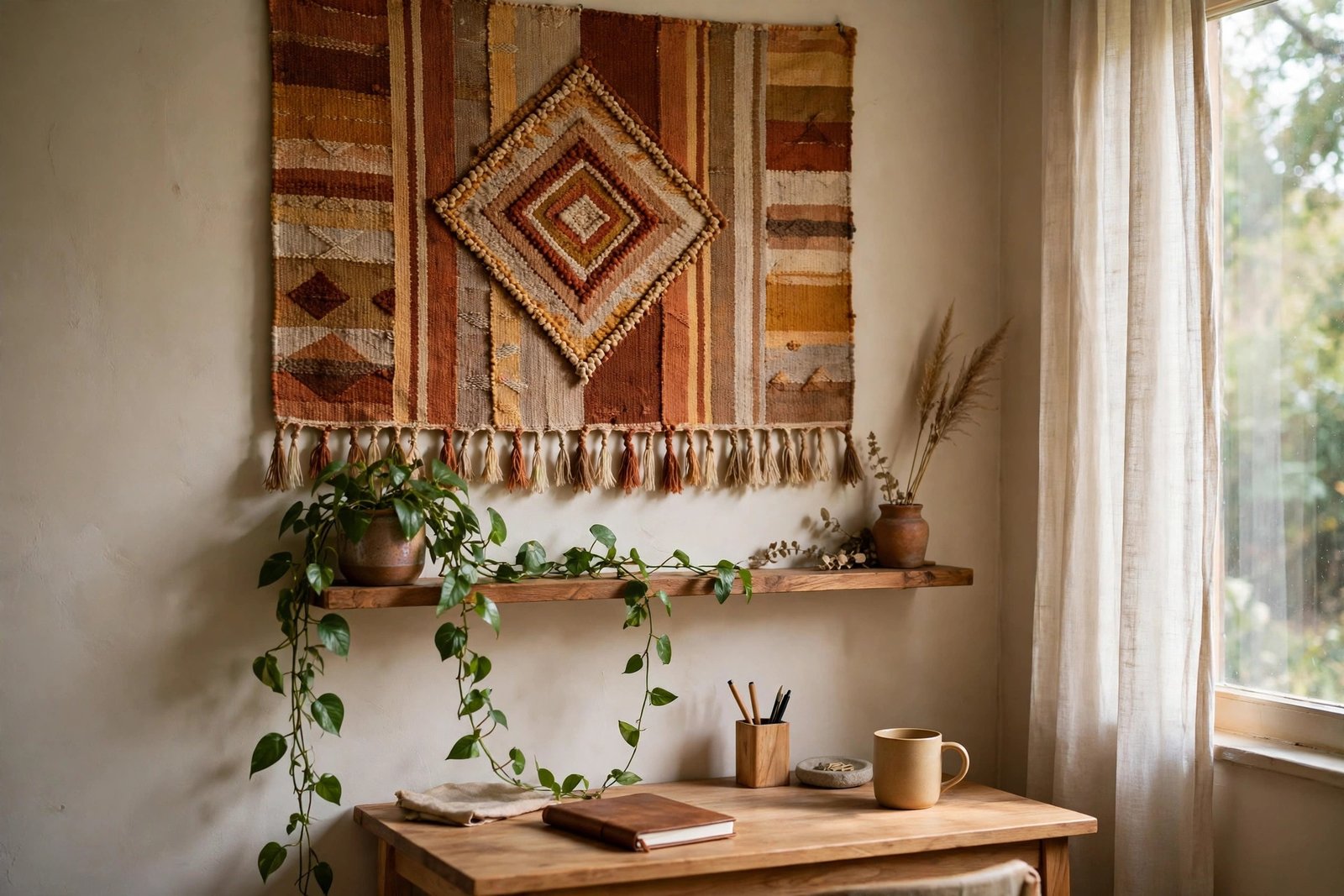
Bare walls are the main reason a room looks unfinished, but the answer is not a gallery of small frames. One large picture, poster or woven wall hanging fills the visual space, adds colour and texture, and still leaves the wall mostly calm. A single big piece also looks warmer than many small ones because it feels chosen rather than accumulated.
If you rent and cannot drill, that is not a barrier. Leaning a large framed piece on the desk or a shelf against the wall works well in small rooms, and our guide on how to decorate a rental office without damaging walls covers the safest hanging options in detail. A fabric wall hanging on a removable hook gives the biggest warmth return of all, because it adds texture and colour in one piece.
The Swap Rule: Warmth Without the Slow Creep of Clutter
Offices rarely become cluttered in one day. They fill up one small purchase at a time. To keep the warmth and lose the clutter, use these habits:
- Swap, do not add. Every new warm item replaces a cold or unused one.
- Keep the desk surface for work. Warmth lives on the floor, walls, chair and shelves, not in the keyboard area.
- Hide the ugly basics. Cables in a woven basket or tray and chargers in one drawer remove visual coldness too.
- Review monthly. If an item has not been used or enjoyed in a month, it is clutter, whatever it cost.
Mistakes to Avoid
- Buying lots of small decor. Many small objects read as clutter in a small room, even when each one is nice.
- Keeping cool white bulbs. No amount of decor will warm a room lit by blue-toned light.
- Covering the desk with ornaments. Warmth items belong on the floor, walls and chair so the work surface stays clear.
- Choosing cold colours for textiles. A grey rug and grey cushion keep the cold palette; pick warm tones instead.
- Adding a plant collection. One or two plants look calm; a shelf of small pots looks like storage and adds chores.
Frequently Asked Questions
What is the cheapest way to make a small office feel warmer?
Change the light bulbs to warm white, around 2700K to 3000K. It costs very little, takes minutes, and changes how every colour in the room looks. Add a rug next if the budget allows, since it covers the largest cold surface.
Can a small office feel warm with white walls?
Yes. Warm light, wood tones, a warm-coloured rug and curtains make white walls look soft and clean rather than bare. White walls only look cold when the light is cool and every other surface is hard and smooth.
How many decorative items does a small office need?
Usually three: one plant, one large piece of wall art or a fabric hanging, and one warm desk accessory such as a wooden mat or lamp. More than that and a small room starts to feel full rather than warm.
Will a rug work under a rolling office chair?
Yes, if you choose a low-pile or flat-weave rug and size it so all chair wheels stay on it. Avoid thick, fluffy rugs, which trap the wheels and make the chair hard to move.
Conclusion
A cold, bare office is not a decor shortage. It is a shortage of warm light, soft texture and warm materials. Warm the bulbs, soften the floor and one wall, swap cold accessories for wooden or woven versions, and add a single plant. The room will feel finished and welcoming, and the desk stays exactly as clear as it was before.

1 thought on “Small Office Looks Cold and Bare: How to Make It Warm Without Clutter”