Clutter in a home office rarely arrives in one dramatic moment. It creeps: a mug left on Monday, a stack of post on Tuesday, a charger borrowed on Wednesday and never returned. By Friday the desk that started the week clear has disappeared under a week’s worth of small exceptions. Then the tidy-up feels like a big job, so it gets postponed, and the creep restarts from an even worse position.
A weekly reset breaks that cycle. Fifteen minutes, on the same day each week, following the same short routine, returns the office to its starting point before clutter can build into a project. It is not a deep clean and it is not a reorganisation. It is maintenance, like wiping a kitchen counter, and it works because it is small enough to never skip.
Quick Answer
A 15-minute weekly office reset has five timed steps: clear the desk surface completely (3 minutes), process the paper pile into file, act, or recycle (4 minutes), return wanderers like mugs, chargers and books to their homes (3 minutes), empty the bin and refresh supplies (2 minutes), and reset the desk for Monday with only daily tools in place (3 minutes). Same day, same order, every week.
- Pick a fixed slot, such as the last 15 minutes of your working week.
- Use a timer; the clock keeps each step small and stops perfectionism.
- Everything you touch goes to a home, not to a new pile.
- Finish by setting the desk up ready, so the next workday starts clean.
Why Fifteen Minutes Is Enough
The reset works because of timing, not effort. Clutter that is seven days old is almost all surface clutter: items out of place, paper unprocessed, small messes not yet buried. Nothing has had time to become a drawer problem or a lost-document problem. Fifteen minutes honestly spent is plenty for one desk and a small room.
The same logic explains why monthly tidy-ups fail. After a month, the clutter has layers, decisions have piled up, and the job needs an hour and real willpower. Weekly, the decisions are tiny and recent, and you still remember what everything is. If your desk currently needs more than maintenance, first build the storage system underneath it with our guide to a storage system for a desk that always looks messy; the reset then keeps that system working.
Step 1: Clear the Surface (3 Minutes)
Take everything off the desk that does not live there permanently. Not “tidy it into neater piles” — off. Mugs, snacks, loose paper, books, gadgets, post, the jumper over the chair. Put them on the bed, the floor by the door, or a chair. A completely empty surface is the reset’s foundation, because it forces every item to earn its way back.
Wipe the surface while it is empty. This takes thirty seconds and is the only cleaning the reset includes, but it changes how the desk feels when you sit down next.
Step 2: Process the Paper (4 Minutes)
Paper is the fastest-growing clutter, so it gets the longest step. Take the whole pile and sort each sheet once, into three outcomes. File it: it belongs to a current project or the archive, so it goes there now. Act on it: it needs a reply, a payment, or a signature, so it goes into your active tray and onto your task list. Or recycle it: most post, envelopes, drafts, and packaging end here.
The rule is one touch. Picking the same sheet up in three different resets means it never actually got decided. Small, annoying items, such as receipts you might need, go in one labelled envelope in the archive rather than staying loose “just in case”.

Step 3: Return the Wanderers (3 Minutes)
Every office has wanderers: things with a home that ended the week somewhere else. Chargers borrowed by the sofa, scissors in the kitchen, your notebook in another room, mugs multiplying beside the monitor. Walk the items you cleared in Step 1 back to their homes. If an item has no home, that is useful information: either give it one now, or accept it does not belong in the office and move it out for good.
This step stays fast only if your storage has fixed, findable places. Our guide to containing the office supplies taking over your desk shows how a single home for small supplies stops them spreading across the surface in the first place.
Step 4: Bin and Supplies (2 Minutes)
Empty the bin into the household rubbish, including the recycling you sorted in Step 2. Then check the small supplies the week has used up: printer paper, sticky notes, pens that work, tissues, screen wipes. Refill from your backup box now, while you are thinking about it, instead of discovering the empty tray mid-task on Tuesday. Two minutes here saves five small frustrations later.
Step 5: Set Up for the Next Workday (3 Minutes)
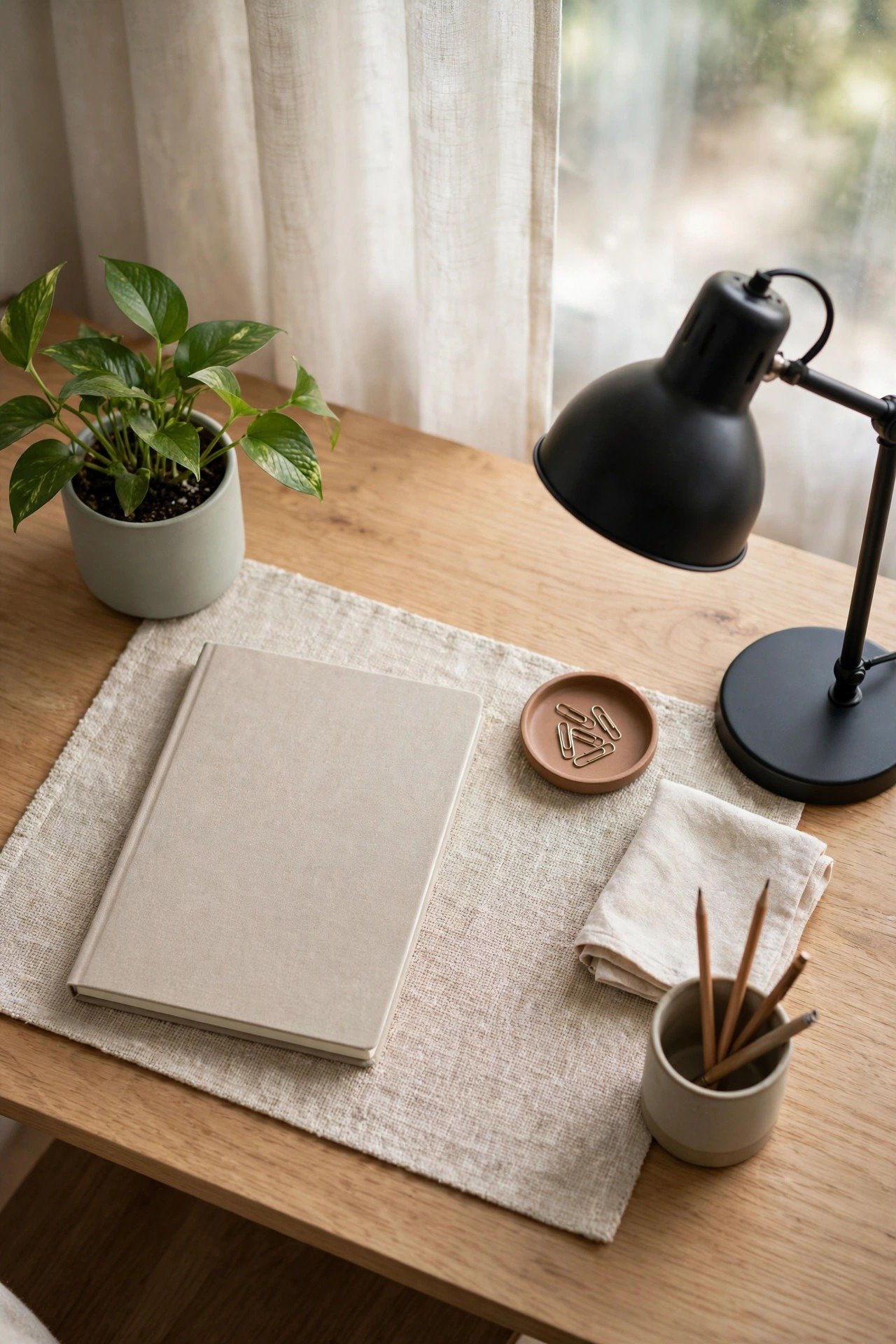
Finish by arranging the desk exactly as you want to find it. Monitor, keyboard, notebook, pen, water bottle spot cleared, chair pushed in. Put out anything the first task of the week needs: the file, the notebook opened at the right page, the charger plugged in. The reset ends with a desk that invites work rather than asking for tidying first.
This closing step borrows the same idea as the evening shutdown cues in our guide to room cues that help you switch off after work: a clear, deliberate finishing state tells your brain the week is done, and the tidy desk on Monday morning returns the favour.

Keeping the Habit Alive
Attach the reset to an existing anchor: the end of your last workday, just before a regular call, or alongside another weekly routine. Keep the checklist somewhere visible until it is automatic; five steps is few enough to memorise within a month. If you share the office, do the reset together or alternate weeks, so the standard stays shared too.
Miss a week occasionally and nothing terrible happens; the next reset simply takes twenty minutes. Miss a month and you are back to a project tidy-up. Protect the slot the way you protect a meeting, because that is what makes the office look after itself.
Mistakes to Avoid
- Turning the reset into a deep clean. Sorting drawers and reorganising shelves blows the 15 minutes and makes you dread the routine. Maintenance only.
- Sorting paper into new piles. Piles are where paper goes to be forgotten. Every sheet ends filed, in the active tray, or recycled.
- Skipping the wipe and the bin. They take two minutes combined and are the difference between “tidied” and “feels clean”.
- Doing it at random times. A floating chore gets postponed. A fixed slot in the week survives busy periods.
- Leaving the desk half-set at the end. If the last step is missed, Monday starts with a chore instead of a ready desk.
Frequently Asked Questions
What if my office needs more than 15 minutes the first time?
Then it needs a one-off tidy first, not a longer reset. Spend a single session putting everything in a home, building any storage you are missing, and clearing the backlog. From the following week, 15 minutes of maintenance will be enough to hold that standard.
Which day is best for a weekly office reset?
The last working day of your week, in the final 15 minutes, works for most people: the desk is clean all weekend and ready on Monday. If your week ends untidily by nature, the first 15 minutes of the week is the second-best slot.
What belongs in the reset if I share the office?
The same five steps, plus one shared rule: personal items leave with their owner. A shared reset list on the wall, done together or in turns, keeps the standard fair and prevents one person becoming the default tidier.
Do I still need daily tidying if I do a weekly reset?
Only a light version: a minute at the end of the day to return the mug, stack the day’s paper in the tray, and clear the surface. The weekly reset is the safety net that catches whatever the daily minute missed.
Conclusion
A 15-minute weekly office reset keeps clutter at the seven-day level, where it is always small, recent, and quick to clear. Clear the surface, decide the paper, return the wanderers, empty and refill, then set the desk up ready. Same day, same order, timer on — and the big weekend tidy-up quietly stops existing.