
In an era of constant digital pings and domestic interruptions, your physical workspace is either your greatest ally or your most persistent enemy. Achieving a “flow state”—that elusive psychological zone where productivity peaks—requires more than just willpower; it requires an environment engineered for concentration. A focus-friendly office isn’t just about aesthetics; it’s about reducing the cognitive load on your brain by removing friction, noise, and visual clutter.
Whether you are working from a dedicated room or a carved-out corner of your living space, these 20 smart setup ideas will help you build a sanctuary of productivity.
1. Minimalist Layout
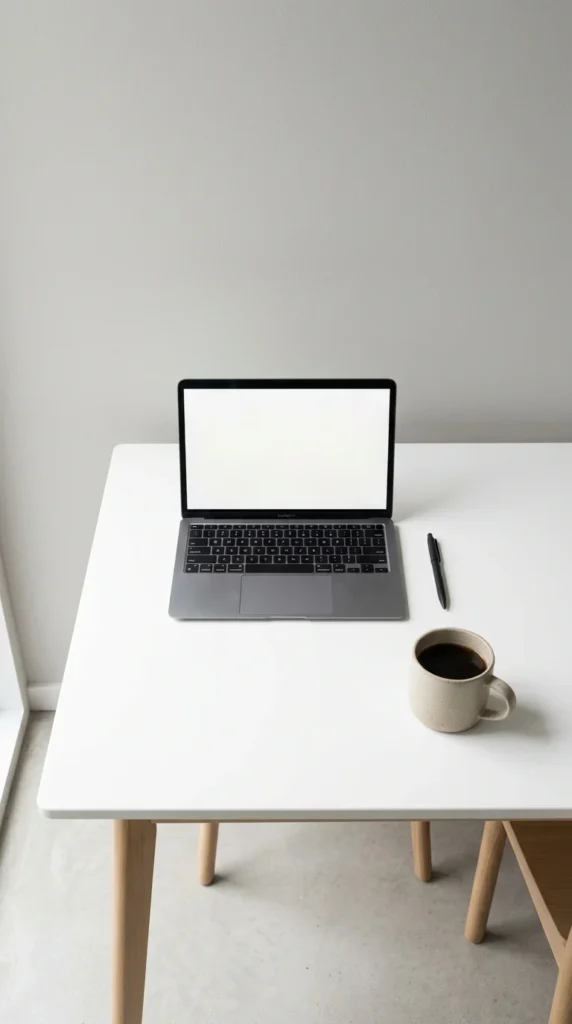
The “less is more” philosophy is the foundation of deep work. A cluttered desk leads to a cluttered mind, as every stray object competes for your neural resources. By stripping your workspace down to the absolute essentials, you eliminate the visual “noise” that can trigger procrastination. Start by removing everything from your desk and only adding back the items you use every single day.
2. Noise-Canceling
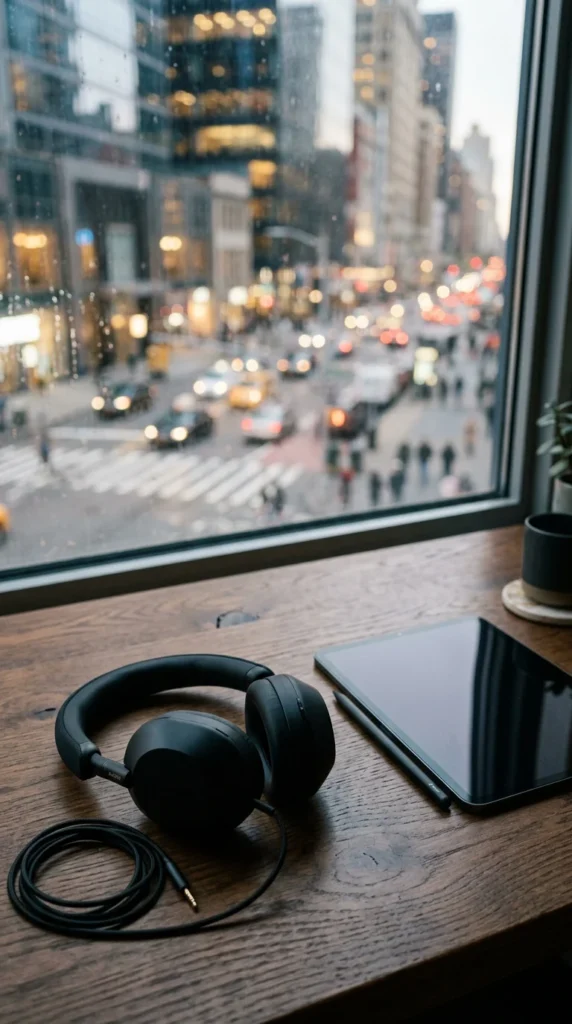
Auditory distractions are the leading cause of broken concentration. Investing in professional-grade active noise-canceling (ANC) headphones creates an instant portable “wall” between you and the outside world. Whether it’s the hum of an air conditioner or the sound of traffic, silencing the environment allows your brain to dedicate 100% of its processing power to the task at hand.
3. Ergonomic Support
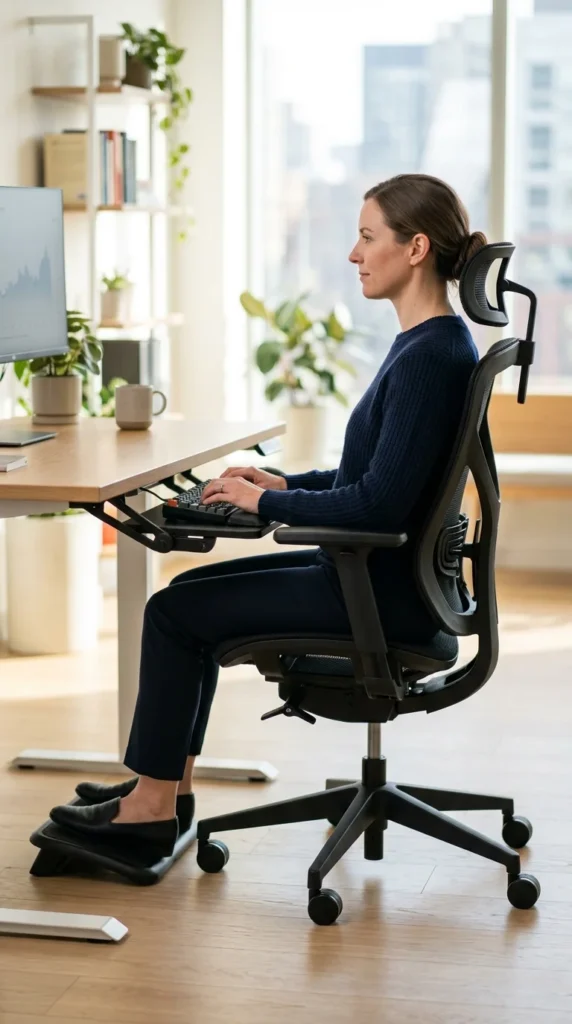
Physical discomfort is a major distraction. If your back aches or your neck is strained, your brain will prioritize that pain over your work. A high-quality ergonomic chair with lumbar support and adjustable settings ensures that your body remains comfortable for long stretches, allowing you to stay immersed in your projects without the need for constant stretching or repositioning.
4. Natural Light
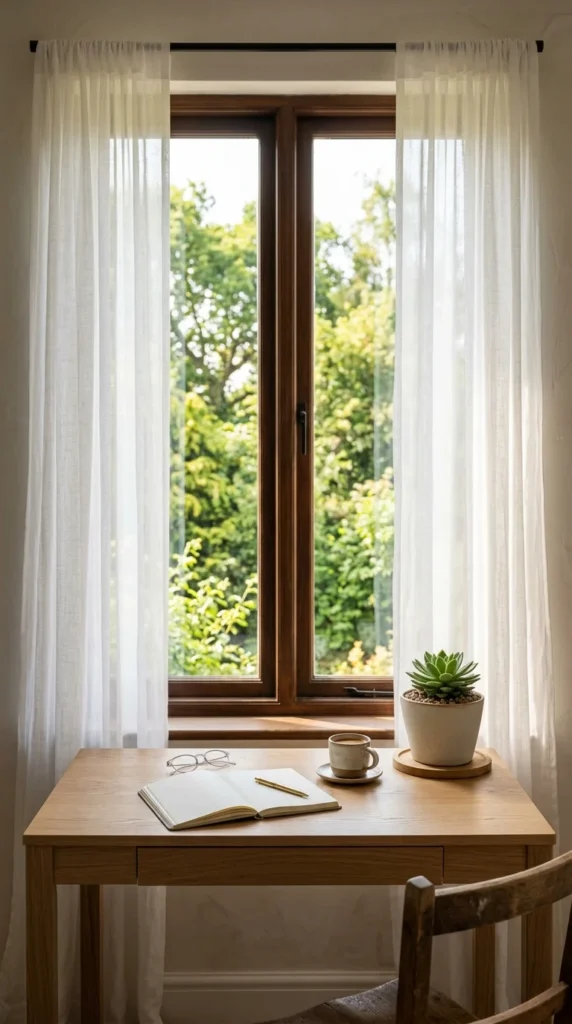
Positioning your desk near a window can significantly boost your mood and energy levels. Natural light helps regulate your circadian rhythm, keeping you alert during the day and helping you sleep better at night. However, ensure the light is hitting your desk from the side or front to avoid annoying glares on your computer screen.
5. Smart Ambiance
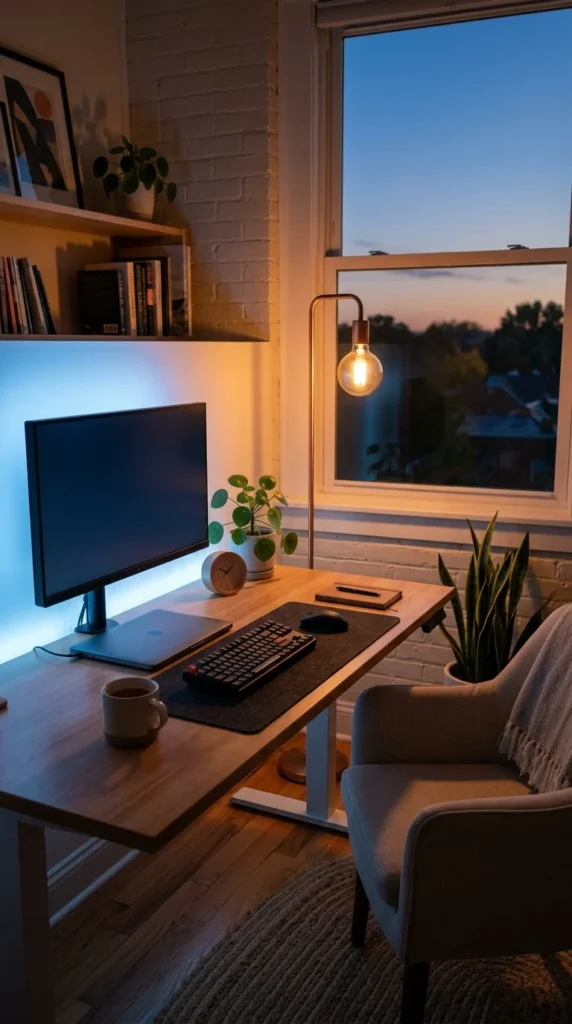
The color and intensity of your lighting can dictate your focus levels. Smart lighting systems allow you to transition from cool, bright “daylight” (which promotes alertness in the morning) to warm, soft tones in the afternoon. Using apps to automate these transitions ensures your environment always matches your biological needs without you having to lift a finger.
6. Cable Control
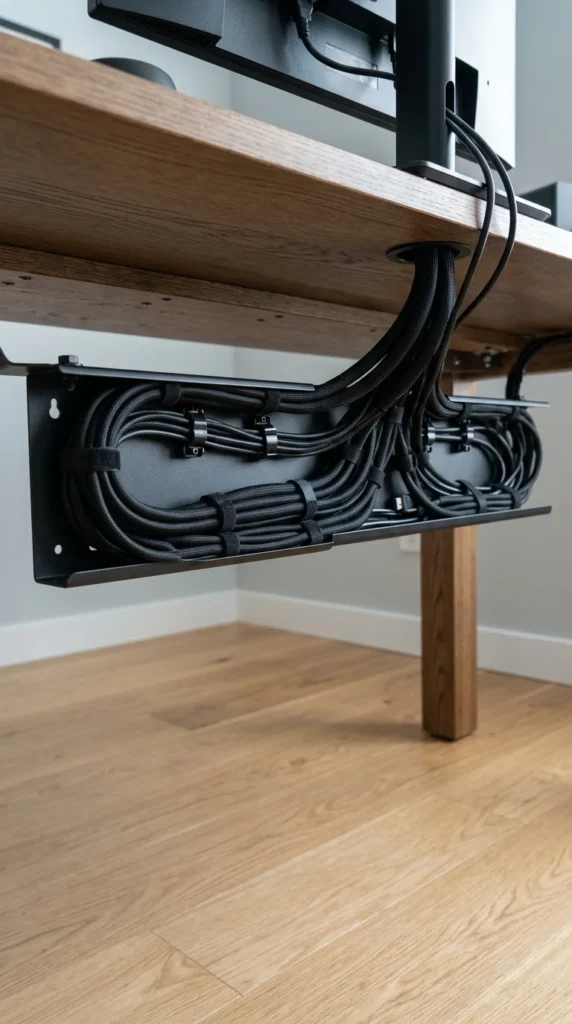
Visual chaos in the form of “cable spaghetti” is a subtle but persistent stressor. Using under-desk trays, cable sleeves, and magnetic clips to hide power strips and chargers creates a streamlined look. When the wires are invisible, the space feels more organized and professional, reducing the mental friction of a messy environment.
7. Acoustic Treatment
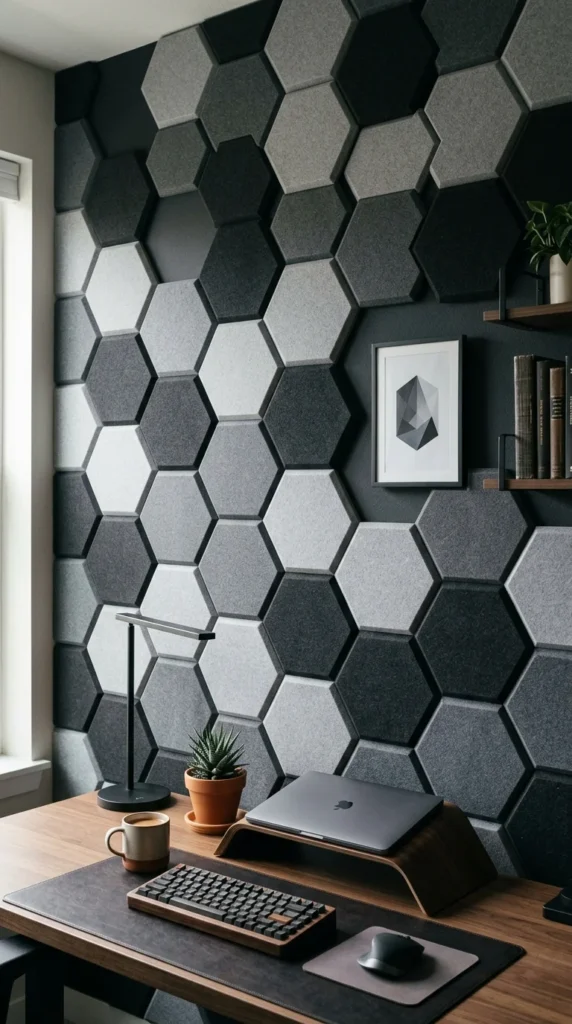
In rooms with hard floors and high ceilings, sound tends to bounce, creating an echo that can be distracting during calls or deep work. Installing acoustic panels—available in many artistic designs—absorbs ambient noise and prevents sound leakage. This creates a “deadened” sound environment that feels cozy and quiet, much like a professional recording studio.
8. Vertical Organization
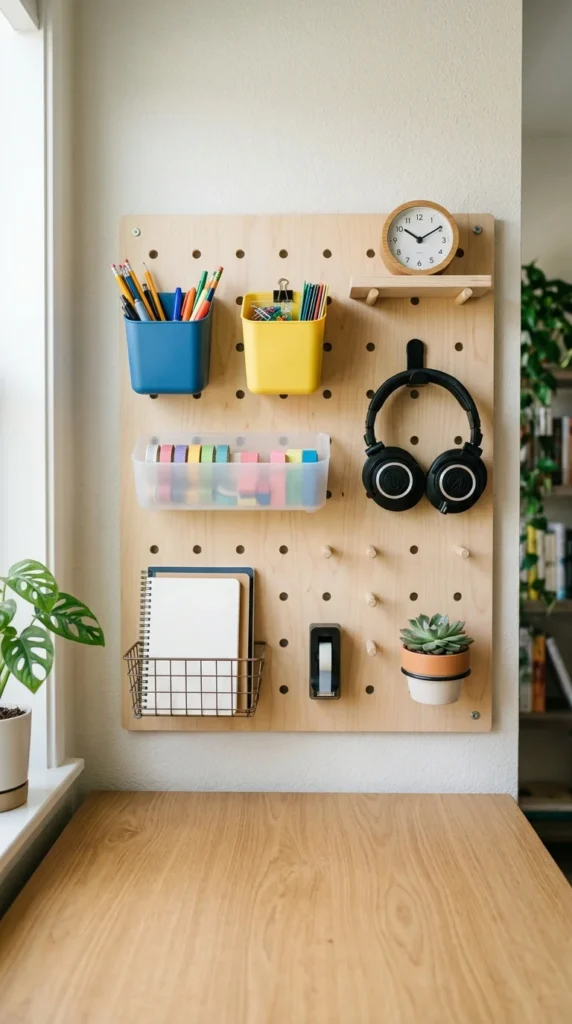
To maintain a minimalist desk while keeping tools handy, look upward. Vertical storage solutions like pegboards or floating shelves keep your essential items within arm’s reach but off your primary workspace. This “clear deck” policy ensures that your immediate field of vision remains focused only on your screen and your primary task.
9. Focused Illumination
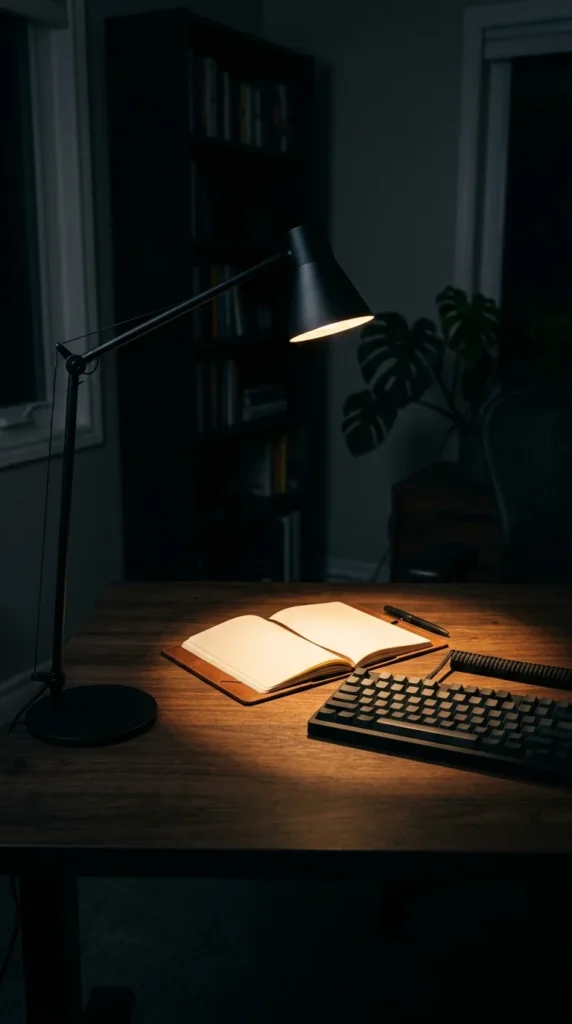
Task lighting is essential for preventing eye strain. A dedicated desk lamp with an adjustable neck allows you to direct light exactly where you need it. By keeping the rest of the room slightly dimmer and the workspace brightly lit, you create a “spotlight effect” that naturally draws your attention to your work and away from room-wide distractions.
10. Biophilic Elements
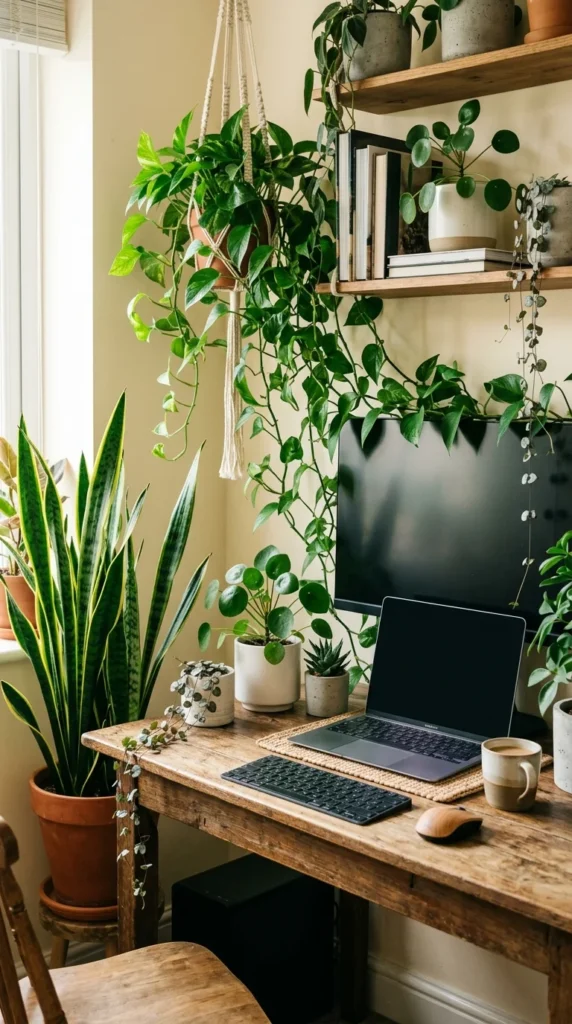
Bringing nature indoors has been scientifically proven to reduce stress and improve cognitive function. A few well-placed plants can purify the air and provide a “soft” visual break for your eyes when you look away from the screen. This connection to nature helps lower cortisol levels, making it easier to stay calm and focused during high-pressure deadlines.
11. Dynamic Height
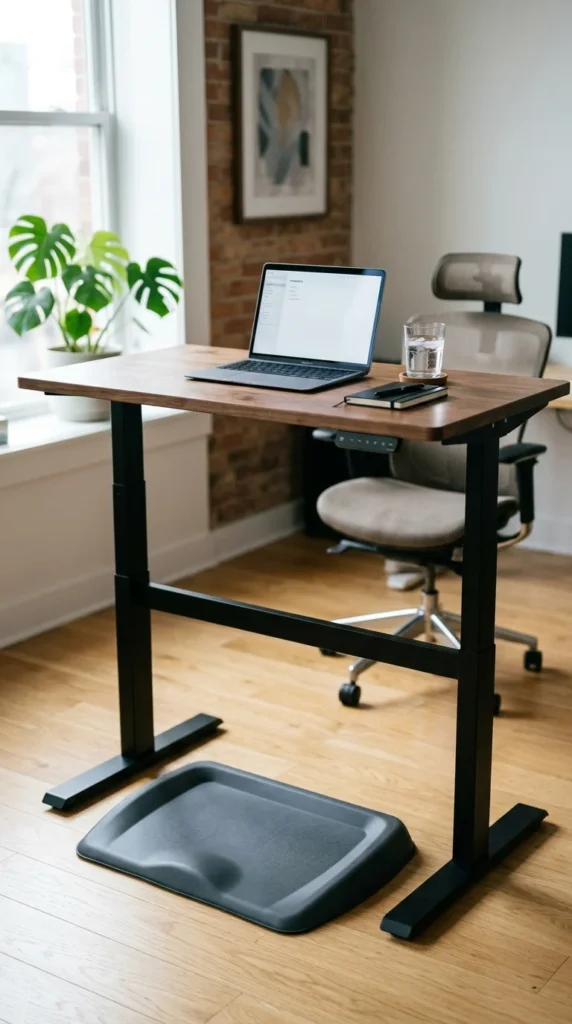
Sitting in one position for eight hours is a recipe for lethargy. An electric standing desk allows you to change your posture throughout the day. Switching to a standing position for 20 minutes every hour can re-energize your body, boost blood flow to the brain, and break the monotony that often leads to mindless scrolling or distraction.
12. Digital Docking
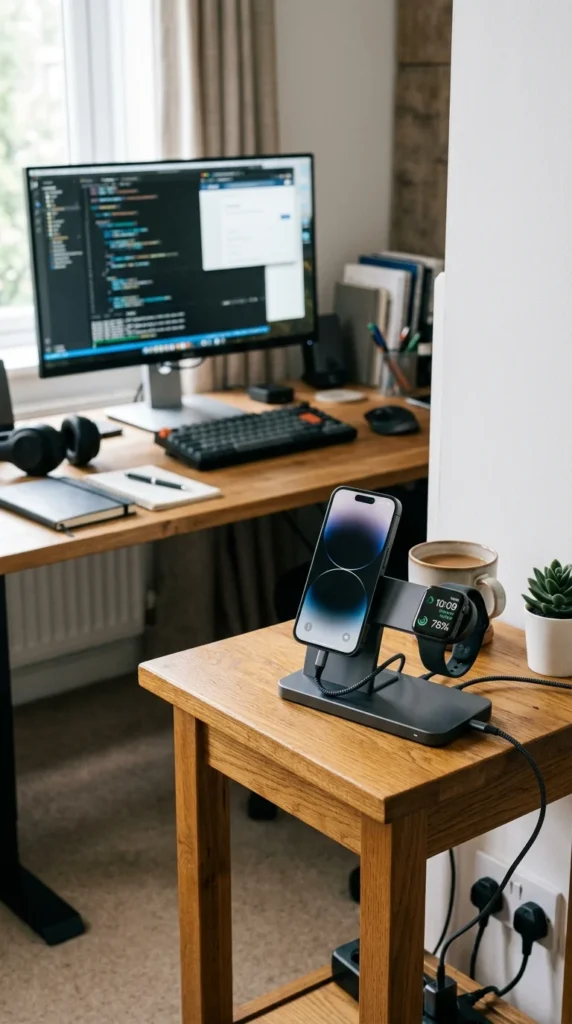
One of the biggest distractions is the smartphone. Create a “Digital Docking Station” located across the room or in a drawer. By physically separating yourself from your phone during deep work blocks, you eliminate the temptation to check notifications. If you can’t see the screen light up, you are far less likely to break your concentration.
13. Sensory Scents
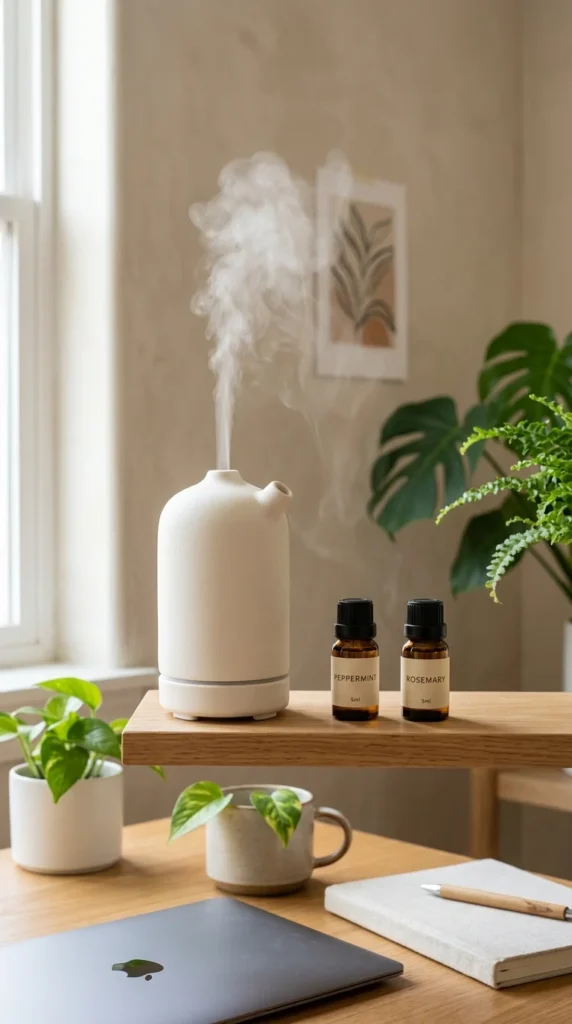
Scent-scaping is a powerful tool for focus. Using an essential oil diffuser with specific scents like peppermint (for alertness), lemon (for clarity), or rosemary (for memory) can prime your brain for work. Over time, your brain will associate these specific smells with “work mode,” making it easier to slip into a focused state as soon as you turn the diffuser on.
14. Functional Zoning
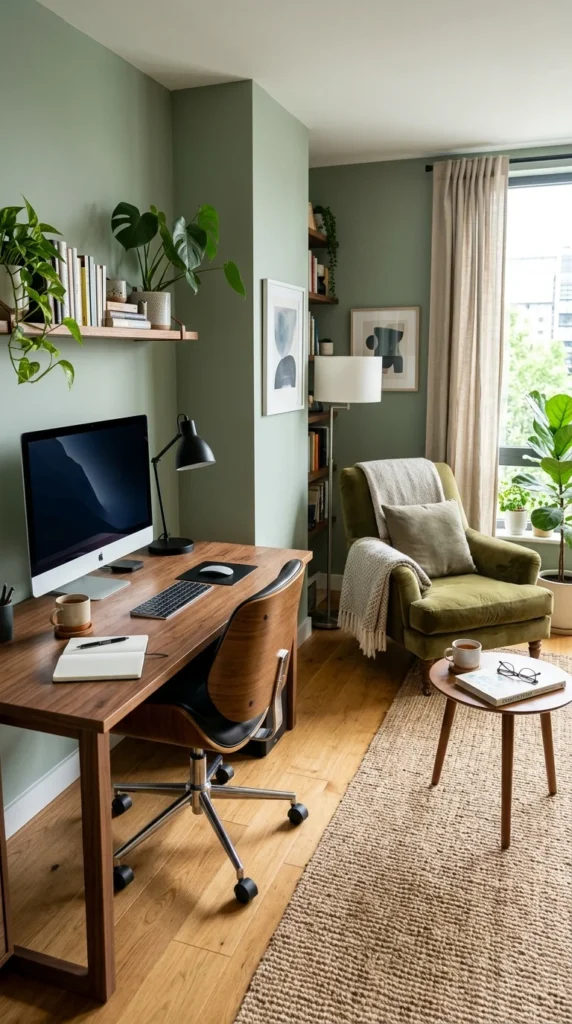
If your space allows, divide your office into zones. Have a “Deep Work Zone” (the desk) and a “Creative/Thinking Zone” (a comfortable chair or a different table). By moving to a different physical spot for different types of tasks, you signal to your brain what kind of thinking is required, preventing the mental fatigue of staying in the same spot all day.
15. Screen Elevation
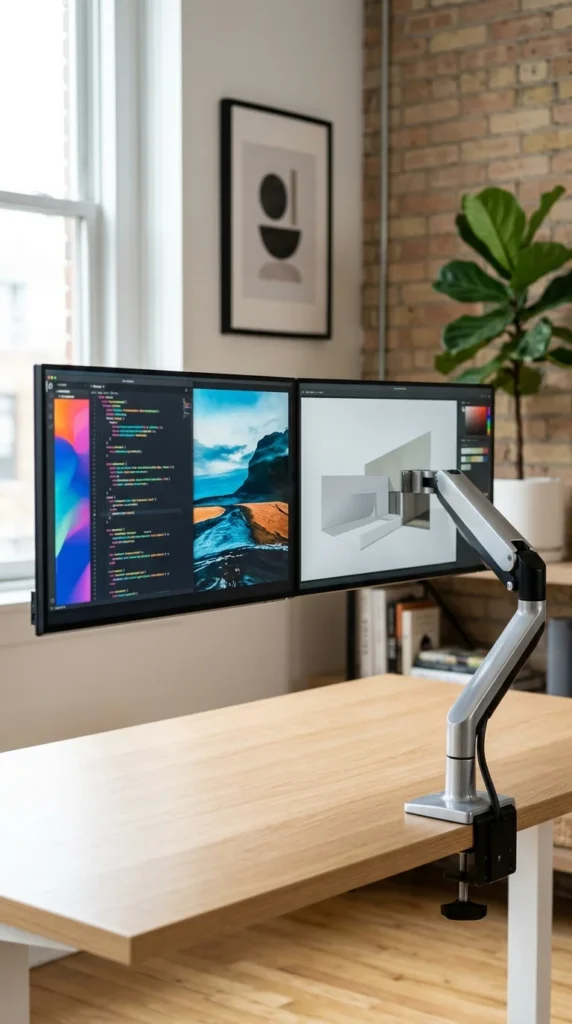
A monitor arm does more than save desk space; it ensures your screen is at the perfect ergonomic height. Looking down at a laptop or a low monitor causes neck strain and slouching. By elevating the screen to eye level, you improve your posture and reduce the physical fatigue that often leads to a loss of focus in the late afternoon.
16. Visual Privacy
In open-plan homes or shared spaces, visual interruptions are constant. A stylish room divider or privacy screen can act as a psychological boundary. It blocks out the sight of household chores, pets, or family members, creating a “cubicle of concentration” that tells both you and everyone else that you are currently “at work.”
17. Desktop Partitioning
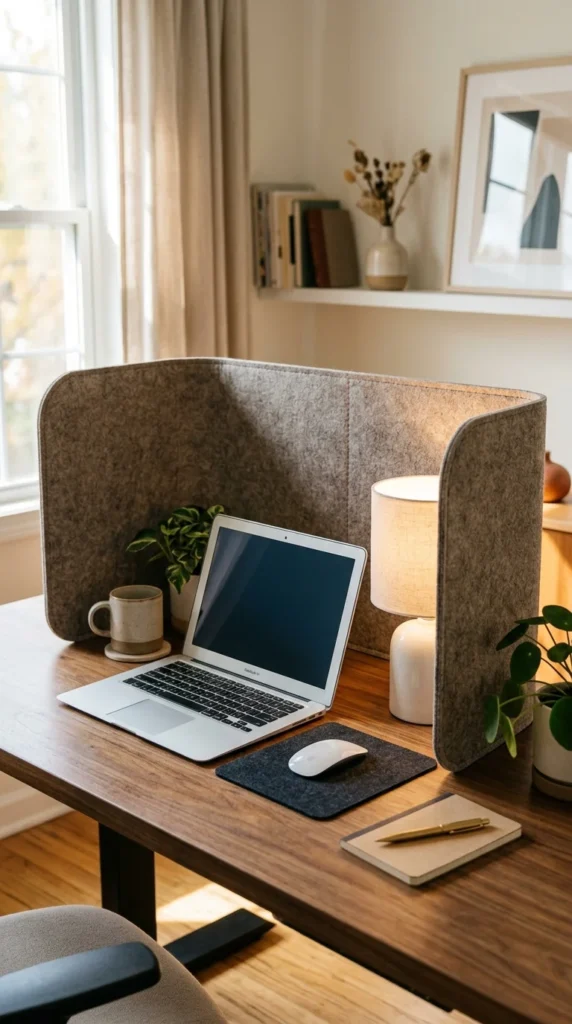
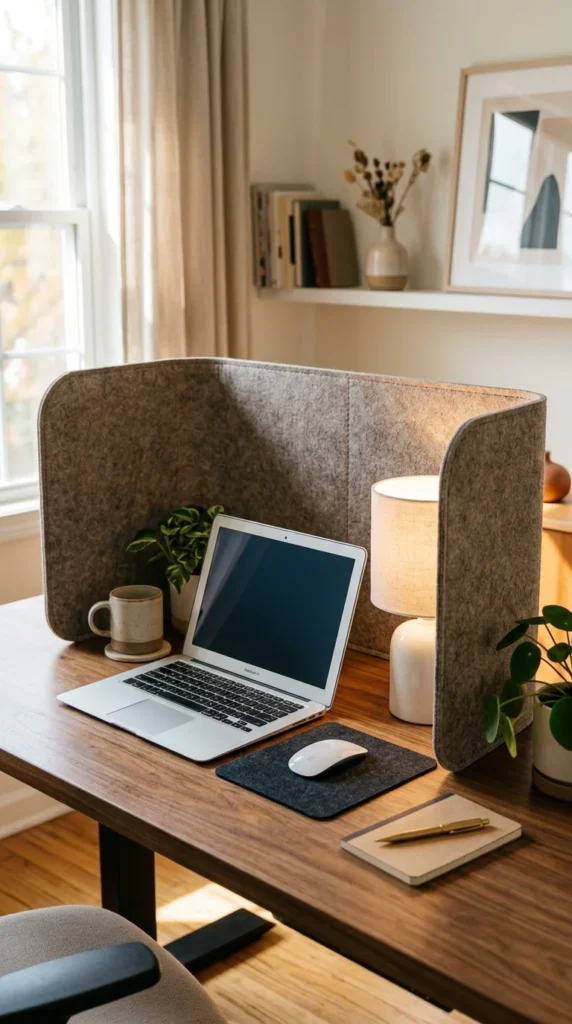
If a full room divider is too much, desktop partitions or desk wraps can provide a similar effect. These small panels (often made of sound-dampening felt) wrap around your desk to create a “cockpit” feel. This limits your peripheral vision, keeping your eyes locked onto your work and reducing the impact of movement in the room around you.
18. Concealed Hardware
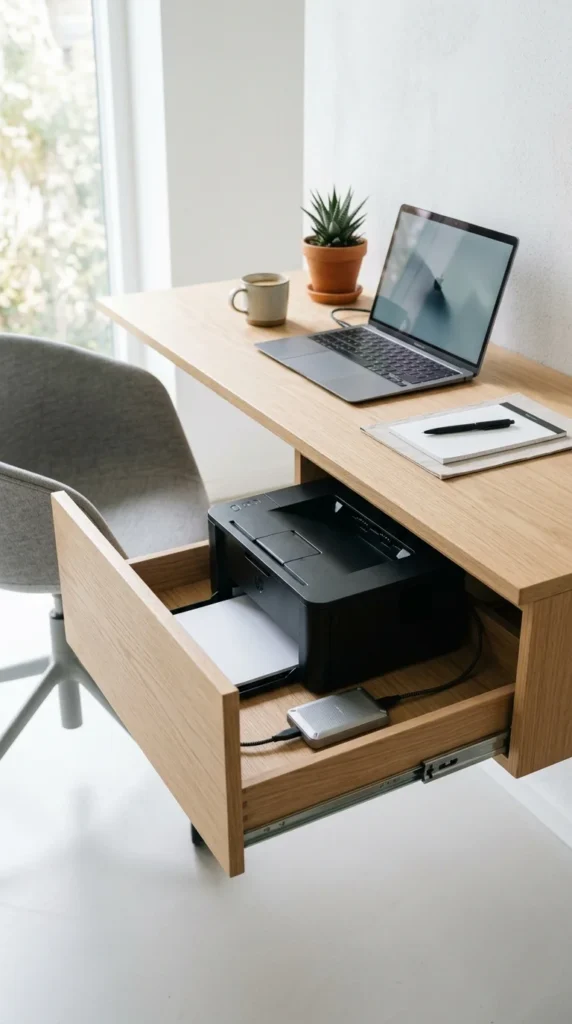
Large pieces of hardware like printers, scanners, and external hard drives are often bulky and visually distracting. Hiding these in cabinets, under-desk drawers, or behind decorative screens keeps the “tech footprint” of your office small. When you only see the tools you are currently using, your mind stays focused on the current task rather than the clutter of peripherals.
19. Analog Workspace

Sometimes, the best way to focus is to go offline. Dedicate a small portion of your setup to “analog” work. When you need to brainstorm, outline a project, or schedule your day, move away from the screen to your paper planner or notebook. This break from blue light and digital notifications can provide a massive boost to your creative clarity.
20. Chromotherapy Accents
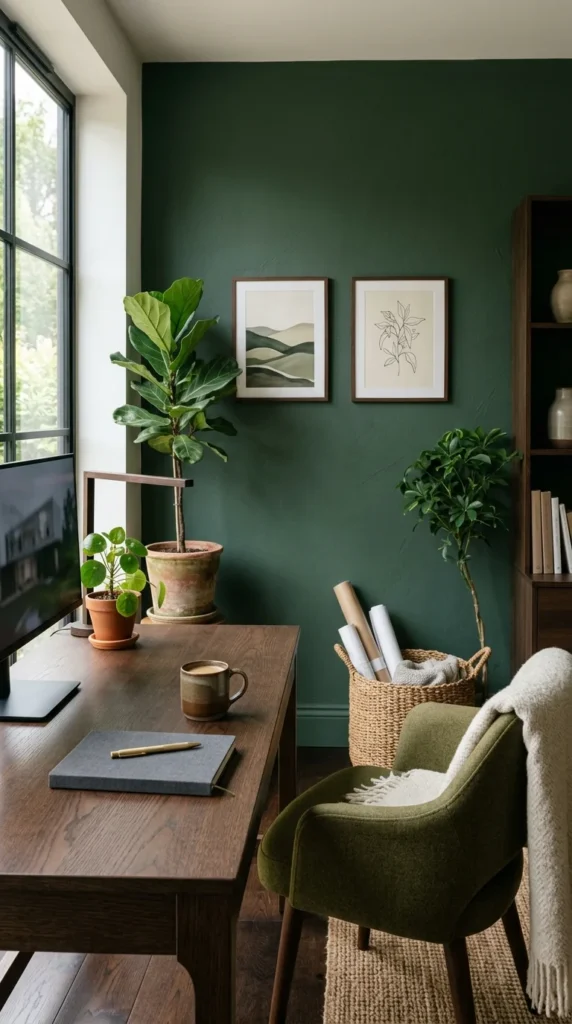
Color psychology plays a huge role in how we feel in a space. Avoid bright, jarring colors like “emergency” red or neon orange in your field of vision. Instead, opt for “focus colors” like sage green, deep navy, or soft terracotta. These colors are known to lower heart rates and provide a stable, grounded environment that supports long-term mental endurance.

