

In the modern world, the home office is more than just a place to answer emails; it is the cockpit of your professional life and the engine room of your prosperity. Feng Shui, the ancient Chinese art of placement, suggests that the arrangement of your physical environment directly impacts your mental clarity, energy levels, and financial success. By harmonizing the “Chi” or life force in your workspace, you can transform a stressful cubicle into a sanctuary of high performance.
Here are 21 powerful home office Feng Shui ideas to elevate your energy and invite abundance into your career.
1. Command Position
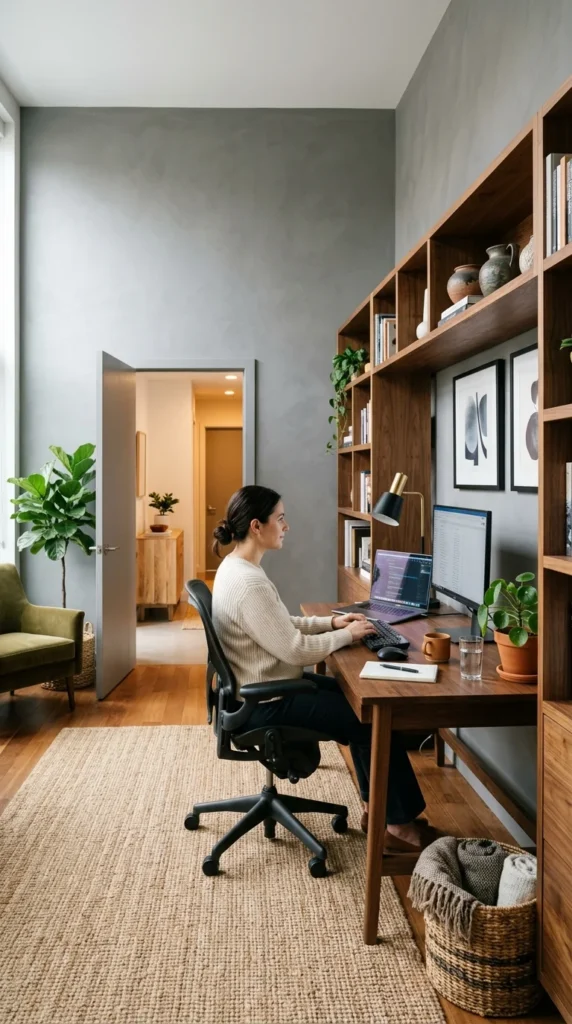
The most critical rule in Feng Shui is the “Commanding Position.” You should place your desk so that you can see the door without being directly in line with it. This placement symbolically allows you to see opportunities and challenges coming your way, providing a sense of security and control. Never sit with your back to the door, as this can lead to feelings of vulnerability and being “stabbed in the back” professionally.
2. Solid Walls
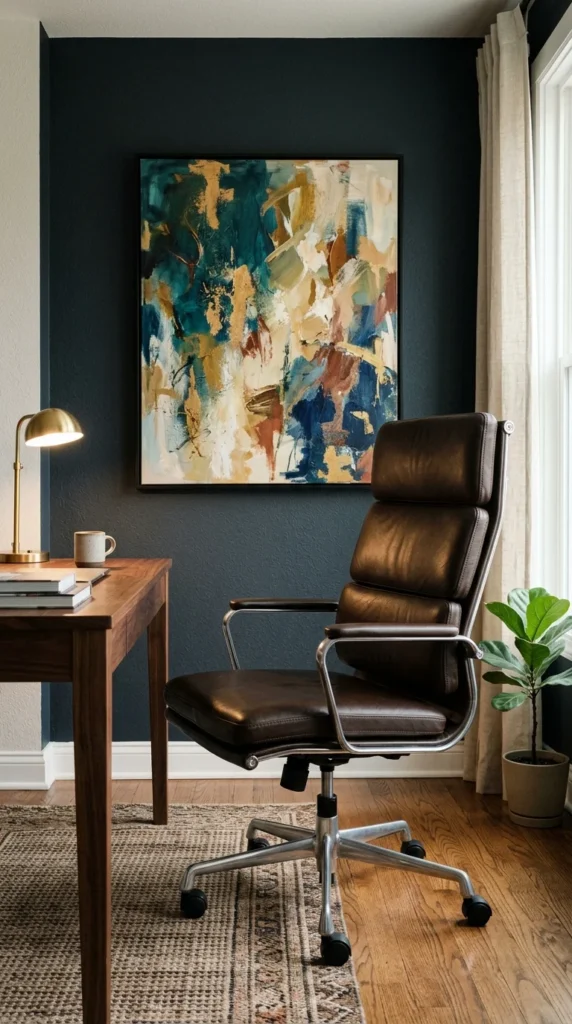
For ultimate support in your career, place your chair against a solid wall. In Feng Shui, a wall behind you represents “Mountain” energy, providing stability and protection. If you must sit with a window behind you, use heavy curtains or a high-backed chair to compensate for the lack of solid support, which can otherwise cause your energy to leak away during the day.
3. Natural Light
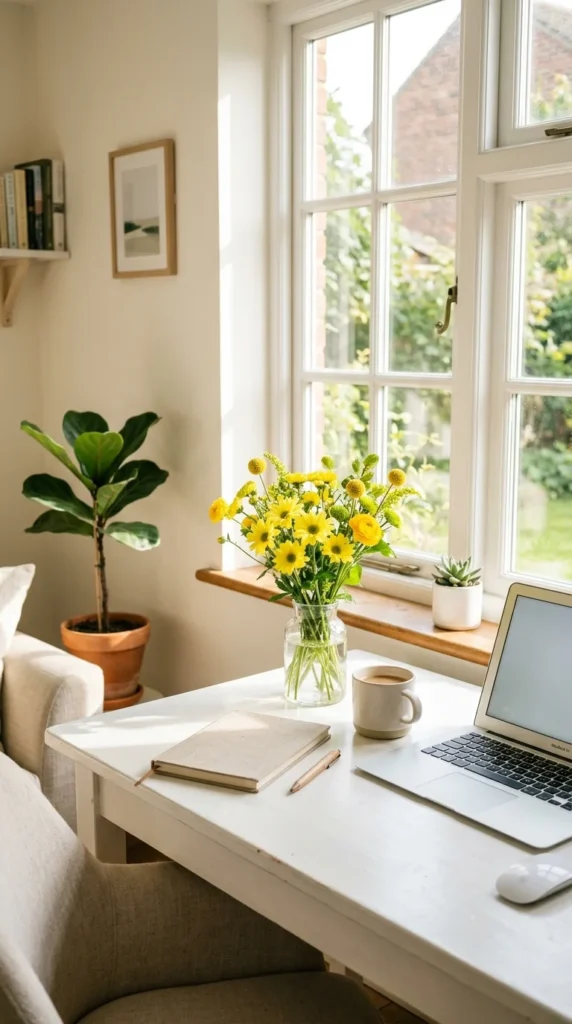
Light is the strongest manifestation of energy. Natural sunlight keeps your vibration high and prevents the stagnation of Chi. Position your desk to maximize daylight without creating a glare on your monitor. If your office lacks windows, use full-spectrum light bulbs that mimic natural sunlight to keep your mood elevated and your focus sharp.
4. Clutter Clearing
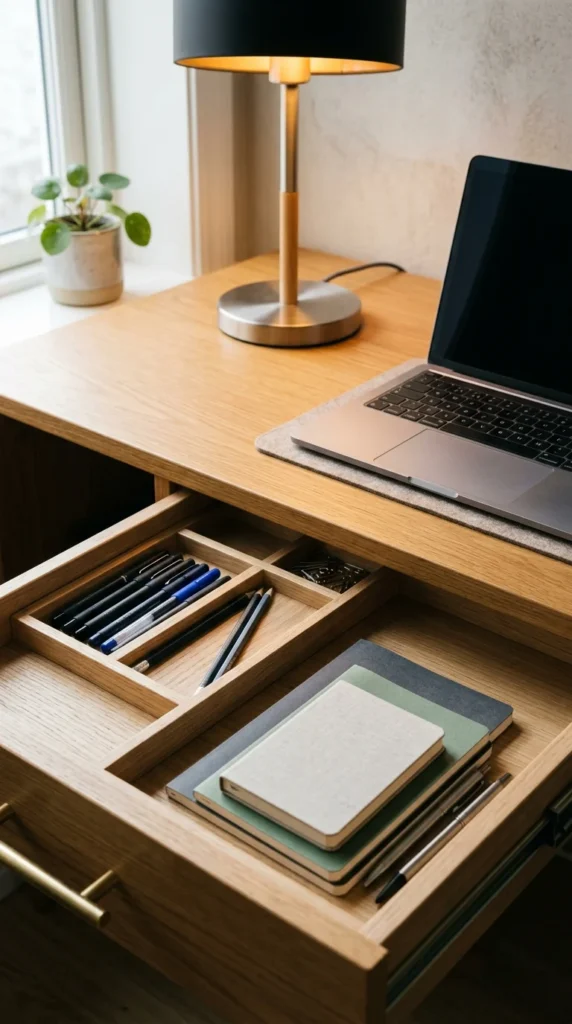
Clutter is the ultimate enemy of Feng Shui. It represents “stagnant Chi” and can make you feel overwhelmed and stuck. Every piece of paper on your desk represents a pending decision. Commit to a daily ritual of clearing your surface at the end of each workday. When your physical space is clear, your mental space follows suit, allowing for creative breakthroughs.
5. Plant Power
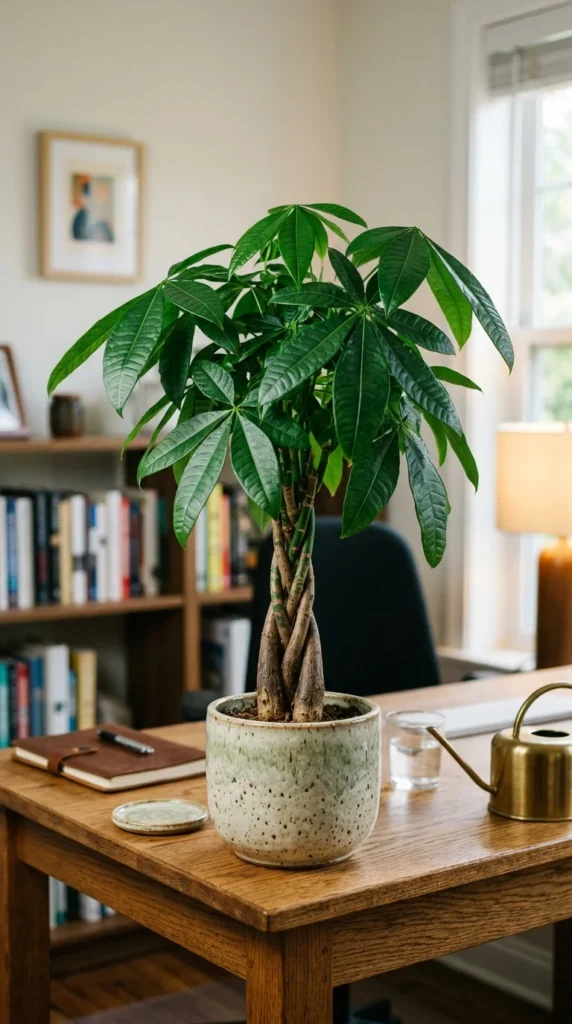
Living plants introduce the Wood element, which signifies growth, vitality, and new beginnings. Plants like the Money Tree (Pachira Aquatica) or the Snake Plant are excellent choices for a home office. They not only purify the air but also act as a buffer against “Sha Chi” (negative energy) from sharp furniture corners.
6. Color Palette

Colors have a profound psychological and energetic impact. For a home office, lean toward colors that support your specific goals. Pale greens and blues promote growth and calm, while earthy tones like yellow and tan provide stability. Avoid using too much red, which can lead to burnout, or too much black, which can make the energy feel heavy and somber.
7. Ergonomic Chair
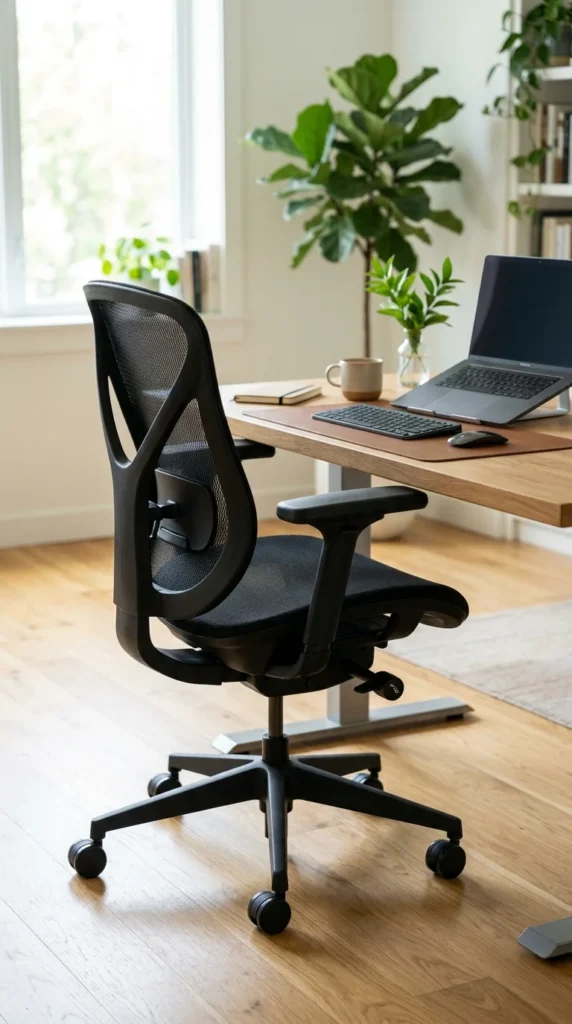
Your chair is your “throne” of success. It must be comfortable, supportive, and in good repair. A chair with a high back provides better Feng Shui support for your career than a low-backed one. Ensure it has armrests, as these provide symbolic support for your “arms” in business, making it easier to handle your workload.
8. Wood Elements
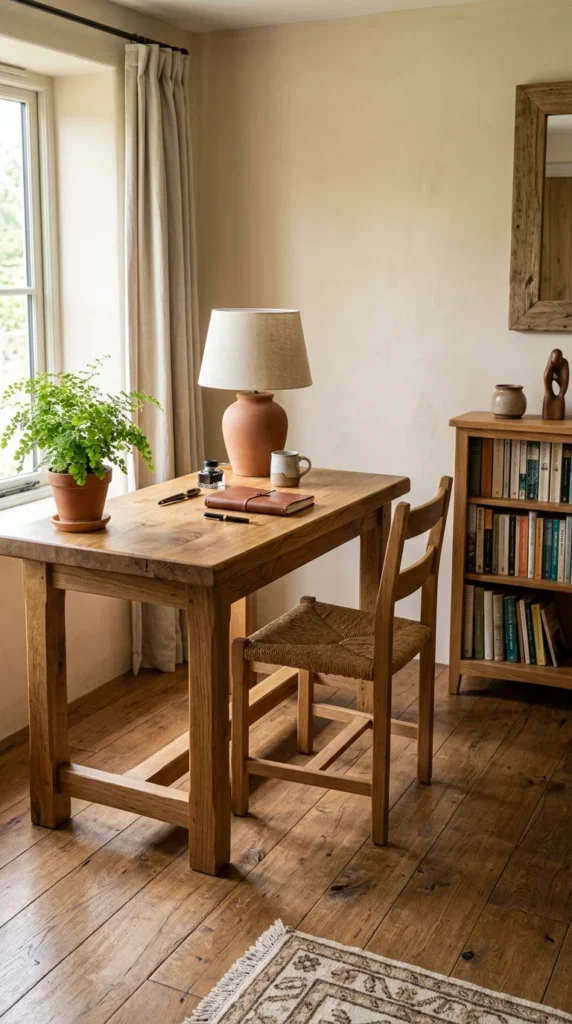
The Wood element is synonymous with expansion and the energy of spring. Incorporating wooden furniture—especially a solid wood desk—grounds your energy and fosters a sense of persistence. Avoid glass desks if possible; while they look modern, energy (and ideas) can “fall through” the transparent surface, leading to a lack of focus.
9. Water Features
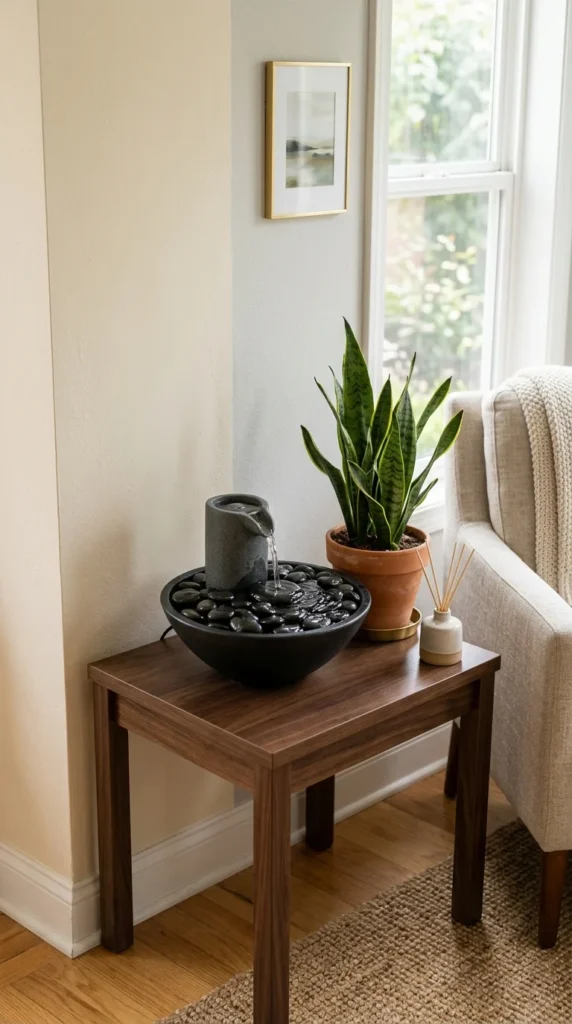
Water represents wealth and the flow of ideas in Feng Shui. A small tabletop fountain in the North or Southeast corner of your office can stimulate the flow of money. Ensure the water is always clean and moving; stagnant water can represent stagnant finances. If a fountain isn’t practical, an image of a calm, flowing river or ocean can serve a similar purpose.
10. Art Choices
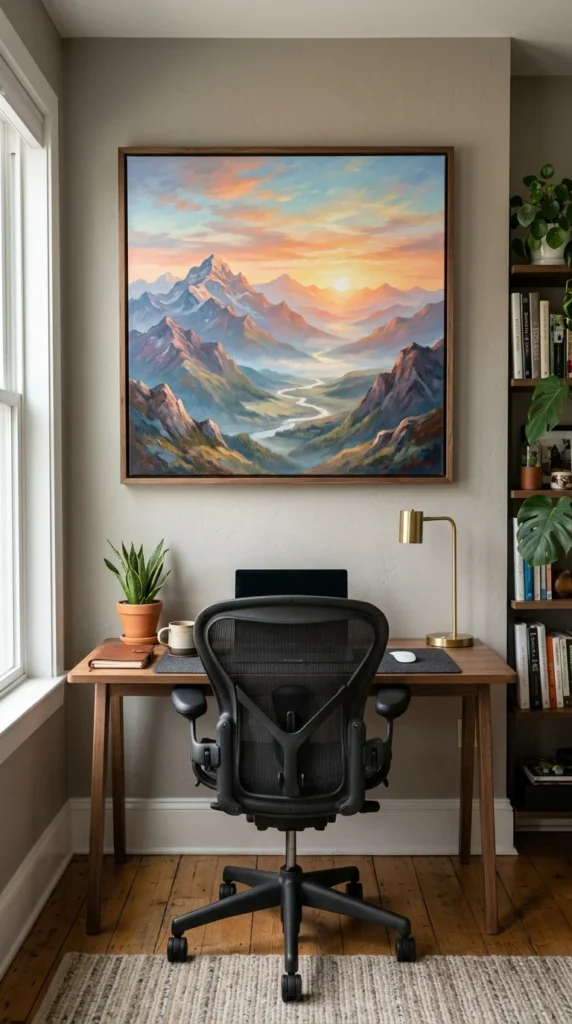
The images you look at daily program your subconscious. Hang artwork that represents what you want to achieve. Images of mountains provide support, while images of moving water or bustling cityscapes (if they feel positive) can stimulate career movement. Avoid art that feels lonely, chaotic, or depressing, as this energy will permeate your work.
11. Lighting Layers
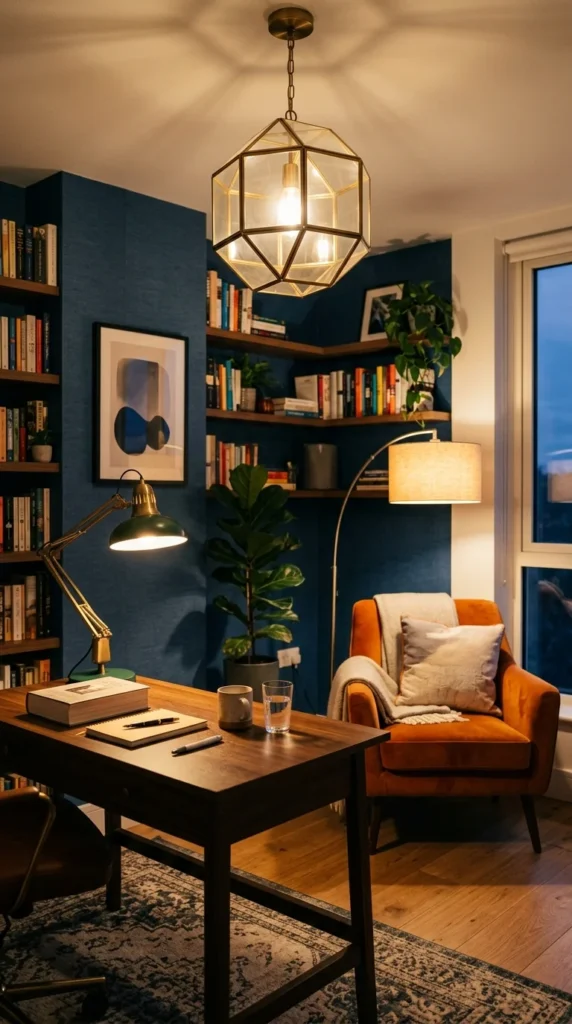
Good Feng Shui requires a balance of “Yin” and “Yang.” Avoid harsh overhead fluorescent lighting, which can cause headaches and irritability. Instead, layer your lighting with a mix of overhead lights, task lamps for specific work, and ambient floor lamps to create a warm, inviting atmosphere that doesn’t strain the eyes.
12. Crystal Energy
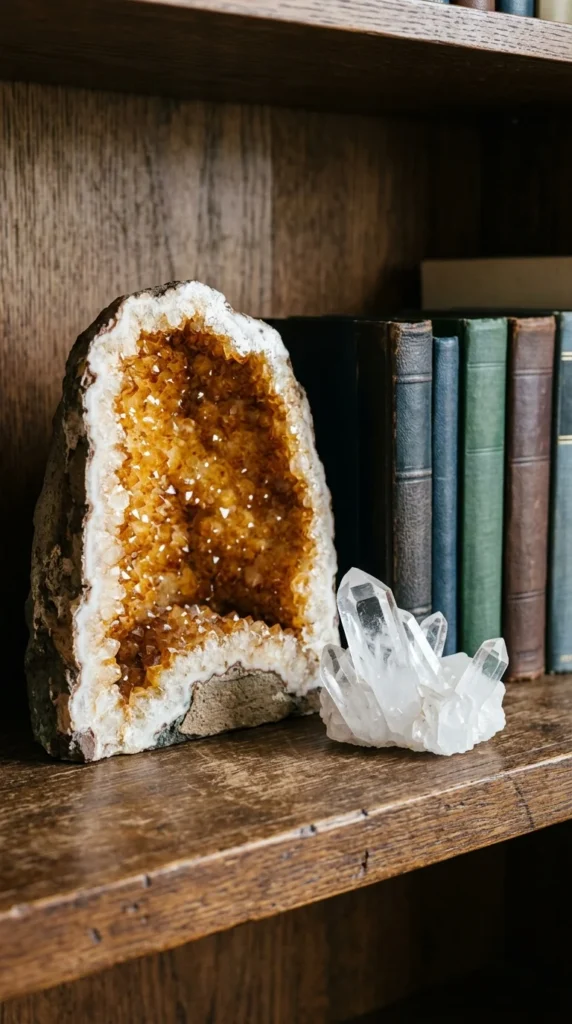
Crystals are powerful tools for shifting energy. Amethyst can help reduce stress and improve intuition, while Citrine is known as the “Merchant’s Stone” for its ability to attract wealth and success. Place a piece of Black Tourmaline near your computer to help absorb electromagnetic “smog” and ground your energy.
13. Desk Material
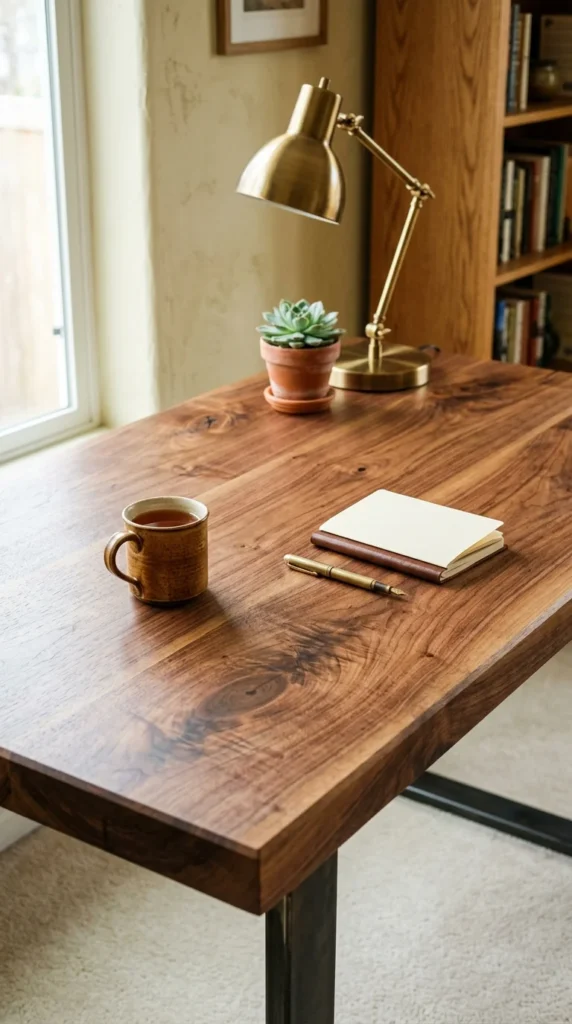
As mentioned, a solid wood desk is the gold standard for Feng Shui. It provides a stable “earthy” foundation. If you use a metal desk, it can sharpen your focus and mental clarity but may feel “cold.” Avoid plastic or laminate where possible, as these materials don’t hold the same energetic grounding properties as natural elements.
14. Scent Strategy

The sense of smell is a direct line to the brain’s emotional center. Use an essential oil diffuser to maintain a high-vibe atmosphere. Peppermint and lemon are excellent for focus and morning productivity, while lavender or sandalwood can help lower stress during high-pressure deadlines.
15. Bagua Map
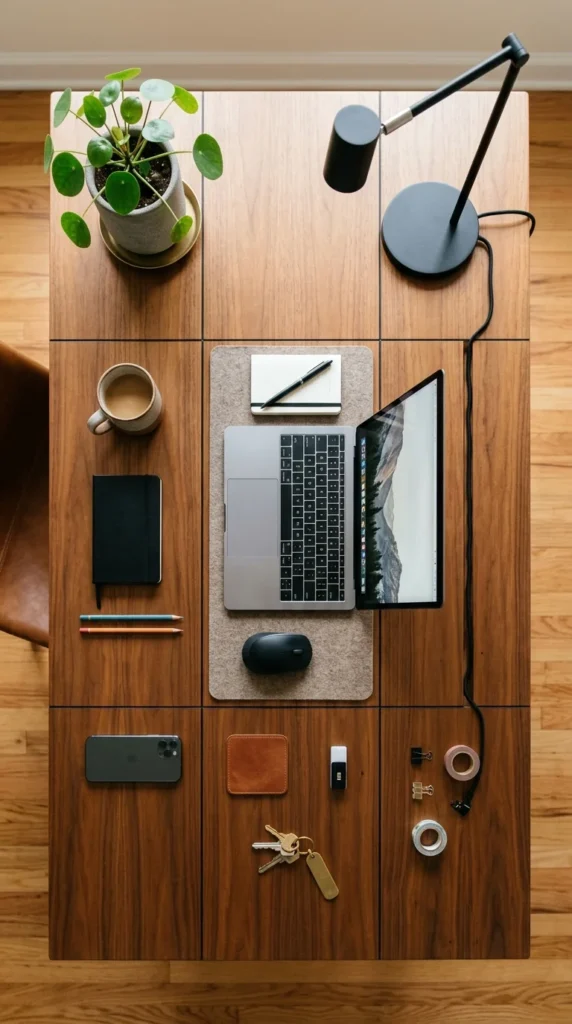
The Bagua is the Feng Shui energy map. You can apply it to your entire office or just your desktop. The back-left corner of your desk is the “Wealth” area—place a plant or a valuable object there. The back-right is the “Relationship” area—place a photo of a loved one or a pair of items there to foster good partnerships.
16. Wire Management
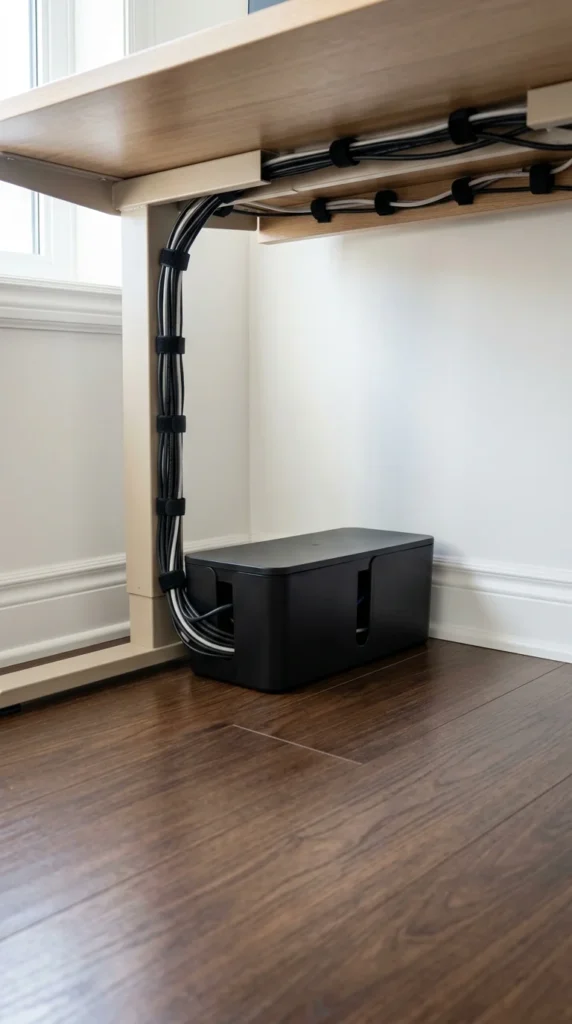
Tangled wires are the physical manifestation of “entangled” energy and mental confusion. They create “visual noise” that drains your subconscious. Use cable sleeves, boxes, or clips to hide and organize your cords. A clean floor and clear desk perimeter allow Chi to circulate freely around your feet.
17. Mirror Placement
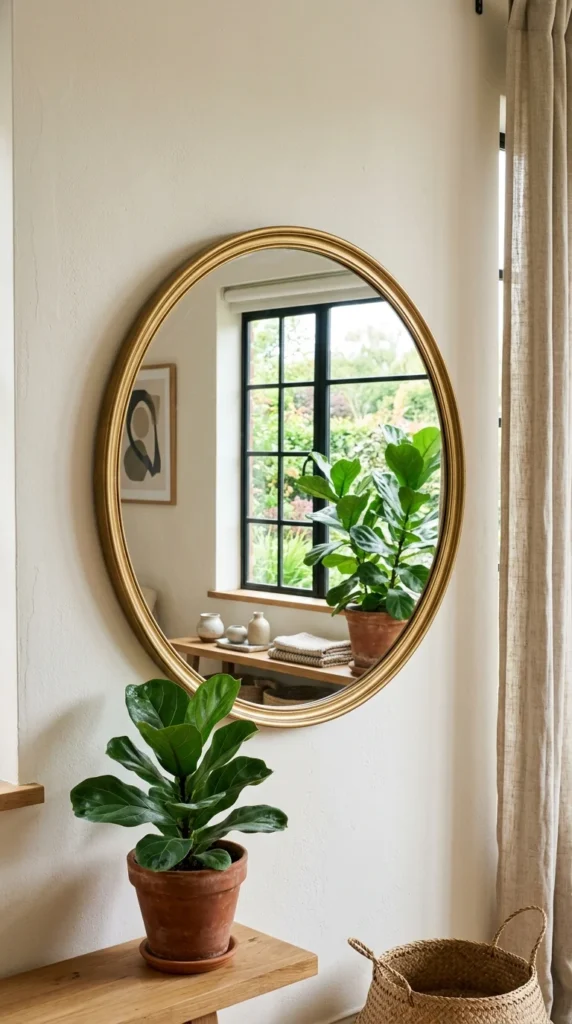
Mirrors can be tricky in an office. They should never reflect your desk (which doubles your workload) or a cluttered area. However, a mirror placed to reflect a window with a beautiful view can “bring the outside in” and expand the energy of the room. It can also be used to see the door if your desk position makes it impossible to face the entrance.
18. Entrance View
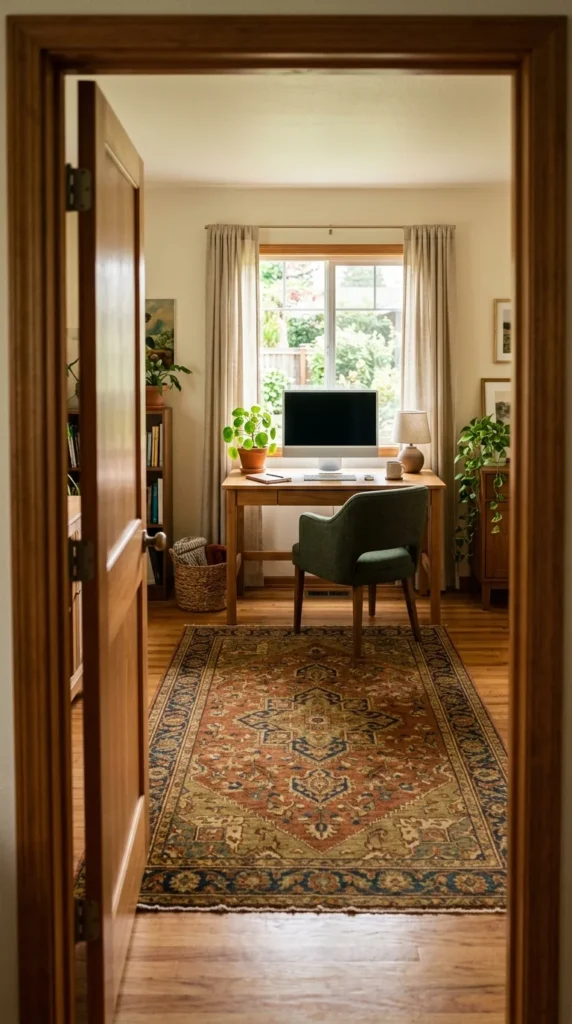
The “mouth of Chi” is your office door. Ensure the path into your office is clear of obstacles. A cluttered doorway prevents new opportunities from entering your space. Consider placing two identical plants or objects on either side of the entrance to frame the space and create a sense of transition from “home” to “work.”
19. Air Quality
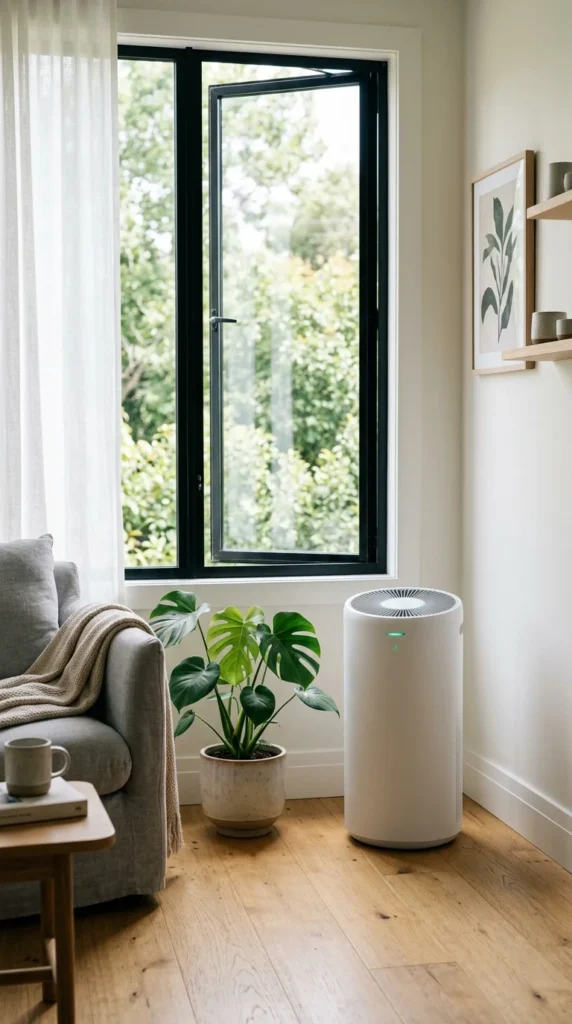
Stale air leads to stale thinking. Good Feng Shui requires fresh, oxygenated air. Open your windows daily, even for just ten minutes, to flush out old energy. If your office is in a basement or windowless room, invest in a high-quality air purifier to keep the “Chi” moving and your brain energized.
20. Personal Balance
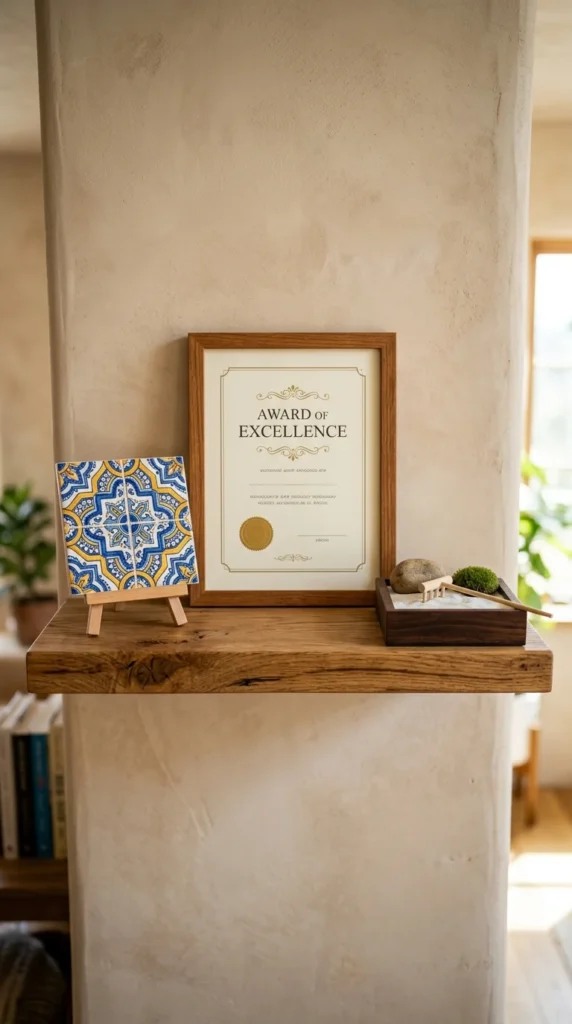
While professionalism is key, your home office should also reflect your “Self” element. Include a few items that bring you joy or represent your achievements. This creates a feedback loop of positive reinforcement. Just ensure these items don’t become clutter; every object in your office should have a dedicated home and a positive purpose.
21. Sound Control
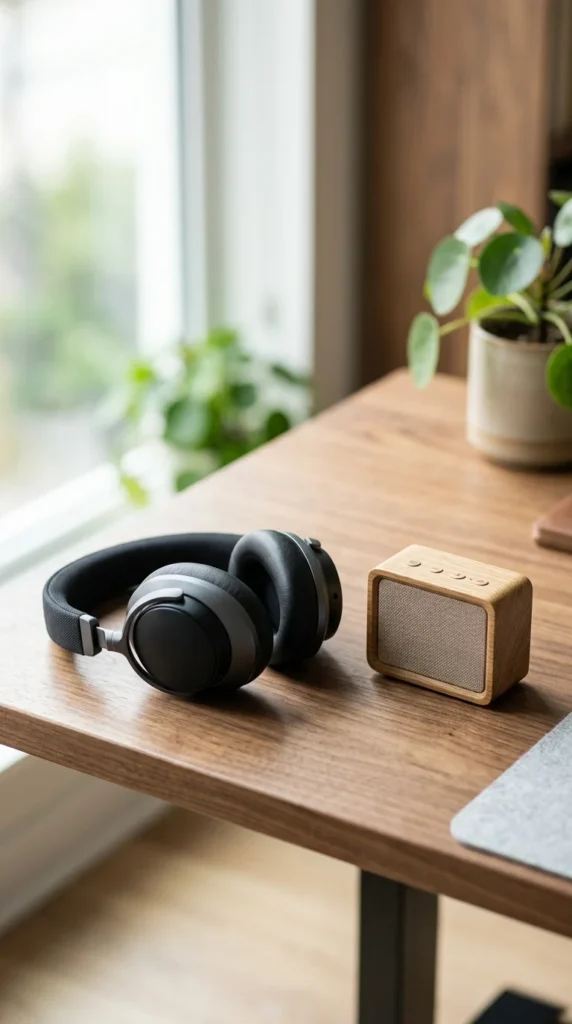
Sound is a form of energy that can either disrupt or harmonize your workspace. If you live in a noisy environment, use a white noise machine or soft, lyric-less music to create a “sonic cocoon.” The sound of birds chirping or soft classical music can keep the energy in your office light and productive throughout the afternoon slump.