A cluttered workspace is more than just an eyesore; it is a productivity killer. When your desk is buried under a mountain of loose papers, tangled cables, and stray pens, your brain spends extra energy processing that visual noise instead of focusing on the task at hand. Transforming your workspace into an oasis of order doesn’t just improve the “vibes” of your home office—it streamlines your workflow and makes every minute spent at your computer feel more intentional.
Whether you are a minimalist looking for sleek metal accents or someone who loves the warmth of wood and felt, these 17 smart desk organizer ideas will help you reclaim your surface area and elevate your professional aesthetic.
1. Monitor Risers
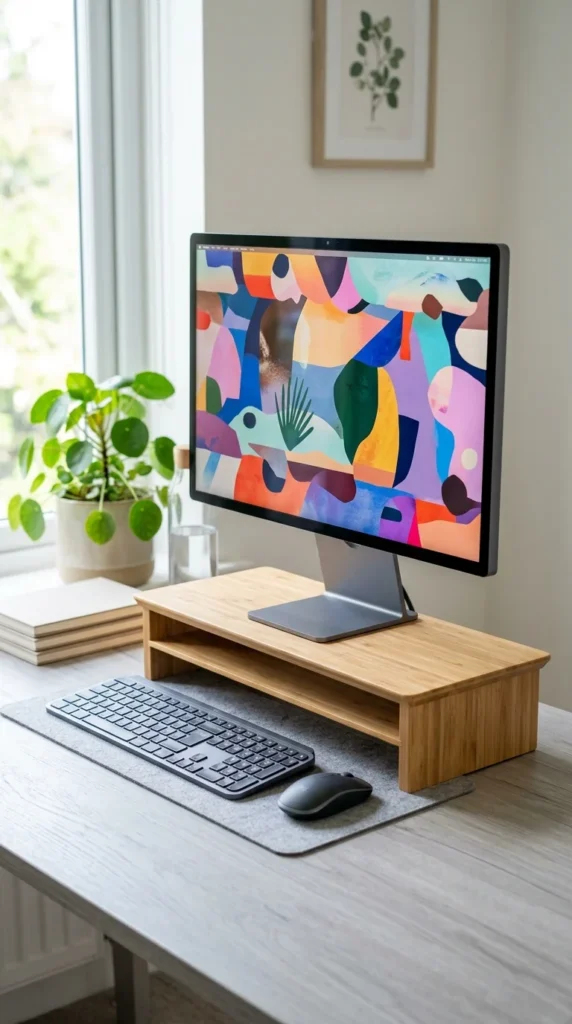
The monitor riser is the ultimate double-threat in desk organization. By lifting your screen to eye level, it improves your posture and reduces neck strain. More importantly, it creates a “second story” on your desk. The hollow space underneath is the perfect parking spot for your keyboard and mouse when they aren’t in use, instantly doubling your usable surface area for handwritten notes or midday snacks.
2. Cable Boxes
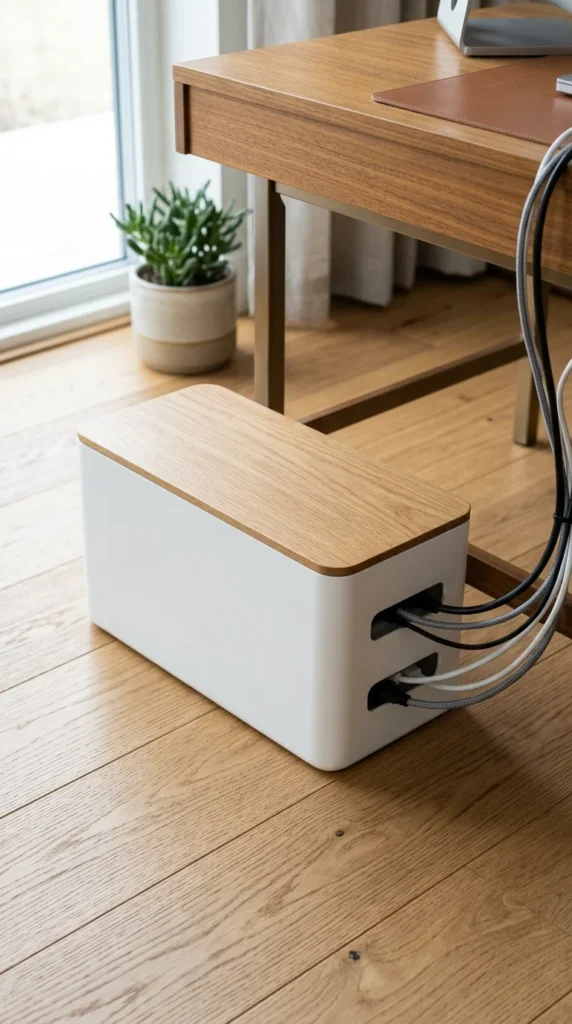
Nothing ruins a beautiful desk setup faster than a “spaghetti” mess of power strips and charging cables. Cable management boxes act as a camouflage for your electronic clutter. By housing your power strip inside a sleek, ventilated box, you hide the chaotic tangle of wires while keeping them easily accessible. It’s an instant upgrade that makes the floor and the back of your desk look infinitely cleaner.
3. Modular Pegboards
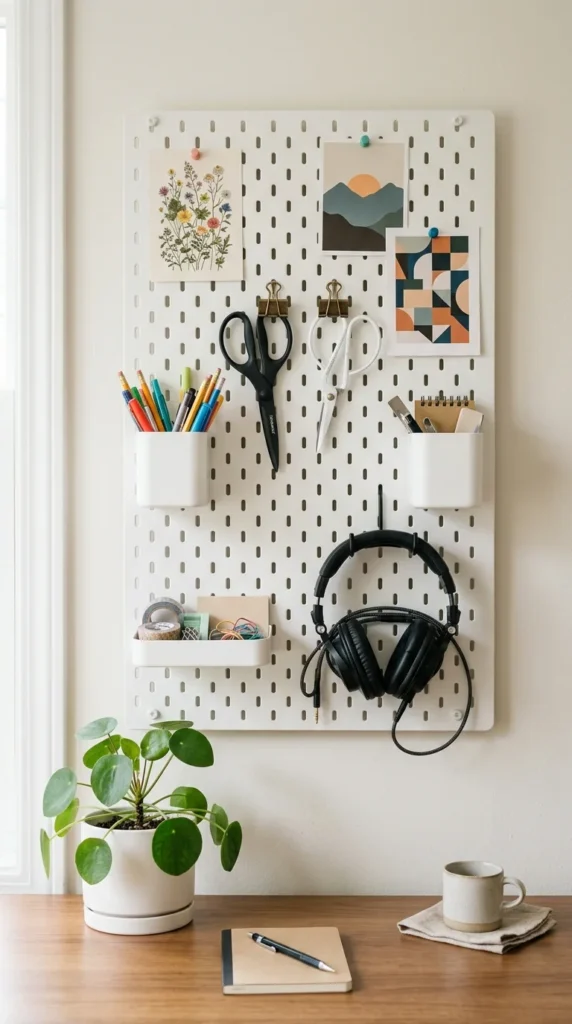
Vertical space is often the most underutilized real estate in an office. A modular pegboard allows you to move your storage off the desk and onto the wall. The beauty of the pegboard system is its flexibility; you can rearrange hooks, shelves, and containers as your needs change. It’s perfect for keeping frequently used tools like scissors, tape, and headphones within arm’s reach without taking up a single square inch of desk space.
4. Drawer Dividers
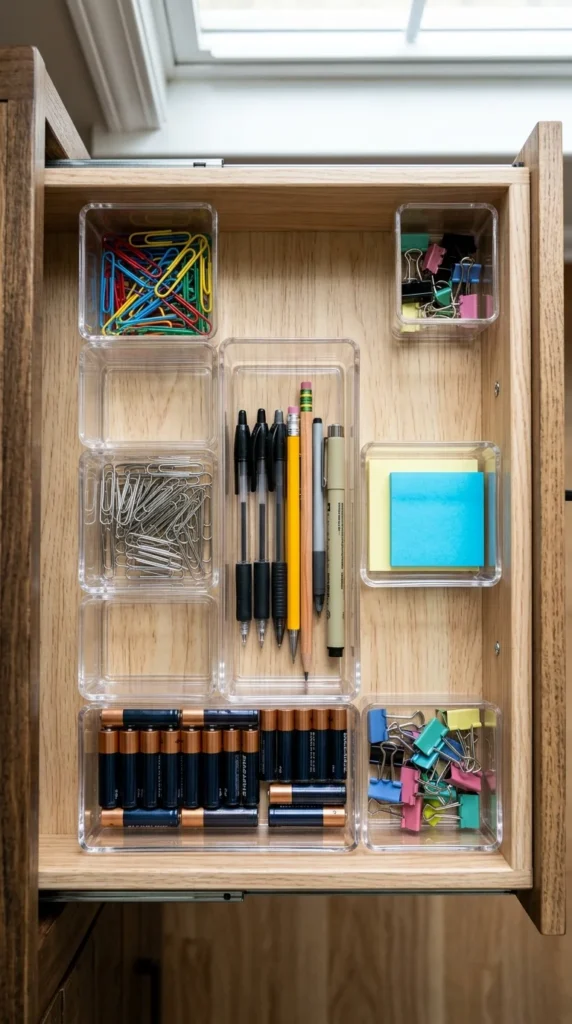
The “junk drawer” is the enemy of efficiency. Drawer dividers turn a chaotic pit of stationery into a structured system. By assigning a specific home to every item—from staples to thumb drives—you eliminate the time spent digging through the depths of your desk. Clear acrylic dividers offer a clean, modern look, while bamboo options provide a warm, organic feel that matches wooden furniture.
5. Desk Pads
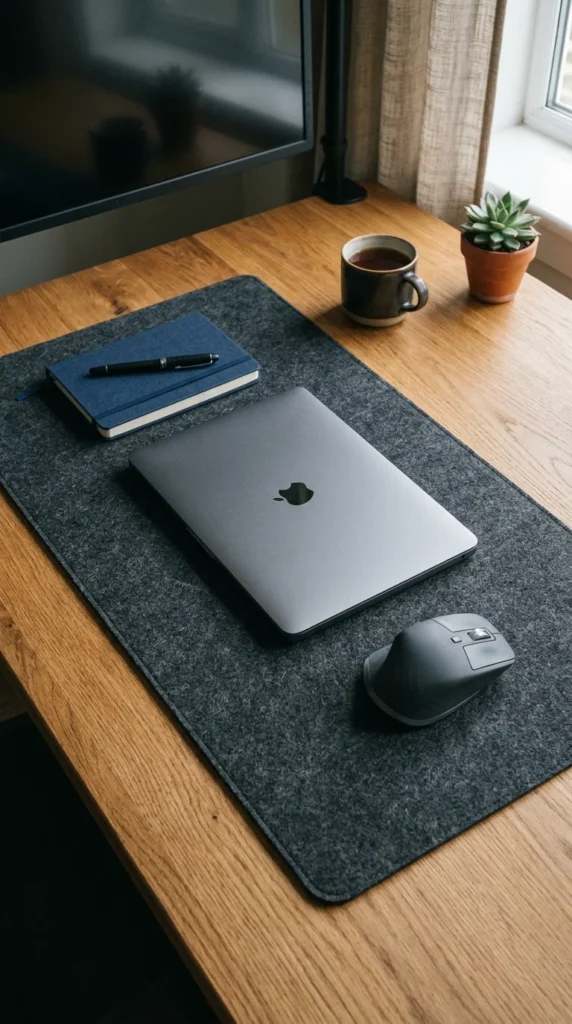
A desk pad (or desk blotter) does more than protect your furniture from scratches. It acts as a visual anchor that defines your primary workspace. By creating a designated “zone” for your computer and peripherals, it naturally encourages you to keep items centered and aligned. High-quality leather or felt pads add a layer of texture and sophistication that makes even a basic desk look like an executive suite.
6. Rotating Caddies
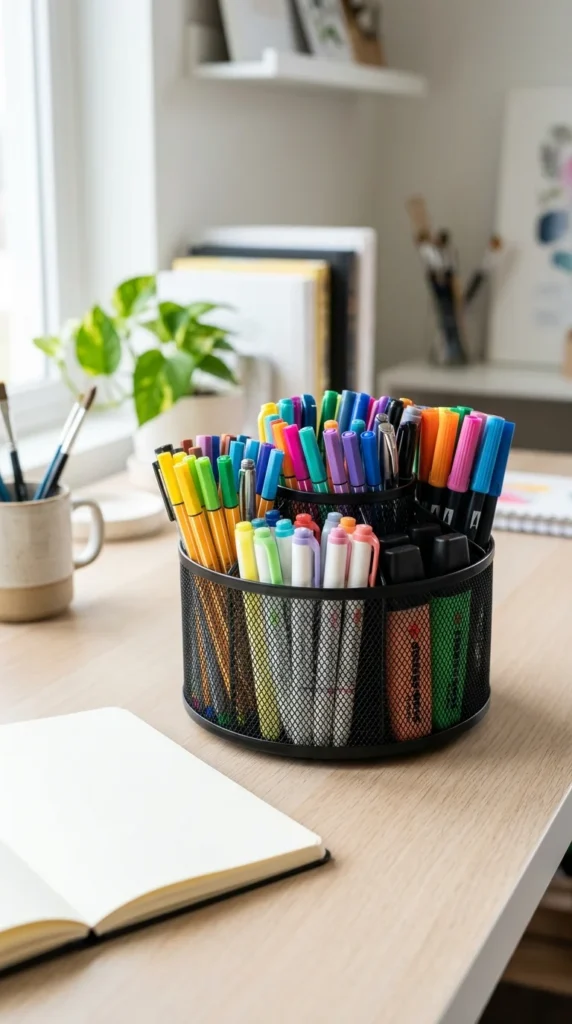
If you are a creative professional who uses a wide variety of pens, brushes, or tools, a rotating caddy (often called a Lazy Susan) is a game-changer. These organizers allow you to store dozens of items in a compact footprint. With a simple flick of the wrist, you can access exactly what you need without having to reach across the desk or knock over other items.
7. Headphone Stands
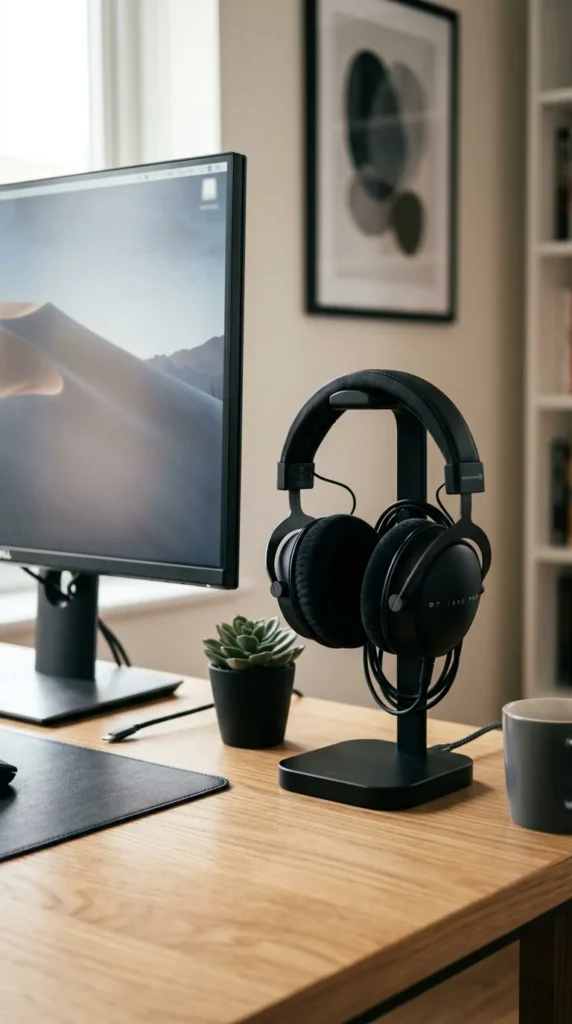
Headphones are bulky and often end up awkwardly draped over a monitor or taking up a large chunk of desk space. A dedicated headphone stand gives your gear a throne. It prevents the ear cups from getting scuffed and keeps the cord (if it has one) from tangling. Choose a stand with a built-in USB hub to add even more functionality to this simple organizational tool.
8. Document Trays
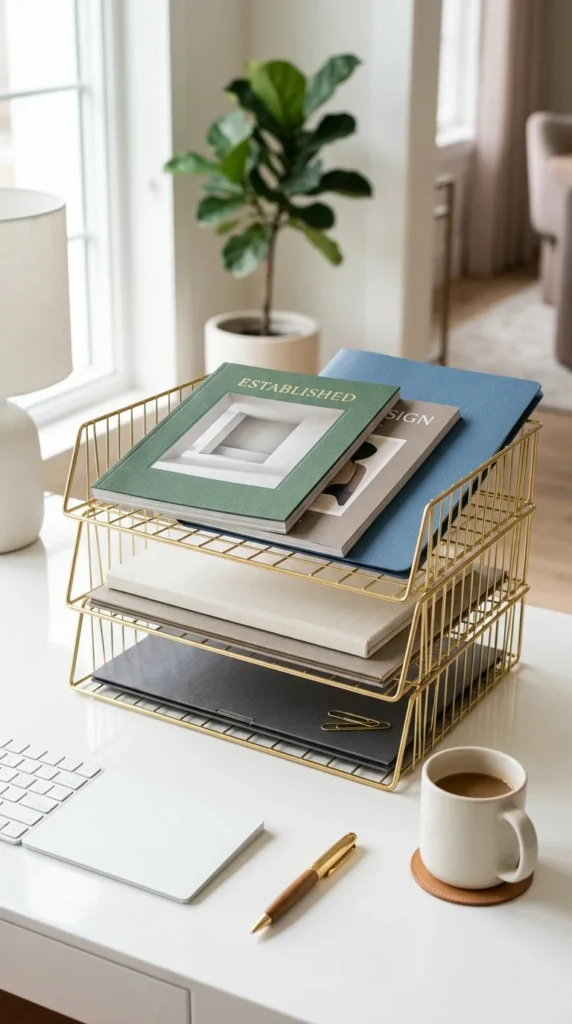
While we live in a digital age, paper still manages to find its way onto our desks. Stackable document trays are the classic solution for managing the influx of mail, contracts, and notes. By using a tiered system, you can categorize papers by priority: “To-Do,” “To File,” and “Completed.” Metal wire trays offer an airy, industrial look, while solid wood trays add a sense of weight and permanence.
9. Charging Stations
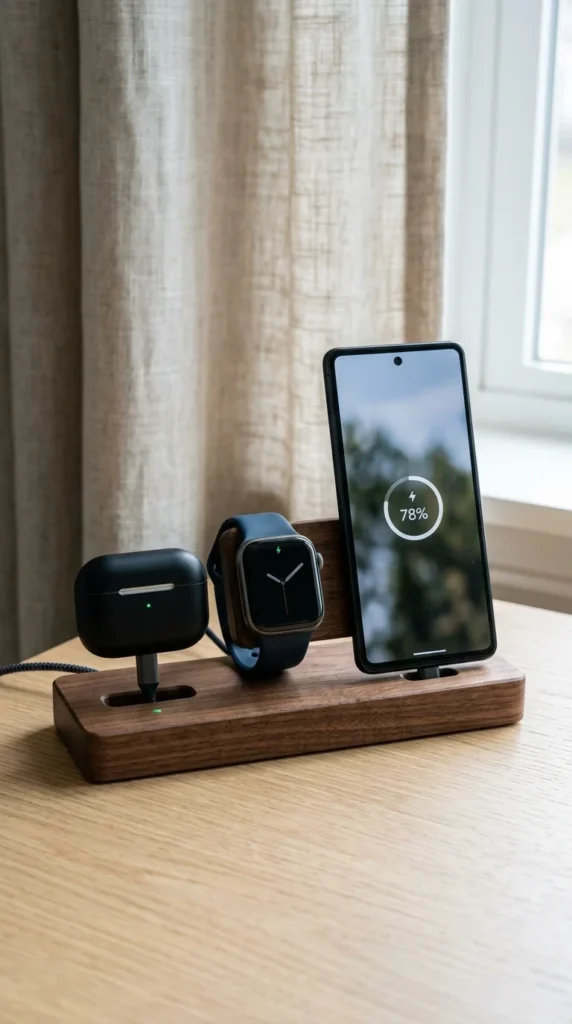
The modern worker has a fleet of devices that need daily charging. A multi-device charging station eliminates the need for five different wall bricks and a web of cables. These docks are designed to hold your phone, watch, and earbuds in one compact footprint, ensuring your tech is organized and fully powered when you’re ready to head out.
10. Desktop Shelves
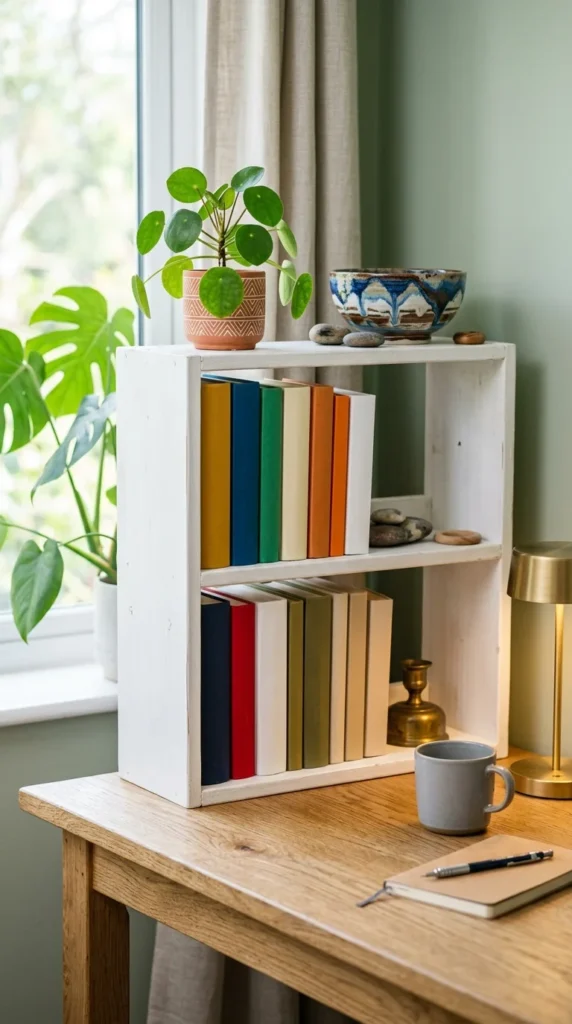
When you run out of horizontal space, go up. A small desktop bookshelf or hutch provides extra levels for storage. This is the ideal place for reference books, small decorative items, or a printer. It creates a “layered” look that adds depth to your workspace and allows you to display items that inspire you without cluttering your immediate typing area.
11. Pencil Cups
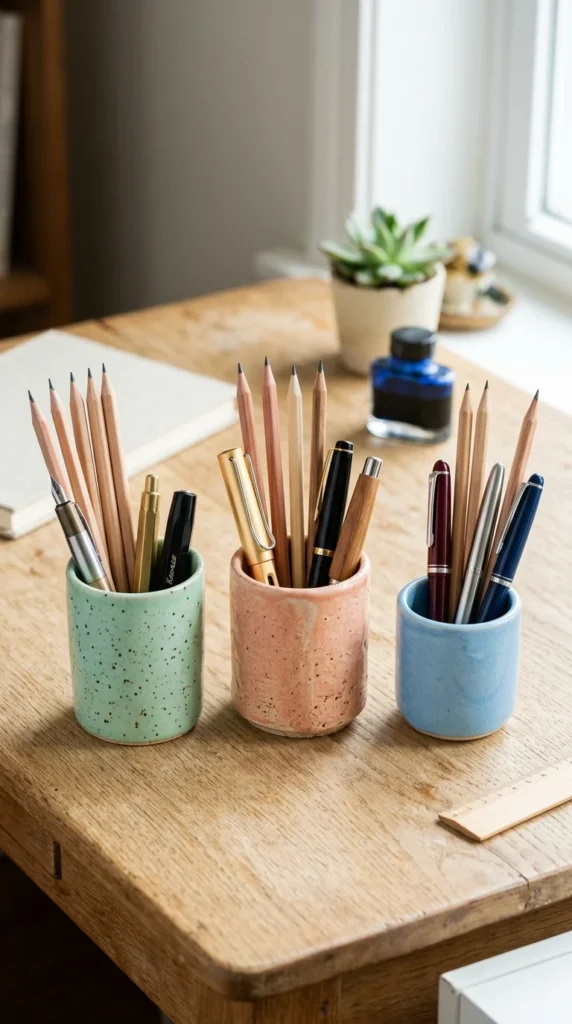
The pencil cup is a staple for a reason, but it doesn’t have to be boring. Using unique vessels—like vintage ceramic mugs, heavy glass tumblers, or geometric concrete containers—adds personality to your desk. To keep it looking “smart,” avoid overstuffing them. Only keep your most-used writing instruments in the cup; store the surplus in a drawer.
12. Sticky Note Holders
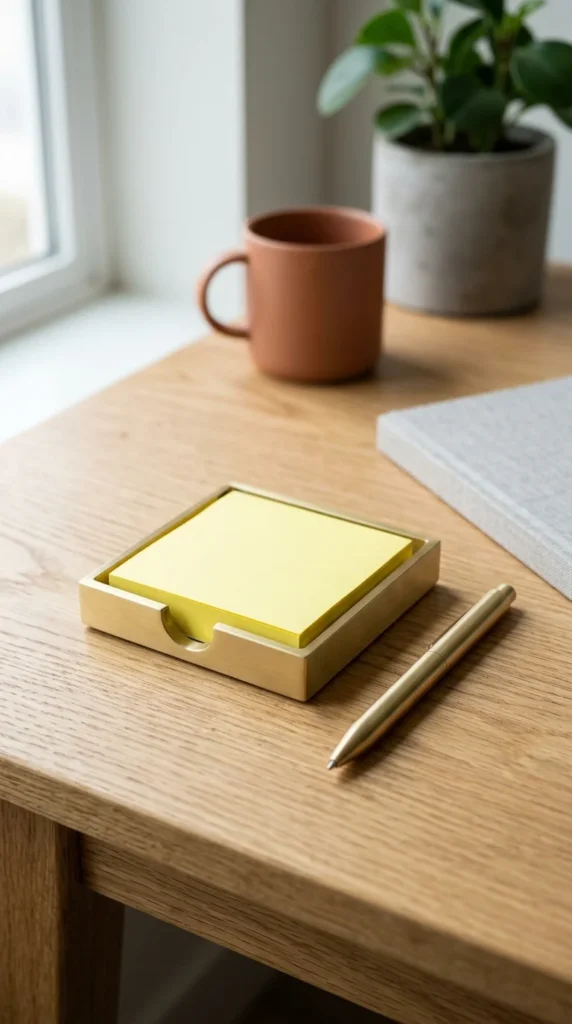
If you live by the sticky note, you know they can easily take over your monitor bezel and desk surface. A dedicated sticky note holder keeps the stack tidy and prevents the edges from curling. It turns a disposable office supply into a deliberate part of your decor. Some holders even feature a small slot for a single pen, creating a perfect little “reminder station.”
13. Under-Desk Drawers
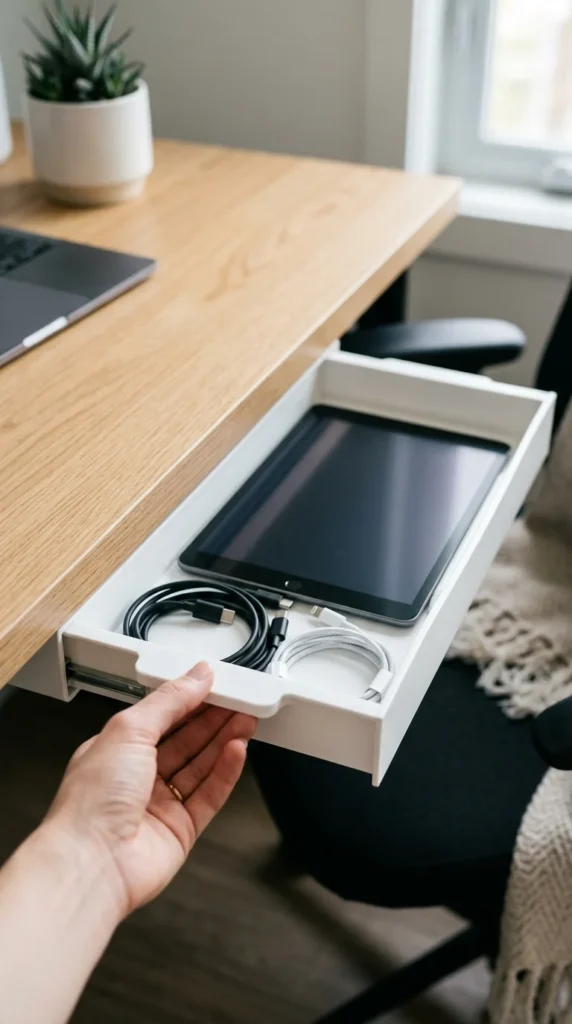
For those with minimalist “table-style” desks that lack built-in storage, under-desk drawers are a lifesaver. These adhesive or screw-on compartments hide away the small items you need but don’t want to look at, like USB drives, lip balm, or extra batteries. They maintain the clean lines of your desk while providing the utility of a traditional office desk.
14. Magazine Files
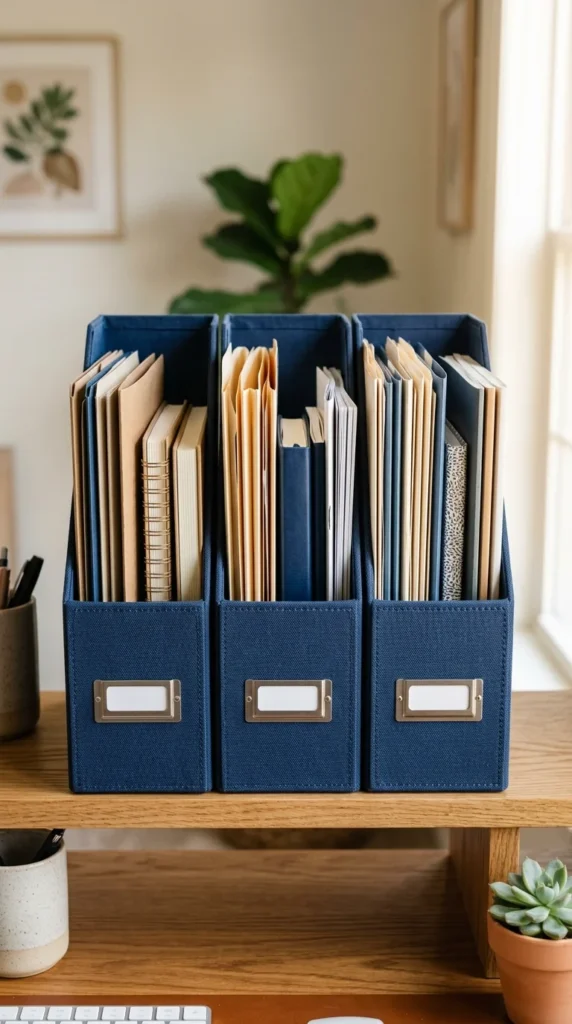
Magazine files aren’t just for National Geographics. They are the best way to store notebooks, thin laptops, or loose folders vertically. By standing these items up rather than stacking them, you can pull one out without disturbing the entire pile. Using identical files in a solid color creates a uniform, library-like appearance that hides visual clutter.
15. Felt Organisers

Felt is an excellent material for desk organization because it is soft, quiet, and provides a beautiful contrast to the hard surfaces of computers and desks. Felt bins and trays protect delicate items like eyeglasses or expensive fountain pens from scratches. They also dampen the sound of items being tossed onto the desk, contributing to a more peaceful work environment.
16. Tech Organizers
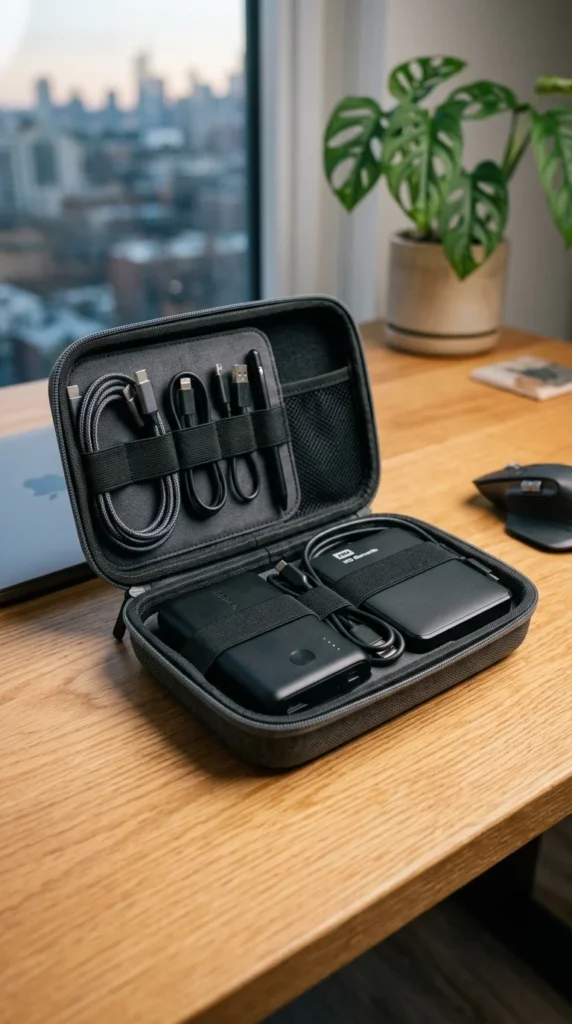
For the “digital nomad” or anyone who frequently moves between a home office and a corporate one, a tech organizer pouch is essential. Instead of letting your adapters and dongles float around in a drawer, keep them in a dedicated zip-up case. When you’re working at your desk, the case can stay open for easy access; when you’re done, just zip it up and tuck it away.
17. Wall Grids
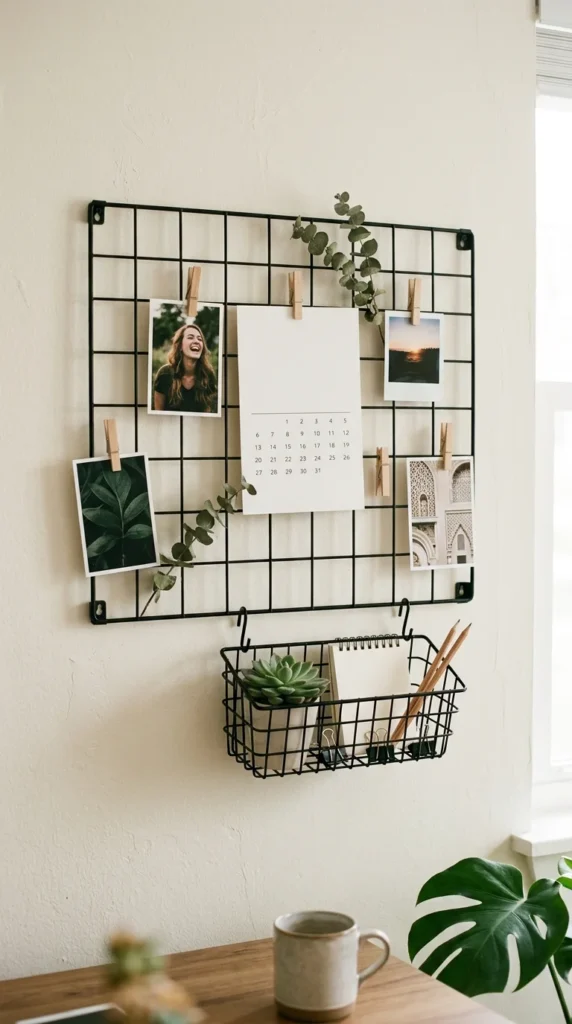
Wall grids offer a more lightweight and modern aesthetic than traditional corkboards or pegboards. They are perfect for pinning up inspiration, calendars, or important reminders. Because they are transparent, they don’t make a small room feel crowded. You can use S-hooks to hang small baskets for mail or even tiny potted plants to bring some greenery into your line of sight.