The modern workplace has shifted from the corporate skyscraper to the quiet corners of our homes. However, a home office shouldn’t just be a place of high-pressure deadlines; it should be a sanctuary that fosters focus and tranquility. Creating a “calm” office involves more than just buying a desk; it’s about curate-ing an environment that lowers your cortisol levels the moment you walk through the door. Here are 18 design ideas to transform your workspace into a peaceful retreat.
1. Soft Minimalism
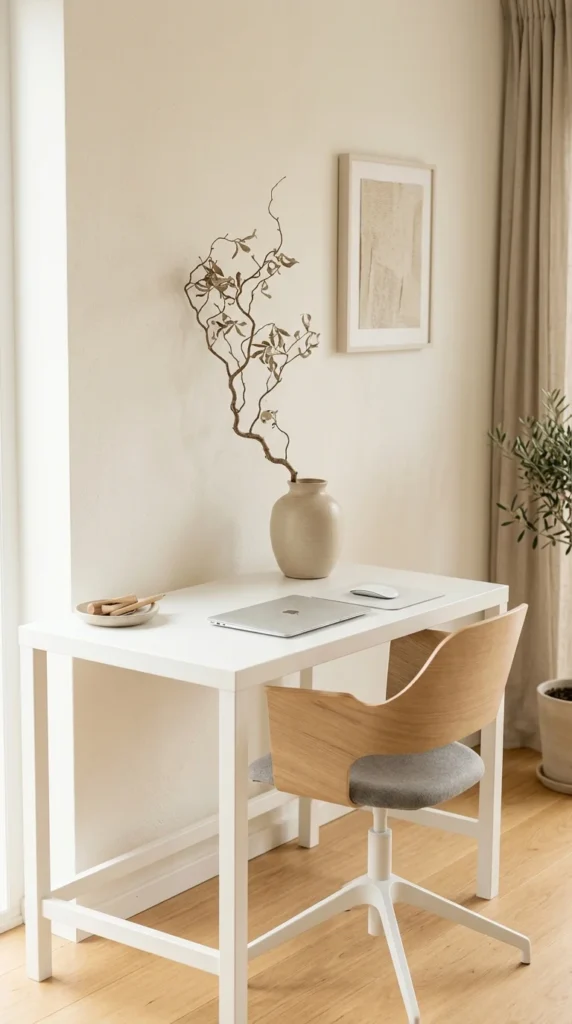
Minimalism is the foundation of a calm mind. By removing visual clutter, you remove mental clutter. Soft minimalism moves away from the “cold” feeling of traditional minimalism by incorporating warm whites, creamy beiges, and tactile textures. Focus on high-quality essentials—a sturdy desk, a comfortable chair, and a single piece of art—to keep the space feeling open and airy.
2. Biophilic Accents
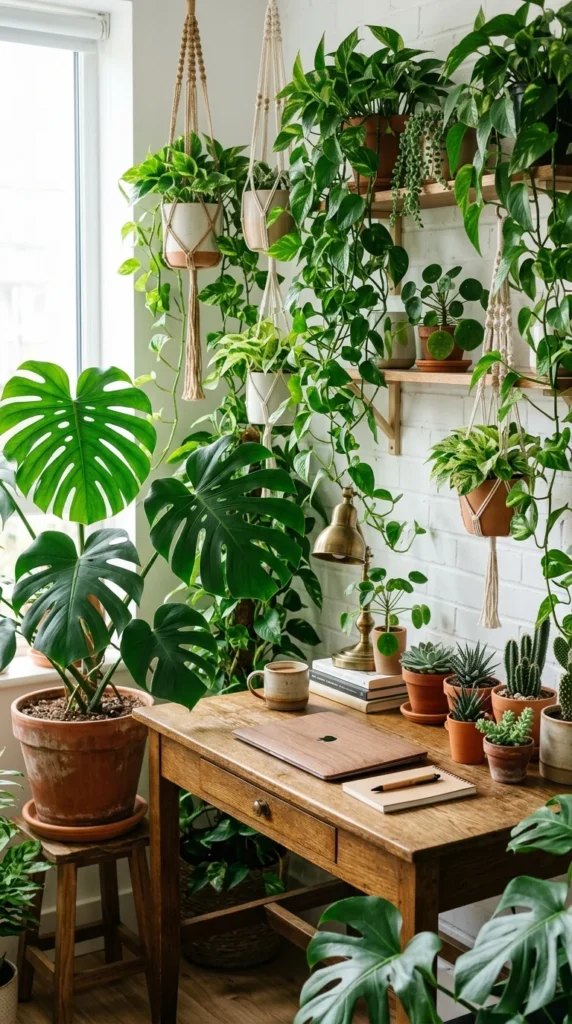
Biophilic design is the practice of connecting a space with nature. Bringing the outdoors in has been scientifically proven to reduce stress and improve air quality. Incorporate a mix of heights: a tall floor plant like a Bird of Paradise, trailing ivy on bookshelves, and small succulents on your desk. The vibrant green hues provide a natural visual break for your eyes after staring at a blue screen for hours.
3. Neutral Palette
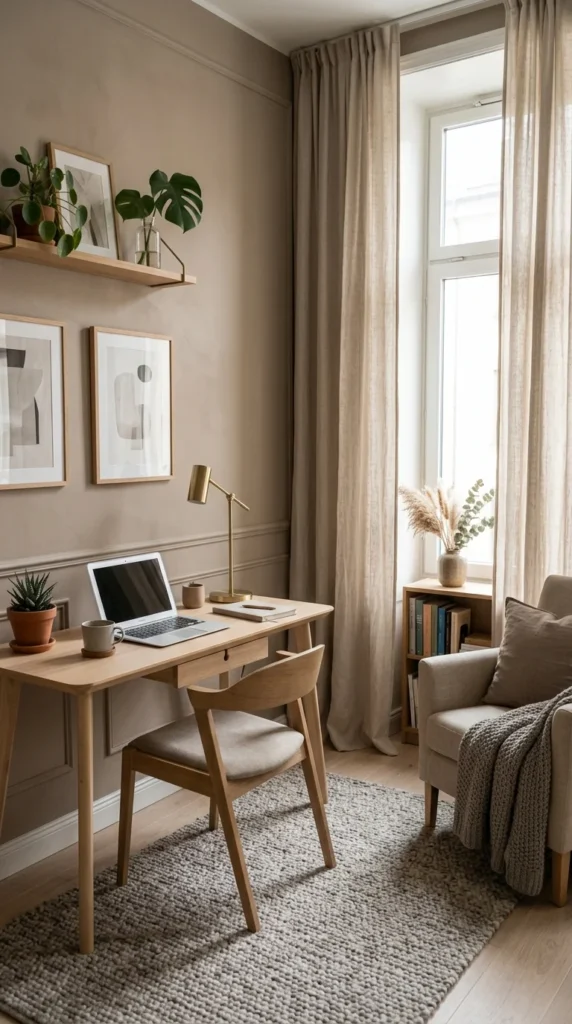
Bright, neon, or overly saturated colors can be overstimulating. To create a relaxing atmosphere, stick to a palette of “new neutrals.” Think beyond basic white; explore tones like oatmeal, sage green, dusty blue, or warm terracotta. These colors absorb light beautifully and create a cohesive, grounding backdrop that doesn’t compete for your attention.
4. Natural Light
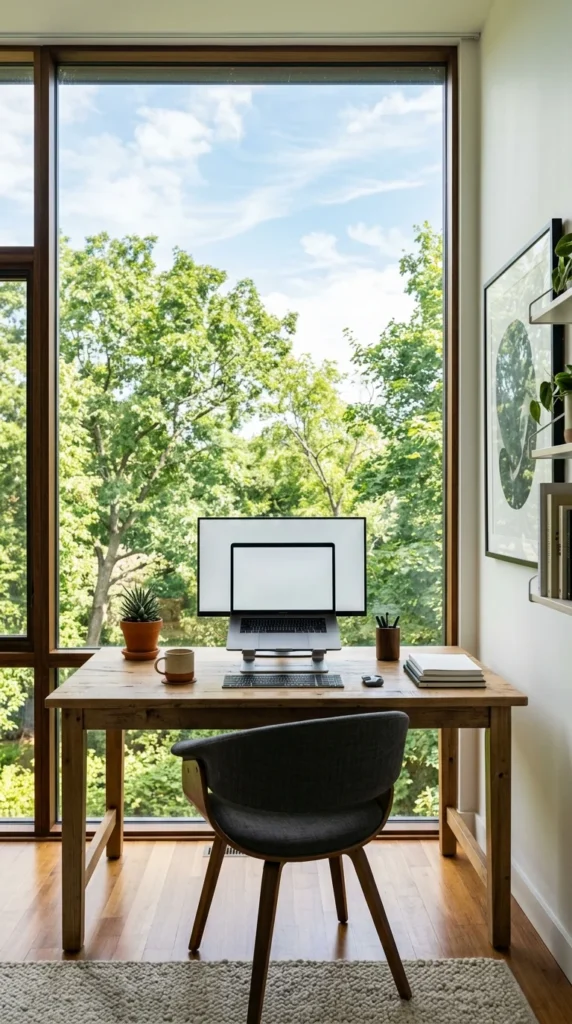
Positioning your workspace to maximize natural light is perhaps the most effective way to boost your mood. Sunlight helps regulate your circadian rhythm, keeping you alert during the day and helping you sleep better at night. If privacy is an issue, use sheer linen curtains that allow light to filter through while softening the shadows in the room.
5. Ergonomic Wood
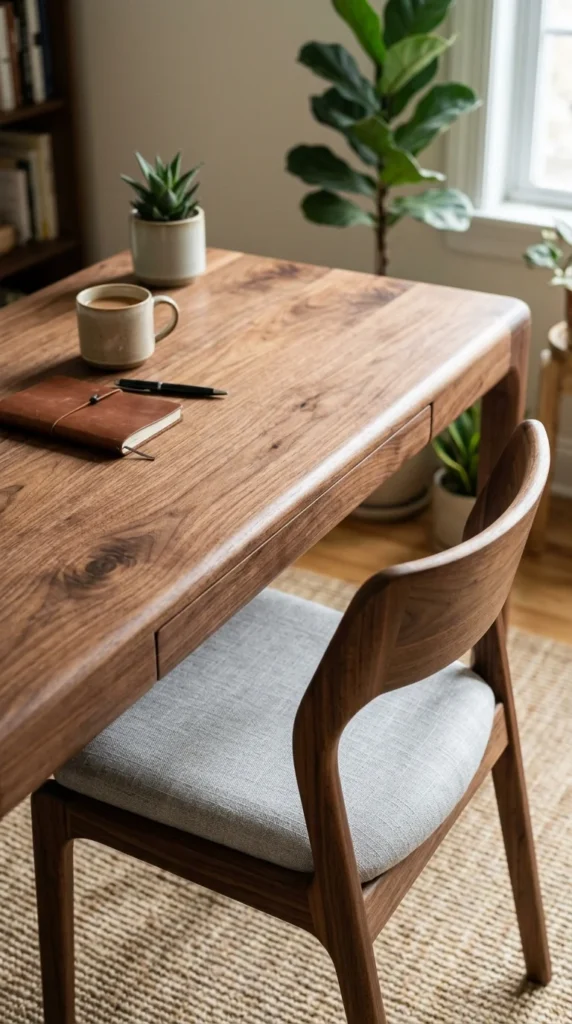
While plastic and metal can feel clinical, wood brings an organic warmth to a room. Opt for ergonomic furniture made from natural timber like oak, walnut, or ash. The tactile sensation of wood under your hands is more grounding than cold laminate. Look for “live edge” desks or furniture with rounded corners to soften the architectural lines of the room.
6. Hidden Tech
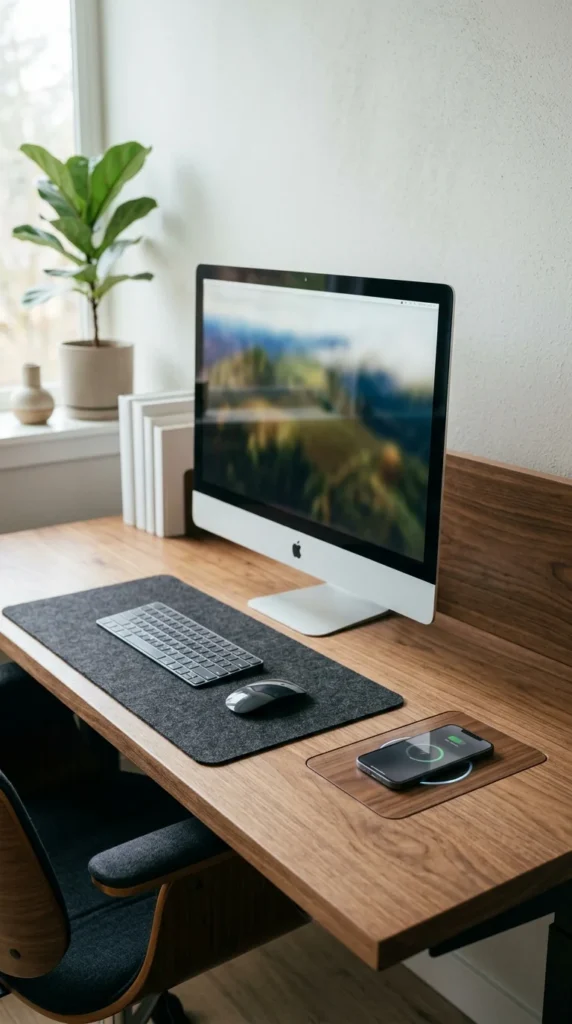
Tangled cords and bulky hardware are the enemies of Zen. Use cable management boxes, under-desk trays, and wireless peripherals to keep your workspace clean. Integrating technology so that it’s “invisible” when not in use helps the room feel like a living space rather than a server room.
7. Textile Layers
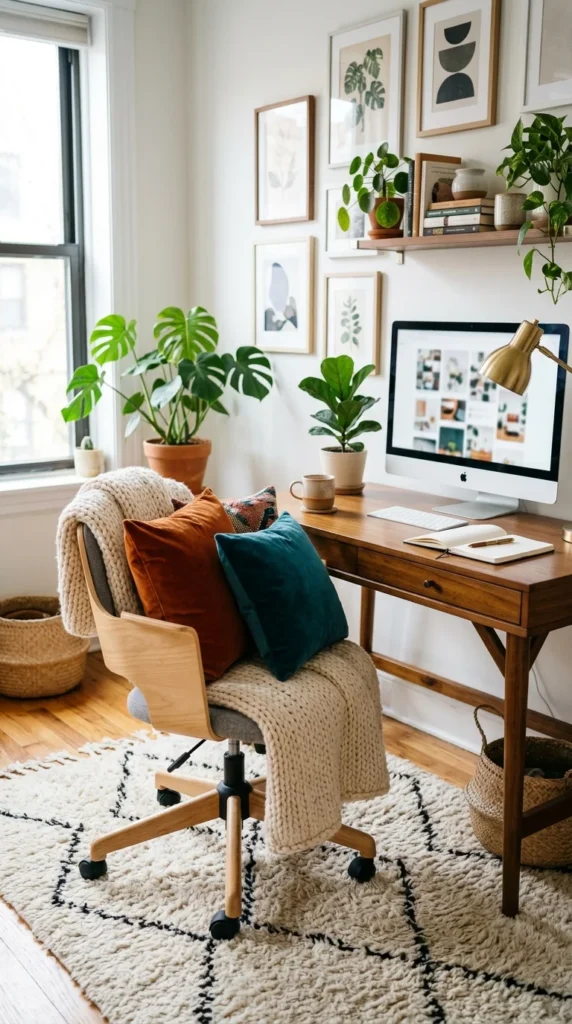
Softness is key to comfort. Layering textiles can dampen sound and make the room feel much cozier. A plush area rug can define the “work zone” in a multi-purpose room, while a soft throw blanket on your chair provides comfort during chilly mornings. These layers add depth and a “lived-in” feeling that reduces the sterility of an office.
8. Scented Sanctuary
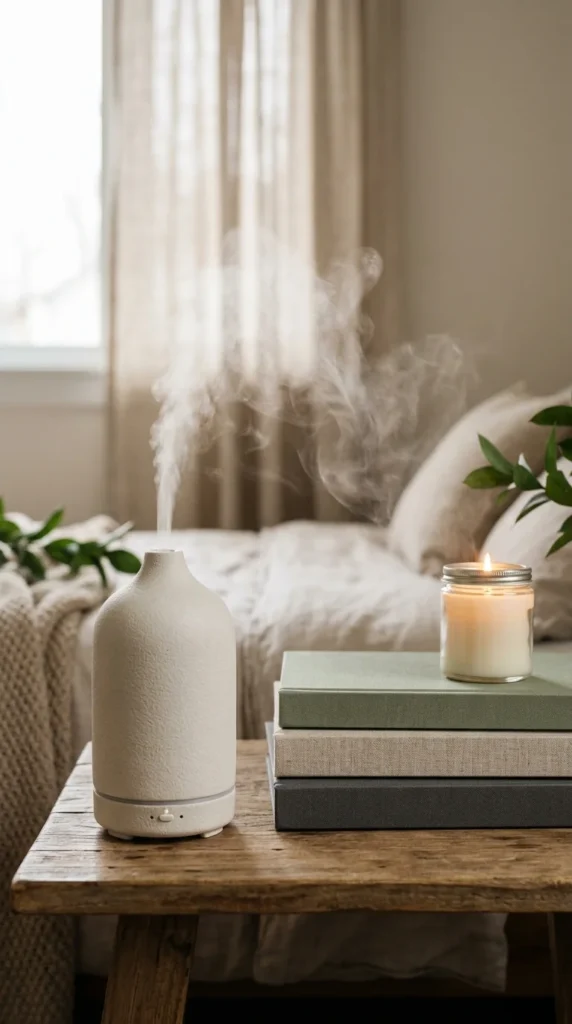
Calmness isn’t just visual; it’s olfactory. Incorporate aromatherapy into your routine with an essential oil diffuser or high-quality soy candles. Scents like lavender, sandalwood, and eucalyptus can lower heart rates and improve focus. Choosing a beautiful stone or ceramic diffuser also adds a decorative element to your desk.
9. Curved Furniture
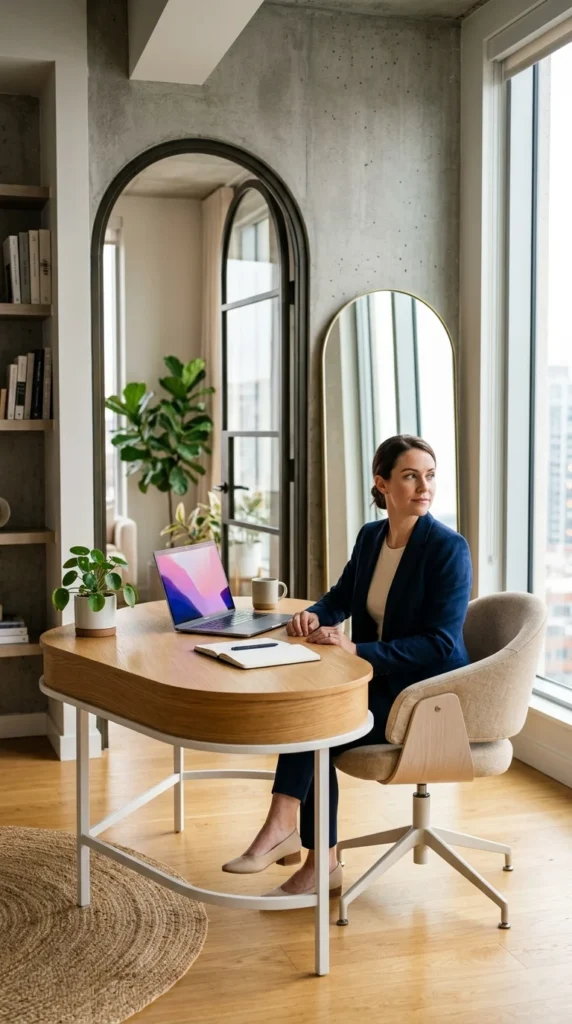
In interior design, sharp angles represent energy and movement, while curves represent relaxation and flow. Incorporating a curved desk, an arched mirror, or a rounded bookshelf can make the room feel more inviting and less rigid. The “flow” of the room becomes more organic, mirroring the shapes found in nature.
10. Gallery Wall
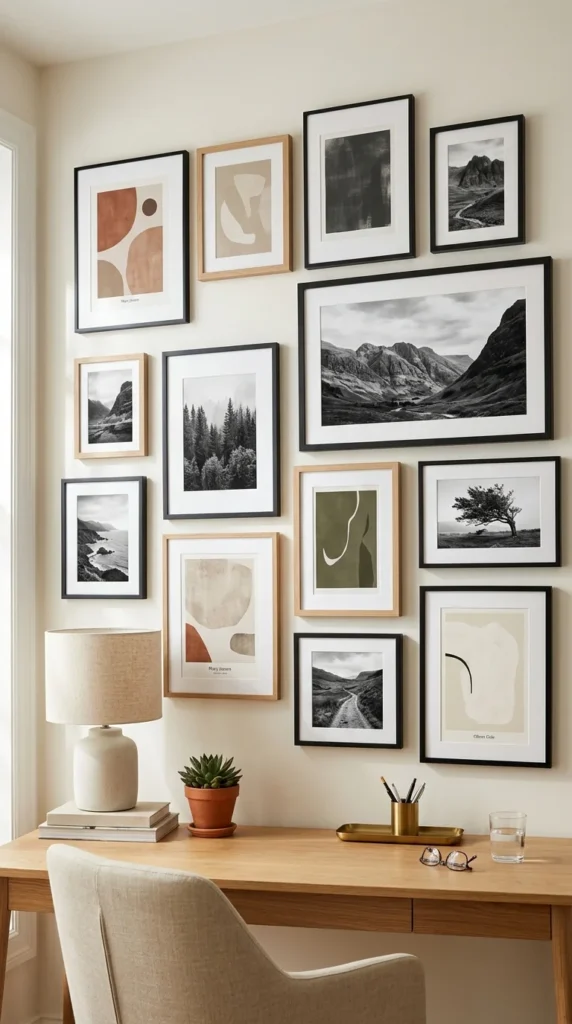
A calm office doesn’t have to be a blank office. A curated gallery wall can provide inspiration without being distracting. Stick to a theme—such as abstract line art, botanical prints, or personal travel photography in black and white. Use matching frames to keep the look cohesive and organized.
11. Zoned Lighting
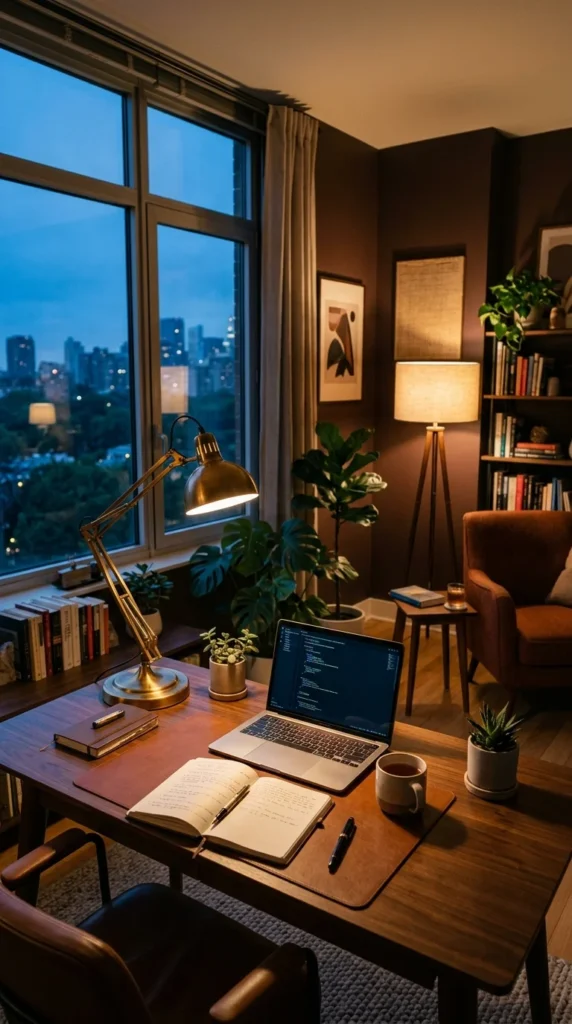
Harsh overhead lighting is a common cause of headaches and eye strain. Instead, use “layered” lighting. Combine natural light with a dedicated task lamp for focused work and a floor lamp with a warm bulb for ambient light. Dimmable options allow you to adjust the mood of the room as the day transitions from high-energy morning tasks to evening admin.
12. Zen Desk
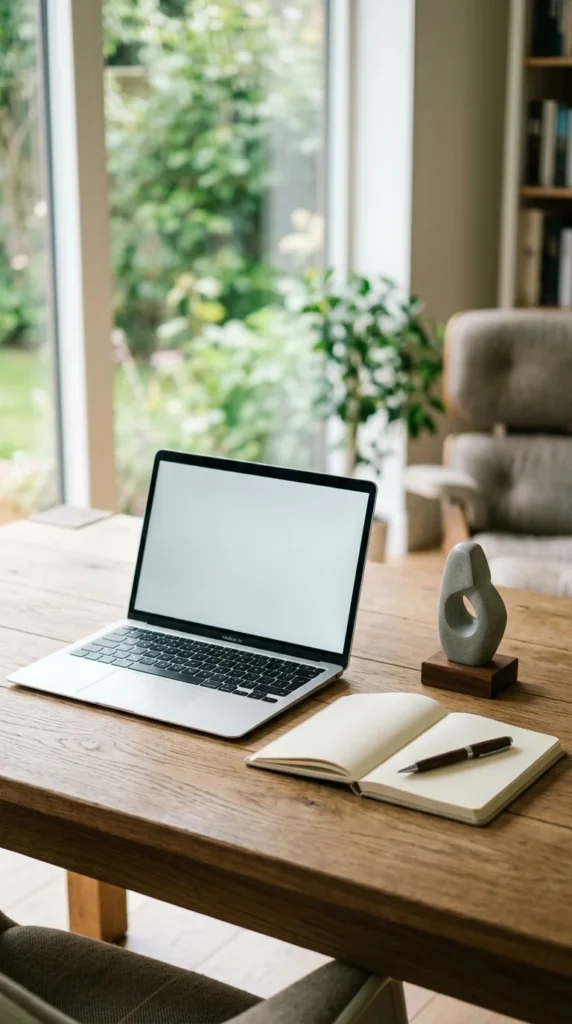
The “Zen Desk” philosophy suggests that your immediate workspace should only contain what you are currently working on. Use drawers and organizers to tuck away everything else. A clear desk surface acts as a visual reset, allowing you to focus entirely on the task at hand without being reminded of your “to-do” list by a pile of mail or extra pens.
13. Reading Nook
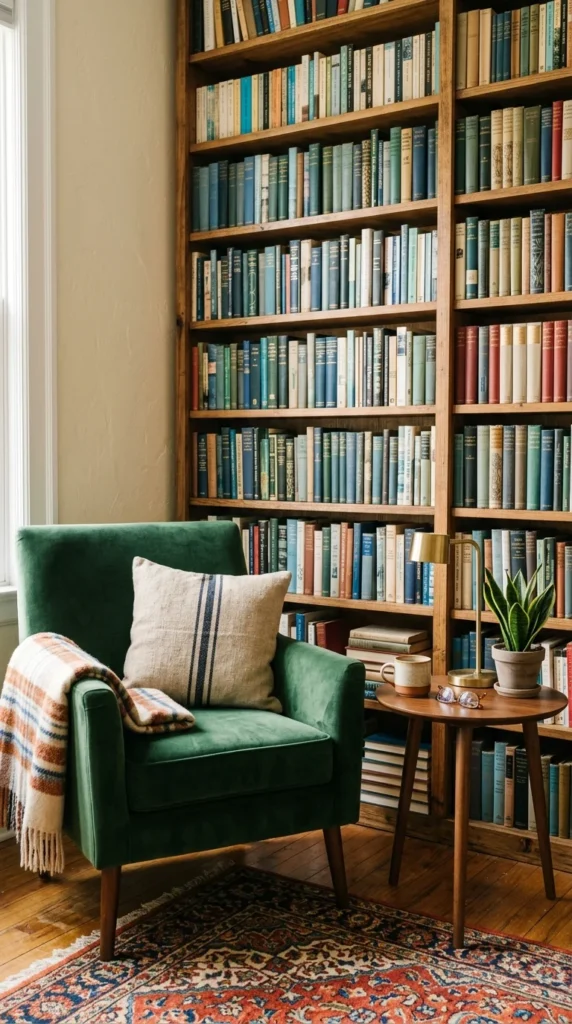
If space allows, include a “low-tech” zone in your office. A comfortable armchair in the corner provides a place to read reports, brainstorm, or take a 10-minute break away from your screen. Having a secondary spot to sit prevents the “stuck at the desk” feeling and makes the room feel more like a versatile sanctuary.
14. Acoustic Panels
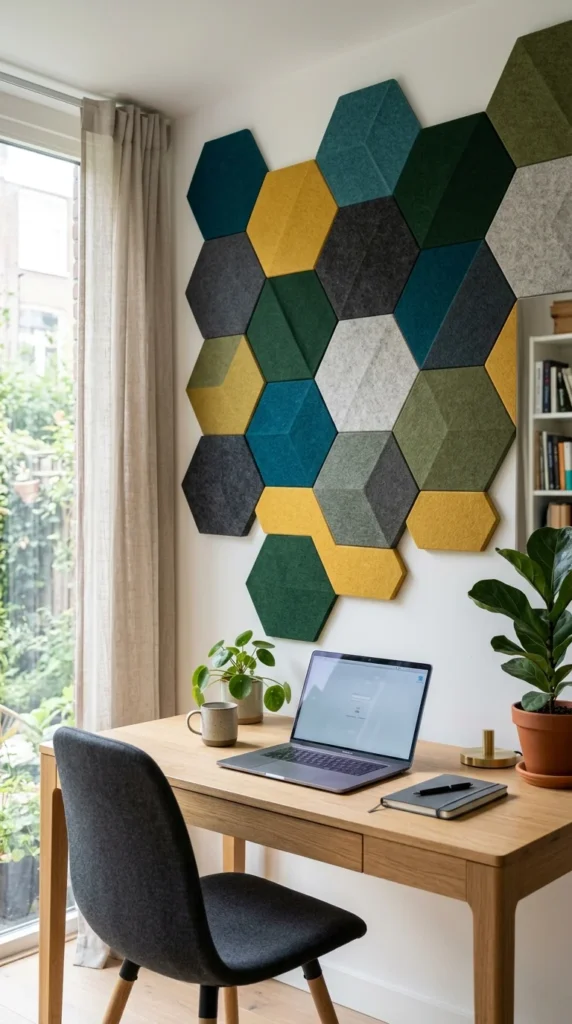
Silence is the ultimate luxury in a home office. If you live in a noisy household or neighborhood, acoustic treatments can help. Modern acoustic panels come in beautiful felt textures and geometric shapes that look like contemporary art. They absorb echoes and dampen outside noise, creating a “hush” that is essential for deep work.
15. Open Shelving
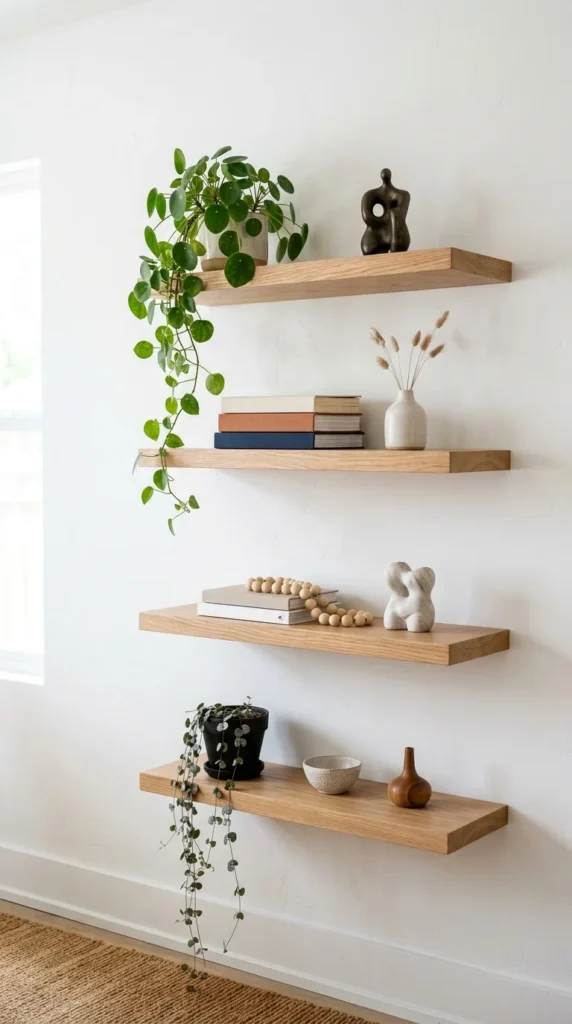
Closed cabinets can sometimes feel heavy and imposing in a small room. Open shelving creates a sense of airiness and allows you to display objects that bring you joy. The key to keeping this “calm” is to avoid overcrowding. Leave plenty of “negative space” on the shelves so the eye has a place to rest.
16. Matte Finishes
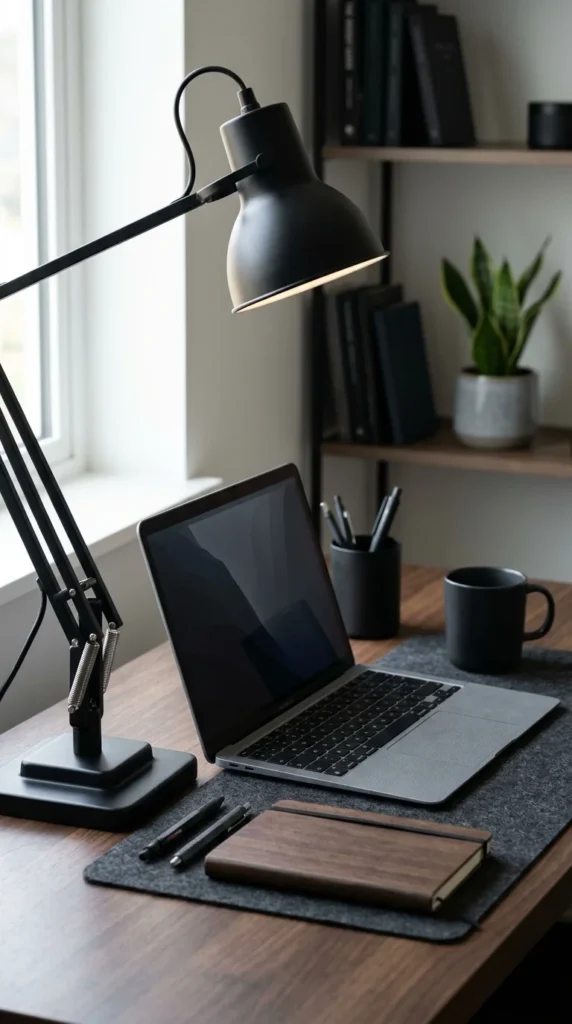
Glossy surfaces reflect light and can create distracting glares. Matte finishes on your desk, hardware, and even your wall paint absorb light and feel softer to the touch. This subtle change reduces visual noise and gives the entire office a sophisticated, “hushed” aesthetic.
17. Organic Shapes
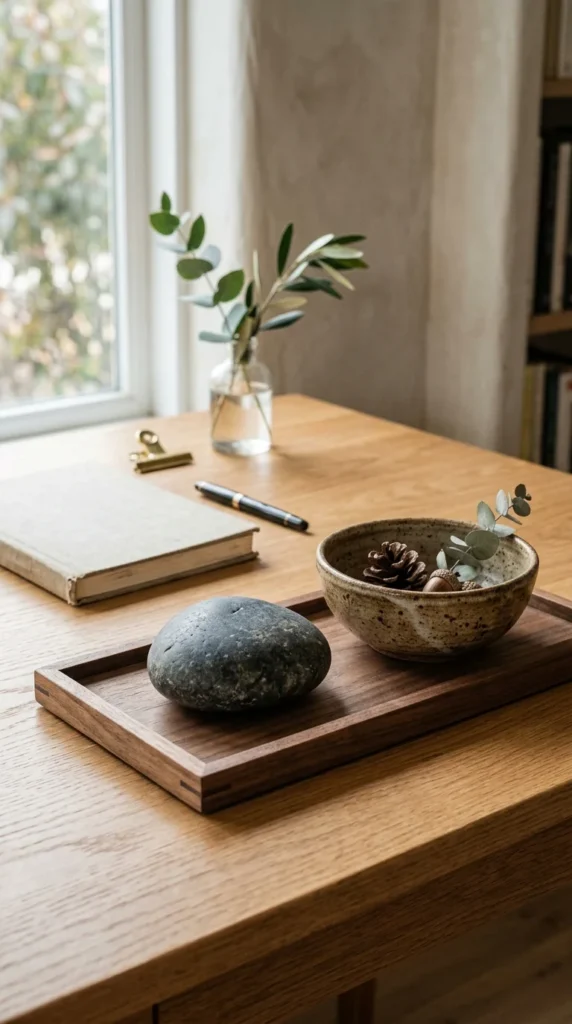
Incorporate accessories that feel like they were found in nature. A smooth stone used as a paperweight, a hand-thrown ceramic mug, or a piece of driftwood can provide a tactile connection to the earth. These “perfectly imperfect” objects break up the digital perfection of our computers and monitors.
18. Window Views
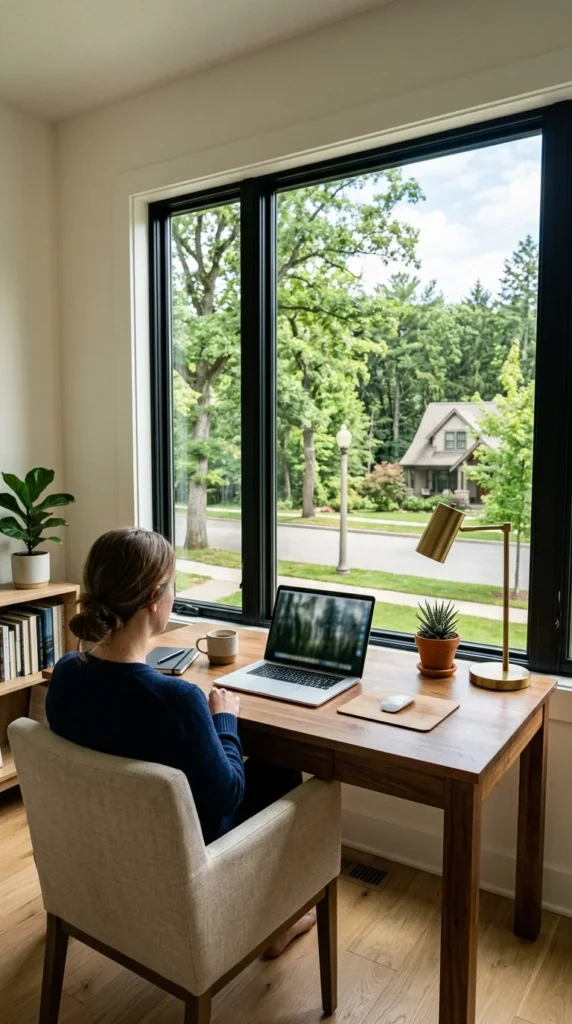
If you have a view, use it. Positioning your desk to face a window provides “soft fascination”—a term used by environmental psychologists to describe things that hold our attention without requiring effort (like watching leaves blow in the wind). This allows your brain to recover from the “hard fascination” required for computer work, keeping you relaxed throughout the day.