

In the modern digital age, our desks have become a battlefield of wires. From charging cables and HDMI cords to peripheral connections and power strips, the “cable jungle” is a real productivity killer. A cluttered desk leads to a cluttered mind, and nothing disrupts a workflow quite like a tangled mess of plastic and copper.
Thankfully, cable management has evolved into an art form. Cord clips are the unsung heroes of the workspace, transforming a chaotic bird’s nest of wires into a streamlined, aesthetic paradise. Whether you are a professional gamer, a remote worker, or a creative designer, these 20 cord clip ideas will help you reclaim your space and focus on what truly matters.
1. Silicone Multi-Slot
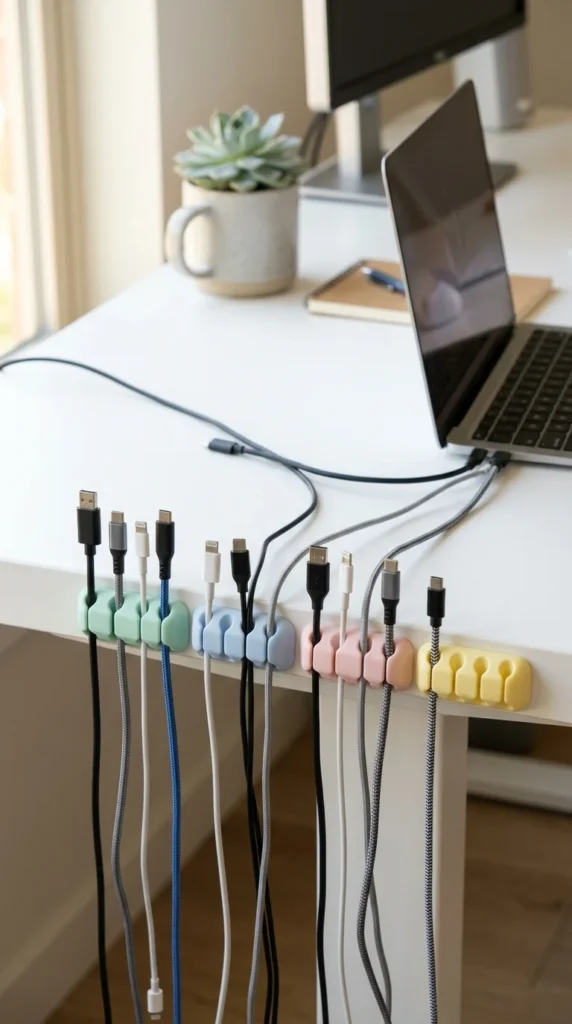
The silicone multi-slot organizer is a classic for a reason. These flexible holders usually come with a strong adhesive backing and feature multiple grooves to house several cables simultaneously. They are perfect for the edge of a desk, keeping your most-used chargers from slipping behind the furniture when disconnected. Because they are made of soft silicone, they won’t scratch your cables and can accommodate various wire thicknesses.
2. Magnetic Anchors
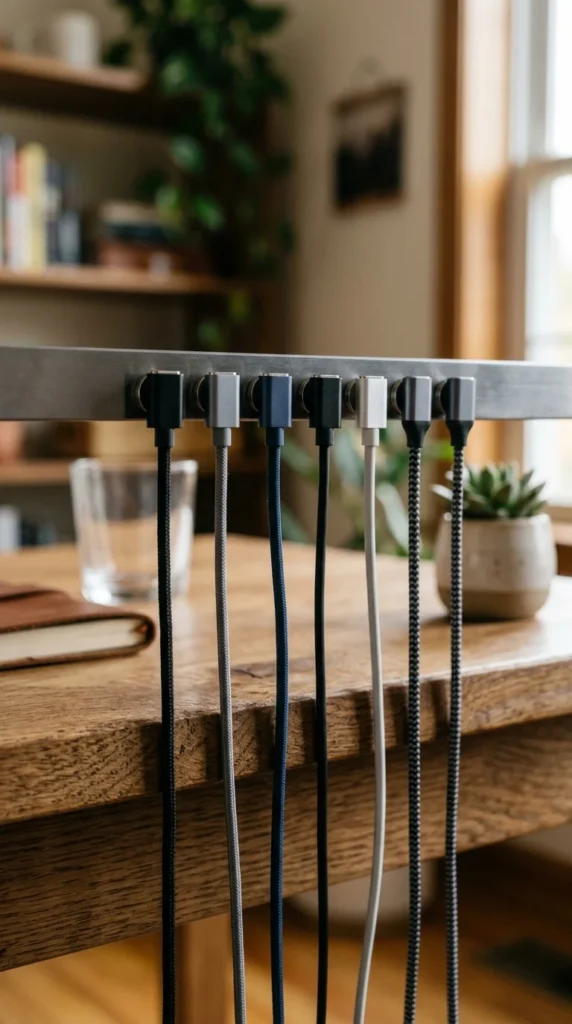
Magnetic cord clips offer the ultimate convenience. These systems typically consist of a small magnetic collar that snaps around your cable and a base station (either a metal strip or a weighted block). When you’re done charging, you simply bring the cable near the base, and it snaps into place. It’s a tactile, satisfying solution that looks incredibly high-end and prevents cables from ever touching the floor.
3. Leather Loops

For those who prioritize aesthetics and a professional look, leather cord loops are the way to go. These clips often feature a snap-button closure and are designed to bundle excess cable length. They add a touch of “executive” style to your setup and are durable enough to last for years. They work exceptionally well for thicker power cords that need to be neatly tucked away but still accessible.
4. Under-Desk Tracks
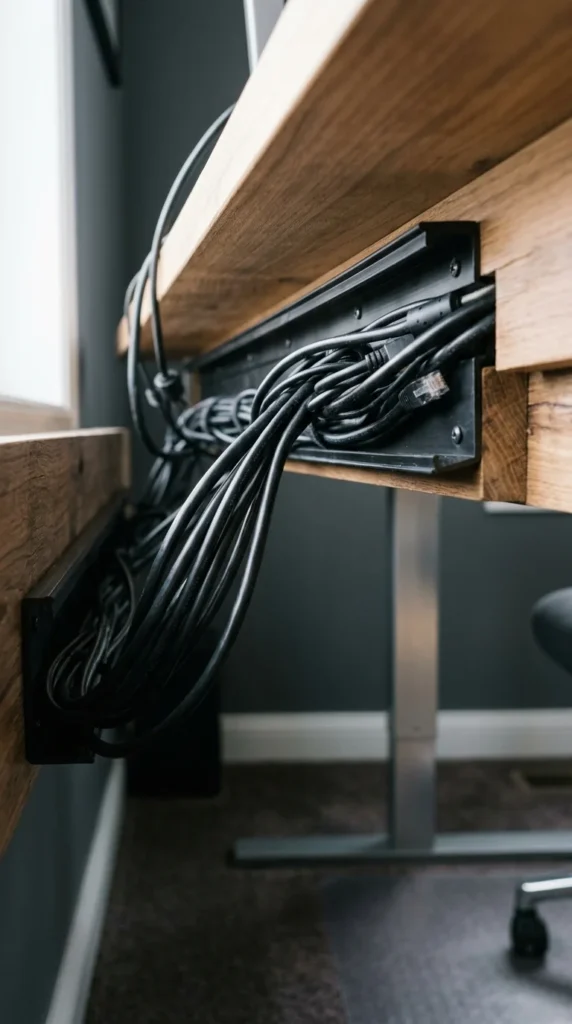
While not a “clip” in the traditional sense, under-desk tracks act as a continuous clip for your entire cable run. These are essential for “cable hiding” enthusiasts. By mounting these tracks to the bottom of your desk, you can route all your main power and data lines out of sight. This keeps the floor clear for your feet and makes your entire office look significantly cleaner.
5. Wooden Blocks
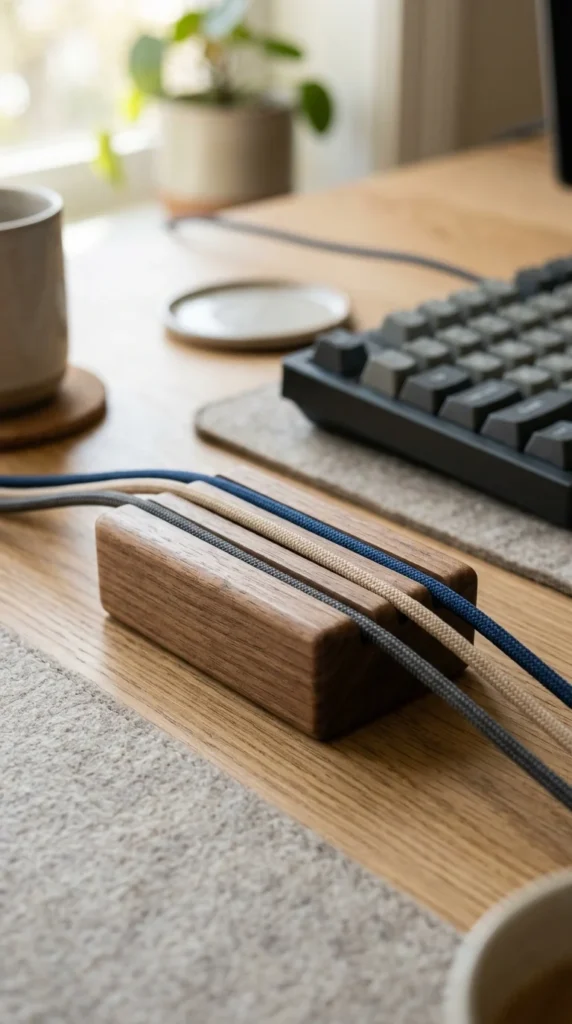
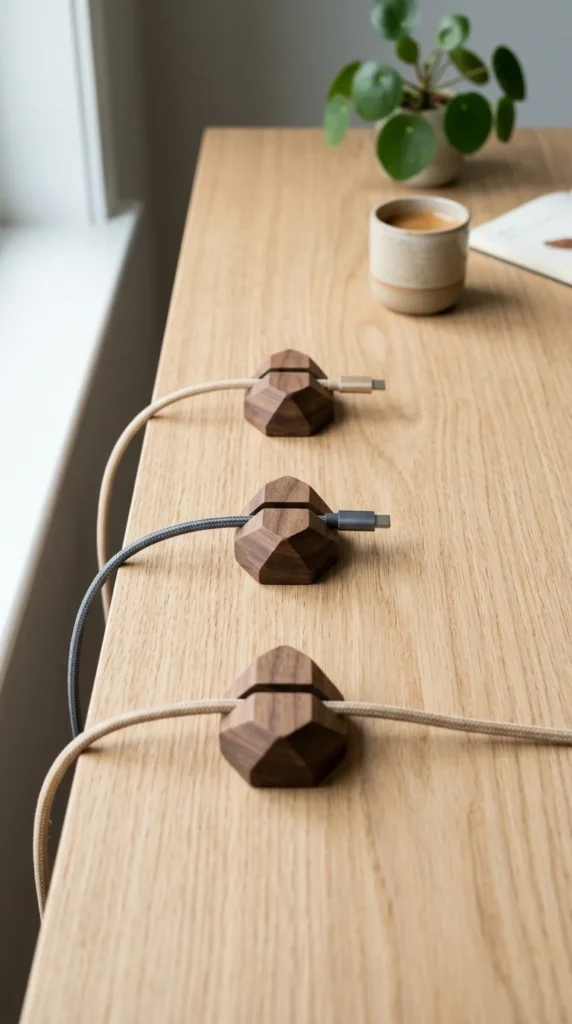
If you have a Scandinavian or rustic-style office, plastic clips might feel out of place. Wooden cord clips, often crafted from walnut or oak, provide a natural, organic feel. These are usually weighted rather than adhesive-based, meaning you can move them around your desk as your needs change without leaving a sticky residue.
6. Transparent Rounds
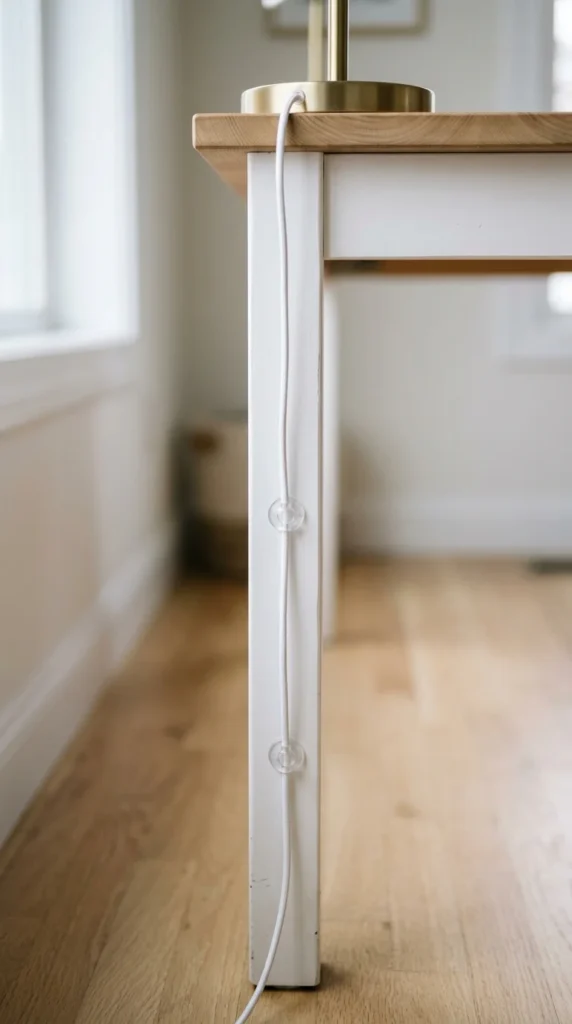
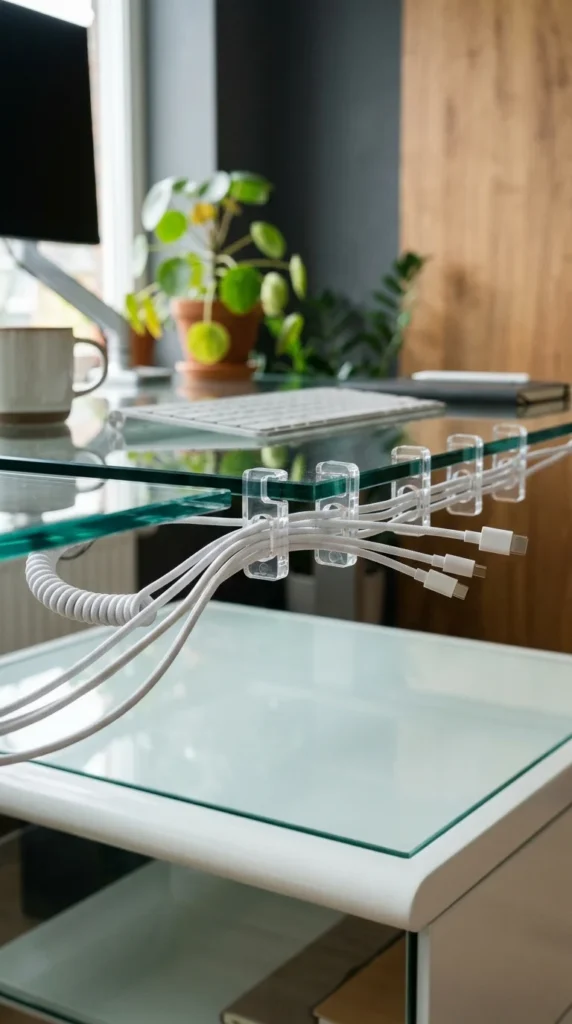
When you want the organization without the visual clutter, transparent clips are your best friend. These are designed to be as invisible as possible. They are perfect for running cables down the legs of white or glass desks, ensuring the cords follow the lines of the furniture without the clips themselves becoming a distraction.
7. Weighted Docks
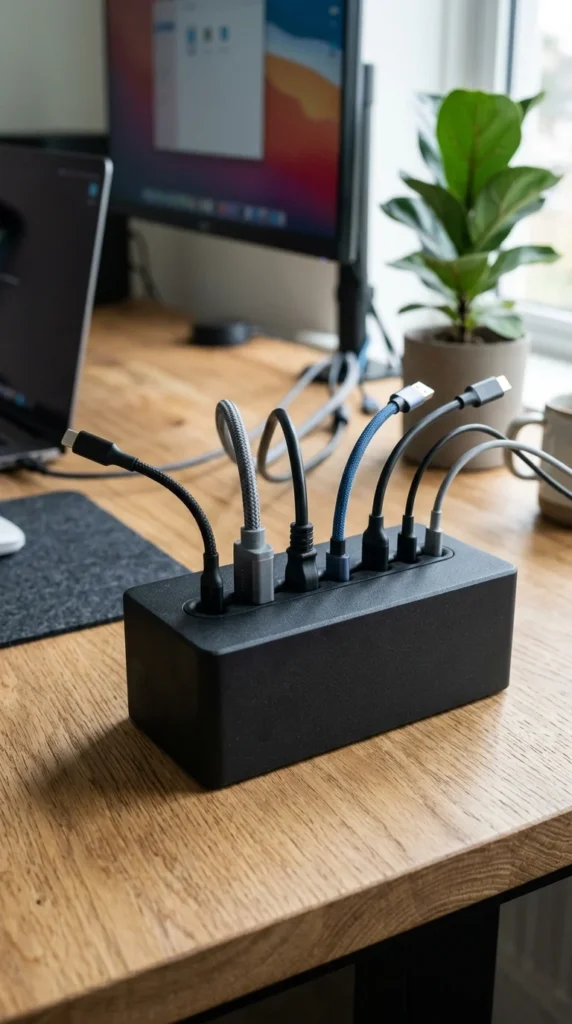
Weighted docks are for the power user who hates sticking things to their expensive furniture. These heavy bases sit firmly on your desk and use friction and gravity to keep cables from sliding back. They are incredibly easy to rearrange and can often hold four to six cables at once, acting as a central hub for your desktop connectivity.
8. Spring Clamps
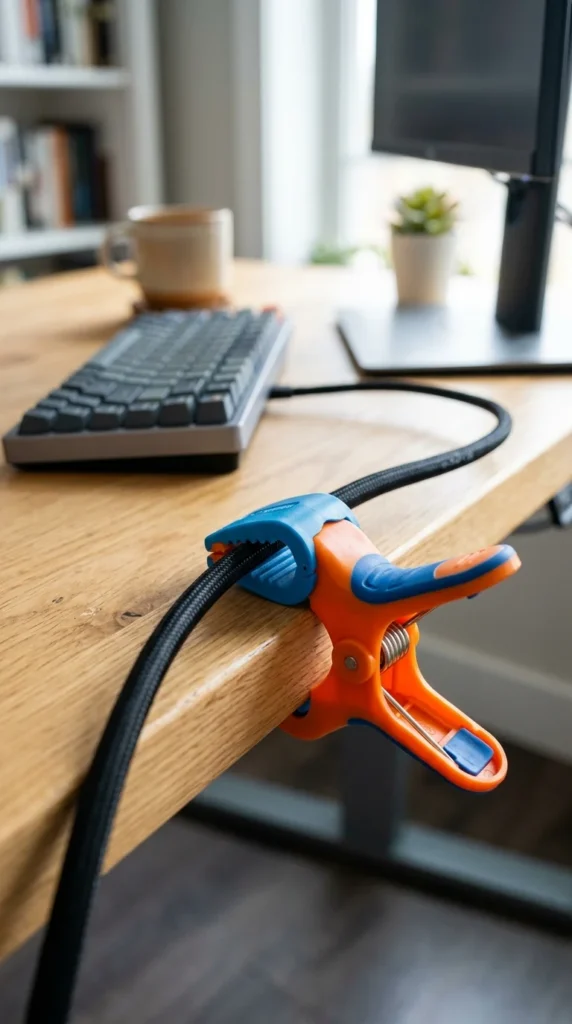
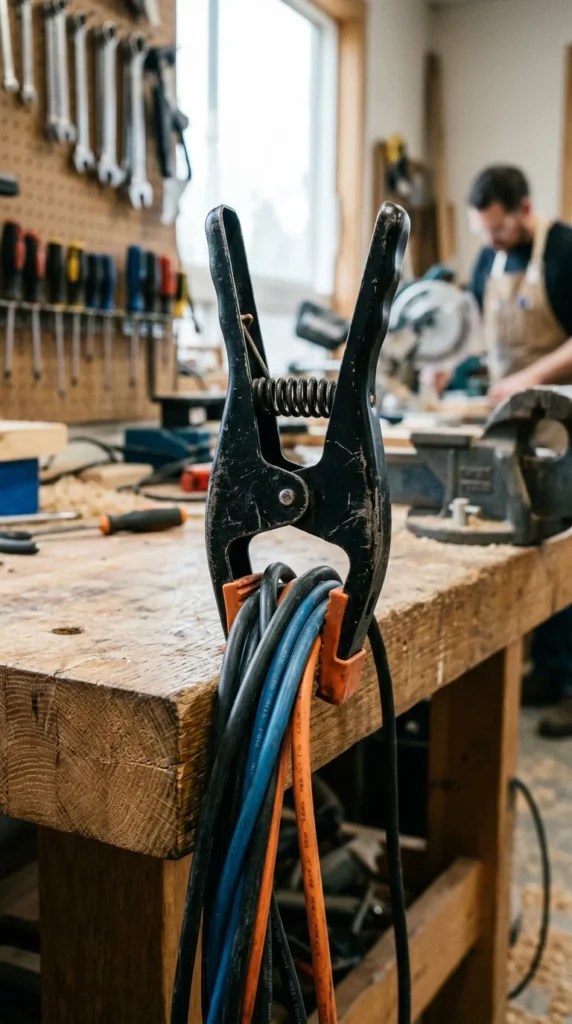
Spring-loaded clips offer a non-permanent solution that is incredibly strong. These work like heavy-duty clothespins for your cables. They are ideal for temporary setups or for thick, stubborn cables that tend to pull away from standard adhesive clips. You can move them in seconds, making them perfect for people who frequently change their desk layout.
9. Spiral Wraps
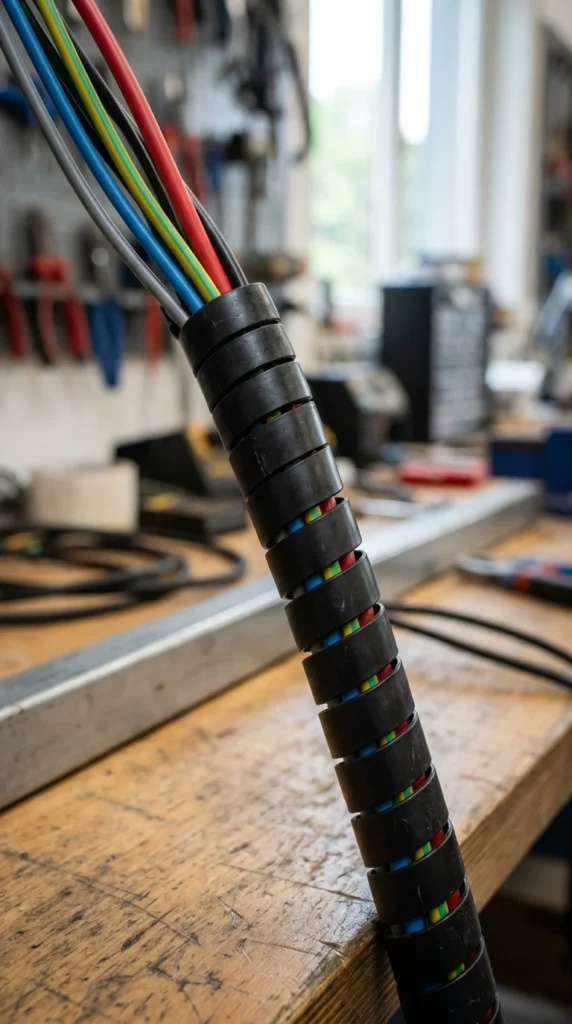
When you have a “waterfall” of cables coming from your PC, a spiral wrap is the best way to contain the chaos. This clip-alternative wraps around multiple wires, turning a messy bundle into a single, neat tube. It protects the cables from pets or chair wheels while making the entire setup look unified and intentional.
10. Fabric Ties
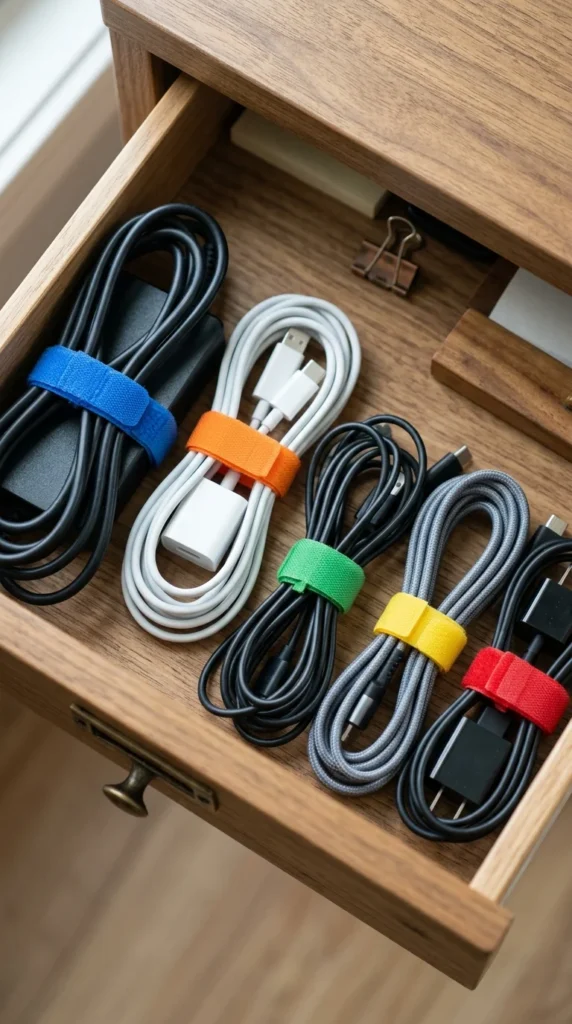
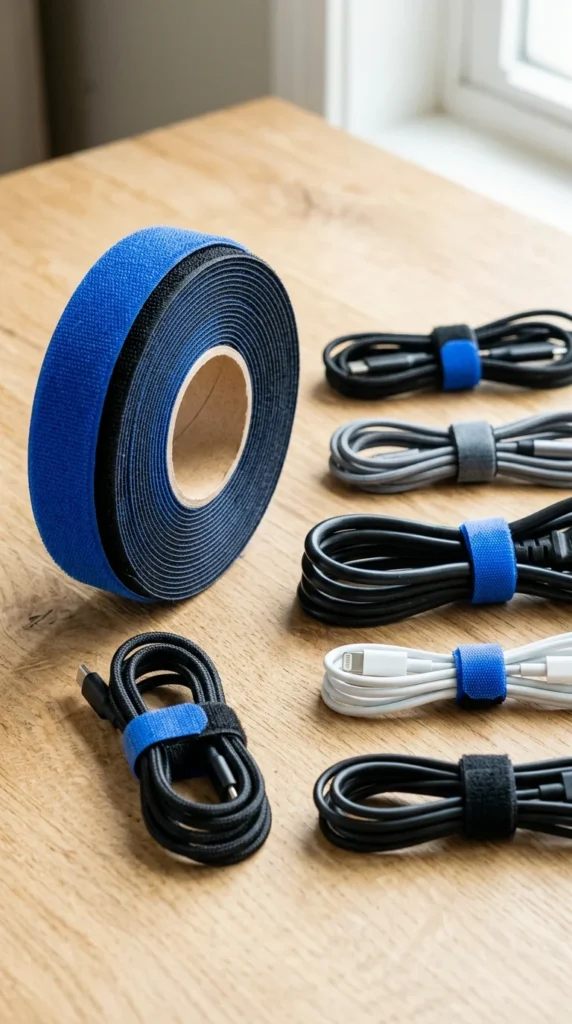
Fabric hook-and-loop ties (often called Velcro ties) are the gold standard for cable management. They are infinitely reusable and won’t damage your cables like plastic zip ties can. Use them to shorten long cords or to bundle your laptop charger for travel. Having a pack of these in your desk drawer is a mandatory requirement for any organized professional.
11. Adhesive Hooks
Sometimes the simplest solution is a small adhesive hook. These are great for “staging” cables that you use frequently but don’t want laying on the desk surface. By placing a hook on the back of your monitor or the side of your desk, you can hang your headphones or your main charging cable within arm’s reach.
12. Cable Sleeves
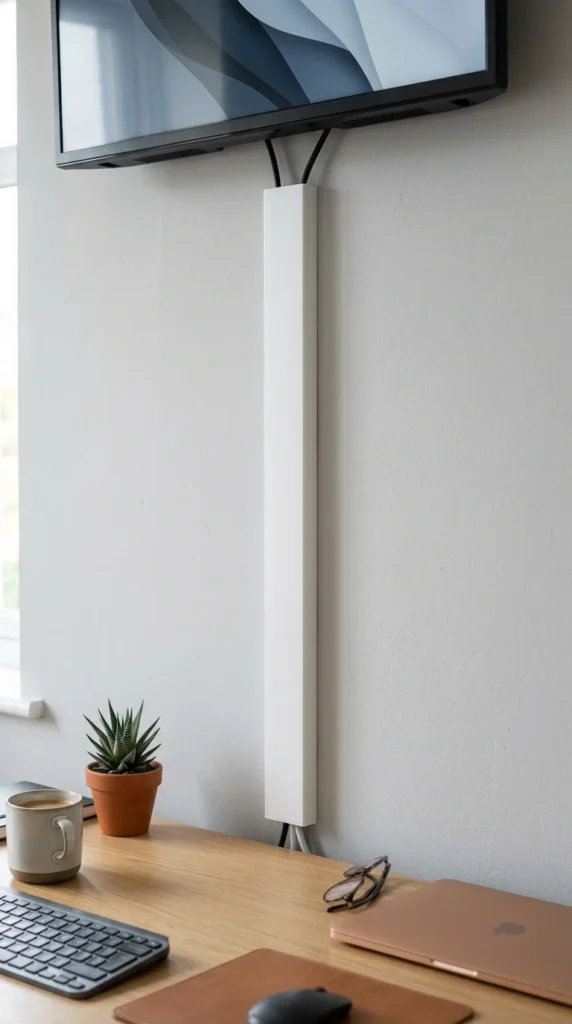
Cable sleeves are like “jackets” for your wires. Usually made of neoprene or braided nylon, they zip or velcro around a group of cables. They are excellent for the main trunk of wires leading from your computer to your power outlet. Not only do they hide the mess, but they also provide a sleek, streamlined look that matches modern office decor.
13. Edge Clamps
Edge clamps are heavy-duty solutions for those who have a lot of equipment. These metal or hard plastic clips clamp onto the back edge of your desk, providing a sturdy anchor point for thick power cables or monitor cords. They are particularly useful for standing desks, where cables need to be securely fastened to move up and down with the desk.
14. Flexible TPE Holders
Thermoplastic Elastomer (TPE) clips are softer than standard plastic but more durable than silicone. They often come in “wave” designs that allow you to “tuck” cables in rather than threading them through. This makes it much faster to add or remove a cable, which is ideal for people who frequently take their laptops or tablets on the go.
15. Minimalist Wire Clips
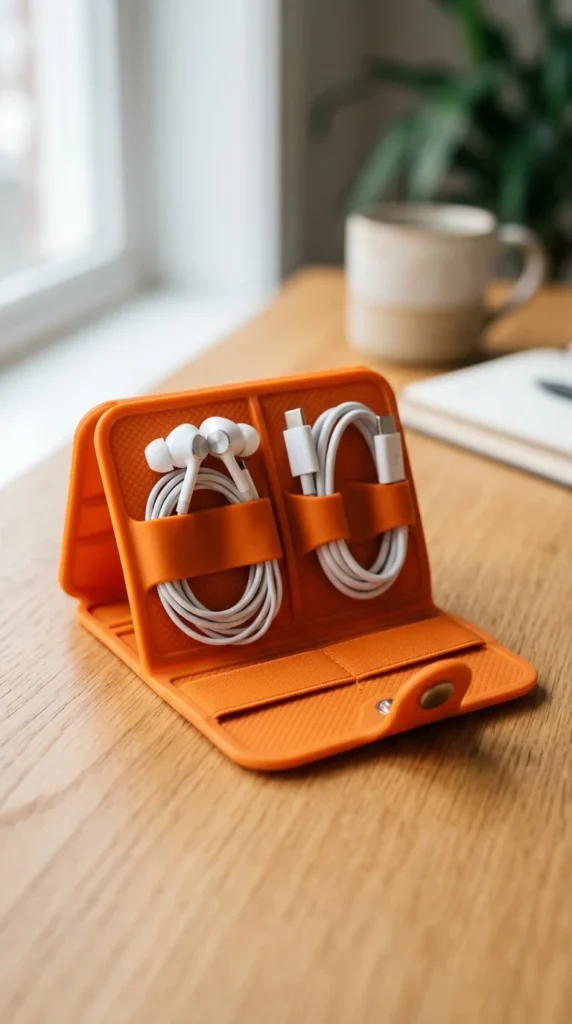
For the true minimalist, these tiny clips are designed to be as small as possible while still performing their job. They usually hold only one or two thin cables and are designed to blend into the shadows of your furniture. They are perfect for “stealth” cable management where you want the cables to disappear entirely.
16. Color-Coded Tags

Organization isn’t just about tidiness; it’s about identification. Color-coded clip tags allow you to see at a glance which cable belongs to which device. No more crawling under the desk to unplug the “wrong” black wire. These clips save time and frustration, especially in complex setups with multiple peripherals.
17. Box Hideaways
A cable management box acts as a “giant clip” for your power strip and all its associated plugs. By housing the mess inside a stylish box, you eliminate the visual clutter of the power brick and the excess wire length. These are essential for keeping dust off your plugs and creating a clean look at the base of your desk.
18. Braided Sleeving
Commonly used in high-end PC builds, braided sleeving can also be used on your desktop. These clips/sleeves expand to fit over your cables and then contract to hold them tight. They provide a “custom” look that feels premium and professional, protecting the wires from friction and tangles.
19. Dual-Sided Tacks

When you need to run a cable up a wall or along the side of a cabinet, dual-sided tacks are the answer. These clips grip the cable firmly and have a flat adhesive side for the wall. They are much better than traditional “nail-in” clips because they don’t damage your walls or furniture and allow for easy adjustments.
20. Retractable Reels

For the ultimate “neat freak,” retractable reels are the final frontier. These devices act as a clip and a storage unit in one. You pull the cable out when you need to charge your phone, and when you’re done, a quick tug retracts the cord back into the reel, hidden under your desk. It’s the only way to ensure there is literally zero cable visible when you aren’t using your devices.