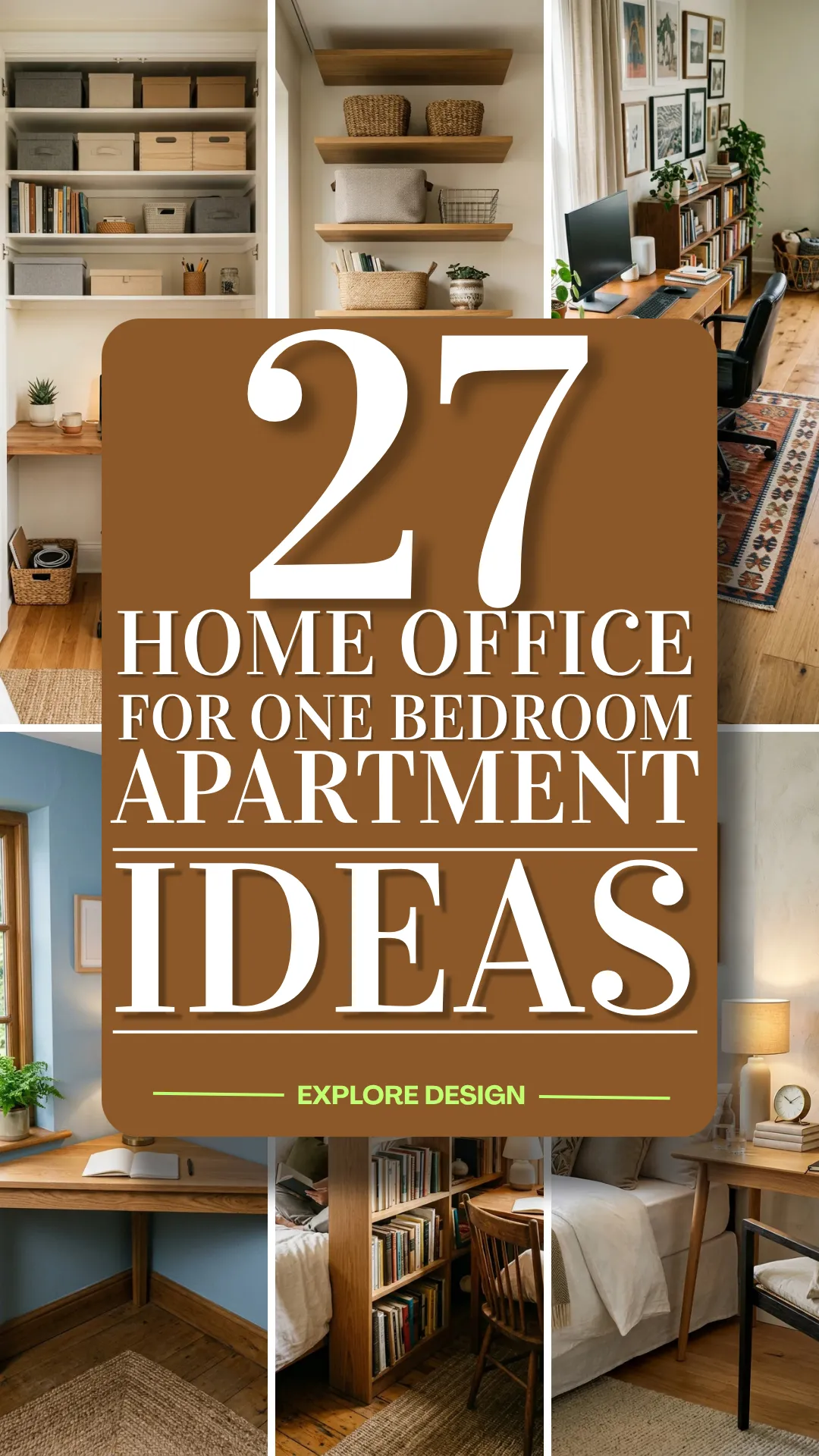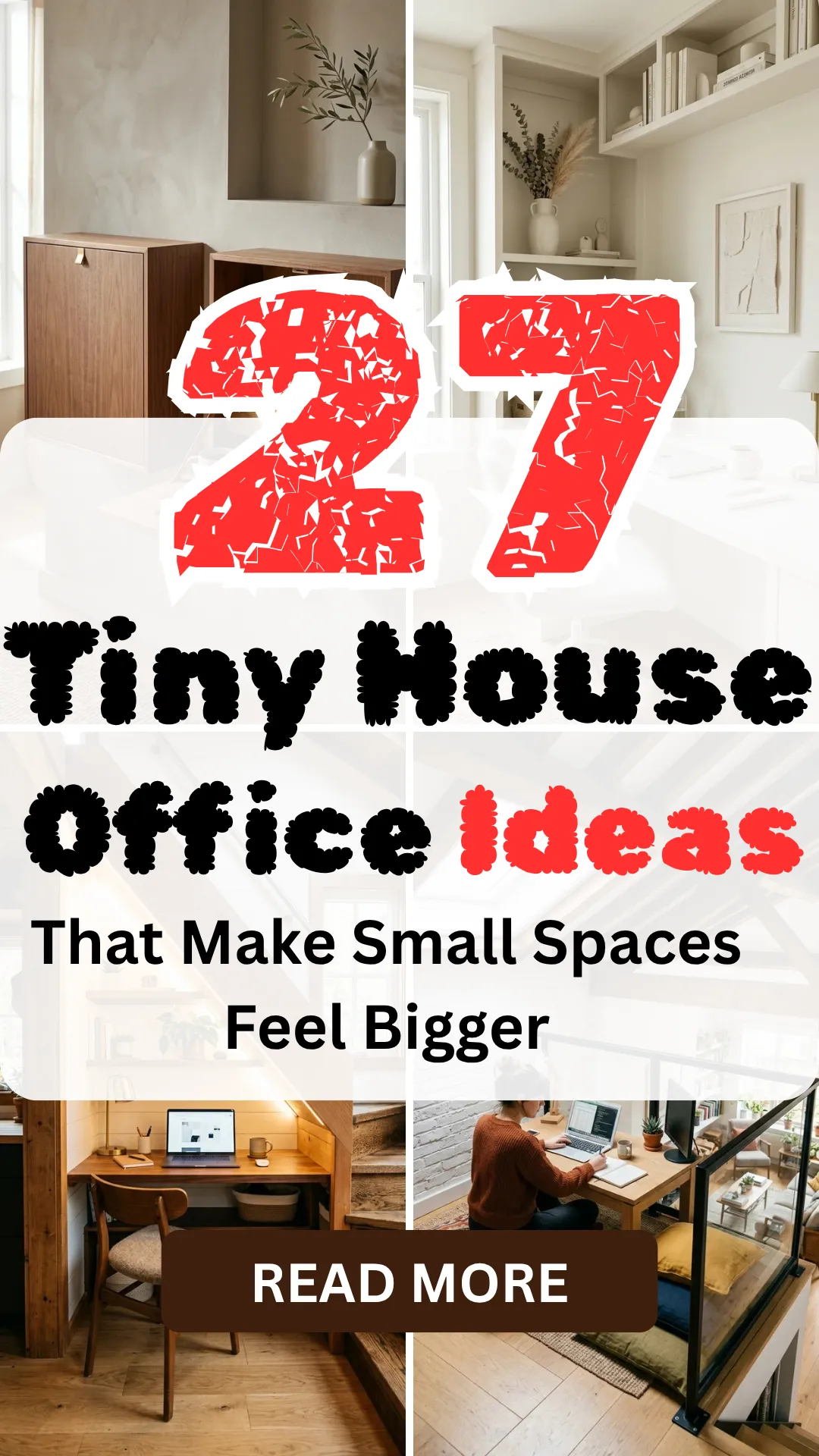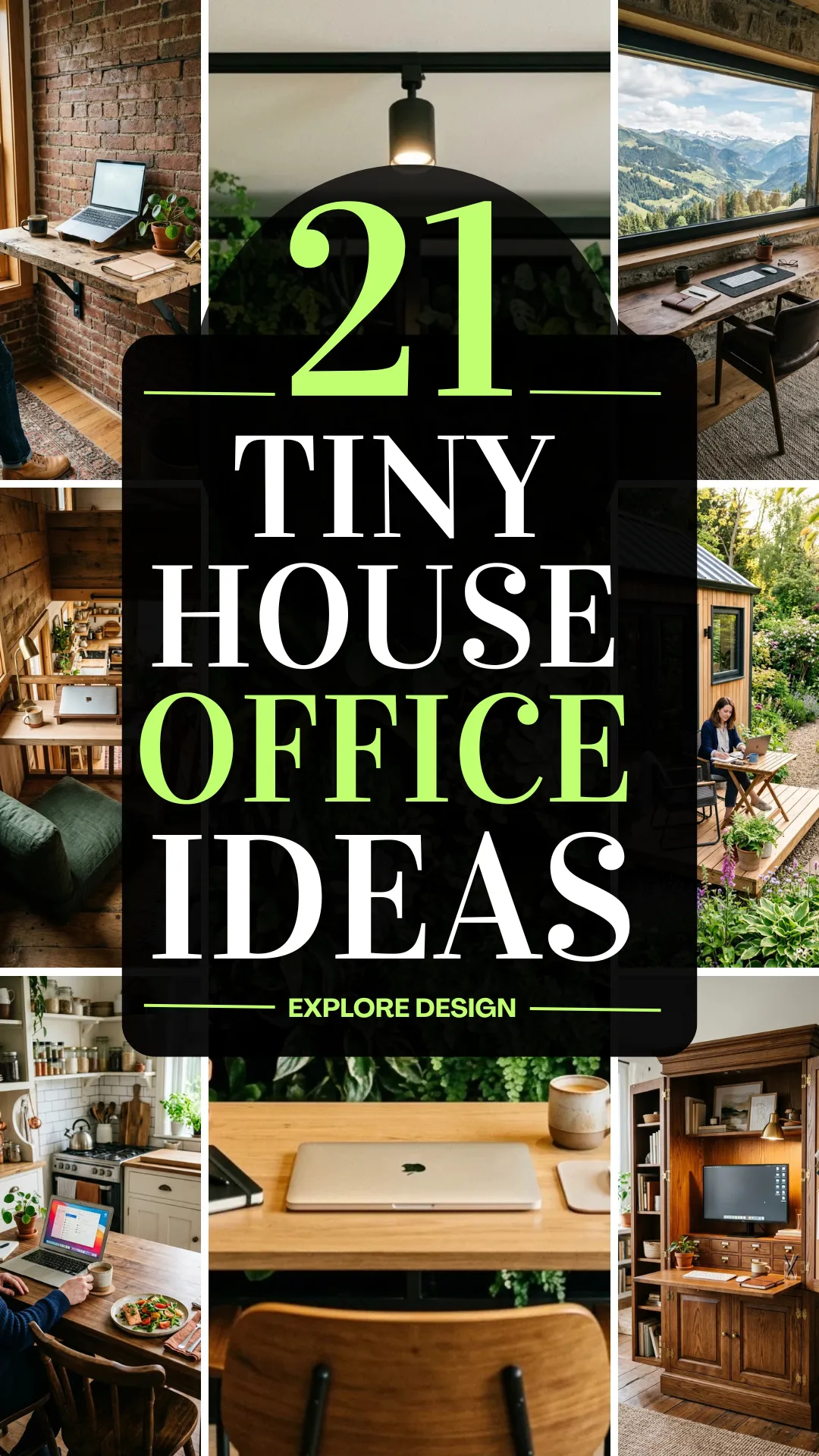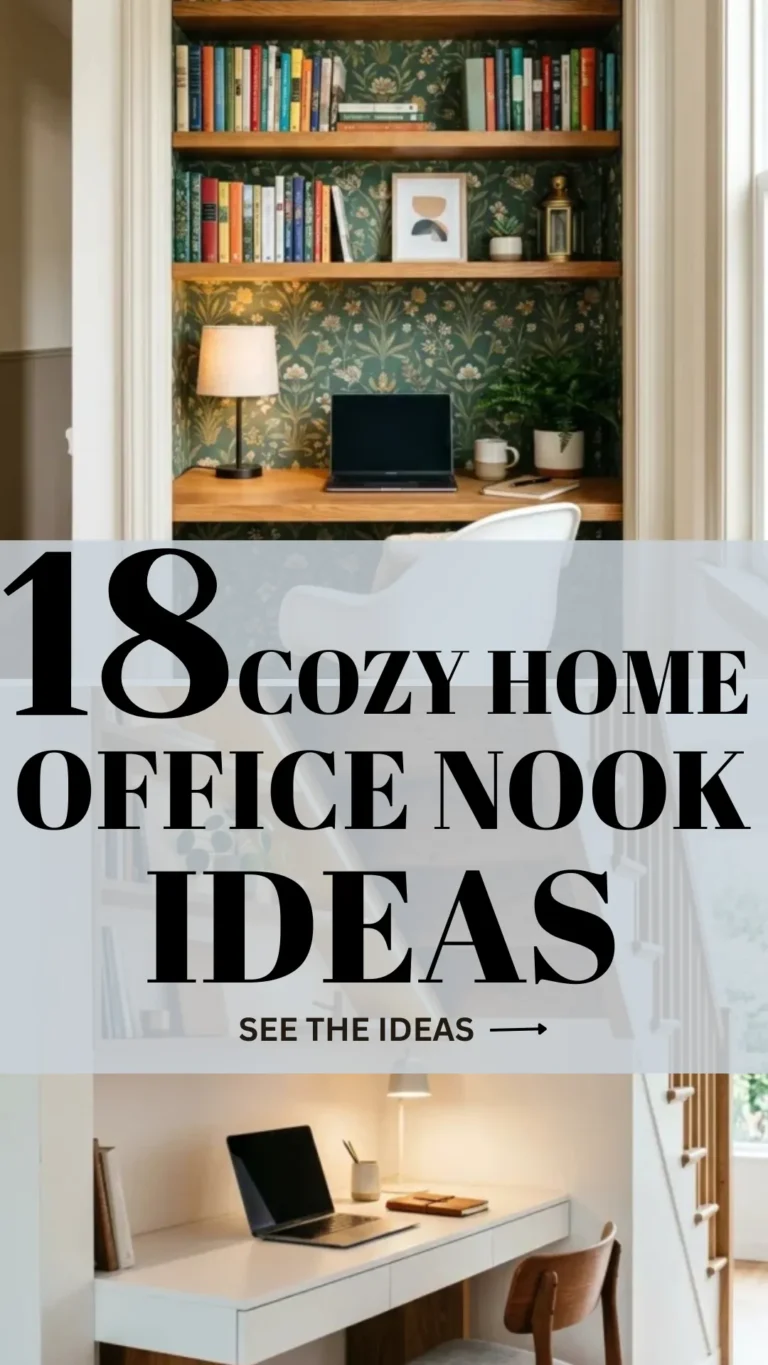

In an era where remote work and hybrid schedules have become the norm, the traditional “home office” has undergone a massive transformation. No longer reserved for those with spare bedrooms or sprawling floor plans, the modern workspace is all about ingenuity. If you are living in a compact apartment or a house where every square foot counts, you don’t need a dedicated room to be productive. You simply need a “nook.”
A home office nook is a masterclass in spatial efficiency. It’s about finding that neglected corner, that empty closet, or that awkward transition space and turning it into a sanctuary of focus. From “cloffices” to floating desks, here are 18 cozy and creative home office nook ideas to help you maximize your small space without sacrificing style or comfort.
1. Closet Office
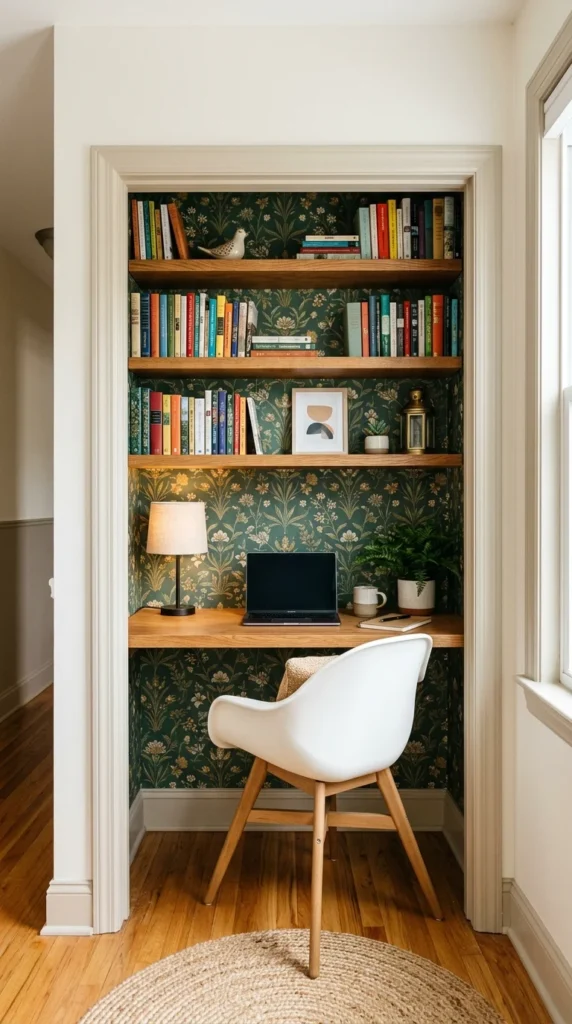
The “cloffice” (closet-office) is perhaps the ultimate small-space hack. By removing the doors of a standard reach-in closet, you create a recessed architectural feature that naturally defines your workspace. You can paint the interior a contrasting color or add a bold peel-and-stick wallpaper to give the nook its own personality. Because the desk is recessed, it doesn’t bleed into the rest of the room, keeping your living area feeling open and clutter-free.
2. Corner Desk
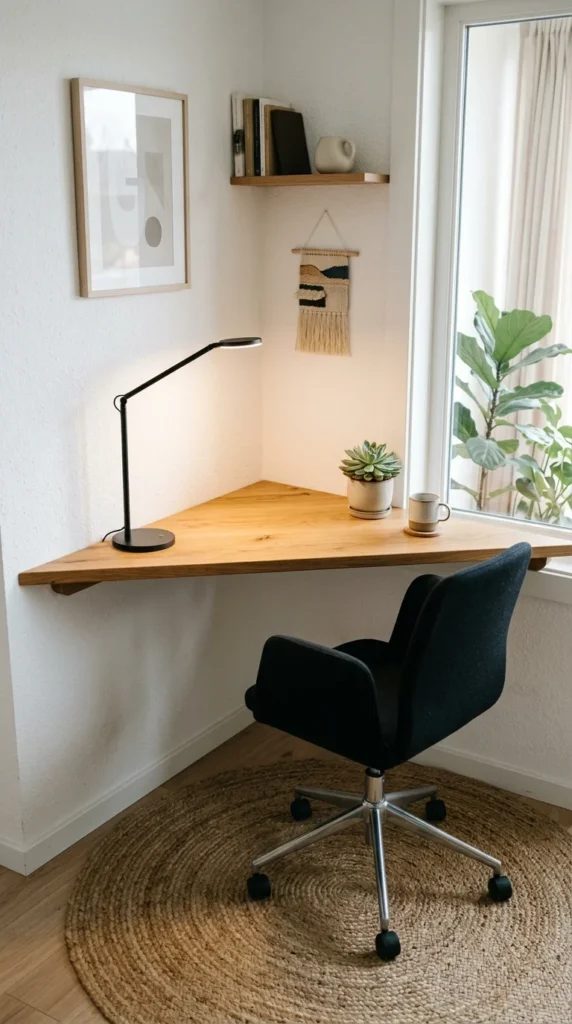
Corners are often the most underutilized areas in a home. A dedicated corner desk—especially one with a triangular or L-shaped top—makes use of every inch of available real estate. This setup provides a surprising amount of surface area for your computer and coffee, while the surrounding walls offer a sense of enclosure that can help improve concentration.
3. Under Stairs
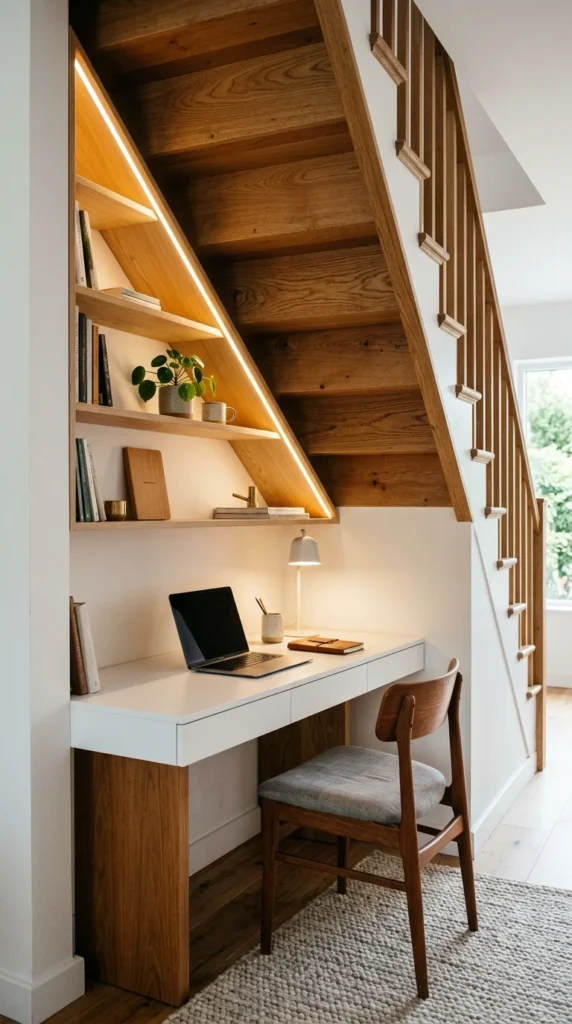
If you live in a multi-story home, the space beneath the staircase is a goldmine. Often used for storage or left empty, this architectural “dead zone” can be transformed into a cozy, semi-private office. Custom shelving that follows the pitch of the stairs provides ample room for files and decor, making the nook feel like an intentional part of the home’s design.
4. Window Sill
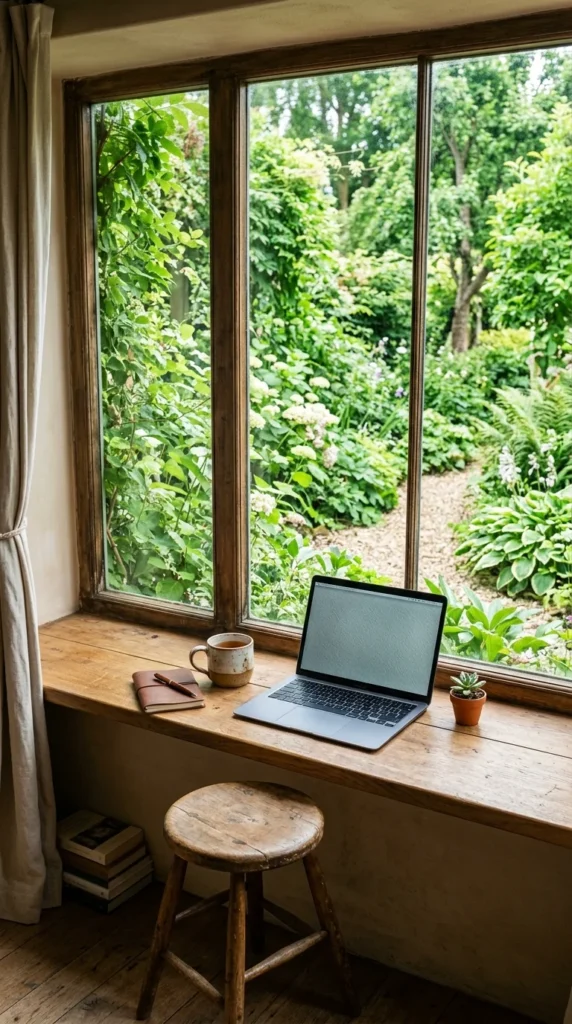
There is no better lighting for a workday than natural sunlight. If you have a deep window sill or a window set into a thick wall, you can easily extend the ledge to create a “view-with-a-desk.” Not only does this save floor space by eliminating the need for a bulky furniture piece, but the constant access to natural light and the outdoors can significantly boost your mood and productivity.
5. Floating Desk
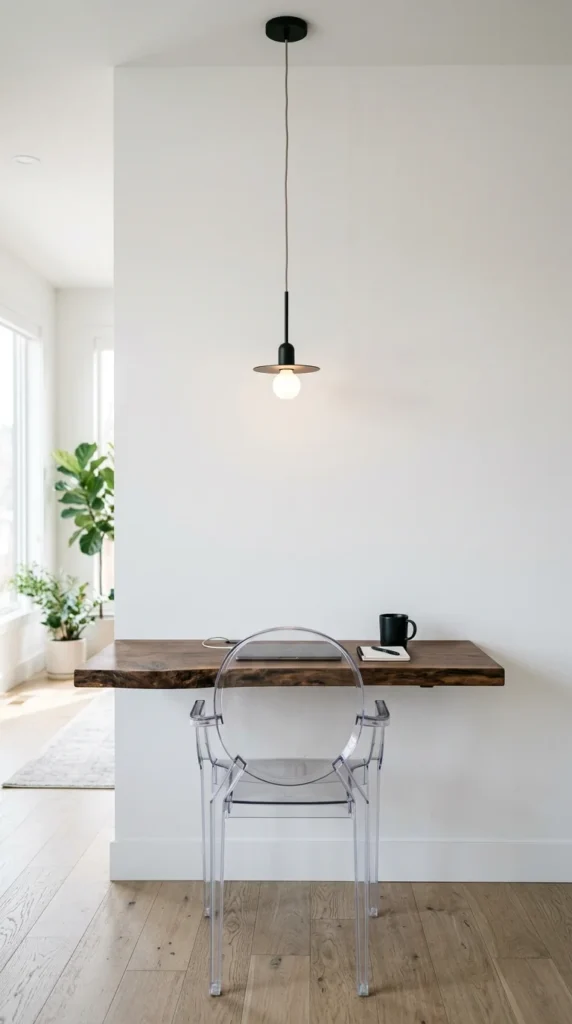
To keep a small room feeling airy and spacious, look for furniture that doesn’t touch the floor. A wall-mounted floating desk removes the visual “noise” of table legs, allowing the flooring to extend uninterrupted. This trick makes the room appear larger while providing a sturdy, modern surface for your laptop and essentials.
6. Room Divider
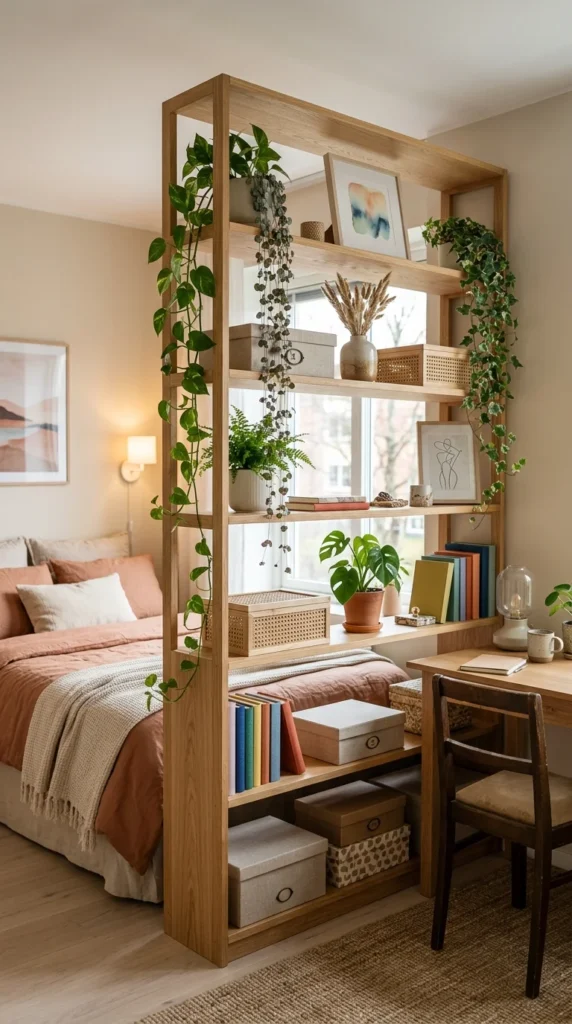
In a studio apartment, the biggest challenge is separating “sleep mode” from “work mode.” Using an open-shelf room divider allows you to create a distinct office nook without blocking light or making the space feel cramped. You get a dedicated workspace on one side and a cozy living or sleeping area on the other, with plenty of storage in between.
7. Sofa Back
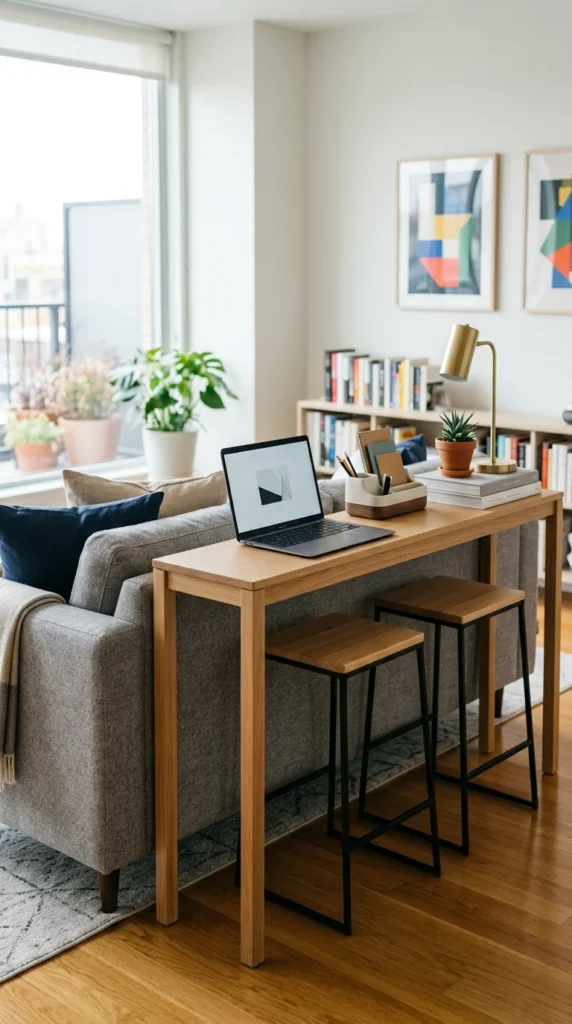
If your living room is your only option, look to the back of your couch. A slim console table can serve as a sophisticated desk that blends seamlessly into your decor. This “command center” approach allows you to stay part of the household action while maintaining a clear, dedicated surface for your professional life.
8. Hallway Nook
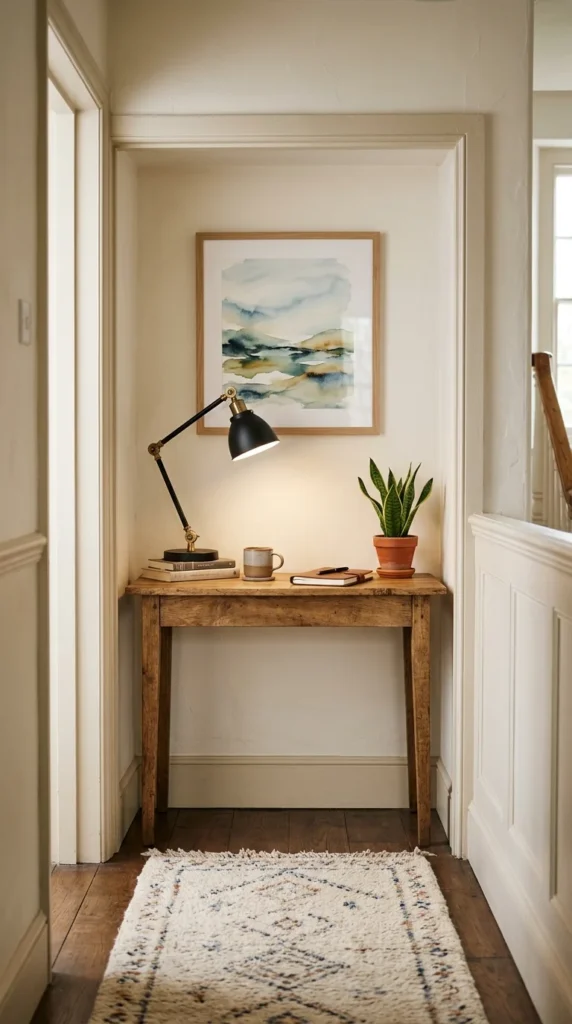
Hallways are often treated as mere transition zones, but a wider hallway or a landing can easily host a compact desk. By adding a small rug and some task lighting, you define the space as a “room within a room.” It’s an excellent way to utilize space that would otherwise be wasted.
9. Murphy Desk

For those who truly have zero floor space to spare, the Murphy desk (or fold-down desk) is a game-changer. When the workday is over, the desk folds up flat against the wall, often resembling a simple cabinet or even a piece of art. It’s the ultimate “out of sight, out of mind” solution for work-life balance in a small home.
10. Alcove Shelving
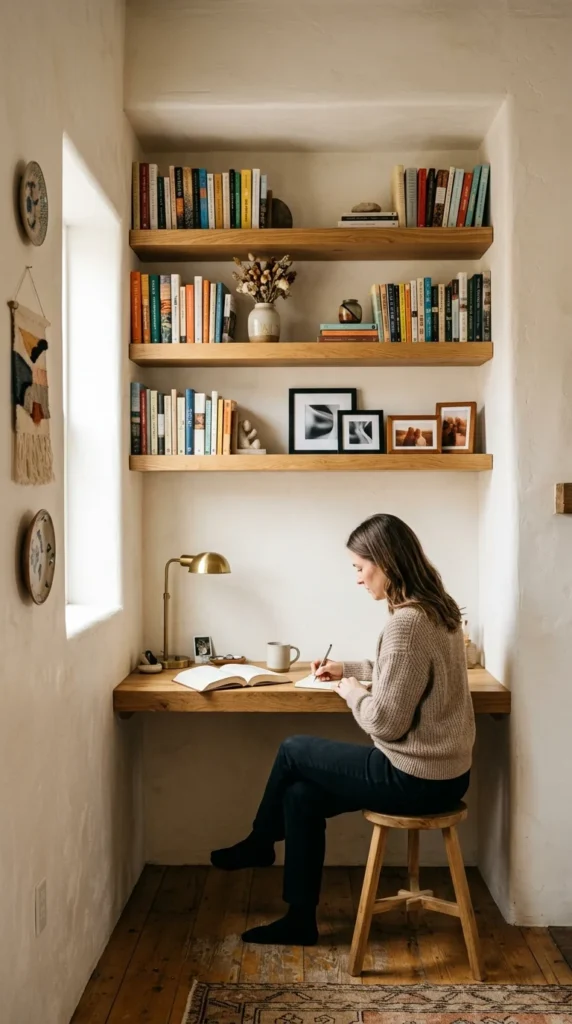
Many older homes feature small alcoves or recesses near chimneys or in bedrooms. Instead of filling these with a standalone dresser, install floating shelves from wall to wall. Use the lowest, deepest shelf as your primary work surface and the higher shelves for storage. This “built-in” look adds character and value to your home.
11. Kitchen Command
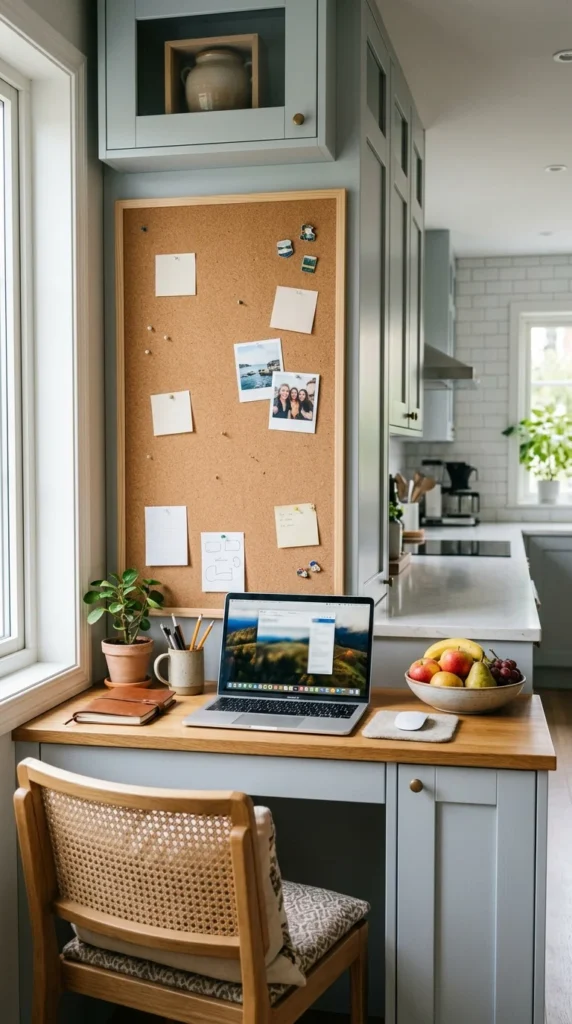
In a busy household, the kitchen is the heart of the home. Integrating a small “command center” into the kitchen cabinetry allows you to manage household tasks, pay bills, or work while keeping an eye on dinner. It’s a functional, high-traffic solution that keeps the rest of the house free of paper clutter.
12. Loft Bed
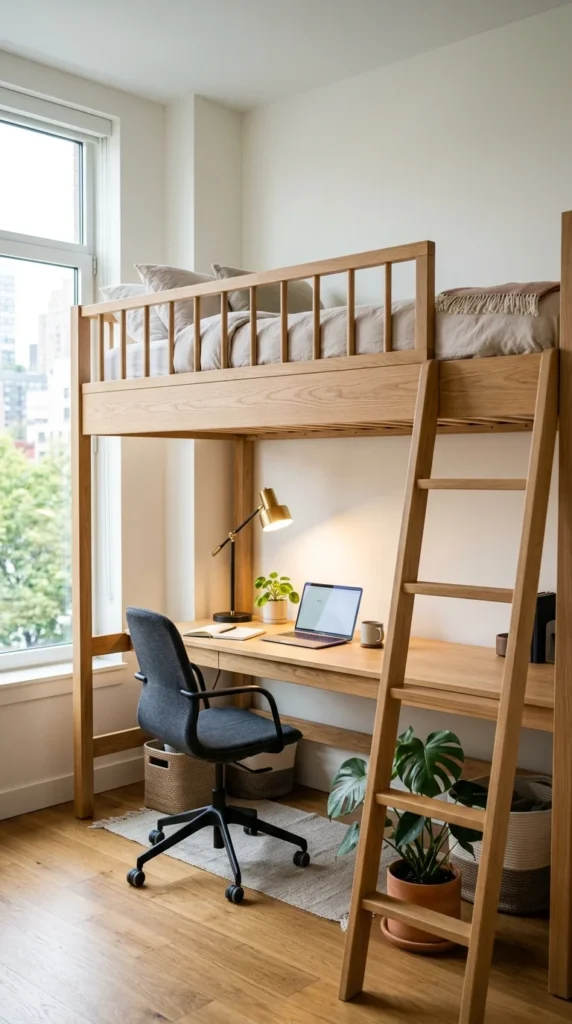
Vertical space is your best friend in tiny apartments. By lofting your bed, you double your usable square footage. The area beneath the bed is large enough to house a full-sized desk, filing cabinets, and even a small armchair, creating a private, cave-like office that feels entirely separate from the rest of the room.
13. Ladder Desk
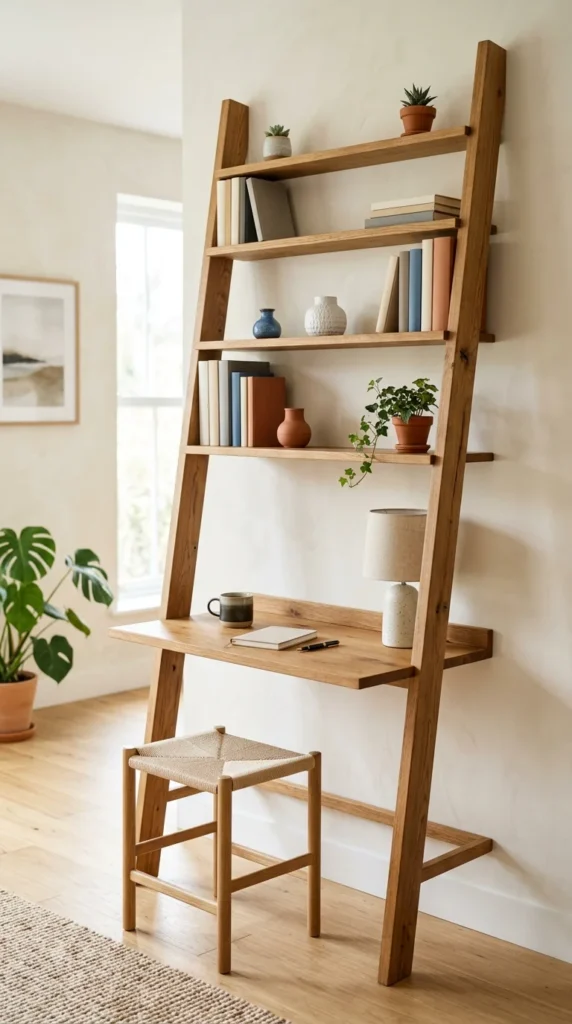
Ladder desks are incredibly popular for small spaces because of their narrow footprint and vertical storage. They lean against the wall, providing a tiered look that draws the eye upward. This makes them perfect for living rooms or bedrooms where you want a workspace that feels more like a piece of decorative furniture than a piece of office equipment.
14. Mobile Cart

If you don’t have a permanent spot for an office, go mobile. A rolling utility cart can hold all your office supplies, from printers to pens. Pair it with a small, foldable table that can be tucked behind a sofa when not in use. This allows you to set up your “nook” anywhere in the house depending on where the light is best or where the house is quietest.
15. Vintage Vanity
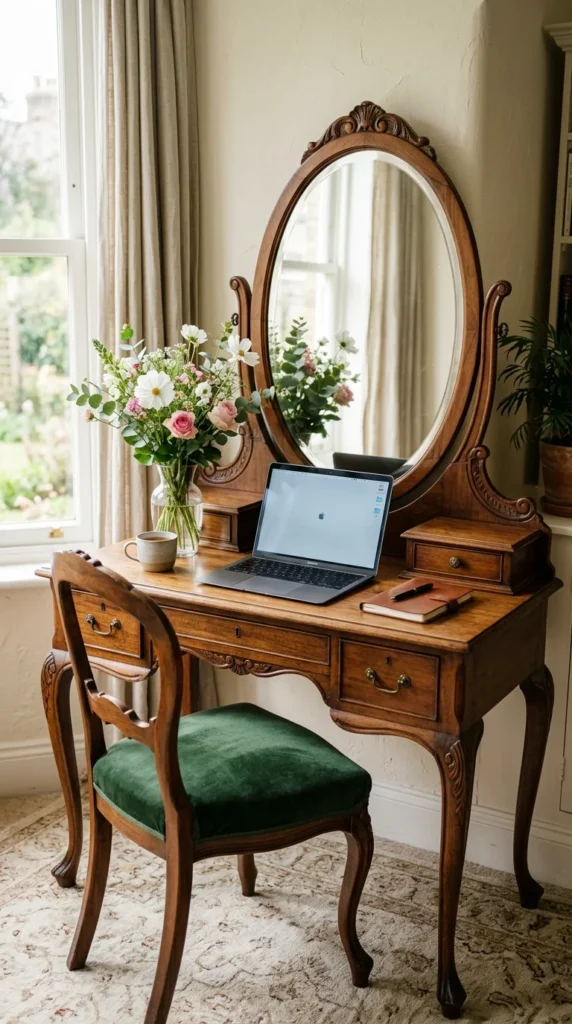
Who says a desk has to look like a desk? A vintage vanity or dressing table often has a smaller footprint than a standard office desk and comes with built-in drawers for storage. In a bedroom, this piece can serve a dual purpose: a place for your morning skincare routine and a stylish spot for your afternoon Zoom calls.
16. Botanical Corner
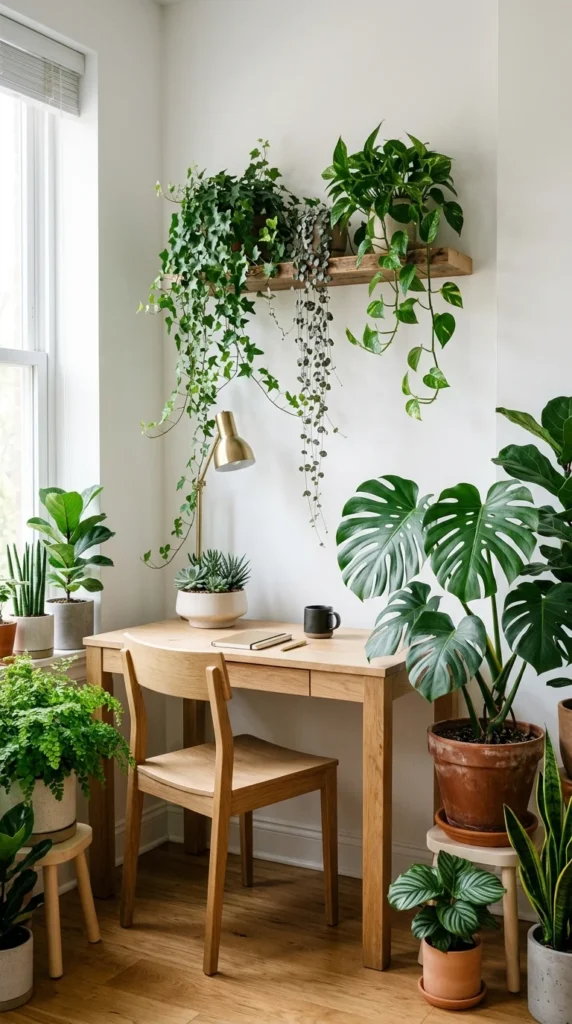
To make a small nook feel “cozy” rather than “cramped,” lean into biophilic design. Surrounding your desk with greenery not only purifies the air but also creates a calming, “jungle-nook” vibe. Use a mix of hanging plants and floor pots to create a lush, living screen that separates your workspace from the rest of the room.
17. Wall Grid
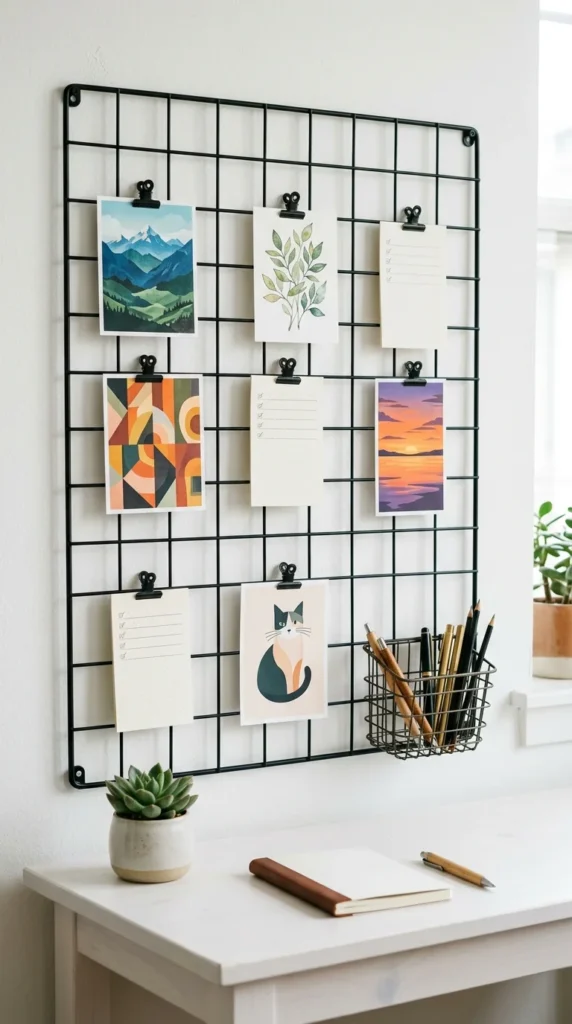
When horizontal space is at a premium, use your walls. A wire wall grid or a pegboard allows you to move your organizers, calendars, and inspirations off the desk and onto the wall. This keeps your actual work surface clear for your laptop and mouse, making even the smallest desk feel significantly larger and more organized.
18. Bedroom Corner
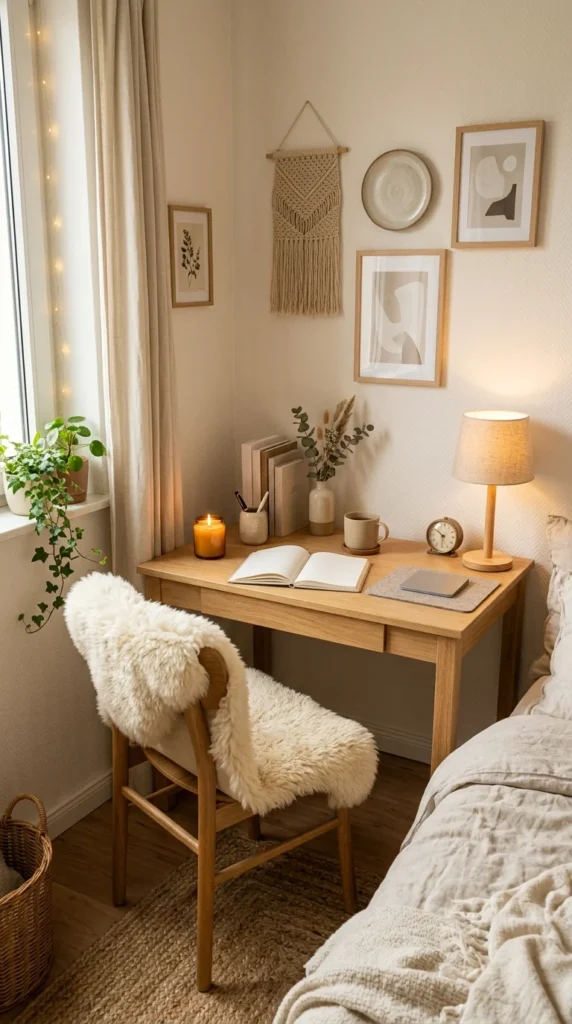
Sometimes the best place for a nook is the quietest corner of your bedroom. By keeping the color palette soft and neutral—think whites, creams, and light woods—the office blends into the room’s relaxing atmosphere. Adding “cozy” elements like a plush rug or a textured throw blanket ensures that the workspace feels like a natural, inviting extension of your personal sanctuary.