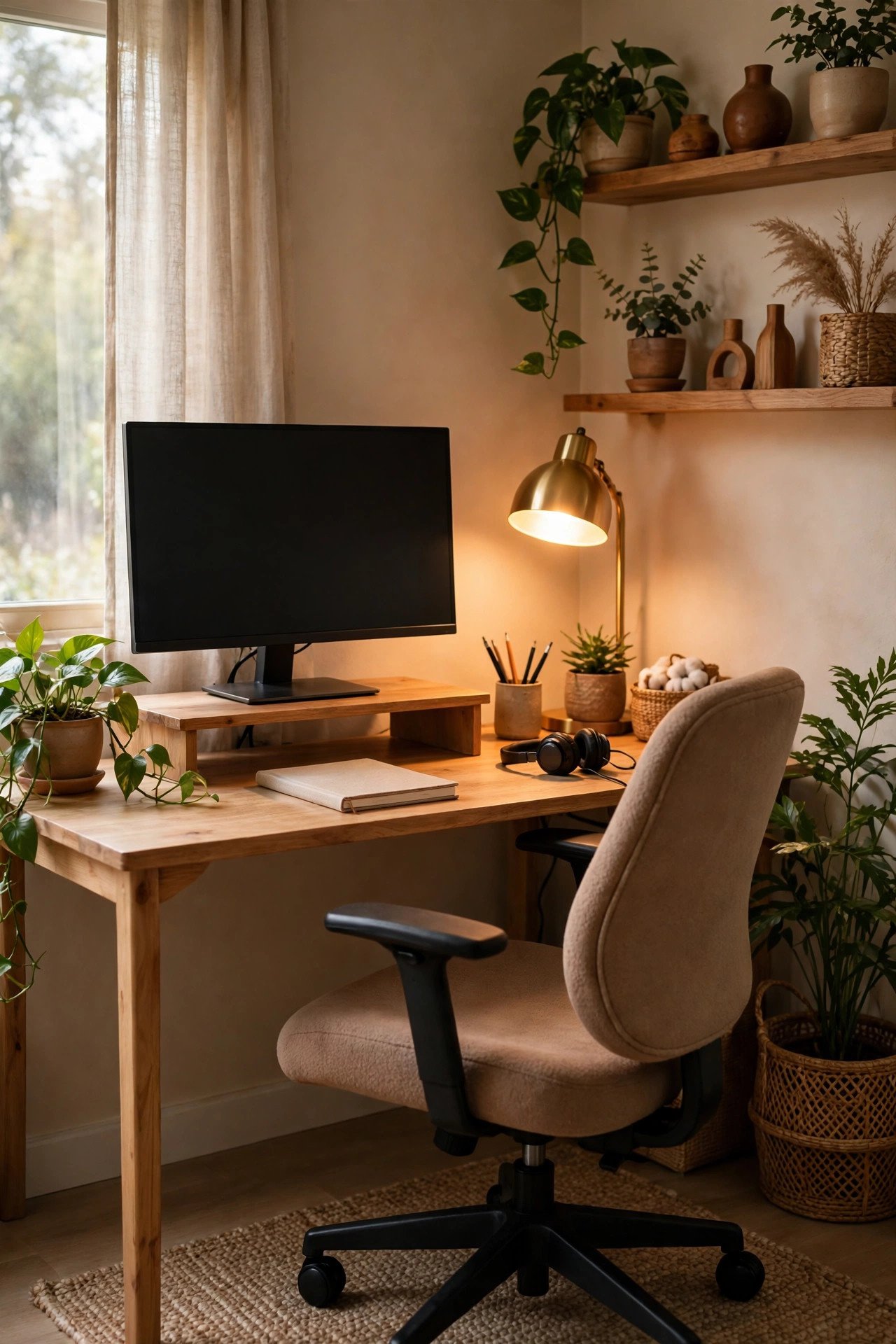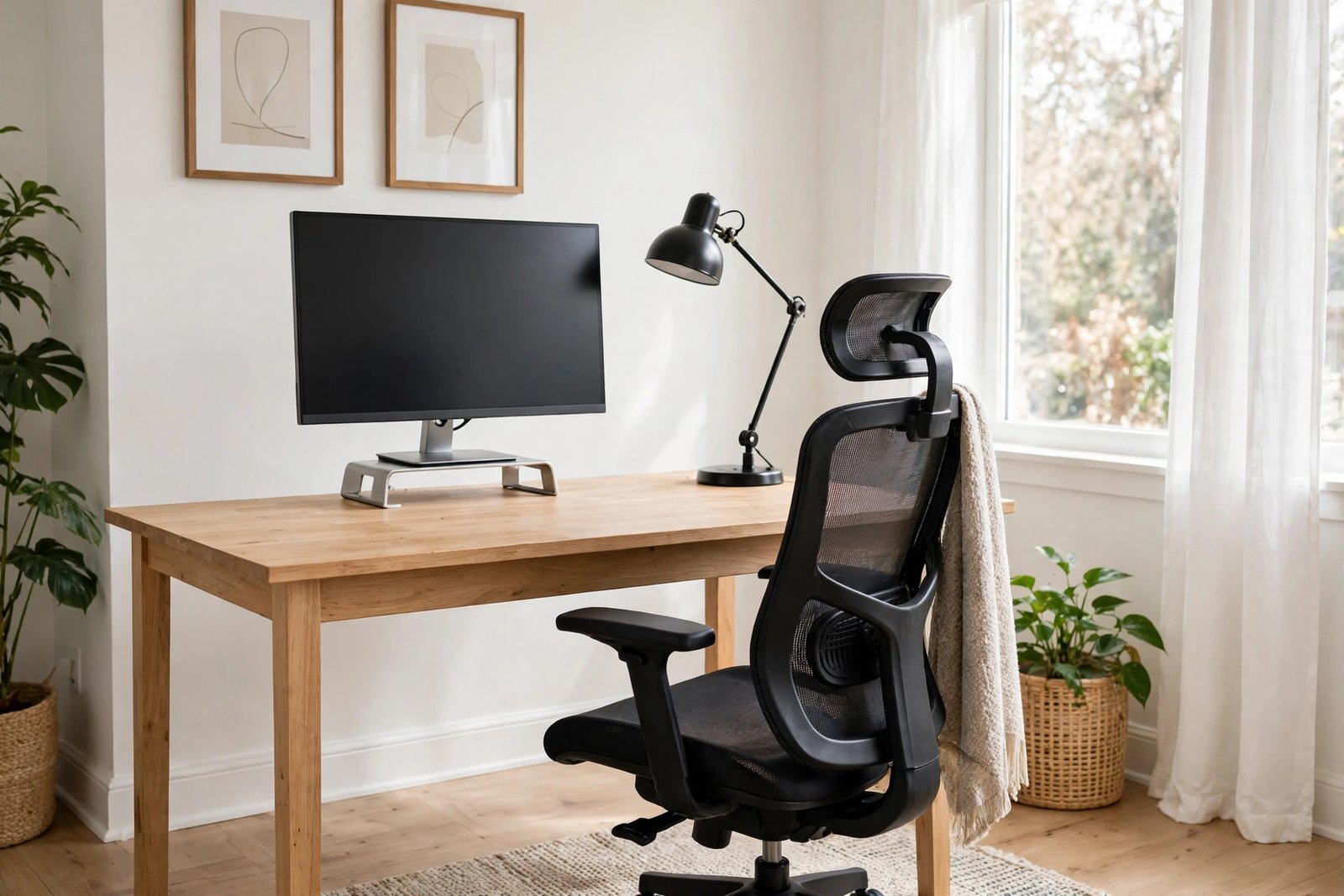
When money is tight, the order of an office upgrade matters more than the amount. Spend first on the wrong thing — a prettier desk while your chair hurts your back — and the room looks better while your workday stays exactly as uncomfortable. Spend in the right order, and each step improves the next one, so even a small budget moves you forward.
This guide shows how to plan an office upgrade on a small budget as a sequence, not a shopping list: comfort first, then light, then storage, then looks. It talks about priorities only — what your own budget is, and what things cost where you live, is up to you.
Quick Answer
To plan an office upgrade on a small budget, upgrade in this order: first comfort — your chair and screen height, because you feel them every minute; second light, because good light fixes tired eyes and dull video calls cheaply; third storage, so the desk stays clear; and only then looks, like decor and matching accessories. Before buying anything, fix what is free: raise the screen on books, adjust the chair you own, rearrange the desk, and clear everything that does not earn its place.
Step Zero: Fix What Is Free
Before any spending, spend an hour on adjustments that cost nothing. Raise your screen to eye level with a stack of sturdy books or a box. Adjust your chair’s height so your feet rest flat and your elbows sit roughly level with the desk. Move the desk or turn it so window light comes from the side instead of behind the screen. Clear the desk to only what you use daily and find homes for the rest.
These free fixes do two things. They solve some problems outright — a screen at the right height may end the neck ache you blamed on the chair — and they show you what is genuinely left to fix, so the budget goes only where it is needed. Many people discover their “must-buy” list halves after one honest setup session. Our guide to setting up a desk setup for deep work and calls is a good checklist to work through at this stage.
Step One: Comfort First — Chair and Screen Height
Comfort comes first because it is the only upgrade you feel in your body all day, every day. If you sit in pain or hunch over a low screen, no lamp or storage box will make the office feel good. Within comfort, the chair is the biggest single item, so check yours honestly before replacing it: many chairs improve a lot with the adjustments covered in our guide to a desk chair that hurts your back and the adjustments to try before buying new. If the chair is truly worn out or unsupportive after adjusting, it earns the first real money in the budget.
Second in this step is screen height and position. A simple stand, a small shelf, or an arm that lifts the monitor to eye level is usually a modest purchase with an outsized effect. Our guide on fixing a monitor at the wrong height explains the target position. Get chair and screen right before anything decorative is even considered.

Step Two: Light
Light is second because it is usually cheap to fix and it changes both how you feel and how you look on calls. A desk lamp you can aim — at your papers, not your eyes — covers dark corners, winter afternoons, and evening work. If your room’s main light is harsh or dim, the lamp matters more than any other small purchase.
Work with what the room already gives you first: desk placement so daylight comes from the side, and curtains or a blind that tame glare without darkening the room. Then let the lamp fill the gaps. Good light also makes every later upgrade look better, which is another reason it outranks decor.
Step Three: Storage and a Clear Desk
Third is storage, because a desk buried under paper, chargers, and supplies makes the whole office feel broken no matter how good the chair is. The goal is a home for everything that currently lives on the desk: somewhere for paper, somewhere for cables and chargers, somewhere for the small daily tools.
Storage does not have to mean new furniture. A drawer unit beside the desk, a shelf above it, a tray for cables underneath — the cheapest option that gives each category a fixed place wins. Buy storage only after you know what actually needs storing, which is why this step comes after the clear-out in step zero and not before it. Storage bought first tends to become storage for clutter.
Step Four: Only Then, the Looks
Decor comes last on a small budget — not because it does not matter, but because it matters least per coin spent, and because it is far easier to choose once the working parts are settled. A plant, a picture, a nicer desk surface, matching accessories: all pleasant, all cheap to add at the end, and none of them able to rescue an office that hurts to sit in.
There is also a practical order benefit. The chair, screen and shelf positions decide where decor can even go. Buying the picture first and the shelf second is how people end up with a picture that no longer fits anywhere.

How to Split a Small Budget Across the Order
Think in stages, not items. Put the largest share of whatever you have into step one, comfort, because that is where quality differences are real and daily. Give light a modest share — one good lamp beats three decorative objects. Let storage take a practical share, favouring simple, sturdy pieces you will not need to replace. Leave looks to whatever remains, and to free improvements like rearranging and clearing.
If your budget only stretches to one stage this season, that is fine. Do stage one properly rather than spreading a thin layer across all four. A half-fixed chair plus a lamp plus a shelf helps less than one problem completely solved. Write the order down, mark what is done, and let the list wait — an upgrade plan you follow over months beats an impulse buy every time.
Mistakes to Avoid
- Buying decor first. A prettier room with the same painful chair is the same office. Comfort, light, and storage change your day; decor changes your photos.
- Replacing the chair before adjusting it. Height, back support and desk position fix many chair complaints for free. Adjust first, judge second.
- Spreading the budget thinly over everything. Four quarter-fixes usually beat nobody. Finish one stage properly, then move on.
- Buying storage before clearing out. You will store things you should have let go, and buy the wrong size for what remains.
- Copying someone else’s setup. Their problems are not your problems. Upgrade against your own list of aches, glare, and clutter.
- Skipping the free fixes. Screen height, chair adjustment, desk position, and a clear-out solve more than most first purchases.
Frequently Asked Questions
What is the single best first upgrade for a home office?
For most people, the chair-and-screen combination: a chair adjusted or replaced so you sit supported, and a screen raised to eye level. You feel the benefit every minute of every workday, which no other upgrade can claim.
I can only afford one thing this month. What should it be?
Whichever step of the order you are on. If comfort is not fixed, spend there — usually screen height first if the chair can be adjusted, the chair first if it cannot. If comfort is done, one good desk lamp is the best next step.
How do I know if my chair needs replacing or just adjusting?
Adjust everything it offers — height, backrest, armrests — set the desk to match, and work in it for a week. If you still finish the day sore in the same place, or the chair is visibly worn, sagging, or broken, replacement earns its place at the top of the budget.
Where does a second monitor or new tech fit in the order?
After comfort, light, and storage. Extra tech on an uncomfortable, badly lit desk adds cost without fixing the day. When the basics are right, you will also know exactly what tech would genuinely help, instead of buying in hope.
Conclusion
On a small budget, order is everything. Fix what is free, then put comfort first, light second, storage third, and looks last. Finish each stage properly before funding the next, and keep the written plan so small budgets across several months still add up to one well-judged upgrade. Your workday — not the room’s photo — is the test of whether the money went in the right place.