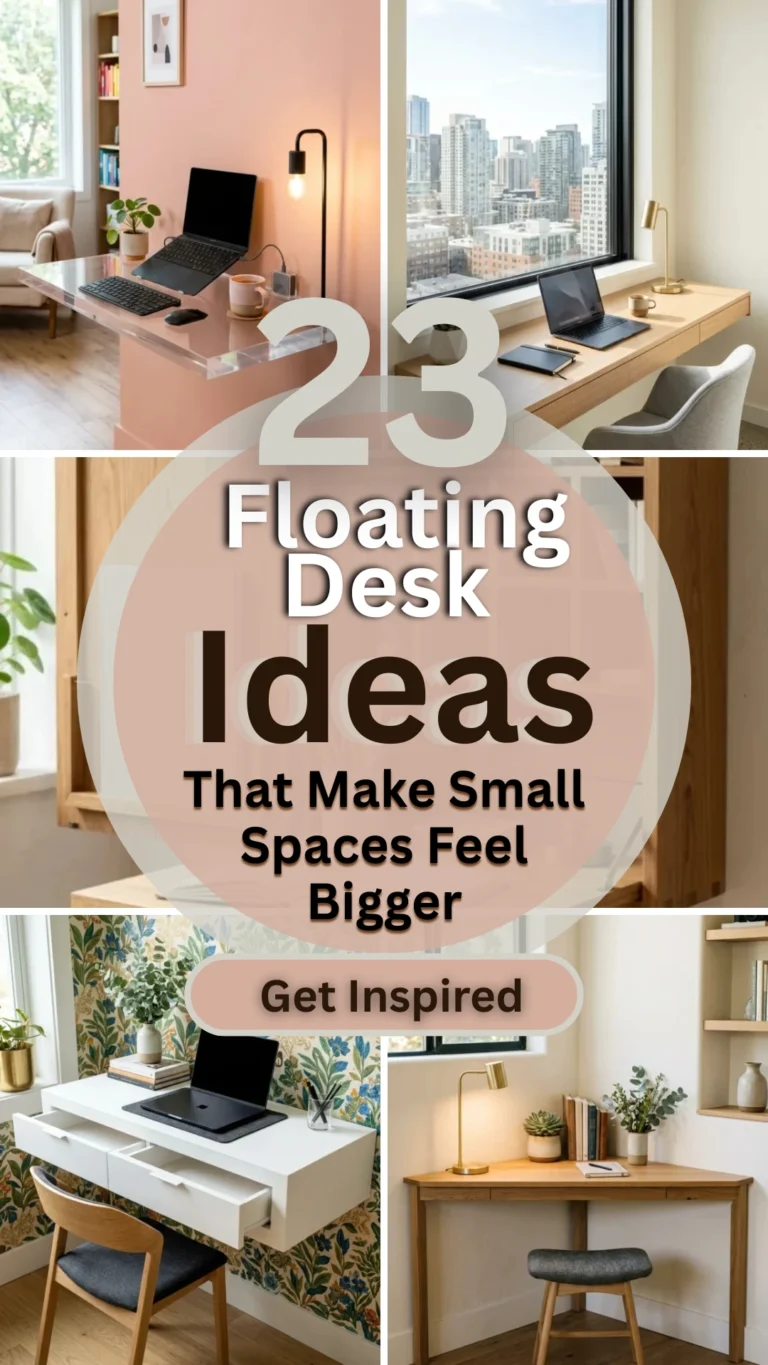

In the era of remote work and urban living, the struggle to find space for a home office is real. When every square foot counts, traditional bulky desks can make a room feel cramped and cluttered. Enter the floating desk—a design marvel that attaches directly to the wall, leaving the floor space beneath it completely clear. By eliminating legs, these desks create an optical illusion of more space while providing a functional workstation. Whether you live in a tiny studio or just want to declutter your guest room, these 23 floating desk ideas will help you maximize your square footage without sacrificing style.
1. Minimalist Shelf
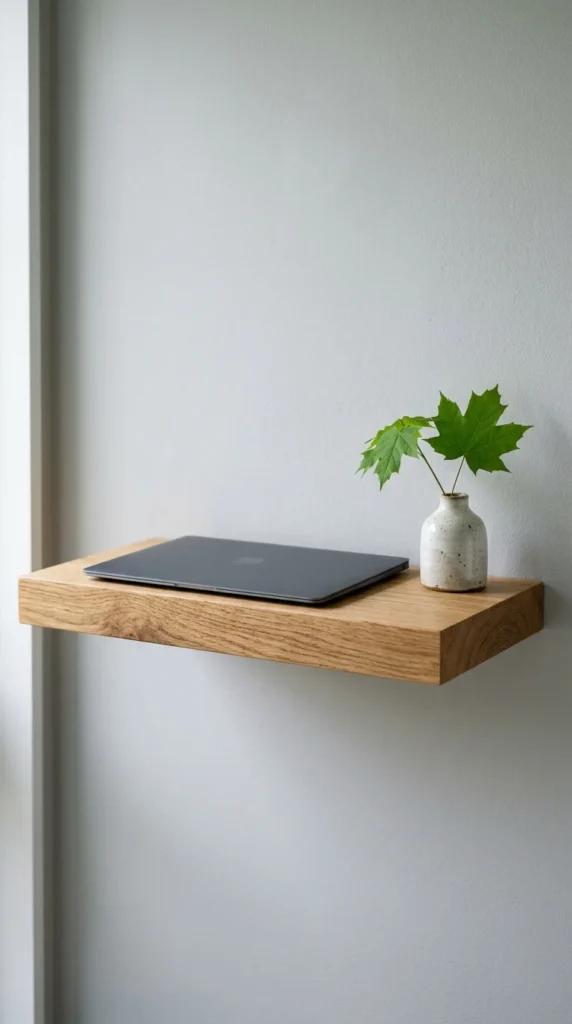
The minimalist shelf is the ultimate “less is more” approach. By using a single, sturdy piece of timber or a high-quality laminate slab, you create a streamlined workspace that blends into the wall. This style works best in hallways or bedrooms where you want the desk to disappear when not in use. Choosing a color that matches your wall paint can further enhance the “invisible” effect.
2. Corner Nook
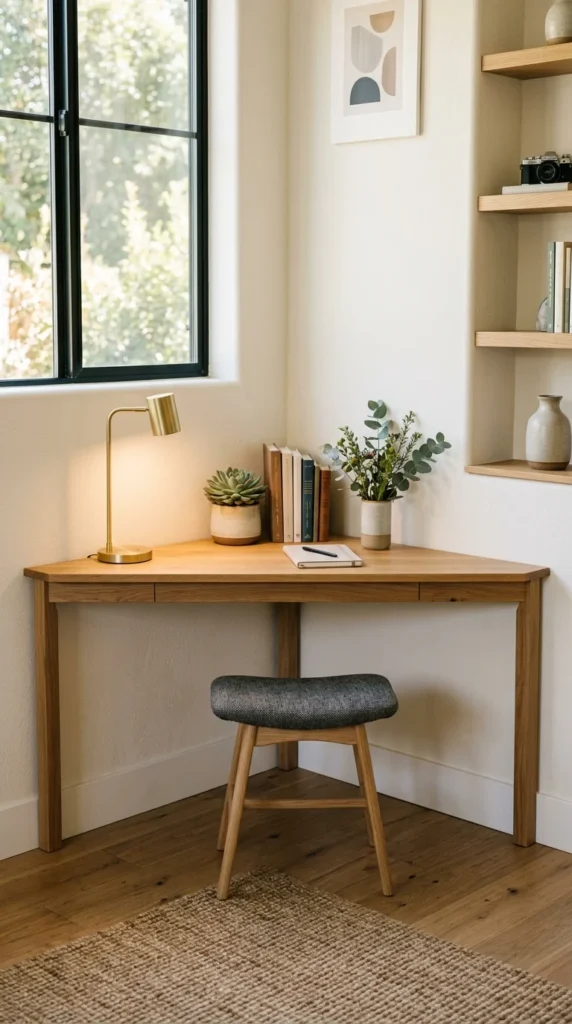
Corners are often wasted space in small apartments. A custom-cut triangular floating desk transforms an awkward dead zone into a productive hub. This setup provides ample surface area for a monitor and keyboard while keeping the center of the room open for movement. It’s an ideal solution for studio apartments where the living and working areas need to coexist.
3. Fold-Down Murphy
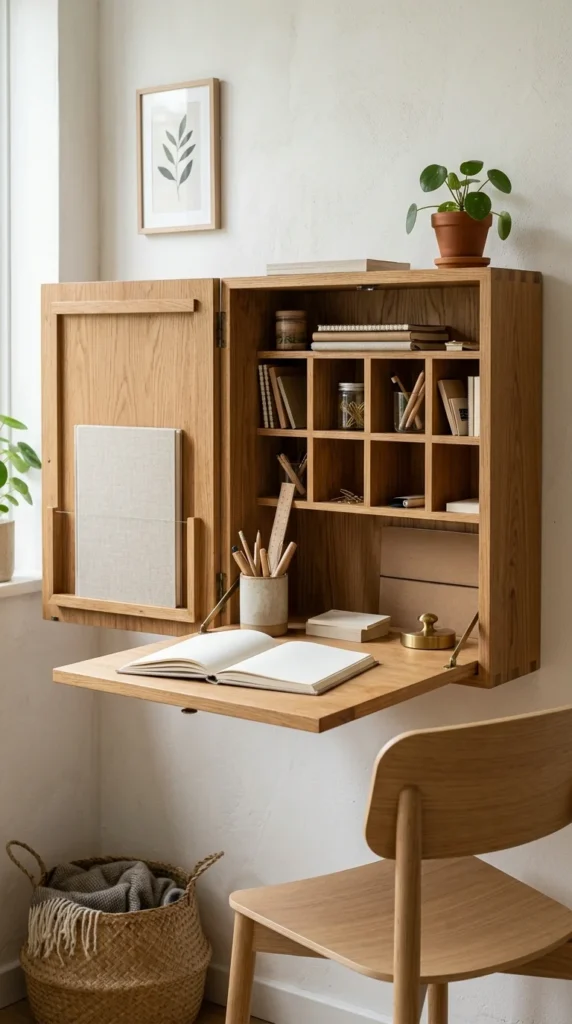
The Murphy desk is the “transformer” of home furniture. When you’re finished with your workday, the desk surface folds up against the wall, often doubling as a chalkboard or a piece of framed art. This is the gold standard for multi-functional spaces, allowing a guest room or dining area to revert to its original purpose in seconds.
4. Live Edge Wood
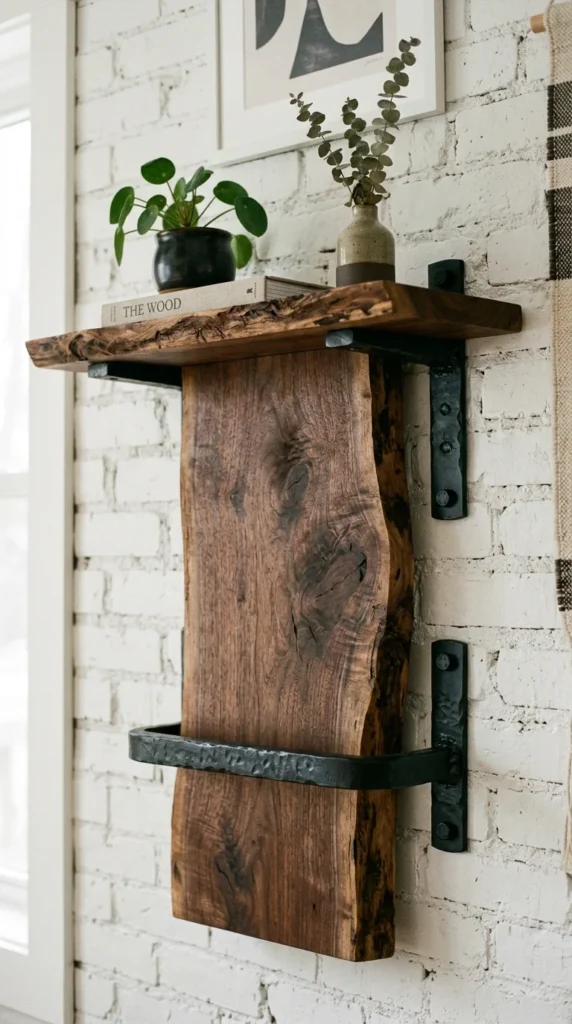
To add organic warmth to a sterile apartment, a live edge floating desk is a perfect choice. The natural, irregular edges of the wood provide a focal point that feels like a piece of art rather than a piece of office equipment. It pairs beautifully with industrial-style brackets and brings a touch of nature indoors.
5. Industrial Pipe
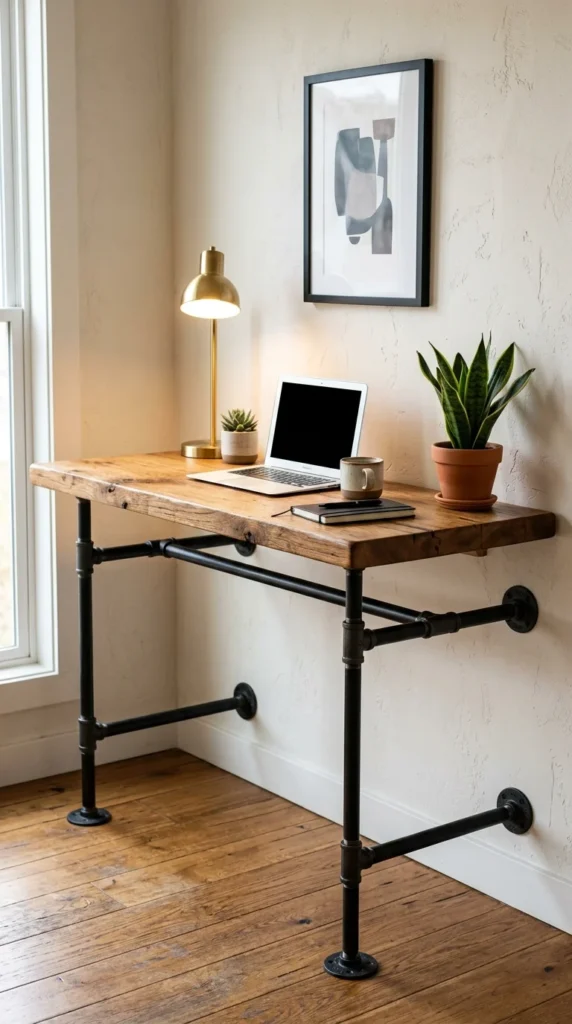
For a loft-inspired look, use industrial pipes as the support system for your floating desk. This DIY-friendly option is incredibly sturdy and adds a rugged, masculine aesthetic to a room. The open structure of the pipe brackets maintains the airy feel required for small spaces while providing a heavy-duty weight capacity for multiple monitors.
6. Ghost Acrylic
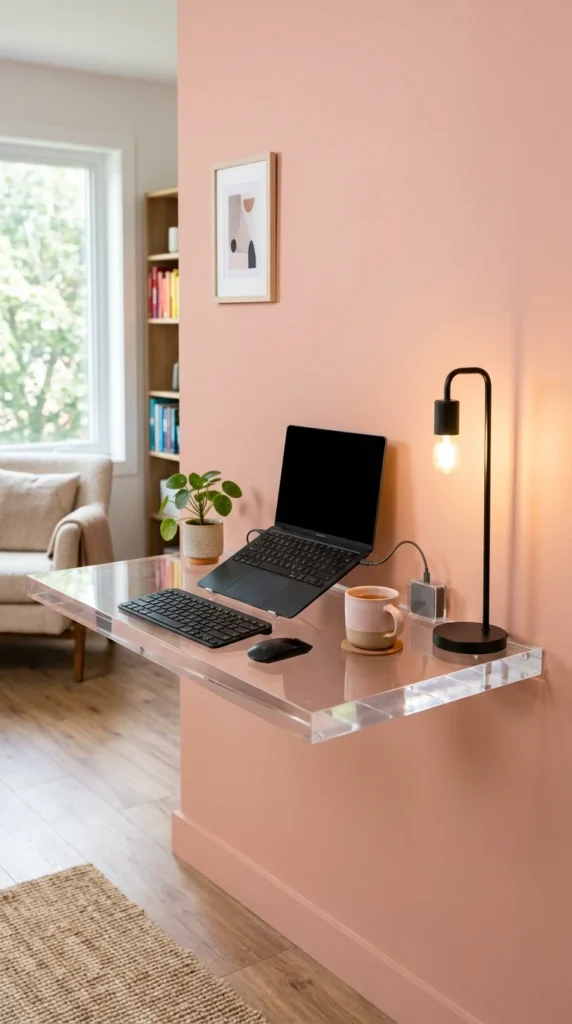
If your primary goal is to make a room feel bigger, you cannot beat acrylic. A “ghost” desk is virtually invisible, allowing the eye to travel right through it to the wall behind. This prevents the visual “weight” that dark or solid furniture adds to a room, making it a favorite for ultra-modern or glamorous interiors.
7. Built-in Alcove
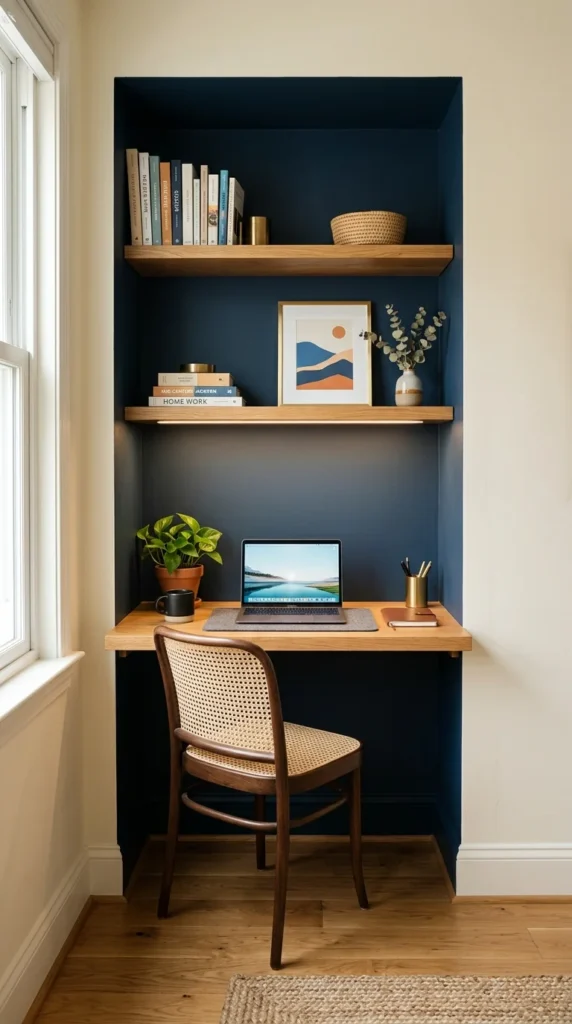
Many older homes have shallow alcoves or former closet spaces that are too small for large furniture. By installing a floating desk within these recesses, you create a “cloffice” (closet-office). This keeps your work zone tucked away from the main traffic flow of the room, providing a sense of privacy in a small footprint.
8. Window Sill Extension
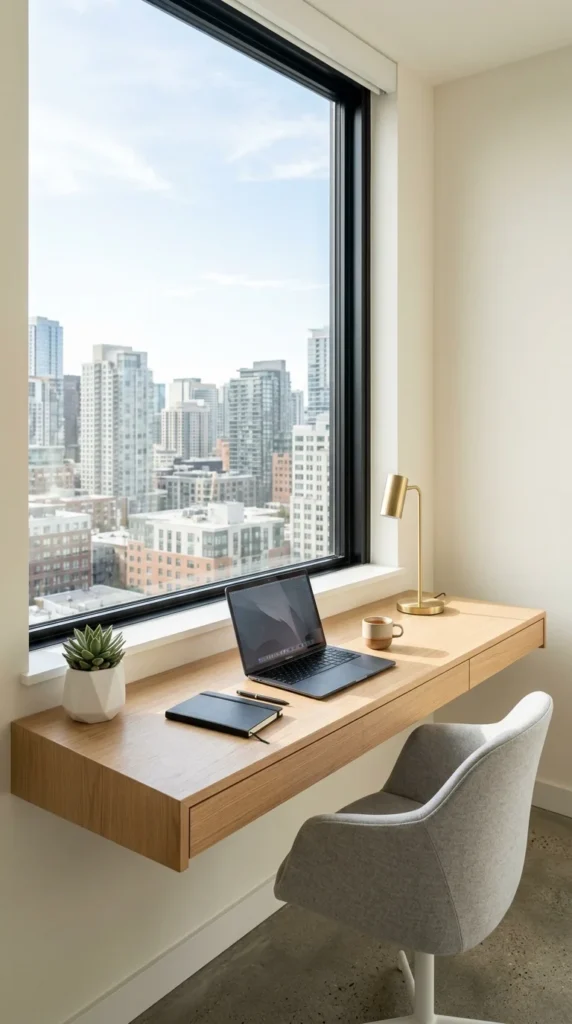
Positioning your floating desk in front of a window is a genius way to boost productivity through natural light. By extending the window sill or mounting a desk just below it, you utilize space that is rarely used for furniture. Plus, the view beyond the glass makes the small room feel like it extends into the horizon.
9. Mid-Century Modern
Mid-century modern design is famous for its “legs,” but the floating version of this style is just as iconic. With tapered silhouettes and rich wood tones like walnut or teak, these desks add a sophisticated, retro vibe. The addition of small, integrated drawers provides just enough storage for pens and paper without adding bulk.
10. Drawer-Integrated
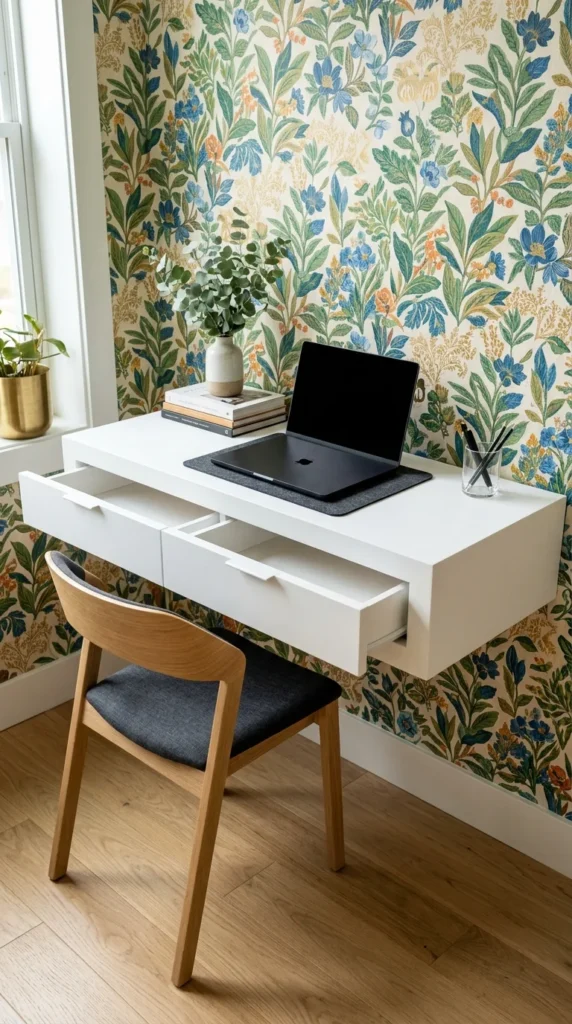
One common complaint about floating desks is the lack of storage. A “box-style” floating desk solves this by incorporating shallow drawers directly into the unit. This allows you to hide your laptop, chargers, and stationery when the day is done, keeping your small space clutter-free and organized.
11. Ladder Desk
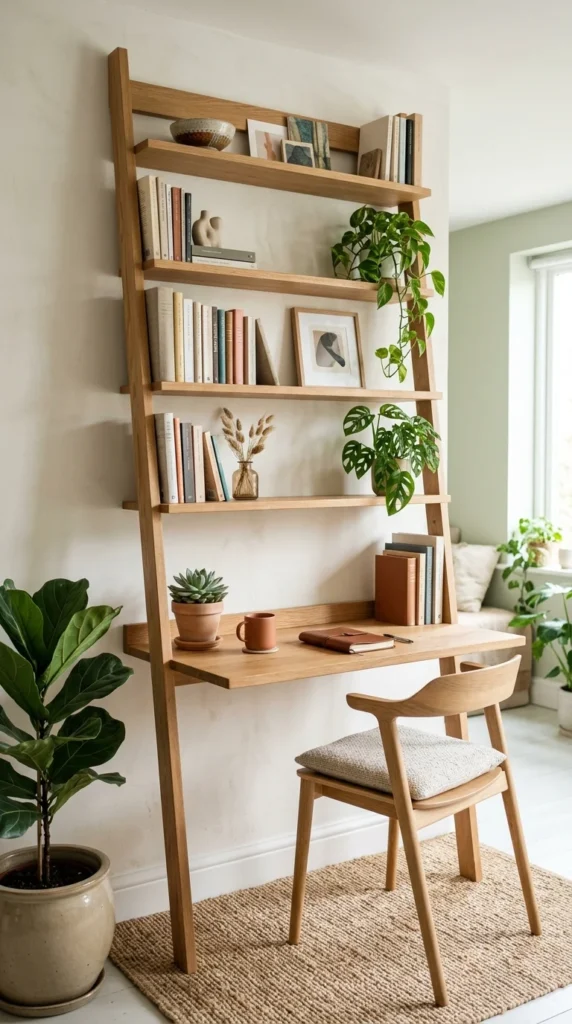
While technically leaning, many ladder desks are wall-mounted at the top for stability, offering a “floating” aesthetic for the shelves. This vertical approach utilizes the height of the room rather than the floor area. It’s a great way to combine a bookshelf and a desk into one sleek, vertical unit.
12. Geometric Hexagon
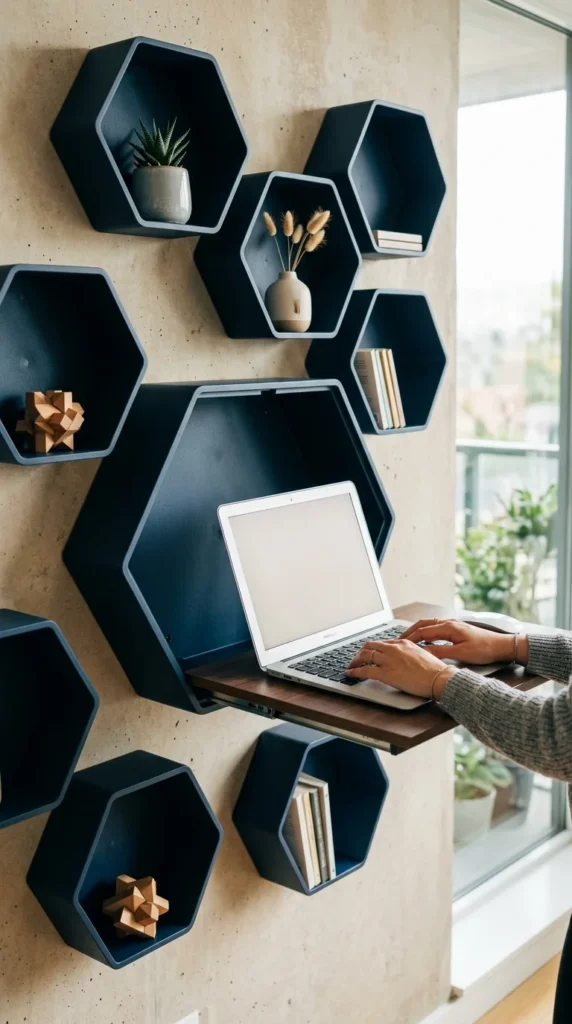
For those who love contemporary art, geometric floating desks are a game changer. These units often look like wall sculptures when closed. When opened, they provide a functional, albeit compact, workspace. This is perfect for light laptop work and adds a bold decorative element to a small living room.
13. Scandinavian Plywood
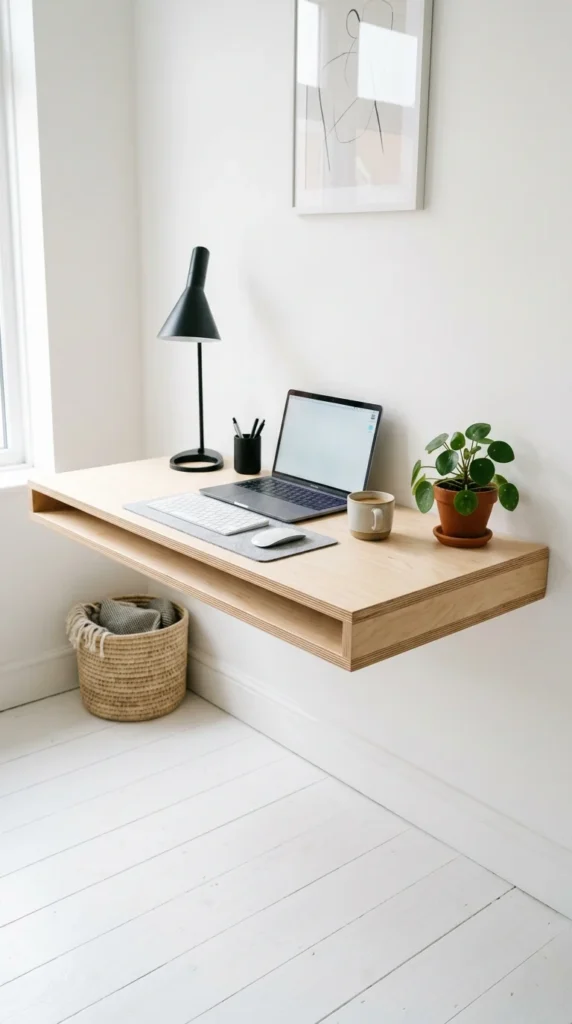
Scandinavian design is centered around functionality and light. A simple birch plywood floating desk is affordable, sturdy, and visually “light.” The pale wood tones help bounce light around the room, which is essential for making small, dark spaces feel more expansive.
14. Marble Slab
If you want to add a touch of luxury to your small space, consider a floating marble desk. It’s sophisticated, durable, and takes up very little visual space due to its thin profile. It doubles as a beautiful vanity or display shelf when you aren’t working.
15. Repurposed Shutter
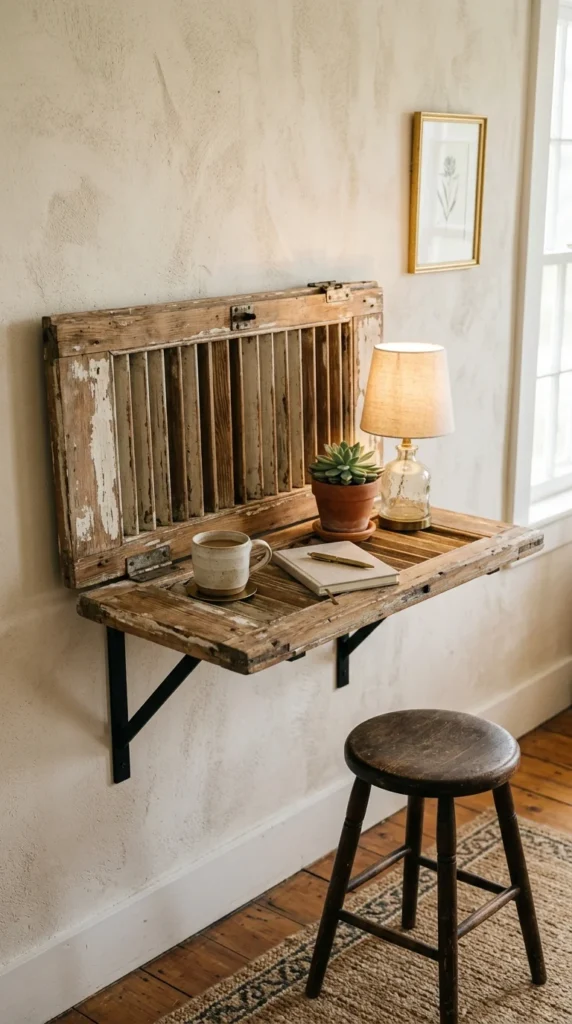
For a farmhouse or shabby-chic look, repurposing architectural salvage like an old shutter or a solid wood door into a floating desk adds character. The texture of the aged wood provides a cozy, lived-in feel that softens the modern edges of a small apartment.
16. Glass Top
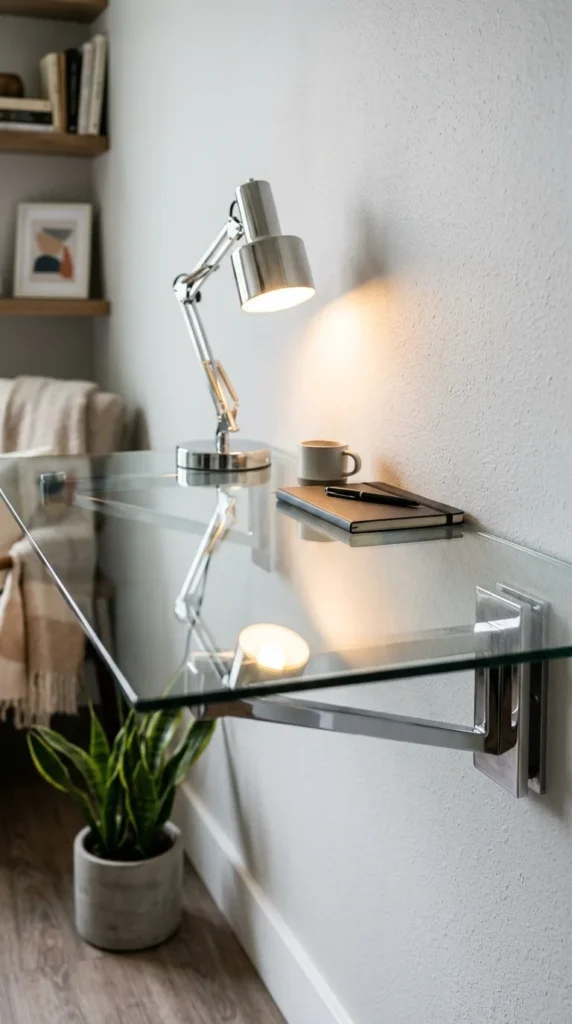
Similar to acrylic, glass is an excellent material for small spaces because of its transparency. A glass floating desk is easy to clean and adds a professional, high-end look to a home office. It works particularly well in contemporary spaces with metallic accents.
17. String Shelf System
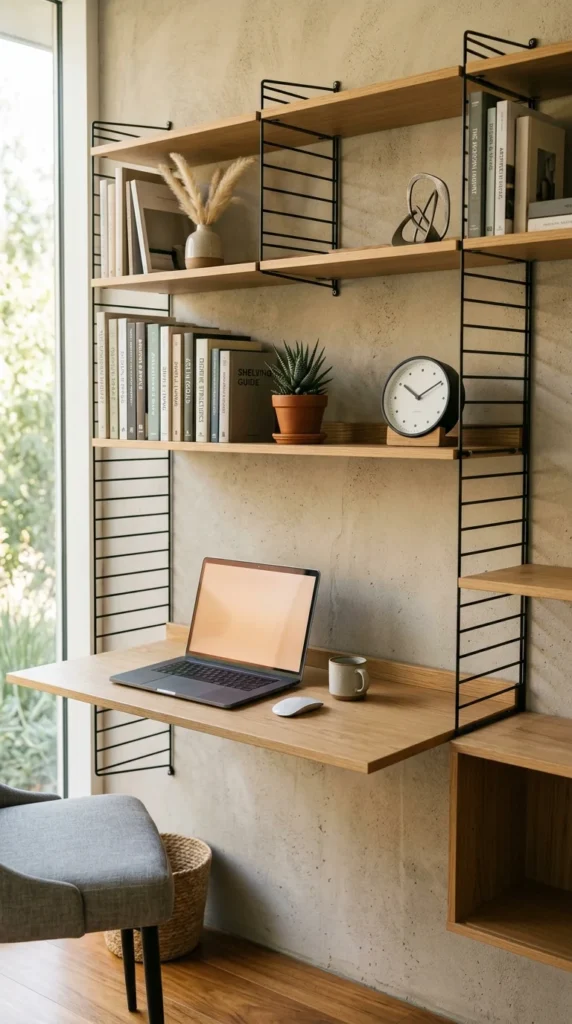
The modular “string” shelf system is a classic of European design. It allows you to customize the height and layout of your desk and storage. Because the supports are made of thin wire, the entire unit feels incredibly light and airy, preventing the wall from feeling “heavy” with furniture.
18. Dark Charcoal Matte
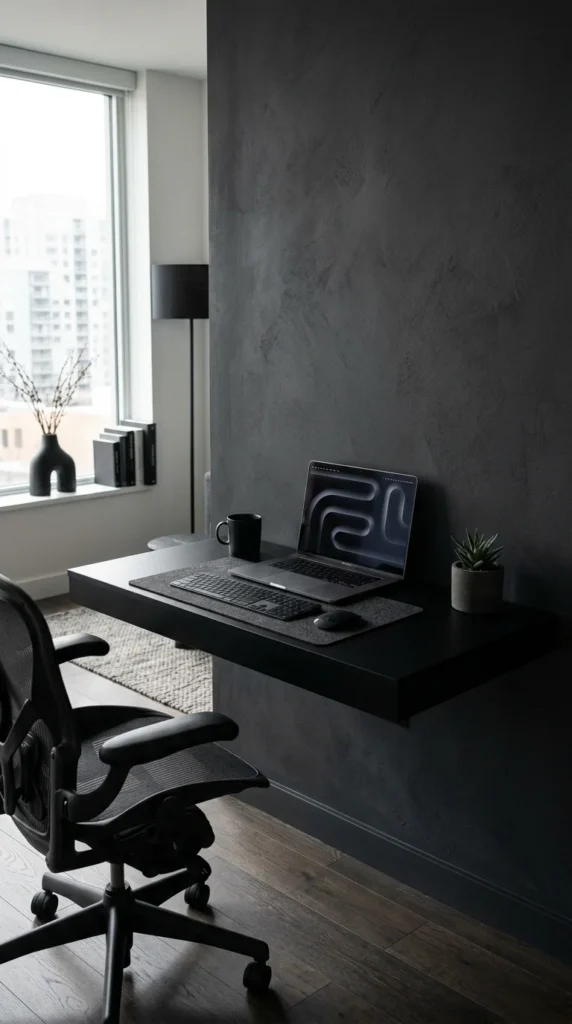
While light colors usually make spaces feel bigger, a dark, monochromatic approach can also work by creating depth. A matte black desk against a black or dark grey wall “recedes” into the shadows, making the boundaries of the room feel further away than they actually are.
19. Bohemian Rattan
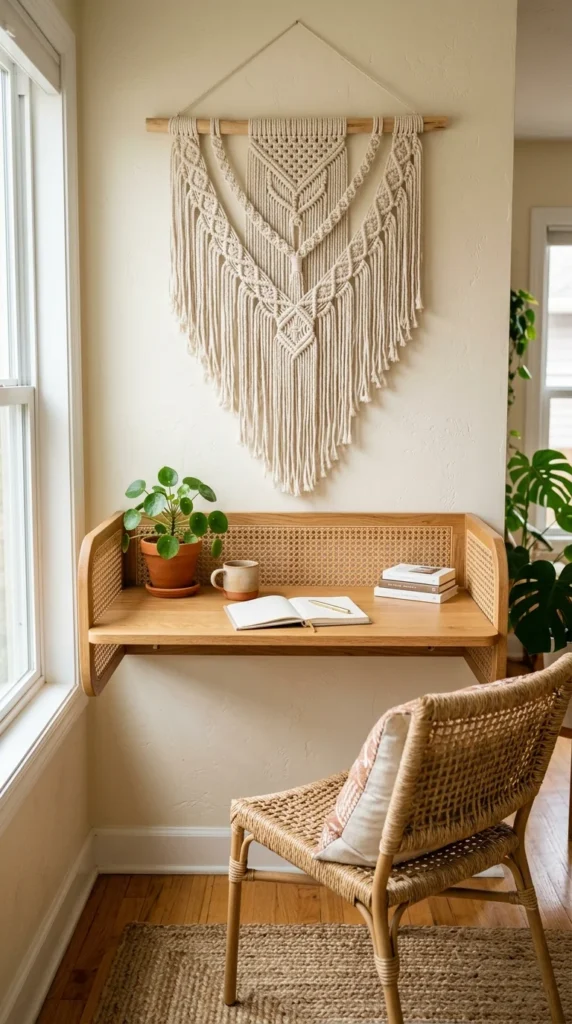
For a relaxed, boho vibe, look for floating desks that incorporate natural textures like rattan or cane. These materials are breathable and visually light, fitting perfectly into a space filled with plants and soft textiles.
20. Metallic Accents
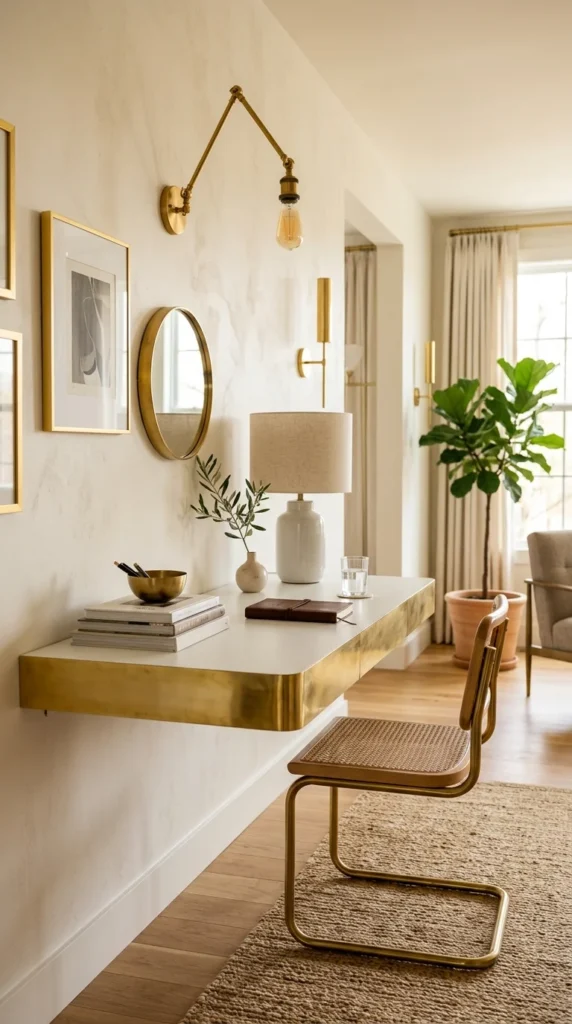
Using metal as a highlight on a floating desk adds a sense of polish and helps reflect light. Whether it’s gold, silver, or copper, metallic trim can make a simple floating shelf feel like a high-end designer piece, elevating the entire room’s aesthetic.
21. Cork-Backed
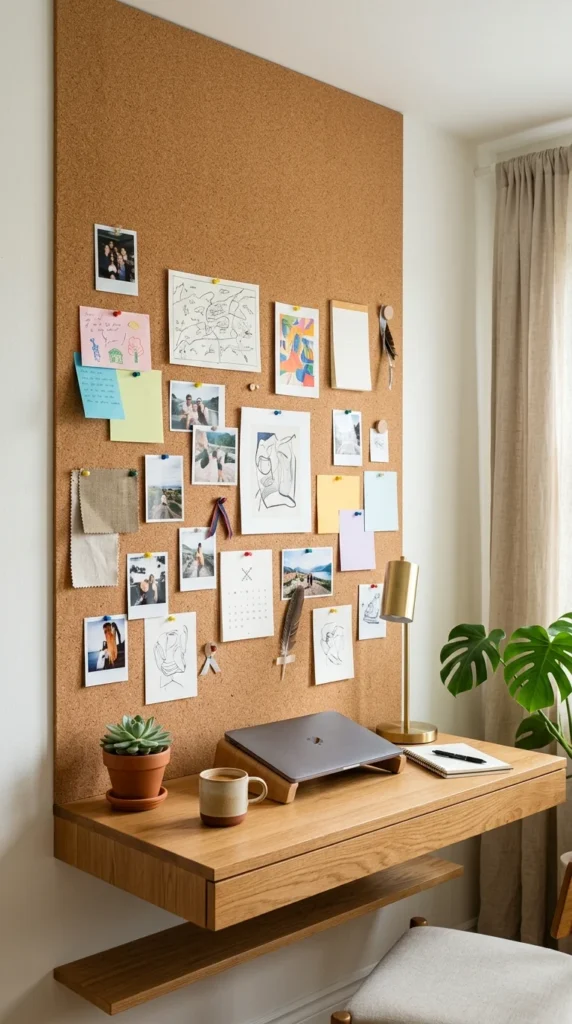
Maximize your vertical space by integrating a cork board directly above your floating desk. This creates a “command center” that keeps your desk surface clear of sticky notes and reminders. It adds a functional, tactile element to the wall that is both practical and stylish.
22. Wraparound L-Shape
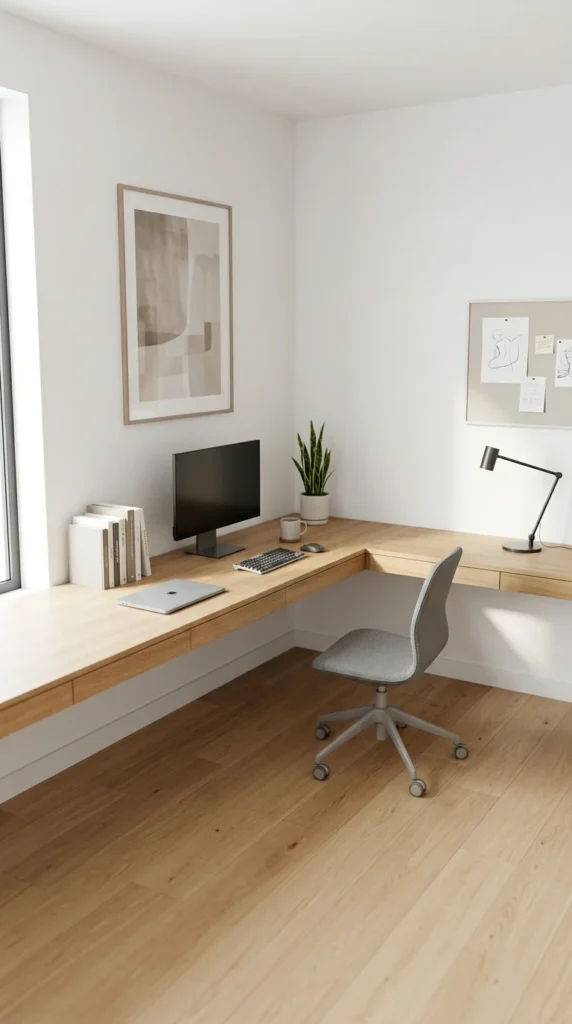
If you need a lot of room for multiple monitors or craft projects, a floating L-shaped desk is the answer. By mounting it to two walls, you get double the workspace of a standard desk. Since there are no legs to bump into, you can easily slide your chair from one end to the other.
23. Hidden Cabinetry
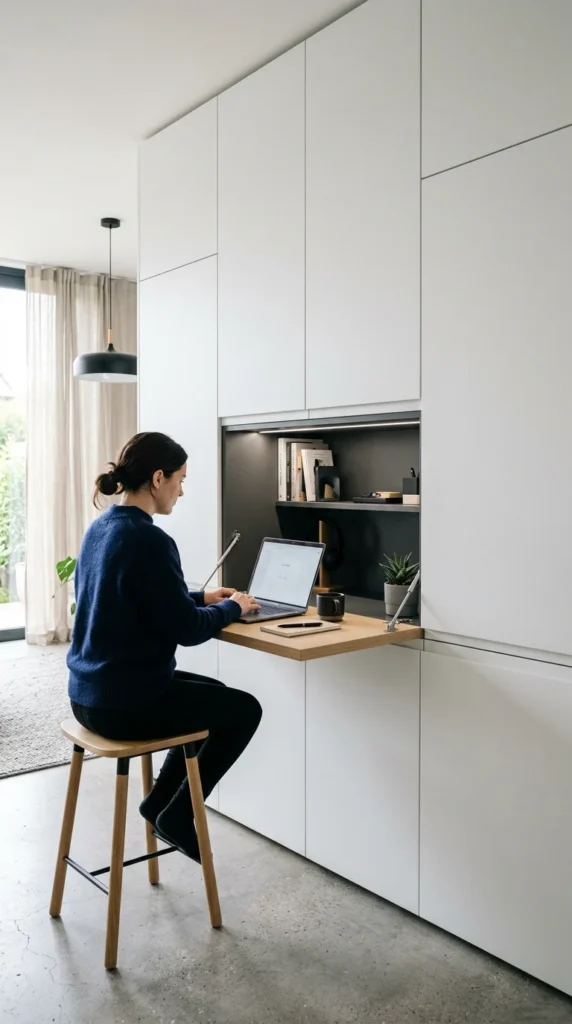
For the ultimate clean look, integrate your floating desk into a larger wall of custom cabinetry. When the desk is closed, it looks like just another cabinet door. This “hidden office” approach is perfect for living rooms where you want to completely hide your workspace when the “out of office” light is on.