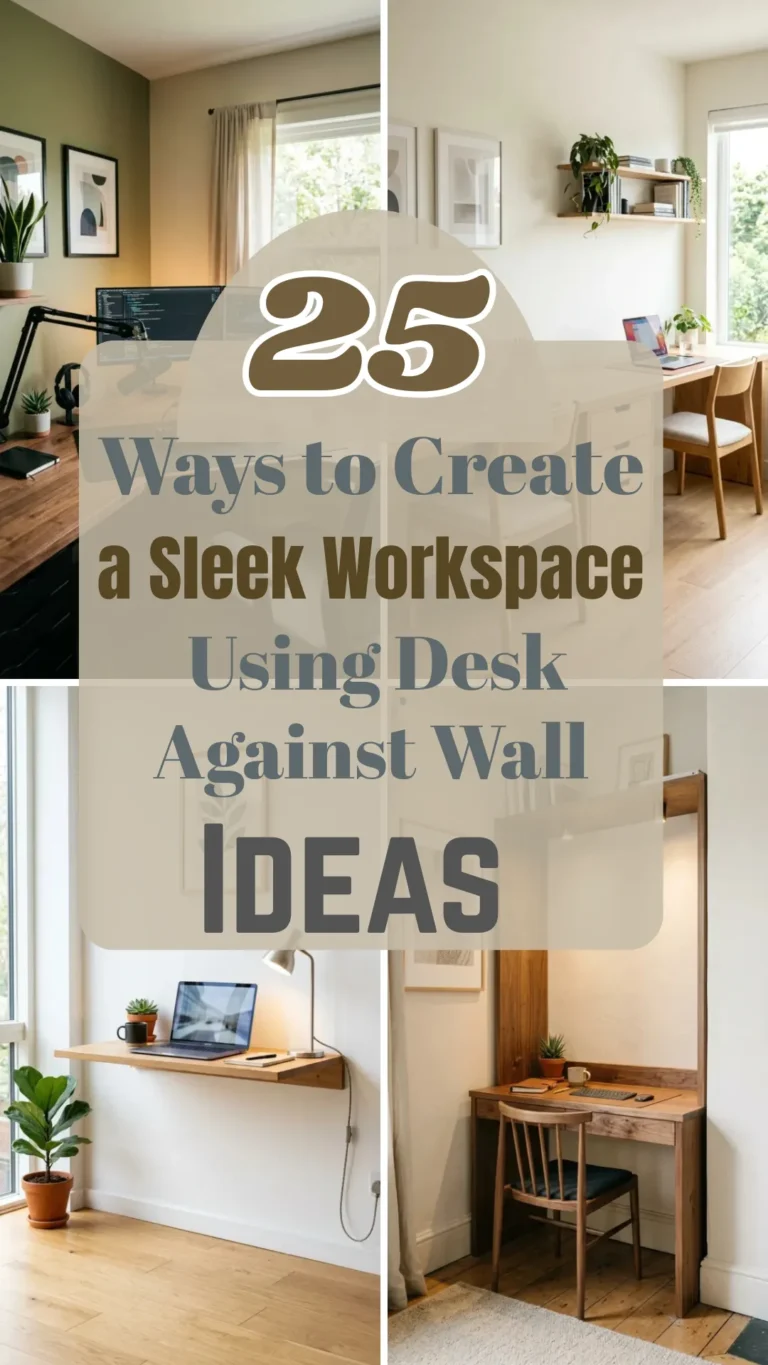

Transforming a blank wall into a high-functioning, stylish workspace is an art form. Whether you are dealing with a cramped apartment or a spacious home office, placing your desk against the wall is one of the most efficient ways to maximize square footage, reduce distractions, and create a centralized hub for productivity. From floating surfaces that defy gravity to integrated storage solutions that keep clutter at bay, the possibilities are endless. This guide explores 25 innovative ways to design a sleek wall-facing workspace that inspires focus and complements your interior aesthetic.
1. Floating Desk
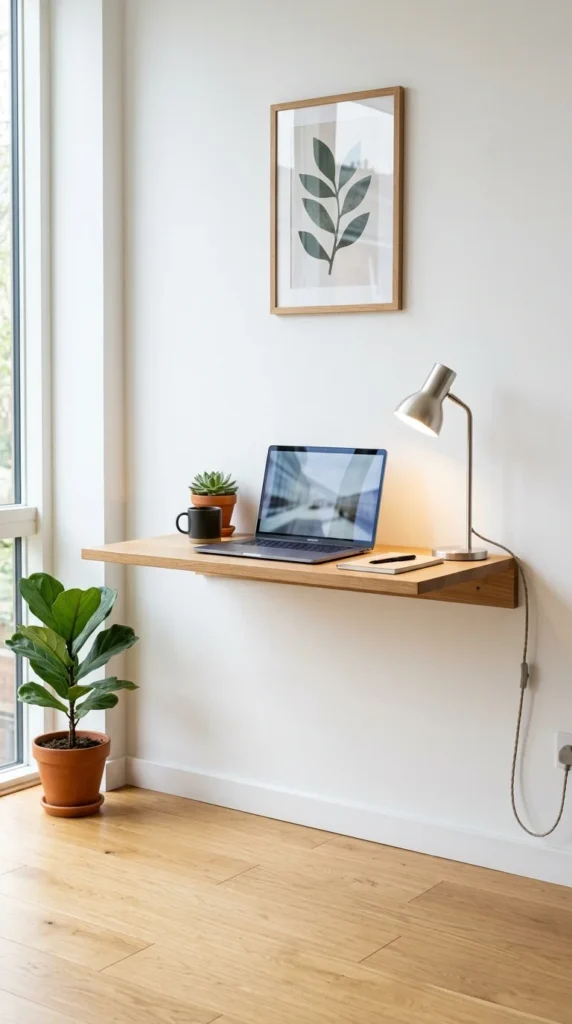
Floating desks are the epitome of modern minimalism. By removing the legs, you create an uninterrupted floor line that makes any room feel larger. This setup is perfect for small apartments or hallways where every inch of floor space counts. To keep it sleek, choose a desk with a hidden drawer for stationary and ensure your wall mounts are heavy-duty to support your equipment.
2. Ladder Desk
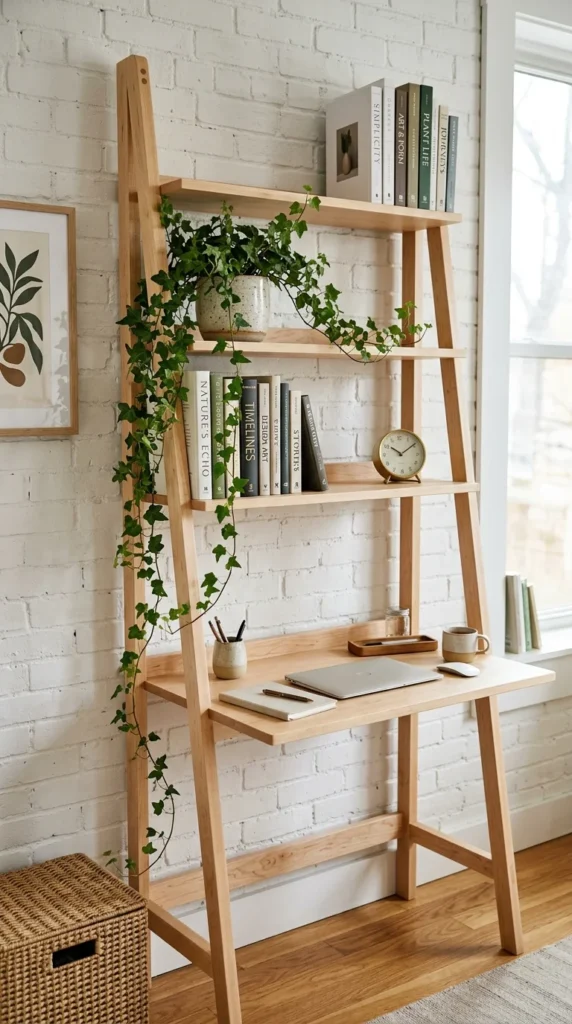
Verticality is your best friend when space is limited. A ladder desk leans against the wall, providing a compact writing surface at the bottom and several tiers of shelving above. This design allows you to store books, decor, and office supplies directly above your computer, keeping the desk surface clear for actual work.
3. Built-In Nook
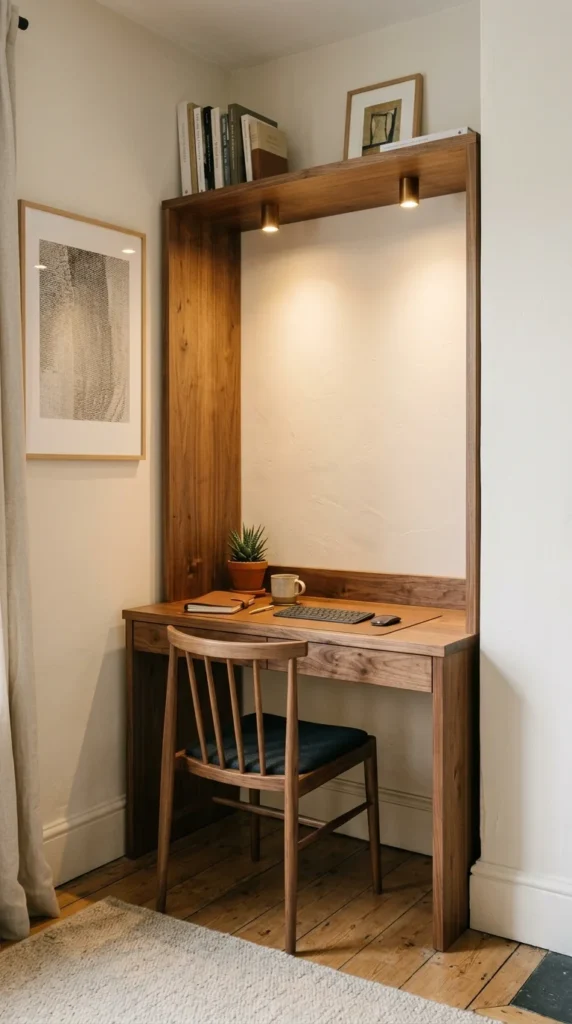
If your home has an awkward “dead space” or a shallow alcove, a built-in desk is the perfect solution. Customizing a desktop to fit wall-to-wall creates a seamless, high-end look that feels like a permanent part of the architecture. Paint the interior of the nook a contrasting color to define the workspace as its own “zone.”
4. Fold-Down Desk
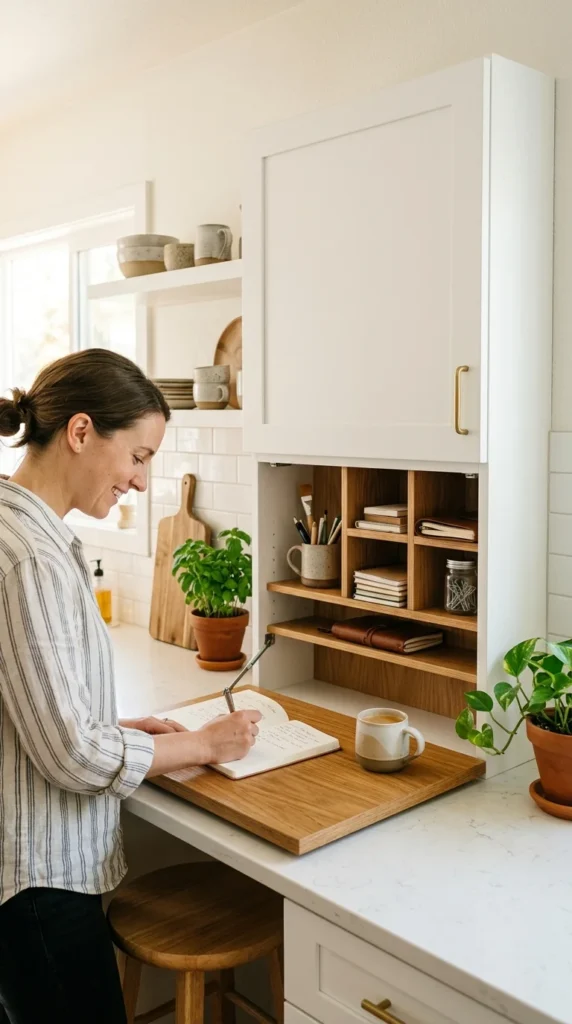
For those who don’t want a permanent office presence in their living area, the fold-down (or Murphy) desk is a game-changer. When closed, it looks like a simple wall cabinet or mirror. When open, it provides a stable workspace. This is the ultimate “work-from-home” secret for keeping professional life separate from relaxation time.
5. Corner L-Desk
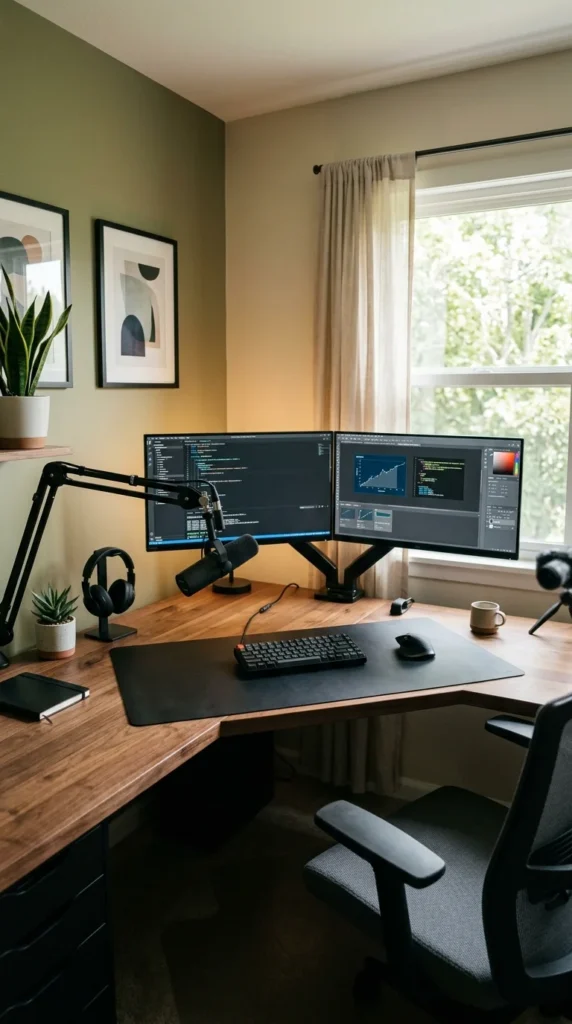
An L-shaped desk tucked into a corner maximizes surface area without encroaching on the center of the room. This setup is ideal for “power users” who need space for multiple monitors, printers, or creative tools. By facing the corner, you create a focused “cockpit” environment that naturally blocks out peripheral distractions.
6. Double Workstation

If you share a home office with a partner or roommate, a long wall-facing desk is the most efficient layout. By running a single long surface along one wall, you provide ample room for two people to work side-by-side. Use a central set of drawers to act as a divider and provide shared storage for office essentials.
7. Pegboard Backdrop
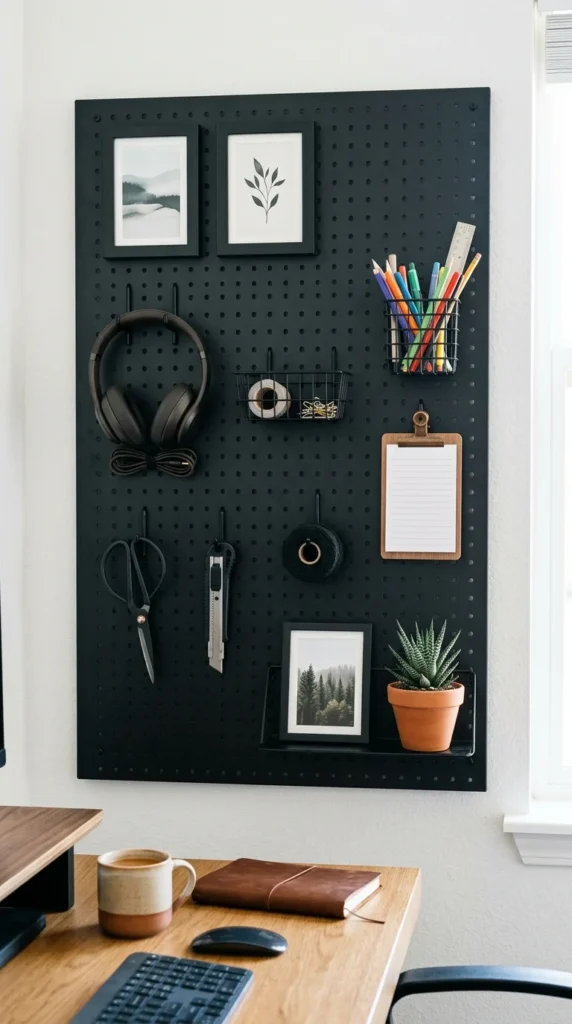
Organization is key to a sleek workspace. A pegboard mounted directly above your desk allows you to move storage off the desktop and onto the wall. This keeps your tools within arm’s reach while maintaining a clean, professional aesthetic. You can paint the pegboard to match your wall for a subtle look or choose a bold color to make it a focal point.
8. Galley-Style Desk
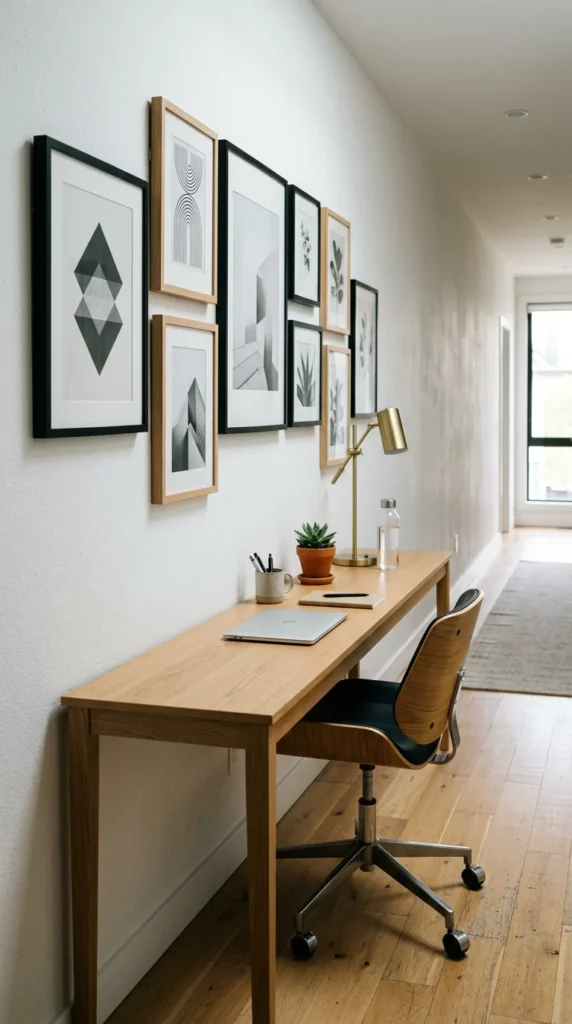
Turn a wide hallway or a transitional space into a functional office by installing a galley-style desk. These desks are typically long and shallow, providing just enough room for a laptop and a notebook. This layout proves that you don’t need a dedicated room to have a professional-grade workspace.
9. Repurposed Closet

The “cloffice” (closet-office) is a brilliant way to hide a workspace. By removing closet doors and installing a desk against the back wall, you create a cozy, recessed office. You can even keep the doors on and simply close them at the end of the day to “leave the office” mentally.
10. Industrial Pipe Desk
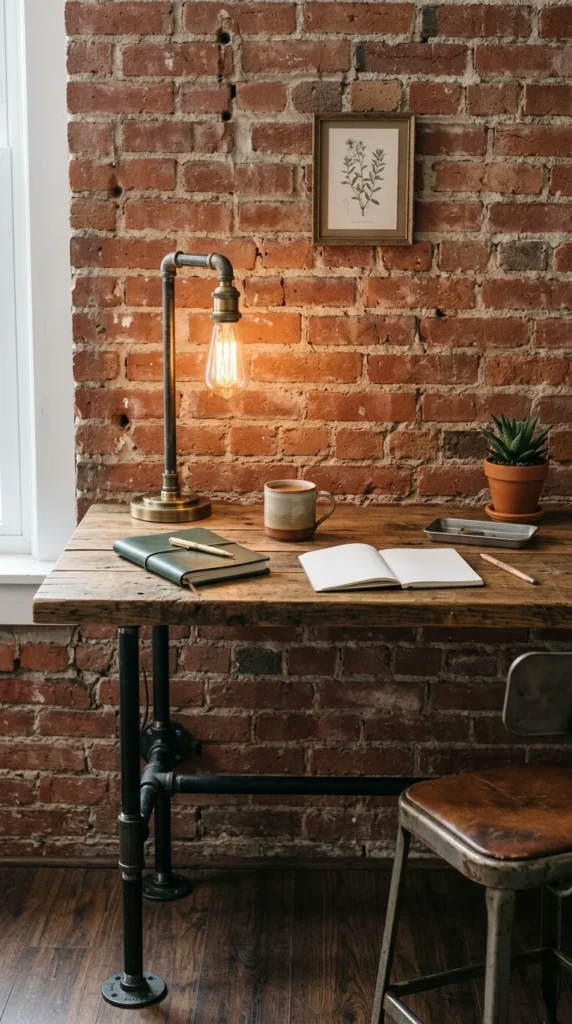
For a more rugged, urban aesthetic, an industrial pipe desk is a fantastic DIY or store-bought option. The pipes can be mounted to the wall for extra stability, giving the desk a “built-in” feel while showcasing raw materials like wood and metal. It’s a sturdy, masculine look that works well in lofts or modern dens.
11. Mirror Backing
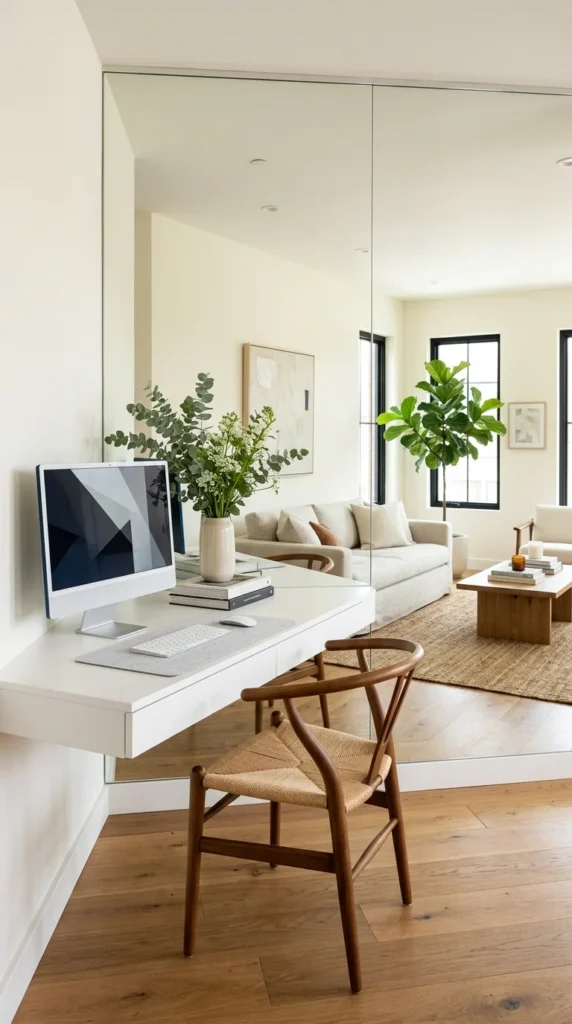
Placing a mirror on the wall behind your desk is a classic interior design trick. It bounces light around the room, making a small workspace feel vast. Additionally, it allows you to see what’s happening behind you without turning around, which can make a wall-facing setup feel less “closed in.”
12. Chalkboard Wall
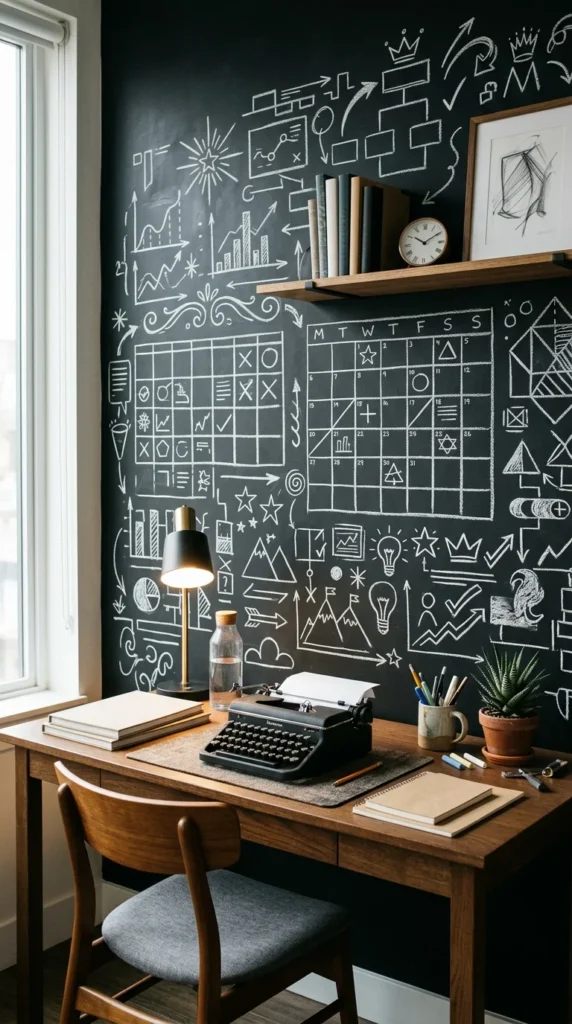
If you are a visual thinker, treat the wall behind your desk as a giant canvas. Chalkboard paint allows you to jot down ideas, deadlines, and sketches directly onto the wall. It’s a functional, dynamic design element that changes as your projects evolve, keeping your workspace feeling fresh and creative.
13. Floating Shelves

Avoid the bulk of a traditional hutch by using floating shelves above your wall-facing desk. This maintains the “sleek” requirement by keeping the design light and airy. Stagger the shelves for a modern look, or align them perfectly for a more formal, library-like atmosphere.
14. Under-Window Desk
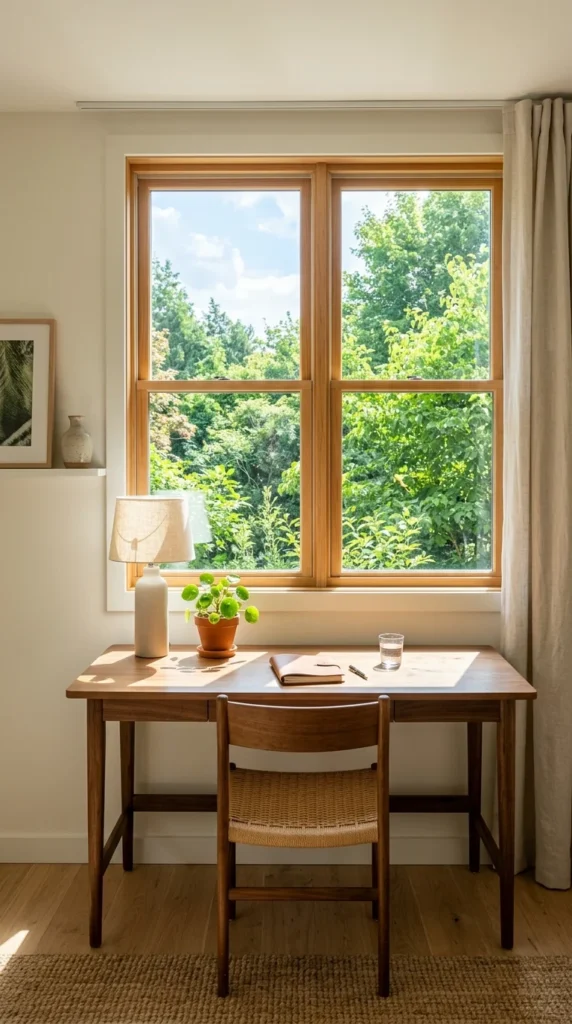
While technically “against a wall,” placing your desk under a window offers the best of both worlds. You get the space-saving benefits of a wall desk while enjoying natural light and a view. This setup is known to boost mood and productivity, though you may need a blind or curtain to manage glare during certain times of the day.
15. Glass Desk

To achieve the ultimate “sleek” look, go for a glass desk. Because the surface is transparent, it takes up almost no “visual weight,” making the room feel uncluttered. This is an excellent choice for modern interiors where you want the focus to remain on the architecture or the wall decor rather than the furniture itself.
16. Mid-Century Modern
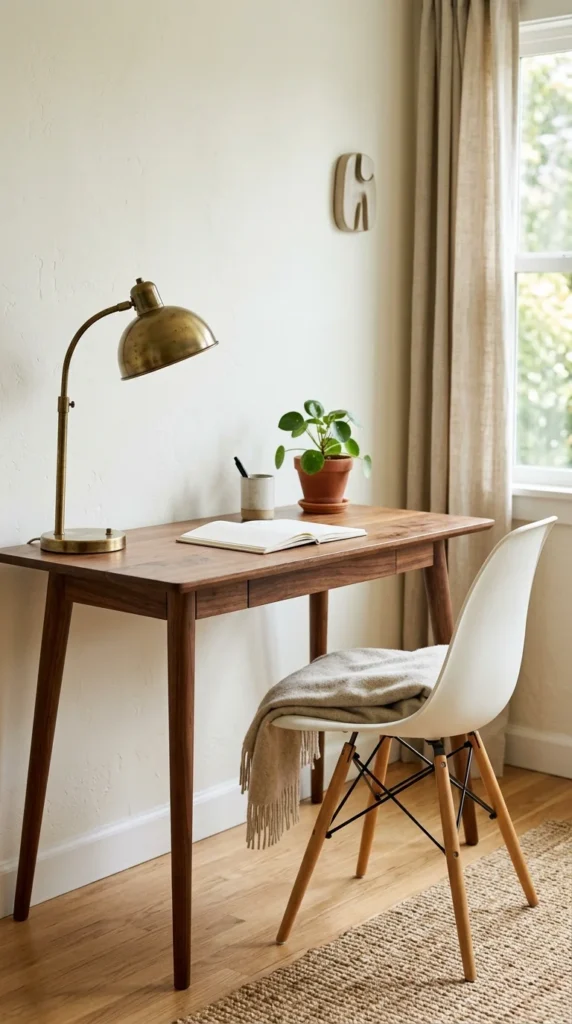
Mid-century modern design is timeless for a reason. A sleek walnut or teak desk with tapered legs against a neutral wall creates a sophisticated, professional vibe. This style emphasizes clean lines and functional beauty, ensuring your workspace looks like a curated piece of your home’s design.
17. Standing Wall Desk
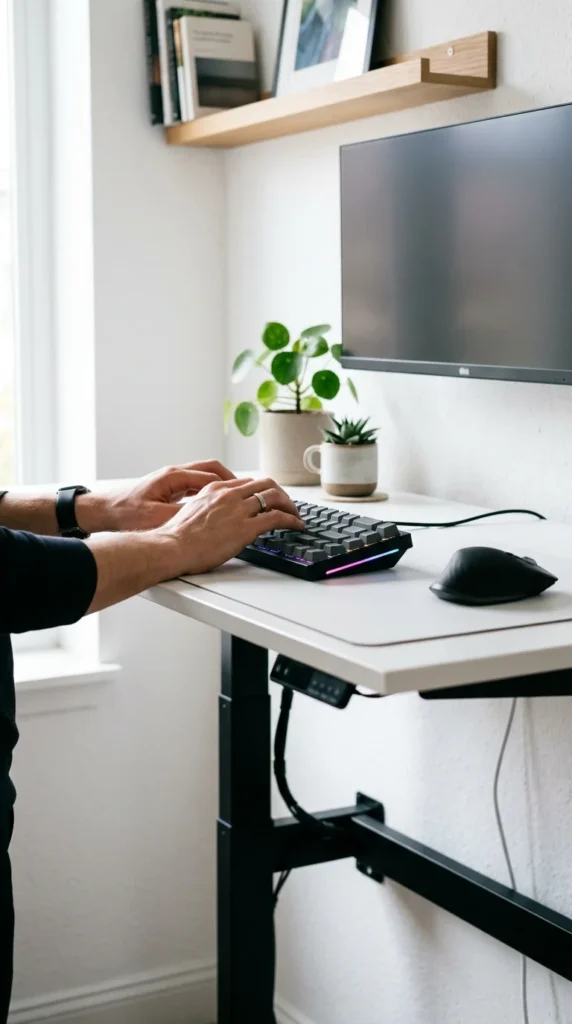
Health-conscious workers often opt for standing desks. A wall-mounted version can be even more streamlined than a freestanding one. Look for a motorized version that allows you to transition from sitting to standing throughout the day. Mounting it against the wall provides the stability needed to prevent wobbling while typing.
18. Wrapped-Around Desk
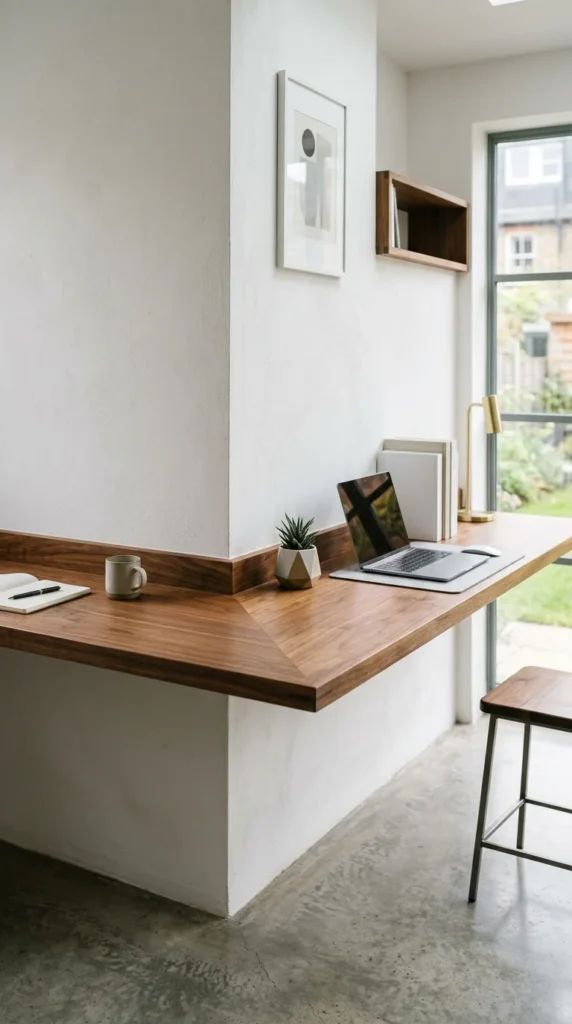
If your room has a chimney breast or an outer corner, don’t let it stop you. A custom desk that “wraps” around the corner of the wall creates a unique, fluid workspace. It utilizes every inch of available space and provides different “zones” for different tasks, such as one side for a computer and the other for paperwork.
19. Mood Board Wall
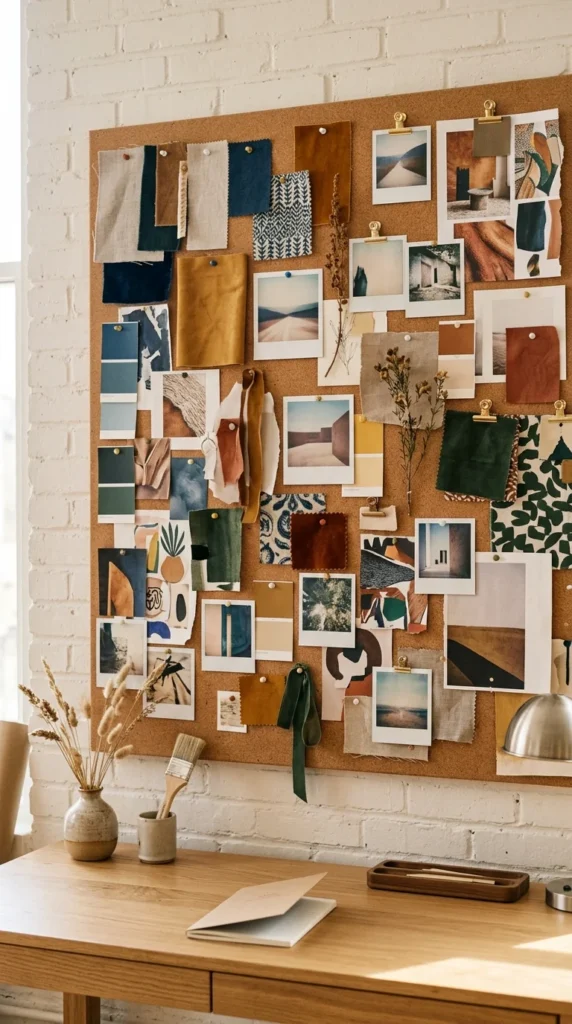
For creatives, the wall behind the desk is a place for inspiration. Use a large corkboard, a magnetic strip, or a wire grid to pin up ideas. By keeping your inspiration on the wall, you keep your desk clear of physical clutter, allowing your mind to focus on the task at hand.
20. Hidden Cable Management
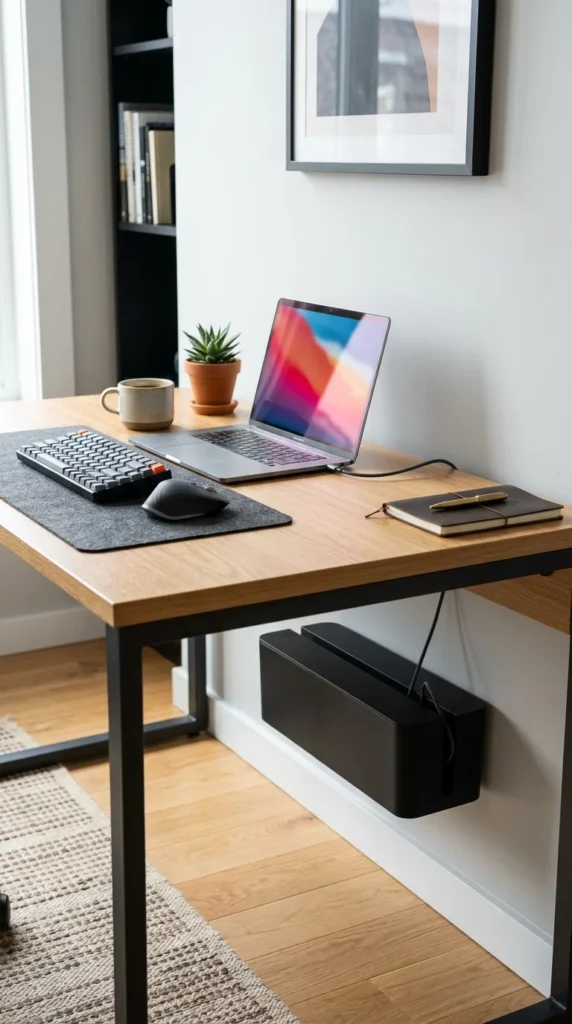
Nothing ruins a “sleek” workspace faster than a mess of tangled cables. When placing a desk against the wall, use wall-mounted raceways or under-desk trays to hide wires. This creates a clean, wireless look that is essential for a modern, professional aesthetic.
21. Accent Wall Color
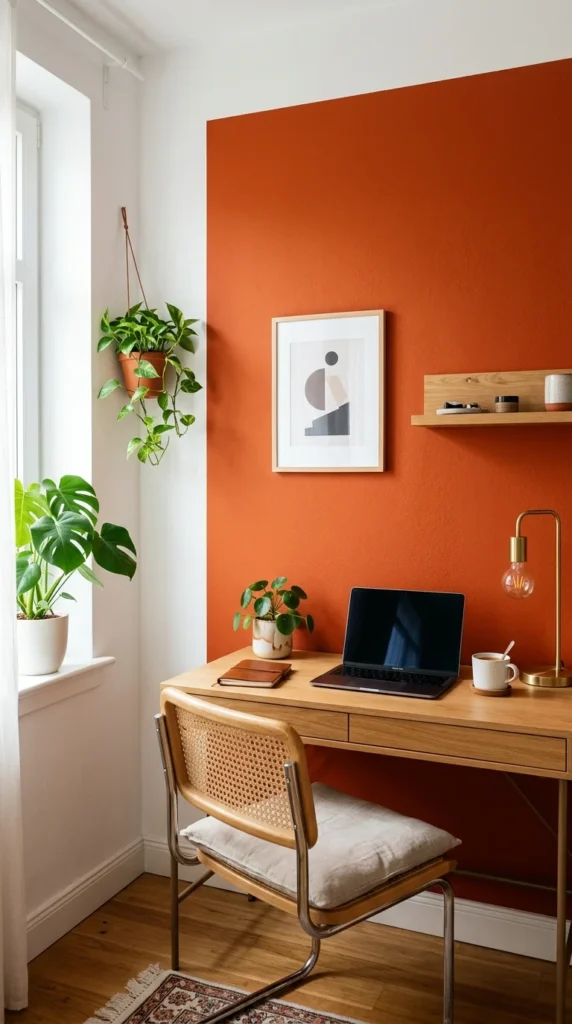
Define your workspace by painting the wall it sits against in a different color. A dark, moody tone like forest green or charcoal gray can create a sense of depth and focus. This “zoning” technique helps separate your work life from your home life without the need for physical dividers.
22. Bookcase Surround
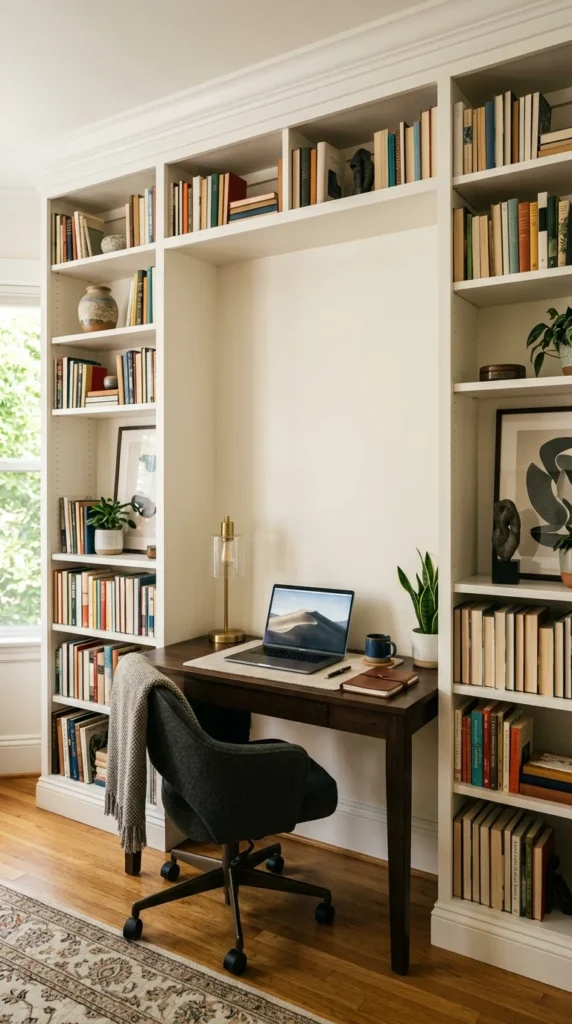
Create a “library nook” by placing your desk between two tall bookcases. This uses the wall space to its maximum potential, providing massive amounts of storage for books and files while framing the desk area beautifully. It gives the workspace a grand, academic feel.
23. Sleek Scandi

Scandinavian design is all about “hygge” and simplicity. A light pine or ash desk against a crisp white wall, paired with soft textures and natural materials, creates a calm, stress-free environment. This setup is perfect for those who want their workspace to feel like a sanctuary.
24. Monochromatic Setup

For a high-impact, modern look, go monochromatic. Match your desk color to your wall color. If you have a dark gray wall, use a dark gray desk. This makes the furniture blend into the architecture, creating a unified and incredibly sleek appearance that feels very intentional.
25. Plants and Greenery
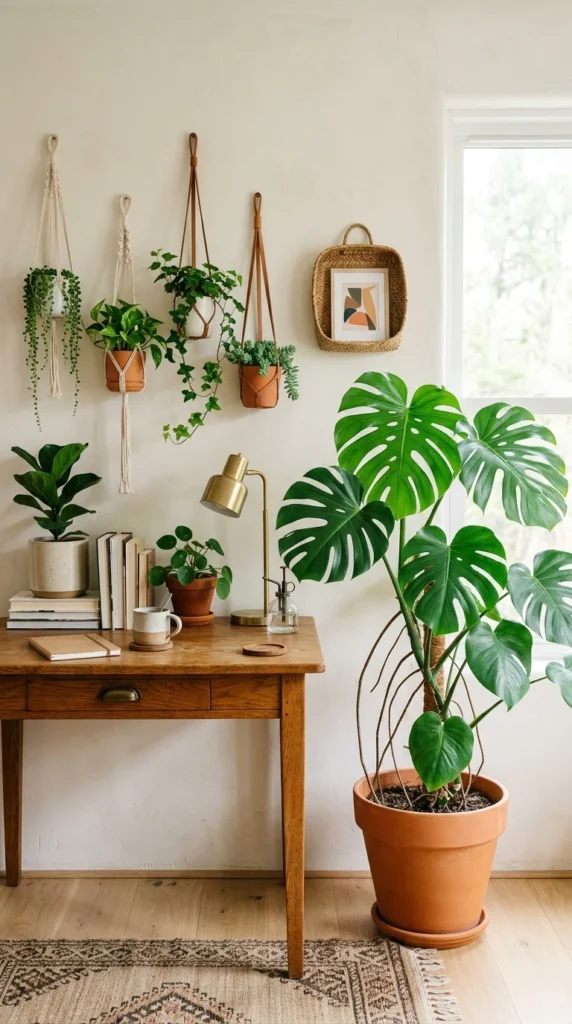
Bringing nature indoors can significantly improve productivity and air quality. Use the wall space above or beside your desk to hang planters or install a small vertical garden. The pop of green against the wall adds life to the workspace and prevents it from feeling too sterile or clinical.