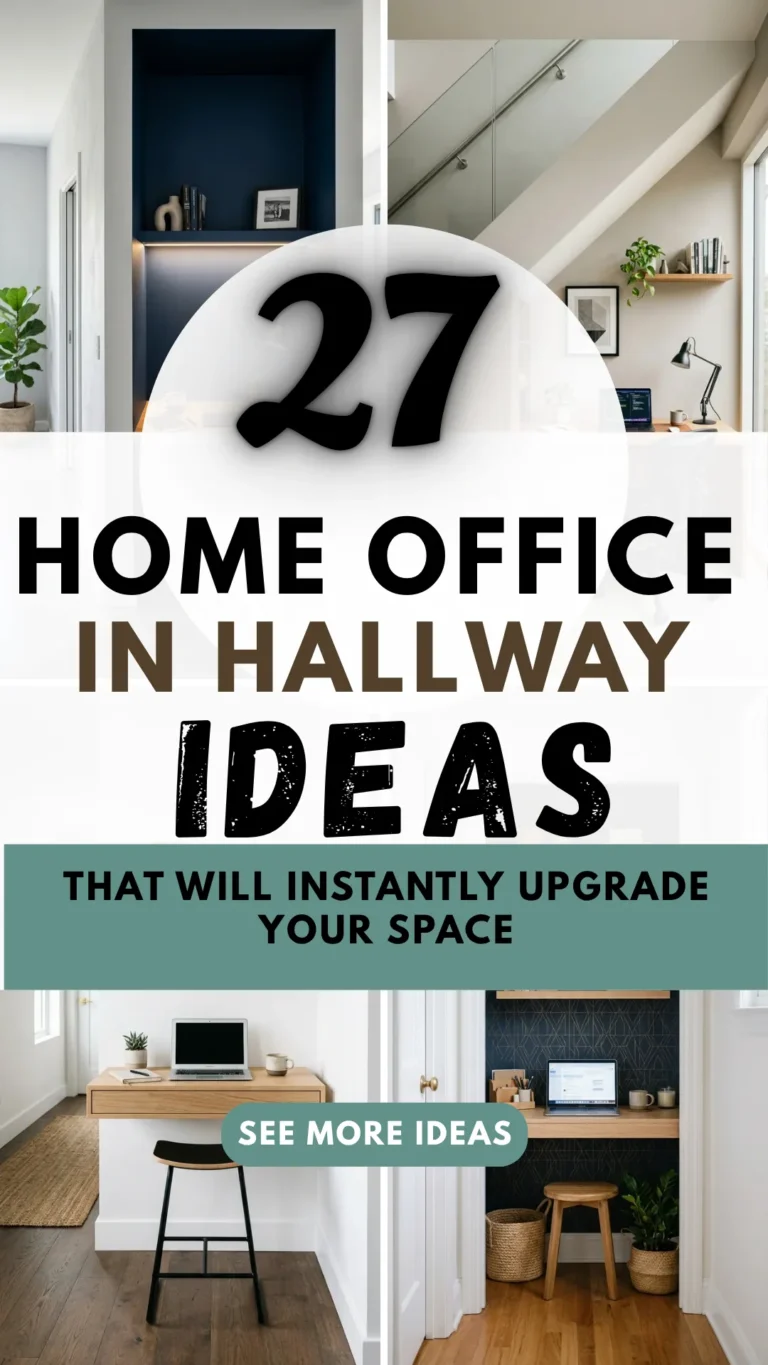

The modern home is no longer just a place to rest; it is a multi-functional hub where professional and personal lives intersect. However, not everyone has the luxury of a spare room to dedicate to a sprawling executive suite. This is where the hallway—often dismissed as mere “transit space”—becomes the ultimate design opportunity. By utilizing clever architecture, minimalist furniture, and strategic decor, you can transform an empty corridor into a high-functioning, stylish workspace. Here are 27 innovative ideas to help you reclaim your hallway and boost your productivity.
1. Floating Desks
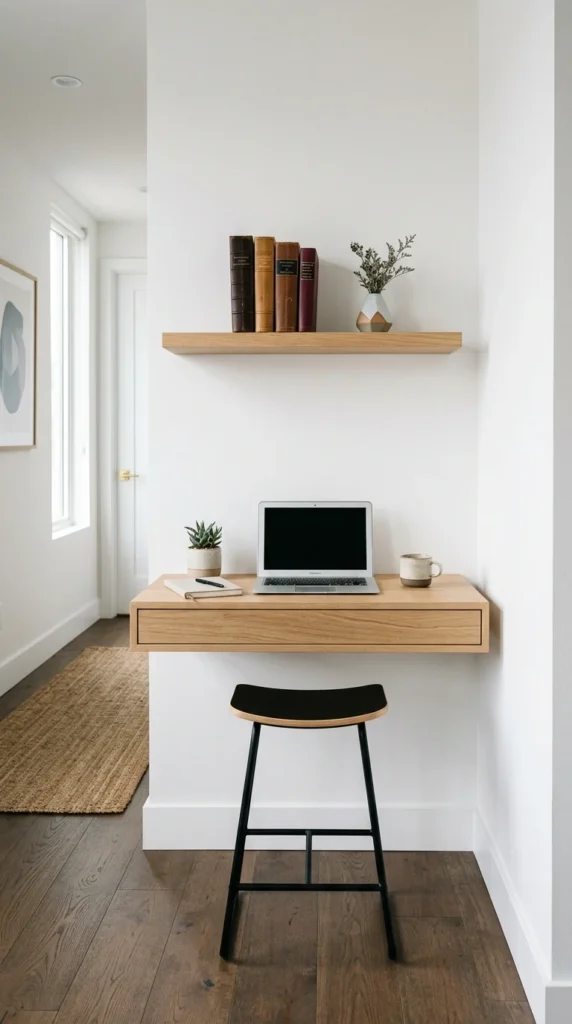
Floating desks are the gold standard for small-space hallway offices. By eliminating legs, you maintain the visual flow of the floor, making the corridor feel wider than it actually is. These units can be custom-built to fit the exact width of a niche or purchased as modular pieces that bolt directly into the studs.
2. Recessed Nooks
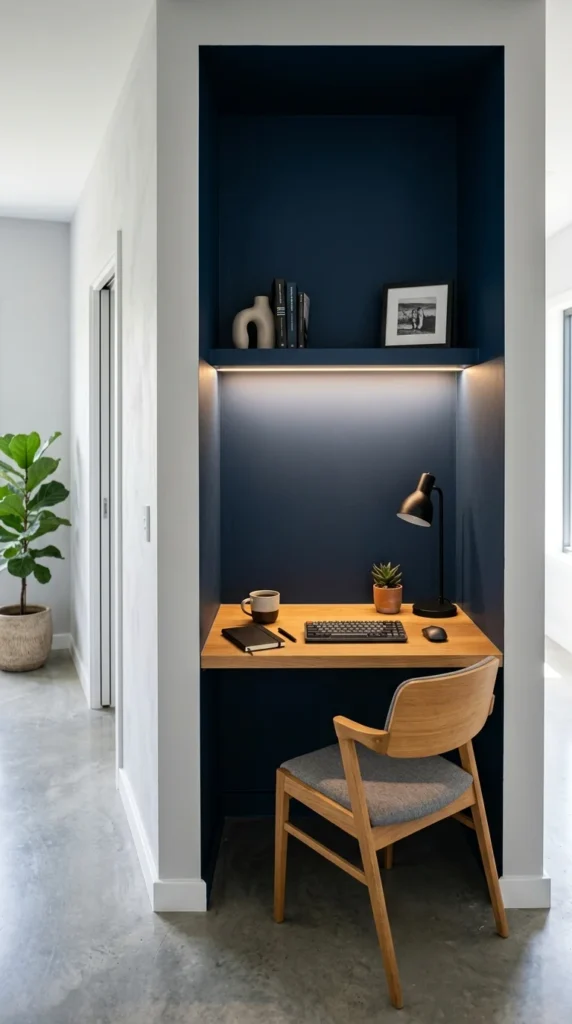
If your hallway has a natural architectural indentation or a “dead” corner, a recessed nook is the perfect spot for a permanent workstation. Painting the interior of the nook a different color from the rest of the hallway creates a psychological “zone” that separates your work life from your home life.
3. Closet Conversions
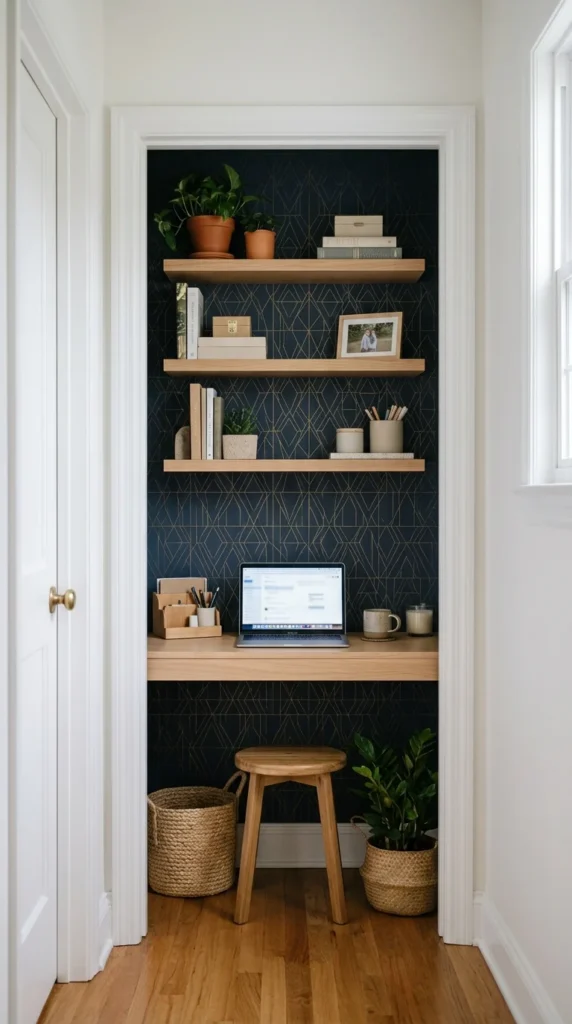
Often referred to as a “cloffice,” converting a hallway linen closet or coat cupboard is a brilliant way to hide your work at the end of the day. You can keep the doors to shut out the mess, or remove them entirely to create a decorative alcove.
4. Under-Stairs Desks
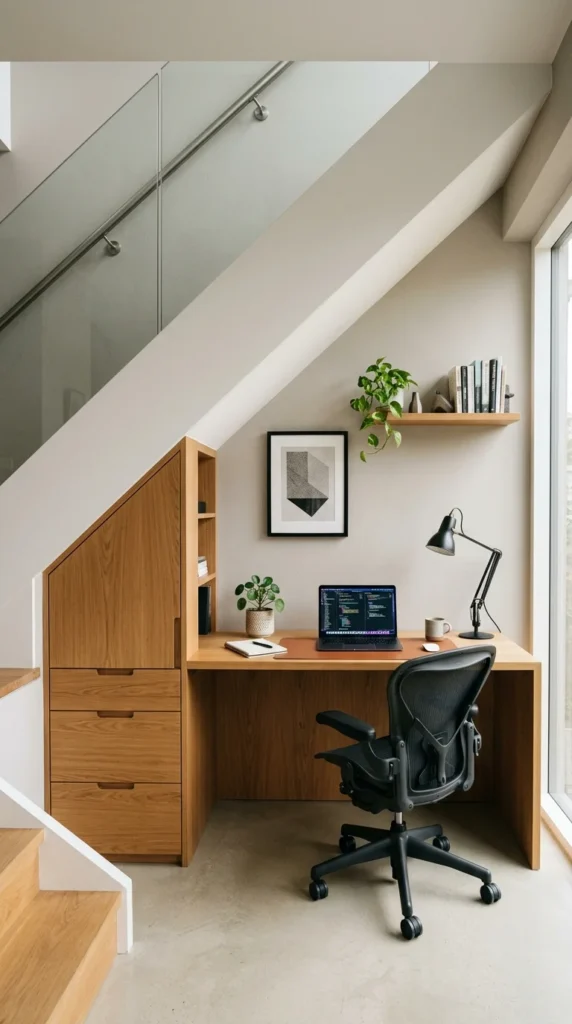
The space beneath a staircase is frequently underutilized. In a hallway setting, this triangular footprint is ideal for a desk. It provides a sense of enclosure and privacy while staying out of the main traffic flow of the house.
5. Narrow Consoles
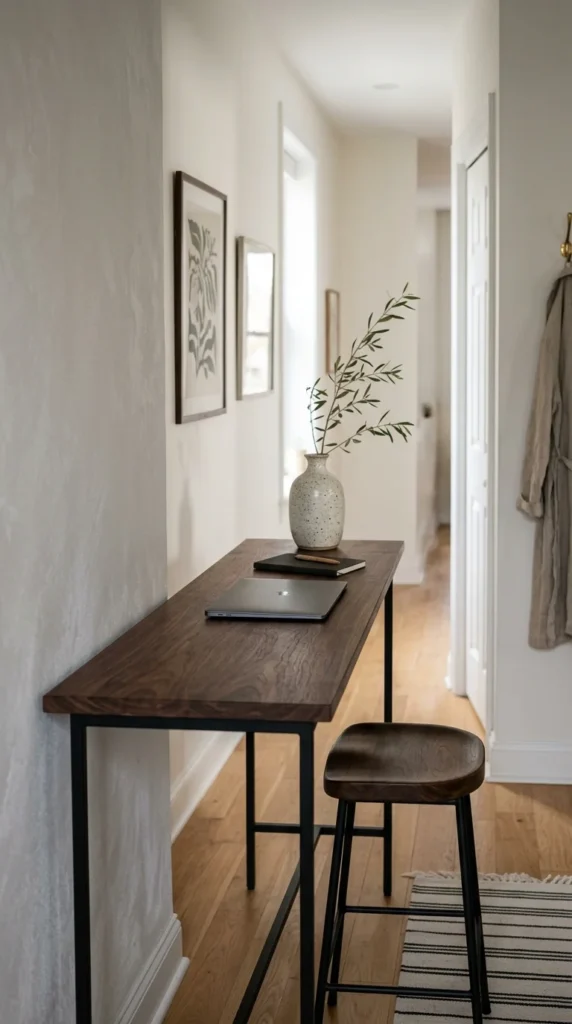
When your hallway is particularly tight, a standard desk won’t fit. Look for “laptop consoles”—extra-narrow tables designed specifically for narrow thoroughfares. These provide just enough surface area for a computer and a mouse without obstructing the path.
6. Folding Desks
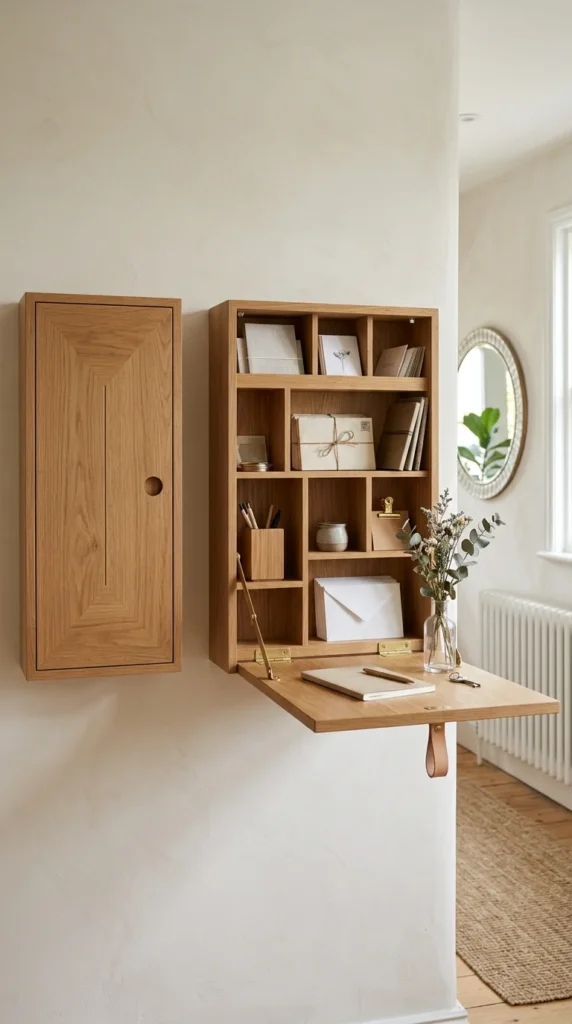
For hallways that serve as high-traffic arteries during the day, a fold-down or “Murphy” desk is the ultimate solution. You can deploy it when you need to answer emails and flip it back up to regain every inch of walking space when you’re done.
7. Statement Lighting
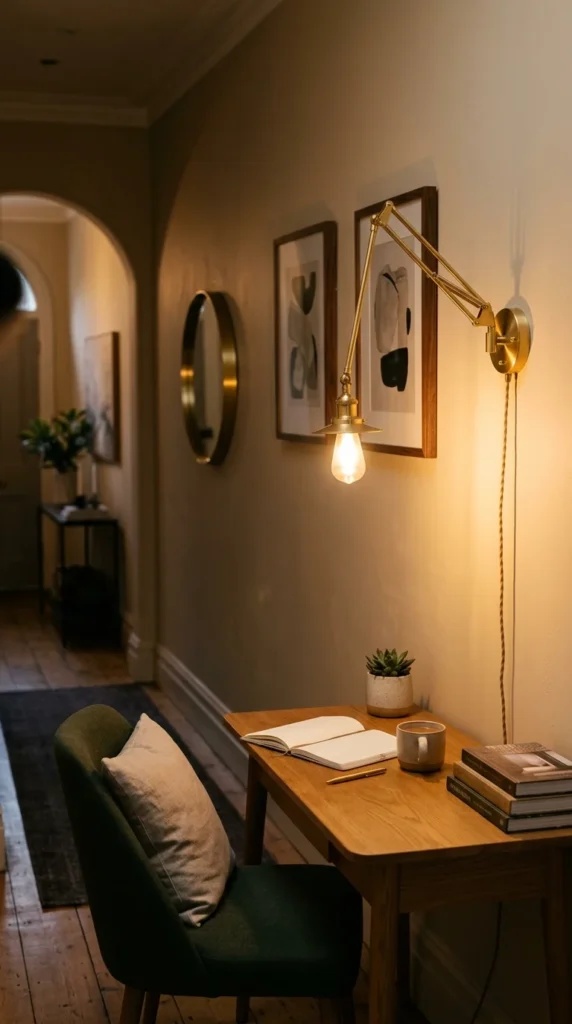
In a hallway, natural light can be scarce. A statement light fixture, such as an oversized task lamp or a designer wall sconce, serves two purposes: it provides essential task lighting and acts as a visual anchor that defines the “office” area.
8. Gallery Walls

Integrating your desk into a gallery wall helps the office blend into the home’s decor. Instead of looking like a cluttered work zone, the desk becomes part of a curated art display, making the transition between “hallway” and “office” feel intentional.
9. Mirror Accents
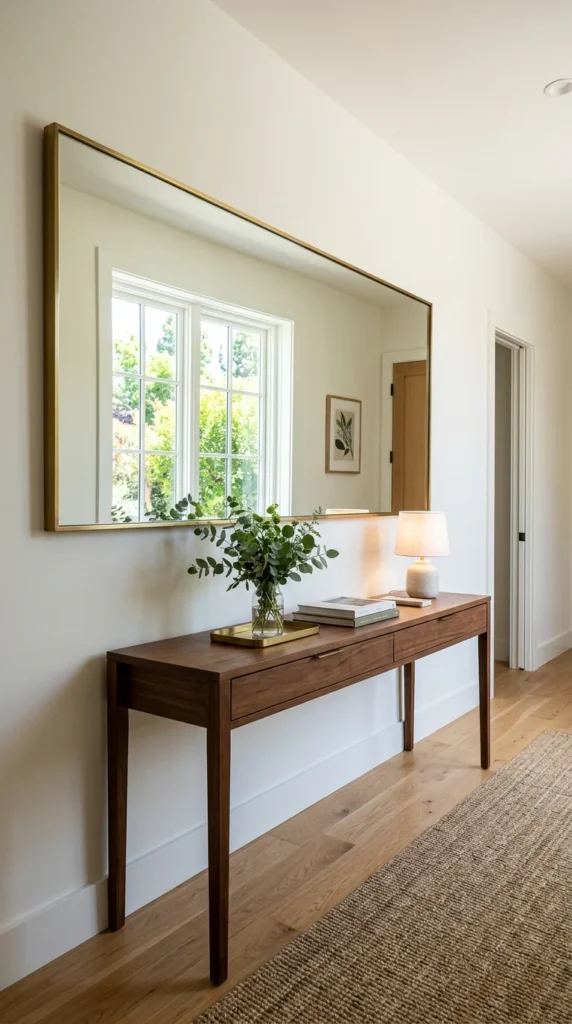
Mirrors are a classic trick for expanding small spaces. Placing a mirror above your hallway desk not only makes the area feel less cramped but also allows you to keep an eye on what’s happening behind you—useful if you want to stay connected to the rest of the house.
10. Rug Runners
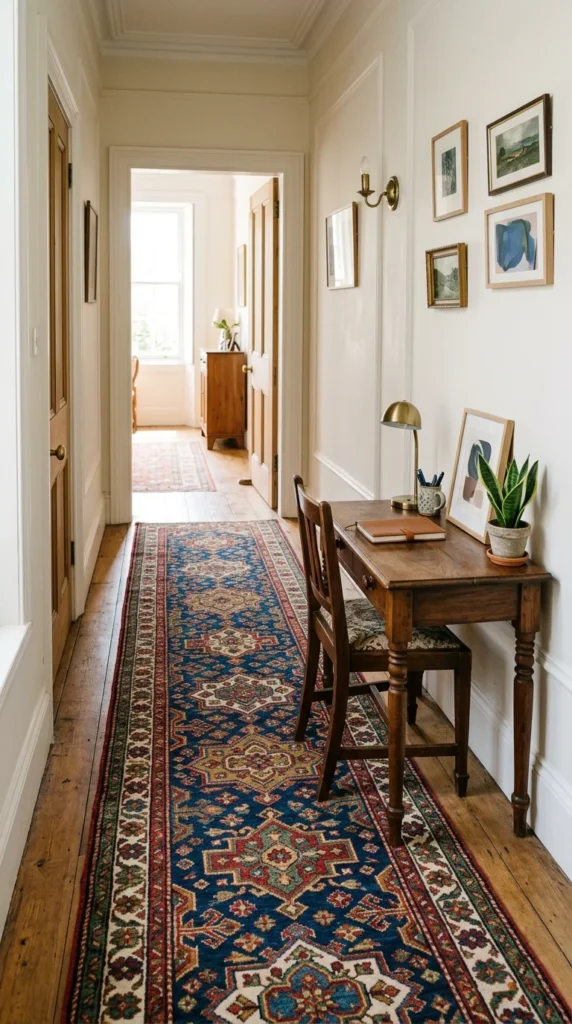
A rug runner helps define the “zones” of a hallway. By placing your desk and chair on or adjacent to a beautiful runner, you create a cohesive visual unit that separates the workspace from the walking path.
11. Vertical Gardens
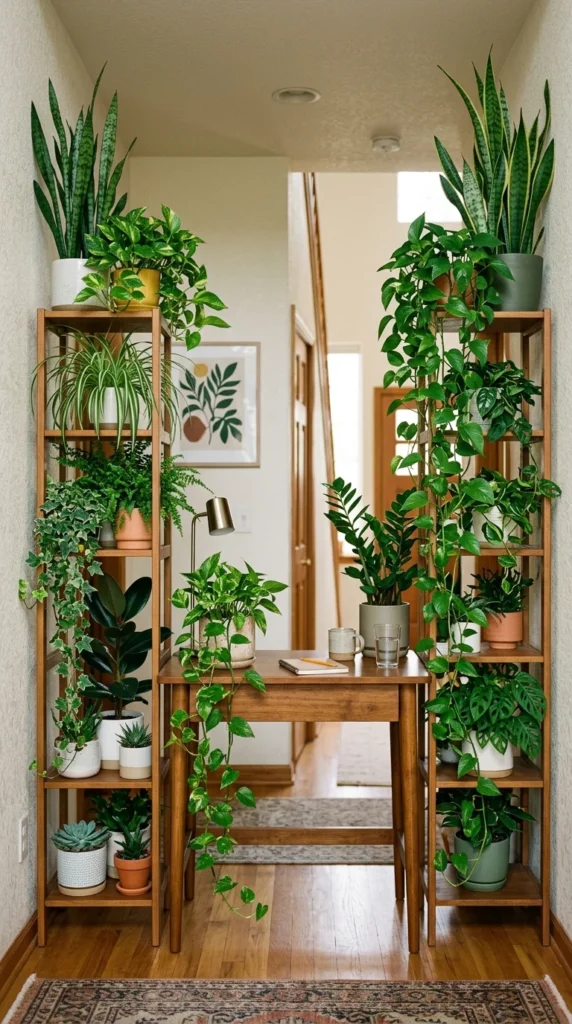
Bringing greenery into a windowless hallway can breathe life into your workday. Use vertical space to house small potted plants or hanging vines, which improve air quality and provide a refreshing visual break from the screen.
12. Industrial Pipes
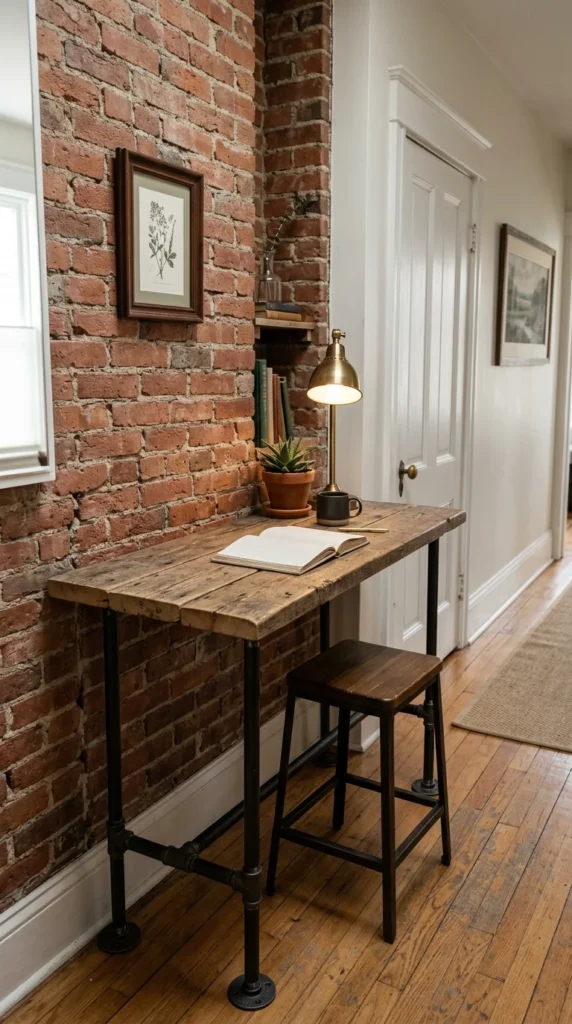
For a modern, edgy look, use industrial piping to create a custom desk frame. This aesthetic works particularly well in urban apartments or lofts where hallways might have exposed brick or concrete.
13. Monochrome Palette
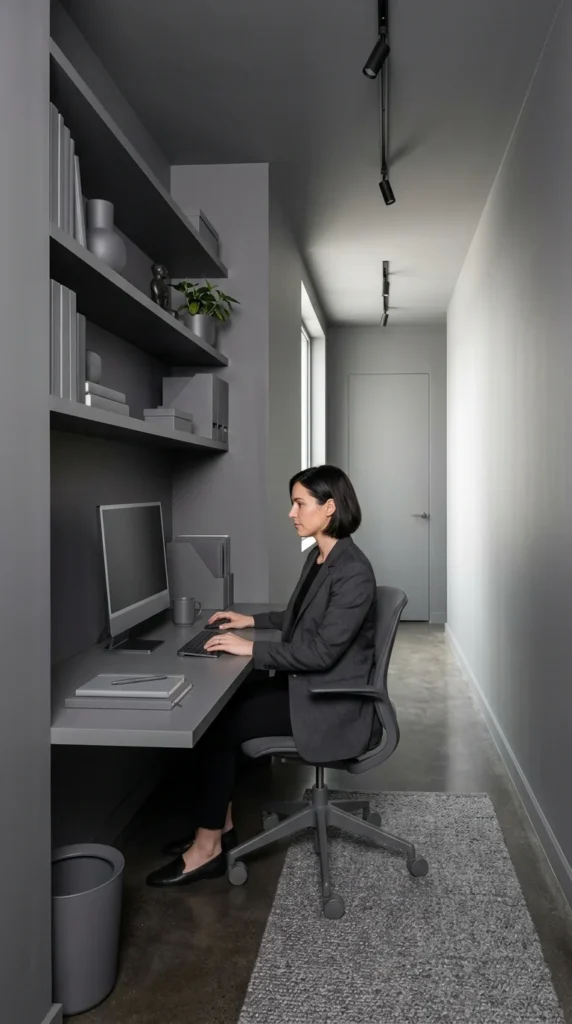
Using a single color for your hallway office and the surrounding walls makes the furniture “disappear” into the architecture. This minimizes visual clutter and gives the hallway a clean, sophisticated, and professional appearance.
14. Sliding Barn Doors
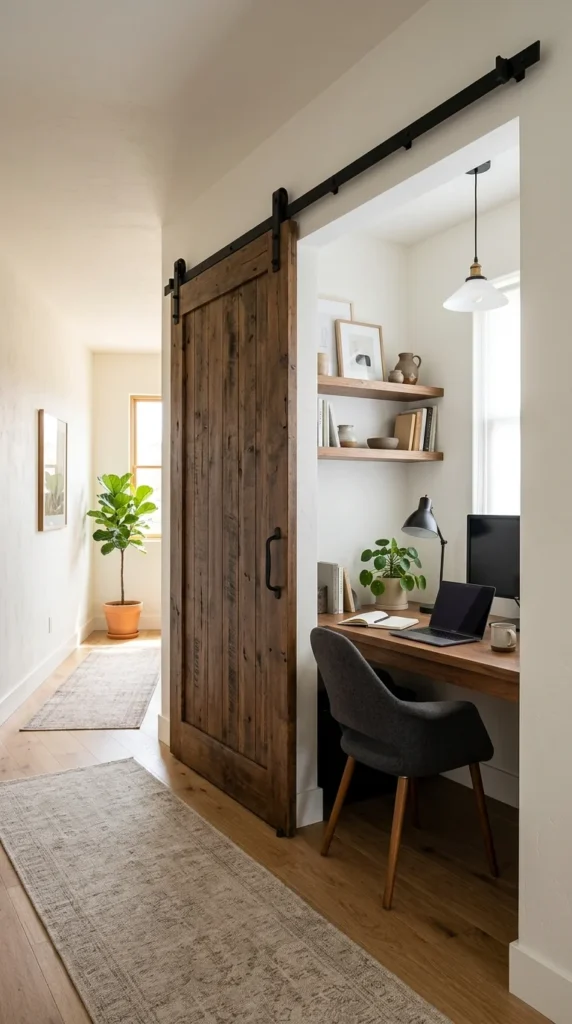
If you have the wall space, a sliding barn door is a stylish way to partition off a hallway office. It adds a rustic or modern architectural element to the corridor while providing the ability to “close the office” at the end of the shift.
15. Colorful Backdrops
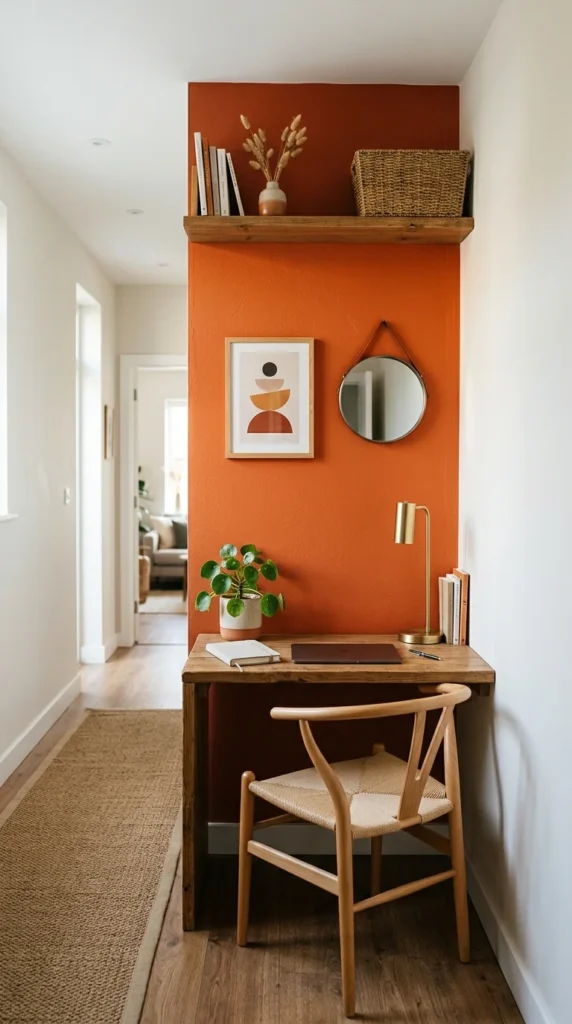
A splash of bold color behind your desk can act as a “virtual room.” It defines the boundaries of your office and provides a boost of energy and creativity during long work hours.
16. Transparent Furniture
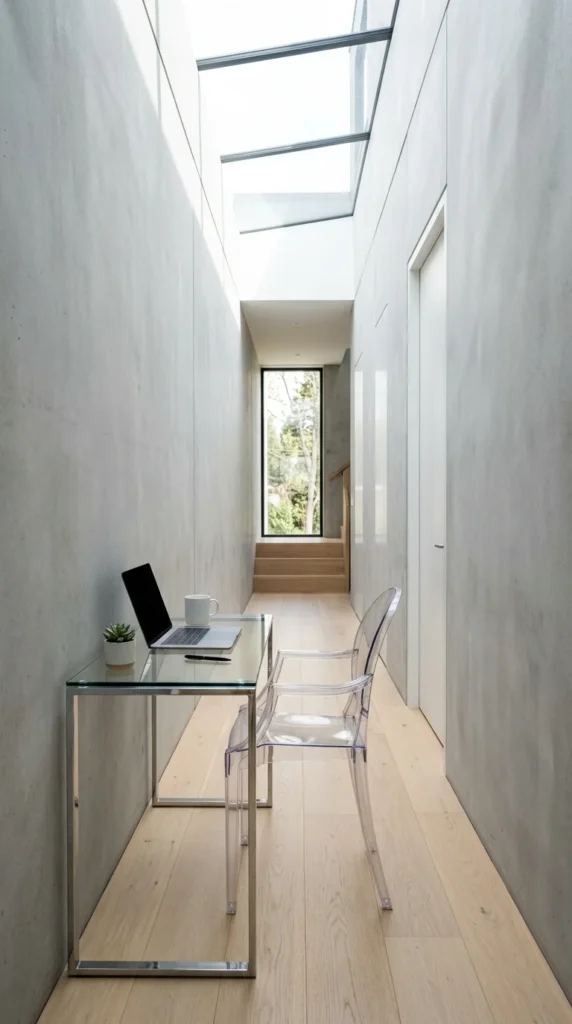
very narrow hallways, solid furniture can feel bulky. Transparent pieces, such as acrylic chairs or glass desks, take up zero “visual weight,” making the workspace feel almost invisible while still being fully functional.
17. Integrated Bookshelves
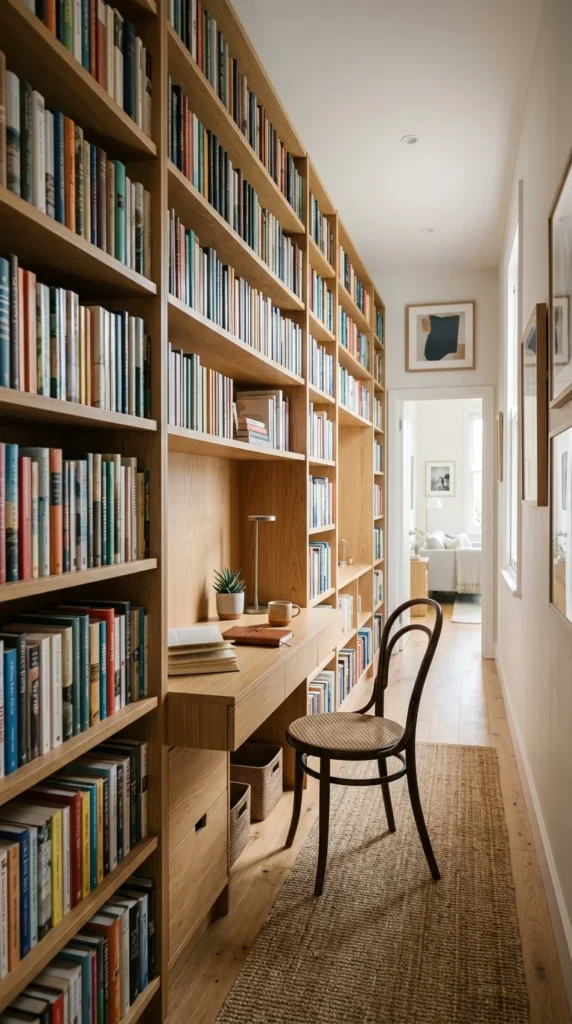
Why choose between a library and an office? By integrating a desk surface into a long run of hallway bookshelves, you create a scholarly, sophisticated environment that maximizes every inch of vertical storage.
18. Corner Desks
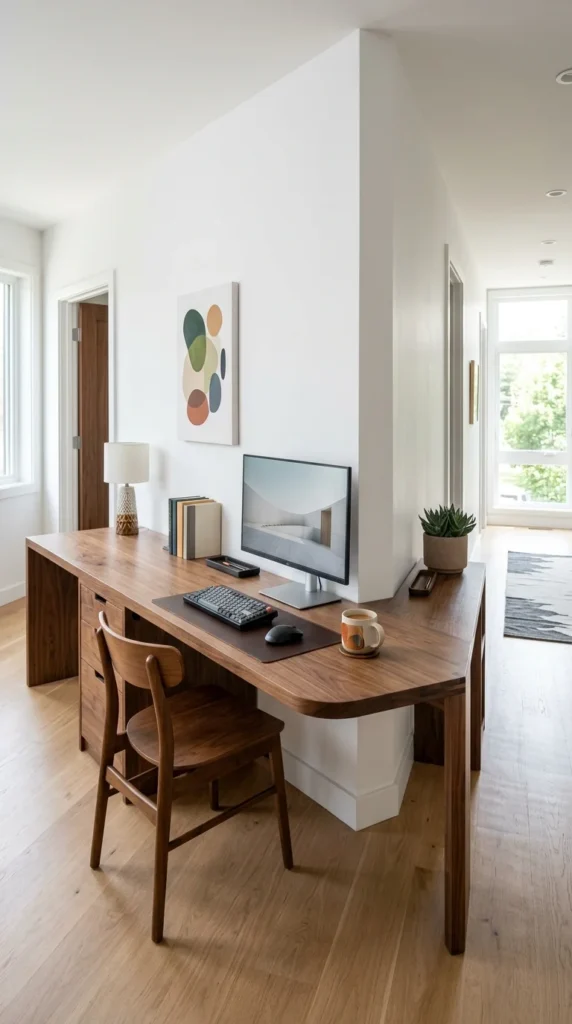
The “dead” space where two corridors meet is often wasted. A custom corner desk can turn this awkward angle into a productive cockpit, offering more surface area than a standard straight desk.
19. Natural Wood
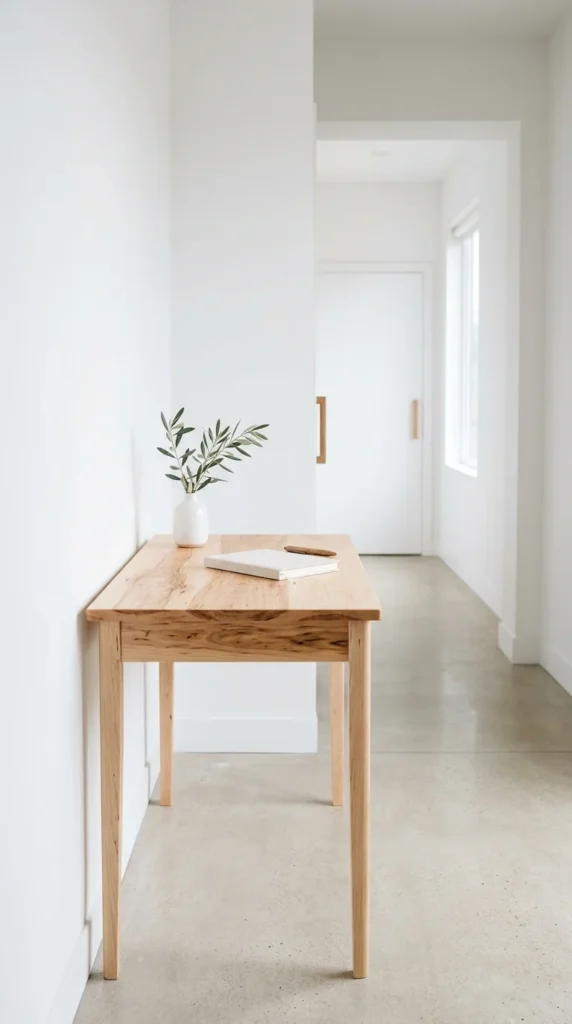
Hallways can often feel cold or clinical. Introducing natural wood elements—whether through a live-edge desk or wooden organizers—adds warmth and organic texture, making the workspace feel more inviting.
20. Hidden Wire Management
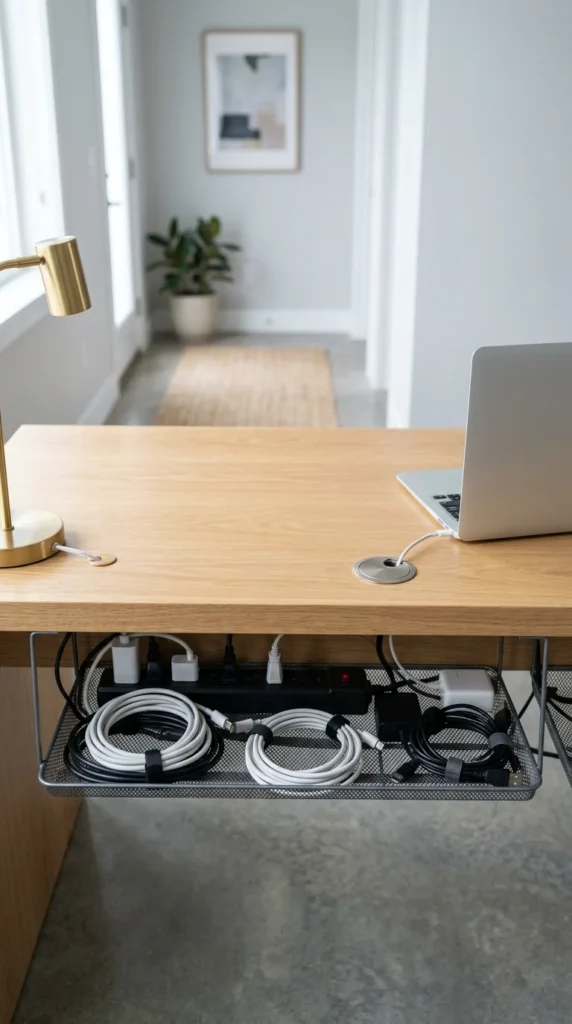
n a hallway, cables are not just an eyesore; they are a tripping hazard. Implementing strict wire management, such as under-desk trays or hollow furniture legs, is essential for keeping a hallway office safe and aesthetically pleasing.
21. Ergonomic Stools
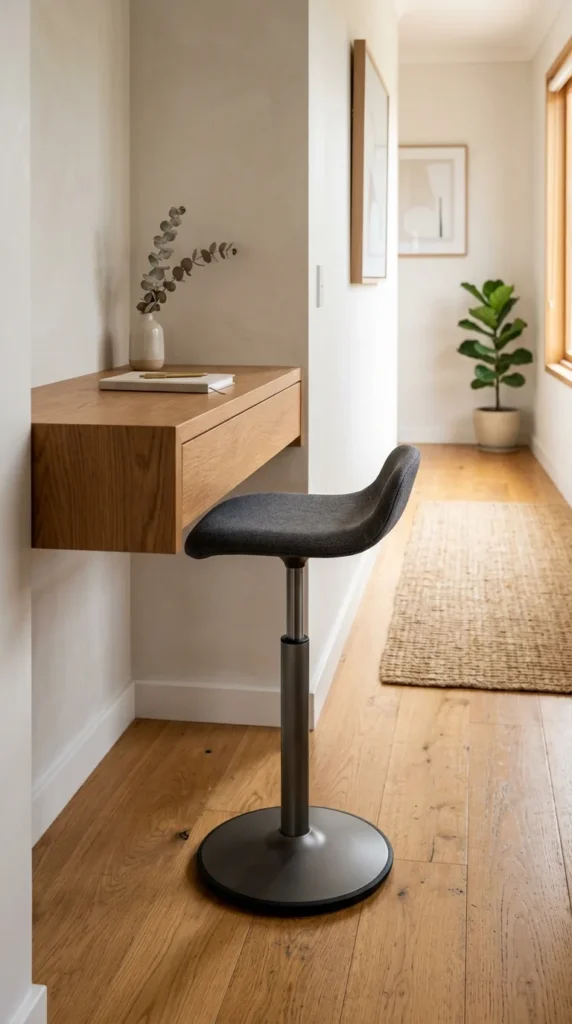
If your hallway is too narrow for a full-sized office chair to be left out, consider an ergonomic stool. These can be tucked entirely under the desk when not in use, keeping the thoroughfare clear for foot traffic.
22. Corkboard Walls
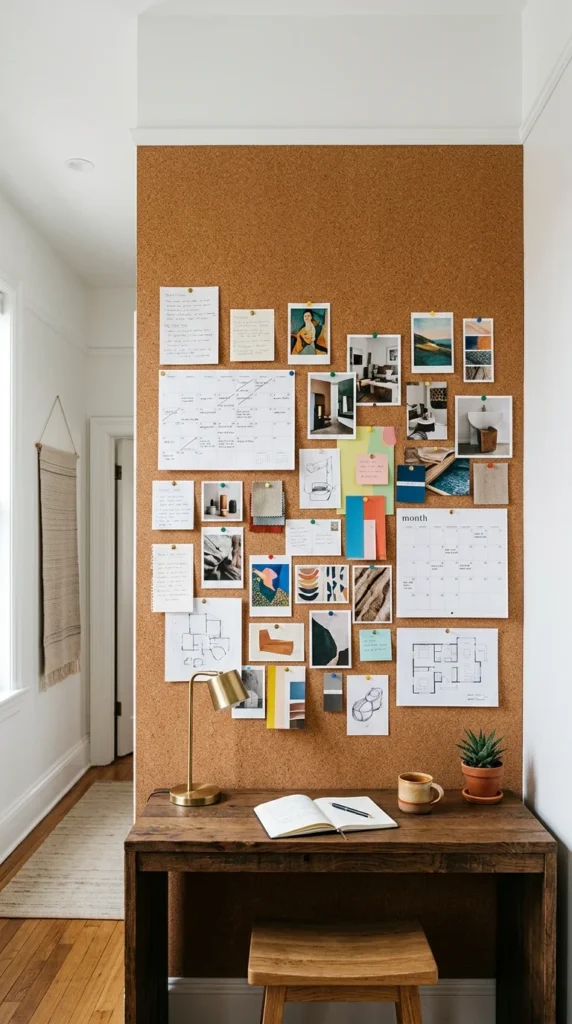
Transform the wall of your hallway office into a giant mood board or organizational hub by installing cork panels. It adds a soft texture to the hallway and provides a massive surface for brainstorming and reminders.
23. Metallic Finishes
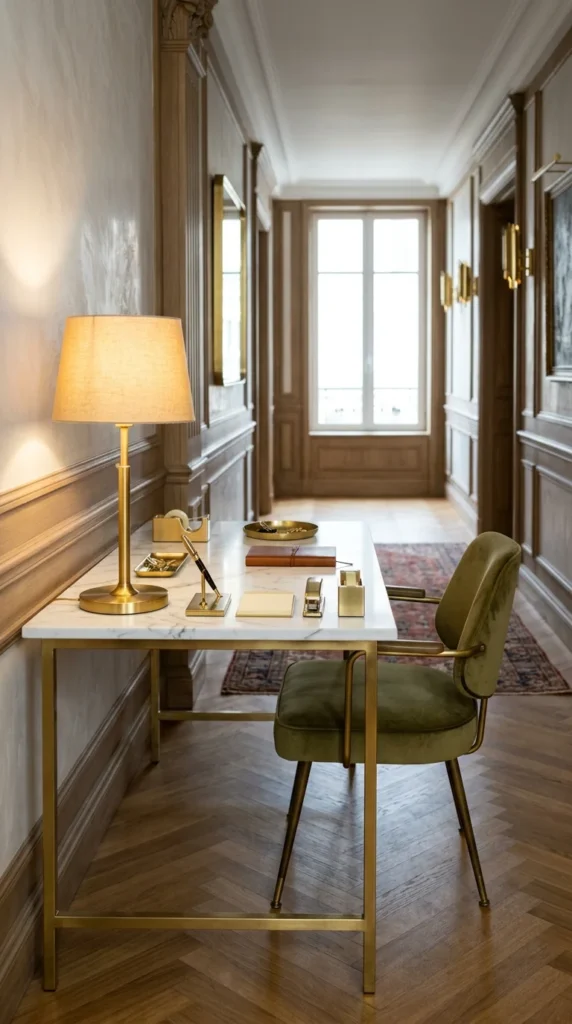
Elevate a simple hallway into a high-end design feature by using metallic finishes. Gold, brass, or brushed nickel accents can make a small desk feel like a deliberate, luxurious addition to your home’s interior design.
24. Pegboard Organizers
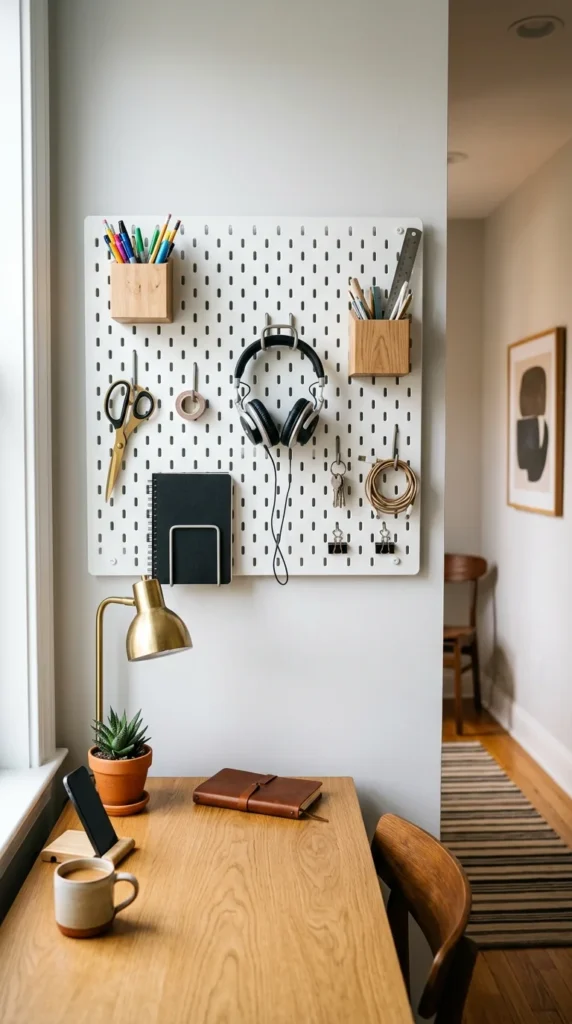
When floor space is limited, go vertical. Pegboards allow you to customize your storage and keep your desk surface completely clear. This is especially useful in hallways where you don’t want items protruding too far into the walking path.
25. Large Artworks
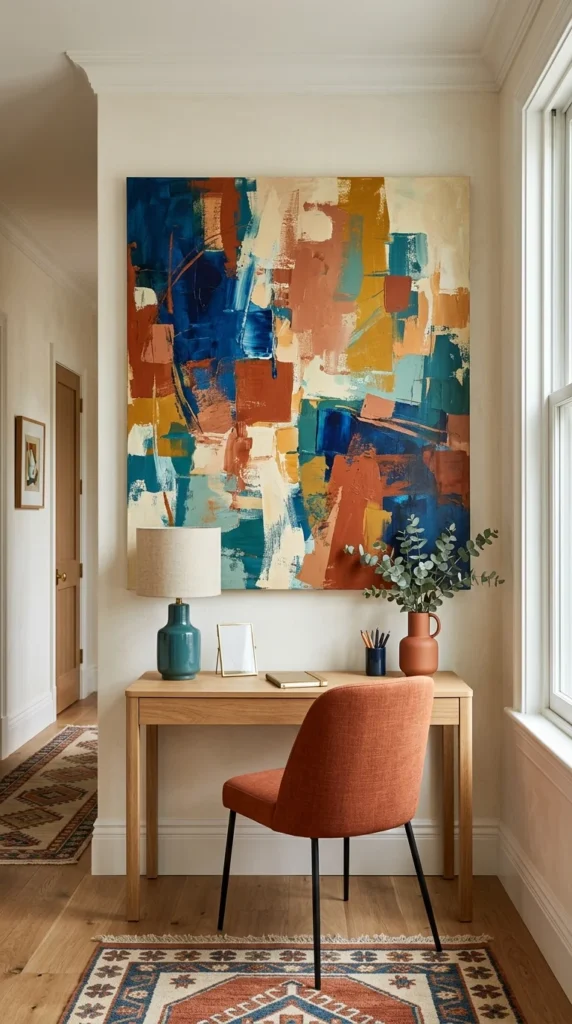
A single oversized piece of art can ground a hallway office, giving it a sense of scale and importance. It draws the eye toward the workspace as a featured design element rather than a cluttered afterthought.
26. Window Placements
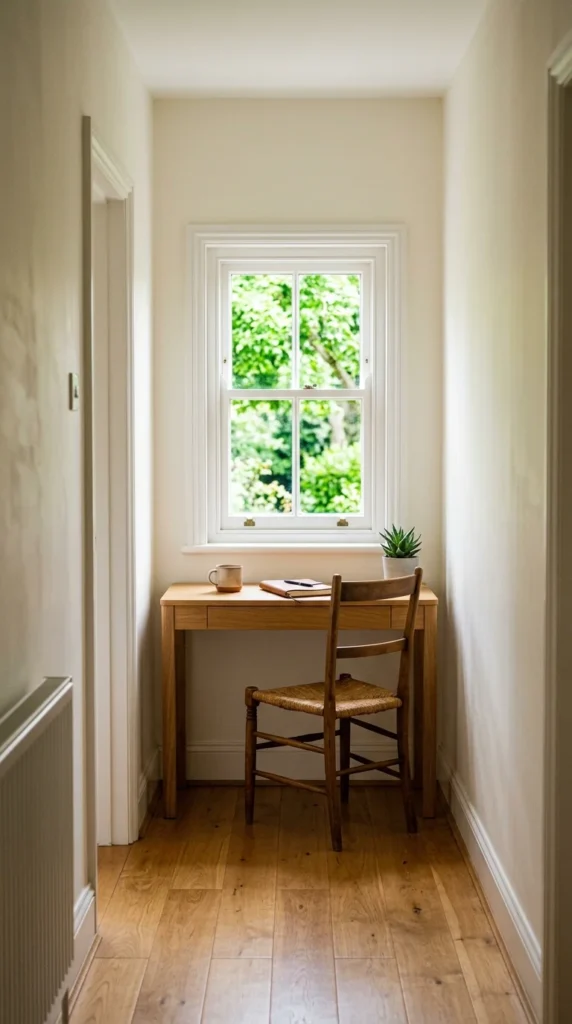
If you’re lucky enough to have a window at the end of your hallway, that is the prime location for your desk. Natural light is essential for productivity and mood, and a view of the outdoors can make a narrow space feel much larger.
27. Minimalist Cubby Desks
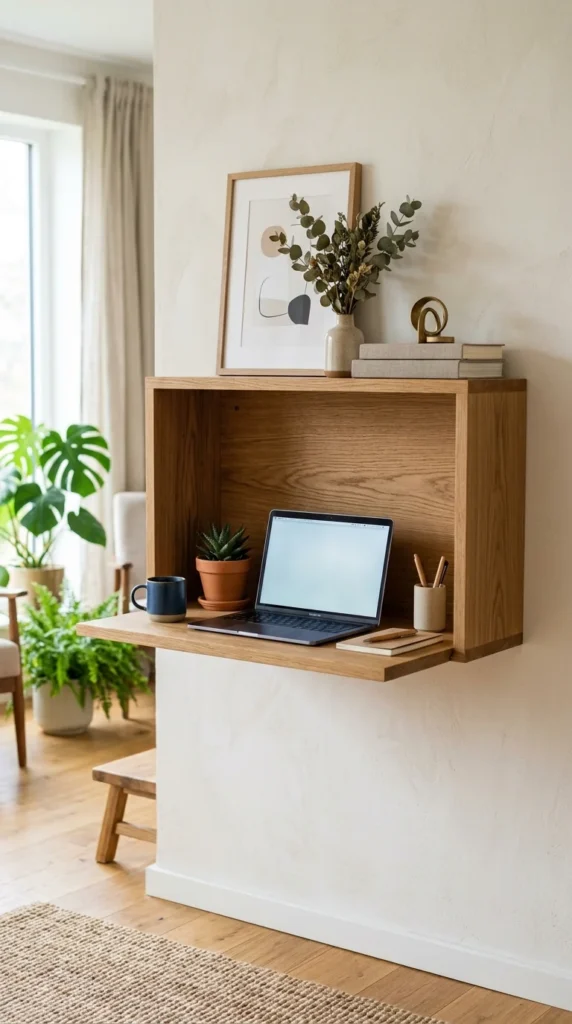
For the ultimate minimalist, a wall-mounted cubby provides a clean, self-contained workspace. It offers a “frame” for your computer and prevents items from falling off the sides, keeping your hallway office tidy and contained.